WASHINGTON (AP) — The Latest on the Republican plan to overhaul the tax code (all times local):
9:20 a.m.
President Donald Trump and congressional Republicans are proposing a tax plan that they say will be simple and fair.
In a document obtained by The Associated Press on Wednesday, their outline a blueprint for almost doubling the standard deduction for married taxpayers filing jointly to $24,000, and $12,000 for individuals.
The plan calls for cutting the corporate tax rate from 35 percent to 20 percent. The GOP proposal also calls for reducing the number of tax brackets from seven to three with a surcharge on the wealthiest Americans.
The plan also leaves intact the deduction for mortgage interest and charitable deductions.
The White House and Republicans plan a formal roll out later Wednesday.
__
WASHINGTON (AP) — President Donald Trump and congressional Republicans are rolling out a sweeping plan to cut taxes for individuals and corporations, simplify the tax system, and likely double the standard deduction used by most Americans.
Months in the making, the plan meets a political imperative for Republicans to deliver an overhaul of the U.S. tax code after the failure of the health care repeal.
The public reveal of the plan was set for Wednesday. The day before, details emerged on Capitol Hill while Trump personally appealed to House Republicans and Democrats at the White House to get behind his proposal.
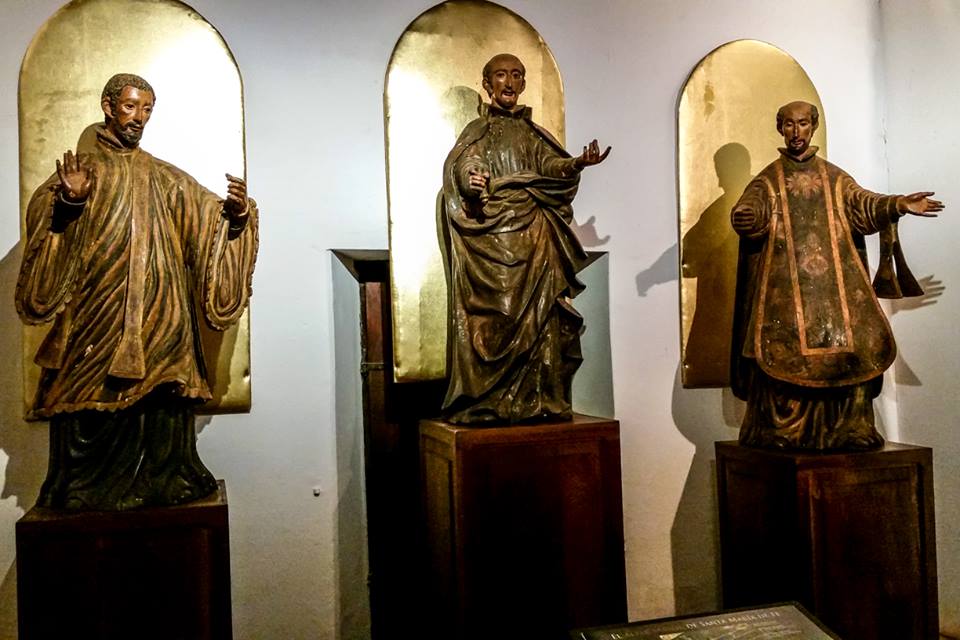
Wooden statutes of the saints housed in the Santa Maria diocesan museum.
By CRISTINA JANNEY Hays Post
The Sister Cities of Hays program is partnering with the Fort Hays State University soccer team to raise money for the museum in Hays’ sister city, Santa Maria de Fe, Paraguay.
A portion of the money from the tickets sales and concessions for the men’s soccer game against Oklahoma Baptist at 7:30 p.m. Thursday, Sept. 28, will go to the museum. The men’s and women’s soccer teams have had members from Paraguay and so this fundraiser seemed like a natural fit.
Information on the fundraiser will be presented at half time.
The museum houses art created by the Jesuit Priests and natives to decorate the missions that date back to the 1600s when Santa Maria was founded.
The artwork was hidden from sight in community members’ basements to protect it from ruling dictators. Marianna Beach found the art when she traveled to that area in the 1970s. She donated money and helped raise money in the Hays area to fund a museum for the art.
Today the museum is a cultural hub for the region. It not only protects the art, but draws income to the community in the form of tourist dollars.
The museum is need of about $2,000 worth of maintenance work, including security upgrades, lighting and renovation of the museum’s bathrooms.
Olga Detrixhe, who is on the Hays Sister Cities board, said the Hays group has just started with this fundraising effort.
If you can’t make it to the game, but would still like to donate to the renovations at the Santa Maria museum, you may contact the Hays Sister Cities board through its Facebook page.
To learn more about Santa Maria and the Sister Cities program, visit the foyer of the Hays Public Library to view the “World Apart, Cities Together” art installation that was dedicated when a group from Santa Maria visited Hays this summer.
RPM Speedway, Hays, wraps up 2017 with the richest post-season events on the IMCA schedule, the Xtreme MotorSports Fall Nationals fueled by Casey’s General Stores.
Associate sponsors include Briney MotorSports, Budweiser, Dynamic Drivelines, Freedom Claims Management Inc, GW Oilfield Services, Gemini Concrete Pumping Inc, Global Oil Field Services LLC, Golden B Hydra Drilling, Golden Q, Hays Convention and Visitors Bureau, R & R Towing, Remus Farms, Rock Ridge Ranch and Sterling Supply.
Last year, 264 race teams from 13 different states were trackside. The speedway expects the car count to increase this year making it the biggest show in the history of the track which opened in 2006.
IMCA Modifieds race for $5,000 to win and a minimum of $400 to start their main event at the 11th annual event, scheduled Oct. 5 to 7.
That feature is a qualifying event for the 2018 Super Nationals Fast Shafts All-Star Invitational ballot.
Also on the card for the weekend are the IMCA Sunoco Stock Cars racing for $3,000 to win and $250 to start, Karl Chevrolet Northern SportMods for $2,000 and $175 to start, IMCA Sunoco Hobby Stocks for $1,500 and $175 to start, and Mach-1 Sport Compacts for $300 and $50 to start. Cruisers will run for $300 to win.
Registration fee and non-qualifier pay is $150 for Modifieds, $100 for Stocks and $75 for SportMods and Hobby Stocks. Tow money for Sport Compacts is $25.
A test and tune session for all divisions and the Sport Compact and Cruiser program will be on Thursday, Oct. 5th. Heat and qualifying races on Friday the 6th with last chance and features for all other divisions on Saturday the 7th.
Grandstand admission is free on Thursday. Adults 13 and up pay $15 each on Friday and Saturday. Kids 12 and under are free both days. Pit passes are $25 on Thursday and $30 on Friday and Saturday for adults 13 and up and kids 12 and under $10 each day.
Racing starts at 6pm each night.
Camping is available with limited electrical and water hookups.
Concessions will open at 3pm on Thursday, 11am Friday and Saturday.
More information about Fall Nationals is available on Facebook at rollingplainsmotor.speedway.
On Nov. 7, we have a choice: improve our aging school infrastructure or continue to defer until another time. We can choose to move forward now or wait, but what does it cost to wait?
Interest is a major component of the total cost of the bond, and rising rates from near all-time lows is a real concern. So what is the difference in financing a $78.5 million bond today versus a year ago, when the last bond was rejected? According to a representative from Piper Jaffrey, if the current proposed bond could have been passed last year, it would have saved taxpayers more than $4 million.
Every 1% increase in interest rates results in an overall cost increase of $7.99 million. For perspective, a 3% increase in interest rates would cost more than the total expense of a new elementary school, priced at $21.4 million.
Increased construction cost is another reason to act now. Industry leaders estimate that building costs increase between 3-5% per year. A conservative estimate of a 2% increase per year results in decreased purchasing power of $1.5 million by this time next year. Waiting 5 years compounds the loss to $7.54 million.
Do I want my property taxes to increase? No, but at some point we must update our schools. As a home and rental property owner, I feel passing this bond now will cost less than waiting. We will not defeat a school bond for infrastructure; we can merely postpone it.
An elderly gentlemen recently said to me when discussing the bond, “If not now, when; if not us, then who?” The time is now, the problem is ours, and only we can fix it. I urge you to vote yes on Nov. 7.
Research by a Fort Hays State University faculty member and two graduate students will be funded by a portion of the National Science Foundation grant awarded to Kansas, which was announced Tuesday in an NSF news release.
“Fort Hays State will be awarded about $273,000 over the next five years,” said Dr. Mitchell “Mitch” Greer, assistant professor of biological sciences at FHSU, who will be the supervising researcher.
“This money will be used to support two graduate students and fund their research related to the microbes of invasive plant species,” said Greer.
He said the students will be selected once the funding arrives at the university, probably beginning in the fall 2019 semester. In addition to the two full-time graduate student researchers, who will each work about two and a half years, the funding will also support a part-time undergraduate student researcher each year.
“The FHSU project will be looking at Old World Bluestem – yellow bluestem and Caucasian bluestem,” said Greer. “This is specific to FHSU, but we will use similar methods to the larger grant.”
The NSF grant to Kansas is through the foundation’s Established Program to Stimulate Competitive Research (EPSCoR), which is designed, said the NSF news release, to build “research and development capacity in states that demonstrate a commitment to research but have thus far lacked the levels of investment seen in other parts of the country.”
“The EPSCOR program always awards grants to whole states in an effort to stimulate competitive research by promoting collaboration between universities within the state,” said Greer. The Kansas grant will bring together Fort Hays State University, the University of Kansas, Kansas State University, Wichita State University and Haskell Indian Nations University.
“The proposed work looks at innovative ways to investigate the microbiomes of prairie ecosystems and see how plant, soil, and aquatic microbes are related to or influenced by one another across a precipitation gradient,” which, said Greer, is west to east in Kansas – from least to most precipitation.
“FHSU will be assisting in data collection and instrument maintenance for the three western-most research sites as part of the larger project. FHSU will also be conducting the Old World Bluestem research that ties into the bigger microbiome grant while also linking to my area of research focus of invasive grass species,” he said.
The Hays Area Chamber of Commerce is joining with the Fort Hays State University Student Government Association in presenting a Fall Election Forum.
Please join us to learn more about the candidates running for both the Hays City Commission and the USD 489 Board of Education.
On Tuesday, Oct. 17, the first forum beginning at 6:30 p.m. will focus on the City Commission. After a brief intermission around 8 p.m., the forum will continue with the Board of Education. There will also be time for questions from the audience for both sessions.
The forum will be at Fort Hays State University Memorial Union’s Black and Gold Ballroom.
Midwest Energy is the corporate sponsor for the event.
HAYS CITY COMMISSION CANDIDATES-3 SEATS OPEN
Roger Agnew
Christopher S. Dinkel
Sandra Jacobs (I)
John C. Mayers
Shaun Musil (I)
Dustin Glen Roths
(Top 2 vote-getters elected to 4 year terms; 3rd highest vote-getter elected to 2 year term)
HAYS USD 489 SCHOOL BOARD CANDIDATES-3 SEATS OPEN
Lance Bickle (I)
Kevin Daniels (Write-in)
Daniel Walker (Write-in)
Michael S. Walker
Sophia Rose Young
Donald Trump is singing the wrong song about freedom, patriotism and First Amendment values. Over the weekend, Trump:
Called on NFL owners to fire players who kneel or otherwise protest during the national anthem and display of the American flag
Said fans should stop going to games to punish NFL team owners who fail to dismiss those players
Observed that patriotism should be required of athletes in return for “the privilege of making millions of dollars” on the field.
Trump couldn’t be more off-tune about how to honor our flag, or more off-key on the core values of the First Amendment. It’s also worth noting he’s out of sync with what our own history tells us of failed government attempts to mandate patriotism with a law or an enforced ritual.
At the root of this weekend’s controversy was a decision made last year by one player, former San Francisco 49ers quarterback Colin Kaepernick, to kneel or sit during the national anthem. He said it was a way of protesting continued discrimination “against black people and people of color.” As this season began, a few more players began making similar gestures, some specifically in protest of police shootings of black men. For an as-yet unexplained reason, Trump chose Friday evening to make the protests into a national controversy.
“Wouldn’t you love to see one of these NFL owners, when somebody disrespects our flag, to say, ‘Get that son-of-a-bitch off the field right now. Out. He’s fired. He’s fired,'” Trump told a campaign rally in Alabama. Trump said such protests are “a total disrespect for everything we stand for.”
A chorus of critical replies by NFL owners, athletes and others followed, with Trump swiping back almost immediately on Twitter — all of which sent the bitter debate soaring into the Sunday talk-show circuit and even more visibly onto Sunday’s NFL game fields.
In London, Jacksonville and Baltimore players, joined by Jaguars owner Shahid Khan, locked arms and some knelt during the anthem. By Sunday evening, there were reports that more than 100 players had knelt, sat or otherwise signaled protests during the anthem.
Multiple owners also pushed against Trump’s admonition, saying they support players’ sincere attempts to call attention to serious social ills. New England’s Robert Kraft, described as a longtime Trump buddy, said he was “deeply disappointed by the tone of the comments made by the President.” Kraft said, “I think political leaders could learn a lot from the lessons of teamwork and the importance of working together toward a common goal,” and that he supports players’ “right to peacefully affect social change and raise awareness in a manner they feel is most impactful.”
Those last words echo a 2011 Supreme Court decision that defended free speech even under what most would consider despicable circumstances — using funerals as places of political protest. In writing the majority opinion in Snyder v. Phelps, Chief Justice John Roberts wrote “Speech is powerful. It can stir people to action, move them to tears of both joy and sorrow, and — as it did here — inflict great pain. On the facts before us, we cannot react to that pain by punishing the speaker. As a Nation we have chosen a different course — to protect even hurtful speech on public issues to ensure that we do not stifle public debate.”
As the Sunday talk shows began rolling, administration surrogates fanned out in Trump’s defense. Treasury Secretary Steven Mnuchin, speaking Sunday on ABC’s “This Week,” was technically correct when he said team owners, as private business owners, could have a rule requiring their players as employees to stand during the anthem. But he continued the administration’s tone-deaf approach to First Amendment values and high-profile athletes’ part as national role models by adding, “They can do free speech on their own time.”
The 2011 Snyder ruling held that those speaking out on matters of public interest should not be punished for finding an effective place from which to be heard.
Our nation was born of dissent — skillfully documented in Stephen Solomon’s “Revolutionary Dissent: How the Founding Generation Created the Freedom of Speech” — and has a long history in which public protest both echoed public sentiment or brought marginalized views into the mainstream consciousness, from Colonial-era protests over taxes to the long battle over slavery and segregation, to women’s suffrage and dozens of other major issues. Even before they were written into our Constitution, the First Amendment rights of free speech, press, assembly and petition have been the engines of social change.
The principle behind protecting unpopular protests was upheld in 1989 in a case that declared that even desecrating the flag itself as a means of protest was beyond the power of presidents or Congress to exact punishment. “If there is a bedrock principle underlying the First Amendment, it is that the government may not prohibit the expression of an idea simply because society finds the idea itself offensive or disagreeable,” the court said in Texas v. Johnson.
Other administration officials said Trump has a right — perhaps even an obligation — to speak out for the millions of citizens who do not want to see disrespectful conduct toward the flag or national anthem. Trump certainly has a right to defend respect for national symbols. But our rights don’t depend on public sentiment of the moment, game attendance or television ratings.
We’ve been through this kind of faux-patriotism brouhaha before, with authorities trying to mandate respect of the flag or at least the show of it. There are disturbing echoes of McCarthyism’s worst abuses of the power of the presidency to cause people to be fired for expressing dissenting views. There are some who already say there is an unspoken league “blacklist” against Kaepernick, who remains unsigned this season.
Issues of patriotism, national defense and free speech were also strongly contested during World War I. In 1919, Supreme Court Justice Oliver Wendell Holmes declared that, excepting speech that calls for imminent and direct harm to the nation, “we should be eternally vigilant against attempts to check the expression of opinions that we loathe and believe to be fraught with death.”
In 1940, in Minersville School District v. Gobitis, the Supreme Court upheld a Pennsylvania law requiring students in public schools to stand and recite the Pledge of Allegiance — even those with religious objections.
In overturning that decision just three years later, after a spate of violent incidents in which authorities attempted to force people to salute the flag, Justice Robert H. Jackson observed — in an opinion released on Flag Day — that “to sustain the compulsory flag salute, we are required to say that a Bill of Rights which guards the individual’s right to speak his own mind left it open to public authorities to compel him to utter what is not in his mind.”
Dismissing such governmental hypocrisy, Justice Jackson also delivered a stirring defense of the Bill of Rights in West Virginia State Board of Education v. Barnette, writing, “If there is any fixed star in our constitutional constellation, it is that no official, high or petty, can prescribe what shall be orthodox in politics, nationalism, religion, or other matters of opinion, or force citizens to confess by word or act their faith therein.”
The next time Trump — who it should be noted, claims Flag Day as his birthday — feels like challenging that free speech “fixed star” in our national firmament, he ought to pause … and just “take a knee.”
Gene Policinski is chief operating officer of the Newseum Institute and senior vice president of the Institute’s First Amendment Center. He can be reached at [email protected]. Follow him on Twitter: @genefac
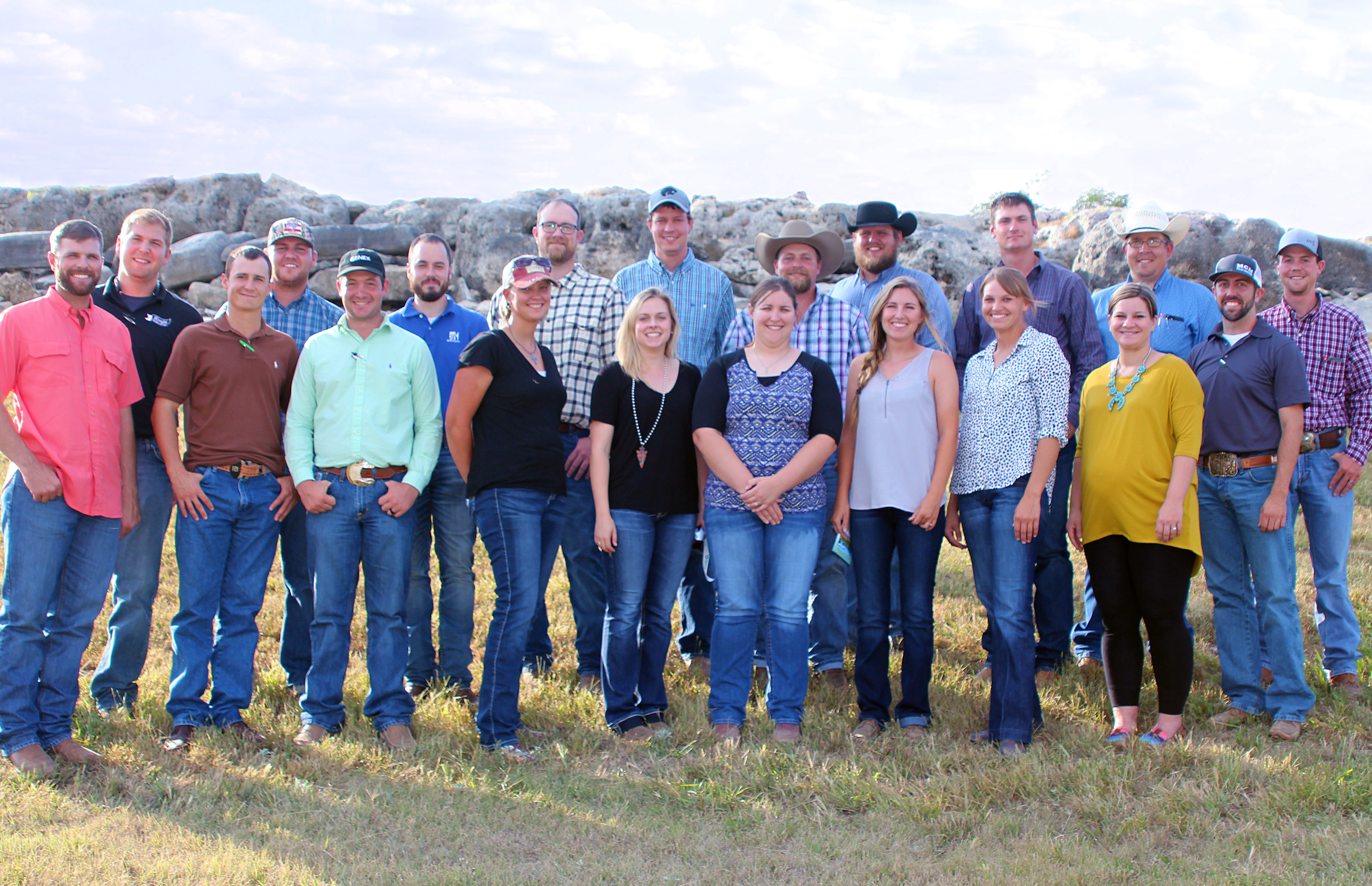
Pictured (back row, L to R) are Luke Knight, Lyons; Klay O’Brien, Hepler; Joseph Hubbard, Houston Lake, MO; Tony Winkler, Ulysses; Blake Jones, Waverly; Russell Rezac, Emmett; Dustin Nattier, Valley Center; Heath Bergkamp, Arlington; Kaid Baumann, Kensington; Garrett Ochs, Jetmore; (front row, L to R) Derek Puthoff, Kinsley; Colby Brownrigg, Welda; Dustin Wootten, McLouth; Sarah Struthers, Milton; Cassie Kniebel, White City; Katelyn Meiwes, Moran; Kayla Sandoval, Ashland; Kashly Schweer, Garden City; Kayla Josefiak, Burdett; and Jake Renner, Kingman.
TOPEKA – The third installment of the Kansas Livestock Association (KLA) Young Stockmen’s Academy (YSA) was held September 18-20. The group of 20 young producers spent three days touring various segments of the beef and dairy industries in southern and western Kansas. Merck Animal Health is the exclusive sponsor of the YSA program.
The first stop was at Cow Camp Beef, which is owned by the Brunner family and is comprised of a feedyard and seedstock operation. Past National Cattlemen’s Beef Association and KLA president Tracy Brunner took the group on a tour of the feedyard near Ramona. Kent and Nolan Brunner of Lost Springs manage the family’s seedstock business, which focuses on producing cattle that function efficiently and provide a high-quality end product. Stops also were made at Clover Cliff Ranch near Elmdale and Mundhenke Beef of Lewis. Clover Cliff ranch manager Spencer Harshman talked about their backgrounding operation, highlighting the animal health and feeding programs used to enhance cattle performance. John and Gina Mundhenke explained how they use high-quality genetics from proven bulls to produce calves that deliver the highest-grading carcasses possible.
During a visit to Noble Dairy near Plymell, manager Will Basham discussed the protocols used to manage 2,500 dairy cows and took the class on a tour of the facility, including the milking parlor. At Hy-Plains Feedyard, manager Tom Jones highlighted the new education and research center recently opened on-site. Jones said the facility will provide a controlled environment necessary to conduct science-based research and the capacity to educate through consumer outreach. The group also toured National Beef in Dodge City.
Members of the 2017 YSA class are Kaid Baumann, Kensington; Heath Bergkamp, Arlington; Colby Brownrigg, Welda; Joseph Hubbard, Houston Lake, MO; Blake Jones, Waverly; Kayla Josefiak, Burdett; Cassie Kniebel, White City; Luke Knight, Lyons; Katelyn Meiwes, Moran; Dustin Nattier, Valley Center; Klay O’Brien, Hepler; Garrett Ochs, Jetmore; Derek Puthoff, Kinsley; Jake Renner, Kingman; Russell Rezac, Emmett; Kayla Sandoval, Ashland; Kashly Schweer, Garden City; Sarah Struthers, Milton; Tony Winkler, Ulysses; and Dustin Wootten, McLouth.
The final 2017 YSA session will be held during the KLA Convention in Wichita, November 29 through December 1. YSA members will have the opportunity to attend educational sessions and help form policy during council and committee meetings that will guide the association in 2018.
KLA is a trade organization representing the business interests of members at both the state and federal levels. Voluntary dues dollars paid by producers are used for programs that benefit KLA members in the areas of legislative representation, regulatory assistance, legal troubleshooting, communications and the advancement of youth.
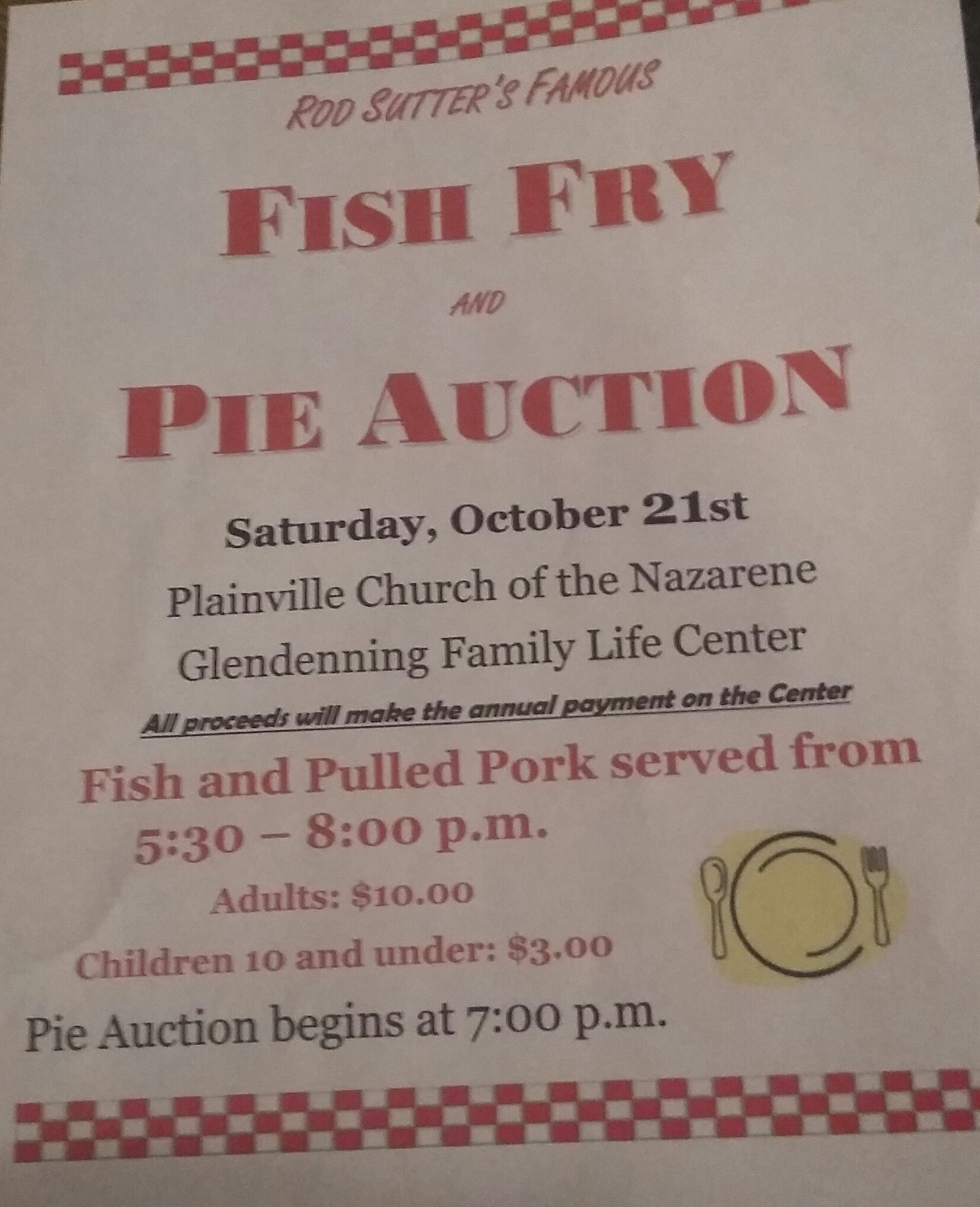
ELLIS — United Way of Ellis County will have its fourth Dine Out Day event all day on Thursday, Sept. 28, at Arthur’s Pizza and Mexican Foods 103 W. Ninth in Ellis, from 11 a.m. to 8:30 p.m. There will fun social media activities with a portion of the proceeds benefitting the United Way. Come join the United Way for lunch or supper.
Upcoming Dine Out Days for the United Way of Ellis County are:
October 2nd – JD’s Chicken at 740 E. 8th from 11a – 2p
October 11th – Wendy’s at 4235 Vine St. from 5p – 8p
October 16th – Gutierrez Cocina Mexicana at 1106 E. 27th from 11a – 8p.
October 24th – Tiger Burger at 7th and Main from 10:30a – 10p.
November 13th – Sip n Spin at 209 W. 10th from 10a – 10p
Please come out to join these restaurants and the United Way of Ellis County.
There was an editorial by the local paper’s editor a few weeks ago that prompts me to write this letter. I will get to that editorial later, but first bear with me about the following as I try to make a very important point regarding the status of Christianity in this nation.
For the first time in American history, under Obama, a Washington, D.C.-based agency added the U.S. to a list of countries known for persecuting Christians.
The Democrat’s Obamacare (Obama’s marquee legislation) had mandates forcing agencies and institutions to provide contraception totally against their religious beliefs. Little Sisters of the Poor is a prime example.
Obama’s Middle Eastern refugee policy was geared to approve Muslim immigrants by the thousands and accept a handful of Christians.
Longstanding Democrat senators Dianne Feinstein and Dick Durbin recently questioned a Trump nominee’s suitability to serve on a U.S. court for the simple reason she is a Christian.
Not too long ago, the Democrat National Committee decided to take the word “God” out of its party platform.
Liberal courts with secularist judges rule more and more each year against Christianity.
And, who could forget Obama deliberately left the words “by their Creator” out of the Declaration of Independence during seven different speeches?
I presented just a handful of cases where there is clear evidence of anti-Christianity within America. There are hundreds of examples I could present if space wasn’t an issue.
The assault and hostility toward Christianity exists internationally as well. It’s a given that there would be hostility internationally, but raising its ugly head right here at home is reason to be concerned. What happened to this country being known as a Christian nation for some 200 years?
Readers are aware President Trump is nominating Governor Brownback to be ambassador at large for international religious freedom although the nomination still needs congressional approval and, if approved, he will step down as governor.
It’s no secret the Hays paper is not fond of our Kansas governor. It’s no secret the paper chastised Brownback every chance he could get governing this state. And, now it’s no secret there are issues with Brownback’s Christian beliefs that most of us conservatives adhere to.
The editorial stated: “Instead of improving U.S. efforts to promote actual religious freedom around the world, we would expect Brownback to focus on elevating a rather narrow conservative view of Christianity at the expense of all others.” Much more was said about the nomination that was negative.
In summary, there clearly is an assault on Christianity in this country and we need people like Brownback locally, nationally, and internationally to protect us as Christians. America was founded in large part by Christians. Why the enormous push from the liberal left to change what we once were known for as a nation?
There needs to be religious freedoms for all, of course. Why shouldn’t that include Christianity?
Les Knoll lives in Victoria and Gilbert, Ariz.
BLUE SPRINGS, Mo. (AP) — A former Blue Springs doctor and Boy Scout leader is being held without bond after admitting that he sexually assaulted a boy for years.
The Kansas City Star reports 45-year-old Joseph Mackey, of Lee’s Summit, pleaded guilty in Jackson County Circuit Court to statutory sodomy. He is scheduled to be sentenced Nov. 3.
Court records indicate the victim met Mackey through a scouting activity and was also a patient of the doctors. He was abused dozens of times between age 14 and adulthood.
Investigators found other victims who said they were abused by Mackey. He told some victims he was coordinating a sexual activities study for the University of Kansas. University officials told investigators the study didn’t exist.