We have a brand new updated website! Click here to check it out!

Public hearings set for Hilton hotel/conference center economic incentives request

Artist’s rendering of the Hays Hilton Garden Inn and conference center

By BECKY KISER
Hays Post

With no discussion by the three Hays city commissioners who were present at Thursday night’s meeting, two unanimous votes approved the next steps in the construction of the proposed Hilton Garden Inn and a convention center north of Interstate 70.

The commission approved setting two public hearings on April 26, 2018 regarding the adoption of the hotel’s TIF (Tax Increment Financing) Redevelopment Project Plan and the establishment of the associated Community Improvement District (CID).

The developer, Hays Hotel LLC and Mitra Developers, LLC, is requesting TIF financing on a pay-as-you-go basis for 20 years. City commissioners established the TIF district by passing an ordinance at the Feb. 8 meeting, which “froze” the base year assessed value for the property.

Construction of the 100-room full-service hotel, restaurant, and conference center at Vine Street and 43rd Street, immediately west of Walmart, would begin later this year and be completed within 18 months.  The developer will also pay for infrastructure, including water, sewer, street, utilities and pedestrian infrastructure.

Phase Two of the project involves construction of a new restaurant and other commercial retail on the two outparcels of the project site.  Tentatively, Phase Two construction, completion and operations would begin in early 2023.

City Finance Director Kim Rupp presented a financial overview of the project.

Total cost of Phase One and Phase Two would be $19.3 million.

Approximately $3.7 million in TIF revenues is estimated to be generated during the 20-year term.  TIF reimbursable expenditures are expected to be $3.9 million. “They’re predicting their revenue would be a little short of what’s eligible for expenditures,” said Rupp.

A 2% CID tax would be in place for 22 years yielding $3.1 million. Total CID eligible costs are estimated at $14.7 million on a pay-as-you-go basis. “They are seeking their own financing. They are not asking the city to issue any bonds.”

The initial 10-year rebate of the hotel Transient Guest Tax (TGT) is estimated at $1.8 million.

Rupp also spoke about the benefits the project would bring to the local economy, in addition to the increased number of hotel rooms in Hays. “We would also gain that coveted convention center to attract visitors.”

Developers expect to create 80 construction jobs and 88 operational jobs.

City sales tax revenue would also increase. Sales tax collections support the city’s General Fund.

“In this case, the TIF will only be the increment of the ad valorum,” Rupp explained. “Sales tax will not be captured. Sales tax will go to the normal taxing entities that it was intended for.” City policy does not allow general or special city or county sales tax generated by the project to be captured by the TIF.

Rupp also pointed out a study by Wichita State University’s Center for Economic Development has determined the hotel project has a benefit-to-cost ratio of 1.78. “So for every dollar input, it’s estimated $1.78 would come back out.”

Commissioners Henry Schwaller and Chris Dinkel were absent from the meeting.

A 15-minute executive session was called at the end of the meeting to discuss possible acquisition of property. No action was taken.
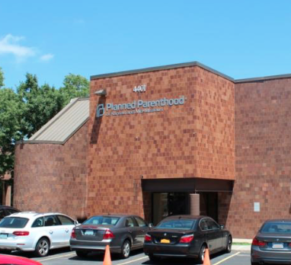
Kan. takes battle with Planned Parenthood to US Supreme Court

TOPEKA, Kan. (AP) — Kansas is asking the U.S. Supreme Court to overturn a federal appeals court ruling that prevents the state from cutting off Medicaid funds to a Planned Parenthood affiliate.

Planned Parenthood -file photo Kan. News Service

Republican Gov. Jeff Colyer said Thursday that the state is seeking to reverse a 10th U.S. Circuit Court of Appeals decision last month. Colyer is a strong abortion opponent.

The appeals court’s decision left in place a lower court’s preliminary injunction blocking a move by Kansas in 2015 to end its contract with Planned Parenthood Great Plains. It was the fifth of six appeals courts to uphold patients’ right to receive health care from their preferred qualified provider.

Planned Parenthood Great Plains operates two health centers in Kansas. One in the Kansas City area performs abortions but Medicaid seldom covers such procedures.

Defense: No anti-Muslim bomb plot in Kansas, just FBI manipulation

Federal prosecutors told jurors Thursday that three men charged with plotting to bomb an apartment complex and mosque in western Kansas were motivated by their hate of Muslim immigrants.

“They wanted to send the message that Muslims are not welcome here — not in Garden City, not in Kansas, not in America,” prosecutor Risa Berkower said.

Abdulkadir Mohamed says Garden City has responded positively to news that authorities believe a bomb plot was aimed at Somalis.
PHOTO CREDIT FRANK MORRIS

Her opening statement in the Wichita trial laid out a case that only the work of federal agents stopped the trio from carrying out a bombing the day after the Nov. 8, 2016, presidential election.

Patrick Stein, Gavin Wright and Curtis Allen were arrested in October 2016 and charged with conspiracy to bomb the apartment complex.

They were recorded by a paid FBI informant calling Muslims “cockroaches” and talked about the prospect of a “bloodbath” to reverse damage they believed immigrants had done to the country. In the recordings, the men discuss a plan to bomb a mosque and apartment complex in Garden City predominantly occupied by Somali Muslims.

Defense attorneys argued the recordings don’t reflect a conspiracy, just “banter” that’s constitutionally protected free speech. Each defendant has his own legal team.

Kari Schmidt, representing Wright, said that meetings of the defendants at Wright’s business were “complaint and bull sessions.” While there was violent language used in those meetings, she said, “there was absolutely nothing wrong with that.”

The prosecutors said the defendants were doing more than just talking, that they took action that included the construction of a detonator for a bomb.

“That detonator wasn’t just words,” Berkower said. “That detonator was action.”

The defense was denied a request to include jurors from counties in western Kansas, which contains more Trump voters than Wichita and the surrounding counties where the jurors have been pulled from.

U.S. District Judge Eric Melgren also ruled before trial that the defense would need more evidence that the men were not inclined to commit the crime before they can argue entrapment.

Attorneys for the three men argued Thursday that the FBI went too far in setting up a case against the defendants. Richard Federico, Allen’s lawyer, said that the real victims were the defendants. He said they were targeted by the FBI.

“The FBI created and directed all of this,” Federico said.

The portrayal of Dan Day, the paid FBI informant who recorded the defendants,  is key for both the prosecution and the defense. Prosecutors presented Day as a concerned citizen and a hero. The defense said he was broke and essentially a bounty hunter who exploited the defendants’ fears for a payday.

Defense attorneys for all three men argued the case in similar ways. But attorneys for Wright and Allen both tried to play down their individual roles. Wright’s attorney said that while the meetings took place at his business, he was often absent. Allen’s lawyer said that Wright and Stein had a close relationship and often left Allen out.

“It was the two of them working together a lot more than Mr. Allen,” said Federico.

Wright and Allen were also both portrayed by their attorneys as lonely men whose desire for camaraderie was exploited by the FBI.

Prosecutors moved to paint that interpretation as absurd.

“Think about what the FBI’s options were,” Berkower said, “when they learned that these three men were highly motivated to kill Muslims and were taking steps to do just that.”

The men are also charged with violating the rights of the targeted Somali Muslims guaranteed by the Fair Housing Act — to live in their homes without being attacked or intimidated because of their race, religion or where they were born. The prosecution said it would use recordings from defendants to show that they were motivated by a hatred of Muslims.

Stein’s attorney, James Pratt, said the context of the statements — the contentious 2016 election season — matters. He described political coverage at the time as “chaos news” that further divided the country.

“Hate ruled the day,” Pratt said. “Left hating right. Right hating left.”

The trial is expected to last six weeks. If the men are found guilty they could face life in prison.

Stephan Bisaha is an education reporter for the Kansas News Service. Follow him on Twitter @SteveBisaha

Kan. delegation votes to approve $1.3 trillion budget, avert shutdown

WASHINGTON (AP) — Congress gave final approval Friday to a giant $1.3 trillion spending bill that ends the budget battles for now, but only after late scuffles and conservatives objected to big outlays on Democratic priorities at a time when Republicans control the House, Senate and White House.

All members of the Kansas congressional delegation voted in favor of the bill.

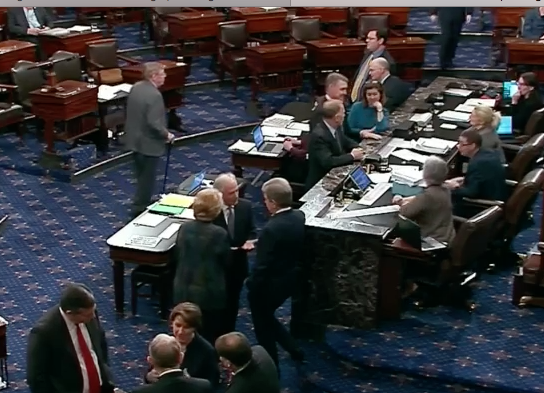
Early Friday on the U.S. Senate Floor as the members wait for the final vote total-photo CSPAN

Senate passage shortly after midnight averted a third federal shutdown this year, an outcome both parties wanted to avoid. But in crafting a sweeping deal that busts budget caps, they’ve stirred conservative opposition and set the contours for the next funding fight ahead of the midterm elections.

The House easily approved the measure Thursday, 256-167, a bipartisan tally that underscored the popularity of the compromise, which funds the government through September. It beefs up military and domestic programs, delivering federal funds to every corner of the country.

But action stalled in the Senate, as conservatives ran the clock in protest. Then, an unusual glitch arose when Sen. James Risch, R-Idaho, wanted to remove a provision to rename a forest in his home state after the late Cecil Andrus, a four-term Democratic governor.

At one point, Sen. Bob Corker, R-Tenn., stepped forward to declare the entire late-night scene “ridiculous. It’s juvenile.”

In the end, Risch lost. But the fight contributed to late-night delays before passage of the massive spending package,

Once the opponents relented, the Senate began voting, clearing the package by a 65-32 vote a full day before Friday’s midnight deadline to fund the government.

“Shame, shame. A pox on both Houses – and parties,” tweeted Sen. Rand Paul, R-Ky., who spent the afternoon tweeting details found in the 2,200-page bill that was released the night before. “No one has read it. Congress is broken.”

Paul said later he knew he could only delay, but not stop, the outcome and had made his point.

The omnibus spending bill was supposed to be an antidote to the stopgap measures Congress has been forced to pass — five in this fiscal year alone — to keep government temporarily running amid partisan fiscal disputes.

Leaders delivered on President Donald Trump’s top priorities of boosting Pentagon coffers and starting work on his promised border wall, while compromising with Democrats on funds for road building, child care development, fighting the opioid crisis and more.

But the result has been unimaginable to many Republicans after campaigning on spending restraints and balanced budgets. Along with the recent GOP tax cuts law, the bill that stood a foot tall at some lawmakers’ desks ushers in the return of $1 trillion deficits.

Trump only reluctantly backed the bill he would have to sign, according to Republican lawmakers and aides, who acknowledged the deal involved necessary trade-offs for the Democratic votes that were needed for passage despite their majority lock on Congress.

“Obviously he doesn’t like this process — it’s dangerous to put it up to the 11th hour like this,” said Sen. David Perdue, R-Ga., who opposed the bill and speaks regularly to Trump. “The president, and our leadership, and the leadership in the House got together and said, Look, we don’t like what the Democrats are doing, we got to fund the government.”

White House legislative director Marc Short framed it as a compromise. “I can’t sit here and tell you and your viewers that we love everything in the bill,” he said on Fox. “But we think that we got many of our priorities funded.”

Trying to smooth over differences, Republican leaders focused on military increases that were once core to the party’s brand as guardians of national security.

“Vote yes for our military. Vote yes for the safety and the security of this country,” said House Speaker Paul Ryan, R-Wis., ahead of voting.

But even that remained a hard sell. In all, 90 House Republicans, including many from the conservative House Freedom Caucus, voted against the bill, as did two dozen Republicans in the Senate.

It was a sign of the entrenched GOP divisions that have made the leadership’s job controlling the majority difficult. They will likely repeat in the next budget battle in the fall.

Democrats faced their own divisions, particularly after failing to resolve the stalemate over shielding young Dreamer immigrants from deportation as Trump’s decision to end the Deferred Action for Childhood Arrivals program has left it for the courts to decide.

Instead, Trump won $1.6 billion to begin building and replacing segments of the wall along the border with Mexico. The Congressional Hispanic Caucus opposed the bill.

Also missing from the package was a renewal of federal insurance subsidies to curb premium costs on the Affordable Care Act exchanges. Trump ended some of those payments as part of his effort to scuttle President Barack Obama’s health care law, but Republicans have joined Democrats in trying to revive them.

Bipartisan efforts to restore the subsidies, and provide additional help for insurance carriers, foundered over disagreements on how tight abortion restrictions should be on using the money for private insurance plans. Senate Republicans made a last-ditch effort to tuck the insurance provisions into the bill, but Democrats refused to yield on abortion restrictions.

Still, Democrats were beyond pleased with the outcome. Minority Leader Nancy Pelosi, D-Calif., chronicled the party’s many gains, and noted they could just have easily withheld votes Republicans needed to avert another shutdown.

“We chose to use our leverage to help this bill pass,” Pelosi said.

Senate Minority Leader Chuck Schumer, D-N.Y., said as the minority party in Congress, “We feel good.” He added, “We produced a darn good bill.”

Gritty K-State upsets Kentucky to move to Elite Eight

ATLANTA (AP) – Kentucky’s latest group of fabulous freshman is all done.

Gritty Kansas State made sure of that Thursday night.

Demeaned by many pundits as the worst team still alive in the NCAA Tournament, ninth-seeded K-State got 22 points from Xavier Sneed and gave the South Regional one more upset with a 61-58 semifinal victory over Kentucky.

Next up in the bracket-busting South: the regional final against No. 11 seed Loyola, which continued its stunning run in the tournament with a 69-68 victory over Nevada.

Yep, its 9 vs. 11 in the Elite Eight for the first time in tournament history with a trip to the Final Four on the line.

Just the way it should be in a regional that became the first in NCAA history to have the top four seeds knocked out on very first weekend, including No. 1-ranked Virginia.

Sneed wasn’t around at the end – he was among three Kansas State players who fouled out – but Barry Brown Jr. came through with the shot of the game to seat it for the Big 12 school.

Brown darted into the lane with the shot clock running down, seemingly blowing by every Kentucky player to get to the basket, and banked one in with 18 seconds remaining to put K-State up 60-58.

Kentucky’s Quade Green put up an airball from beyond the arc and Kansas State rebounded, drawing a foul that sent Amaad Wainright to the line for two free throws that could’ve sealed it. He made only one, giving Kentucky one more chance to force overtime.

Shai Gilgeous-Alexander got a decent look at the basket, but his shot rimmed out as the horn sounded.

Brown wasn’t done. In the raucous celebration, he leaped over the press table like Superman and sprinted into the arms of the purple-clad Kansas State fan section.

John Calipari was denied a shot at his fifth Final Four in nine seasons as Kentucky’s coach. Fears that his young players would “drink the poison” – the belief that they had an easy path to San Antonio thanks to all the upsets – turned out to be well founded.

KSHSAA honors athletic officials for dedication and service

TOPEKA, Kan. – Each year, the Kansas State High School Activities Association recognizes and honors a select group of contest officials for their dedication and service to Kansas interscholastic athletic programs. The KSHSAA Official Recognition program started in the 1999-2000 school year to honor officials who have contributed significant years of service. Award plaques are given for 20, 30, 40 and 50 years of service to the youth and schools of Kansas. Officials reaching these milestones are recognized at a ceremony in conjunction with a state championship event.

Each school year approximately 4,000 men and women, including some high school students, become KSHSAA registered athletic officials. The Association registers officials in 10 of the 14 sports it sponsors. Officials at interscholastic athletic events not only provide for a fair and safe contest environment but also play an important role as participants in the educational development of high school students.

The KSHSAA was pleased to recognize these special individuals for their years of study, preparation, sacrifice of personal time, and most of all, their enduring commitment to the schools and youth of Kansas.

KSHSAA Registered Officials Honored in the Winter of 2018

20 Years of service
Mike Buchanan, Manhattan
Steve Fellers, El Dorado
Terrell Black, Cheney
Doug Clark, Wichita
Mark Hintz, Hebron
Thomas Drake, Ottawa
Donald Dufield, Wichita
Kurt McAfee, Wichita
Monty Enright, Manhattan
Jeff Freeman, Topeka
Roy Smith, Iola
Michael Wilmoth, Wellington
Tad Gellender, Lawrence
Troy Wiseman, Topeka
Jeffery Gottstein, Gardner
Richard Nitsch, Leawood (posthumously)
Terrance Powell, Council Grove
Jim Riener, Phillipsburg
Ron Sturgeon, Osborne
Lance Ziegler, WaKeeney

30 Years of service
Steve Fellers, El Dorado
Mark Hintz, Hebron
Kurt McAfee, Wichita
Roy Smith, Iola
Troy Wiseman, Topeka

40 Years of service
Terrell Black, Cheney
Thomas Drake, Ottawa
Monty Enright, Manhattan
Michael Wilmoth, Wellington

Warm, windy Friday

Today Gradually becoming mostly sunny, with a high near 86. East wind 7 to 16 mph becoming south southwest in the afternoon. Winds could gust as high as 26 mph.

Tonight Partly cloudy, with a low around 44. West southwest wind around 14 mph becoming north northwest after midnight.

Saturday Sunny, with a high near 63. North northwest wind 9 to 16 mph, with gusts as high as 28 mph.

Saturday Night Increasing clouds, with a low around 37. East wind 11 to 15 mph.

SundayA 20 percent chance of showers before 1pm. Partly sunny, with a high near 57. East southeast wind around 11 mph.

Sunday Night A 30 percent chance of showers after 1am. Mostly cloudy, with a low around 43.

Monday Mostly sunny, with a high near 74.

Cause of SW Kansas home fire under investigation

FORD COUNTY — Fire officials are working to determine the cause of a fire at a home in Ford County.

Thursday night fire in Ford County-photo courtesy Ford County Fire and EMS

Just after 9 p.m. Thursday, crews were paged to a fire in the northwest part of the Ford County, according to a social media report from Ford County Fire and EMS.

First arriving units reported heavy fire coming from the north side of the residence on the second floor. Crews from Stations 1, 5 and 6 responded and the was fire contained in a very short time. Crews remained on scene for a few hours performing overhaul.

There were no injuries.

Senate passes Sen. Moran’s bill to provide disabled VA veteran employees additional paid leave

OFFICE OF SEN. MORAN

WASHINGTON –  The U.S. Senate unanimously passed S. 899, a bill authored by Senators Jerry Moran (R-Kan.), Mazie K. Hirono (D-Hawaii) and Jon Tester (D-Mont.) – members of the Senate Veterans Affairs Committee – to ensure veterans with a disability rating of 30 percent or higher who are hired by the VA in critical medical positions can access additional paid sick leave during their first year on the job for the purposes of receiving medical care related to their service-connected condition.

“The Senate took important steps today to help service-disabled veterans better transition into the federal workforce and civilian life,” said Sen. Moran. “This legislation builds on the Wounded Warriors Federal Leave Act to make certain veterans who sustained wounds or injuries while defending our nation can take time off to seek medical treatment without impacting their livelihood or paycheck. Veterans in Kansas and across the country with service-related disabilities have earned greater flexibility in the workplace to receive the care they need, and I urge my colleagues in the House to quickly pass this sensible legislation.”  

“This is common-sense legislation that will ensure the VA’s disabled veteran employees receive the same additional paid sick leave that is available to other federal agency employees,” said Sen. Hirono. “The Senate today affirmed how important it is to eliminate barriers our disabled veterans face to continue serving our country at the VA as this critical agency works to fill tens of thousands of vacancies at its medical facilities in Hawaii and across the country.” 

“Veterans looking to serve their fellow veterans by working at the VA should not have to choose between a paycheck or a doctor’s appointment,” said Sen. Tester. “This bipartisan bill strengthens workforce protections for our veterans and establishes better working conditions for those who fought for our freedoms.”

Since the Wounded Warriors Federal Leave Act – led by Sen. Moran – became law in November 2016, 104 hours of additional paid sick leave has been available to newly hired service-disabled veterans for positions in the federal government. The law currently applies to most federal agencies, but personnel occupying certain VA medical positions are not currently eligible.

S. 899 will ensure all newly hired VA physicians, physician assistants, registered nurses, chiropractors, podiatrists, optometrists, dentists and expanded-function dental auxiliaries who are service-disabled veterans will not have to face the added financial hardship of taking unpaid leave to receive necessary medical treatment. With this benefit expanded to these VA medical positions, disabled veterans may be more incentivized to apply and fill the more than 18,000 vacancies for medical personnel across the VA health system, including 118 vacancies in Kansas.

The VA Veteran Transition Improvement Act is supported by the American Legion, Veterans of Foreign Wars (VFW), National Association of VA Physicians and Dentists (NAVAPD), Nurses Organization of Veterans Affairs (NOVA), Paralyzed Veterans of America (PVA), Disabled American Veterans, American Federation of Government Employees (AFGE), National Federation of Federal Employees (NFFE), Service Employees International Union – National Association of Government Employees (SEIU-NAGE), and the Federal Managers Association (FMA).

Sen. Moran introduces bipartisan legislation to stabilize, improve Postal Service

OFFICE OF SEN. MORAN

WASHINGTON – U.S. Senators Jerry Moran (R-Kan.), Claire McCaskill (D-Mo.), Tom Carper (D-Del.) and Heidi Heitkamp (D-N.D.) today introduced The Postal Service Reform Act of 2018: Improving Postal Operations, Service, and Transparency to stabilize, preserve and improve the Postal Service – an essential part of our nation’s infrastructure and economy.

The financial condition of the Postal Service, which operates at the center of a $1.4 trillion industry and employs more than seven million people, has been deteriorating for years. Despite the Postal Service setting a record on Dec. 18, 2017, when it delivered more than 37 million packages – the most packages delivered in a single day in their over 200-year history – the Postal Service saw a net loss for the first quarter totaling $540 million. In addition to reporting net losses for the 11th year in a row and defaulting on its legally mandated multi-billion-dollar retiree health prefunding payments yet again, the Postal Service also, for the first time, missed payments it owes to the federal retirement system in 2017 – for a combined total of $6.9 billion. For years, the onerous pre-funding schedule for future retiree healthcare obligations has put the Postal Service in a place where it must cut costs – often at the price of service – and ultimately prevents the Postal Service from investing in the infrastructure it so desperately needs.

The Postal Service Reform Act of 2018 includes comprehensive reforms that would put the Postal Service on firm financial footing, stabilize and improve service performance, allow for the development of new products and services, and enhance transparency.

“The U.S. Postal Service has a significant history in Kansas – dating back to the Pony Express – and it continues to play a vital role in the American economy, especially in Kansas’ rural communities,” said Sen. Moran. “Rural America depends on a reliable Postal Service. USPS’s deteriorating financial condition threatens its future and the well-being of the communities it serves. In order to provide certainty for rural America and protect taxpayers, Congress must act to put the Postal Service on a more sustainable path. This bipartisan legislation would provide some much needed stability, preserving and improving mail services across Kansas and the country.”

“Post office access and efficient service are issues that families and businesses in rural Missouri care about, and we’ve got to do what it takes to ensure the service they’ve relied on for generations stays intact,” said Sen. McCaskill. “This is an issue where we can and should continue to work together across the aisle and I’m committed to doing exactly that.”

“Nearly two and a half centuries after its founding, the Postal Service remains an important part of our everyday lives and plays a vital role in our economy,” said Sen. Carper. “But it continues to lose money at a record pace. Our economy still depends on a healthy and robust Postal Service. It’s our duty in Congress to pave a fiscally sustainable path that will enable this American institution to thrive.”

“There is no substitute for the Postal Service in rural America,” said Sen. Heitkamp. “From receiving daily newspapers and prescriptions, to shipping products around the nation, families and businesses across the country rely on getting their mail on time in an accessible, affordable manner. Congress needs to act now to stabilize the Postal Service and give it the tools it needs to thrive – otherwise it will go insolvent, taking this critical service away from rural communities that need it. Across North Dakota, I’ve heard about problems with mail delivery and service and I’ve pushed for changes from the Postal Service through my Fix My Mail initiative. Now, our bipartisan, comprehensive bill would reform the Postal Service, put it on firmer financial footing, and help improve mail delivery and service in rural communities. Far too often, rural America gets the short end of the stick, and Congress needs to step up and pass our bill so the Postal Service can fully function and remain the great equalizer that enables Americans no matter where they live to get reliable, affordable mail delivery.”

Stakeholders in the industry also support the bill:

“It is vital that Congress act promptly to pass legislation that will ensure affordable, reliable mail service six days a week,” said Don Hall, CEO of Hallmark Cards, Inc. “I applaud the leadership of Senators Carper, Moran, Heitkamp and McCaskill in crafting legislation to achieve that goal and respond to the concerns of leaders in the House of Representatives.”

“The Association of Magazine Media commends Senators Carper, Moran, Heitkamp, and McCaskill for their leadership,” said Linda Thomas Brooks, president and CEO. “The introduction of this bill is an important first step toward securing the future of the American postal system and the many industries that rely on it to do business – including our own.”

“The very broad business mailing community represented by the Coalition for a 21st Century Postal Service endorses the Postal Reform Act of 2018 and appreciates the hard work by the bipartisan sponsors to get to this point. The extreme financial challenges overhanging the Postal Service have been evident and building for a number of years, with a day of real reckoning coming later this year. The industry and other stakeholders have sought help only Congress can give throughout this time to no avail. Now is the time for Congress to act before it must bail out the system with taxpayer dollars or radically shrink it.”

“The United Postmasters and Managers of America (UPMA) applauds the efforts of Senators Carper, Moran, Heitkamp and McCaskill in introducing bipartisan legislation to further the goal of providing financial relief to the U.S Postal Service, helping safeguard a universal postal system, and encouraging innovation,” said UPMA co-presidents Tony Leonardi and Sean Acord. “UPMA looks forward to continue working with these Senators and other members of Congress to sustain the U.S. Postal Service, a proven national treasure.”

“NNA supports the hard work these bill sponsors have done to ensure a reliable and affordable mail service,” said Susan Rowell, publisher of the Lancaster (SC) News, and president of the National Newspaper Association. “Congress has lingered far too long over the needed corrections in postal policy, and as a result the continuation of this service is ever more seriously at risk. Our elected officials know the Postal Service must have a better set of laws for its operation, and they ignore this need at the peril of all of us who rely upon the mail. We strongly urge the Senate to take up this bill and give this proposal, which has bipartisan support, an opportunity to pass this year.”

Over the last several Congresses, Sens. Moran, Carper, Heitkamp and McCaskill have held numerous briefings, roundtables and meetings with members on both sides of the aisle and postal stakeholders to assess the hurdles facing the Postal Service, identify the tools the Postal Service needs to innovate and thrive in the 21st century, and find a way forward on postal reform.

Specifically, the Postal Service Reform Act of 2018:

Increases Sustainability: The Postal Service Reform Act eliminates the existing statutory payment schedule, cancels any outstanding payments, and amortizes payments over 40 years. The bill would also create a new Postal Service Health Benefits Program (PSHBP) within FEHBP, implemented and administered by OPM, for all postal employees and annuitants and require all Medicare-eligible postal annuitants and employees enrolled in the PSHBP to also enroll in Medicare, including parts A, B and D. This is essential for protecting the American taxpayer from a future bailout and for protecting the employees’ benefits in retirement.

Improves and Stabilizes Postal Service and Operations: The price of postage is decreased pursuant to federal court orders last Congress, eliminating the positive revenue stream from the exigent rate case in 2014. As the result of a compromise among the postal community, the bill restores the half of the temporary rate increase while freezing any further rate increases until a new rate system can be finalized by the Postal Regulatory Commission.

Prioritizes the Postal Customer with Service Improvements & Protections: The bill includes strong service reforms that put the postal customer first by improving mail service performance across the country—especially in rural America—while also requiring transparency and enforcement to ensure the Postal Service’s accountability. Service performance would also be stabilized by preserving current service standards for at least 2-years.

Innovates and Modernizes Existing Postal Business Model and Increases Transparency: The bill also allows the Postal Service to introduce new non-postal products and services, ship beer, wine and distilled spirits, and partner with state and local governments in offering government services.

The Postal Service Reform Act also increases transparency of Postal Service delivery results and would require that all delivery and retail performance results are posted in a transparent and user-friendly way.

Kan. barbecue owner accused of using customer’s card

OLATHE, Kan. (AP) — A barbecue restaurant owner in eastern Kansas is accused of racking up more than $7,300 in charges on a customer’s credit card left at the business.

Sander-photo Johnson Co.

Matthew Sander was charged last week with counts of identity theft, misdemeanor theft, felony theft and criminal use of a financial card.

Sander is the owner of Smokin’ Joe’s Bar-B-Q in Olathe.

A customer told police that he ate at the restaurant Jan. 28, and couldn’t find his card the next day. He found several unauthorized purchases made Jan. 28 on his statement. Sander was arrested March 10 after investigators identified him through surveillance video.

Court records show the case is the third time since December that Sander has been charged with similar crimes. His next court appearance is April 11.

Kan. high school band trip to Orlando includes sickness

LAWRENCE, Kan. (AP) — Lawrence school officials say about a third of the 150 Lawrence High School band members who recently went to Orlando, Florida, became sick with after apparently contracting a norovirus.

norovirus
CREATIVE COMMONS / PUBLIC DOMAIN IMAGES

Lawrence High School assistant principal Mark Preut said the students spent six days in Orlando for Festival Disney, a performing arts competition at Disney World. They began falling ill after they arrived at an Orlando hotel on March 14.

A norovirus is a highly contagious virus that people can get from another person, contaminated food or water, or by touching contaminated surfaces. Symptoms include stomach pain, nausea and diarrhea. One student was treated at an emergency room for dehydration.

The high school is on spring break this week.

Kansas lawmakers advance first part of school funding fix

TOPEKA, Kan. (AP) — Kansas lawmakers have advanced the first piece of a plan for complying with a Kansas Supreme Court on public school funding.

A special Senate committee on school finance approved a bill Thursday that would revise the state’s formula for distributing more than $4 billion a year to local school districts. The measure goes next to the Senate and a debate there is expected next week.

The bill’s changes are designed to make the formula fairer to poor school districts. It eliminates several provisions that the Supreme Court said favored wealthier districts.

The court ruled in October that parts of the funding formula were unfair and that the state isn’t spending enough money overall on its schools. The Senate committee’s bill does not significantly boost the state’s overall spending.

Copyright Eagle Radio | FCC Public Files | EEO Public File