WASHINGTON – U.S. Senator Jerry Moran (R-Kan.) and 1st Dist. Congressman Roger Marshall (R-KS) today applauded the inclusion of a section 199A tax fix in the FY2018 omnibus package.
“This legislation restores the competitive balance in the agricultural marketplace by leveling the tax burden on independent and cooperative farming businesses,” said Sen. Moran. “In Kansas, where grain continues to pile up on the ground, the success of our economy can be directly impacted by how our farmers sell and trade grain. The change will provide tax benefits to farmers as intended under the Tax Cuts and Jobs Act.”
“Section 199A of the tax reform law inadvertently provided incentives for farmers and ranchers to sell products to specific business structures and not others,” according to Marshall.
“When we started on tax reform, I promised folks back home that I would fight to preserve the original Section 199 that benefited co-ops, which I did. However, when it became clear that the tax reform package tilted the scales too far, I knew we had to do the right thing and get the government out of the business of picking winners and losers through our tax code,” Rep. Marshall said. “I believe this was an honest mistake, and I am glad to have been part of the effort to resolve this error. I am thrilled that this fix was included in the omnibus and I know my producers and businesses at home will see more and more benefits from our historical tax reform bill because of it.”
Text of the FY2018 omnibus can be found here, and the section 199A fix can be found on page 2033.
With a dedication to the education of the professional population, Fort Hays State University has earned recognition for being among the nation’s top professional graduate degree programs.
Abound: Grad School, a college guidance system network for master’s-seeking professionals, commends Fort Hays State University for addressing the issues that matter most to grad students: affordable options for attending college, access to professors, campus professionals, support services, opportunities to accelerate their path to graduation, and preparation for sustained career growth.
“We’re thrilled to award Fort Hays State University for investing alongside adult students in their career growth,” said Tyson Schritter, chief operating officer for Abound. “Fort Hays State University has shown the expertise and willingness to graduate talented master’s students who can help close the skills gap that has plagued our economy.”
“We are honored to be recognized by Abound for our graduate programs,” said Dr. Jennifer Bonds-Raacke, dean of the Graduate School. “Our dedicated faculty provide an outstanding graduate experience for our students through one-on-one advising, high-impact educational practices and dedication to academic excellence.”
Economists project that the “skills gap,” the millions of jobs that go unfilled in the United States every year, will intensify as middle-class jobs increasingly require higher skill levels. According to a survey from CareerBuilder, 27 percent of employers are recruiting those who hold master’s degrees for positions that previously only required four-year degrees.
Abound: Grad School programs meet several criteria in each of three main areas: Accessibility, Affordability, Acceleration and Advancement. Each school is evaluated based on a key analysis of flexible scheduling, career services, transparency of affordability assistance, the breadth of engaged learning opportunities, and more. Schools are invited to the guidance system network only after interviewing with the Abound team and distinguishing their dedication to their students’ education.
“Abound goes deeper than the annual statistical rankings of colleges and universities, interviewing schools individually to hand-pick those that offer graduate students a truly valuable experience,” said Schritter.
“Through our nearly 20 years of work with Colleges of Distinction, we have earned a solid reputation for serving the college-bound community by identifying quality institutions. As with Fort Hays State University, Abound: Grad School recognizes schools that provide the experience and success every student deserves.”
To view the college websites and FHSU’s Abound profiles, visit these links:
About Abound: Grad School
Abound: Grad School connects master’s-seeking students with programs best suited to their academic and career goals, and we help institutions attract and serve students most likely to thrive in their programs as lifelong learners, and to develop meaningful careers as a result. Abound: Finish College is part of the Abound college guidance system for degree-seeking adults. We help students find the best place to earn an undergraduate degree, graduate degree, nursing degree, or MBA. The colleges we work with are nationally recognized for program excellence and offer courses on campus, online, or both.
Rep. Leonard Mastroni, R-Lacrosse, 117th House Dist.
KANSAS SAFE AND SECURE SCHOOLS ACT
On Monday, March 19th, the House Appropriations Committee past HB 2773 out of committee and on its way to the full house. The Kansas Safe and Secure Schools Act, a comprehensive approach to making schools safer for our kids by ensuring coordination with schools and local law enforcement to improve school security infrastructure. Principally, HB 2773 would do the following:
1. Coordinate with the Kansas State Board of Education and other agencies to develop statewide standards for safe and secure school buildings.
2. Empower local school districts to coordinate with local law enforcement and emergency management agencies to review and evaluate current building infrastructure policies and procedures.
3. Establish the Safe and Secure Schools Grant Program with funds that can be used for improvements to any facet of the school safety and security plan including infrastructure and training.
4. Provide standardized firearm safety education programs that may be offered by school districts.
5. Appropriate funds to the Department of Education, which will be used for two FTE positions to review and evaluate school safety and security plans. The provisions of this bill would encourage schools to make improvements, such as reinforced doors, additional security cameras, and training opportunities to enhance the overall security of school grounds. The Safe and Secure Schools Act will advance communication between local school districts and law enforcement. A safe and secure learning environment is one of the highest priorities in our state, and this establishes an opportunity for all Kansas school districts. Additionally, for the purposes of promoting the safety and protection of students via education, the State Board of Education would be required to establish curriculum guidelines for a standardized firearm safety education program.
Pictured with me from left to right are Katrina Jacobs of Rush Center, Kassie Pechanec of McCracken, Governor Jeff Colyer, M.D., Hayleigh Burke of Hanston, and Reesa Nuss of Jetmore.
Representative Mastroni would like you to know about the Page Program at the State Capitol. It is an awesome experience for all our young students to know hands-on how the Legislative Branch of the Kansas government works, how laws are introduced, voted on and passed. Students who desire to Page, please call 785-296-7396 for more details. Pages must be between the age of 12 to 17.
I hope to hear from you soon.
OFFICIAL STATE ROCK, MINERAL, GEMSTONE, AND FISH
HB 2650, which would designate the official state rock of Kansas as limestone, the official state mineral as galena, and the official state gemstone as jelinite amber. The bill was brought forward by Casey Friend, a fourth grader attending Trailwood Elementary School in Overland Park, Kansas, who stated that he has always been interested in geology. He conducted his own research to discover that Kansas had no designated official state rock, mineral, and gemstone and therefore wanted to make a change. Friend explained that limestone is commonly found in Kansas, galena attracted a large mining workforce to Kansas, and jelinite amber was discovered in the bedrock near the Smoky Hill River. Jackson Svaty, a nine-year-old from Topeka Collegiate School also testified, principally in support of the state gemstone provisions of the bill. Svaty explained how difficult it is to obtain jelinite amber, as it is only found at the bottom of Kanopolis Lake.
Chris Tymeson, chief legal counsel for the Department of Wildlife, Parks, and Tourism expressed his support for the bill’s passage. He also noted how Kansas is one of four states that has yet to designate a state fish. The committee decided to amend the bill to label the channel catfish as the official state fish, as it is found in almost every body of water in Kansas.
Due to the steps taken to improve transparency of the legislative process, Friend’s classroom was able to watch and listen to their classmate testify before the committee and were even able to experience HB 2650 pass out of committee favorably.
The bill passed the full house on March 22, 2018, and will be in the Governor’s office for his consideration this coming week.
Gov. Colyer signed Caitlin’s Law March 9.
CAITLIN’S LAW
Governor Jeff Colyer M.D. signed Caitlin’s Law on March 9, 2018. Pictured above are Caitlin’s mother, father, and sister along with the legislators that sponsored Caitlin’s Law. Caitlin (24 years old) left her home to drive to the grocery store and was hit by a drunk driver and was killed. The driver had previously been convicted of drunk driving and had an ignition interlock system installed in his vehicle that he had to blow in to start his vehicle. Because of his intoxicated condition, he borrowed a friends car and was driving it when he crashed into Caitlin’s car.
Caitlin’s Law creates two new offenses under the general crimes of involuntary manslaughter and aggravated battery. The law will provide for greater penalties for those who drive under the influence at a time they are not entitled to drive because of a prior offense of driving while under the influence when death or serious injury or dismemberment occur because of a crash. The law will hold those who choose to drive while under the influence and ignore restrictions or elimination of their privilege to drive because of a past instance of driving under the influence, where serious injury or death results, accountable for their behavior.
DROUGHT CONDITIONS, EXECUTIVE ORDER
Governor Jeff Colyer, M.D. signed Executive Order 18-11, which officially declares a Drought Watch. Drought Warning, or Drought Emergency in several counties throughout the state. The order also authorizes and directs agencies to implement appropriate responses under the Governor’s Drought Response Team.
House Sub. for HB 2572 requires that the Department of Commerce collect data from economic development incentive programs that provide more than $50,000 in annual incentives. This data from multiple years would be stored in a database and would be searchable on the Department’s website. Specific information would be provided, including names or counties and recipients who receive benefits from various programs, including STAR bonds. Descriptions and histories of the programs, along with purpose, goals, and qualifications would also be included. Another component is the program cost and returns on investment. On Thursday, the House Committee of the Whole debated the measure. On Friday, the bill passed the House with a vote of 114-7.
INDUSTRIAL HEMP RESEARCH
The Agriculture Committee heard testimony on SB 263, which would allow the Kansas Department of Agriculture to cultivate and research the uses of industrial hemp. Principally, the research would be conducted in effort to analyze its required soils, growing conditions, harvest methods, and the potential for an industrial hemp market in Kansas. Additionally, a pilot program in Russell County would be established to study its effect on economic development and the development of industrial hemp products. A number of Representatives expressed their support, as well as the Department of Agriculture, the Sierra Club, small businesses, and private citizens. Data was included that showed hemp uses 66% less water than corn, requires virtually no pesticides or fertilizers, and has great potential to improve agricultural and economic activity in rural Kansas. Opponents argued that the provisions of the bill would lead to the legalization of marijuana, while others asserted that this bill would not go far enough concerning hemp.
In March of 2017, the House passed HB 2182 on a vote of 103-18. HB 2182 differs from SB 263, in that SB 263 solely allows the Department of Agriculture, either alone or in coordination wit a state institution of higher education to grow, cultivate, and research industrial hemp. Earlier in February, the Senate approved this bill with a final vote count of 36-3. The committee passed SB 263 this week, and has yet to be considered by the Committee of the Whole.
WILDFIRES
Over the past few weeks, fires have burned across the state, fueled by dangerously dry conditions and strong winds. Governor Jeff Colyer, M.D. issued disaster declarations for the following counties: Barber, Clark, Ellis, Greenwood, Harper, Kingman, Logan, Reno, Smith, and Stevens. On Tuesday, firefighters battled a wildfire in Greenwood County. On Wednesday fires were fought in Wabaunsee County, near I-70 and Vera Road, and in Hamilton County, along the Colorado border. Kansas Army National Guard helicopters delivered water through aerial support for some of the fires.
According to a Wednesday press release from the National Guard, “Approximately 50 fires were reported to the State Emergency Operations Center in Topeka since Monday, burning more than 25,000 acres. Aerial and ground firefighting resources were coordinated by the SEOC through the Kansas Forest Service and Kansas Army National Guard to augment fire suppression efforts by local responders. Soldiers of the Kansas National Guard’s 1st Battalion, 108th Aviation, along with troopers from the Kansas Highway Patrol and personnel from the Kansas Forest Service provided aerial and ground support to local crews battling fires in Ellis and other counties yesterday and the Greenwood County fire today.
The State Emergency Operations Center in Topeka is providing support and coordination of state and federal resources as requested by the counties. County emergency managers may continue to report incidents and request state assistance to augment local response and recovery actions through the state’s 24-hour emergency notification line.
DRIVER’S LICENSE RENEWALS AND VISION SCREENINGS
On Tuesday, March 6, 2018, Rep. Mastroni carried HB2606 onto the floor of the house for debate. The bill specifies the vision test requirements for renewals. A current requirement, that a driver’s license examiner administer an eye exam before the renewal of a driver’s license would be waived under certain conditions: (1) online applicant must be at least 18 years old and less than 50 years old; (2) must certify under penalty of the law that their vision meets requirements in continuing law; (3) must certify under penalty of the law that applicant has received an examination by a licensed ophthalmologist or licensed optometrist within the previous year; and, must authorize the exchange of information (medical and vision) between the Division of Vehicles and applicant’s ophthalmologist or optometrist.
The bill increases the convenience of online renewals. The House approved the bill with a vote of 120-2. The bill is in the Senate and had a hearing on March 15, 2018. No further action at this time.
FLOOR ACTION
HB 2757 – Due process for terminating teachers’ contracts. This bill would grant due-process for Kansas teachers who have completed two to three consecutive years of employment and have been offered a subsequent contract. Final Action, 73-48. Rep. Mastroni voted in favor of the bill. The bill is currently in the Senate Education Committee as of March 9, 2018.
HB 2758 – Publication of school district bullying policies. This bill would require school districts’ anti-bullying plans to include consequences and appropriate remedial action for a person who engages in bullying, cyberbullying, or similar forms of harassment. Additionally, the bill would require a procedure for reporting such bullying, including anonymous reporting. Such plans must be adopted and implemented by the local school board and must be published on the district’s website. Final Action, 120-1. Rep. Mastroni voted in favor of the bill. The bill is in the Senate Education Committee as of March 9, 2018.
HB 2572 – Requiring the department of commerce to create a database of economic development incentive program information. This bill would require the Department of Commerce to establish a database for the purpose of disclosing information pertaining to the state’s economic development incentive programs. Final Action, 114-7. Rep. Mastroni voted in favor of the bill. Bill is currently in the Senate Committee on Assessment and Taxation.
SB 405 – Clarifying animal conversion units for poultry facilities with dry manure systems. This bill would establish the animal unit measurement calculation for chicken facilities that use a dry manure waste system as the number of laying hens or broilers, multiplied by 0.003. The bill would also require a confined chicken facility to obtain a federal permit if the facility uses a dry manure system and confines 125,000 or more broilers or 82,000 or more laying hens. Rep. Mastroni voted in favor of the bill and it was enrolled and presented to the Governor on Friday, March 16, 2018, for his consideration.
HIGHLIGHTS FOR LAST WEEK
• Monday March 12: House Judiciary Committee: Hearings on SB 281 Protection orders for human trafficking victims under the protection from stalking, sexual assault or human trafficking act and SB 309 Providing for the disposition of judicial branch docket fees in FY 2020 and FY 2021: 3:30,
Rm 112-N
• Tuesday March 13: House Federal and State Affairs Committee: Hearing on SB 307 Amendments to the Kansas amusement ride act concerning home-owned amusement rides and agritourism activities: 9:00, Rm 346-S
• Tuesday March 13: House K-12 Education Budget Committee: Hearing on HB2445 Amending the Kansas school equity and enhancement act regarding local option budget provisions, certain weightings, capital outlay expenditures and repealing provisions of the CLASS act: 1:30, Rm 346-S
• Wednesday March 14: House Health and Human Services Committee: Hearing on: SB 312 Licensure of dental therapists: 1:30, Rm 546-S
• Wednesday March 14: House Agriculture Committee: Hearing on SB 263 Creating a program to research the use of industrial hemp: 3:30, Rm 582-N
• Wednesday March 14: House Taxation Committee: Hearings on HB 2569 concerning income taxation; doubling the standard deduction for the tax year 2018 and all tax years thereafter and HB 2761 allowing an individual to itemize deductions in Kansas despite not itemizing on their federal return: 3:30, Rm 346-S
• Friday March 16: HB 2516 – Providing immunity from civil liability for damage to a motor vehicle related to the rescue of a person or animal. The bill creates the law providing immunity under specified circumstances when a person enters a vehicle, by force or otherwise, to remove a vulnerable person or animal.
Final Action, March 15, 122-1
HB 2527 – Creating the crime of unlawful acts involving automated sales suppression devices manufacturing, creating, designing, updating, repairing, using, or possessing certain automated sales suppression device. The bill was requested for introduction by the Kansas Department of Revenue. Final Action, March 15, 123-0
SB 335 – Including savings and loan associations and savings banks in the state banking code and repealing the savings and loan code. The bill amends and creates the law to incorporate savings and loan associations and savings banks into the State Banking Code. Existing Savings and Loan Code is repealed. The bill was requested for introduction in the Senate Financial Institutions and Insurance Committee by the Kansas Bankers Association. The House Committee on Financial Institutions and Pensions Committee amended the bill to clarify references to mutual banks.
Friday March 16: Joint Meeting of the House K-12 Education Budget Committee and Senate Select Committee on Education Finance: Presentation on Dr. Lori Taylor’s Cost Study by Jeff King and Curtis Tideman, Attorneys: 1:00, Rm 346-S.
THIS WEEK’S HIGHLIGHTS
* Monday, March 19: Appropriations:
Discussion on HB 2773 – Creating the Kansas safe and secure schools act.
Discussion on HB 2468 – Appropriation revisions for FY 2018 and FY 2019 for various state agencies.
* Monday, March 19: Financial Institutions and Pensions:
HB 2698 – Establishing the Kansas children’s savings account program.
* Monday, March 19:
Joint K-12 Education Budget: Education Finance Presentation on: Dr. Lori Taylor and Jason Willis will present the overview of Dr. Taylor’s study. NOTE: starts at 12:00 p.m.
* Tuesday, March 20: Federal and State Affairs:
Hearing on HB 2687 – Creating the adoption protection act (proponents).
* Wednesday, March 21: Federal and State Affairs:
Hearing on HB 2687 – Creating the adoption protection act (opponents).
* Wednesday, March 21: K-12 Education Budget:
Informational Presentation by Commissioner Randy Watson and the State Department of Education on the following policy items included in the Governor’s budget proposal: increase of 150 school counselors, social workers, and school psychologists statewide; offering every Kansas high school student the choice of taking either the ACT college entrance exam or the WorkKeys assessments; and the education superhighway.
* Thursday, March 22: Water and Environment: Effects of Kansas Wildfires.
CONTACT INFORMATION
Rep. Leonard Mastroni, R-LaCrosse, 117th House Dist.
State Capitol Building
300 SW 10th – Room 167-W
Topeka, Ks 66612
Phone: 785-296-7396 [email protected]
Legislative Hotline 1-800-432-3924
Barry A. EllegoodBarry Ellegood, 49, of Oakley, lost his fight to cancer on Wednesday, March 21, 2018, at the Logan County Hospital, in Oakley, surrounded by his family. Barry was born in Colby, Kansas to Ben and Donnette (Nelson) Ellegood on January 3, 1969. He was the second oldest of four boys. . Barry was a lifelong resident of Oakley, Kansas. He welcomed his first child Taylor in 1991 and his second child Teigan in 1996. Barry had always struggled with his health and in January of 2015 he received a kidney and pancreas transplant. He made it home 3 days before his first grandson Jax was born. He happily welcomed a second grandchild Zoe in December 2016. Barry loved his grandchildren. They were the light of his life. He was a huge sports fan and could always tell you the stats of any NFL player or the score of a game.
Barry was preceded in death by his grandparents, Robert and Alice Ellegood; his grandmother Lucille Nelson, and his uncle Dick Nelson.
Barry is survived by his parents Ben and Donnette, daughter Taylor and her husband, Wayne; son Teigan; two grandchildren, Jax and Zoe;, brothers, Tracy (Tiffany), Shane (Melissa), and Lance; aunt Connie (Dan); nieces and nephews, Brittany (Jeff), Max (Renee), Bailey, Chelsey, Lucas, and Ryker, as well as many other relatives and close friends.
A memorial service will take place at 2:00 p.m. Monday, March 26, 2018, at the Gateway Fellowship Church, Oakley. Memorials are suggested to the Barry Ellegood Grandchildren Memorial Fund and can be sent in care of Baalmann Mortuary, PO Box 204, Oakley, KS 67748. For condolences or information visit www.baalmannmortuary.com
Jaymi LeAnne Stewart, age 18, passed away Tuesday, March 20, 2018 in Ransom, Kansas. She was born November 27, 1999 in Henderson, Nevada. Her parents are Julie Ann Stewart of Ransom and Roy Wayne Stewart of Pahrump, Nevada.
Jaymi was a senior at Ness City High School, Ness City, Kansas. Singing, dancing, acting and painting were passions of hers. She excelled in band, choir, and forensics. She left this world undefeated on her Serious Solo in Forensics. She was very involved in Family, Career, and Community Leaders (FCCLA), where she was also recognized at the state level. Jaymi was a vivacious young lady who loved the outdoors; she loved riding in the country with her family chasing snakes, a badger and other critters. She loved catching turtles with her brothers. She also enjoyed hunting and fishing.
Jaymi was LDS and cherished her Ward family and singing at church or leading at girls’ camp. She loved everyone she met. She loved cheering and all the hugs those little future Eagles gave her. She had been a member of Rush County Choir, Barton Community Choir, Great Bend City Band, and just found love for Barton Community Theatre. She planned to be a Cougar at Barton next year and major in music and drama. She was very outgoing and held herself to the highest of standards, no matter what she took on.
She leaves to mourn her passing her parents; maternal grandparents, Arlen and Verona Rogers, and paternal grandmother, Jeanette Stewart, all of Pahrump, Nevada; and five siblings, twin brothers Joshua and Joseph Stewart of the family home, Bryan Stewart of Kentucky, Amanda (Chris) McCaw and their three children of Kentucky, and Travis Stewart of Nevada. She is also survived by special extended family and friends, including close cousins, Hugh F. Miller, Jr., Michael Seery, and Madison Seery, “Aunt” Betty (Greg) Seery, and special friend of the family, Kip Rider. She was preceded in death by her sister, Vickie Ann Hargraves; and paternal grandfather, Roy Leon Stewart. Jaymi memory will remain in the hearts of many.
Funeral service will be 2:00 p.m., Monday, March 26, 2018, at Fitzgerald Funeral Home, Ness City. Burial will be in Ness City Cemetery.
Visitation and viewing will be Monday, from 1:00 p.m. to service time at the funeral home.
Memorial contributions are suggested to the Jaymi Stewart Memorial Fund, and may be sent in care of the Fitzgerald Funeral Home, 207 North Penn, Ness City, KS 67560.
OLATHE, Kan. (AP) — An Olathe man was sentenced for the second time for setting a fire and then shooting at first responders who responded.
William Outhet Jr., 63, was sentenced Thursday to nearly 14 years in prison for attempted first-degree murder.
Prosecutors say he set his house on fire in February 2013 and fired at firefighters and police officers when they arrived.
Outhet-photo Johnson Co.
No responders were injured and firefighters rescued Outhet after they found him unconscious in the home with a shotgun across his chest.
Outhet was sentenced in 2014 to 15 years and four months in prison. The Kansas Court of Appeals vacated his arson conviction and ordered resentencing for the attempted murder charge.
Midwest Region semifinal; Omaha, Nebraska; Friday, 7 p.m. EDT
BOTTOM LINE: The Jayhawks are the top seed and will have what should amount to a home game on a neutral floor. But Clemson raised eyebrows with a 31-point thrashing of Auburn to reach the Sweet Sixteen, and the Tigers have the kind of deep and experienced backcourt that can lead a tourney run in March.
AZUIBUKE’S STATUS: The Jayhawks’ four-guard lineup works in part because of the presence of big man Udoka Azubuike, who leads the nation by shooting 77.5 percent from the floor. Azubuike missed the Big 12 Tournament because of a minor knee injury, but he played 22 minutes in an 83-79 win over Seton Hall last weekend. Coach Bill Self said Azubuike will likely start against the Tigers.
“I’m feeling good, feeling pretty good. I’m better than I was last week. I’m ready,” Azubuike said.
A BASKETBALL SCHOOL?: Clemson has made three consecutive College Football Playoff appearances and won it all following the 2016 season. But the Sweet Sixteen is a rarity for the Tigers, who haven’t been here in 21 years. Coach Brad Brownell, who entered 2017-18 on the hot seat after six years between NCAA appearances, feels like this run could be the start of something big.
It “took us some time to get the money that we wanted and to get the support that we needed to change our facility and make the kind of adjustments that you have to have,” said Brownell, whose school poured $63.5 million into a renovation of Littlejohn Coliseum that finished in 2016. “To follow that up with a really good season shortly thereafter…will help us to build our brand.”
DID YOU KNOW: The Tigers and Jayhawks have never played each other, and Clemson has only played once in Omaha. The Tigers lost to Creighton 87-67 in 1962. …Kansas has been in the NCAA Tournament 47 times and reached the Final Four 14 times.
ST. LOUIS (AP) — A man charged with sexually assaulting a male University of Missouri-St. Louis student at gunpoint earlier this month inside an on-campus apartment is charged with a similar crime at a Kansas State University fraternity house.
Bagley-photo St. Louis Co. Jail
Devonta Bagley, 23, Belton, Missouri, is jailed on $500,000 bond on charges of sodomy, armed criminal action and burglary in the Missouri case. No attorney is listed for him in online Missouri court records.
He faces similar charges in Riley County, Kansas, where court records say he sexually assaulted a 20-year-old inside the Sigma Chi fraternity house in September while the man was “unconscious or physically powerless.”
Officials say Bagley had been a graduate student at UMSL, but was expelled last fall after a student conduct hearing.
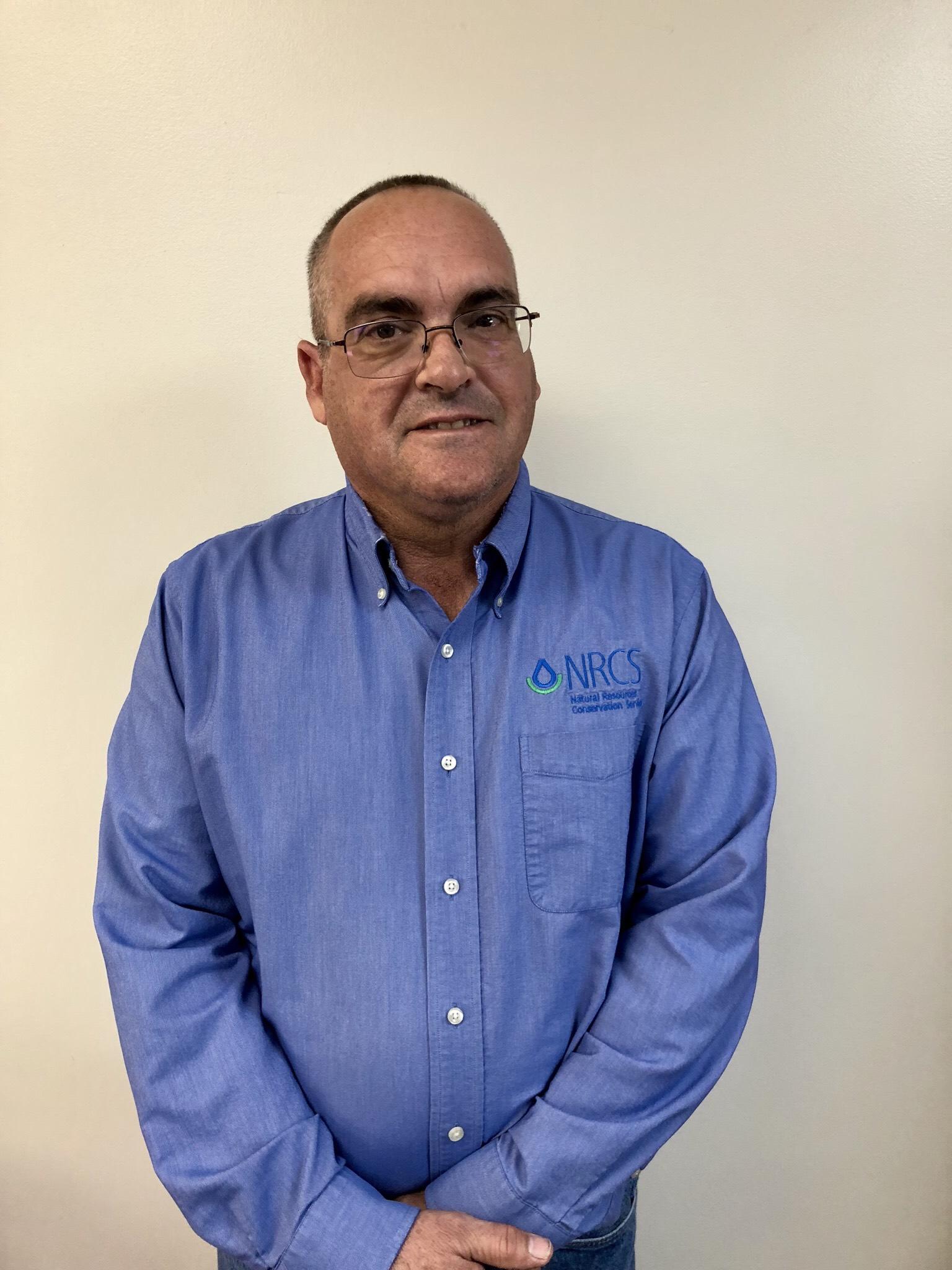
Dale Younker is a Soil Health Specialist with the USDA Natural Resources Conservation Service in Jetmore.
A common question that I get from producers across the state is should they be adding cover crops into their crop rotation to improve soil health. The answer to that is not a simple yes or no. It really depends on the producer and what they are trying to accomplish with a cover crop. Also the environment that they are in and the specific field itself can be a determining factor.
There are several benefits to using cover crops, even in western Kansas.
If you are a livestock producer grazing covers can provide high quality forage at times when other quality forages may not available. One such scenario would be grazing a late summer cover crop that was planted after wheat harvest. Normally our native range pastures are on a downward trend, in both quality and quantity during that time of the year and covers can really help fill that void. Planting one in the early spring can provide quality livestock forage in the late spring, early summer. Both of these scenarios reduces the grazing pressure on the native range and provides the pastures some rest during critical growth periods. This helps the native grasses be more healthy and productive in the long run.
Cover crops can also help with weed suppression.
Studies have shown that a timely planted cover can decrease both weed emergence and the overall weed biomass in a field. The key to making this work is that that the cover crop has to be planted and growing before any of the targeted weeds have emerged. So timing is critical to making this work. For example, if we are trying to suppress kochia we would need to have the cover crop planted in late winter or early spring and have moisture available to get it to emerge and grow. If the weeds emerge before, or with the cover crop, weed suppression will be compromised.
The one question that you really need to ask before planting cover crops is will it be profitable for my operation? Can I get enough economic gain from grazing, weed suppression or other benefits, including soil health benefits, to make more money then I already am with the system I’m currently using? You want look at the both the short and long term costs and benefits and compare it to what you are already doing.
Cover crops are not a silver bullet that will fix any and all soil health issues. They are just another tool in the toolbox that may work for some producers but not for others. There are other soil health practices, like nutrient management, no-till, crop rotation and others that may be a better fit for some producers.
If you are new to using cover crops I suggest that you start small and experiment to figure out what might work for you before implementing it on a large scale. Seek out others in your area that are using cover crops and ask what they are doing to make it work for them.
For more information about soil health practices you can contact me at [email protected] or any local NRCS office.
Dale Younker is a Soil Health Specialist with the Natural Resources Conservation Service, Jetmore.
The Ellis County Republican Party will be hosting a series of “meet and greets” with Republican candidates for state office beginning in April.
“We plan to have two a month between now and the general election in November,” said Elaine Adams, Hays, chair of the local GOP party.
The public is invited to the meetings which will be held at Diamond R Jewelry, 807 Main, Hays. “Dustin Roths has generously allowed us to use his store for these opportunities to meet so many of the Kansas candidates,” she said.
The first meet and greet will be held Sunday, April 1, at 6 p.m. with candidates Kelly Arnold, Wichita, andClark Shultz, Lindsborg.
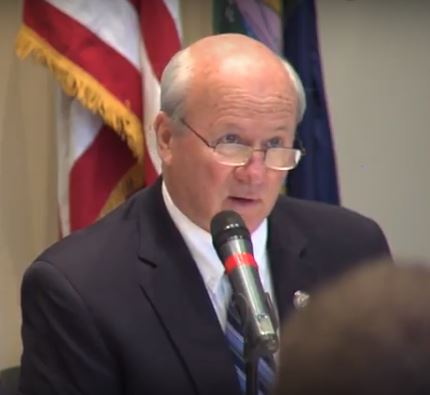
Kelly Arnold
Arnold is running for Secretary of State. He is the Sedgwick County Clerk and also chairman of the Kansas Republican Party.
Clark Shultz
Shultz is campaigning for Kansas Commissioner of Insurance. He currently serves as the Assistant Insurance Commissioner.
Shultz is a former state senator representing the 35th District for one year. He previously served 17 years in the Kansas House representing the 73rd district.
For more information, contact Adams at 785-639-6639 or [email protected].

 OFFICES OF SEN. MORAN/REP. MARSHALL