WICHITA— A man is facing federal charges stemming from a March 8 holdup of a Wichita credit union.
On Tuesday, a federal indictment was handed down in U.S. District Court against 32-year-old Jerry Anderson Jr. of Hutchinson.
The indictment states that Anderson Jr. entered the Meritrust Credit Union at 2900 S. Oliver in Wichita just after 11 a.m. where he passed a note to one of the tellers stating, “This is a robbery, nothing funny, give me the money.”
Photo courtesy Wichita Police
The KBI affidavit states that Anderson left the credit union with approximately $3,100. Surveillance video from the credit union identified a car that was loaned to Anderson by a friend. The affidavit also states that still photography from cameras were matched against a Department of Corrections Supervised Population photo showing Anderson as the alleged robber. Anderson Jr. was released from prison in July of last year after serving a sentence for aggravated robbery and flee and elude in Leavenworth County.
Anderson faces up to 20 years in prison and a $250,000 fine if convicted.
WICHITA, Kan. (AP) — A former Wichita police officer has been charged with felony aggravated battery for shooting a dog and injuring a 9-year-old girl.
Dexter Betts was called to a home for a domestic issue in December when he shot the family dog. The family’s attorney, Charley O’Hara, says the dog was wounded from bullet fragments and the girl from ricocheted fragments.
Betts was fired following the shooting.
The felony charge against Betts says he “unlawfully and recklessly” caused bodily harm to another person when he fired “a handgun at a dog while a child was in the room.”
Betts’ attorney, Jess Hoeme, says he believes his client didn’t act recklessly “and we look forward to presenting our defense in court.”
Rappelling training by the Hays Fire Dept. (Photo courtesy HFD)
The Dane G. Hansen Foundation has awarded the City of Hays $272,000 in grant funding for the construction of a Fire/Rescue Training Facility.
In 2016, the City of Hays Fire Department began to develop a training area behind the Wastewater Treatment Plant on the Highway 40 Bypass.
The 2018 City of Hays Budget includes funding to extend utilities and continue site improvement. The Dane G. Hansen grant funds will enable the city to develop a more robust training facility in a much shorter timeframe than what would be possible with city funds alone.
The City of Hays Fire Department intends to operate the training facility in a cooperative partnership with the Ellis County Fire Department to better serve the region.
The Hays Regional Fire/Rescue Training Facility will include a concrete pad, a three-story drill tower, a live-burn building, a classroom building and a Self-Contained Breathing Apparatus (SCBA) maze.
The training facility, once constructed, will be available for use by all fire departments and law enforcement agencies in the region. The Hays Regional Fire/Rescue Training Facility will have the ability to host larger regional trainings presented by the Kansas Fire and Rescue Training Institute and the Kansas State Firefighters Association. Currently, this type of training is costly to bring to Northwest Kansas.
Several letters of support were given from area fire departments stating the need for such a facility in Northwest Kansas.
“This facility will provide the City of Hays Fire Department, Ellis County Fire Department and entire region with the ability to develop the knowledge and skills needed to better protect our communities,” said Deputy Fire Chief Ryan Hagans. “We look forward to the development of this facility and the training that we will be able to provide and take part in.“
The City of Hays would like to thank the Dane G. Hansen Foundation for its support of this project. Without the generosity of the Dane G. Hansen Foundation this project would not be possible, the city said in its news release.
SALINE COUNTY — Law enforcement authorities are investigating a suspect in connection with Tuesday’s bomb threat in Salina.
Just before 9:30 am, Tuesday, officers of the Salina Police Department were dispatched to the United States Postal Service, 211 E. Ash, in regards to an unidentified package that possibly contained a bomb, according to a media release.
The Postal Service and surrounding area were immediately evacuated. Upon request, the Riley County Police Department Explosive Ordinance Disposal Unit (EOD) responded and removed the package. The package was placed in a safe location and a water shot was used to disrupt the package. The package was found to be inert but it was designed to simulate an explosive device.
A coordinated response from several agencies including the United States Postal Inspection Service, Kansas Highway Patrol, and other Federal agencies assisted in the investigation that ultimately led to the arrest of Robin Carol Stewart, a 56-year-old female from Salina. During the evening of March 27th, a search warrant was executed at Stewart’s residence and additional evidence was collected.
Police on the scene of Tuesday’s bomb hoax in Salina
Stewart was arrested without incident and authorities are requesting charges of Aggravated Criminal Threat, Criminal Use of Explosives, and Interference with the Conduct of Public Business in Public Buildings.
MARSHALL COUNTY — Two people were injured in an accident just before 8:30 a.m. Wednesday in Marshall County.
The Kansas Highway Patrol reported a 2007 Peterbilt semi driven by Michael Richard Harne, 29, St. Joseph, MN, was southbound on U.S. 77 two miles north of Blue Rapids.
The vehicle attempted to pass a 2018 John Deere Tractor driven by James Norman Borgerding, 81, Blue Rapids, that was making a left turn into a field entrance. The semi collided with the tractor.
Harne was transported to Community Memorial Healthcare in Marysville.
A private vehicle transported Borgerding for treatment, according to the KHP.
The semi driver was properly restrained at the time of the accident.
At school, Kansas students learn what to do in case a shooter attacks. Lock classroom doors. Turn out the lights. Huddle out of view from the window in the door.
Kansas lawmakers are debating whether guns can make schools more safe. FILE PHOTO / KANSAS NEWS SERVICE
In the Statehouse, lawmakers are searching for consensus on better ways to prevent, or cut short, school shootings. Arm teachers? Fortify schools? Train kids about guns?
On Tuesday, the feelings clashed in a committee hearing and on the floor of the Kansas House just days after gun control activists drew crowds to March for Our Lives protests in Kansas City, Wichita, Topeka and across the country.
One bill Kansas lawmakers are mulling hopes to protect schoolchildren by making it more likely their teachers would have a weapon handy. A hearing on the measure drew an overflow audience, including students and parents, to a committee room of both supporters and opponents.
“The more guns you have in a school building,” said Shisato Kimura, member of a new student group at Lawrence High School advocating gun reform, “it just increases the chance of violence.”
Kansas has allowed teachers to carry guns in schools since 2013. But when lawmakers approved that, the state’s main school insurer saw a bad business prospect and promptly notified districts it wouldn’t cover that. Districts with armed teachers, EMC announced, wouldn’t have their insurance policies renewed.
The legislation would also make school districts more vulnerable to lawsuits after a school shooting — if it turns out they didn’t allow staff to arm themselves. In court, those districts would face a presumption of negligence.
Sen. Ty Masterson told them would-be shooters are likely to assume there aren’t armed employees in Kansas schools, putting them at greater risk. Insurance companies, he said, should recognize when schools work to fix that.
“You can contend that rates should be lower in the schools that protect their children more appropriately,” the Andover Republican said. “Mentally deranged shooters are looking for soft targets.”
Jason Watkins, a lobbyist for the Kansas State Rifle Association, called the bill “common sense.” His group supports provisions in the bill that would prevent the public from knowing which teachers carry guns.
“A trained, certified and armed teacher will save lives,” he said, “in those precious minutes before law enforcement arrives.”
Kansas’ main teachers union and its school board association testified against the bill.
The Parkland shooting took just six minutes, said Mark Desetti, of the Kansas National Education Association. It’s ridiculous to think a teacher can get his or her students into safe positions, retrieve a handgun from a secure location, make sure it’s loaded, and successfully chase down a heavily armed killer in that time.
“And I’m going to face a guy with an AR-15, rapid firing, perhaps with a bump stock and a very large capacity magazine?” he said. “And I’m going to take that person down? No.”
Later, on the House floor, Democratic Rep. Brett Parker pushed an amendment to another bill in hopes of revoking the ability of teachers carry concealed weapons in school.
Parker, a teacher, said adding guns to classrooms distracts from learning and could make it harder to attract teachers to Kansas.
“We are having a hard enough time filling our teacher shortages,” Parker said.
His effort failed after other lawmakers said local school districts should have the option of choosing to arm teachers.
“Making a target hardened is the best deterrent to armed confrontation,” said Republican Rep. Eric Smith, a sheriff’s deputy. “Advertising a place to be unarmed is the worst thing you can do to deter the tragedies we are seeing.”
The House advanced a bill calling for state guidelines for safer schools, but some lawmakers said it lacks enough money for meaningful security upgrades. A $5 million state grant would help pay for building updates and plans to deal with emergencies such as shootings.
Democratic Representative Cindy Neighbor said she likes the planning requirements, but she said the Shawnee Mission School District recently went through a security upgrade and spent significantly more than the $5 million being offered in the bill. She said lawmakers could be looking for more money in the future to help pay for upgrades.
“This is a very expensive endeavor,” Neighbor said.
The bill also sets guidelines for optional gun safety training that schools can offer to students. The chamber rejected efforts to remove references to an NRA training program named in the bill.
JUNCTION CITY –– A Texas man pleaded guilty to murder and involuntary manslaughter while driving under the influence, according to Kansas Attorney General Derek Schmidt.
Thompson and her two children -photo from Gofundme
Steven W. Johnson, 45, of Houston, pleaded guilty to one count of murder in the second degree – reckless and two counts of involuntary manslaughter (DUI). Judge Steven L. Hornbaker accepted the pleas Monday in Geary County District Court.
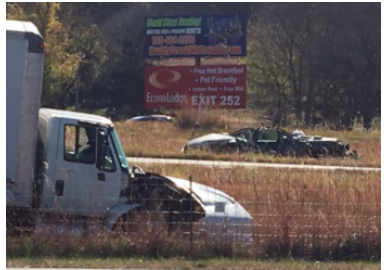
The charges stemmed from a fatal crash on Interstate 70 in November 2016 that resulted in the deaths of Jessica Michelle Thompson and her two minor children.
Scene of the Nov. 2016 crash-photo courtesy WIBW TV
Sentencing is scheduled for June 1 at 1:30 p.m.
The case was investigated by the Kansas Highway Patrol. Assistant Attorney General Corey Kenney of Schmidt’s office is prosecuting the case.
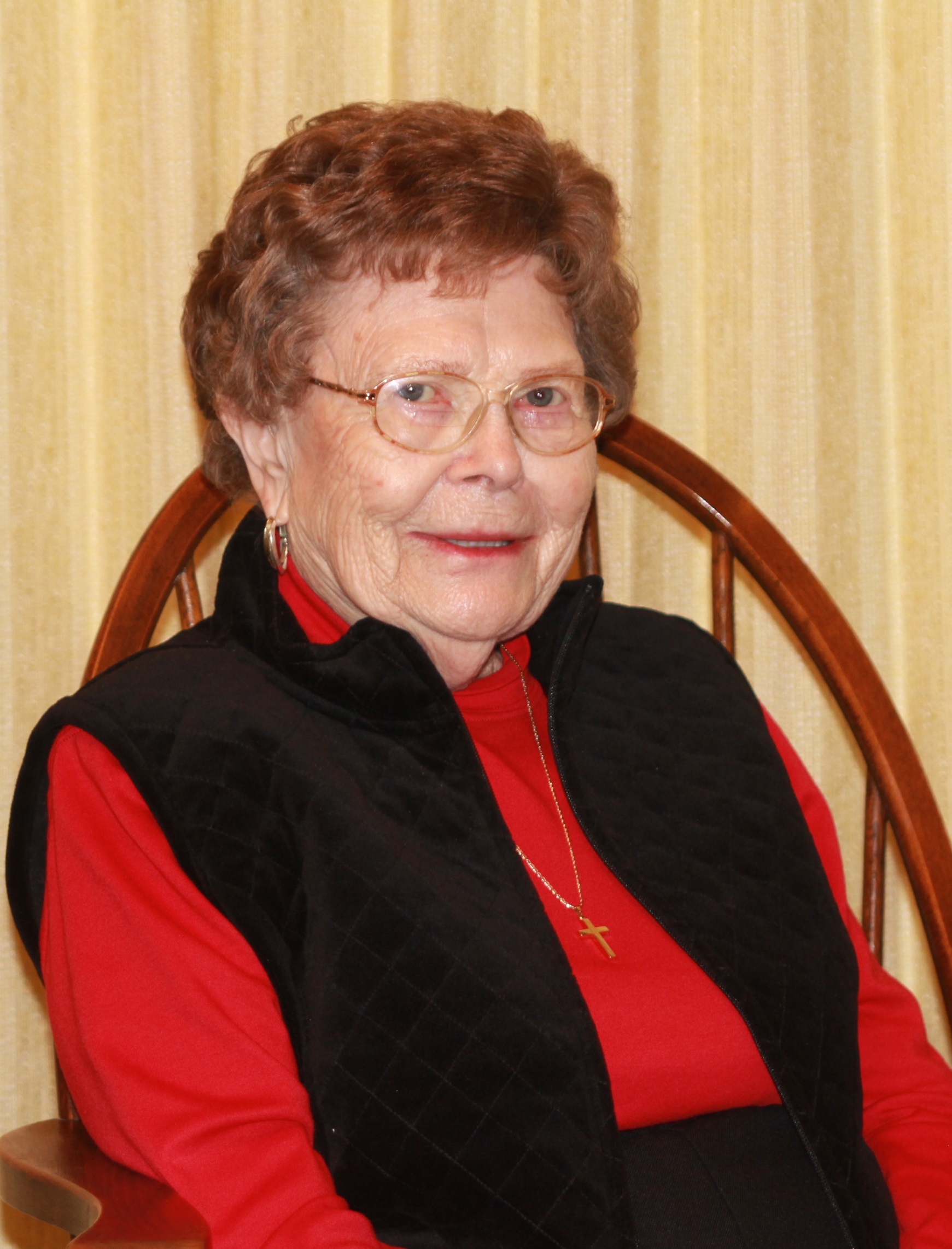
Bonnie (Mallory) Reid, 88, of Brewster/Goodland, died March 26, 2018. Bonnie was born in 1929, in Brewster, Kansas to Lloyd and Lina (Andregg) Mallory, the fourth of four children. Bonnie attended Brewster Grade School and Brewster High School, graduating in the class of 1947. She attended Kansas State for two years.
Bonnie married Warren Reid on August 10, 1949 and resided on a farm north of Brewster. Three children; Lance, Nathan, and Laurie were born while the family lived on the farm. Bonnie and Warren lived on the same block in Brewster as children and in 1964, moved into a home in Brewster on that same block. They lived in that home for more than 53 years before moving to Goodland’s Wheat Ridge Center five months ago.
Bonnie was baptized in the Methodist Church and was a member of the Brewster United Methodist Church. She held offices in the United Methodist Women, taught Sunday School, and worked practically every church function. Bonnie began each day with a devotional time and many benefitted from her encouragement and comfort as she tried to live her life as a servant of God.
As co-editor of the biannual Brewster High School alumni newsletter, Bonnie helped alumni maintain their connections to classmates and to Brewster for more than 25 years.
Bonnie enjoyed many social activities including her morning aerobics group, the “What’s Trump” bridge club, and the Prairie Gem 4-H club. She grew up in a card-playing family and shared her love of card games, especially cribbage, with friends, her children, grandchildren, and great grandchildren. Watching sports was also a passion. Bonnie often kept her own scoresheet for baseball and basketball games, her favorite sports. She travelled the state to support her children and grandchildren in their grade school, high school, and college competitions in basketball, baseball, track, volleyball, and football. In her final days in the hospital her purse carried a Final Four bracket so she wouldn’t miss a state school’s game.
Baking was something that Bonnie enjoyed and shared with family and the Brewster community. Her cinnamon rolls and bread won awards at the county fair and “Grandma Reid’s bread was the best ever”. Neighbors eagerly borrowed her sourdough starter and new families were welcomed to the Brewster community with a loaf of freshly baked bread. Roses of various colors bloomed in Bonnie’s backyard with pink roses her favorite.
Family and friends will miss the flower arrangements, the baked goods, the encouraging cards, and the phone calls on their birthdays and other special occasions. Bonnie’s kitchen was where kids could color Easter eggs, decorate Christmas cookies, or make homemade ice cream.
Bonnie was preceded in death by her parents Lloyd and Lina Mallory, and her older siblings Alma Louise, Bill, and Nadine Kammer.
Those left to remember Bonnie include her husband Warren of Goodland, sons Lance of Andale KS and Nathan (Judy) of Topeka KS, and daughter Laurie Jones of Kismet KS. Grandchildren include Josh (Brit) Reid of Atlanta GA, Jordan (Amanda) Reid of Brewster, Jay (Brianna) Reid of Atlanta GA, Jalyn (Heath) Baird of Atlanta GA, Jeff (Stevi) Reid of Edwardsville KS, Jayde Reid of Atlanta GA, Eric (Angela) Jones of Meade KS, Amanda (Ryan) Kisner of Kismet KS, Mallory Jones of Oklahoma City OK, and Julie (Braydon) Robinson of Turpin, OK. There are also 27 great grandchildren.
Funeral Services will be held Saturday, March 31, 2018 at 1:30 PM CT at the Brewster United Methodist Church with Pastor Mike Baughn officiating, followed by a graveside service at the Brewster Cemetery. A visitation time will be held one hour prior to the funeral service at the church.
Memorials may are designated to the Brewster Methodist Church and may be left at the services or mailed to Koons-Russell Funeral Home, 211 N. Main Ave., Goodland, KS 67735-1555.
Online condolences for the family may be left at www.koonsrussellfuneralhome.com.
Funeral services are entrusted to Koons-Russell Funeral Home in Goodland.
Since 1974, the Ronald McDonald House Charities have opened houses in more than 64 countries.
In the year of 2016, 5.5 million families were helped. In 2017, a member of the Hays High School staff needed the Wichita houses.
“My daughter was in the NICU at Wesley Medical Center, and that was two and a half hours away from my house,” librarian Erin Holder said. “I knew we were planning on being there for an extended amount of time, so we were either going to have to pay for a hotel room every night or find an alternative. We didn’t have any family down there.
“The first time I was there for 11 weeks to the day, and she’s had a lot of follow up appointments in Wichita. Every time we go down and stay the night before or the night after depending on the time. We also stayed in Denver when she had her open-heart surgery.”
During that amount of time, Holder said the Houses helped her with everything, from expenses of room and board to food.
The Houses were created for an inexpensive way for families to stay near their children during times when they were severely ill.
There are two houses in Wichita, one in Topeka and one in Kansas City where instructor Matt Brooks had to stay while his son was in the hospital.
“Our son had to do a heart procedure,” Brooks said.
Before using the Houses, Brooks was aware of them and participated in events put together in the school to help them.
“I knew what it did,” Brooks said. “I didn’t know the extent of what it did. Staying there is a completely different experience. We give to certain charities, but as far as monetary donations go, we didn’t really do that before.”
After using the houses, however, Brooks and Holder found the Houses were a needed resource for families who were struggling through an event such as an ill child.
“It was overwhelming for sure, just having everybody there for you, having somebody to talk to about similar issues that you’re going through, having a staff that was completely willing to give you everything you needed,” Holder said. “I had no idea what the Ronald McDonald House really was until I stayed there, until there was a need for it.”
In the Houses, families can find 10 bedrooms that have private bathrooms as well as a kitchen, toy room, laundry room and outdoor space. Families also have access to the full pantry, Wi-Fi and T.V.
For Holder and Brooks, the Houses and amenities were something they could depend on.
“I understood what it did, but I didn’t quite understand the importance of it,” Brooks said. “I think one of the biggest things about the Ronald McDonald Houses is the locations are right next to the hospital, or very close. You don’t have to worry about where you’re going to be staying, the expense of where you’re staying, the meals.
“One of the biggest benefits, and I’ve said this before, is you can concentrate on the health of your kid. That’s one of the biggest things for parents because it’s a stressful time.”
After their experience with the Houses, Brooks and Holder have changed the way they participate in helping the charity.
“Every time I’m at the drive through, I put change in or a dollar,” Holder said. “(It’s important) so people like me sill have a place to stay when something crazy happens. I don’t think there’s any other facility that does what the Ronald McDonald House does, so it’s very important that they stay available.”
HUTCHINSON, Kan. — The Hutchinson/Reno County Chamber of Commerce issued a response to legislation introduced in Topeka Monday that could pave the way for moving the Kansas State Fair out of Hutchinson.
In response to the proposed legislation that would allow cities to host the Kansas State Fair, the Hutchinson/Reno County Chamber, along with Visit Hutch and the City of Hutchinson, stay committed to hosting the annual event that attracts over 350,000 people to the community each year. The City of Hutchinson and Reno County value the 105-plus year history the community has as home of the Kansas State Fair, according to a release from the Chamber Tuesday afternoon.
The city and county have a longstanding spirit of partnership and cooperation with the State of Kansas, the Kansas State Fair and its leadership board. In 2000, the City of Hutchinson and Reno County worked together with the State of Kansas to fund a Master Plan for the Kansas State Fairgrounds. The city and county both committed a combined $3 million over a 10-year period. The City of Hutchinson and Reno County upheld that commitment.
One of the reasons cited for this proposed legislation is the recent increase in Hutchinson’s stormwater utility fee. In 2016, to help Hutchinson start work on a backlog of needed improvements to its drainage infrastructure, the City of Hutchinson implemented a change to how the stormwater utility fee would be assessed to local citizens and business owners. The adjustments to the stormwater utility fees were catching up for years of funding for deferred maintenance of the stormwater system. The fees were also consistent with stormwater management of other Kansas municipalities.
“The City of Hutchinson currently offers a variety of in-kind services to the State Fair in exchange for use of State Fair property for recreational purposes and has been working over the last two years with fair staff to identify ways to offset the stormwater fees,” John Deardoff, Hutchinson City Manager, said.
In addition, a portion of the city’s Transient Guest Tax funds tourism efforts through Visit Hutch, which in return recruits, submits proposals, and financially supports events year-round at the Kansas State Fairgrounds. Recent national and statewide events held at the fairgrounds include: the Kansas Junior Livestock Show, American Maine-Anjou Association Junior National Show, and the All-American Junior Sheep Show. Those three events combined had an economic impact that surpassed $2.5 million.
“The Kansas State Fairgrounds is truly a valuable asset for our community,” LeAnn Cox, Vice President of Operations and Tourism for the Hutchinson/Reno County Chamber, said. “It allows us to recruit events from all across the country that provides Hutchinson and Reno County with a much-needed economic boost.”
In the last two years, Visit Hutch has provided financial contributions of approximately $8,000 directly to 15 events held on the Kansas State Fairgrounds.
“Hutchinson/Reno County Chamber of Commerce, Visit Hutch, City of Hutchinson and Reno County have long stood behind and support all joint efforts to enhance improvements to the fairground facilities in Hutchinson,” Debra Teufel, Hutchinson Reno County Chamber President & CEO, said. “Hutchinson is a place where Kansans from across the state come to celebrate and learn about agriculture and commerce. We support and will remain steadfast in solidarity with local elected officials and community partners to ensure that the Kansas State Fair remains in Hutchinson for years to come.”
The bill stems from numerous questions regarding the support — or what some say is a lack of support — from the city, county and CVB. Some feel that, since the fair alone generates an economic impact of more than $46 million in just a 60-mile area around Hutchinson, more needs to come from those entities.
The questions stem from hearings on a proposal to allow the fair to collect the sales tax is generates. The bill would offset needed funds the state is supposed to pay the fair for its capital improvements fund, but rarely has in the past several years. That senate bill is making its way to the floor after being passed in committee.
———-
HUTCHINSON, Kan. (AP) — Kansas lawmakers have introduced a new bill that would allow the State Fair to leave the city of Hutchinson after more than 100 years.
Rep. Schroeder
State Rep. Don Schroeder, R-Hesston, said the bill proposed Monday was inspired by the people “involved” with the fair who are unhappy with the city. He declined to identify anyone by name.
Schroeder said one of the contributing factors to the dissatisfaction is the city’s stormwater fees, which jumped to approximately $50,000 per year.
“Obviously, it’s not anyone that serves on the fair board,” said State Fair Board President Virginia Crossland-Macha about those who inspired the bill.
She said the board hasn’t discussed moving from Hutchinson.
“I don’t know where this comes from,” she said.
Hutchinson City Manager John Deardoff said he also was “a little perplexed” by the legislation.
“We’re just not sure what’s driving this,” Deardoff said.
If passed, the bill would require the fair’s board to request proposals from other cities in Kansas to host the event. The board would also be required to submit a report detailing the results of the proposals to several legislative committees on or before Jan. 11, 2020.
State Reps. Steven Becker and Jason Probst, and state Sen. Ed Berger oppose the bill, saying Hutchinson is a perfect location for the fair.
“It is concerning to me, for sure,” said Becker.
Probst said the city has been managing the annual influx of the State Fairground’s visitors “very well” for more than a century. He added that it would be costly for a potential host city and for the state to replicate the fairgrounds.
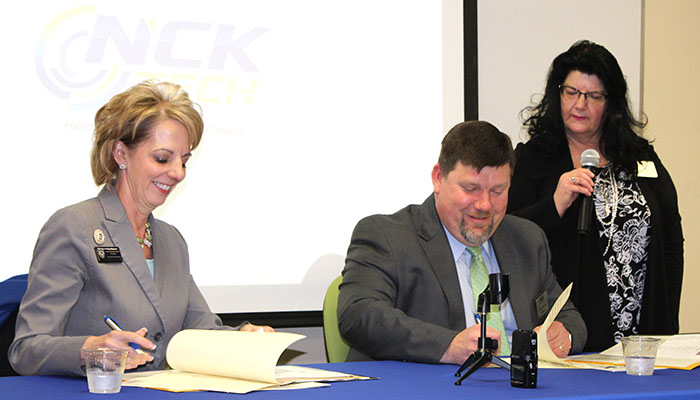
Fort Hays State University and NCK Tech signed an agreement Tuesday to create clear paths from degrees and certificates at NCK Tech to bachelor’s degrees at FHSU.
The agreement aligns curriculum of six NCK Tech programs with six FHSU bachelor’s programs. These include:
• Associate in Applied Science in General Business to Bachelor of Science in Organizational Leadership
Tisa Mason, Fort Hays State University president, and Eric Burks, NCK Tech president, aligning six programs at NCK Tech to align bachelor degrees at FHSU.
• Associate in Applied Science (career and technical education concentration) to Bachelor of Science in Technology Leadership
• Associate in Applied Science (business and industry concentration) to Bachelor of Science in Technology Leadership
• Associate in Applied Science (nursing) to Bachelor of Science in Nursing (RN to BSN)
• Culinary Arts Certificate to Bachelor of Science in Tourism and Hospitality Management
• Certificate in Carpentry/Cabinetmaking to Bachelor of Science in Technology Studies
Transfer guides are available through NCK Tech.
Tisa Mason, FHSU president, said the memorandum of understanding will save students time and money by laying out clearly and efficiently, which courses students need, so they can avoid enrolling in unnecessary classes.
“Indeed FHSU and NCK have had a long-standing successful partnership based on our shared focus on student success,” Mason said. “The partnership has been passed down over the years from president to president — a legacy of mutual benefit for which both President Burks and I are honored to both continue and enhance.”
NCK Tech and FHSU staff as well as NCK Tech students wait for the signing of an agreement between the two institutions on transferring into bachelor’s programs.
FHSU has a vested interest in increasing opportunities for NCK students, Mason said. She said the agreement also serves workforce needs.
“At FHSU, we prove that every day through resource allocation and programs and services designed for transfer students,” Mason said.
Some of these programs include transfer designated scholarships, transfer student orientation programs and an honor society dedicated specifically for transfer students.
“This partnership did not start today — nor does it end today,” Mason said. “In fact, we already have many NCK students taking classes on our campus, attending FHSU events and even residing in our residence halls. I look forward to returning to the NCK campus many more times in the future to celebrate additional new and revised partnerships for our students.”
Eric Burks, NCK Tech president, said the agreement made Tuesday was a continuation of years of collaboration.
“We have had a long-standings relationship and a lot of great things we are already doing together to provide great opportunities for students, and today is just another step in the right direction in that partnership,” he said.
Burks said the agreement gives students options beyond a linear path to a degree.
“So many times now we know students start and stop. There are many exit and entry points through their educational process,” Burks said.
He said this is a great opportunity for both current students and returning students—students who maybe have graduated from NCK Tech in the past who might want to look at furthering their education because they want to move up the ladder.
Scott Smathers, vice president of workforce development for the Kansas Board of Regents, also attended the signing ceremony. He said by 2020 an estimated 70 percent of jobs will require a certification or some type or a degree. He said this programs sets students up for success in their careers. He congratulated the two institutions on their accomplishment.
The Sternberg Museum of Natural History is hosting its first Pokemon Day. The event will be on April 14 from 10 a.m. – 3 p.m.
The Sternberg staff wanted to offer this event for a couple of reasons.
“We wanted to celebrate the 20th anniversary of Pokemon, which is happening this year,” said Darrah Steffen, public relations assistant.
The other reason is Pokemon has been very interesting to those at Sternberg. The creatures that are in the game/show are based off of real-life animals and the uses of science principles such as metamorphosis and evolution.
“We expect people to learn about the guiding science principles that inspired the game/show,” said Steffen.
There will be six interactive tables where participants can learn about the animals Pokemon characters are based upon. You can also explore different evolutions and discover the biogeography of the different Pokemon.
“We want to draw attention to the differences in how Pokemon portrays it to real life and want people to have fun while learning,” Steffen said.
Be sure to bring Nintendo DS, trading cards or your phone. There will also be a Pokemon scavenger hunt to “catch ‘em all” and earn a Sternberg Museum gym badge.
As all school districts must eventually face, USD 489 (Hays) and USD 466 (Scott City) had both determined that their facilities needed major upgrading and decided to float bond issues in their respective districts last fall.USD 489 is about three times larger, but they both provide for rural Kansas schools with similar types of need.However, one decided to use science-based community input and the academic resources of FHSU to help them inform the voters and obtain high quality data for determining how large of a bond the voters would support and what types of projects would cause them to oppose the bond.The other decided to balk at using research to measure what the voters want, opting instead for a strategy of informing the voters what they “should” want and basing community input on highly biased sources.Here are the results.
After listening to a proposal by the Docking Institute, USD 466 commissioned a bond survey that provided them with data estimating the proportion of voters who would support a bond of various sizes.The bond survey also identified which tentative construction projects were popular and which ones were bond killers.The USD 466 Board used the information to build a $25,000,000 bond proposal that the bond survey indicated would likely pass.The survey cost the district about $5,000.On Nov. 7, the bond passed 745 to 710.On their first try, USD 466 passed the largest bond a majority of voters would support, and the children attending school in Scott City will soon be getting the upgrades they urgently need.
After listening to a similar proposal in October of 2016 during a strategic planning session, one which the Docking Institute facilitated for free at the Superintendent’s request, the USD 489 Board subsequently ventured off on their own to prepare a bond reflecting what they thought the community “should” support.Numerous attempts by the Docking Institute to warn the Board of research suggesting their bond would fail or encourage them to conduct a bond survey were curtly ignored or rejected.The Board wasted undisclosed sums of money to develop and provide color mailings, Power Point presentations and food to the very few who attended their promotional events or read their condescending mailings.After publicly humiliating their critics, the Board floated a totally unrealistic bond in spring 2017 that, as predicted by Docking researchers, failed.But did they admit their mistakes, change strategies and commission a bond survey?No!Instead they lowered their expectations by $30 million and proceeded to repeat the exact same strategy six months later.This second bond, though tens of millions of dollars lower, failed by a greater margin than the first bond, suggesting that the voters are extremely frustrated with the gross incompetence demonstrated by their BOE.In less than one year, this Board wasted tens of thousands of taxpayer dollars (my estimate) trying to pass unpassable school bonds.As I predicted in my previous letter, re-elected Board President Lance Bickle’s response was, oh well, we’ll just try again next year.Who knows how many attempts it will take using this “shot in the dark” strategy, with each iteration costing precious time and money?
I had hoped the newly elected Board members, especially Greg Schwarz and Mike Walker, would bring some rationality and innovation to the process, which it has to a degree.But choosing the same Board President who has failed twice already and current discussions by the Board to bring in more consultants who know nothing of Hays and its culture suggest the Board is pursuing the same flawed strategies for a third time. Meanwhile, the Scott City kids get their learning resources now, while Hays kids will have to wait, and wait, and wait.


 Dexter Betts was called to a home for a domestic issue in December when he shot the family dog. The family’s attorney, Charley O’Hara, says the dog was wounded from bullet fragments and the girl from ricocheted fragments.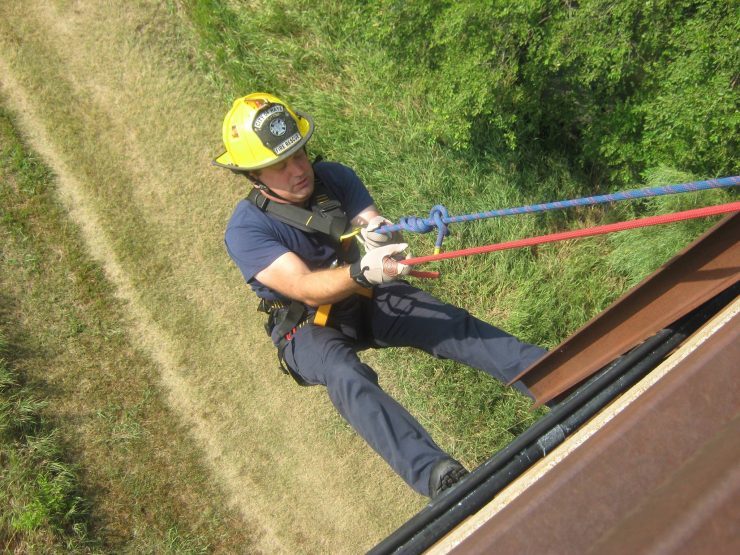



 The Kansas Highway Patrol reported a 2007 Peterbilt semi driven by Michael Richard Harne, 29, St. Joseph, MN, was southbound on U.S. 77 two miles north of Blue Rapids.