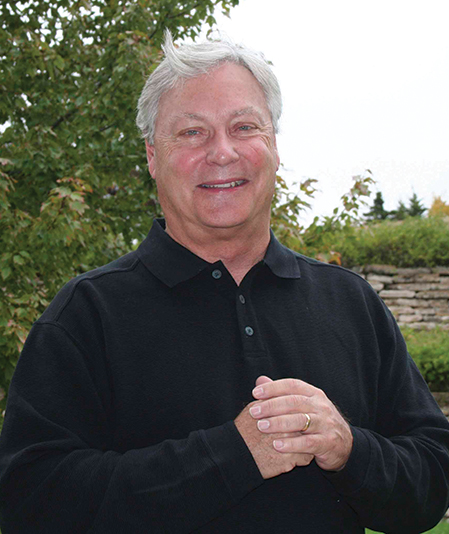
TOPEKA, KAN. – A Colorado man pleaded guilty Monday to robbing a bank in Manhattan, Kan., according to U.S. Attorney Stephen McAllister.
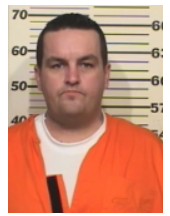
Fisher, Jr. -photo Fountain Valley Police
Kenneth Wayne Fisher, Jr., 42, formerly of Colorado Springs, Colo., pleaded guilty to one count of bank robbery. Fisher admitted that on Aug. 26, 2015, he robbed Sunflower State Bank at 2710 Anderson Ave. in Manhattan. He gave a teller a note saying, “Give me the money and no tricks.”
A few months after the Manhattan robbery, Fisher was arrested in California. He was extradited to Arkansas to face charges of robbing a bank in Bentonville, Ark., on Aug. 28, 2015. He pleaded guilty and was sentenced to more than eight years for the Arkansas robbery.
Sentencing in this case is set for July 9. He faces up to 20 years in federal prison. McAllister commended the Riley County Police Department, the FBI and Assistant U.S. Attorney Jared Maag for their work on the case.
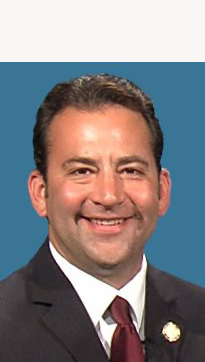
Rep. Troy Waymaster (R-Bunker Hill), 109th House Dist.
Kansas Amusement Ride Act
Last week we debated amendments to the Kansas Amusement Ride Act that was passed during the 2017 legislative session. Senate Bill 307 makes various amendments to this act. Most of the changes reflect the creation of two subcatergories of amusement rides, those being home owned and those registered as agritourism activities. Also under this bill, hayrack rides or barrel trains would not be included, and these types are now exempted. They were not exempted in last year’s legislation.
There were also changes made to waterslides in the state of Kansas. In the bill that passed the senate, waterslides are now defined as being more than 20 feet in height. An exemption was also made for waterslides owned or operated by a municipality. The House changed the language to define a waterslide as one that is a minimum height of 15 feet and must have a lifeguard supervising the slide.
An amendment on the floor was passed exempting rides that are too old to have a manufacturer’s certificate, specifying the two CW Parker carousels that are housed in the state of Kansas. SB 307 passed the House Wednesday, 113-11. I voted in favor of SB 307.
Industrial Hemp Bill Passes the House
On Tuesday afternoon, the Kansas House of Representatives debated the Industrial Hemp bill that had already passed the senate, Senate Bill 263. This bill, as described in previous legislative updates, would create the Alternative Crop Research Act, which allows for the Kansas Department of Agriculture to grow, cultivate, and promote the research of industrial hemp. The bill would allow individuals to participate in the program without violating any state or federal laws. This bill still contains the language that the pilot program would be in Russell County, Kansas, or any other county as deemed by the Secretary of Agriculture. SB 263 was passed out to final action and on Wednesday the bill passed the House, 123-1. I voted “yes.”
Constitutional Amendment Introduced
On Thursday, March 29, the House Taxation Committee met to introduce a House Concurrent Resolution (HCR) to alter the language of the Kansas Constitution regarding K-12 education. A representative from the Kansas Coalition for Fair Funding, which is a group of Kansas agricultural and business leaders, requested the introduction for this constitutional amendment. The short title for HCR 5029 is for a “Constitutional amendment to declare the power to appropriate funding for education is exclusively a legislative power and not subject to judicial review.” HCR 5029 has been referred to the House Judiciary Committee and the chairman of that committee has scheduled a hearing for Tuesday, April 3.
House Honors Vietnam War Veterans
On Thursday, March 29, the Kansas House of Representatives recognized the valiance of those who fought in the Vietnam War. In 2017, President Trump signed into law the Vietnam War Veterans Recognition Act of 2017, which officially designated March 29 as National Vietnam War Veterans Day. Many legislators approached the well to commemorate the sacrifice they made during the Vietnam War. 2.7 million Americans served during the Vietnam War and, sadly, more than 58,000 never returned home to their families. Through the eleven years of combat, thousands returned home with scars, PTSD, and memories that will never be forgotten. As the son of a Vietnam War Veteran, I proudly say that I will be forever thankful for their service.
This Week
Last week the Kansas House and Senate spent all day debating and voting on many different pieces of legislation. In the House we debated over forty bills and numerous amendments.
This week, the schedule calls for what is referred to as conference committees. If a bill, that has passed both chambers, has different language, a conference committee is set up for the members of the House and the Senate to discuss those differences. Once an offer is accepted, then both chambers vote on the conference committee report.
One of the lengthy conference committees is between the House Appropriations and the Senate Ways and Means when, we discuss the differences on each chambers budget bill. Since I am the chairman of the Appropriations Committee, I negotiate the terms with my counterpart in the Senate, then try to maintain the House’s position and bring back a conference committee report that will pass.
Contact Information
As always, if you have any concerns, feel free to contact me (785) 296-7672, visit www.troywaymaster.com or email me at [email protected]. Also, if you happen to visit the statehouse, please let my office know.
It is a distinct honor to serve as your representative for the 109th Kansas House District and the state of Kansas. Please do not hesitate to contact me with your thoughts, concerns, and questions. I always appreciate hearing from the residents of the 109th House District and others from the state of Kansas, as well.
DALLAS (AP) — One of the designers of a massive Kansas water park slide that decapitated a 10-year-old boy has been arrested in Texas, federal authorities said Tuesday.
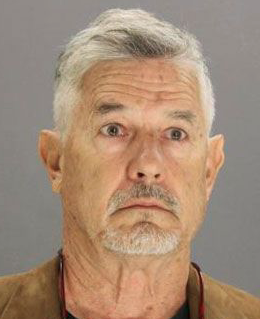
Schooley- photo Dallas Co.
Trent Touchstone, chief deputy with the U.S. Marshals Service in Dallas, said 72-year-old John Timothy Schooley was met by agents at Dallas-Fort Worth International Airport as he arrived on a flight late Monday.
Schooley was being held without bond at the Dallas County jail pending his arraignment and extradition to Kansas on charges that include second-degree murder. If convicted on that charge, he could face as much as 41 years in prison. Online jail records don’t indicate whether Schooley has an attorney to speak on his behalf.
A Kansas grand jury last week indicted Schooley and Jeffrey Henry , a co-owner of Texas-based Schlitterbahn Waterparks and Resorts. The indictment accuses Henry of making a “spur of the moment” decision to build the Verruckt ride — touted as the world’s tallest water slide — and that he and Schooley lacked technical or engineering expertise in amusement park rides. A former operations director for Schlitterbahn also has been charged.
Caleb Schwab was killed on the 17-story Verruckt in 2016 when the raft he was riding went airborne and hit an overhead loop.
Schooley and Henry also were charged with 17 other felonies, including aggravated battery and aggravated endangerment of a child counts tied to injuries that other riders sustained on the giant slide.
Schlitterbahn spokeswoman Winter Prosapio said in a statement last week that the indictment “is filled with information that we fully dispute.” She didn’t immediately respond to a message seeking fresh comment early Tuesday.
The indictment alleges the ride violated “nearly all aspects” of longstanding standards established by the American Society for Testing and Materials.
“In fact, the design and operation of the Verruckt complied with few, if any, of the industry safety standard,” the indictment said.
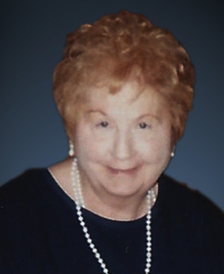
Esther Corzatt, age 87, of Hays, Kansas, died Sunday, April 1, 2018, at Via Christi Village Care Center, Hays, Kansas. She was born July 11, 1930, in West Virginia, to Dr. Frank and Emily Frances (Riggs) Harkleroad. She married Keith Edward Corzatt in 1969, at Amarillo, Texas. He preceded her in death on November 2, 1997.
She lived in Amarillo, Texas, for six years, in New Almelo, Texas, for 12 years and then moved to Hays in 1995. She was a kindergarten teacher for a number of years and earned four Master’s in English, Music, Science and Fine Arts. She was a member of St. Nicholas of Myra Catholic Church, the Perpetual Eucharist Adoration, Fort Hays University Senior Companion Program and the Daughters of the American Revolution.
Survivors include three daughters, Mary Morrison, LaCrosse, KS; Theresa Harris and husband, Joe, Ford, KS; Emily Teel and husband, Jerry, Hays, KS; one daughter-in-law, Misty Corzatt, Fayetteville, AR; one step son, Bill Corzatt, Stronghurst, IL; one step daughter, Angela Meyers, Media, IL; eight grandchildren, Angela Patton, Amber Klassen (Johnny), Nikki Probasco (Jon), Robert Cressler (Suzanne), Preston Cressler (Christine), Taylor Teel, Calea Corzatt, Christopher Corzatt; and 15 great grandchildren.
She was preceded in death by her parent; her husband; one son, Frank Corzatt; one step son, Ronald Corzatt; one brother, Lawrence, Harkleroad; one sister, Mary Emily Smith.
Services are 2:00 P.M. Friday, April 6, 2018, at St. Nicholas of Myra Catholic Church, 2901 East 13th Street, Hays, Kansas. Burial in St. Joseph Cemetery, Hays, Kansas.
Visitation will be from 1:00 to 2:00 P.M. Friday, at St. Nicholas of Mary Catholic Church.
The family suggest memorial to St. Nicholas of Myra Catholic Church.
Services are entrusted to Cline’s-Keithley Mortuary of Hays, 1919 East 22nd Street, Hays, Kansas 67601.
Condolences can be left by guestbook at www.keithleyfuneralchapels.com or can be sent via e-mail to [email protected]
Frances E. Eichman, age 90, former Palco, Kansas resident, died Sunday, April 1, 2018, at the Good Samaritan Society of Hays Care Center.
She was born February 22, 1928, in Hays, Kansas, to James L. and Anna A. Joy.
She married Cleo I. Eichman on May 25, 1949, at St. Andrew’s Episcopal Church in rural Hays. He preceded her in death on July 7, 2003.
She was a cashier at the First National Bank at Palco, for several years, and then a homemaker, spending her life in Palco until moving to Hays in 2007. She was a Girl Scout Leader and a 4-H Club Leader for many years. She attended St. Michael’s Episcopal and was a member of St. Andrew’s Episcopal Church, Altar Guild and served on the church board. She served on the PECUSA Camp staff and board. She served on the Palco library board and started the Palco Story Hour Program. She served on the Embers Housing Board at Palco and a member of the Bogue American Legion Auxiliary serving as Historian.
Survivors include, one son, David Eichman and wife, Sheila, Hays, KS; two daughters, Tabetha Schraeder and husband, Robert, Hutchinson, KS; Marlene Pfeifer, Colby, KS; six grandchildren, Sierra Eichman and Derek Eichman, Sarah Mattson (Paul), Karen Beaudet (Joe), Preston Schraeder and fiancé (Sherree), Angila Pfeifer; four great grandchildren, Madelyn Beaudet, Trinity Pfeifer, Wesley Stegeman, Brielle Britton; one sister, Norma Gagnon, Lawrence, KS; two sisters-in-law, Ellenora Meyer and husband, Truman, Newton, KS; Betty Jean Kay, Portland, OR.
She was preceded in death by her parents; husband; one brother, Cecil Joy; two sisters, Helen Joy and Thelma Eichman.
Services are at 10:00 A.M. Thursday, April 5, 2018, at St. Michael’s Episcopal Church, Hays, Kansas. Graveside services will be at 2:00 P.M. Thursday, at the Pleasanview Cemetery at Palco, Kansas.
Visitation will be from 5:00 to 8:00 P.M. Wednesday, at Cline’s-Keithley Mortuary of Hays, 1919 East 22nd Street, Hays, Kansas and from 9:00 to 10:00 A. M. Thursday, at St. Michael’s Episcopal Church. The family suggests memorials to St. Andrew’s Episcopal Church or St. Michael’s Episcopal Church.
Condolences can be left by guestbook at www.keithleyfuneralchapels,com or can be sent via email to [email protected]
Dale Younker is a Soil Health Specialist with the USDA Natural Resources Conservation Service in Jetmore.
There has been a lot of talk recently about the use of the Ogallala Aquifer for irrigation in western Kansas and how long the water will last.
Since large scale irrigation development, over 50 years ago, more water has been taken out of the aquifer than has been replaced by recharge. This has resulted in significant declines in the water table over most of western Kansas. Many irrigation wells have been shut down and plugged because the water is no longer there to pump.
The economy in in western Kansas depends of the water that is pumped from the Ogallala aquifer. Currently irrigated crops provide the majority of the grain and forage for ethanol plants and livestock operations including feedlots, dairies and hog operations. Without this sufficient and reliable grain and forage source these industries will move to areas that do. Other industries that are tied to them, like meat packing and dairy product processing plants, will follow. These industries provide a good majority of the jobs in the area.
Recently local, state and federal governments’ have encouraged producers to adopt new irrigation technologies, such as subsurface drip irrigation, that significantly reduces the amount of irrigation water to grow the crop. Researchers are exploring new crop rotations where less water use crops, like grain sorghum, is part of the rotation. Adopting these new technologies cropping systems has made a difference. But one thing hasn’t been discussed much is how improving soil health could help us grow crops with much less water.
More water would be available to our crops if we could increase infiltration rates, reduce evaporation loss from the soil surface and increase the water holding capacity of the soil. This can be accomplished with the following practices:
Keep the soil surface covered with crop residue or crop canopy as much as possible throughout the year. This allows what rain and irrigation water that falls on the soil surface to infiltrate the soil more easily and decreases water evaporation from the soil surface immensely. This also helps suppress weeds that could be using water needed for the crop.
Increase organic matter in the soil. Organic matter acts like a sponge and holds soil water and other nutrients and increase the water holding capacity of the soil. This can be accomplish by leaving as much residue cover and decaying roots in the field as you can. Increasing organic matter is a slow process, especially in our arid environment but over time it can be accomplished and make a difference.
Reduce tillage to maintain good soil aggregate stability. This will provide more macro pores from decaying roots, earthworms and other soil creatures which will allow water to more easily enter the soil and help increase water holding capacity.
New irrigation technologies will help save water and may go long way to aquifer stability. But improving our soil resource to capture and store rain and irrigation water more efficiently also needs to part of the discussion if we want any chance of achieving sustainability of our vital water resource and the region’s economy.
For more information about this or other soil health practices you can contact me at [email protected] or any local NRCS office.
Darlene Adele Edwards was born August 4, 1933 to Laura (Barclay) and J.T. Edwards in Fowler, Kansas. She lived in Fowler for 13 years with her Grandparents, Tom and Mary Barclay. Darlene moved to Quinter with her mother and graduated from Quinter High School in 1951.
Darlene married Dale Redmond on September 9, 1951 in the Quinter Church of the Brethren, where she remained an active member. Darlene worked for Max A. Campbell, Attorney at Law. While Dale was in the service, she worked at the Air Force ROTC at Kansas State University. After Dale’s discharge they moved to Oklahoma City, Oklahoma where they were blessed with their daughter Gina in 1956. They decided city living was not for them and returned to Quinter in May 1958, later that year they were blessed with their second daughter Joni. Darlene started working for Drs. Gunter & Hiesterman in November 1962 as a medical assistant, bookkeeper and Business Manager until she retired in 1987.
Staying busy was not a problem for Darlene. She belonged to Kansas Medical Assistants Association, Valhalla Club, Church Choir and Women’s Fellowship group, she sang in choir, sang in a number of musicals the Prairie Community Theater performed, played hand bells, was a member of the Jay Johnson Public Library Board as Treasurer, served as a church Deacon for many years and loved her church Quilting group. After she retired she learned to quilt and finished many projects her mother and grandmother had started. She sewed a quilt for each grandchild, learned to master pie making, and babysat for her grandchildren. She had a great passion for flowers, and for following her grandkids around in events they participated in.
Darlene passed away Saturday, March 31, 2018 at Hays Medical Center, Hays Kansas.
She is survived by her husband Dale of 66 years; two daughters, Gina (Wendall) Hargitt, and Joni (Kurt) Kerns, all of Quinter; grandchildren, Shannon Hargitt (Marlayna) of Wakeeney, Patrick (Heather) Hargitt, Amber Hargitt, Brandon Kerns and Hailey Kerns, all of Quinter; great grandchildren Kale & Kinley Hargitt and Asher Rockhold, all of Quinter, and Bo Schoenberger of Wakeeney; brother, Ron Wertz (Susie) of Arlington, Texas and her beloved dog, Daisy. She is preceded in death by her mother, Laura and stepfather, George Wertz and an infant half brother.
In every heart she touched, in every life she changed, in every thought she inspired, Her love lives on. We celebrate the wife, the woman, the mother, the grandmother she was.
Services will be 10:30 a.m., Thursday, April 5, 2018 at the Church of the Brethren, Quinter. Burial will be in the Baker Township Cemetery.
Visitation will be Wednesday evening from 5 to 7 at the funeral home in Quinter.
Memorial contributions are suggested to the Church of the Brethren or Quinter Ambulance Service. Donations to the organization may be sent to Schmitt Funeral Home, 901 South Main, Quinter, KS 67752.
Martin HawverInteresting deal, that newly introduced but long-awaited proposal to let voters consider an amendment to the state constitution that would strip the Kansas Supreme Court of the authority to determine whether the state’s spending on public schools is “adequate” or “equitable.”
It’s a direct assault on the court’s determination last October that the school finance bill passed by the Legislature last year is unconstitutional, providing nether adequate support for public education nor even that it equitably distributes that money to the state’s 286 public school districts.
The resolution—which would have to pass the 40-member Senate and 125-member House with 27 Senate votes and 84 House votes—could wind up on a ballot for us voters to decide.
The choices are in themselves puzzling. Voters elect the Legislature, which then comes up with a formula for distributing state aid to public schools with the target being providing equal opportunity for the state’s schoolchildren from border to border.
That means that the Legislature essentially says how much of your income and sales tax (and a dab of state-ordered property tax) goes to those schools to produce the smart kids who are the lifeline of the state.
The Supreme Court last year decided that the Legislature got it wrong. There wasn’t enough money appropriated to meet that goal. But many in the Legislature believe the court got it wrong and those justices don’t have any business making that decision, because it is the Legislature’s job.
So, is that critical decision on whether the state is spending enough of your money just up to the Legislature, or should those folks in the black robes have the authority (as they do now) to weigh in?
It all, or mostly, comes down to one of those Legislature-Court battles. Oh, and remember, while nobody likes paying taxes, those same nobodys also want their children and grandchildren to grow up smart, get good jobs and not live in the basement.
Problem is deciding just what is adequate for funding schools.
For most many legislators, what is adequate depends on who is paying. And, remember that there are probably many voters out there who will look first at their tax bill and then the cost of educating our children.
You want to be elected or re-elected to the Legislature? You never go wrong by holding flat, or maybe cutting, taxes.
You want to be elected or re-elected to the Legislature? You probably come out ahead by providing a strong education for those children and grandchildren.
That’s the issue: Who decides, and whether the deciders are generally pandering to voters, as lawmakers do, or to the court, which is not elected, just retained if the justices do a good job. Nobody runs for a seat on the Supreme Court.
There are probably campaign experts out there who can determine who will vote for the amendment, if they get a chance. While taking power from the court sounds good to some conservatives, having somebody with authority to hold the leash on the Legislature sounds good, too.
While the amount of your tax money spent on all schools is a vital issue, if the court is blocked from hearing school finance issues, what if that protected, unrestricted spending authority of the Legislature sprawls to favor big districts at the expense of small districts? Or, wherever else a Legislature decides to take it?
Interesting debate ahead…catch phrases, pandering, fear of the courts.
See how this works out…
Syndicated by Hawver News Company LLC of Topeka; Martin Hawver is publisher of Hawver’s Capitol Report—to learn more about this nonpartisan statewide political news service, visit the website at www.hawvernews.com
Kansas has the 10th cheapest average gas price in the nation
TOPEKA, Kan. – April 2, 2018 – Motorists continue to pay more at the gas pumps this spring, as average prices across Kansas, and America, continue their recent increase. The average price for a gallon of regular gasoline in Kansas is now $2.47, which is three cents more than one week ago and up six cents from a month ago.
“Demand for gas has remained strong, and now the transition to more expensive summer blend gasolines is taking place, so it’s not unusual to see prices at the pump jump this time of year,” said Jennifer Haugh, AAA Kansas spokesman. “Despite the recent increases, and the fact that the average price across the state is 15 percent higher than a year ago, Kansas still has the 10th lowest gas prices in the country – 19 cents less than the national average.”
The 10 Kansas cities regularly highlighted by AAA Kansas (see chart below) experienced a mixed bag this week, with seven cities experiencing higher – some significantly higher – gas prices. Topeka remained flat, while Lawrence (+13 cents), Kansas City, Kan. (+9) and Pittsburg (+8) saw the largest increases. Conversely, Wichita fell seven cents per gallon to $2.39, which registered as the 38 lowest price larger market in the nation.
According to AAA Kansas, this week’s Kansas gas price extremes are:
HIGH: Altoona (Coffey County) – $2.90
LOW: Waverly (Wilson County) – $2.21
National Perspective
Gas prices are edging up across the country as the market continues to purge winter-blend gasoline to make room for summer storage. At $2.66, the national gas price average is 5-cents more expensive on the week and 11-cents more expensive than two weeks ago.
“Today, only 38 percent of U.S. gas stations are selling gasoline for $2.50 or less and that percentage will likely dwindle in coming weeks,” said AAA Kansas’ Haugh. “The holiday weekend, strong demand and preparation for summer gasoline are all factors that have driven and will continue to drive higher gas prices into early spring.”
In spite of price fluctuations, gasoline demand fell to 9.2 b/d according to the latest Energy Information Administration data – the lowest point for the month of March, but remains strong for this time of year.
Quick Stats
The nation’s top 10 largest weekly increases are: Utah (+14 cents), Kentucky (+10 cents), Missouri (+9 cents), Florida (+9 cents), Arizona (+9 cents), Idaho (+8 cents), Georgia (+8 cents), Nevada (+8 cents), New Mexico (+7 cents) and Indiana (+7 cents).
The nation’s top 10 most expensive markets are: Hawaii ($3.52), California ($3.51), Washington ($3.17), Alaska ($3.13), Oregon ($3.09), Nevada ($3.01), Pennsylvania ($2.86), Washington, DC ($2.83), Idaho ($2.80) and New York ($2.77).
Great Lakes and Central States Report
Gas prices are more expensive on the week across the Great Lakes and Central region with three states landing on this week top 10 list with the biggest increases: Kentucky (+10 cents), Missouri (+9 cents) and Indiana (+7 cents). Nebraska ($2.56) was the only state in the region to see no change at the pump this week.
Kentucky (+37 cents) and Indiana (+35 cents) are the leading states in the region with the largest year-over-year increase. Ohio (+17 cents) has the region’s and country’s lowest year-over-year difference in gas prices.
With a nearly 500,000 bbl draw, gasoline inventories continue to sit above the 58 million bbl mark. The region carries the second-highest inventory level in the country – second to the South and Southeast’s 84 million bbl.
Two Fort Hays State University students and FHSU’s Hispanic College Institute recently won awards at the 2018 NODA: Association for Orientation, Transition, and Retention in Higher Education Region IV and V Conference in Overland Park.
Melanie Arellano, a senior from Kansas City majoring in social work, received Best Communication in the Student Staff Supervisor category for the Undergraduate Student Case Study Competition. The competition provides students who serve as peer supervisors to analyze a case and then present a recommendation to a panel of orientation director judges.
Arellano currently serves as the student director for Tiger Impact International Student Orientation and is a new Student Orientation leader.
Landon Younger, a senior from Ellis majoring in chemistry, was named the 2018 NODA Region IV Outstanding Undergraduate Student Leader – 4-Year Institution. The award recognizes one undergraduate student from across the states of Arkansas, Kansas, Missouri, Oklahoma and Texas for their creativity, energy and enthusiasm.
Younger currently serves as an Orientation Team Leader. Younger was nominated for the award by Dr. Brett Bruner, director of transition and student conduct.
FHSU’s Hispanic College Institute received the 2018 NODA Region IV and V Outstanding Use of Theme Award in the Publications and Media Showcase awards. The award recognizes the ways a theme is used within an orientation, transition or retention program and critiques the consistency and originality of the theme.
HCI was recognized for its use of the theme “Dream, Believe, Succeed. Suena, Cree, Triunfa” in the 2017 HCI program.
Just a few days ago, the smell and sight of spring burning in this region of Kansas evoked this childhood memory….
It started with a spark on a rail that jumped into the dry summer prairie and ignited. Within seconds the southerly wind whipped the fire across the pasture toward our small, rural school.
The culprit was an old black steam engine from the Union Pacific railway that lurched and pulled boxcars filled with wheat across the flat short-grass prairie. It was one of those giant puffing behemoths complete with pistons and huge driving wheels.
The year was 1959. The place – Seguin, Kan., population 47 counting three dogs and two cats.
I attended grade school in that two-room structure and while I enjoyed class as much as any of my schoolmates, these prairie fires were legendary. Such an event provided us the opportunity to miss class, abandon our schoolhouse and watch the approaching fire under God’s grandest cathedral – the big-sky country of northwestern Kansas.
Inside our school, Sister Helena Marie lined us up to march onto the road and away from the fire. Outside, we could hear the crackling fire as it licked up the tinderbox-dry grass. The flames raced along the ground a good foot tall. The smoke trailed into the blue sky and looked like it might block out the sun.
As the hypnotic orange flames raced toward our school, we all wondered about how close the fire might come, would it burn our school down and where would we go then?
For our dads, fighting these fires was something completely different. Such fires threatened to burn a neighbor’s home to the ground, destroy a farmstead or even take a life.
Our small rural community did not have a fire department, fire truck or any other firefighting equipment. When prairie fires occurred, my dad and his farmer neighbors jumped off their tractors and into their pickups and headed for the smoke. One of them always had a water tank in the back; others brought gunny sacks that they soaked with water. Then they ran out onto the prairie to fight the fire.
This wasn’t the first time dad and his farmer neighbors wielded their makeshift fighting tools. When immigrants settled this land, steam engines, dry buffalo grass and strong winds often provided the possibility of such prairie fires. These western Kansas farmers had plenty of experience fighting the flames.
None of my friends or I had a watch at the time, but I figure it took our dads close to an hour to finally beat every last flame into submission.
As they walked back to their pickups, their gait was slow. Soot covered their faces, hands and clothing. They all wore smiles.
They’d stopped the fire. This battle went to the farmers.
We all cheered and like newborn spring calves, threatened to run to our parents. Sister Helena Marie would not hear of it.
“Back into the school house,” she ordered.
As I recall this event occurred during midafternoon, and until the brass school bell rang dismissing us for the day, I spent the rest of that day fighting the fire in my mind. Most of my classmates did the same.
After we bounded down the steps and hit the ground outside the school, Albert Rall, my brother, Steve, and I ran to the edge of the burned prairie southwest of the school building.
Here we surveyed the pasture stretching nearly a half-mile in front of us. As we walked our shoes turned black as burnt grass crunched under our feet. A couple of the posts that supported the barbed wire fence bordering the school property were charred and cracked.
Our nostrils filled with the smoky particles covering the blackened landscape. The three of us walked back toward the schoolhouse. Once we came to the edge of the fire burn, we all three stepped off the distance from there to school.
The distance was approximately 40 yards or about 55 steps for a10-year-old. The fire had come so close this time. If our dads had arrived a few minutes later, our school might have burnt to the ground.
We all breathed a sigh of relief. We were thankful, but no one said a word.
Laughing, we raced around the school and bolted back up the stairs to our desks. Once seated, each of us took out our books and started writing inside the front covers, “In case of fire, throw this in.”
No doubt, these words remain today, directly under the already penned musing, “In God we trust. In school we rust.”
John Schlageck, a Hoxie native, is a leading commentator on agriculture and rural Kansas.