LA CYGNE – Kansas bass fishing is on the national map. La Cygne Reservoir, the 2,600-acre power plant cooling lake in Linn County, is listed as one of the country’s top 100 bass fishing lakes by Bassmaster Magazine. In the publication’s July/August 2018 issue, the nation’s top 100 bass lakes are listed by region, based on the number and size of largemouth or smallmouth bass that are produced and caught. La Cygne is listed as No. 10 in the Central Region.
Criteria used to rank most lakes on the list involved weights brought in by tournament bass anglers. However, while local clubs conduct bass fishing tournaments at the comparatively small La Cygne, it’s not on any major tournament circuit. Bassmaster Magazine editors considered the results of Kansas Department of Wildlife, Parks and Tourism (KDWPT) biologists’ electrofishing efforts last spring, which turned up an eye-popping 17 bass longer than 20 inches per hour of shocking effort. Editors also noted that two largemouth bass weighing more than 10 pounds were caught on the same weekend in March 2017.
La Cygne Reservoir consistently ranks near the top for bass fishing in Kansas. Each spring, biologists use electrofishing to sample the largemouth bass populations of Kansas lakes, gathering data to help make stocking requests and regulation recommendations. The data is also used in the annual fishing forecast, and the 2018 Kansas Fishing Forecast lists La Cygne as No. 1 with a Density Rating of 89.09 bass longer than 12 inches per hour of electroshocking. Of those, 66 were longer than 15 inches and 17 were longer than 20 inches. While some smaller state and community lakes produced fish over 20 inches during sampling efforts, none approached the numbers found at La Cygne.
Because the lake’s water is used to cool the La Cygne Generating Station coal-fired power plant, it rarely freezes and fish enjoy warmer water temperatures year-round. The longer growing season, and the fact that some Florida strain largemouth bass genes still linger, probably account for the lake’s big bass. Florida strain largemouths, which grow bigger than their northern cousins but are temperature sensitive, were stocked in La Cygne in the early 1980s. It was hoped that with the warmer water temperatures, larger fish would be produced. However, subsequent surveys didn’t indicate strong survival of the Florida strain fish, so no follow-up stockings were conducted. But subsequent genetic testing of La Cygne bass shows remnants of their Florida cousins.
To learn more about La Cygne Reservoir, see weekly fishing reports or to download the 2018 Kansas Fishing Forecast, visit www.ksoutdoors.com. If you like to catch big bass, make plans to visit La Cygne.
LAWRENCE — The University of Kansas Alpha chapter of Phi Beta Kappa academic honor society has initiated 125 new members.
Meagan Patterson, president of KU’s Phi Beta Kappa chapter and professor of educational psychology, presided at the May 13 ceremony immediately before university commencement. David Slusky, vice president of the chapter and professor of economics, welcomed and congratulated the new initiates as they received their Phi Beta Kappa certificates.
Chancellor Douglas A. Girod was inducted as an honorary member of the chapter. He gave an address titled “A Complete Education.”
Toni Rufledt, senior in psychology and sociology, who was inducted last year as a junior and served as a student co-president of the chapter, gave the student response address.
Election to Phi Beta Kappa recognizes a student’s high academic achievement while pursuing a broad and substantive liberal arts curriculum, including language study. To be eligible for consideration for membership, most students must have senior status and a minimum grade-point average of 3.65 on a 4.0 scale. Students elected as juniors must have a 3.8 grade-point average.
Sana Cheema
Phi Beta Kappa, the oldest national academic honorary society, was founded Dec. 5, 1776, at the College of William and Mary in Williamsburg, Virginia. KU’s Alpha chapter, founded in 1890, was the first chapter west of the Mississippi and is one of 286 Phi Beta Kappa chapters nationwide. About 10 percent of institutions of higher learning in the United States have Phi Beta Kappa chapters. Secretary-Treasurer of the KU Chapter is Anne Wallen, Program Director of the Office of Fellowships in Undergraduate Studies.
Sana Cheema, a senior from Hays, is among the new members.
WICHITA — More than 1,900 students completed degrees at Wichita State University in spring 2018.
Undergraduate students who have attained a grade point average of 3.9 out of a possible 4.0 received the summa cum laude award; those with an average of 3.55 received the magna cum laude award; and those with an average of 3.25 received the cum laude.
WSU enrolls about 15,000 students and offers more than 50 undergraduate degree programs in more than 150 areas of study in six undergraduate colleges.
The following northwest Kansas students earned degrees:
Agra, KS
Sherri L Skupa, Bachelor of Arts, Field Major Sociology
Colby, KS
Kaitlyn R Flanagin, Bachelor of Science, Dental Hygiene, Cum Laude
Downs, KS
Jaqueline Lopez Tellez, Bachelor of Arts, Psychology
Ellis, KS
Stacey D Robb, Specialist in Education, School Psychology (MEd to EdS)
Hays, KS
Kaley N Rodriguez, Master of Education, Special Ed-Early Chlhd Unified
Bobbi J Rubeck, Master of Music Education, Instrumental Conducting
Hoxie, KS
Lisa J Johnson, Master of Music Education, Instrumental Music
Kensington, KS
Joann L Yoxall, Bachelor of Arts, Social Work
Norton, KS
Erin N Deaver, Master of Arts, Communicatn Sci and Disorders
Dustyna Roman, Doctor of Physical Therapy, Physical Therapy
Oakley, KS
Rhonda A Palmer, BS in Nursing, Nursing-RN-to-BSN, Magna Cum Laude
Saint Francis, KS
Alyssa M Schlepp, Bachelor of Arts, Commun-Integrated Marketing, Magna Cum Laude
Sharon Springs, KS
LaKaya K Bieker, Specialist in Education, School Psychology (MEd to EdS)
Victoria, KS
Brooke A Schmidt, BS in Nursing, Nursing, Magna Cum Laude
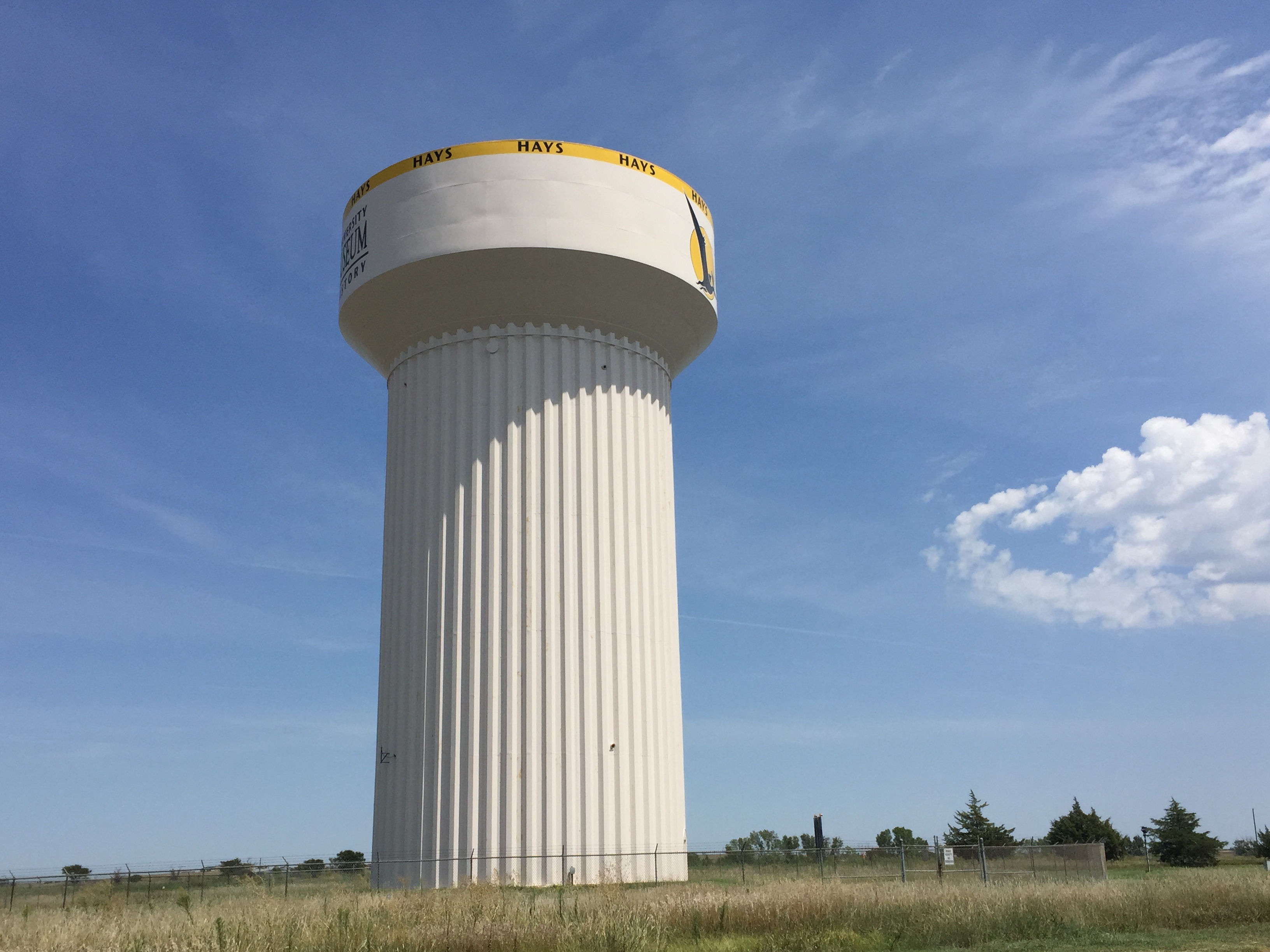
Beginning Sunday, July 15, 2018, the remediation and painting of Hays’ 1 million gallon water tower next to Sternberg Museum, 3000 Sternberg Dr., will begin.
This project should take approximately 6 weeks to complete, weather pending. Crews may be working outside business hours and during the night if wind conditions are not favorable for this type of project to be working on during business hours.
Customers may notice changes in their water pressure system during the scope of the project.
The city of Hays regrets any inconvenience this may cause to the public. If you have any questions please do not hesitate to call the Department of Water Resources at 785-628-7380.
Some Republican gubernatorial candidates are calling for the end of in-state tuition for undocumented students at public universities in Kansas.
GOP candidates for Kansas governor during a Johnson County debate July 12 -image courtesy KCTV
Secretary of State Kris Kobach wants undocumented students to pay the more expensive non-resident tuition rate. Gov. Jeff Colyer expressed a similar view during a Republican forum Tuesday night hosted by KWCH and KMUW.
“I would happily sign that bill if it ever came to us,” Colyer said.
According to the Kansas Division of the Budget, that would raise about $2.3 million in tuition revenue.
But that figure comes with an asterisk — it assumes all undocumented students would stay at Kansas universities. Board of Regents President Blake Flanders says those students could be driven away.
The non-resident rate for tuition and fees for a semester as an undergraduate in Kansas can be as much as three time more expensive as the in-state rate. CREDIT STEPHAN BISAHA/SOURCE: KANSAS BOARD OF REGENTS
“Some would say … they just won’t go as opposed to paying the higher rate,” Flanders said.
The non-resident rate is more than twice the in-state rate.
“It’s hard to image that any of these students would be able to afford the out-of-state rate because they’re not eligible for any financial assistance at all,” said Matt Casey, the director of government relations at the Board of Regents.
According to the Board of Regents, 670 undocumented students received in-state tuition in Kansas last fall. A 2004 Kansas law allowed “persons without lawful immigration status” to receive the reduced rate, as long as they attended a Kansas high school for at least three years and graduated from one.
As state funding for higher education has dwindled over the years, Kansas universities have relied on increased enrollment as a way of covering costs. For those universities, every additional student helps their budget, regardless of whether they are paying the in-state or non-resident rate.
“If you got room for another two students in the class and they’re paying an in-state rate, that’s better than them not attending,” Casey said.
Stephan Bisaha reports on education for the Kansas News Service. Follow him on @SteveBisaha.
Golf enthusiasts are invited for a relaxing day on the greens while raising funds in support of Fort Hays State University student scholarships.
The FHSU Alumni Association is hosting golf tournaments Friday, July 27, at Buffalo Dunes Golf Course, 5685 US-83 in Garden City and Saturday, July 28, at the Liberal Country Club, 1900 North Kansas Ave. in Liberal.
Both tournaments begin with registration at 8 a.m., followed by a 9 a.m. tee time. Registration fees are $90 per golfer or $300 for a team of four.
Head football Coach Chris Brown, coming off an 11-0 regular season and the 2017 MIAA Championship – a first in FHSU history – will be the special guest at the Garden City and Liberal tournaments. He will be joined by FHSU Sports Information Director Ryan Prickett after tournament play in Garden City to discuss the upcoming season of Tiger Athletics as well as an update on the university.
Non-golfers are welcome to stop by either golf course at approximately 1:30 p.m. to hear the latest in FHSU news.
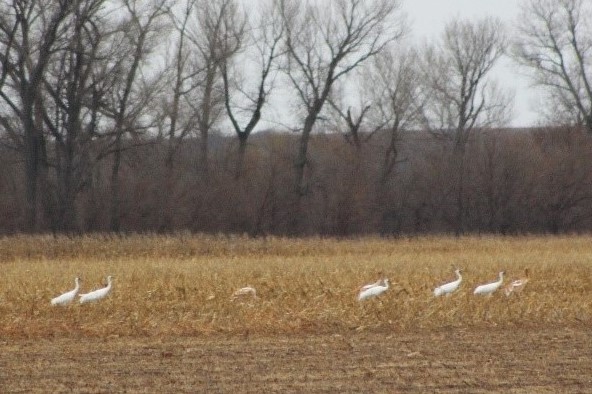
A flock of whooping cranes stop to feed and rest in a field at the U.S.Army Corps of Engineers Kanopolis Lake during their fall migration. In 2017, conservation efforts in the U.S. and Canada have seen the population increase to an estimated 431 birds.
USACE
KANSAS CITY – The U.S. Army Corps of Engineers announced Tuesday the signing of a Memorandum of Understanding with the Friends of the Wild Whoopers to assist in the recovery of endangered whooping cranes.
Per the MOU, USACE and Friends of the Wild Whoopers will jointly assess whooping crane migration stopover habitat at USACE water resources development projects. The assessments will be used by USACE to develop work plans that maintain and improve existing habitat and create additional habitat for this critically endangered bird as part of USACE Environmental Stewardship Program.
The whooping crane is one of the most endangered bird species in the world and is commonly seen as America’s symbol of conservation. Standing 5 feet tall with a wing span of 7 feet, it is the largest bird in North America.
Once fairly common, the species was reduced to just 16 birds by 1943. Market hunting and indiscriminate shooting along with habitat loss led to the decline of the species. Conservation efforts in the United States and Canada have seen the population increase to an estimated 431 birds in 2017.
The Aransas-Wood Buffalo population of whooping cranes nest and rear their young in Wood Buffalo National Park, Alberta/Northwest Territories, Canada, during spring and summer. After the chicks fledge, they migrate 2,500 miles through six states in the midsection of the United States to the U.S. Fish and Wildlife Service’s Aransas National Wildlife Refuge on the Gulf Coast of Texas where they spend the winter.
Cranes must stop 15-20 times to rest and feed during their migration. Radio telemetry conducted by the U.S. Geological Survey and direct field observation has documented many times that these migration stopovers are made on USACE-managed water resource development projects in the migration corridor.
“Our efforts with USACE will allow us to focus on whooping crane habitat assessment and management recommendations on lands under USACE jurisdiction,” said Chester McConnell, president of Friends of the Wild Whoopers. “We are looking to determine if any suitable areas could be managed or appropriately developed to provide migration stopover habitat for whooping cranes. Additional habitat may be needed to support the migration, especially in drought years when surface water is reduced and areas adjacent to USACE multipurpose reservoirs become even more important.
“Ensuring that ongoing management of these areas is conducive to whooping crane use during migration is the primary goal of our partnership,” added McConnell.
Whooping cranes from the Aransas-Wood Buffalo population have consistently been documented using areas at several USACE-managed projects within the established 2,500-mile-long by 200-mile-wide primary migration corridor according to USACE officials.
“The annual migrations of the Aransas-Wood Buffalo population of whooping cranes cross portions of our Omaha, Kansas City, Tulsa, Fort Worth and Galveston districts,” said Jeremy Crossland, Land Uses and Natural Resources Program Manager at USACE Headquarters here.
“There have been a few rare instances where whooping cranes were observed on USACE project lands outside the established migration corridor. Our management and restoration efforts on these areas provide important feeding and resting areas for whooping cranes during their migration. These efforts typically provide benefits to numerous other species of native wildlife including waterfowl and shorebirds,” Crossland added.
USACE biologists and team members with Friends of the Wild Whoopers have begun to make assessments of areas that whooping cranes have traditionally used and are assessing habitat management actions to maintain these areas and improve additional habitat.
“Our preliminary assessments of areas on USACE-managed lands has confirmed our initial belief that these areas do currently provide important migration stopover habitat and with some minor habitat management actions those benefits can be increased,” said McConnell.
This partnership is consistent with USACE’s responsibilities under the Endangered Species Act, which states that federal agencies may use their existing authorities to assist in the recovery of listed species said Crossland.
For information on the Friends of the Wild Whoopers visit their website at: www.friendsofthewildwhoopers.org. Information on the U.S. Army Corps of Engineers Environmental Stewardship Program can be found at: www.usace.army.mil.
Today
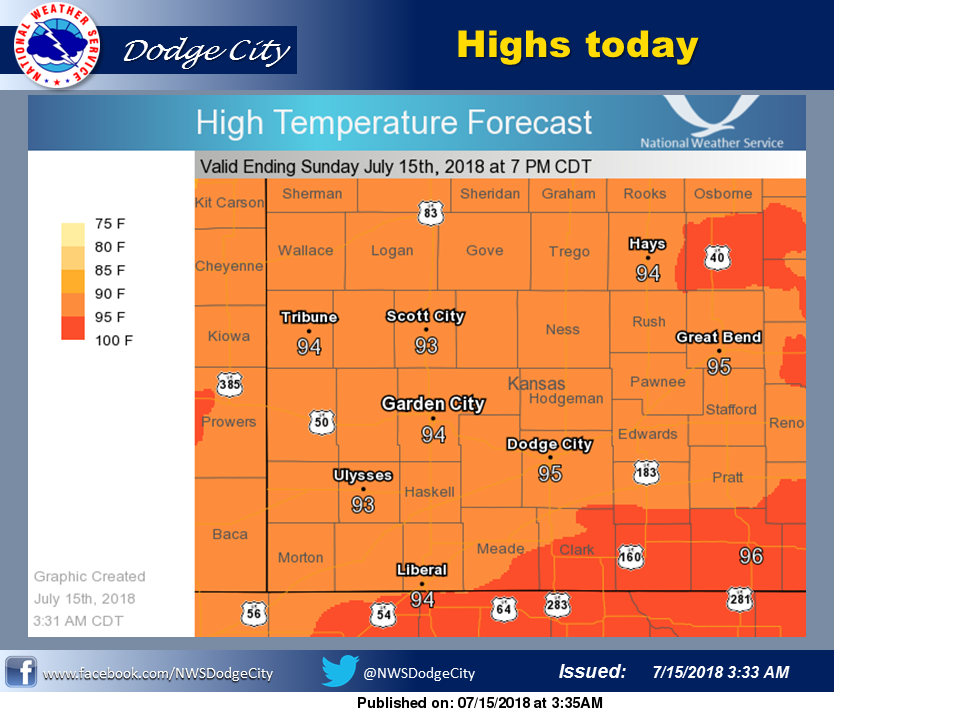
A 20 percent chance of showers and thunderstorms after 4pm. Patchy fog before 9am. Otherwise, mostly sunny, with a high near 93. Light southeast wind becoming east 5 to 9 mph in the morning.
Tonight
A 40 percent chance of showers and thunderstorms, mainly before 1am. Mostly cloudy, with a low around 69. Northeast wind 7 to 9 mph.
Monday
A 30 percent chance of showers and thunderstorms, mainly after 1pm. Partly sunny, with a high near 87. East wind 6 to 8 mph.
Monday Night
A 50 percent chance of showers and thunderstorms. Mostly cloudy, with a low around 68. East wind 5 to 9 mph.
Tuesday
A 50 percent chance of showers and thunderstorms. Mostly cloudy, with a high near 87. Southeast wind 6 to 11 mph.
Tuesday Night
A 40 percent chance of showers and thunderstorms. Mostly cloudy, with a low around 69.
Wednesday
A 20 percent chance of showers and thunderstorms before 1pm. Mostly sunny, with a high near 92.
Wednesday Night
Mostly clear, with a low around 68.
For hundreds of years, the human race has used organic farming practicing, fertilizing with manures and manually pulling or hoeing weeds from gardens. Within the last 100 years, farmers and home gardeners have turned to chemicals to control weeds and pests to what a local herbalist argues is the detriment of wildlife, pollinators, plants and people.
Pam Herl, a local herbalist, recently presented a program to the Hays Public Library Herb Study group on organic gardening.
“They had very strong work ethics,” Herl said of historic home gardeners. “They worked in their gardens. Whereas today, we tend to reach for the bottle of Roundup or 2,4-D instead of bending over and pulling the weed. We spray and then we go to Curves or the health center and exercise. You get a lot of exercise [in your garden].”
You can burn about 300 calories for one hour of gardening, depending on the type of work and your body type. It is the equivalent of one hour of intensive work in a gym.
Hoeing can help cut down on grasshoppers, Herl said. The insects lay their eggs in the top layer of the soil. If you turn over the soil with a hoe, it exposes the eggs to sunlight and heat and kills them.
Dangers of chemicals
“It has polluted our food source, it’s polluted our air, it’s polluted our water source, and yet we are still reaching for that bottle of chemicals for spraying insects, for fertilizing, for spraying weeds,” Herl said. “We are constantly reaching for that bottle.”
Use of pesticides has increased by 50 percent over the last 30 years, Herl said. 2.5 million tons of commercial pesticides are used annually in the U.S., according to a study published by the American Institute of Biological Sciences.
“That is a lot of money we are pouring into an industry that is killing us spray by spray,” Herl said.
The chemicals can leach into ground water or run off into watersheds such as streams, rivers and lakes, all sources of drinking water and places were people swim and enjoy water sports.
“Every time you see someone spraying that bottle of 2,4-D,” Herl said, “I can guarantee it is going to go down in the water and the ground and the water source and it is going to end somewhere it is not supposed to be.”
Pesticides and herbicides can kill beneficial insects along with ones that would destroy crops. Less than 1 percent of the world’s insects are considered pests to farmers. The rest play a vital role in our food chain, Herl said.
Herl expressed concerns about how the use of pesticides is affecting pollinators. Despite her use of organic gardening practices in her herb garden in WaKeeney, she has seen a marked reduction in the number of bees and butterflies.
Herl said chemical fertilizers can disrupt beneficial bacteria and fungi in the soil. They also may not replenish trace elements plants need. Chemicals can also negatively affect the pH in the soil.
Herl called out some specific chemicals of concern to her.
Glyphosate, a chemical found in many herbicides, is affecting butterflies, Herl said.
Neonic, a chemical used to treat corn seeds, has been linked to bee kills and been found in honey. 80 percent of the 92 million acres of corn in the U.S. were treated with the chemical as of 2011.
Herl said there are a few exceptions of invasive plant species that are very difficult to kill unless you use chemicals or a weed torch. These include bindweed and puncture weed. Weed torches are not recommended when conditions are very dry as they could ignite wildfires.
Weeds that are not weeds
The group talked about the classification of plants as weeds. Some plants that are categorized as weeds, such as dandelions have benefits, produce nectar for pollinators and are used by some for medicinal purposes.
“It depends on the person and the location of your garden,” Herl said. “If you have a pristine formal garden, any of these are going to be a weed. They don’t want them in their garden. Now if you have a cottage garden like mine, they would be welcome. I had a lady who was there for the garden tour and she said, ‘Oh, you have a dandelion in your garden.’ I said, ‘I have a lot of dandelions in my garden because this is a herb garden. It is not a flower garden, so there is a lot of dandelions in my garden. There sure is.”
Herl also has wild lettuce in her garden. Other gardeners chimed in and said they had yarrow, lamb’s quarters, hog weed and dock in their gardens, all of which are categorized by some as weeds.
“These are all that people spray,” Herl said. “They spray these. These are all used medicinally, and they spray them. We are a chemically enhanced generation. We are all about chemicals. We want the fast fix whether it is an antibiotic, an insecticide or fertilizer. It is all about the fast fix. We are worried about today and not tomorrow and we are killing ourselves, slowly but surely. We won’t be around to see it, but our kids or grandkids probably will.”
Even if you want to take your garden or your farm organic, it is difficult to get away from all the chemical use around you, Herl said. Land has to lay fallow for seven years to certify crops on it organically grown, Herl said, and then the land is periodically checked to make sure there are no chemicals in the water or land.
“You would have to grow that whatever crop you want certified organically on an island in the middle of the ocean because you can’t control what goes in your groundwater,” she said. “You can’t control what a neighbor three miles from you has a crop duster spray and the wind blows your direction. You can’t control what the county worker is doing when he is driving a truck down the road spraying the ditch with Roundup. How can you grow anything certified organically grown?”
Natural pest repellents
Herl gave some examples of plants and natural substances that can be used to repel animals and unwanted insects:
Recipe for animal repellant
2 T of powdered red pepper
1 gallon of water
6 drops of soap
• Rabbits can be repelled with powdered aloe vera.
• Aphids, white flies and beetles can be repelled with garlic spray. Use a bulb of garlic in four teaspoons of mineral soap and let it set overnight. Strain the garlic, add two pints of water and one teaspoon of Dawn. Use as a spray.
• Botanical sprays can be purchased over the counter. Rotenone, which is derived from the derris root, kills aphids and grasshoppers. Sabadilla powder, liquid or seeds are used against grasshoppers, corn borers, codling moths, squash bugs, aphids, web worm and cabbage loopers.
• Toads and frogs can be beneficial to garden as insect-eating machines. One toad can eat up to 10,000 insects in three months. They eat crickets, grubs, rose beetles, caterpillars, squash bugs, potato beetles, flies and slugs. They just need shelter, water and light. A solar light in the ground near water will attract insects for the toads. However, toads and frogs are very sensitive to chemicals in the environment.
• Some flowers also have insecticidal qualities, including aster, mums, cosmos, coreopsis, nasturtiums, and French and Mexican marigolds. You can dry the flowers and turn them into powders. You can also use the green flowers, soak them in alcohol, strain, add Dawn, add a little oil and use as a spray. Planting marigolds in your garden can help repel nematodes, which attack vegetables’ root systems.
• Cornmeal spread at the base of roses can prevent black spot.
Natural fertilizer
Herl also discussed the use of natural fertilizer, including animal manure. Cow manure contains high amounts of nitrogen, phosphates and potassium, as well as calcium, magnesium and sulphur. Herl also uses fish fertilizer.
“You have to remember, this is free,” she said. “You can go out in the country and you can get a lot of cow manure yourself. Just let it dry. You get free exercise, and you get to go out into the country for a good drive.”
Earthworm castings are excellent for gardens as well.
Attract worms to your garden by taking newspaper, laying it flat on the ground, wetting it and spreading mulch over the top. It will prevent weeds from growing, it breaks down naturally and earthworms will love it, Herl said.
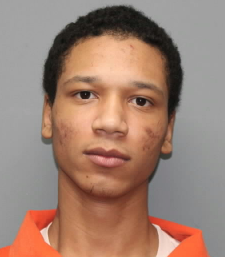
WICHITA, Kan. (AP) — One of the men accused of killing a semi-pro football player in Wichita last summer has been sentenced to life plus 13 months in prison.
Randle -photo KDOC
A jury convicted Ritchie Randle Jr. of Wichita in May of first-degree premeditated murder and criminal discharge of a firearm in the death of 19-year-old Timothy Golden.
Golden was found shot to death in his apartment in July 2017. He was a tight end for the Kansas Cougars, a semi-pro team based in Wichita.
Investigators say Randle and two other men, Dakahri Sanders and Larry Triplett, fired more than a dozen rounds in Golden’s apartment.
Randle was sentenced last month and won’t be eligible for parole until he spends at least 50 years in prison.
Sanders and Triplett have not yet been tried in the case.
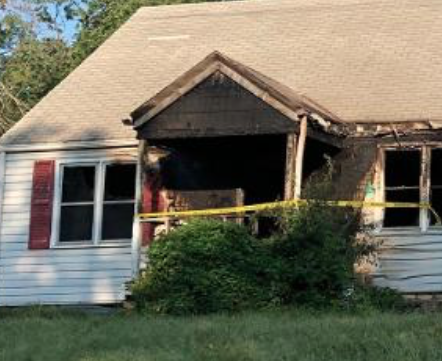
Topeka — Officials are investigating the cause of a fatal Friday morning house fire and have identified the victim as 25-year-old Kennedy Karioki Ndungu.
Just before 2a.m., fire crews responded to the fire located at 2949 SW Burlingame Road in Topeka, according to Fire Captain Michael G. Martin.
Upon arrival, fire crews reported smoke and flames visible from the single story wood framed house. Fire crews quickly extinguished the fire; one fire victim was located within the residence.
Estimated structural dollar loss is $40,000 structure, $10,000 content loss.
The home had working smoke alarms at the time of the fire.
WICHITA, Kan. (AP) — GOP gubernatorial candidate Kris Kobach railed against people in the U.S. illegally at a Wichita rally intended to show support for federal Immigration and Customs Enforcement.
Today in Wichita we spoke in support of ICE and enforcing our immigration laws. As governor I will enforce our immigration laws and support law enforcement. #ksleg#TeamKobachpic.twitter.com/VVN26hXIDL
Kobach blamed those immigrants for everything from stealing American jobs to causing a tuition hike this year at state universities at the Saturday rally that drew only about 80 people. If elected governor, he says he would end in-state tuition for young people brought to the U.S. illegally as children.
Kobach was joined at the rally by his running mate, Wink Hartman, and Republican state Sen. Ty Masterson, of Andover.
Bill Anderson was one of three rally protesters who held signs and shouted at Kobach and other speakers, noting that nearly all of the rally supporters attending were white.
Kobach addressed the three protesters during his time at the microphone, calling them “snowflakes” who express “fake outrage.”
SHAWNEE, Kan. (AP) — Police say a Missouri woman missing for a week has been found dead in an eastern Kansas house, and a man has been arrested on suspicion of killing her.
Cooper-photo KCPD
The Kansas City Police Department says the body of 43-year-old MeShon Cooper, who had been missing from Kansas City since July 6, was found early Saturday morning in a house in Shawnee, Kansas.
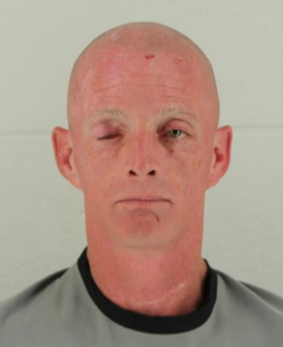
Shawnee police say 47-year-old Ronald Lee Kidwell, of Shawnee, was arrested and charged with second-degree murder. He remains in jail on $1 million bond.
Kidwell -photo Johnson Co.
Police say Cooper’s body was found as part of a joint investigation by the Kansas City, Shawnee and Lenexa police departments. Prosecutors say Kidwell is suspected of having killed her sometime between July 6 and Friday.

 KDWPT
KDWPT












 Today
Today