We have a brand new updated website! Click here to check it out!

Now That’s Rural: Randall Tosh, Phoreus Biotechnology

Ron Wilson is director of the Huck Boyd National Institute for Rural Development at Kansas State University.
By RON WILSON
Huck Boyd National Institute for Rural Development

“We can deliver.” In the business community, it is vital that a company delivers on its promises. Delivery is important in other ways as well. What if a company could find a better way to deliver a medicine or treatment to a particular target in cells inside the body? Today we’ll learn about an innovative Kansas company which is using amazing technology to accomplish such a goal in medicine, animal and plant health.

Randall Tosh is CEO of Phoreus Biotechnology, Inc. in Olathe, Kansas. He grew up on a farm in northeast Kansas and got a degree in agriculture from K-State. He worked in international marketing for the State of Kansas and Commonwealth of Australia before becoming executive vice president of an animal health technology company in Olathe.

In that capacity, he met Dr. John Tomich, professor of Biochemistry and Molecular Biophysics and director of the Biotechnology/Proteomics Core Facility at K-State. “He was brilliant,” Randall said.

Dr. Tomich helped with experimental formulations of various products. In 2017, he mentioned to Randall that he had developed and patented a particular technology with a lot of promise. “Would you be interested in this technology?” he asked. As Randall explored the possible applications of the technology, he became more and more interested.

The trademarked name for this type of technology is Branched Amphipathic Peptide Capsules, or BAPC for short. BAPC technology works at the nanoscopic scale, meaning one billionth of a meter. At this incredibly tiny scale, Dr. Tomich and his researchers found that these capsules could function as nanocarriers to carry small molecules, proteins and nucleic acids into cells, for example. Essentially, this represented a new drug delivery system. The potential impact of this technology was enormous.

In fall 2017, Randall and his partners entered into conversations with the KSU Research Foundation about getting licensed to commercialize the technology. “Lindsay Biggs and Christopher Brandt (at the research foundation) have been fantastic,” Randall said. When licensing appeared certain in February 2018, Randall and partners formed a new business to implement the commercialization. The business was called Phoreus Biotechnology, Inc. It is now a commercial tenant at K-State-Olathe.

“The name Phoreus comes from the Greek, meaning `to carry’ or `to bear,’” Randall said. “Our technological platform works as a carrier to make other ingredients more effective and have more persistency,” Randall said.

In other words, BAPC is not the active ingredient in a given product, but it provides a new and more effective way to deliver the active ingredient to where it needs to be. These carriers are infinitesimal in size and are programmable on a scale of nanometers.

What could all this mean? The Phoreus website says BAPC technology can “offer substantially increased efficacy in the creation and delivery of novel vaccines, cancer therapies, alternative antibiotics and biopesticides for improved human, animal, plant and environmental health around the world.”

Currently, there are some classes of drugs which have difficulty being absorbed in the body. BAPC technology can overcome those obstacles. Furthermore, BAPC technology can deliver an ingredient with negligible cytotoxicity or damage to other cells.

In cancer therapy, for example, BAPC technology could allow the treatment to be targeted to cancerous cells while not disturbing the normal cells. In pest control, it could target the treatment at the parasite while leaving other insects unharmed.

“This is a fantastic technology,” Randall said. “Our company will spend research dollars here and employ people here as we grow,” he said. Such investment is important to him as a native Kansan. He grew up on the Tosh family farm which was located between the rural communities of Nortonville, population 613, and Effingham, population 588 people. Now, that’s rural.

Phoreus Biotechnology is now raising investor funding and seeking needed regulatory agency approvals. For more information, see www.phoreusbiotech.com.

“We can deliver.” That claim is important for any company, but this company is finding new ways to deliver medicines and treatments more effectively at the cellular level. We salute Randall Tosh, Dr. John Tomich and all those involved with Phoreus Biotechnology for making a difference with technological innovation which can deliver.
SPONSORED: FHSU Energy Division seeks technician

Fort Hays State University-Energy Division Seeking Position – Skilled Trades Technician, Plant Operations

The FHSU Energy Division/Power Plant is looking for a dependable individual to hire in the Power Plant Department.  This is a full time position with benefits. 

TASKS

Operation, maintenance and repair of industrial equipment such as boilers, generators, pumps and valves.  Work involves all aspects of boiler operation to include general maintenance and repair of related Energy Division/Power Plant equipment.  Follow written and oral procedures, reading and recording gauges and water testing.  Able to lift 30-50 lbs.

Working hours during the heating season require 24/7 operation during the months of October to April, requiring shift work for continuous operation.  Working hours from May through September are usually Monday – Friday 7:00 AM to 3:30 PM.  This position may be required to work a flexible work schedule as needed.

*More than one position may be available*

REQUIREMENTS

High school diploma or GED, valid driver’s license.  Three years’ experience in some skilled trades area.  Prefer experience in electrical or mechanical trades, but this is not required.  Must be able to lift 30-50 lbs. 

COMPENSATION

Starting Pay: $14.50 / hr., with shift differential, when applicable.  Full benefits package.  Visit https://www.fhsu.edu/humanresourceoffice/Prospective-Employee/ for more about the benefits.

HOW TO APPLY

Application Process:  To apply for this position, please visit https://fhsu.wd1.myworkdayjobs.com/CAREERS.  Only electronic applications submitted through the webpage will be accepted.

Required Application Documents:  Applicants should submit a resume and names and contact information for three professional references.  Applicant documents should be submitted in one PDF.

Notice of Non-discrimination – Fort Hays State University is an Equal Opportunity Employer and does not discriminate on the basis of gender, race, religion, national origin, color, age, marital status, sexual orientation, genetic information, disability or veteran status.

Background Check: Final candidate will have consented to and successfully completed a criminal background check.

Notice to KPERS retirees applying for a position: Recent legislation changes working-after-retirement rules for both you and your employer if you go back to work for a KPERS employer. Please contact your KPERS representative or www.kpers.org for further information on how this might affect you.

Kan. woman ordered by cops to ‘stop praying’ in her home wins In U.S. Supreme Court

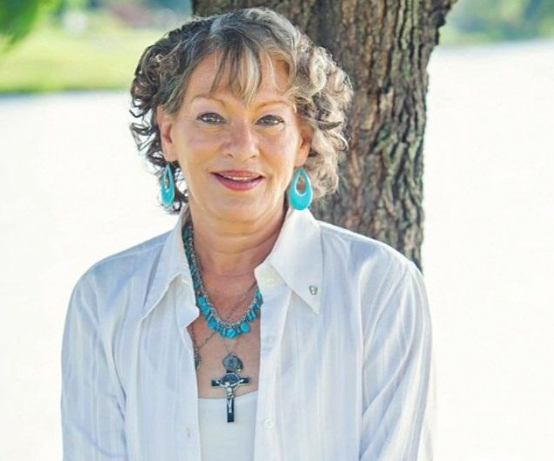
Mary Anne Sause was listening to Michael Savage, the conservative radio show host, when Louisburg, Kansas, police showed up at her apartment door. They’d fielded a complaint that her radio was playing too loud.

Louisburg, Kansas, resident Mary Anne Sause says police ordered her to stop praying in her own home.
FIRST LIBERTY INSTITUTE

The retired nurse didn’t open the door at first. She said she was wary after she’d been raped years earlier. She called a friend, who came over just before the police returned and banged on the door. She opened it but left the screen door locked.

“They wouldn’t tell me what they were there for,” she said. “I was told if I didn’t let them in I would get a ticket.”

A devout Catholic active in the anti-abortion movement, Sause said she showed the two Louisburg officers the pocket Constitution she always kept handy.

“That is just a piece of paper that doesn’t work here,” she said one of the officers told her.

And so began a legal saga that ended up in the U.S. Supreme Court, culminating Thursday with a brief unsigned opinion finding that a lower court should not have dismissed Sause’s civil rights complaint against the officers.

“I’m not the type to go out and drive down Louisburg and say, ‘Hey, look at me,’ but it was so sweet, thank you, God, and tears of joy and happiness,” Sause said. “And you know, it’s a fight for our country also.”

The case has both First and Fourth Amendment implications. That’s because after Sause admitted the officers to her apartment — that’s where Fourth Amendment principles governing search and seizure come in — they told her she was going to jail. She then asked one of the officers for permission to pray — that’s where her First Amendment religious rights arise — which he granted. When she dropped to her knees and began to pray, however, the other officer mockingly ordered her to get up and stop praying.

That encounter with the police occurred in 2013. Sause said she spent the next two years seeking an apology from the Louisburg police. When that didn’t happen, she sued them in 2015, alleging they violated her constitutional rights.

“We are glad that the Supreme Court recognized the constitutional rights of law-abiding citizens like Miss Sause and that she’s able to have her day in court. We’re glad because no American should be told they can’t pray in their own home,” said Stephanie Taub, senior counsel at First Liberty Institute in Plano, Texas, a nonprofit legal organization that describes itself as focused on religious freedom and the First Amendment.

Taub, who took on Sause’s case after Sause had initially represented herself, said First Liberty reached out to Sause after her complaint was dismissed. The judge had read the complaint Sause drafted as claiming the police violated her First Amendment rights when they ordered her to stop praying and violated her Fourth Amendment rights by refusing to let her enter her bedroom when they were in her apartment.

But the judge threw out the complaint, finding the officers were shielded from liability under the doctrine of qualified immunity. The 10th U.S. Circuit Court of Appeals upheld the dismissal, which paved the way for Thursday’s decision by the U.S. Supreme Court.

Taub said her organization decided to get involved after reading a sentence in the trial court’s decision stating that while the order to stop praying might have offended Sause, it didn’t implicate her First Amendment rights.

“That’s a little bit of a paraphrase, but essentially. it was saying that being ordered to stop praying in your own home didn’t burden her free exercise (of religion) rights at all,” Taub said. “So we thought that was an egregious error of law, and we got involved to try to overturn that.”

While Sause only presented her First Amendment claim to the Supreme Court, the court found that her First and Fourth amendment claims were “inextricable” and sent the case back for further consideration.

The right to pray is “unquestionably” protected by the First Amendment, the high court said, although it noted there are circumstances under which police can prevent a person from praying. For example, it said, a suspect being transported to jail doesn’t have a right to delay the trip “by insisting on first engaging in conduct that, at another time, would be protected by the First Amendment.”

But the court said it was unclear in Sause’s case whether the police had legitimate grounds for entering her apartment and remaining there. And it said it also wasn’t clear what they wanted her to do after she was told to stop praying.

Sause, 61, said she’s a big supporter of law enforcement, “but they came on in and it was just a nightmare.”

“I kept praying and I was like, Lord, I don’t know what to do, but I had to stand up for God and for myself and for people in the country,” Sause said. “So I filed a pro se (complaint) in district court here and it was just a miracle how it all happened.”

Louisburg Police Chief Timothy Bauer, who is named in Sause’s lawsuit, did not immediately return a call seeking comment.

Dan Margolies is a senior reporter and editor in conjunction with KUCR and the Kansas News Service. You can reach him on Twitter @DanMargolies

University of Kansas announces spring 2018 honor roll

KU

LAWRENCE — More than 5,400 undergraduate students at the University of Kansas earned honor roll distinction for the spring 2018 semester.

The students, from KU’s Lawrence and Edwards campuses and the schools of Health Professions and Nursing in Kansas City, Kansas, represent 87 of 105 Kansas counties, 40 other states and territories, and 45 other countries.

The honor roll comprises undergraduates who meet requirements in the College of Liberal Arts & Sciences and in the schools of Architecture & Design; Business; Education; Engineering; Health Professions; Journalism; Music; Nursing; Pharmacy; and Social Welfare. Honor roll criteria vary among the university’s academic units. Some schools honor the top 10 percent of students enrolled, some establish a minimum grade-point average, and others raise the minimum GPA for each year students are in school. Students must complete a minimum number of credit hours to be considered for the honor roll.

Regional honorees are listed below.

Ellis
Brandon Bollig, Ellis, College of Liberal Arts & Sciences
Alesha Brenner, Ellis, School of Health Professions

Raina Basso, Hays, College of Liberal Arts & Sciences
Raegan Billinger, Hays, College of Liberal Arts & Sciences
Brianna Brin, Hays, College of Liberal Arts & Sciences
Lucas Brull, Hays, College of Liberal Arts & Sciences
Sana Cheema, Hays, College of Liberal Arts & Sciences
Madison Crees, Hays, College of Liberal Arts & Sciences
Brandon Davidson, Hays, College of Liberal Arts & Sciences
Taylor Dinkel, Hays, School of the Arts
Alex Feyerherm, Hays, College of Liberal Arts & Sciences
Zachary Hopp, Hays, College of Liberal Arts & Sciences
Kelly Koenigsman, Hays, School of Education
Mikayla Linn, Hays, School of Pharmacy
Mark Loftus, Hays, College of Liberal Arts & Sciences
John Lowry, Hays, College of Liberal Arts & Sciences
Jordyn Manhart, Hays, School of the Arts
Payton Markley, Hays, College of Liberal Arts & Sciences
Morgan Mathews, Hays, College of Liberal Arts & Sciences
Matthew Moeder, Hays, College of Liberal Arts & Sciences
Aaron Moore, Hays, School of Business
Tanner Moore, Hays, College of Liberal Arts & Sciences
Graydon Olson, Hays, School of Engineering
Gage Phillips, Hays, School of Engineering
Cassandra Quinby, Hays, College of Liberal Arts & Sciences
Scott Ring, Hays, School of Engineering
Nathan Romme, Hays, College of Liberal Arts & Sciences
Roy Schmeidler, Hays, School of Music
Owen Toepfer, Hays, College of Liberal Arts & Sciences
Jodi Veach, Hays, College of Liberal Arts & Sciences
Nikki Vuong, Hays, College of Liberal Arts & Sciences
Ethan Waddell, Hays, School of Business
Ryan Wooldridge, Hays, School of Pharmacy
Fengxue Zhang, Hays, College of Liberal Arts & Sciences

Madisyn Gerhardt, Victoria, College of Liberal Arts & Sciences

Graham
Tara Brachtenbach, Hill City, College of Liberal Arts & Sciences

Norton
Layton Miller, Norton, College of Liberal Arts & Sciences

Phillips
Alex Atchison, Agra, College of Liberal Arts & Sciences
Bailey Imm, Agra, School of Pharmacy
Faith Hofaker, Logan, College of Liberal Arts & Sciences
Kayla Hofaker, Logan, College of Liberal Arts & Sciences
Logan Kiser, Logan, School of Pharmacy
Brant Cox, Long Island, School of Education
Mark Coomes, Phillipsburg, College of Liberal Arts & Sciences
Stephen Sage, Phillipsburg, School of Pharmacy
Macye Witmer, Phillipsburg, College of Liberal Arts & Sciences

Rooks
Jaclyn Benoit, Damar, School of Business
Hannah Berland, Damar, College of Liberal Arts & Sciences
Jacob Brull, Plainville, School of Music
Alexis Winklepleck, Stockton, College of Liberal Arts & Sciences

Russell
Taelyr Blehm, Russell, College of Liberal Arts & Sciences
Sheila Gulick, Russell, College of Liberal Arts & Sciences

Smith
Aleah Seemann, Kensington, School of Health Professions
Jordan Baxter, Smith Center, School of Education
Taylor Zabel, Smith Center, College of Liberal Arts & Sciences.

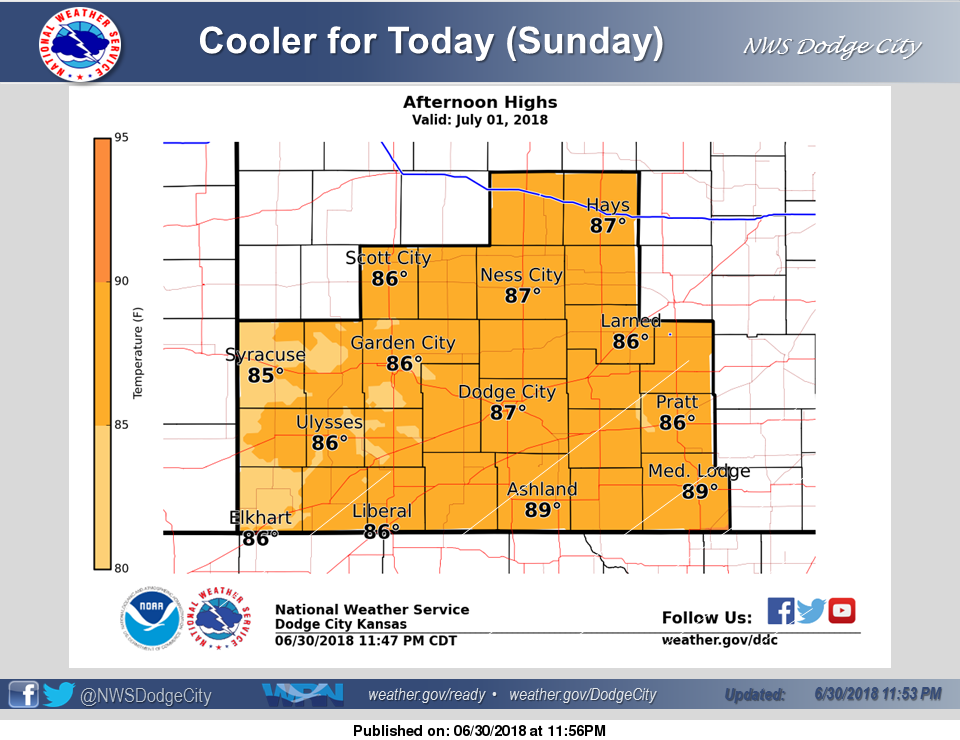
Mostly sunny, cooler Sunday


Today
Becoming mostly sunny, with a high near 85. North wind 5 to 10 mph becoming light and variable in the afternoon.

Tonight
Mostly clear, with a low around 65. East wind 5 to 7 mph.

Monday
Sunny, with a high near 94. South southeast wind 7 to 14 mph.

Monday Night
A 20 percent chance of showers and thunderstorms before 1am. Partly cloudy, with a low around 70. South southeast wind 9 to 14 mph.

Tuesday
Mostly sunny, with a high near 97. South wind 8 to 17 mph.

Tuesday Night
Mostly clear, with a low around 72.

Independence Day
Sunny, with a high near 96.

Wednesday Night
Mostly clear, with a low around 71.

Thursday
Sunny, with a high near 94.

1 dead, 4 hospitalized after 3-vehicle Kansas crash

GREENWOOD COUNTY— One person died in an accident just before 3;30 p.m. Saturday in Greenwood County.

The Kansas Highway Patrol reported a 2007 Toyota Prius driven by  Edin G. Gonzalez-Gamez, 25, Edwards, CO., was eastbound on U.S. 400 just west of J Road.

The vehicle crossed the center line and collided with a 1999 GMC Sierra driven by Leonora L. Smith, 37, Atlanta, Kansas.

A 2012 Ford Focus driven by Richard T. Lomax, 37, Claremore, OK., crashed avoiding the other vehicles.

Gonzalez-Gamez was pronounced dead at the scene and transported to Frontier Forensics.

Smith and a passenger in the Toyota  Britany Y. Gonzalez-Orellana, 2, Edwards, CO., were transported to Wesley Medical Center.

Passengers in the GMC Martin M. Richards, 24, Howard and Nathaniel T. James, 20, Arma, were transported to the Greenwood County Hospital. Lomax was not injured.

All six were properly restrained at the time of the accident, according to the KHP.

Fort Hays State’s HCI keeping dream alive for Hispanic students

By DIANE GASPER-O’BRIEN
FHSU University Relations and Marketing

University campuses are hotbeds for a variety of camps and other youth activities during the summer months. An event the third week in June at Fort Hays State University is unique in Kansas.

Nearly 80 students heading into their junior or senior years of high school visited Fort Hays State for the third annual Hispanic College Institute. Students of either Hispanic or Latino origin from three different states learned a little about the ins and outs of college life.

FHSU is the only school in Kansas that conducts such a program, which is a free, four-day preparation for high school Hispanic students to enter and succeed in higher education.

Breakout sessions during one day focused on foundations for success and social change models and the process of applying for college and financial aid. One evening was highlighted by a speech by Dr. Rigo Ramirez, a native of Mexico who grew up in Great Bend.

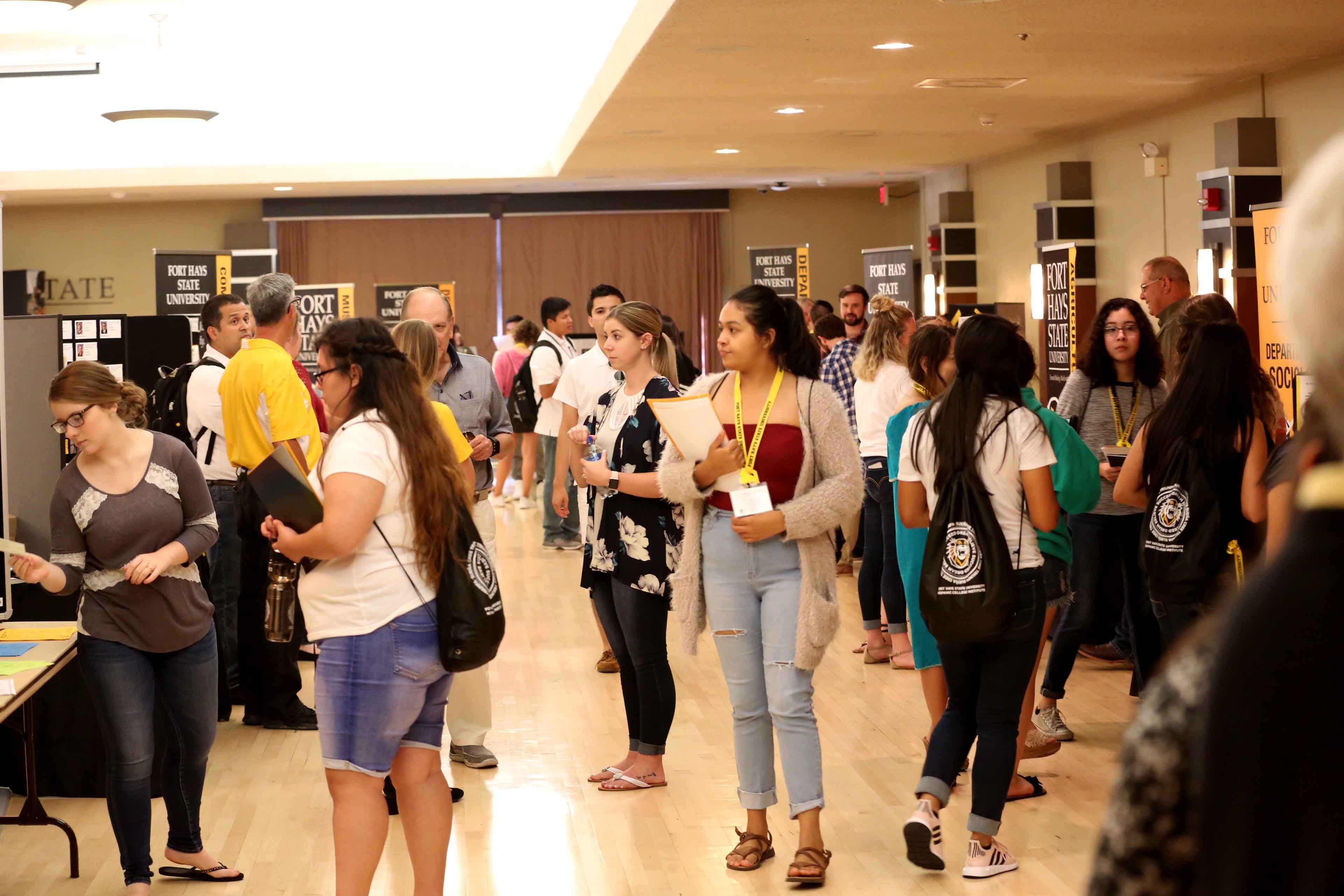
Sandwiched in between were breakout sessions, preparation for the always popular lip sync battle, and a resource fair where students got the chance to visit with faculty from various departments across campus. The week also included inspirational talks from Hispanic Stars, successful Hispanic men and women who shared their stories.

Ramirez, a 2003 graduate of Fort Hays State, was able to relate to the students firsthand, telling his story of growing up in Great Bend. Neither his father or mother attended high school. His father had an eighth-grade education and his mother seventh-grade, and Ramirez said he wanted more.

“There were two ways I could approach this,” he said. “I could throw my hands up and not go to college or learn from the experience and try to turn it around and do something positive.”

He chose the latter. Ramirez told the students how he turned a low grade point average into a 3.94 (on a 4.0 scale) at FHSU, where he served as student body vice president. At graduation, he won the Torch Award, given to a student who is nominated by faculty on the basis of classroom excellence, participation in professional organizations and involvement in student or civic activities. He now is completing his final two years of his training in Clinical Cardiac Electrophysiology at the St. Luke’s Mid America Heart Institute in Kansas City, Mo.

Another guest speaker was Sonia Esquivel, also a native of Mexico, who moved to Garden City with her family when she was young. Esqivel received both her bachelor’s and master’s degrees from Fort Hays State, studying and working as a single mom. She went on to earn her Ph.D. and now works as an assistant professor and counselor at the United States Air Force Academy in Colorado Springs.

While hearing how Hispanic FHSU alumni have succeeded was impressive for the students, the opportunity to interact with current Fort Hays State students was impactful, too, said Taylor Kriley, one of the HCI directors.

“What makes it successful is creating the experience for these students coming to our campus,” said Kriley, director of inclusion and diversity excellence at FHSU. “And our own Fort Hays State students help us facilitate that experience.”

Seventeen FHSU Hispanic and Latino students served as “leads,” who act as counselors at the institute.

“My overall favorite part of the entire program is our leads and all our staff who help our students realize their potential to go to college and that they can be successful in college,” Kriley added.

One of those leads this year was Denice Lastra Blanco from Fort Collins, Colo., who attended HCI as a high school student.

“I had never heard of Hays, Kansas, before I got a postcard in the mail,” she said. “Then I heard about HCI, and I knew I was interested in the conference.”

Lastra Blanco attended the inaugural HCI at Fort Hays State in 2016, and it made a lasting impression.

“I was timid when I got here,” Lastra Blanco said. “But the first day, I was inspired by my lead. By the end of the night, I felt I was in the right place.”

When it came time to make a college choice during her senior year, Lastra Blanco decided on Fort Hays State. An organizational leadership major, Lastra Blanco now is well entrenched in college life and is looking forward to her new job as resident assistant at McMindes Hall for the 2018-19 school year. She got a hint of RA life at HCI.

“I loved being a lead,” she said. “It’s really awesome to see all these young students here,” she said. “It’s like seeing myself all over again.”

One of the many workshops the HCI participants attended during the day focused on financial aid and how to go about applying for college. Erica Meneses Corona, an admissions recruiter at FHSU, gave a step-by-step demonstration on how to fill out an application for college.

“That was really helpful,” said Lucy Lozano-Alba, a senior-to-be at Dodge City High School who hopes to be filling out one of those applications in two years.

Because of family commitments, Lozano-Alba plans to stay close to home and attend Dodge City Community College her first two years of college. But she already has her heart set on where to transfer in the fall of 2021. She became familiar with the FHSU campus three years ago while attending the annual high school art show .

“We toured the campus, and I really liked it,” said Lozano-Alba, who then revealed what has really drawn her to FHSU to earn her degree. “I’ve wanted to be a teacher since I was a little girl, and I know how respected the teacher education program is here.”

Kriley said the HCI team already is making plans for next year and is entertaining the idea of expanding the institute to include a separate program for returning students.

“That would give students the opportunity to come back and stay connected to their dream of going to college,” Kriley said, “to keep those close relationships they form and that support network they can use to stay focused on their dream. We would love to have over 100 students together in both programs next year.”

Copyright Eagle Radio | FCC Public Files | EEO Public File