We have a brand new updated website! Click here to check it out!

INSIGHT KANSAS: On abortion politics, most Kansans more complex than simplistic stereotypes

The Kansas Supreme Court ruled recently that the state constitution protects a woman’s right to an abortion. Conservative politicians in Topeka may back putting a constitutional amendment on the 2020 ballot to counter that ruling. If a lengthy abortion campaign is looming, then let’s start with facts about how average Kansans feel about abortion. That means avoiding convenient or self-reassuring stereotypes, and realizing that most Kansans are mixed on abortion and may care little about the issue.

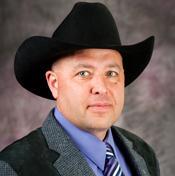
Patrick R. Miller is an Assistant Professor of Political Science at the University of Kansas.

Kansas isn’t polled frequently, so data are unfortunately infrequent. The last Kansas poll that I can find that asked about “pro-choice” or “pro-life” was 2005. SurveyUSA showed that 50 percent of Kansans called themselves pro-choice and 45 percent pro-life. Old data here are fine because choice versus life is oversimplified. Most people who call themselves pro-life in surveys support abortion rights under some circumstances, and most pro-choice people oppose abortion in some cases.

More recently, the 2018 FOX News/AP Voter Analysis survey gave Kansans these options on abortion: 14 percent said “illegal in all cases,” 32 percent “illegal in most cases,” 35 percent “legal in most cases,” and 19 percent “legal in all cases.” Thus, you can correctly say from FOX/AP that 54 percent of Kansans support abortion rights in all or most cases, 86 percent support abortion rights to some degree, and 81 percent favor restricting abortion to some degree.

The 2017 Kansas Speaks survey sheds light on Kansans in the middle. In that, 26 percent of Kansans opposed abortion “in all situations” and 29 percent said “abortion should be permitted for any woman who choses it.” Among the remaining 45 percent who were mixed on abortion, 96 percent supported allowing abortions “when the mother’s life is in danger,” 86 percent “in instances of incest,” 86 percent “in instances of rape,” 65 percent “when there is evidence that the fetus will have serious future health problems,” but just 14 “when the mother cannot afford to have a baby.”

Surprised? Speaking of stereotypes, just 43 percent of Kansas Republicans in the Kansas Speaks survey totally opposed abortion in all cases. Only 55 percent of Kansas Democrats said that abortion should always be permitted. Likewise, many stereotypes about how religion, race, and gender shape abortion attitudes aren’t that accurate, either.

Recent national polls include some useful questions that we haven’t seen in Kansas. Often only 40-50 percent of Americans say that abortion is an important issue, about 40 percent say that abortion is not a moral issue, and most people who say that abortion is “morally wrong” support abortion rights under certain circumstances. Low knowledge is also common. Up to 70 percent of Americans admit to being unfamiliar with basic national and state abortion laws and often half are unfamiliar with Roe v. Wade.

Yes, Kansas is famed for anti-abortion protests and abortion gets significant legislative attention here, but that doesn’t reflect average Kansans or likely their priorities. Absolutely, in surveys people who oppose abortion rights often care more about abortion than people who support those rights. Those intense activists become the stereotype of Kansas and are the main audience for anti-abortion politics in Topeka.

But ultimately, the Kansans in the middle who will decide the fate of any constitutional amendment support abortion access with limitations, may not personally view abortion as a strong moral question and might not respond to moralized hyperbole from left or right, and truly may not care much about abortion. If abortion is on the ballot, though, they will vote on it. And the side that can momentarily capture those fundamentally conflicted to indifferent voters may well prevail.

Patrick R. Miller is an Assistant Professor of Political Science at the University of Kansas.

Esther Schmidt

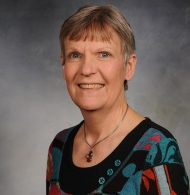
Esther Schmidt, age 70, of Hays, Kansas passed away Tuesday, May 7, 2019 in Hays. She was born September 10, 1948 in Hays, Kansas to Lester and Esther (Degenhardt) Burgardt. On June 8, 1968 she married Timothy Schmidt at St. Joseph Catholic Church in Hays.

Esther was the store manager at Hallmark for several years. She was a member of St. Joseph Catholic Church and she enjoyed arts and crafts as well as being involved with her grandchildren and all their activities.

She is survived by her husband, Tim of Hays; a son Curtis Schmidt (Amanda) of Hays; a daughter, Leslie Karlin (David) of Hays; two brothers, twin Lester Burgardt (Carol) of WaKeeney, Kansas and Dennis Burgardt (Jan) of Salina, Kansas; two sisters, Linda Schmidt (Kevin) of Bradenton, Florida and Lee Ann Zielinski of Port St. Lucie, Florida; and four grandchildren, Cameron Karlin, Madison Karlin, Avery Schmidt and Jonathan VanCampen.

She was preceded in death by her parents; infant daughter, Tammie Schmidt and a brother-in-law, David Zielinski.

Funeral services will be 11:00 AM Monday, May 13, 2019 at St. Joseph Catholic Church in Hays. Private family inurnment will be at a later date.

Memorial visitation will be Sunday 7 PM – 9 PM with a combined parish vigil and rosary service at 7:30 PM all at Brock’s-Keithley Funeral Chapel and Crematory 2509 Vine Hays, KS 67601.

Memorial contributions are suggested to Hospice at HaysMed or TMP-Marian.

Condolences may be sent by guest book at www.keithleyfuneralchapels.com or by email at [email protected]

New Vatican law: Priests, nuns must report sex abuse, cover-up

VATICAN CITY (AP) — Pope Francis issued a groundbreaking law Thursday requiring all Catholic priests and nuns around the world to report clergy sexual abuse and cover-up by their superiors to church authorities, in a new effort to hold the Catholic hierarchy accountable for failing to protect their flocks.The new church law provides whistle-blower protections for anyone making a report and requires all dioceses around the world to have a system in place to receive the claims confidentially. And it outlines procedures for conducting preliminary investigations when the accused is a bishop, cardinal or religious superior.

It’s the latest effort by Francis to respond to the global eruption of the sex abuse and cover-up scandal that has devastated the credibility of the Catholic hierarchy and his own papacy. And it provides a new legal framework for U.S. bishops to use as they prepare to adopt accountability measures next month to respond to the scandal there.

“People must know that bishops are at the service of the people,” said Archbishop Charles Scicluna, the Vatican’s longtime sex crimes prosecutor. “They are not above the law, and if they do wrong, they must be reported.”

The law makes the world’s 415,000 Catholic priests and 660,000 religious sisters mandated reporters. That means they are required to inform church authorities when they learn or have “well-founded motives to believe” that a cleric or sister has engaged in sexual abuse of a minor, sexual misconduct with an adult, possession of child pornography — or that a superior has covered up any of those crimes.

The law doesn’t require them to report to police, as victims have demanded. The Vatican has long argued that different legal systems in different countries make a universal reporting law impossible, and that imposing one could endanger the church in places where Catholics are a persecuted minority. But the procedures do for the first time put into universal church law that clergy must obey civil reporting requirements where they live, and that their obligation to report to the church in no way interferes with that.

If it is implemented fully, the Vatican could well see an avalanche of abuse and cover-up reports in the coming years. Since the law is procedural and not criminal in nature, it can be applied retroactively, meaning priests and nuns are now required to report even old cases of sexual wrongdoing and cover-ups — and enjoy whistleblower protections for doing so.

Previously such reporting was left up to the conscience of individual priests and nuns. Now it is church law. There are no punitive measures foreseen if they fail to report, and similarly there are no sanctions foreseen if dioceses, for example, fail to comply. But bishops and religious superiors could be accused of cover-up or negligence if they fail to implement the provisions, or retaliate against priests and nuns who make reports against them.

The law defines the crimes that must be reported as: performing sexual acts with a minor or vulnerable person; forcing an adult “by violence or threat or through abuse of authority, to perform or submit to sexual acts,” and the production, possession or distribution of child pornography. Cover-up is defined as “actions or omissions intended to interfere with or avoid” civil or canonical investigations.

Cardinal Marc Ouellet, head of the Vatican’s bishops office, said the inclusion of sex crimes involving adults was a clear reference to cases of sexual abuse of nuns and seminarians by their superiors — a scandal that has exploded in recent months following reports, including by The Associated Press and the Vatican’s own women’s magazine, of sisters being sexually assaulted by priests.

But Scicluna said it obviously covered lay people as well.

In another legal first for the Vatican, the pope mandated that victims reporting abuse must be welcomed, listened to and supported by the hierarchy, as well as offered spiritual, medical and psychological assistance.

The law says victims can’t be forced to keep quiet, even though the investigation itself is still conducted under pontifical secret. And in a novelty, the law requires that if victims request it, they must be informed of the outcome of the investigation — again a response to longstanding complaints that victims are kept in the dark about how their claims were handled.

But the key point of the law is to decree that the church’s own priests and nuns are mandated reporters and require every diocese around the world create an accessible, confidential reporting system to receive claims of sexual abuse and cover-up. The other key element outlines the preliminary investigation procedures to be used when the accused predator is a member of the church hierarchy.

Victims and their advocates have long complained that bishops and religious superiors have escaped justice for having engaged in sexual misconduct themselves, or failed to protect their flocks from predator priests. Bishops and religious superiors are accountable only to the pope, and only a handful have ever been sanctioned or removed for sex abuse or cover-up, and usually only after particularly egregious misbehavior became public.

Last summer, the scandal over ex-Cardinal Theodore McCarrick epitomized the trend: McCarrick rose to the heights of the Catholic hierarchy even though he had credible allegations of sexual misconduct against him that the Vatican had received. Francis ultimately defrocked McCarrick earlier this year after a U.S. church investigation determined he sexually abused minors as well as adult seminarians.

The new procedures call for any claim of sexual misconduct or cover-up against a bishop, religious superior or eastern rite patriarch to be reported to the Holy See and the metropolitan bishop, who is a regular diocesan bishop also responsible for a broader geographic area than his dioceses alone.

Unless the metropolitan bishop finds the claim “manifestly unfounded,” he must immediately ask permission from the Vatican to open a preliminary investigation and must hear back from Rome within 30 days — a remarkably fast turnaround for the lethargic Holy See. The metropolitan then has an initial 90 days to conduct the investigation, though extensions are possible.

The law makes clear he can use lay experts to help, a key provision that is already used in many dioceses to give bishops expert advice on handling cases from people with law enforcement or medical backgrounds. And it recommends that a special fund be set up to pay for the investigations, particularly in poorer parts of the world.

Once the investigation is completed, the metropolitan sends the results to the Vatican for a decision on how to proceed. The new law effectively stops there; existing procedures are in place for further investigation and possible sanction of bishops, though legal experts have said those 2016 procedures too require an overhaul since they are far from clear or efficient.

The new law does, however, require Vatican offices to share information throughout the process, since an untold number of cases have fallen through the cracks thanks to the silo-like nature of the Holy See bureaucracy, where each congregation zealously guards its own turf and files.

The use of the metropolitan bishop to conduct the preliminary investigation was first publicly proposed by Chicago Cardinal Blase Cupich at a meeting of the U.S. Conference of Catholic Bishops in November. Cupich elaborated on it when he addressed Francis’ February sex abuse summit, which the pope convened to demand a global response to the problem.

The procedures published Thursday are likely thus to form a key legal framework for U.S. bishops when they meet in Baltimore June 11-13 to adopt new accountability procedures.

The U.S. hierarchy has been under immense public pressure to hold one another accountable for sexual misconduct and cover-up stemming from both the McCarrick scandal and the release of the Pennsylvania grand jury report. It was apparently an open secret that McCarrick slept with seminarians, and yet his brother bishops allowed him to become their spokesman when they first adopted measures to combat child sex abuse in 2002.

The law goes into effect June 1 for an initial three years. Dioceses must establish the reporting system and confirm it is in place to the local Vatican embassy by June 1, 2020.

KZ Country Cheesy Joke of the Day 5/9/19

Barking Dog

A dog who was normally quiet began barking every night at around 3 a.m. Irritated and sleepy, the dog’s owner searched the back yard for what might have disturbed this otherwise peaceful animal.

For three days he found nothing amiss. When the dog woke up the neighborhood a fourth night at 3 a.m. with frantic barking the owner finally sneaked around the house through the alley only to discover his neighbor throwing pebbles over the fence at the dog.

The owner demanded to know what he was doing. “My mother-in-law is visiting,” the embarrassed neighbor explained. “If she gets woken up in the middle of the night one more time she says she’ll leave.”


Join fans of 99 KZ Country on Facebook:  https://www.facebook.com/99KZCountry


Fire hydrant inspections Thursday

HFD

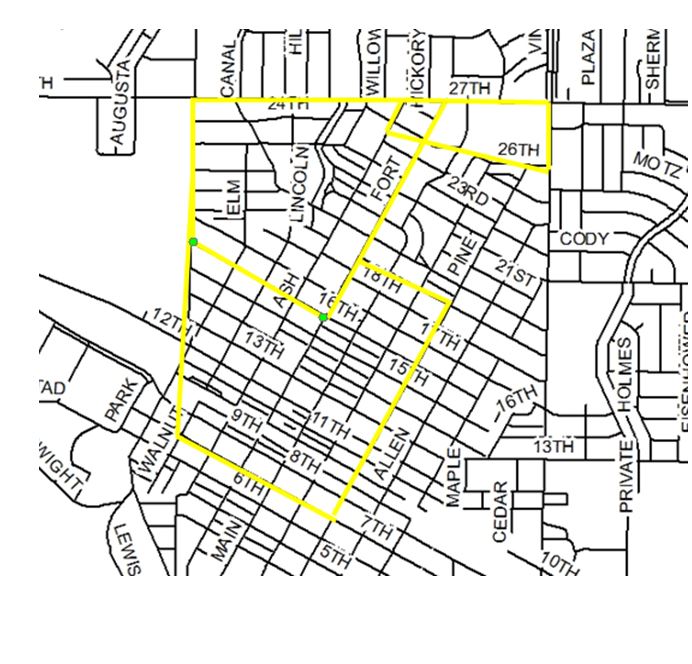
The Hays Fire Department will be inspecting and flow testing fire hydrants on Thu., May 9, 2019 in the area of Vine St. to Ash St. between 27th St. and Pine St., the area of Hall St. to Pine St. between 18th St. and 7th St., and the area of Hall St. to Fort St. between 27th St. and 15th St.

This is part of a coordinated effort by the city of Hays to inspect all fire hydrants in the city and flush all water mains annually.

Researchers in Hays uncover benefits of modified stocking for cow-calf producers

Grazing system that has benefitted steers can boost cow-calf operations too 

Researchers at the Kansas State University Agricultural Research Center in Hays have found that a grazing system shown to be beneficial for the performance of steers also has great potential for cow-calf producers.

For several years, beef producers have capitalized on modified intensive early stocking, a grazing strategy that focuses on double-stocking steers in pastures for the first half of the summer and pulling the heavier steers off the grass later in the grazing season.

John Jaeger, a beef cattle scientist in Hays, said much of the research points to the fact that when steers were managed this way, producers reported a 26 percent increase in pounds of beef produced per acre, and their net returns increased by nearly 19 percent.

John Jaeger

So Jaeger, range scientist Keith Harmoney and their research team set out to see if modified, intensive early stocking could similarly benefit cow-calf pairs.

“We’ve just completed our fourth year of data collection,” said Jaeger, noting that the project focused on weaning calves from the cow at an average of 150 days of age (the traditional time is 200 days), and increasing the early-summer stocking rate of cow-calf pairs to 1.45, compared to the normal 1.00 rate.

The results were astounding.

“The first and most obvious thing is that we continue to see those early-weaned cows being about a half body-condition score better in October compared to conventionally weaned cows,” Jaeger said.

And, he adds, “the really good news from all this is that they are carrying that added body condition through the winter and they still have an advantage at calving. The following May, when they are being turned back out, they are still three-tenths of a body-condition score better than the cows that were conventionally weaned in October.”

The bottom line, he notes, is that the research is showing an economic advantage for cow-calf producers who are willing to adjust their stocking rates early in the summer, much like what has been shown for many years with steers.

Jaeger notes that early-weaned calves in the modified early intensive stocking system “had about a 10 pound, 205-day adjusted weight advantage compared to the season-long stocked calves. And we are getting 1.45 times more calves off the same amount of pasture compared to season-long stocked animals.”

Keith Harmoney

The researchers also noted a benefit in pregnancy rates; cows in this system had a 10 percent greater first service conception rate and a 5 percent greater rate of conception compared to conventionally weaned cows.

“Perhaps one of the largest benefits of utilizing this system is that there was almost no incidence of bovine respiratory disease in calves weaned in late July and early August, compared to calves weaned at the more traditional time in October,” Jaeger said.

He added that the researchers believe that warm, dry days and more consistent temperatures in late July and early August play a significant role in helping avoid the higher rates of bovine respiratory disease normally observed during fall weaning.

The results are “something that can be beneficial if a producer is retaining ownership on those calves,” Jaeger said. “Early-weaned calves that get a higher energy diet early in life tend to grade better, so if the cow-calf producer is retaining ownership, they should see those benefits in their grid payouts.

“In addition, by weaning late July or early August, if a producer is not retaining ownership, they have the potential of selling those calves before we see the traditional dip in the market when the majority of calves are being weaned.”

Many factors are involved, including weather and the availability of forage, but Jaeger said the research points to an economic opportunity for beef producers.

He encouraged cow-calf producers to contact their local extension agent to learn more on how to incorporate this into their operation, or the benefits of adjusting their stocking rates for cow-calf pairs.

Mail carrier food drive set for Saturday


USPS

Every second Saturday in May, letter carriers in more than 10,000 cities and towns across America collect the goodness and compassion of their postal customers, who participate in the NALC Stamp Out Hunger National Food Drive — the largest one-day food drive in the nation.

This year the drive will be Saturday, May 11.

Led by letter carriers represented by the National Association of Letter Carriers (AFL-CIO), with help from rural letter carriers, other postal employees and other volunteers, the drive has delivered more than one billion pounds of food the past 25 years.

Carriers collect non-perishable food donations left by mailboxes and in post offices and deliver them to local community food banks, pantries and shelters. Nearly 1,500 NALC branches in all 50 states, the District of Columbia, Puerto Rico, Guam and the Virgin Islands are involved.

The United States Postal Service, National Association of Letter Carriers, National Rural Letter Carriers’ Association, AFL-CIO, United Way, Valassis and Valpak Direct Marketing Systems are all supporting this year’s Stamp Out Hunger food drive.

To donate, just place a box or can of non-perishable food next to your mailbox before your letter carrier delivers mail. The carrier will do the rest. The food is sorted, and delivered to an area food bank or pantry, where it is available for needy families.

With 42 million people facing hunger every day in America, including 13 million children, this drive is one way you can help those in your own city or town who need help.

FHSU English professor, students present at national conference

FHSU University Relations

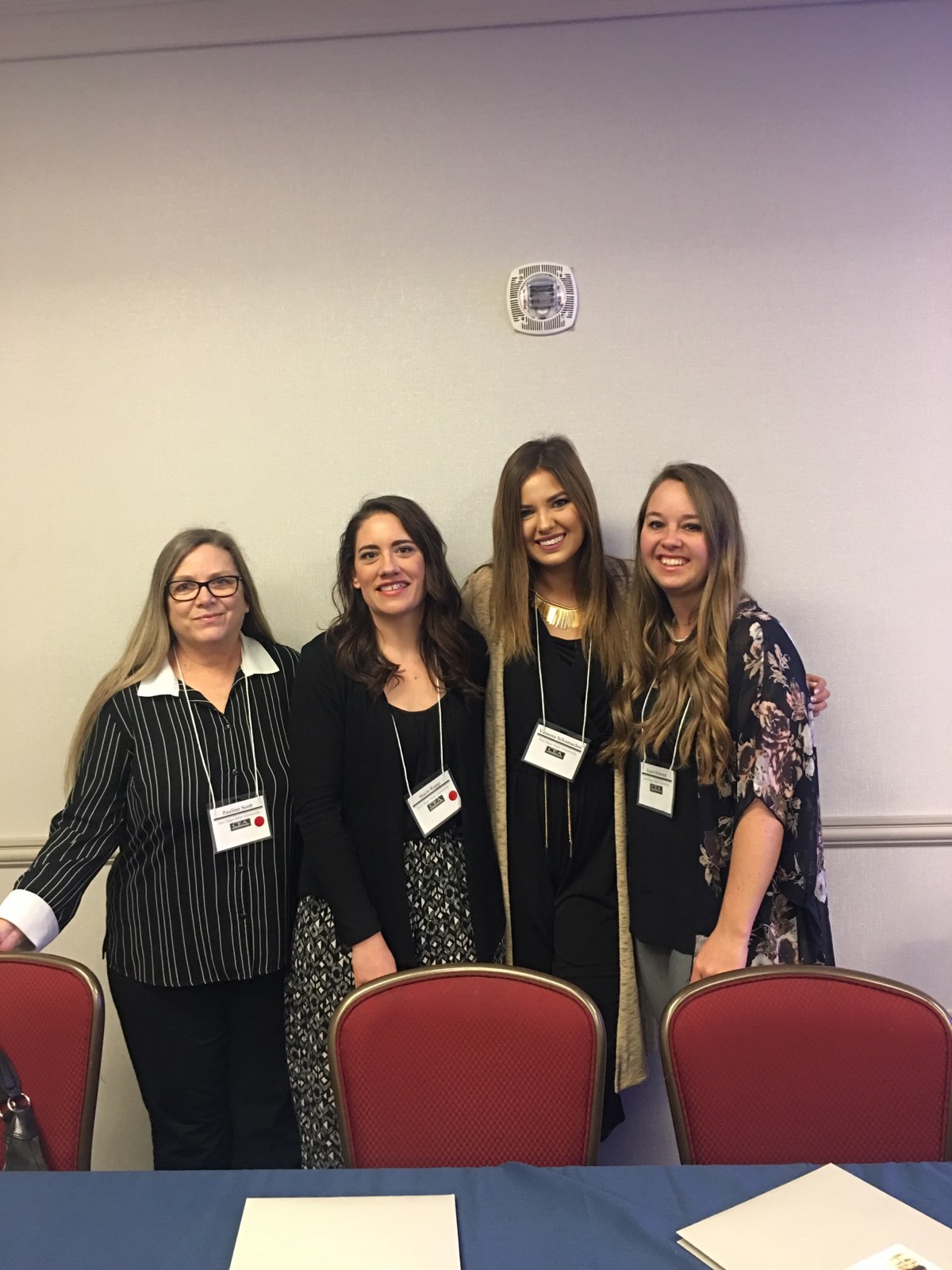
Fort Hays State University’s Dr. Pauline Scott, professor of English, and graduate students Stacie Rupp, Vanessa Schumacher and Karel Webster presented their research at the College English Association 2019 national conference in New Orleans.

Scott’s paper, “ ‘Stars, hide your fires’: Hallucinations and Hidden Things in the Shakespeare/Nesbo Macbeths,” compares Shakespeare’s classic play with a modern work of noir fiction by Norwegian crime writer Jo Nesbo.

The 16th/17th-century playwright, she says, produced work intended to honor a new king and at the same time warn him about the “corruptive potential of great power.” Nesbo’s work, though a “depiction of the hidden machinations of power within a polluted, economically bleak urban landscape,” yet makes Shakespeare’s work “more relevant than ever.”

Rupp’s presentation, “Operating in the Dark: Blinding Consequences in Mary Shelley’s ‘Frankenstein,’ ” is a study of Mary Shelley’s “Frankenstein.” She finds in the novel another story of the corruption of power.

Victor Frankenstein, having found a way to create life, is blind to the monstrous nature of his creature and thus “is rendered powerless.” The monster, however, realizing its own power, “begins taking life rather than conceiving it.”

Schumacher’s “Operating in the Dark: Literal and Figurative Blind Spots in Shakespeare’s ‘King Lear’ ” focuses on themes of blindness, especially the physical blindness in the case of Gloucester and a failure of perception in Lear. Each, operating out of his own infirmity, makes tragic errors of trust and are led to doom.

Webster’s study of F. Scott Fitzgerald’s classic American novel “The Great Gatsby,” “‘Start Him? I Made Him!’: Blindness of the Mentoring Tradition in The Great Gatsby,” analyzes the dynamics of mentoring as depicted in the feelings of love, family and sexuality in the relationship between Jay Gatsby and his mentors and then between Gatsby and his guidance for the novel’s narrator, Nick Carraway.

KRUG: Recent rains prompt mold questions

Donna Krug
It didn’t take long for the recent rains to bring a number of mold and mildew related questions to the Extension office. The saying “Water always wins” is so true.

Whether it is a crack in the foundation, a leaky roof, or the water table raising so that water enters a basement or crawl space, water damage can take a toll on the health and well-being of family members.
Molds are usually not a problem during dry weather. However, when mold spores land on a wet or damp spot and begin growing, it doesn’t take long for a problem to develop.

Molds have the potential to cause health problems. Molds produce allergens, irritants, and in some cases, potentially toxic substances. Inhaling or touching mold or mold spores may cause allergic reactions in sensitive individuals. Molds can also cause asthma attacks in people with asthma who are allergic to mold. In addition, mold exposure can irritate the eyes, skin, nose, throat, and lungs of both mold-allergic and non-allergic people.

Mold needs food in order to grow. Organic compounds like the back side of dry wall, wallpaper or paneling, the top side of ceiling tiles, or the underside of carpets and pads can feed mold. If wet or damp materials or areas are dried 24-48 hours after a leak or spill happens, in most cases mold will not grow. So you must act quickly when water damage happens.

During a flood cleanup, the indoor air quality in your home or office may appear to be the least of your problems. However, failure to remove contaminated materials and to reduce moisture and humidity can present serious long-term health risks. Standing water and wet materials are a breeding ground for microorganisms, such as viruses, bacteria, and mold. They can cause disease, trigger allergic reactions, and continue to damage materials long after the flood.

The best course of action if you detect mold growth is to clean and repair water damage immediately. Make sure the ground slopes away from the building foundation so that water does not enter or collect around the foundation. Keep indoor humidity below 60 percent (ideally between 30 and 50 percent) and increase ventilation with the use of fans.

People are constantly asking me “How do I test for mold?” The answer I share is from Curtis Reddington, an environmental specialist from Wichita, who shared a program about mold a few years ago. “If you see it or smell it, you have it.” Since no EPA or other federal limits have been set for mold or mold spores, sampling cannot be used to check a building’s compliance with federal mold standards.

There is an excellent EPA bulletin available on-line titled, “A Brief Guide to Controlling Mold, Moisture, and Your Home.” It has information on identifying and cleaning up moldy areas. Just google the publication title and you will see the link.

Donna Krug is the Family and Consumer Science Agent with K-State Research and Extension – Barton County. You may reach her at (620)793-1910 or [email protected]

Area students set to graduate from Emporia State

EMPORIA — Hats off to the nearly 1,100 candidates for graduation at Emporia State University.

They will be honored in three separate commencement ceremonies on May 10 and 11 in White Auditorium, 111 E. Sixth Ave., in Emporia:

All students earning graduate degrees will be honored at 6 p.m. Friday, May 10.

Students earning bachelor’s degrees from the College of Liberal Arts and Sciences will be honored at 9:30 a.m. Saturday, May 11.

Students earning bachelor’s degrees from the School of Business and The Teachers College conferring degrees at 2 p.m. Saturday, May 11.

Students from the Hays area, their honors and degrees, include:

Dustin Allen Bittel of Ellis, Magna Cum Laude Bachelor of Fine Arts in Theatre with a minor in Journalism

Margaret Rose Burke of Hays, Master of Library Science with a concentration in Archives Studies

Layne Merle Downing of Hays, B.S. in Business in Management with a minor in Information Systems

Vera Haynes Elwood of Hays, Master of Library Science

Carly Jean McCracken of Hays, Master of Library Science

Alex R. Muirhead of Hays, Master of Science in Industrial/Organizational Psychology

Rachel Ann Muirhead of Hays, Bachelor of Fine Arts in Theatre

Sara Renee Schoenthaler of Hays, Master of Library Science

Students who are finishing their degrees in May and August are eligible to walk during spring exercises. There are nearly 600 undergraduates and more than 500 graduate students who are candidates for degrees.

Allen Schmidt of the Kansas Board of Regents will give remarks at all three ceremonies.

Police: KC-area man shot co-worker over social media comments

JACKSON COUNTY —A Kansas City-area man is accused of shooting a co-worker in the foot over comments the victim made about him online.

Graham -photo Jackson Co.

Robert Graham, 37, Lee’s Summit, is charged with first-degree assault and armed criminal action, according to Jackson County Prosecutor Jean Peters Baker.

Lee’s Summit police were dispatched to Lee’s Summit Medical Center on Tuesday evening on a reported gunshot wound, according to court records. They found the victim and were told that Robert Graham had shot him in the foot with a sawed-off 410 shotgun after the two had argued.

Police responded to Graham’s house. After a lengthy standoff, Graham surrendered.

Police, after obtaining a search warrant, found in the defendant’s residence a disassembled 410 shotgun and a spent shotgun shell, as well as live rounds. Graham told police he remembered the victim coming to his residence earlier that day.

Graham remains jailed on  a $50,000 bond.


Brantley, Peacock help Astros blank Royals

HOUSTON (AP) – Michael Brantley homered twice, Brad Peacock pitched seven innings and Josh James completed the three-hitter in Houston’s 9-0 win over the Kansas City Royals on Wednesday night.

Peacock (3-2) allowed three hits and set a career high with 12 strikeouts to help the Astros bounce back after a 12-2 loss on Tuesday night. Peacock also rebounded after allowing seven runs in just 3 2/3 innings in his previous start. James struck out five in the last two innings.

George Springer and Carlos Correa also homered to give the Astros 16 home runs combined in their past five games.

Springer gave Houston an early lead with his MLB-leading fourth leadoff homer this season and the 28th of his career. It’s the second time this week he’s led off the game with a homer after also doing so in a 6-4 win on Monday.

Houston led 2-0 with one out and one on in the third when Brantley sent a pitch from Jorge Lopez (0-4) into the seats in right field behind the bullpen to make it 4-0.

Correa followed with his shot to straightaway center field to give Houston back-to-back homers for the third time this season. Josh Reddick singled before Yuli Gurriel doubled to chase Lopez. He was replaced by Jake Newberry and Aledmys Diaz’s sacrifice fly scored Reddick to extend the lead to 6-0.

Brantley connected again with two outs in the fourth inning to make it 7-0 and give him his fifth career multi-homer game and the first since 2015.

Lopez allowed six hits and six runs while walking three in 2 1/3 innings to remain winless in eight starts this season.

Peacock had allowed just one hit when Terrance Gore and Billy Hamilton hit consecutive singles with one out in the fifth inning. Peacock plunked Whit Merrifield to load the bases, but struck out Adalberto Mondesi and Hunter Dozier to escape the jam.

Those were the first of eight straight batters Peacock retired to end his night. He struck out six in that span, including Martin Maldonado for the first out of the seventh inning. Both Maldonado and manager Ned Yost were ejected for arguing that strikeout.

UP NEXT

Royals: RHP Homer Bailey (3-3, 5.25 ERA) will start the first of three games against the Phillies on Friday after a day off on Thursday. He allowed seven hits and two runs in six innings of a 15-3 win over the Tigers in his previous start.

Astros: LHP Wade Miley (2-2, 3.20) is scheduled to pitch for Houston when the team opens a four-game series against Texas on Thursday. Miley has held teams to three earned runs or fewer in 23 straight starts and needs two strikeouts to reach 1,000 for his career.

TMP senior ‘Making Cents of Finance’ for young adults

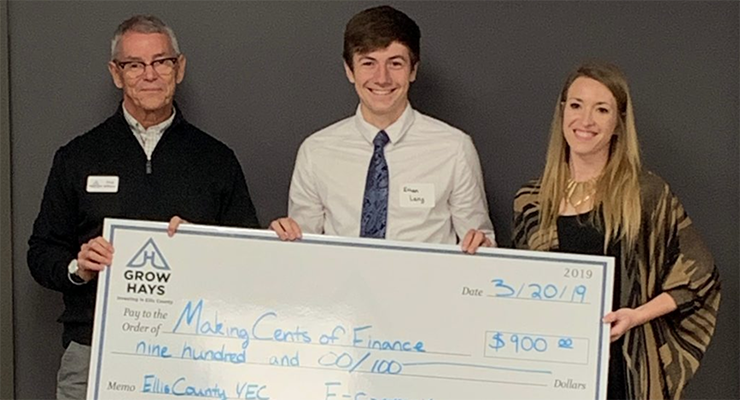
Ethan Lang when he won the local Youth Entrepreneur Challenge in Hays.

By CRISTINA JANNEY 
Hays Post

A Thomas More Prep-Marian senior is making a big splash with his financial education business.

He has more than 106,000 followers on Instagram and recently won two entrepreneurship awards at the state competition for his business pitch.

Lang’s business is called Making Cents of Finance. He offers education on financial topics such as credit cards, investing, business, retirement, debt and loans.

Lang makes no secret about the fact he is only 18, only recently was eligible for his own brokerage account and has never done his own taxes. It is all there right there in his bio on his website.

He is targeting 18- to 34-year-olds — young people just like himself who are just getting started in the world.

“I think it is important for young people to learn about finance, especially personal finance,” Lang said. “When you are young it might not seem that important, but that is probably some of the most important years that can spring board you into a better future if you make the proper financial decisions now.”

However, Lang had a little bit of a head start. Both of his parents are business professionals. At 15, Lang was fascinated by the fact that his father could own stock in the company his mother works for. His father let him start investing under one of his accounts until he turned 18 and could have his own account.

He also took finance classes at TMP, read books and researched the topic on the web.

Ethan Lang / courtesy photo

In August, Lang launched Making Cents of Finance.

“I wanted to help others learn about finance,” he said, “because I learned so much and saw how beneficial it was to myself.”

Today, he is making about $450 per month through social media ads. He has a blog, and he his branching out into YouTube, Twitter and Facebook.

He won the Youth Entrepreneur Challenge in Hays and then went on to win Most Inspirational Award for his elevator pitch and the Grand Prize Award for an Existing Business at the state competition April 30 at Kansas State University in Manhattan. For his grand prize, Lang presented an executive summary and answered questions for judges in a mock boardroom. He won $900 at the local level and $4,000 at the state level.

You can see a video of Lang’s elevator pitch by clicking here. Lang’s pitch starts at about 15 minutes into the video and lasts about three minutes. The video is courtesy of Kansas State University.

Lang will be attending Fort Hays State University in fall, majoring in finance and accounting with an emphasis on financial planning.

He hopes to earn his financial planning license and open a brick-and-mortar office in Hays to offer individual financial planning services, as well as offer online financial consulting nationwide.

You can find Lang on Instagram at @makingcentsoffinance. You can also subscribe to his YouTube Channel: Making Cents of Finance.

Other northwest Kansas students earning awards in the Kansas Entrepreneurship Challenge were:

High school competition
• Technology Division: Runner-up prize of $2,500 — Sailor-Anne Seiler, Hodgeman County High School, Jetmore, for Bee Safe.

• Technology Division: Honorable mention of $1,000 — Erny Knelsen and Tayber Elder, Greeley County High School, Tribune, for VrView.

• Agriculture Division: Grand prize of $4,000 — Dylan Ketzner and Brady Ketzener, Cheylin High School, Bird City, for Ketzner Feed Roasted Gold.

• Open Division: Honorable mention of $1,000 — Andrew Foote and Molly Foote, Hoxie High School, Hoxie, for Contained.

Collegiate competition
• Technology Division: Grand prize of $5,000 — Dustin Aherin, Kansas State University, doctoral student in pathobiology from Phillipsburg, for Cattlelist.

Copyright Eagle Radio | FCC Public Files | EEO Public File