FORD COUNTY — Law enforcement authorities are investigating two suspects after a southwest Kansas traffic stop.
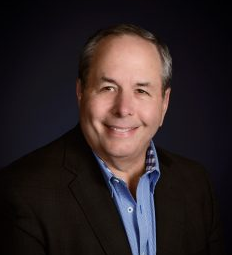
Alvarez-Castillo photo Ford Co.Yapul photo Ford Co.
Just after 9:30 p.m. Tuesday, a deputy conducted a traffic stop on U.S. 54 just east of Bucklin, according to a media release. During the interaction with the driver, the K-9 deputy smelled the odor of raw marijuana.
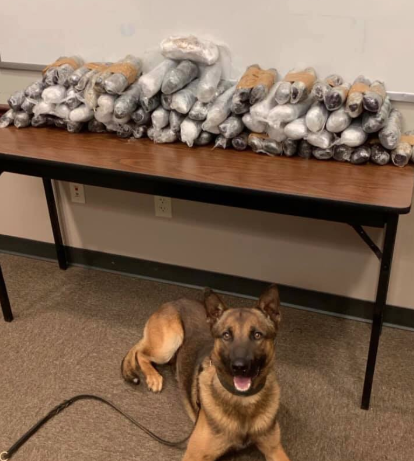
During a search, the deputy found 80 cellophane-wrapped packages of crystal meth hidden strategically throughout the vehicle and a small amount of marijuana, according to the release.
Photo Ford Co. Sheriff
The estimated value of the suspected methamphetamine is $1.2 million.
Deputies arrested as 30-year-old Nelson Alvarez-Castillo and 24-year-old Anthony Yapul both of Philadelphia, Pennsylvania.
Dale Younker is a Soil Health Specialist with the USDA Natural Resources Conservation Service in Jetmore.
If you haven’t gotten the fall crops planted, you intended to plant because of the extremely wet conditions, and the Risk Management Agency’s (RMA) final plant dates have gone and past, you may be looking at taking a “prevented planting” crop insurance indemnity. When things dry up this may be a good time to plant a cover crop on those acres to ensure your fields’ soil health and long-term productivity. This may also be an opportunity to experiment with cover crops with very little financial risks.
Intense storm events have resulted in excessive soil erosion. Fields have been left with large gullies and areas where the topsoil washed away. A tillage operation may be needed for weed control, and to smooth out the field. A cover crop planted after that tillage pass will help cover the soil surface. This will help prevent additional soil erosion and additional loss of nutrients, carbon and residue.
A properly designed cover crop will have the potential to capture nutrients, fix nitrogen, build organic matter, suppress weeds, control erosion, provide livestock forage and provide other soil health improvement benefits. Typically, a mix with several different plant types and species would be used.
A summer mix should include forage sorghums, sorghum-sudans and/or millets. These species help feed the soil biology, such as mycorrhizal fungi and rhizobia bacteria. These organisms help build soil structure and tilth, which increases water infiltration and soil water holding capacity. They also provide a lot of above ground growth that shade the ground which helps with weed suppression and evaporation loss.
Legumes the mix, if properly inoculated, can fix nitrogen in the soil. The plants would need to be allowed to grow at least to the flowering stage to get the most benefit. There several warm season legume species to pick from that are adapted to Kansas that would reach the proper maturity level if planted in the next couple of weeks.
Brassicas and broadleaves, like radishes and sunflowers, have deep tap roots that can penetrate compacted soils and scavenge nutrients deep in the soil. Some of these species can also be great habitat for beneficial insects and pollinators.
Consider what herbicides you might have previously used on the field. Many pre-emergent herbicides provide long term residual weed control have long plant back restrictions. These herbicides could inhibit the germination and growth of many cover crop species. Always check your herbicide label and if in doubt consult with your supplier or crop advisor.
Before planting a cover crop on prevented planting acres always check with your crop insurance agent. Many of the haying, grazing and harvest restrictions have recently changed for the 2019 crop year.
For more information about this or other soil health practices you can contact me at [email protected] or any local NRCS office.
Dale Younker is a Soil Health Specialist with the USDA Natural Resources Conservation Service in Jetmore.
Hays Post once again will be offering the Virtual Golden Egg Hunt. Those finding the egg in articles published between June 30 and July 2 can enter for a chance to win two FREE VIP tickets to the 2019 Wild West Festival. Brought to you by JD’s Country Style Chicken.
RUSH COUNTY — One person was injured in an accident just before 9 a.m. Wednesday in Rush County.
The Kansas Highway Patrol reported a 2015 Ford Transit driven by Robert J. Trapp, 49, Otis, was southbound on 370 Road and failed to stop at the stop sign at Avenue X. A 2013 Chevy Equinox driven by Cheryl L. Conard, 69, Timken, struck the Ford.
Trapp was not wearing a seat belt and was transported to the hospital in Great Bend. Conard had a minor injury, according to the KHP.
Randy ClinkscalesJohn has dementia. Unfortunately, it is the aggressive and angry kind of dementia. His family came to my office. The facility where John is located cannot keep him because of his aggressive behavior. The family came to us in part to help place John.
Several years earlier, John and his wife Margaret had prepared healthcare and financial powers of attorneys by another law office. I am assuming that just because of their advanced age, they thought John and Margaret would be better served if their children, Ralph and Rhonda were the agents. As a result, each had independent power to act, without the consent of the other. Though Margaret (the wife) had full capacity, she was not listed as John’s power of attorney
So, here we are. John needs to be placed in a new facility. And guess what? His children, Ralph and Rhonda, cannot agree on where John should be placed. And Margaret, John’s wife, has no say so, according to the legal documents that were prepared.
The healthcare power of attorney is a form that was used by the attorney. It had some optional blanks in it that were not utilized; so it really did not give me any help on what John’s real goals were.
Why does a person even need a healthcare power of attorney? Can’t a person’s children or their spouse act for that person? As a general rule, without a healthcare power of attorney (or a guardianship—another article!), your family has no legal authority to act for you.
So, what should you be doing with a power of attorney?
First, be sure your “agent” (this is the person that you choose to act for you when you cannot) is capable of carrying out your wishes. Is this person strong enough to make healthcare decisions, even if it is not the healthcare decision that they would make for him or herself, but instead will follow your wishes?
Second, modify or draft the healthcare power of attorney (HCPOA) to reflect your wishes. As an example, in my personal HCPOA, I defined what I think is an acceptable quality of life and what is not an acceptable quality of life. If I cannot recapture an acceptable quality of life, then I actually restrict my agent’s authority—the agent has less power to do things. Similarly, if I have dementia, I have some strong rules on what my HCPOA can and cannot do.
Third, visit with your HCPOA agent. Let them know what kind of power you are going to give them, but also let them know your wishes, and how their power can be restricted, under certain circumstances, particularly decisions about the end of life.
Why are we doing all of this? Part of it is to provide legal cover to your agent, but also to cover the healthcare providers involved. It also establishes legal authority in your agent to “say no” to a healthcare provider. Even more important to me is that my agent, through the expressions contained in my HCPOA, does not feel guilty by making hard decisions in following my wishes.
Just a personal example: When I was caring for my grandmother, she was 93 years of age. I made a decision to terminate many of her medications, treatments, and tests. It just seemed like they were creating their own set of problems.
I was the HCPOA agent for my grandmother. So I had the authority. Upon learning of my decision, her doctor wrote me a letter saying I was “artificially accelerating” my grandmother’s death.
My grandmother still had capacity. I read her the letter. She smiled and assured me I was following her wishes, but I was lucky because I had her reinforcement.
We took my grandmother off of her many medications, and then stopped the tests and treatments. And guess what? She got better, and lived another few years.
It does not always end that way. Recently, a friend’s mother in law was very ill. The treatment offered to her would give her a few more days, perhaps even a few months. Her three daughters were going in different directions from each other. By chance, they all ended up in the hospital room at the same time, and Mom had a moment of clarity in which she sat up and said, “I am ready for hospice!” Suddenly everyone was on the same page. Within a day, mom was gone.
Let me return to my story from the beginning. What was important to me was to break the impasse that Ralph and Rhonda had created, and that the deciding vote really needed to be Mom. We got the children and their mom to visit a facility and decided it was acceptable—a good conclusion. We were lucky.
So, pick your agent well; express your wishes; and then communicate them to your agent.
Randy Clinkscales of Clinkscales Elder Law Practice, PA, Hays, Kansas, is an elder care attorney, practicing in western Kansas. To contact him, please send an email to [email protected]. Disclaimer: The information in the column is for general information purposes and does not constitute legal advice. Each case is different and outcomes depend on the fact of each case and the then applicable law. For specific questions, you should contact a qualified attorney.
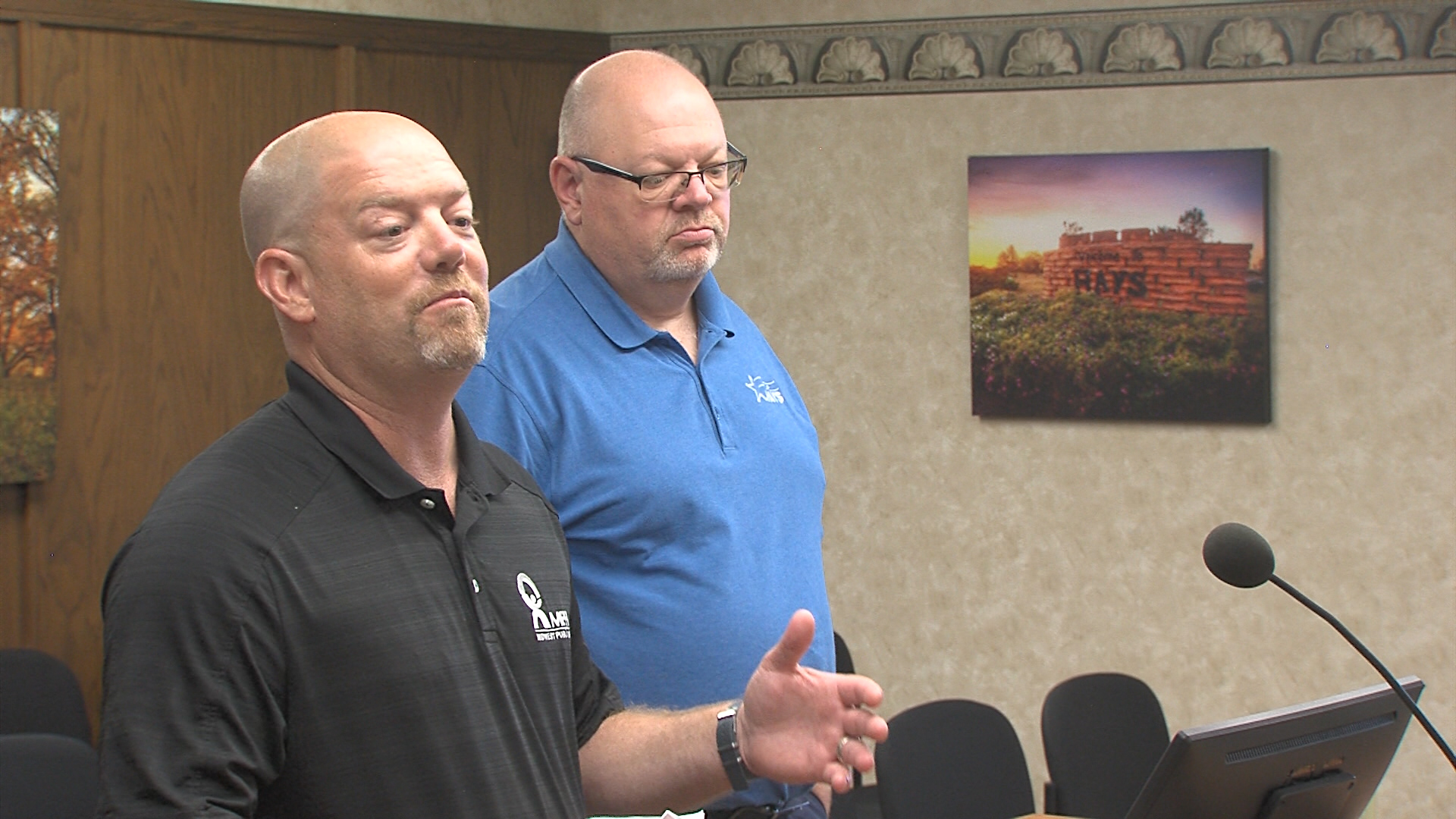
MPR Risk Management Adviser Jason McMann with Hays Finance Director Kim Rupp
By BECKY KISER Hays Post
A short agenda for Hays city commissioners Thursday as they consider a vote on the renewal of property and liability insurance coverage for 2019/2020 with Midwest Public Risk (MPR).
A review of options was presented during last week’s work session.
Arthur J. Gallagher & Co. provides oversight for the city as its insurance broker. Following conversations with several other insurance carriers, Gallagher concluded MPR offered the lowest cost option for the renewal of the city’s package.
The renewal is a two percent increase or $4,475 more than the prior period.
Below is a history of MPR insurance premiums for Hays.
The package this year includes the following categories:
• Buildings
• Contents
• Vehicles
• Equipment
• Other Property
• General Liability
• Sewer Liability
• Auto Liability
• Crime
• Law Enforcement
• Public Officials
According to Kim Rupp, finance manager, the city of Hays has recognized several benefits of pool membership during the past year, including the Loss Control Credits program.
Three percent of the city’s contribution is set aside each year to be used for projects that specifically reduce exposure to future property/liability and worker compensation claims.
This past year the city purchased safety communication devices for several buildings, an AED device for the Convention and Visitors Bureau, desk risers for several employees, and new access control devices for City Hall, for a total of $18,555 in contributions returned to the city.
Hays also has access to a large online training library the police department has used, saving more than $2,000 in training expenditures.
In preparing for the insurance renewal, the city had its property re-appraised for the first time in many years.
“I’ve been here 11 years and we haven’t had a reappraisal and I don’t know when the last one was ever done,” Rupp told the commission.
Commissioners are expected to authorize City Manager Toby Dougherty to renew the 2019/2020 property/liability insurance coverages with MPR for $228,228.26 to be funded from the Intergovernmental Insurance and Surety line item. The renewal date is July 1.
The complete June 27 agenda is available here. The meeting starts at 6:30 p.m. in Hays City Hall, 1507 Main.
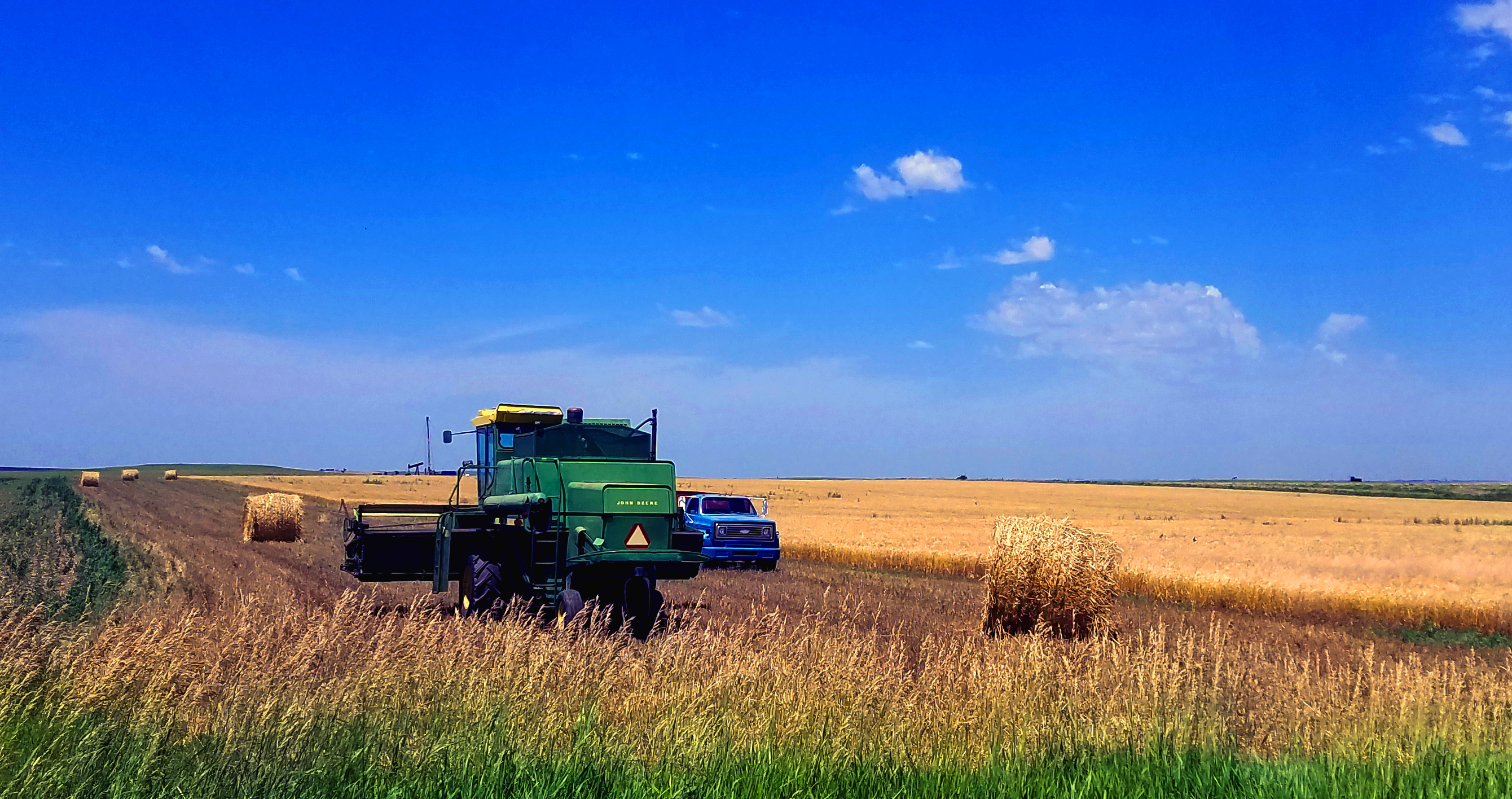
A combine and grain truck sit idle in a field south of Ellis on Wednesday afternoon as the winter wheat harvest in western Kansas gets off to a slow start.
By JAMES BELL Hays Post
Slowly but surely, the winter wheat harvest around Hays has begun, with early reports showing potentially high yields, due to recent cool and overcast weather following a mild winter.
Midland Marketing in Hays had two loads come in Tuesday night and three more Wednesday morning, according to Brian Witt, Hays coordinator at Midland Marketing.
“We are just getting started. There are only a few guys that can actually cut,” Witt said.
Grain that came to the elevator in Hays had been cut late Tuesday, according to Witt, with nothing being cut on Wednesday as rain threatened to hit Hays.
Through the day, however, rain would not materialize over the area — good news for farmers waiting for fields to dry from heavy spring rains.
But so far, wheat delivered into Hays is showing encouraging yields.
Moisture was running from 11.5 to 12.5, Witt said, with test weights in the lower 60s.
“Sixty-one has been the lowest I have seen so far,” Witt said, “which is really good.”
Protein tests are also on the low side at 10 to 10.5.
“The kernels currently look great,” Witt said.
The elevator in Yocemento was also reporting good wheat numbers, according to Clint Pfannenstiel, Yocemento coordinator at Midland Marketing.
“So far, we have had about 5,000 to 6,000 bushels come in,” he said.
“That wheat is testing 62 to 62.5 test weight,” he said, calling the yields “excellent.”
“Some of it could be 60-70 bushels an acre,” Pfannenstiel said. “It looks really good.”
While wheat is coming in around Hays, the harvest is not yet progressing to the south.
“South of Hays, around McCracken and Brownell, (we) did not take any grain,” Pfannenstiel said. “We are progressing quicker than they are south of here 20 or 30 miles.”
This year’s harvest has been delayed from normal, which is likely to push harvest completion into mid-July.
“Normally we say Father’s Day weekend is about an ideal consistent start,” Witt said. “Anything before or after that is either or late, at least in this area.”
The late start might be unusual, but likely welcome as the conditions that have delayed the harvest are also contributing to the exceptional results.
“The later your harvest is, the better your yield. The earlier it is, the more stress it has been through, or things have gone wrong so it dies off and doesn’t have as much growing period,” Witt said. “With cool weather and overcast skies, the wheat wasn’t drying down, which is actually good. … As far as increasing your yield, you get larger kernels. Everything generally produces better.”
Now with warm windy weather in the forecast for the weekend, both Witt and Pfannenstiel expect harvest to be in full swing by Monday at the latest.
“We want to get these couple of days of hot and windy,” Pfannenstiel said. “Another day or two of that and we will be going strong.”
While fields around Hays were generally spared from damaging storms during the spring, a few instances of crop loss were being reported in the area.
Witt said he heard reports about a strip south of Victoria where a few fields were lost, as well as a field or two southwest of Hays.
Pfannenstiel noted reports of some damage to the southwest as well.
“In that area, it was probably hit twice, with two different storms, probably 15 to 20 days apart,” Pfannenstiel said.
But it could have been much worse.
“We have been very fortunate considering how many storms we have had come through this year,” Witt said.
The Northwest Kansas Area Agency on Aging will have an information day from 10 a.m. to 2 p.m. Saturday, June 29, at Big Creek Crossing in the former Hallmark location.
Older Kansans and caregivers can learn more about community services, Medicare, scams, Social Security, employment assistance, computer training opportunities and ways to save money. The Hays Lions Club will be providing free vision screening.
SHAWNEE COUNTY – Law enforcement authorities are investigating an attack by a dog on two children.
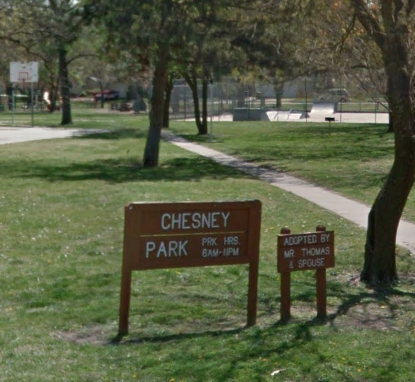
Google image
Just before 3:30p.m. Monday, Animal Control and officers and police were dispatched to Chesney Park in 1800 block of SW Buchanan in Topeka on reports of a dog bite, according to Lt. Jennifer Cross.
Witnesses called reporting that a tan colored dog bit a juvenile boy before being removed from the area by the owner.
While Animal Control was investigating, authorities learned that the same dog had bitten a second child. The two boys were treated at a local hospital, according to Cross.
On Wednesday, police reported they found the dog and it is currently being quarantined at the city’s veterinarian office. The canine was positively identified by several individuals as the same that bit the two children, according to Lt. Andrew Beightel.
Animal control officers are still in the process of attempting to identify and locate the owner of the dog for further questioning.
Anyone with information regarding this crime is encouraged to contact the Topeka Police Criminal Investigation Bureau at (785) 368-9400 or Shawnee County Crime Stoppers at (785) 234-0007. You can also make anonymous tips online at www.p3tips.com/128. All persons charged with a criminal offense are presumed innocent until proven
By EDWARD CROSS Kansas Independent Oil & Gas Association
July is a special month for many Americans. Most of us will eagerly take a break from our busy summer schedules to once again celebrate Independence Day. There will be much fanfare with fireworks, parades, picnics, and other patriotic events celebrating our country’s independence from Great Britain in 1776. But when the festivities have ended, only a few will have reflected upon the true meaning of independence and the role it has played in shaping our nation’s character.
Freedom and independence are cornerstones in the foundation of our country’s heritage. The independent ideology of the American people is a fundamental element of our society and a key to our nation’s prosperity. We must protect that independence at all cost.
One important freedom we must protect is our free enterprise system. American business, and certainly the oil and gas industry, was founded upon the ideology of independence and free-market principles. Those principles allow business to be governed by the laws of supply and demand without government interference and excessive regulation. The dynamic free market has led to innovation and wealth creation, and has established an economic environment where hard work is rewarded.
Today, however, it seems free-market capitalism and independence is often under attack by those who oppose American energy development. Small vocal groups of activists across the nation work to obstruct energy development, reducing our energy options under the false belief that oil and gas production and use are incompatible with environmental progress.
Few doubt that energy has improved lives and enabled human progress. Yet one of the biggest challenges facing the world is the polarized debate over the future of energy. Facts and economics are too often replaced with assertions and emotions. Discussion about fossil fuels and alternative energy sources often degenerate into a battle to delegitimize the other side. This is a recipe for inaction. And it keeps billions of people trapped in energy poverty. Almost 40% of humanity has access to only rudimentary forms of energy and a very low standard of living. The world expects and deserves better.
U.S. carbon emissions are the lowest they have been in nearly seven decades. In addition, data from the U.S. Environmental Protection Agency and Energy Information Administration shows that from 2011 to 2017, methane emissions from oil and natural gas production in the U.S. decreased by 24%. This downward trend is occurring even as U.S. oil and natural gas production grows dramatically. U.S. oil production has doubled since 2008 and is projected to grow another 50% over the next decade. Mischaracterizing oil and gas activity has been and continues to be a common practice and strategy of activist groups across the nation.
Cutting U.S. oil and natural gas production would raise costs significantly for American families and manufacturers, profoundly damage the U.S. economy, diminish our geopolitical influence, and severely weaken our energy security. And that is not a path most Americans want to take.
The fact is the oil and natural gas industry has proven that over the long-term, it is possible to lead in energy production and in environmental stewardship.
We must abandon policies driven by a zero-sum game philosophy for energy that says we must have less oil and natural gas so that we can have more of something else. We should set aside the acrimony and division that has marked too much of past national energy policy discussions and work together as one nation on a positive forward-looking energy future based on the understanding that our nation’s best energy future can only be achieved through a true all-of-the-above energy strategy.
In his 1946 Independence Day speech, John F. Kennedy said, “Eternal vigilance is the price of liberty.” Those words were never so true. Being mindful of the erosion of our independence and free-market system by those who oppose American energy development cannot be over emphasized. We must, now more than ever, remain steadfast in our resolve to protect and preserve the precious independence that has molded our nation’s character.
Sweet corn is one of my favorite summer treats. Unfortunately for many people who grow their own in their gardens, the anticipation of picking the ripe sweet corn turns to anger when you find that raccoons have stolen your bounty before you had a chance to pick it.
I found a short article from Ward Upham, horticulture expert for K-State Research and Extension that tells how you can protect your sweet corn for yourself, instead of the little pests taking it from you. It seems the official sweet corn inspector should be the raccoon as they seem to harvest the sweet corn the day before it is to be picked. The only effective control measure I have had success with is fencing; either electric or kennel fencing.
First are some suggestions for electric fencing. Other designs may very well work but this is what has worked in my garden.
• Two or more wires must be used. Place the first about 5 inches above the ground and the second 4 inches above the first (or 9 inches above ground). Raccoons must not be able to crawl under, go between or go over the wires without being shocked.
• Fence posts used for electric fences work well for this application (go figure), as do the insulators used to support the electric wire.
• It is much easier to use the woven electric wire with strands of wire embedded than to use a solid metal wire. The woven wire is easier to bend around corners and to roll up when done for the year.
• Though both the plug-in and battery operated fencers work, the battery operated types allow more versatility in where corn is grown. One set of batteries is usually sufficient for the season. In my case, I pull the battery out of an old tractor that is not used often. It will also last the season if fully charged at the beginning. My fencer is probably on for a total of a month.
• Start the charger before the corn is close to being ripe. Once raccoons get a taste of the corn, they are more difficult to discourage.
• Control weeds near the wire. Weeds can intercept the voltage if they touch a wire and allow raccoons entry beyond the weed.
• Check the wire occasionally to make sure you have current. This can be done easily (but unpleasantly) by touching the wire. There are also tools that will measure the voltage available for sale. They are worth the money.
As mentioned earlier, kennel fencing can also be used. Make sure that the panels are tied together well enough that raccoons can’t squeeze through corners. A covering over the top may be needed if the raccoons figure out how to climb the panels. Welded garden fence can work well for this.
Alicia Boor is an Agriculture and Natural Resources agent in the Cottonwood District (which includes Barton and Ellis counties) for K-State Research and Extension. You can contact her by e-mail at [email protected] or calling 620-793-1910





 Hays Post once again will be offering the Virtual Golden Egg Hunt. Those finding the egg in articles published between June 30 and July 2 can enter for a chance to win two FREE VIP tickets to the 2019 Wild West Festival. Brought to you by