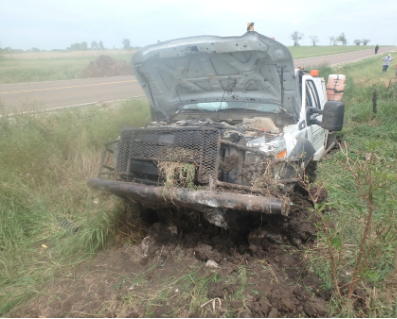
SALINE COUNTY —Two people were injured in an accident just before 2p.m. Wednesday in Saline County.
Photo Saline County Sheriff
A 2015 Ford F550 driven by Kenneth Reh, 75, Inman, was westbound in the 5800 Block of Kansas Highway 4 a half mile west of Niles Road, according to Sheriff Roger Soldan. The driver fell asleep and pickup left the road and struck a culvert.
EMS transported Reh to Salina Regional Health Center for head and possible chest injuries, according to Soldan. A passenger, Roman Loera-Ramos, 56, McPherson, had cuts to his face and was treated at the scene.
The pickup was carrying a chemical tank that had Roundup herbicide and there was a minor spill of the herbicide. Saline County Emergency Management personnel responded to the scene and determined that the spill did not pose a threat to humans or animals, according to Soldan.
Larry Fluery works for a Bentonville, Arkansas, film festival from a coffee shop in Pittsburg, Kansas.
By STEPHAN BISAHA Kansas News Service
In the 1990s, the near future looked like a place where distance would no longer matter.
In an increasingly online economy, location would matter less than connection. The internet appeared destined to make working from Pittsburgh, Pennsylvania, much the same as tackling a job from Pittsburg, Kansas.
Yet three decades later, location matters as much as ever.
Cities grew denser. Remote towns leaked talent. The growth of Silicon Valley and other high-tech hubs only added to the divide between city and country.
Now, some Kansas communities again see remote work as a way to rejuvenation. Here are six hurdles to bringing online jobs to rural Kansas and ways they might be overcome.
Internet Speed
When it comes to remote work, connectivity is everything.
Sending emails is possible — if painful — on a dial-up connection. But today’s remote work requires high speed. Video conferences. Screen sharing. Gigabyte-sized project files.
And then there’s the future. Augmented reality. Virtual reality. Holograms. Whatever the next technology trend, it will almost certainly consume bandwidth with increasing greed.
“Some of them, we just don’t know what they’re going to be,” said Brian Whitacre, an Oklahoma State University professor studying rural development. “But we’re just seeing this push for more data. More broadband.”
Some Kansas cities such as Pittsburg have access to fiber optic cable — the current gold standard for high-speed internet. A 200-plus-megabits-per-second connection can better prepare a city for the future of remote work.
But much of Kansas lacks access to the basic broadband needed for today’s workplace applications. Remote work just won’t come to places with slow internet.
Slow Acceptance of Remote Work
A little more than 5% of American workers worked remotely in 2017. That reflects a steady, but slow, rise.
And while the digital economy is expanding, many tech companies want their employees working physically closer together. Facebook and Google invested in campuses designed for workers to bump into each other. Yahoo and IBM have rolled back remote work privileges.
They reason game-changing serendipity happens over a cubicle wall more easily than by email.
Some companies continue to encourage remote work. Dell is doing so to save on real estate costs.
There’s also a shortage of high-skilled talent in the big metro areas where many tech companies are based. The Center on Rural Innovation is hoping companies will turn to remote work out of necessity. That’s why the center is providing financial and technical support to places like Pittsburg to create a virtual hub of trained remote workers living in small cities.
“There is a real opportunity to surface, and in some cases train up people, who can work in those fields to live where they want,” said Matt Dunne, the executive director for the Center on Rural Innovation.
Demands from younger workers may force employers who are still iffy on extra out-of-office time to give in. Millennials were more likely than older generations to say a flexible schedule and remote work opportunities were important in a job, according to a Marketplace-Edison Research poll.
Isolation
One problem for remote workers: loneliness.
About a fifth of remote workers said that was their top struggle, according to social media consultant Buffer’s 2018 State of Remote Work Report.
Health concerns linked to loneliness include increased risk of heart disease and suicide.
That’s prompted remote workers to reach out to each other. Larry Fleury does marketing and social media for the Bentonville, Arkansas, film festival. He’s joined an unofficial network of the city’s internet laborers.
“You kind of get new friendships with remote workers,” Fleury said.
Trend is Still Toward Bigger Cities
Even if remote workers can live outside big cities, will they want to?
Since 2000, urban counties have grown while many rural counties saw their populations decline. That’s partially driven by the tech field being concentrated in a few large metro areas. There’s also the gap in amenities — Emporia, Kansas, may have fiber optics, but it can’t compete with Kansas City when it comes to the number of breweries and comedy clubs.
Some researchers predict that the continued concentration in urban centers could reach a tipping point. Increasingly rising rents for small apartments could tempt workers to eye smaller towns.
Pittsburg is investing in new homes to attract those sticker-shocked city dwellers. The city is building bike paths. It may struggle to draw young singles, but the city could be a landing spot for new families looking to escape bigger cities. Pittsburg can offer high-speed internet with a slower lifestyle.
“It’s not just about the fiber,” said Shawn Naccarato, the chief strategy officer for Pittsburg State University. “The fiber is important to facilitate the economic growth, but this is about the quality of life.”
Competition That’s Willing to Pay
Kansas towns looking to attract remote workers have to compete with a growing number of places across the country doing the same. And some of those cities are willing to pay.
Remote workers that move to Tulsa, Oklahoma, get a $10,00 stipend and housing assistance. Vermont is making a similar offer.
Kansas does have its own program to draw in out-of-state workers to specific parts of the state by paying off some student loans and providing tax exemptions. That Rural Opportunity Zone program isn’t aimed at remote workers and excludes many of the counties with strong internet access.
Commutes Still Matter
Even in a remote work future, trips to the office won’t disappear.
Increasing numbers of Americans work remotely some of the time — as much as 43 percent of workers in 2017 according to a Gallup poll.
Trips to the office may shift from daily to weekly or even monthly. But researchers say employers still want face time with people on their payrolls — and video chats won’t cut it.
“People do need to come together,” said Tom Kochan, a professor at the Massachusetts Institute of Technology researching the future of work. “They need to look each other in the eye once in a while.”
The areas most likely to benefit from this workforce shift are those near major metro areas. An hour or more commute becomes more tolerable when it’s no longer five days a week.
But remote parts of Kansas with drives pushing past two hours to dense urban centers will have a harder time attracting and retaining an online workforce.
Stephan Bisaha reports on education for KMUW in Wichita and the Kansas News Service, a collaboration of KMUW, Kansas Public Radio, KCUR and High Plains Public Radio covering health, education and politics. Follow him on @SteveBisaha or email bisaha (at) kmuw (dot) org.
We are giving away the Chicken Soup for the Soul book “Grandparents.”
Listen during a KZ Country Morning with Theresa Trapp Monday, June 10-Friday, June 14, 2019 for chances to call 785-628-2995 and win. No age requirement to win.
Winners will need to pick up their books at the KZ Country Studio, 2300 Hall, Hays, KS within 30 days of winning.
There’s a special bond between grandparents and their grandchildren, and an unconditional love that is truly special. Whether an experienced grandparent, or a grandparent-to-be, you’ll enjoy these 101 heartwarming, amusing and inspirational stories.
The moment a grandchild is born, a grandparent is born too. This collection is full of stories by grandparents about being a grandparent, and grandchildren about their grandparents. Personal stories about legacies and traditions, a grandparent’s wisdom and lessons from grandchildren as well as the joys and challenges of grandparenting will touch the heart and tickle the funny bone.
*****
Congratulations Mark Steinhaus, Brinna Robinson, Helen Benlein, Tim Hageman and Karen Sears!
HUTCHINSON — A new festival the first weekend of the Kansas State Fair will feature the treasures and tourist attractions found in Kansas communities.
The Explore Kansas Festival — a showcase of Kansas culture, history, events and attractions — will take place the first weekend of the Fair, Sept. 7 and 8 in Gottschalk Park.
Fair General Manager Robin Jennison says the first-ever festival is a way to educate fairgoers about Kansas’ many attractions all in one place. Visitors will see an interactive display of Kansas byways, dig for a lost village, learn about one of the nation’s oldest town picnics and celebrate the upcoming 200th birthday of the Santa Fe Trail.
“The two-day showcase brings together Kansas communities and attractions, creating a place for the public to discover our unique treasures,” Jennison said.
A few of the communities represented:
Erie is famous for its annual Old Soldiers and Sailors Reunion, which is held during the second full week of July. The reunion features a Free Bean Feed. The beans are prepared using a historic recipe, simmering all day in cast-iron kettles over wood fires — just like soldiers used in the Civil War. This reunion has been conducted continuously since 1873 and is claimed to be the oldest consecutively running Old Soldiers and Sailors Reunion in the country.
Ark City’s Lost City of Etzanoa — In June 2015, archaeologist Dr. Don Blakeslee led a wide-ranging field study in central and southern Kansas. One of his primary goals was to rediscover the long-lost Native American city of Etzanoa. He was successful. It was in the present location of Arkansas City, Kansas. This site is now available for tours.
Santa Fe Trail — William Becknell, known as the Father of the Santa Fe Trail, left Missouri for Santa Fe, New Mexico, in 1821. More than half the trail runs through Kansas and many remnants of the trail still exist. The Santa Fe Trail was the first international trail between the United States and Mexico. The Santa Fe Trail Association will have a display celebrating the trail’s heritage.
“We see the Kansas State Fair as an important mouthpiece for Kansas Tourism,” Jennison added. “The Explore Kansas Festival can help visitors find unique cafes, fishing holes, hiking trails, next summer’s vacation spot, historic sites, natural landmarks, museums, arts and culture and events — or even a new place to call home.”
The fair has already filled up one tent for the festival and is working on filling a second overflow location. There are only a few vacant spots. The community application deadline is Monday, June 10. Spots after this date will be filled if spaces are still available.
To apply for the Explore Kansas Festival, please visit the fair’s website. For more information, call Kansas State Fair Director of Marketing Amy Bickel at (620) 669-3624 or email her at [email protected].
WICHITA — Spirit Aerosystems is making changes as they face financial challenges in the wake of the issues involving the safety of Boeing’s 737 Max jets.
On June 21, the aerostructures manufacturer in Wichita will shorten the work week to 32 hours for up to ten weeks for all salaried, management and executive employees working on commercial programs, according to a media release from the Society of Professional Engineering Employees in Aerospace or SPEEA.
The reduction will impact salaries by 20 percent per week, according to the release.
Those employees have the option to take Monday or Friday off. Employees on the Strategic Defense Program were not included in the changes.
In addition to the initial safety issues, Boeing is now telling some airlines flying its 737 model to replace a part on the planes’ wings, a move that could affect more than 100 aircraft. Boeing said on Sunday that it is working with federal regulators and contacted airlines about potential problems discovered in one batch of “slat tracks” produced by a supplier.
The 737 Max was grounded worldwide following two crashes involving the model.
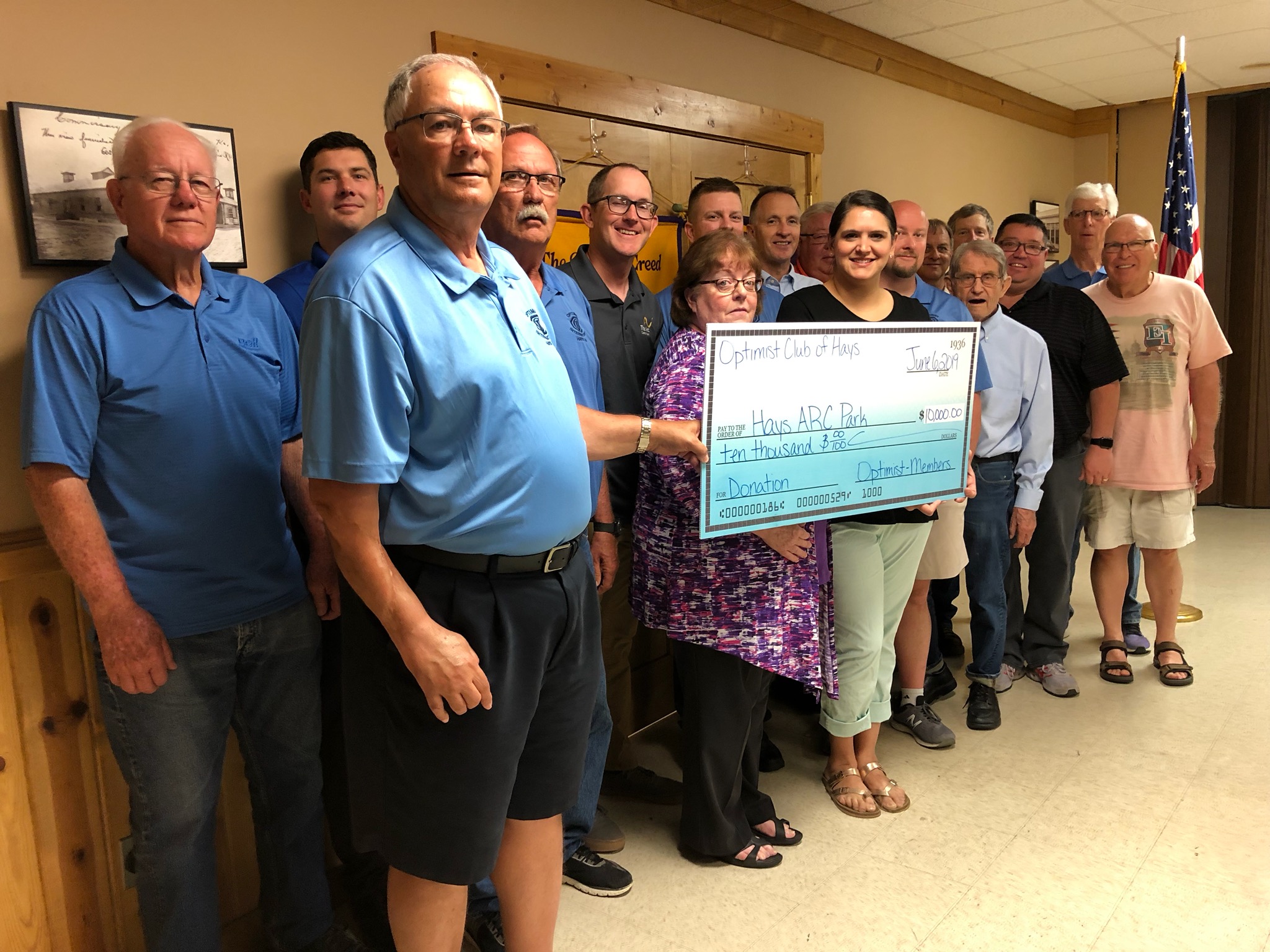
Hays Optimist members present a check for $10,000 to Sarah Meitner and members of the ARC administrative team.
Submitted
The Hays Optimist Club is proud to present a $10,000 contribution to the ARC of the Central Plains for the accessible park that they are constructing at the site of the Seven Hills Optimist Park.
Twenty plus years ago the Optimists in conjunction with the City of Hays provided funds to build a shelter house and purchase playground equipment for the park.
Optimist members in addition volunteered their time to build the shelter house and assemble and install the playground equipment.
Hays Optimists has been in existence since 1966. Three of the original charter members still regularly attend the weekly meetings. Optimist members in fall 2018 volunteered more than 244 hours to sell Christmas trees and also volunteered their time and efforts to sell raffle tickets. The proceeds of both projects were used to fund 21 different youth projects in 2019.
Funds for the contribution to the ARC project were the result of funds set aside from past tree sale projects. The members knew that at one time there would be a need to make additional improvements to the Seven Hills site.
When the ARC Park project was announced, they voted to use the funds that had been restricted to assist in the fundraising for the project.
BUNKER HILL – The Dane G. Hansen Foundation Community Grant for Thomas County has awarded Smoky Hills Public Television with a grant for $1,000 to support the station’s Literacy Leadership Program.
The grant funds will provide books for Head Start children, as well as, support for children’s programming.
“We are thankful for the generosity of the Dane G. Hansen Foundation Community Grant for Thomas County,” said Larry Calvery, Smoky Hills Public Television General Manager. “Educating the youth of our area is an important mission of Smoky Hills Public Television and this grant will help us put books in the hands of the children in Thomas County.”
The Dane G. Hansen Foundation is committed to providing opportunities for the people of Northwest Kansas to enjoy the highest possible quality of life. The foundation advances its mission by investing in the areas of education, health care, economic development, community social services and security, conservation and environment, arts and culture and community beautification.
Smoky Hills Public Television serves 71 counties in central and western Kansas and has been named the Kansas Association of Broadcasters Non-Metro Station of the Year.
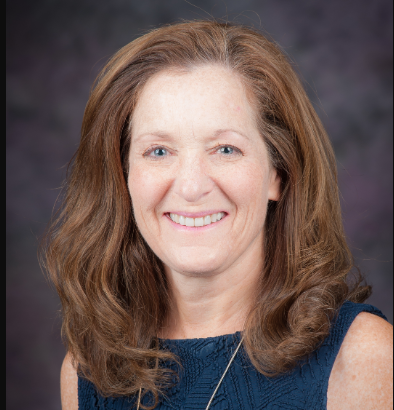
MANHATTAN — Following a national search, Bonnie Rush has been selected as the new dean of the College of Veterinary Medicine at Kansas State University.
Rush, who has been serving as interim dean of the college since 2017, was appointed by Charles Taber, provost and executive vice president. Her appointment begins June 16, according to a media release from the University.
“Dr. Rush emerged as the clear leader following a competitive national search process. With her strong history of leadership for the College of Veterinary Medicine, Dr. Rush is the right choice to lead this college and its vital teaching, research, service, and outreach programs into the future,” Taber said. “The college not only supplies the state of Kansas, the nation and the world with highly trained and skilled veterinarians, it is also a leader in infectious disease research that affects both animals and humans.”
Rush will be charged with leading the college on a variety of fronts, including program development, faculty and student development, research, teaching and extension, program accreditation, diversity and the 2025 plans for both the college and the university.
The college has three academic departments, two service units — the Veterinary Health Center and Kansas State Veterinary Diagnostic Laboratory — and is home to a number of prestigious research centers and units, including the Center of Excellence for Emerging and Zoonotic Animal Diseases, Beef Cattle Institute, Center of Excellence for Vector-Borne Diseases and the U.S.-China Center for Animal Health. The college’s professional degree program provides broad training opportunities across a comprehensive range of companion and exotic animals, and livestock species.
“It has been an honor to serve as the interim dean,” Rush said. “The students, faculty and staff of the College of Veterinary Medicine are tremendously talented and committed to advancing the missions to strengthen animal health and well-being through research, education and service. I look forward to honoring the traditions of the college, while working together to create new opportunities for the future.”
A professor of internal equine medicine, Rush’s area of clinical expertise is equine respiratory disease with an emphasis on respiratory physiology, immunology and aerosol drug therapy. She co-authored the book “Equine Respiratory Diseases” with Tim Mair from the Bell Equine Clinic, Kent, U.K.
Rush began her career as a faculty member at Kansas State University in 1993. She served as the head of the clinical sciences department from 2006 to mid-2017. She has been a core course coordinator, led curriculum reform and maintained responsibility for clinical outcome assessment. She is committed to the scholarship of teaching and has authored or co-authored more than 20 manuscripts in the Journal of Veterinary Education on effective instructional practices, communication training, and student welfare.
The recipient of the President’s Award for Outstanding Department Head in 2014, Rush also earned the 1996 and 2003 Carl J. Norden Distinguished Teacher Award, the 2002 Pfizer Award for Research Excellence, the 2004 Outstanding Woman Veterinarian of the Year and the 2009 Distinguished Alumni Award from Ohio State University.
Rush earned her Doctor of Veterinary Medicine from Ohio State University in 1989, completed internship training at North Carolina State University in 1990 and equine internal medicine residency training at Ohio State University in 1993.
Kansas voters who threw far-right Republicans out of office in 2016 and elected Laura Kelly as governor in 2018 should be pleased that state finance is on the mend after facing bankruptcy three short years ago.
In assessing the condition of state finance at the close of the 2019 legislative session, Kansans should not forget the disastrous financial mess of 2016:
· block grant funding of schools had been ruled unconstitutional;
· a $700 million state bank account had been drained empty by four years of unbalanced budgets triggering repeated downgrades in state credit;
· frequent borrowing had ballooned tax-supported state debt to an historic high;
· a reckless tax experiment bumped up property taxes as a portion of state and local revenues to the highest level since the 1980s;
· cutbacks in highway maintenance, suspended pension payments, child deaths, prison uprisings, and a decertified state hospital highlighted an overall deterioration in state services;
H. Edward Flentje is professor emeritus at Wichita State University.
To top off this debacle, far-right Republican lawmakers skipped town in 2016 after authorizing spending that exceeded revenues by more than $300 million.
Most Kansans correctly place primary blame for this mess at the feet of former Governor Sam Brownback and his tax experiment, but current legislators, including Senate President Susan Wagle, Senate Majority Leader Jim Denning, and House Speaker Ron Ryckman, had a hand in doing the governor’s bidding.
In 2016, Kansas voters rebuked legislative allies of Brownback and elected 40 centrist Republicans and Democrats to contested seats.
Then, in 2018, they chose Kelly over Kris Kobach, who wanted to redo the experiment.
A current snapshot of state finance demonstrates that elections do make a difference.
First, and most importantly, a genuinely bipartisan school funding package has been enacted. That package addresses specific issues raised by the Kansas Supreme Court and should end 10 years of turmoil over school finance.
Second, abandonment of the tax experiment in 2017 has restored state balances, estimated at $550 million by July 1, 2020. However, that balance could quickly evaporate if lawmakers fail to keep spending in line with revenues. For example, on the last day of the legislative session, Governor Kelly, with the help of Democrats and a handful of Republicans, successfully fought off an attempt to override her veto of partisan tax cuts that would have shrunk balances.
Third, axing the experiment has also rebalanced the tax mix among property, sales and income taxes. Relative equivalency among these tax sources should assure lower tax rates overall, reduce competition with other states, and promote tax fairness based on income.
Fourth, state legislators enacted a bipartisan budget package that begins to repair state services in a number of areas. Kelly trimmed the package with line-item vetoes but was overridden on those. This action diminished state balances by over $50 million.
Finally, state debt is being paid down from record highs, and state credit has edged upward since 2016.
While state finance is on track, thorny, unresolved issues could throw the recovery off course. Kelly narrowly blocked the Republican’s tax bill but pledged a comprehensive review of state tax policy in advance of the next legislative session. Kelly proposed extending the payoff of unfunded pension liabilities in order to achieve short-term financial flexibility, but Republicans balked at the cost her proposal. And Senate leaders stalled Medicaid expansion.
Kansans chose a bipartisan path forward in 2016 and 2018, and lawmakers produced. Kelly and legislative leaders now face the dual challenge of keeping on track while also finding consensus on continuing, unsettled issues of state finance.
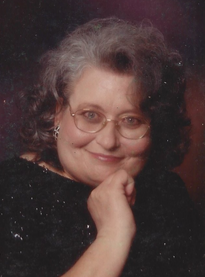
Teresa Eileen Ehmke, age 72, passed away on Saturday, March 30, 2019 at the Lane County Hospital in Dighton, Kansas. She was born on June 10, 1946 in Garden City, Kansas, the daughter of Raymond and Eva Deliah Thomas Ehmke. A lifetime resident of Dighton, Kansas, before retiring she was a CNA working for Lane County Hospital Long Term Care Unit in Dighton, Kansas for over 30 years.
She was a member of the Christ The King Lutheran Church in Dighton, Kansas, Holy Cross Lutheran Church in Scott City, Kansas and FCE in Dighton, Kansas.
Survivors Include her Two Sisters – Joyce Baker of Garden City, Kansas, Chrissy Ehmke of Garden City, Kansas, One Niece – Kim Hamilton of Garden City, Kansas, Four Nephews – Mike Baker of Kansas City, Kansas, Richard Ehmke of Coffeyville, Kansas, Glen Ehmke of North Carolina and Charlie Ehmke of Coffeyville, Kansas.
She was preceded in death by her Parents and One Brother – Phillip Ehmke.
Funeral services will be held at 2:00 p.m. Monday, June 10, 2019 at Price & Sons Funeral Home in Scott City, Kansas with Leland Jackson presiding.
There will be no calling times.
Interment will be in the Dighton Cemetery in Dighton, Kansas.
Memorials are can be made to the Teresa E. Ehmke Memorial Fund in care of Price and Sons Funeral Home, PO Box 553, Scott City, Kansas 67871.
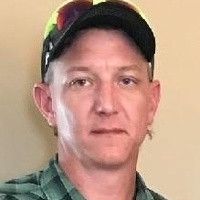
Steven Lee Bradford, 39, passed away May 31, 2019 near Parsons, KS.
He was born December 3, 1979 in Great Bend, KS, the son of Dennis and Marcie Lonnberg Bradford. A lifetime area resident, he was a CATlepuller truck mechanic.
He was a member of the United Methodist Church, Jetmore, KS.
He married April Wendel, they later divorced. On February 16, 2016, he married Misti Harper in Dodge City, KS. She survives.
Other survivors include: parents, Dennis and Marcie Bradford, Jetmore, KS; children, Chance Bradford, Jetmore, KS, Aidan, Isaac, Atalissa, AvaLee, Kenna and Anissa Bradford, all of Lakin, KS; step children, Britany Harper and Zachary Martinez, both of Dodge City, KS, Aubrey Harper, Pierce City, MO; sister, Becky (John) Stoss, Jetmore, KS; two nieces, Neeley and Jentry Stoss and two step grandchildren, Remington and Ryker Clinesmith.
Funeral will be at 2 p.m. Saturday at United Methodist Church, Jetmore, KS with Pastor Cyd Stein presiding. Visitation will be from 9 a.m. to 8 p.m. Friday at Beckwith Funeral Home, Jetmore, KS. Burial will be in the Fairmount Cemetery, Jetmore, KS.
Memorials may be sent to the Children’s School Fund in care of Beckwith Funeral Home, Box 663 Jetmore, KS 67854.
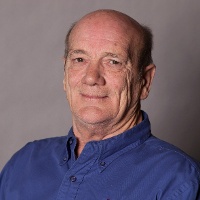
Kirwin resident Bob L. Eakin passed away Monday, June 3, 2019 at the University of Nebraska Medical Center in Omaha, NE at the age of 60.
Bob was born March 13, 1959 in Beloit, KS, the son of Robert Lee and Betty (Staley) Eakin. He married June Roth on Dec. 8, 1998.
Survivors include his wife, June, of Kirwin, KS; sons, Ryan Eakin of Colorado Springs, CO and Curtis Bretton of Kirwin; daughters, Connie Sivertsen of Manhattan, KS, Lisa Hall and Teresa Starkey, both of Kirwin; his brother, George Eakin; two sisters, Roberta Jackson and Sandra VanWey; 8 grandchildren and 4 great-grandchildren.
Funeral services will be Saturday, June 8, 2019, at 2:00 p.m. in the Olliff-Boeve Memorial Chapel, Phillipsburg, with Pastor Chris Davis officiating. Burial will follow in the Kirwin Cemetery.
Visitation will be Thursday & Friday, June 6 & 7, from 9 a.m. – 9 p.m. at the funeral home.
Memorial contributions may be given to the Kirwin Community Playground.
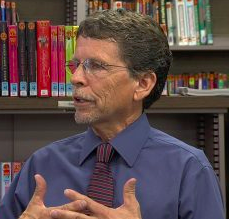
After 37 years working in schools, former Hays Middle School Principal Craig Pallister is seeking to get back into education. He filed this week to run for the Hays USD 489 school board.
Pallister, 65, joins a field of eight other candidates for four open positions on the board, including incumbents Paul Adams and Luke Oborny and newcomers Lori Hertel, Tammy Wellbrock, Alex Herman, Allen Park, Jessica Moffitt and Cole Engel.
“My thoughts are still with public education,” Pallister said. “It is one of those [things I wanted] to give back now to education that I have the time to do it.”
Pallister said he does not think the district or the board needs any major changes.
“I moved to Hays 37 years ago when my oldest child was just getting into kindergarten because it had a great education system and it’s a great community to raise kids,” Pallister said. “We just need to publicize how good our public schools are. I don’t think people realize that if they went to other places around the state of Kansas, Hays is very, very lucky.”
In terms of facility needs, Pallister said he thought the biggest need is at the elementary level.
The district has had two failed bond issues in three years — in 2016 and 2017.
The school board has discussed adding two sections to Roosevelt Elementary School and closing Lincoln Elementary School, which is more than 90 years old and has significant infrastructure problems. The board will consider time lines in July for a bond election in 2020.
The board has also discussed including in the bond issue expansion of the HMS cafeteria.
“The specific need for Hays Middle School after being there for 25 years is the cafeteria,” Pallister said. “We were lucky to get additions built on a couple of times while I was there, so we have the space, but it is the cafeteria that is really the specific need. It is not a want; it is a need.”
The cafeteria was built for 400 students and is now serving almost 700 students.
“We get them fed, but we had to rush their lunches so much,” he said. “They don’t get to socialize. It is like being in a restaurant that is overcrowded and has people standing in line all of the time.”
The school district reached impasse with the Hays NEA during negotiations last year.
“The district just needs to listen to the teachers about their needs and what they want to change in the district,” Pallister said. “I think the district needs to get back to realizing our staff and faculty are the most important part of the school district. They are the ones that meet our kids every day. … If you have great staff and great teachers, you will have an outstanding district, and that is what we have.”
He said he thinks the district needs to promote itself to continue to draw quality teachers and staff members to the district.
“We should send out something that says, ‘Hays USD 489 — one of the best districts in the state of Kansas,’ ” he said, “and we could stand behind it because we have the teachers and we have the staff and our kids come out and are prepared.”
The board has also heavily debated its one-to-one computer policy.
“Technology is just part of the integral education process,” Pallister said, “but our kids need that solid technology background to be able to be successful through 12th grade and then through post-secondary education.
“I have had two daughters go through universities now, and they had a very good technology background after being in USD 489 and it is having it every day in front of them.”
Pallister was the assistant principal at HMS for four years before serving as head principal for 21 years. Prior to working in Hays, he was an assistant middle school principal for three years and a teacher for 10 years at the middle school in Dodge City.
He earned both his bachelor’s and master’s degrees from Fort Hays State University.
“I have the historical background because I have worked under four superintendents of schools in Hays,” he said. “I feel like I bring a lot of knowledge of education and the historical knowledge of how the district has done the good things and the times we have not done good things.”
Pallister’s wife also worked for the Hays school district. She retired this spring from her position as a librarian for Roosevelt and Lincoln Elementary schools.
Pallister said the most important reason he is running is because he has a granddaughter who will be a second grader at Wilson Elementary School in the fall.
“I just have the time, and I want to be involved in education because that has been my life,” he said.




 We are giving away the Chicken Soup for the Soul book “Grandparents.”





 “Dr. Rush emerged as the clear leader following a competitive national search process. With her strong history of leadership for the College of Veterinary Medicine, Dr. Rush is the right choice to lead this college and its vital teaching, research, service, and outreach programs into the future,” Taber said. “The college not only supplies the state of Kansas, the nation and the world with highly trained and skilled veterinarians, it is also a leader in infectious disease research that affects both animals and humans.”