JEFFERSON CITY, Mo. (AP) — Efforts to repeal Missouri’s new eight-week abortion ban with a public vote hit a roadblock Thursday, the latest development in a fight over abortion rights that’s playing out on multiple fronts in the state.
Republican Secretary of State Jay Ashcroft told reporters that he rejected two referendum petitions aimed at repealing the sweeping abortion law — one backed by the ACLU of Missouri and the other backed by businessman David Humphreys, a wealthy GOP donor. Ashcroft cited a provision in the Missouri Constitution that prohibits referendums on legislation that has already taken effect.
Most new laws in Missouri automatically take effect on Aug. 28 of each year, as the ban on abortions at eight weeks of pregnancy will. The law includes an exception only for medical emergencies, not rape or incest.
The Republican-led Legislature, though, voted to make a section of the bill that changed parental consent laws for minors seeking abortions take effect as soon as Republican Gov. Mike Parson signed it into law.
Ashcroft, the state’s top election official, said that effectively blocked two efforts to repeal the law through a public vote. He cited a provision in the constitution that prohibits referendums on “laws necessary for the immediate preservation of the public peace, health or safety.”
The new law requires a parent or guardian giving written consent for a minor to get an abortion to first notify the other custodial parent, unless the other parent has been convicted of a violent or sexual crime, is subject to a protection order or is “habitually in an intoxicated or drugged condition.”
The law’s “emergency clause” states that enacting the parental-consent portion is vital “because of the need to protect the health and safety of women and their children, both unborn and born.”
“Because of that declaration by the Legislature, we have no other avenue but to reject Referendum 1 and Referendum 2 for failure to comply with the requirements of the Missouri Constitution,” Ashcroft said.
The ACLU of Missouri sued Ashcroft on Thursday, and the attorney who filed the other rejected petition also said he will sue to force the secretary of state to approve that referendum.
“This move is so predictable, we’ve already assembled our suit to require the Secretary of State to put aside his anti-abortion agenda and do his job by certifying the referendum,” the ACLU of Missouri’s acting executive director, Tony Rothert, said in a statement.
Ashcroft said his office is still reviewing a third and slightly different referendum petition that was filed by attorney Lowell Pearson, who said he represents the Committee to Protect the Rights of Victims of Rape and Incest. That group is also supported by Humphreys, who last week called the eight-week abortion ban “bad public policy” because it lacks exceptions for pregnancies caused by rape and incest.
Pearson said the final pending referendum petition does not seek to force a vote on provisions in the legislation that are already in effect. It’s unclear whether that would satisfy Ashcroft, who said he aims to make a decision on the petition’s constitutionality by the end of next week.
A similar repeal tactic was used in 2017, when opponents of a law limiting union powers submitted enough signatures to block it from taking effect. Missouri voters overwhelmingly rejected that anti-union law in 2018.
The legal dispute over the abortion law comes as the state’s only abortion clinic fights its own court battle to continue providing the service, despite a licensing dispute with the state health department.
The health department last week declined to renew the St. Louis Planned Parenthood clinic’s license to perform abortions, saying March inspections at the clinic uncovered deficiencies. The agency cited “at least one incident in which patient safety was gravely compromised.” It also cited what it called “failed surgical abortions in which women remained pregnant,” and alleged that the clinic had failed to obtain “informed consent.”
Clinic leaders say the allegations are part of an effort by an anti-abortion administration to eliminate the procedure in the state. Planned Parenthood pre-emptively sued to ensure continued abortion services.
Circuit Judge Michael Stelzer last week issued a ruling allowing the clinic to continue performing abortions as the court challenge plays out. During a Wednesday hearing, he did not indicate when he might rule on Planned Parenthood’s request for a preliminary injunction to allow abortions to continue.
LOGAN – The Dane G. Hansen Museum takes great pride in hosting a two-day watercolor painting workshop with Laurie Albin at the Dane G. Hansen Museum, 110 W. Main, Logan, Kansas.
This workshop will run from 9:30 a.m. to 4:00 p.m. on June 21 and 22, 2019, with a lunch break each day. Albin, a WaKeeney resident, will introduce basic watercolor techniques and present step-by-step demonstrations providing guidance and inspiration. This workshop is available to all skill levels.
Albin has been painting watercolors for 43 years and has more than a decade of experience teaching and sharing the art with others. Lori is a signature member of the Kansas Watercolor Society. To view Albin’s art, go to www.albinstudio.com.
This learning opportunity is brought to you through the Hansen Museum Continuing Education Program with funds from the Hansen Foundation. Cost of the workshop is $120.00 with discounts available for Patron and Sustaining Members of the Dane G. Hansen Museum. For more information, please call 785-689-4846.
ABILENE — Hundreds of people, including more than 60 World War II veterans, Rosie the Riveters, and labor camp survivors were in Abilene on Thursday morning to mark the 75th anniversary of D-Day.
The ceremony was on the grounds of the Dwight D. Eisenhower Presidential Library, Museum, and Boyhood Home, in front of the statue of Eisenhower. It was an appropriate location as Eisenhower, who was the Supreme Allied Commander during World War II, on June 6, 1944, led the Allied Forces in the D-Day invasion of Normandy, France. The invasion, code-named Operation OVERLORD, has been called the greatest invasion in human history and led to the downfall of Adolph Hitler and his Nazi strangle hold on Europe.
Gen. Richard Myers, USAF (Ret.).
General Richard Myers, USAF (Ret.), the former chairman of the U.S. Joint Chiefs of Staff and current president of Kansas State University, gave the keynote address.
Myers recognized veterans in the audience and noted that 43 million men and women have served in the U.S. armed forces, and of those more than 650,000 have died while serving.
Myers praised Eisenhower and called him a role model.
“The more I studied this man as a young Air Force officer, the more I thought, ‘wow!’ what a great role model,” Myers said. “His character had many great traits that stood out to me, among them a real sense of humility, of selfless service, and his acceptance of responsibility.”
Eisenhower’s Order of the Day for D-Day. The audio version along with the audio version of Eisenhower’s Address to the European People were played during the ceremony. Image courtesy National Archives
Myers said that Eisenhower’s work in the pre-war days at the Pentagon working for General George Marshall on the war plan, was indicative of his aforementioned character traits. While his peers and friends were leaving for commands in Europe, Eisehower, stayed behind, Myers said.
“If you’re a military person, you want to be a great warrior. That’s what you’re trained to be and that’s what you want to be, so he really wanted to be with them,” Myers said. “But he was told by General Marshal, ‘no. We need you here because you’re such a great planner.’ And he didn’t quibble at that.”
Eisenhower, Myers said, made up his mind that if that was where he was needed, that was where he would serve.
“That’s the selfless service I just talked about,” Myers said.
Myers noted that it wasn’t much later that President Franklin D. Roosevelt and Marshall appointed Eisenhower Supreme Allied Commander the nation saw again on D-Day what Eisenhower was made of.
Col. Tom Murtha.
“Today we come together to remember the 75th anniversary of D-Day, the day that would mark a turning point in the war, as the Allied armies began the final chapter to liberate the millions of innocent people living under the tyrrany of Nazi oppression,” said Col. Tom Murtha, 2/1 Armored Bridge Combat Team Commander.
“While the First Infantry Division, my division, played a critical role in the invasion, losing 316 soldiers on Omaha Beach, the immense joint and Allied operation on land, at sea, and in the air represented the culmination of years of planning and preparations,” Murtha said. “This tremendous burden of command of this operation rested solely on the shoulders of General Eisenhower. There was no school, there was no doctorate to prepare him for that level of command. It was General Eisenhower’s genius of command, his talent for organization, his infectious motivation that set the tone for the operation.”
Murtha also recognized the World War II veterans on hand, saying “This brave generation secured the blessings of liberty for the generations to follow. The world would be a darker place indeed, if not for their sacrifice and victory. There is no measure of thanks that we can offer for their incredible service, but we can honor them by continuing to defend the ideals that make our nation great.”
Mary Jean Eisenhower.
Mary Jean Eisenhower, the general’s graddaughter, said the heartland of American was a part of who her grandfather was.
“He loved it so much, in fact, after he had done his World War II duty and decided to run for president, he came right here to announce that he was going to run for president,” she said.
“His humble Abilene roots are what gave him the ability and the compassion for the troops and his love for this great country,” she added.
This list of known Kansans who died during the D-Day invasion and the following list of guests of honor are a part of the special program booklet produced for the honorees.
Myers and Murtha laid a wreath at the foot of the statue of General Eisenhower. They were joined by the Allied Forces Detail made up of:
Col. Tom Bolen (USA)
Col. Peter Little (United Kingdom)
Col. Olivier-Pierre Marchand (France)
LTC Stephen Gallagher (Canada)
Not only did the Abilene High School Women’s Select Chorus sing the National Anthem after the presentation of colors by the 1st Infantry Division from Fort Riley near the beginning of the ceremony, but they also sang several patriotic songs later in the event.
The World War II veterans and Rosie the Riveters were asked to stand and be recognized. Additionally, the list of those Kansans known to have died in the D-Day operation was read and a bell was rung with the reading of each name.
The invocation and the benediction were given by Fort Riley Chaplain Col. Shmuel Felzenberg.
The ceremony concluded with a 21-gun salute and the playing of Taps.
Afterward, Marvin Ledy, Abilene, an Army veteran of World War II who was in attendance at the D-Day ceremony Thursday with his wife, Lois, said he was honored to have been recognized for his service to the country.
“This is about the greatest thing in my life to be recognized for the service that we did. It was a long, long struggle, but we made it. I made it and I didn’t get hurt,” Marvin Ledy said.
KANSAS CITY, Mo. (AP) – Mookie Betts hit a two-run homer off Danny Duffy in a four-run third inning and the Boston Red Sox defeated the Kansas City Royals 7-5 Thursday to complete their first series sweep in nearly a month.
Boston outscored the Royals 23-8 over three games and swept a series for just the fourth time this year, the first since May 10-12 against the Chicago White Sox. The World Series champions are 27-16 following a 6-13 start.
Betts is 7 for 11 with five home runs against Duffy (3-3), including six hits, five home runs and a walk in his last seven plate appearances.
Kansas City has lost six straight and nine of 10, dropping to a big league-worst 19-43.
With a doubleheader coming up Saturday against Tampa Bay, Boston gave Ryan Weber his third start. He allowed two runs and five hits in 1 1/3 innings, and Colten Brewer (1-2) followed with two scoreless innings of two-hit relief.
Matt Barnes, Boston’s seventh pitcher, allowed Jorge Soler’s one-out RBI double in the ninth but got his fourth save in seven chances by striking out Ryan O’Hearn and Chelsor Cuthbert.
Duffy allowed four runs and four hits in 2 1/3 innings. Eduardo Nunez’s hard drive went off Duffy’s right shin and ricocheted to O’Hearn, who tagged Nunez for the final out of the second. Duffy retired one of six batters he faced in the third.
Betts’ 10th home run tied the score, and Rafael Devers put Boston ahead with a two-run single.
Soler’s fifth-inning homer cut the deficit to 4-3, but Christian Vazquez hit a two-run triple in the seventh and scored on Scott Barlow’s wild pitch.
Cuthbert and Alex Gordon homered for the Royals.
TRAINER’S ROOM
Red Sox DH J.D. Martinez was removed in the fifth inning because of back spasms. … LHP Brian Johnson, on the IL since April 6 because of elbow inflammation, is to make his sixth minor league injury rehab appearance Sunday.
UP NEXT
Red Sox: RHP Rick Porcello (4-5, 4.76 ERA) starts Friday’s opener of a four-game series against visiting Tampa Bay.
Royals: RHP Homer Bailey (4-6, 6.05 ERA) takes the mound Friday at home against the White Sox.
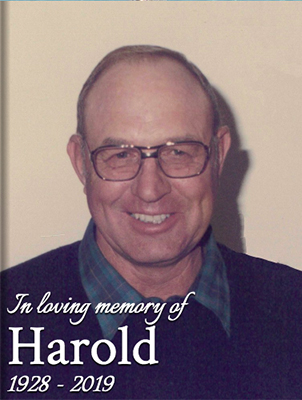
Harold W. White, age 90, passed away on Wednesday, June 5, 2019 at the Park Lane Nursing Home in Scott City, Kansas. He was born on October 14, 1928 in Tyron, Nebraska, the son of Roy and Rena Robertson White. A resident of Scott City, Kansas, since 1947 moving from Pueblo, Colorado, he was the owner and operator of White Concrete for over 25 years until retiring in 1990.
He was a member of the St. Joseph Catholic Church in Scott City, Kansas, and was a US Navy Veteran and was a member of the Knights Of Columbus, Pheasants Forever, El Quartellejo Saddle Club, Life Member of AQUA and Modoc Gun Club.
On April 20, 1949, he married Mary Ruth Gaschler in Marienthal, Kansas. She survives.
Survivors include his wife Ruth White of Scott City, Kansas, one daughter Susan and Brad Boulware of Scott City, Kansas, two granddaughters Brooke Boulware of Scott City, Kansas, and Kadra Boulware of Overland Park, Kansas.
He was preceded in death by his parents and five sisters Byrdena, Evelyn, Nina, Marie and Beulah.
Vigil services will be at 7 p.m. Sunday, June 9, 2019 at the St. Joseph Catholic Church in Scott City, Kansas.
A celebration of life will be at 10 a.m. Monday, June 10, 2019 at the St. Joseph Catholic Church in Scott City, Kansas.
Burial will be in the Scott County Cemetery in Scott City, Kansas.
Memorials in lieu of flowers may be made to the Park Lane Nursing Home or St. Joseph Catholic Church in care of Price & Sons Funeral Homes.
Visitation will be from 10 a.m. until 8 p.m. Saturday and 1 until 5 p.m. Sunday at Price & Sons Funeral Home in Scott City, Kansas.
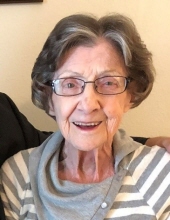
Dorothy Irene (Marvin) Avery, daughter of Warner John and Martha Jane (Gunter) Marvin, was born Feb. 1, 1929 in Oberlin, Kansas, and went to her eternal home on June 3, 2019 at the age of 90.
She grew up in Oberlin and was baptized in Christ at the Oberlin Federated Church. She graduated from Decatur County High School and attended one semester at the University of Kansas. Dorothy dearly loved school and her fondest memories were traveling to and competing in debate tournaments.
On Aug. 25, 1948 Dorothy and Daughn Avery were married and made their home in Oberlin before moving to Colby. They then started their family in 1952, with the arrival of Rachelle Dawn, and then 19 months later with the addition of Cindy Jo.
In 1966, the family moved to Norton, where a life-long friendship and professional relationship was then established with Dick and Mary Beth Boyd, owners of the Norton Daily Telegram. Dorothy worked diligently to establish a new home with the help of Christian Church neighbors: The Dick and Susan Heaton family and the Fred and Joyce Jacobs family.
Her favorite jobs in Norton were working with Eugene Wiltfong as secretary at Eisenhower Elementary School, for Darel Boston at Norton Christian Church, and as an aide for Dr. Merlin Colip at the Doctor’s Clinic. A diagnosis by Dr. Colip allowed her longevity of life. These were not just jobs for Dorothy, they became friendships that lasted a lifetime.
Another life-giving friendship that emerged later in her life was a special bond with the Hauser family. Dorothy and Daughn took great joy in caring for Hadley as an infant. She delighted in every visit from this special family. Dorothy worked with joy and diligence at every job, especially that of homemaking. Anyone who entered her door was a friend and was welcomed graciously.
Dorothy had three passions: dessert, chocolate and bridge. She loved competing in bridge tournaments with her dear friend, Nyla Stuewe. A heart friend, Bev Kohfeld gifted her the perfect plaque: “All you need in life is a friend who has chocolate.”
She was an active member of the Norton Christian Church where she taught Sunday school and was involved in Bible studies. She was also a member of the American Legion Auxiliary, Eastern Star Chapter 126, and P.E.O.
Survivors include: two daughters and their husbands, Rachelle “Shelley” Peters and Gary Peters, Hastings, Nebraska; Cindy and Gail Boller, Norton; six grandchildren and their spouses and 13 great-grandchildren: Lindsay and (Nathan) Hendricks: Charli Mae, Piper, Benjamin; Whitney and (Jarrod) Watson: Harper, Hayes, Collins; Clark Walter; Meredith and (Jim) Jones: Aidan, Kade, Kohen, and baby girl on the way; Brett and (Meagan) Peters: Aubrey, Ava, Aasim; Todd and (Mary) Boller: Allie and (Clayton) Beckman; two nephews, Rollie Avery and Barry Avery, and four nieces, Roz Avery, Christy Wesch, Linda Mills, and Kathy Haug.
Dorothy was preceded in death by her parents, her husband, one sister, Verna Mae Bryan Anderson, one half-brother, Housten Philip Hibberts, brother-in-law and sister-in-law, Rod and Alyce Avery.
The funeral service will be at 11 a.m. Monday, June 10, 2019 at the Norton Christian Church. Burial will be at 2:30 pm Monday at the Oberlin Cemetery.
Memorial contributions may be made to the Norton Christian Church or the Northwest Kansas Hospice.
KANSAS CITY(AP) — Two former college students are suing a for-profit school, alleging they were deceived into borrowing thousands of dollars in student loans with false assurances about the quality of the education and their job prospects after graduation.
Shayanne Bowman and Jackquelynn Mortenson filed the lawsuit against National American University in Jackson County Circuit Court.
The women say the school ran a “systematic, deceptive marketing scheme” that tricked them into applying for federal student loans that they cannot repay.
They say they ended up with “worthless” college credits and “crippling debt.” This is the second suit pending against the school .
National American University closed its two Kansas City-area campuses in May to focus on online education.
BY JAMES BELL Hays Post
Russell Police are investigating a string of vehicle burglaries that occurred overnight Tuesday.
“We are trying to screen through any tips that we have,” said Dale Weimaster, Russell Chief of Police, Thursday afternoon.
“Early morning of June 5, reports were being received of vehicles in the City of Russell being burglarized,” a release from the department said. “A Russell police officer responded to those reports and confirmed several vehicles that had been rummaged through.”
Eighteen reports came from the west and southwest parts of Russell, with some reports including items being taken from vehicles.
“As a general suggestion, citizens should make sure to always have your vehicles locked and valuables removed from the vehicles,” the release said. “You should also lock your residences and outbuildings as well.”
While there have been no arrests made, the department is trying to identify two people caught on camera as they may have information about the burglaries.
WICHITA, Kan. (AP) — The assistant football coach at a Kansas community college told officials a 300-pound defensive lineman who died of heatstroke after practice was “making a stressful moan” when he arrived to help, but rather than immediately dial 911 he called the head coach “for instruction to see how we wanted to handle the situation.”
Bradforth and his mother after his graduation from Neptune High School -courtesy Joanne Atkins-Ingram
That account and others from emails The Associated Press obtained through an open records request detail a chaotic nearly 30-minute period last August between when teammates found 19-year-old Braeden Bradforth in an alley outside his dorm and the arrival of paramedics, who struggled to reach him with a gurney.
“The fact that (the assistant coach) determined he was in visible distress was not enough for him to call 911 and get emergency help there immediately, I mean it is just mindboggling — just reckless disregard for this child’s life and it really disturbs me,” said Jill Greene, the attorney for Bradforth’s mother, Joanne Atkins-Ingram.
Greene provided the AP with copies of dispatch and emergency medical service records, hospital records, a coroner’s report and autopsy results from Bradforth’s death after the Aug. 1, 2018 , practice at Garden City Community College in western Kansas. The prominent program lost the junior college national championship game by 1 point last year after winning the title in 2016.
Bradforth was from Neptune, New Jersey, where the air is much thicker than in Garden City, which is about a half mile in elevation. The death happened on the first day of conditioning practice, when players were required to run 50-yard sprints 36 times.
“The whole way that they handled this is wrong and we need to change this,” Atkins-Ingram told the AP in an interview.
The assistant coach, Caleb Young, wrote in one email to university officials that while he was on the phone talking to head coach Jeff Sims, players were filling jugs and bottles to pour water on Bradforth.
Paramedics wrote that when they arrived Bradforth was wet, moaning and sitting slouched over with his head leaning on a building. The paramedics’ report noted coaches had made all the players go back to their rooms “so any witness(es), if any, were not present at this time.”
As emergency workers loaded him onto the stretcher, Bradforth began to choke, opened his eyes and threw up what looked like “dirty motor oil,” Young wrote. Bradforth arrived at the hospital at 10:33 p.m. in critical condition. He died at 11:06 p.m., hospital records show.
E. Randy Eichner, a former team physician and professor emeritus of medicine at the University of Oklahoma has researched deaths of football players for 30 years, said Bradforth’s was one of the most egregious he has seen. Had Bradforth been put in a tub of iced water when he got off the field, he would have walked home in good health and played the next day, Eichner said.
“They did a lot wrong,” Eichner said.
The death was ruled an exertional heat stroke. Eichner said heat stroke has killed more than 40 high school football players and at least 10 college players since 2000.
College officials did not directly respond to the AP’s questions about the emails. Instead, they re-sent a previous written statement noting they authorized an independent investigation and saying they are “aware of the misconception that the college is unwilling to give answers to the family or has interfered with information about the events that transpired on the day of Braeden’s death.”
Under pressure from Bradforth’s family and the New Jersey congressional delegation , the college hired independent investigators to review the case, including the firm that was brought in by the University of Maryland after the heatstroke death of offensive lineman Jordan McNair after a workout last year.
The emails and documents the AP reviewed showed the internal review the college released last month under mounting pressure mostly regurgitated Young’s statement from August. Notably, the college did not include in its publicly released internal review several details that call into question the coaches’ handling of the situation, such the assistant coach immediately recognizing when he got to the scene that the collapsed player was “in visible distress … and making a stressful moan.”
Young’s email says Bradforth did not show signs of distress during the conditioning or immediately after it ended at 9:05 p.m., but he stumbled as they were walking from the football field toward a team meeting in a nearby building. Young describes being interested in getting the last straggling players, including Bradforth, to the meeting on time. He wrote that he told Bradforth, “Hey, you’re good. Let’s go,” to which Bradforth responded, “Yeah, I’m good. I’m good.”
Soon, however, Bradforth started walking toward his dorm, and Young asked him if he was quitting the team. Bradforth didn’t respond verbally but shook his head. Young said he went to the team meeting and told a coach that Bradforth had quit.
Sims told Young to call the athletic trainer, T.J.Horton, who came to the scene and attempted to get Bradforth to respond. Horton called 911 at 10:01 p.m., around 25 minutes after players first found him on the ground, dispatch records show.
Sims has since been hired as head coach at Missouri Southern State, a Division II school closer to his native St. Louis.
The responding ambulance crew was unable to get a gurney into the narrow alley where he was found. Instead, paramedics and coaches carried Bradforth to the gurney on a stretcher.
Atkins-Ingram said she still has many questions about what happened after that, before her son died.
“Did anybody ride in the ambulance with him? Was he able to even ask for me?” his mother said. “I don’t know any of those details and it may not be important to anybody else, but they are very important to me … I deserve to know about my son’s last moments.”
LINCOLN, Neb. (AP) — A Montana man dubbed the AK-47 bandit and accused of holding up banks in several states over a five-year period has been sentenced in a Nebraska federal court to 35 years in prison.
Gathercole in a Dawson County Nebraska courtroom July 2018 image courtesy KNOP TV
Richard Gathercole, of Roundup, Montana, received the maximum sentence Wednesday after pleading guilty in March to bank robbery.
A Kansas Highway Patrol trooper tried to stop Gathercole on Interstate 70 eastbound five miles east of Goodland on the evening of June 19, 2017. The suspect was driving a Toyota Camry that was believed to be stolen. Gathercole fled from the trooper, exchanging gunfire with the trooper. The trooper was not hit, according to Trooper Tod Hileman of the KHP.
Gatherole carjacked a truck from a Kansas farmer at gunpoint and fled into Nebraska. He was apprehended by law enforcement at a gas station in Lexington, Nebraska.
The 41-year-old Gathercole admitted during his plea hearing to using an AK-47 while robbing a Nebraska City bank in 2014. Gathercole also pleaded guilty to the 2017 carjacking of the farmer in Kansas.
As part of his plea deal, Gathercole won’t be prosecuted by other jurisdictions for other violent crimes, including shooting at the Kansas state trooper in 2017 and bank robberies in California, Idaho, Iowa and Washington state from 2012 to 2017.
Some of the crimes had passed the five-year federal statute of limitations.
Cristina Janney of the Hays Post contributed to this story.
Through generous support from the Dane G. Hansen Foundation and Fort Hays State University, Jana’s Campaign secured a full-time intern for the 2019 summer semester.
FHSU student Brooklynn Bracelin, Wray, Colo., was selected to fill this position through an application and interview process.
Brooklynn was first introduced to Jana’s Campaign during her time serving on the Colorado FCCLA State Executive Council in high school.
Her team of officers invited Jana’s Campaign to present at their state conference, where she heard the story of Jana losing her life to violence perpetrated by an ex-boyfriend.
She was immediately impacted and wanted to find a way to be involved with the organization.
Years later, Brooklynn became a student at FHSU and accepted a student coordinator position for the Women’s Leadership Project.
The WLP is an initiative designed to educate, inspire, and empower women to be leaders of tomorrow on the FHSU campus.
Here, she had the privilege of working under the guidance of both, Curt and Christie Brungardt, Jana’s parents.
“It means the world to me to have the opportunity to intern with Jana’s Campaign,” Bracelin said. “I am excited to see the work they are doing firsthand and add to the impact Jana’s Campaign is making in Kansas, Colorado, and Nebraska to end gender and relationship violence.”
Brooklynn’s active leadership on campus and passion to end gender and relationship violence will add great value to Jana’s Campaign.
Thank you to Fort Hays State University and the Dane G. Hansen Foundation for providing us with this opportunity.
TOPEKA, Kan – During an incident with a Sumatran tiger at the Topeka Zoo and Conservation Center in April, 40-year-old zoo keeper Kristyn Hayden-Ortega sustained critical injuries.
Sanjiv the tiger involved in the incident photo Topeka Zoo
On Thursday, the zoo released a detailed incident report on what happened April 20 when the tiger attacked the veteran zoo keeper, statements from witnesses, the emergency response, staff response, the violation of protocol and process corrections.
Preface:
What follows is a narrative summarizing the tiger incident that occurred at the Topeka Zoo and Conservation Center on April 20, 2019 in which a zoo keeper was injured. This narrative will serve as the official report to the greater Topeka community, the media and several related agencies and organizations. In some areas of the report, extra explanation is added with the intent of making it understandable by all that read it. Further questions about the content of this narrative can be directed to the following individuals:
Brendan Wiley, Topeka Zoo and Conservation Center Director, [email protected]
Molly Hadfield, City of Topeka Communications Director, [email protected]
Jacque Russell, City of Topeka Human Resources Director, [email protected]
Incident Summary:
On April 20, 2019 at approximately 9:30 AM, a zoo keeper at the Topeka Zoo and Conservation Center entered an outdoor Sumatran tiger habitat. Seconds later, a male Sumatran tiger left an adjoining indoor holding space and entered the outdoor habitat the keeper was in. Seeing the tiger, the keeper retreated towards the exit of the habitat. The tiger grabbed the keeper from behind and pulled her back into the habitat and subsequently inflicted injuries. Within three minutes and forty-five seconds after the tiger grabbed the keeper, the tiger was secured in an inside holding space and first responders were administering first aid to the injured keeper.
Internal Investigation/Review of Incident:
The purpose of the internal investigation or review is to provide a holistic summary of what went wrong, why it went wrong and what action steps will be taken to prevent a similar incident from occurring at the Topeka Zoo. Management of the Zoo has elected to expand the findings of this review to all similar situations at the Zoo. If through this review an area of improvement is identified to improve tiger management, where it makes sense that same improvement will be made throughout the Zoo’s other carnivore programs. It is not the purpose of this review to describe potential disciplinary actions surrounding this incident. Personnel matters relating to this incident will be managed in accordance with City of Topeka Personnel Code, City and Zoo policies along with union bargaining agreement guidelines. As such, those outcomes will remain confidential.
Witness Account:
Zoo Keepr Kristyn Hayden-Ortega injured in the tiger attack-photo courtesy Topeka zoo
On the morning of April 20, 2019, a Topeka Zoo Docent (trained volunteer) was stationed at the zoo’s Sumatran tiger habitat as part of the zoo’s plan to celebrate Earth Day. Shortly after, the Docent was joined by two zoo guests, a wife (Guest 1) and husband (Guest 2). The Docent and the two guests watched a Zoo Keeper (Tiger Keeper) complete the morning cleaning routine in the South side of the Sumatran tiger habitat. During this time, the zoo’s male Sumatran tiger housed on the North half of the habitat had access to both the indoor and outdoor areas of the habitat through Tiger Outside Shift Door D. The Docent and the two Guests watched the male tiger in the North enclosure go inside and back out several times during their stay in front of the tiger habitat. During this time, Tiger Outside Shift Door D was locked in the open position giving the male tiger free access to choose whether he wanted to be inside or outside.
At approximately 9:25 AM, the Tiger Keeper was observed coming around the North side of the tiger habitat where she proceeded to open a drain valve to drain the pool in the male tiger’s outdoor habitat. The Tiger Keeper then proceeded into the keeper area of the tiger holding building. The male tiger went into his portion of the tiger building through Tiger Outside Shift Door D.
At approximately 9:30, the Docent and two guests observed the Tiger Keeper again proceeding around the North side of the exhibit. The Tiger Keeper proceeded to the North Habitat Access Gate and entered the outdoor tiger habitat. Seconds later, the male tiger went through Tiger Outside Shift Door D thereby entering the same outdoor space that the Tiger Keeper was in. Seeing the tiger, the Tiger Keeper turned and proceeded back towards the access gate. The tiger caught the Tiger Keeper from behind and pulled her to the ground. The tiger proceeded to bite and claw at the Tiger Keeper several times inflicting wounds to the head, neck, back and one or both arms.
A statement by the observing Docent, recounts that as the Tiger Keeper entered the outdoor habitat the situation appeared wrong as the Docent thought the tiger had access to the outdoor habitat as the Docent had recently observed the tiger going in and out. Because the tiger was not outside, the Docent assumed the tiger was secure in a separate indoor area.
Emergency Response:
The incident was witnessed by the Docent and Guests 1 and 2 through a glass viewing window into the outdoor habitat. Both the Docent and Guest 1 took immediate actions which triggered the Zoo’s emergency response.
Realizing what time of day it was, the Docent knew there would be numerous keepers around nearby animal exhibits. Across from the Zoo’s outdoor tiger habitat is an outdoor hippo pool. She saw a staff person cleaning the hippo’s outdoor pool. In an effort to convey the emergency of the situation, she shouted, “There is a tiger out! There is a tiger out!”
At the same time as the Docent turned to seek a staff person to initiate the zoo’s emergency response, Guest 1 placed a call to 911. We estimate that the 911 call was placed between 7 and 15 seconds after the tiger grabbed and pulled the Tiger Keeper to the ground. Because the 911 operator kept Guest 1 on the call until after first responders began administering first aid to the Tiger Keeper, we are confident in stating that the entire incident occurred between three minutes forty-four seconds and four minutes two seconds.
Based on the 911 call placed by Guest 1 at 9:29 AM on April 20, 2019, we can establish time markers within the emergency. To understand the 911 call, it is important to note two things. First, during the 911 call Guest 1 walked away from the tiger habitat. Guest 1’s husband (Guest 2) stayed at the tiger habitat and watched the incident progress and relayed information to Guest 1 to convey to the 911 operator. Second, Guest 1 stated in an interview that she placed the 911 call immediately after the tiger grabbed the Tiger Keeper. Yet during the call, she stated this but also stated that the incident happened about five minutes ago. Her guess at the time frame was more than twice the actual time. It is interesting to note that all but one witness accounts more than doubled the estimate at how long things took. This is the human reaction that, “it felt like an eternity.” The one staff person that had an almost accurate sense of the time duration has a military background and served in active duty. The time markers of the 911 call are as follows:
0:01 911 operator answers call
0:37 Keeper 1 arrives at tiger habitat
1:00 Outdoor tiger habitat secured
2:33 Keeper 1 and Keeper 2 calling tiger into indoor area
3:09 Sirens from first responders approaching zoo can be heard
3:47 Tiger is secured inside building and first responders are already treating Tiger Keeper
Staff Response:
At hearing the Docent’s shout, an Animal Care Assistant cleaning the hippo pool immediately proceeded inside the Animals and Man building and notified a Zoo Keeper (Zoo Keeper 1). While the description of the emergency from the Docent was a little unclear, it gave enough information that something serious was going on near the tiger habitat. Keeper 1 immediately raced to the tiger habitat going through an unoccupied elephant habitat to get there. A few seconds later, another keeper (Keeper 2) arrived at the location of Keeper 1 via golf cart. Keeper 1 pointed to where the tiger had the Tiger Keeper in the tiger habitat. Keeper 2 assessed the situation then raced around the North side of the habitat and secured the access gate into the outdoor tiger habitat. At the same time, Keeper 2 declared over the zoo’s radio system a “Keeper Down” emergency at the tiger habitat.
Keeper 2 went into the back area of the tiger building. Keeper 2 unlocked Tiger Outside Shift Door D that was in the open position and grabbed the tiger’s meat and began calling the tiger inside.
A member of the zoo’s firearms team was headed towards one of two gun safes maintained on the zoo’s property. The firearms team member selected a 30.06 rifle from the safe and proceeded towards the tiger habitat.
Initially, the tiger did not respond to being called inside. Keeper 1 ran into the building and grabbed some of the meat in the event the plan shifted to simply luring the tiger away from the Tiger Keeper in the outdoor habitat. Keeper 1 returned to the outside vantage point.
Having heard a follow up radio call, a third keeper (Keeper 3) arrived quickly at the tiger habitat from the nearby Children’s Zoo Barn. Keeper 3 assisted Keeper 2 in trying to call the tiger inside.
Keeper 3 took some meat to take to the outdoor habitat. As Keeper 3 was heading towards the outside area, the tiger entered the building and was secured inside by Keeper 2. Keeper 2 declared an “All Clear” over the radio system giving staff and first responders clearance to enter the outdoor tiger habitat and begin administering first aid.
Just prior to the arrival of the zoo’s firearms team member at the tiger habitat, the tiger had entered and been secured in the inside tiger holding area.
Violation of Protocol:
Zoo policy never allows for a person and a tiger to share the same space. Multiple Zoo protocols and procedures dictate what must happen before a staff person enters a space previously occupied by a tiger. On the morning of April 20, a staff person omitted the crucial step of locking the tiger inside prior to the staff person entering the outdoor habitat.
Prior to the tiger incident occurring, safety protocols centered on duplication of processes such as two doors to unlock and enter to gain access to the tiger holding building and two locks on every door that a person might use to enter a space that a tiger may have access to. Specific instructions detail the sequence of steps that tiger keepers follow through the progression of daily tiger management. Until that morning, these policies and protocols had provided safe management of large cat species at the zoo. As evidenced by the events of the morning of April 20, these policies which proved safe for decades did not prevent a human from skipping a critical process (securing a tiger in an inside space prior to entering the outdoor habitat) and creating a dangerous situation.
Process Correction:
Within two hours after the incident occurred, the Zoo’s two Animal Care Supervisors put into place additional policy to prevent the chance of human error repeating a situation like the one that occurred the morning of April 20. The zoo’s organizational culture allows frontline leadership to put safety related procedural changes in place prior to formal review with senior management. The change that the Supervisors put into place is that before a person enters a space that a potentially dangerous animal was previously authorized to access and vice versa, a second person must check locks, doors and location of animals within, before a staff person opens a door or gate to that previously authorized space.
While this change in policy is a clear enhancement to reduce the risk of human error, we don’t know that it is our end policy. In the days leading up to this event, the Zoo’s Animal Care Supervisors were at an Association of Zoos and Aquariums Safety Summit in which a topic of discussion was a Two Lock Two Key System for potentially dangerous animal management. In this system, there are two differently keyed locks on all potentially dangerous doors and no staff person has both keys to both locks.
It is the current belief of management that the Two Key Two Lock system is the long-term direction the Zoo will pursue. We will spend the next 90 days evaluating our facility in line with the Two Key Two Lock system and the resources needed to safely operate it. As part of this evaluation, we will work with an outside consultant. If through the evaluation process our hypothesis holds true, we plan to implement the Two Lock Two Key System by the end of the first quarter of 2020 based on an approximate three month evaluation and facility modification process followed by a six month training and implementation process.
Emotional Wellbeing of Zoo Staff:
Within an hour and a half of the emergency the City of Topeka Human Resources Director was in touch with the Zoo Director wanting to know what resources may be helpful to staff involved in the incident. Based on the Zoo Director’s initial interview with Zoo Keepers 1, 2 and 3, the Zoo Keepers welcomed the opportunity to debrief in a professionally guided situation. As such, a counselor was available on April 21. On Monday April 22, all paid and unpaid staff of both the Zoo and Friends of the Zoo were allowed and encouraged to participate in the first of two group sessions with the Topeka Police Department’s Peer Support Team. On Tuesday April 23, through the City’s Employee Assistance Program, private counseling sessions were available to anyone involved with the incident. Three additional days of private counseling sessions were offered. Additionally, as per normal, employees have access to the Employee Assistance Program on their own initiative.
Outside Agency Review:
There have been a lot of questions as to what outside agencies will review this incident. There is one agency responsible for a holistic review with the purpose of preventing similar incidents from happening again – that agency is the City of Topeka. Other agencies will review from the angle that relates to their authority. The USDA will review as it relates to the Animal Welfare Act. OSHA does not regulate governmental organizations. The government counterpart to OSHA is the state level Department of Labor. The KDOL will review the incident from the perspective of employee safety. The final agency to review the situation is the Association of Zoos and Aquariums (AZA). The AZA will perform an in-depth evaluation as to whether or not the Topeka Zoo had sufficient policies up to industry standard in place to prevent an incident like this from happening. The AZA will utilize its Accreditation Commission to make this determination.
USDA – The USDA and specifically the APHIS (Animal and Plant Health Inspection Service) is responsible for reviewing this incident as it relates to animal welfare within the standards of the Animal Welfare Act. The Topeka Zoo has a history of self-reporting potential violations of the Animal Welfare Act with APHIS. In that vein, it is also important to note that the Topeka Zoo does not determine whether or not an item or act is compliant or noncompliant with the Animal Welfare Act. That responsibility lies with APHIS Veterinary Medical Officers (VMO) and their superiors. As such, in self reporting the Zoo only relays information. Information was relayed to a VMO on April 20, 2019 regarding the Zoo’s tiger incident. A VMO arrived at the Zoo on the morning of Wednesday, April 24 to gather information. The next morning, she arrived to gather additional information. Based on the information available to that point; because the tiger was not injured, the tiger never left the enclosure, no members of the public were injured and the fact that the staff person involved was clearly an experienced employee – there was no apparent animal welfare issue.
Kansas Department of Labor – A Safety and Health Inspector from the Kansas Department of Labor was on site to interview management staff and to see the site where the incident occurred on the afternoon of Thursday, April 25. The inspector returned for additional information on Wednesday, May 8. During the review by the KDOL, the inspector interviewed staff regarding safety protocols, reviewed training processes and reviewed the tiger programs Continuity of Operations Plan. The inspector also reviewed the qualification of the Tiger Keeper. Zoo staff shared with the inspector the protocol change to the Two Person System implemented the day of the tiger incident. On Friday, May 10, the KDOL released their findings that the Topeka Zoo is not required to make any additional changes.
AZA – The Association of Zoos and Aquariums is the accreditation authority that the Topeka Zoo and Conservation Center belongs to. AZA was notified about the incident within an hour of the time the incident occurred. As it relates to this incident, AZA will review the incident to understand what happened and focus on preventing such incidents from recurring at all AZA accredited institutions. As such, the Topeka Zoo will provide an initial report to the accreditation commission and will follow up on any recommendations or questions the Commission may have.
Other Enhancements:
Immediately following this incident, a procedure was put into place using a second person to prevent an emergency of this nature ever occurring again at the Topeka Zoo. While that procedure was already in place with elephants and apes, it now applies to all carnivores as well. Additionally, Zoo management wanted to perform a comprehensive review of all of the Zoo’s carnivore facilities and procedures with the intent of providing additional policy to guard against further incidents. To that end, the following items were or are being evaluated:
Ante Areas (Safety Entrance) to potentially dangerous animal areas – Some of the Zoo’s carnivore habitats have outdoor habitat entrances that assume all protocols and policies are followed correctly before a staff person enters the outdoor habitat. Because this incident points to the fact that human error is something we need to guard against, the decision has been made to fabricate and install safety entrances at all large carnivore outdoor habitat entrances to insure that when an outdoor habitat receives routine servicing, there is never an open access point to the habitat
CO2 Fire Extinguishers – The Topeka Zoo maintains several CO2 fire extinguishers to be used in an animal emergency or animal introduction if needed to alter aggressive acts between conspecifics. Previously, the CO2 extinguishers were stored in a centralized building within the zoo’s property ready for deployment when needed. When a CO2 fire extinguisher is activated, it releases a loud roar and creates a fog that can distract an animal. The use of a CO2 fire extinguisher was not needed in this emergency. However, because of how fast this emergency played out, if a CO2 extinguisher would have been needed, retrieving one from the stored location would have been time prohibitive. The zoo is in the process of ordering a CO2 extinguisher for each building. They will be installed in each building at the same location to make them easier to find in an emergency situation. They will be clearly labeled so that they can be differentiated from the dry powder extinguishers to be used in a fire related emergency.
Pepper Spray – Inside each potentially dangerous animal holding building there is a pepper spray canister in a wall holder painted in a bright yellow color. This canister is placed in a location for a staff person to grab in the event of a potentially dangerous situation. While it is not required, the zoo maintains a supply of smaller canisters that can be worn on a person for staff who choose to do so. The potential use of pepper spray was evaluated during this incident. In regards to the Tiger Keeper, the use of pepper spray is considered to be contraindicated. The Tiger Keeper was only two steps into the exhibit when she saw the tiger. Her instinct was to retreat to the exit. Within that time, the tiger grabbed her and pulled her back into the exhibit. It is estimated that the Tiger Keeper would not have had time to grab and discharge the pepper spray before the tiger was on her. With the emergency response, pepper spray was on scene. Because of the relatively calm nature of the tiger, the decision was made not to discharge pepper spray in fear that the spray might incite the tiger. In hind sight, this was the right decision for this emergency. As such, management continues its policy of providing pepper spray to staff that want it but not requiring that it be worn by every employee.
Panic Alarms and Personal Body Alarms – This item of consideration does not apply to this emergency. This emergency did raise the question with staff as to what if this scenario presented itself on a cold winter day when there might not be someone that witnesses an emergency. The Topeka Zoo is investigating options of a device that staff can wear on their body that would declare an alarm even when the staff person in danger cannot declare the alarm on their own behalf.
Monthly Staff Tours – This item also does not directly relate to this emergency but relates to the general emergency readiness within the team that operates the Topeka Zoo. This emergency reminds us that you cannot readily predict when or where your next emergency will take place. Based on those unknowns, we visualized a need to get all of our staff into all of our buildings on a regular basis so that all of our staff can be more comfortable with the situation if they find themselves actively managing an emergency situation. As a collective team that operates the Topeka Zoo, we meet on the first Wednesday of every month. With our May meeting we began a plan where each month we will tour an area of the Zoo.
Emergency Response Tactics to Improve On:
The staff at the Topeka Zoo regularly tabletops and practices drills for a number of situations. It is our belief that practicing emergency drills led to the rapid outcome of this event. This was the first incident of this nature in this zoo’s history. Given that this was a terrible experience from the get go, a better outcome could not have been imagined. Immediately after the incident was resolved, a request was made of all paid and unpaid staff for a statement of what they saw, heard and did during the emergency. A debriefing was held with Keepers 1, 2 and 3 and a debriefing was held with the entire staff. On June 5, the zoo will conduct drills on the emergency reenacting exactly what happened and then reviewing what could have been done better.
Even before that review begins, we can identify ways we can improve our emergency responses. Some of those observations and improvements are as follows:
Training drills are valuable however, this real emergency played out much faster. In a drill, our tendency has been to role play all the different steps that occur in a potential situation one at a time. This emergency demonstrated that many emergency processes transpire simultaneously. We think we can come up with a better system for drills that can better replicate a true emergency environment with multiple active processes.
Radio Communication – Radio communication is something we work on in every drill. Given the speed and outcome at which this emergency resolved, it is hard to be critical at how the radio communication was managed. Having said that, it was unclear for support staff to know who the ICO was. Because most of our drills center around complicated and worst case emergencies in which for public safety reasons the zoo gets closed, the Zoo was closed for a brief time the morning of the tiger incident. However, the Zoo closed after the tiger was secured in the building. These are items we will work on as we reenact this emergency and drill on others.
In an Emergency, Things Happen Fast – As referenced earlier, we will be making an effort to make sure that items needed during emergency situations are readily accessible throughout the Zoo and where possible, emergency items are stored or installed in similar places in all facilities.
Conclusion:
Until a perfect system can be put in place that can prevent the possibility of human error from occurring, organizations that manage potentially dangerous animals must have facilities and teams prepared for emergency situations. The Topeka Zoo family would like to express our sincere gratitude to the Docent and Guest 1 and 2 for their willingness to act in a critical situation and to Keepers 1, 2 and 3 for their swift and decisive actions that most likely saved the life of a coworker.




 The invocation and the benediction were given by Fort Riley Chaplain Col. Shmuel Felzenberg.