TOPEKA — On its final day of the 2019 legislative session, the Legislature unanimously passed House Concurrent Resolution 5015 extending Governor Laura Kelly’s disaster declaration regarding recent flooding and severe storms through January 13, 2020.
“Due to flooding and storms in numerous Kansas counties, I declared a state of disaster to enable emergency response resources and personnel to do everything they can to protect Kansas citizens and property,” Kelly said. “Dealing with the damage and consequences of recent flooding and severe weather will take months of consistent, dedicated hard work. I commend the legislature for taking swift action to approve this resolution and standing with our communities in this difficult time.”
Governor Kelly’s May 9 disaster declaration activated the Kansas Response Plan, enabling the deployment of essential disaster prevention and recovery resources. Because it will take months to provide adequate recovery services to affected communities – and by law only legislative action can extend a governor’s disaster declaration beyond the statutory time limit – the House and Senate moved quickly on the last day of the 2019 legislative session to introduce and unanimously pass House Concurrent Resolution 5015, extending the disaster declaration through January 13, 2020.
“Local emergency management personnel, along with our state emergency management team and countless volunteers, have worked tirelessly and effectively to do everything possible to protect Kansans,” Kelly said. “We cannot control the weather, but we can control our response to it, and I am proud of the capable, intelligent, dedicated Kansans who continue to help keep us safe and to rebuild when natural disasters strike. I will continue to do all I can to support them.”
The resolution extends the Governor’s disaster declaration for the following counties: Allen, Anderson, Barber, Barton, Butler, Chase, Chautauqua, Cherokee, Clark, Clay, Cloud, Coffey, Comanche, Cowley, Crawford, Dickinson, Doniphan, Douglas, Edwards, Elk, Ellsworth, Franklin, Geary, Greenwood, Harper, Harvey, Hodgeman, Jefferson, Kingman, Leavenworth, Lincoln, Linn, Lyon, Marion, Marshall, McPherson, Meade, Montgomery, Morris, Nemaha, Neosho, Osage, Ottawa, Pawnee, Phillips, Pottawatomie, Pratt, Reno, Rice, Riley, Rush, Russell, Saline, Sumner, Wabaunsee, Washington, Wilson, and Woodson, and any other county designated by the Governor in accordance with K.S.A. 48-924.
Governor Kelly also requested an emergency federal disaster declaration, which President Trump granted for 18 counties on May 28.
Fatal teen crash rates show drinking and driving, speeding and distraction are among top killers on the road during summer
AAA
WICHITA – Over the past five years, nearly 3,500 people nationwide have been killed in crashes involving teen drivers during the 100 Deadliest Days, the period between Memorial Day and Labor Day, when the number of crash fatalities involving a teen driver historically rise. New crash data from 2013-2017 reveals major factors contributing to fatal teen crashes during the summer driving period include:
Speeding (28 percent)
Drinking and driving (17 percent)
Distraction (9 percent)
“Crash data shows that teens are a vulnerable driver group with a higher probability of being involved in crashes,” said Shawn Steward, AAA Kansas spokesman. “And while teens may make mistakes when first learning to drive, it is important to continue educating them about safety behind the wheel so they avoid the reckless behaviors that put themselves and others at risk on the road.”
AAA Foundation research found that nearly two-thirds of people injured or killed in a crash involving a teen driver are people other than the teen behind the wheel. Crashes for teen drivers increase significantly during the summer because teens are out of school and driving more. Over the past five years during the “100 Deadliest Days”:
An average of almost 700 people died each year in crashes involving teen drivers.
The average number of deaths from crashes involving teen drivers ages 15-18 was 17 percent higher per day compared to other days of the year.
Reckless behavior like drinking and driving, speeding and distraction are contributing to the alarming number of crash deaths involving teen drivers each summer.
Speeding
Speeding significantly increases the severity of a crash and is a growing problem among teen drivers. In the AAA Foundation’s latest Traffic Safety Culture Index, half (49.7 percent) of teen drivers reported speeding on a residential street in the past 30 days and nearly 40 percent say they sped on the freeway.
Drinking and Driving
Despite the fact that teens cannot legally consume alcohol, one in six teen drivers involved in fatal crashes during the summer tested positive for alcohol.
Distraction – Under-reported Problem
More than half of teen drivers (52 percent) in the AAA Foundation’s latest Traffic Safety Culture Index report reading a text message or email while driving in the past 30 days, and nearly 40 percent report sending a text or email. It is difficult for law enforcement to detect distraction following a crash, which has made distracted driving one of the most under-reported traffic safety issues.
Additional AAA Foundation research using in-vehicle dash-cam videos of teen driver crashes found distraction was involved in 58 percent of teen crashes, approximately four times as many as federal estimates.
AAA Kansas recently launched a new, multi-year initiative that aims to reduce deaths and injuries as a result of cell phone use by drivers. “Don’t Drive Intoxicated – Don’t Drive Intexticated” is the theme of AAA’s multimedia traffic safety education campaign created to make distracted driving as socially unacceptable as drinking and driving.
Teens and all drivers are invited to take the “Don’t Drive Intexticated” pledge. Visit a AAA Kansas retail store in Lawrence, Topeka, Manhattan or Wichita during a special Summer Travel and Safety open house event on Friday, May 31, to sign a pledge card.
Tips for teens and parents
“Parents have plenty to be concerned about as their teen hits the road this summer,” said AAA Kansas’ Steward. “Teens are making deadly mistakes on the road. Parents are the best line of defense to keep everyone safe behind the wheel.”
To keep roads safer this summer, AAA encourages parents to:
Talk with teens early and often about abstaining from dangerous behavior behind the wheel, such as speeding, impairment and distracted driving.
Teach by example and minimize risky behavior when driving.
“Teens should also prepare for summer driving by practicing safety during every trip,” added AAA Kansas’ Steward. “Storing your phone out of reach, minding the speed limit, and staying away from impairing substances like alcohol and marijuana will help prevent many crashes from ever occurring.”
TeenDriving.AAA.com has a variety of tools to help prepare parents and teens for the dangerous summer driving season. The online AAA StartSmartprogram also offers resources for parents on how to become effective in-car coaches as well as advice on how to manage their teen’s overall driving privileges. Teens preparing for the responsibility of driving should enroll in a driver education program that teaches safety skills and how to avoid driver distraction.
AAA provides automotive, travel, and insurance services to 59 million members nationwide and nearly 347,000 members in Kansas. AAA advocates for the safety and mobility of its members and has been committed to outstanding road service for more than 100 years. AAA is a non-stock, non-profit corporation working on behalf of motorists, who can now map a route, find local gas prices, discover discounts, book a hotel, and track their roadside assistance service with the AAA Mobile app (AAA.com/mobile) for iPhone, iPad and Android. For more information, visit www.AAA.com.
Kristen Farrington is executive director of the Religious Freedom Center of the Freedom Forum Institute.
By KRISTEN FARRINGTON and SABRINA DENT Freedom Forum Institute
As noted by Yale University professor and scholar David W. Blight, the first Memorial Day, known as “First Decoration Day,” was observed May 1, 1865 by formerly enslaved Africans to honor 257 Union soldiers buried in a mass grave at a Confederate camp in Charleston, S.C.
A parade was held, led by more than 2,000 Black children carrying flowers to honor the fallen. The commemoration included proper burial of the soldiers by the freed men. This moment, and the actions of these formerly enslaved men, would affirm the significance of human dignity despite the presence and practice of inequality in America.
Fifty-seven years later, on Memorial Day (May 30, 1922), thousands gathered on Washington’s National Mall for the dedication of the Lincoln Memorial and heard the passionate words of speaker Robert Moton: “With malice towards none, with charity towards all we dedicate our posterity, with you and yours, to finish the work which he so nobly began, to make America an example for all the world of equal justice and equal opportunity for all.”
Moton, a distinguished African-American educator, author and principal of the Tuskegee Institute, was invited to give the keynote address and yet was barred from sitting with white speakers. Can you imagine being asked to speak about equality, about the nation’s aspirations, then experiencing the humiliation of being segregated? Many believe the Lincoln Memorial was built to help heal a country torn apart by the Civil War — 154 years later, can we say we’ve healed? Has equal protection under the law resulted in all Americans experiencing equality and freedom?
Dr. Sabrina Dent is director of programs and partnerships at the Religious Freedom Center of the Freedom Forum Institute.
In 1976, President Gerald Ford officially recognized Black History Month. Ever since, February has been a time when most Americans are intentional about learning more about the history, culture and heritage of African Americans. It’s a time of reflection and celebration that reminds us how far our country has come since the enslavement of Africans, Jim Crow, Reconstruction and the Civil Rights era. It is an opportunity to recommit ourselves to the dream of the Rev. Dr. Martin Luther King Jr. and many other leaders who imagined a better world for generations to come.
The unfortunate reality is people of color continue to experience bigotry, discrimination, racism and socio-political and economic inequities. Feb. 1, 2019 would prove this to be true when Virginia Gov. Ralph Northam found himself in the midst of a scandal for his admitted (then denied) wearing of blackface. The pain of this moment was more than a superficial blemish in the news, but rather revelation of Virginia’s deeply rooted racist past that continues haunting African Americans 400 years after the arrival of their enslaved ancestors. Northam’s actions took place during his time as a student at Eastern Virginia Medical College in 1984. He was elected governor in 2017 by more than 87 percent of African-American voters according to Vox.
The Religious Freedom Center (RFC)’s mission is to educate the public about the history and significance of religious freedom in America. The Center is very aware that depending on race, ethnicity, socio-economic status and religion, perceptions of religious freedom in America vary.
Through new research and scholarship, we are committed to raising the volume on narratives of religious minorities and under-represented Americans. We are intentionally creating spaces where stories can be heard, difficult conversations can happen and new relationships can grow.
After the Gov. Northam news broke, the RFC hosted a Dialogue on Race with members of Commonwealth Baptist Church, a predominately white congregation in Alexandria, Va., committed to understanding race relations using the tools and skills of civil dialogue. The RFC has hosted many dialogue sessions, but this particular session was challenging for both of us.
Our thoughts included, “I was exhausted and angry after the events of the weekend and tired of talking about race to white people, but I knew this was not the moment to shut down” and “I wanted to co-facilitate the dialogue, but in that moment didn’t know how to help lead the session without adding more pain to an already difficult situation. I wondered, ‘What is my role? Can I speak to this? What is the best way to be an ally?’”
In a tearful moment before the session, we — who have been engaging in dialogue as women, friends, colleagues, religious leaders and allies for years — needed to figure how to navigate the day together.
This was a teachable moment for Black people and our allies to speak up about injustices, microaggressions and other nuisances that challenge the everyday existence and human dignity of people of color. It was time to practice our dialogue skills with one another and our invited guests — to be authentic, to talk about pain, to share personal stories, to learn from one another. This was not easy, but real dialogue never is. The dialogue session that day was very powerful, but it was clear we only touched the tip of the iceberg.
Legislation, memorials and days of recognition have been significant milestones in the healing of our nation. But nothing replaces the deeper personal work of examining unconscious bias, prejudice, privilege and power and reflecting on how we continue to support systemic racism and injustice at all levels of society.
Memorial Day is a somber one as we remember those who have sacrificed so each of us may experience our constitutional freedoms. Before we move too quickly into summer, on May 30, the traditional Memorial Day, let us honor Robert Moton’s prophetic words and recommit ourselves “to make America an example for all the world of equal justice and equal opportunity for all.”
Kristen Farrington is executive director of the Religious Freedom Center of the Freedom Forum Institute.Contact her via email at [email protected]. Dr. Sabrina Dent is director of programs and partnerships at the Religious Freedom Center of the Freedom Forum Institute. Her email address is: [email protected].
A teenager wakes up, gets ready for school. Slips a smartphone into her pocket on the way out the door.
Taylor Howell works on a Java coding assignment in Lisa Whallon’s class at Olathe Northwest High School. CELIA LLOPIS-JEPSEN / KANSAS NEWS SERVICE
Her day may well include some biology or chemistry, history, algebra, English and Spanish. It likely won’t include lessons on how that smartphone — more powerful than the computers aboard the Apollo moon missions — and its myriad colorful apps actually work.
That worries some Kansas businesses, lawmakers and educators who see a disconnect between what students learn and the technologies that have transformed everything from tractors in wheatfields to checkout lines at grocery stores.
But barriers to change abound. Computer wizzes earn more money programming in C++ than teaching it to teens. And cramming computer science into more students’ schedules could cut into time spent learning about evolution, trigonometry or the laws of physics.
“We’re no longer at a time where we can just continue what we’re doing,” said Rep. Steve Huebert, an engineer who chairs the education committee in the Kansas House.
Think about the needs that that creates for large employers, small employers … And everybody’s ability to continue to grow and thrive. – Anna Hennes, Cerner
Huebert recalls learning chemistry, physics and biology in school. But in the working world, computers proved a critical tool for his job — one that he had to learn on the go and that only grew in importance.
If some students think computer science may better fit their career goals, he wonders, why not let them swap a traditional science class for a chance to learn skills such as programming?
“If we can do that,” he says, “it’ll be a win-win for everyone going forward.”
Talent-hungry companies
Code.org, a tech-company-fueled advocacy group, says most American high schools not only don’t make students take computer science — many don’t even offer it.
Meanwhile, businesses hunger for tech talent. Computer science, they argue, lifts students and economies alike in a world where even the smallest of startups need websites, apps, databases and analytics.
“Think about the needs that that creates for large employers, small employers,” says Anna Hennes, a program manager at one of the region’s highest-profile tech firms, medical record software giant Cerner. “And everybody’s ability to continue to grow and thrive.”
Teacher Lisa Whallon and student Christian Crabtree workout the kinks in some Java code at Olathe Northwest High School.
CREDIT CELIA LLOPIS-JEPSEN / KANSAS NEWS SERVICE
Kansas City alone has added thousands of tech jobs in the past decade, and jobs in that line of work generally pay much better than the average gig.
Right now, though, where students live affects their chances of picking up HTML or other coding knowhow at school.
Most states let students who take computer science count it as a credit toward graduation.
That doesn’t help students at high schools without computer science, though. So, a third of states also make sure their schools actually offer it.
A few states go beyond that, requiring computer science education for all students in high school or even before then.
Kansas doesn’t do any of those things.
In February, the issue landed in the House Education Committee, where Cerner lobbied for a bill to let computer science count as a graduation credit. (The original bill called for mandatory computer science education, but Cerner says that version was a mistake.)
Expect the topic to surface again next year. In the meantime, education officials, lawmakers and businesses are meeting, talking, puzzling through the matter.
But it’s tricky. Right now, high school computer science counts as an elective. Requiring all students to take the subject would put districts in a bind. They’d need the right curriculum, technology and software.
Maybe the bigger question is: Where would all those teachers come from? Schools already struggle to find and keep other specialized teachers, such as those for science and math.
Yet letting students instead count computer science toward core graduation requirements means excusing them from something else. Different states take different approaches. Usually, they let students ditch some math or science. More rarely, students can take programming as a foreign language or other credit.
Either way, professor Perla Weaver says, you’ll upset someone.
“There’s things that we have for decades — if not centuries — assumed are part of basic education,” said Weaver, who heads the computer science department at Johnson County Community College and who used to teach high school.
Maybe you could you make a case that computer science would come in handier for a lot of students than knowing the details of DNA, she said, but “boy, don’t say that in front of science teachers. … It’s an insult.”
Many educators and scientists worry students already don’t get enough math and science, and that the nation’s supply of young scientists and its public understanding of critical concepts such as climate change suffer as a result.
A survey by Yale University, for example, found only about half of Kansans believe humans are driving climate change.
Kansas high schools currently require at least 3 years of math and science each for graduation.
New state guidelines
Kansas has long had standards for math, English and other subjects: guidelines that tell teachers when their students should learn about fractions and persuasive essays.
But when should they understand what a space bar is? How passwords work? The risks of social media and the implications of documenting their daily lives online?
In April, Kansas adopted standards for incorporating computer and internet concepts into student learning at all ages. The Kansas State Board of Education gave the go-ahead after months of educators and computer scientists hammering out details, asking for public input. Tweaking, writing, tweaking again.
Even digital natives need explicit instruction about computers, says Lisa Whallon, a computer programmer turned educator at Olathe Northwest High School.
CREDIT CHRIS NEAL / FOR THE KANSAS NEWS SERVICE
Students whose thumbs and index fingers fly across the screens of iPhones and iPads to text friends and do homework land in her coding classes hunting and pecking their way across traditional desktop keyboards.
Whallon makes them build the muscle memory needed to type with ease.
“I have adults say to me, ‘Really? Don’t kids know how to type?’” she says. “I feel like we’re doing our children a disservice by thinking that they just learn stuff.”
The new state standards remain effectively voluntary for schools, but educators still consider them a big deal. The guidelines open the door to creating a specialized license for computer science teachers, preparing students at the state’s colleges of education, and training teachers already working in schools.
And they emphasize “computational thinking” — breaking down problems and then seeing and designing solutions as a series of smaller steps.
“People look at computer science and they think it’s just coding,” said Stephen King, who helped develop the standards at the Kansas State Department of Education. “The reality is, it’s far more widespread, far broader than that.”
Whallon’s coding students at Olathe Northwest make flow charts, bounce ideas off each other and brace themselves for bugs in their code.
Coding an algorithm for a virtual card game took Eric Zhuo five class periods to write in Java.
“That’s the code that I struggled with the most,” the aspiring computer engineer says. “But when I figured out how to complete it, it was a very good feeling.”
None of this conflicts with science education, says Paul Adams, the dean of education and a professor of physics at Fort Hays State University. Kansas standards for science already ask schools to teach computational thinking through that subject.
Students work on Java code at Olathe Northwest High School
CREDIT CELIA LLOPIS-JEPSEN / KANSAS NEWS SERVICE
But if the goal is for more students to try their hand specifically at coding, Adams would prefer integrating programming concepts into other subjects as a tool, much as scientists use it for their work.
“If you present your research in physics, you present your Python code,” he said, referring to a popular coding language used both to calculate results and share methodology. “It’s what we learn to do our science.”
“To say, well, ‘Don’t worry, we’re going to remove, for example, earth and space science, or we’ll take out a biology’” in school and allow coding instead, “then you’ve lost that whole suite of knowledge.”
Equity in education and careers
Just 10 percent of graduating computer science majors at Kansas colleges in 2017 were women. That ratio seems to hold true in Kansas AP Computer Science classes.
It’s a nationwide problem. Students of color are underrepresented, too. That restricts access to good jobs, says Code.org, and hinders diversity among the people who develop the technologies that serve and shape our world.
“We can’t just have white males creating these things and being involved in these things and knowledgeable about these things,” says Pat Yongpradit, the group’s chief academic officer. “We really need everyone to be knowledgeable and involved in creating the future.”
Rowan Hedges, another of Whallon’s Java students aiming for a tech career, is used to being either the only girl or one of just a few in her programming classes.
“I feel like I have to be better than I am at all times,” she said, “or else I’ll be failing the female population.”
“Even though it’s not a hostile environment,” she said, “it just is intimidating to see a ton of guys who … might have people who encouraged them to do the field throughout their life, just because they’re guys.”
If schools pick up on Kansas’ new computer science guidelines and expose more students to computing earlier, teachers hope it could make more girls and students of color feel at home in the world of code.
If the Kansas State Board of Education takes another step by letting computer science count toward graduation (or if the Legislature forces its hand), that could effect change, too. Code.org says computer programming enrollment seems to become more diverse when states count it toward high school graduation.
Yet this would stop short of making sure all Kansas schools offer coding. Nor would it address the fact that wealthy, suburban schools can find teachers and offer specialized classes more easily than those in poorer, more rural or predominantly black or Hispanic parts of the state.
That’s a serious conundrum, says Rep. Rui Xu, another member of the House education committee. And it has no easy solution.
“If we want everybody to have the same opportunity,” says Xu, “then I don’t know that a voluntary program like this solves that.”
Celia Llopis-Jepsen is a reporter for the Kansas News Service. You can reach her on Twitter @Celia_LJ or email celia (at) kcur (dot) org.
WELLINGTON, Kan. (AP) — A former south-central Kansas band instructor has pleaded guilty to sexual exploitation of a child.
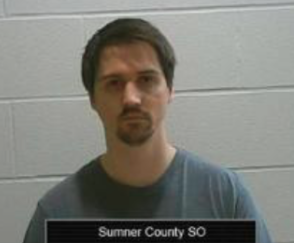
Olson -photo Sumner County
30-year-old Benjamin Olson entered the plea Thursday in Sumner County District Court. As part of the plea, Olson admitted to having a nude photo of a 17-year-old girl. In exchange, prosecutors dropped four other felony counts in the case.
Prosecutors will recommend Olson serve 16 months in prison when he’s sentenced July 25.
Olson was arrested in March. Police say he asked for nude photos and video from a student, of sending the student sexually explicit texts and fondling the girl.
Olson had been the band teacher for the middle school and high school at Wellington since 2015.
WASHINGTON (AP) — Despite pushback from U.S. business, Mexico and Capitol Hill, President Donald Trump is doubling down on his threat to slap a 5% tariff on Mexican imports unless America’s southern neighbor cracks down on Central American migrants trying to cross the U.S. border.
President Trump delivered the commencement address at the U.S. Air Force Academy Friday -photo courtesy White House
U.S. manufacturers said the tariff, set to take effect June 10, would have devastating consequences on them and American consumers. U.S. stocks tumbled on Wall Street in response to Trump’s planned action.
“Imposing tariffs on goods from Mexico is exactly the wrong move,” said Neil Bradley, executive vice president of the U.S. Chamber of Commerce, which is exploring legal action in response to the tariffs. “These tariffs will be paid by American families and businesses without doing a thing to solve the very real problems at the border. Instead, Congress and the president need to work together to address the serious problems at the border.”
Mexican President Andrés Manuel López Obradordispatched his foreign secretary to Washington to try to negotiate a solution. He said social problems are not solved with coercive measures, but also seemed convinced that Trump just needed to be informed about all the steps Mexico has taken to slow illegal migration.
Mexico has stepped up raids on migrant caravans traveling through the southern states of Chiapas and Oaxaca this year. It has deported thousands of migrants and frustrated thousands more who wait endlessly for permits that would allow them to travel legally through Mexico.
U.S. Secretary of State Mike Pompeo spoke with his Mexican counterpart via telephone Friday, said State Department spokeswoman Morgan Ortagus, who’s traveling with Pompeo in Bern, Switzerland. Ortagus said the department doesn’t comment on details of diplomatic conversations.
“We maintain an ongoing dialogue and close cooperation with Mexico on a wide range of issues, including border security efforts,” she said. “The United States and Mexico recognize that managing our shared border is a challenge common to both countries.”
Administration officials told reporters in a briefing call Thursday evening that Mexico could prevent the tariffs from kicking in by securing its southern border with Guatemala, cracking down on criminal smuggling organizations, and entering into a “safe third country agreement” that would make it difficult for those who enter Mexico from other countries to claim asylum in the U.S.
“We fully believe they have the ability to stop people coming in from their southern border and if they’re able to do that, these tariffs will either not go into place or will be removed after they go into place,” said acting White House chief of staff Mick Mulvaney.
Trump said the percentage will gradually increase — up to 25% — until the migration problem is remedied.
“Mexico has taken advantage of the United States for decades,” Trump said in a tweet Friday. “Because of the Dems, our Immigration Laws are BAD. Mexico makes a FORTUNE from the U.S., have for decades, they can easily fix this problem. Time for them to finally do what must be done!”
Trump’s decision showed the administration going to new lengths, and looking for new levers, to pressure Mexico to take action — even if those risk upending other policy priorities, like the United States-Mexico-Canada Agreement, a trade deal that is the cornerstone of Trump’s legislative agenda and seen as beneficial to his reelection effort.
Keeping the economy rolling also is critical to Trump’s reelection, and business was not happy with the president’s planned tariff on Mexican imports.
“These proposed tariffs would have devastating consequences on manufacturers in America and on American consumers,” said Jay Timmons, chief executive officer of the National Association of Manufacturers. “We have taken our concerns to the highest levels of the administration and strongly urge them to consider carefully the impact of this action on working families across this country.”
The stock market’s tumble on Friday all but guarantees that May will be the first monthly loss for the market in 2019. The news hit automakers particularly hard. Many of them import vehicles into the U.S. from Mexico.
“The auto sector — and the 10 million jobs it supports — relies upon the North American supply chain and cross border commerce to remain globally competitive,” said the Auto Alliance, which represents automakers that built 70% of all cars and light trucks sold in U.S. “Any barrier to the flow of commerce across the U.S.-Mexico border will have a cascading effect — harming U.S. consumers, threatening American jobs and investment and curtailing economic progress.”
Some of Trump’s fellow Republicans in Congress opposed the tariff. Republican senators have made almost weekly treks to the White House to nudge the president off his trade wars, and this latest move sent them scrambling again to signal their displeasure in hopes of reversing Trump’s actions.
Texas Republican Sen. John Cornyn supports the president’s commitment to securing the border, an aide said, but he opposes the across-the-board tariff, “which will disproportionately hurt Texas.”
Key trade senators also spoke up. Pennsylvania GOP Sen. Pat Toomey, who has questioned the administration’s ability to invoke national security threats for some other imports, called the tariffs a “blanket tax increase” on items Americans purchases from Mexico and “the wrong remedy.”
The tariff threat comes at a peculiar time, given how hard the administration has been pushing for passage of the USMCA, which would update the North American Free Trade Agreement.
Sen. Chuck Grassley, R-Iowa, a usual Trump ally and the chairman of the Senate Finance Committee, slammed the president’s action, saying it was a “misuse of presidential tariff authority” that would burden American consumers and “seriously jeopardize passage of USMCA.”
Sen. Joni Ernst, R-Iowa, said the livelihoods of farmers and producers from her state are at risk and so is the USMCA.
“If the president goes through with this, I’m afraid progress to get this trade agreement across the finish line will be stifled,” she said.
The Kansas Highway Patrol reported a 2014 Volvo semi driven by Christopher Engle, 33, Burlington, IA., was eastbound on Kansas 32 Highway at 59th Street in the right lane.
The semi struck a concrete bridge girder that was being pulled by a 2015 Freightliner semi driven by Errol Stevens, 59, Independence, Mo., that was making a left turn from 59th Street onto westbound Kansas 32.
Stevens was pronounced dead at the scene. Engle and a passenger were not injured. All three were properly restrained at the time of the accident, according to the KHP.
MEKLENBURG COUNTY —An Ohio man was found guilty this week for his role in a $7 million telemarketing scheme that defrauded primarily elderly victims in the United States from call centers in Costa Rica, according to the U.S. Justice Department.
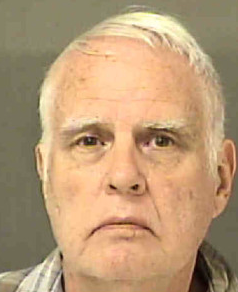
Donald Dodt photo Mecklenburg County
Following a five-day jury trial, Donald Dodt, 76, originally of Cleveland, Ohio, was convicted of one count of conspiracy to commit wire fraud and mail fraud, two counts of mail fraud, eight counts of wire fraud, one count of conspiracy to commit international money laundering and 10 counts of international money laundering.
According to evidence presented at trial, Dodt worked in a call center in Costa Rica in which co-conspirators, who posed as representatives of the District of Columbia Department of Consumer and Regulatory Affairs and federal agencies, including the U.S. Federal Trade Commission, and who also posed as federal judges, contacted victims in the United States — primarily senior citizens – to tell them that that they had supposedly won a substantial “sweepstakes” prize. After convincing victims that they stood to receive a significant financial reward, the co-conspirators told victims that they needed to make a series of up-front cash payments before collecting, purportedly for items like insurance fees, taxes and import fees. Co-conspirators used a variety of means to conceal their true identity, such as Voice over Internet Protocol (VoIP) services provided by Dodt that made it appear that they were calling from Washington, D.C., and other places in the United States.
As the evidence presented at trial illustrated, Dodt was an integral part of this scheme in that he knowingly provided services that were necessary for the scheme to operate and that facilitated the concealment and, ultimately, success of the scheme for many years. Specifically, Dodt provided and maintained VoIP phone technology and assigned phone numbers associated with locations in the United States through which members of the conspiracy were able to make the fraudulent calls to victims in the United States and conceal their identities and location. Dodt specifically assigned virtual phone numbers with area codes associated with Washington, D.C., to make it appear that the calls originated from within the United States and that also bolstered conspirators’ misrepresentations that they were representatives of government agencies located in Washington. Dodt also warned the co-conspirators if certain numbers were “hot” – i.e., there were customer complaints or law enforcement inquiries – and replaced those phone numbers with new phone numbers that the co-conspirators then used in furtherance of the scheme, the evidence showed.
Dodt and his conspirators stole more than $7 million from victims, the evidence showed.
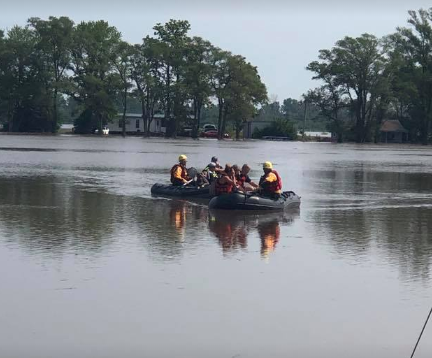
Water rescues Saturday photos courtesy Jackson Co. Sheriff
JACKSON COUNTY, MO—A levee in eastern Jackson County, Missouri breeched Saturday morning causing parts of the City of Levasy to flood., according to a media release from the sheriff’s office.
Central Jackson County Fire and Protection and Fort Osage Fire conducted water rescues. The Missouri State Highway Patrol is assisting.
No injuries have been injuries reported, according to the sheriff’s department.
Access to the City of Levasy is restricted to residents only who must show proof of residency to enter.
As of 3:30p.m., most of the residents had been evacuated as water levels continue to rise.
The water levels of Levisay, have never been this high based on statements from residents and other emergency personnel on scene.
The Sheriff’s Office is committed to ensuring the residents of Levasy are safe during this incident. We have allocated resources to monitor this incident over the next 24 hours, according to Sheriff Darryl Forté. Levasyi is 36-miles east of Overland Park, Kansas.
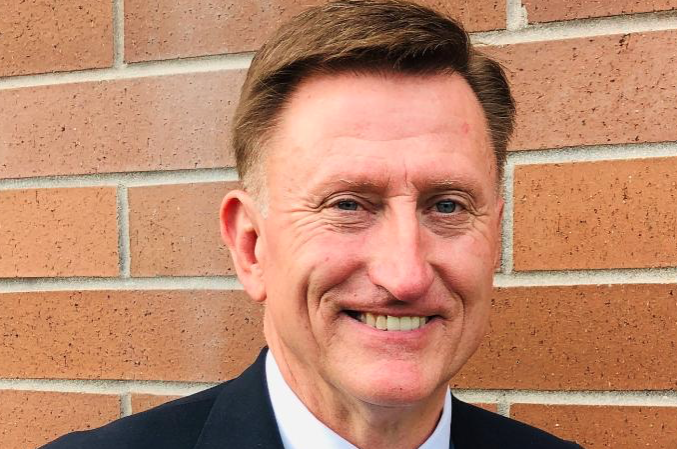
WICHITA, Kan. (AP) — Kansas Gov. Laura Kelly’s choice to be the next head of the state prison system was criticized by an Idaho judge earlier this year for giving “disingenuous” testimony as a top corrections official there in a lawsuit over access to execution records.
Jefferey Zmuda courtesy Idaho Dept. of Corrections
Kelly’s office has said Jefferey Zmuda has a “long record of success” during a 30-year career in the Idaho prison system, where he is now the deputy director. The Democratic governor announced his appointment as Kansas corrections secretary last week, and Zmuda is scheduled to take over July 1.
But over the past year, Zmuda has been entangled in a lawsuit in Idaho state court aimed at forcing the release of records relating to the execution of an inmate in 2011 and another in 2012. Idaho officials have kept finding more documents over the past year, despite previous assurances by Zmuda that all known records were collected.
While Zmuda can begin running the Kansas prison system this summer, his appointment must be confirmed by the Republican-controlled state Senate for him to stay on the job. The Legislature is out of session until January.
“These claims are deeply troublesome and if true, this administration has either learned nothing from their mistakes in thoroughly vetting nominees or are completely naïve,” said Senate President Susan Wagle, a Wichita Republican.
Earlier this month, the Senate rejected a Kelly nominee for the Kansas Court of Appeals, the state’s second-highest court, over his political tweets in 2017.
Zmuda is replacing Interim Secretary Roger Werholtz, who agreed to run the department temporarily when Kelly took office in January. He will take over a prison system that saw multiple riots in 2017 and 2018 and is plagued by short staffing.
Kelly spokeswoman Ashley All defended Zmuda, saying that he recognizes that Idaho’s prison system “could have done some things better” in the course of the lawsuit.
“However, he has worked with staff to conduct multiple searches for records to meet the court’s order,” All said.
In Idaho, corrections Director Josh Tewalt called Zmuda “a person of high integrity and a great leader.”
“He’ll wear the blame when it’s undeserved but will be the first one to share credit,” Tewalt said.
A University of Idaho professor sought the state’s execution records in 2017, and her request was mostly denied. She sued, accusing prison officials of withholding documents that included records showing how the state had obtained execution drugs.
Zmuda said in an affidavit taken in July 2018 that state officials had collected “all known documents” related to the executions.
District Judge Lynn Norton, based in the Idaho’s state capital of Boise, ruled in March that the prison system acted frivolously and in bad faith in mostly denying the professor’s request for records.
The judge also concluded that officials had not conducted a diligent search for records before Zmuda filed his affidavit. Court records show that Zmuda emailed corrections employees the day after, directing them to search for documents.
“The emphasis on the word ‘known’ in a sworn affidavit filed with this Court is disingenuous,” Norton wrote.
In his affidavit, Zmuda acknowledged record-keeping problems, saying “we have previously failed to organize documents properly.”
MANHATTAN, Kan. — The Kansas FFA Alumni awarded scholarships to FFA members from across the state who will be attending the Washington Leadership Conference this summer in Washington, D.C. FFA members were recognized for scholarship awards at the 91st Kansas FFA Convention, May 29–31 on the Kansas State University campus.
At WLC, FFA members will be challenged to take their leadership skills to the next level by learning to take action, know their purpose, value people, and serve others. Located in our nation’s capital, the conference is a five-day event that trains FFA members to become engaged citizens who can make a measurable positive difference in their school, community, state and country.
This year’s recipients are from: Chapman — Kevin Mills and Julie Rock; Ellis — Isabella Bollig, Eva Gaschler and Jakeb Remer; Girard— Tricia Combs and Colby McManis; Jefferson West — Riley Buss; McLouth — Bethany Plake; Neodesha — Kylie Johnson; Republic County — Alexis Hansen; St. Francis — Marlo Jensen; Stockton — Laura King, Kaden Kriley and Bailey Talbott; Washington County — Sean Bruna and Garret Otott.
Photos may be available upon request depending on student availability. Go toflickr.com/ksffa for photos or email[email protected] for assistance.












 Today
Today