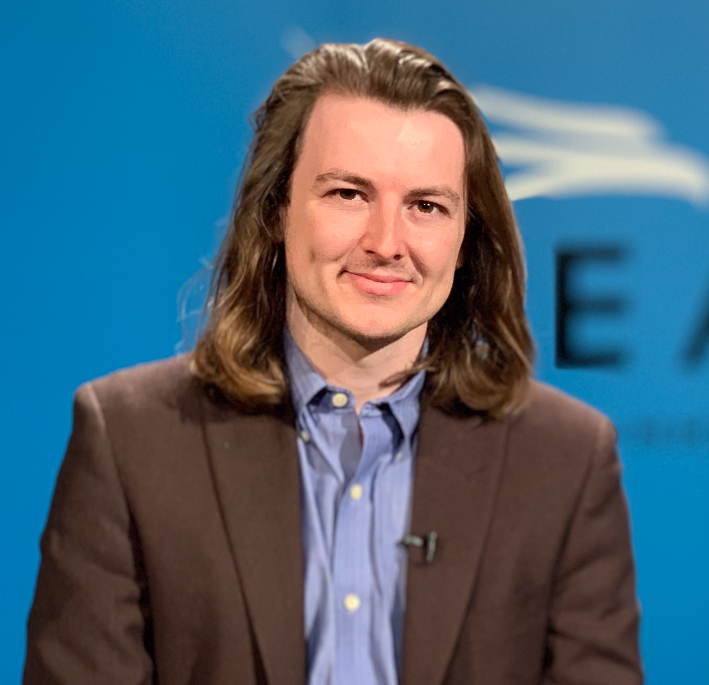
Gary interviews Max Haverfield on his upcoming concert tour.
Year: 2019
Prairie Doc Perspectives: Healing or harming with cannabis?

Just about 4,000 years ago, Chinese writings explained the medicinal powers of what is now called cannabis or marijuana, describing its properties to help arthritis, gout, malaria, nausea and psychological stress. In the 1500 and 1600s the Spanish and English brought cannabis to the new world for medical purposes and it became a huge commercial crop for making rope. In the 1920s cannabis emerged in jazz clubs as a recreational drug. At the time, it was thought of as a better alternative to alcohol since cannabis users didn’t seem as disruptive to the community.
During the prohibition era of the 1930s, the U.S. Bureau of Narcotics considered cannabis as addictive and they made it illegal along with alcohol. Further, the U.S. Controlled Substance Act of 1970 defined cannabis as a ‘Schedule 1’ drug putting it in the same category as heroin and LSD, claiming there was a high abuse potential and no medicinal use. Although these claims have changed, the U.S. law remains on the books. During the Obama administration, the Department of Justice was directed to relax prosecution of cannabis rule-breakers while allowing state rules to supersede the U.S. law. The Trump administration has made very little change since.

Questions about cannabis remain since scientific experimentation for medicinal use has been limited due to legal restrictions. However, strong evidence points to legitimate medical uses for cannabis. Cannabidiol or CBD, one of the chemicals derived from hemp, helps those with chronic pain syndrome, children with uncontrolled seizures, those with glaucoma and finally enhances appetite stimulation and reduces nausea and malaise in cancer patients.
We know there is abuse potential with cannabis, just like with alcohol. Driving intoxicated with cannabis increases crashes, even if only half as much as alcohol. Also, we know excess cannabis has potential to dull and injure young and undeveloped minds. Some suggest that legalizing cannabis would allow better laws and enhanced regulation, lessening underage use.
Consider the tragedy of 70,000 deaths per year (and rising) from the overdose of legal and illegal opioids while there are almost no reported deaths from cannabis use, despite quite extensive consumption in the U.S. Most opioid abuse seems to stem initially from efforts to reduce chronic pain syndrome, and this condition seems to be potentially helped with medicinal doses of cannabis.
It is time to allow medicinal use of cannabis. It might help us reduce the deaths from opioids.
For free and easy access to the entire Prairie Doc® library, visit www.prairiedoc.org and follow The Prairie Doc® on Facebook, Instagram and Twitter featuring On Call with the Prairie Doc® a medical Q&A show streaming live on Facebook most Thursdays at 7 p.m. central.
First Five: Social media spreads propaganda, disinformation around globe


Election season is upon us. Not here in the United States, where we haven’t even begun winnowing the massive field of presidential contenders, but over on the other side of the world, where India just wrapped up its national elections after six weeks of voting. It takes a while when you’ve got 900 million people participating. Closer to home, European Union (E.U.) parliamentary elections run May 23-26.
Both of these elections showcase the new and prominent role social media plays in the democratic process. It’s a crucial source of political news and information for voters — and a potential vehicle for misinformation that can be used to influence their votes.
The E.U.’s elections have only just begun, but a report from online activist group Avaaz indicates that networks of fake Facebook pages and groups have been extensively spreading divisive, white-nationalist, and anti-immigrant content and have amassed three times as many followers as the pages of the main European far-right and anti-E.U. parties. Another study from the University of Oxford analyzing recent tweets and Facebook posts related to the E.U. parliamentary elections found that anti-immigration and Islamaphobic stories from “junk news” sites received more engagement than stories from professional media sources.
Some E.U. officials suspect that Russia is behind the spread of this type of content, but as Giles Portman, head of the taskforce dedicated to exposing these attempts said, “From what we’ve seen of the European election campaign so far, it looks at the moment less sensational than some of the attempts we’ve seen [in the past]. What we can see at the moment is this continuation of a message that Europe is collapsing, that the elites aren’t paying attention to ordinary people and that Europe’s values and identities are under threat.”
Messages about threatened identity were prevalent during the Indian election as well, with much of the misinformation targeting religious minorities, but the way that it spread was fundamentally different. Whatsapp reigns supreme in India, with 230 million users. The platform consists of private group chats, making it notoriously difficult to fact-check the content that’s shared on it. WhatsApp attempted to stem the tide of misinformation by capping the size of its groups, limiting how many times messages could be forwarded and making it harder to forward images, audio clips and videos.
Facebook, which owns WhatsApp, has a huge presence in India in its own right and partnered with Indian fact-checking sites to debunk fake news stories on its platform and to shut down fraudulent pages and accounts. But India presents special challenges to aspiring fact-checkers: as Bloomberg reports, social media platforms “are discovering the harsh reality that disinformation and hate speech are even more challenging in emerging markets than in places like the U.S. or Europe. A new category of users, recently digital, believe almost whatever they receive — especially if it comes from family or friends. Hundreds of millions read in languages the American tech giants haven’t even begun to monitor.” India has 23 official languages; Facebook hired contractors to verify content in 10 of them.
Pallavi Mishra has seen the scale of the challenge first-hand. The manager at Vishvas News, Facebook’s largest Indian-language fact-checking contractor, spent two weeks recently talking with internet users in small cities. She found most people are so new to social media they have no clue about bogus content. They share stories indiscriminately, with stupefying speed. “Being the ‘first’ to share things in their circles gave them a rush,” she says.
“Disinformation is spreading like wildfire in these parallel digital universes,” said Bharat Gupta, chief executive officer of Jagran New Media, which runs Vishvas News. “It’s a dark space that nobody talks about.”
Unlike in the U.S. and E.U., where much of the focus has been on misinformation being disseminated by foreign actors, the fake news surrounding Indian elections was home grown, driven by the political parties themselves. According to a report from the University of Oxford, a quarter of the content shared by the ruling Bharatiya Janata Party (BJP) was junk news, as was one-fifth of the content shared by the main opposition party, Indian National Congress. The parties were also very effective at spreading this content, particularly the BJP, which created an app for Prime Minister Narendra Modi called NaMo, preloaded it in free Android phones and used it to promote posts from fake-news accounts users didn’t have the option of unfollowing.
All of this should drive home that there’s no single “best” way to combat misinformation, because the very nature of misinformation varies widely depending on where you are. Each country and region of the world has its own prejudices, fears and favored platforms. Like some hellish version of “It’s A Small World” during election season, we get to see them all.
Lata Nott is executive director of the First Amendment Center of the Freedom Forum Institute. Contact her via email at [email protected], or follow her on Twitter at @LataNott.
Refuse/recycling collection altered on Memorial Day

 CITY OF HAYS
Due to the observance of Memorial Day, Monday, May 27, 2019, refuse/recycling route collection schedules will be altered as follows:
Monday, May 27 and Tuesday, May 28 routes will be collected on Tuesday, May 28, 2019.
Although collections may not occur on your normal day, collections will be completed.
There will be no change to Wednesday, Thursday, or Friday’s collection schedules.
City of Hays customers that may have any questions regarding this notice should contact the Solid Waste Division of the Public Works Department at 628-7350.
We remind you to always have your refuse and recycling out by 7:00 a.m..
It is anticipated that heavy volumes of refuse/recyclable will be encountered around the holidays. Please make sure your polycarts are out by 7:00 a.m. and keep in mind that the trucks have no set time schedule.
Kansas Clinic Fights To Expand Abortion Access Despite Lack Of Willing, Local Doctors
By CELIA LLOPIS-JEPSEN
In April, the Kansas Supreme Court said the state’s constitution gives women a right to abortion.

That landmark ruling bolsters an ongoing lawsuit to expand access to abortion in Wichita. The case aims to clear the way for a clinic there — unable to find any willing, local doctors — to lean more on physicians in other states.
Trust Women runs one of four clinics in Kansas where women can get abortions. It wants a district judge in Topeka to block the Sedgwick County district attorney and the Kansas Board of Healing Arts from prosecuting or taking other action against doctors who help it.
“People struggle to get access to health care,” Trust Women CEO Julie Burkhart said. “We want to be able to broaden that access for people in Kansas so they can continue to make decisions about their lives and their health care.”
At issue is a state ban on telemedicine abortions — in which a physician isn’t on site at the clinic where a woman takes medication to induce abortion. Instead, the physician consults with her, observes her ultrasound, reviews her medical records and guides her procedure over a remote video connection.
Kansas lawmakers banned telemedicine abortion years ago, but a judge blocked the ban pending a court challenge.
That case is ongoing. But a second lawsuit arose recently because Trust Women fears some state and local agencies won’t follow the judge’s injunction.
The Kansas Attorney General’s Office has argued the years-old injunction isn’t valid anymore and doesn’t apply to all state and local agencies.
The odds of the state winning either of these cases narrowed significantly last month when the Kansas Supreme Court ruled that women have a right to abortion under the state constitution.
The Attorney General’s Office has been arguing in ongoing lawsuits that no such right exists. It withdrew that argument on Wednesday at a hearing in one of the two ongoing lawsuits related to telemedicine abortion.
Wednesday’s hearing was the first in the new lawsuit, which could go to trial by the end of this year.
Trust Women said its staff and physicians already face regular harassment from protesters, and in recent months, they’re facing an investigation by the Kansas Board of Healing Arts, too.
The Board won’t publicly confirm an investigation, what might have prompted a probe and who might be a focus.
Lawyers for Trust Women say the investigation relates to telemedicine abortions, but they declined to elaborate.
Trust Women flies in doctors to Wichita from other states to offer abortions in person there two days a week. It says those hours were too limited, making it difficult for many women to schedule their procedures.
So last October, the clinic added more days by connecting out-of-state doctors to their patients through telemedicine. The clinic stopped at the end of the year for fear of legal trouble.
The clinic has struggled to find doctors based in Wichita. Abortion provider George Tiller — Burkhart’s boss at the time — was murdered at his church in Wichita by an anti-abortion extremist 10 years ago this month.
If it can resume telemedicine abortions, Trust Women hopes eventually to provide abortion in more locations through that means. Namely, remote and rural parts of the state.
Celia Llopis-Jepsen is a reporter for the Kansas News Service. You can reach her on Twitter @Celia_LJ or email celia (at) kcur (dot) org.
NW Kansans attend KLA’s Young Stockman’s Academy
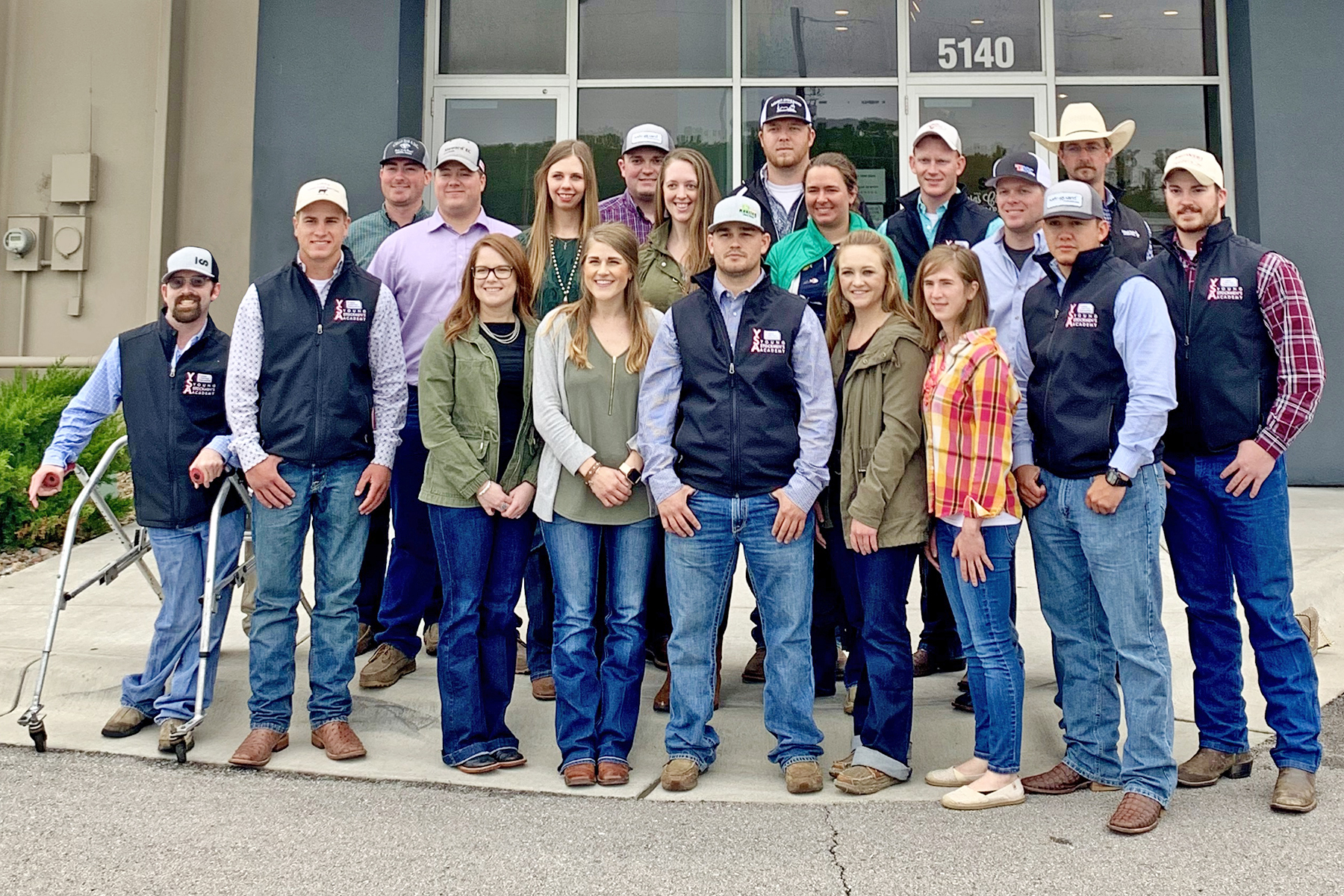

TOPEKA – Beef producers from across the state participating in this year’s Kansas Livestock Association (KLA) Young Stockmen’s Academy (YSA) gathered in the Kansas City area May 6-8. The class of 20 spent three days learning more about agribusiness and how beef is marketed to consumers.
Merck Animal Health, the exclusive sponsor of the YSA program, hosted the group at its office in DeSoto. Merck staff gave attendees an overview of the animal health industry, provided a tour of their research facilities and led a discussion on how to connect with others based on various personality types to create strong and effective relationships.
To gain a better understanding of the link between the processing plant and the consumer’s plate, the group toured Kansas City Steak Company and SYSCO. Both companies distribute high-end beef cuts to restaurants across the U.S. Kansas City Steak Company also has a mail-order business. The class visited Bichelmeyer Meats and Whole Foods Market to get a firsthand look at how beef is marketed in the meatcase. The Bichelmeyer family, which are KLA members, has been providing hand-cut meat to consumers for more than 70 years.
While distributing top sirloin samples at two Hen House grocery store locations, YSA members had the chance to visit with consumers about the beef they produce. The young ranchers answered questions about proper cooking methods and how cattle are raised.
In addition, the class visited the Valley Oaks feedlot and processing facility. The cattle are housed under one roof and are kept cool with the help of unique engineering and the use of big fans. Valley Oaks also has a registered Angus cowherd and a commercial cattle operation.
Members of the 2019 YSA class are Bryce Barnett, Muscotah, Hannah Brass, Medicine Lodge; Carl Clawson, Ulysses; Ashley Fitzsimmons, Pratt; Heather Gibson, Garden City; Grace Hammer, Sharon Springs; Jamie Holeman, Bronson; Taylor Hughes, Pratt; Clayton Jarnagin, Protection; Reed Koop, Abilene; Clinton Laflin, Russell; Socorro Martinez, Liberal; Garrett McKinney, Walton; Michaela Peterson, Dodge City; Cami Roth, Sterling; Dalton Rutledge, Plains; Jessalyn Strahm, Sabetha; Thomas Thayer, LaCygne; Patrick Turner, Ingalls; and Evan Woodbury, Quenemo.
The class will meet again in September to tour beef and dairy operations across the state. More information about YSA can be found at www.kla.org.
Post Rock Extension wheat plot tours will be this week

The Post Rock Extension District of K-State Research and Extension will host their annual Wheat Plot Tour on Wednesday, according to District Crop Production Agent Sandra Wick.
The wheat tour day starts at 10 a.m. in Smith County, at the plot, followed by lunch sponsored by Farmers National Bank at Trinity Ag, LLC in Athol. If it is raining, the group will meet at Trinity Ag, LLC in Athol at 10 a.m. he Smith County Wheat Plot, with cooperator Mark Kuhlmann, has 26 variety trials along with two blends and a starter seed treatment fertility study. It is located west of Smith Center about 6 miles right on Kansas 36 on the north side of the highway.
The day will end with a stop in Mitchell County at 4:30 p.m. at the KSU replicated wheat plot with cooperator Marty Fletchall and is located south of Beloit on Kansas 14 to S Road, then 7 miles west to 230 Road, then south 1 mile on the east side of the road.
The plot tour will be followed by supper at approximately 5:45 p.m., and will be held at the Marty Fletchall house. If it is raining, the group will meet at Marty Fletchall’s house, at 4:30 p.m., located at 2227 S Road south of Beloit.
Each of the stops will feature K-State Research and Extension agronomists discussing the 2019 wheat crop. The complimentary BBQ evening meal is provided by local Agri-business sponsors. The tours provide the opportunity to visit one-on-one with KSU agronomists. Mark your calendar and attend any of the stops on the Post Rock Extension District Wheat Plot tour.
Contact any Post Rock District Office in Beloit, Lincoln, Mankato, Osborne or Smith Center for a copy of the flyer or go to the website at www.postrock.ksu.edu.
KDHE names State Oral Health Officer
 KDHE
KDHE
TOPEKA – The Kansas Department of Health and Environment (KDHE) announces that Dayna Brinckman, DDS, CHCEF, has been named as the State Oral Health Officer. This position had previously been vacant.
“We are excited to welcome Dayna to our agency. She brings a wealth of knowledge and outreach experience which will benefit our state greatly,” said Lee Norman, KDHE Secretary.
Brinckman received her Doctor of Dental Surgery degree the from University of Missouri, School of Dentistry, and her bachelor’s degree from the University of Kansas.
Brinckman previously served as the Chief Dental Officer for the Health Partnership Clinic in Olathe and as an Outreach Dentist for ReachOut Healthcare America in Kansas City, Kan.
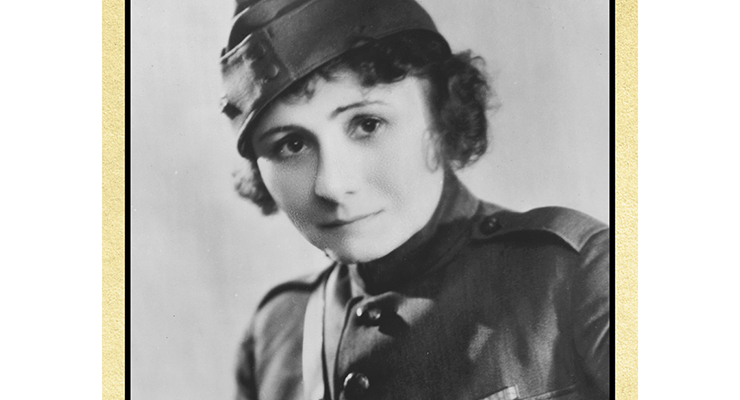
First female correspondent accredited by U. S. War Department was from Marshall County

By CAITLIN O’TOOLE
Numerous historical figures come to mind when considering the continuous movement towards gender equality in the United States.
Susan B. Anthony and Elizabeth Cady Stanton fought for women’s suffrage. Amelia Earhart became the first woman to fly across the Atlantic Ocean. Harriet Tubman led more than 300 slaves to their freedom through the Underground Railroad. These women not only left a permanent and distinct mark on history, but inspired future women to challenge societal expectations and reach their full potential.
In the field of journalism, Nellie Bly is still a renowned historical figure known for her undercover time in a mental institution and her writings on her experience. While she remains one of the United States’ most famous journalists, her work also inspired a young Kansas native to become the first woman accredited as a war correspondent.
Henrietta Eleanor Goodnough Deuell was born December 30, 1889 in Bennington, Kansas, and grew up in Marysville. She began to go by ‘Peggy Hull’ after she wed her first husband, George Hull in 1910. Peggy was a rambunctious child who had sparse interest in the typical ‘feminine’ activities expected of a young lady at the time. She much preferred the company of the boys in her community.
Although she applied for a reporting job at the Junction City Sentinel at the age of 18, she was offered a typing job on the condition that she would not worry about her fingernails.[1] Peggy excitedly accepted the job and relocated to Junction City knowing she might work her way up to be a reporter. In an attempt to move West, Peggy took a job at the Chronicle-News in Colorado only to move to the Denver Republican shortly after she made the acquaintance of the owner’s brother. This seems to be a theme throughout Peggy Hull’s life. Her charisma and determination were strong tools used to help her career and even get herself out of sticky situations.

Peggy moved to Cleveland, Ohio in 1916 where she attempted to obtain funding to report on the Ohio National Guard in New Mexico. Almost a year prior to the United States officially joining World War I, Peggy witnessed the training of officers at Camp Willis in Columbus, Ohio. It was there that Major Harold Bush, the commander of the artillery camp told Peggy, “A military camp is a matter of war – not friendship – and it’s no place for a woman.”[2] The unique challenges she experienced as a female at the military camp only further motivated Peggy to continue on and tell the world of her adventures.
One of her greatest tests of will came as she convinced a commander to allow her to join 20,000 soldiers on a fifteen-day hike into New Mexico. She later recalled, “I had a terrible time convincing him I could stand the hardships. When I finally gained his consent, I knew my military career depended upon [that] hike.”[3] Despite a myriad of physical and mental obstacles, Peggy powered through by imagining all the “women of [her] profession envying [her] trip”.[4] Impressed by her sheer will and determination, she received a promotion to the rank of first lieutenant.
Once the United States officially entered World War I, Peggy asked to be sent to France as a war correspondent, to which her editor exclaimed, “How perfectly ridiculous!”[5] Peggy was determined and persuaded her editor to sponsor her Paris travels. She was able to get a passport and visa despite the disbelief of those around her. As she was in route, Peggy knew her “whole future was staked on that trip to England”.[6] She received a good deal of attention for the work she was doing, and her columns were incredibly popular.
By 1918, Peggy had set her sights on full accreditation as a war correspondent. Peggy was met with opposition by men who believed a woman would never become accredited. Captain Carl Ruth was flabbergasted when Peggy presented a letter from a past acquaintance, General Peyton C. March, who demanded that Peggy not be denied accreditation due to her gender. She officially became the first woman accredited by the War Department as a war correspondent and headed to Siberia.
Peggy Hull continued to face setbacks during her time as an accredited war correspondent, but nothing could take away from the fact that she was the first woman to be accredited in a male dominated field. She was expected to fail numerous times throughout her career, and through hard work and determination, she changed the game for female journalists. In an article published in the Cleveland Plain Dealer in 1944, Peggy reflected on the unique challenges women often face saying, “Our presence in various fields is bitterly resented by the men we compete with. Overwhelming obstacles are frequently set up to prevent us from working and yet, odd though it may seem, women must live.”[7]
After divorcing her first husband later in life, Peggy married an Englishman in Shanghai, which nearly resulted in the loss of her United States citizenship. She lobbied against this law that targeted women who married non-United States citizens and managed to avoid deportation. A few years later she divorced the Englishman and married her third and final husband, Harvey Deuell, a longtime acquaintance from her early reporting days. She decided to retire from journalism only to return as a war correspondent during World War II. She struggled continuously with alcoholism and died of cancer at the age of 76.
Despite her accolades, the name ‘Peggy Hull’ is practically unknown today. Regardless, her impact on journalism paved the way for future women in the field. She proved to the men throughout her life that she was not one to be underestimated.

Peggy Hull’s picture and a brief description of her accomplishments can be viewed in the Lieutenant Governor’s office in the Kansas Capitol. There hangs a massive 10-panel mural, painted by Hays artist Dennis Schiel, complete with historical events and figures with Kansas origins.
Peggy Hull, born and raised in northern Kansas, paved the way for women in journalism and has forever left her mark on Kansas history. In a letter written in 1937, Peggy expressed her early motivations in the journey to become a war correspondent, writing, “I did not go to war because I liked the excitement or what my colleagues sometimes erroneously refer to as the glamour. I went because I was not a man and could not carry a gun and do something for my country.”[8]
From the rambunctious child who rose above what was expected of her as a young lady, to the first accredited female war correspondent, Peggy was the epitome of a strong woman. Just as Nellie Bly had once inspired a young Peggy Hull, her accomplishments will one day inspire numerous young girls to not allow themselves to be limited by their gender.
Caitlin O’Toole is a 2019 Legislative Intern for Sen. Elaine Bowers, Senate District #36. O’Toole graduated from St. Teresa’s Academy in 2016 and currently is a junior at KU majoring in Political Science and Communication with a History minor. She will be applying to law school next fall.
The Kansas Legislature Internship program is open to any student who is enrolled in a secondary or post-secondary education institution. Interns are required to attend a minimum of 12 days during the legislative session, attend the intern orientation, submit an evaluation of their internship and complete an evaluation of their legislator. One additional requirement is to submit a project assigned by their legislator. This year’s project was a research paper on a Kansan from the Senate District.
Sunny, breezy Memorial Day

Memorial Day Mostly sunny, with a high near 84. Breezy, with a south southwest wind 13 to 20 mph.
Monday Night Partly cloudy, with a low around 61. South wind around 17 mph.
Tuesday Sunny, with a high near 80. Breezy, with a south southwest wind 13 to 20 mph, with gusts as high as 30 mph.
Tuesday NightMostly clear, with a low around 51. Southwest wind 8 to 14 mph becoming west northwest after midnight.
WednesdaySunny, with a high near 69.
Man enters plea deal on charges of defrauding Kansas medical clinic
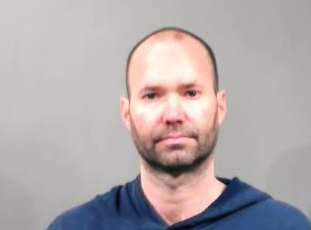
WICHITA, KAN. – A man who defrauded a Kansas non-profit medical clinic through an internet marketing scheme has pleaded guilty to multiple counts of deceptive commercial practice in Sedgwick County District Court, according to a media release from district attorney.

Daniel Fielding Glickman, 37 of Tigard, Oregon, created an online company called FQHC Healthcare LLC that purportedly specialized in finding medical professionals for non-profit medical clinics nationwide.
In January of 2018, Wichita-based GraceMed Health Clinic hired Glickman to find two candidates for medical positions for their multiple locations in Sedgwick County and around the state. GraceMed, 1122 N. Topeka in Wichita, paid Glickman a $10,000 fee –$5,000 for each position that it was seeking to fill.
The investigation showed that the job candidates produced by the Oregon company either did not exist or were real medical professionals who had no idea that their names were being submitted as job candidates in Wichita.
As part of his plea agreement, Glickman pleaded guilty to two counts of Deceptive Commercial Practice and refunded the $10,000 in fees that he had collected from GraceMed. Glickman also was ordered to serve a 30-day jail sentence, which had been completed as of Friday.
Glickman admitted in court documents that he used his business to “knowingly and falsely” promise to produce job candidates for GraceMed in return for the payment of the fee. A website for Glickman’s company was no longer available on the internet as of Friday.
Glickman was arrested on the Kansas charges earlier this year by Oregon authorities. He was booked into the Sedgwick County Jail on April 10, 2019.
The District Attorney encourages businesses and non-profit agencies to fully investigate out-of-state companies before doing business with them. Online and telephone financialscams are one of the top reasons that consumers contact the District Attorney’s office tofile complaints.
The case was handled by the Investigations Division of the District Attorney’s office.
Boil order issued for portions of Russell County

TOPEKA – The Kansas Department of Health and Environment (KDHE) has issued a boil water advisory for a portion of Russell County Rural Water District No. 3 located in Russell, Barton and Rush counties. The Advisory is issued for all Russell RWD No. 3 customers located West of Galatia.
Customers should observe the following precautions until further notice:
If your tap water appears dirty, flush the water lines by letting the water run until it clears.
Boil water for one minute prior to drinking or food preparation or use bottled water.
Dispose of ice cubes and do not use ice from a household automatic icemaker.
Disinfect dishes and other food contact surfaces by immersion for at least one minute in clean tap water that contains one teaspoon of unscented household bleach per gallon of water.
Water used for bathing does not generally need to be boiled. Supervision of children is necessary while bathing so that water is not ingested. Persons with cuts or severe rashes may wish to consult their physicians.
The advisory took effect on May 26, and will remain in effect until the conditions that placed the system at risk of bacterial contamination are resolved. KDHE officials issued the advisory because of a loss of pressure. Failure to maintain adequate pressure may result in a loss of chlorine residuals and bacterial contamination.
Regardless of whether the public water supplier or KDHE announced a boil water advisory, only KDHE can issue the rescind order following testing at a certified laboratory.
Governor asks for federal assistance for Kansas flooding
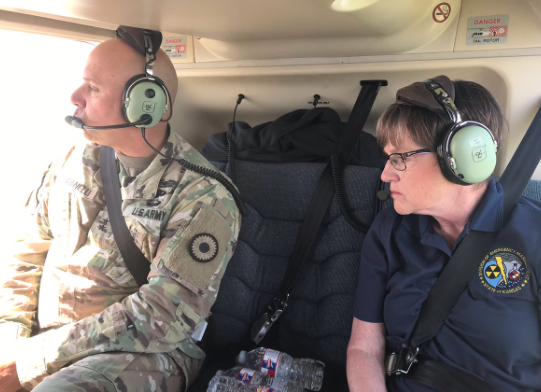
TOPEKA — Governor Laura Kelly has sent a request to President Donald Trump asking for emergency federal assistance to help address the widespread severe storms, tornadoes and flooding that have plagued Kansas in recent days.
Surveying the severe floods impacting KS communities and farmland with @KansasEmergency officials. We’re doing all we can to ensure Kansans are safe and have the resources they need. #kswx #ksleg pic.twitter.com/yhAYTHWgVV
— Governor Laura Kelly (@GovLauraKelly) May 26, 2019
The letter details the events leading up to the request and asks for Direct Federal Assistance for:
(1) Swift water rescue support;
(2) Shelter management support including short-term housing assistance;
(3) Mass care and human services support through commodities;
(4) Technical support and possible staffing for state logistics staging areas;
(5) Possible technical support regarding hazardous materials spills and orphan containers.
The request also anticipates the need for debris removal, which poses an immediate threat to lives, public health, and safety.
“Kansas is experiencing damage from severe weather and historic flooding due to extended heavy rain,” Kelly said. “Today I sent a request to President Donald Trump for emergency federal assistance for response and recovery. We are working with our local, state, and federal partners to ensure Kansans have the resources they need at this challenging time.”
Named in the request are the 46 Kansas counties listed in the state declaration originally signed by Kelly May 9 and later amended. These counties include Allen, Anderson, Barber, Barton, Butler, Chase, Chautauqua, Cherokee, Clark, Clay, Cloud, Coffey, Comanche, Cowley, Crawford, Dickinson, Doniphan, Elk, Franklin, Geary, Greenwood, Harvey, Jefferson, Kingman, Lincoln, Lyon, Marion, McPherson, Meade, Montgomery, Morris, Neosho, Osage, Ottawa, Pawnee, Pottawatomie, Pratt, Reno, Rice, Riley, Rush, Saline, Sumner, Wabaunsee, Wilson, and Woodson.
The request was made under the provisions of Section 401 of the Robert T. Stafford Disaster Relief and Emergency Assistance Act, 42 U.S.C. §§ 5121-5208 (Stafford Act), and implemented by 44 CFR § 206.35. Also today, the Kansas Division of Emergency Management sent out a request through the Emergency Management Assistance Compact for an advanced team to assist with coordinating interstate resource requests, and geospatial information system specialists to assist with development of mapping products.
“In order to proactively expand our resources and ensure the Kansas Division of Emergency Management has everything it needs to assist local partners and keep people safe, we have requested through the Emergency Management Assistance Compact an advanced team to assist our personnel. As we work with impacted communities, I want to ensure that every resource is being brought to bear to assist local emergency personnel so we can keep people safe and limit damage to property.”