We have a brand new updated website! Click here to check it out!

Merrifield singles in run in 10th, lifting Royals over Yanks

KANSAS CITY, Mo. (AP) — Whit Merrifield got a lucky hop on an RBI single in the 10th inning, and the Kansas City Royals beat the New York Yankees 8-7 Sunday despite blowing a six-run lead.

Merrifield hit a sharp, two-out grounder toward third baseman Gio Urshela with speedster Billy Hamilton at second. The ball skipped over the head of Urshela — considered a strong defender at the hot corner — giving Hamilton time to race home. Hamilton had walked against Josh Holder (3-2) and stolen second to set up the play.

Hunter Dozier and Jorge Soler homered on back-to-back pitches in the fifth inning and Martin Maldonado and Ryan O’Hearn also went long as Kansas City hit four home runs in a game for the first time this season. All four had multihit games, with Dozier matching a career high with four hits.

New York’s Aaron Hicks tied it in the ninth with a two-run single off Ian Kennedy as the Yankees scored three runs, all with two outs, to make it 7-7.

Kevin McCarthy (2-1) threw a scoreless 10th to earn the win.

Kansas City once again hit around Domingo Germán, who leads the majors with nine wins. Germán gave up a career-high seven runs on nine hits in five innings.

In 11 innings pitched against Kansas City this season, Germán has given up 10 runs and six homers, taking losses in both games. The 26-year-old has allowed 16 runs and three homers in 49 1/3 innings in his 10 other appearances, nine starts.

Danny Duffy pitched six innings, allowing four runs, one earned, and five hits. A throwing error by shortstop Adalberto Mondesi extended the Yankees’ sixth inning, and Gleyber Torres hit a three-run shot to center two batters later.

After the Yankees took a 1-0 lead in the second, Maldonado belted a three-run homer in the bottom of the inning. O’Hearn added a solo shot in the fourth.

Nestor Cortes Jr. threw four shutout innings in relief of Germán.

TRAINER’S ROOM

Yankees: LHP James Paxton (left knee inflammation) took pitcher’s fielding practice and threw long toss Sunday and is likely to return to the rotation this week. … SS Didi Gregorius was the designated hitter for Class A Tampa, getting two hits, including a homer. … Dellin Betances (right shoulder impingement) will resume throwing bullpens either Monday or Tuesday. … OF Aaron Judge (left oblique) told the YES Network he hopes to begin swinging a bat this week. … RHP Jake Barrett was placed on the 10-day injured list, retroactive to May 23, with right elbow inflammation.

UP NEXT

Royals: Kansas City heads to Chicago for a three-game set with the White Sox. RHP Homer Bailey (4-5) starts Monday for the Royals against RHP Ivan Nova (3-4).

Yankees: New York returns home as the Padres travel to the Bronx. The Yankees haven’t announced a starter for the opener while LHP Matt Strahm (2-3) gets the ball for San Diego.
Kansas has paid 2 of 5 claims for wrongful incarceration

WICHITA, Kan. (AP) — One year after Kansas lawmakers agreed to compensate people who were wrongfully convicted and incarcerated, the state has paid two claims, is negotiating one and is fighting two others.

In February 2018, Lamonte McIntyre spoke to a Kansas Senate committee. He was exonerated after 23 years in prison. Photo by Stephen Koranda/KANSAS NEWS SERVICE

Kansas agreed to pay $1.1 million to Richard Jones of Kansas City, who spent 17 years in prison after being wrongfully convicted of a 2000 robbery that he says was committed by someone who looks just like him. This week the state agreed to pay $1.03 million to Floyd Bledsoe , who spent nearly 16 years behind bars for the rape and murder of a 14-year-old girl — a crime that his brother claimed in a suicide note.

Among the remaining claims is one seeking $1.52 million for Lamonte McIntyre , who spent 23 years in prison for a 1994 double murder in Kansas City, Kansas. A local district attorney later called the case an example of “manifest injustice.” No physical evidence was presented and the case was based on allegedly coerced testimony.

The Associated Press obtained records from the Attorney General’s office on the cases through a request under the Kansas Open Records Act and from court filings.

Jones, Bledsoe and McIntyre testified at the Legislature last year in support of a bill to compensate former inmates who have been wrongfully incarcerated. The law provides for $65,000 for each year a person spent behind bars along with health insurance benefits, financial assistance for higher education and various social services.

When signing the bill last year, then-Gov. Jeff Colyer publicly apologized to McIntyre, Bledsoe and Jones — saying “we will make it right.”

But the cases have taken time to wind through the system.

Floyd Bledsoe was exonerated after spending 16 years in prison. He told lawmakers that financial compensation from the state would help him establish a footing in life that prison denied him.
CREDIT STEPHEN KORANDA / KANSAS NEWS SERVICE

“The law moves slowly, from what I can tell you,” said Cheryl Pilate, one of the attorneys representing McIntyre. She said her dealings with the attorney general’s office have been cordial, adding there is no need to have “an adversarial” hearing in McIntyre’s case.

Sen. Molly Baumgardner, a Republican who helped write the law, said legislators wanted to make sure the process to pay claims was thorough and involved people outside the attorney general’s office.

The state is challenging two claims from former inmates.

Bobby Harper, who spent nearly two years in prison before his 1987 burglary conviction was reversed by the Kansas Supreme Court, is seeking $75,000 and other costs. The attorney general’s office asked a court to reject Harper’s claim because it says Harper cannot prove he’s “actually innocent,” as the compensation law requires. The state argued the statute was not intended to apply to people whose convictions were overturned by insufficient evidence or a legal technically, as in Harper’s case.

Harper’s attorney has not yet responded in court to the state’s filing and could not immediately be reached for comment.

Kansas is also disputing the claim brought by Michael Mata, who as a juvenile in 2011 was incarcerated for less than a year before his conviction for aggravated indecent liberties with a child was overturned on appeal. Mata is seeking $40,246 in compensation.

The attorney general’s office has asked a court to dismiss Mata’s claim, arguing his adjudication as a “juvenile offender” and his relatively short time at a juvenile correctional facility do not satisfy the elements for recovery of damages under the law. Mata’s attorney, Lora Ingels, said in a court filing that the state was “basically saying a juvenile’s life and liberty is not as valuable as an adult’s life and liberty.”

Meanwhile, Jones, — whose wrongful conviction became known as the “doppleganger” case because of his mistaken identity — has new legal problems. Federal prosecutors on Wednesday charged Jones in a new five-count indictment on weapons and drug charges.

Final day of state track and field meet

WICHITA – After weather delays in the first two days of the Kansas high school track and field the last few events were pushed to Sunday and the final day wouldn’t have been complete without one final weather delay. But after a brief lighting delay they were finally able to complete the last few events.

In the girls 2A 4×400 meter relay Ellis finished 6th as a team with a time of 4:18.14. Ness City was 12th.

In the 3A girls 4×4 Phillipsburg finished third with a time of 4:07.17 and TMP was 12th. The TMP boys finished seventh in the boys 4×4 with a time of 3:31.53.

The Osborne girls finished third as a team in class 1A while their boys were the highest area team in 1A in 12th place.

In class 2A the Smith Center boys finished fifth while the Ellis girls tied for fifth, Plainville was seventh.

The TMP girls finished in a tie for 12th. The TMP boys were tied for 13th.

In class 5A the Hays High girls finished 29th and the boys were 24th.

Hays High results
Boys 300 Hurdles (Class 5A) Da’Vontai Robinson – 41.43
Girls 300 Hurdles (Class 5A) 7 – Brooklyn Schaffer – 47.07
Girls 3200 (Class 5A) 15 – Landri Dotts – 13:04.91
Boys High Jump (Class 5A) 11 – Roy Moroni – 5-10.00
Boys Javelin Throw (Class 5A) 3 – Gavin Meyers – 167-01
Boys Pole Vault (Class 5A) 6 – Tucker Veach – 13-00.00
Girls Shot Put (Class 5A) 11 – Logan Harris – 33-08.50
Boys Triple Jump (Class 5A) 15 – Kyler Beckman – 40-07.00


TMP results
Boys 200 Dash (Class 3A) 5 – Ethan Lang 23.08
Boys 400 Dash (Class 3A) 3 – Ethan Lang 50.65
Girls 800 (Class 3A) 12 – Adell Riedel 2:29.14
Boys 1600 (Class 3A) 13 – Sheldon Weber 4:41.29
Boys 3200 (Class 3A) 9 – Sheldon Weber 10:23.49
Boys High Jump (Class 3A) 14 – Jared Mayers 5-08.00
Girls High Jump (Class 3A) 3 – Jenna Romme 5-00.00

4 – Kasside Yost J5-00.00

6 – Makinsey Schlautman J5-00.00

Girls Long Jump (Class 3A) 5 – Paris Wolf 16-01.00
Girls Shot Put (Class 3A) 13 – Sasha Wasinger 34-02.75
Girls Triple Jump (Class 3A) 9 – Abby Rueschhoff 34-08.25
3A Girls 4×400 Meter Relay 12 – 4:14.68
3A Boys 4×400 Meter Relay 7 – 3:31.53
3A Girls 4×800 Meter Relay 7 – 10:16.76
3A Boys 4×800 Meter Relay 4 – 8:20.51


Kansas City Police: Device thrown in parked SUV explodes

KANSAS CITY, Kan. (AP) — Authorities say someone threw an explosive device into an SUV parked outside of a Kansas City, Kansas, apartment complex right before it blew up.

The explosion happened Sunday morning and damaged the Chevrolet TrailBlazer. No one was in the vehicle or was hurt by the blast.

Police Chief Terry Zeigler says his department has requested help from the Bureau of Alcohol, Tobacco, Firearms and Explosives in the investigation.

Kansas zoos receive tiger pelts seized from wildlife traffickers

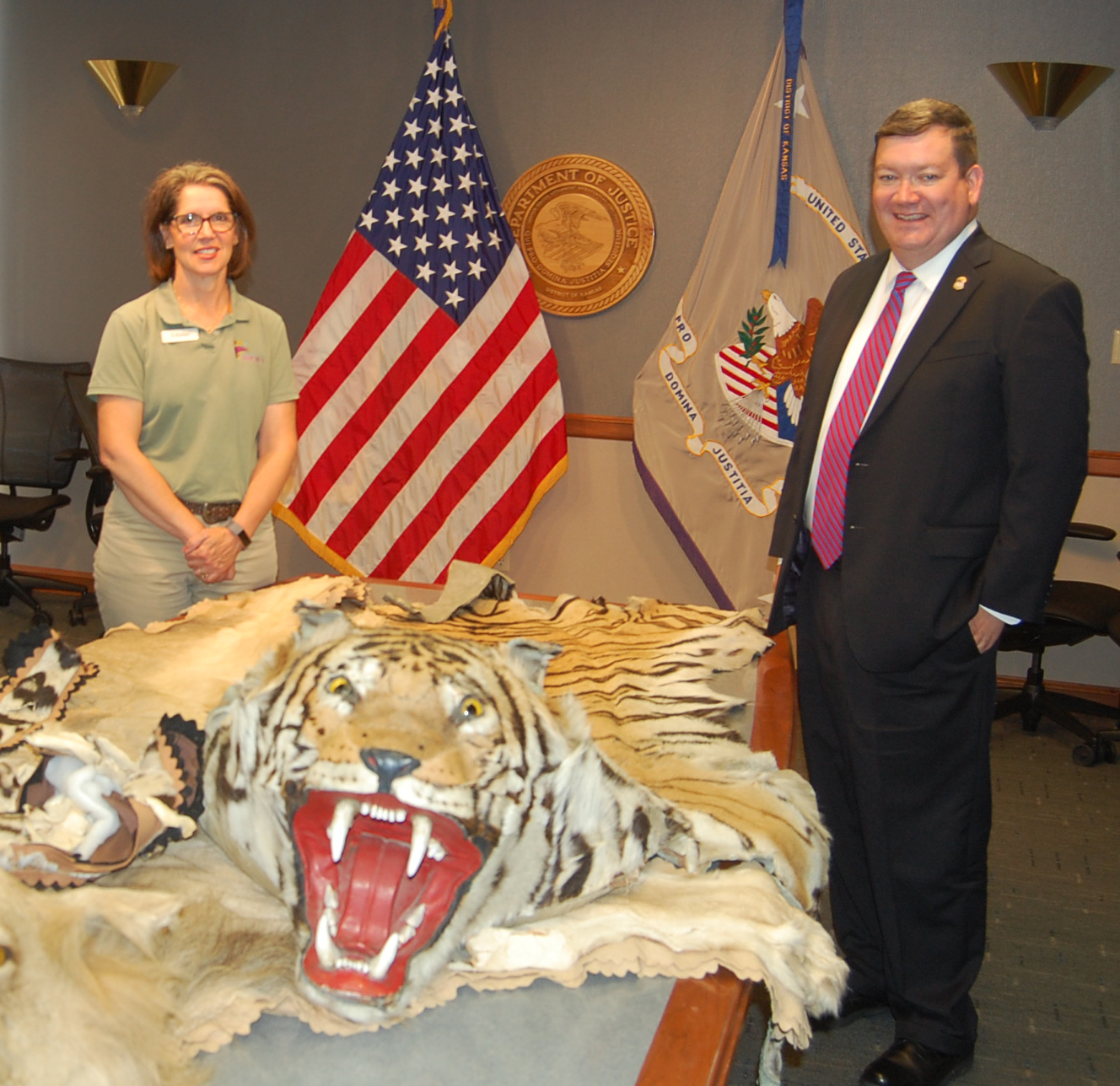
Some young animal lovers at the Topeka Zoo got to touch a tiger pelt Thursday. U.S. Attorney Stephen McAllister is in the center. At the far right is Dennis Dinwiddie, the zoo’s director of education and conservation.

OFFICE OF U.S. ATTORNEY

WICHITA – Zoos in Topeka and Wichita are receiving tiger and lion pelts that federal agents seized from wildlife traffickers, U.S. Attorney Stephen McAllister said Friday.

McAllister said his office donated the pelts to the Topeka Zoo and the Sedgwick County Zoo. The pelts were seized by agents of the U.S. Fish and Wildlife Service who were enforcing federal laws aimed at protecting endangered animals and disrupting the global black market for hides and other parts of protected wildlife.

“Poachers, wildlife smugglers and black market merchants are stealing our last chance to protect and preserve creatures of awesome strength and beauty,” McAllister said. “Once these animals go, they will be gone forever. They are a precious natural resource that the federal government protects, including by criminal prosecution of illegal traffickers.”

The Department of Justice’s Environment and Natural Resources Division (ENRD), together with United States Attorneys’ Offices across the country, is responsible for prosecuting international wildlife trafficking crimes, primarily under the Endangered Species Act (ESA) and the Lacey Act, as well as crimes related to wildlife trafficking, such as smuggling, money laundering, and criminal conspiracy.

Wildlife items forfeited or abandoned to the U.S. Fish and Wildlife Service are stored in a 22,000-square-foot office and warehouse located northeast of Denver that is called the National Wildlife Repository. Many of the items are donated to educational facilities and nonprofit organizations to aid in teaching about endangered species.

McAllister said the tiger pelts came from the wildlife depository.

Schanee Anderson, curator of education, accepted the pelts on behalf of the Sedgwick County Zoo. Note that the large tiger’s head has been distorted by a taxidermist trying to emphasize the animal’s size and ferocity.

Fish and Wildlife Service agents used some of them in a sting operation in Wichita in 2018. A Wichita man pleaded guilty to making a deal to pay $8,000 to have two tiger pelts delivered to him. Agents retrieved the tiger pelts and seized a lion pelt from his home when they arrested him.

McAllister said the Justice Department estimates the international illegal trade in wildlife generates as much as $23 billion annually.

In Kansas in recent years, federal agents have investigated wildlife trafficking cases including deer and elk that had been poached by guides and hunters, eagle feathers that were being unlawfully sold and Asian leopard cats unlawfully imported to Kansas. Federal prosecutors across the country also have pursued cases involving native turtles being exported to other countries.

For more information, see https://www.fws.gov/wildliferepository/ and https://www.justice.gov/enrd/wildlife-trafficking and https://www.fws.gov/eaglerepository/ .

Now That’s Rural: Heather Horton, Block22

Ron Wilson is director of the Huck Boyd National Institute for Rural Development at Kansas State University.

By RON WILSON
Huck Boyd National Institute for Rural Development

Block22. That sounds like part of a play call in football. In this case, Block22 is the name of a redevelopment project which is helping transform a historic downtown in a key southeast Kansas community.

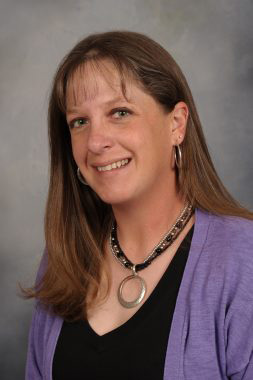
Heather Horton is an entrepreneur and owner of a small business located near the district known as Block22 in Pittsburg, Kansas. Heather grew up in the nearby rural community of Girard, population 2,789 people. Now, that’s rural.

In Girard, her high school sweetheart was Roger Horton whom she would later marry. Heather earned a bachelor’s degree in commercial art and a master’s degree in communications from Pittsburg State, while Roger studied at Fort Scott Community College.

“We would walk around downtown and enjoyed looking at the old buildings,” Heather said. However, as in many communities, the downtown area was suffering. In 2006, Heather co-founded the Pittsburg ArtWalk, a semiannual event which showcases local artists, musicians and more in downtown Pittsburg.

One downtown landmark, the historic Colonial Fox Theatre, was decaying and was likely headed for demolition in 2007. Local citizens, including Heather Horton and many others, rallied to save the old structure. The Colonial Fox Theatre Foundation, of which Heather was a founding member, was formed and is remodeling the building.

In 2017, a partnership developed between the city of Pittsburg, Pittsburg State University, and a private investor named the Vecino Group. The goal was to further improve the downtown while adding student housing. Together, these organizations created this remarkable project known as Block22.
Block22 takes its name from the city’s founding. According to the Pittsburg State website, the city’s forefathers originally platted Pittsburg into 51 blocks. Block number 22 included a historic opera house which is located in the area that was redeveloped.

Block22 now refers to the four historic buildings which are a part of this $18 million redevelopment project. These buildings now offer nearly 100 student residential units for Pittsburg State students, plus more than 16,000 square feet of innovation space. A shuttle service operates between downtown and the Pittsburg State campus.

“I think Block22 is going to be transformational for the community,” said Marty Beezley, chair of Pittsburg’s Economic Development Advisory Committee, as shown in a Pittsburg State video. The area is described as “a unique, mix-use, living-learning community in Downtown Pittsburg that features residential, commercial, dining, and entertainment spaces.”

“Our goal is to create a living, learning community that is an anchor for the growth that’s going to occur throughout this entire city, not just downtown,” said Dr. Shawn Nacarotto, chief strategic officer at Pittsburg State.

“The downtown is your heart,” Heather Horton said. “If your heart is not pumping correctly, the rest of your body is not going to function.” After graduation from Pittsburg State, Heather opened her own business downtown where she and Roger now live.

“When we decided to purchase our building in 2007, the heart of Pittsburg, downtown, was bare,” Heather said. “Fast forward 12 years and it’s more vibrant than ever, with tons of boutiques, two coffee shops, a bright night life and fun festivals. To see the hustle and bustle happening, people in this area walking around, watching the progress go on, that’s pretty cool.”

In 2017, Heather and Roger were recognized with the President’s Award from the Pittsburg Area Young Professionals. That same year the Pittsburg Area Chamber of Commerce honored Heather as a Woman of Distinction for her work to preserve the arts as well as being a successful small business owner, and in 2018, named her business its Small Business of the Year.

For more information about the downtown district, see www.block22psu.com.

Block22. It’s not a football play, but a remarkable downtown redevelopment project in Pittsburg. We salute Heather and Roger Horton, Marty Beezley, Shawn Nacarotto, and all those who support this project for making a difference with an innovative approach to providing student housing and rebuilding downtown. They are part of the building blocks for their community.

And there’s more. What is Heather’s business? We’ll learn about that next week.

Police identify 34-year-old Kan. man as victim in fatal shooting

SHAWNEE COUNTY — Law enforcment authorities are investigating a fatal shooting and have released the name of the victim.

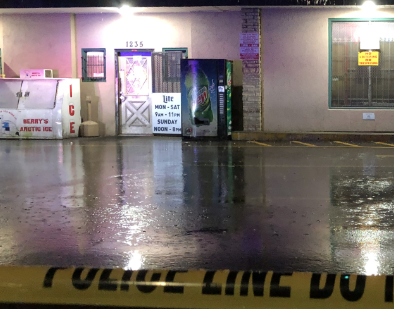
Scene of police investigation into the Saturday night shooting photo courtesy WIBW TV

Just before 9:30p.m. Saturday, police responded to 1235 SW Huntoon in Topeka for a report of a shooting, according to Lt. Aaron Jones.

Bystanders were attempting to treat a single shooting victim identified as 34-year-old Darton A. Fields II of Topeka.

EMS transported Fields to a local hospital where he died, according to Jones.

The Topeka Police Homicide Unit is reviewing all investigative leads and evidence. Jones encouraged anyone with information to contact the Topeka Police.

Hays residents initiated into The Honor Society of Phi Kappa Phi

BATON ROUGE, La. — The following local residents were recently initiated into The Honor Society of Phi Kappa Phi, the nation’s oldest and most selective all-discipline collegiate honor society.

Kathay Johnson of Hays, was initiated at Fort Hays State University

Michael Musgrove of Hays, was initiated at Fort Hays State University

These residents are among approximately 30,000 students, faculty, professional staff and alumni to be initiated into Phi Kappa Phi each year. Membership is by invitation only and requires nomination and approval by a chapter. Only the top 10 percent of seniors and 7.5 percent of juniors are eligible for membership. Graduate students in the top 10 percent of the number of candidates for graduate degrees may also qualify, as do faculty, professional staff and alumni who have achieved scholarly distinction.

Phi Kappa Phi was founded in 1897 under the leadership of undergraduate student Marcus L. Urann who had a desire to create a different kind of honor society: one that recognized excellence in all academic disciplines. Today, the Society has chapters on more than 300 campuses in the United States and the Philippines. Its mission is “To recognize and promote academic excellence in all fields of higher education and to engage the community of scholars in service to others.”

More About Phi Kappa Phi
Since its founding, more than 1.5 million members have been initiated into Phi Kappa Phi. Some of the organization’s notable members include former President Jimmy Carter, NASA astronaut Wendy Lawrence, novelist John Grisham and YouTube co-founder Chad Hurley. Each year, Phi Kappa Phi awards nearly $1 million to outstanding students and members through graduate and dissertation fellowships, undergraduate study abroad grants, funding for post-baccalaureate development, and grants for local, national and international literacy initiatives. For more information about Phi Kappa Phi, visit www.phikappaphi.org.

BOOR: Taking care of lawn, trees in wet weather

Alicia Boor

To say that we have had a wet spring would be an understatement to say the least.

This can be a concern for homeowners and their landscapes. I found a few pieces of advice from Ward Upham, K-State Research and Extension’s horticulture department to share with you this week that address a few concerns you may have. As always, if you have any questions, you can call me at 620-793-1910.

Too Wet to Mow the Lawn

What do you do when the lawn can’t be cut because of constant rain? 
The best thing to do is to set your mower as high as possible and bring 
it down in steps. It is always best never to take more than one third of 
the grass blade off at one time. If more is taken, the plant reacts by 
using stored energy reserves to quickly send up new growth.

This reduces 
the amount of energy available for the plant to deal with stress or 
damage done by insects or disease. However, sometimes it is just not 
possible to keep the “one-third rule.” In such cases, cut as high as 
possible even though it may mean you are cutting off more than one third 
of the blade. Bring the height down gradually by cutting more often and 
at progressively lower heights until you reach the target height.

Trees in flood
Trees differ markedly in their ability to withstand flooding. Some 
trees have mechanisms in place to provide oxygen to the roots of plants 
with water saturated soils and others do not. However, most trees will 
maintain health if flood waters recede in 7 days or less. It also helps 
if water is flowing rather than stagnant. If the roots of sensitive 
trees are flooded for long periods of time, damage will occur including 
leaf drop, iron chlorosis, leaf curl, branch dieback, and in some cases, 
tree death. Another danger of flooding is the deposition of sediment. An 
additional layer of silt 3 inches or more can also restrict oxygen to 
the roots. If possible, remove deep layers of sediment as soon as 
conditions permit.

This is especially important for small or recently 
transplanted trees.
     Try to avoid any additional stress to the trees this growing 
season. Ironically, one of the most important practices is to water 
trees if the weather turns dry. Flooding damages roots and therefore the 
root system is less efficient in making use of available soil water. 
Timely waterings are vital to a tree’s recovery. Also be diligent in 
removing dead or dying branches that may serve as an entry point for 
disease organisms or insect pests.

Alicia Boor is an Agriculture and Natural Resources agent in the Cottonwood District (which includes Barton and Ellis counties) for K-State Research and Extension. You can contact her by e-mail at [email protected] or calling 620-793-1910.

Kansas County Showing What Wind Farms Haven’t Seen Much Before: Local Opposition

Standing near the corner of his property in southeastern Reno County, Nick Egli looked east and pointed to the proposed locations for several 500-feet-tall wind turbines.

Nick Egli stands in front of the grass airstrips he’s worked 10 years to establish.
BRIAN GRIMMETT

Egli is standing on a grass airstrip he’s spent the last 10 years building. He pictures a few more homes, some hangars and, eventually, a residential community for pilots of small planes.

“If there’s turbines there, you’ve completely killed everything I’ve been working on the last 10 years,” he said.

Egli is one of many people in the area fighting against a wind farm proposed by Florida-based NextEra Energy.

It’s the latest of several projects NextEra has already completed in the state. And the company isn’t alone.

Businesses from all over the world have cashed in on Kansas’ abundant wind in the past decade. Most projects went up without much fanfare.

But stiff opposition facing the Reno County project has raised some anxiety in the industry as companies consider its implications for future development.

NextEra developer Spencer Jenkins addresses the Reno County Planning and Zoning Commission
CREDIT BRIAN GRIMMETT


Over the past 4 years, NextEra Energy signed deals with Reno County landowners to plant giant wind turbines on their property. It’s one step in a long process that needs a go-ahead from county officials.

Developers chose this part of Reno County because it has plenty of wind, it’s close to transmission lines that transport the electricity to places that need it, like Wichita, and it had enough willing landowners.

“Farming has not been an especially lucrative income producer,” Randy Jackson told the planning commission during one of several hours-long public hearings. “To continue to own our property, we need to take advantage of every income potential we have.”

But Jackson was among the few to speak in support, and most of those were landowners benefitting from the project.

The majority of speakers voiced their opposition.

“We could have chosen to live anywhere but we chose to live here,” Matt Amos said. “Had I known that this was going to happen, I would have not have chosen to live here.”

One after another, the stream of voices filled the conference hall.

“Why is this wind farm being built so close to concentrated populations of people and wildlife?” Darcy Gray of Andale asked. “I’m not opposed to wind energy, but the location does not make sense.”

Nick Egli also spoke at the hearing. But he ultimately blames his neighbors who signed leases, not county officials.

He recalled what one of his neighbors told him.

“He said, ‘Well, I’m going to make $4,500 a quarter,’” Egli said. “Really? That’s what you’re selling me out for?”

Egli isn’t against renewable energy. He’s actually an electrician and has installed solar panels on the roof of the house he’s building. It will provide him with enough electricity that he won’t need to connect to the grid.

He just wants what he calls sensible setbacks.

A setback is the distance a wind turbine has to stand from something, like a property line, road, or house. Egli thinks that if turbines are placed 3,000 feet away from the property lines of people who didn’t lease their land to NextEra, it would resolve concerns about noise and shadows.

But while he calls it sensible, a 3,000-foot setback from property lines would be the largest in the state. That type of setback in Kansas typically runs about 500 feet.

Setbacks have been a sticking point from the beginning, including for the Reno County planning commission. After failing to reach a consensus, the commission rejected the proposal.

Rorik Peterson has helped develop several wind farms in Kansas for EDP Renewables — most recently a 200-megawatt project in Allen County.

He said this is the first project in the state he’s ever seen rejected by a county planning commission. Previously, if projects got enough landowners to sign leases, it was generally a sign the community was on board.

A decade and a half ago, local officials did stop a wind farm in Waubansee County. It created a controversy that led to a case that went all the way to the Kansas Supreme Court. But the trend has been decididly more pro-wind since.

While the decision in Reno County was unexpected, Peterson doesn’t think it’s a sign developing future wind projects is going to get harder in Kansas.

“It may be new to these portions of the state,” he said, “but we develop as an industry in many communities that are very similar.”

And NextEra’s Reno County project isn’t dead yet. The three-member county commission has the final say and will take up the issue June 11.

Like the landowners who support the project, Reno County stands to gain financially from its approval. Tax revenue from the turbines will generate as much as $39 million over the next 30 years.

But for those still opposed, it’s about more than just what the county will gain. It’s about what they could lose — a quiet home on a lonely prairie.

“I’m going to be able to tell our kids that I did everything I could,” Egli said, “before I had to sell our place I built for generations.”

Brian Grimmett reports on the environment and energy for the Kansas News Service. Follow him on Twitter @briangrimmett 


Cloudy, breezy Sunday, chance of storms late

Today
A 50 percent chance of showers and thunderstorms, mainly after 3pm. Some of the storms could produce heavy rain and frequent lightning. Increasing clouds, with a high near 73. Southeast wind 6 to 14 mph, with gusts as high as 24 mph.
Tonight
Showers and thunderstorms, mainly before 1am. Some of the storms could produce heavy rain and frequent lightning. Low around 61. South southeast wind 14 to 16 mph. Chance of precipitation is 90%. New rainfall amounts between three quarters and one inch possible.
Memorial Day
Scattered showers and thunderstorms before 7am. Mostly sunny, with a high near 84. Breezy, with a south southwest wind 14 to 20 mph. Chance of precipitation is 30%.
Monday Night
Partly cloudy, with a low around 60. South wind around 17 mph.
Tuesday
Sunny, with a high near 78. Southwest wind 13 to 17 mph, with gusts as high as 28 mph.
Tuesday Night
Mostly clear, with a low around 50.
Wednesday
Sunny, with a high near 69.
Wednesday Night
Mostly clear, with a low around 49.
Thursday
Sunny, with a high near 76.

Youngers donate land in memory of son to benefit HHS FFA

Cody Younger

By CRISTINA JANNEY 
Hays Post

Carolyn and Neal Younger have donated 160 acres of farmland southeast of Ellis to the Hays High School FFA program in memory of their son, Cody.

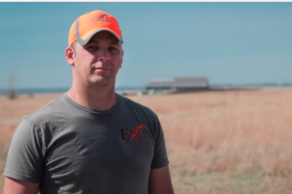
Cody died 10 years ago in a tragic vehicle accident when he was a student at HHS. Cody was active in FFA, and Neal is also an HHS FFA alumni as is his daughter.

“This way, they can get hands on and get their hands dirty,” Neal said of the FFA students.

The gift was announced May 6 at the HHS Academic Awards night.

The land that has been donated has been in the Younger family since 1901. It was purchased by Neal Younger’s great-great-great grandfather from the Union Pacific Railroad for $1 per acre.

Cody was to have been the next generation to farm the land, and Neal Younger said this is a way for the property to be preserved for agriculture use in the Younger name.

About 30 acres of the property, which is near Vineyard and 150th Avenue, is in cultivation with the remaining acreage in grazing pasture. There are also two metal utility sheds on the property. They are painted in Cody’s favorite colors — red and black. One of the buildings has a message, “In loving memory of Cody Younger.” The Youngers keep the message lit at night.

There is a spring-fed pond on the property. Neal fondly remembered stocking the pond with fish when Cody was only about 3 years old.

“He was right there at the water with me releasing those fish,” Neal said.

Neal estimates the value of the land at $1,800 to $2,000 per acre.

It is the Youngers’ hope the land can eventually be used by FFA students to gain practical farming experience as well as generate an income to support the two $500 scholarships the Youngers established in Cody’s name for FFA students. A scholarship has been awarded to a HHS FFA male and female student every since Cody’s death.

“It will give FFA students a hands-on, eyes-on [experience],” Neal said. “They can either farm it or they can get somebody else to.”

Currently Neal picks up side jobs to help fund the annual FFA scholarship, but he said he and Carolyn wanted to have a means to continue to fund the scholarship after the couple retires.

“It’s overwhelming,” Carolyn said. “I questioned about how we were going to go about doing it, but I am glad we are doing it.

“When things like this happen, good comes out it. It makes us feel good, but it hurts because if he was still alive, this wouldn’t be happening. I am just glad we can do something good out of losing him.”

The Youngers said FFA sponsor Curt Vajnar, HHS Principal Marty Straub and HHS secretary Tammy Stewart have all been very supportive of the family since Cody’s death, and they wanted to make the gift before any of those three staff members at the high school retired.

The Youngers have consistently supported HHS FFA, Vajnar said, donating to the FFA auction in addition to Cody’s scholarship.

“They have been generous to our organization,” Vajnar said.

Vajnar said proceeds from the land could also be used to support HHS students attending leadership conferences and national conventions. The national FFA conference in Washington, D.C., that students can attend every other year costs $800 to $900 per student.

“It will allow kids to do things they have never been allowed to do before,” he said, “due to not being able to afford things. I have kids now who won’t go to things because they don’t want to ask their parents for the money that it takes to go on trips where we go out and eat for a couple of days.”

The details of the gift are still being worked out with the school district’s and the Younger’s attorneys.

Copyright Eagle Radio | FCC Public Files | EEO Public File