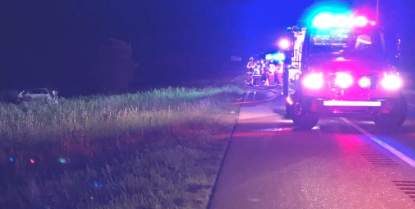
First responders on the scene of the fatal crash early Thursday photo courtesy WIBW TV
SHAWNEE COUNTY — Two people died in an accident just before 3:30a.m. Thursday in Shawnee County.
A Ford Box Truck registered in Missouri and a Pontiac Firebird registered in Tennessee were westbound on Interstate 70 near West Union Road, according to Deputy Shayna Anderson
The vehicles collided in the outside lane of travel sending both vehicles off the road to the north. The Pontiac became fully engulfed in flames with both occupants still inside.
The occupants of the Pontiac were pronounced deceased at the scene. The driver of the Ford was transported to a local hospital where he was evaluated and released.
Dove Fire and AMR assisted at the scene. Names of the victims have not been released.
———
TOPEKA, Kan. (AP) — Two people are dead following a fiery crash near Topeka.
The accident happened around 3:30 a.m. Thursday on Interstate 70 when a car and a box truck collided.
Both vehicles left the roadway and the car caught fire. Officials on the scene said two people in the car died. The truck driver is hospitalized with injuries that are not believed to be life-threatening.
TOPEKA, Kan. (AP) — Four of Kansas’ six major public universities are seeking undergraduate tuition increases, despite a recent increase in state funding for higher education approved by the Legislature.
The proposed increases were unveiled Wednesday at a Kansas Board of Regents meeting, which frustrated some regents, who are under pressure to keep tuition flat after lawmakers approved a funding boost of $33 million for higher education next year, The Wichita Eagle reported. The board will vote on the proposals in June.
“Right now I’m not thrilled about the prospects of trying to convince the Legislature next year to give us more money when I believe they are going to feel like they were ambushed,” Regent Mark Hutton told university leaders.
Gov. Laura Kelly last week urged the board to hold the line on tuition.
“We have got to do something about rising tuition costs. We are pricing kids, families out of our higher education system. So if it’s at all possible, I would like them to address that,” Kelly said.
The University of Kansas and Wichita State University both sought a 1 percent tuition increase for Kansas residents. Emporia State University seeks a 2.5 percent increase and Kansas State requested a 3.1 percent. Pittsburg State University and Fort Hays State University did not request tuition increases.
Kansas Chancellor Douglas Girod said the 1 percent increase was the smallest the university had sought since at least 1983 and Wichita State Interim President Andy Tompkins said that school’s request was the smallest in 30 years.
The requests come as the cost of attending a public university in Kansas continues to rise and tuition becomes a larger funding source than state aid. A credit load of 15 hours at the University of Kansas or Wichita State University now costs about 50 percent more than in 2009. Under the proposed rates, Kansas university students will pay a total of $732 million in tuition next year, while the state will provide $626 million in funding.
University leaders said the institutions are still trying to rebound from reductions in past years. Girod said his university reduced its budget by $20 million this year.
“We’re all pretty good at belt-tightening. We’re kind of running out of belt at this point,” he said.
Kansas State President Richard Myers said his university reduced its operating budget by $37 million over the past five years and expects another $10 million cut in the future, all while enrollment declines.
Regents chairman Dennis Mullin urged regents and university leaders to meet with lawmakers during the next month to explain the need for the increases.
“If you have an increase in your budget and you can’t share and mobilize that message to our key legislators over the next 30 days, I will be shocked if you will get that past this board,” Mullin told university leaders.
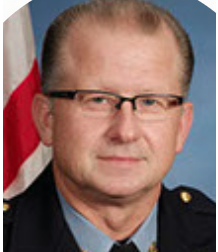
KANSAS CITY, Kan. (AP) — The Kansas Bureau of Investigation has completed its investigation of the police chief in Kansas City, Kansas, and turned over results to the Wyandotte County District Attorney’s office.
A spokeswoman for KBI said Wednesday that the bureau wrapped up the investigation last week. It’s unclear when prosecutors will decide whether to file criminal charges against Terry Zeigler.
The investigation centers on whether Ziegler “double dipped” when he took paid time off work while also charging the county government for work he did on a lake house.
The Unified Government allowed Ziegler to pay little rent on the house on Wyandotte Lake Park if he made repairs on the property. Officials put the lease in writing after a citizen inquired about it.
Gerald Lee Rohleder, age 66, of Omaha, Nebraska passed away Friday, May 10, 2019 at Bergan Mercy Hospital in Omaha.
Jerry was born on July 25, 1952 in Hays, Kansas to Alvin and Anita (Meier) Rohleder. He graduated from St. Joseph’s Military Academy in 1970 and was united in marriage with Marie Pfeifer on August 4th, 1973. After graduating with a Bachelor’s degree from Fort Hays State College in 1974 Jerry spent over 42 years at Mutual of Omaha as a Senior Technical Solutions Architect where he continued to work until his passing.
In addition, he spent over 20 years as a computer science educator at various schools throughout the Omaha area. His loves in life included his family, teaching, sharing his knowledge of technology, laughter, gardening, Clint Eastwood, oatmeal cream pies, Cherry Mash candies, and especially being a Grandfather.
Jerry is survived by his wife, Marie, daughter Jennifer, son-in-law Benjamin Puetz, grandson Cameron (2.5 years), granddaughter Winter (7 months), mother Anita Rohleder (Hays, Kansas), sister Debbie (Rohleder) Hensch and brother-in-law Duane Hensch of Wichita, Kansas. He is proceeded in death by his father Alvin Rohleder.
The new reality of smoking at Kansas high schools is visible in the parking lots, where used-up Juul pods have taken the place of cigarette butts.
VAPING 360 / FLICKR
“You can pick up the discarded Juul cartridges all over the concrete,” Andover High School school resource officer Heath Kintzel said of the popular vaping brand. “It’s everywhere.”Kansas school officials told the state Board of Education on Tuesday that vaping is an increasing epidemic. In 2017, about a third of Kansas high school students tried vaping at least once. Between 2017 and 2018, the number of students vaping increased by 80 percent.
That has educators looking for a solution.
“For me, it was pretty eye-opening in terms of just the amount of vaping that had occurred in a short amount of time,” David Stubblefield, the executive director of school administration for the Blue Valley Unified School District, told the board. “It really exploded exponentially in the last two or three years.”
Vaping — that is, electronic cigarettes — almost always involves nicotine, the same addictive chemical found in traditional cigarettes. It usually involves flavors that would appeal to younger smokers.
Some adults have turned to vaping to quit smoking, though the Food and Drug Administration does not approve e-cigarettes for that use. The Centers for Disease Control acknowledges that while e-cigarettes could help some smokers quit, there isn’t enough research to say how effective they are. There also hasn’t been enough research to fully understand the health consequences associated with vaping, partially because of e-cigarettes’ fast adoption.
Plus, the devices often look like pens and USB drives. Some are built into hoodie strings. They can give off little smoke. This allows them to go unnoticed, especially in schools.
“Unless you physically see a student holding it, using it, blowing the smoke from it, it is really difficult to know when kids are actually using it in a school,” said Andover principal Kristen Kuhlmann.
The main recommendation for combating e-cigarettes: education. The Kansas Department of Health and Environment said students may not know there is nicotine in their e-cigarettes.
The department also recommended lessons for teachers to better identify vaping.
But education officials are bracing themselves for a long campaign against vaping, much like the decades-long process of reducing traditional cigarette use.
“They’ve just burst upon the market,” said Mark Thompson, a consultant on health for the Kansas State Department of Education. “We’re really playing catch-up here.”
The Hays Fire Department will be inspecting and flow testing fire hydrants on Thu., May 16, 2019 in the area of KSU Ag Research Highway 183 Bypass to Bison Road between 240th and 260th Ave., the area from Vine St. to Commerce between 8th St. and Reservation Rd., and the area of Canterbury to Commerce between 8th St. and 13th St. to include the Hays Regional Airport.
This is part of a coordinated effort by the city of Hays to inspect all fire hydrants in the city and flush all water mains annually.
Inspecting fire hydrants ensures that the valves operate properly and that there is no damage or obstructions that will prevent or interfere with the prompt use of fire hydrants in an emergency. Firefighters are also checking the pressure and volume of water mains in each neighborhood for firefighting purposes. The associated flushing of water mains allows chlorine to be distributed throughout the system to eliminate bio-filming in the water mains.
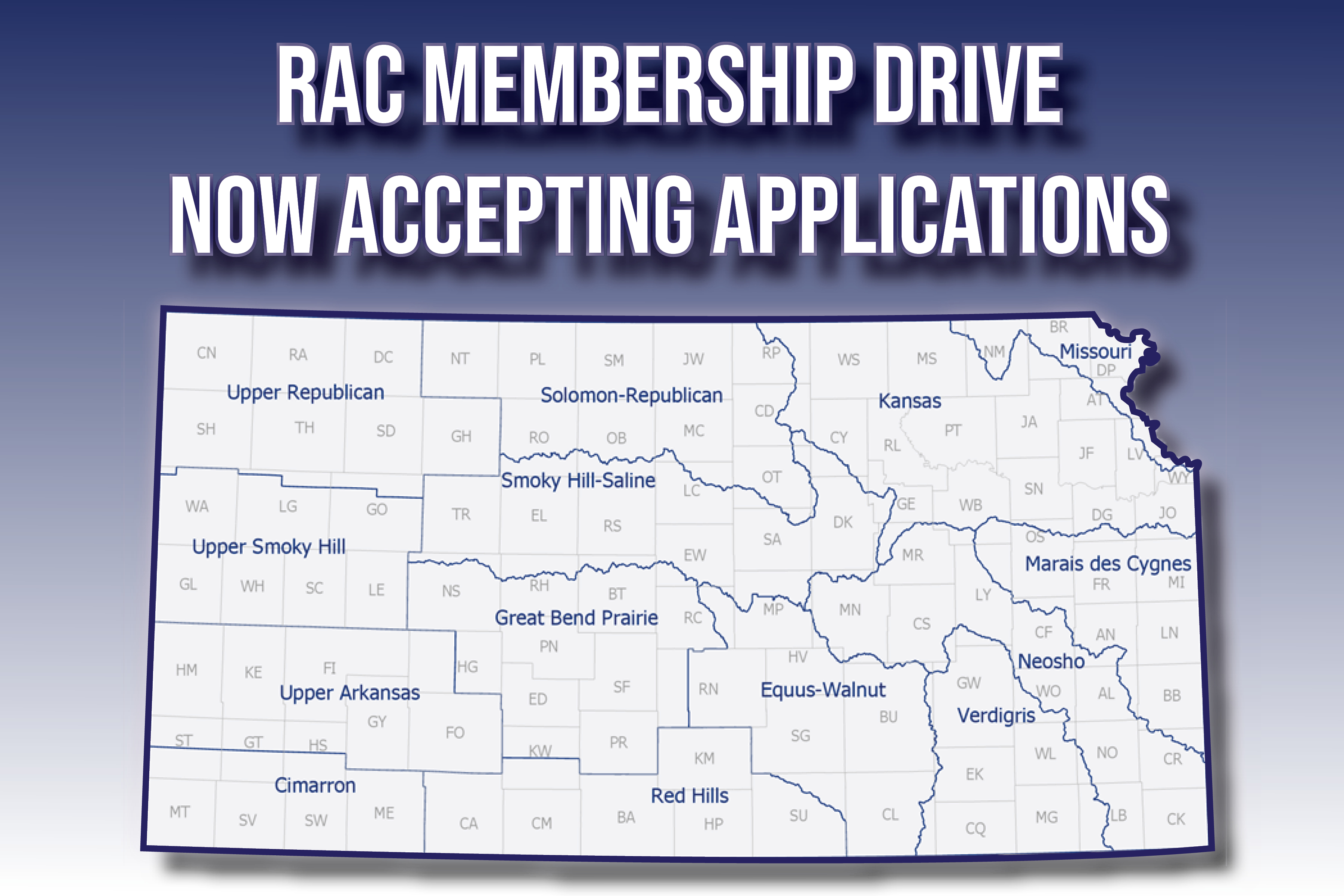
TOPEKA – The Kansas Water Office (KWO) is currently accepting applications from those who would like to participate as a member of one of the 14 Regional Advisory Committees (RACs) which are established by the Kansas Water Authority (KWA). Interested individuals are encouraged to apply soon as the deadline is only two weeks away.
Ellis County is in the Smoky Hill-Saline Regional Advisory Committee.
These committees play a key role in advising the KWA on implementation of each region’s water supply priorities as part of the Kansas Water Vision and the Kansas water planning process as a whole. They help identify and provide input on other emerging water resource related issues and concerns. The committee selection process will ensure all of the water users and interests within the region are represented.
Kansans can have a definite lasting impact on the future of water resources through RAC membership. Interested persons can apply at www.kwo.ks.gov. The application deadline is May 31, 2019.
As the state’s water office, KWO conducts water planning, policy coordination and water marketing as well as facilitates public input throughout the state. The agency prepares the Kansas Water Plan, a plan for water resources development, management and conservation.
Hays Bike Patrol officers with children at a bike safety event presented by North McDonald’s in April. (Courtesy HPD)
By BECKY KISER Hays Post
Bicycles have the same rights – and responsibilities – as motor vehicles on Kansas streets and highways.
“Bicyclists must obey the same traffic safety measures as cars, whose drivers need to yield to bicycles appropriately as necessary,” says Stefan Gildemeister, Hays Master Police Officer. Gildemeister is also program coordinator and bike team leader for the Hays Police Department (HPD) Bicycle Patrol.
May is National Bicycle Safety Month.
HPD encourages bicyclists of all ages to wear a helmet. “It can make such a big difference as we’ve seen in some accidents involving bicyclists,” Gildemeister said. “The majority of head injuries that happen during those types of accidents can be prevented or greatly reduced by wearing a properly fitted helmet.”
The bike you ride should be properly fitted to you and make sure the brakes are working before you ride. “We want to be sure bicyclists can stop and try to avoid those type of accidents.”
It’s a good idea to wear bright or reflective clothing, especially during limited visibility at dawn and dusk.
Night time rides require by state law a white light on the front of the bike as well as a red rear reflector. “We also encourage some type of red steady or flashing light on the back of your bicycle,” Gildemeister added, “making you that more visible to cars.”
Seven bike routes are included in Bike Hays. (Click to enlarge)
Hays has seven designated bike routes and two concrete bike paths throughout town as part of Bike Hays.
There are also bike lanes outlined on many city streets.
“Those are specifically for bicyclists. They’re not meant for pedestrian traffic or runners.”
Nor are the bike lanes meant for drivers.
“There are some areas where the driving lanes have been decreased slightly in order to make room for those bike lanes but there’s still plenty of room for cars to pass by [the bikes] as we normally would for traffic. … Those bike lanes in some areas are set over far enough we still have legal street parking for vehicles. The bike lane would usually be between the street parking and the actual driving lane in the street.
There shouldn’t be any reason for cars to be driving in those bike lanes.
Just as vehicle drivers drive defensively, bicyclists also should ride defensively.
“Stay alert and focused on the road,” stressed Gildemeister. “Try to anticipate what others do, especially those cars around you. The quicker you can notice that potential conflict, the quicker you can try to react to avoid a potential injury or crash.”
Bicyclists must share the road, ride the same direction as vehicle traffic, and obey the same street signs, signals and road markings.
Gildemeister says HPD is seeing more bicyclists wearing headphones while listening to music as well as talking on their phone and steering with one hand.
Although that’s not against the law, HPD discourages it. “We want to make sure their eyes and ears are on the roads and making sure they’re paying attention to the surrounding traffic, limiting potential hazards.”
Bike riding on sidewalks is prohibited in business areas by city ordinance. Intersections are the most common areas where bike accidents occur, according to Gildemeister.
There are currently six bike officers with HPD.
In the next few weeks, Gildemeister says the bike officers will be expanding their normal patrol range and will have brighter emergency lights installed on their bikes.
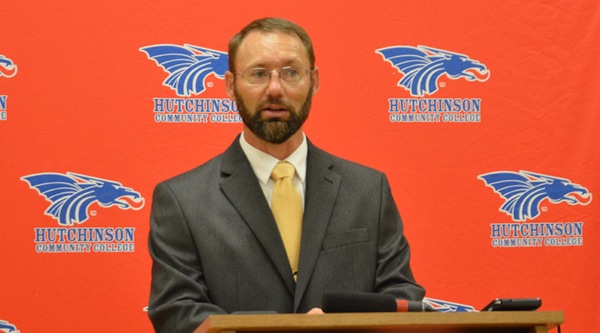
New Blue Dragon head track and field coach Robert Spies speaks to a gathering at his introductory news conference on Monday at the Sports Arena. (Steve Carpenter / Blue Dragon Sports Information)
Hutchinson CC Sports Information
The Hutchinson Community College Athletic Department announced on Monday that Robert Spies will become the new head coach of the Blue Dragon Track and Field program.
Director of Athletics Josh Gooch made the announcement at an introductory news conference on Monday at the Sports Arena.
Spies will officially take the program over July 1. Hall of Fame Blue Dragon head coach Pat Becher announced his retirement earlier this season after 34 seasons. Becher’s official last day is June 30.
Spies becomes just the fifth head coach of the Blue Dragon men’s program and just the third head coach of the women’s program at Hutch CC.
“This is an exciting day for the future of Blue Dragon Track and Field,” Gooch said.
“This is a great time, not just for myself, but my family,” Spies said. “I know that there are very, very, very big shoes to fill. I’ve known Coach Becher for a very long time. I’m going to do my best to keep things going.”
Before Hutchinson, Spies has guided four other collegiate track and field programs and has had success at each stop.
Prior to Hutchinson, Spies was the head coach at McPherson College. Starting at McPherson in 2013, Spies produced 75 NAIA national qualifiers and 33 NAIA All-Americans. He coached one NAIA national champion, 73 conference champions, 92 all-KCAC performers and more than 60 school records fell in his tenure with the Bulldogs.
From 2011 to 2013, Spies was the head coach at Bethany College in Lindsborg. At Bethany, Spies’ teams produced eight NAIA national qualifiers, three All-Americans, 13 conference champions, 58 all-conference performers and 10 school records.
Spies isn’t a stranger to the Jayhawk Conference. From 2007 to 2010, he was the head coach at Fort Scott Community College. While at Fort Scott, Spies mentored three NJCAA All-Americans, nine NJCAA national qualifiers, 36 all-Jayhawk East performers and 34 school records fell in those four seasons.
Spies started coaching at Pittsburg State University as an assistant in 2006 and 2007. With the Gorillas Spies coached eight NCAA All-Americans, one NCAA national runner-up, 10 national qualifiers, six conference champions and 18 all-conference performers and five school records fell.
Spies was named the KCAC Coach of the Year three times (2016, 2017 and 2018). He was also the McPherson College Coach of the Year in 2018.
“One of the things that was appealing to me about Hutch was the continuity … not in just the athletic department but around the campus,” Spies said. “(Gowans Stadium is a nice selling point. When you can bring a kid in and tell them we host nationals here, that’s a really nice selling point. I like to have a stadium.”
While at Pittsburg State, Spies was also the Student Fitness Facility Supervisor. Before that, from 2001 to 2004, Spies was the Strength and Conditioning coach at Virginia Military Institute.
Spies ran collegiately at Fort Hays State University. He was a 4-time NCAA Division II All-American, a 12-time Conference champion in both the Rocky Mountain Athletic Conference and the Mid-America Intercollegiate Athletic Conference. While at Fort Hays State, Spies was ranked 14th in the world in the 60 meters, clocking a time of 6.57 seconds during his senior year. He has also competed at the USA National Championship level.
Spies completed a Bachelor’s degree in childhood development with a minor in recreation from Pittsburg State. He earned a Master’s degree in human health performance and recreation with an emphasis in sport and leisure management.
Robert and his wife, Ermelinda, have two children, Davian and Sofia.
TOPEKA —Governor Laura Kelly has signed a bill that would prevent judges from lowering sentences for child sex offenders if they think the victims were willing participants in the crime.
Soden -photo Leavenworth Co.
“Judges must interpret and apply the law with common sense and an understanding of the real world, especially in child sex crime cases,” Kelly said. “I was deeply troubled when a Kansas judge viewed a child victim as an aggressor when an adult commits a sex crime. I’m pleased to sign this bill eliminating the ability to reduce sentences for sex crimes in these cases,” Kelly stated in a media release.
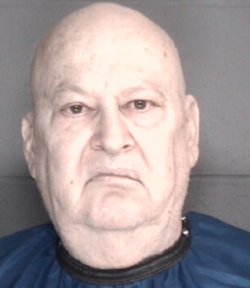
The bill signed this week comes after a Leavenworth County judge in February reduced the sentence for 67-year-old Raymond Soden because he thought the 13- and 14-year-old girls involved in the case were “aggressors.”
The bill eliminates the reason for a downward departure in sentencing for sexually violent crimes when the victim is younger than 14 years and the offender is an adult. It also would make that departure factor unavailable when human trafficking victims are involved regardless of their age.
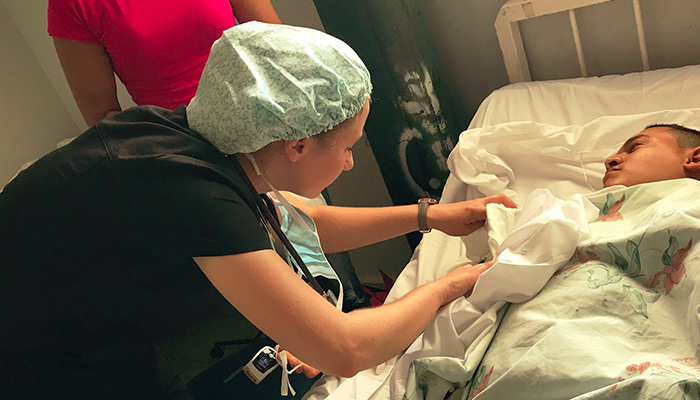
A FHSU nursing student attends to a patient at the hospital in San José de las Matas, Dominican Republic. Ten FHSU nurses will travel to the Dominican in June as part of a Medical Ministry International trip.
By CRISTINA JANNEY Hays Post
Fort Hays State University Nursing Associate Professor Kathleen Ward has been taking FHSU nursing students on overseas summer learning trips for 10 years, but after she took a group to Dominican Republic, she knew that is where she and her students were most needed.
“I needed to be taking these students to a third-world country where they can provide actual nursing care to people who really need it. There are people who are really in need,” Ward said.
A FHSU nursing student fills a prescription at a Dominican pharmacy on a previous Medical Ministry International trip.
Ward and 10 BSN students will be traveling to San José de las Matas, Dominican Republic June 8-22. The students have all taken a one-hour preparatory course for the trip this spring.
The students will be working with Medical Ministry International, a non-profit group that provides medical relief across the globe. Ward became acquainted with the group when one her students moved to the Dominican Republic to work with the group.
Physicians, specialists and dentists from across the United States also volunteer with the program. Ward’s husband is a dentist and has traveled with the nurses in the past, but will be unable to this year.
“That is another thing that is nice,” Ward said. “These people get to see how that interprofessional part of nursing [works]. … These physicians are very open. They are very willing to teach. They want to let the nursing students do whatever they can to get the best experience. It’s a fabulous experience.”
The students will rotate through a variety of duties during their time in the Dominican, including pre- and post-operative care, working in a traveling clinic, working in the pharmacy, providing medication education, and teaching health education and proper hygiene.
The San José de las Matas, Dominican Republic, operating room is only open when Medical Ministry Internal volunteers, which will include FHSU nursing students in June, are on site.
“It is a major need,” Ward said of health care in the Dominican. “Some of them are poor and so they have a larger need. Every year we have numerous people who come and need surgeries. One year we went, and there was this baby who had a cleft lip.”
Many of the procedures would be considered basic health care in the United States, Ward said. The surgical suite in the hospital at San José de las Matas is only open while the mission volunteers are there.
The students happened to be working at the hospital when a patient accidentally cut off his fingers. The clinic also regularly sees patients with major infections who have no other access to medical care.
Education and prevention is important as well, Ward said. The water is unsafe to drink, so the students teach residents how to purify their water. They teach youth how to brush their teeth and women about female hygiene.
“They teach how to prevent sexually transmitted infections, because that is rampant down there,” Ward said.
Nursing students load boxes to buses every day while they are in the Dominican and travel to rural villages to conduct clinics.
In addition to providing life-changing medical services, Ward said the students receive valuable training.
“I think it is important for those students because it give them a greater appreciation of what nursing really can do,” she said. “It gives you a gratification. These people are so appreciative. They are so happy for you to do anything for them. If you give them a Band-Aid, they’re happy, which is totally different than the health care in the United States. …
“It gives you that self-fulling feeling that you are really helping people.”
She said the trips also give students an opportunity to meet and work with people of different cultures.
“They just have a better understanding of how to care for people,” she said. “Even when they go out in their own practice when they graduate and move on, they are going to have a greater appreciation for somebody who comes in and is of a different nationality, who can’t speak our language, because most of these students don’t speak Spanish.”
The San José de las Motas hospital.
The Spanish dialect spoken in the Dominican is unique to the region, and Medical Ministry International uses interpreters.
Meagan Karlin, 22, is graduating this weekend with her BSN. She went on the Dominican trip last summer.
“I learned so much about the therapeutic relationship. I did not speak the language, and we had to find other ways to communicate,” she said. “I see how fortunate and blessed we are. I think we take for granted running water. We have water to run to brush our teeth, but they have no access to clean water.”
The residents in the Dominican have to pay for water and haul it to their homes. They can’t get it out of sink. So they told Karlin they had to use their water sparingly.
“They said, ‘I have to make it as long as I can.’ It was very sad,” Karlin said.
She said working in pre- and post-op had a substantial effect on her.
Rural Dominican Republic.
“I think the biggest thing was when I was working in the hospital. A 22-year-old came in for breast reduction. She came by herself,” Karlin said. “She was the same age as me. She was surrounded by strangers. They tried to get a spinal epidural in for surgery three times.
“As they tried to get that in, I tried to gain her trust. We developed a relationship. I told her it was OK. We connected on a whole other level. I was with her through surgery and post-op until she was able to go home.”
Karlin said she learned much about the Dominican culture, which is based heavily on relationships with friends and family, and their religion, which is primarily Catholic.
“I talked to a woman who had lost her son. She had lost so many family members. I told her I was sorry to hear that. She said she was OK with it because he was with the Lord and that she would get there eventually,” Karlin said. “They are so thankful for the small things.”
They are also trying to collect medical supplies for the trip.
This includes over-the-counter basics, such as vitamins and ibuprofen. Prenatal vitamins are especially needed. Medications must be unexpired and unopened.
“They have a lot of problems with back aches because of working in the fields,” Ward said. “They have a lot of GI problems because of their diets. They don’t eat the healthiest, so we have a a lot of stomach problems and things like that.”
Donors can bring items to the FHSU Nursing Department office Stroup Hall 120B on the FHSU campus.
Below is a listed of the needed supplies.
VITAMINS
Adult vitamins with and without iron
Children’s vitamins with and without iron
Infant vitamins
Prenatal vitamins
Folic acid
Vitamin C, D, & E
Magnesium
Calcium
Iron
ANALGESICS
Acetaminophen (Tylenol) 500mg
Children’s Tylenol
Ibuprofen 200mg
Aspirin 81 mg
Naproxen (Aleve) 220mg & 500mg
Midol
Migraine Relief
EYES
Saline eye drops
RESPIRATORY
Dextromethorphan (Vicks Dayquil cough)
Diphenhydramine (Benadryl) 25mg tabs, 12.5mg liquid (no 50mg)
Loratadine (Claritin) 10mg
Liquid Loratadine (Claritin)
Cetirizine (Zyrtec) 5mg, 10mg & liquid
Pseudoephedrine (Sudafed)
Mucinex
Nasal Saline
Nasal decongestant spray
Robafen (Cough Medication)
GASTROINTESTINAL
Fiber
Colace
Gas X
Ranitidine (Zantac)
Omeprazole (Prilosec)
Hemorrhoid treatments
Tums
GYN & UROLOGY
Vaginal suppositories for yeast infection (clotrimazole/miconazole)
John Henry Schroeder, 85, of Colby, died Monday, May 13, 2019, at Citizens Medical Center, Colby. He was born October 21, 1933, in Thomas County, Kansas, to Leon M. and Protus (Ackard) Schroeder.
John graduated from Levant High School with the class of 1951. He married Betty Stickel on May 23, 1952.
John was a lifetime farmer and cattleman, especially loving wheat harvest. He was a member of the Masons, receiving a 50-year pin, a life member of ISIS Shrine and a life member of the Elks and served on several boards. John was a member of the Levant Community Church. He and Betty enjoyed traveling and wintering in Texas.
John was preceded in death by his parents, son John Richard “Rick” Schroeder; brother Robert Schroeder; sister Mary Garrett and niece Gloria Ribordy.
He is survived by his wife Betty, of Colby; daughters, Diana (John) Presley, Dodge City, Kansas, and Debra (Bob) Aday, Waxahachie, Texas; sister Lois Anne Frodin, Goodland, Kansas; six grandchildren, Jeremy (Janie) Presley, Courtney (Matt) Howard, Ashley (Brock) Seidl, Benjamin Schroeder, Nicolas (Kelly) Schroeder and Von Aday and 11 great-grandchildren.
Cremation was chosen. The family will receive friends from 5-7 p.m. Friday, May 24, 2019 at Baalmann Mortuary, Colby. A memorial service will take place at 2 p.m. Saturday, May 25, 2019, at the Colby Methodist Church.
In lieu of flowers, memorials are suggested to the Shriners Hospital for Children or the Levant Community Church, in care of Baalmann Mortuary, PO Box 391, Colby, KS 67701. For condolences or information, visit www.baalmannmortuary.com