KANSAS CITY, Mo. (AP) — Police are investing a shooting in Kansas City’s historic Jazz District that left one man dead and another man seriously injured.
Police in Kansas City, Missouri, sat the shootings happened just before 2 a.m. Sunday in the city’s historic 18th and Vine district.
The Kansas City Star reports that when officers arrived several witnesses pointed them toward a dead man in a vehicle. A short time later, the second victim arrived at a hospital with gunshot wounds.
Police believe both men were shot in the Jazz District. The victims’ names were not immediately released.
MANHATTAN, Kan. (AP) — A software company owner in northeastern Kansas has decided to open an exhibit to showcase his car collection to the public.
CivicPlus owner Ward Morgan and his wife, Brenda, have spent the past 18 months purchasing some of the vehicles that will be featured in the Midwest Dream Car Collection museum in Manhattan. Morgan plans to open the exhibit this spring.
“We’ve got about 60 cars,” Morgan said. “They’re somewhere between automotive icons and dream cars.”
Some of the vehicles include a 2014 Lamborghini Aventador, a 1961 Morgan Plus 4 Drophead Coupe and a 2019 Chevrolet Corvette.
Morgan purchased a 54,000-square-foot space property to house the cars last year. The space will also have a self-service bar, a mechanic shop and event rooms. Visitors will be able to put money on a prepaid card to purchase beer and wine while relaxing in the recreation room, Morgan said.
Morgan hopes to tell the history of each car in his exhibit, he said.
“The proceeds are all going to the museum for preservation and display of the cars,” Morgan said. “To share automotive history and also the history of automotives with people, that’s our mission.”
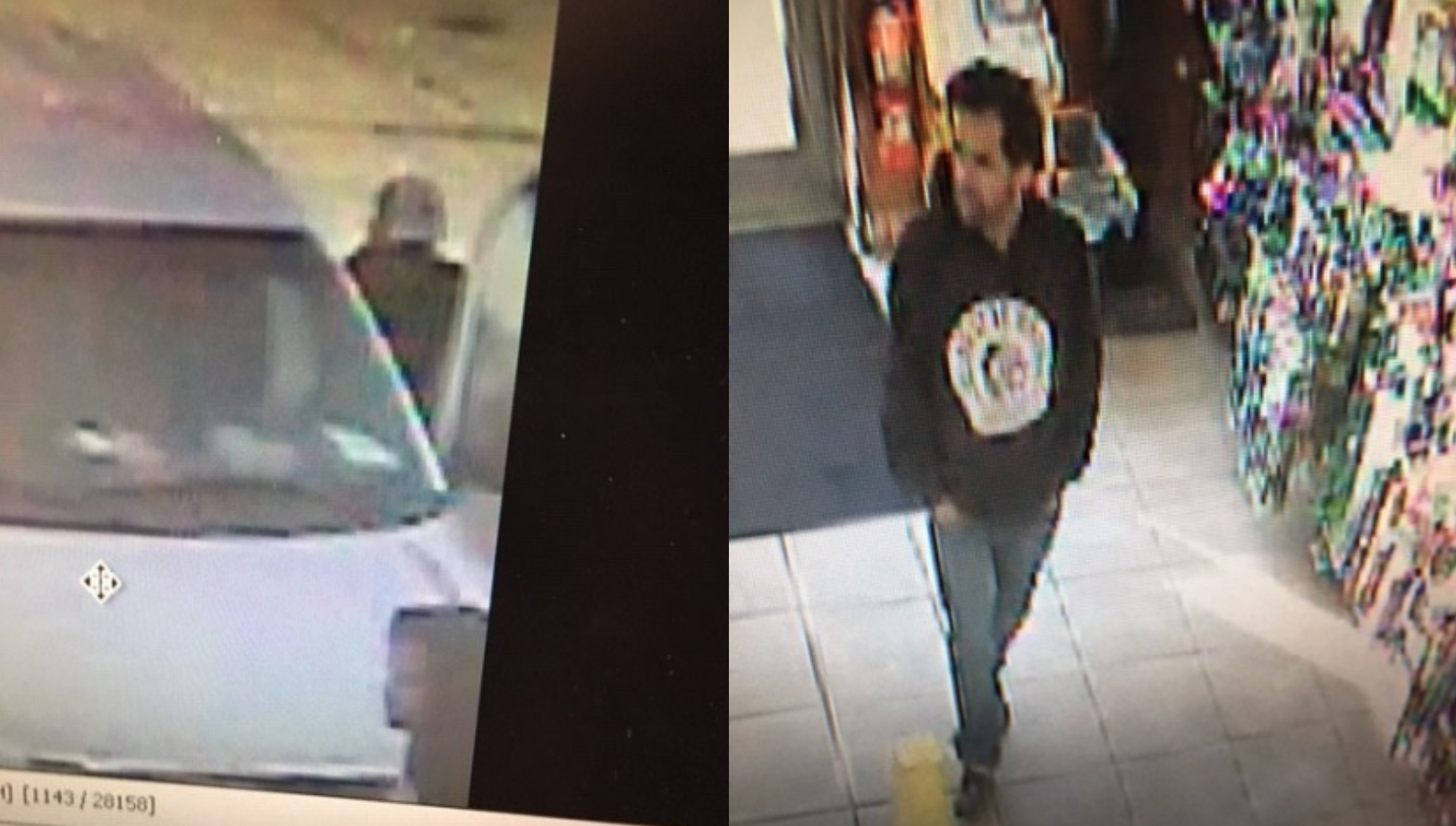
Wanted sexual assault suspect, Tre M. Carrasco was observed getting into the below silver pickup at 10:08 a.m. Sunday at a Colby gas station. The pickup was observed leaving the truck stop heading south toward Interstate 70.
The photograph is of Tre Carrasco at the gas station and he was wearing a hoodie that says “HUSTLE” on the front of it.
Carrasco is to be considered armed and dangerous. If anyone has information on the whereabouts of Tre Carrasco please contact the Hays Police Department at (785) 625-1011. Carrasco is innocent until proven guilty in a court of law.
At 5:42 a.m. Sunday, the Hays Police Department received a report that a female had been sexually assaulted in the 400 block of west 7th Street in Hays, according to a media release.
The suspect has been identified as 23-year-old Tre Miekale Carrasco. He is described as a light skinned black male who is 5-foot-8 tall, weighs 173 pounds, has brown eyes, and black curly hair that is in a short afro. Carrasco may have facial hair and be wearing a red shirt.
Carrasco should be considered armed and dangerous.
Carrasco reportedly stole a 2011 four-door navy blue Chevy Malibu with tinted windows from the scene which has since been located.
Carrasco has three previous convictions that include aggravated sexual battery and aggravated battery, according to the Kansas Department of Corrections.
If anyone has information on the whereabouts of Tre Carrasco, contact the Hays Police Department at (785) 625-1011.
Fort Hays State University Science Café presents “Bats: Rock Stars of the Night” Monday, February 4 at 7:00 p.m. in The Venue at Thirsty’s, 2704 Vine St., Hays.
Join us for a batty evening to learn about these mysterious creatures of the night! Come learn some of the crazy, cool things bats do and how they are ecologically and economically important. Free and open to the public.
Presenter: Dr. Amanda M. Adams, Department of Biological Sciences, FHSU
Sponsored by Science and Mathematics Education Institute
KANSAS CITY– Two Kansas City brothers and a Sugar Creek, Missouri woman have been sentenced in federal court for their roles in a conspiracy to commit a series of armed robberies by luring their victims with online advertisements and ambushing them.
Dylan J. Houston, 22, his brother, Andrew J. Houston, 29, and Nicole Waguespack, also known as Nicole Covey, 36, were sentenced in separate appearances before U.S. District Judge Greg Kays on Thursday, Jan. 31, 2019.
Dylan Houston was sentenced to 12 years in federal prison without parole. Andrew Houston was sentenced to seven years and eight months in federal prison without parole. Waguespack was sentenced to four years and nine months in federal prison without parole. They are among 10 defendants who have been sentenced in this case. Two defendants have pleaded guilty and await sentencing.
Co-conspirators posted ads on several websites in order to entice customers to meet in person at area hotels, residences and apartments in Kansas City, Mo. When the customers arrived, co-conspirators were lying in wait, armed with firearms and weapons that appeared to be firearms. They ambushed and robbed the customers at gunpoint. They often committed more than one robbery in a night.
According to court documents, the proceeds of the robberies was divided up and usually used to pay for narcotics or to pay for a room where the co-conspirators could use narcotics. When confronting the victim, the co-conspirators used verbal threats, pointed real and fake guns at them, physically hit them, and intimidated them. Records obtained from social media services and hotels corroborate statements by participants that only a small percentage of the victims called the police to report their robbery.
Dylan Houston pleaded guilty on July 12, 2018, to his role in the armed robbery conspiracy as well as to three counts of armed robbery. According to court documents, Dylan Houston was one of the enforcers in this violent robbery scheme. Once a victim was led into a room, he surprised the victim and used firearms and threats of physical violence to intimidate him and take electronics and cash. Dylan Houston admitted that he participated in three armed robberies, including one robbery in which the victim, after being forced into his truck at gunpoint, later jumped out of the moving vehicle while driving at highway speeds, in fear for his life. In another robbery, Dylan Houston stole a firearm from a victim that was later used in subsequent robberies.
Andrew Houston pleaded guilty on July 11, 2018, to his role in the armed robbery conspiracy, as well as to three counts of armed robbery. Andrew Houston served as a look-out for multiple robberies, notifying co-defendants about the arrival of victims and watching for law enforcement response. He also shared in the proceeds from the robberies.
Waguespack pleaded guilty on May 3, 2017, to her role in the armed robbery conspiracy as well as to five counts of armed robbery. Waguespack created dozens of online ads designed to lure men to robberies. When victims arrived, she met the victims at the door. As part of the plan, she then excused herself to the restroom while the other co-conspirators surprised and robbed the victims with threats of violence and firearms.
Last week, the Appropriations committee held numerous informational hearings from varying agencies and departments of the Kansas state government.
On Thursday, the interim secretary, David Toland, briefed the committee on the status and direction of the Department of Commerce.
He mainly focused on his personal direction for the department, then discussed both rural and urban development initiatives. He discussed the top successes for the department and the developmental tools used to generate those successes. The tools that he mentioned were: Promoting Employment Across Kansas (PEAK); High Performance Incentive Program (HPIP); Rural Opportunity Zones; and several others.
He did indicate that while many of these tools the department has at its disposal are generally used for urban development, he wants his department to identify development opportunities for the rural parts of our state using some of these tools. He said that coming from a rural area, he understands and empathizes with the demands of keeping jobs, people, and businesses in rural areas. He also discussed the direction of the governor by creating an office of Rural Prosperity and the House in creating a committee where the major focus is for rural revitalization.
Our State of Indebtedness
Last week the Appropriations committee also held a hearing with the Kansas Development Finance Authority on the outstanding debt for the state. It was compelling to see the increase in bonding from 2005 to 2018. Most of the bonding that has been done by the state has grown over the past several years. The increases have been primarily driven by the financing programs of: KPERS, State Capitol Restoration Project, cost share for the National Bio and Agro-Defense Facility, transportation, and our higher education institutions. The KPERS unfunded liability is not factored in the KPERS bonds, instead those funds are factored in for the state’s overall debt picture, as is the Pooled Money Investment Board loan. It was made apparent that we need to address our debt before adding new spending.
What is the “Windfall?”
There has been movement in the Senate, which passed a bill out of the “special” tax committee, addressing what has commonly been called the “windfall.”
The windfall derives from the recent changes in federal tax law where Kansas taxpayers must take the standard deduction on their state income tax return if they take the standard deduction on the federal return.
Some contend that this may eliminate the opportunity for Kansans with itemized deductions below the federal standard deduction, to itemize on their state return. By amending the tax code, or decoupling from the federal tax law, would allow taxpayers to itemize, or take the standard deduction, on the state’s returns. This is expected to be voted on in the Senate this week.
Contact Information
As always, if you have any concerns, feel free to contact me (785) 296-7672, follow on twitter at #waymaster4house, visit www.troywaymaster.com or email me at [email protected]. Also, if you happen to visit the statehouse, please let my office know.
It is a distinct honor to serve as your representative for the 109th Kansas House District and the state of Kansas. Please do not hesitate to contact me with your thoughts, concerns, and questions. I always appreciate hearing from the residents of the 109th House District and others from the state of Kansas, as well.
Troy Waymaster (R-Bunker Hill) is the 109th Dist. state representative and chairman of the House Appropriations committee. The 109th District includes Osborne, Russell, and Smith counties and portions of Barton, Jewell, Lincoln and Rush counties.
Twenty students and faculty from Fort Hays State University’s Peter Werth College of Science, Technology, and Mathematics attended the annual Kansas Idea Network of Biomedical Research Excellence symposium Jan. 19-20 in Overland Park.
The research symposium features talks, poster sessions, and opportunities for growing collaborative work.
While there, FHSU presented 15 posters showcasing research.
Of the 173 posters at the symposium, 11 posters are given awards, and five honorable mention. Two FHSU students received honorable mentions for their work.
Jacob Lutgen, Basehor senior majoring in pre-medical biology, presented his research from Dr. James Balthazor’s, assistant professor of chemistry, lab titled: “RNA Interference of XBox Binding Protein 1 in Acyrthosiphon pisum.”
Skyler Markham, Maple Hill senior majoring in chemistry, presented his research from Dr. Bruce Atwater’s, assistant professor of chemistry, lab: “Synthesis of Unsymmetrical 2,2’-bipyridine Derivatives Via a Phosphorus Extrusion.”
Tenants and landlords of farmland, make plans to attend a workshop on farmland leasing presented by Mykel Taylor, K-State Extension Ag Economist on Tuesday, Feb. 12, beginning with registration at 1 p.m.
The program starts at 1:30 p.m. and concludes at 3 p.m. at the Ag Research Center in Hays.
Topics of discussion will be differences and similarities of various leasing arrangements, active management of landowner-tenant relationships through effective communication, recognition of incentives and the principles of calculating an equitable lease.
There is no cost to attend but RSVP is requested by Monday, Feb. 11, by calling the Cottonwood Extension Office 785-628-9430.
Adult zebra mussels with a quarter for size reference.
KDWPT
EMPORIA – The Kansas Department of Wildlife, Parks and Tourism (KDWPT) reports good news about preventing the spread of aquatic nuisance species. According to Chris Steffen, KDWPT aquatic nuisance species coordinator, no zebra mussel larvae were detected in a 2018 sampling of 110 uninfested lakes in Kansas. Lakes are sampled annually and include city, county, state and federal lakes.
Aquatic nuisance species (ANS) are animals and plants not native to Kansas that can threaten lake and river ecology, harm native or desirable species and interfere with our economy. They often hitchhike in or on boats, flotation devices, and other gear used in the water. Adult zebra mussels can attach to boats or other equipment and their free-floating, microscopic larvae (called veligers) may be present in water from an infested lake or stream. Densities as high as 1,000 veligers per gallon have been recorded in some Kansas waters.
“These results are encouraging, and I hope this success means that lake users in Kansas are more aware of how to prevent the movement of zebra mussels by cleaning, draining, and drying their boats and equipment before recreating at another lake,” said Steffen. “I am particularly excited because remembering to clean, drain and dry prevent the spread of not only zebra mussels, but also other harmful aquatic species that threaten our waters now and in the future. We urge everyone who uses our lakes and rivers to keep up the good work.”
A zebra mussel-encrusted vehicle found submerged in Milford Reservoir.
Zebra mussels are known to occur in 30 lakes in Kansas. They are just one of the non-native aquatic species that threaten our waters and native wildlife. After using any body of water, people must remember to follow regulations and precautions that will prevent their spread:
Clean, drain and dry boats and equipment between uses
Use wild-caught bait only in the lake or pool where it was caught
Do not move live fish from waters infested with zebra mussels or other aquatic nuisance species
Drain livewells and bilges and remove drain plugs from all vessels prior to transport from any Kansas water on a public highway.
For more information about aquatic nuisance species in Kansas, report a possible ANS, or see a list of ANS-designated waters, visit ProtectKSWaters.org.
ABOUT ZEBRA MUSSELS
Zebra mussels are dime-sized mollusks with striped, sharp-edged, two-part shells. They can produce huge populations in a short time and do not require a host fish to reproduce. A large female zebra mussel can produce 1 million eggs, and then fertilized eggs develop into microscopic veligers that are invisible to the naked eye. Veligers drift in the water for at least two weeks before they settle out as young mussels which quickly grow to adult size and reproduce within a few months.
After settling, zebra mussels develop byssal threads that attach their shells to submerged hard surfaces such as rocks, piers, and flooded timber. They also attach to pipes, water intake structures, boat hulls, propellers, and submerged parts of outboard motors. As populations increase, they can clog intake pipes and prevent water treatment and electrical generating plants from drawing water.
In 2012, two Kansas communities, Council Grove and Osage City, experienced temporary water shortages from zebra mussel infestations before water intake structures could be cleaned up. Removing large numbers of zebra mussels to ensure adequate water flow can be labor-intensive and costly.
Zebra mussels are native to the Black and Caspian seas of western Asia and eastern Europe and were spread around the world in the ballast water of cargo ships. They were discovered in Lake St. Clair and the Detroit River in 1988 and quickly spread throughout the Great Lakes and other rivers including the Mississippi, Illinois, Ohio, Tennessee, Arkansas and Hudson.
They were first discovered in Kansas in 2003 at El Dorado Reservoir. Despite public education efforts to alert boaters about the dangers of zebra mussels and how to prevent spreading them, the species continues to show up in new lakes every year. Moving water in boats and bait buckets has been identified as a likely vector.
WASHINGTON (AP) — President Donald Trump says Secretary of State Mike Pompeo is “absolutely not leaving” the Cabinet even as top Republicans make a pitch for him to run for the Senate in Kansas.
Pompeo served four terms in the House and was Trump’s CIA director before moving to the State Department.
The decision by longtime Republican Sen. Pat Roberts to retire has prompted an effort by other GOP senators to recruit Pompeo for 2020. He’s said that push has included a call from Senate Majority Leader Mitch McConnell of Kentucky.
Trump tells CBS’ “Face the Nation” that McConnell may have spoken to Pompeo but “I asked him the question the other day. He says he’s absolutely not leaving. I don’t think he’d do that. And he doesn’t want to be lame duck.”
Dr. David Snow, director of entrepreneurship at Fort Hays State University, was recently elected as the vice president of development for the Small Business Institute, headquartered in Clinton, Miss.
The mission of SBI is to be the premier provider of professional development for those engaged in experiential student team consulting and related entrepreneurship education research and activities. SBI is the link between business, education and community.
SBI has been in operation for over 40 years and is continuing to see growth in membership.
Snow will serve a three year term. He will be formally installed during the annual conference in February.
“I am honored to serve on the board of the SBI,” said Snow. “This organization does tremendous work in entrepreneurship education and assisting small businesses with student consulting. It is my pleasure to contribute to the continuation of their mission.”
A Hays City Commission Retreat is scheduled for February 9-10, 2019 at the Courtyard by Marriott in Salina, Kansas.
The session will begin at 8:00 a.m. on Saturday, February 9 and will end by 5:00 p.m. If needed, the meeting will resume at 8:00 a.m. on Sunday, February 10 and end by noon.
Nicole Nesmith’s voice shakes a little when she recalls the night her child, Phoenix, revealed a painful secret.
“Phoenix got really quiet and was like, ‘I have something to tell you and I’m really sorry I didn’t tell you sooner, but I’ve been cutting for about a month now.’”
Nicole Nesmith shows a picture of her child, Phoenix, from when the two went to see the musical “Rent” in Omaha, Nebraska. Earlier that school year, the Nesmiths had been denied psychiatric residential treatment for Phoenix. MADELINE FOX / KANSAS NEWS SERVICE
Nesmith was working on a social work degree, so she was familiar with self-harming — she just hadn’t expected to deal with it so close to home.
Phoenix’s confession started a cycle familiar to families who have kids with severe mental illness — therapy, crisis hospitalizations, medication, more therapy, new meds when the old ones stopped working well, more hospitalizations.
But in the fall of Phoenix’s freshman year of high school, even that exhausting pattern wasn’t enough.
“There was a two-week period when I really didn’t leave the house at all,” said Phoenix.
When kids are chronically in distress — suicidal, self-harming, harming others, running away repeatedly — there had been a place for them: psychiatric residential treatment facilities.
That’s where the community mental health center treating Phoenix sent the Nesmiths when the care it could offer no longer kept Phoenix stable.
Residential treatment centers take children for long periods of time — weeks, sometimes months — to do more than talk kids down from crisis. They work to get at the root causes of their distress and help patients develop coping mechanisms to better manage the stressful things that set off a crisis.
Cost-cutting measures
In 2011, the state decided Kansas was sending too many kids to residential facilities for too long. At $500 a day or more, it cost too much. The state pushed to divert kids from residential care and bring down the length of their stays.
That loss of business prompted many treatment facilities to close some or all of their beds, resulting in a sharp drop from nearly 800 spots for care to the current 282.
More changes swept through with Kansas’ privatization of Medicaid in 2013. Under KanCare, community mental health centers no longer decided whether kids needed residential treatment, as they had for Phoenix. Instead, that decision passed to the private companies managing Medicaid under KanCare.
In 2015, the Nesmiths sought a third residential stay for Phoenix. After years of struggling with depression, anxiety, and thoughts of suicide, the looming milestone of a 17th birthday, college and a future prompted the Nesmiths to seek another round of longer-term intensive care.
“I was trying to figure out a future I never thought I’d have,” Phoenix said. “And that was just another source of stress.”
But the Nesmiths say Phoenix’s insurance company denied residential treatment. Instead, it pointed Phoenix to group therapy. But the family had already tried that and was no longer eligible.
Two of the state’s Medicaid providers, Sunflower Health Plan and United HealthCare, declined to comment on how they authorize residential stays, deferring comment to the state.
Even as it got harder to access, the need for residential treatment didn’t go away.
In fact, with shorter lengths of stay, kids might get stable but didn’t have the time to develop good coping mechanisms and trauma management to stave off future crises. They’d often end up referred back to a treatment facility when suicidal, aggressive or self-harming tendencies returned. But now, there weren’t enough beds available.
In 2019, that means 150 kids in urgent need of treatment languish on a waitlist. That means foster kids who land at facilities with less intensive care, youth residential centers, show up with behavior more extreme than those residential centers are equipped to handle.
Headline-grabbing problems, but little change
The overflow of kids needing beds in residential treatment facilities has served as an underlying cause of what’s driven headlines over the past year.
Kids who are suicidal — an epidemic so troubling that the state has convened a task force to deal with it — land in a mental health system stretched beyond capacity. And substance abuse by parents or kids can push children into needing intensive inpatient care.
Recommendations this year from a child welfare tax force to fix the overload of the residential treatment system echoed similar results from previous years.
Whether their focus is mental health, children’s care or foster care, panels have found time and again that psychiatric residential treatment facilities don’t have enough space and aren’t given enough time to treat kids properly.
Kids are discharged, but problems persist
The people who run residential treatment facilities say that shortening kids’ length of stay pushes the facilities more into a stabilization role, which they say is supposed to fall to hospitals and crisis centers. Residential facilities often don’t see kids until they’ve had multiple hospital stays, when it becomes clear crisis behavior is becoming a chronic pattern.
“We are a part of changing that child’s trajectory in their life,” said Cheryl Rathbun, who oversees a residential treatment facility run by St. Francis Community Services. “It needs to be more about treatment, and not just about simple stabilization.”
But providers say they’re sometimes pushed to release kids who haven’t yet made progress on the deeper issues driving harmful behavior. That happens, providers say, because insurance companies haven’t seen enough improvement to justify paying for additional treatment.
Dana Schoffelman, who runs a residential facility in Topeka, said she sometimes hears from the insurance providers that kids are at their “baseline” and need to be moved out of her facility because residential care isn’t able to move them past what’s become the kids’ new normal.
“The youth is actually here because that’s their baseline,’’ she said. “You can’t use the definition of what got you into services as the reason to stop services.”
The Kansas Department for Aging and Disability Services doesn’t track how frequently kids cycle back through residential care, but providers and mental health advocates say it’s gotten more common since the lengths of stay got shorter.
A struggling mental health ecosystem
The direct hits to residential treatment facilities — shorter and fewer stays — came amid other changes to mental health services and treatment that weakened the continuum of mental health care.
Cuts to Medicaid reimbursements in 2016, though they were restored the next year, made it even harder for residential facilities to stay open.
And some have pointed to juvenile justice reforms passed in 2016 that divert kids out of the justice system as a driver of more high-needs kids into foster care, and particularly into residential treatment.
Some residential facilities were already taking kids in the juvenile justice system. But Schoffelman, who runs Florence Crittenton in Topeka, said the shortage of beds has made it harder for kids who are particularly aggressive or high-needs to get treatment.
With beds mostly full, the people caring for them are stretched to the limit. That makes it hard for those residential centers to take on kids who need even more supervision while making progress with less severe cases.
Providers also talk repeatedly about the continuum of care. They say residential treatment needs to be part of a system that includes therapeutic care in the community, options for short-term hospitalization, and other mental health services.
When Kansas took the decision-making about who needs residential care out of the hands of community mental health centers, officials at those facilities say, it made it harder for kids to stay on that continuum.
Now that community mental health centers aren’t calling the shots, the first time the centers hear a kid was in residential care might be when they’re expected to put therapy services in place immediately after the child’s discharge.
Then, it’s a scramble to get the right services in place to keep that child from needing to go right back in, said Jessie Kaye, president of Prairie View Inc. mental health center.
Providers’ wish list
The people who run community mental health centers and residential facilities want to see a return to the pre-2011 model: stays approved by the community centers, not insurance providers; and more days in care.
That means more money for residential providers. Cheryl Rathbun told lawmakers in 2017 that it can cost $500 to $700 per night for children to stay in St. Francis’ facility. But providers say that funds the kind of therapy, round-the-clock staffing, and time to work with the kids’ families that means long-term improvement for kids.
Tara Wallace, a social worker and therapist for foster kids who used to work in a residential treatment facility, said short stays put impossible pressure on therapists and social workers who are trying to get as much done as possible to help the kids in their care before their time is up.
And Kyle Kessler, who heads Kansas’ association of community mental health centers, said adding more beds isn’t the only solution. It needs to be balanced with more front-end services, as well, so kids who can be served closer to home, are.
“I don’t think it’s an ‘either-or,’ ” he said. “I think it’s an ‘and.’”
Some have been encouraged by Gov. Laura Kelly’s interest in residential treatment. Kelly was an outspoken critic of long waitlists and shorter stays while she was a state senator. As governor-elect, she sent members of her transition team to meet with the heads of residential facilities to talk solutions.
But Kaye said changes can also be disruptive.
“Established relationships now have been severed,” she said. “It’ll be another year lost because we’ll have to start over with so many things.”