RENO COUNTY— Animals on a highway led to an accident just before 4a.m. Saturday in Reno County.
The sheriff’s department reported there were 8 sheep, 2 donkeys, 2 horses and a cow in the area of Kansas 96 Highway and Mills Road.
While a deputy was attempting to get the animals off the road, they ran south on K96 where a northbound vehicle driven by 55-year-old Treaza Sovine struck a horse.
Sovine complained that her left arm hurt, she had several cuts and was covered with glass, according to the sheriff’s department. EMS treated her at the scene of the crash.
She was wearing a seat belt, according to the sheriff’s department.
KANSAS CITY (AP) — A 39-year-old Kansas City man was sentenced to 91 years in prison for shooting a Missouri State Highway Patrol trooper in the leg during a confrontation at a casino.
Morris photo Clay County
Ronald Morris was sentenced Wednesday for shooting at Harrah’s Casino in North Kansas City. He pleaded guilty to assault on a law enforcement officer, armed criminal action and attempted assault on a law enforcement officer.
Clay County Prosecutor Daniel White said in May 2016, casino security reported a man with a handsaw on the roof of a car. During a confrontation with a highway patrol corporal and another trooper, Morris became combative. At some point, Morris grabbed a pistol and shot the corporal in the leg. When Morris broke away, he was shot by the other trooper.
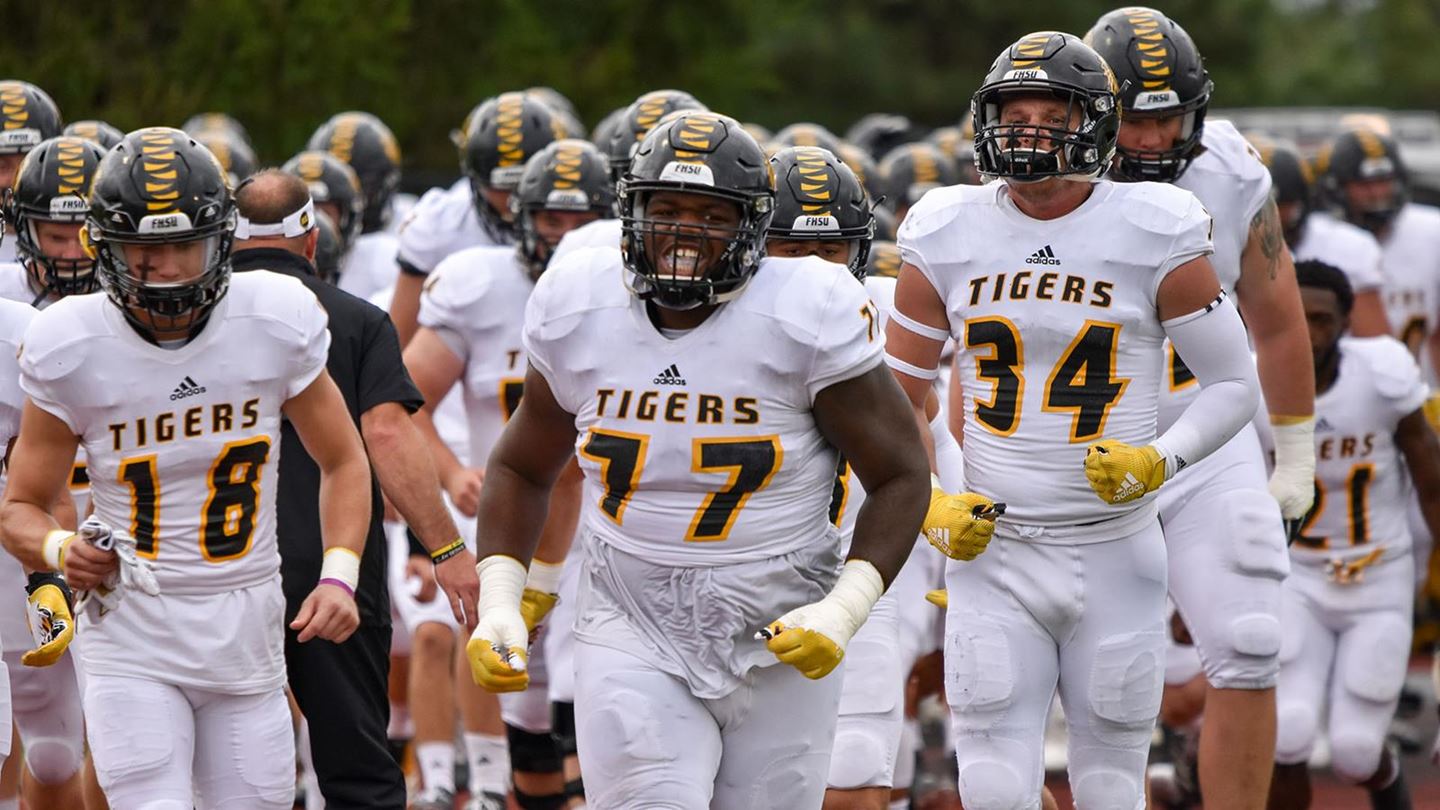
Fort Hays State (4-2. 4-2 MIAA) at #19/21 Pittsburg State (5-1, 5-1 MIAA) Saturday, October 19 – 1 pm Carnie Smith Stadium – Pittsburg, Kan.
Radio: KJLS (103.3-FM) LISTEN LIVE
Fort Hays State Football heads to Pittsburg State on Saturday for another pivotal MIAA matchup. The 4-2 Tigers face the 5-1 Gorillas at 1 pm inside Carnie Smith Stadium. The Gorillas enter the game as the No. 19/21 ranked team in Division II, while the Tigers are on a four-game win streak.
Fort Hays State is coming off a 19-3 Homecoming win over Emporia State in Hays last week. The Tiger defense has been solid of late, holding their last three opponents to seven points or less (3 vs. Missouri Southern, 7 at Central Oklahoma, 3 vs. Emporia State). FHSU is the only squad in the MIAA to hold opponents inside 10 points in more than one game this year. As a result, FHSU now leads the MIAA in scoring defense allowing 18.8 points per game.
Pittsburg State is coming off a 38-17 loss in a battle of nationally ranked teams with Northwest Missouri State at Arrowhead Stadium in Kansas City last week. It was the first loss of the season for the Gorillas as now only two unbeaten teams remain in the MIAA (Northwest Missouri and Central Missouri). Pittsburg State dropped six spots in the AFCA Top 25 Poll after the loss from No. 13 to No. 19.
Fort Hays State won the last three meetings with Pittsburg State. Last year in Hays, FHSU won 50-21. The teams have not met in Pittsburg since 2016, when the Tigers claimed a 54-41 win in a shootout. The Tigers have won the last two meetings of the teams in Pittsburg, claiming the 2014 matchup 7-6. The 2016 meeting was Homecoming for Pittsburg State and FHSU serves as the Homecoming opponent again this year.
Aside from owning the best scoring defense in the MIAA, Fort Hays State ranks 14th in NCAA Division II in passing yards per game. The Tigers are averaging 295.5 yards per game through the air. They have balanced the passing game well during their current win streak, rushing for over 160 yards in all four wins. FHSU produced a season-high 183 yards on the ground last week against Emporia State, while producing its season low in passing yards (209). Quarterback Chance Fuller ranks ninth in NCAA Division II for passing yards per game (285.2) and fifth for passing touchdowns (18).
The Tigers have had a 100-yard rusher in three out of the last four games. Charles Tigner went for 125 yards against Washburn and 111 against Emporia State, while D.J. Hickman reeled off 121 at Central Oklahoma. Harley Hazlett leads the receiving corps with 40 catches for 541 yards. Hazlett ranks 13th in NCAA Division II for receptions per game (6.7) and seventh for receiving touchdowns (8).
On the defensive side of the ball, linebacker Drew Harvey leads the Tigers in tackles with 50. Tanner Hoekman is the team leader in interceptions with three, while ranking second on the team in tackles with 48. Sheldon Schmidt is the team leader in sacks with three.
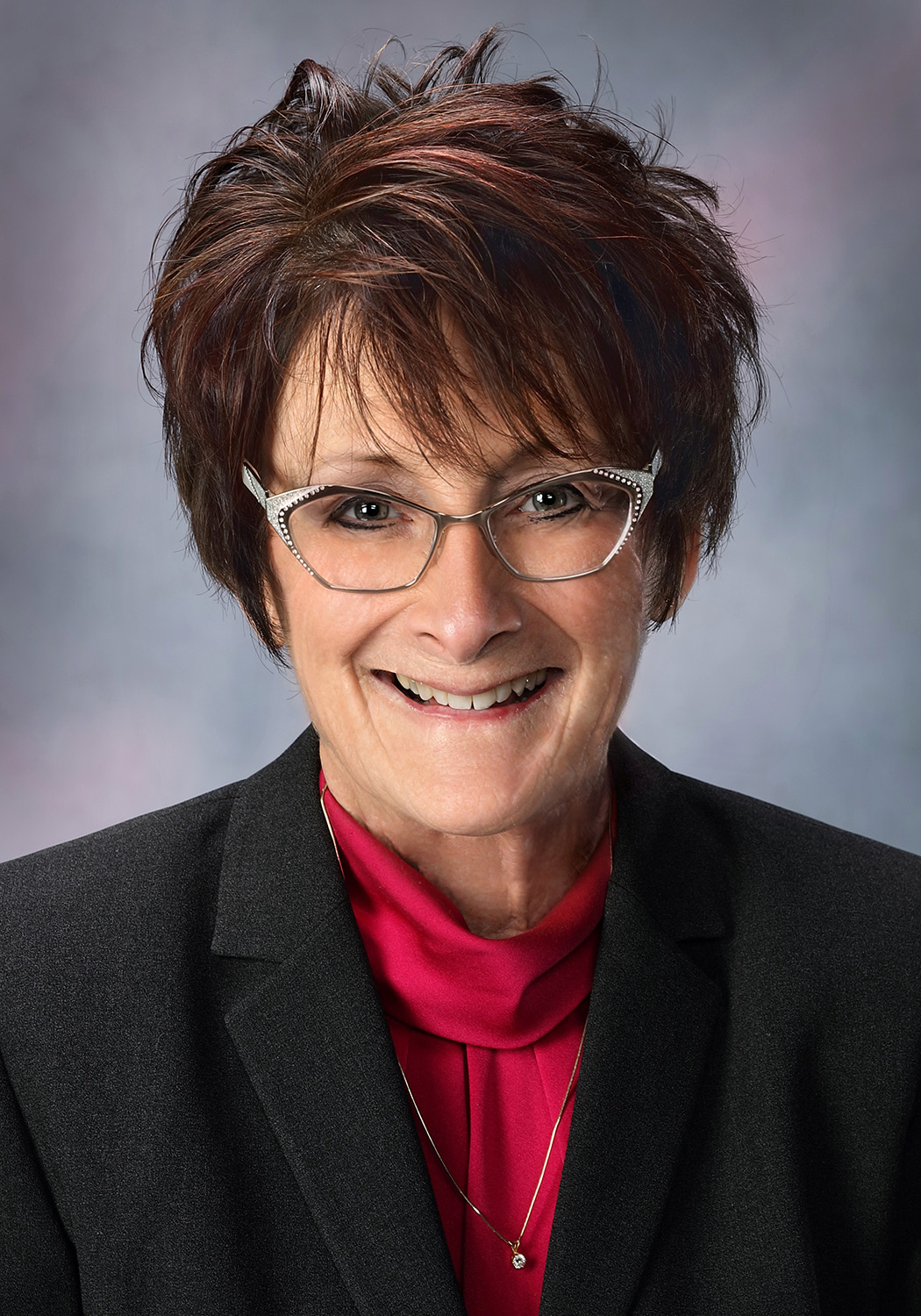
Even though it’s the offseason, Kansas Rep. Rui Xu says being a legislator is a full-time job.
A study says Kansas state lawmakers typically make $21,900 each legislative session.
Over the course of a week, on top of his part-time gig as a freelance marketer, the Democrat spends 20 to 30 hours meeting with constituents in Johnson County, going to events, working on legislation or helping city council candidates run for office.
Xu isn’t paid for that work. Like every other member of the Kansas Legislature, he only draws a salary from the state during the legislative session, from about January to May. This year, his first in office, he got $19,300.
The typical Kansas legislator makes about $21,900 during session, according to a report from the legislature’s audit division. That’s less than what lawmakers make in many other states. Oklahoma and Missouri pay more than $35,000 a year, plus living expenses.
It’s not easy to convince voters that legislators need a pay raise. But some legislators and citizens argue Kansas lawmakers’ pay isn’t enough to compensate for what they do year-round, and it could impact who runs for office and what he or she does after winning a seat.
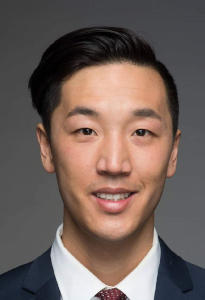
Kansas Rep. Rui Xu.
CREDIT KANSAS HOUSE OF REPRESENTATIVES
“The makeup of our legislature … does not reflect where Kansas is as a whole,” Xu said. “A House of Representatives should be fairly representative of the population.”
How the pay breaks down
Kansas bases lawmaker pay on a daily rate while the legislature is in session: $88.66 a day, plus a per-diem allowance of $149 to cover food and housing. The state report added those numbers and multiplied them by 92 days, the average length of a session since 2000.
In reality, many lawmakers make more or less than the estimated $21,900. Some lawmakers get reimbursed for mileage, some are taxed on their per diems and some pay into their pensions — which are tied to what legislators would make if they worked for the state year-round. Plus, representatives and senators who lead their party or chair committees are paid thousands of dollars extra.
All of those factors affect the baseline salary. Data from the state employee salary website shows that some representatives made less than $10,000, while some senators made more than $40,000 in fiscal year 2018.
Age, wealth gap
Some legislators and observers say low pay discourages middle- and low-income people from running for office and instead favors wealthier, older people who are retired or have jobs that allow them to take off for several months of the year.
According to the National Conference of State Legislatures, 66% of Kansas legislators were baby boomers in 2016, compared to 29% of the state population. Only 22% of Kansas lawmakers were millennials or Gen X, even though those age groups made up 58% of the state.
In 2015, according to NCSL data, 21% of Kansas lawmakers were business owners, 11% were retired, 10% were attorneys and 7% worked in agriculture. Eighty-nine percent of lawmakers that year were white, compared to 85% of all Kansans.
At 30 years old, Xu is one of the younger lawmakers in Topeka. He and his wife are expecting their first child later this month. He’s said been planning around his extra family responsibilities, but the instability of his salary has made that harder.
“I don’t want to get rich doing this, but I don’t want to have to think about, what’s the next couple of years going to look like?” Xu said. “I don’t know what to budget for next year, I honestly don’t.”
He also doesn’t want to complain too much about a job he loves.
“There’s a lot of people out there,” he said, “who work much harder for less.”
A former Republican state representative believes voters would benefit from a wider variety of candidates to choose from.
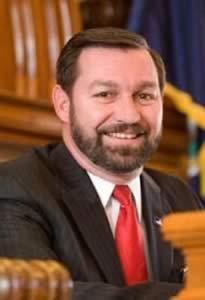
Former Kansas Rep. Virgil Peck.
CREDIT KANSAS HOUSE OF REPRESENTATIVES
“When you get more people, you increase the pool of ability and fresh ideas that are coming into the legislature,” said Virgil Peck, who lives in rural southeast Kansas. “I believe that some legislators would feel a greater responsibility to invest more time.”
In 2014, Peck introduced a bill to increase lawmakers’ pay by about $10,000 a year and reduce the amount that they could put into their pensions. It wasn’t met with much support from his peers.
“Almost nobody was willing to publicly take a stand and say, ‘Yep, increase my pay,’” Peck said.
The bill wasn’t popular with the public, either.
“I had people call me a liar,” Peck said, “when I told them that I only earned $15,000 a year.”
Making a difference
A raise doesn’t necessarily equate to changing the legislature’s economic diversity, according to Duke University political scientist Nicholas Carnes.
In a 2016 study, Carnes and co-author Eric Hansen looked at data about state legislator salaries and the economic class of people in those offices. They found that raising the salary of those politicians didn’t make a significant impact on middle- and lower-income people joining their ranks. Instead, it encouraged more career politicians to run and win.
The biggest obstacle to running, Carnes said, is not the eventual salary, but the cost and time required for a campaign. Wealthier people tend to seek office. Others avoid it because they don’t have the time or money, he said.
“When people run, they make huge personal sacrifices,” Carnes said. “No matter what we pay our legislators, we don’t pay our candidates anything.”
To encourage more economic diversity among political candidates, Carnes suggested that organizations should conduct trainings tailored for working-class people who want to run for office.
“It’s a model that actually has a lot of potential,” he said, “and a lot of groups have used successfully.”
Ultimately, he supports raising legislators’ salaries, but for a different reason: getting paid more would encourage more dedication to the job.
“Research has generally supported the idea that if you pay a politician a higher salary, they’re more likely to behave,” he said. “They show up, they don’t miss votes, they represent their constituents’ interests.”
The national landscape
Increasing pay is a perennial proposal — and an unpopular one — in statehouses, said John Mahoney, a policy specialist at the NCSL.
“It’s always been an issue,” Mahoney said. “I don’t think it’s going to go away anytime soon.”
In 2008, then-Louisiana Gov. Bobby Jindal vetoed a bill that would have doubled the salary of the state’s lawmakers after a public outcry. Last year, New York passed the first raise for its statehouse in 20 years, also drawing criticism.
Other states determine compensation differently than Kansas, Mahoney said. Some, like Maine and Maryland, have compensation commissions that study pay on a regular basis. Others, like Alabama and South Dakota, tie legislative pay to median household income.
“It’s always around,” Mahoney said. “The question is, how do we address it in a healthy way that allows legislators and citizens to have some input?”
Editor’s note: A previous version of this story incorrectly stated the name of the Duke University political scientist. His name is Nicholas Carnes, not John.
Nomin Ujiyediin reports on criminal justice and social welfare for the Kansas News Service. Follow her on Twitter @NominUJ or email nomin (at) kcur (dot) org.
After years of planning, Hays Police Department Honor Guard makes debut during FHSU Homecoming
By JAMES BELL Hays Post
A longtime goal of Hays Police Department Chief Don Scheibler came to fruition last weekend with the debut of the HPD Honor Guard during Fort Hays State University’s Homecoming festivities.
“One of my goals early on was to set up an honor guard,” Scheibler said, who took over the department in 2011.
After years of planning, funding was budgeted in 2018 by the City of Hays.
“When we decided to do this, we needed it funded properly,” Scheibler said. “Both the city manager and the city commission have been very supportive.”
Once funding was secured, Scheibler looked to honor guards across the state that could help train the HPD members and found the Topeka Police Department had exactly what he was looking for.
Members of the Topeka honor guard then came to Hays to work with the Hays members to train them for their duties.
“It prepared them – whether it be a funeral, folding a flag, posting the colors at a banquet, or marching in a parade, whatever it may be,” Scheibler said.
But training will be ongoing.
“A lot of people don’t realize unless they have been in the military or such, the number of hours and investment it takes. It looks simple, it looks sharp, but everything from the timing to the physical toll, these guys have put forth the effort,” said HPD Lt. Tim Greenwood, who oversees the guard.
During continued training, teamwork becomes even more important.
“There is a lot of critiques,” Greenwood said. “The instructor will show you how to do it and then you emulate what the instructor is doing and then you also accept criticism and critique. They help each other, they critique each other, that’s where the teamwork comes in.”
The training includes everything from movement speed to attention to detail, he said and makes the duties look seamless.
“All of those little details that nobody ever notices from the stands or the seats they work on to make sure that you don’t notice it,” Greenwood said. “When it is done right, it looks good and dignified.”
Weekly training will be directed by the honor guard coordinator Officer Mackenzie Smith.
“He’s taken that leadership role to heart and is doing a great job with it,” Scheibler said. “They have been working hard, training hard and now is their opportunity for them to start putting themselves on show.”
While leading parades and posting colors will highlight the department, a significant and important part of the honor guard is much more solemn.
“It runs the full gamut from what you will see this weekend, leading parades and posting the colors at games to awards banquets, posting the colors, and also the solemn duties of laying to rest – whether it be officers in the line of duty or retirees — they have a tremendous sense of honor and dignity, attention to detail and it’s sort of a unique role or being that person that everyone is watching, but representing something bigger than themselves,” Greenwood said before the debut.
“We’re talking about professions where men and women have raised their hand and taken an oath to stand on the wall and protect their country or their community, and they recognize the importance of paying respects to those who have agreed to do that,” Scheibler said.
The guard is made up of volunteers from the department and is another way the department can show its professionalism in a positive way, Schiebler said, but the importance of the honor guard really hit the members as they put their training into practice and put on the uniform.
“In law enforcement, in general, you have to behave and conduct yourselves in a professional manner, and in an ethical manner, and with integrity at all times,” Scheibler said. “But you put that honor guard uniform on, you step up your game.”
“I think it’s a huge showing of respect, and there is a huge sense of service before self in law enforcement,” Greenwood said. “This is just one aspect in which we show respect for those that came before us and those that are yet to come and doing it dignified and professional and courteous manner.”
Experts from Wichita State University will be in Hays next week to discuss the region’s economic future.
The Hays Regional Economic Outlook Conference will be from 11 a.m. to 2 p.m. Thursday, Oct. 24, at the Rose Garden Banquet Hall, 2350 E. Eighth, Hays, KS 67601.
Included in the price of the regional event is a one-year subscription to the CEDBR forecast booklets ($100 Value), which are in-depth publications and reference guides on regional and statewide economic conditions in Kansas:
The Kansas Economic Trends, published in October, includes the statewide economic conditions survey results, Kansas industry news and developments, and indicators for seven regions of the state along with the largest 25 counties.
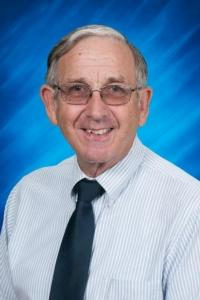
Thomas More Prep-Marian announced this week that Randy Brull has been awarded the John E. Bauman Jr. Chemical Education Midwest Region Award for Excellence in High School Teaching by the American Chemical Society. The award was presented at the 2019 Midwest Regional ACS Meeting Awards Banquet in Wichita on Friday.
A 1962 graduate of St. Francis Seminary, Victoria, Brull’s career in education spans 45 years with teaching stints at Trego Community High School, Marian High School, Hays High School, and Thomas More Prep-Marian. He has been a science educator at TMP-Marian for 36 years and has taught in the areas of physics, chemistry, general science, earth science, biology, and space science. Currently, he teaches advanced placement chemistry and electronics/programming.
“Mr. Randy Brull is about as dedicated an educator that there is. He is truly curious and energetic. His one and driving desire is that his students learn and learn in a lasting and deep way. I’m so proud and happy for Mr. Brull to receive this much deserved recognition,” said TMP-Marian Principal Chad Meitner.
Brull is married to longtime educator Carol (Dinkel) Brull and is father to Christopher of Plainville, Peter of Lawrence, and Jeff of Hays. He enjoys spending time with his grandchildren, gardening, woodworking, music, and helping young people explore the game of chess.
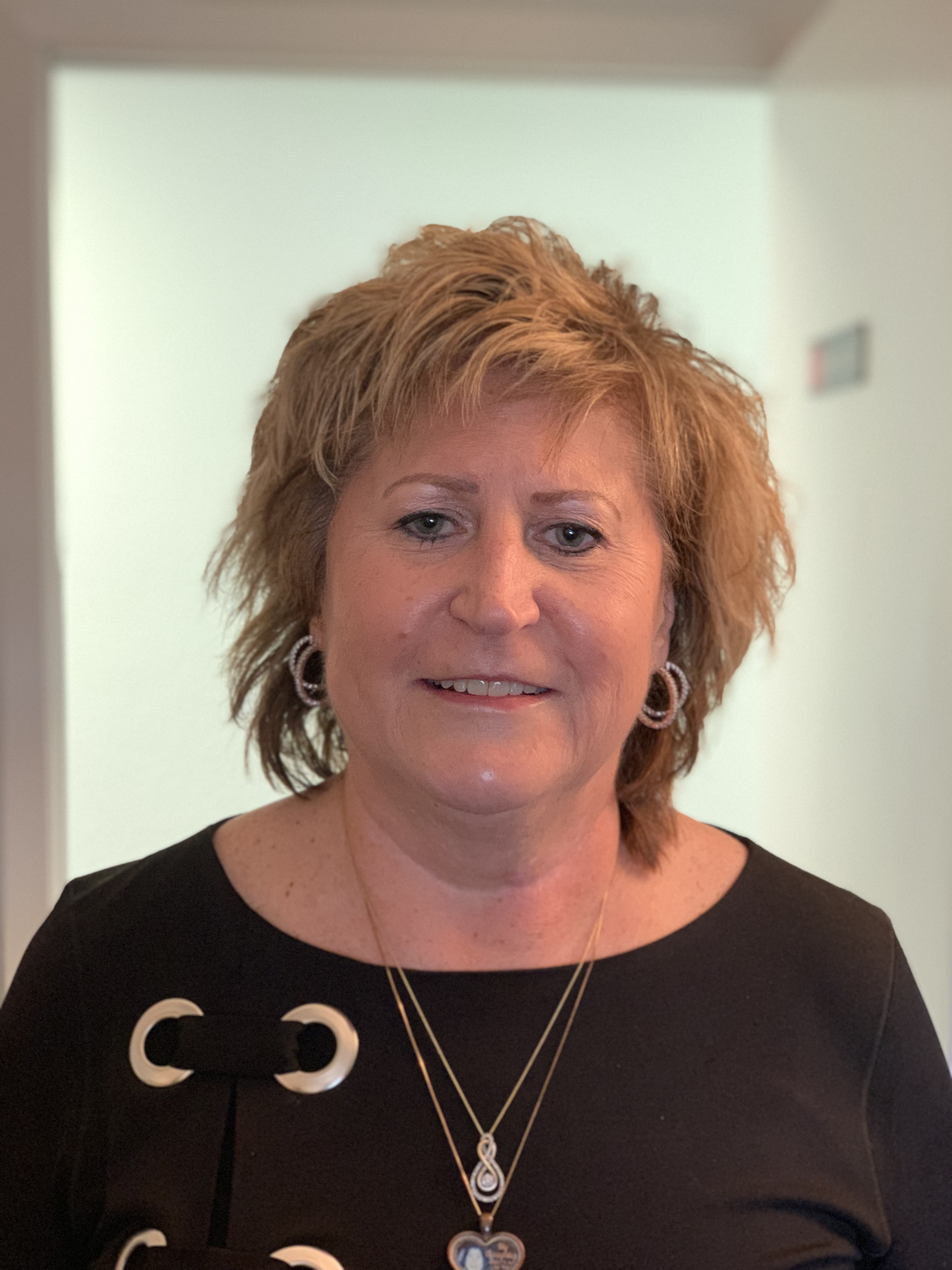
Do you have a student currently attending USD 489 schools? No
Qualifications? I have three children, I have worked in the mental health field for over twenty years, and I want to make a difference for students.
Do you support USD 489 trying for another bond issue? What do you think that bond should include? If you don’t support a bond issue, how do you think the school district should address its infrastructure needs?
I do support the USD 489 bond issue. I believe in years to come we are going to have buildings that are in dire need of repairs and maintenance. I believe we must maintain our current buildings to assure that in the future the needs are not as significant and costly as what they would be if we wait. We have a middle school that is overloaded with students and will soon be in dire need of additional space.The community and USD 489 will be in a position of making decisions regarding what to do regarding additional space for the middle school. If a bond is voted in by the community, there will be additional money for specific needs allocated by the Board to prepare for the future.
What would you do to secure the financial health of the school district?
I have attended the school board meetings and have found the financial officer is very good at keeping the financial books up to date. It is essential to remain within a budget and if money is left over to place that money in a contingency fund for future unexpected expenses. The school board continues to take bids for work that needs to be done, whether it be maintenance or technical. They carefully spend money at locations that is cost effective but will also do a good job for the schools. I would continue to be cost effective in spending money and only do so when the need arises.
The Hays school board is at impasse with its teachers for the second year in a row. What would you do to improve relations with teachers?
I think it is very important to maintain a good relationship with teachers, as they should understand that the school board is in support of their efforts. I believe the school board can demonstrate their support not only through awards but by going into the schools and showing support through our actions. I think it would be great to attend site councils, teacher in-services, teacher work- days, and other events where we can show our support and appreciation to the teachers. I would like to be present when teachers receive various certificates or awards, keeping the number of school board members to a limit so as not to have so many members that according to the rules it is considered a board meeting.
Do you support the district’s current one-to-one technology policy? If not, what would you propose?
With the information we have on brain development, I was skeptical about this policy. When I did further research, I began to understand and become supportive of the program. I learned the schools not only utilize technology in all levels of grades, but students are also using writing materials to utilize thinking skills on paper and books to utilize reading skills. I discovered that the balance is present in the classroom, in that students are not only technology knowledgeable, but they also utilize other skills as well. The other part is that technology is so rampant in our society, if they are not kept to date, they will fall behind.
How would you support the district in its work to improve student performance?
I would be happy to sit on a committee for the purpose of improving student performance. I would do research or do other work needed to help this cause. This is an important issue and I would treat it as such.
Is there anything else you would like to add about you or your campaign?
Working in the mental health field for numerous years, I am aware of the significant changes to our mental health population. More children/youth are experiencing mental health issues or witnessing the same within their homes. It is difficult to teach this large population of students. Without intervention, the problem will only get worse. I would like to encourage the schools to utilize outside resources to intervene within classrooms or as a student body, to allow teachers to effectively work with these students and at the same time utilize their academic skills.
On Tuesday, the Center for Life Experience announced the establishment of the John C. Thorns Jr. Annual Memorial Lecture Series: “Finding Healing and Hope in Western Kansas.”
The event will be from 7:30 to 9 p.m. Thursday, Nov. 14, at Beach/Schmidt Performing Arts Center on the Fort Hays State University campus. A reception will follow in the lobby. There is no cost to attend and all are welcome.
The featured presenter will be David Schramm, a Hays native and well-known mental health advocate. Schramm speaks on issues related to overcoming depression and living life fully. He also was a lifelong friend of the late John C. Thorns, a prolific local artist and longtime professor at FHSU, and wanted to honor Thorns’ memory.
Thorns was a founding member of Healing After Loss of Suicide, one of several support groups headed by CFLE, a philanthropic organization based in Hays. Thorns spoke openly about losing his spouse to suicide and the importance of mental health in rural Kansas. He was a Charter Board member for CFLE when it began in 2001 as an Outreach Ministry of the First Presbyterian Church until his death in 2014.
“I am so thankful for the group,” Margaret Schmidt, Thorns’ sister said of the Healing After Loss of Suicide group, “and this group for wanting to do something to keep John’s memory alive.”
Carmen Gerber, a member of Healing After Loss of Suicide, said John Thorns was the “rock” of the group.
“He had really valuable lessons that he taught to all of us,” she said. “He was a really amazing person.”
Thorns’ good friend Mark Hantla said he thought John would be proud the group and the lecture series will be a part of his legacy.
“He loved people, and he wanted to help, and he was a fine example for all of us,” he said.
Schram
Blending his own experience, with research on trends at a local and national level, Schramm will bring a message of hope and healing to our community from the unique perspective of one who knows the distinct benefits and real challenges of life in Western Kansas.
Schramm currently serves on the faculty of Stanford University, where he also directs the leadership programming for the Knight-Hennessy Scholars. He holds his doctorate of education from the University of Pennsylvania, his MBA from New York University, and his BFA from Emporia State.
A 1982 graduate and former faculty member at TMP-Marian, he regularly addresses high school and college audiences on a wide range of topics from effective communication to entrepreneurship to making our classrooms and churches more welcoming and inclusive to all.
He openly shares his own story of surviving a near-fatal suicide attempt and moving forward in recovery into a vibrant and full life. Since 2011 David’s TED talk has been viewed more than 1.8 million times.His mission is to elevate and connect individuals and teams to communicate effectively, relate authentically, and embrace life fully.
The November event is sponsored by the FHSU National Alliance on Mental Illness on Campus; National Alliance on Mental Illness Hays Affiliate; High Plains Mental Health Center; and FHSU Kelly Center.
Center for Life Experience is a philanthropic opportunity of urgent need for the support of those in grief across Northwest Kansas. Core services include three local support groups: Healing Hearts, supporting those who have experienced the loss of a child; Healing After Loss, supporting adults who have lost someone important to them; and Healing After Loss of Suicide.
Annual events include Avenue of Pinwheels, Healing Kids’ Heart Retreat, and the Longest Night Candlelight Service. To learn more about CFLE or to make a donation, visit www.cflehope.org.
The Department of Teacher Education at Fort Hays State University has developed and opened the Virtual Literacy Center to make the highest quality, cutting edge, scientific-based tutoring services available to the school districts in approximately 25 counties in Northwest Kansas.
Dr. Sarah Miller, assistant professor of teacher education, Dr. Beth Walizer, professor of teacher education, and Hannah Frazer, pre-service teacher/VISTA member, collaborated to develop and pilot the program with USD 407 in Russell.
“In the past, Northwest Kansas has been grossly underserved simply because of logistics and the challenges of physically getting the proper help to the children who need it most,” said Miller. “However, with innovation and technology, the miles between students and tutors has been overcome.”
As literacy professors, both Miller and Walizer have watched young people who struggle with illiteracy encounter roadblocks as they seek to enter post-secondary education, the professional world or the workforce.
“I have seen first–hand the extremely difficult struggles of children who cannot read,” said Walizer.
The Virtual Literacy Center will equip educators with the latest tools and programs to identify specific reading difficulties in children and develop custom–designed interventions and strategies to help each individual child.
All that is required to use the center is the Internet and a reliable computer with a webcam. These resources can easily be provided by a local school or public library.
If any parent, educator, administrator, or other party is interested in more education or has questions, contact Dr. Sarah Miller at 785-628-4204.
Ron Wilson is director of the Huck Boyd National Institute for Rural Development at Kansas State University.
By RON WILSON Huck Boyd National Institute for Rural Development
100 to 1 return. Wow, that sounds like a remarkable return on investment. In this case, it doesn’t refer to a financial investment as much as it describes the process of growing a crop and multiplying the grain. Today we’ll learn about an innovative first-generation farmer who is finding his reward in multiplying his crop of popcorn. Thanks to Marlin Bates of K-State Research and Extension – Douglas County for this story idea.
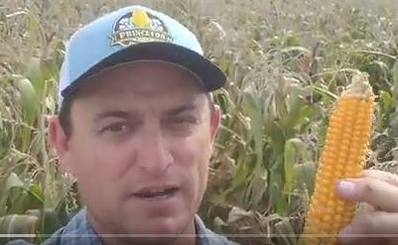
Robert Ralph, also known as Farmer Bob, is the founder of Princeton Popcorn. Bob grew up in Overland Park when farm ground was still intermingled with the suburbs. “I was three or four years old and I remember petting cows through a barbed wire fence,” Bob said. That experience encouraged a lifelong interest in agriculture. He bought a small herd of cows and kept them with a friend outside of town.
After a few years, Bob bought some farmland of his own near Princeton, Kansas in Franklin County. The acreage had some timber, but no fences. “A friend of mine bulldozed a 30-foot path through the trees so I could build fence,” Bob said. “When I burned the brush pile and spread the ashes, I found that it enriched the soil.”
The concept of growing crops became exciting for him. He looked into the cost of seed and equipment and did a budget analysis. As a beginning farmer, with crop prices so low, he recognized that traditional row crops would not pay. Instead, he thought about alternative crops.
Bob bought a three-pound bag of popcorn off the shelf, fenced off a corner of his acreage, and planted it by hand. “A couple weeks later, I dug down and found a seed with a little root emerging from it,” Bob said. “It was like I found a million dollars. By the time that plant grew to 10 feet tall, I was really hooked.”
When he harvested the popcorn and tried popping it, it was initially too wet. When it dried and he popped it a couple of weeks later, it worked great. “I was elated,” Bob said. He gave away the popcorn for family and friends to try.
Robert Ralph
Since that time, he has expanded his popcorn acreage, purchased improved farm equipment, and experimented with various cooking oils and flavors. He remains fascinated with the concept of multiplying a crop. “You put one seed in the ground and get hundreds back. That’s better than Vegas,” he said with a smile.
Bob bought popcorn seed from Zangger Popcorn Hybrids in Nebraska. “I couldn’t have gotten luckier,” he said. “Josh Zangger came down and gave me lots of great advice.”
“I’ve learned so much, I got to thinking that I should document this,” Bob said. His videos as Farmer Bob on Facebook have generated hundreds of views. Using the community name, he named his company Princeton Popcorn. “It’s a vertically integrated business, from seed to store,” he said.
Farmer Bob is working with Balls Food Stores and others to get his popcorn on the market. In 2020, he anticipates that Princeton Popcorn will be on sale in 90 stores in the Kansas City area. Bob was also contacted by a couple of movie theater owners in Germany. They were looking for top quality popcorn to sell, and they found Farmer Bob. In 2020, Bob will be shipping Princeton Popcorn to their movie theaters in Germany.
It’s remarkable to see popcorn going direct to Germany from a rural community such as Princeton, population 277 people. Now, that’s rural.
Can a first-generation farmer succeed? “This is America,” Bob said. “I would like to encourage kids to open up their minds. You need confidence, determination, and a willingness to fail, but you can try again. This is a land of opportunity.”
100 to 1. That’s not a financial return as much as it expresses the remarkable growth of a crop, from a single seed to thousands. We commend Farmer Bob Ralph for making a difference with innovation, entrepreneurship, and growth – a hundred-fold.
BUNKER HILL – The Solomon Valley Community Foundation has awarded Smoky Hills Public Television with a grant for $500.
The Foundation’s grant will support Smoky Hills Public Television’s Literacy Leadership program in Mitchell County. This program provides books to preschools in the area.
“I want to thank the Solomon Valley Community Foundation for their continued support for Smoky Hills Public Television and the Literacy Leadership program in Mitchell County,” said Larry Calvery, Smoky Hills Public Television General Manager. “With these funds we are able to put books in children’s home libraries, which has been proven to help with academic achievement. What a great way to support the Mitchell County community.”
The Solomon Valley Community Foundation was founded in April of 2013, to serve as a vehicle for charitable giving benefiting communities in Mitchell County. The foundation is a permanent source of charitable assets to meet both the emerging and existing needs of the local communities.
Smoky Hills Public Television serves 71 counties in central and western Kansas and has been named the Kansas Association of Broadcasters Non-Metro Station of the Year.