Leonard Kent Buffum Sr., 70, died Thursday, Jan. 18, 2018.
He was born Monday, Feb. 10, 1947.
Services are pending with Baalmann Mortuary.

By CRISTINA JANNEY
Hays Post
The Sternberg Museum of Natural History is showing off a new exhibit of minerals from around the world, recently donated to the museum from a private collection.
Geologist Richard Green and his wife, Pam, of Missouri decided they wanted to share a portion of their mineral collection with the museum. The 84 minerals that were donated are estimated to be worth $100,000, Christina Byrd, Sternberg collections manager, said. The minerals come from five continents, 19 countries and nine states.
Although the Sternberg has had a mineral collection on exhibit for some time, the new minerals are higher quality than what the museum has been able to showcase in the past, Byrd said.

Some of the minerals are rare and others are unusual examples of more common minerals. Some of the more rare minerals are prehnites, zeolites and aphopholites. The exhibit also includes examples of more common minerals such as quartz, calcite and fluorite.
Some of the minerals are more colorful such as malachite, which is a deep green, and azurite, which is a royal blue.
Byrd said she hoped the exhibit will tell a story about the minerals.
“I hope visitors learn a different lesson from each case,” she said. “From one case, I hope they will learn about mineral names and what the names of these mineral groups mean, where do they come from and why do we call things the way that we do?
“I hope they will learn that minerals come in many different colors even though they are called the same thing. Quartz can be clear, purple, pink, smoky, but it is all quartz.”

The exhibit has two examples of azurite. One has fine crystals and is a royal blue. The other has much larger crystals and looks almost black in the case. Byrd said the second example is more rare and, in the right light, exhibits a brilliant blue color.
Byrd said there are seven different ways minerals get their colors. If you know your elements, the chemical makeup of the minerals will often give you clues about where the color of the mineral came from, Byrd said. Copper is often responsible for the blue in minerals or iron for a red hue.
Another case will talk about how minerals can have different shapes and sizes. Yet another case will talk about the practical uses for minerals.
“Some minerals are very important in our day-to-day lives,” Byrd said, “be it in the devices that we’re using —cars, cell phones are full of different minerals — be they quartz, which is in glass or the metals that make up our phones. Those metals are all minerals. So I hope people walk away with a greater appreciation for what minerals are and how they impact our daily lives.”
The exhibit has an example of fluorite, which contains fluoride, which is also found in toothpaste. Rutile is used as a whitening agent in products such as liquid paper correction fluid and very small amounts in the filling in sandwich cookies. Other minerals in the exhibit are used in makeup.

The heaviest mineral in the collection is galena, which is a lead sulfide. The specimen is smaller than a soccer ball, but weighs over 100 pounds.
The museum is working with a mineralogist at Fort Hays State University on cards that will further tell the story of the minerals, but the minerals are currently in cases and available for viewing by the public. Currently, each mineral is displayed with a card that contains its name, the chemical composition of the mineral and the place were the specimen was collected.
The full exhibit should be completed in the next two to three weeks.

By CRISTINA JANNEY
Hays Post
VICTORIA — Surrounded by German chocolate cake, homemade truffles and puff pastries, 21-year-old Haley Robben said she has found her passion — baking.
Robben started a baking business — Bakeology — in her hometown of Victoria in 2017. Her shop is on 10th Street across the street from the grade school where she also works part-time as a paraprofessional.
She tried a semester at the University of Kansas studying political science, but she was just not into her classes. She talked to her adviser, who encouraged her to seek her passion.
Robben remembered spending hours with her grandmothers making all kinds of baked goods, especially her favorite pumpkin pies.
“Both grandmothers would have counters covered in sugar cookies and all different kinds of holiday cookies for everybody to eat when people came over to our houses,” she said.
Her adviser suggested the culinary arts program at Johnson County Community College.
Robben’s skills spread via word of mouth. She started a Facebook page for Bakeology and is now taking regular orders via social media.
With a brisk business and her family nearby, she said it was an easy decision to move back to Victoria. Today she is busy with orders from sugar cookies to elaborate wedding cakes.
Robben’s most popular item is her decorated sugar cookies. She can put just about anything on a sugar cookie and has had some interesting requests from clients wanting cookies for bachelorette and bachelor parties. She also regularly makes cookies for birthday parties at the school, which she hand delivers across the street when she heads over to work for the day.
Robben said she is always up for a challenge.
“I get so into the motion of sugar cookies and decorated birthday cakes, which is so fun and I like the versatility of that,” she said, “but I really love when someone gives me a weird flavor or something they are interested in. I just recently did a pink champagne cake, and I thought that was something different. I had never made one before.”
Robben said she enjoys the precision in baking. She has had to take both baking and cooking courses in culinary school. Cooking often requires the chef to season to taste. A lot of science goes into baking. Individual ingredients like baking soda help pull the baked goods together.
“I love that it has to be super precise and you have to get that exact amount in or it probably is not going to turn out the way you want it to,” she said. “I think I am kind of a perfectionist, and think that is where that really plays in really well for me. I just want to get it exactly right.”
Robben is not immune from baking disasters. She said she has had wedding cakes she started, threw out and started over the day of the wedding.
“Just today, I was making cinnamon rolls, and I didn’t set the timer,” she said. “I came back 20 minutes later, and they were totally charred. I guess no cinnamon rolls today. It happens all the time, and I think it is important to know that just because I have some schooling, doesn’t mean that everything I make is going to turn out perfect.
“It shouldn’t discourage people from trying to bake because they have one thing that goes wrong. It doesn’t make you a bad baker. If it did, no one would be a good baker.”
 For the home baker, Robben strongly encouraged reading and following the recipe. There are reasons the recipe is telling you to take those steps, she said. Take your time, and don’t skip steps.
Robben has one more semester left in culinary school, which she is completing online. She said she is unsure about her long-term plans, but Bakeology is thriving. She said she hopes someday baking will be her only job.
“This is going pretty well for me — the made-to-order — because it seems to give me the chance to make a lot of different things and not really limit myself. I think when you have a set menu and you don’t really want to veer from that, you get so caught up in the same things and you never really adapt and change to all the new trends. I love that I can do that pretty easily this way.”
To order, customers can send a direct message on the Bakeology Facebook page or text Robben at 785-735-4474. Sugar cookies start at $15 a dozen and costs vary from there depending on complexity and the ingredients.

By CRISTINA JANNEY
Hays Post
Hays firefighters responded to a mobile home fire just before 5 p.m. Tuesday.
A man told 911 dispatch he saw smoke coming from underneath of his trailer at 2300 E. Seventh, Lot 16 in the Countryside Estates mobile home park.
The fire was quickly extinguished, according to scanner reports.
More information will be released as it becomes available
By CRISTINA JANNEY
Hays Post
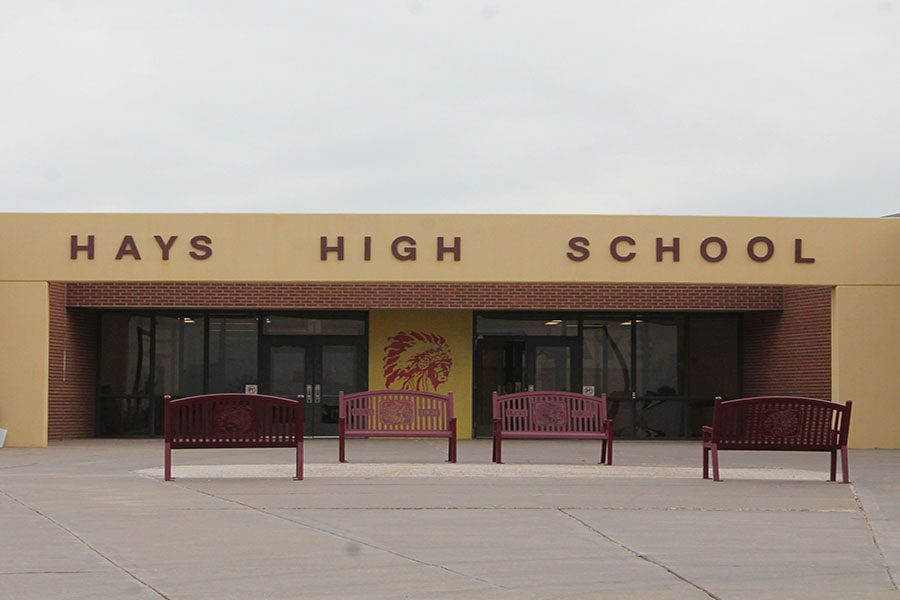
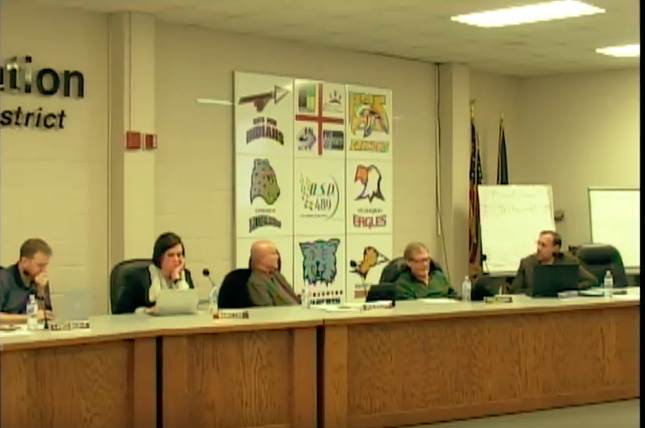
The Hays school board Monday night discussed the need to develop a long-range facilities plan after two school bonds failed in the last two years.
A $78.5 million bond issue failed in November, and a $94 million bond issue failed in 2016.
Related story: Hays USD 489 school bond fails; another bond likely on the horizon
Related story: Voters soundly reject Hays USD 489 bond issue
Superintendent John Thissen told the board community members have said the bond was too comprehensive, too long and the financial burden of the bond on individual taxpayers was too high.
Board member Paul Adams said he thought voters also needed to see more concrete plans.
Thissen showed the board photos of several completed projects that DLR, the district’s architectural firm on the last bond, had done in other districts.
“It is hard sometimes to get the visual and understand what the public is really voting on,” he said.
Thissen went over several possibilities for bonds with shorter time frames and lower tax amounts. A 15-year bond, which would increase taxes on a $150,000 home by $12 per month, would generate $29.5 million. If a quarter cent sales tax was added, the bond would raise $38.25 million.
Adams, who has toured the ongoing improvements in Dodge City, which is currently working on upgrades at its high school, said the offerings were allowing students to earn advanced training in arts and sciences and go directly into the workforce after high school.
“The investment they have made in the physical plant is changing the curriculum,” he said. “And they are having these kids ready, as you mentioned earlier with KESA, for the workforce. It is not necessarily to get them ready for college, but to get them ready for work.”
Board member Mandy Fox asked what the appropriate time would be to wait between bonds.
“We have really pushed on it for the last year, year and half,” Fox said. “Do you burn out your volunteers? Do you burn out the community? Do they notice any changes that we have made from one election to the next because they are so quick and close together? I don’t know what the right amount of time is.”
Thissen said he asked DLR and other districts this question and the answer was that it depends. If the district would decide to carve off projects from the first two bond attempts, it could move more quickly than if it started from scratch. The quickest another bond was recommended was September. Thissen said he did not recommend to go on the ballot in November during the state and federal mid-term elections. The next best time after November would be January 2019.
Thissen said he would not like to delay another attempt at a bond for another year or two.
He said the district needs to have a solution for what it is going to do with its oldest buildings, which are 90 years old. The district has serious problems with the plumbing, handicap accessibility and security at several of its oldest buildings.
“A couple of years is an answer. You have made a decision that we are going to replace systems in a couple of our buildings that are in the worst shape because we will have to,” he said. “If you delay it that length of time, you are making a decision. You have almost committed to putting $100,000, $200,000 or $300,000 into some older buildings. Then two years from now or three years from now, it may be hard to have any justification of having a plan of walking away from them.”
If the district would look at a 15-year bond, it would also need to look at what its needs would be 15 years from now, Thissen said. He said district needs to look at all money, including bond money, capital outlay funds and possible lease agreements.
Sophia Rose Young said a long-term plan was something the district needed to focus on to move forward.
“When I attended the Kansas Association of School Boards annual conference, I listened to other school districts talk about their success with school bonds,” Young said. “There was a school district that mentioned their community knows when their next bond was going to come and what it was going to be. They passed one for an elementary school, and they knew in seven more years they were going to come back and ask for that middle school because they had built that plan out and they were planning ahead.”
The board has not decided who will create a new plan. Thissen said the board received criticism during the first bond the board was too involved in the decision-making process. Community members complained too many people were involved in making decisions on the second bond.
“I think the problem in both of those was that the committee went out and did their thing and the board didn’t do a lot,” board member Greg Schwartz said.
Schwartz also said he thought the district needs a long-term facilities plan.
Board President Lance Bickle said he thinks the board needs to find a happy medium.
“I agree I don’t think we need to reinvent the wheel, but I think when you are talking about that kind of money, I see the other point as well. … You have a committee that worked all this time and that first Vision Team spent God knows how long on this,” Bickle said. “Who was I after hearing them for a couple of weeks for a grand total of couple hours to say, ‘I don’t like this plan. I think you should do this.’ That is where I personally struggled as a board member. Who was I to come in and question all that? I think we need to find that happy medium and more board ownership.”
He agreed the district needs a long-range plan.
“We have heard that loud and clear that people want a long-range plan,” Bickle said. “They want to see. To me, it comes down to something tangible. We can talk about it until we are blue in the face, but we need to have something out there that shows them this is the plan. We need to have this stuff documented. We need to show them.”
Boar member Luke Oborny said that plan will have to be highly adaptive.
“The only thing I don’t like about that is, realistically, you are paying forever,” he said.
Thissen said the newest building in the district is 40 years old and that the district needs a starting point.
Thissen said in the next two weeks he planned to have one-on-one or individual phone conversations with each board member to get an idea of where the district needs to start working.
 By CRISTINA JANNEY
Hays Post
The Hays school board on Monday voted to wait two weeks before making a decision on spending $782,000 for HVAC improvements at Hays High School.
The work would be the first phase in a $4 million to $5 million project to fix the HVAC system at the high school. This first phase would add roof-top units for the main gym, auxiliary gym and wrestling room. The program will also improve controls for other parts of the high school. The district would like to complete construction on the project this summer.
The district has enough money in its capital outlay fund to pay for the first phase of the improvements. The district has lease agreements that will end in the next two years that could allow the district to pay for the additional improvements, Thissen said.
Board member Greg Schwartz has been critical of the board’s decision to use a construction manager at risk for the project instead of sending the project out for traditional bids. Schwartz was not on the board when the board voted in 2016 to hire Building Controls and Services as the construction manager at-risk.
Building Controls and Services intends to hire Glassman Corp. to do the work on the high school.
Schwartz said he was concerned the district is not getting the best deal because it did not use the traditional bidding process. He said he wanted to see the cost for the upgrades at Hays Middle School in 2015 and compare them to the HHS project before making a decision on the HHS project.
James Herrman, BCS representative, said the cost for the HMS project was several dollars cheaper per square foot, but inflation needs to be factored into the increase.
Schwartz said, “I would like to go forward with it … I am one vote, so if the rest of the board wants to move forward with it, I understand. I would just like to see the numbers and have them broken out on those costs. If inflation is the number, look at that. Before I am ready to approve it, I would like to have those.”
Board member Mandy Fox said, “I agree with both points of view here. I do think we are constantly under scrutiny when it comes to financial considerations. We need to do our due diligence and make sure we evaluate all those questions for every board member who is up here.”
Board member Paul Adams said he did not want to wait to vote on the project and made a motion to approve the contract. That motion failed with board members Schwartz, Lance Bickle, Fox and Sophia Rose Young voting against.
Hays Arts Council
The Hays Arts Council is sponsoring the annual Kansas Day presentation this week.
This year’s artist is a returning Kansas Day favorite, Thad Beach. He will be performing Tuesday through Friday with a public performance from 6 to 6:45 p.m. Thursday at the Hays Public Library.
His program is “Kansas, the 34th Star,“ and students will travel the trails of Kansas as Beach takes them on an imaginary journey in a covered wagon to celebrate Kansas, the 34th State.
The audiences will solve state symbol riddles in song, sing about the state seal, experience the People of the South Wind (KANSA Native Americans), celebrate a birthday, and discover the four major trails through Kansas.
This Kansas Day residency has been funded in part through a grant from the Kansas Creative Arts Industries Commission.
Beach, who now lives in Salina, began working full time as a performing artist while living in the mountains of western North Carolina. He began doing artist-in-the-schools residencies with the Mountain Arts Program.
He has completed more than 300 week-long interdisciplinary residencies in schools since that time, working as an approved artist on rosters with arts organizations, such as the South Carolina Arts Commission, North Carolina Arts Council, Iowa Arts Council, Nebraska Arts Council, Kansas Arts Commission, Kansas Creative Arts and Industries, Wichita Arts Partners, Wolf Trap Early Childhood Institute, Kansas Wolf Trap, Kansas University Lied Center Art.Teach, and Salina Arts and Humanities Arts Infusion.
Beach is a versatile instrumentalist, performing on ukulele, guitar, mandolin, fiddle, jaw harp, and harmonica. Beach’s harmonica playing has won state championship honors in North Carolina and Kansas. Beach also showcases instruments from his “Band in a Bucket.” The limberjack, washboard, bucket bass and other creative and unique musical devices, inspire young and old alike to get involved in music.
There is more info on Beach at his website: thadbeachmusic.com
By CRISTINA JANNEY
Hays Post
The Hays USD 489 superintendent recommended the district opt of PEERA and future negotiations with its custodian union at a school board meeting Monday night.
Superintendent John Thissen said he was disappointed in the leadership of the custodian’s union and the direction that leadership was taking.
“I would say that it is not needed in our organization,” Thissen said of the union Monday night.
The city and county both opted out of PEERA in December, but Thissen said the school board’s discussion had nothing to do with those decisions.
Related story: City commission votes 3-2 to exit PEERA and employee union negotiations
Related story: Ellis County Commission votes to end union negotiations
An opt out from PEERA (Public Employer-Employee Relations Act) was placed on the school board’s agenda for January on the request of board members last year after negotiations with SEIU (Service Employees International Union) stalled a change in the district’s insurance provider.
Related story: Unions threaten to sue district over health insurance
Related story: Unions respond on Hays USD 489 insurance issue
There are 28 people covered by SEIU in the school district, 19 of which pay dues and are members of the union. The Hays school district is one of only two school districts in the state that negotiates with SEIU. The other is Wichita.
When the district first started to negotiate with SEIU, the cooks were also a part of the union. However, the district cooks have not been a part of the union for some time. There are about 225 classified staff that do not have union representation. The district employees about 500 people.
No one from SEIU was at the school board meeting Monday night, but SEIU released the following statement Friday to the Hays Post.
“The custodians of USD 489 value their collective bargaining rights and are hopeful that the school board will remain under PEERA. We appreciate that we were able to come to a fair and equitable agreement this year. We also understand that negotiations can be frustrating at times; however, collective bargaining aids in securing harmony in the workplace and allows employees to focus on their work rather than their grievances.”
Board attorney Bill Jeter said nothing necessarily has to change for the employees if the board decides to no longer recognize the union. The board would adopt salary, benefits, shifts and vacation via policy. However, the salary and benefits would not necessarily have to change if the district opted not to negotiate with the union.
There is a cost to negotiate with SEIU. The district has to pay staff and its attorney to be involved in negotiations.
Board member Luke Oborny said he did like the timing of a possible decision on PEERA. He did not want the custodians to think they were not valued. The district also approved several personnel transactions Monday night that moved custodians to alternate buildings.
“I just don’t want it to be, ‘Last month they were picking on me,” and, “This month they are picking on me and what is it going to be next month?’ I hope it does not look as though we don’t value our employees. … I don’t want any group to feel as though we don’t value them. I think it is safe to say that we all do. We cannot operate without the people.”
Board member Mike Walker said he had concerns with opting out of PEERA.
“If this structure provides a voice, a legitimate voice I am very concerned about taking that away,” Walker said. “If we decide it doesn’t have a legitimate voice, I am more in line with what I am feeling from most of the board.”
An opt out of PEERA would not affect the district’s negotiations with the teacher’s union. Th district would still be required by state law to negotiate with the Hays NEA.
If the district decides to opt out of PEERA by the end of June, the change would take affect on July 1, 2019. This means the district would still need to negotiate a contract with SEIU for the 2018-19 school year. The board members requested the issue be brought back to them at their February meeting for further discussion and a possible vote.
Hays USD 489 schools will close Tuesday due to anticipated -15 to -20 degree wind chills Tuesday morning.
The district released the following statement:
“Due to incredibly low temperatures and wind chills tomorrow, USD 489 will be closing school for Tuesday, January 16th. Exposure to these low temperatures and wind chills for small durations of time can cause frost bite. The safety and health of all of our students and staff is of the utmost importance to USD 489. If you have to be outside tomorrow morning, please dress warmly and be safe. Thank you for your understanding.”
ELLIS—The monthly Ellis St. Mary CYO Community Fried Chicken Dinner will be 10 a.m. to 1 p.m. or until sell out Sunday, Jan. 21 at Ellis Knights of Columbus Hall, 1013 Washington St., Ellis KS 67637
The pan-fried chicken dinner includes mashed potatoes and gravy, vegetable, coleslaw, dinner roll, and dessert.
Cost for children ages 5 through 9 is $5. Cost for those 10 and older is $10.

By CRISTINA JANNEY
Hays Post
Hays USD 489 implemented a new behavior policy that has reduced office referrals.
The model, Positive Intervention Behavior and Supports, focuses on positive reinforcement and setting clear expectations in common areas as well as individual classrooms. At the school level, the system is known as Foundations. At the classroom level, it is known as CHAMPS for the younger students and ACHIEVE for the older students.
CHAMPS stands for conversation, help, activity, movement, participation and success. ACHIEVE stands for activity, conversation, help, integrity, effort, value, efficiency. These words refer to questions teachers or school staff ask when creating guidelines for their classrooms or school areas.
School psychologist Kyle Carlin gave an example of how the system works. He used the example of running in the hall.
Instead of reprimanding a student and telling them, ‘Don’t run,” the teacher might say, ‘Please walk.” The teacher might also reinforce the positive behavior by asking the student to practice walking down the hall.
Wilson Elementary School has concentrated on make changes on its playgrounds. In a survey last year, about 40 percent of second through fifth graders said they did not feel safe on the playground. Fifty-four percent of the office referrals were coming from the playground.
The school wrote specific rules for the playground and rules for specific pieces of equipment, which they taught to students. They encouraged children to play in the Wilson Warrior Way and created the acronym PLAY.
This stands for proper use of equipment and body; listen, load up equipment and line up quickly; always be kind with hands and words; and you are in control, be respectful and responsible.
They also retrained their playground monitors, increased the number of supervisors on the playground and zoned the playground with each playground supervisor in charge of a specific zone.
The number of office referrals from the playground decreased by 75 percent, Anita Scheve, Wilson principal, said.
The school is extending the CHAMPS model beyond the playground to the lunch room and hallways. The school moved its recess from after lunch to before. Teachers said the students are returning to class more settled, and the lunch room is throwing away 30 percent less food.
Scheve said before the school implemented positive disciple, there were children lined up in her office to see her for disciplinary reasons. That has been cut dramatically. Scheve said she is focusing on restorative justice.
“While I believe in natural consequences,” Scheve said, “I don’t want to punish. I just want to reteach. That is the principle. Let’s teach behavior like we teach everything else. Let’s assume that they want to do the right thing. Let’s set them up to do the right thing.”
Scheve and the school counselor are also working daily with students who have had repeated discipline problems. They help the students create strategies on how they are going to focus on positive behavior through their day.
Hays Middle School has focused on reducing congestion in the hallways. Craig Pallister, HMS principal, said the school is trying to deal with the issue of overcrowding in hallways and the lunch room after the latest school bond issue failed. The bond issue would have renovated the cafeteria, which was not designed to accommodate the 675 students the school now serves daily.
Signs were hung to remind students about rules during passing periods. Falcon images were placed on the floor in certain areas, and staff members have been assigned to stand on these spots and give positive reminders of the rules to the students during passing periods.
The school used the CHAMPS process to reorganize its cafeteria. Milk coolers were moved outside of the cafeteria and students are now lining up outside the cafeteria to free up more room. However, as the school continues to grow, Pallister said the school may be forced to increase its window for serving lunch. It is already serving lunch from 10:55 a.m. to 12:45 p.m.
Each school has a team that is working on implementing these new strategies in common areas, such as cafeterias, hallways, parking lots and playgrounds.
“They are looking at those areas and developing policies and procedures that are predictable and consistent,” Carlin said. After they have developed those policies and procedures, they then go and explicitly teach those to kids because we know kids are more likely to meet our expectations if they know what they are.”
Consequences are natural, but they should be more instructive to make sure the next behavior is more appropriate than the last one, Carlin said.
Carlin continued with the example of the student who ran in the hallway. Once they have been asked to model the positive behavior, which was walking, the next time they pass the spot they will remember they the need to be walking.
“It helps them know what to do instead of, ‘If I don’t do the right thing, I am going to get punished,'” he said. “We know that doesn’t have the same level of effectiveness as other strategies.”
CHAMPS also addresses expectations within a specific classroom. The expectations concerning things such as talking might not be the same in a physical education class as it might be in an English class. Even though expectations may be different from class to class, there is consistency within the class, and that helps students build trust with a teacher, Carlin said.
As students get a little older—about third grade—they can participate through surveys to help school officials identify areas that need work. They don’t dictate the policies, but they do get to have input, he said.
“We know when students have input into the process, there is more buy in from them on those rules. They are more likely to follow those rules and expectations,” Carlin said.
Sometimes adults don’t see what kids see, or the presence of an adult changes children’s behavior, he said.
“Kids have really good insight into things in their school, and their voice is very valuable to have as a part of that,” Carlin said.
Carlin said he wanted parents to know the schools want their input on the changes, as well.
The models for positive behavior can also be used at home, and Carlin said he uses the techniques with his own kids. He suggested providing positive reinforcement as opposed to negative, setting expectations, providing structure and using positive instructions when trying to elicit a behavior change.
“While there is a purpose for various consequences, the more we rely on punishing consequences, the less likely we are to get the change in the behavior,” Carlin said. “We want to make sure when we do correct behavior, it is going to get us more effective behavior in the future.”
 USD 489
Children at Early Childhood Connections filled their rock garden outside of the school’s main entrance at the end of the first semester.
Students participated in the project by decorating a rock to be included in the rock garden.

Ellis Junior High
2017-18
Semester 1 honor roll
Seventh graders all A’s
Harlie Bittel
Emily Eck
Kayla Julian
Trinity Kohlrus
Myah McCoy
Dakota Metzler
Madi Russell
Hannah Schiel
Quinton Shepard
Seventh grade As and Bs
Rylan Cass
Haley Cranwell
Liam Crawford
Rex Johnson
Makenna Kohl
Jarret Mader
Anna Moore
Carson North
Natalie Schumacher
Eighth grade all As
Elliott Cox
George Crawford
Lakyn Fischer
Sam Honas
Eighth grade As and Bs
Easton Burton
Daniel Crawford
Maja Crawford
Mali Crawford
Journey Eck
Emma Gilbert
Madison Gottschalk
Michelle Gottschalk
Maddy Guffey
Tyson Jimenez
Nathan Johnson
DJ Kinderknecht
Tanner Kohlrus
Haley Schmidt
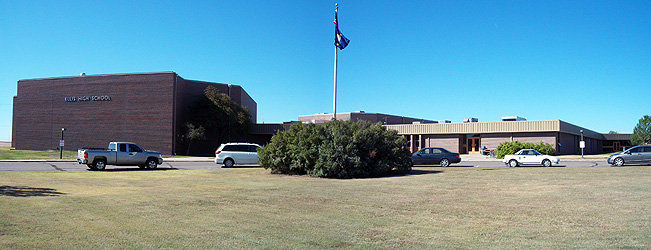
Ellis High School Honor Roll
2017-18
Semester 1 honor roll
Senior all A
Abby Burton
Julia Cox
Emily Cranwell
Samantha Crawford
Joseph Eck
Kaylyn Foster
Aiden Johnson
McKenzy Jones
Jaylinn Pfeifer
Haley Reiter
Natalie Schoenberger
Dawson Sproul
Shelby Werth
Senior A-B
Blakely Bittel
Kelsey Brack
Taylor Honas
Drew Keller
Lane Kohl
Kinley Kuppetz
Sierra Schmidt
Geoffrey Soneson
Ali Weber
Brendon Zweifel
Junior all A
Kaden Armbruster
Megan Cranwell
Lane Fischer
Cameryn Kinderknecht
Logan Shaw
Cassie Waldschmidt
Junior A-B
Dylan Brown
Zachary Cox
John Groff
Holden Lyman
August Sinclair
Tara Woodworth
Sophomore all As
Clara Crawford
Zachary Eck
Sophomore As and Bs
Logan Armbrister
Lauryn Becker
Grace Beisner
Trinity Bollig
Cheyenne Born
Landis Fischer
John Gamez
Keaton Keller
Abigail Mattheyer
Breonna North
Logan North
Peyton Reese
Rylee Werth
Freshmen all As
Veronica Bieker
Isabella Bollig
Ashlynn Burgess
Grace Eck
Camryn Frickey
Lyndsy Hinman
Maggie James
Elena Johnson
Michaela Keller
Trace Patee
Samuel Pyle
Zach Schiel
Freshmen As and Bs
Matthew Bieker
Morgan Bittel
Tegan Cain
Donovan Colby
Daniel Eck
Caitlin Fisher
Brady Frickey
Austyn Jones
Brooklyn Julian
Maci Kohl
Colten Lewis
Austin McGuire
Clay North
Kaelyn Rohr
Clay Shaw
Jaryn Wildeman
Toby Woodworth