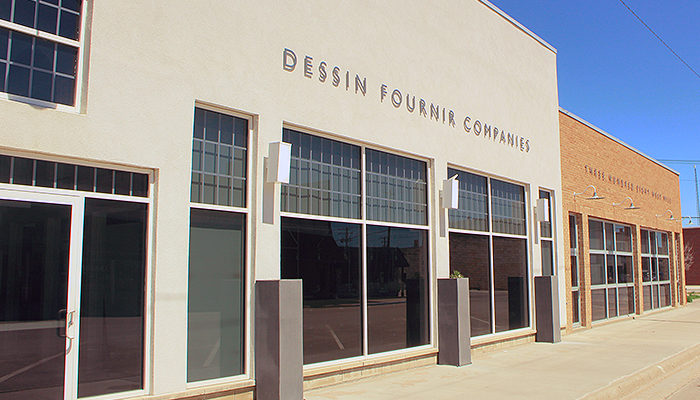
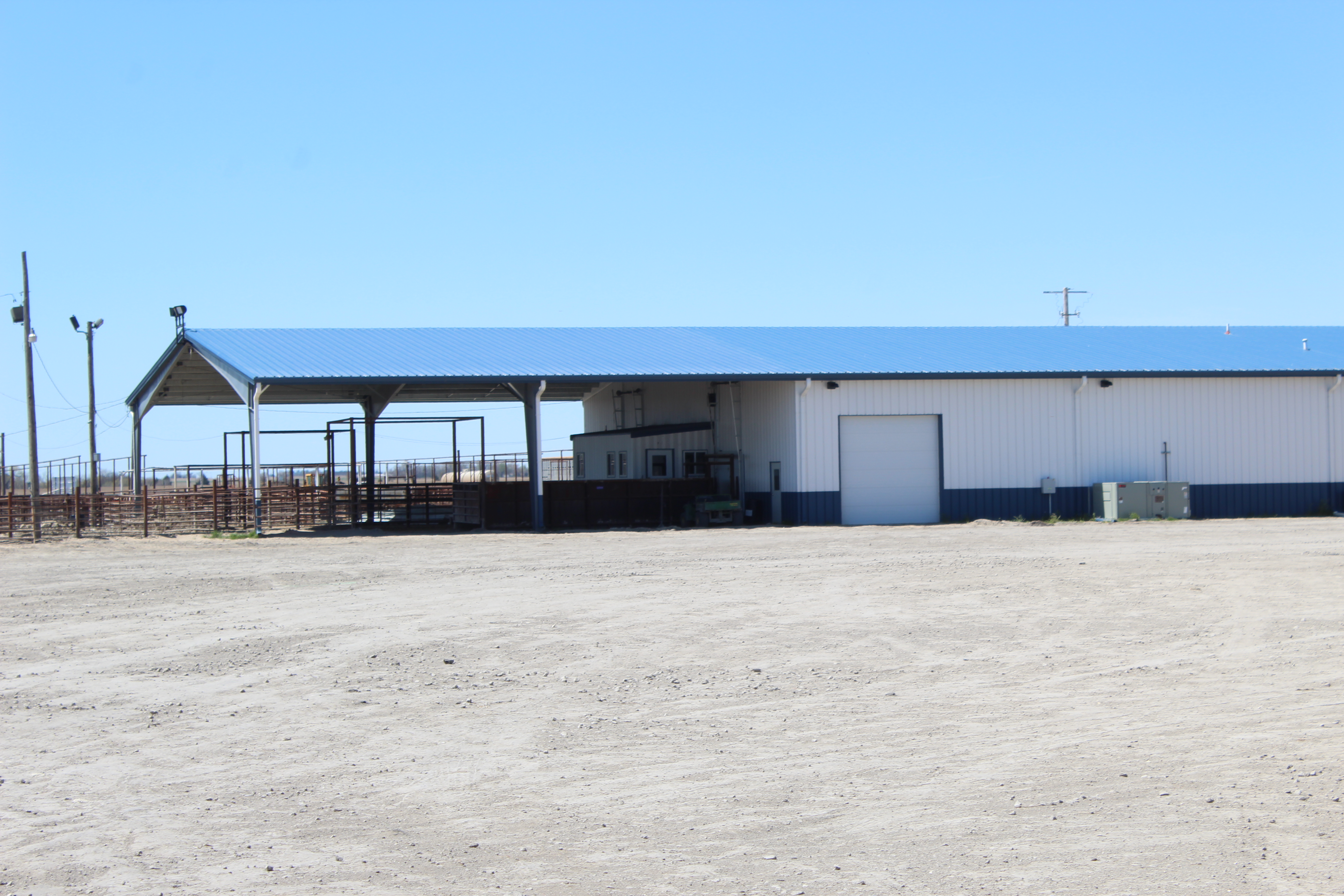
PLAINVILLE — The Dessin Fournir bankruptcy case has been dismissed from federal bankruptcy court and a sheriff’s sale has been set for Aug. 1.
Seven pieces of property with mortgages held by Sunflower Bank will be auctioned.
Properties listed in the foreclosure included 201 E. 12th St. in Hays, and Plainville properties 108 N. Main, 211 1/2 Mill, 205 N. Main, 317 W. Mill, 211 W. Mill, 221 W. Mill. All the properties listed in the Aug. 1 sale are in Plainville.
Edward Nazar, the bankruptcy attorney for Dessin Fournir and its subsidiaries, said Wednesday that Chuck Comeau, Dessin Fournir’s owner, has not been able to secure a new owner for the company.
The Comeuas own multiple properties in Plainville and Hays. Court documents indicated an $81,000 insurance payment for the properties was coming due in June, and Comeau did not have the funds to make that payment.
Dismissal of the bankruptcy case, which was ordered on June 19, will allow the foreclosure in state court to move forward, Nazar said.
Dessin Fournir and 11 other Comeau companies filed for Chapter 11 bankruptcy on April 8. The company also closed its doors and laid off its staff in Plainville. At its height, Dessin Fournir employed more than 90 people in Comeau’s hometown of Plainville.
Chapter 11 involves a company reorganizing, but the court determined Dessin Fournir did not have enough cash on hand or assets to continue with a reorganization.
Although Comeau was unable to find a buyer for the company as a whole, Nazar said there likely will be buyers of the smaller assets and product lines.
The furniture manufacturer was listed in court documents to have more than 200 creditors locally, nationally and even internationally with a total liability of more than $13 million. Some of its subsidiaries had other creditors, including companies in the trade.
The company is listed as owing more than $8.9 million in secured debt to three local banks, including $952,000 to Astra Bank, $7.5 million to Bank of Hays and $420,000 to Sunflower Bank.
Bank of Hays and Sunflower Bank filed for foreclosure on Comeau properties last year.
On March 26, District Court Judge Blake Bittel in a summary judgement ordered Comeau’s companies and other loan guarantors to pay Sunflower Bank a total of more than $420,000. A sheriff’s sale was ordered by the court on July 5.
According to court records, on June 27, FSSW LLC filed a motion for to recoup more than $1 million owed by the Comeau companies. It seeks to gain first lien on property above the Bank of Hays. Its motion seeks the authority to sell property listed as collateral to satisfy the Comeau companies’ debt.
Hays Post contacted the U.S. Justice Department, which is assigned to take media requests on behalf of the U.S. Trustee in the bankruptcy case, but no response was given as of the publication of this story.
The sheriff’s sale will be at 10 a.m. Thursday, Aug. 1, in the front lobby of the Ellis County Courthouse.
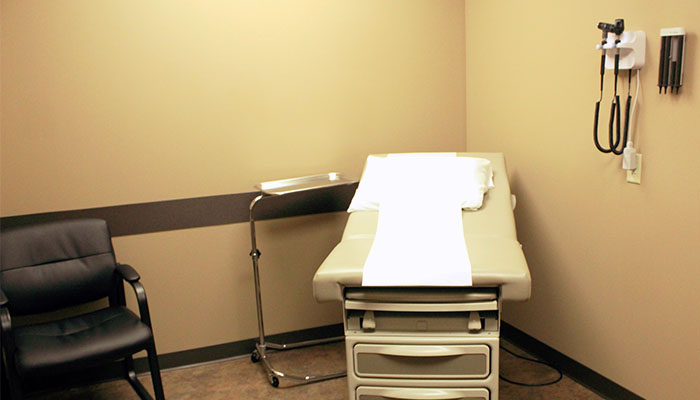
A renovation at First Care Clinic in Hays is nearing completion. The clinic added eight new exam rooms.
By CRISTINA JANNEY Hays Post
First Care Clinic of Hays is wrapping up a $1 million renovation of its Hays building and has set an open house and ribbon cutting for July 16.
The clinic has added eight exams rooms, a telemedicine room, a patient education room, a nurses station and renovated the basement into staff offices.
Bryan Brady, First Care CEO, said the renovations were necessary to meet patient demand.
In the last 12 months, the clinic has had 18,000 patient visits, which is a significant increase, Brady said. He said First Care is taking on more patients as other providers are cutting back.
“The reason why we are doing this is to fill gaps in the community,” Brady said. “We are not trying to compete with anyone. We see a need and are trying to fill that need.”
The clinic also added a patient education room that will allow it to offer shared education appointments.
Five of the exam rooms were added on the second floor in the space formerly occupied by staff offices. The other three exams are on the first floor.
The clinic offers Saturday hours, but only has one provider on call on Saturdays. Adding exam rooms on the first floor will allow all the staff working on Saturday to be on the same floor.
The clinic recently added a provider, and the additional exam rooms will allow the staff to keep up with their growing patient loads.
One room is going to be used full-time for telemedicine. The clinic had offered mental health services one day a week via telemedicine, but that had occupied an exam room that was needed for the medical providers. The clinic plans to expand its mental health services and is looking at offering other speciality medical services through telemedicine in the future.
The clinic’s unfinished basement was remodeled into offices to allow for more space on the first and second floors for exam rooms.
“When you come to our building and you are sitting in that lobby, nobody knows if you are here for dental, medical or behavioral health. They have no idea,” Brady said. “I think we don’t have that stigma that sometimes surrounds mental health.”
The clinic also hopes to use its new patient education room to offer shared medical appointments. Patients would see their provider at around the same time on the same day. After their appointments are complete, about eight patients would meet together for an education session on their shared illness.
Brady gave the example of diabetics or patients with hypertension learning about healthy diet.
“We are going to work on behaviors,” Brady said. “We have medicines that control that stuff, but sometimes we have human behaviors that get in the way.”
The First Care building at 105 W. 13th St. was built in the 1940s and has gone through a series of renovations since the clinic purchased it in 2009.
The clinic has already realized success with its nurse closer program. A CNA takes vitals and discusses the patient’s complaint. Then the patient sees the doctor. Then a nurse closer goes over doctor’s recommendations and wellness strategies.
“By the time the nurse goes over it, they have heard it three times,” Brady said. “We feel that is allowing people to have a better understanding of their health care and the goals and objectives we are trying to achieve.”
He said the clinic has seen a reduction in calls with questions with the implementation of the nurse closer program.
“In health care, it is better to have people talk to people,” Brady said. “Face to face is a good thing.”
First Care’s building, 105 W. 13th, was built in the 1940s. The clinic moved into the building in 2008 and purchased it in 2009. During the last 1o years, the building has been under almost constant construction.
In 2oo9, the clinic replaced its HVAC systems followed by the addition of dental chairs in 2011 and 2014. In 2017, the waiting room and nine exam rooms were remodeled.
The current renovation included 10,000 square feet. The basement of the building was not finished and was being used for storage.
The clinic received three grants toward its latest renovation. This includes $518,000 from the Dane G. Hansen Foundation, $100,000 from the Leo J. and Albina Dreiling Trust and undisclosed amount from the Robert E. and Patricia A. Schmidt Foundation.
“The Schmidt Foundation is proud to be a part of this wonderful project. Bob and Pat were early cheerleaders for the First Care Clinic and their enthusiasm continues today,” said Gary Shorman, president of the Schmidt Foundation. “The new facility provides an environment that truly matches the outstanding care given by the First Care team.”
The $1 million price tag for the renovation did not include equipment, Brady said.
Brady said the clinic is still trying to spread the word about its services. The clinic is a full-service medical home providing dental, primary medical care and behavior health care.
Although the clinic has a sliding fee scale, it is open to all patients.
Medical director Dr. Christine Fisher said in a written statement, “At First Care Clinic, the patient is at the center of everything we do. We have transitioned from a walk-in clinic to a family-oriented practice that offers personalized, comprehensive care. We believe in wellness, prevention and treating the whole person, including behavioral health concerns. First Care Clinic will continue to innovate and improve for the benefit of our patients and our community.”
The clinic invites the public to its open house and ribbon cutting at 11 a.m. Tuesday, July 16. Tours will be offered. Lunch will be provided and door prizes given away. Free blood pressure and vision screenings, as well as fluoride dental treatments, also will be offered.
2019 outside agency funding and 2020 requests / click to expand
By CRISTINA JANNEY Hays Post
Outside agencies that have traditionally received funding from Ellis County are feeling the county’s budget crunch this year in the form of cuts.
Although the county has not approved its final budget, commissioners recommended $124,000 in cuts for the 16 agencies that requested funds for the 2020 fiscal year.
Some of the agencies said they would attempt to raise more private funds. Others suggested they might have to cut staff or programming.
Hays Arts Council
Proposed county funding for outside agencies for 2020 with cuts
The Hays Arts Council requested $3,385, and its funding, along with the funding for the Ellis Jr. Free Fair, was cut entirely.
Brenda Meder, HAC director, said the agency’s funding from the county has been steadily decreasing over the last several years.
She said the agency has planned to make a push for more memberships in attempts to make up for the county funding cut. The HAC will also look at its reserve funds or adding a fundraiser, she said.
Meder said she was disappointed to see the funding cut completely.
“There is something to be said in being validated as a community entity that is truly there to serve the broadest needs of the community in regards to quality of life,” Meder said.
DSNWK
Two DSNWK clients weave as a part of the Collaborative Arts Project.
Developmental Services of Northwest Kansas had its funding reduced from $240,000 to $215,000. It also manages the community’s general public transportation service, ACCESS, which was cut from $60,000 to $50,000.
Because ACCESS funds are matched, the service will lose another $23,000 in matching funds.
Jerry Michaud, DSNWK president/CEO, said the agency is already stressed trying to make up the difference between the actual cost of services for community members with developmental disabilities and state reimbursement rates.
“We can’t go to the state and say we’ve lost $57,000 and can you help fill that gap,” Michaud said. “It is not the way it works. We have to figure out how do we stretch something that is already stretched. It’s a challenge.”
The agency is still required to serve the same number of people and provide the same level of services, but with less money.
Michaud said DSNWK will strive to not allow the cuts to affect staff or services.
“What we have is what we need, and [we] need more,” he said. “Potentially for crisis types of needs, we may look at donations as a way to supplement, but that’s not a long-term solution. Generally donors, I can’t speak for all, donors are not interested in paying for your light bill. They are not interested in paying for those types of things.”
Michaud mentioned in his presentation to commissioners that the agency has struggled to recruit and retain care professionals because of low wages and a shortage of workers in the labor pool. He said the county cuts will not improve the agency’s staffing challenges.
High Plains Mental Health
High Plains Mental Health received the second largest cut in terms of dollars. It received $281,646 in 2019 and will receive $260,000 in 2020 if the budget passes with the commissioners’ current recommendations.
The county is required to fund HPMH per an interlocal agreement; however, Director Walt Hill said the agreement does not specify the amount.
The county mental health agency recommends a dollar amount annually based on a formula that is in part based on the counties residents’ use of the High Plains’ services.
Hill said although the cut is significant, county funding from all of the counties the mental health agency only accounts for about 8 percent of the agency’s budget.
“One of the things we are headed to is focusing on individuals paying their share of the cost of services — making sure we focus on people paying their bills as they go,” he said. “Anymore as you go to the doctor’s office, you are asked to pay for the service for the day, and I think we may have to move more and more in that direction.”
About half of the clients HPMH sees have family incomes of less than $25,000 per year. HPMH offers a sliding-fee scale and allows clients to extend payments, so Hill said payment should not be a barrier to receiving services.
“Our budget won’t happen until December, so we will know what counties will do and then we work around what resources we have in terms of if we can give raises to staff, in terms of what we can afford in capital outlay next year,” Hill said.
Conservation District
The Ellis County Conservation District was so concerned about the effects of its cut of more than $17,000, it went back to the county commission to ask some of the funding be restored.
Sandra Scott, district manager, said the county cut would mean the district would have to eliminate a decades-long cost-sharing program that supports terracing and soil conservation efforts at local farms. The county money pays for an average of six projects per year, depending on the size of the projects.
The commissioners told district officials Monday night it would not reinstate any of the funding.
Humane Society
Humane Society of the High Plains shelter manager Betty Hansen said the Humane society was expecting the cut. It reduced its request from $4,500 to $3,000, and the commissioners recommended $2,600.
The agency will attempt another fundraiser to try to make up the difference in funding. They are planning an event with Defiance Brewing Co. in September.
“We work with what we are given is the way we look at it,” Hansen said.
The community has been responsive to the funding need. Several people have dropped donations at the shelter in a response to the news of the county cut, Hansen said.
Hansen said she was concerned about the long-term effects of funding cuts. The other alternative would be to charge for strays that are surrendered from the county.
The shelter is using the county money to pay for the care of strays. Shelter officials don’t want to charge people who surrender those animals because workers are concerned people will stop bringing in the strays, and the animals will be left to die or run wild.
“It is not that you have to pay,” Hansen said. “It is the animal needs help, and we are going to do it one way or the other. We will figure it out. If someone is kind enough to pick up puppies out of a ditch and bring them to us, we are going to take care of them.”
Although the Humane Society’s donors have been generous, Hansen said there is a limit to the amount of money any agency can raise, and all the nonprofits that requested funds from the county are being affected in the same way.
NWKP&DC
The Northwest Kansas Planning and Development Commission wrote the grant that secured $1 million in funding for a new pool in Ellis, but its funding was cut from $38,877 to $22,500.
Randall Hrabe, development commission director, said Ellis County will likely not be the only county that cuts the development commission’s funding for 2020.
He said the agency offers about $20 million in business loans across northwest Kansas as well as oversees low-income housing projects across the the region. Two homes are being prepared for sale in Hays through a development commission project.
“I would like to see everyone support it,” Hrabe said. “If Ellis County has to cut $2 million from its budget, somebody’s got to get cut.”
Grow Hays
Grow Hays did not receive any funds from the Ellis County last year. However, it requested $50,000 for 2020. Director Doug Williams told the commission, the economic development organization would no longer be able to operate after the 2019 fiscal year if it was not at least partially funded by local municipalities.
All economic development organizations in the state are at least partially funded by local governments with many of them funded 100 percent with taxpayer money.
Grow Hays requested $50,000 from the county, but the commissioners cut that to $27,500. The agency has also requested $100,000 from the city of Hays, $4,000 from the city of Ellis and $1,000 from the city of Victoria.
Williams said the agency’s budget will hinge on what the city of Hays comes back with in the next couple of weeks. He noted the city of Hays and Ellis County both provided more than $100,000 each to the the organization in the past. Those ties were temporarily cut during a recent reorganization. The organization, in the interim, has relied on reserves and private funding.
Williams said that model is not sustainable.
Williams said he thought Grow Hays is not only important to the economic health of Ellis County, but all of northwest Kansas.
“We face a lot of challenges out here in terms of population loss and trying to maintain the businesses we have and attract others. The funding of our organization to do those type of things is critically important,” he said.
Ellis County Historical Society
Area in one of the Ellis County Historical Society Buildings where plaster collapsed June 1.
Lee Dobratz, director of the Ellis County Historical Society, said she did not want to comment for this story.
However, she said during her presentation to the county commission, the historical society would have to cut a staff member if its funding was cut.
Dobratz raised concerns about the historical society’s facilities. Part of the historical society’s collection had to be temporarily moved recently when a section of plaster fell from a wall due to water damage.
She said the organization is working on a strategic plan, which could include a new building. The agency also hopes to begin fundraising for an endowment, Dobratz told the commissioners.
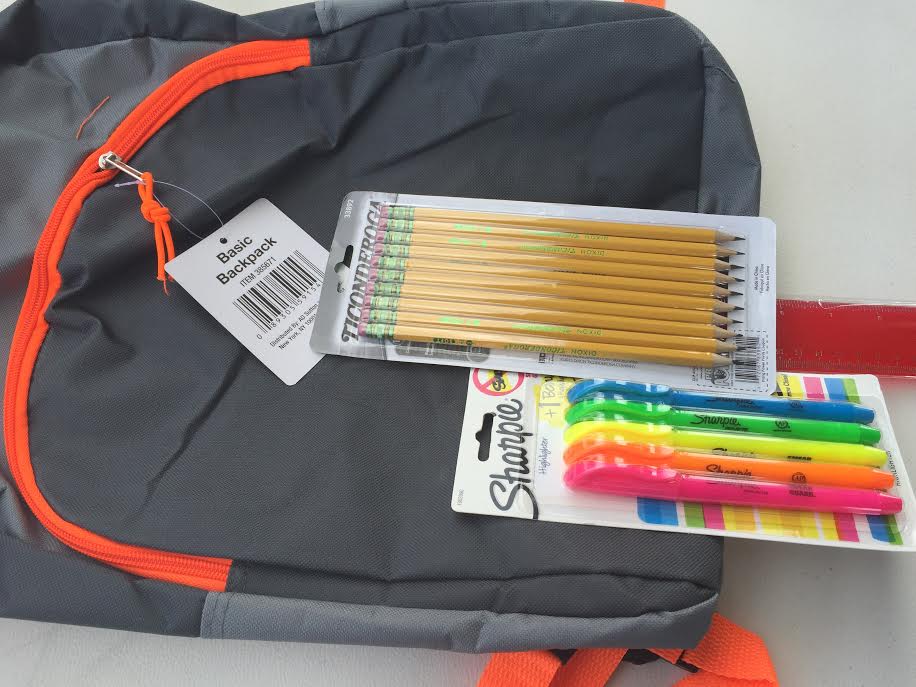
School may be out for the summer, but at First Call For Help we are busy preparing backpacks for the 2019-2020 school year.
Register today if you are an Ellis County resident in need or enduring a hardship. Students entering grades pre-k thru high school who reside and attend school in Ellis County are eligible to receive a free backpack filled with school supplies and a hygiene bag.
Our Backpack Distribution Day is Aug. 1, at the National Guard Armory, 200 Main St., Hays. Stop by and pick up your backpack anytime between 7 a.m. and 6 p.m.
Please contact Project Coordinator Laura Shoaff at First Call For Help if you have questions or are interested in volunteering to fill backpacks or assist on distribution day.
If you are not able to volunteer but would still like to get involved, donate some school supplies from the list or make a monetary donation. We appreciate the support of our community in making Backpacks For Kids possible.
Here are a few items that we are out of:
Wide-ruled filler paper
Wide- and college-rule one-subject, spiral notebooks
Despite a downpour that cut the opening act short and had people running for cover, A Thousand Horses went on as planned Wednesday night on the first night of the Wild West Festival in Hays.
Area residents also enjoyed carnival rides as long as the sunshine held out Wednesday.
Marion Schmidt with one of his miniature horses during a tour at Blue Sky Ranch. Photo courtesy of Stanley Schmidt
By CRISTINA JANNEY Hays Post
After almost three decades, Marion and Donna Schmidt’s Blue Sky Ranch will be sold at auction Saturday.
The Schmidts’ miniature horse farm was host to thousands of visitors from the Hays area and even internationally. Marion Schmidt, a former teacher and Thomas More Prep-Marian coach, in all his endeavors on the farm tried to emphasis the importance of the bond between animals and humans, two of his children said in recent interviews with Hays Post.
The family collectively decided to sell the ranch after Marion died in August. Although the ranch will be in new hands, the family said Marion’s and Donna’s legacy will carry on in the horses they bred and the joy they brought to so many people in the tours they gave at Blue Sky.
Marion Schmidt as a child with members of his family on the family’s farm north of Hays. Photo courtesy of the Schmidt family
Garret Schmidt, Marion and Donna’s son, said his father’s love of horses was sparked at an early age. Marion Schmidt grew up on a farm 5 miles north of Hays where his family also had horses. He said his father also enjoyed teaching and coaching and interacting with young people.
“He kind of felt like his calling was the combination of the animals and the youth,” Garret said. “So what he decided to do was raise and breed championship miniature horses and put on what he called, ‘tours.’ ”
Marion Schmidt giving a cart ride drawn by a miniature horse at Blue Sky. Photo courtesy of Stanley Schmidt
Busloads of youngsters visited the ranch, and Marion gave an hour or two presentation about the horses and what it is like to take care of an animal. He hoped to educate children who grew up in the city and did not have contact with animals.
“What he found was that children who were maybe hyperactive — the energy kids — when they got out there and they got out there around the horses and were grooming the horses and petting the horse and in their presence, many times they would calm down,” Garret said. “They would focus on the horse, and it would relax them. A well-trained horse is a very relaxed animal.”
The Schmidts found the elderly also benefited from contact with the horses, and Marion also took horses into elderly residential facilities in Hays.
Marion and Donna from the time the horses were born spent hours with the horses getting them acquainted with human contact.
A Blue Sky visitor with one of the horses. Photo courtesy of Stanley Schmidt
“You have to gain that horse’s trust, and that is what he did from day one after these foals were born,” Garret said. “He would hold them, touch them, brush them, get them to understand that he could be trusted. So when the children came out and the horses were very calm, it would have a calming effect on them.”
Garret said this was one of the reasons the family decided to re-home the horses and sell the ranch. Although the family had help to feed and water the horses after Marion died, they did not have the ability to give the horses the one-on-one human contact they were used to.
Garret said he thought the best tours his dad had was his first tour.
Dan Johnson, one of Marion’s and Donna’s neighbors, was an expert on local history. He joined Marion on the tour and talked about Custer and Historic Fort Hays. Custer was known to take his men on excursions north of the fort, and it was believed based on historical accounts, Custer camped at what is now Blue Sky.
His children say Marion Schmidt loved introducing his horses to children. He made special time during tours at Blue Sky for children to pet the horses. Photo courtesy of Stanley Schmidt
“It was a beautiful day and a good turn out, and the people just really enjoyed the horses,” Garret said. “That is probably one of my fondest memories.”
Although Marion was the one who liked to speak and give the tours, Garret said his mother was an integral part of the ranch. She kept up the horses’ registration paperwork and dedicated many long hours to grooming the horses.
Pam Schmidt, Marion’s and Donna’s daughter, said Blue Sky was always a part of the larger family. Garret, a vet, handled the medical needs of the horses. Pam and her other two siblings helped with events, and all of the grandkids spent showed the miniatures at some point.
At its height, Blue Sky had about two dozen horses. To be classified as a miniature horse, the animal has to be 34 inches or less measured from the withers. The Schmidts’ horses were Class A, which is the smallest class of miniature horses. Garret said his dad dreamed of breeding a record small horse. Despite some very small foals, he never quite reached that record.
All of the horses were double registered with the two major miniature horses associations in the United States. In more recent years, the Schmidts had about eight to 10 horses in their stable.
Donna Schmidt, Marion’s wife, was also very involved with the horse and spent much time grooming the miniatures. Photo courtesy of Stanley Schmidt
“They were all kind of members of the family,” Pam said of the horses. “They were all very, very gentle. … In his talks and tours, Dad tried to help young people and adults have empathy for animals and understand how to care for animals and see what richness animals can bring into our lives by caring for an animal and training an animal.
“It was something that was very important to him,” she said. “We really did call him the ‘Horse Whisperer,’ because he really did have a bond with the animals and he really understood them.”
The Schmidts showed the horses in several categories, including halter, pleasure driving, and obstacle course and had several horses that achieved national champion status. Her father was able to train some of the horses so they responded to voice commands, Pam said.
She said she remembered being very touched during one particular tour.
Marion Schmidt in the ring with one of his miniature horses. Photo courtesy of Schmidt family
“One of the young horses who was still getting trained did everything perfectly in front of a tour. When my dad called him in, the horse came in and instead of reaching for grain or a reward, the horse put his head on my dad’s lap, just nuzzled up to him,” Pam said.
“It showed how much of a bond he had with them, how much trust all of the animals had in him. They knew they were safe. They knew they were cared for.”
Several of the horses have been re-homed to Allen and Brett Schmidt. Marion was Allen’s uncle, and Brett is Allen’s son. Allen and Brett are partners in Resurrection Vineyard, and they hope to include the horses and cart rides in wine tastings at the vineyard. Resurrection is located on the original Schmidt farm, where Marion grew up.
Brett also runs the intergenerational preschool at Via Christi and hopes to bring the children to the vineyard for visits with the horses. Brett and Allen are trying to get the horses settled in to their new home, but they also hope to breed the miniatures and continue the bloodline.
Allen Schmidt’s grandchildren: Travis, 6, and Tucker Schmidt, 4, and Lexi, 8, Makaely, 6 and Layla, 4, Clay with two of the miniature horses. Horses Cocoa Belle and Snow Princess will now make their home at Resurrection Vineyard. Photo by Cristina Janney
Several other horses were sold to area residents. The remaining two horses went to the ROARR program in Calgary, Canada. This program is similar to the Schmidts’ in that youth from metro areas as well as seniors are able to come to the ranch and spend therapeutic time with horses.
“We were very happy to place the final two at the facility, because that is exactly what dad would have wanted,” Garret said.
Garret said he hopes whoever buys the ranch will continue its legacy of promoting animal and human companionship.
Travis Schmidt, Allen Schmidt’s grandson, brushes Cocoa Belle at Resurrection Vineyard. Photo by Cristina Janney
“It doesn’t have to be somebody who wants to carry on the program, just somebody who enjoys the property and uses it for a purpose that promotes animal/human bond,” Garret said.
“I think that is one of the strongest things that dad wanted to promote — about how integral animals are in our lives. With more people being in the city and less in the country, fewer people are having the opportunity to be exposed to that bond. Anything along that would be wonderful. We don’t expect anyone to do it as well as dad. If they can enjoy the property as much as he did, then that’s enough.”
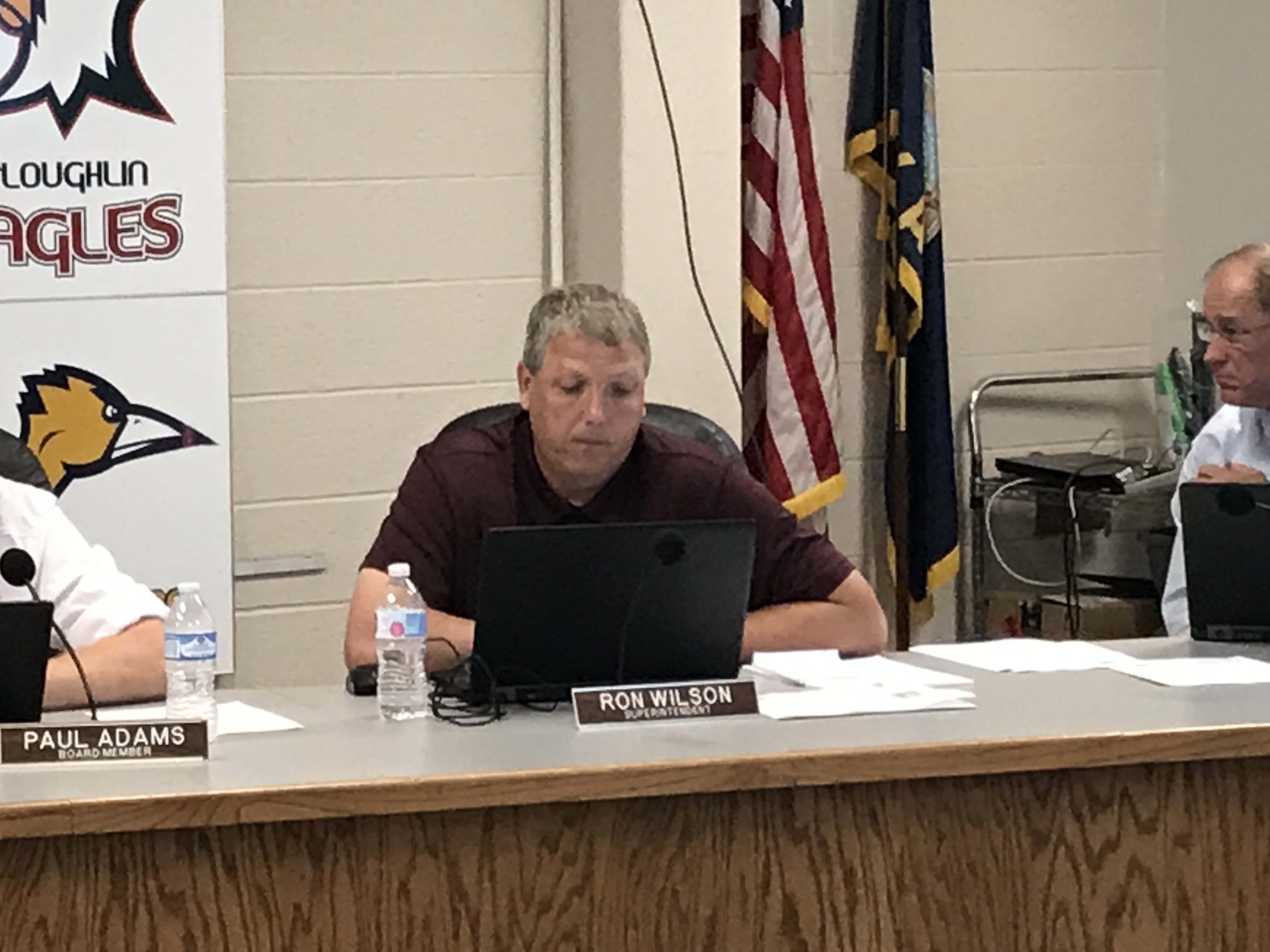
New USD 489 Superintendent Ron Wilson at the school board meeting Monday night.
By CRISTINA JANNEY Hays Post
New Hays USD 489 Superintendent Ron Wilson’s first day in his new job was Monday, and he told the school board Monday night he will seek to be visible in the district and build relationships.
Wilson was selected as the new superintendent in February to replace John Thissen, who resigned citing personal reasons. Wilson comes to Hays after serving as the superintendent at Herrington.
“I think what I will be doing this month and going past this month is doing a lot of listening, a lot of learning and then I will be able to do some leading,” Wilson said.
He said he will be sending invitations to meet with each board member one-on-one.
Wilson said he had four things he will strive to do.
“The first one is that I am going to be visible. I am going to be around the district. I am going to ask at times to visit with you, ” he said referring to the board. “I also want to build relationships with all our stakeholders in our district.
“I am also interested in maintaining the culture and building a positive culture in this district. I think the last thing that is required, but is probably the most important, is that I have to manage people and manage this district.”
He said he hoped to add to the great work the board is doing with his work on the ground.
Board reorganization
Mike Walker, left, was elected Hays USD 489 board president and Lance Bickle, right, was elected board vice president at the school board meeting Monday night.
The board also conducted its annual reorganization. Mike Walker was elected board president. Lance Bickle was elected board vice president, and Jess Reling was appointed board clerk. Reling is taking over for Sarah Wasinger, who is leaving the district to become the new president/CEO of the Hays Area Chamber of Commerce.
In other business, the board:
• Approved student handbook changes.
• Approved a new contract will Bill Jeter to serve as the board attorney.
• Approved DFAC board policy updates. These are necessary for Early Childhood Connections to apply for grants.
• Discussed a contract with USD 407 Russell for gifted services. Under the agreement, USD 489 would receive a portion of the Russell students’ state funding to provide the services. The addition of the new students would not require the special education co-op to add any more staff, but would bring in more revenue for the co-op, co-op director Chris Hipp told the school board.
The Hays USD 489 school board voted Monday night to reopen the bidding for the Washington school building.
Washington school is being vacated by the Early Childhood Connections program, which is being relocated to the renovated Oak Park Complex.
The Overland Park Group has a contract to buy the school, but the contract was contingent on the developer receiving tax credits. The developer wanted to renovate the former school into low-income apartments. However, it did not receive the tax credits this year.
The Overland Park group proposed an addendum that would have extended the contract so the Overland Park Group could apply for tax credits in 2020.
The board opted not to sign the addendum, but send out requests for sealed bids for the property for a second time.
“Now we’re another year away,” board member Greg Schwartz said of the addendum. “Maybe they will get [the tax credits], but maybe they won’t. If they don’t, we sat on it. It seems a bird in the hand is better than two in the bush.”
Board member Luke Oborny said, “I think we should see what is out there.”
Board members Mandy Fox and Paul Adams also spoke in favor of reopening the bidding process for the building, saying they thought the Overland Park Group timeline is too long to wait.
The Overland Park Group offered the district $500,000 for the building. The district received another bid for $200,000 for the building on the first round of bids.
The Washington school building will be under contract with Overland Park Group until Jan. 31, 2020. However, board attorney Bill Jeter said if the district receives a favorable bid on the building, it could set the closing date after Jan. 31. Overland Park Group could also choose to release the district from its contract.
Renaming of Oak Park still on hold
The school board voted to table the renaming of the Oak Park Complex.
Community members have submitted a list of suggested names for the building.
New Superintendent Ron Wilson said Early Childhood Connections has spent significant effort in branding its program with its current name.
Donna Hudson-Hamilton, ECC director, said she did not want to rename the program. Keeping the name is not only important for branding, but it important to keep consistency for the purpose of grants, she said.
She said the building could be named one name and the ECC program could retain its name.
The board is set to take up the issue at its next meeting on July 22.
According to a report from the court trustee filed Friday, the total gross from the auction of the personal property and equipment from the bankruptcy auction was $405,682.
Almena Bank has the first lien on the real property, and second lien on the personal property and equipment.
TBK Bank has first lien on the personal property and equipment with the exception of four trucks and a skid loader, which had secured loans through other creditors. According to court records, TBK Bank is owed $227,238.
In court records, Almena Bank indicated Plainville Livestock Commission had defaulted on three loans with its bank totaling more than $3.49 million.
According to court documents, Plainville Livestock Commission debt is almost $14.5 million of which $3.7 million is secured debt. Landmark Bank of Manhattan is listed as an unsecured creditor with the commission owing $8 million.
Dozens of cattle producers were caught up in the Gillums’ alleged scheme after money that was supposed to be set aside to pay cattle sellers was transferred from a custodial account to the Plainville Livestock Auction’s operating account. The Almena Bank froze both accounts, which resulted in bounced checks amounting to tens of thousands of dollars per producer.
The court is holding about $900,000 from the frozen accounts at Almena Bank. The cattlemen’s case is moving through the bankruptcy court separately from the main bankruptcy. The next hearing on the cattlemen’s case is set for 10:30 a.m. July 11.
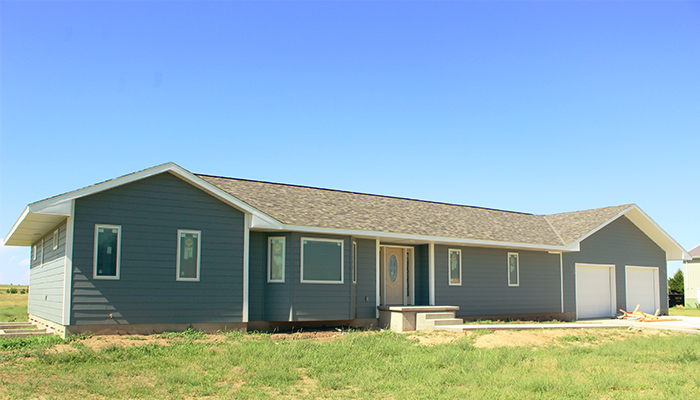
The Northwest Kansas Planning and Development Commission hopes to have this three-bedroom home at 1941 Leiker Road in Hays completed and listed within the next month.
By CRISTINA JANNEY Hays Post
The Northwest Kansas Planning and Development Commission has decided to discontinue a housing program that included purchasing homes from the NCK Tech building program.
The program has become too costly, said Randall Hrabe, Northwest Kansas Planning and Development Commission executive director.
The commission has purchased two homes from the program in Beloit, three from Hays and two from Goodland. The two homes that were built in Beloit have sold.
The commission has about 130 houses or duplexes across northwest Kansas as part of its housing program and thought buying the technical program houses would be cheaper than building the homes themselves, Hrabe said.
Of the homes from the Hays program, all three of the homes have yet to be sold. The homes located in Hays were finished in the spring of 2017 and 2018, but were only moved to their lots this April. Hrabe said the commission had difficulty finding lots and someone to move the homes in the Hays area.
This home at 1337 285th Ave. in Hays is also for sale.
Work is still being done on the two homes in Hays, but Hrabe said he hopes those homes will be finished and be able to be put on the market within the next month.
The three-bedroom homes are at 1337 285th Ave. and 1941 Leiker Road. The house on 285th Avenue is 1,500 square feet with a full basement and a double garage. The house on Leiker is is the 1,920 square feet, also with a full basement and a double-car garage. Both houses are located on 2 acres.
The house in WaKeeney is 1.920 square feet with a fully finished basement, a double-car garage, a full-length deck on the south side, stainless steel appliances installed and three bedrooms upstairs and two downstairs. It has city water and sewer and is on a paved street. It is located on four acres.
The commission also has a house in WaKeeney; however, it received more than $47,000 in damages during a major hail storm that hit that community in 2017. Repairs are still being made to that house.
The cabinets in the kitchen of the home the commission has for sale in WaKeeney are made of cherry wood.
The commission originally received funds from the Dane G. Hansen Foundation for the program. The plan for the project was to purchase the homes in the spring, move them over the summer and have them sold shortly after that. Then the money from the sale of one home could be invested in another technical school home the next spring.
“Just because it has taken us longer to get them moved, get them set … What we found out was that we are having to finance two years,” Hrabe said. “With three vo-techs, we are talking about $800,000 invested in these.”
Hrabe said the commission is having difficulty meeting the market demand.
Once the homes have been moved, placed on foundations, and sewer and HVAC installed, the commission has about $300,000 in each house. The City of Goodland gave the commission the lots on which the two vo-tech houses there were built, but the commission’s cost still ran about $250,000.
The exterior of the house the commission has for sale in WaKeeney at 10th and Josephine streets.
Hrabe said most entry-level homebuyers in northwest Kansas are looking to spend between $135,000 and $150,000. However, Hrabe noted the market in Hays is a little bit stronger.
“We, as a nonprofit, can’t continue to lose money on them,” Hrabe said of the houses.
The commission is not the only developer that is faced with the challenge of this gap. There is a demand for entry-level homes, but builders can’t construct the homes for what consumers are able to pay.
Hrabe said the commission is continuing to build duplexes and rentals in the region. This includes six new duplexes in Russell and a new tri-plex that was just finished in Grainfield. Hrabe said the hope is seniors will downsize into the smaller rental units, allowing families to purchase and move into existing housing stock.
Hrabe said anyone interested in purchasing the two homes in Hays or the home in WaKeeney can contact him at 785-421-2151 or [email protected].
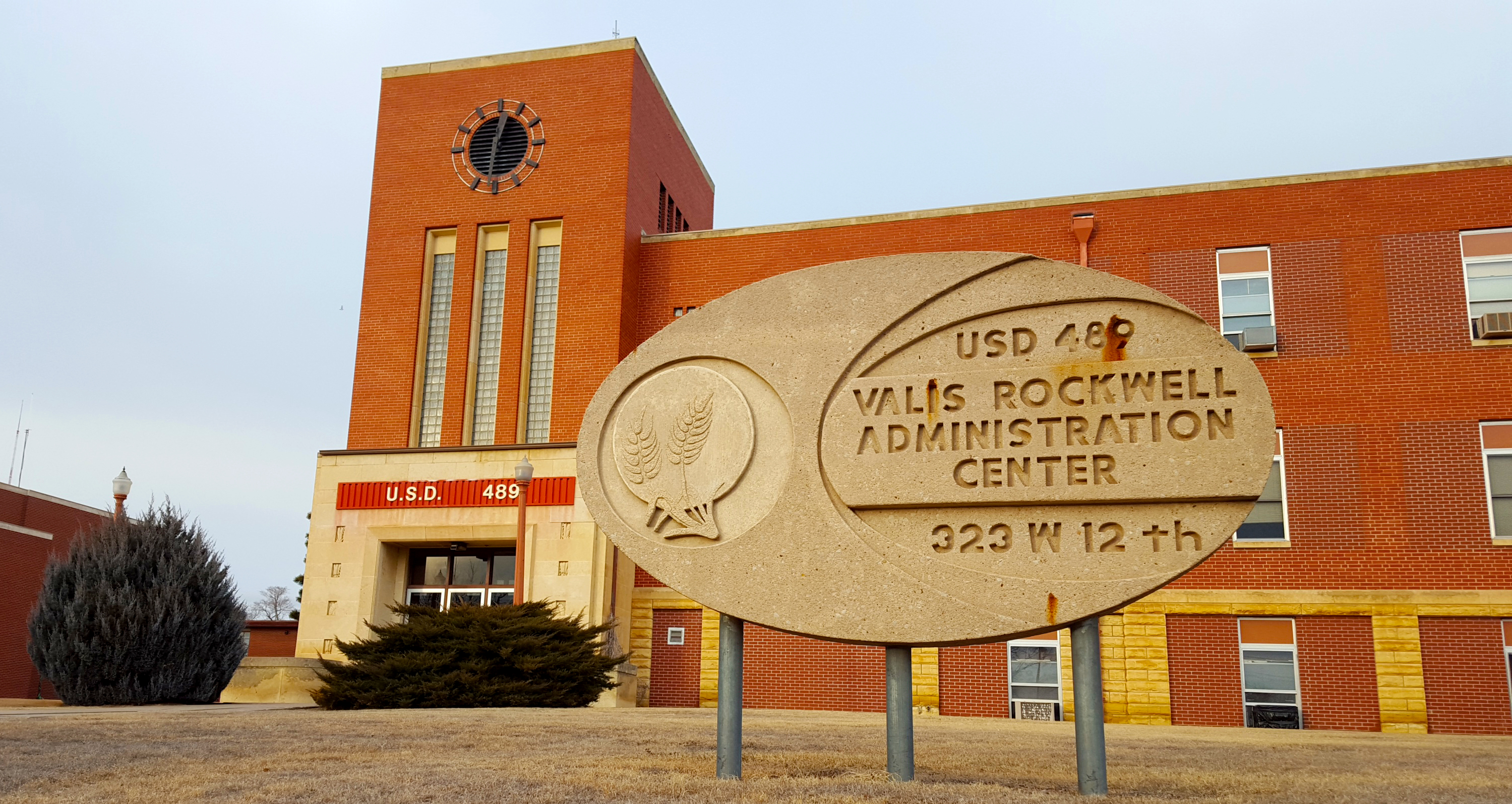
The Hays USD 489 school board will discuss the sale of Washington school at its meeting at 6:30 p.m. Monday at the Rockwell Administration Center.
The Early Childhood Connections program that is located in the Washington school is being moved to Oak Park Medical Complex, which is currently being renovated.
The district had a contract with developer Overland Park Group to purchase the building for $500,000. The developer planned to renovate the historic school into apartments. However, the developer was not able to secure the tax credits this year it needed for the project.
Matt Gillam, vice president of development for Overland Park Group, told the board June 17 he was optimistic the group would be able to secure the tax credits next year.
The district has the options to end the contract with Overland Park Group and pursue other buyers or extend the contract with Overland Park Group to allow the developer to apply for tax credits in 2020.
Oak Park Complex renaming
The board will discuss renaming the Oak Park Medical Complex. The district has accepted suggested from the community for the complex’s new name. The board will consider the full list, including names that include suggestions to name the complex after specific people. The administration will also bring a shorter list of its recommendations for names to the board.
The July 1 meeting is also the board’s reorganization meeting. The board will elect a president and vice president. The board also has a list of annual housing keeping resolutions and appointments that it will vote on.
The board is also set to:
• Discuss the contract for gifted services for USD 407 Russell
• Vote on student handbook revisions
• Vote on the board attorney contract
• Vote on board policy updates