A Northwest Leadership Intern is seeking to connect with local nonprofit groups to offer leadership training to youth.
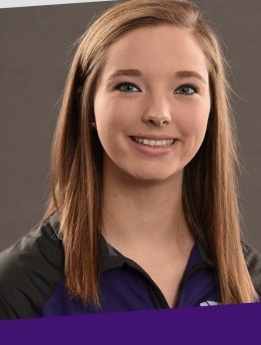
Nikole Cain, a Kansas State University senior, will be in Hays through Aug. 1, and is available to offer leadership courses to youth 12 and older throughout northwest Kansas.
Cain’s workshops focus on developing leadership skills, team building and service.
She is looking for more organizations to work with this summer. She said she can offer anywhere from an hour workshop through an all-day leadership camp.
Although she is based with Extension, she is not limited to 4-H. She said she can work with any local community group, including Scouts, Big Brothers Big Sisters, vacation Bible schools, churches or groups.
The position has been funded through support of the Dane G. Hansen Foundation. Counties included within this program are Lane, Ness, Rush, Ellis, Ellsworth, Barton, Russell, Phillips and Rooks. Cain’s services are free. She is only asking partner organizations to provide a small fee for supplies.
She has already conducted a Leaders Rise Up Day Camp in Hays.
“We are really challenging kids to focus on their leadership skills and how they can enhance the living in their communities with that service learning project that they create and design and hopefully after the camp implement within their community,” she said.
The service projects are developed by the kids based on their interests. They can do projects individually or as groups. One group from her first camp decided to make quilts and donate them to a homeless shelter. Another group decided to donate their time to the Humane Society and work to encourage others to volunteer or adopt animals.
“It can look like a lot of thing, but you are just challenging those kids,” she said. “A lot of them this is their first step in leadership. They have never taken a leadership role. They are very young. It is challenging to get them to think outside of the box and think of what leadership looks like.”
Cain will offer another leadership day camp for students 12 and older through extension from 9 to 3 p.m. June 25 at the Cottonwood District Extension office in Hays. Cost is $5 per child. The children will need to bring a sack lunch.
Deadline to register for the event is Friday. Call the Extension office at (785) 628-9430 to register.
Growing up in Admire, Kansas, on a 5th generation farm, Cain, 22, has deep roots within agriculture. She was a 12-year 4-H’er and heavily involved within the National FFA organization throughout high school. She is majoring in agriculture education with double minors in leadership studies and animal science.
She will be returning to Hays this fall to student teach under ag teacher Curt Vajnar at Hays High School.
If you are interested in having Cain present about leadership, contact the Cottonwood District Extension office in Hays at (785) 628-9430.
The Guzman family outside of their new home on 19th Street in Hays.
By CRISTINA JANNEY Hays Post
Irene Guzman smiled for pictures with her children and grandchildren gathered around her on the front porch of her new home Wednesday.
But it was only six months ago she and her large family were living in what the family referred to as the “tin can” — a singlewide trailer where no one in the family felt safe.
Guzman, 53, and her family were visited Wednesday by USDA Rural Development State Director Lynn Hinrichsen to celebrate National Home Ownership Month.
“In 2018, USDA Rural Development assisted 1,426 individuals in purchasing a home in rural Kansas communities,” Hinrichsen said in a news release. “Homeownership helps build strong rural communities throughout the state.”
Guzman said she would not have been able to purchase her family’s five-bedroom home on 19th Street without the help of Rural Development.
Living in the tin can
The family of seven was living in a three-bedroom trailer. Guzman said it was difficult to squeeze everyone into the space, and there was little privacy.
Irene Guzman in the living room of her new home. The family moved into the home in December.
Not only was the tin can cramped, but several incidents led the Guzmans to feel increasingly unsafe.
Guzman and her husband lived in the trailer park for 18 years. They went on vacation, and when they returned they found a bullet hole in the trailer. That is when they thought they needed to start looking for a new home.
Irene said things got worse after the recent passing of her husband. Her daughter heard some racket outside about 2 a.m. one morning. Guzman said she thought it might just be a stray dog, but the next morning they discovered their car tires and a garden hose slashed.
“They slashed our tire and left the knife they used in our car,” she said.
Guzman reported the incident, but police were not able to apprehend the perpetrator.
About a week later, the Guzman’s tools were stolen.
Looking for a home
Guzman, now a single mom and grandmother with custody of two of her grandchildren, said the family struggled to find a suitable home and the financing to pay for that home in Hays.
Guzman works as an interpreter for the Hispanic ministry at the Immaculate Heart of Mary in Hays. Neither she or her husband before his passing made much money for their family size nor did they have high credit scores.
“The banks wouldn’t be able to help us, because it was just extremely too much money — the payments,” she said.
They were hoping to find a house to rent to own, but were coming up empty. The Guzmans then turned to Habitat for Humanity, but that organization only had a home available in Victoria at the time.
Irene Guzman and here family with her real estate agent and representatives of USDA Rural Development.
Guzman sometimes works on an on-call basis for her job and all the children were enrolled in either Holy Family or Thomas More Prep-Marian in Hays. She said she did not feel it would be practical to live outside of Hays at the time.
Rural Development explained to Irene finding a home in Hays would be more difficult than Victoria because of the higher prices.
“We searched and looked, and they worked with me,” Guzman said of Rural Development. “They helped me a lot. … When we finally got it done, oh my gosh, I couldn’t believe it.”
She said she did not think she would have ever been a homeowner without Rural Development’s help.
“They moved a lot of things around to make this possible for me,” she said.
A new home, a new life
Guzman said she could see a change in her youngest daughter, who is 13, when they moved out of the tin can. Before she said she was reluctant to bring friends home. Now she welcomes friends into their new house.
“I think having this is bigger and more privacy,” she said, “because she has her own room to invite her friends and they are able to hang out.”
The family has a fenced yard where the younger children can play, a garden and two new puppies.
USDA Rural Development State Director Lynne Hinrichsen presents Hays homeowner Irene Guzman with a certificate Wednesday morning.
Guzman had been dreaming of a home for years. She had large framed pictures stored away in closets that could no way fit on the walls of the tiny tin can, but she knew some day she would have home with walls on which to hang that artwork. Today, they are a proud part of the decor in her new home.
“I accumulated quite a bit. They said, ‘Get rid of it. Get rid of it,’ but I said one day. … one day and finally it came true,” she said.
Her family also teased her, saying she could become a cat lady now that she had more space. A caretaker at heart, Guzman has filled her bright living room with plants of all sizes and colors instead.
The new space has brought the family together and in some ways pushed it apart.
In addition to a very full household of children and grandchildren, Guzman has older children and extended family who come home for holidays. Guzman loves to cook and now has a kitchen with two ovens and a dining area big enough to gather everyone for big family diners.
“I can put in a turkey and a ham,” she said of the ovens.
One of the children said he used to climb under a card table to find a spot to sit during those big family gatherings in the tin can.
Irene closed on her house on Dec. 17, so the family was able to enjoy Christmas in the new home. They also had a large family celebration on Easter.
However, Guzman said after living in such cramped quarters for so long, the larger house almost seems a little lonely.
“Sometimes I just get a little lonely, because they are all in their secluded spaces,” she said. “Before, they ran into each other every time they were going to the kitchen or I always saw traffic. Now there is not a lot of traffic.”
The family’s closing was on day of the Feast for the Lady Guadalupe. Guzman had hoped to schedule the closing on another day because she was supposed to help with the feast at the church that day, but everything fell in to place on feast day. She said it must have been what the Lady wanted.
“I thank God,” she said. “I thank God that He took us out of the situation that we were in and He helped us through Rural Development to come here. It took a lot of prayers. I feel like He answered our prayers. We are here, and it’s a wonderful house.”
Rural development celebrates home ownership
USDA Single Family Housing programs have served more than 4.4 million families in rural America since President Truman signed the Housing Act in 1949. Throughout June, USDA employees will celebrate National Homeownership Month with events across the nation that demonstrate USDA’s commitment to provide access to affordable housing for rural Americans.
Rural Development has several programs that support rural homeownership, including:
USDA partnerships with private-sector lenders to help rural families buy homes. Providing loan guarantees for lenders working with low- to moderate-income families is the key to opening up private-sector homeownership opportunities.
Direct home loans for very-low- and low-income applicants. Some borrowers qualify for program benefits that effectively reduce the interest rate on their monthly mortgage payments to 1%.
Repair loans and grants that help people improve access to their homes and remove health and safety hazards such as poor wiring or plumbing.
Mutual Self-Help Housing Technical Assistance grants are available to nonprofit organizations to help very-low- and low-income families build their own rural homes.
To learn more about USDA’s housing programs in Kansas, email [email protected] or call 785-271-2700.
Brenda Meder, Hays Arts Council executive director, hangs a Cally Krallman painting for the “Waterways & Byways of the Prairie” exhibit that will start Friday at the HAC.
The Hays Arts Council will feature two exhibits by Topeka artist Cally Krallman during the Summer Art Walk, which will be 6:30 to 9:30 p.m. Friday.
“Waterways & Byways of the Prairie” will be featured in the main gallery with “Along the Santa Fe Trail” in the Founder’s Gallery through Aug. 10. Krallman works primarily in oil and acrylic.
“It is all these incredible prairie scenes from different parts of the state,” Brenda Meder, HAC executive director, said of “Waterways & Byways of the Prairie.” “They are not of one particular place or representing one particular moment on the Kansas prairie or representing one particular season.”
For “Along the Santa Fe Trail,” Krallman visited locations along the historic Santa Fe Trail, including locations in Kansas. She created paintings depicting how those places look today. Visitors will be able to locate the scenes on a trail map that will be displayed with the exhibit.
Cally Krallman painting for the “Along the Santa Fe Trail” exhibit
Brief descriptions of the locations and their history associated with the trail will accompany the paintings as well.
The Santa Fe Trail was founded in 1822 and was an important north/south trade route between Franklin, Mo., and what would become Santa Fe, N.M. The trail came nearest to this area at Larned.
Visitors to the exhibit can see the topography change as they move from one painting to the next.
“If people want to take the time, they can follow that line. They can literally walk the Santa Fe Trail through the art in this room,” Meder said.
Cally Krallman painting for the “Along the Santa Fe Trail” exhibit
Brian Hutchinson, a member of the FHSU art faculty, guided an alternative-methods printmaking workshop this summer. Prints from that class will be on display in the Hays Arts Center Annex, 1010 Main St. Hutchinson also taught FHSU Secondary Art Education students this spring who worked with Hays High School students to create an installation project that will be in the annex.
Also in the annex will be photographs from the 16 HAC Summer Youth Photography class students and paintings and photography by Bruce Burkholder.
Although the spring and fall art walks are usually twice as large as the summer walk, Meder said the Summer Art Walk is still worth the time.
“Even though there are just 13 sites … it is the most delightful array of things to see and do — all focused on creativity, originality and the arts and design, but probably one of the most diverse and unique collectively that we have ever had,” she said.
Cally Krallman painting for the “Waterways & Byways of the Prairie” exhibit
John Makings, a psychotherapist from Great Bend, will bring his handcrafted drums for an impromptu drum circle at the Union Pacific Park and Pavilion. He is not a music therapist, but has used music therapy in his work.
“Drum circles are a very wonderful, creative, inclusionary kind of experience and something that is fun to engage in because of the simple rhythms and how [easy] it is to do. Music therapy is a wonderful,” Meder said. “So children or adults come and look at John’s drums and bang around a little bit and engage in a drum circle experience, but it is not something formal. It is not a concert. It is an interactive engagement experience in a collective community drum circle.”
Frank Werth will have Elvis Presley replica costumes on display at Couture for Men, 1111 Main.
“He is bringing in an array of his outfits, which are reproductions down to details of Elvis Presley costumes,” Meder said. “Costume design is an incredible art form whether it is for theater or movies or various stage shows.”
Mary Kay Schippers will be at Regeena’s, 1013 Main, to sign copies of her book, “A Year on the Family Farm.”
“I love it when we can incorporate the literary arts in some capacity,” Meder said. “We do recognize it as an awesome art form. The literary arts, the performing arts, the visual arts — they are all central to who and what the arts represent in our community.”
Cally Krallman painting for the “Waterways & Byways of the Prairie” exhibit
The Hays Community Theatre will feature five different artists (see the complete schedule below) as well as mermaid face painting by Alexandra Herrman to promote the HCT’s summer performances of “The Little Mermaid.” Meder described it as a mini art walk of its own.
eyeSMILE Vision and Dental, 1300 Main, will be a stop on the walk for the first time this summer. Visitors will be able to get a glimpse of the renovations that have been completed to that historic downtown Hays building that was once a service station.
The art walk will be extended into Saturday with a Summer Polka Party from 10 a.m. to 2:30 p.m. at the Hays Public Library. The Hot Shots polka band will play followed by the showing of the documentary “Herman Dinges: Colorado’s King of Christmas and Polka.” Dinges is originally from Schoenchen.
“He was also incredibly well known in Denver for his incredible, huge Christmas displays,” Meder said. “Before there was a Clark Griswold and ‘Christmas Vacation,’ there was Herman Dinges, and he is very proud of that.”
After several years away from education, former Washington Elementary School Principal Allen Park is seeking to return to Hays education as a member of the USD 489 school board.
Park, 56, joins a field of eight other candidates for four open positions on the board, including incumbents Paul Adams and Luke Oborny and newcomers Craig Pallister, Lori Hertel, Tammy Wellbrock, Alex Herman and Cole Engel.
Park has worked at all levels education preschool through college.
He started his career as a para at Washington Elementary School, then was a teacher at Hays High School and Kennedy Middle School. He spent the last 25 years of his education career as the principal at Washington Elementary School. He was a transition coordinator briefly before retiring in October 2015.
“I think with my experience and having children in Hays for over 25 years straight — I still have kids in Hays schools — that I have a unique perspective and maybe have some things that might be able to help,” he said.
Park was part of the first Leadership Hays Class in the early 1990s. He said that experience and a desire to give back to the community also led him to his decision to run for school board.
Park was part of the committees for the last two bond issues that passed in the 1990s. The district has had two failed bond issues in the last three years — in 2016 and 2017. The board is considering a third bond election in 2020.
“I think getting the community involved in all aspects of the planning stages and asking their opinions and helping all schools are areas that might be helpful,” Park said. “I think involvement is key and asking opinions and being inviting.”
He said getting teachers and staff more involved in planning a bond is also important.
Park said he supported the last two bond issues.
“I have always supported anything that helps kids,” he said. “We just need to look at all of the different angles to see what we need to improve facilities and make sure facilities are safe.”
He said voter turnout has been low during the last two bond elections.
“I think something as important as a bond issue, we need everyone to express their opinions,” he said. “That is something we need to look at to see how we can inform our public and get them involved.”
The current school board has discussed three projects for the next bond although it has not voted on them yet. Those projects include finishing upgrades to the HHS HVAC system, expanding the HMS cafeteria and renovating and expanding Roosevelt Elementary School.
“It is really sad that we need to take care of maintenance issues on a bond election, but maybe that is the only thing we can do to get those things taken care of,” Park said.
The USD 489 school board went to impasse with teachers during negotiations last year.
“Education and what is best for kids, you need to have a quality and a strong staff. We need to make sure we support them and help them in any way we can, but have high expectations and be accountable for results, he said.
In recent years, the board has also debated its one-to-one computer policy for students.
Thanks to grants, Washington school was one of the first schools to go to a one-to-one program.
“I think that is something that needs to be looked at and see what the teachers need, so they can be successful” Park said of computers, “and give them the training and in-service they need to make sure they can bring that technology to kids the best way possible.”
Park named a list of goals he would have if elected:
Achieve what is best for all kids in the community
Build trust and increase public involvement
Help ensure USD 489 has quality and safe facilities
Help the district be fiscally sound
Support local businesses
Build a positive and team atmosphere on the board
Use local and national data to help drive decisions on what works in education
Include the whole school community
“I think people care,” Park said, “but we need to be more inviting to get them at the board meetings whenever possible.”
Park is on the Student Development Committee for the Cottonwood Extension District and is a member of the Hays Sunrise Rotary Club where he is a chairman of the community basketball challenge. He continues to volunteer in USD 489, is on the Roosevelt Site Council and is involved in church activities.
Park has four children. They all have gone through Hays schools. His youngest child is a junior at HHS.
“I hope I can use my experience as a parent and an educator to help move USD 489 to the next level,” Park said.
The Hays USD 489 school district voted to keep the Hays High School technology fee the same despite a recommendation from the administration to drop the fee by $25 for the coming school year.
The HHS technology fee is $50, but the administration recommended decreasing the fee to $25 to match the Hays Middle School fee.
Superintendent John Thissen said the administration was following the direction the board had given several years ago to decrease student fees.
Board member Greg Schwartz balked at the move.
“I think we are going to find out that we don’t have an endless supply of money this year even though we are getting a bunch more,” Schwartz said. “With everything else we have been presented thus far, I don’t know that it will be a good time to start cutting those fees.”
He said he would like the district to look at the possibly cutting fees in other areas.
Schwartz said the fee at HHS was initially set at $50 at the high school because that was the deductible on the insurance for the original devices that were used for HHS one-to-one computer program. The district later decided to self-insure its devices.
He said the district has many facility issues that need to be addressed through the capital outlay fund.
“No one ever addressed the big elephant in the room, which was technology, which accounted for about 20 percent of the capital outlay budget. This is one way to offset that,” he said.
Schwartz said he would be in favor of making HMS’s fee the same as the high school’s.
“If they have to be taken home because they are a necessity, that is a small price to pay for the use of a laptop or an iPad for a complete year,” he said.
Board member Lance Bickle said he also supported keeping the fee the same He noted the Thomas More Prep-Marian technology fee was $140. He said he supported looking at cutting in other areas.
The district decreased its workbook/material fee from $135 to $90 in 2018.
The district already decreased the driver’s education fee by $25 this year. Driver’s education fees in-district students for this summer were $225 and cost for out-of district students were $275. The program had a balance of about $80,000, and the administration recommended the fee change to reduce the surplus over time.
Here is a list of other fees for 2019-20.
Workbook/material fee at $90
HHS Activity Fee $66
HMS Technology fee $25
HMS Activity Fee $62
Food fees
Elementary Breakfast $1.70
Elementary Lunch $2.70
Middle School Breakfast $1.70
Middle School Lunch $2.85
High School Breakfast $1.70
High School Lunch $2.95
Reduced Breakfast $0.30
Reduced Lunch $0.40
Adult Breakfast $2.20
Adult Lunch $3.65
Extra Milk $0.40
In other business, the board:
• Reauthorized its FY2019 budget. The district received more special education funds than expected because of a higher student count. The district needed the authority to spend the money it received. The change will not affect local taxes.
• Approved the district’s worker’s compensation and cyber liability insurance renewal and renewal of the district’s participation in the Kansas Educational Risk Management Pool.
• Approved a 5 percent cost increase for all districts participating in the West Central Kansas Special Education Cooperative. This includes Hays, Ellis, Victoria and La Crosse. This will amount to $110,000 per year for Hays.
• Approved the renewal of the district’s membership in the Kansas Association of School Boards and the KASB Legal Assistance Fund. Total renewal cost was $15,144.
• Thanked Superintendent John Thissen for his service. This was Thissen’s last school board meeting. He will be replaced by new Superintendent Ron Wilson on July 1.
Board member Lance Bickle asked if the study took into account benefit packages.
Board member Mike Walker is the director of the Docking Institute. He said he did not do the study himself, but said he knew the study did not include benefits.
Superintendent John Thissen also pointed out the study focused on starting wages only.
The USD 489 does not have a wage schedule for classified staff at this time. Thissen said the district could address the issue of wages by only addressing starting wages for those staff who are below the peer average.
However, he said creating a new pay schedule would address the issue longer term, but would require more time and money.
“You don’t have the bus driver who has been here 18 years and is being paid $10 and the other bus driver who is just hired getting paid $14 an hour,” Thissen said. “Even with the bus driver [pay increase] that was done two years ago, that does not answer the issue over time. You are still going to have the same issue 10, 20 years from now where you are going to have bus drivers making $14 and it is not putting into the thought of worth of experience in their position.”
Bringing wages up in a new pay schedule would probably take the district several years based on the expense required to do so, Thissen said.
Board member Greg Schwartz said he wanted to see options for pay schedules with costs to increase pay on those schedules. He said he would like those numbers as soon as possible considering the district is in negotiations with teachers at this time.
“If you do a schedule and plug them in for a three-year plan or one-year plan, what’s that look like?” he said. “Because if it’s $40,000, that is a lot easier to stomach than if it’s $400,000.”
Keith Hall, interim director of finance, said he will begin work on the schedules, but noted a lot of work would need to go into them and he is still working on the budget for FY20.
He suggested forming a committee to make recommendations on the schedule.
The company that the Hays school district contracted with to purchase the former Washington school building will not be able to purchase the building at this time, the Hays school board learned at its meeting Monday night.
Overland Property Group did not receive the tax credits for its project therefore it will not be able to move forward with its plans to renovate the building into low-income apartments.
However, the developers received a letter from the state official in charge of the program urging the developers to reapply for the program in 2020.
Matt Gillam, vice president of Development for Overland Park Group, said based on that letter and the high scoring the property received in its application, he believes the group has a good possibility of receiving tax credits for the property next year.
Overland Property Group has the property under contract until December.
Gillam said the district could opt to extend the contract, terminate the contract or reenter a contract with Overland Park Group at a later date.
The board took no action on the contract Monday night. Gillam said the board could take some time to consider its options. He said he does not need a decision immediately.
Gillam noted his company has already spent $30,000 on the project and is still very serious about pursing the tax credits for the project.
USD 489 plans to vacate Washington school in August when it moves its Early Childhood Connections program to the newly renovated Oak Park Complex.
Oak Park Complex
The completion of the renovations for the Oak Park Complex are on schedule, according to representatives of Nabholz and Paul-Wertenberger Construction.
Three of the four buildings should be complete by Aug. 2 when the district is planning an open house in conjunction with the Hays Area Chamber of Commerce. Building three should be done a little later in August.
The district is planning two moves into the new buildings. One will be the equipment and supplies from Washington school in about the third week in July. The move from Munjor will happen in August when building three is completed.
Play equipment from Munjor and Washington will also be moved to Oak Park in the coming weeks.
The board did not vote on a new name for the complex at its meeting Monday. Superintendent John Thissen presented a list of names to board that were submitted by members of the community. Thissen said he left off suggestion that included specific people’s names as the Kansas Association of School Boards recommends school districts not use specific people’s names for school buildings.
Thissen said the reasoning is the names may be political or not well known to the general public.
Greg Schwartz made a motion that the full list, including names that include specific people’s names, come back to the board at its next meeting. The administration will also bring its five recommendations of names from the community list to that meeting.
The board also voted to dissolve the Oak Park Condominium Association. The association is no longer needed because the school district now owns all of the property.
Once the condominium association is dissolved, the board gave Board Attorney Bill Jeter the authority to apply for tax exempt status for the property.
The Hays USD 489 school board will hear a report on a recently completed classified staff wage study by the Docking Institute at Fort Hays State University at its meeting at 6:30 p.m. Monday at Rockwell Administration Center.
The study found several classes of USD 489 employees are not making as much as their peers.
These included building secretaries, office assistants and clerical workers, and information technology assistants.
The starting wage for a USD 489 school secretary is $9.62 per hour, but the average starting wage for other Hays’ employers is $12.78. Comparable school districts pay an average of $11.08 and comparable cities pay an average starting wage of $13.45.
Office assistants and clerical workers start at $10.06 at USD 489, which is comparable to other school districts, but is more than $2 below the average in the Hays community and $4 below the average in comparable cities.
IT assistants start at $10.95 per hour in the USD 489 district, but the average at peer districts is $13.38 and $11.87 in the city of Hays.
The board has discussed creating a new pay scale for classified employees, but was waiting on the release of this study.
Budget
The board will have a budget hearing at 6:25 p.m. Monday at Rockwell so it can reauthorize its FY19 budget. The district received more special education funding than it anticipated and needs to reauthorize its budget in order to be able to spend all the money it has been allocated.
This will not affect local taxes.
Oak Park Complex
The board will consider several items regarding the Oak Park Medical Complex renovation.
Matt Gillam, vice president of Development for Overland Property Group, will provide an update to the board regarding the sale of the Washington school. The district has a contract with Overland Property to buy the property. Early Childhood Connections is moving out of Washington and will be located in the renovated Oak Park Complex.
Representatives from Nabholz Construction and Paul-Wertenberger Construction will provide an update to the board regarding the ongoing complex renovations.
Superintendent John Thissen will review the suggestions submitted by the community for the renaming of the Oak Park Medical Complex. Look to the right to see a list of proposed names.
The board will also vote on dissolving the Oak Park Condominium Association. The association is no longer needed because USD 489 owns all of the property covered by the association.
In other business, the board will:
Vote on workers compensation/cyber liability/property casualty insurance renewal
Hear a SPED district assessment
Vote on the renewal of the district’s membership with the Kansas Association of School Boards and the KASB Legal Assistance Fund.
Vote on the approval of the 2019-2020 student fees
Rupp was the manager of the spa and took over ownership of the business in May. The spa remains in the same location.
“I have been in the industry for 13 years now, and I come from a long line of business owners, and it just felt natural to me,” she said of taking over the spa. “It just felt like it was what I was meant to do.”
The spa has added several new services and products under Rupp.
Body + Soul Day and Med Spa now offers gel dip nails.
The spa is just finishing a new blow-dry bar and has begun offering a new gel overlay nail service. The spa also has a new shampoo station, which will give the business more options in terms of hair styles.
The spa offers make up and hair styling for special events, including weddings, prom and family photos, among other occasions.
The spa also offers massage, manicures and pedicures, and facials, as well as med spa services, including PRP facials, injectables, permanent makeup and laser hair removal.
PRP facials entails a blood draw and are performed by a doctor. The PRP stands for platelet-rich plasma, which is used to stimulate healing with your own cells.
Rupp said it helps stimulate collagen production and is great for fine lines, wrinkles, acne scarring and pigmentation issues.
Body + Soul Day and Med Spa is located at 107 W. 15th St. Hays. The spa is open 10 a.m. to 8 p.m. Tuesdays through Thursdays, 10 a.m. to 6 p.m. Fridays and 10 a.m. to 4 p.m. Saturdays.
“One of the things that I want to focus on is being able to offer a completely unique guest experience when they come here and just offer them a wonderful service and make people feel welcome and pampered really,” Rupp said.
Rupp said she thinks her customers’ entire guest experience makes the Body + Soul stand out among other spas and salons in Hays.
“Everything from from when they walk in the door to their service to when they leave,” she said. “Having people feel better when they leave than when they walk in is one of the main things we always talk about.”
New product lines include FarmHouse Fresh skincare products, as well as Kevin Murphy haircare products.
Rupp said she has tried to focus on selling products whose companies give back to their communities and are environmentally friendly. Many of the products Rupp carries are also cruelty free or organic.
Rupp, 32, is a licensed cosmetologist and has her international skin therapy license. She has an associate’s degree in business.
Body + Soul has 13 employees and is a member of Downtown Hays Development Corp. The spa is open 10 a.m. to 8 p.m. Tuesdays through Thursdays, 10 a.m. to 6 p.m. Fridays and 10 a.m. to 4 p.m. Saturdays. Learn more by calling (785) 639-1873.
Rupp encouraged anyone who has visited Body + Soul before to visit again.
“I am excited to for us to bring new services to Hays to offer people experience they can’t get every other place here in town becuase I know we are not the only place that offers these services,” Rupp said.
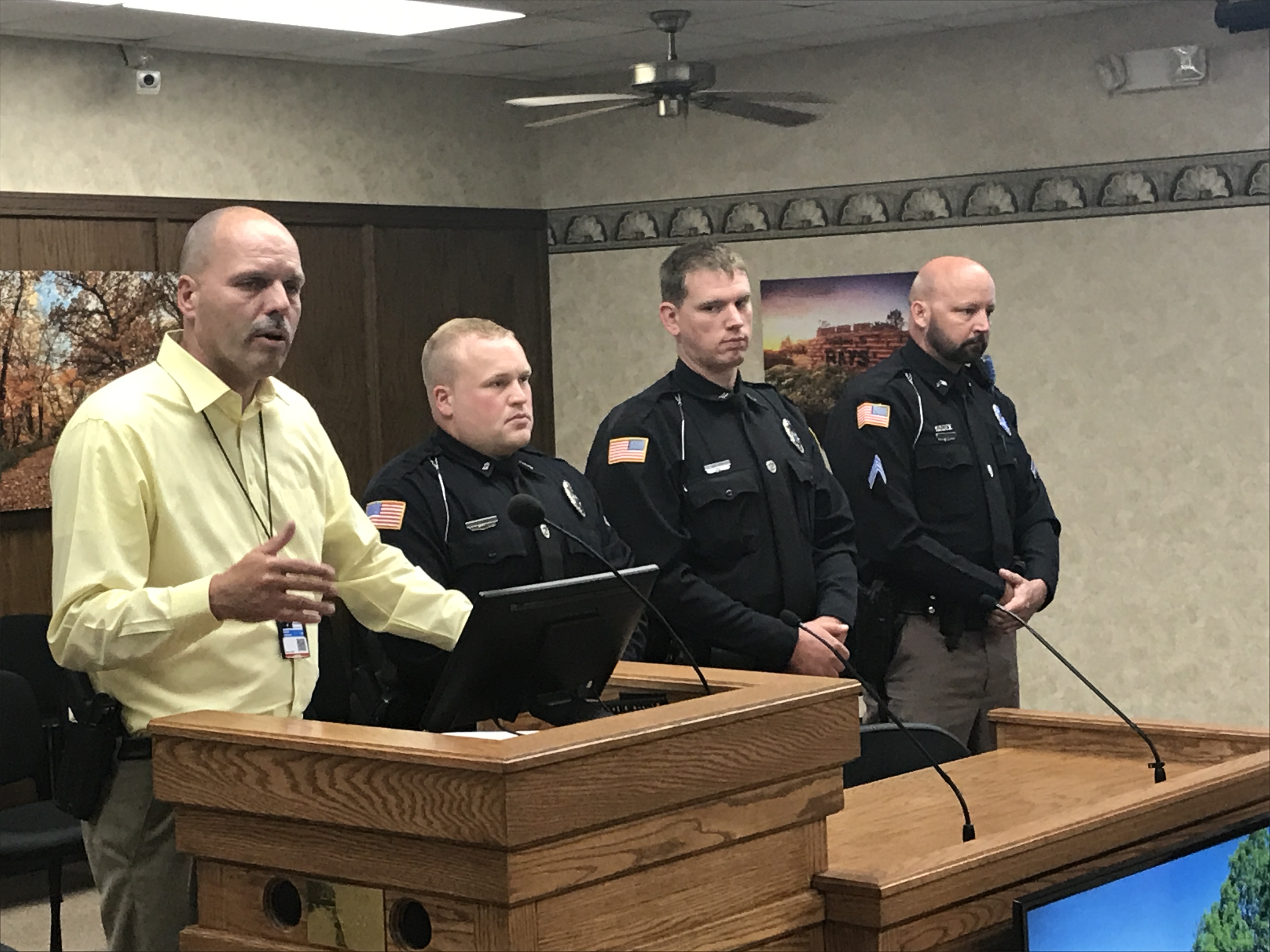
Left to right: During the Hays City Commission meeting Thursday night, Hays Police Chief Don Scheibler introduces new officers Aaron Ewy and Alex Broadway, as well as David Odle, who was promoted to corporal.
By CRISTINA JANNEY Hays Post
Hays Police Chief Don Scheibler introduced two new officers and a new corporal to the Hays City Commission at its meeting Thursday night.
The new employees included police officers Aaron Ewy and Alex Broadway.
David Odle was promoted to corporal.
Ewy comes to Hays from Arlington, Kansas, and earned a bachelor’s degree from Wichita State University in criminal justice. Ewy is also a staff sergeant in the U.S. Air Force Reserves.
Broadway is a former Marine, earning the rank of corporal. He attended Oak Park High School in Kansas City, Kan. He attended Fort Hays State University and worked at Pfeifer Auto Sales as a mechanic before joining the HPD. He lives in Hays with his wife and daughter.
Odle was recently promoted from master police officer to patrol corporal. He was one of five candidates for the position.
“All five could have done the job, but Dave truly stuck out as the most qualified one,” Scheibler said.
Odle served as a sergeant in the U.S. Marine Corps. He has more than 19 years of experience in law enforcement and has served in multiple supervisory roles at the Liberal Police Department. He is a graduate of the national FBI Academy.
“Dave has been a great hire for us, and we are confident he will continue to contribute and do well as a corporal,” Scheibler said.
Jessica Moffitt, a health educator, said she wants to give a voice to members of the community she does not believe are being heard.
She has filed for election to the Hays USD 489 school board.
Moffitt, 29, joins a field of eight other candidates for four open positions on the board, including incumbents Paul Adams and Luke Oborny and newcomers Craig Pallister, Lori Hertel, Tammy Wellbrock, Alex Herman, Allen Park and Cole Engel.
Moffitt also is the owner of Prospectively Healthy and is store manager for American Shaman in Hays.
“One of the transitions I have been making for my company is to do a little bit more online classes,” Moffitt said, “but with that being said, really I wanted to have an impact in the community for education, specifically with the younger population, which is my favorite group to work with in terms of age demographic.
“I thought it would be a good combination to combine my education background with expanding USD 489’s goals and accomplishments for the next four years.”
Moffitt outlined several goals if she was elected to the school board.
“I think some of the most heartfelt reasons that I was motivated to run for the board include advocating for the community. I think there are a lot of unspoken voices that really need to be heard. I would like to help those people do so. [I would like to] serve as a resource for the community to let them know that the board of education wants to know what they are doing and wants to hear their ideas,” she said.
“And then ultimately my goal over the next four years would be to find a solution for improving, for example, the heating systems in the schools with the bond, but a solution that still works for everyone in our community, as well.”
The Hays school district has had two failed bonds in the last three years — in 2016 and 2017.
Moffitt said she supported both of those past bonds.
“I know there needs to be a solution that is both feasible for everyone in our community on a financial basis, but also feasible for the school district,” she said. “And it is going to have to be a compromise on both sides. The only way to find that compromise is for both parties to really be able to objectively look at both sides of the story.
“That’s my goal — to help each side hear the other person and understand the other person’s point of view in hopes that we perhaps can find a compromise in between.”
The board keeps coming back to three projects for a next bond election attempt, although it has not taken a vote on the matter. These projects include finishing HVAC upgrades to the Hays High School, expanding the cafeteria at Hays Middle School and expanding and renovating Roosevelt Elementary School.
Moffitt said she was extremely alarmed about reports from friends and family that schools have gone without heat because of problems with HVAC systems. She said the cafeteria issue is also on her mind with her nutrition background.
The Hays school board reached impasse with its teachers last year during negotiations.
“With a fresh and open perspective on the school board, hopefully, we’ll find that solution as a team,” she said of teacher relations. “I don’t necessarily know there is one right or wrong answer, but I think, at this point, we are at a little bit of a stalemate with frustration, and hopefully that fresh view might find the solution they are looking for.”
In recent years, the board has been divided on the types of devices to purchase for its one-to-one computer program for students.
“I think any technological advancements in the school districts have to be supportive of keeping people in our community,” Moffitt said, “so if improving technology is what we need to do to keep our younger generation in Hays, then it is definitely a priority, but I do think nutrition, class size, teacher satisfaction and HVAC are significantly higher on the list at the moment.”
“My dream goal would be to create an environment where all four parties are 100 percent happy,” she said. “The children are in the best possible environment for learning. The teachers are feeling rewarded and appreciated for the amount of work they put in. The district is financially and goal supported and the community feels like it is making an impact without being burdened. If we can find that happy medium for all, that would be a good start.”
Moffitt lives in Hays with her husband. She is an active Hays Area Chamber of Commerce member and a committee chairwoman for Hays Area Young Professionals. She volunteers frequently in the community through HAYP.
She teaches health education classes through the Hays Recreation Center, Hays Public Library and other entities. She has a bachelor’s of science degree in public health from Portland State University with an emphasis in physical activity and exercise. She has a certification as a health education specialist.
“I feel I have a well-rounded knowledge of different groups in town and different ways we can all work together to help [the district] succeed,” she said. “While USD 489 is an extremely successful district with some absolutely amazing teachers, there is always 5 percent more that we can find. Rather than focusing on the negatives, I really want to help everyone focus on the positives and everyone pushing just a little bit more ultimately to be able to keep people in the community who prioritize education hopefully as much as I do.”
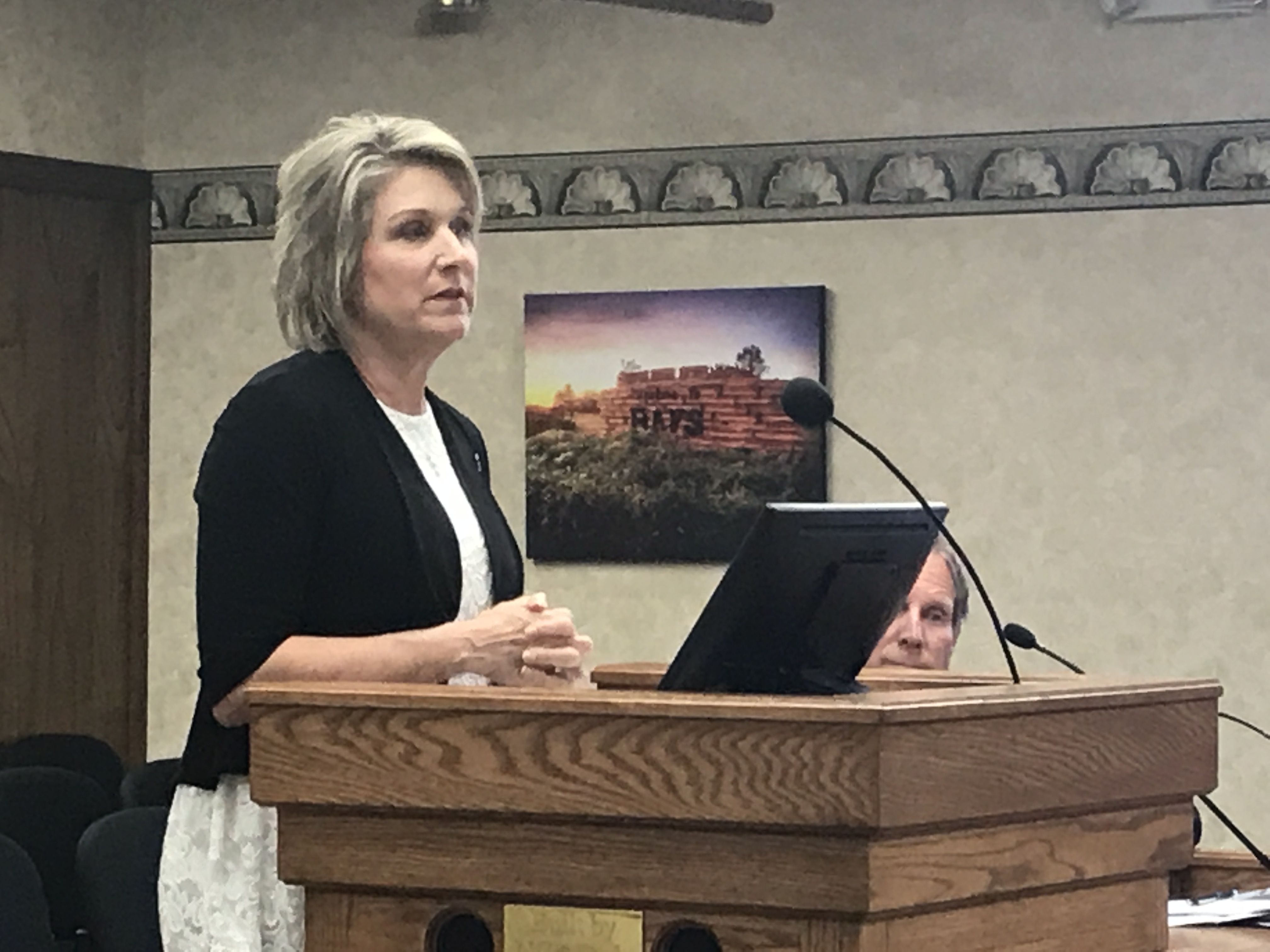
Rep. Barb Wasinger, R-Hays, and Sen. Rick Billinger, R-Goodland, touted contributions to KPERS as they gave recaps Thursday night to the Hays City Commission on the spring legislative session.
“This year I think the big thing was that we started funding KPERS properly again,” Wasinger said. “We put $115 million in late payments in and also was able to overturn the governor’s veto on this year’s payment of $51 million.
Rep. Barb Wasinger, R-Hays, gives a legislative recap to the Hays City Commission Thursday night.
“We are really proud that we are taking care of our teachers, we are taking care of our state employees. We still have a long way to go, but we are working on that. It was good to avoid reamortization of KPERS, which would have cost the state another $7.5 million to extend it with interest. We thought that was poor fiscal policy.”
Billinger said on KPERS, “In eight years, I think we have come a long, long way. We are above 60%. I think we are at the upper part of 60%. I think totally over the last five years we have put $5.1 billion in KPERS. We have taken it seriously. Pass that on to your city employees. When they make their contribution, I feel the state needs to make theirs.”
Wasinger said the state legislators could not override a veto from the govern on legislation to allow taxpayers who did not itemize their federal tax returns to itemize their state tax returns. When the the federal government, increased the standard deduction, that meant some Kansans could no longer get tax breaks for items such as mortgage interest and medical payments.
Both Wasinger and Billinger said they were pleased to report less money was taken from the Kansas Department of Transportation budget than in years past, but money was still swept for the general fund.
“We are trying to stop that and we stopped some of that transfer and put money back in to try to finish the T-WORKS that were so vital to particularly rural areas,” Wasinger said.
About $60 million was not transferred this year, but $200 million was swept for the general fund, Billinger said.
Sen. Rick Billinger, R-Goodland, gives a legislative recap to the Hays City Commission Thursday night.
Billinger was on the state Transportation Task Force. He said he hoped he could help the city in addressing the bypass and Northwest Business Corridor.
“I was very impressed with the businesses going in out there and the opportunities, and I think it would be a great asset to Ellis County and the City of Hays to get that in. I want to push to make sure the state is involved in this and help all we can financially and any other way,” Billinger said of the Northwest Business Corridor.
Billinger also said he was pleased to hear the city is making progress on the R9 Ranch water project.
The budget also targeted about $35 million additional funds for the Department of Corrections to try deal with issues at the state’s prisons. Billinger briefly addressed the state’s challenge of treating patients in the state prison system with Hepatitis C. The state allocated $1.5 million for the coming year for treatment, but that will only cover about 100 of the estimated 700 to 800 patients in the system.
The Legislature also designated more funding for the Department of Children and Families. However, children are again sleeping on office floors. Wasinger said she thinks more needs to be done to loosen restrictions on potential foster parents and their homes so more children can be placed in the community.
“Our children are our future,” she said. “If we let our children down, we won’t have a good future in Kansas. We won’t have as wonderful as leader as we have now with all of you.”
City Commissioner Sandy Jacobs said she was appreciative of the attention DCF is getting, but the situation for kids in state custody is still dire.
“That is what I think about at night,” she said. “I know people who are applying to be foster parents right now, but they are having a very difficult time meeting some of the standards. I don’t think it should have no standards, but I think it should be looked at very carefully. When you have good, solid families, I think we should look at what is stopping that, because there are some really good families who are struggling to be appointed.”
Mayor Henry Schwaller said, “They started making the program much more difficult for people who just really love children and are capable and have been through the training and have a good home to get into it because they had to meet all of these other kind of whacky requirements that had nothing to do with it.”
About 7,000 children are currently in foster care system.
Billinger also noted the Legislature will have an interim committee on Medicaid expansion.
“I personally think if we are going to help rural hospitals, which is one of the things you hear about, I think an enhanced reimbursement for rural hospitals is something we should talk about,” Billinger said. “I think there should be a work requirement because we are not talking about a single mom or people who are disabled. We are talking about people who can work.”
Other business
The commission voted to make changes to its purchasing policy. Revisions include adjustment of purchasing limits, removal of references to a purchasing agent, addition of contractual provision language, the addition of a service calls section, and codification of the current process to purchase vehicles and large pieces of equipment from government contracts.
The city is testing new rock for the alleys. City Manager Toby Dougherty said the crushed concrete and limestone the city now uses is not lasting very long. If the new rock works well, the city may invest in expanding the program.
He also said work on the roadway for 41st Street will start soon. Work on 43rd Street should be finished by the end of the month. Water line and road work also continues on sections of Ash, Elm and Fourth streets.
PLAINVILLE — Dozens of area ranchers are still waiting on their money after checks worth tens of thousands of dollars per producer bounced in a check-kiting scheme involving the Plainville Livestock Commission.
As the case has unraveled, ranchers have expressed shock and disappointment in the Tyler Gillum and his wife who owned the Livestock Commission, betrayal by the federal regulators who were supposed to protect the ranchers, and frustration at the legal proceeding that seem to be dragging on.
Rex Mulder of Mulder Farms in Logan said his family business has borrowed money to keep going as a result of not being paid for cattle they sold at the Plainville Livestock Commission.
He said the case has caused stress for his family and the entire ranching community.
Wes Cook, Plainville rancher, said he is hanging on for now without taking on more debt, but it has been difficult.
“I don’t know if I will ever see all of it,” Cook said of the money he is owed.
Checks from the Plainville Livestock Commission for two sales — one at the end of January and the other on Feb. 5 — bounced.
Money that was supposed to be set aside to pay cattle sellers was transferred from a custodial account to the Plainville Livestock Auction’s operating account. The Almena Bank froze both accounts, which resulted in bounced checks.
Almena Bank filed an interpleader case, which is legal action that seeks to determine to whom the money that was transferred out of the custodial account belongs.
Almena Bank has paid $916,652.29 into the Court Registry in the interpleader case, according to court records. That money is being held until the ranchers’ case is settled.
Plainville Livestock Commission declared bankruptcy on March 1. The interpleader case has been transferred from Norton District Court to federal bankruptcy court. The ranchers’ case is pending separately from the main bankruptcy proceedings and is still working its way through the court system.
“I was shocked and disappointed. They seemed trustworthy,” Mulder said of the Gillums when he had found out they had been indicted on federal charges.
The Gillums are charged with 31 counts of bank fraud, one count of making a false statement to the Small Business Administration in an application for a $1.5 million loan, and one count of making a false statement to Almena State Bank in an application for a $500,000 line of credit.
The indictment alleges investigators examined unfunded checks and wire transfers totaling more $2 billion sent by Tyler Gillum as part of the scheme.
The indictment alleges the Gillums defrauded Almena State Bank in Almena; Landmark Bank in Manhattan; Colorado East Bank and Trust in Lamar, Colorado; Astra Bank in Scandia; TBK Bank in Dallas; Guaranty State Bank in Beloit; and The Bank in Oberlin.
“I think something should be done,” Cook said of the Gillums. “They should lock him up or something.”
Mulder expressed frustration with the USDA, which regulates market agents like the Gillums under the Packers and Stockyards Act.
“The USDA failed us,” he said. “They should have shut them down. It should not have gotten to this point.”
The Plainville Livestock Commission had been cited before for not having sufficient funds in its custodial account, which by law is to hold money owed to cattle sellers.
Multiple filings have happened since the case was transferred to the bankruptcy court. Fifty-six parties to the case are listed on court records.
Parties in the case had until Friday, June 7, to object to any monetary claims filed in the case. Almena Bank did file objections on multiple claims and those people and entities have until June 21 to file responses to the objections.
James Overcash, the trustee for the bankruptcy estate, has filed a claim as a part of the interpleader case. That filings says that Overcash believes part of the money that is now being held by the court in interpleader case should be part of the bankruptcy estate.
However, other filings claim all of the money that was frozen by Almena State Bank should be used to pay unpaid cattle sellers.
The court hearing to discuss this and the other responses to disputed claims to the money that was frozen by Aleman Bank is set for 10:30 a.m. July 11.