We have a brand new updated website! Click here to check it out!

Nicodemus historian speaks on the role of black women, honored with DAR award

By CRISTINA JANNEY
Hays Post

African American girl from Nicodemus. Photo courtesy of the Nicodemus Historical Society.

Angela Bates, executive director of the Nicodemus Historical Society, gave a presentation Saturday in Hays on Nicodemus and the role of African American women through history.

Bates spoke to the Courtney-Spalding Chapter of the Daughters of the American Revolution.

She  is a descendant of the first settlers in Nicodemus, who came to Kansas in 1877. Nicodemus is the last and only remaining all-African American settlement west of the Mississippi. At its height, the community had about 600 residents, but the population declined after the railroad decided not to route through the town.

Bates has done extensive research on Nicodemus. In 2012, she published a book with more than 200 historical photos. It is still available in Nicodemus, which Bates was instrumental in getting declared a National Historic Site.

To understand African American culture today, Bates said you have to go back to the slave culture in the South.

“Women did not have choices during slavery,” Bates said.

African American women worked in the fields or in the master’s house. Women who were older or not as physically capable raised the children during the day. They referred to them as aunties or grannies.

This is why women or men that are family friends are often still referred to as aunts or uncles in black culture, even though they may be no blood relation. It is a term of respect, Bates said.

African American girl and resident of Nicodemus. Photo Courtesy of the Nicodemus Historical Society

Some of the slave children would be assigned to the master’s children. They would help take care of the children, empty their chamber pots, fan them, help them dress and maybe even play with them.

By the time the slave children were 12, they were assigned adult jobs.

“You did not have any control of what was going to happen to your kid,” Bates said. “If they wanted take the kid and take her to the house like in the movie ‘Queen’ after she had the child by her master, the master could say ‘I want the child to be raised in the house.’ ”

Bates said part of the psychology of controlling the slaves was divide and conquer. The slave owners fostered division between house and field slaves as well as division among light-colored slaves and darker-colored slaves.

Yet, any amount of African blood in a person in the South, no matter what their appearance, meant they were regarded as black.

“If you were dark and had kinky hair, you were considered less than a mixed blood that would have lighter complexion and more white features and straighter hair,” she said.

“So when Emancipation comes, the mixed bloods that were living in the house and some of them may be living in quarters, they are shunned on both sides of the fence. The full bloods have been taught to shun them because they think they are better, and that still has psychological effects on African Americans today. We have intraracial prejudice against each other along those same lines.”

Also after Emancipation, women begin to have choices not only about their own lives, but the rearing of their children.

Angela Bates, executive director of the Nicodemus Historical Society, gives a presentation Saturday in Hays to the Courtney-Spalding DAR chapter.

“Freedom affords you an opportunity to have a choice,” Bates said. “You can pick who you want to be married to. You can decide what your children’s names are going to be. Many people change their names right after Emancipation.”

In some cases, brothers chose different surnames. Bates gave the example in Nicodemus of the Wellingtons and Weltons. There were three brothers all Wellingtons, but one changed his name to Welton.

“If you were looking at genealogy or even the census, you would not know,” she said.

In another case, a woman was pregnant at the end of the Civil War and decided to give her child the surname Taylor, instead of the name of her plantation owner. There were brothers and sisters in that family as well who had a different surnames.

Freedom in Kansas meant choices, your children weren’t going to be sold away from you and it was an end to a violent life.

“Imagine you have a child and you love that child and you watch that child grow, and then he does something that he wasn’t supposed to do and he gets beat on the public pole,” Bates said. “You don’t have any choice, and they make you stand there and watch your child get beat.”

A new psychology took hold after African Americans were freed. Bates summed up with the phrase “We rear our daughters and we love our sons.”

Bates said African American women are very independent and opinionated.

“We had to be,” she said. “How can you depend on a man who you may have jumped the broom with, but he doesn’t have any control over himself? So how can I rely on him? Coming out of slavery, African American women relied on themselves. So in the culture we raise our daughters to be independent.”

Women also continued to rely on the “sisterhood,” friends and other women in their community, just as the women in slavery relied on the aunties and grannies to raise their children.

In a white society, black mothers felt sons, who might struggle to find jobs and face other prejudices, needed their support, Bates said.

“We are all suffering from post-slavery trauma,” Bates said referring to both white and black cultures.

Bates said the relationships between black and white women can still be strained.

“Back in the ’60s I would be called a Tom, an Uncle Tom,” she said. “That would be someone who embraced relations with white people. I have found just being a human being that people are people, no matter what. There are people who are black that I would not want to be around.”

Angela Bates receive the DAR Women in American History Award Saturday.

At the end of her presentation, Bates was honored with the DAR Women in American History Award for her work to preserve African American history.

Bates also serves as a speaker for the Kansas Humanities Speakers Bureau, who sponsored her talk Saturday. She is a member of the National Parks Conservation Association and the National Trust for Historic Preservation. Bates received the Kansas Sampler Foundation’s “We Can” award (1993), the Brown Foundation’s award for excellence (1994), the Outstanding Contributions award (1996) from the Kansas Humanities Council, the African-American Preservation Hero award (1996) from the National Trust for Historic Preservation, and the Woman of Distinction award (1997) from the Kansas Martin Luther King, Jr. Memorial Committee of Topeka for her work in preserving African American history, and, more recently, the 2012 Kansas Trail Blazer Award. (Bio information courtesy of the University of Kansas).

Learn more on Nicodemus from the Kansas Historical Society or the National Park Service.

Dessin Fournir, subsidiaries file for bankruptcy; Comeau properties foreclosed

201 E. 12th St. in Hays, one of the Comeau properties foreclosed by Sunflower Bank.

All remaining employees at Plainville company laid off, attorney says

By CRISTINA JANNEY
Hays Post

After foreclosure filings on multiple buildings owned by Chuck Comeau and his subsidiaries, his luxury furniture company Dessin Fournir and 11 of its subsidiaries filed for Chapter 11 bankruptcy on April 8.

The company’s offices have closed, and all of its employees have been laid off, including those in Plainville, according to Edward Nazar, the attorney handling the bankruptcy.

At its height, Dessin Fournir employed more than 90 people in Comeau’s hometown of Plainville.

Nazar said Comeau is seeking to find a third-party buyer for the multiple divisions of his company. In the meantime, a meeting of creditors is set to convene, Nazar said.

“It was a very successful business,” Nazar said, “which had a reversal of fortune in 2008, and it struggled for the last 10 years to overcome the reduction in revenue and was regretfully forced to file a bankruptcy.”

The furniture manufacturer was listed in court documents to have more than 200 creditors locally, nationally and even internationally with a total liability of more than $13 million. Some of its subsidiaries had other creditors, including companies in the trade.

Some of main company’s creditors include the IRS, the Kansas Department of Revenue, the Rooks County Treasurer, Assurance Partners in Salina, designer Holly Hunt and singer Lionel Richie, who had a customer deposit of more than $15,000 with the company.

Dessin Fournir assets were listed as $6.6 million, $3.8 million of that is in inventory. The assets also includes Plainville properties at 308 and 310 W. Mill, 223 W. Mill, 211 W. Mill and 111 N. Jefferson.

The company is listed as owing more than $8.9 million in secured debt to three local banks, including $952,000 to Astra Bank, $7.5 million to Bank of Hays and $420,000 to Sunflower Bank.

Bank of Hays and Sunflower Bank filed for foreclosure on Comeau properties last year.

On March 26, District Court Judge Blake Bittel in a summary judgement ordered Comeau’s companies and other loan guarantors to pay Sunflower Bank a total of more than $420,000.

The companies included Oak Street Plaining Mill, Classic Cloth, Dessin Fournir, DFC Holding, C.S. Post, Liberty Group, plus individuals Chuck Comeau, Shirley Comeau, Christopher Mraz, Lenice Larson and Palmer Hargrave.

Properties listed in the foreclosure included 201 E. 12th St. in Hays, and Plainville properties 108 N. Main, 211 1/2 Mill, 205 N. Main, 317 W. Mill, 211 W. Mill, 221 W. Mill.

If the money for the bank loan is not paid in full, the properties involved were ordered to be sold in a sheriff’s sale.

The Bank of Hays also had a loan on Rooks County property worth $7.5 million.

Judge Bittel ruled Sunflower Bank’s interest in the case took priority over Bank of Hays’ loan.

The Kansas Center for Entrepreneurship also had a mortgage on a portion of the Rooks County properties, but the agency disclaimed any interest in the real estate in the foreclosure.

DFC Holdings listed the property at 311 S. Washington in Plainville in its real property asset list in the bankruptcy filings on April 8.

Business Home in a story published April 10 said Chuck Comeau sent a letter to clients last week saying, “I failed to understand the ‘right-sizing’ for our company after the recession, and instead thought we should try to maintain jobs.”

A call to the Attorney Ashley Comeau, who is representing her in-laws was not returned. Attorney for Sunflower Bank, Aaron Martin, said he could not comment on ongoing litigation.

DCF secretary highlights progress despite criticism during stop in Hays

DCF Secretary Laura Howard speaks to the media Tuesday during a stop in Hays.

By CRISTINA JANNEY
Hays Post

Kansas Department for Children and Families Secretary Laura Howard remains focused on agency process, despite recent criticism from child welfare advocates who are pushing for more rapid reform in the agency.

Howard made a stop Tuesday morning at the Hays DCF office.

One of the recommendations from the Child Welfare Task Force was to increase recruiting for foster families.

“Placement stability is one of our top priorities as an agency as we come on board with a new administration,” Howard said. “There is no doubt that kids have been placed too far from home, and they move around too often. We are doing a number of things in that regard.”

The agency has new foster care management contracts starting, and the agency will have individual contracts with child placing agencies. Additional funds will also be available for foster family recruitment.

The agency is starting a practice called Team Decision Making, where the agency is able to bring more resources to the table for kids and bring other people who have connections to the child into the process.

“What the evidence tells when we do that from other jurisdictions that use this model is that children are more likely be placed with a relative and be placed in their home community, and they also reach permanency more quickly,” Howard said.

The new contracts begin Oct. 1. The Team Decision Making model will be phased in over the next 12 to 18 months and will be launched in the Kansas City area.

Kansas has 7,300 children in the foster care program, which is high compared to other similar states. The agency is looking at prevention programs to help children and families, so children do not have to be removed from their homes.

These can include parent training, early childhood services, Parents as Teachers and mental health services.

DCF also will be using the federal Families First program, which will bring federal funds into the state that can be matched with state funds.

“Part of my goal is to reduce the number of youth we have in foster care,” Howard said. “Our system has a lot of strain today, but as we are successful in diverting children safely on the front end to preventive services, we will have less demand than we have today as we have fewer kids actually in the foster care system.”

She said Kansas initially saw more children coming into foster care during the recession. Other states saw their numbers decrease as the economy recovered. Kansas has not.

“I attribute it to a couple of things. I can’t prove these things, but I at least see a correlation between policy changes that were made about safety net programs in Kansas,” she said, “and there were policy changes made in Kansas in the last few years to reduce eligibility for the TANF cash assistance program down to a two-year lifetime limit. There were other changes made to really limit family access to cash assistance, to child care assistance.”

The governor has recommended an additional 52 workers per the recommendation of the task force. Twenty-six workers would be added this year and 26 next year. These would primarily be social workers in field offices. The Legislature is close to approval of at least the first round of these new employees.

The agency is also trying to take advantage of social work practicum students and is working to reduce requirements for social workers coming from other states to work in Kansas.

Task force members said in a recent letter they have “deep concern” lawmakers have only made minimal progress and have made no progress on most recommendations, according to the Associated Press.

See related story: Advocates frustrated with pace of fixes to Kansas foster care system

The agency has also been criticized in recent years for several high-profile deaths of children after DCF became involved with the families. In the latest case in Wichita, a 3-year-old boy was found dead in his crib and a 4-month-old boy was removed from the home and hospitalized in critical condition.

Howard said she could not comment on that case specifically, but said DCF is investigating.

See related story: Police: Kan. welfare agency had reports on couple whose toddler died

Howard said some reforms will need to be enacted by the Legislature, but other actions can be done internally within DCF.

She said the task force’s tier one recommendations are being met, including new staff, aggressively pursuing Families First, $13 million in new funding (half federal, half state funding) and improvements in the agency’s information systems.

“I am actually really pleased that the governor and the Legislature have prioritized those tier one recommendations,” she said. “There are more recommendations, but many of those recommendations we are already making progress on administratively.”

DCF is working with the state’s managed care organizations that control Medicaid to help youth in foster care more timely access health care, health care screenings and mental health care.

“It is important to understand that some things require legislation. Some things require new funding. Some things just require us to change how we do our business or practice and our practice models,” she said.

Howard said she has walked into some agencies that do not have the resources they need, but she said she was pleased in the progress that has been made in the last 100 days.

“What I would say is that agencies have really been hollowed out over the last few years based on the state’s challenge with financial resources,” she said. “I have agencies that don’t have enough staff, and they don’t have enough resources. We won’t get out of that overnight. It is going to take some time to dig out of that.”

Hays Toy Show delights collectors young, old

Jason Lamb, 43, Hays, mans his booth Saturday at the Hays Toy Show.

By CRISTINA JANNEY
Hays Post

Whether it was a grandma buying a replica of the tractor she remembered using on the farm or a child buying their first action figure, Saturday’s Hays Toy Show had something for young and old.

The annual event was at Big Creek Crossing this year and drew about 30 vendors from the around the region.

Jason Lamb, 43, Hays, has been collecting toys since he was a kid. He said selling toys was an natural progression.

He first caught the collecting bug as a kid when he figured out he could earn some extra money by shoveling snow.

“That Christmas, I came home with money in my hand, and I don’t remember what I got for Christmas that year, but I remember that I could work and figure out a way to buy my toys on my own. I was about 7 or 8 years old.”

He took his shoveling earnings to Woolworths and bought G.I. Joes.

He particularly likes the gross toys and puppets from the ’80s — the Madballs and Boglins.

“I love when kids come by and you can actually see their eyes light up when they get a good deal,” he said. “I actually bring toys to give away to kids sometimes, cheap ones. There is something even about adults when they see a toy they haven’t seen in 20 years, it brings them back to that place in their mind when everything was innocent and life was just fun.

“Because when you are a kid, that is your main objective is just having fun. You get up every day and I just want to play with toys and have fun. That is why I love toys. It brings me back there.”

Sam Oyler  of Garden City works on a semi replica Saturday at the Hays Toy Show.

Sam Oyler of Garden City also tries to connect with buyers who are trying to connect with their past. He creates custom farm trucks and pickups.

He uses a 3-D printer to create the tiny custom parts needed to make a stock toy look exactly like the vehicle the buyer once owned.

“It feels really good when someone walks up and says that is exactly like what we had on the farm or that is exactly like what we use today,” he said. “It is nice when you hit the right color or the right model or something like that.”

He said he also enjoyed the camaraderie at the shows.

“It more about seeing your friends and talking to other vendors is what most all of us have more fun doing and chit-chatting and giving each other ideas,” he said.

Pay Mayo’s antique marionettes.

Pay Mayo of Lawrence is a nurse by day, but as a hobby restores antique marionettes.

“They are colorful, and they are unique. People don’t do puppet shows, including myself, but some of them are 60 and 70 years old. It is kind of a history thing,” he said.

Most of the marionettes are in bad shape, with strings cut. Mayo takes a couple of weeks to restore the pieces and mounts them with artwork so they can be displayed on a tabletop.

“They are colorful and neat,” he said. “It is just something from childhood.”

.


Hydrant testing set between Allen and Vine today

The Hays Fire Department will be inspecting and flow testing fire hydrants on April 16 in the area of Allen St. to Vine St. between Fifth St. and 13th St. This is part of a coordinated effort by the City of Hays to inspect all fire hydrants in the city and flush all water mains annually.   

Inspecting fire hydrants ensures the valves operate properly and there is no damage or obstructions that will prevent or interfere with the prompt use of fire hydrants in an emergency.  Firefighters are also checking the pressure and volume of water mains in each neighborhood for firefighting purposes. The associated flushing of water mains allows chlorine to be distributed throughout the system to eliminate bio-filming in the water mains.

Slight discoloration of the water supply may be encountered although there will be no health risks to the consumer. All reasonable efforts will be taken to minimize the inconvenience to the public.  Drivers are asked to avoid driving through water discharging from a fire hydrant during the short flushing period.

For more information, please contact the Hays Fire Department at 628-7330.

Lola M. (Davey) Keran

LOLA M. (DAVEY) KERAN was born Aug. 29, 1922, in Osawatomie, Kansas, to Lloyd Augustus Davey and Stella May (Hate) Davey, and peacefully passed away at the Graham County Hospital in Hill City, Kansas, on April 15, 2019, at the age of 96.

She graduated from Parker Rural High School in Parker, Kansas, in the class of 1941. Following graduation, she worked at the telephone company in Parker, operating a switchboard.

On June 7, 1942, she married Ervin Keran of Arvada, Colorado, in Osawatomie. They made their home in Denver, Colorado, for 49 years. To this union, two daughters were born, Judith Elaine and Carol Lea. Lola worked as a mother and homemaker.

While in Denver, Lola and Ervin were members of Grace Baptist Church for 39 years. Lola taught Sunday School and Baptist Youth classes for several years, as well as Girls Gild. She volunteered her work for several years at Mt. Vista Nursing Home in Arvada, Colorado. She and Ervin also provided day care for 12 years in their home for a couple of families.

Ervin and Lola moved to Lenora, Kansas in 1990, and joined the United Parish Church, where she has been an active member. Her hobbies and pastimes have included crocheting, reading, scrapbooking and volunteering for church activities.

Lola is preceded in death by her parents, Lloyd and Stella May; a step-father, Ed Miner; her husband of 62 years, Ervin Lee Keran, who passed away on Sept. 22, 2004; three brothers, Gerald, Fred, and Gorden Dean Davey; one great-granddaughter, Melissa Dillon.

Survivors include: two daughters, Judith, and husband, David Beck, Henrico, Virginia.; Carol, and husband, Tom Gerlits, Lenora,.; nine grandchildren; 14 great-grandchildren; four great-great-grandchildren; one sister, Mildred Diehm, Osawatomie; one sister-in-law, Mary Lou Davey, Osawatomie; and several nieces, nephews, and friends.

FUNERAL SERVICE – Friday, April 19, 2019 – 10:30 a.m.

PLACE – Lenora United Parish Church – Lenora, Kansas

VISITATION – Thursday, April 18, 2019, from 5 until 7 p.m. at Enfield Funeral Home – 215 W. Main – Norton, Kansas

INTERMENT – Lenora South Cemetery – Lenora, Kansas

MEMORIALS – Lola Keran Memorial Fund

Lila Jean Ehrlich

Lila Jean Ehrlich

Lila Jean Ehrlich, 86, died April 15, 2019, at Clara Barton Hospital, Hoisington. She was born Sept. 11, 1932, in Wichita, Kansas, the daughter of Alvin C. and Irene (Foos) Ochs.

On Oct. 29, 1950, she married Roy M. Ehrlich in Otis, Kansas. He preceded her in death on Dec. 2, 1997.

A lifetime resident of Barton County, Lila was a farm wife, also working at Pete’s Flower Shop, and later for Town and Country Market. She was a longtime member of the Emmanuel Lutheran Church. Lila enjoyed spending time in her flower garden and decorating the house for holidays.

Survivors include: four children, Lonnie Ehrlich of Sylvan Grove, RoxAnn Reiser and husband Douglas of Great Bend, Jolene Ehrlich of Arkansas City, and Karla Newport of Great Bend; a sister, Judeen Wegele and husband Melvin of Wichita; four grandchildren, Cory Ehrlich and wife Traci, George Ehrlich, Kylie Heiler and husband Clint, and Kristie Brautman; and two great-grandchildren, Zach and Andrew Brautman.

She was preceded in death by her parents, husband, daughter-in-law, Denise Ehrlich; and son-in-law, Kent Newport.

Friends may call from 9 a.m. to 8 p.m. Wednesday, per family’s request casket will be closed. Prayer service will begin at 7 p.m., all at the funeral home.

Funeral service will be at 10 a.m., Thursday, April 18, 2019, at Emmanuel Lutheran Church, with the Reverend Wayne Baldyga presiding. Burial will follow in Hoisington City Cemetery.

In lieu of flowers, memorials may be made to Emmanuel Lutheran Church in care of Nicholson-Ricke Funeral Home, PO Box 146, Hoisington, KS 67544.

Richard Lee Dunkin

Richard Lee Dunkin,

Richard Lee Dunkin, age 64, of Ellis, Kansas passed away Saturday, April 13, 2019 in Ellis. He was born June 23, 1954 in Junction City, Kansas to Kenneth and Margaret (Crone) Dunkin. On May 5, 2003 he married Rose (Honas) in Ogallah, Kansas.

Richard was a licensed addiction counselor with DREAM Inc. and he enjoyed gardening, fishing, tinkering around in his shop and was a strong advocate for persons with addiction.

He is survived by his wife, Rose Dunkin of Ellis; two sons, Matthew Cunningham of Ellis and Rick Rein of Salina; a brother, Mike Dunkin of Idaho; two sisters, Karen Kovac of California and Linda Dunkin of Oregon as well as a grandson, Alex Rein.

He was preceded in death by his parents; a brother, Jimmy Dunkin and a sister, Pat Dunkin.

Memorial services will be at 6 p.m. Friday, April 19, 2019 at his home, 804 W. 11th St., Ellis, KS.

Arrangements in care of Keithley Funeral Chapel 400 E. 17th St. Ellis, KS 67637.

Memorial contributions are suggested to Dream.

Condolences may be left by guest book at www.keithleyfuneralchapels.com or by email at [email protected].

Marvin J. Struik

Rural Agra resident, Marvin J. Struik, passed away April 13, 2019 at his home at the age of 77.  He was born July 9, 1941 in Jasper County, Iowa, the son of Hubert and Hendrika (Van Norden) Struik.

Survivors include his wife Loretta of the home; two sons, Kenton of Cedar Rapids, Iowa, and Kurtis of Mesa, Arizona; his daughter, Kathy Schmid of Kensington; three sisters: Linda Vande Lune and Phyllis Vander Pol of Pella, Iowa, and Carol Van Zee of Ankeny, Iowa; five grandchildren and four great-grandchildren.

Funeral services will be at 2 p.m. Friday, April 19 in the Heartland Worship Center, Agra, with Pastors Lorna Paulus and Becky Saddler officiating. Burial will follow in the Agra Cemetery.

Visitation will be from noon to 9 p.m. Wednesday at the Olliff-Boeve Memorial Chapel, Phillipsburg.  The family will receive friends from 5 to 7 p.m. Thursday at the Heartland Worship Center.

Memorial contributions may be made to Hospice Services or the Agra Fire Dept.

Online condolences can be made at www.olliffboeve.com.

Olliff-Boeve Memorial Chapel is in charge of arrangements.

Poor People’s Campaign addresses social injustice during stop in Hays

By CRISTINA JANNEY
Hays Post

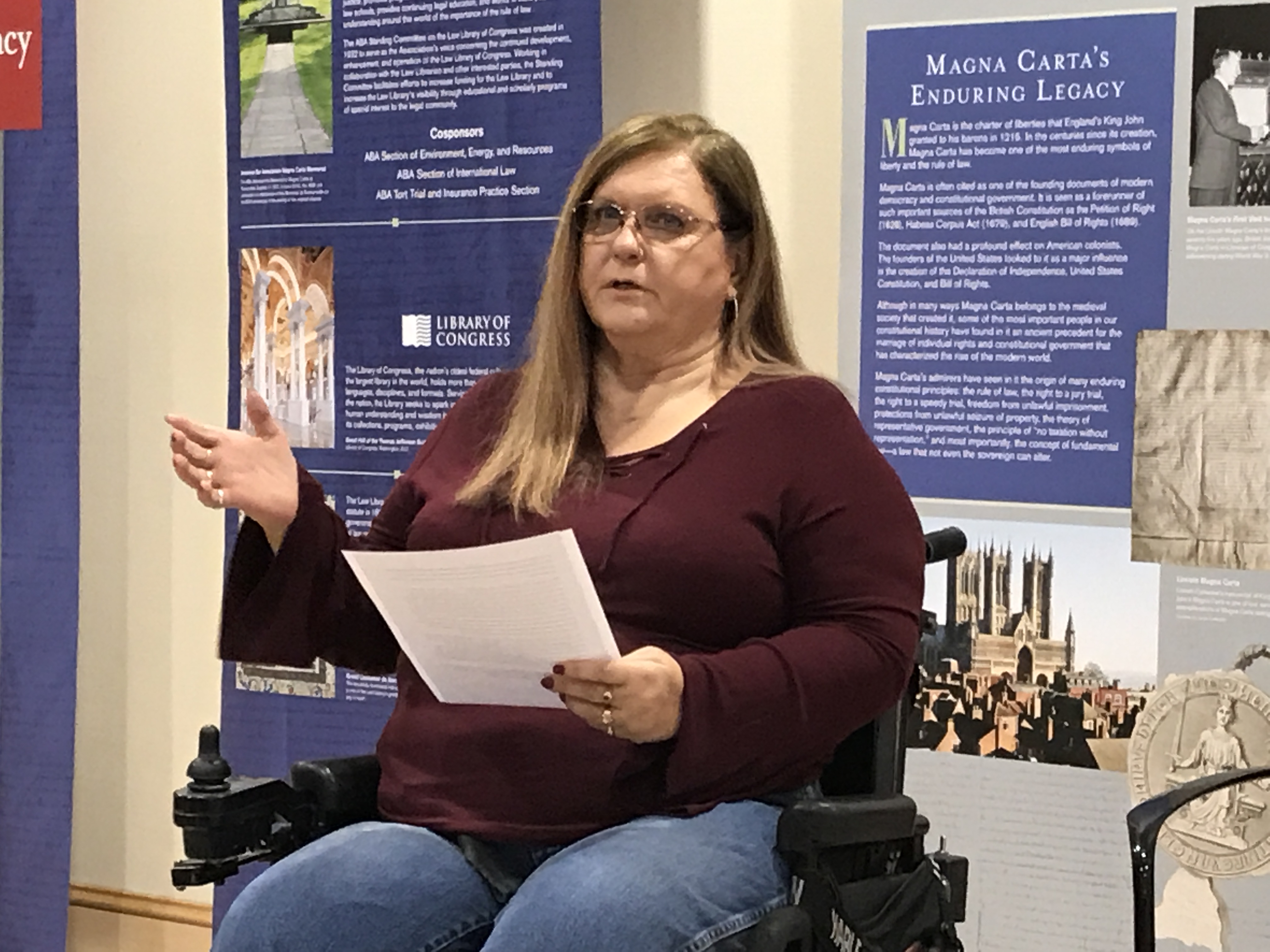
The Poor People’s Campaign made a stop in Hays last Sunday advocating for rights for the disabled, affordable health care and an end to the war economy.

Nathan Elwood, Fort Hays State University librarian and Poor People’s Campaign volunteer, introduced speakers who were local residents and from the national movement.

“We are here to talk about poverty. We are here to talk about economic and social injustice,” he said.

“These aren’t easy comfortable topics to talk about. In fact, from a young age we are taught not talk about these things. We are told it is impolite to talk about money. We are told if we are struggling, we should grin and bare it. We are told not to burden others, but avoiding discussions of the problems we face as a community won’t make those problems go away.”

In Hays, 19.5 percent of residents live below the poverty line, which is higher than the 13 percent national average. Indicators predict the poverty rate will continue to rise despite low unemployment in the area, Elwood said.

Claire Chadwick, a campaign volunteer, is a pastor with a master’s degree, but she is a low-wage worker. She has been poor all of her life. Her father was homeless for a time and they lost their home in the mortgage crisis.

“The reason that I got involved with the Poor People’s Campaign is because it taught me that losing our house in the mortgage crisis — that being a low-wage worker even with a master’s degree — that it wasn’t something that I was doing wrong.

“There isn’t something inherently the matter with me. It is not a character flaw. It is not an accident, but it is a part of a larger system.”

Work can be way out of poverty for disabled

Ellis County resident Lou Ann Kibbee said society needs to give disabled citizens more incentives and support to work.

Ellis County resident Lou Ann Kibbee was disabled 42 years ago. She now works as an advocate for the disabled at the local, state and national levels. She is currently employed at the Skilled Resource Center.

For the first 16 years after her injury, Kibbee received a variety of assistance from government agencies, including Medicare, Medicaid, HUD and Social Security Disability.

“I learned early on that society did not expect me to become employed, because I have a disability” she said.

She was discouraged repeatedly from seeking employment, even by government workers who warned her she would lose her benefits if she got a job. Yet, her disability check was only $570 per month.

Her medical care was not equal to that of private insurance, and although most people on disability also receive food assistance, it is not enough to eat healthy, she said.

Yet, she compared leaving disability for a job to jumping out of a plane without a parachute.

“But I did go to work, because I knew that was my only possibility of getting out of poverty,” she said. “I knew that I needed a pretty good paying job to support myself and a college education to do that and compete with other applicants.”

Today, it takes Kibbee and her husband’s combined income to pay her extensive medical expenses. She pays $14,000 per year alone for attendant care services.

Not surprisingly, as of 2017 only 46 percent of disabled Kansans of working age were employed.

“We try to continue to educate people with disabilities about going to work, but there needs to be more incentives, so that they can afford to make that move,” Kibbee said. “Employers in communities need to be educated more about the capacity of people with disabilities to become employed in integrated competitive employment.”

Thousands of people with disabilities are in nursing homes or institutions waiting for in-home services, because in Kansas in-home services are optional.

“It should be a civil right for anyone with a disability to live in their homes and communities just like anyone else,” she said. “When we live in the community, we are able to earn and spend money, get educated, have families, pay taxes and contribute to our communities.”

Skyrocketing medical expenses

Laura Allen, whose son had to have a heart transplant, said the boy’s medication cost $10,000 for a single month.

Laura Allen, First Call for Help client services specialist, talked about her personal experiences struggling to pay for medication for her son. Allen is a single parent of three children. Two years ago, her son had to have a heart transplant because of a congenital heart defect.

After his last round of rejection, he came home on two kinds of insulin. The bill for less than one month of insulin was $6,500. His anti-rejection medication was another $4,000.

Vera Elwood, a FHSU master’s student, said she and parents planned from the time she was 12 years old and was diagnosed with diabetes to provide for her insulin when she graduated college. The fear was that she would be without health care until she could find a job.

When the Affordable Care Act passed, which allowed young adults to stay on their parents’ health insurance until they are 26, Vera’s whole family cried together. Today, Elwood is covered under her husband’s health insurance. However, she said affordable health care and insulin is still a matter of life or death for her.

“All of these changes that are coming up — getting rid of pre-existing conditions, getting rid of mandatory health care, not expanding Medicaid — these things have real, real impact on 12 year olds who are planning to not die when they graduate college,” Vera said.

Allen added doctors told her if her insurance would not cover the cost of her son’s anti-rejection medication, the doctors were unwilling to do the transplant.

“Because it was a wasted organ without the money and medications to go along with the transplant,” she said.

Working and uninsured

People gathered at the Hays Public Library Sunday to hear speakers from the Poor People’s Campaign.

Twenty-four-year old college student Heather Letourneau is an attendant care worker in Hays. She has no health insurance. It is not provided by her job regardless of the number of hours she works.

“From the outside looking in, it appears that I should have no trouble paying for health care because I make well above minimum wage. When I was working 40 hours a week, I was only getting $1,200 a month, which paid my bills. It did not pay for groceries or gas,” she said.

She noted she cut out all non-necessities and still struggles to pay her expenses.

Letourneau advocated for higher wages and Medicaid expansion to help her and other attendant care worker who do not have insurance.

Veteran against the war economy

Christopher Overfelt served in the Topeka Air National Guard for nine years as an aircraft mechanic and now advocates for a reform of U.S foreign policy and a reduction in military spending.

Christopher Overfelt served in the Topeka Air National Guard for nine years as an aircraft mechanic. During that time, he deployed to Iraq and Turkey.

Overfelt, who is member of Veterans for Peace in Kansas City, spoke about how the U.S. military policy harms poor people in the U.S. and around the world.

“In 2009, I deployed to Turkey and Qatar, and participated in the destruction of two sovereign nations — Iraq and Afghanistan. In Qatar I repaired and maintained the aircraft that refueled the bombers on their way to sew death and destruction in Iraq,” he said.

“Neither of these countries will likely recover from that devastation in my lifetime,” he said. “Nothing I can do will make up for the hundreds of thousands of Afghan and Iraqi men, women and children killed in these wars.”

He said he had no idea when he joined the military that the Department of Defense has never completed an internal audit of its spending despite it being mandated by law.

“It doesn’t know how much money it is spending and how it is spending it,” he said. “It is a black hole for money.”

A 2016 inspector general report indicated the Pentagon could not account for how it spent $6.5 trillion during the last two decades, Overfelt said.

The $600 billion the Pentagon receives does not include additional funding for classified operations by the CIA and NSA. However, Overfelt said insiders estimate this secret budget pushes military spending over $1 trillion per year — a third of the U.S. budget.

“It is no secret there is always enough money for a bigger military and more jails, but never enough for education and the poor,” he said. “Instead of this money going to health care and education for our citizens who so desperately need it, it goes to padding the pockets of weapons manufacturers on Wall Street.”

Overfelt said most of the military funding does not go to fight wars, but to secure American capital across the world.

“Around the world the State Department supports corrupt governments to ensure our access to their resources,” he said. “We take their resources and bring them into our country, and then we build walls to ensure they cannot come here and participate in the wealth we have taken from them.”

Overfelt offered a three-pronged approach to demilitarization including slashing the military budget and reinvesting in health care and other programs, ending the war on drugs, and stopping the war on immigrants.

“The war on immigrants has nothing to do about crime or safety,” he said, “but is purely about ensuring cheap laborers around the world cannot leave the systems they are trapped in. The money flows across international borders, but the workers can’t follow the money.”

For more information on the Poor People’s Campaign, see its website at www.poorpeoplescampaign.org.

Cattlemen affected by Plainville bankruptcy likely in for long wait

By CRISTINA JANNEY
Hays Post

Roger McEowen, Kansas Farm Bureau professor of law and taxation at the Washburn School of Law, talks to cattlemen Friday in Stockton.

Cattlemen affected by the bankruptcy of the Plainville Livestock Commission should receive most of their money back, but it could be months more before they see any of their money.

In early February, the Plainville Livestock Commission issued checks to more than 40 producers for sale of their cattle.

On Feb. 12, Almena Bank froze two of Plainville Livestock Commission’s bank accounts. When the bank froze the accounts, tens of thousands of dollars worth of checks owner Tyler Gillum had written to area ranchers who had recently sold cattle at the Plainville Livestock Commission bounced.

On March 1, the Plainville Livestock Commission filed for bankruptcy.

See related story: Producers try to recoup losses after Plainville Livestock Commission drains account

The Rooks-Phillips County Extension hosted Roger McEowen, Kansas Farm Bureau professor of law and taxation at the Washburn School of Law, Friday in Stockton to talk about the process of recovering funds for cattlemen after the bankruptcy of a livestock market agent.

The cattlemen’s money is protected under the Packers and Stockyards Act.

The market agency is supposed to hold funds from the sale of cattle in a custodial account until all the sellers are paid. Someone allegedly transferred the money in the custodial account into the Plainville Livestock Commission’s general operating account, according to court records.

At that time, the bank holding the funds, Almena Bank, froze the Livestock Commission’s accounts.

McEowen said in a bankruptcy filing the unpaid cattlemen’s claims take priority over other creditors in accordance with the Packers and Stockyards Act.

There are deadlines to file claims under the Packers and Stockyards Act. Cattlemen can bring a reparation proceeding within 90 days of the sale. They need to file the proceedings with Secretary of Agriculture through the Grain Inspection Packers and Stockyards Administration, which is within the USDA’s Ag Marketing Service. There are specific forms available through the GIPSA to file the action.

“This is a process that is going to take months,” he said.

GIPSA does not have enforcement authority. If GIPSA finds a cattleman is owed money, the cattleman has to have the payment enforced by federal court or a district court that has jurisdiction within a year.

“The point is, if you understand the process, you are going to understand how long this is going to take to shake out,” McEowen said. “The cattlemen will get paid, maybe not 100 percent of their claim. They will be paid something, but it is not going to be tonight. It is not going to be tomorrow or next week. It is going to take some time.”

The impact on the community is going to be great. For every dollar that the cattlemen are owed in this case, that equals $3 to $4 that is not available to be cycled through the local economy, he said.

In this case, it equals millions of dollars.

“We don’t want the cattlemen to fail. They are going to get paid. We want them to get back on their feet at some point in time,” McEowen said. “Probably the majority of the funds they are owed they will recover, but what is going to happen in the meantime?”

He encouraged the cattlemen to evaluate their own personal situation, for the cattlemen to work together and the community to support the cattlemen who have been affected.

“The domino effect on this is the potential really bad situation,” he said. “That needs to be avoided so we don’t have a whole community that really suffers because of this.”

The U.S. bankruptcy court in Wichita on Thursday, indicated the cattlemen do have a priority to funds being held by the bank. Judge Roger Nugent ordered the money that is being held at Almena Bank continue to be held there in a segregated account, but he said he needed more time to consider the case.

The bankruptcy case has been continued to 10:30 a.m. May 9.

In the meantime, attorney’s have broad subpoena power under the Packers and Stockyards Act to do a legal “fishing expedition.” The investigation of the finances of Plainville Livestock Commission could draw the case out, McOwen said.


Hays High’s Career Technical Education enrollment up 42%

By CRISTINA JANNEY
Hays Post

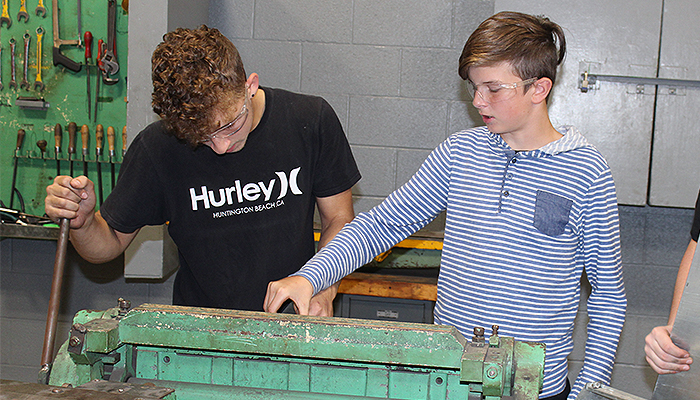
Hays High School saw a 42 percent increase in students taking Career Technical Education courses between the 2017-18 school year and this spring.

The student/seat time at the HHS went from 702 in 2017-18 to 998 this spring. CTE contact minutes also jumped from 30,186 in 2017-18 to 42,914 this spring.

John Linn, HHS assistant principal, presented the information to the school board at its meeting Monday night.

“It has made a dramatic increase, and I think that is going to continue to go up,” Linn said.

He said the increase is consistent with state- and nationwide trends as more emphasis is placed on connecting K-12 education with post-secondary education and careers.

State statistic indicate CTE students are more academically successful than their peers.

Ninety-nine percent of Kansas CTE high school students graduated compared to the state-wide average of  86 percent. Ninety-three percent of high school CTE graduates in Kansas enrolled in college, enlisted in the military or were working within six months.

HHS has nine Career Clusters with nine Career Pathways.

The Career Clusters include:

  • Arts, A/V tech, communications
  • Information technology
  • Marketing
  • Finance
  • Agriculture, food and natural resources
  • Hospitality and tourism
  • Human services
  • Architecture and construction
  • Manufacturing

Both female and male students are utilizing the CTE Pathways, according to state and national statistics.

Linn said an emphasis by counselors and the use of Career Cruising program, which helps students explore and plan for careers, have both led to more students enrolling in Career Pathway courses. Students take an interest inventory beginning in the eighth grade as part of Career Cruising.

The Strengthening Career and Technical Education for the 21st Century Act (Perkins V) was signed into law by President Trump on July 31. This measure reauthorizes the Carl D. Perkins Career and Technical Education Act, which provides $1.3 billion annually in federal funding, administered by the U.S. Department of Education, for CTE.

The district received two Perkins grants this year including a $1,550 grant to purchase a drone for the ag program and $29,431 grant to purchase a plasma cutting system for the manufacturing program.

Just last Friday, HHS learned it received grants to purchase a multi-process welder and a large format printer for AutoCAD.

Linn said HHS’ goals include increasing student enrollment in CTE courses. However, most of HHS’ classes are full.

“We have turned kids away at younger ages,” he said. “Obviously they have opportunities as they get older, but we have to turn younger kids away, because we are full in a lot of our CTE classes.”

HHS is also seeking to add pathways in high-need areas, including teacher training, and health and bio science.

“That is one goal of mine as we progress through next school year is to find the resources that we need to add a couple more Pathways to our program,” Linn said. “That again will increase our numbers in Pathways.”

Linn said the CTE program needs more instructors. The manufacturing program is down to two instructors from three. Classroom space is available if a half- or full-time instructor could be added.

Linn also said he is working with NCK Tech and FHSU on articulation agreements to add Pathways.

NCK Tech Community Health Fair set for Saturday

Nursing students from NCK Tech will be hosting their annual Community Health Fair from 9 a.m. to 2 p.m. Saturday, April 13. at the National Guard Armory, 200 Main St. in Hays.

Included in the event are free blood pressure checks, finger stick blood sugar checks, educational booths on obesity, diabetes mellitus, hypertension, Alzheimer’s and allergies.

The American Red Cross will be hosting a blood drive in conjunction with the community health fair.

Everyone is welcome and encouraged to attend.

Copyright Eagle Radio | FCC Public Files | EEO Public File