We have a brand new updated website! Click here to check it out!

Ellis County Desert Storm veteran receives Quilt of Valor

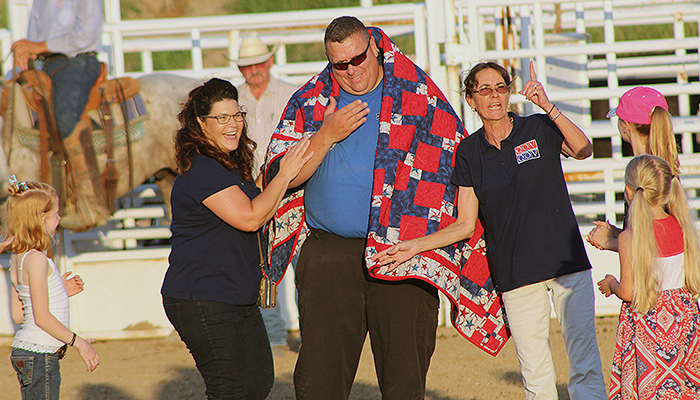
Children from the 4-H quilters group along with Connie Haselhorst, middle left, of Quilts of Valor, award Scott Wasinger of rural Ellis County with a Quilt of Valor Wednesday night at the Ellis County Fair rodeo.

By CRISTINA JANNEY
Hays Post 

Veteran Scott Wasinger, in front of packed stadium at the Ellis County rodeo Wednesday night, had a special quilt in bright red, white and blue colors draped over his shoulders.

He patted his heart before the cheering crowd to signal how it had touched him.

Wasinger said he was surprised and humbled by the gift and did not know his sister-in-law had nominated him to receive the quilt to honor his military service. His niece helped sew the quilt as part of a 4-H quilters group project.

Wasinger, of rural Ellis County, entered the Army Reserve in 1986. He was called to active duty during Operation Desert Storm. He earned the rank of sergeant and left the service in 1996.

Scott received the quilt through a joint project with the 4-H quilters and the local chapter of Quilts of Valor, which makes quilts for both veterans and active service personnel who have been affected by war.

Quilts of Valor just started a new chapter in Hays, and this was the first quilt the group awarded.

Quilts of Valor is a national organization that was founded in 2003 by Catherine Roberts whose son, Nat, served in Iraq.

Roberts, who was a quilter saw the gifts as a means of healing for those veterans who had been affected by war. Almost 192,000 quilts have been given to veterans and active service personnel since the organization’s inception.

Connie Haselhorst, Kansas Grateful Stitchers Chapter organizer, was in 4-H with Scott. Scott has been active supporter of 4-H and a member of the fair board.

Haselhorst said Scott was very humble about his service both in the Armed Forces and to the community, but was very deserving to be honored with a quilt.

“He is quiet, laid-back guy, who never takes the front seat” Haselhorst said. “He is always there helping but never wants any glory. This will be a little different for him.”

The Kansas Grateful Stitchers became involved with the 4-H quilters group, a group of about 12 youth, because of Haselhorst’s background in 4-H. Scott’s, niece, Marisa, 11, was one of the youth in the 4-H quilters group. Amy Wasinger, Marisa’s mother and Scott’s sister-in-law, nominated Scott to receive the quilt.

“I think the reason why he came to my mind is that he is pretty humble and he doesn’t think he deserves a lot of credit, but he served for 11 years in a difficult, high-stress combat situation,” Amy said. “He has always been in 4-H, so I thought it would be neat for 4-H kids making a quilt for someone who had been in 4-H himself, and it was our family.”

Marisa said of why she thought her uncle should receive a quilt, “He was in the Army, and I am proud of him.”

The 4-H quilters group made quilt blocks and then sewed those together to make Scott’s quilt, but women in Kansas Grateful Stitchers each individually work on a full quilt for someone who has served. Haselhorst said she was very impressed with the work the children did on Scott’s quilt. When they completed it, they all signed the quilt in one corner.

The other 4-H quilters said they wanted to repay Scott for his service.

“I think it is a nice thing to do because they gave to our country, and we should give back to them,” said Mariella Dreiling, 10.

Eva Betz, just 6, said of making the quilt, “It was fun, and it was nice.”

Keeli Kimzey, 10, said, “I just think it would be nice. They do a lot for us, keeping us safe and stuff, so I think we need to do something to show our appreciation for them.”

Haselhorst has been a long-time quilter and thought Quilts of Valor would be a way to give back.

“I love to quilt, and I think that if everybody does just a little bit, you know the worlds just gets a little bit better,” she said. “A friend of mine was telling me about this Quilts of Valor, and I thought this would be a great way to do more for everybody.”

Haselhorst urged other families to nominate friends and loved ones for quilts. If a veteran or active duty service person lives in another community or state, someone from a chapter in that area will be charged with making a quilt. The Kansas Grateful Stitchers serve Ellis, Rooks, Rush and Russell counties.

To nominate someone for a quilt, go to the Quilts of Valor national page and click on Request a Quilt of Valor under the Take Action tab. You can also donate using credit card or PayPal through the website.

Money for the materials for the quilts, which are usually done in patriotic patterns and colors, are purchased with locally donated funds.

The Kansas Grateful Stitchers chapter will be awarding more quilts during the RPM Speedway Military Appreciation night on Aug. 25.

If you would like to join the group, you can connect with the Stitchers on Facebook. They meet once a month on a Monday at Quilt Corral in LaCrosse. The group is looking for a second location to meet once a month on a Saturday.
Flame Engineering achieves 17 years with no loss-time accidents

Hays Post

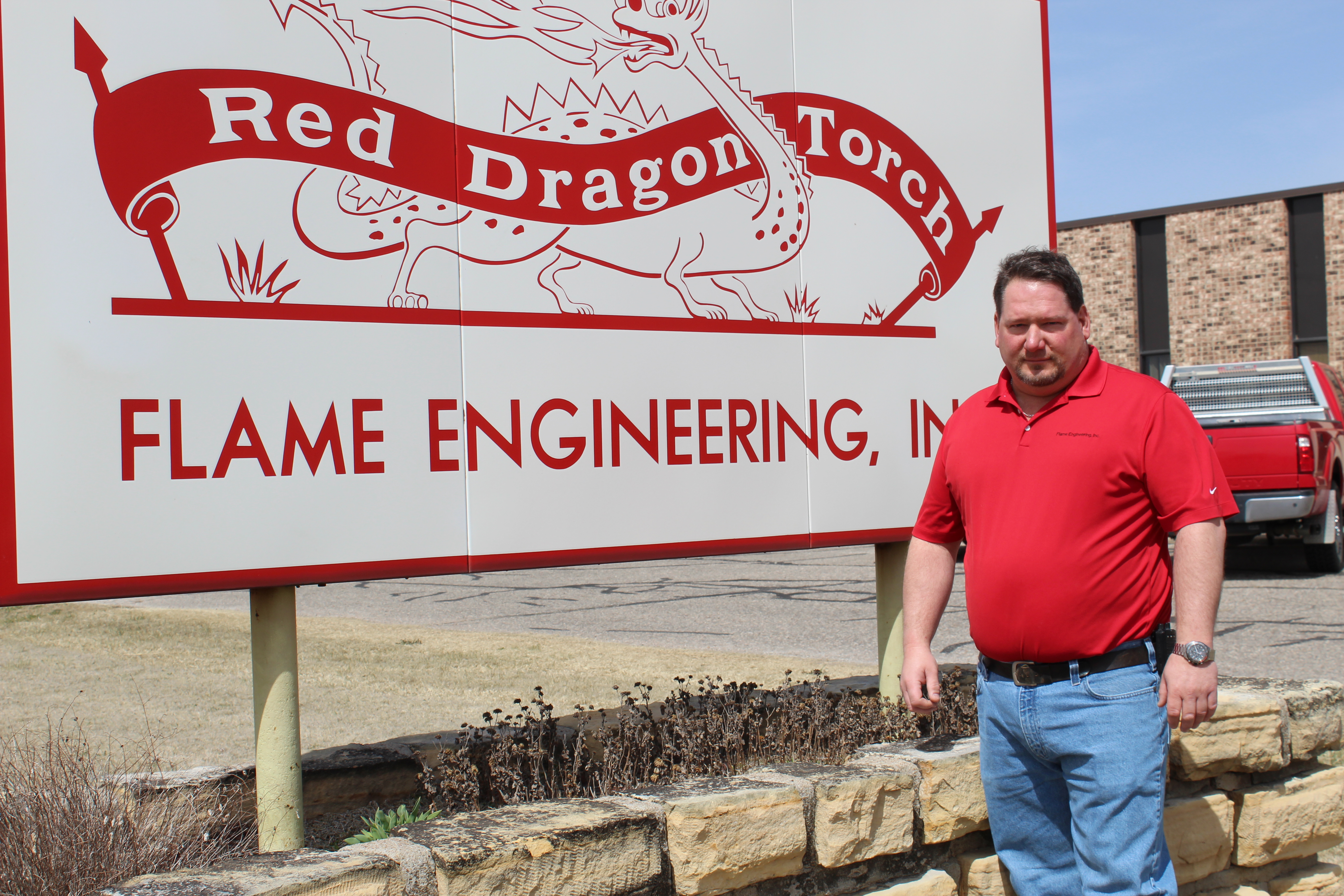
Jason Pivonka is the current vice president of the Flame Engineering.

LA CROSSE—Flame Engineering Inc of LaCrosse achieved 17 years with no loss-time accidents on June 22.

Lost-time accidents implies a non-fatal accident that causes any loss time from work.

Flame manufactures LP gas equipment. This includes torches for home, agriculture and tar roofing. Flame Engineering has been operating in La Crosse since the late 1950s and now sells all over the world.

Jason Pivonka is the current vice president of the company. His father and grandfather founded the company, and his son is the fourth generation to work at Flame Engineering.

“Everyone at Flame Engineering works hard to maintain a safe work environment,” a news release said.

Flame Engineering has also been part of the Safety & Health Achievement Recognition Program (SHARP) since October 2000, a designation which remains in effect today.
Purchase for grandchild sparks former farmer’s toy collection

By CRISTINA JANNEY
Hays Post

PFEIFER — In a nondescript metal building in rural Pfeifer is a child’s dream.

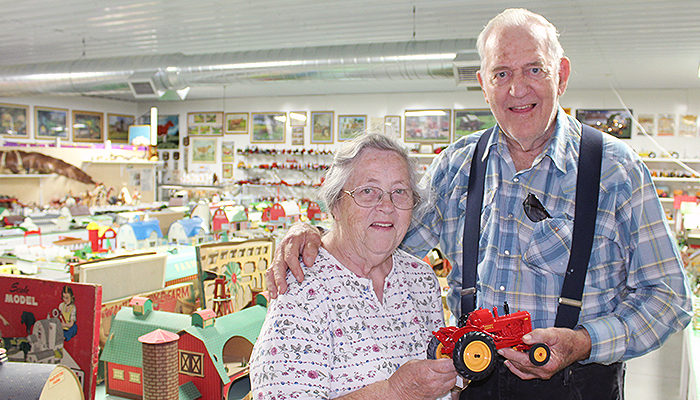
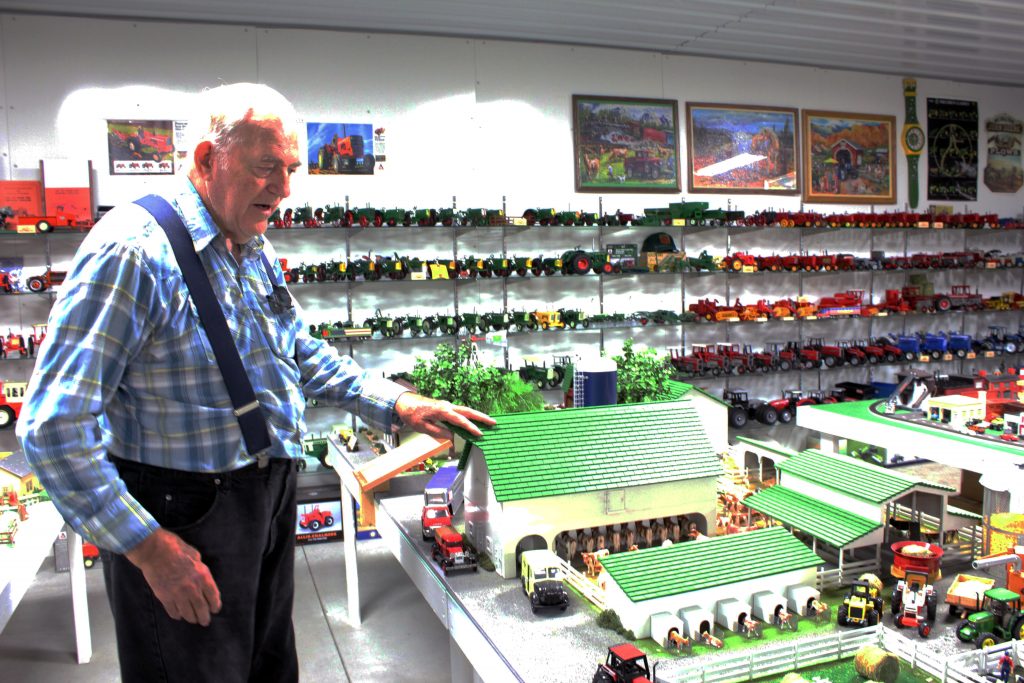
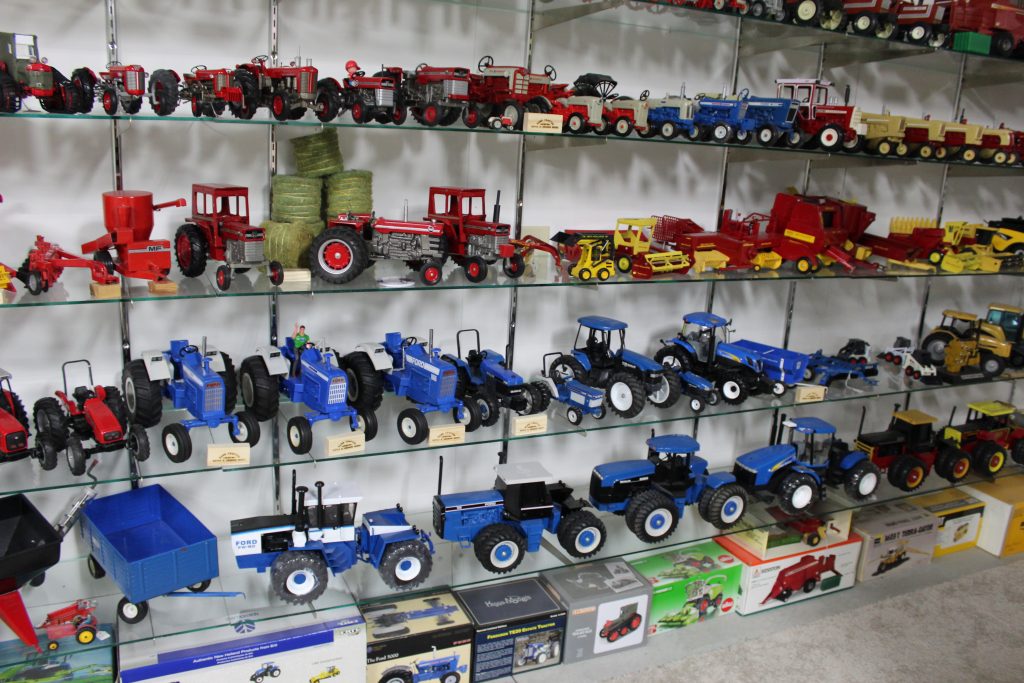
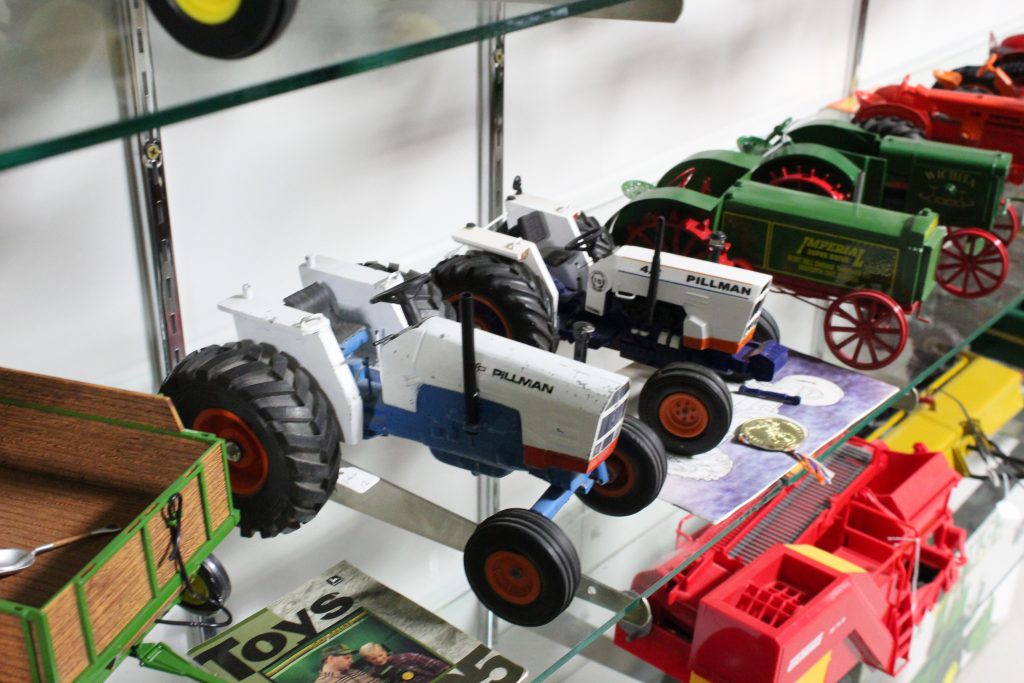
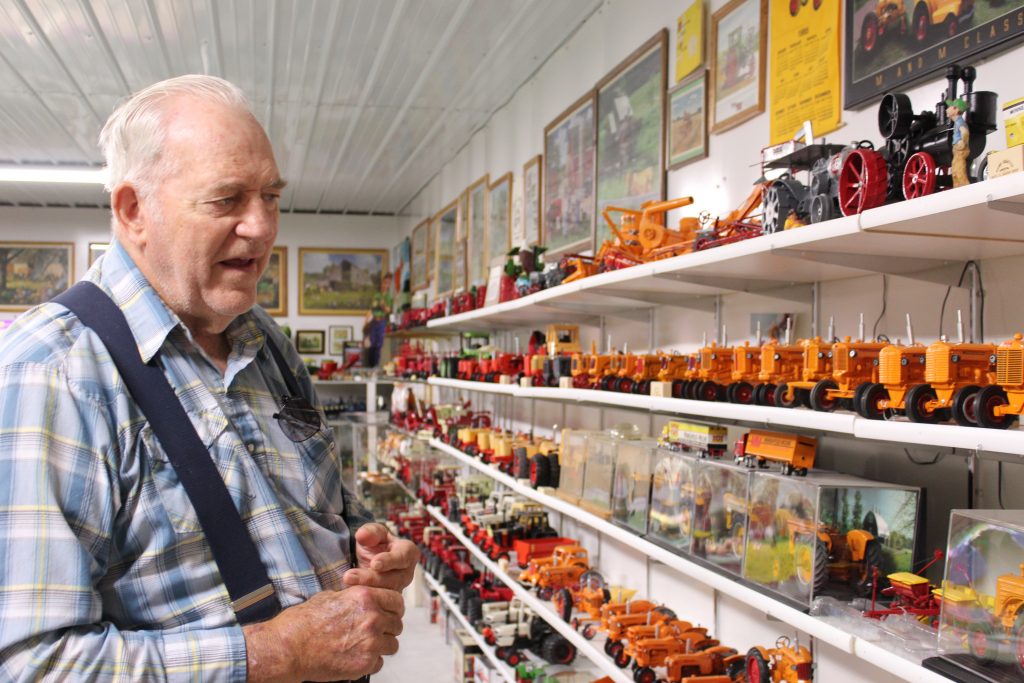
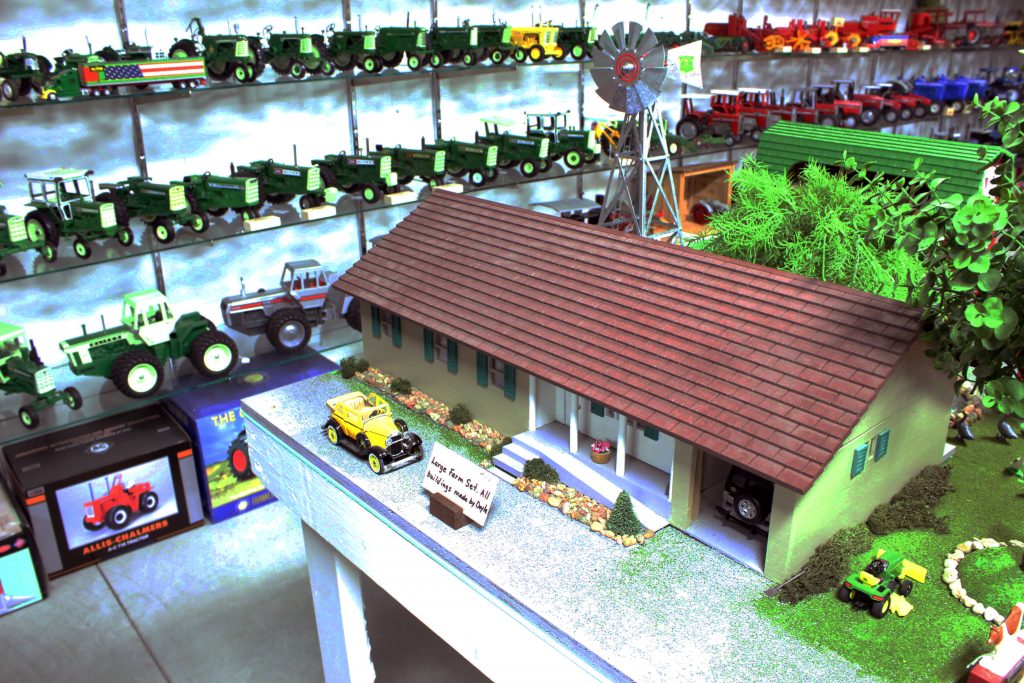
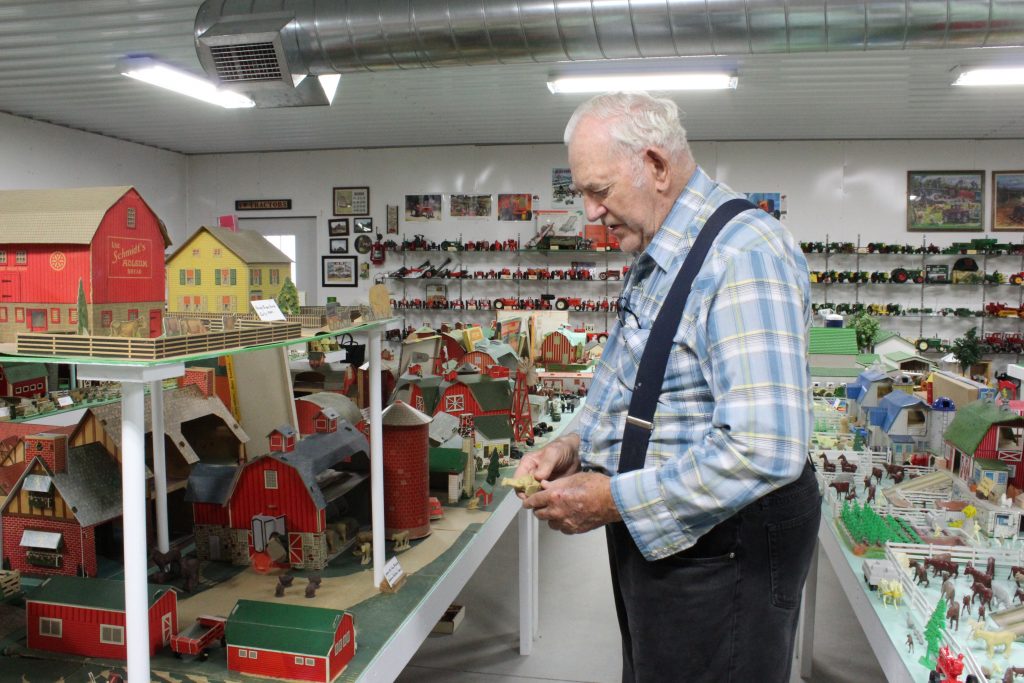
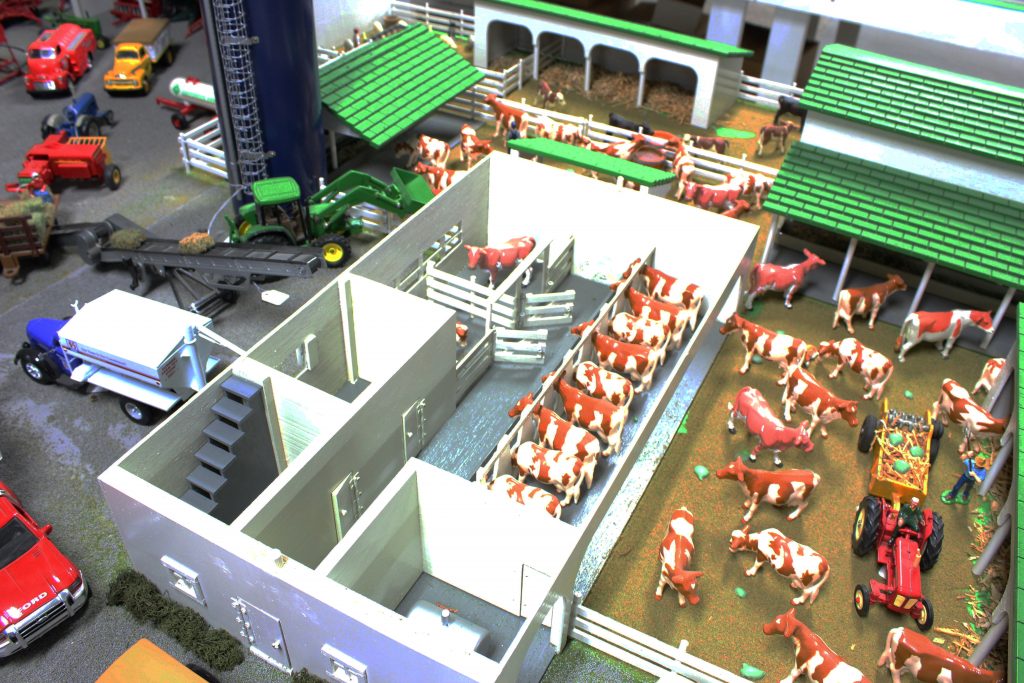
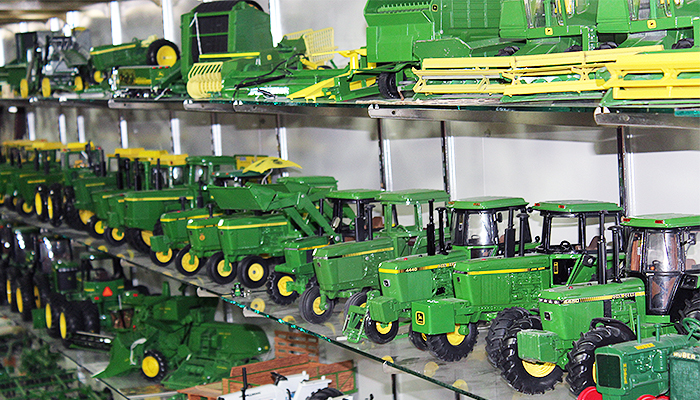
Doyle Neher’s Harmony Toy Farm Museum has more than 1,000 toys — 900 tractors and more than 100 farm sets. The collection has been accumulated over almost three decades.

Behind every toy in that collection, some hand crafted by Neher, is a story.

Neher, 81, started collecting in 1991 when his oldest grandchild was 3 years old.

Doyle Neher, 81, talks about some of his toy tractors at his Harmony Toy Farm Museum in Pfeifer.

“We were discussing what to get them for Christmas, and I thought that every kid needed a toy tractor. We went to Tractor Supply and picked them out a tractor. We went to Tractor Supply, and they had an A-Farmall model in there. That was the first tractor my dad bought, and the tractor that I learned to drive first. I was standing there looking at it, (my wife) says, ‘If you want it, go ahead and buy it.’ I bought a toy tractor in 1991, and this is what has happened since,” Doyle said motioning to the room filled floor to ceiling with shelves lined with toy tractors of all makes and models.

Doyle grew up on a hatchery and dairy near Oswego and then ran a dairy farm near Hutchinson until his retirement in the 1990s. He had toy tractors when he was a kid, but those are all long gone.

In honor of a lifetime of farming, he create a model of his father’s farm and his and his wife’s Sharon’s home in Hutchinson.

A replica Neher built of the dairy farm he grew up on.

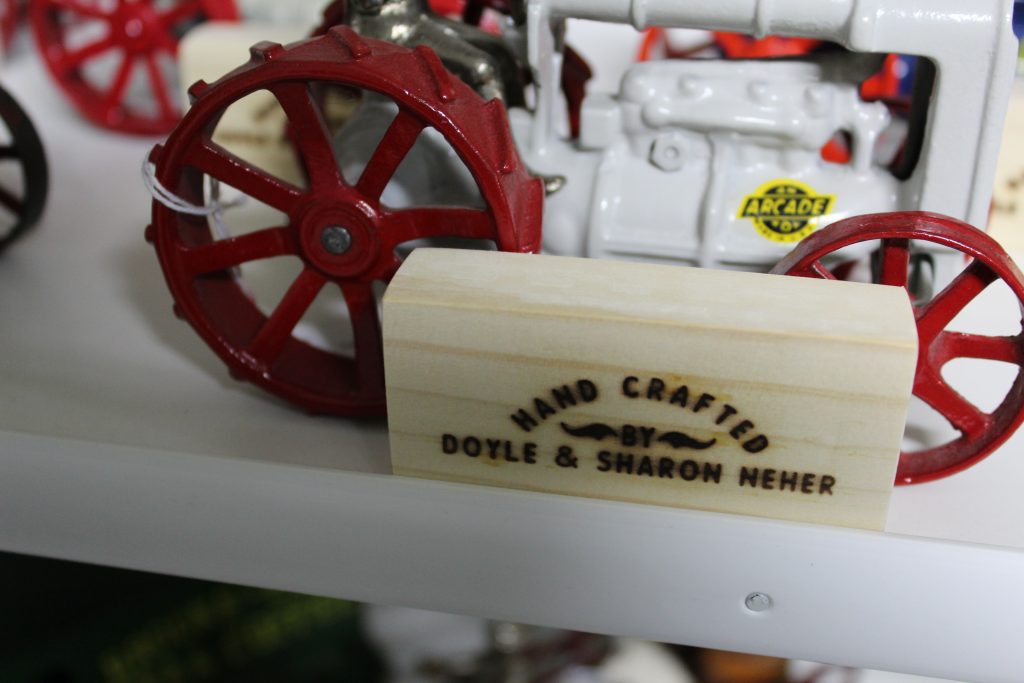
Doyle as a farmer was used to working with machinery and working with his hands. If you visit the museum, you will see dozens of toys with small wooden blocks in front of them. All of these toys, mostly tractors, are ones that he made, restored or customized. In many instances, he took toy tractors that were mass manufactured and altered them to look like the life-size equipment that ran in the fields. He made multiple copies of some of these original models and sold to other toy collectors.

“My favorite part is finding old tractors and restoring them and making them look nice,” he said. “I have restored over 100 pieces in here. … The second thing would be meeting the people.”

As Doyle has gotten older, his wife has helped him with some of his work on the toys. She helps place small pins and screws that Doyle doesn’t quite have the dexterity to manage anymore.

Of his collection, Sharon said, “I just tell him to go for it.”

However, Sharon acknowledged she was pleased Doyle had his own building to house the toys and her house is no longer taken over by the collection.

Doyle has a small workshop in the rear of the museum where he still works on the tractors, constantly making new creations.

One of his latest projects is to add a second railroad track to the H-O gauge he has in a farm scene displayed in the middle of the museum.

Neher finds his tractors and farm sets all over. He goes to garage sales, auctions, flea markets, antique stores and toy shows.

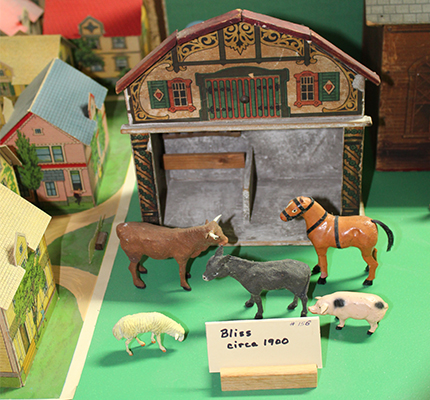
His oldest farm set was built in about 1900. He found the set at an antique store in Iowa.

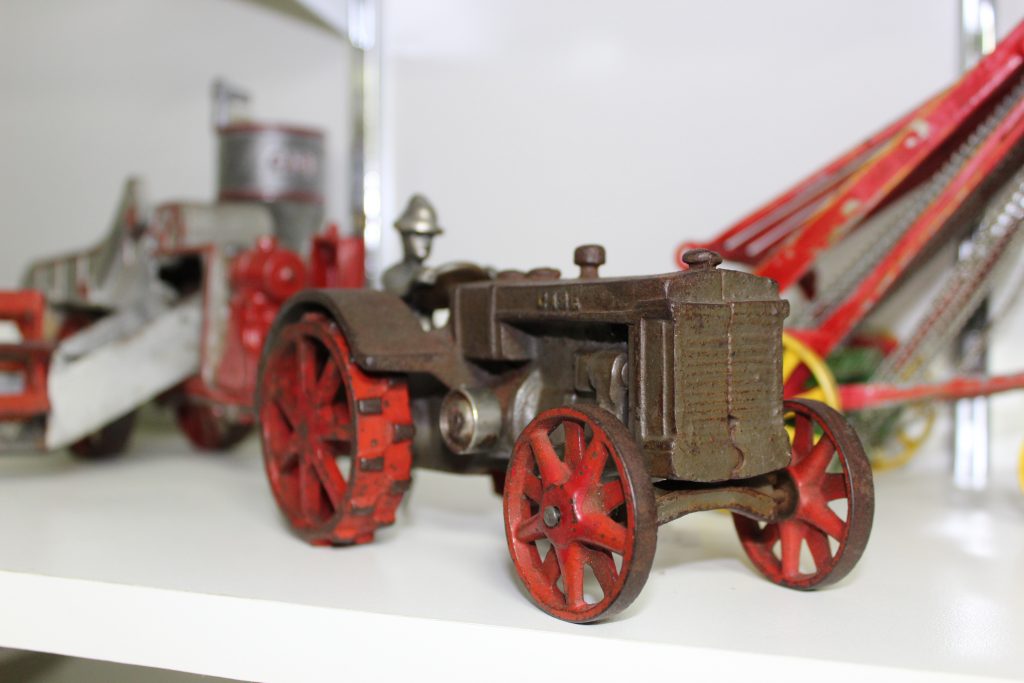
A cast iron tractor from the 1920s.

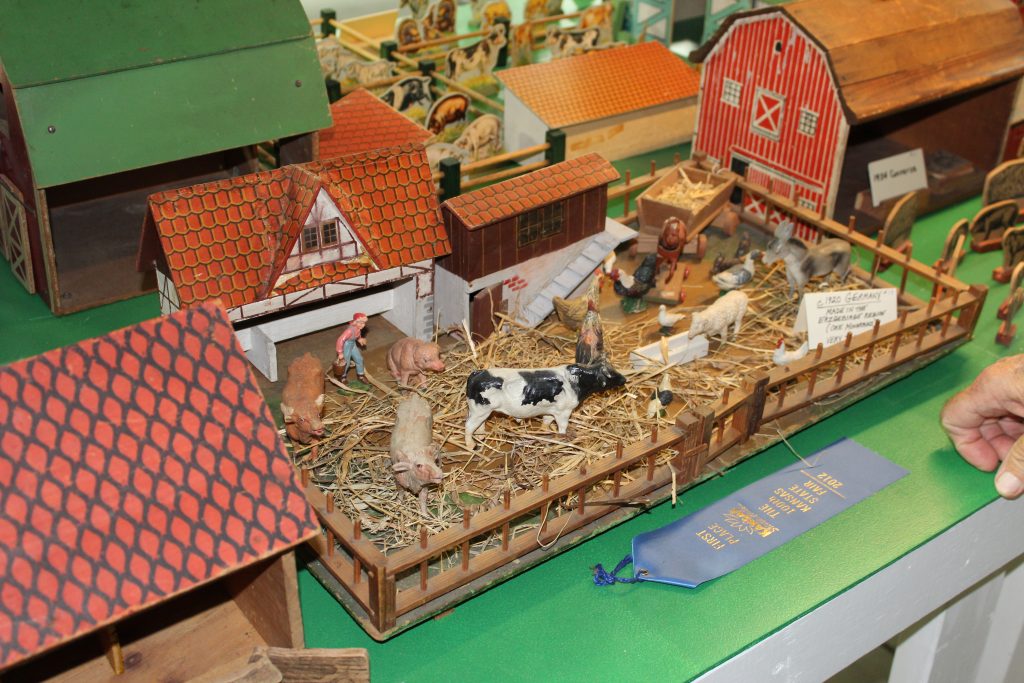
Another set was made in Erzgebirge region of Germany in 1920. Neher had a friend from McPherson who was visiting his daughter in Maryland. The friend saw the farm set in an antique store during the visit and sent a picture to Neher. He called the antique store, made a deal and secured the set for his collection.

He has a paper set that came as a reward in 1948 Quaker Oats puffed rice and puffed wheat cereal. Eight cards were available to collect in the set.

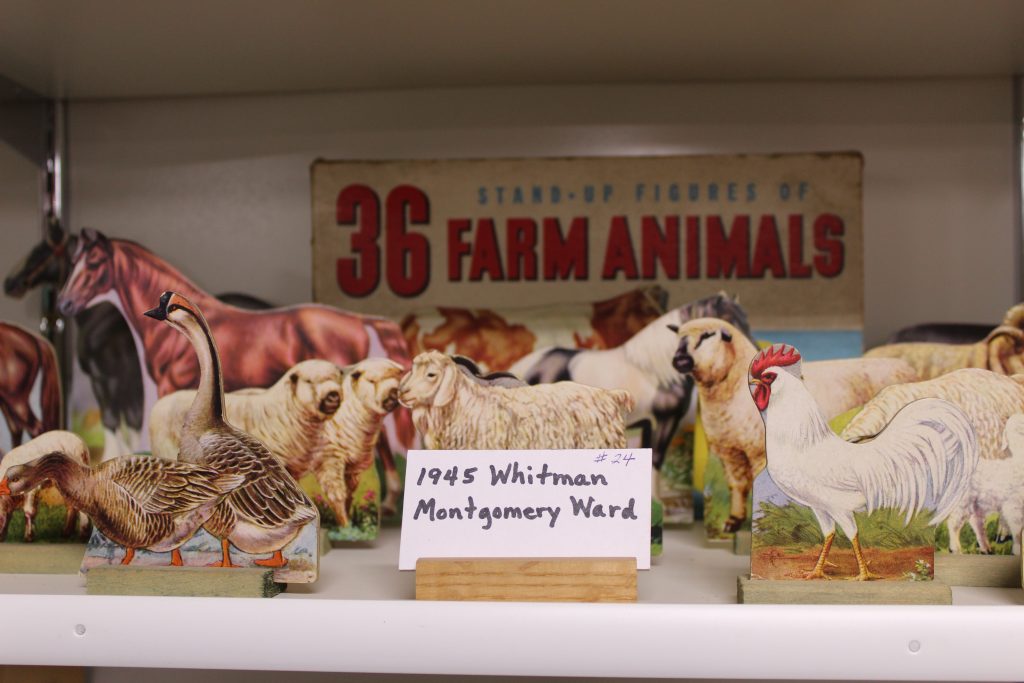
One of his favorite farm sets is a 1945 Whitman set that was sold by Montgomery Ward. The 36 cardboard figures each had the description of the animals printed on the back. He collected many of these sets and sold them at toy shows.

A toy farm set from the 1920s.

The first farm sets were made out of wood. Animals in the 1930s were made from rubber. When World War II broke out, the animals were made from the same molds but out of clay because rubber was essential to the war effort. After the war was over, they went back to rubber. In the 1950s, the barns started being made out of tin.

The early tractors were made of cast iron. His oldest toy tractor dates back to the 1920s. After searching for years, he drove to Kansas City to buy this rare tractor from a flea market vendor. Neher said he went into a garage in a nice residential area, and it was packed floor to ceiling with boxes. With great anticipation, he made his way through a narrow path to a table in the back of the garage where the toy was sitting. He made the deal and took home the tractor.

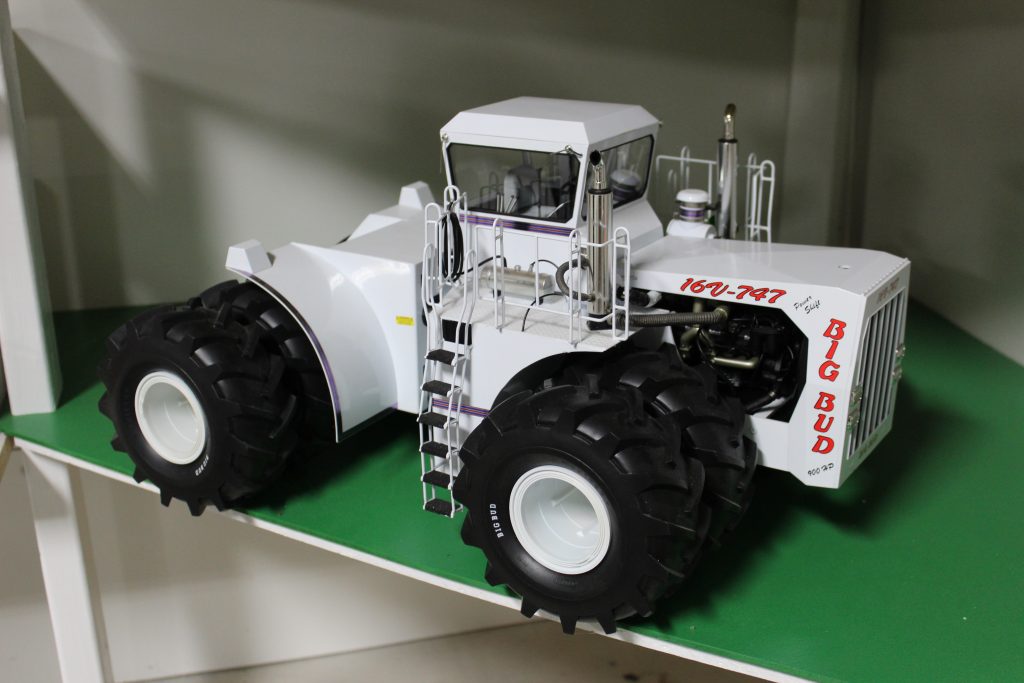
Neher also has a scale replica of the largest tractor every made — Big Bud, which was powered by a 16V, 747 engine. During a rebuild, the tractor was increased to 900 horsepower. Only a limited number of the toys were manufactured. The life-size tractor is currently on display at a museum in Clarion, Iowa.

A replica of Big Bud, the largest tractor built.

Neher shared a little bit of tractor trivia as he surveyed his collection of Ford tractors. The first mechanical farm equipment was driven by steam. Henry Ford came out with a smaller, less expensive gas-powered F-series tractor to replace the bulky steam-powered implements. The F-series was very popular with farmers, so General Motors bought the Sampson Company and came out with a tractor similar to F-series.

GM couldn’t beat Ford on price. They tried to make the tractors less expensive, but the product was so bad, almost all the tractors that were manufactured ended up back with GM on warranty. Neher has a couple of models of these rare tractors in his collection.

“That was the end of General Motors being in the tractor business,” he said.

Doyle and Sharon have met many friends through Doyle’s toy collecting through toy shows and selling and farm sets and tractors.

Neher voice began to shake and his eyes began to gloss over with tears as he talked about a particular tractor he received from a man he never met.

The man was from Pennsylvania, and he sold him a couple of farm sets through the mail.

“He kept writing back, saying that when he got better he was joining to do such and such and when I got a mate (toy) I’ll send you one,” Neher said. “Well, he never got better. He died. I got that tractor in the mail one day from his wife. She said he wanted you to have that tractor. … That is something really special for someone to give you something — something from someone you never met.”

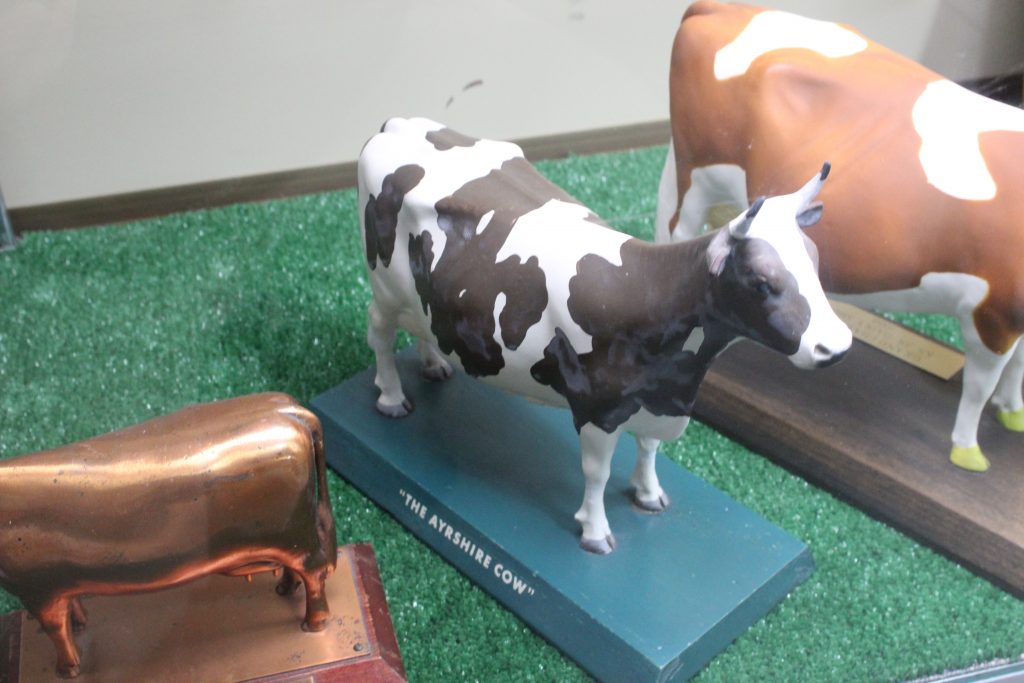
A rare model of a Ayrshire cow that Neher restored.

Another woman from Vermont sent an Ayrshire cow model to Neher. The models are rare. They were awarded at the state fair for grand champion cow. However, the Ayrshire headquarters burned down and it is unknown how many of the models were manufactured before the fire.

Neher searched for 10 years for the model. The woman from Vermont found the prized cow model in a box of things she bought at a garage sale. He restored the cow, which had one ear, both horns and the tail broken off.

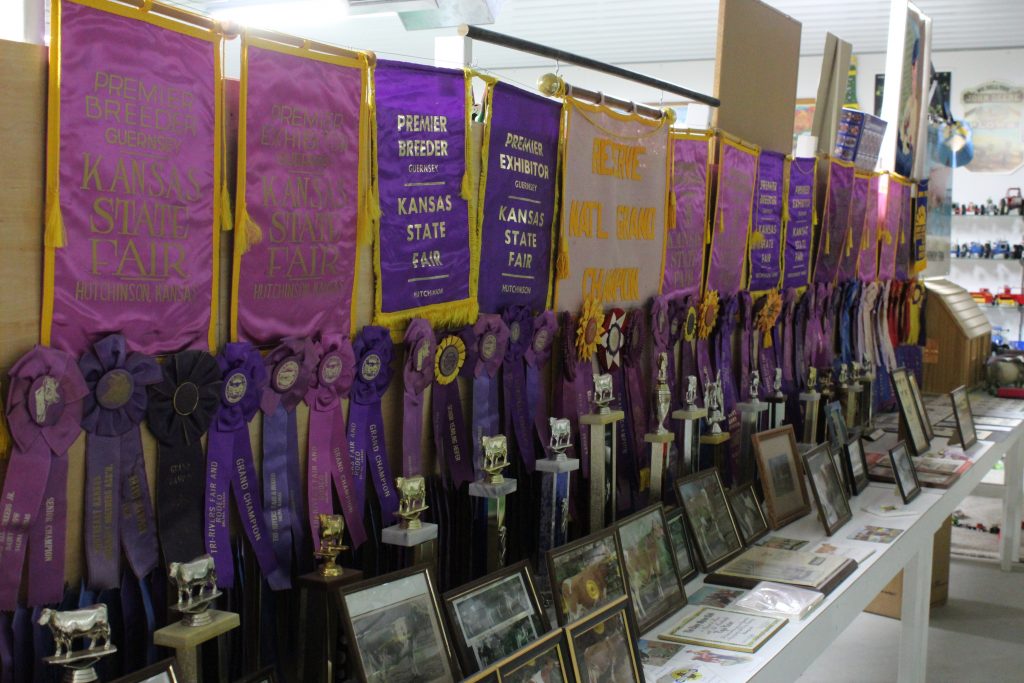
Another long table in the museum is hung with dozens of blue and purple ribbons from the livestock the Nehers showed at fairs. The family stood first in the class over 300 times and was premier breeder and exhibitor 20 times at the state fair. They had a reserve national grand champion in 1978. In 1985, they had a best breed cow known exhibitor at the national show in the 2-year-old and 3-year-old category.

Doyle and his son, Jeff, also collected baseball cards at one time. They have sold all of them except one complete set from 1953. This includes Satchel Paige, Willie Mays, Mickey Mantle and Jackie Robinson.

In addition to this set, he also has a card for a pro player who was born in 1922 in Pfeifer — Monty Basgall. He was a second baseman for the Pittsburgh Pirates. Later in his career, he was a coach for the Dodgers under Tommy Lasorda.

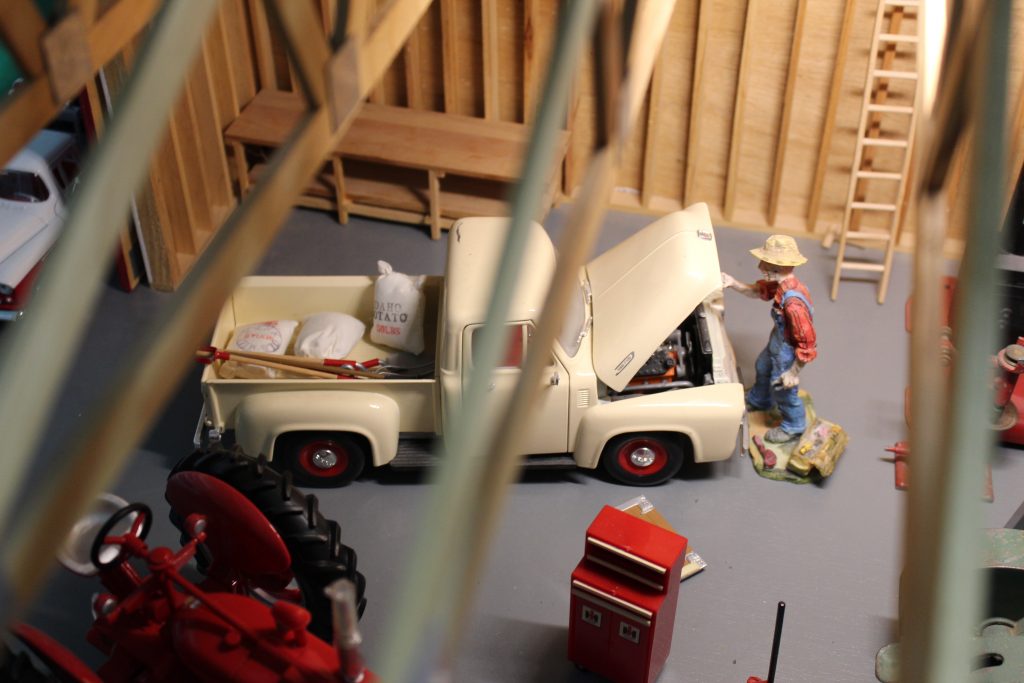
Jeff is a pastor and is busy with a large family and a goat farm in Pfeifer. However, Jeff had a role in his dad’s collection. One Christmas break when he was home from college, the farther and son made a farm shed equipped with an old truck and farm tractors. The set even has a tiny jack, air compressor and mechanic’s tool box.

Doyle said his older grandchildren, who are teenagers, are not interested in the toy collection anymore, and Jeff is too busy to be very involved. Doyle and his wife made a little carpeted corner in the museum where the smallest grandchildren, Joshua, 4, and Tucker, almost 2, can play with some of their own less collectible toy tractors.

Doyle said he is not sure what will happen to his collection, but he hopes the youngest grandchildren will eventually take interest in the toys and catch the collecting bug.

“It will be our children’s problem,” Sharon said.

The Harmony Farm Toy Museum is open for tours by appointment. Call 620-662-7592 or email [email protected].

Douglas Warren Hills

COLBY—Douglas W. Hills, 68, of Colby, Kansas passed away on July 18, 2018 at Citizens Medical Center in Colby.
He was born on April 27, 1950 in Colby to Harold A. Hills, Jr. and Elizabeth Jane (Ostmeyer) Hills and resided in Colby. He graduated from Colby High School in 1968 and attended Colby Community College after high school and then joined the family farming business with his father and brother, Craig Hills. He married Kathleen (Jackson) Tallman on Oct. 17, 1969 and divorced in 1983.

Doug enlisted in the Kansas National Guard Reserve in 1970 and completed his training in Columbia, South Carolina and Huntsville, Alabama. Doug married Junelle (Zerr) on Feb. 2, 1985 and was a life-long farmer and rancher in Colby.

Throughout his life, Doug was known for his sense of humor, mischievous streak and impatience. He was an avid outdoorsman, particularly hunting and fishing, and was feared equally by elk, deer, geese, pheasants, moose, quail, dove, halibut, salmon, and backyard squirrels. He enjoyed following the Kansas Jayhawks in basketball and attended many games in Allen Fieldhouse. Doug especially loved spending time with his three grandchildren.

Doug was preceded in death by his parents. He is survived by his wife, Junelle, of Colby; his daughter Wendy Hills, of Prairie Village, Kansas; son Brent (Darcie) Hills, of Fargo, North Dakota and grandchildren Hannah, Alyssa and Carter Hills; brother Craig (Anita) Hills, of Colby, Kansas; and sister Rhonda (Gary) Holstein of Leoti, Kansas.

Services will be at 10:30 a.m. on Friday, July 20, 2018 at the Colby Methodist Church with a private burial immediately following at Beulah Cemetery. Memorials are suggested to the U.S. Special Olympics or the Harold Hills Memorial Wrestling Scholarship at Colby Community College and can be sent in care of Baalmann Mortuary, P.O. Box 391, Colby, KS 67701. For condolences or information, visit www.baalmannmortuary.com.

Eagle Communications donates to ARC accessible park

Hays Post

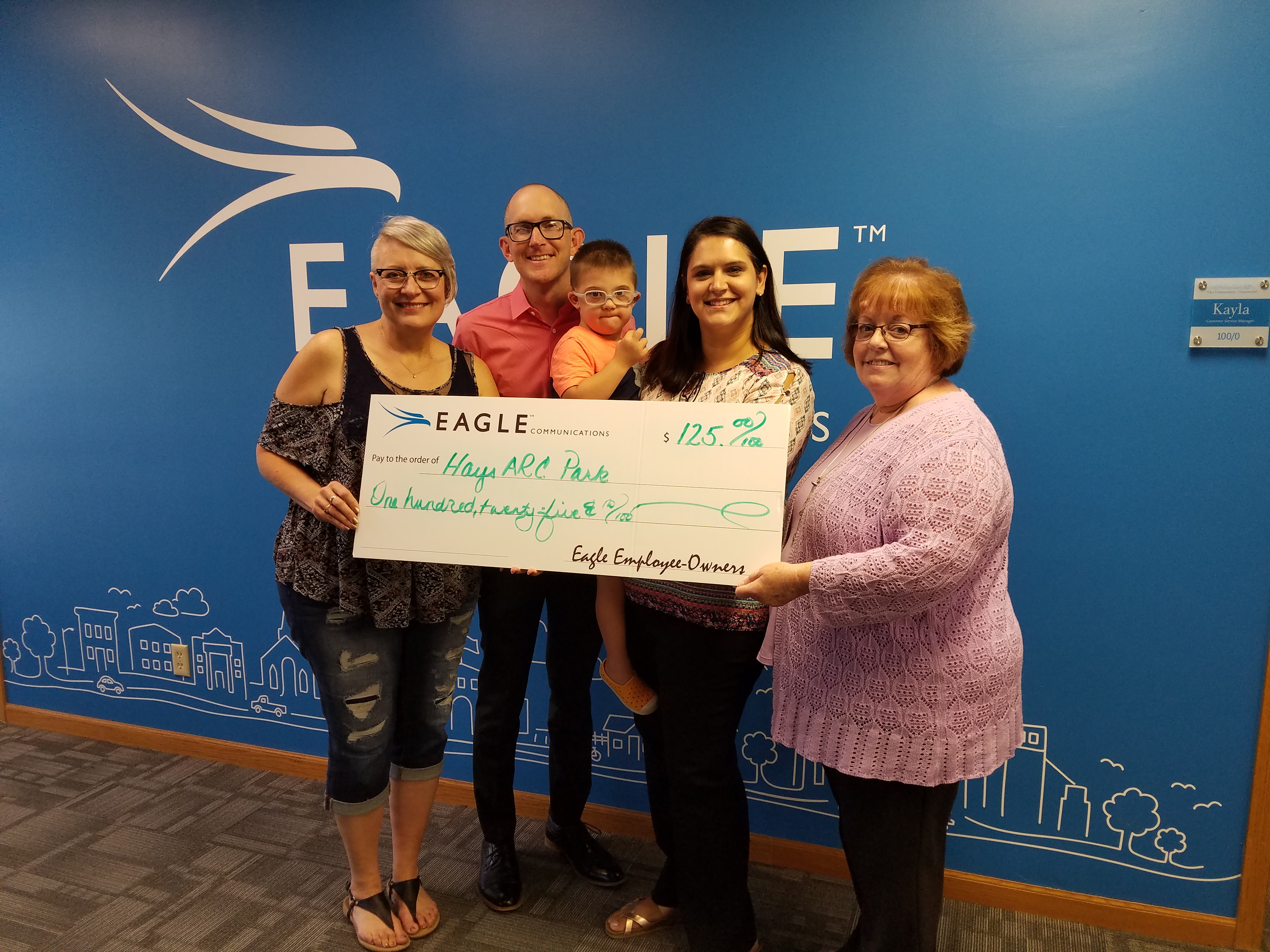
Rhonda Meyerhoff of Eagle Communications, left, presents a check to the ARC for its accessible recreation complex. The ARC is represented, from left, by Brent Kaiser, ARC activities director, Abe Meitner, Sarah Meitner and Kathy McAdoo, ARC executive director.

Eagle Communications made the first donation to a planned accessible park project that is being backed by the ARC of the Central Plains.

The $1.6 million complex would include a playground, splash pad and baseball diamond. ARC announced the project at Hays Area Chamber of Commerce event Friday.
See related story: ARC rolls out plans for new accessible recreation complex

If you have questions on the recreation complex or wish to donate, email [email protected]. You can also follow the Hays Accessible Recreation Complex on Facebook.

The $125 Eagle donation was the unclaimed prize money from a second egg hunt that Eagle sponsored during the Wild West Festival.

The Hays Post is owned by Eagle Communications.


Victoria VFW sets fundraiser to install accessible restroom

By CRISTINA JANNEY

Hays Post

The Victoria VFW Post 1751 is raising funds to build an accessible restroom.

The VFW’s building was constructed in the late 1960s or early 1970s and the bathrooms have not been upgraded sine then.

Harland Rupp, VFW quartermaster, said the renovation is important to the community, as the VFW is the only building in Victoria that is large enough to accommodate many community events.

The building is not only used by the VFW and veterans, but for wedding showers, funeral dinners, anniversary parties, Knights of Columbus fish fries and other events. Some patrons of the establishment who used walkers and wheelchairs said they were having trouble maneuvering in the current restroom’s tight space.

A new expanded unisex restroom will be created with a wider door, grab bars and lowered sink for use by people who use wheelchairs.

The VFW estimates it will need $10,000 to do the renovations and hopes to have enough money raised within the next six months to fund the project.

The group is applying for a Home Depot grant and is conducting a burger and brat fundraiser from 11 a.m. to 1:30 p.m. Sunday at the VFW, 204 E. Main St., Victoria. The fundraiser also will honor the community’s veterans.

Brats, burgers, hot dogs, baked beans, chips and coleslaw and beverages will be served. A full meal will cost $7.

Individual items can be purchased for the prices below.

Hamburger $3, brat $3, hot dog $2, bag of chips 50 cents, pop $1, beer $2

For more information on the fundraiser or on how to donate to the renovation project, contact Rupp at 785-623-1368.


🎥 Ellis County wet again after flooding on Monday

By CRISTINA JANNEY
Hays Post

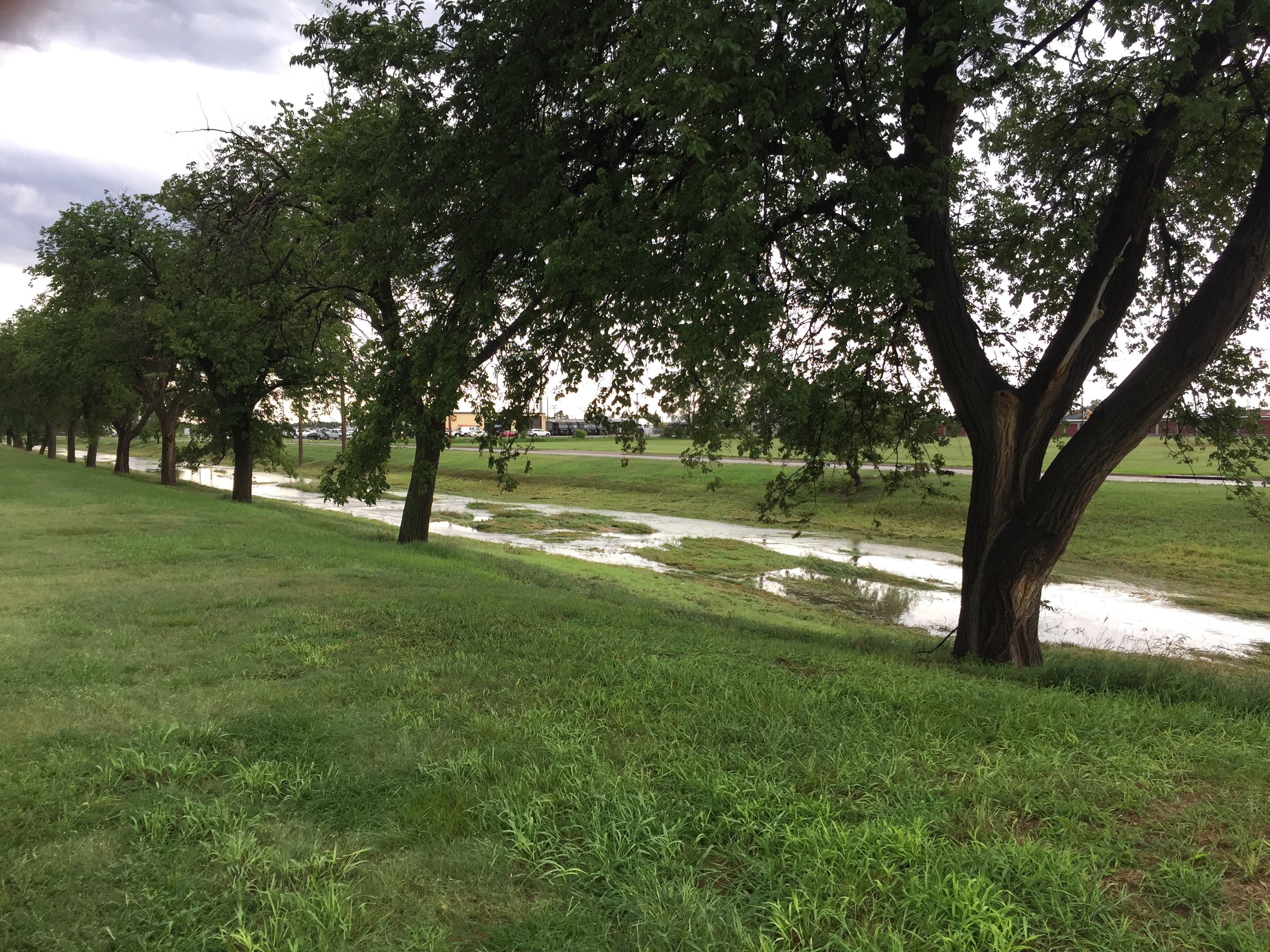
Ellis County was hit again by rain a day after a storm caused flash flooding in the northeast part of the county.
The county was under a flood advisory until 9:30 a.m. Tuesday.
Bill Ring, public works director, said some barricades in the county were still up from Modnay’s flooding.

County crews were out this morning checking routes for further flooding or damage.

No major damage was found from Monday’s flooding, although water was over roads in a number of places in the northeast part of the county.

Some shoulders had washed out, but Ring said they will be easy to repair.

Hays received 1.63 inches of rain this morning, as of this report. It received only a trace Monday.

The K-State Extension Ag Center reported 1.42 inches for the last 24 hours, 5.14 inches for the month of July.

🎥 Registration open for Market to Farm Fun Run; Bazaar on Bricks July 28


Courtesy photo

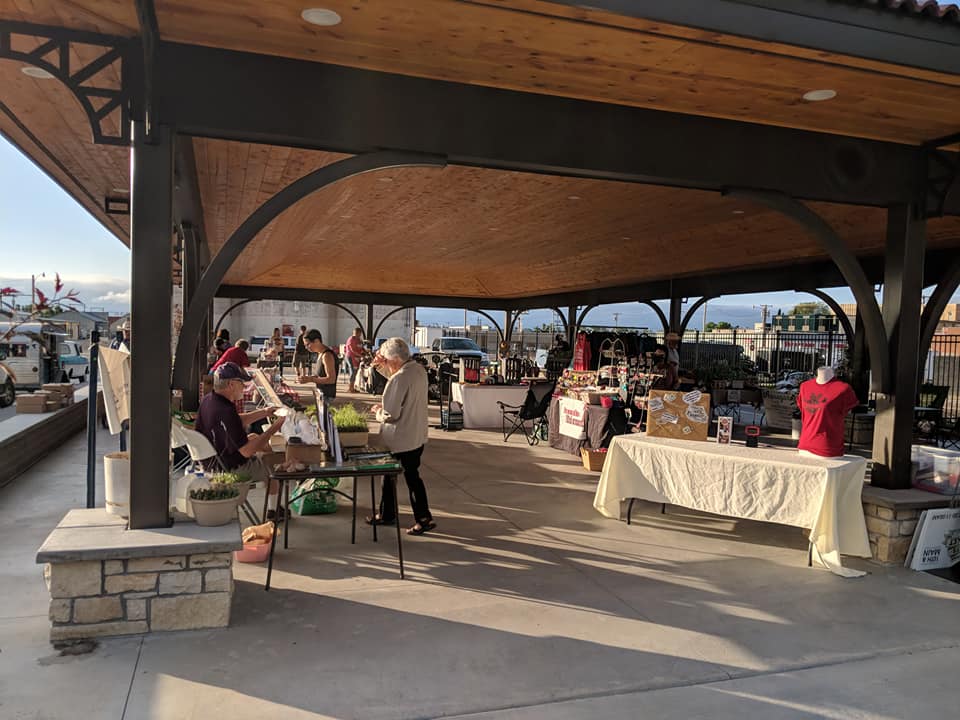
Bethesda Place and the Downtown Hays Market have partnered to create a 4-mile fun run like no other on Saturday, July 28.

The Market to Farm Run is the only run that feeds you a campfire fresh breakfast as soon as you cross the finish line.

The delicious post-run menu includes campfire scrambled farm fresh egg burritos, zucchini tomato tarts, cherry danishes and pumpkin apple coffee cake with plenty of coffee and ice water to go around.

All of this, as well as a free race shirt is included with registration. Registration is 6:30 to 7:15 a.m. The run/walk starts at 7:30 a.m. at the Downtown Pavilion.

Race, walk or stroll 4 miles from the home of the Downtown Hays Market, the downtown pavilion, to the Bethesda Place Farm. Although this route is not all blacktop, bikers, strollers, walkers and runners will have no problem reaching the end.

Registration is just $25 up until the event. On the day of the run, the fee increases to $30. Online registration is available at downtownhays.com or swing by the Downtown Hays Visitors Center at 106 W. 12th St. to register in person. All proceeds from the fun run will benefit Bethesda Place and the Downtown Hays Market.

To recognize this partnership, Kacey Dannels, Joseph Reed and Noalee Augustine from the Kansas Special Olympic team will kick off the day. Dannels and Reed recently competed at the Special Olympics USA Games in Seattle. Augustine was selected as a coach for the Kansas team that traveled to compete.

See related story: Hays Special Olympics athletes bring home honors from nationals

Event participants will have the opportunity to explore the farm and to cool off in the pool before returning to town. Shuttles will be available to take the participants back at 8:30 a.m. and 9:30 a.m. Before heading home, make sure to enjoy the annual sidewalk sale, Bazaar on the Bricks from 7 a.m. to 1 p.m. The sales span Main Street from Eighth to 12th Street.

Over 60 vendors are already signed up. Thousands hit the Bricks for the biggest bargains of the year from our Downtown merchants as well as their favorite Downtown Hays Market vendors. New this year, made possible by Aikido of NW Kansas and A2Z Escape, there will be a free ninja obstacle course and kids crafts under the Pavilion. Since activities are under the Pavilion, farmer’s market vendors will be on Main Street.

It is not too late to sign up to be a vendor for Bazaar on the Bricks. You can sign up on the DHDC website, calling the DHDC office or stop in. Vendor cost is $75. There is no cost for nonprofits.

There will also be carnival games, face painting and street fair food. For a full list of vendors and activities, visit www.DowntownHays.com. For more information, contact Downtown Hays Development Corp. at 785-621-4171 or [email protected].

USD 489 Hays enrollment open for 2018-19 school year

USD 489

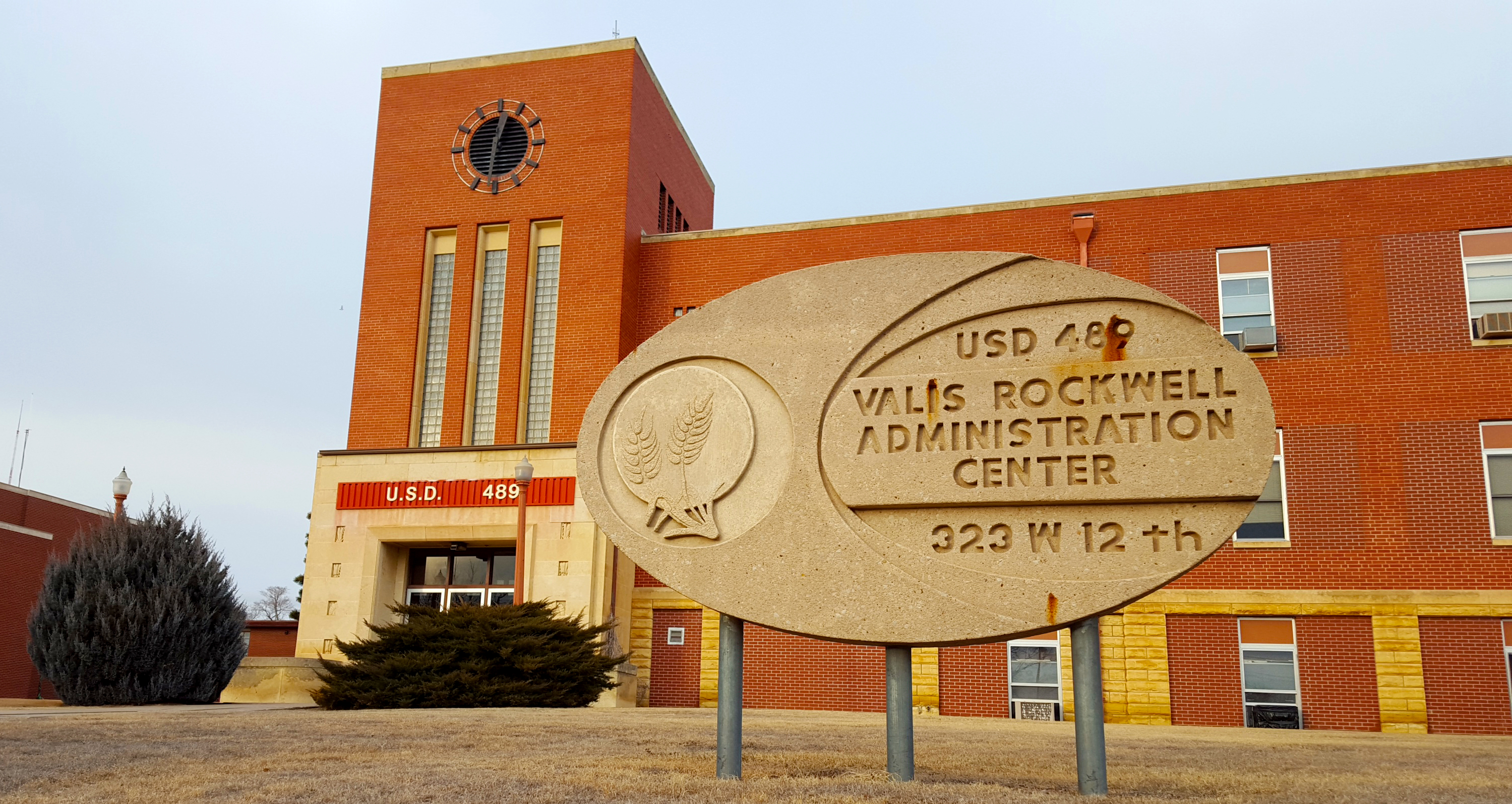
Online Enrollment for USD 489 has opened as of today. Below you’ll find steps for completing enrollment forms and paying the enrollment fees. There’s also information about when you can come in person to meet your enrollment needs.
 
There are two steps for enrolling your student/students at USD 489.
 
The first step is to complete the online forms that are accessible through your PowerSchool Parent Account. Once you are logged in you will click on Ecollect Forms in the menu along the left side of the screen. This will take you to a list of forms that are required for enrollment. You can fill these out at your convenience before Aug. 1 or you can come to Hays High on Aug. 1 or 2 during our Central Enrollment and use district devices to fill out the forms. Instructions on how to progress through the forms are attached to this email as well as on the USD 489 website, www.usd489.com

 The second step is to pay the enrollment fees. This can be done online through our district store (3.61 % convenience fee is applied) or you are can go to the Central Enrollment at Hays High School on Aug. 1 and 2 to pay by either cash or check. The district online store is accessible at https://hays.revtrak.net or on the USD 489 website link above. Instructions on how to maneuver through the online store are attached as well as available on the USD 489 website. If you choose to fill out the forms online and pay by cash or check at the Central Enrollment, there is a Speedy Checkout line that will get you in and out quick.
 
USD 489 Central Enrollment will be from 7 a.m. to 5:30 p.m. on Aug. 1 and from 10 a.m. to 7 p.m. Aug. 2 at the Hays High School cafeteria. At Central Enrollment, you can speak with any of the building administrators, get building-specific information, speak with our Nutrition Department, our Special Education Department, and many other services as well as community information.
 
If you have any questions, contact the Rockwell Administration Center, 785-623-2400, or your student’s school.
Hays High School 785-623-2600
Hays Middle School 785-623-2450
Lincoln Elementary 785-623-2500
O’Loughlin Elementary 785-623-2510
Roosevelt Elementary 785-623-2520
Wilson Elementary 785-623-2550
 
If you have problems going through the enrollment steps, you may contact Amy Arnhold at [email protected] for assistance.

Please also note any families with new students or incoming kindergarten students should attend central enrollment in person on Aug. 1 or 2.  Information regarding enrollment and the 2018-2019 school year can be found at https://www.usd489.com/?p=5559.


🎥 Northeast Ellis County sees flash flooding after 5 inches of rain


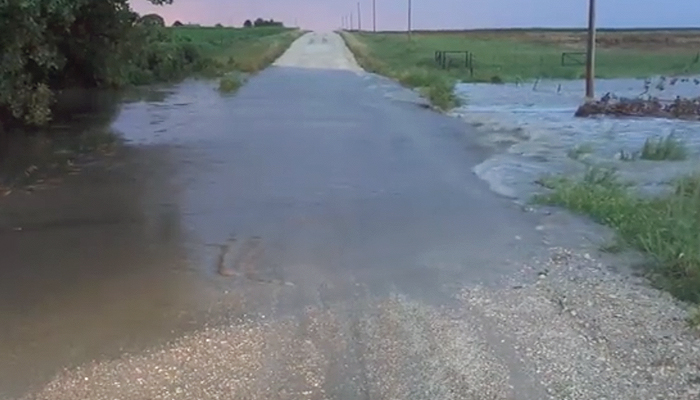
2300 block of Feedlot Road Courtesy video

By CRISTINA JANNEY 
Hays Post

Northeast Ellis County experienced flash flooding Monday morning after a storm dumped 5 inches of the rain on the area.

Bill Ring, Ellis County public works director, said he was called out about 4:30 a.m. by deputies who reported water running over roads in the county.

Ring and the sheriff’s office said as of 9 a.m. the water was quickly receding. No roads were reported closed, but some portions of roads could be blocked with cones.

Ring said drivers should continue to be cautious as streams could still cause problems as runoff funnels into waterways. He also said some roads could be damaged because of the flood waters. He urged local residents to call the county public works department at 785-628-9455 to report damage.

No major property damage was reported and no one was injured, Ring said.

The official rain report for the last 24 hours for Hays from the K-State Research and Extension station was a trace of rain.

Ring urged drivers to continue to always follow the motto, “Turn around, don’t drown.”

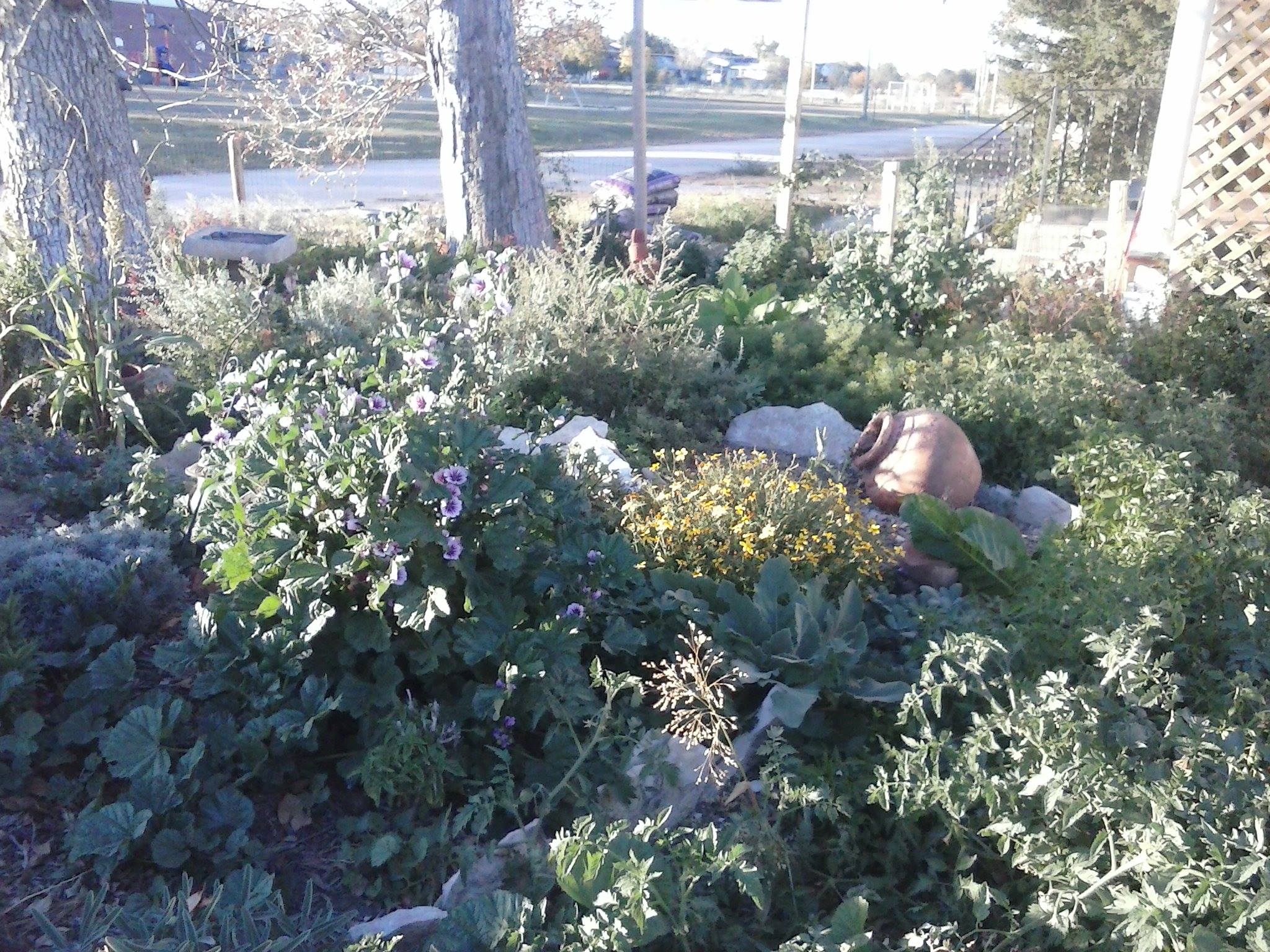
Hays Herb Study offers tips on organic gardening

Herb Haus

By CRISTINA JANNEY
Hays Post

For hundreds of years, the human race has used organic farming practicing, fertilizing with manures and manually pulling or hoeing weeds from gardens. Within the last 100 years, farmers and home gardeners have turned to chemicals to control weeds and pests to what a local herbalist argues is the detriment of wildlife, pollinators, plants and people.

Pam Herl, a local herbalist, recently presented a program to the Hays Public Library Herb Study group on organic gardening.

“They had very strong work ethics,” Herl said of historic home gardeners. “They worked in their gardens. Whereas today, we tend to reach for the bottle of Roundup or 2,4-D instead of bending over and pulling the weed. We spray and then we go to Curves or the health center and exercise. You get a lot of exercise [in your garden].”

You can burn about 300 calories for one hour of gardening, depending on the type of work and your body type. It is the equivalent of one hour of intensive work in a gym.

Hoeing can help cut down on grasshoppers, Herl said. The insects lay their eggs in the top layer of the soil. If you turn over the soil with a hoe, it exposes the eggs to sunlight and heat and kills them.

Dangers of chemicals

“It has polluted our food source, it’s polluted our air, it’s polluted our water source, and yet we are still reaching for that bottle of chemicals for spraying insects, for fertilizing, for spraying weeds,” Herl said. “We are constantly reaching for that bottle.”

Use of pesticides has increased by 50 percent over the last 30 years, Herl said. 2.5 million tons of commercial pesticides are used annually in the U.S., according to a study published by the American Institute of Biological Sciences.

“That is a lot of money we are pouring into an industry that is killing us spray by spray,” Herl said.

The chemicals can leach into ground water or run off into watersheds such as streams, rivers and lakes, all sources of drinking water and places were people swim and enjoy water sports.

“Every time you see someone spraying that bottle of 2,4-D,” Herl said, “I can guarantee it is going to go down in the water and the ground and the water source and it is going to end somewhere it is not supposed to be.”

Pesticides and herbicides can kill beneficial insects along with ones that would destroy crops. Less than 1 percent of the world’s insects are considered pests to farmers. The rest play a vital role in our food chain, Herl said.

Herl expressed concerns about how the use of pesticides is affecting pollinators. Despite her use of organic gardening practices in her herb garden in WaKeeney, she has seen a marked reduction in the number of bees and butterflies.

Herl said chemical fertilizers can disrupt beneficial bacteria and fungi in the soil. They also may not replenish trace elements plants need. Chemicals can also negatively affect the pH in the soil.

Herl called out some specific chemicals of concern to her.

Glyphosate, a chemical found in many herbicides, is affecting butterflies, Herl said.

Neonic, a chemical used to treat corn seeds, has been linked to bee kills and been found in honey. 80 percent of the 92 million acres of corn in the U.S. were treated with the chemical as of 2011.

Herl said there are a few exceptions of invasive plant species that are very difficult to kill unless you use chemicals or a weed torch. These include bindweed and puncture weed. Weed torches are not recommended when conditions are very dry as they could ignite wildfires.

Weeds that are not weeds

The group talked about the classification of plants as weeds. Some plants that are categorized as weeds, such as dandelions have benefits, produce nectar for pollinators and are used by some for medicinal purposes.

“It depends on the person and the location of your garden,” Herl said. “If you have a pristine formal garden, any of these are going to be a weed. They don’t want them in their garden. Now if you have a cottage garden like mine, they would be welcome. I had a lady who was there for the garden tour and she said, ‘Oh, you have a dandelion in your garden.’ I said, ‘I have a lot of dandelions in my garden because this is a herb garden. It is not a flower garden, so there is a lot of dandelions in my garden. There sure is.”

Herl also has wild lettuce in her garden. Other gardeners chimed in and said they had yarrow, lamb’s quarters, hog weed and dock in their gardens, all of which are categorized by some as weeds.

“These are all that people spray,” Herl said. “They spray these. These are all used medicinally, and they spray them. We are a chemically enhanced generation. We are all about chemicals. We want the fast fix whether it is an antibiotic, an insecticide or fertilizer. It is all about the fast fix. We are worried about today and not tomorrow and we are killing ourselves, slowly but surely. We won’t be around to see it, but our kids or grandkids probably will.”

Even if you want to take your garden or your farm organic, it is difficult to get away from all the chemical use around you, Herl said. Land has to lay fallow for seven years to certify crops on it organically grown, Herl said, and then the land is periodically checked to make sure there are no chemicals in the water or land.

“You would have to grow that whatever crop you want certified organically on an island in the middle of the ocean because you can’t control what goes in your groundwater,” she said. “You can’t control what a neighbor three miles from you has a crop duster spray and the wind blows your direction. You can’t control what the county worker is doing when he is driving a truck down the road spraying the ditch with Roundup. How can you grow anything certified organically grown?”

Natural pest repellents

Herl gave some examples of plants and natural substances that can be used to repel animals and unwanted insects:

Recipe for animal repellant

2 T of powdered red pepper

1 gallon of water

6 drops of soap

• Rabbits can be repelled with powdered aloe vera.

• Aphids, white flies and beetles can be repelled with garlic spray. Use a bulb of garlic in four teaspoons of mineral soap and let it set overnight. Strain the garlic, add two pints of water and one teaspoon of Dawn. Use as a spray.

• Botanical sprays can be purchased over the counter. Rotenone, which is derived from the derris root, kills aphids and grasshoppers. Sabadilla powder, liquid or seeds are used against grasshoppers, corn borers, codling moths, squash bugs, aphids, web worm and cabbage loopers.

• Toads and frogs can be beneficial to garden as insect-eating machines. One toad can eat up to 10,000 insects in three months. They eat crickets, grubs, rose beetles, caterpillars, squash bugs, potato beetles, flies and slugs. They just need shelter, water and light. A solar light in the ground near water will attract insects for the toads. However, toads and frogs are very sensitive to chemicals in the environment.

• Some flowers also have insecticidal qualities, including aster, mums, cosmos, coreopsis, nasturtiums, and French and Mexican marigolds. You can dry the flowers and turn them into powders. You can also use the green flowers, soak them in alcohol, strain, add Dawn, add a little oil and use as a spray. Planting marigolds in your garden can help repel nematodes, which attack vegetables’ root systems.

• Cornmeal spread at the base of roses can prevent black spot.

Natural fertilizer

Herl also discussed the use of natural fertilizer, including animal manure. Cow manure contains high amounts of nitrogen, phosphates and potassium, as well as calcium, magnesium and sulphur. Herl also uses fish fertilizer.

“You have to remember, this is free,” she said. “You can go out in the country and you can get a lot of cow manure yourself. Just let it dry. You get free exercise, and you get to go out into the country for a good drive.”

Earthworm castings are excellent for gardens as well.

Attract worms to your garden by taking newspaper, laying it flat on the ground, wetting it and spreading mulch over the top. It will prevent weeds from growing, it breaks down naturally and earthworms will love it, Herl said.

Osborne teen earns Girl Scout’s highest honor, the Gold Award

OSBORNE—Girl Scouts of Kansas Heartland honors new Girl Scout Gold Award recipient, Ashton Baxa of Osborne for creating a new literacy program in her community.

Earning the Gold Award is one of the most challenging, exciting and rewarding experiences a Girl Scout can have and one of the most prestigious recognitions she’ll accomplish. The Girl Scout Gold Award stands as the highest achievement a Girl Scout can earn, comparable to the Eagle Scout rank in Boy Scouts.

The award recognizes girls in grades 9 through 12 who demonstrate extraordinary leadership through Take Action projects that have a sustainable impact in their communities and beyond. Girl Scout Gold Award recipients who join the armed forces enter one rank higher than other recruits, and they qualify for exclusive scholarships.

“Earning the Girl Scout Gold Award is truly a remarkable achievement, and the young women who earn this award exemplify leadership in all of its forms,” said Liz Workman, chief executive officer of Girl Scouts of Kansas Heartland. “They saw a need in their communities and around the world, and took action. Their extraordinary dedication, perseverance and leadership is making the world a better place.”

Baxa focused her efforts on the reading ability of youth in her community with “Buddies and Books.” The project created a mentorship program with volunteers in her local community spending time with youth, listening to them read and helping them along the way.

The goal was to establish an initiative to improve reading abilities, a life skill that will stay with them forever. “Buddies and Books” was developed with the intention of volunteers sustaining the program long after Baxa leaves for college through Facebook pages and a partnership with the Osborne Public Library.

On earning her Gold Award, Baxa said her leadership skills “became even stronger as I handled the children and learned how much they actually do look up to you. From this program, I learned that I love working with kids and I am going to school to study pharmacy, but I learned that I would like to take that career and work in a children’s hospital.”

Copyright Eagle Radio | FCC Public Files | EEO Public File