We have a brand new updated website! Click here to check it out!

Teachers, Hays USD 489 locked in dispute over wages, insurance

By CRISTINA JANNEY
Hays Post

Disputes over wages and insurance led the USD 489 school board to declare impasse in negotiations with teachers Wednesday.

This is the second year in a row the school district and teachers have been unable to come to an agreement.

The district wants to decrease the percentage it pays toward dependent health insurance, which is currently about 83 percent. The district proposed continuing to pay 100 percent for single plans.

Walker

Board president and member of the district negotiating team Mike Walker said a recent study commissioned by the school district indicated peer districts are paying 55 percent to 65 percent of teacher dependent insurance premiums.

The district proposed capping the amount the district pays for dependent plans at $1,000. Having a set amount the district pays for dependent insurance rather than a percentage would help the district in setting its annual budget, Walker said.

The district proposed the change in the insurance take affect next year. Teachers would next enroll for benefits as of July 1 at the beginning of the district’s fiscal year. Walker said the district suggested postponing the insurance change to give families an opportunity to evaluate insurance options.

Schneweis

Kim Schneweis, Hays NEA board president and member of the teacher’s negotiating team, said the teachers oppose locking themselves into an agreement on insurance a year in advance. Schneweis said the teachers are not completely opposed to changes in insurance, but they are proposing a committee be formed to further study employee insurance needs.

There is supposed to be a district committee already in place to do just that. However, Schneweis said two of the three teachers who were on the committee have moved out of Hays and the committee is not functioning adequately.

She said some teachers have complained about the district’s switch from the state Blue Cross Blue Shield plan to Aetna. Although several plans with varying deductibles were offered, some teachers ended up with higher deductibles under Aetna, Schneweis said.

“We have had several teachers that have told me personally they have neglected health needs because of the cost of our deductible,” she said.

Other teachers have complained about service under Aetna. Schneweis noted the state recently cited Aetna after doctors and hospitals complained about problems receiving reimbursements through Aetna’s Medicaid plan.

Premiums did not increase for the district this year, she said. The district saved money when it switched to Aetna, but the teachers are not reaping the benefits of that, she said.

Wages

The district also proposed allowing for horizontal and vertical moves on the pay schedule for teachers as well as a flat $1,300 per year pay increase for both teachers and classified staff.

The approximate cost for raises for both certified and classified staff would be $750,000 of the $1.3 million additional funds the district will receive this year from the state.

“Our position on the salary is that they are receiving $1.3 million. It is our ardent statement that they pass this to teachers for salaries in Kansas,” Schneweis said.

Teachers first proposed to increase each cell on the pay schedule by $2,580 per year. That would have brought starting salary for teachers to $40,000 per year. Schneweis noted 80 school districts in the state have $40,000 or more starting pay for teachers.

This is needed to attract and retain quality teachers, she said.

During negotiations, teachers came back with an offer of a $2,000 per year increase for teachers, but as of Wednesday, teachers and the district were still far apart on that number.

Walker said the district wants to give raises to teachers, but it has other issues it needs to address with the additional funds from the state. He said increasing starting teacher pay to $40,000 is a good goal, but the district is going to need more than one year to do that.

The district is also trying to establish a new pay schedule for clerical and secretarial staff, which are below their peers.

The district still doesn’t have the amount recommended for a district of its size in contingency. Walker said that fund could be used to pay salaries in the case of issues with state funding. It is also needed in the case of disasters or major unforeseen facility needs. Last year, the district had to complete significant plumbing repairs at Roosevelt Elementary School. Hays Middle School is undergoing repairs this fall for storm damage the day before school was set to start.

“We need those savings so we can react to big problems, and we may need that to pay salaries down the road,” Walker said.

The textbook fund was also drained during the recession and years after that when budgets were tight for the district.

Schneweis said the outlook for state funding is positive, and she was optimistic teachers will be able to reach an equitable deal in mediation.

“It’s frustrating to us because people worked so hard to get money to schools,” she said. “Hays was one of the founding members of  Schools for Fair Funding if you remember years ago when it very first started. It is very disappointing now that we have finally seen the results of these lawsuits, and the legislators have seen the wisdom of funding schools properly that our local school board wants to spend the money elsewhere or add to their contingency reserve, which they have bee adding to quite a bit.

“We really want to see that money put into teacher salaries because that is what that money was intended for. It is not meant to line our pockets,” she said. “It is really meant to shore up the profession of teaching — to attract and retain good teachers — because in the end that is what is best for our students.”

The school board asked school officials to file the impasse paperwork after meeting with teachers Wednesday night. A date has not yet been set to meet with federal mediators.

Mental Health First Aid: Those suffering from psychosis deserve compassion, understanding

Canstockphoto.com
A Hays Post series focusing on mental health issues.

By CRISTINA JANNEY
Hays Post

Imagine someone was constantly whispering negative comments in your ear. “Don’t trust them.” “Is he looking at you?” “Why are you talking him?”

A group of Mental Health First Aid students experienced what this might felt like recently. One person whispered in their ear while they tried to carry on a conversation with a second person. All the students reported it was difficult to concentrate on the conversation, and it was difficult to respond to the person they were speaking with.

Hearing voices can be a symptom of psychosis — one of the topics discussed in Mental Health First Aid, which is offered by High Plains Mental Health.

Just the word “psychotic” is scary to most people. They don’t understand it. They think it means the person is going to be violent, and it is has become synonymous with “crazy.”

However, those who suffer from psychosis are people who deserve compassion, MHFA trainers said. Despite stereotypes, people who suffer psychosis with proper treatment can be good friends, neighbors and employees.

“As a teenager I did watch the original ‘Halloween’ movies, and I did remember Michael Myers,” said Kaley Conor, MHFA trainer. “He is running around and he is killing everybody. Who is chasing after him? It’s a psychiatrist. Because he is ‘crazy.’ He is ‘psycho.’ It paints this picture that people who are experiencing psychosis are violent. They are serial killers. They are people you need to be really terrified of, and we know that is not true …

“I think stigma is especially prevalent with psychosis and with disorders in which psychosis would occur.”

According to the Mental Health First Aid curriculum, psychosis is a general term, which is used to describe a mental health issue in which the person has lost some contact with reality. It can disrupt thinking, emotions and behavior and as a result impact relationships and work and make self-care difficult.

RELATED: Mental Health First Aid trains public to help those suffering from depression

Conner noted just because a person is experiencing psychosis doesn’t mean they are completely gone or completely out of touch with reality.

“We don’t ever want to speak about someone with psychosis as if they are not in the room, as if they don’t have ears on their head, or as if they don’t understand you,” she said.

Disorders in which psychosis is present are less common than other mental illnesses. They can include schizophrenia, bipolar disorder, psychotic depression, schizoaffective disorder, drug-induced psychosis and delirium. For example, bipolar disorder affects 2.8 percent of Americans, while schizophrenia affects just 0.3 percent to 0.7 percent of Americans.

Most people who develop schizophrenia do so between the ages of 16 and 30. The illness can develop quickly over weeks or take months or years. People who are in the early stages of psychosis can go undiagnosed and untreated for a year or more.

“That is a long time to wait,” Conner said. “If you are seeing things that are not there or hearing voices that aren’t really speaking to you, a year seems a really long time to wait to ask for help.”

People suffering from psychosis might be afraid to tell someone about their delusions for fear of hospitalization or that they may be laughed at, she said.

Trainer Amy Bird, said, “Even though I believe they are so real, I know if I call [someone] and tell her I think aliens are coming into my house, she is going to be ‘Wow!’so I am not very likely to reach out. I also might be really scared to reach out to somebody.”

A person can suffer psychotic episode as a symptom of their mental illness, but that does not mean that they will be constantly psychotic, Conner said.

The symptoms of psychosis could differ depending on the type of disorder from which the person is suffering. Schizophrenia is not split personality. It is an illness in which thoughts and perceptions become disordered, according to the MHFA curriculum.

Major symptoms of schizophrenia include:

  • Delusions: False beliefs of persecution, guilt, having a special mission or being under outside control. Although a person’s belief’s may seem very bizarre to us, they are very real to person experiencing the psychosis, according MHFA.
  • Hallucinations: Most commonly hearing voices, but can include seeing, feeling tasting or smelling things. Conner gave the example of a person feeling bugs crawling on him or her.
  • Thinking difficulties: Problems concentrating, with memory, ability to plan and communicate.
  • Loss of motivation
  • Blunted emotions: The person may be oblivious to the things happening around them and may not react appropriately
  • Social withdrawal

Conner tried to further explain blunted emotions, “Their face might be completely slack. They are terrified. They’re shaking. They’re trembling. They are very scared of things only they can see, but it is like there is nobody home. There is absolutely no emotion displayed on their face.”

Because senses can be heightened during a psychotic episode, a person might be constantly wearing headphones or sunglasses, Conner said. Someone who is hearing voices may have difficulty responding to questions and directions, she said.

People who suffer from bipolar disorder can suffer from severe depression, periods of mania and then have extended periods of normal mood in between, according MHFA.

A person who is experiencing mania, which is the upper swing of the bipolar mood, can have symptoms including:

  • Increased energy and overactivity
  • Elevated mood
  • A need for less sleep: A person may go for days without sleeping
  • Irritability
  • Rapid thinking or speech: The person may keep changing topics and may be hard to follow
  • Lack of inhibitions: The person may disregard risk, spending excessively, being very sexually active, excess drinking or drug use
  • Grandiose delusions: Inflated self-esteem, such as a belief that the person is superhuman, especially talented or intelligent, or an important religious figure.
  • Lack of insight: Person may not realize they are ill

“If someone is in a manic state, they might decide, ‘I am going to paint my house.’ They might start painting their house and then they are remodeling their kitchen,” Conner said. “All at the same time. Then they get bored with remodeling their kitchen, and they are organizing their bedroom. They have all these different projects going a the same time, and then they crash and nothing was actually accomplished.

“It was just a lot of hyperactive energy moving from thing to thing to thing.”

They might have grandiose ideas such as they might believe they are a secret agent on a top secret mission.

“You might have really inflated beliefs or ideas about yourself,” she said.

“These signs and symptoms might not seem very alarming on their own,” Conner said, “but when you start stacking them up, you can see how it might be more of a problem.”

Early intervention and treatment of disorders that include psychosis can be important in long-term functioning and recovery. Delayed treatment may result in increased risk of suicide and depression, can delay maturation, hurt relationships, disrupt employment, increase the instance of alcohol and drug abuse, and increase the chance the person may have problems with law enforcement.

Although people who suffer from psychosis might encounter law enforcement because of disruptive behavior, it is a myth that people mental illness are more prone to violence. Less than 4 percent violent crimes in the U.S. are attributed to people who have mental illness.

The course offers the acronym ALGEE to help first aiders remember the steps in aiding in a mental health crisis.

  • Access risk of suicide or harm.
  • Listen non-judgmentally
  • Give reassurance and information
  • Encourage appropriate professional help
  • Encourage self-help and other support strategies

Risk of suicide is high among people who suffer from disorders that include psychosis. About one-third of people who have schizophrenia will attempt suicide, and one in 10 will complete suicide. People who have bipolar have a lifetime risk of suicide that is 15 times higher than the general population. It is estimated that 25 percent of all people who kill themselves have bipolar disorder.

If you believe someone is an immediate threat to you or others or is acting out violently, call 911.

Other helping strategies include:

  • When you approach someone, do so non-judgmentally.
  • Chose a private time and place free from distractions. Stay calm and portray confidence. Be aware of body language.
  • State the specific behaviors that concerns you without blame.
  • Be sensitive to the way the person is behaving.
  • Let the person set the pace and style of the interaction. Speak quietly and in short sentences. Repeat things when necessary.
  • Don’t touch the person without permission.
  • Allow them the person to talk about their experiences and beliefs, but don’t force it.
  • Comply with reasonable requests
  • Offer help at the moment or when they are ready.
  • Offer practical help during crisis and after? Send get well cards, offer to make dinner, offer to help them do grocery shopping or laundry. Think about what you would do for someone who has been the hospital for a physical illness.

Don’t take delusional comments personally, raise your voice, use sarcasm, dismiss delusions or hallucinations, laugh at symptoms or inflame the person’s paranoia or threaten. Don’t restrict movement, which may agitate the person.

Instead of telling someone to stop a behavior, try asking them to do another behavior. Instead of telling a person to stop pacing, you might ask them to sit down, Bird said. If you do the same, this may also help.

“Don’t whisper,” Bird said. “People who are paranoid are scared. I may go over and say something to Kaley that has nothing to do with that person whatsoever, but if they’re scared and on alert, they are going to think they are conspiring and they are going to do something.”

A person who is experiencing psychosis may not have insight they are unwell. Unless a person meets the criteria for involuntary committal, they can’t be forced into treatment, the MHFA curriculum said. “If the they are not at risk of harming themselves or others, be patient, as people experiencing psychosis may need time to develop insight regarding their illness.”

High Plains has a 24-hour crisis line that can be reached at 1-800-432-0333. The local National Alliance on Mental Illness (NAMI) group meets on the first Monday of the month at 6 p.m. at the Hadley Center. The group also offers support for family members of those who suffer from mental illness. For more information contact Ann Leiker, coordinator, at 785-259-6859 or email her at [email protected].

Other resources:

Girl Scouts set slumber party at Big Creek Crossing

By CRISTINA JANNEY
Hays Post

Girl Scouts will be taking over Big Creek Crossing the night of Saturday, Sept. 28, for its “Girls Just Want to Have Fun” night at the mall.

The event will include a visit from the Cosmosphere and the FHSU Maker’s Van. Girls of all ages and levels will be able to earn credit toward badges.

Girls will enjoy snacks, games, crafts, a movie and be able to lip synch with a live D.J. The night will be capped off with popcorn and a slumber party.

Check in for the event will be 5:30 p.m. to 7 p.m., and the event goes to 7 a.m. Sunday, Sept. 29. Breakfast is provided.

You don’t have to be from Hays to participate, but you do have to be a registered Girl Scout. You can still register as a Girl Scout to attend the event. That can be done at www.girlscouts.org. The cost to register as a Girl Scout is $25. Scholarships are available and can be requested during registration.

If you are a registered Girl Scout, you can register on Ultracamp. Click here for a link and instructions on using the site. Deadline to register is Monday, Sept. 16.

Cost for the mall event is $25 for girls and $5 for adults. Daisy (kindergarten and first graders) and Brownies (second and third graders) are required to be accompanied by an adult chaperone at the event or attend with a troop that has an appropriate number of adult chaperones. Parent or guardian chaperones don’t have to be registered Girl Scout volunteers, but they need to registered for the event.

The mall will be open regular hours until 9 p.m. Saturday, Sept. 28, during the event.

If you have questions about this event or Scouts, you can call  1-888-686-6468 or visit the Hays office at 2707 Vine, Ste. 8 (behind Cervs). The Hays office is open from noon to 6 p.m. Mondays, noon to 5 p.m. Tuesdays through Thursdays and 8 a.m. to 3 p.m. Fridays. You can also contact Monica Legleiter [email protected]g or through Facebook at https://www.facebook.com/GirlScoutMonica.

The event is sponsored by Girl Scout Service Unit 74, which includes Ellis, Trego, Ness, Russell and Gove counties.

HMS tour reveals a school bursting at the seams

Principal Tom Albers discusses cafeteria space issues during a recent school board tour of HMS.

By CRISTINA JANNEY
Hays Post

Hays Middle School is out of room, Principal Tom Albers told the Hays school board during a tour Monday night.

HMS enrollment is at 686 students, the largest being the sixth-grade class of 248.

The gradually increasing enrollment has meant an already cramped lunch room is faced with even bigger challenges, the school is out of classroom space, has teachers on carts and class sizes are getting even larger.

“Every sixth-grade class is big,” Albers said. “We are talking 24 to 30 kids and some even bigger. We’re tight.”

Albers said he would love to have more electives for the students, but if the district added staff, he said more teachers are need for core courses to reduce class sizes. HMS is offering half-year English classes for seventh- and eight-graders, and they would like to make those full-year classes.

USD 489 school board members tour a special education classroom at HMS.

However, if HMS added staff, there is the question of where they would put the teachers. On carts, move in trailers? The options are limited.

The last renovations to the HMS were finished in 2014, which included HMS’ tornado shelter.

“People ask, ‘You put these new buildings in. How can you be short? How can you not have room?’ ” Albers said. “One of the reasons is our need for special education.”

Special education is taking up three rooms at HMS now, when at one time it took up just one. More paras and aides are required, the number of students in the program has increased and newer teaching methods require more space. One of the rooms that is being used as a special-ed classroom used to be the teachers’ lounge.

Albers is in his second year in his position at the middle school. He said several times during the tour he knew there were space issues at HMS, but until he actually saw it, he didn’t really understand how much HMS was doing in its existing spaces.

One of these areas is the cafeteria, which was not designed to handle as many students as it does today.

The cafeteria gets very noisy because of the number of students crammed into such a small space. HMS serves lunch from 11 a.m. to 12:45 p.m. Students have 20-minute lunch periods, but really don’t have that long to eat once they get through the line, are seated, and must clean up and line up.

“It’s definitely complicated. It is like ant farm — kids everywhere,” said Shauna Zweifel, HMS assistant principal.

HMS boiler room

Albers said, “It does work, but it doesn’t work well.”

HMS is also serving 150 to 200 students breakfast.

One plan school officials have considered is expanding the lunchroom into an old boiler room adjacent to the existing cafeteria. It is currently being used for storage.

Although the gym is nice and is in good repair, it also has to hold a lot of kids.

With two physical education classes and a weights class going on in the upper deck simultaneously, there can be 110 students in the gym per class period.

Albers described three different teachers using intercoms and bullhorns to direct students all at they same time.

“You had this going on. You had this going on. You had that going on. I was like this is crazy. It was crazy that we would put this many kids in the gym at one time, but it is the only option we have,” Albers said.

HMS Principal Tom Albers points out an uneven point in the HMS track that can be a tripping hazard.

The HMS track is in disrepair. Albers pointed out a large crack in the asphalt that has been repaired with a tar patch and is a tripping hazard. HMS can’t host meets at the school because of the condition of the track. HMS had 177 kids out last year for track.

The school has changed its drop-off procedures with the installation of a new secure entrance at the front of the school. During school hours, visitors buzz into the school and enter through the office. Students are required to enter in the morning through the west doors and check in through the gym.

Albers said the west door drop-off gives the school better control of the students’ movement through in the morning.

The school is working on plans to improve traffic control in the parking lot during drop off. Within the next month, the school plans to convert the parking lot to one-way traffic. Facilities also plans to paint a white area in the parking lot that will be a designated student drop-off zone.

August storm damage on the west side of HMS.

HMS is still working with insurance to complete repairs to the west side of the school that was damaged during a wind and hail storm in August.

Mental Health First Aid: Anxiety disorders not only a matter of the mind

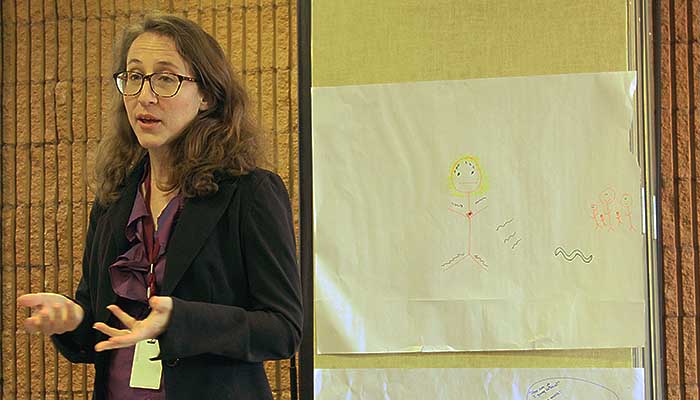
Kaley Conor, Mental Health First Aid trainer, teaches a recent class at High Plains Mental Health Center. Behind her is how the students depicted a person who might be experiencing anxiety.
A Hays Post series focusing on mental health issues.

By CRISTINA JANNEY
Hays Post

Your hands are sweaty. Your heart is pounding. You feel like you can’t breathe. All your senses seem like they are on overload. Everything is too bright, too loud and even your clothes feel like sandpaper on your skin.

You may think you are having a heart attack, but these are also symptoms of an anxiety attack. One in five Americans will suffer an anxiety attack in their lives. Some might only have one instance and never experience an attack again. However, about 3 percent of Americans suffer from reoccurring anxiety attacks, which is also known as panic disorder. The broader category of anxiety disorders affects 18 percent of U.S. adults and may coexist with other mental illnesses.

Mental Health First Aid, which is course regularly offered by High Plains Mental Health, offers people steps to aid a person in a mental health crisis, including an anxiety attack or an anxiety disorder.

“We all get anxious about some things,” Amy Bird, MHFA trainer, said. “Anxiety serves a purpose. It makes us do things. If I’m not anxious about getting my documentation done, then I would just sit back and whatever happens. But if I know my supervisor is watching that list, I better do that. Sometimes it can become overwhelming and inhibits us …”

Bird gave the example of hearing a loud bang. We might jump, our heart might start to pound. A person may step in say, “Sorry, I was moving a file cabinet and I dropped it,” but it can take up to an hour for us to return to normal after an extreme state of anxiety.

Panic attacks occur when our bodies release fight or flight chemicals. These physical responses are needed if we are running for our lives or fighting off a bear, but are no so helpful if you are sitting talking with a friend over lunch.

In addition to the scenario listed above, other symptoms of an anxiety attack can include:

  • Trembling and shaking
  • Abdominal distress or nausea
  • Dizziness, lightheadedness or feeling faint
  • Feelings of unreality or of being detached
  • Fear of losing control or “going crazy”
  • Fear of dying
  • Numbness or tingling
  • Chills or hot flashes

Anxiety and anxiety disorders can be very physical.

“How many kids are going to come to you on the first day of school and say, ‘I’m anxious’?” Bird said. “They are going to say ‘I have a stomach ache or a headache,’ and they probably do.”

The median age for the onset of panic disorder is 24, but the median onset for specific phobias is 7 and the median age for all anxiety disorders is 11.

How you can help

An anxiety attack can mimic symptoms of a heart attack or other serious medical emergency. If a person presents with symptoms, and you are uncertain they are having an anxiety attack, it is best to call 911. Some people may wear a medic alert bracelet indicating panic disorder, so look for that.

Anxiety attacks do not necessary have a precipitating event, but can come “out of the blue.”

The course offers the acronym ALGEE to help first aiders remember the steps in aiding in a mental health crisis.

  • Assess risk of suicide or harm.
  • Listen non-judgmentally
  • Give reassurance and information
  • Encourage appropriate professional help
  • Encourage self-help and other support strategies
Mental Health First Aid students try to draw a picture of what they think a person who is experiencing anxiety might look like.

If you believe the person is having an anxiety attack, try to be calm and  reassuring. Ask the person if they know what is happening and if you can help. Speak slowly and clearly and in short sentences. Because of the person’s state, they may be slow in answering or not be able to answer at all.

“Even if they know that is what it is, with all that adrenaline going through your body that is making all those physical things happen, it makes you scared because that is what tells you flight, fight or freeze,” Bird said.

Try to be patient with the person and acknowledge their fear. An anxiety attack is not life threatening, but it may seem like it to the person having one. Try, ‘I can see how scared you are.’ Reassure the person that he or she is safe and the symptoms will pass.

“When you are panicked you can’t make a decision,” Bird said. “There are lots and lots of thoughts going through your head. ‘I’m dying. I can’t breathe. All these people are watching me. What is going to happen? I don’t know what to do.’ Sometimes the best way to help is say, ‘I’m going to tell you what to do.’ ”

Ask the person what you can do to help. Byrd noted some people feel more threatened when people try to surround them or touch them during an anxiety attack. Others may feel comforted if you hold their hand.

Although anxiety attacks usually peak within 10 minutes, it could take up to an hour for someone who has had an anxiety attack to come back to feeling normal. Reminding a person the attack should peak in 10 minutes might not be helpful. The person might not have a good concept of time or could become obsessive over the duration of the attack.

Avoid expressing your own negative response to the anxiety attack. Saying things like “Calm down” or “Get over it” are not helpful. Also don’t have the person breathe into a paper bag. This is a myth.

Bird suggested first aiders have the person having the attack look at you. Breathe in for three counts and exhale for three counts.

Risk factors

Anxiety disorders also includes phobias, social anxiety disorder, post traumatic stress disorder (PTSD), general anxiety disorder, obsessive-compulsive disorder (OCD) and agoraphobia. Anyone can suffer from an anxiety disorder, but there are some risk factors, which include:

  • Having a more sensitive nature and a tendency to see the world as threatening
  • Having a history of anxiety as a child
  • Being female
  • Alcohol abuse
  • Having a traumatic experience
  • Difficult childhood (physical, emotional, sexual abuse or neglect)
  • Family background of poverty
  • Family history of anxiety problems
  • Family history of separation or divorce
  • Some medical conditions
  • Side effects of some prescription medication
  • Use of alcohol or drugs
  • Withdrawal from alcohol or drugs

Some anxiety attacks or flashbacks in the case of PTSD have triggers. Just because something might be benign to you, it may cause great distress to a person who has PTSD or a phobia. People who have PTSD can be triggered by a sound or a smell. Veterans may be triggered by loud sounds or fireworks.

The most common phobias are spiders, bugs, mice, snakes and heights. The most common causes of PTSD include war, accidents, assaults or witnessing a significant event, which can include a mass shooting, terrorist attacks or severe weather events, such as a hurricanes, tsunamis or tornadoes.

Resources

If a person has persistent issues with anxiety or anxiety attacks that are affecting their daily lives or functioning in their job, you can suggest the person seek professional help. If a person who has experienced a traumatic event still can’t stop thinking about the event, is upset and fearful, feeling jumpy, and has suffering relationships four or more weeks after the event, professional help is advised.

Talk therapy and/or medication may be used.

High Plains also has a 24-hour crisis line that can be reached at 1-800-432-0333.

The local National Alliance on Mental Health (NAMI) support group meets on the first Monday of the month at 6 p.m. at the Hadley Center. For more information, contact Ann Leiker, coordinator at 785-259-6859 or email her at [email protected].

Other helpful links

Contract negotiations stall between teachers, Hays USD 489

By CRISTINA JANNEY
Hays Post

Hays USD 489 has reached impasse in negotiation with teachers for the second year in a row.

The teachers and the school district are citing differences over insurance and pay.

The district is wanting to decrease the percentage it pays toward dependent health insurance, which is currently about 83 percent. The district proposed continuing to pay 100 percent for single plans.

The district also proposed allowing for horizontal and vertical moves on the pay schedule as well as a flat $1,300 per year pay increase for both teachers and classified staff.

The approximate cost for raises for both certified and classified staff would be $750,000 of the $1.3 million additional funds the district will receive this year from the state.

The school board asked school officials to file the impasse paperwork after meeting with teachers Wednesday night. A date has not yet been set to meet with federal mediators.

See more on this story on Friday at Hays Post.

Mental Health First Aid trains public to help those suffering from depression

Canstockphoto.com
A Hays Post series focusing on mental health issues.

By CRISTINA JANNEY
Hays Post

If someone fell and gashed their leg, a stranger would likely jump to their aid. They would apply pressure to stop the bleeding and call 911.

Training in first aid and CPR is common for many Americans — even required by some professions and volunteer organizations.

How many of us would know what to do if someone was suicidal? How many of us even know the signs and symptoms of depression? How many of us would simply walk away too afraid to get involved?

High Plains Mental Health offers a day-long course in Mental Health First Aid. The program originated in Australia and now is offered across the U.S., including 10 years through High Plains for the adult program and six years for the youth program. Since the program started, HPMH has certified 2,387 northwest Kansas residents (from 20 counties) in Mental Health First Aid.

The course covers the most common mental illness, including depression, anxiety disorders, psychotic disorders and substance use disorders as well as ways every-day people can help people suffering from mental illness.

High Plains last year received a $20,550 grant from the Kansas Health Foundation to expand its Mental Health First Aid program and has had record participation this year. It has placed an emphasis this year on training first responders, said Kaley Conner, HPMH marketing coordinator and MHFA trainer. High Plains also received a $25,000 grant from the Schmidt Foundation this year to further public education and outreach efforts geared toward the agribusiness community. A small portion of that funding will also go toward MHFA.

Between 2014 and 2017, the suicide rate in the 20 northwest counties served by High Plains increased by 64 percent. In addition, a Centers for Disease Control study released in July 2016 reported farmers as a group had the highest suicide rate of any occupation in the U.S.

RELATED STORY: High Plains Mental Health announces Schmidt Foundation grant to aid outreach to farmers

RELATED STORY: High Plains Mental Health reaches out to farmers as rural suicide rates soar

Mental illness affects about one and five Americans. It is more prevalent than cardiovascular disease, diabetes and chronic respiratory disease. Many people delay seeking help because of lack of education about mental illness or the stigma surrounding it. Support services may be hard to access, especially in rural communities, and the person suffering the illness might not have good insight into to their illness, according to the MHFA curriculum.

Conner talked about why the MHFA classes are important.

“First and foremost, this class helps raise awareness in our communities, as well as acceptance and empathy,” Conner said. “It is important for our communities to talk about mental health and to understand mental illness is a real illness that has the potential to be very impactful.

“It is also important to give community members practical, easy to remember tools for how they can approach and offer assistance to someone who might be struggling. When someone has a possible mental health problem, it is often going to be family members, friends, colleagues and others in the community who might first notice. For this reason, it is important for community members to be educated about possible warning signs and symptoms, and to know how to respond effectively.”

The first section in the MHFA curriculum discusses depression and goes on to discuss suicide prevention.

Although women present more often for treatment for depression, statistically men are more likely to complete suicide because they tend to use more lethal means, including guns and hanging. Men are four times more likely to complete suicide than women. Although this is a trend, it is not true in all cases.

Depression, which is believed to be caused by the changes in the natural brain chemicals called neurotransmitters, can have many causes, according to the HMFA curriculum.

Some of the risk factors include:

  • Stressful or traumatic events
  • A difficult childhood
  • Ongoing stress and anxiety
  • Long-term poverty
  • Bullying
  • Victim of a crime
  • Long-term physical illness
  • Death of a partner
  • Substance abuse

Depression can also be the result of another medical condition, childbirth (AKA postpartum depression), side effect of medication, the stress of having another mental illness, withdrawal from drugs or alcohol premenstrual changes, lack of exposure to light in the winter (AKA seasonal affective disorder), caring for a person with a long-term disability.

You may be more prone to have depression if you have a family member who has had depression or you have had a previous episode of depression.

Additional risk factors for suicide, include a previous suicide attempt, a friend or loved one who has completed suicide, and an organized plan.

If you believe a person is suffering from mental illness, the trainers urged first aiders to talk to person using “I” statements, as opposed to “you” statements that may seem judgmental. For example, “I am concerned about you.”

There is a difference between empathy and sympathy. Avoid saying, “I understand exactly how you feel.” You don’t. Instead you might say, “I can imagine how you might be feeling.” Empathy, trying to put yourself in another’s shoes, is different than sympathy, feeling sorry for someone.

Other helpful examples included:

  • How long have you been feeling this way?
  • Have you spoken to anyone about this before?
  • Is something bothering you?
  • You haven’t been joining us lately at coffee.
  • If the feelings that you are describing have been present for a long time, I think it’s important that you see your family physician.

Your goal as a mental health first aider is not to treat the person who is suffering from the mental health crisis, just as a physical first aider you are not going to set a person’s broken leg. You can offer to get the person to the professional help they need.

“You may not know how to handle the situation,” Conner said, “but you can move them on to someone who does.”

The course offers the acronym ALGEE to help first aiders remember the steps in aiding in a mental health crisis.

  • Access risk of suicide or harm.
  • Listen non-judgmentally
  • Give reassurance and information
  • Encourage appropriate professional help
  • Encourage self-help and other support strategies

When accessing risk of suicide, there are signs to look for:

  • Saying goodbye
  • Giving away items
  • Withdrawal
  • Saying they are thinking of killing themselves
  • Talking about suicide, death or dying on social media
  • Seeking means to kills themselves (buying a gun, seeking pills)
  • Expressing hopelessness
  • Engaging in reckless behavior
  • Increased alcohol or drug use
  • Dramatic mood change
  • Anxiety or agitation, unable to sleep or sleeping all of the time
  • Saying they feel trapped

According to the MHFA trainers, asking a person if her or she is considering suicide will not cause the person to kill him or herself or “put the idea in their head.” Talking about their thoughts and feelings may give them a release.

Amy Bird, MHFA trainer, said talking about death or suicide should not be thought of as an attention-seeking behavior. It should be thought of as attention-needing. The person may feel hopeless and worthless, and they need your help.

If you believe a loved one or you may be at risk of suicide, it is wise to put as much distance between thought and action as possible, the trainers said. For instance, move guns out of the house, separate guns from ammo, remove pills from the house.

If you have an immediate concern about a person’s safety, speak to them calmly and sincerely. Appearing confident can be reassuring. Ask:

  • Are you having thoughts of suicide?
  • Are you thinking of harming yourself?
  • Have you decided how you are going to kill yourself?
  • Have you decided when you are going to kill yourself?
  • Have you collected the things you need to carry out your plan?

If you have a serious concern about a person’s safety, do not put yourself in danger. If the person has a weapon or is acting aggressively, call 911.

High Plains has a 24-hour crisis line that can be reached at 1-800-432-0333. The National Suicide Prevention Lifeline is 1-800-273-TALK (8255). The national suicide crisis text line can be reached at 741741.

The annual Hays Area Out of the Darkness Walk, which seeks to bring light to the issue of suicide is Saturday at Municipal Park. Registration will start at 1 p.m. in Municipal Park and the walk will start at 2 p.m. If you are interested in walking, volunteering or donating, go to www.asfp.org/Hays.

When dealing with a mental health crisis, include the person in making a safety plan. Do not leave a person who is actively suicidal alone. However, you must recognize you can’t be with a person at every moment. You can help them with the second E in ALGEE by asking them what has been helpful in the past.

Do not use guilt to try to dissuade the person from hurting his or herself. Don’t make comments such as “You will go to hell” or “You are going to ruin other people’s lives.” Also don’t agree to keep the person’s suicide plan a secret.

Help can be found through doctors, psychiatrists, social workers, counselors, peer specialists and other mental health workers. Some people suffering depression may be prescribed medication. They may also engage in talk therapy, support groups or other professional support. Sadly, only about half of the people with depression in a given year receive treatment.

Other self-help strategies can include:

  • Exercise
  • Relaxation and meditation
  • Peer support groups, such as National Alliance on Mental Illness (NAMI). The local NAMI group meets on the first Monday of the month at 6 p.m. at the Hadley Center. For more information contact Ann Leiker, coordinator at 785-259-6859 or email her at [email protected].
  • Light therapy
  • Family, friends, faith and social networks

Online resources:

Illustration by canstockphoto.com

U.S. House candidate from Garden City seeks better future for everyday workers

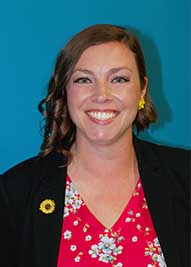
Barnett

By CRISTINA JANNEY
Hays Post

Kali Barnett, Democratic candidate for the Kansas 1st District U.S House seat, was in Hays on Tuesday meeting with the Young Democrats and FHSU professors on policy.

Barnett, 34, of Garden City is taking time off from her job as a music teacher to run for the House.

From a third-generation farm family, Barnett said she understands the plight of farmers in the recent trade war.

“It is a really challenging situation we are in,” Barnett said. “I have worked really hard, especially in the last few weeks. I have met with several professors. This afternoon, I am meeting with the ag professor here at Fort Hays State University and working very hard to learn from the experts on ag policy and really have a positive movement for our farmers and support for the future.”

As a teacher, Barnett said she struggled to keep funding for her position as a teacher during the Brownback years.

On the national level in education, she said, “It is really challenging as a teacher to have someone like Betsy DeVos in a leadership position, and it is one of the biggest reasons why I am running.”

Barnett has worked in both public and charter schools, but she said support of charter schools should not come at the expense of public schools.

Barnett stopped short of suggesting a specific fix for health care.

“Health care is a combined issue,” she said. “Health care for me is really taking care of our mind, our body and our soul. We need to make sure we are supporting our mental health care facilities and making sure that our insurances are providing options for people wanting to receive different types of services.

“We need to make sure our insurance system is serving all people — people who have pre-existing positions and emergencies. We need to make sure that our health care facilities remain open, especially here in western Kansas. We cannot allow our hospitals and clinics to not be funded and be closed.”

She continued, “I know even some of my close family use Obamacare as we call it,” she said. “It is not something that we can end today. I do think we can put things in place for the future that would be much more sustainable for working families and much more affordable.”

Growing up in Garden City, Barnett said she learned to appreciate other cultures.

“For me, immigration, the No. 1 thing we need to do right now is love our neighbors,” she said. “We need to make sure we are being inclusive, not exclusive. We are hearing a lot of messages that are making people scared. … It is a lot about embracing the people that we have and the cultures that we have and making sure with immigration policy that we are keeping the United States safe, but it is really making sure that we are taking care of the people who are here.”

Barnett does not have foreign policy experience, but she said she would look to experts to keep the nation safe.

Barnett said she is excited to be bringing a woman’s perceptive to the race. She is the first Democratic woman to file in Kansas’ 1st District. She said she was inspired by Kathryn O’Loughlin, who was elected in 1932 to Congress in what was then western Kansas’ 6th District. O’Loughlin Elementary School in Hays is named for her.

“In a lot of ways, we are already changing the way our Kansas history is written,” she said.

When O’Loughlin was elected, Barnett said Kansas was in a similar political climate. Farmers were frustrated. People were frustrated with the economy.

“It is extremely exciting for me to be in a place with this campaign that as a country we are empowering more women to have a really strong voice. That is what I want to do as a representative is be a voice for our community,” she said. “I want to work really hard to build policy and support policy in Washington, so all of us here in Kansas and across the United States, including teachers and farmers and everyday working members of society like you and me, [can] have a better future.”

HMS tour reveals a school bursting at the seams

Principal Tom Albers discusses cafeteria space issues during a recent school board tour of HMS.

By CRISTINA JANNEY
Hays Post

Hays Middle School is out of room, Principal Tom Albers told the Hays school board during a tour Monday night.

HMS enrollment is at 686 students, the largest being the sixth-grade class of 248.

The gradually increasing enrollment has meant an already cramped lunch room is faced with even bigger challenges, the school is out of classroom space, has teachers on carts and class sizes are getting even larger.

“Every sixth-grade class is big,” Albers said. “We are talking 24 to 30 kids and some even bigger. We’re tight.”

Albers said he would love to have more electives for the students, but if the district added staff, he said more teachers are need for core courses to reduce class sizes. HMS is offering half-year English classes for seventh- and eight-graders, and they would like to make those full-year classes.

USD 489 school board members tour a special education classroom at HMS.

However, if HMS added staff, there is the question of where they would put the teachers. On carts, move in trailers? The options are limited.

The last renovations to the HMS were finished in 2014, which included HMS’ tornado shelter.

“People ask, ‘You put these new buildings in. How can you be short? How can you not have room?’ ” Albers said. “One of the reasons is our need for special education.”

Special education is taking up three rooms at HMS now, when at one time it took up just one. More paras and aides are required, the number of students in the program has increased and newer teaching methods require more space. One of the rooms that is being used as a special-ed classroom used to be the teachers’ lounge.

Albers is in his second year in his position at the middle school. He said several times during the tour he knew there were space issues at HMS, but until he actually saw it, he didn’t really understand how much HMS was doing in its existing spaces.

One of these areas is the cafeteria, which was not designed to handle as many students as it does today.

The cafeteria gets very noisy because of the number of students crammed into such a small space. HMS serves lunch from 11 a.m. to 12:45 p.m. Students have 20-minute lunch periods, but really don’t have that long to eat once they get through the line, are seated, and must clean up and line up.

“It’s definitely complicated. It is like ant farm — kids everywhere,” said Shauna Zweifel, HMS assistant principal.

HMS boiler room

Albers said, “It does work, but it doesn’t work well.”

HMS is also serving 150 to 200 students breakfast.

One plan school officials have considered is expanding the lunchroom into an old boiler room adjacent to the existing cafeteria. It is currently being used for storage.

Although the gym is nice and is in good repair, it also has to hold a lot of kids.

With two physical education classes and a weights class going on in the upper deck simultaneously, there can be 110 students in the gym per class period.

Albers described three different teachers using intercoms and bullhorns to direct students all at they same time.

“You had this going on. You had this going on. You had that going on. I was like this is crazy. It was crazy that we would put this many kids in the gym at one time, but it is the only option we have,” Albers said.

HMS Principal Tom Albers points out an uneven point in the HMS track that can be a tripping hazard.

The HMS track is in disrepair. Albers pointed out a large crack in the asphalt that has been repaired with a tar patch and is a tripping hazard. HMS can’t host meets at the school because of the condition of the track. HMS had 177 kids out last year for track.

The school has changed its drop-off procedures with the installation of a new secure entrance at the front of the school. During school hours, visitors buzz into the school and enter through the office. Students are required to enter in the morning through the west doors and check in through the gym.

Albers said the west door drop-off gives the school better control of the students’ movement through in the morning.

The school is working on plans to improve traffic control in the parking lot during drop off. Within the next month, the school plans to convert the parking lot to one-way traffic. Facilities also plans to paint a white area in the parking lot that will be a designated student drop-off zone.

August storm damage on the west side of HMS.

HMS is still working with insurance to complete repairs to the west side of the school that was damaged during a wind and hail storm in August.

Hays USD 489 discusses creating wage schedule for classified staff

By CRISTINA JANNEY

Hays Post

The Hays USD 489 school board discussed creating a wage schedule for classified staff at its meeting Monday night.

The school board was first presented a classified wage study on June 16. It found several classes of USD 489 employees are not making as much as their peers. These included building secretaries, office assistants and clerical workers, and information technology assistants.

The starting wage for a USD 489 school secretary is $9.62 per hour, but the average starting wage for other Hays employers is $12.78. Comparable school districts pay an average of $11.08 and comparable cities pay an average starting wage of $13.45.

Office assistants and clerical workers start at $10.06 at USD 489, which is comparable to other school districts but is more than $2 below the average in the Hays community and $4 below the average in comparable cities.

IT assistants did start at $10.95 per hour at USD 489 with the average at peer districts at $13.38 and $11.87 in the city of Hays. Administration increased the pay for this position to be on par with paras and classroom aides, who perform similar duties.

Keith Hall, interim director of finance, suggested creating a wage schedule starting with secretarial staff. He said the hope would be to use the secretaries as a template to create schedules for other positions.

Faith Lochmann, HR coordinator, said the group could be divided into to town categories — front line secretaries and principal secretaries.

Hall said first the district needed to increase secretaries’ starting pay to be comparable to their peers. Those who are earning below that would receive a bump in pay. Administrators have yet to determine what would happen to those individuals who are above the starting wage. Do they also get a bump in pay or nothing, he asked.

Hall and the board discussed creating a schedule that included milestone pay increases for longevity.

Including longevity in a wage schedule could help attract new employees and be incentive for current employees to stay, Hall said. Board members asked if that would include work experience from another employer, and Hall said he thought it would. Custodians already have longevity included in their pay scale.

Board member Greg Schwartz said he wanted to see how benefits compared at comparable employers in the area. Schwartz suggested the Hays school district employees might be receiving better benefits. He said the entire compensation package needs to be considered.

Schwartz said he loved the concept of a wage schedule, but he didn’t want to set the wages too high.

“These aren’t the only wages we have to deal with, and they are also not the only problems we have to deal with,” he said. “I want to be responsible to make sure we are paying people competitive wages, but I also don’t want to be irresponsible in paying them over what the market rate should be such that we can’t have other things like lunch rooms and thing like that.”

Hall said the administration has yet to plug numbers into a new wage schedule. His plan is to do so and then bring an option back for the school board to review. He said he does not think the district will be able to make wage adjustments for the entire classified staff in one year, rather he suggested doing it in sections with secretarial staff first.

He said he would try to factor in benefits when creating the schedule.

Robert William Harkness

Harkness

Robert William Harkness, age 88, passed away at the Scott County Hospital in Scott City, Kan., on Friday, Sept. 6, 2019. He was born on Dec. 1, 1930 in rural Scott County near the dry lake area, the son of Brannon and Reba Walker Harkness. A lifetime resident of Scott City, he was a farmer.

On Sept. 25, 1949 he married Deloras Dice in Scott City. She passed away on Oct. 9, 2007 in Scott County.

Survivors include his two sons — Michael Harkness of Scott City, Kenton and Jana Harkness of Garden City, Kan.; one daughter — Deb and Alan Gruver of Scott City; two sisters — Kathryn Maudlin of Colorado Springs, Colo., Margie Steven of Scott City; 10 grandchildren; 25 great-grandchildren; and two great-great grandchildren.

He was preceded in death by his parents, wife and three sisters.

Funeral service will be at 10:30 a.m. Wednesday, Sept. 11, 2019 at the First Baptist Church in Scott City, with Pastor Don Williams presiding.

Interment will be in the Scott County Cemetery in Scott City.

Memorials in lieu of flowers may be made to the Robert Harkness Scholarship Fund in care of Price & Sons Funeral Homes.

Visitation will be from 11 a.m. until 8 p.m. Monday and 10 a.m. until 8 p.m. Tuesday at Price & Sons Funeral Home in Scott City.

To send flowers to the family of Robert Harkness, visit Tribute Store

Ralph Augustine Weis

Weis

Ralph Augustine Weis was born July 5, 1924, on the family farm, southeast of Dresden, Kan. He was the eighth child of Michael and Theresa (Ritter) Weis. He passed away Sept. 8, 2019 at the Good Samaritan Society of Decatur County in Oberlin.

Ralph attended grade and high school in Leoville, Kan. He graduated in 1943 and was the salutatorian of his class. In his salutatory address, he said “Rejoice with us because we are ready to carry on for God and country.” Ralph was drafted by the U.S. Army and served his country from 1943-1945.

On November 26, 1946, he was united in marriage to Genevieve Werth in Park, Kan.. Five children were born to this union: Geraldine, Carolyn, Donald, Cyril, and Marilyn.

Ralph enjoyed farming and worked for the ASC office for 70 plus years. He loved measuring fields and grain bins and explaining the farm programs to farmers. He enjoyed listening to the St. Louis Cardinals baseball games and Kansas State and KU basketball games. He liked to play cards, pinochle and pitch. Ralph liked to tell stories and jokes.

Ralph is survived by his children: Carolyn Woolard of Dresden, Kan., Donald and Karen Weis of Smith Center, Kan., Cyril and Charlene Weis of Saguache, Colo., and Marilyn Kuehn of Shingle Springs, Calif.; six grandchildren: Brandon Weis of Norton, Kan., Devin and Jody Weis of Wamego, Kan., Travis Weis of Saguache, Colo., Megan and Eric Roberts of Placerville, Calif., Cpt. Sean Kuehn of the 144th Fighter Wing, CA Air National Guard, Fresno, Calif. and Connor Kuehn of Los Angeles, and three great-grandchildren: Andrew Weis, Clara Weis and Ella Roberts.

Ralph was preceded in death by his parents; daughter, Geraldine; wife, Genevieve; three sisters: Sister Vincentia Weis, Sister Laurann Weis and Sister Bernardine Weis and six brothers: Joe, Ray, Al, Urban, Bernard, and Leo Weis and son-in-law, James Kuehn.

Mass of Christian Burial will be at 10:30 a.m. Saturday, Sept. 14, 2019 at the Immaculate Conception Catholic Church, Leoville, Kan.

Burial will follow at Mt. Calvary Catholic Cemetery, Leoville, Kan.

Visitation will be from 6 to 7:00 p.m. Friday, Sept. 13, 2019 at the church. A Rosary and Vigil Service will follow the visitation.

Memorial contributions may be made to Leoville Cemetery Fund or for Masses. Condolences may be left at www.paulsfh.com.

Ruth Ann Smith

Smith

Ruth Ann Smith, 81, died Aug. 26, 2019, at Clearwater Nursing Home, Clearwater, Kan. She was born June 30, 1938, the daughter of Charley T. and Lorene (Musselman) Smith.

Ruth Ann graduated from Russell High School.

She was retired bookkeeper for Cains Coffee Company.

She is survived by a sister, Claudia C. Smith of Derby, and many nieces and nephews.

She was preceded in death by her parents, brothers, Bill, Curtis and Dean Smith; and sisters, Nadine Wolf, Linda Norman, and Kay Smith.

Graveside inurnment services will be held at 2 p.m. Saturday, Sept. 14, 2019, at the Vansburg Cemetery, Brownell, Kan.

Arrangements by Nicholson-Ricke Funeral Home, Hoisington.

Copyright Eagle Radio | FCC Public Files | EEO Public File