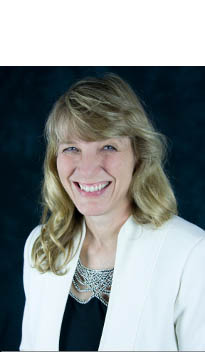
Rita Mae (Peterson) Roblyer, 74, of Great Bend, passed away January 29, 2018, at Hays Medical Center, Hays, Kan. She was born October 22, 1943, at Great Bend, to Clarence Theodore and Jenny Elsie (Marsh) Peterson.
Rita, a lifetime resident of Great Bend, worked for Doonan Truck, Fuller Brush, and American State Bank, and retired from KDOT in 2008, after 25 years of service. She was a member of Central Baptist Church, and a former member of Beta Sigma Phi sorority. She enjoyed her time at the Great Bend Senior Center, bowling, traveling, and loved and adored her Chihuahuas.
Survivors include one son, Rob Roblyer and wife Toyia, of Great Bend; one twin sister, Nita Mohr and husband Richard of Great Bend; one brother, Clarence “Pete” Peterson and wife Patricia of Salina, Kan.; and one grandson, Keegan Roblyer.
Funeral Services will be 2:00 p.m. Thursday, February 1, 2018, at Central Baptist Church in Great Bend, with Rev. David Walters and Pastor John Grummon. Interment will follow at the Great Bend Cemetery. Visitation will be 9:00 a.m. to 9:00 p.m., Wednesday, January 31, with the family receiving friends from 6:00 p.m. to 8:00 p.m., all at Bryant Funeral Home. Memorials have been established with Central Baptist Church or Golden Belt Humane Society, in care of Bryant Funeral Home.
An aggressive energy acquisition and development firm has bought 40 leases in Ellis and Rooks counties that have already produced six and a half million barrels and are currently yielding more than 5,000 barrels per day. In a news release, the company said Haas Petroleum will operate the assets on behalf of wholly-owned subsidiary Mid-Con Drilling. This marks Viking’s third announced energy acquisition since Christmas, including acreage in Allen and Woodson Counties in Kansas, and in Texas, Louisiana and Mississippi.
The Kansas Geological Survey reports the state produced nearly 30 million barrels of crude oil through October of last year after adding nearly three million in October. Ellis County led the way with an additional 219,000 barrels produced in October, for a running total of 2.2 million barrels. Haskell County was next, producing 224,000 barrels for a total through October of 2.03 million. Barton County was next, adding 145,000 barrels for a total of 1.42 million barrels through October. Russell County produced 136 thousand barrels and Stafford County produced 89,000 for that month. The number of active oil wells in Kansas was 51,774, down more than 800 from the year before and the lowest total since 2012.
Here are the top ten oil-producing counties in Kansas in Oct. 2017 with running totals for the year in parentheses:
Ellis County 219,000 bbl (2.21 million bbl)
Haskell County 224,000 bbl (2.04 million bbl)
Barton County 145,000 bbl (1.415 million bbl)
Finney County 146,000 bbl (1.36 million bbl)
Russell County 136,000 bbl (1.34 million bbl)
Rooks County 130,000 bbl (1.33 million bbl)
Ness County 127,000 bbl (1.25 million bbl)
Harper County 76,000 bbl (857,000 bbl)
Stafford County 89,000 bbl (871,000 bbl)
Barber County 77,000 bbl (794,000 bbl)
Owners and operators in the Oklahoma oil patch will no longer be protected from lawsuits involving the deaths and injuries of their employees after a ruling by the Oklahoma Supreme Court last week. The high court held that there was no valid reason for special treatment of the oil and gas industry within workers compensation law. They ruled that the special protections amount to an “impermissible and unconstitutional special law.”
Baker Hughes reported an increase in the number of drilling rigs actively exploring for oil and gas across the country, but the numbers in Kansas are going the other way. There were 947 active rigs coast to coast, an increase of 12 oil rigs. Canada reported an increase of 13 to 338 active rigs. The rig counts in Kansas dropped last week. Independent Oil & Gas reported 21 active drilling rigs west of Wichita, down four, and seven in eastern Kansas, which is unchanged. The total of 28 active rigs statewide is down eight from six months ago, but up one from a year ago. Operators are drilling on leases in Barton and Stafford counties, and moving in completion tools at sites in Barton, Ellis and Russell counties. The report shows a big increase in active rigs in the Permian Basin. Texas added 13 rigs last week, and New Mexico increased by three.
Operators filed 32 permits to drill at new locations last week. Seventeen of those were in eastern Kansas, and 15 are west of Wichita, including one in Ellis County. Independent Oil & Gas Service reported 39 newly completed wells across the state, two in Barton County and one in Ellis County.
Some drillers in North Dakota are cutting oil output to limit the amount of natural gas they have to burn off. In November, the state’s production of natural gas was very near the capacity of state’s gas-gathering and processing capability. The head of the North Dakota Petroleum Council says the pipelines they have now are adequate to move that gas to market. But Ron Ness says the state’s producers lack the gathering and processing facilities needed in between the pipeline and the well head.
Natural gas processing is getting a big push in North Dakota, where oil producers are testing the limits of current facilities and must burn off more than the state allows. The Governor put out a call for more gathering and processing facilities, and in two days, no fewer than four projects surfaced. All four projects are expected to come on line within the next two years.
Marathon oil will have to figure out another way, after North Dakota regulators on Wednesday denied a request for several exemptions from the state’s flaring limits. Governor Doug Burgum leads the state’s Industrial Commission, which denied the request, saying it would violate the state 85%-capture policy.
TransCanada Corp’s Keystone crude pipeline was still operating at 20 percent reduced pressure last week, more than two months after a leak forced the line to be shut. The reduced flows have contributed to inventory declines at the Cushing, Oklahoma storage hub and pressured Canadian crude differentials, traders said.
SEDGEWICK COUNTY—Law enforcement authorities are investigating an armed robbery and asking the public for help to identify suspects.
Just after 9:30p.m. Sunday, police responded to an armed robbery at a Dollar General in the 900 Block of South Woodlawn in Wichita, according to officer Charley Davidson.
A 35-year-old store employee told police four unknown black, male suspects entered the store armed with handguns and demanded money. A 33-year-old female employee gave the suspects cash. In addition, the suspects battered a 25-year old woman in the store and took her purse.
The suspects fled the store on foot. The suspects are described as in their 20s and wore a grey, red and or black hooded sweatshirts, jeans or dark slacks and white masks, according to Davidson.
Anyone with information on the crime is asked to call Wichita Police.
Fatal Sunday night crash in Shawnee County -photo by Katie Moore courtesy Topeka Capital Journal
SHAWNEE COUNTY — A Kansas man died in an accident just before 6:30p.m. Sunday in Shawnee County.
A vehicle driven by Daniel V. Martinez, 23, Overland Park, was eastbound at 102 West Railroad Avenue (U.S. Highway 24), according to Corporal Jace Beightel with the Shawnee County Sheriff’s Department.
The vehicle traveled left of center and struck an industrial forklift parked off the north side of the road.
Martinez was the only occupant of the vehicle. He was transported to a Topeka hospital where he died.
The sheriff’s department did release the name of the victim late Sunday. The accident remains under investigation.
————
SHAWNEE COUNTY — A Kansas man died in an accident just before 6:30p.m. Sunday in Shawnee County.
A vehicle was eastbound at 102 West Railroad Avenue (U.S. Highway 24), according to Corporal Jace Beightel with the Shawnee County Sheriff’s Department.
The vehicle traveled left of center and struck an industrial forklift parked off the north side of the road.
The driver was the only occupant of the vehicle. He was transported to a Topeka hospital where he died.
The sheriff’s department did release the name of the victim late Sunday. The accident remains under investigation.
This week, the Senate standing committees continued to hold hearings and bring forward legislation. The Senate will be returning to General Orders where we will see the first committee bills to have a vote from the entire Senate. There was no floor action on bills this week on the Senate floor.
SNAPSHOT OF THE KANSAS LEGISLATURE 2018
The Kansas Senate consists of forty Senators – thirty-one Republicans and nine Democrats with fifteen women and twenty-five men. Fourteen Senators live in cities of 100,000+ population, ten with 20,000 to 100,000, six with 5,000-20,000 and five with 2,000-5000 and five with 0-2000. The Kansas House of Representatives consists of one-hundred twenty-five members with eighty-five Republicans and 40 Democrats with thirty-four women and ninety-one men. Fifty-three Representatives live in cities of 20,000 – 0 population with two living in unincorporated communities.
JEFF COLYER TO BECOME GOVERNOR WEDNESDAY
Governor Sam Brownback will resign this week after being confirmed as U.S. Ambassador to International Religious Freedom this past Wednesday. Brownback’s last day in office will be January 31st and Lt. Governor Colyer will be sworn in as governor at 3 pm the same day. Governor Sam Brownback was formally nominated by President Trump in July.
KANCARE
Last week, legislators heard from hospital representatives, district attorneys, county sheriffs, and leaders from community health centers about the growing mental health crisis in Kansas. A brief background was explained on how both the state and federal governments have cut funding to mental health over the past 60 years. This has resulted in Kansas emergency rooms and local jails being filled with people needing treatment. A few goals were outlined to address this growing issue. One goal was to change Medicaid policy to allow recipients of KanCare who are incarcerated to have their Medicaid eligibility suspended rather than terminated. This would provide a safety net for treatment to people who are continuously arrested and would also help alleviate some costs that the hospitals are absorbing. SB195 addresses this goal and was heard in the Senate Public Health and Welfare Committee and is expected to be passed out next week. There were no opponents to changing the policy. Another recommendation was to look at the needs of the state on a regional basis and to begin the creation of regional acute behavior health facilities. Acute care facilities would provide care for patients needing care for less than two weeks. Lastly, it was acknowledged that the state needs a long-term care facility. It was expressed that Osawatomie Hospital is not meeting the long-term and acute care needs of behavior health for patients needing more than two-weeks of care. Advocates hope with more funding and attention to mental health, Kansans can get the care they need to live stable and productive lives.
KANCARE 2.0
Governor Brownback’s administration announced last week that they would halt their plan to move forward with KanCare 2.0. The announcement comes after Senate President Susan Wagle, Senate Majority Leader Jim Denning, Senate Public Health and Welfare Committee Chairwoman Vicki Schmidt, and Senate Ways and Means Chairwoman Carolyn McGinn expressed concerns with the implementation of KanCare 2.0 in early January. Governor Brownback and Lt Governor Colyer explained this week that they want to address the concerns raised by legislators in regards to increased costs and the state’s ability to absorb those costs in future budgets. The administration plans to work with the Kansas legislature to determine the best path forward with the program.
INTRODUCING REAL ID
Our Elections, Ethics and Local Government heard an update from representatives of the Department of Revenue, Driver’s License department concerning Real ID. Real ID is a federal law, passed by Congress in 2005 to ensure state-issued driver’s licenses and identification cards meet minimum security standards. To get a Real ID before law goes into effect on October 1, 2020, you’ll need to bring certain documentation into the local driver’s license office. Anyone boarding an airplane or entering a federal facility, such as a military base, using a state issued ID or driver’s license on October 1, 2020, will be required to have a credential that is Real ID compliant. To apply for this ID, you will need a valid passport or birth certificate, Proof of social security such as a social security card, current W-2 or 1099, or current pay stub with full SSN, Proof of residency, which can be a utility bill, your vehicle registration, or your current driver’s license. All documents should be un-laminated originals. If your name is not the same on all of your documents because of adoption, marriage, divorce, or any court ordered name change, you must provide proof of the name change such as your marriage license, adoption certificate, or divorce decree. The fees remain the same for Real ID: $26 if you’re renewing and $8 to replace. If your credential expires after the 2020 deadline and you want a Real ID, you can bring your documents in to the office, receive the Real ID, and only pay the $8 replacement charge. Finally, it is worth noting that you have the option to choose between a Real ID or a non-Real ID card. For more details and a checklist that will help make sure you bring everything you need when you go to the driver’s license station, visit ksrevenue.org/realid and you can find your local driver’s license office at https://www.ksrevenue.org/dovstations.html.
‘IF I WERE MAYOR” WINNER ANNOUNCED
On January 24, the League of Kansas Municipalities held their annual Local Government Day event. At this event, six 7th graders received recognition for their participation in the League’s annual “If I Were Mayor” memo contest. The League presented awards to five regional winners from across the state along with the overall winner. The League oversees a statewide competition for all seventh-grade students in public or private school systems. The League, which represents Kansas’ cities, asked students what they would do if given the opportunity to serve as mayor of their town. This year, the students were asked to write a memo concerning a topic and think about policy considerations, resources needed, and barriers to success. This year, over 375 students from across Kansas participated with two students from District #36 recognized – Samantha Clark, Palco Junior/Senior High School and Ariona Miller, Marysville Junior/Senior High School.
FOLLOW THE KANSAS LEGISLATURE
Both the House and Senate have taken historic steps towards the promotion of open government. For the first time, you can view video streaming of both chambers via the Kansas Legislature YouTube page. In addition, many committees are now audio streamed. Finally, the Kansas Legislature website remains a great resource.
Kansas residents can access information on legislation, legislative procedure, state government, public policy issues and more by calling 1-800-432-3924. Calls are answered by experienced reference/research librarians at the State Library of Kansas and kept confidential. Lines are open weekdays 8AM-5PM. Callers can also leave brief messages to be delivered to legislators as well as request copies of bills, journals, and other legislative documents. In addition to calling the hotline, residents can also text questions to 785 256-0733, email or instant message at kslib.info/ask. The State Library is located on the 3rd floor, north wing of the Capitol.
VISITORS FROM SENATE DISTRICT #36
The first three weeks of the legislative session was a busy one with people visiting from home for meetings and to celebrate Kansas Day on Friday – 157 years of statehood. The Municipal Judges, Electric Cooperatives members and Title Company representatives from District #36 had their annual meetings and receptions this month. Members of the Joint Law Enforcement community, County Clerks & County Appraisers, and officials from city and county government were in Topeka for Local Government Day. Doctors across the state attended the Kansas Academy of Family Physicians annual legislative day with Dr. Jen Brull from Rooks County serving as Doctor of the Day at the Capitol on Thursday.
PRATT – Kathy Carroll, Bonner Springs, identified 334 unique species of birds in the Sunflower State last year while participating in the fifth annual Kansas Birding Big Year contest that ended on Dec. 31, 2017. Her efforts won 1st place in the intermediate category and was the overall high among all entrants. The Kansas Birding Big Year contest is an annual competition among birders in Kansas to see who can spot the most species in a calendar year. Winners of the 2017 contest listed below competed against 62 total entrants.
Adult Advanced
1st – Malcolm Gold, Overland Park, 332 species
2nd – Andrew Burnett, Erie, 307
3rd – Sue Newland, Wakarusa, 305
4th – Robert Penner, Ellinwood, 302
5th – Kevin Groeneweg, Wichita, 296
Adult Intermediate
1st – Kathy Carroll, Bonner Springs, 334 (High Overall)
2nd – Mickey Louis, Overland Park, 304
3rd – Jennifer Hammett, Shawnee, 294
4th – Kelli Egbert, Spring Hill, 286
5th – Linda Zempel, Topeka, 259
Adult Novice
1st – Allison Godek, Prairie Village, 297
2nd – David Kirsch, Overland Park, 270
3rd – Michael Bader, Great Bend, 234
4th – Suntesha Wustrack, Augusta, 221
5th – Walt Cochran, Gardner, 220
Youth
1st – Andrew Miller, Partridge, 272
2nd – Will Kirsch, Overland Park, 257
3rd – Sam Schermerhorn, Wamego, 232
4th – Lynnea Nelson, Carbondale, 208
5th – Michaela Gold, Overland Park, 193
6th – Ella Burnett, Erie, 162
Senior
1st – Dan Larson, Berryton, 255
2nd – Doris Burnett, Manhattan, 223
3rd – John Row, Manhattan, 191
Birds are counted from January 1 to December 31 of each year and entered through the website, www.ebird.org, a reporting program housed at Cornell University.
Apart from bragging rights, winners receive prizes from the KDWPT Education Section, and Acorn Naturalists of Tustin, CA, a supplier of resources for the trail and classroom. The winners of each of the three age classifications (and skill levels in the adult classification) will also receive matted and framed original drawings of native Kansas shorebirds, drawn and donated by Dr. Robert Penner. Dr. Penner is the land steward and avian projects coordinator for The Nature Conservancy at Cheyenne Bottoms.
A booming stock market last year meant big gains for endowments at Kansas colleges and universities.
But declines in the long-term performance of endowments and changes to the tax code make many financial officers nervous.
A study, conducted by the National Association of College and University Business Officers, found that endowments across the country saw a 12.2 percent return in fiscal year 2017. That’s a significant improvement over the loss of 1.9 percent the year before. Kansas schools saw similar returns.
However, analysts warn against counting on continued momentum in those markets.
“Bull markets end,” said Kenneth Redd, senior director of research and policy analysis for NACUBO. “If you’re an investor — especially of an endowment — you have to plan for that.”
Colleges and universities use endowments — invested assets valued in the billions for the largest universities — to create a stable financial base to draw upon over the long-term.
In good financial times, a portion of those returns pays for or student financial aid and a range of things from new buildings to research. In bad years, spending from endowments can minimize tuition hikes and maintain services that would otherwise face cuts. Years of declining state higher education spending in Kansas have caused a growing reliance on endowments at public universities.
Fort Hays State University saw the largest proportional increase of the ten Kansas institutions included in the study. The market value of its endowments increased by more than 30 percent to $91 million. Much of the increase was driven by large, one-time gifts.
“Our future is very bright,” said Jason Williby, president of the Fort Hays State University Foundation.
Long-term returns have not proven so encouraging. But Williby waves away those concerns.
“If the stock market stays strong I don’t think double digit growth is out of the norm for the next couple years,” said Williby.
The University of Kansas saw the market value of its endowment increase by 9.3 percent to 1.6 billion dollars, even after spending some of the returns rather than reinvesting that money. The first six months of the current fiscal year have seen a comparable performance, according to KU. But those in charge of the university’s endowment are bracing for a rockier future.
“A run of good performances raises everyone’s collective blood pressure,” said James Clarke, a senior vice president for the KU Endowment Association. “We’ve run pretty far, pretty fast. And markets tend to reserve at some point.”
There’s also concern about how new changes to federal tax law will affect endowments. The law adds a 1.4 percent excise tax on some private college endowments, though it would only affect a small number of institutions with large endowments compared to the size of their student body. There are also worries that a higher standard deduction will give taxpayers less of an incentive to donate to charities.
Clarke said the school will have to wait to see what impact the tax changes will have and that most donors to KU give because they want to support the university — not for a tax deduction. But others in charge of university endowments are nervously uncertain.
“With a heavy accent on the nervous,” said Kenneth Redd with NACUBO. “If there are fewer incentives for people to donate to charities that’s going to really affect all nonprofits but certainly university endowments.”
Stephan Bisaha is an education reporter for the Kansas News Service, a collaboration of KMUW, Kansas Public Radio, KCUR and High Plains Public Radio covering health, education and politics. Follow him on Twitter @SteveBisaha.
WAKEENEY — K-State Research and Extension will have a soil fertility program this week in WaKeeney.
The event will be Feb. 2 at the Trego County 4-H Building, 13th and Russell.
Do you notice your soil pH decreasing? Do you have questions about soil fertility? If so, bring them with you to the Golden Prairie Soil Fertility Program. Extension soil fertility specialist Dorivar Ruiz-Diaz and NW area agronomist Lucas Haag will do their best to answer your questions.
Topics of discussion:
· Nutrient stratification in no-till – causes and remedies
· Managing soil pH highs and lows
· Economical & practical considerations for fertility decisions
· Q & A
The free program with snacks and drinks will begin at 2 p.m. and conclude around 4 p.m.
There is no cost. If possible, please RSVP before Tuesday by calling (785) 743-6361 or emailing Clint at [email protected]. A minimum of 10 pre-registered producers are needed to hold the meeting.
Hays Symphony Valentine’s Concert
Saturday, February 10, 2018
The evening’s program: I’ll Never Stop Loving You (Cahn/Mantooth) with Brad Dawson, flugelhorn Grainger’s Colonial Song Duke Ellington Medley (arr.Calvin Custer) Elgar’s Enigma Variations Romantic love, friendship, and longing for homeland are featured in this concert of beautiful and tender melodies. The Enigma Variations is Elgar’s fond musical depiction of 14 different friends ranging in character from deeply serious to humorously cheeky. Grainger’s Colonial Song expresses sentimental wistfulness for his native Australia while the Broadway tunes of Cahn and Ellington’s jazz are pure heart-on-sleeve romance. Treat your sweetie to a musical evening!
Pre-concert talk with Brad Dawson and Shah Sadikov starts at 6:45pm.
Tickets required for this FREE event; available at the door, or by contacting [email protected].
February 10, 2018
Time:
7:30 PM - 9:00 PM
Time Details:
Pre-concert talk at 6:45pm, concert at 7:30pm, reception following concert at FHSU Beach Schmidt Performing Arts Center, 600 Park, Hays.
This program offers mutual support for those who are healing from an adult loss in their lives such as a spouse, parent,
sibling, or friend. This group gives emphasis to the particular needs and situation of each individual by sharing the strengths
and knowledge that each person brings to the group. Many resources are available to the group through the CFLE library.
When: Tuesday, February 6, 2018
5:30pm- Dinner: Thirsty’s | 2704 Vine St.
7:00 p.m. –Gathering at:
Center for Life Experiences
2900 Hall St., Hays, KS 67601
When: Tuesday, February 20, 2018
5:30pm- Dinner: JD’s Chicken| 740 East 8th St., Hays
7:00 p.m. –Gathering at:
Center for Life Experiences
2900 Hall St., Hays, KS 67601
__________________________
Ann Leiker – Coordinator – Call/Text 785-259-6859
Email: [email protected]
Shares in the leadership and administration of the NAMI Hays Affiliate and is the point of contact for the public for information, referrals and support. The Center provides the meeting facility and houses the Affiliate’s reference library.
When: Monday, February 5, 2018
Place: Center For Life Experiences
2900 Hall St., Hays, KS 67601
6:00 p.m. – 7:00 p.m. – NAMI Connections Recovery Support Group
6:00 p.m. – 7:00 p.m. – Family Support Group
7:15 p.m. – 8:15 p.m. – Education: “Special Needs Trusts & Advanced Directors”
Presented by: Randy Clinkscales, Elder Law Attorney
For more info:
NAMI Hays Resource Center
Mon. – Thurs. 10 a.m. – 5 p.m.
Ann Leiker – Coordinator – Call/Text 785-259-6859
Email: [email protected]
Crews on the scene of Saturday’s fatal fire-photo courtesy KAKE
SEDGWICK COUNTY — Fire investigators have determined the cause of a fatal weekend fire.
Just after 11a.m. Saturday, fire crews were dispatched to fire in a small, single family home at 3515 South St. Clair in Wichita, according to Lt. Jose Ocadiz.
Crews found a small fire in the living room area of the home. While fighting the fire, crews found a 66-year-old man in a hallway. They removed the man from the home and attempted but were unable to resuscitate him.
An investigating revealed that an extension cord in the living room was under numerous items, combustible material. The extension cord was damaged. The fire was determined to be an accidental electrical malfunction of the extension cord. Damage was estimated at $30,000 to the structure and $20,000 to the contents.