Betty C. Keenan left this world to be with the lord on Wednesday, January 18, 2018 surrounded by family in her home.
Mrs. Keenan was born on August 4, 1931 in Henryetta, Oklahoma, to Virginia and Hugh Walters. She attended Great Bend High School in Great Bend, Kansas, and graduated with a Bachelor of Arts degree in 1985 from Fort Hays State University. Mrs. Keenan was retired from the Retired and Senior Volunteer Program in Great Bend. She will be remembered for her musical and artistic talent that she loved to share with others as well as her love and service for her lord and savior.
Left to cherish Mrs. Keenan’s memory is her daughter, Suzanne Kelley and husband John of Lake Charles; son, Steven Clark and wife Anne of Ft. Lupton, CO; grandchildren, Steve Kelley and wife Sandra, Jennifer White and husband Lee, Jessica Kelley, and Mindy and Keith; as well as her great grand children, Kaylyn Young and husband Kristopher, Destini Kelley, Kieran Kelley, Britton White, Harrison White, and Jaxon Morvant.
She is preceded in death by her parents; husband of 42 years, Raford Clark; husband of 20 years, Tom Keenan; and her sister, Margaret Redmon; and brothers, Hugh, Jr., Cleat, Warren, and Donald Walters.
Mrs. Keenan’s funeral service will be held at First United Methodist Church in Lake Charles on Saturday, January 20, 2018 at 11:00 AM. Reverend Weldon Bares will officiate. Visitation will begin Saturday morning at 10:00 AM at the church. Interment will take place at a later date in Great Bend, KS.
KANSAS CITY, Mo. (AP) – Two Kansas City brothers have been charged with killing a man and then dumping his body near a park.
Prosecutors announced Thursday that 25 -year-old Antonio Love and 26-year-old Miguel Love are charged with first-degree murder and other charges in the death of Michael Anthony High-Frump. His body was found wrapped in a sheet in the grass next to a road in August.
Court records say a tipster later reported that a man had been bound, beaten, and stabbed in an Independence home before being placed in a car trunk. Blood was found in the home.
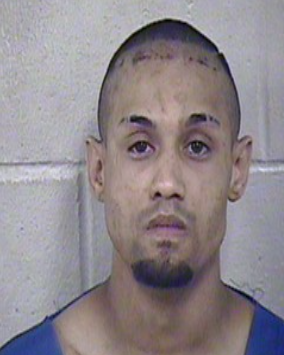
Antonio Love-photo Jackson Co.
Witnesses told authorities the killing was in retaliation for the February 2016 beating of Antonio Love, which stemmed from a drug dispute.
Prosecutors have requested a $250,000 bond for each of the brothers.
To release Kansas from the financially troubled Brownback years, state legislators first had to reverse the governor’s disastrous tax experiment. That was step one, last year’s job. Now they must move to step two: properly fund public education.
Kansans have long prided themselves on having top-notch public schools. Excellent schools serve an important economic development role by attracting and keeping families. In many smaller communities across the state, the public school provides the bedrock for a town’s economic and cultural activity.
Duane Goossen
Given the importance of schools to Kansas and the fact that they are the largest state budget obligation, lawmakers simply must get the dollars right. Until school funding is deemed adequate, equitable, and predictable, Kansas finances cannot emerge from turmoil and stabilize.
“Adequate” and “predictable” hardly describe school funding in the last decade. Base state aid per pupil has dropped from $4400 in 2009 to barely over $4000 today. No wonder the Kansas Supreme Court ruled lawmakers are not living up to their constitutional requirement to adequately fund schools.
To address the issue, Gov. Brownback opened the 2018 legislative session with a budget proposal to boost state spending on public schools by $600 million over the next 5 years. Had the proposal come from a governor with a different name, it might have seemed a reasonable start. From Sam Brownback, however, it struck a note of great dissonance. After all, just a few months ago he blasted legislators for overturning his income tax cuts, and sharply criticized them for overspending. Now he was recommending a budget that used every penny of the new tax revenue, contained virtually no spending cuts, and added $600 million of expenses on top.
Legislators from his own party immediately cried foul, arguing that Brownback’s proposed $600 million takes the budget way out of balance. Last session’s reversal of the Brownback tax plan—step one in fixing Kansas finances—brought Kansas out of crisis mode, but did not fully close a huge gap between revenue and expenses. Adding $600 million of additional spending into the equation widens the gap further.
But therein lies the challenge of step two. Legislators must both add money and balance the budget. Brownback is correct in part. New school money has to be budgeted. But to do that realistically and responsibly requires more revenue, if not during this session, then definitely in the next. Brownback skipped over the hard part, and kept mum about his own culpability in creating revenue problems for the state in the first place.
So, just as in the last legislative session when they overrode Brownback’s tax veto, it appears a bipartisan coalition of legislators will have to again go it alone without leadership from the governor. That makes the task much harder, but that’s the next step. The success of the 2018 legislative session will be measured by how well lawmakers achieve step two.
Duane Goossen formerly served 12 years as Kansas Budget Director.
Edna J. (Blystone) Golemboski, 90, resident of Kanorado, passed away Wednesday, January 17, 2018, at Via Christie Village in Hays, Kansas. She was born April 4, 1927, to Emmett and Dorothy Blystone in Kanorado, Kansas. Edna grew up in Kanorado and graduated high school from the Kanorado High School. She attended Kansas State University, receiving a bachelor’s degree, and then returned to western Kansas to be a housewife and farmer.
Edna was a member of the United Methodist Church of Kanorado and a member of Collegiate 4-H at K-State. She always enjoyed reading and visiting with her family.
She is preceded in death by her parents; son, Joseph; daughter, Rosa; sister, Joyce.
She is survived by her daughter, Dorothy (Art) Gross of Hays, KS; son, Ed (Lynn) Golemboski of Hillrose, CO; daughter, Margaret Hoffman of Lyons, KS; daughter, Frances Graton of Hays, KS; son, Frank Golemboski; daughter, Kathy Golemboski of Kanorado, KS; sisters, Mary Blystone of Goodland, KS and Ruth Nichol of Kanorado, KS; seven grandchildren, nine great grandchildren.
Funeral service will be Saturday, January 20, 2018, at 10:30 a.m. MT at Bateman Funeral Home, 211 East 11th Street in Goodland, with Pastor Gordon Pettibone officiating. Visitation will be one hour prior to the service, with interment following funeral service in the Kanorado Cemetery. Memorials will be designated later and may be left at the service or mailed to Bateman Funeral Home, P.O. Box 278, Goodland, KS 67735. Online condolences www.batemanfuneral.com
Several restaurants from Hays and WaKeeney have been featured in a story by The Daily Meal, a foodie website.
To check out the article, “From Biscuits to Barbecue Along I-70 in Kansas: Small-town diners and little-known wineries amid the wheat fields,” click HERE.
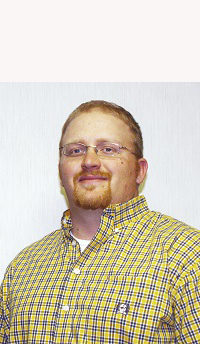
Philip Weltmer, Smith Center (Photo courtesy Cattlemen’s Beef Board)
TOPEKA – Farmers and ranchers in Kansas are excited about the relaunch of the iconic Beef. It’s What’s For Dinner. brand that has captured the attention of millions of consumers and evolved as one of the top commodity food brands over the past quarter century.
The relaunch began October 3 with the unveiling of the new BeefItsWhatsForDinner.com website, complete with a new look and logo. The updated website combines eight checkoff-owned websites into one digital destination about all things beef, including more than 800 beef recipes, beef cuts and cooking tips, beef nutrition information and a new section on raising beef that invites people to “Rethink the Ranch” with videos and stories about the people who help bring beef to market. Overall, the comprehensive website now provides an even more interactive experience on all things beef, from cuts and cookery to a robust collection of beef recipes.
“Our Beef. It’s What’s For Dinner. brand has been a tremendous asset for beef farmers and ranchers and beef promotion through the years,” said Philip Weltmer, a Kansas beef industry leader from Smith Center. “We’re excited to relaunch that brand to the next generation of consumers and remind them that beef will always be what’s for dinner – and breakfast, lunch and the occasional snack.”
Weltmer, who is a cow-calf rancher and serves as chair of the Kansas Beef Council, says the relaunch features many of the brand’s valuable assets, including Aaron Copland’s famous “Hoe-down” from Rodeo music, while adding new creative elements. Recognizing that consumers today want to know more about the people who raise their food, the campaign relaunched by strengthening the story of the people behind Beef. It’s What’s For Dinner. and will continue throughout 2018 to celebrate the people who raise beef, the great taste of beef and the powerful nutritional benefits beef provides.
The original Beef. It’s What’s For Dinner campaign launched in May 1992 using a broad range of marketing elements, including print and television. Today the methods of conveying information to consumers have changed dramatically, with Beef. It’s What’s For Dinner. going entirely digital in 2014 to reach consumers through social media and digital advertising.
Over the summer, video was gathered with beef producers from coast to coast to develop a series of videos that capture the passion and commitment to animal care of the people who raise beef. As a centerpiece of the campaign, the team developed a 90-second video that tells the beef production story, titled “Rethink the Ranch,” along with a series of five additional videos, and shared those videos through Facebook, YouTube, Instagram, and other social media platforms, including the new BeefItsWhatsForDinner.com website.
“For the past 25 years, Beef. It’s What’s For Dinner. has helped slow a decades-long decline in per capita beef consumption,” according to Alisa Harrison, senior vice president, Global Marketing and Research for the National Cattlemen’s Beef Association, a contractor to the beef checkoff. “The brand still has tremendous equity. Using the powerful medium of digital, we have relaunched the brand to deliver what our consumers want today – transparency about their food, inspiration on how to enjoy the delicious taste of beef, and information about the unique protein benefits beef provides.”
“It’s an exciting way to refresh and enhance our beef brand,” said Kansas’ Weltmer. “Today’s beef consumers will be encouraged to purchase beef more often through this educational and inspirational beef checkoff program.”
The Beef Checkoff Program was established as part of the 1985 Farm Bill. The checkoff assesses $1 per head on the sale of live domestic and imported cattle, in addition to a comparable assessment on imported beef and beef products. States retain up to 50 cents of each dollar and forward the other 50 cents per head to the Cattlemen’s Beef Promotion and Research Board, which administers the national checkoff program, subject to USDA approval.
BUNKER HILL – Smoky Hills Public Television viewers have the opportunity to hear from area legislators and ask questions through the local production “The Kansas Legislature.” The first episode of the new season will air Jan. 26 at 7 p.m.
The show airs during the legislative session, which gives the legislators and viewers the opportunity to discuss up-to-date issues. For each show, legislators from the SHPTV viewing area are invited to participate in the live call-in program. Typically, a moderator and three to four legislators take part in each show.
The 2018 season of The Kansas Legislature will air Jan. 26, Feb. 2, 9 and 16, and March 30 from 7 to 8 p.m. The schedule is subject to change and additional shows may be added. Past episodes can be viewed at www.smokyhillstv.org.
SHPTV can be seen on Eagle Cable channels 9 and 609.
John Richard Schrock is a professor at Emporia State University.Why has the rigor in American public education declined in the last 30 years?
There have been a few attempts to increase the rigor of coursework and teacher training.
When the U.S.S.R. launched their Sputnik satellite ahead of us, there was a major infusion of money into retraining science teachers nationwide, recognizing that better-trained teachers would result in better teaching. However, that effort and the subsequent Eisenhower grants for science content preparation were soon diluted to cover all fields. And those veteran teachers have also long since retired.
Any thought of expanding the science curriculum was cut short in the 1980s by the announcement by the American Association for the Advancement of Science that “less science is more.” This pitiful phrase still cripples any expansion of science coursework in schools today. Blame for this motto of mediocrity lies squarely on the science community and the AAAS.
Kansas formerly required two high school science courses to graduate. However, schools were allowed to count “home ec” and “shop” as science classes! This practice was curtailed under Commissioner Andy Tompkins. However, there was considerable leeway in who could teach science classes. And the “general science” and “physical science” classes in Kansas high schools were anything but rigorous. In 2003, the “Redesign” eliminated many teaching certificates (now called licenses) including those shallow general science and physical science endorsements. This action required more depth-of-learning by students. But physical sciences was restored after pressure from Johnson County.
By 2001, the KBOR implemented a 3-sciences requirement to enter regents schools, and one had to be chemistry or physics. By 2005, the KSBE likewise raised the high school science requirement to three science courses for a high school diploma. Previously perhaps 20 percent had taken chemistry and 10 percent had physics. Now that all freshmen would have taken at least one of these courses, I asked my university colleagues if it had improved their university students’ performance? “No,” was the answer. They indicated that without more qualified teachers, raising the paper requirement did not result in more students receiving a solid genuine chemistry or physics course—a situation that continues today.
And last year, the State Board approved a bi-literacy seal in order to encourage and reward students who took high school foreign languages. That was undermined by Kansas universities that wiped out or drastically cut their foreign language teacher programs. One step forward, two steps backward.
At the higher education level, the rigor of academics is being pushed back by decades if not a century. In chasing tuition and pushing to retain and graduate every student, university data show that some students have difficulty completing college algebra. Therefore the California State University system of 23 institutions has just eliminated that requirement from all but science and math majors. A similar action is being discussed in Kansas by our Board of Regents (KBOR).
Several years ago, KBOR also allowed the minimum credit hours for a bachelor’s degree to drop from 124 to 120, leaving the decision up to faculty as to whether that was appropriate for their field. Some faculty, especially in the sciences, considered 124 necessary and in some cases no longer enough. Now KBOR, frustrated that not enough programs dropped their requirements, is set on having every bachelors degree drop to 120. A faculty could appeal to keep 124, but if any other school allowed 120, that appeal would lose. This is clear evidence of our race-to-the-bottom mentality.
For decades, the KBOR Transfer and Articulation Committee (TAAC) has been pressuring faculty at Kansas regents schools and community colleges to likewise drop course requirements to the lowest common denominator. TAAC will not recognize differences in courses based on 1) prerequisites or 2) mode of delivery. Therefore, when faculty point out that a pre-med microbiology course has 3 pre-requisite courses and real labs, and a community college offers a barely-high-school-level online microbiology for nursing assistants with no pre-requisites, TAAC demands they transfer as equal.
And finally, both the Governor and KSBE support all Kansas high school students earning 15 credit hours of college coursework, when many high school students are not yet college-able. And many of these high school instructors lack the master’s credentials to teach college level courses. This devalues the bachelor’s degree by a semester or a year.
The U.S. has dropped in rank among developed countries not just because other countries have surged ahead, but also because our educational governing bodies have made conscious and intentional decisions to decrease academic rigor for over 30 years. And they continue to do so today.
CLAY COUNTY— A Kansas man died in an accident just after 4p.m. Thursday in Clay County.
The Kansas Highway Patrol reported a 2000 Ford Mustang driven by John Robert Linn, 49, Clay Center, was westbound on Broughton Road just east of Clay Center.
As the vehicle came upon slower traffic, the driver swerved to avoid and lost control. The Ford entered the north ditch, overturned and came to rest in the culvert.
Linn was pronounced dead at the scene and transported to Neill-Schwenson-Rook Funeral Home
A passenger Melissa Juleen Haas-Menard, 41, Marysville, was transported to Clay County Medical Center. She was not wearing a seat belt, according to the KHP.
TOPEKA – Jan. 26 is the final day to submit nominations to the Kansas Department of Commerce for the 2018 Governor’s Exporter of the Year Award. The award is presented to a single Kansas business each year for excellence in international trade and marketing. The winner of the 30th annual installment of the award will be announced during a special ceremony on June 5, 2018.
Nominated companies will be evaluated on the totality of their international efforts. Qualifications include:
Number and/or percentage increase in jobs due to international activities.
Innovations in global marketing.
Number of countries exported to.
Effective use of international distributors.
Long-range international strategies and prospects for future growth.
Commitment to the state and local community.
Foreign language promotional materials and general promotional activities.
Trade shows and/or international expositions.
The Governor’s Exporter of the Year receives:
An invitation to attend the Team Kansas awards banquet on June 5, 2018, where top businesses from across the state are recognized
A site visit from the Governor to honor the company’s management team and employees
Statewide recognition of your business excellence
Use of the award to market your products
Membership in the Kansas International Trade Coordinating Council (KITCC)
Increased networking opportunities
Businesses can nominate themselves or be nominated by any other organization or individual. Visit KansasCommerce.gov/Exporter to learn more about the Governor’s Exporter of the Year Award and to download nomination forms. The nomination deadline is 5:00 p.m. on January 26, 2018.
Nominations can be emailed to April Chiang at [email protected] or mailed or faxed to:
OSBORNE COUNTY— A Kansas woman was injured in an accident just before 10p.m. Thursday in Osborne County.
The Kansas Highway Patrol reported a 1999 Chevy Silverado driven by Laurie A Schmitt, 52, Osborne, was north bound on U.S. 281 at 230 Drive. The pickup crossed the highway, entered the west ditch, overturned, rolled and came to rest on its top.
Schmitt was transported to the hospital in Osborne. She was properly restrained at the time of the accident, according to the KHP.
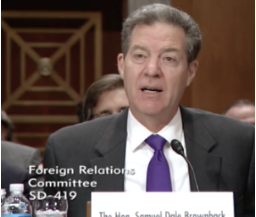
Governor Brownback during his October Senate confirmation hearing opening comments
WASHINGTON —
Following another round of testimony, the Senate Foreign Relations Committee on Thursday approved Governor Sam Brownback to be the Ambassador-at-large for International Religious Freedom.
The nomination will now go to the full Senate. There is no timeline on when they will schedule a vote.
————-
WASHINGTON — Kansas Gov. Sam Brownback is back in Washington for a second U.S. Senate committee confirmation hearing on his nomination for ambassador-at-large for international religious freedom. Testimony was to begin early Thursday afternoon, according to the Foreign Relations Committee web site.
President Donald Trump nominated the two-term Republican governor for the ambassadorship in late July.
However, Brownback wasn’t among dozens of nominees given final approval by the end of the year. There is no word on how long the process will take.
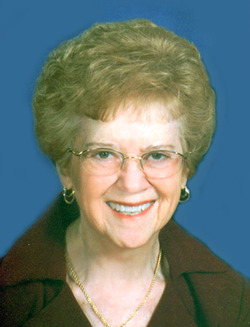
 Betty C. Keenan left this world to be with the lord on Wednesday, January 18, 2018 surrounded by family in her home.