We have a brand new updated website! Click here to check it out!

Kansas woman hospitalized after rear-end crash

SMITH COUNTY — One person was injured in an accident just before 6:30 p.m. Thursday in Smith County.

The Kansas Highway Patrol reported a 1998 Lincoln Continental driven by Cathi F. Barr, 58, Smith Center, was eastbound on U.S. 36 at Q Road. The vehicle slowed down without using a turn signal.

A 2008 Ford Escape driven by Colby M. Benoit, 18, Esbon, rear-ended the Lincoln. The force of the impact caused Lincoln to skid into a circle causing it to strike the Ford in the rear end.

Barr was not wearing a seat belt and transported to the Smith County Hospital

Benoit was possibly injured but not transported for treatment, according to the KHP.

UPDATE: US Attorney General ends policy that allowed legalized marijuana

WASHINGTON (AP) — The Trump administration threw the burgeoning movement to legalize marijuana into uncertainty Thursday as it lifted an Obama-era policy that kept federal authorities from cracking down on the pot trade in states where the drug is legal. Attorney General Jeff Sessions will now leave it up to federal prosecutors to decide what to do when state rules collide with federal drug law.

Sessions’ action, just three days after a legalization law went into effect in California, threatened the future of the young industry, created confusion in states where the drug is legal and outraged both marijuana advocates and some members of Congress, including Sessions’ fellow Republicans. Many conservatives are wary of what they see as federal intrusion in areas they believe must be left to the states.

Republican Sen. Cory Gardner, who represents Colorado, one of eight states that have legalized marijuana for recreational use, said the change contradicts a pledge Sessions made to him before being confirmed as attorney general. Gardner promised to push legislation to protect marijuana sales, saying he was prepared “to take all steps necessary” to fight the change, including holding up the confirmation of Justice Department nominees. Another Republican senator, Lisa Murkowski of Alaska, called the announcement “disruptive” and “regrettable.”

Colorado’s U.S. attorney, Bob Troyer, said his office won’t change its approach to prosecution, despite Sessions’ guidance. Prosecutors there have always focused on marijuana crimes that “create the greatest safety threats” and will continue to be guided by that, Troyer said.

The largely hands-off approach to marijuana enforcement set forth by Barack Obama’s Justice Department allowed the pot business to flourish into a sophisticated, multimillion-dollar industry that helps fund some state government programs. What happens now is in doubt.

“In deciding which marijuana activities to prosecute under these laws with the Department’s finite resources, prosecutors should follow the well-established principles that govern all federal prosecutions,” considering the seriousness of a crime and its impact on the community, Sessions told prosecutors in a one-page memo.

While Sessions, a longtime marijuana foe, has been carrying out a Justice Department agenda that follows Trump’s top priorities on such issues as immigration and opioids, this change reflects his own concerns. He railed against marijuana as an Alabama senator and has assailed it as comparable to heroin.

Trump, as a candidate, said pot should be left up to the states, but his personal views on marijuana remain largely unknown.

It is not clear how the change might affect states where marijuana is legal for medical purposes. A congressional amendment blocks the Justice Department from interfering with medical marijuana programs in states where it is allowed. Justice officials said they would follow the law, but would not preclude the possibility of medical-marijuana related prosecutions.

Officials wouldn’t say whether federal prosecutors would target marijuana shops and legal growers, nor would they speculate on whether pot prosecutions would increase.

They denied the timing was connected to the opening of California sales, which are projected to bring in $1 billion annually in tax revenue within several years. And, the officials said, Thursday’s action might not be the only step toward greater marijuana enforcement. The department has the authority to sue states on the grounds that state laws regulating pot are unconstitutional, pre-empted by federal law.

Asked about the change, White House spokeswoman Sarah Sanders said only that Trump’s top priority is enforcing federal law “and that is regardless of what the topic is, whether it’s marijuana or whether it’s immigration.”

The Obama administration in 2013 announced it would not stand in the way of states that legalize marijuana, so long as officials acted to keep it from migrating to places where it remained outlawed and keep it out of the hands of criminal gangs and children. That memo, written by then-Deputy Attorney General James M. Cole, had cleared up some of the uncertainty about how the federal government would respond as states began allowing sales for recreational and medical purposes.

But the Sessions Justice Department believed the Cole memo created a “safe harbor” for marijuana by allowing states to flout federal law, Justice Department officials said. Sessions, in his memo, called the Obama guidance “unnecessary.”

He and some law enforcement officials in states such as Colorado blame legalization for a number of problems, including drug traffickers who have taken advantage to illegally grow and ship the drug across state lines, where it can sell for much more.

Marijuana advocates argue those concerns are overblown and contend legalizing the drug reduces crime by eliminating the need for a black market. They quickly condemned Sessions’ move as a return to outdated drug-war policies that unduly affected minorities.

Sessions “wants to maintain a system that has led to tremendous injustice … and that has wasted federal resources on a huge scale,” said Maria McFarland Sanchez-Moreno, executive director of the Drug Policy Alliance. “If Sessions thinks that makes sense in terms of prosecutorial priorities, he is in a very bizarre ideological state, or a deeply problematic one.”

But the decision was a win for marijuana opponents who had been urging Sessions to take action.

“There is no more safe haven with regard to the federal government and marijuana, but it’s also the beginning of the story and not the end,” said Kevin Sabet, president and CEO of Smart Approaches to Marijuana, who was among several anti-marijuana advocates who met with Sessions last month. “This is a victory. It’s going to dry up a lot of the institutional investment that has gone toward marijuana in the last five years.”

Yet confusion remains.

Jane Stinson, part-owner of the retail marijuana shop Enlighten Alaska in Anchorage, called Thursday’s action confusing and worried that it could harm her business. The change, she said, “can have so many ripple effects we just don’t know.”

The change reflects yet another way in which Sessions, who served as a federal prosecutor at the height of the drug war in Mobile, Alabama, has reversed more lenient Obama-era criminal justice policies. While his Democratic predecessor Eric Holder told federal prosecutors to avoid seeking long mandatory minimum sentences when charging certain lower-level drug offenders, for example, Sessions issued an order demanding the opposite, telling them to pursue the most serious charges possible against most suspects.

A task force Sessions convened to study pot policy made no recommendations for upending the legal industry but instead encouraged Justice officials to keep reviewing the Obama administration’s more hands-off approach, something Sessions promised to do.

————-

WASHINGTON (AP) — Attorney General Jeff Sessions is going after legalized marijuana. Sessions is rescinding a policy that had let legalized marijuana flourish without federal intervention across the country.

That’s according to two people with direct knowledge of the decision. They were not allowed to publicly discuss it before an announcement expected Thursday and spoke on condition of anonymity.

The move will leave it to U.S. attorneys where pot is legal to decide whether to aggressively enforce federal marijuana law. The move likely will add to confusion about whether it’s OK to grow, buy or use marijuana in states where it’s legal, since long-standing federal law prohibits it.

The decision comes days after California began selling recreational marijuana.

Sessions compares marijuana to heroin and blames it for spikes in violence.
Swatting death call suspect threatened to kill grandmother

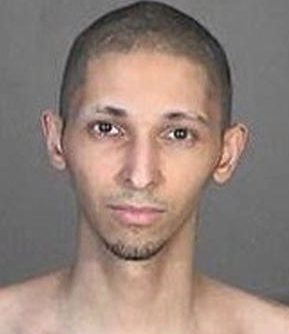
Barriss- photo courtesy Glendale, Calif. police

WICHITA, Kan. (AP) — A man accused of making a hoax emergency call that led to the fatal police shooting of a Kansas man once threatened to kill his grandmother in 2015 if she reported him for phoning in a false bomb threat to a television station in Glendale, California, according to news reports and court documents.

Tyler Barriss, 25, is accused of calling 911 last week with a fake story about a shooting and kidnapping at a Wichita home. The call was a case of “swatting,” in which a person makes up a false report to get a SWAT team to descend on an address. Police shot 28-year-old Andrew Finch when the unarmed Wichita man came to his door.

Barriss earlier pleaded no contest in a separate case on May 10, 2016, to one felony count each of false report of bomb to agency or business and malicious informing of false bomb in California. He was sentenced to two years and eight months in jail, according to the Los Angeles County District Attorney’s office.

The Wichita Eagle reports that his 62-year-old grandmother wrote in a domestic violence case seeking a restraining order California court that Barris had made “constant threats to beat my face bloody.”

He also allegedly made death threats against the woman, along with threats to destroy her home and dogs. He was ordered to move out of the house they shared and stay away from her, her home, her dogs, workplace and vehicle, according to the document. The order was later dismissed when he and his grandmother missed a court hearing.

The LA Times reported that Barriss threatened his grandmother to prevent her from reporting he had called in false bomb threats.

Barriss told a California judge at extradition hearing in Los Angeles Superior Court on Wednesday that he would not fight efforts to send him to Wichita to face charges in the swatting case.

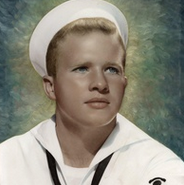
Charles Campbell Portman

Charles Campbell Portman, age 78, died at Hillcrest Hospital in Tulsa, OK, on Saturday, December 30, 2017. The cause was complications due to surgery after knee replacement.

Charles, also known to his family and close friends as “Charlie”, was born on August 26, 1939 in Salina, Kansas. His early childhood and teen years where he grew up was in Great Bend, Kansas. He graduated from Great Bend High School with his many friends. Charles was deeply involved in many activities in high school. He was on the football, basketball, and track team. He was in some of the school plays and was also on the swim team. He was a life guard at the local swimming pool and loved the water. After graduating he left home to attend college at Ft. Hayes State University in Kansas. He wasn’t there long before the decision to join the Navy called him into service. Charlie served his country from 1961-1965. He really did get to see the world courtesy of the U.S. Navy. Some of his ports of call included: Cannes, France; Istanbul, Turkey; Athens, Greece; Naples, Italy; and even Cuba. He served as a ship’s electrician on board the U.S.S. Conygham (Plank Owner) and the U.S.S. Intrepid.

Charles returned home upon leaving the Service and shortly thereafter began his life’s work as an insurance adjuster with GAB Business Services, Inc. in Kansas City, MO. from 1965 through 2000. He rose from claims adjuster to Manager, then Senior Adjuster. He worked for Wackenhuth Adjustment Company from 2000 – 2005 and an additional two years and as an Insurance Adjusting Consultant.

He has served on the Regency Park Nazarene Church Board on the Building Committee for almost 25 years and for the past three years has also served his community as a board member for his home owners’ association in Owasso, OK. He also worked with the Tulsa County Election Board for over seven years during the voting process as Precinct Captain.

Charles is survived by his wife, Regina, of Owasso, OK; his sons: Andrew K. Portman of Bartlesville, OK, David C. Portman of Broken Arrow, OK, and Geoff Portman of Owasso, OK, Danielle Portman, his daughter-in-law; his grandchildren: Olivia and Mya Portman, and his sister: Kathryn Portman of Lenexa, MO. He was preceded in death by his parents, C.K. “Bus” Portman and Betty Cope Portman.

Celebration of Charles’ life will be held at 10:30, Friday, January 5, 2018, at Regency Park Church of the Nazarene (8707 E. 51st Street) Tulsa, OK. Burial will be held in private at a later date. Family and friends are welcome to attend the service.

Oklahoma man held on $100K bond after Kansas traffic stop

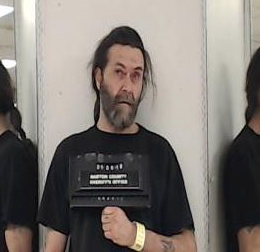
Croslin -photo Barton Co.

BARTON COUNTY — Law enforcement authorities are investigating a suspect on drug distribution charges.

Just before 4a.m.Wednesday, Barton County Sheriff’s Office deputies stopped a vehicle for tag and other traffic violations in the 900 block of East US 56 Highway near the City of Ellinwood, according to Sheriff Brian Bellendir.

Deputies observed what appeared to be drug paraphernalia in the vehicle. A K-9 officer was called from Stafford County leading to the discovery of methamphetamine, marijuana and prescription opioids. The officers also discovered packaging material and scales.

Deputies arrested Michael “Spike” Croslin, 47 of Hobart, Oklahoma. Croslin was transported to the Barton County jail where he was booked on charges of possession of methamphetamine with intent to distribute, possession of opioids, and possession of marijuana with intent to distribute. Croslin was also charged with various traffic violations.

Croslin is currently being held in the Barton County Jail in lieu of $100,000 bond.

Pauline M. Misegadis

The Janousek Funeral Home of La Crosse, Kansas, has announced funeral services for Pauline M. Misegadis, 94, La Crosse (formerly of Bazine), will be 10:30 a.m. Monday, January 8, 2018, at Janousek Funeral Home.

Burial will be at Nekoma Union Township Cemetery.

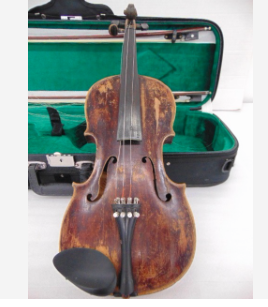
Fiddle once owned by music legend donated at KC Goodwill

Photo Courtesy Goodwill

KANSAS CITY, Mo. (AP) — A fiddle that Goodwill believes was once owned by country music legend Roy Acuff is expected to generate thousands of dollars for the charitable organization in the Kansas City area.

The fiddle was donated anonymously to Goodwill of Western Missouri and Eastern Kansas and is being sold in an online auction at shopgoodwill.com. As of Thursday morning the high bid was $7,780. The auction is open until 11 p.m. Central time Saturday.

Acuff died in 1992 at age 89. He was the first living inductee into the Country Music Hall of Fame, best known for hits such as “Wabash Cannonball and “Tennessee Waltz.”

The fiddle was made by Evart Acuff, Roy Acuff’s uncle, in August 1945 in Maryville, Tennessee. It isn’t clear why it was donated to a Kansas City Goodwill store.

“We recognized right away that it was something special and we now have it up for auction,” Raines said. “We have no information on the owner. They just donated it and moved on.”

The fiddle, made of apple wood apparently from a tree on a family farm, is now in the possession of Gary Raines, who runs Goodwill’s e-commerce program in Kansas City. He said he was confident the fiddle was Acuff’s, even though the certificate of authenticity and other paperwork are copies. The report didn’t explain how Raines reached that conclusion.

Acuff, a native of Maynardville, Tennessee, first became famous as the singer and fiddler for the Crazy Tennesseans, later called the Smoky Mountain Boys. Their hits also included “Wreck on the Highway,” ”Pins and Needles” and “Night Train to Memphis.”

Acuff performed regularly at the Grand Ole Opry and starred in the 1940 film “Grand Ole Opry.” In 1942, he and Fred Rose formed Acuff-Rose Music, which became a powerful country music publishing firm.

INSIGHT KANSAS: Rural Republicans will select GOP nominee for governor

Welcome to Kansas election year 2018. An early look into the crystal ball of Kansas politics reveals that rural Republican voters will determine their party’s nominee for governor.

Rural votes tend to swing competitive gubernatorial primaries even though nearly half of all registered Republicans live in the five large urban counties—Douglas, Johnson, Sedgwick, Shawnee, and Wyandotte. Urban votes will be splintered among the seven creditable Republicans who have announced their intentions to run for governor. This voting pattern will likely repeat this year given that each of these seven candidates resides in one of the urban counties.

H. Edward Flentje is professor emeritus at Wichita State University.

So, who among these urban candidates will sway rural Republicans in their direction?

Four Republicans—Lt. Governor Jeff Coyler, Secretary of State Kris Kobach, Insurance Commissioner Ken Selzer, and 2006 gubernatorial nominee Jim Barnett—have experience in statewide contests and represent top-tier prospects.

Colyer has spent his professional career as a Johnson County physician but can lay claim to a rural upbringing in western Ellis County. He was elected twice to legislative seats in Johnson County before joining Brownback on the statewide ticket in 2010. In general elections, based largely on Brownback’s rural credentials, rural voters gave the Brownback/Colyer ticket an overwhelming margin in 2010 and a decisive but narrower victory in 2014. However, during his seven years in office Colyer has shown little independent connection with rural residents and will struggle to distinguish himself from the toxic Brownback brand.

Kobach chose Donald Trump, Jr., to headline his first major fundraiser and presumes to be President Trump’s anointed choice for governor. While Kobach hopes to capture Trump’s huge rural vote margin of 2016, his alliance with Trump has risks in rural Kansas. The President’s positions on immigration and trade are raising alarm among agricultural groups and businesses reliant on immigrant labor in beef, pork, and dairy operations. Further, the President’s threat to withdraw from the North American Free Trade Agreement also places agricultural exports with top trading partners, Mexico and Canada, in jeopardy. Kobach leads the field in name recognition but also disapproval and has yet to show how he will maneuver through the chaos of Trump politics.

Barnett won a competitive, seven-candidate gubernatorial primary in 2006 but was defeated by incumbent Governor Sebelius in the general election. His vote margin in that primary was bolstered by strength in rural counties, winning most large rural counties and nearly half of the smaller rural counties. In contrast to his strident conservatism of 2006, as well as the stance of his competitors this year, Barnett has applauded the repeal of Brownback’s tax experiment and become a full-throated advocate of public school funding and Medicaid expansion. His campaign will test whether rural Republican voters, who dumped seven incumbent legislative allies of Brownback in the 2016 primary, will embrace a more centrist agenda.

Selzer prevailed in a competitive, five-candidate primary in his first and only race for state office in 2014. He won soundly in his home county of Johnson over two other Johnson County candidates, narrowly succeeded in Sedgwick County, and picked up wins in a scattering of western Kansas counties. Selzer has largely avoided hot-button issues or extreme positions, focusing his campaign instead on his professional background as a CPA, business experience, and family roots in central Kansas. He trails considerably in name recognition but has the potential to attract rural primary voters.

Three Wichitans—businessmen Mark Hutton and Wink Hartman plus nonprofit executive Ed O’Malley—complete the seven-candidate field. Each will claim a share of the urban vote but faces a tall order in persuading rural Republicans to join them.

My crystal ball shows: Kobach will fade; Colyer and Barnett will be forced to debate the Brownback legacy—Colyer defending, Barnett challenging; and Selzer may be a dark horse in the field.

H. Edward Flentje is professor emeritus at Wichita State University and formerly served with Kansas Governors Bennett and Hayden.

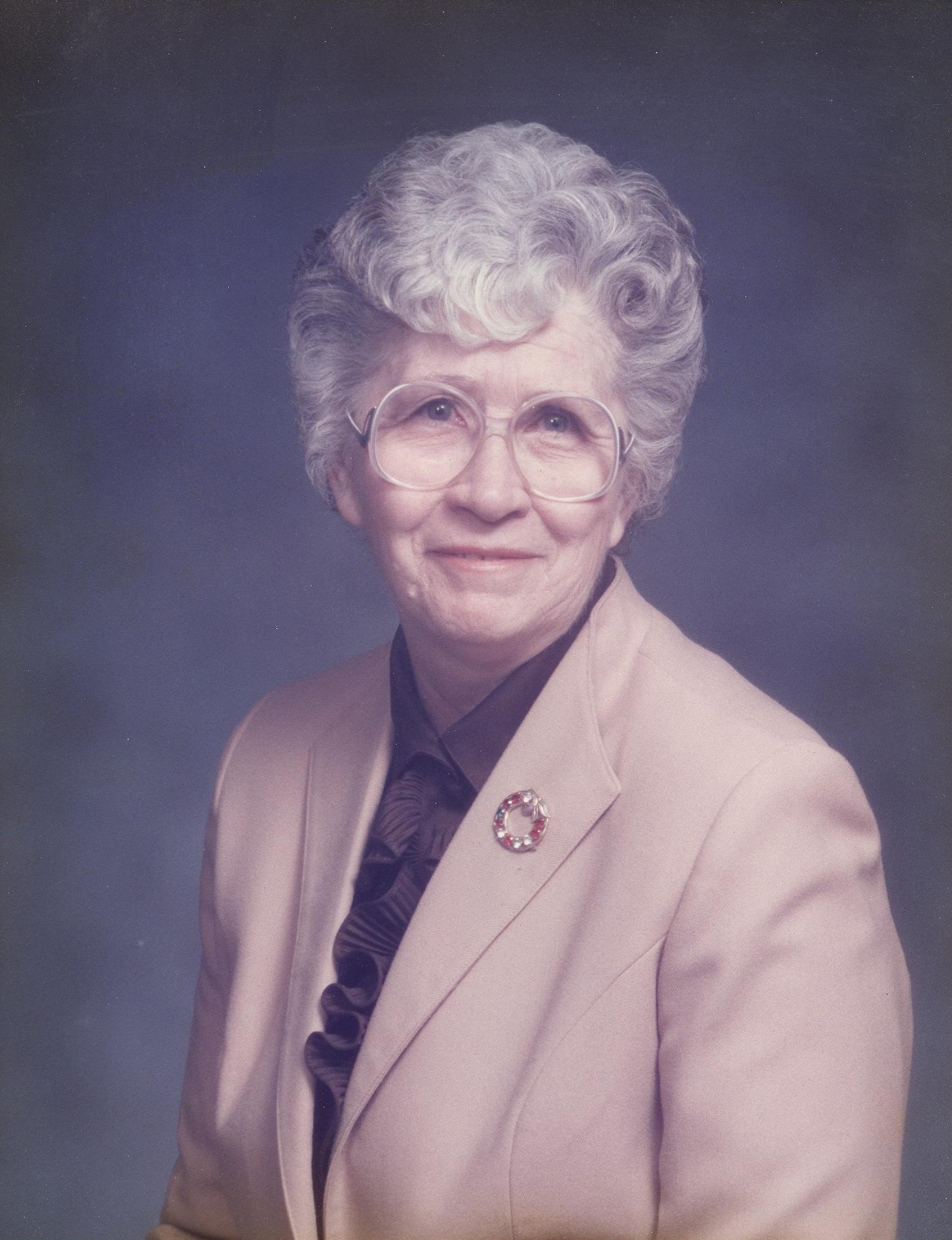
Lenora Wiedeman

Lenora Wiedeman, age 102, of WaKeeney, passed away Thursday, January 4, 2018 at Trego County Lemke Memorial Hospital Long Term Care, WaKeeney.

Schmitt Funeral Home, WaKeeney, is assisting with arrangements.

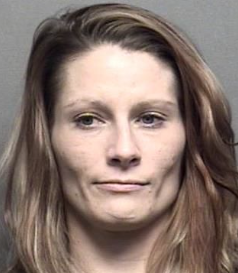
Kansas couple jailed after police find them hiding in apartment

Moreno-photo Saline Co.

SALINE COUNTY — Law enforcement authorities are investigating two suspects on drug and child endangerment allegations.

Just before 1 a.m. Wednesday, police received a call from 31-year-old Meaghan Moreno, according to Salina Police Captain Paul Forrester. She told police that someone was hurt inside her apartment in the 700 block of Fairdale Street in Salina.

When officers arrived, Moreno and her husband, 31-year-old Robert Moreno, did not let officers enter the apartment. When police did finally gain access, they found Meaghan, Robert and a four-year-old girl hiding.

Meaghan appeared to be under the influence of methamphetamine, according to Forrester. A search of the residence uncovered 8-grams of meth and drug paraphernalia.

Police placed the child into protective custody and arrested the parents.

They were booked on requested charges for possession of methamphetamine, possession of drug paraphernalia and child endangerment.

Evelyn Marie Burk

Longtime Goodland, KS, resident Evelyn Marie Burk, 90, passed away on Monday, December 25, 2017 at the Good Samaritan Center-Sherman County in Goodland, KS.

Evelyn was born on July 29, 1927 in Ionia, Kansas to Alfred and Angela (Colson) More.  She was one of five children.  She attended school in Ionia, Kansas and graduated from high school in 1945. 

On May 18, 1957, she married Glenn Orvile Burk at the home of Henry and Gladys Burk in Edson, KS.  To this union, one son Michael was born.  She was a devoted wife, mother and grandmother, and spent most of her life working as a housewife and helping around the farm and spending time with her family.

Preceding her in death were her parents, one sister Roberta Britt and a half-sister Bernice Arendt.

She is survived by her husband Glenn, her son Mike and his wife Joyce Burk of Goodland, four grandchildren, eight great grandchildren and one great great grandchild.  She is also survived by two sisters, Audrey Cooksey and her husband Charles and Gwen Jones, all of Stillwater, Oklahoma; as well as numerous nieces, nephews and friends.

Funeral services for Evelyn will be held on Monday, January 8, 2018 at 10:00 AM MT at the Koons-Russell Funeral Home in Goodland with Pastor JT Burk officiating.  Burial will follow in the Goodland Cemetery, Goodland, KS.  Visitation will be held on Sunday, January 7, 2018 from 3:00 to 5:00 PM MT at the funeral home.

Memorials may be designated to the Alzheimer’s Association and may be left at the services or mailed to Koons-Russell Funeral Home, 211 N. Main Ave., Goodland, KS 67735.

Online condolences may be left at www.koonsrussellfuneralhome.com.

Funeral services are entrusted to Koons-Russell Funeral Home in Goodland, KS.

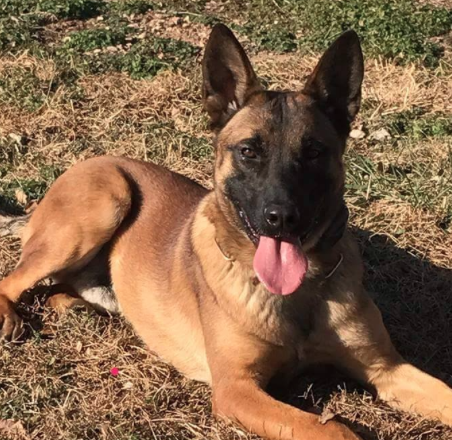
K-9 with Kansas Sheriff’s office dies after hit by car

Biz-photo courtesy Code 2 K9 Services LLC

DICKINSON COUNTY —  The K-9 with the Dickinson County Sheriff’s Department died in an accident on Friday, according to Sheriff Gareth Hoffman.

Early afternoon December 29, 2-year-old Biz, a Belgian Malinois, escaped from his Kennel and was hit by a car in the 1200 Block of Northwest 3rd Street in Abilene, according to Hoffman.  A broken latch on the kennel allowed the dog to get out.

The Dickinson County Sheriff’s Department purchased Biz in 2016 in Nebraska.  “We used no tax dollars to purchase the dog,” said Hoffman. “We fully intend to maintain the K-9 program here and will use no tax dollars.”  The dog was insured.

Authorities are not actively looking for who hit the dog. No one has reported it. “They are in no trouble,” said Hoffman. “It was an unfortunate accident.”

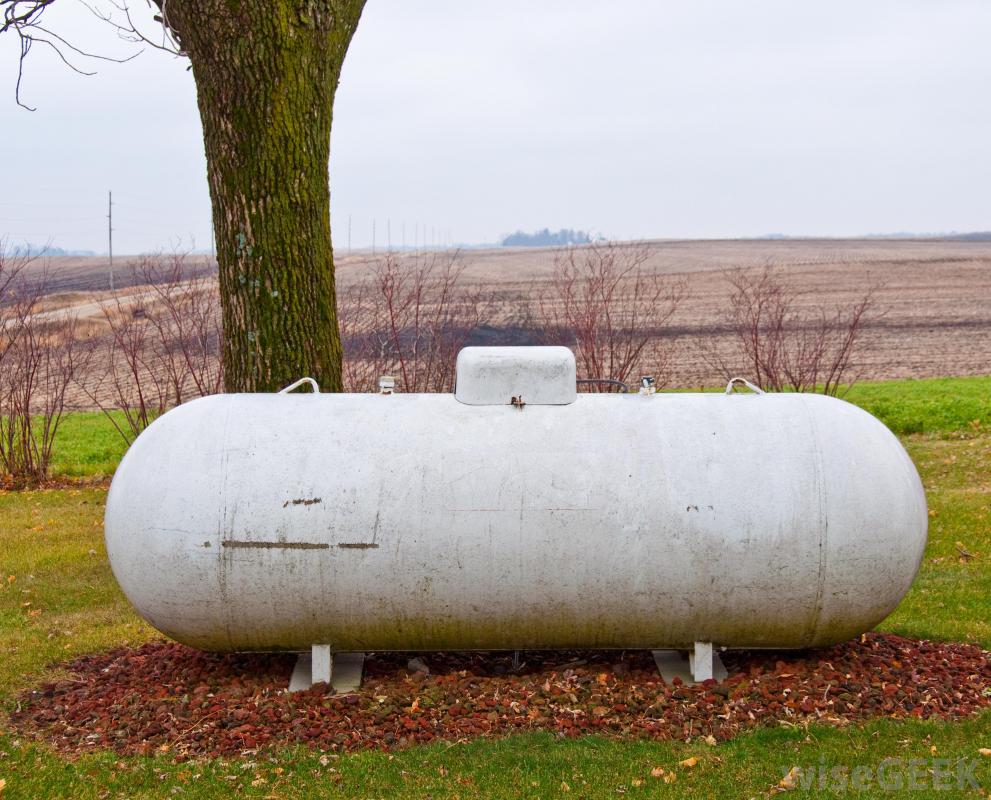
Gov. Brownback approves order to aid propane availability

OFFICE OF GOV.

TOPEKA–Governor Sam Brownback on Wednesday approved an executive order temporarily lifting regulations that restrict the hours semi-trucks hauling propane can operate.

This action ensures that residential and agricultural users have access to fuel during the bitter cold that has settled over Kansas and the Midwest.

“Kansans are currently experiencing a dangerous cold stretch,” Governor Brownback said. “When the temperatures are this cold access to propane can literally be a matter of life and death. This temporary order will aid in getting much needed propane to Kansans.”

The executive order allows semi-trucks to operate outside standard regulations for 30 days.

The National Weather Service in Dodge City calls for a return of very cold temps Friday in Hays.

Copyright Eagle Radio | FCC Public Files | EEO Public File