We have a brand new updated website! Click here to check it out!

Russell to be first in series of free hearing screenings from FHSU

FHSU Herndon Clinic

FHSU University Relations

Russell will be the first of three free hearing screenings, funded by the Kansas Masons, offered again this fall in Western Kansas communities by Fort Hays State University.

“The FHSU Herndon Clinic in the Department of Communication Sciences and Disorders is very fortunate to have received a large grant from the Kansas Masons to support adult speech, language and hearing services in western Kansas,” said Marcy Beougher, speech-language pathologist and an instructor in the department.

The grant is continuing to provide numerous opportunities for individuals of all ages in western Kansas to receive important health screening services that are currently scarce or difficult to access.

“With Masonic support and funding, we have visited 18 different communities in three years and have screened over 670 people,” said Beougher.

“We are thankful to the Masons for the opportunity to learn more about the hearing needs in Western Kansas and to make necessary and important medical and audiological referrals. We are also very grateful for the clinical hours these screenings provide for our graduate students.”

The screening will be from 9 a.m. to 1 p.m. Friday, Sep. 20, at the Russell Masonic Lodge No. 177, 115 E. Wisconsin, Russell.

Appointments are encouraged to be scheduled ahead of time, but walk-ins will be welcomed on a first-come, first-served basis. Each site will have four stations, with each screening lasting approximately 15 minutes. Results, follow-up information and ear plugs will also be provided. There will be no hearing aid sales.

Screenings are provided by graduate students from the Department of Communication Sciences and Disorders. Beougher will organize the screenings.

Screenings will also be held in Sterling on Oct. 18 and Plainville on Oct. 25. Times, dates and actual screening sites will be announced later.

To schedule an appointment for the Russell screening, contact Daron Woelk at 785-483-7873 or [email protected].

For more information, visit fhsu.edu/herndon-clinic/ or contact the Department of Communication Sciences and Disorders at 785-628-5366.

KU Cancer Center receives grant to expand clinical trials in rural Kansas

By PAULINE HORTON
KU News Service

The University of Kansas Cancer Center and Midwest Cancer Alliance have been awarded a grant to expand the reach of cancer clinical trials to Kansas’ rural communities. The six-year grant designates the team as a minority/underserved (MU) community site of the National Cancer Institute’s (NCI) Community Oncology Research Program (NCORP).

There are 14 such sites in the United States., and the KU Cancer Center-Midwest Cancer Alliance site is the only one that focuses on rural communities.

As an NCORP MU community site, KU Cancer Center and Midwest Cancer Alliance will accrue individuals to NCI-approved cancer clinical trials and research studies that encompass cancer prevention, screening, supportive care and symptom management, treatment, quality of life and cancer care delivery.

“This grant is an affirmation and recognition of our scientific leadership and expertise in cancer prevention, survivorship, and cancer-care delivery research,” said Roy Jensen, MD, Director of the KU Cancer Center. “That we are the single site focused on rural communities underscores our vital role in helping our fellow Kansans.”

NCORP is a national network of investigators, cancer care providers, academic institutions and other organizations whose goal is to improve patient outcomes and reduce cancer disparities through clinical trials and research studies. NCORP grants are awarded to top institutions that have demonstrated a strong commitment to the communities they serve.

“As the outreach network of the cancer center, Midwest Cancer Alliance has partnered with hospitals, cancer centers and health care providers across Kansas for more than a decade,” said Hope Krebill, MSW, BSN, RN, executive director of Midwest Cancer Alliance. “This grant enhances our ability to leverage the expertise of our rural cancer providers and KU Cancer Center researchers to expand clinical trials and decrease barriers to participation, with the ultimate goal of eliminating cancer disparities and preventing and treating cancer more effectively,” Krebill said.

“Support from the grant strengthens the institutions’ commitment to advancing clinical trial access and quality of care in rural communities,” said breast oncologist and co-principal investigator Priyanka Sharma, MD. Sharma also noted that patients can now access benefits from several new cancer prevention, survivorship and cancer-care delivery clinical trials.

According to Gary Doolittle, MD, Midwest Cancer Alliance medical director and co-principal investigator for the NCORP grant, bringing clinical trials to a broader patient population may reduce disparities in cancer, given that providing clinical trials to cancer patients is considered a standard of care. Per numerous studies, including a 2017 study conducted by the Centers for Disease Control, people in rural America are more likely to die from cancer than those in the country’s metropolitan counties.

“While improvements in cancer care have been significant over the last several decades, the need to provide dedicated, comprehensive care continues to grow, particularly in rural areas,” Doolittle said. “We need to ensure that people across the landscape of our area have access to the highest quality cancer care, and this grant enables KU Cancer Center and Midwest Cancer Alliance to help do just that.”

In one section of border wall, Trump’s promise takes shape

YUMA, Ariz. (AP) — On a dirt road past rows of date trees, just feet from a dry section of Colorado River, a small construction crew is putting up a towering border wall that the government hopes will reduce — for good — the flow of immigrants who cross the U.S.-Mexico border illegally.

Border wall construction photo courtesy White House

Cicadas buzz and heavy equipment rumbles and beeps before it lowers 30-foot-tall sections of fence into the dirt. “Ahí está!” — “There it is!” — a Spanish-speaking member of the crew says as the men straighten the sections into the ground. Nearby, workers pull dates from palm trees, not far from the cotton fields that cars pass on the drive to the border.

South of Yuma, Arizona, the tall brown bollards rising against a cloudless desert sky will replace much shorter barriers that are meant to keep out cars, but not people.

This 5-mile (8-kilometer) section of fencing is where President Donald Trump’s most salient campaign promise — to build a wall along the entire southern border — is taking shape.

The president and his administration said this week that they plan on building between 450 and 500 miles (724 and 806 kilometers) of fencing along the nearly 2,000-mile (3,218-kilometer) border by the end of 2020, an ambitious undertaking funded by billions of defense dollars that had been earmarked for things like military base schools, target ranges and maintenance facilities.

Two other Pentagon-funded construction projects in New Mexico and Arizona are underway, but some are skeptical that so many miles of wall can be built in such a short amount of time. The government is up against last-minute construction hiccups, funding issues and legal challenges from environmentalists and property owners whose land sits on the border.

The Trump administration says the wall — along with more surveillance technology, agents and lighting — is key to keeping out people who cross illegally.

Critics say a wall is useless when most of those apprehended turn themselves in to Border Patrol agents in the hope they can be eventually released while their cases play out in immigration court.

In Yuma, the defense-funded section of tall fencing is replacing shorter barriers that U.S. officials say are less efficient.

It comes amid a steep increase since last year in the number of migrant families who cross the border illegally in the Yuma area, often turning themselves in to Border Patrol agents. Many are fleeing extreme poverty and violence, and some are seeking asylum.

So far this year, Border Patrol agents in the Yuma sector have apprehended over 51,000 family units. That’s compared with just over 14,500 the year before — about a 250% increase.

The Yuma sector is the third busiest along the southern border, with officials building a temporary, 500-person tent facility in the parking lot of the Border Patrol’s Yuma headquarters in June.

It spent just under $15 million for the setup and services for four months, including meals, laundry and security, but officials are evaluating whether to keep it running past next month as the number of arrivals in Yuma and across the southern border have fallen sharply in recent months.

The drop is largely due to the Mexican government’s efforts to stop migrants from heading north after Trump threatened tariffs earlier this year to force Mexico to act.

The number of people apprehended along the southern border fell by 61 percent between this year’s high point in May and the end of August. In Yuma, it fell by 86 percent, according to government figures. Most people apprehended are either traveling as families or are unaccompanied children.

“Historically this has been a huge crossing point for both vehicles as well as family units and unaccompanied alien children during the crisis that we’ve seen in the past couple of months,” Border Patrol spokesman Jose Garibay said. “They’ve just been pouring over the border due to the fact that we’ve only ever had vehicle bollards and barriers that by design only stop vehicles.”

Victor Manjarrez Jr., a former Border Patrol chief who’s now a professor at the University of Texas, El Paso, was an agent when the government put up the first stretch of barriers along the southern border — in San Diego.

He’s seen barriers evolve from easily collapsible landing mats installed by agents and the National Guard to the sophisticated, multibillion-dollar projects now being done by private contractors.

Manjarrez says tall border fencing is crucial in some areas and less helpful in others, like remote stretches of desert where shorter barriers and more technology like ground sensors would suffice.

“One form doesn’t fit in all areas, and so the fence itself is not the one solution. It’s a combination of many things,” Manjarrez said.

The ease of construction varies by place and depends on things like water, Manjarrez said, adding that just because a plot of land is flat “doesn’t mean it’s not complex.”

He said building 450 to 500 miles (724 and 806 kilometers) of fence by the end of next year would be tough if that figure doesn’t include sections of the wall that have been built recently.

“As it stands now, contractors are building pretty fast,” Manjarrez said. The real question is whether the government needs to build that much fencing, he said.

The Trump administration may face those issues along with lawsuits from landowners who aren’t giving up their property so easily and environmentalists who say the barriers stop animals from migrating and can cut off water resources.

The Tohono O’odham tribe in Arizona also has expressed opposition to more border fencing on its land, which stretches for nearly 75 miles (120 kilometers) along the border with Mexico.

Near Yuma, the Cocopah Indian Tribe’s reservation is near the latest fencing project, and leaders are concerned it will block the view to its sacred sites, spokesman Jonathan Athens said.

Gabel helps continue the proud tradition of Victoria tennis

Coach Kaylene Gabel (right) and Assistant Coach Megan Karst (left) are pictured with the Victoria girls tennis team.

By JACOB BRUBAKER
Hays Post

VICTORIA — We met upstairs in her art room, in the afternoon. That’s because her girls tennis team was cheering on the volleyball squad, which had a triangular that afternoon. This meant a 6 a.m. practice for her team, but she wanted the volleyball team to have some support, as she knows her squad sometimes doesn’t get as much as it deserves. Victoria has a proud tradition of football, but there is another proud tradition in action this fall — Coach Kaylene Gabel and the Victoria Lady Knights tennis team.

Gabel has been helping coach the Victoria tennis squad for the last four years and is in her second year as head coach.

“I’m happy to be here, teaching in the district as well,” said Gabel, an art teacher.

The team has accumulated many honors in her tenure, including qualifying six members for state in Gabel’s first season with the squad. However, it would be a mistake to think that was her first exposure to Victoria tennis.

Gabel is a native of the 1,214-person community and was a member of the tennis squad, graduating in 1995. At that time, many more area schools had tennis and Victoria was part of the Mid-Continent league. The coach played her high school tennis for a local legend.

“I played under the legendary Carla Pruitt, who was a huge asset for Victoria tennis and the state of Kansas and was inducted into the Kansas Coaching Hall of Fame,” she said.

Fast-forward to today, and there are considerably fewer schools with girls tennis. Schools in divisions 3A, 2A and 1A all compete as a conglomerate at state and regional meets. Victoria is easily one of the smallest schools that compete in women’s tennis. However, that hasn’t fazed Gabel, as she continues to put together quality squads.

This year’s team features 11 athletes, including four seniors. Comparing that to the 14-girl volleyball team, Gabel feels 11 is a solid number.

“If there is recruiting to be done, the kids are the recruiters. They have a good experience, and they share it with their friends,” she said.

It isn’t just about numbers though. This is a competitive squad that has compiled a record of 71-30 in its matches this season. The team also won the Hays High meet, defeating the 5A host.

Gabel also expressed confidence in the intelligence of her players.

“I always say tennis kids are the smartest athletes. They only get coaching every other match.”

Members of this year’s team are:

Kiara Sweat-Senior
Daphne Gross-Senior
Scarlet Nowlin- Senior
Dallas Nowlin-Senior
Brooklynn Kuhn-Junior
Avery Cochran-Junior
Kenzie Sweat-Sophomore
Makaila Fritzler-Sophomore
Macy Hammerschmidt-Freshman
MaKenna Welbrock-Freshman
Autumn VonLintel-Freshman

Gabel knows she couldn’t do it alone and is assisted by recent Victoria graduate and former tennis player Megan Karst. Gabel is more of a singles expert, which makes Karst all the more helpful.

“I was excited to have an assistant coach who is a little more of the double’s forte. We make for a good mix,” Gabel said.

Together, they have helped to cultivate a family atmosphere that has brought their 11 players closer together. Karst stressed cohesion on her doubles teams, comparing it to a marriage saying.

”If they have a bad marriage, they will perform poorly,” she said.

Gabel  added, “Tennis is pretty unique,. It is unlike any other sport. You become almost like a little family. It is neat to see seniors take freshmen under their wing. Our girls don’t seem to know an age limit. They just bond. It is cool because they may not hang out with each other outside of tennis, but year-in, year-out, we have a really cohesive unit.”

The Lady Knights season is nowhere near over as they will be in action in Victoria on Monday against Hays High and Osborne.

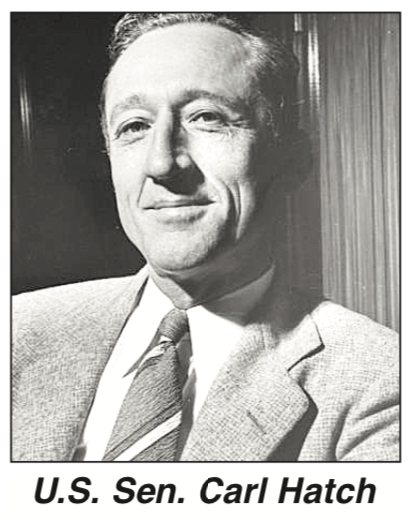
Carl A. Hatch: North-central Kansas’ powerful forgotten native son

Author of ‘Hatch Act’ grew up in Kirwin, Kensington

Editor’s Note: In recognition of the sesquicentennial celebration — the big 150th Birthday Party — which will be held in Kirwin on Sat., Oct. 5, the Phillips County Review has been running original historical articles on the community.

By KIRBY ROSS
Phillips County Review

It’s difficult to read a newspaper these days or look at the news on television or online without there being a story coming out of Washington about some sort of allegation relating to a violation of the Hatch Act.

“Army Major Violates Hatch Act.”
“FBI Agent Lawsuit Highlights Gray Area in Hatch Act.”
“Conway Subpoenaed For Possible Violation of Hatch Act.”
“Six Officials Found In Violation of the Hatch Act.”
“Government Seeks Hatch Act Probe.”

The Hatch Act, which is legislation banning federal employees from engaging in some forms of political activity, is named after its author, Carl Atwood Hatch, U.S. senator for New Mexico from 1933 through 1949.

With his service spanning the darkest days of American history — the Great Depression, World War II and the beginning of the Cold War — Hatch became a powerful member of the Senate as well as close friend of President Harry S Truman.

The story regarding Hatch’s life in New Mexico and his time in public service is extremely well documented. What is not documented, and what is more than a little bit breathtaking, is the fact he was born in Kirwin and spent his boyhood years growing up there, and that fact has been largely missed by Phillips County and Kirwin histories.

If it were not for Hatch’s own congressional biography, which mentions in very brief passing that he was born in Kirwin, his formative years living in Phillips County might forever be unknown and unnoticed.

It is difficult to travel down any modern-day Kansas roadway without coming upon some sign saying “Birthplace of —–,” or “Childhood Home of —–.”

This includes everyone from athletes and BB gun sharpshooters to astronauts and governors — and even other U.S. senators.

But nary a marker of any sort for Sen. Carl Atwood Hatch, native son of Kirwin and Phillips County. In conjunction with its upcoming Oct. 5 Sesquicentennial, Kirwin community leaders are now hard at work correcting this oversight–we’ll keep our readers updated on their progress.

In support of that effort and as part of the Phillips County Review’s Kirwin Sesquicentennial historical series, for the first time ever the untold story of Sen. Carl Hatch’s local boyhood years is now being brought to the light of day, in considerable detail.

It can also be noted the specific home site of the Hatch family had been lost to history–that is until Sept. 6 when the research of the Phillips County Review uncovered it, which perhaps might result in a plaque being placed there too.

Since Hatch himself left no autobiographical trail of his early Kirwin years, the Review has culled through many hundreds of pages of Kirwin-related historical documents, as well as Kensington documents, and has been able to flesh out a pretty thorough picture of his boyhood and family life in the area.

Family Patriarch, Harry Hatch

This particular story begins with the Hatch family patriarch, Harley Atwood Hatch.

Commonly known as H.A. Hatch, or more familiarly as Harry Hatch, he hailed from Butler County, Ohio, and first came to the American frontier town of Kirwin in 1879 at the age of 22-years-old, two weeks prior to the railroad’s arrival (see the in-depth two-part story of the coming of robber baron Jay Gould’s railroad to Kirwin in the Aug. 21 and Aug. 28, 2019 issues of the Phillips County Review).

Now living in boom-town Kirwin, Harry Hatch entered the profession he would follow his entire life–dry goods and hardware sales.

His first documented appearance in the local press reported how days after his arrival he asked the Kirwin Chief editor to send a copy of that newspaper to friends back east, where “Kirwin will certainly be regarded as she should be–a rattling, lively city.”

Initially becoming employed at Weaver’s Dry Goods and then at Ingersoll’s Mercantile, and working at one or the other for most of the next two decades, by the end of the 1890s Harry would undergo a period of personal upheaval during which he was separated from home and hearth for months on end, suffering multiple job changes over the course of just a few years.

But that was years off. In 1883 his life was more sedate as a single man. Harry and his first boss, A. Weaver, began a horse and mule partnership together, part of which included running 100 head on a 1,280 acre ranch along Bow Creek. The following year this two sections of land was reported to be “well stocked with cattle.”

In May 1884 the Kirwin Independent observed, “Harry Hatch is building a neat residence on the corner of West Main and Third Street. We are glad to notice this indication of thrift on the part of one of Kirwin’s most estimable young gentlemen.”

The Phillips County Review, accessing documents at the Phillips County Clerk and Recorders office in Phillipsburg, and with the assistance of County Recorder Bob Keesee, has found the deed which identifies the Hatch home as being on the southwest corner of that intersection.

Based on the deed description and utilizing historical photographs, last Friday we identified the specific site of the one story frame home as facing east onto Third Street, just north of the alley about a half block south of West Main.

Marriage and Children

Harry Hatch’s construction of this house appears to have had a specific purpose in mind–five months later, on Oct. 30, 1884, he married Esther Ryan, originally of Sullivan, Ill., at the Central House in Phillipsburg. The daughter of William Ryan, Esther’s family had taken up residence north of Agra.

Observed the Kirwin Independent, “Mr. Hatch has been long and favorably known to the people of this town and vicinity, and everybody wishes him and his wife a pleasant journey through life’s pathway.”

Over the next decade four children were born in Kirwin to the couple–Bertha on November 16, 1885; Frank on December 28, 1887; Carl, the future United States Senator, on Wednesday evening, November 27, 1889; and Edith Hazel on May 28, 1894.

Serious health problems began hitting the family–first Harry, Esther and Bertha, then later on young Carl and little Edith.

In March 1885 the Kirwin Republican reported, “Harry Hatch is laid up for repairs. The doctors say lung fever is the cause of his indisposition.”

A week afterwards the Kirwin Independent provided an update–“Harry Hatch, who has been confined to his room for some days past, is again seen on the streets.”

Two years later in February 1887, the entire Hatch household–consisting of Harry, Esther and Bertha at the time–was hit by illness.

“Harry Hatch and family have been having a very serious time with sickness for the past few days. Malaria or chills and fever seems to have taken possession of their house,” said the Kirwin Independent.

All survived and a few years later, after the births of Frank and Carl, the family moved over to Washington Street in Kirwin.

In 1894, with baby Edith about to be born, the three oldest Hatch children–Bertha, Frank and Carl–were obtaining their educations and show up in one report with schoolmates having somewhat familiar modern-day local Kirwin names such as Wyrill, Perkins, Van Allen, Vogel, Baughman, Willis, Freeman, Gray, Hull, Ewing and Stuckman.

Tragedy Begins Hitting Hatch Family

The persistent illnesses which would plague the family throughout the 1880s and 90s hit with a vengeance in late winter 1895, when nine-month-old Edith Hazel Hatch became sick.

When she had been born less than a year earlier and the Kirwin Globe reported on her birth the story spoke of her proud father, saying, “Harry is wearing a 4×6 smile.” But now, mere months later–

“After a severe illness of about four weeks with lung fever, the patient little sufferer passes to the great beyond,” the Kirwin Independent wrote of her March 21 death.

The distraught family of the little one, in publishing a thank you to the public for the aid and comfort provided during the illness and its aftermath, ran the following poem in the newspaper in remembrance of Edith–

There is no death! The stars go down
To rise upon some fairer shore;
And bright in heaven’s jeweled crown
They shine forever more.
And ever near us though unseen
The dear immortal spirits tread;
For all the boundless universe is life–there are no dead.

The following year in 1896 Harry was an unsuccessful candidate for Kirwin City Council.

Running again two years later on the Businessmen’s Ticket, this time he won. With his physical ailments soon returning, in July 1898 Harry and two other men from Kirwin went out to Colorado “for their health.”

Early the next year the family’s hard times worsened when Harry began struggling for work. Kirwin was on the decline, and finding a new permanent position would prove to be a difficult task that would take Harry all of a half decade to accomplish.

Following his opportunities, Harry moved alone to Kensington where he took a job at Ketchum & Woods Dry Goods, periodically coming back to Kirwin on visits to his family.

Harry soon returned to live in Kirwin after he was unable to find a house to rent for his family in Kensington, and his wife began complaining about her own illnesses. Although she would live another 30 years, she appears to have had a persistent debilitating depression in the aftermath of the death of her infant child.

Back home in Kirwin Harry went to work again for Ingersoll’s, which was Phillips County’s largest mercantile store.

Soon striking out on his own, just months later Harry returned to Kensington where he bought out Ketchum & Woods. Being successful in finding a place there for his whole clan to live, the rest of the Hatch family made the move on July 17, 1900.

Renaming his new establishment Hatch & Co., Harry dealt in groceries, dry goods, sewing machines, notions, hats, caps, boots, shoes, crockery, glassware and queensware.

Four decades later in 1939 the national press would report on this exact moment in the life of Harry’s son, Carl, who, as a powerful United States Senator had just achieved the greatest legislative achievement of his career. In commenting on Carl and what it was in his background that helped him get to where he was at, the Associated Press wrote–

“Carl Hatch was born in Kirwin, Phillips County, Kas., and his first job was counting eggs and weighing butter in his father’s country store. From Kirwin the family moved to Kensington, Kas., and here Carl went on counting eggs, with the slight variation that he counted in German–‘ein, schwein, drei’–for the new territory’s German farm folk.”

Throughout 1901 the newspapers in Smith Center, Kirwin and Kensington published multiple stories on how poorly Esther Hatch’s health was, with the Kensington Mirror noting “she has been a sufferer for a number of years.”

Carl’s own health was mirroring that of his two parents. On Jan. 17, 1901, it was reported “the youngest son of H.A. Hatch has been on the sick list this week.”

Carl was next noted to be recovering from “a slight attack of appendicitis” on Jan. 23, 1902. The next summer, on Aug. 11, 1903, Carl was ill once again, causing a problem for his local sports team. Noted the Smith County Journal, “The Kensington kid base ball nine was to have played our boys last Tuesday but on account of one of their players being at work in the country and their catcher, Carl Hatch, being sick, they wrote over and canceled the date.”

Carl and Esther’s illnesses were all taking place in the midst of yet another family crisis. Harry Hatch’s foray into owning his own business was ill-fated, lasting just 16 months. In September 1901 he had taken his daughter, Bertha, to St. Joseph, Missouri, to attend boarding school. Two months later the Phillipsburg Herald was reporting T.L. Cook, the cashier of the Kensington Bank, had assumed Harry’s interest in Hatch & Co.

Also noting the change in ownership, “Mr. Hatch has not decided what he will do,” said the Kensington Mirror.

Harry ended up briefly moving to Agra that December 1901, going to work at Underwood’s Store with his family remaining behind in Kensington.

Agra didn’t work out either. Still trying to find a place for himself and his loved ones, less than three months later, on March 13, 1902, Harry was reported to have “returned from Oregon,” and was now on his way to a big new job in Oklahoma.

With the help of an old colleague from Kirwin, Harry Hatch was about to find that place for himself and his family he had been looking for–a place that in turn would set in motion the events that would provide his youngest son a seat in the chambers of one of the most powerful institutions in American politics–the United States Senate.

Oklahoma Territory

Herman C. Wey had been a highly-prominent Kirwin merchant for almost a quarter of a century in the late 1800s. Moving there in 1878, he built the Iron Clad Hardware and Farm Implement store on the northeast side of the square a few months before the arrival of the railroad, and was present just in time to ride the boom that immediately followed. In the process he went on to become one of Kirwin’s wealthiest citizens.

After the boom, however, Kirwin began undergoing a prolonged economic contraction, losing close to half its population between 1880 and 1900.

As Kirwin was in the midst of its decline Oklahoma Territory was beginning its land rush era, with a flood of settlers flooding in and towns springing up across the region overnight.

Noted the Kirwin Kansan newspaper in speaking of Wey in 1913, “In 1902 opportunities in a business way held forth a more inviting field in the new Oklahoma country.”

Following those opportunities, Wey sold his hardware store in Kirwin as he went about establishing a chain of them in the new territory.

Wey himself retired to Wichita, building a $75,000 mansion (worth $2,000,000 in 2019 dollars), and set up his sons to run stores along the line of the Oklahoma portion of the Frisco Railroad between Kansas City and Dallas.

To assist them in this ambitious undertaking, Wey tracked down another Kirwin pioneer, Harry Hatch, who had took his desperate job search and hunt for greener pastures to the Pacific Northwest while his family remained back in Kensington.

Receiving the offer from Wey and then heading directly to Mountain Park, Oklahoma Territory, Harry Hatch helped the Wey family set up a store there, after which the Weys quickly set him up with one of his own to run.

“Being a first-class hardware and implement man, Harry Hatch was selected by Mr. H.C. Wey to manage the Eldorado business, and, when the time for opening stock came, sold merchandise from a tent on west Main street, the building to be occupied by the company not having been completed,” reported the Kirwin Argus not long afterwards.

This phase of the continuing Hatch family separation lasted for a year and a half. Finally, toward the end of 1903, Harry sent for the others to come join him.

Leaving Kensington, their residence for three years, Harry’s family–wife Esther, daughter Bertha, son Frank, and son Carl, made a final visit to Kirwin in November 1903 before heading on “to Oklahoma to make their permanent home.”

Almost four decades later the El Paso Herald-Post wrote, “The family moved to the brand new town of Eldorado, Okla., then booming as the Frisco Railroad pushed a new line into Texas. Now it was a hardware store the family had, and young Carl Hatch was up a winter’s morning to ready the place for the trade of farmers driving across country, behind six-horse teams, to the railroad town.”

Carl Hatch–Publisher, Attorney, State Judge, U.S. Senator, Federal Judge

The Herald-Post story continued, “High school was over for young Hatch in 1907, and soon he was setting type and feeding the press on the town’s newspaper, the Eldorado Courier. When some time later, the publisher wished to sell, Carl and a friend bought.”

This development did not go unnoticed back home in Kansas, with the Kensington Mirror noting, “We received a copy of the Eldorado, Oklahoma Courier, this week, and in looking over the same we notice that a former Kensington young man, Carl Hatch, is one of the owners of the same. The paper is a good one, well filled with advertising and local reading and shows that Carl is enjoying prosperity.”

Selling the newspaper after two years, Carl used the profits to attend law school at Cumberland University in Lebanon, Tenn.

Returning to Eldorado upon completing his legal studies and then being admitted to the Oklahoma bar in 1913, Carl married Ruth Winefred Cavniss.

During this period he made another visit back to Kansas in 1916–“Carl Hatch, a formerly young man of this city, but now of Eldorado, Oklahoma, where he is engaged in the law business, spent a few hours in this city last Saturday calling on Kensington friends. Carl moved from this city thirteen years ago and reports he notices many substantial improvements in the city during that time,” said the Kensington Mirror.

With the up and coming barrister moving further west to Clovis, N.M. weeks after this Kensington visit, fate now put him on the fast track to his greater destiny as he became a partner of Harry L. Patton.

Within months of hiring Hatch, Patton became New Mexico Attorney General, with 28-year-old Carl following as his assistant.

Kirwin also continued to lay claim to her native-born son, with the Kirwin Kansan reporting in 1918, “Mr. and Mrs. Harry Hatch and their son, Frank, still live in Eldorado. Bertha is living in Oregon, and Carl is a lawyer in Santa Fe, New Mexico. The old timers of Kirwin will remember this family.”

Appointed district court judge in 1923, notice of that achievement also made its way back home.

Said the Kirwin Kansan, “Carl A. Hatch is the new District Judge of the Ninth Judicial District of New Mexico. He was appointed Monday by Gov. Hinkle to fill out the unexpired term of Judge Sam Bratton. Judge Hatch was in Santa Fe when the appointment was made and returned to Clovis Wednesday morning and enters immediately into the duties of his new position. The Judge Hatch mentioned above was a boy raised here in Kirwin who later lived in Kensington. Old Kirwin settlers will remember the Hatch family well.”

Carl served as judge until 1930 when he resigned his position. Returning to private practice, he successfully managed the campaign of Arthur Seligman in being elected governor of New Mexico and Andrew Hockenhull, for lieutenant governor.

With Seligman dying in office in September 1933, one of the first official acts Hockenhull made was to appoint Carl Hatch to the United States Senate to fill a vacancy in that position.

Once appointed to the U.S. Senate, Hatch afterwards was reelected three times–once in a special election in 1934, and two more times in regular elections in 1936 and 1942. His final win was by a landslide.

The tenure of the new senator was proudly noted in the Kansas press, with the Emporia Gazette reporting in 1934 it had “discovered that Kansas actually has three senators in congress, although one of them is representing New Mexico. He is Carl Hatch, who was born at Kirwin, Kan., where he lived until 13 years of age.”

The Hatch Act

Taking on a major role as a Washington D.C. reformer, Senator Hatch began efforts to enact laws relating to the political activities of government employees. His first such piece of legislation would have prohibited federal workers from serving as delegates to national political conventions.

That effort hit a deadend.

His next try at reform was an attempt to restrict politics in Franklin D. Roosevelt’s Works Project Administration program, following allegations employees were heavily involved in 1938 Congressional campaigns in the swing states of Kentucky, Pennsylvania, Maryland and Tennessee.

The Roosevelt Administration pushed back hard against Hatch, resulting in the failure of his second major effort at reform.

Shortly after this defeat, however, investigative reporting uncovered significant political scandals surrounding WPA employee politicking, with Congressional hearings following.

In the midst of a national uproar the time was now ripe for Carl Hatch’s signature piece of legislation. Moving his bill forward in early 1939, it would–

•Prohibit bribing or intimidating voters

•Restrict political campaign activities by federal employees

•Prohibit using public funds earmarked for public works projects from being used for electoral purposes

•Forbid officials paid with federal funds from using promises of jobs, promotion, financial assistance, contracts, or any other benefit to coerce campaign contributions or political support

•Prohibit federal employees from membership in any political organization advocating the overthrow of the U.S. government

This time the bill–now christened the Hatch Act after Kirwin’s most famous son–successfully made its way through the U.S. Senate and U.S. House of Representatives.

From there it was sent to the desk of President Franklin D. Roosevelt, who would decide whether it would live or die. While he hadn’t taken a public position, Roosevelt was strongly opposed to it.

With all eyes on him, the political realities of what the Hatch Act stood for finally prompted Roosevelt to sign it on the very last day he could.

In doing so he made a statement suggesting he had always been fully supportive of Hatch’s efforts, and that the legislation would provide the protections the American public and federal employees needed.

In the jubilant aftermath of the passage of the Hatch Act, the national spotlight turned directly on successful reformer Carl Hatch and the personal character he tapped into which resulted in the passage of the groundbreaking law.

In writing about Hatch, the El Paso Herald-Post harkened back to the Hatch family’s earliest days in Kirwin, noting, “The father of Carl Atwood Hatch, senior senator from New Mexico, rode westward from Ohio to Kansas when homesteaders were opening that country in the Seventies. When Kansas lost its newness for him he rolled on to Oklahoma. All his life he had a pioneer’s heart. The same pioneering spirit lives on in the son who became a Senator and helped him to drive the Hatch Act, a far-reaching political reform, through Congress.”

Final Years

Carl Hatch would remain in the Senate another 10 years, serving on committees with Sen. Harry S Truman of Missouri and becoming a close personal friend to him–a relationship which continued after Truman was elected vice president in 1944 and then became president upon the death of Roosevelt in 1945.

In his remaining years in the Senate, Hatch played major roles in formulating nuclear energy policy after the invention of the atomic bomb, and in enacting labor legislation and public land use regulations.

In 1949 President Truman appointed Hatch to a federal judgeship in New Mexico.
During the term of Dwight Eisenhower in 1954, Hatch rose to become Chief Judge in the federal District of New Mexico before taking on senior judge status on April 5, 1963.

Five months later, on Sept. 15, 1963, Hatch quietly passed away in Albuquerque at the age of 73. Virtually every newspaper obituary of him in the nation, and there were hundreds of them, included the following defining words–

“Born Nov. 27, 1889, he was the son of a Kirwin, Kan., grocer, Harley A. Hatch.”

From there the stories of his life went on to speak of his major accomplishments and the great men he interacted with.

And while he has risen to a respected and almost revered place in the annals of New Mexico and American history, the formative years he spent growing up in Kirwin are just one more chapter in the Forgotten History of Phillips County.

INSIGHT KANSAS: Empty building, empty government

Burdett Loomis, Professor, Political Science, College of Liberal Arts and Science, University of Kansas

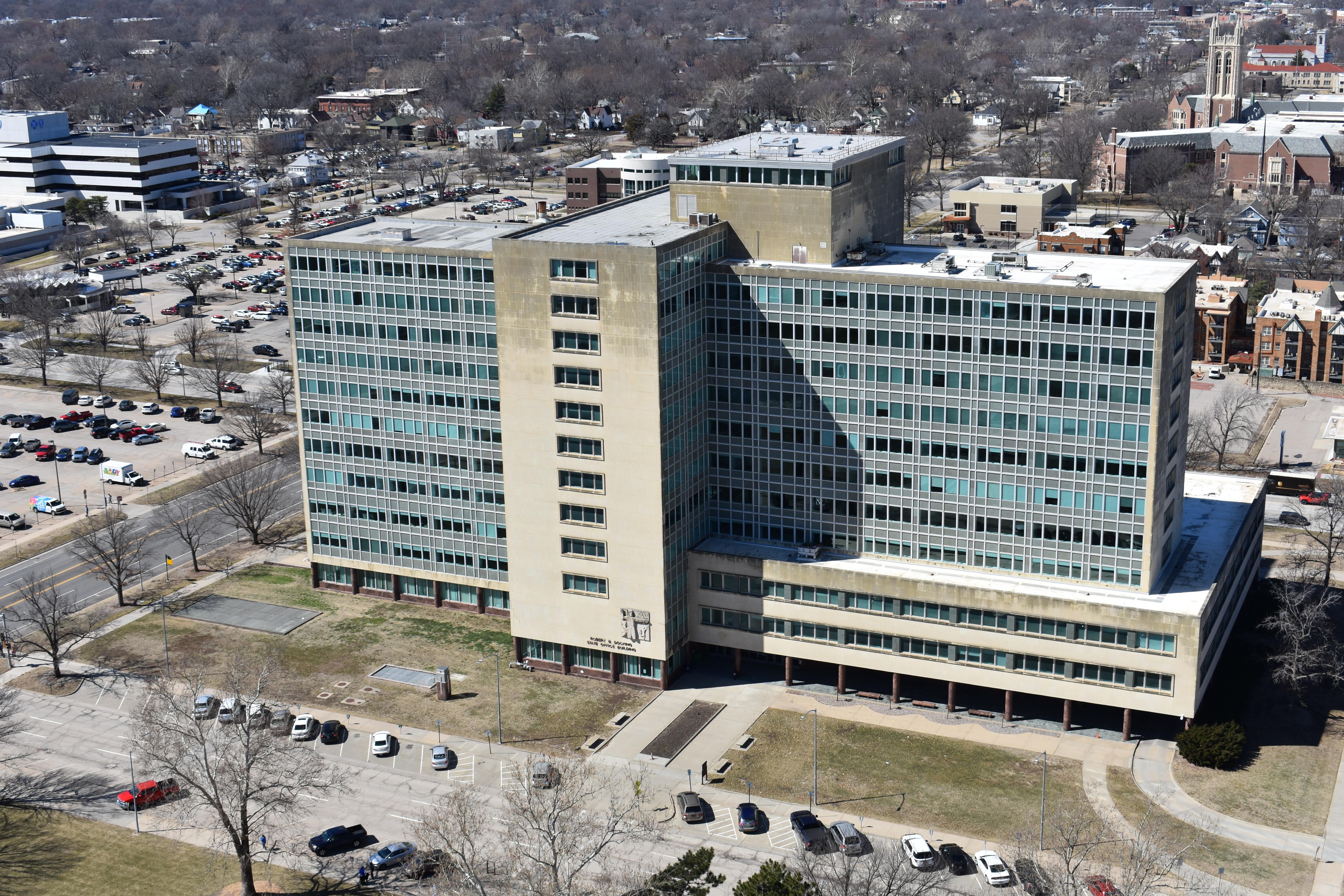
It just stands there, all 13 floors, abandoned and alone. Once the hub of Kansas’s administrative activity, the Robert B. Docking Office Building is empty and orphaned, its previously vibrant departments now slimmed-down and parceled out to rented space and other cities.

In the late 1940s, the State Building Commission foresaw the need for a major office building that would house at least eleven agencies and boards. Docking (given its name by the Carlin Administration in 1987) was built between 1954 and 1957, at roughly the same time as the Kansas Turnpike, which has aged far more gracefully. In its day, Docking stood as a progressive architectural statement of a forward-looking Kansas, much like the Turnpike. When constructed, at a cost of $9 million, the massive office building was an investment in an expectant future, even before Kansas government began to expand dramatically in the 1960s and beyond.

Throughout the 20th Century, Docking served its purpose well, requiring occasional updating to its heating and cooling systems and eventually coming to sit atop a large energy/mechanical system that continues to serve eight buildings in the Capitol Complex, including the statehouse.

Photo courtesy Topeka Capital-Journal

Still, buildings do have life expectancies and require substantial modifications, especially in updating communications capacities and energy usage. By the early 2000s, Docking was aging, increasingly inefficient, and a home to unwanted pests. As often happens, making tough, expensive choices about refurbishing an older building led to deferred maintenance, time and again.

In short, by 2010, the state of the Docking building had ceased to exist as a “condition” and had become a “problem.” Enter Governor Sam Brownback. If Docking was a problem, he had a solution, one that fit tidily with his small-government philosophy.

He would empty out Docking, scattering a host of agencies to various other, privately owned buildings (in and out of Topeka) and eventually imploding the structure that stood for large and centralized government.

The first part of his plan has been implemented, often with expensive, long-term, hard-to-break leases, which likely benefit some of his supporters. But the real rub comes with the second part, the proposed demolition by implosion of Docking.

If the top 12 floors of Docking now stand largely vacant, beneath the building lie the heating and air-conditioning guts of the Capitol Complex. If this valuable system is to be retained, any Docking demolition must proceed in a highly expensive, brick-by-brick removal.

Just as Brownback really didn’t care about governing as he dispersed state agencies from Docking and simultaneously nudged thousands of civil servants out of their jobs, neither did he truly think through the consequences of emptying the building. Rather, Docking became the symbol for his attacks on government, even as his privatized “solutions” – from tax cuts to welfare reform (sic) to farmed-out Medicaid – failed, one after another.

So now, Governor Laura Kelly and the Legislature have difficult, expensive choices on their hands. Renovate Docking and work to break some of the sweetheart deals that the Brownback Administration made? Do a partial renovation? Level Docking, while retaining the HUAV system that serves core state buildings? Or build a new power facility and implode the current structure. All are expensive and require serious thought.

In its day, Docking was a progressive example of Modernist architecture. Now, despite some wonderful bones and historic significance, it stands as a graphic example of the costs of hollowing out government.

Burdett Loomis is an emeritus professor of political science at the University of Kansas.

This weekend’s Hays-area garage sales

Hays-area garage sales

Scroll to the bottom for a map of garage sale locations. Hays Post offers FREE garage sale listings weekly. Having a garage sale next weekend? Click HERE to submit your information.

211 West 38th, Hays
Saturday, 7:30am to 1:00pm

Multi family:Fisher-Price doll house, girls bike, coach purses, luggage shoes (81/2), jewelry, antiques and collectibles, holiday decorations, household items Power rider exerciser games and toys.

——————-

3112 & 3114 El Dorado Ln., Hays
Fri., Sept. 13, 8 am-6 pm & Sat., Sept. 14, 8 am-3 pm

Assorted fishing gear; water skis; queen bed frame and headboard; PlayStation 2 and games; children’s, junior and adult clothing; lots of children’s and young teen books; bedding; double/queen bed frame; seasonal decorations; snare drum; alto saxophone; lots of misc.

———————

1313 W 42nd St, Hays
Friday Sept. 13th, 2:00pm to 7:00 pm and Saturday, Sept. 14th, 8:00 am to 11am

Decor items, Holiday decorations, Craft items, Little Tykes, Kitchen items, Shoes, Lots of name brand clothing for all ages, and Many more items.

———————-

State agencies join together to create youth suicide prevention resource

KDHE

TOPEKA – In support of September as Suicide Prevention Month and National Suicide Prevention Week September 8-14, state agencies, along with the Kansas Attorney General’s Office, are releasing a unified resource that outlines actions that all Kansans can take to protect and empower youth.

“Suicide is the second leading cause of death for Kansans age 15 to 24 and it is the third leading cause of death for youth ages 5 to 14 – this is unacceptable,” said Dr. Lee Norman, Secretary of the Kansas Department of Health and Environment (KDHE). “Every one of us has a role to play, whether you’re a friend, parent, community member or school employee. We need to come together to help our youth.”

The resources, which can be found online, identify actions that everyone can take. The agencies involved in its creation include: KDHE, the Kansas Department for Aging and Disability Services, the Kansas Department for Children and Families, Kansas State Department of Education and the Kansas Attorney General’s Office, in collaboration with the Kansas Suicide Prevention Resource Center.

“As we mark National Suicide Prevention Week, I want to commend the work of all the agencies involved in creating the tip sheets as resources for Kansans and look forward to working closely together as we lead a collaborative effort to strengthen the overall Kansas response to youth suicide,” said Gina Meier-Hummel, Youth Suicide Prevention Coordinator for the Kansas Attorney General’s Office.

If you or someone you know is in need of assistance, please call the National Suicide Prevention Lifeline at 1-800-273-8255.

Touchdown in final minutes lifts TMP past Ellis

The TMP-Marian Monarch football team rallied from down four in the second half to beat the Ellis Railroaders 19-16 Friday at Ellis.

TMP Coach Jay Harris

Game Highlights

After failing to score in week one TMP wasted no time scoring on the opening possession of the game to take a 6-0 lead. Kade Harris scored his first career rushing touchdown from six yards out with 8:42 left in the first quarter. TMP failed to convert the point after touchdown and lead 6-0.

TMP was forced to punt on the next three drives and that allowed Ellis to get right back in the game. After a one-yard punt Ellis took over at the TMP 40 yard line and Quarterback Tegan Cain led the Railers on a four-play 40 yard touchdown drive that he capped off with an 11 yard touchdown run. He also kicked the extra point to put Ellis up 7-6.

Neither offense was really able to keep drives alive in the second quarter with the Monarchs forcing Cain to throw a pair of picks in the quarter.

The Monarchs did get on the board midway through second , when Bryce Seib scored his first of two rushing touchdowns, this one from one yard out to put TMP up 12-7 after Ellis blocked the PAT attempt.

Following a TMP fumble on a quarterback sack, Cain connected with Zachery Eck on a deflected pass from 37 yards out to give Ellis a 14-12 lead, following the PAT, with just over seven minutes left in the third quarter.

After a missed field goal and an Ellis punt the Monarchs offense took possession on their own 20 yard line. But went backwards and an Ellis sack pinned TMP up against the goal line. Brian Carbajal was able to get free and block Jace Wentling’s punt in the end zone. Wentling deflected it out of the end zone for a safety giving Ellis a 16-12 lead with 1:21 left in the third quarter.

In the fourth quarter the Monarchs forced Ellis into a turnover on downs and a pair of punts, one of them was blocked by Ryan Richmeier.

The Monarchs were down four with 2:46 left and would put together a five-play, 53-yard drive capped off by a three-yard touchdown run by Seib with a successful PAT by Wentling putting the Monarchs up 19-16 with 1:56 to play.

On that drive freshman Kade Harris caught a 23 yard pass and ripped off a 31 yard run before a penalty by Ellis set up the Seib touchdown.

Ellis got it back with 1:51 to play but the Monarchs forced a turnover on downs with Ryan Richmeier coming away with a sack on third down and Seib deflected a pass on fourth down to seal the win for TMP.

The Monarchs Kade Harris rushed for 119 yards on 17 carries.

Ellis’ Tegan Cain was 13-of-25 passing for 184 yards one touchdown and two interceptions.

TMP improves to 1-1 ahead of a homecoming matchup with Plainville next Friday. Ellis is 0-2 and will travel to Ellinwood.

Week 2 high school football scoreboard

Western Athletic Conference
Great Bend 46 Hays 30
*Liberal 55 Wichita North 18
*Salina South 7 Dodge City 45
*Garden City 28 Valley Center 36

Mid-Continent League 11-man
TMP 19 Ellis 16
Phillipsburg 14 Plainville 21
Smith Center 41 Norton 18
*Syracuse 14 Oakley 44

Mid-Continent League 8-man
Trego 18 Hill City 33

Central Prairie League 11-man
*Russell 12 Lacrosse 14

Central Prairie League 8-man
Central Plains 14 Victoria 50
Macksville 0 Ness City 46
*Sublette 20 Ellinwood 50
Lakside 20 Rock Hills 66

Northern Plains League
Washington County 0 Thunder Ridge 54
*Hoxie 25 Osborne 54
Wilson 12 Lincoln 58

North Central Activities Association
Southeast of Saline 20 Beloit 12

Northwest Kansas League
Rawlins County 56 Quinter 6

Western Kansas Liberty League
Logan/Palco 32 Grinnell/Wheatland 30
Northern Valley 20 Triplains/Brewster 26

Central Kansas League
Hoisington 40 Nickerson 13
Halstead 36 Pratt 14
Hillsboro 27 Lyons 14

Other games of note
Hughton 8 Colby 16
Holcomb 3 Scott City 14
Medicine Lodge 28 Hodgeman Co. 48
South Central 45 Spearville 0

6-Man
Ashland 61 Western Plains 13
Fowler 14 Natoma 34

*Non-league

Area Game of the Week: Central Plains vs. Victoria


The lights shone bright in beautiful Victoria, Kansas as two storied programs faced-off in Victoria and Central Plains. The Victoria Knights have one 7 state titles, mostly recently in 2014 (in DII) and 2015. The Central Plains Oilers won titles in 2014 and last year in 2018. The two teams have split the last 8 meetings 4 to 4 and 3 of the last 5 years the winner of this game has won state. The stage was set for a classic battle.

Victoria received the ball first and put together a methodical drive that ended with a 27 yard touchdown run by sophomore quarterback Grant Schoenrock. That put Victoria up 8-0. Central Plains was able to put together several impressive drives, but they could never find pay dirt. A long drive ended when senior quarterback Jerred Bieberle threw an interception in the end zone. It was 8-0 at the end of the 1st quarter.

The Knights really opened up in the second quarter getting long touchdown runs from Schoenrock and fullback  Jayvon Pruitt. The Oilers were able to pick-up a lone touchdown on a kick return by Cole Lamatsch.  By halftime, Victoria led 30-8.

The second half was more of the same as the Victoria defense consistently held the line against the Central Plains rushing attack. Schoenrock and Pruitt continued to dominate on the ground, each making several more trips to the endzone. The final score showed Victoria winning in dominating fashion 50-14.

Schoenrock rushed for 225 yards and 4 touchdowns on just 13 attempts. Pruitt chipped in another 122 yards to go with a couple of scores. Victoria as a team ran for 425 yards. Jerred Bieberle was able to throw for 110 yards and a touchdown, but struggled with efficiency going 4/13. Bieberle also added 15 tackles from his linebacker position. Central Plains was only able to gain 103 yards on the ground.

Central Plains lost back to back games for the first time since 2012, but will have a chance to get in the win column next week when they visit Kinsley. The Knights of Victoria will put their perfect record on the line when they travel to Macksville next week


Sheriff: Friday the 13th unlucky for meth dealers in Barton County

BARTON COUNTY —Friday the 13th was an unlucky day for methamphetamine dealers in Barton County. The Sheriff’s office conducted three search warrants at various locations in the county, according to Sheriff Brian Bellendir. It is believed this was a methamphetamine distribution operation.

Zapata photo Barton Co.
Deputies on the scene of Friday’s investigation

Shortly after 10 AM deputies and detectives executed a search warrant at 1411 20th St. in Great Bend. Deputies arrested Roosevelt (Ty) Henderson, 32 of Great Bend on requested charges of distribution of methamphetamine, criminal use of a firearm as well as destruction of evidence. As deputies were attempting to gain entry into the residence, Henderson attempted to flush suspected methamphetamine down the toilet causing it to clog. A large amount of cash as well as a handgun were located at the residence. Henderson is being held in lieu of a $300,000 bond.

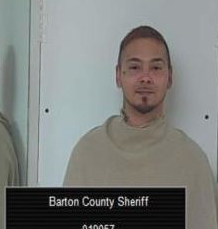
Just before 11a.m. deputies then proceeded to 260 N. Washington just north of the City of Great Bend. Deputies gained entry to the residence and contacted John Paul Zapata. Zapata was arrested on charges of conspiracy to distribute methamphetamine and felon in possession of a firearm. Four children were also found in the residence Juvenile Services was contacted and a “child in need of care” case has been initiated. Currency was also seized at that residence

Denning photo Barton Co.
Henderson photo Barton Co.

At approximately 12:15p.m., deputies executed a search warrant at Affordable Tire and Auto located at 4908 10th Street in Great Bend. At that location Sheriff’s deputies found evidence of distribution of methamphetamine and a stolen firearm. Brett Denning, age 51 of Great Bend was booked into the Barton County jail on requested charges of possession of methamphetamine and possession of stolen property.

Police arrest suspect who shot, ran over Kansas man

SHAWNEE COUNTY —Law enforcement authorities are investigating a violent attack on a Kansas man and have made an arrest.

Hoffman photo Shawnee Co.

Just after 2a.m. August 17, police were dispatched to the Lazy Toad Bar located at 5331 SW 22nd Park in Topeka in reference to a shooting that had occurred in the parking lot, according to police spokesperson Gretchen Koenen. When officers arrived on scene they located a victim later identified as 30-year-old Jesse B. Green. suffering from serious injuries.

He had been shot and run over by a vehicle. After an extended stay in the hospital recovered from his injuries.

On Friday, officers arrested 21-year-old Ty’vaire Demone Henderson in connection with the incident. He was booked into the Shawnee County Department of Corrections on requested charges of attempted first-degree murder.

Copyright Eagle Radio | FCC Public Files | EEO Public File