TOPEKA, Kan. (AP) — A man who shot two Kansas police officers in 1985 is expected to be released from prison sometime around Aug. 1.
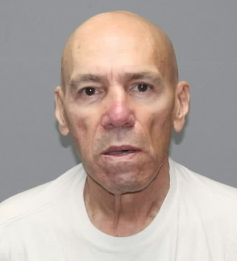
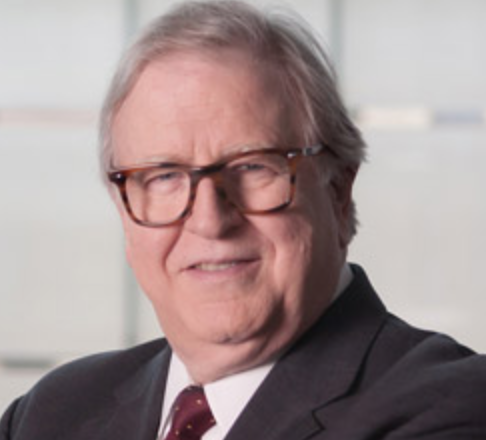
Lawton photo KDOC
Ithiel Lawton shot officers Randy Horn and Pat Reed of Topeka during a family dispute at Lawton’s home. Both officers survived but left the department soon after being injured.
Lawton said at the time that voices from his television told him to protect himself from the officers.
Before the shootings, Lawton was hospitalized 20 times in the previous 16 years for paranoid schizophrenia.
Family members told the Kansas Parole Board in recent years that Lawton’s mental health has improved.
The review board recently granted parole to Lawton, who is now 77.
Lawton is serving 20 years to life in prison at El Dorado Correctional Facility.
SEDGWICK COUNTY — Law enforcement authorities investigating a Kansas man for child abuse charges after a DUI arrest.
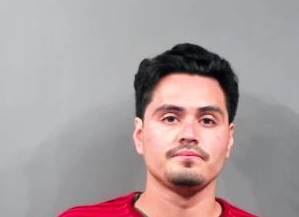
Barrios photo Sedgwick Co.
Just after 1a.m. Friday, police arrested 24-year-old David Barrios who was driving in Wichita.
Officers booked him into the jail for DUI, driving while license canceled or suspended, driving with an unrestrained passenger under the age of 14, for unsafe turning or stopping, failure to give a proper signal and for not wearing his seat belt, according to the Sedgwick County booking report.
Barrios posted bond and was no longer in custody Saturday afternoon.
KANSAS CITY, KAN. – A Kansas man was sentenced to 154 months in federal prison for armed bank robbery, according to U.S. Attorney Stephen McAllister.
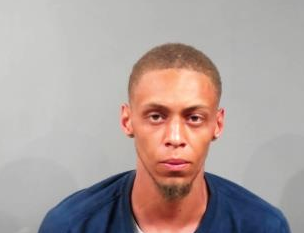
Hameke photo KDOC
Damon Hammeke, 26, Leavenworth, Kan., pleaded guilty to one count of armed bank robbery and one count of brandishing a firearm during a robbery. In his plea, he admitted that on Nov. 21, 2017, he robbed the Country Club Bank at 2310 South 4th Street in Leavenworth. He entered the bank wearing a white jacket and black mask and carrying a handgun. He left the bank with money.
Two days later, an officer in Tonganoxie attempted to stop him for a traffic offense. Hammeke fled, leading police on a high-speed chase through Tonganoxie, Basehor, Lansing, Leavenworth, Platte County, Mo., and Kansas City, Kan., before they were able to stop him.
He has previous convictions for drugs and flee or attempt to elude law enforcement, according to the Kansas Department of Corrections.
ST. JOSEPH, Mo. (AP) — Tyreek Hill was contrite but repentant in his first comments since he was banished from the Kansas City Chiefs following an audio recording in which his then-fiance accused him of hurting their son.
Hill during Sunday’s press briefing photo courtesy KC Chiefs
The star wide receiver declined Sunday to discuss the specifics of his case, which wound to a conclusion late last week when the NFL declined to punish him for violating the league’s personal conduct policy. But he did apologize for the precarious situation he left the Chiefs in this past offseason.
“I’ve learned to just appreciate those around me,” Hill said after the Chiefs’ second workout of training camp at Missouri Western. “I feel like I take that for granted sometimes, being a professional athlete. I tend to not stay humble, you know what I’m saying? I still love my kids and I still love my family, but I feel like sometimes I take all of those things for granted.”
The Chiefs were poised to make their first selection in the NFL draft when the graphic, secretly taped audio of Hill and Crystal Espinal aired on a local TV station. The Chiefs quickly suspended the two-time All-Pro from all team-related activities and, uncertain of Hill’s future with the organization, used a second-round pick on speedy wide receiver Mecole Hardman.
Hill remained barred from the team during voluntary summer workouts and the Chiefs’ mandatory minicamp, even after the local district attorney decided there was not enough evidence to pursue charges.
The NFL was still weighing whether to punish Hill under terms of its personal conduct policy when it sent investigators to Kansas City late last month. During an eight-hour session, Hill supplied the league with his side of the story, laying out the facts from his point of view.
″(Commissioner) Roger Goodell and his team did their thing. They dug in, got all the facts, and I’m very appreciative of those guys as well,” Hill said. “The meeting was long. It was probably the longest meeting of my life. It was crazy. What I was trying to get across was just the facts, man.”
The NFL ultimately decided late last week that it would not punish Hill, and the Chiefs immediately announced that his team-issued suspension was lifted and he would be reporting to training camp.
He was not available to reporters during check-in day Friday, nor did Hill speak following the Chiefs’ first practice Saturday. But he was carried to the practice field by a chorus of fans chanting “Tyreek! Tyreek!” in what could only be described as a groundswell of support.
It was a 180-degree turn from the sentiments most fans had just a few months ago.
“The love feels good, to come back out here and get a chance,” Hill said. “I’m on a new journey as far as me growing as a father and as a human.”
There is still an ongoing investigation by the Kansas Department for Children and Families, and Hill said he could not discuss that case. Nor would he discuss the specifics of a recent sit-down that he had with Clark Hunt, the Chiefs’ chairman and the most visible face of the ownership family.
Hill did acknowledge learning a lesson he hoped to pass on to younger players.
“You can look at me and tell I’ve been through a lot,” he said, “even when I first came into the league. I had a bad history. Just be thankful for the ones around you, stay humble and grounded, love your parents and your kids — if you have kids — and just work hard.”
Hill caught 12 touchdown passes and set a franchise record with 1,479 yards receiving last season, earning his third Pro Bowl trip in as many seasons. It’s a big reason why the Chiefs were interested in signing him to a long-term deal as he entered the final year of his rookie contract.
Where those talks now stand remains in question.
“It was good having him back out there,” Chiefs offensive coordinator Eric Bieniemy said Sunday. “He is an intelligent kid. He picked up right where he left off. “He’s doing a heck of a job.”
CHICAGO (AP) — A sweeping expansion of deportation powers unveiled this week by the Trump administration has sent chills through immigrant communities and prompted some lawyers to advise migrants to gather up as much documentation as possible — pay stubs, apartment leases or even gym key tags — to prove they’ve been in the U.S.
Image from facebook broadcast during the arrest in Kansas City earlier this week when federal immigration officers trying to arrest a Mexican man smashed a car window and dragged him from the vehicle in front of his girlfriend and two young children. He was quickly deported.
But the uncertainty about how the policy might play out has created confusion and made it harder to give clear guidance to immigrants. Attorneys and immigrant rights groups gave conflicting advice about whether to carry these documents.
The new rules will allow immigration officers nationwide to deport anyone who has been here illegally for less than two years. Currently, authorities can only exercise such powers within 100 miles (161 kilometers) of the border and only target people who have been here less than two weeks.
Critics say the new policy will embolden Immigration Customs and Enforcement officers to indiscriminately round up immigrants, depriving them of a chance to make their cases before a judge or consult with a lawyer. Some have called it a “show me your papers” trope on a national scale, and roughly 300,000 immigrants living in the country illegally could be affected by the expansion, according to one estimate by the nonpartisan Migration Policy Institute.
Attorneys immediately began advising immigrants to start compiling documents that prove they had been in the country for at least two years — anything showing a consistent presence in the United States. But they don’t have to necessarily carry it with them.
“We’re operating absolutely blind at the moment,” said David Leopold, an immigration attorney in Cleveland.
For years, immigrant rights groups have advised people without legal status to not carry any identification with a place of origin on it so it doesn’t come back to hurt them in immigration court. Without the possibility of ever getting a day in court, questions loomed.
“Carry some limited amount of paperwork,” said Houston-based immigration attorney Mana Yagani. “I would advise them to have a copy of that at a lawyer’s office and at a friend that they trust.”
Still, others keep up the adage of to say and carry nothing.
“Don’t carry anything and exercise your right to remain silent,” said longtime Chicago activist Rosi Carrasco.
The National Immigrant Justice Center, based in Chicago, encouraged immigrants to create a safety plan, keeping key documents in a central location and giving trusted friends access, along with making plans to pick up children from school in an emergency.
The expansion, which is certain to face lawsuits, has already raised potential issues.
Critics worry the rules will give ICE officers free rein. They point to an instance in Kansas City earlier this week when federal immigration officers trying to arrest a Mexican man smashed a car window and dragged him from the vehicle in front of his girlfriend and two young children. He was quickly deported.
And they also cite the case of an 18-year-old American citizen from Dallas who was detained for more than three weeks after being apprehended at a Texas checkpoint where authorities are currently allowed to exercise expedited removals of people in the country illegally. He was arrested because authorities suspected he was in the country illegally.
The American Civil Liberties Union has vowed to sue, as has the American Immigration Council, which said the expansion threatens due process.
Trump administration officials touted the change as a way to deal with the lack of detention space as it grapples with a surge of migrants from Central America at the southern border. It is the latest in a series of tough measures the president has taken to crack down on immigration, including hardening of asylum rules and forcing migrants to wait in Mexico before coming into the U.S.
ICE Acting Director Matthew Albence called the expansion “an important tool to more efficiently remove illegal aliens encountered in the interior and alleviate resource constraints ICE faces with detention space and in immigration courts,” according to a memo sent to all ICE employees Wednesday.
Albence said it was critical that the use of the expanded powers be applied consistently and well-documented. He said training would be required for any official before exercising the authority. He also offered more specific guidance, which ICE declined to make public.
For the time being, Antonio Gutierrez, 30, has prepared an emergency plan and retained an attorney. He’s been living in the country illegally for nearly 20 years.
Gutierrez crossed the border from Mexico illegally when he was 11 but was rejected for protection from deportation in an Obama-era program for young people because he was charged with driving under the influence.
He gathered up papers, including letters from acquaintances and his rejection from the Obama program, in a safe spot at home in Chicago. While other members of his family have been able to get legal status to remain in the U.S., he hasn’t.
“Being organized allows me a sense of safety,” he said.
Advocates said they differed on whether it was necessary to physically have documents available at all times. To some, it’s more important to talk to a lawyer and understand their legal rights.
This is an especially big challenge because the vast majority of immigrants don’t have attorneys. Only 14 percent of immigrants who are detained have a lawyer when they go to court, according to a 2016 American Immigration Council study.
“We’re really mindful of not wanting to create alarm unnecessarily,” said Daniel Sharp, legal director at the Central American Resource Center in Los Angeles. “Our first advice to everyone is to get informed, obtain legal consultation and understand your right to remain silent, rather than carrying around a big stack of papers.”
TOPEKA – Governor Laura Kelly appointed Will Lawrence and Sharon Wenger, and reappointed Jennie Chinn to the Capitol Preservation Committee.
“I know the addition of Will and Sharon, and Jennie’s continued service on the Capitol Preservation Committee will guarantee beauty and restoration practices at the Statehouse,” Kelly said. “I am proud to appoint Kansans who have special knowledge regarding the unique history of the building in hopes that they will continue to make this landmark outstanding.”
Will Lawrence, Lawrence, currently serves as chief of staff to the governor. Previously, Lawrence worked as the chief of staff for Kansas Senate Minority Leader Anthony Hensley. He has also worked as an attorney in private practice. Lawrence graduated from Washburn University with a bachelor’s degree in political science and received his juris doctorate from the Washburn University School of Law.
Sharon Wenger, Topeka, currently serves as senior fiscal analyst in the Kansas Legislative Research Department. Previously, Wenger served as the director of the Bureau of Epidemiology, assistant secretary, and assistant to the director of Health at the Kansas Department of Health and Environment. Wenger received her master’s degree in public administration from the University of Kansas and a bachelor’s degree in political science from Kansas State University.
Jennie Chinn, Topeka, will serve as chair of the committee. Chinn is the executive director of the Kansas State Historical Society and has served on the committee for several terms. Previously, Chinn served as education division director and interim executive director of the Historical Society. She graduated from the University of California with a bachelor’s degree in humanities and a master’s degree in folklore and mythology.
The committee approves all proposals for renovation concerning all areas of the state Capitol building, including the Capitol’s visitor center and the grounds surrounding the Capitol. The group works to preserve the proper décor and to assure the art and artistic displays are historically accurate. The group also oversees the reconfiguration or redecoration of committee rooms throughout the building.
Gladys Marie Connor, 84, died July 24, 2019. She was born Feb. 19, 1935 in Hays, KS. the daughter of Charles and Mattie (Thiel) Connor. She was an RN at the former Mercy Hospital in Denver, CO.
She is preceded in death by her sister, Sister Patricia Connor. She is survived by her sisters, Karen Vail, Salina, Kay (Joe) Religa, Brookville and Loretta Blackwill, Quinter; and brothers, James Connor, Tulsa, OK. and Larry Connor, WaKeeney.
The family will hold private interment services at the Christ the King Catholic Cemetery in WaKeeney, Ks.
SEDGWICK COUNTY — Law enforcement authorities are investigating have made an arrest in the Saturday shooting that left a 20-year-old McConnell Air Force Base airman dead and three other injured,
Markeithen McClaine photo Sedgwick Co.
Just after 2 a.m., police responded to a disturbance with shots fired at the Horizons East Apartment complex located in the 500 block of North Rock Road, according to officer Kevin Wheeler.
Upon arrival, officers found a 20-year-old who was shot and was unresponsive in the parking lot. Officers rendered aid until medical personnel arrived, who continued life-saving measures. The man was shortly after pronounced deceased. Police have not released his name.
Two of the three other victims included a 21 year-old-man and a 22-year-old man.. They were transported to a local hospital where they were treated and released for non-life threatening injuries. A 19-year-old woman was also transported by private vehicle to a local hospital with a gunshot wound. Her injury is considered to be serious, but she is expected to survive.
Police on the scene of the shooting investigation early Saturday photo courtesy KWCH
Late Saturday, police reported the arrest of 25-year-old Markeithen McClaine on requested charges of 1st Degree murder and three counts of aggravated battery, according to Wheeler.
The preliminary investigation revealed that a party was being held at one of the apartment units. There was a disturbance that occurred in the parking lot and shots were fired by the suspect.
The base “is deeply saddened by the loss of one of our airmen,” according to a statement from Col. Richard Tanner, commander of the 22nd Air Refueling Wing.
TOPEKA, Kan. (AP) — The Kansas Supreme Court’s chief justice plans to retire before the end of the year, allowing first-year Democratic Gov. Laura Kelly to leave a bigger mark on the state’s highest court than her conservative Republican predecessors.
Chief Justice of the Kansas Supreme Court, Lawton Nuss with his wife, Barbara Nuss, January, 2019. NOMIN UJIYEDIIN / KANSAS NEWS SERVICE
Chief Justice Lawton Nuss announced Friday that he would step down Dec. 17 after serving on the court since 2002 and as chief justice since 2010. During Nuss’ tenure as chief justice, GOP conservatives increasingly criticized the court as too liberal and too activist for the state over rulings on abortion, capital punishment and public school funding.
His announcement came a little more than two weeks after Justice Lee Johnson, another target of criticism on the right, announced plans to retire in September. That means Kelly will have two appointments to the seven-member court since she took office in January when conservative GOP Govs. Sam Brownback and Jeff Colyer had only one appointee between them during the previous eight years.
Both justices voted repeatedly to direct legislators to increase education funding in recent years and were part of the 6-1 majority that declared in April that the state constitution protects access to abortion as a “fundamental” right. They also voted to overturn death sentences in capital murder cases, though Nuss concluded that the death penalty law itself is constitutional.
Kelly’s choices won’t have to gain support in the Republican-controlled Legislature or from its conservative leaders because lawmakers have no role in high-court appointments under the state constitution. Many GOP legislators expected to push to change the selection process after the Legislature reconvenes in January, but they won’t be able to enact changes before Kelly replaces Johnson and Nuss.
“Gov. Kelly and her political allies on the bench are clamoring to pack the high court before the Kansas people, through their elected representatives, have a chance to reform the process,” said state Sen. Ty Masterson, a conservative Wichita-area Republican who advocates having the state Senate confirm court appointees.
A commission led by lawyers will screen applications for the two high-court vacancies, hold public interviews and submit finalists’ names to Kelly.
Explaining the timing of his departure, Nuss noted in a letter to Kelly that Kansas governors and legislative leaders traditionally serve no more than eight years and, “By those measures alone, certainly, it is time I depart.”
In an Associated Press interview, Nuss, a former Marine, said he and his wife want to work on veterans issues, such as establishing specialized courts to treat veterans who run afoul of the law. He said he discussed that topic with fellow veterans about a month ago in Washington.
“I’m very passionate about it and if I step away from being on the bench, then I can go further and speak out more forcefully on those issues,” he said.
Nuss’ retirement automatically will elevate the next senior justice, Marla Luckert to chief justice. Both she and Nuss were appointees of moderate Republican Gov. Bill Graves.
Johnson and three other justices were appointed by Democratic Gov. Kathleen Sebelius. Justice Caleb Stegall, the only dissenter in the abortion case, was appointed by Brownback.
Justices face a statewide, yes-or-no vote every six years on whether they should remain on the Supreme Court, and its rulings in recent years inspired campaigns to oust all of them except Stegall. They all narrowly failed, including one against Nuss and three other justices in 2016.
Kansas law would have allowed Nuss to stand for retention again in 2022 and serve through 2028.
“I spend about 70 hours a week in my job,” Nuss said. “It just becomes time, in my view, after almost 10 years, to say, ‘That is enough, let someone else take over.'”
Before being appointed to the court, Nuss served in the Marines for four years before attending law school at the University of Kansas and practicing law in the central Kansas town of Salina for two decades. He also has an affinity for cowboy poetry and has judged state contests.
“He’s been in the arena, doing difficult work on behalf of Kansans,” Kelly said. “And he has done it well.”
The U.S. Supreme Court last month said we can’t see certain kinds of information we may well need to participate in democracy as self-governing citizens. To paraphrase a line from “Network,” the movie and play recently on Broadway, we should be “mad as hell” about it.
The court ruled, 6-3, in Food Marketing Institute v. Argus Leader Media, the that the Freedom of Information Act (FOIA) does not provide the public with access to records from private companies given to a federal agency if the agency obtained the information with a promise to keep it secret.
In the decision, the court voided a decades-long practice — supported by lower court decisions — that such “confidential” information could be released unless it caused “substantial harm” to the business, with an eye to toward disclosures in the public interest related to safety concerns, or to the exposing of waste, fraud or abuse, among other points.
Justice Neil Gorsuch wrote in the majority opinion — agreeing with a grocery trade group — that current law provides that agencies and private companies don’t even need to have a specific reason for secrecy — just a company tag on records it considers “confidential” justifies denial of an FOIA request.
The decision is likely to decrease public access to vital records, such as information about private companies that receive federal funds. It will hamper — if not stymie — the obtaining of information the public can use to determine things like fraud, overcharging and the quality of work. The decision also comes as it’s ever more likely a private company will be contracted to carry out government projects or duties.
In the case at hand, the Sioux Falls, S.D., Argus Leader newspaper sought information in 2011, through an FOIA request, on the number of in-state stores participating in the federal food stamp program, as well as store-by-store data on the amount of purchases made using food stamps.
Argus Leader news director Cory Myers said after the decision that “this is a massive blow to the public’s right to know how its tax dollars are being spent, and who is benefiting.”
Justice Stephen Breyer disagreed with the decision, saying the “the whole point of the Freedom of Information Act — first signed into law in 1966 — is ‘to give the public access to information it cannot otherwise obtain.’”
Breyer said that given public and private sector tendencies to treat all information as private if not required to be disclosed, “the ruling … will deprive the public of information for reasons no better than convenience, skittishness or bureaucratic inertia.”
Whatever the reason the Supreme Court saw for supporting non-disclosure under FOIA based on a company’s self-designation, a democratic republic based in the ultimate authority of an informed and engaged electorate requires the highest degree of government openness and transparency.
We cannot decide how our government is doing if we don’t know what our government is doing — and that holds true for those places where government intersects with business.
Gene Policinski is president and chief operating officer of the Freedom Forum Institute. He can be reached at[email protected], or follow him on Twitter at@genefac.
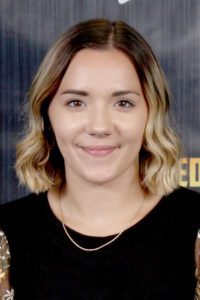
Kansas Wesleyan University has selected Bailey Brenn to serve as the new competitive dance coach for the Coyotes.
Brenn takes over for Kelsey Kieborz, who left KWU in April to focus on her dance studio, Revolution School of Dance.
“Our committee was impressed with Bailey’s experience at Colby Community College and her vision for the program,” said Mike Hermann, vice president and director of athletics. “With her background, I’m confident she’ll continue the momentum within our dance program.”
“I’d like to thank Mr. Hermann, (KWU President) Dr. (Matt) Thompson and members of the search committee for giving me this opportunity to lead the Kansas Wesleyan Dance program,” Brenn said. “My goal is to continue building the team to be one of the top competitive programs not only the conference, but in the region.”
Brenn comes to Kansas Wesleyan after serving as an assistant for the Colby Community College cheer and dance programs for the last two years. While at Colby, she was responsible for team choreography and had a significant role in recruiting.
“I am excited to be part of a new team, learning what each member of the team and what they have to offer and how we can make that a part of the performances,” Brenn added. “I am excited to see the bond between the team members and to see them become more of a family.”
She also served as a dance instructor for Ashly’s Dance Center in Colby for the last three years.
The native of Junction City was a member of the Junction City High School cheer and dance teams. She also was a member of the Colby CC Trojans cheer and dance teams and the Kansas State University Classy Cats dance team. She was a member of the 2016 NJCAA Region 6 championship teams at Colby.
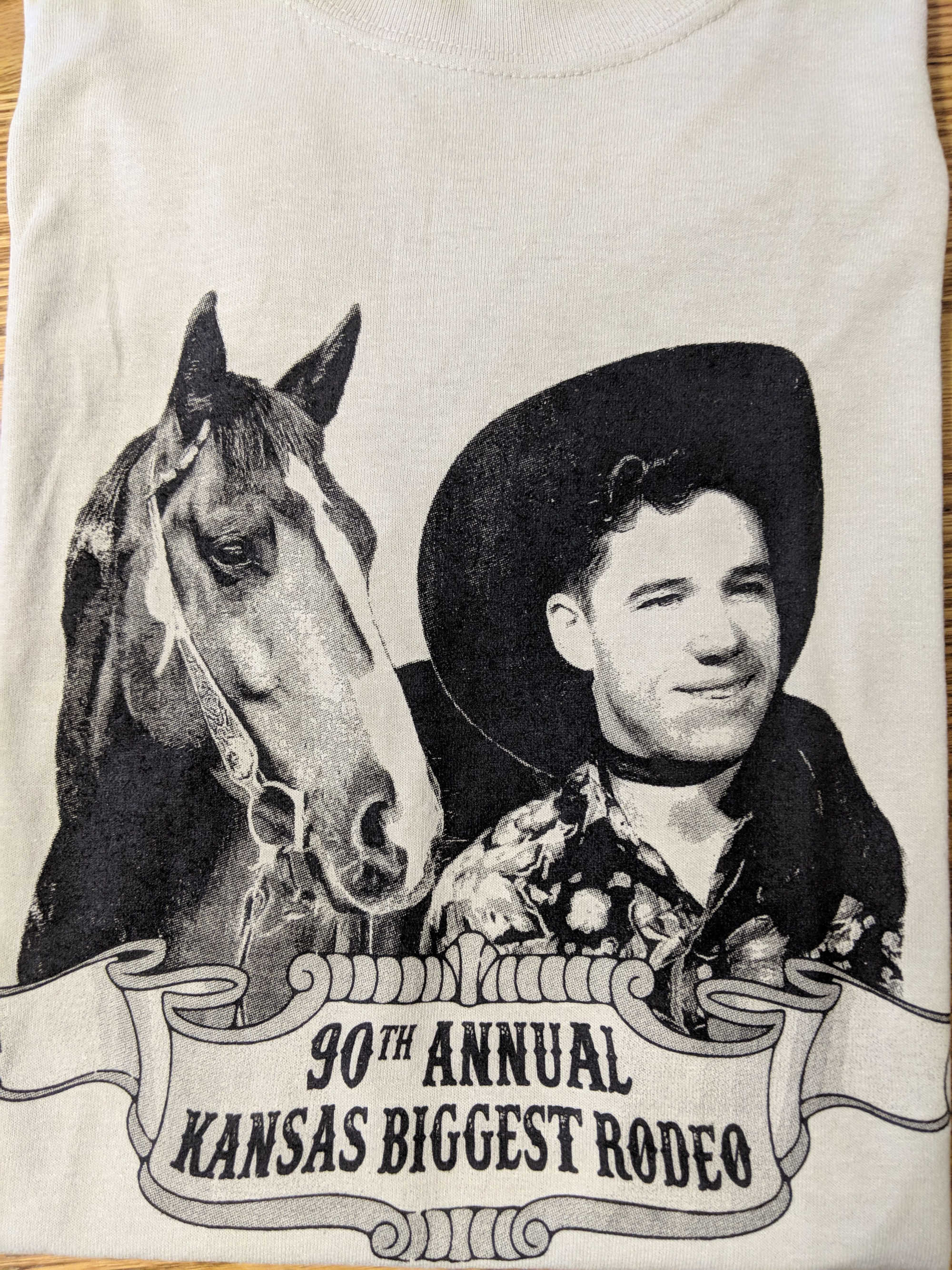
Nat Berney is pictured on a 2019 Kansas Biggest Rodeo commemorative t-shirt. The Phillipsburg man competed at the rodeo and served as rodeo secretary.
PHILLIPSBURG – Three people with ties to the Phillipsburg Rodeo are immortalized on rodeo T-shirts.
Nat Berney, Bud Forell and Wanda Bandt are all pictured on the fronts of t-shirts produced by the Phillipsburg Chamber-Main Street office.
All three have competed at the Phillipsburg rodeo.
Nat Berney, who was born in 1921, was a bareback rider, calf roper and bull rider who competed in Phillipsburg and across the Great Plains. He was a Phillipsburg Rodeo Association shareholder and served as rodeo secretary. After he quit competition, he worked as a rodeo judge for Little Britches and pro rodeos. Berney passed away in 2002. His wife Betty lives in Phillipsburg; the couple had three children.
Bud Forell, born in 1931, competed in every event in rodeo: steer wrestling, saddle bronc riding, bareback riding, calf roping and bull riding, but steer wrestling was his forte.
After graduating from Phillipsburg High School in 1949, he served in the U.S. Army in Germany from 1951-1953.
He competed at Kansas Biggest Rodeo numerous times and was a committee member, helping with maintenance and welding.
He and his wife Artyce married in 1954 and had two sons and four daughters. Eldest daughter, Deb Christy, who is a barrel racer, remembers her dad’s outlook on life. There were “never any excuses,” she said. “You had no excuses, and you never gave up. He had a tremendous work ethic.”
Forell died in 2005 at the age of 74.
Bud Forell, who passed away in 2005 at the age of 74, competed in every event in rodeo and worked rodeos across the Great Plains, including the Phillipsburg rodeo.
Barrel racer Wanda Bandt was raised on her family’s farm near Kensington and won the barrel racing at the Phillipsburg rodeo in 1971 and 1974. She grew up riding horses, and as a young woman, worked as an airline stewardess. But after a time, she tired of it and quit. She was in Minnesota and had no way to get home, so she and two girlfriends sold all they had and bought horses, which they rode all the way back to Kansas.
Bandt was known for riding without using her stirrups, and daughter Tamra Griffey wonders how her mom stayed in the saddle. Polyester pants were in style then, and Bandt would have had trouble staying in the slick saddle with polyester on.
The two times Bandt won the Phillipsburg rodeo, she was riding her famous horse Copper. Competing at the regional level, Bandt and Copper won 51 consecutive rodeos in the late 60s and early 70s.
Bandt was also skilled at sewing and leather tooling and was an artist, talents her daughter Griffey uses in her work. Bandt sewed nearly all her own clothes, making bright colorful outfits like blue jumpsuits, in style at the time, with western belt loops, and a red jumpsuit, paired with a red hat and red checkered boots. Griffey said her mom sewed without patterns.
Bandt died in 1983 at the age of 46 of a brain tumor, and Griffey’s daughter, who never knew her grandmother, has a motto that conceptualizes her grandma’s gumption and talent: “If Wanda can do it, I can do it.” Bandt’s husband Layton served on the Phillipsburg rodeo committee for three years.
Barrel racer Wanda Bandt won her event twice at the Phillipsburg rodeo. On the t-shirt, she rides her famous horse Copper, who won 51 consecutive barrel races at a variety of rodeos. Bandt often kicked her feet out of the stirrups as she rode.
Berney, Forell and Bandt have connections to each other. Berney’s wife Betty traveled with Bandt to rodeos, keeping her company. Forell’s daughter Deb Christy babysat for Bandt’s children at rodeos, and as a teenager, was mentored by Bandt as she competed alongside the older woman.
T-shirts are available for sale through the Phillipsburg Chamber of Commerce/Main Street, Blossoms and Butterflies, White’s Foodliner, and Curly Willow II, all in Phillipsburg.
The Phillipsburg rodeo runs August 1-3 beginning at 8 pm each night. Tickets start at $11 for children and $15 for adults. They can be purchased at Heritage Insurance in Phillipsburg (785.543.2448).
Thursday, August 1 is Family Day at the rodeo; all children ages 10 and under are free with the the purchase of an adult ticket.
Ron Wilson is director of the Huck Boyd National Institute for Rural Development at Kansas State University.
BY RON WILSON Huck Boyd National Institute for Rural Development
Where do bibles and rifles connect? That unlikely combination can be found in the history of Kansas, and particularly in one historic rural community church. This church is continuing to serve its members and its historic legacy.
Don Whitten is a member of the Beecher Bible and Rifle Church in Wabaunsee. He told me this remarkable history. It all began in the 1850s era of Bleeding Kansas, when the people of the territory were involved in a vicious debate over whether Kansas would become a slave state or a free state. Advocates for both sides flooded Kansas territory. For example, abolitionists in Connecticut raised money to send a group of free-state colonists west.
A famous New York preacher, Henry Ward Beecher, raised money for the cause and sent crates of rifles and bibles to the colonists. According to legend, the rifles were covered with bibles so as to get through the pro-slavery state of Missouri.
In 1856, the Connecticut colonists came to Wabaunsee. In the following year, they organized the First Church of Christ there. A new stone church was dedicated in 1862. This became the site of one of the most influential Congregational churches in Kansas.
By the 1930s, population had fallen, church membership dwindled and the church closed. In 1950, it re-opened. Today, the Beecher Bible and Rifle Church is an independent, non-denominational church which still meets in the original but remodeled stone building. Services are held each Sunday at 9:45 a.m. with Pastor Lynn Roth officiating.
Local residents George and June Crenshaw actively supported the church. Friends of theirs named the Thompsons donated funds for a new building and education center next to the old stone church building. The new building was dedicated in 1993.
Don Whitten has compiled the history of the church. He is a career military man who retired from Fort Bliss, Texas and moved to Wabaunsee, Kansas. He and his wife arrived in Wabaunsee in 1971 in the middle of a big snowstorm. When a neighbor, Inez Drake, learned of their situation, she thoughtfully alerted a snowplow crew to clear the streets before the Whitten’s moving truck arrived the next day.
Another neighbor, Mrs. Morgan, came over and invited them to her church at Wabaunsee. “We turned her down because we didn’t even have our clothes here yet,” Don said. Mrs. Morgan persisted in following weeks. “After the third or fourth time, I told my wife, `Let’s go to that church and get that old lady off our back,’” Don said. “We came to that church the next Sunday and we’ve come ever since.”
The Whittens appreciated the warm welcome of the congregation and the preaching, fellowship, and rich history. It was the first inter-racial Congregational church in Kansas. The late Mrs. Morgan herself was African-American and a long-time member. Her picture is displayed inside the church entrance.
Another long-time tradition at the church is Old Settler’s Day, held annually on the last Sunday of August. On Sunday, Aug. 25, 2019, a potluck lunch will be held at the church, followed by a historical program. This year, that program will be presented by me. The public is invited to attend at no charge.
This church and the community and region which it serves are rich in history. The building is listed on the National Register of Historic Places. It is located along the Native Stone Scenic Byway and along the route of the Underground Railroad which ran through the Kansas River valley.
That’s a lot of history to be found in a rural community. Wabaunsee is an unincorporated town with a population of perhaps 100 people. Now, that’s rural.
For more information, look for Beecher Bible and Rifle Church HERE.
Where do bibles and rifles connect? In this case, they connect with Kansas history in a rural community church. We commend Don Whitten, Lynn Roth, and all those involved with the Beecher Bible and Rifle Church for making a difference by serving the community and honoring this history. I hope both the bibles and the rifles hit their mark.
Audio and text files of Kansas Profiles are available at https://www.kansasprofile.com. For more information about the Huck Boyd Institute, interested persons can visit https://www.huckboydinstitute.org.
————————————————
The mission of the Huck Boyd National Institute for Rural Development is to enhance rural development by helping rural people help themselves. The Kansas Profile radio series and columns are produced with assistance from the K-State Research and Extension Department of Communications News Media Services unit. A photo of Ron Wilson is available at https://www.ksre.ksu.edu/news/sty/RonWilson.htm. Audio and text files of Kansas Profiles are available at https://www.kansasprofile.com. For more information about the Huck Boyd Institute, interested persons can visit https://www.huckboydinstitute.org.