Isolated showers, then a chance of showers and thunderstorms after 1pm. Mostly sunny, with a high near 94. South wind 10 to 16 mph. Chance of precipitation is 30%.
Tonight
A 30 percent chance of showers and thunderstorms, mainly before 11pm. Mostly clear, with a low around 65. West southwest wind 5 to 11 mph becoming north after midnight.
Monday
Sunny, with a high near 93. North wind 7 to 9 mph becoming east in the afternoon.
Monday Night
Mostly clear, with a low around 63. East wind 3 to 8 mph.
Tuesday
Mostly sunny, with a high near 94. Southeast wind 5 to 14 mph, with gusts as high as 28 mph.
Tuesday Night
Partly cloudy, with a low around 69.
Wednesday
Mostly sunny, with a high near 97.
Wednesday Night
A 20 percent chance of showers and thunderstorms before 1am. Mostly cloudy, with a low around 69.
WILSON COUNTY — Two people died in an accident just before 11p.m. Saturday in Wilson County.
The Kansas Highway Patrol reported a 1995 Ford Explorer driven by Monica Rader, 38, Delta, Co., was northbound on Kansas 39 fifteen miles west of Chanute.
The driver swerved to miss an animal in the roadway. The SUV rolled multiple times, entered the east ditch and the three passengers were ejected from the vehicle.
Ronald A. Hudson, 35, Thayer, and Malachi Hill, 15, Chanute, were pronounced dead at the scene. Rader and Keishawn Valenzuela, 14, Chanute, were transported to Wesley Medical Center. None of occupants were wearing seat belts, according to the KHP.
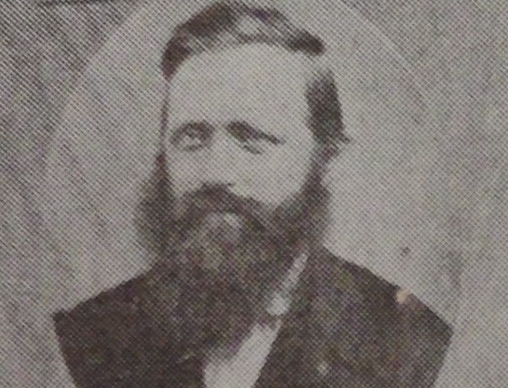
Henry S. Clubb was an Englishman at the forefront of the vegetarian movement in the mid-1800s. He attempted to establish a vegetarian settlement in Kansas in 1856. (Photo public domain)
Vegetarians have their reasons for not eating meat. But “I am an optimist” doesn’t have a regular spot on lists more typically focused on health and environmental benefits.
Optimism was, however, the Englishman Henry Clubb’s rationale more than 100 years ago, when he enticed dozens of people to move to the radical territory of Kansas to start a vegetarian settlement in what is now Allen County.
It didn’t go well.
“Now we all have come! have brought our fathers, our mothers, and our little ones, and find no shelter sufficient to shield them from the furious prairie winds, and the terrific storms of the climate!” wrote a woman from New York named Miriam Colt.
Colt and her family were among those who had given money to Clubb based on his promise that the settlement would be habitable by the time they got there. It took the Colt family more than a month to make the trip. They arrived exhausted, soaked from a spring storm, and were greeted with a meal of hominy, stewed apples, and tea in a wet tent.
“Can any one imagine our disappointment this morning, on learning from this and that member, that no mills have been built,” Colt wrote, “that the directors, after receiving our money to build mills, have not fulfilled the trust reposed in them, and that in consequence, some families have already left the settlement.”
In 1862, Miriam Colt published an account of her participation in the failed vegetarian settlement in what became Allen County, Kansas. (Photo public domain)
“I think it’s way too easy, when you look back on previous times, to kind of laugh and say, ‘What were they thinking, all packing off to Kansas where there wasn’t even a railroad and thinking they could subsist as a vegetarian colony?'” says Kansas City writer Aaron Barnhart.
Barnhart and his partner, Diane Eickhoff, have published several books about the region’s history. They’re now working on the story of Henry Clubb’s settlement; their initial research was based on Colt’s book.
The two have visited the site of Clubb’s outpost just south of what is now Humboldt, Kansas. Barnhart acknowledges that, yes, the town failed, but so did thousands of other pioneer settlements all founded with similar optimism.
“Going to the place where history happened humbles you, and makes you realize that these people were intelligent beings who wanted to change their world and the world around them, and you’ve got to respect that.”
In the mid-1800s, Clubb was certain that vegetarianism was the path to physical and social reform, and hopeful that humans could attain a divinity that carnivorous animals never could.
And Kansas made so much sense as the American epicenter of vegetarianism.
As a journalist, Clubb covered the passing of the Kansas-Nebraska Act of 1854, which allowed residents of a state to determine whether that state would be free or allow slavery.
He saw abolitionists and slavers alike flood the territory in order to shore up their side of the cause before Kansas became a state and declared itself one way or the other.
At the same time, Clubb knew the women’s suffrage movement was strong in Kansas.
The territory was the fulcrum of social change in the center of the nation in the middle of the century. The vegetarian movement fit right in.
Clubb’s settlement was in Osage territory on the banks of the Neosho River. The first intended residents arrived in the spring of 1856 and left that same fall.
Aaron Barnhart and Diane Eickhoff at the site of the 1809 Bible-Christian Church in Salford, England, where Henry Clubb dedicated himself to vegetarianism before moving to the U.S. (Photo courtesy Aaron Barnhart)
At its core, Barnhart says, the movement was not a health or lifestyle decision Clubb and his followers were making, it was an ethical decision.
“When (Clubb) was trying to convey this to small children in the publications he edited over the years, he really boiled it down to these three words: Do Not Hurt,” Barnhart says.
These words are the working title of Barnhart and Eickhoff’s book on the subject. Clubb and his followers might not have harmed animals in the attempted establishment of their settlement, but the people ended up in a whole world of hurt.
Aaron Barnhart spoke with KCUR on a recent edition of Central Standard. Listen to the full conversation here.
WELLINGTON, Kan. (AP) — A former Wellington High School band instructor has been sentenced to 16 months in prison for sexual exploitation of a child.
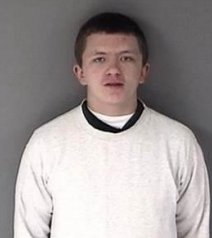
Olson photo KBI offender registry
Thirty-year-old Ben Olson was sentenced Thursday in Sumner County District Court. He pleaded guilty in March after admitting that he had a nude photo of a 17-year-old girl.
Olson apologized in court for his actions. He said he was recently admitted to a center to address his mental health.
The victim and the mother also spoke in court. They said Olson had betrayed their trust after the girl looked up to him as a friend and “father figure.”
Olson was suspended from the Wellington district in November and fired in April.
As part of his guilty plea, Olson must register as a sex offender.
FINNEY COUNTY — One person died in an accident just after 11:30a.m. Saturday in Finney County.
The Kansas Highway Patrol reported a 2000 GMC Sierra driven by Mariano,Rodriguez, 22, Wichita Falls, TX, was eastbound on U.S. 50 one mile west of Chmelka Road in the westbound lane.
The pickup struck a westbound 2006 Pontiac G6 driven by Saine Taw, 37 Garden City, in the passenger side.
Lay, Par Lay, 47, Garden City, was transported to St. Catherine’s Hospital where he died.
Taw and a passenger in the pickup Ricardo Alvardo, 12, Wichita Falls, TX., were transported to Wesley Medical Center.
Rodriguez and another passenger in the pickup Luz Huerta Perez, 21, Wichita Falls, TX., were transported to St. Catherine’s Hospital.
All five were properly restrained at the time of the accident, according to the KHP.
KANSAS CITY (AP) — A former Kansas City police officer has been charged months after he was involved in a fatal crash outside the stadium where the Kansas City Chiefs play.
Fatal crash scene photo courtesy KCTV
34-year-old Terrell Watkins has been charged with first-degree involuntary manslaughter, two counts of second-degree assault and a misdemeanor count of careless and imprudent driving.
Court records say Watkins was off-duty and driving a Kansas City Police Department Ford E350 van on Interstate 435 when he slammed into the back of a car on Oct. 21. The driver of the car, 17-year-old Chandan Rajanna, was killed, and his father and sister, who were passengers, were seriously injured.
Witnesses told police the van had been speeding and making numerous lane changes as it passed other vehicles. Investigators say at the time of the crash, Watkins was late for a moonlighting job as a security officer for Chiefs.
TOPEKA – Governor Laura Kelly reappointed Carisa Lyn McMullen to the State Board of Technical Professions.
“We need qualified individuals overseeing engineering, architecture, geology, land surveying and other practices that have a far-reaching impact on our everyday lives,” Kelly said. “Carisa has been a real asset on this board with her extensive knowledge and experience.”
McMullen, Olathe, is a landscape architect and currently serves as the principal at Landworks Studio. She has worked in both municipal and private sectors. McMullen received a bachelor’s degree in landscape architecture from Kansas State University. She has worked on numerous projects including: University of Kansas West Campus Master Plan in Lawrence, the Dwight D. Eisenhower National Airport in Wichita, The Labette Community College Pedestrian Corridor in Parsons, and the Vision Iola Community Master Plan in Iola.
The board registers and licenses engineers, architects, surveyors and landscape architects. The group works to provide maximum protection of the health, safety, and welfare of Kansans by assuring their practice of engineering, architecture, land surveying, landscape architecture and geology in the state is properly carried out.
Per K.S.A 74-7005, each member of the State Board of Technical Professions must be a resident of the state of Kansas. Each term is four years with a limit of three successive terms.
All 13 board members are appointed by the governor. Four members must be licensed engineers, two must be licensed surveyors, three must be licensed architects, one must be a licensed landscape architect, one must be a licensed geologist, and two must be from the general public.
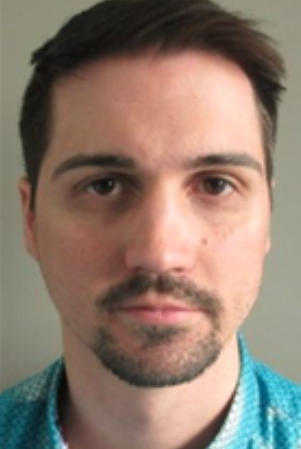
Zachary Jacob McFall is 5-foot-5 and 135 pounds -photo Topeka Police
SHAWNEE COUNTY —Law enforcement authorities are attempting to locate and speak with 16-year-old Zachary Jacob McFall in reference to Thursday’s fatal shooting in the in the 400 block of SE 37th Street, according to Lt. Andrew Beightel.
If you know the location of McFall, do not attempt to apprehend him yourself. Call 911 to report his whereabouts or you can leave an anonymous tip by calling Shawnee County Crime Stoppers at (785) 234-0007 or online at www.p3tips.com/128.
————
SHAWNEE COUNTY — Law enforcement authorities are investigating a fatal shooting and continue to search for suspects.
Just after 3:30 pm, Thursday, police were dispatched to the report of gunshots in the area of SE Fremont and SE Irvingham in Topeka, according to Lt. Andrew Beightel. While officers were in route to the gunshots call other citizens reported a possible shooting near SE 37th & SE Adams.
Officers then responded to that area, where at SE 37th and SE Pennsylvania they found a white passenger car with a 16-year-old identified as Joaquin Aj McKinney of Topeka. suffering from life threatening injuries. EMS transported the boy to an area hospital where he died, according to Beightel.
Initial reports from witness state the suspect(s) from the shooting were in a blue 4-door passenger car and they fled the area in an unknown direction of travel.
TOPEKA, Kan. (AP) — Two brothers from Colorado whose contaminated cantaloupe killed 33 people and hospitalized many more in 2011 are facing drug charges in Kansas related to an industrial hemp shipment.
Eric and Ryan Jensen head into the federal courthouse on Oct. 22, 2013 photo courtesy KCNC Denver
Eric and Ryan Jensen grow industrial hemp — a non-intoxicating cannabis plant — at a farm run by Eric’s son in Holly, Colorado, where industrial hemp is legal. They are accused of attempting to ship industrial hemp by FedEx through Kansas, where the crop is illegal.
The Jensens pleaded guilty in 2013 to causing a nationwide outbreak of listeria through infected cantaloupe grown at their farm. They were sentenced to home detention and ordered to pay thousands of dollars in restitution.
“We’re still so far in debt from that deal that I don’t know when we’ll ever come out of it,” Eric Jensen said of the cantaloupe case. “Both our reputation tarnished and everything else. We’ve been trying to dig out of it and was kind of hoping my son’s deal with the hemp would kind of help us both to get out of it and we just keep getting deeper and deeper.”
In January 2017, a Fed Ex truck picked up about 300 pounds of boxed up hemp from the Jensen farm in Holly, about 10 miles from the Kansas border for shipment to California. The shipment went to a FedEx warehouse in Liberal, Kansas, to California. The Kansas Highway Patrol seized the shipment after employees reported that the shipment smelled like marijuana.
That seemed to be the end of it, but in January of this year, the Seward County Attorney’s Office charged the brothers with four drug offenses, including three felonies, that accuse them of distributing marijuana or possession of marijuana with the intent to distribute.
Kade Goodwin, an assistant county attorney prosecuting the case, said he couldn’t explain why two years passed before the charges were filed. Eric Jensen successfully fought an attempt to extradite him to Kansas, and authorities have not tried to extradite Ryan Jensen.
Colorado requires industrial hemp to have less than 0.03% of THC, the chemical that produces a high in marijuana. Eric’s attorney, Dodge City lawyer Van Hampton, is meeting roadblocks in his effort to have the THC concentration tested.
Hampton said Kansas authorities wouldn’t let an independent lab in Denver test a sample. He said the Colorado Bureau of Investigation would conduct a test if Kansas requests it, but Kansas hasn’t asked. And the judge in the case, Seward County District Court Judge Clint Peterson, is refusing to hear a motion to order testing, he said.
The Kansas Department of Agriculture, which has the only lab in the state able to run the test, “”hasn’t been as cooperative as we’d like and we don’t want to ship it off to a third party in another state,” said Goodwin, who said he wants the package tested.
The state Agriculture Department does not test samples in criminal investigations, instead limiting its role to administration and regulation with the Kansas Industrial Hemp Research Program, said spokesman Jason Walker.
Without testing, the case is at a standstill.
Goodwin at first suggested he would likely drop the case if a test showed the THC concentration at 0.3 percent or below. But he later clarified that “the prosecutor’s office will look at it from all angles and make a determination, but we’re not guaranteeing everything will be dismissed.”
LAWRENCE — As American policymakers and health care providers try multiple approaches to reduce the number of deaths related to the opioid epidemic, treatment facilities are commonly recommended. But there’s a major obstacle: Many facilities that serve individuals with opioid-related needs often won’t accept people who have been prescribed medications to combat the addiction.
University of Kansas researchers have written a study examining why treatment facilities decide whether to accept people on medications to fight opioid addiction and how rejections can be avoided and services streamlined.
Doctors increasingly prescribe medications such as methadone, buprenorphine and naltrexone to help individuals diagnosed with opioid use disorder, or OUD. But KU researchers found many Greater Kansas City area treatment facilities have zero or low acceptance rates for such individuals, for a wide range of reasons.
“Forty percent of the service facilities we tracked either are not willing to serve individuals with OUD, express reservations for serving them or impose more severe monitoring and/or restrictions in order to serve them,” said Nancy Kepple, assistant professor of social welfare and lead author of the study. “Of those, they tended to focus on social services or substance use disorder services only. Facilities providing recovery support services were the most likely to have a zero to low acceptance rate.”
Kepple and co-authors surveyed 360 area treatment facilities to determine their acceptance rates of individuals with OUD who have been prescribed medications to treat the disorder. They established four acceptance levels:
Zero acceptance, which would not accept individuals on medications for OUD
Low acceptance, facilities that accept these individuals with reservations/restrictions
Moderate acceptance, in which such individuals are accepted but their medication use is not monitored onsite
High acceptance, which accepts these individuals and administers/monitors their medication use.
Staff at 89 of the treatment facilities provided researchers with their rationale for whether they accept individuals taking medications for OUD. There was a wide range of responses for facilities not being willing/able to accept individuals using medications for OUD, from facilities staff who said they focused on providing a drug- and alcohol-free living environment to some who said they simply did not have the infrastructure to manage medication use. The study, co-written by Amittia Parker, doctoral student in the School of Social Welfare; Susan Whitmore of First Call Alcohol/Drug Prevention & Recovery; and Michelle Comtois of First Call Alcohol/Drug Prevention & Recovery, was published in the Journal of Substance Abuse Treatment.
While a stigma was attached to the medications at some facilities, others simply lacked the resources to serve individuals taking the medications. Respondents at low acceptance facilities reported they had concerns about how allowance of medications of OUD might affect the therapeutic community. Others reported not having the necessary staff or funding to devote to monitoring the medication use of individuals in their care.
The study grew out of a larger partnership between KU and First Call Alcohol/Drug Prevention & Recovery to find out what services are available to people struggling with opioid addiction in the Kansas City area and to prevent others from facing addiction before the opioid crisis worsens. The findings show that increased federal funding to provide such medications to people with OUD is only addressing part of the problem, Kepple said, and that there should be greater focus on recovery and maintaining life free from addiction, not simply stopping the addiction.
“Policymakers should think about funding services across the spectrum of recovery service, not just funding access to medications to address the opioid epidemic,” Kepple said. “We need to rethink what we prioritize in funding and think about how to more effectively address providers’ fears and beliefs about these medications. If you prescribe someone these medications but don’t provide other services, they could still overdose six months down the road. These medications alone are not a magic bullet; the most effective treatment includes complementary recovery-oriented and recovery support services.”
Individuals who receive medications but do not have access to safe housing or mental health services may be more likely to relapse on opioids, the authors argue. The reasons facilities gave for not accepting individuals on OUD medications are addressable, however, and provide an opportunity for funders and policymakers to help improve collaboration between facilities that build a more supportive service infrastructure, such as connecting stand-alone SUD services providers with local psychiatrists approved to administer and monitor the medications.
“These are all facility-level factors that can be addressed and that could increase services for individuals who are increasingly prescribed these medications,” Kepple said. “Medications for OUD are not going away, so improved understanding and tangible supports would help.”
The authors point out federal funding to provide prescriptions to fight OUD has increased in recent years, as fatalities from the opioid epidemic continue to mount. Ensuring recovery past breaking the addiction and fighting stigma of the medications is key.
“Recovery is not only about sobriety,” Kepple said. “These medications help individuals to stop using opioids and initially maintain recovery. However, to best serve these individuals, we need to have a more holistic view of the entire recovery process.”
The Hays Police Department has canceled a Silver Alert for a Hays woman reported missing since Friday evening.
The HPD has reported Gail M. Thal has been located and is home safe with her family.
“The Hays Police Department and her family would like to thank everyone for their assistance,” the HPD said in a news update.
———————
The Hays Police Department is requesting assistance in locating Gail M. Thal.
Gail is a 77 year old Hays resident that was last seen at 7:00pm in the area of the 200 Block E. 16th in Hays. She has been reported missing by her family.
Gail is 5-foot-4 and weighs 140 pounds. She has blonde hair and blue eyes. Last seen wearing a white jacket, blue shirt, and dark pants.
Please contact the Hays Police Department at (785) 625-1011 if you have any information.
SEDGWICK COUNTY — Law enforcement authorities are investigating a shooting that left one man dead and three other individuals injured early Saturday.
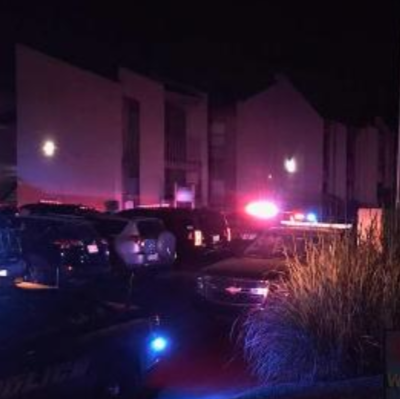
Police on the scene of the shooting investigation early Saturday photo courtesy KWCH
Just after 2 a.m., police responded to a disturbance with shots fired at the Horizons East Apartment complex located in the 500 block of North Rock Road, according to officer Kevin Wheeler.
Upon arrival, officers found a 20-year-old man who was shot and was unresponsive in the parking lot. Officers rendered aid until medical personnel arrived, who continued life-saving measures. The man was shortly after pronounced deceased.
The victim’s name is being withheld pending notification of next of kin. Two of the three other victims include a 21 year-old-male and a 22-year-old male. They were transported to a local hospital where they were treated and released for non-life threatening injuries. A 19-year-old female was also transported by private vehicle to a local hospital with a gunshot wound. Her injury is considered to be serious, but she is expected to survive.
The preliminary investigation revealed that a party was being held at one of the apartment units. There was a disturbance that occurred in the parking lot and shots were fired by an unknown suspect.
Police detectives are interviewing multiple witnesses and have not reported an arrest.
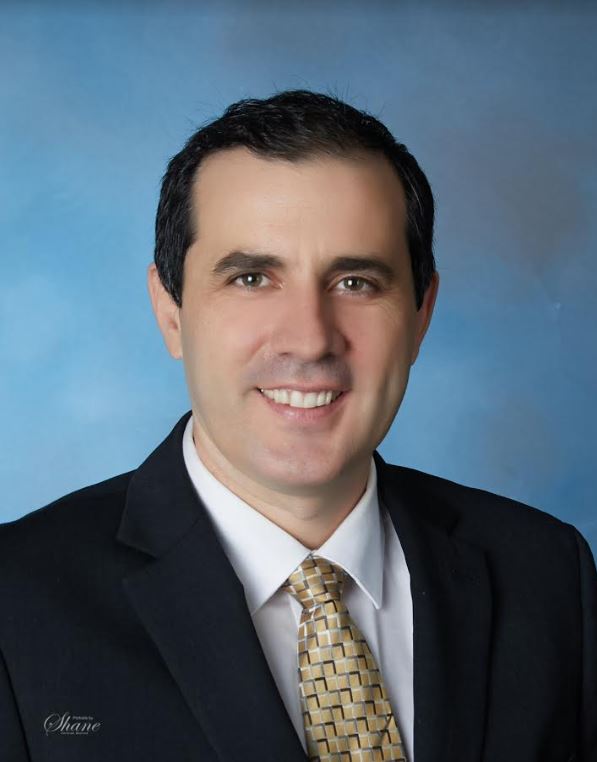
GREAT BEND – The certified public accounting firm of Adams, Brown, Beran & Ball, Chartered (ABBB) is pleased to announce the addition of Milan Simic to their professional team.
Simic joins the firm in a newly created role, Strategic Solutions Advisor. In this capacity, he will focus on developing CFO-level service strategies for clients in the oil & gas and manufacturing industries. His responsibilities include defining tailored solution sets as well as identifying industry enhancements, joint ventures, and potential merger and acquisition targets for clients.
“Welcome to the ABBB team, Milan! His energy and passion for our clients will help drive these new initiatives within the firm,” said Brian Staats, CPA, CGMA, managing partner of ABBB. “Our clients will benefit greatly from the new relationship and revenue opportunities that this position opens up to them.”
In 2001, Simic graduated from Stephen F. Austin State University with a bachelor’s degree in finance and accounting. He spent five years as an internal auditor at a large oilfield service company and two and a half years as a business risk services consultant with a Big Four accounting firm. Before joining the firm, Milan served as the president of a family office operation. In this role, he was responsible for growing the business, including overseeing seventeen different oil and gas project acquisitions which ranked in the top 300 operators in Texas. Simic lives in Hoisington with his wife Sarah and their three daughters, Sofia, Mila, and Ana.
Adams, Brown, Beran & Ball, Chartered provides a wide range of traditional and non-traditional CPA and consulting services to clients throughout Kansas, including agriculture organizations, construction companies, feed yards, financial institutions, governmental and not-for-profit organizations, manufacturers, medical practices, oil and gas companies, professional service firms, real estate companies and small businesses. Founded in 1945, today the firm maintains 13 office locations throughout the state. For more information about Adams, Brown, Beran & Ball, please visit www.abbb.com.

 Today
Today












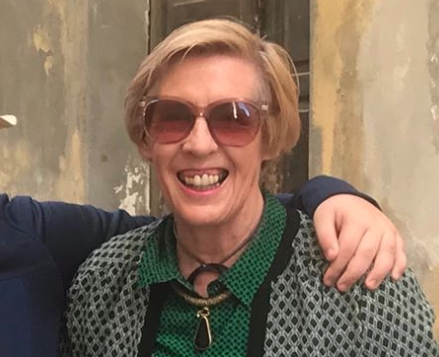
 The Hays Police Department is requesting assistance in locating Gail M. Thal.