We have a brand new updated website! Click here to check it out!

Kan. Supreme Court justice announces upcoming retirement

Johnson

Office of Judicial Administration

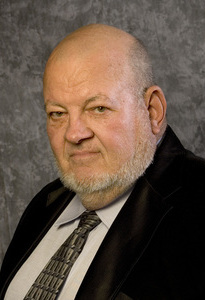
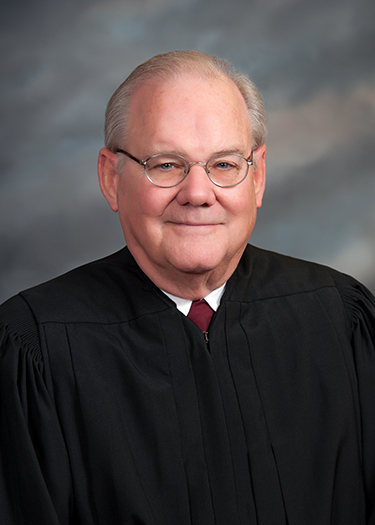
TOPEKA — Justice Lee Johnson, who has served on the Kansas Supreme Court since 2007, announced today he will retire September 8.

Johnson was appointed to the Supreme Court after serving on the Kansas Court of Appeals from 2001 to 2007.

“It has been a profound honor and privilege to be a part of the highest court in Kansas, as well as the Court of Appeals, and to serve with so many knowledgeable and collegial jurists on both appellate courts,” Johnson said. “For that indescribable experience, I particularly thank Governors Bill Graves and Kathleen Sebelius for taking a chance on a small-town lawyer. I will miss having the opportunity to interact with all of the fine people in the judicial branch.”

Before Johnson became a judge, he practiced law in Caldwell and served as city attorney for Caldwell, Argonia, and Hunnewell. He is a graduate of the Washburn University School of Law, where he ranked second in a class of 211.

Chief Justice Lawton Nuss said Supreme Court justices are losing a valued colleague.

“Justice Johnson’s unique, thoughtful perspectives frequently caused his colleagues to re-examine their own legal positions,” Nuss said. “While his fellow justices did not often change their minds, Justice Johnson’s views usually contributed to more-closely reasoned decisions by the court. It’s a real loss for Kansas.”

Johnson’s retirement triggers a merit-based nomination process that Kansans voted to add to the Kansas Constitution in 1958.

When there is a vacancy on the bench, the Supreme Court Nominating Commission reviews applications and conducts public interviews of nominees. The commission narrows the nominee pool to three names that it sends to the governor. The governor chooses one nominee to appoint.

To be eligible, a nominee must be:

  • at least 30 years old;
  • a lawyer admitted to practice in Kansas and engaged in the practice of law for at least 10 years, whether as a lawyer, judge, or full-time teacher at an accredited law school.

The Supreme Court Nominating Commission has nine members. There is one lawyer and one nonlawyer from each of the state’s four congressional districts, plus one lawyer who serves as chairperson. Nonlawyers are appointed by the governor. Lawyers are elected by other lawyers within their congressional districts. The chairperson is elected by lawyers statewide.

When the Supreme Court Nominating Commission reviews nominees for justice, they look at the person’s:

  • legal and judicial experience
  • educational background
  • character and ethics
  • temperament
  • service to the community
  • impartiality
  • respect of colleagues

Justices must follow the law and not be influenced by politics, special interest groups, public opinion, or their own personal beliefs.

Justices demonstrate their accountability by following a Code of Judicial Conduct that establishes standards of ethical behavior. They also take an oath of office that includes swearing to support, protect, and defend the U.S. Constitution and Kansas Constitution.

After a new justice serves one year on the court, he or she must stand for a retention vote in the next general election to remain in the position. If retained, the justice serves a six-year term.

The Supreme Court Nominating Commission is expected to announce its timeline for accepting nominations soon.
Officials shut down town in Washington Co. after storm damage

Google

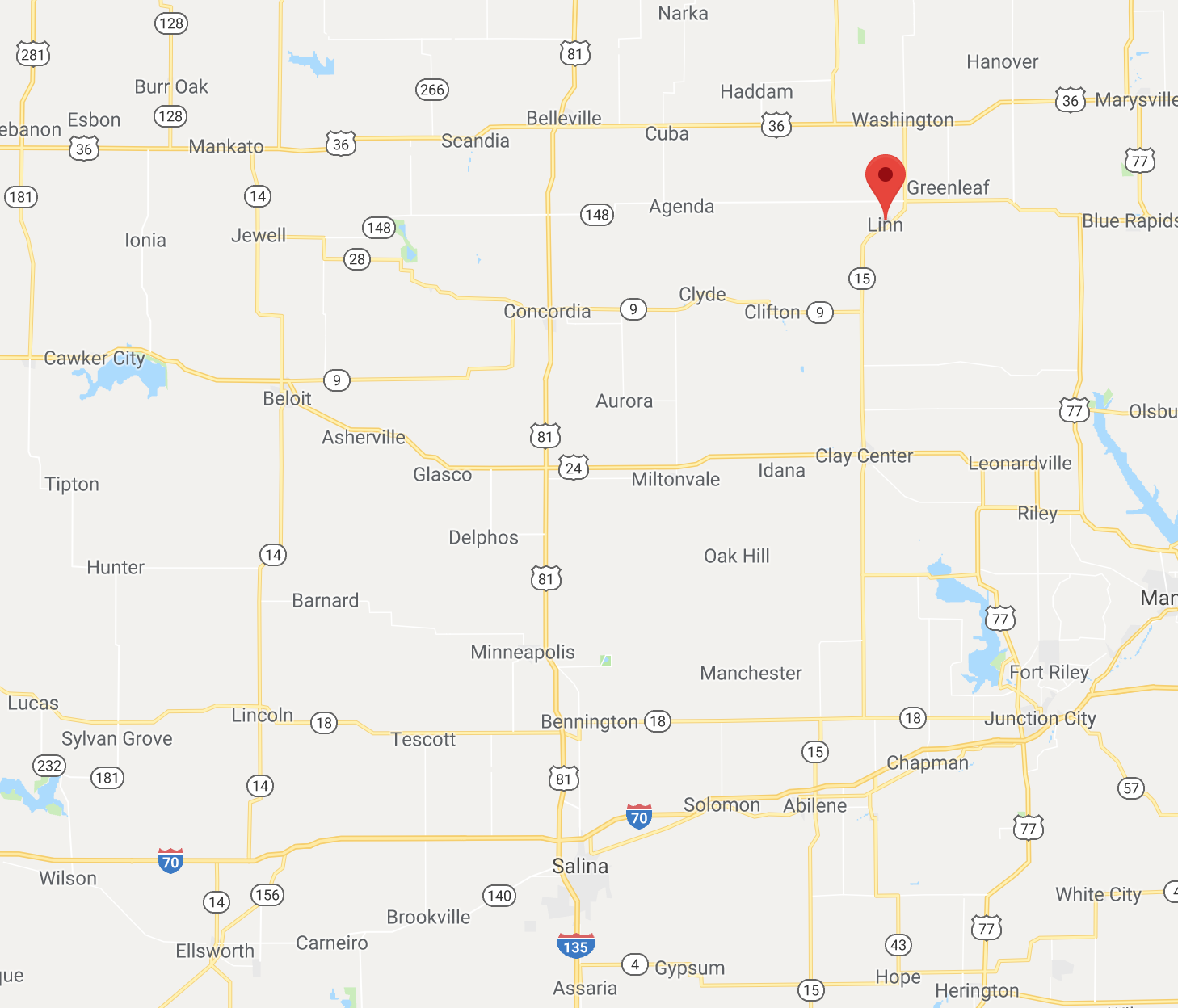
WASHINGTON COUNTY — The small town of Linn has been shut down by officials as they clean up from a storm that moved through north-central Kansas on Tuesday evening.

There are reports of downed power lines and utility poles.

According to Washington County Emergency Management, access at all entry points to Linn have been shut down while cleanup efforts take place.


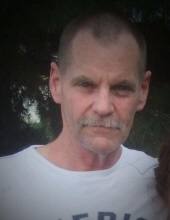
Harry Russell Fowler

Harry Russell Fowler, age 59, passed away on Tuesday July 9, 2019 at his home in Kensington, KS.

An obituary and services are pending with Simmons-Rentschler Mortuary.

Developers propose $500M arts campus near Kansas Speedway

BONNER SPRINGS, Kan. (AP) — Developers are proposing a $500 million arts-and-entertainment campus in the Kansas City area with housing for students and seniors.

The Kansas City Star reports that the Bonner Springs City Council this week approved a zoning change that developers needed to move ahead with the 180-acre project. It would be near NASCAR’s Kansas Speedway and the Village West shopping district at Interstates 70 and 435.

The campus would include a for-profit college to train people to work in film and television production and engineering, along with housing for its students. Plans also call for independent living, assistant living and a memory care facility for seniors.

The developers said they also plan to have three hotels, a 7,000-seat concert pavilion, a 1,800-seat performing arts center and an arena for competitive video gaming.

If you thought vaping was safe, Kansas researchers have bad news


A robot at KU’s School of Medicine takes the vapor from e-cigarettes to test it on human cells from lung donors.
Celia Llopis-Jepsen / Kansas News Service

By CELIA LLOPIS-JEPSEN
Kansas News Service

KANSAS CITY, Kansas — Many people figure vaping spares their health because it lets them inhale nicotine in aerosols instead of sucking in smoke from burning cigarettes.

New research from the University of Kansas casts doubt on that, raising the specter that vaping nicotine may cause some of the same respiratory problems that plague and even kill smokers today.

Salathe chairs the Department of Internal Medicine at KU’s School of Medicine, where his lab uses a robot that vapes to test the effects on human cells obtained from deceased lung donors.

The team’s latest research, published last month by the American Journal of Respiratory and Critical Care Medicine, found vaping nicotine damaged the natural ability of those cells to clear out mucus.

That dysfunction leads to chronic bronchitis — and the coughing, shortness of breath and fatigue that come with it. Scientists such as Salathe worry that means the vaping trend sweeping the U.S. could eventually translate into more people developing chronic obstructive pulmonary disease.

Commonly caused by smoking, COPD is already a leading cause of death in the United States.

The KU researchers found that the aerosols from nicotine e-cigarettes hurt mucus-clearing abilities in sheep, too. (Sheep were used because of similarities between their respiratory system and that of humans.)


A vaping robot in Matthias Salathe’s lab pulls the aerosols from e-cigarettes to test the effects on human cells.
Credit Celia Llopis-Jepsen / Kansas News Service

Yet the KU research remains at the pre-clinical phase, meaning scientists have more work ahead to answer the question with greater certainty.

Taken in context with other research, though, Salathe sees reason for worry. His lab’s results add to a mounting body of evidence that vaping causes such problems, including evidence from studies on living people who vape.

Getting more definitive answers, though, takes time. Rigorous scientific research can’t move as fast as the vaping craze that now has millions of U.S. teenagers inhaling nicotine. And diseases like COPD play out over years.

“To really know, we need to wait 10 to 20 years, right? To see whether these humans are actually developing the diseases that we predict,” Salathe said. “The question is, now from a policy point of view, is that an acceptable experiment to actually do in the population?”

Tobacco use remains the No. 1 preventable cause of death in the U.S.

More than 20 cities and counties across Kansas have banned the sale of tobacco-related products to people under the age of 21 in hopes of preventing them from becoming hooked.

That’s based on studies that show most people who become addicted long-term begin using nicotine in their teens.

Last month the Kansas Supreme Court upheld local bans on sales to people under 21 in a case brought by vape and tobacco shops against the city of Topeka.

Celia Llopis-Jepsen reports on consumer health and education for the Kansas News Service. You can follow her on Twitter @celialj_LJ or email her at [email protected]. The Kansas News Service is a collaboration of KCUR, Kansas Public Radio, KMUW and High Plains Public Radio focused on the health and well-being of Kansans, their communities and civic life.


Royals top draft pick named national prep player of the year

By BETH HARRIS
AP Sports Writer

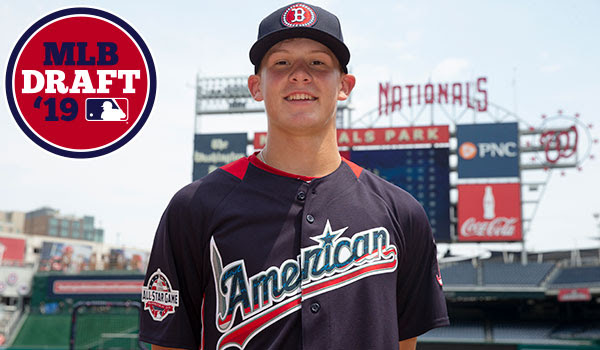
MARINA DEL REY, Calif. — Bobby Witt Jr. realized a childhood dream, getting selected No. 2 overall by the Kansas City Royals in the major league baseball draft.

The younger Witt added another honor, too, when he and softball pitcher Kelley Lynch were named national prep athletes of the year on Tuesday night.

The son of former major league pitcher Bobby Witt, the Witts are the first father-son duo to be selected in the top three of the draft.

“He pretty much taught me the game since I was little,” said the younger Witt, who pitched and played shortstop. “It’s 90% mental and 10% physical and he’s always taught me that and instilled the hard work.”

Witt Jr. is skipping college to play in the Arizona rookie ball league with an eye on the major leagues.
“It’s been a goal of mine ever since I was little,” he said.

He received his trophy from retired NFL great Peyton Manning, a former winner.

Witt Jr., of Colleyville, Texas, batted .482 with 15 doubles, nine triples and 15 home runs, compiling 55 RBIs — 28 of which came with two outs. He led Colleyville Heritage High to a 39-3 record and the Texas Class 5A state title.

On the mound, Witt Jr. had a 1.80 ERA with five saves in 12 relief appearances, striking out 24 and issuing just three walks in 11 2/3 innings.

Witt’s 55-year-old father pitched 16 years in the majors for Texas, Oakland, the Florida Marlins, St. Louis, Tampa Bay, Cleveland and Arizona. He had a 142-157 record with a 4.83 ERA and 1,955 strikeouts from 1986-2001.

The younger Witt had a 4.0 grade point average.

Retired soccer player Abby Wambach presented the girls’ trophy to Lynch.

“I just want you women, you ladies, to understand I stood on the shoulders of giants and so will you,” Wambach said, invoking the names of women’s World Cup champions Megan Rapinoe and Alex Morgan.

“What Megan and Alex have done in terms of celebrating their victories, being confident, being badass, you all take that into every step of your career because the world is ready for you.”

Lynch, of Sharpsburg, Georgia, is the first softball player to win national athlete of the year honors in the program sponsored by Gatorade.

She led East Coweta High to a 32-2 record and the program’s second straight Class 7A state title last season. She was 17-0 with a 0.27 ERA along with a .436 batting average.

Lynch singled out her mother for “playing two roles the last six years.” Her father, who dreamed of Lynch playing Division I softball, died of cancer when she was 12. She has his date of death — March 7, 2011 — tattooed on the inside of her right arm.

“I felt still attached when I’m on the field,” Lynch said. “I think for sure he’s probably smiling right now. I definitely think of him.”

Witt Jr. and Lynch will appear on the cover of next week’s Sports Illustrated.

The other boys’ finalists were: Jake Smith, football, Scottsdale, Arizona; Liam Anderson, cross country, Larkspur, California; James Wiseman, basketball, Memphis, Tennessee; Omar Hernandez, soccer, Dalton, Georgia; Matthew Boling, track and field, Houston.

The other girls’ finalists were: Ellie Holzman, volleyball, New Orleans; last year’s winner Katelyn Tuohy, cross country, Thiells, New York; Azzi Fudd, basketball, Washington, D.C.; Sophie Jones, soccer, Atherton, California; Jasmine Moore, track and field, Mansfield, Texas.

The winners and nominees will walk the red carpet at The ESPYS on Wednesday night.

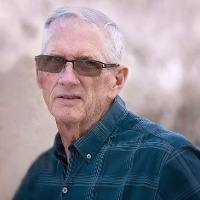
Bradley Jay Slagle

Bradley Jay Slagle, age 63, passed away on July 8, 2019 at the Brooklyn Community Estates in Brooklyn, Iowa. He was born on February 15, 1956 in Ness City, Kansas the son of Floyd and Gertrude (Whipple) Slagle.

Brad was a farmer and rancher. He worked as a truck driver for Texaco and Lane County Implement and worked at Beeler Coop. He was a member of the United Methodist Church of Beeler. Brad was a Master Mason in the Anthem Lodge in Scott City. Brad also served a Trustee for the Johnson Township. He married Barbie Josephson on Saturday, December 20, 1975, in Leoti, Kansas.

Survivors include his wife, Barbie Slagle of Brooklyn, Iowa; mother, Gertrude Slagle of Ness City; a son, Eric (Christa) Slagle of Brooklyn, Iowa; a brother, Brent (Tina) Slagle of Ness City; sister, Diana (Everett) Higdon; and eight grandchildren, Devon, Connor, Julia, Arianna, Nora, Liam, Braden and Harper. He was preceded in death by his father and son, Nathan Slagle.

Funeral service will be on Thursday evening, July 11, 2019, 7:00 P.M., at the United Methodist Church, Ness City, Kansas. Burial will follow in the Buda Cemetery. Visitation will be at Fitzgerald Funeral Home on Wednesday, July 10, 2019 from 6:00 to 8:00 P.M.

Memorial contributions may be given to the Buda Cemetery Fence Fund or the United Methodist Church of Beeler.

Kansas junior college president announces plans to retire

OVERLAND PARK (AP) — A suburban Kansas City community college’s president has announced plans to retire just months after controversy erupted over statements he purportedly made about the affluence of its students.

Johnson County Community College said Tuesday that Joe Sopcich plans to step down July 1, 2020. The board renewed his contract last month.

A college spokesman noted that Sopcich turns 65 in April 2020.

Issues arose in February when a Democratic National Committee member live-tweeted remarks he overheard Sopcich make while discussing tuition increases with a college trustee during a breakfast at a Washington, D.C., hotel.

In one tweet, Sopcich was quoted as saying, “Show me anyone who struggles at JCCC..I walk the parking lot and I see a whole lot of very nice cars.”

Sopcich previously described the conversation as “hyperbole.”

Moderate Republican in Kansas House resigning, citing health

State Rep. Larry Hibbard
TORONTO, Kan. (AP) — A moderate Republican legislator from southeast Kansas plans to resign Saturday for health reasons.

State Rep. Larry Hibbard of Toronto told The Hutchinson News that he has chronic hives and has to “get rid of some stress.” Hibbard said he already had planned not to seek re-election next year.

Hibbard is a rancher who won his House seat easily in 2012 but faced a serious Republican primary challenge in 2018.

He voted in 2017 to reverse past income tax cuts championed by former Republican Gov. Sam Brownback. He supported GOP tax relief legislation this year but voted to sustain Democratic Gov. Laura Kelly’s veto of one of the measures.

Hibbard also supported a plan Kelly favored to expand Medicaid.

Republican precinct committee members in Hibbard’s district will name his replacement.

Spurling joins Department of Revenue as legislative liaison

Ethan Spurling

KDOR

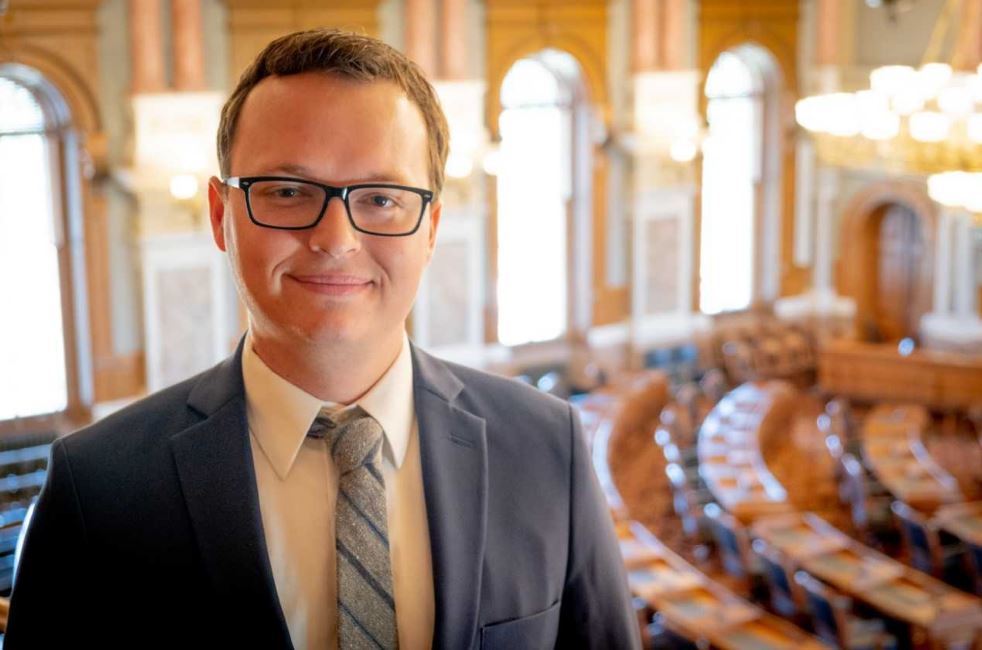
TOPEKA – Secretary Burghart announces the selection of Ethan Spurling to take over the position of legislative liaison for the Kansas Department of Revenue. Spurling joins the Department after serving as operations and scheduling coordinator in Governor Laura Kelly’s office since January.

“Ethan will bring a unique perspective to this position with his previous experience and relationship building at the municipal level,” Secretary Mark Burghart said. “We look forward to taking that experience and expanding that within his role.”

Prior to his time with the Kelly-Rogers administration, Spurling served the city of Frontenac as a city councilman for almost four years.

“It was during my time serving as a city councilman I found a great understanding of civic duty.” Spurling said. “This is a great opportunity to continue that passion while working alongside legislators to help Kansans.”

Spurling is a 2018 graduate of Pittsburg State University with degree in Political Science and International Studies.

Most attackers made threats before incident, report finds

Click the image to download the report

By COLLEEN LONG
Associated Press

WASHINGTON — One-third of the attackers who terrorized schools, houses of worship or businesses nationwide last year had a history of serious domestic violence, two-thirds had mental health issues, and nearly all had made threatening or concerning communications that worried others before they struck, according to a U.S. Secret Service report on mass attacks.

The Secret Service studied 27 incidents where a total of 91 people were killed and 107 more injured in public spaces in 2018. Among them: the shooting at Marjory Stoneman Douglas High School in Parkland, Florida, were 17 people were killed and 17 others injured, and the fatal attack at the Tree of Life Synagogue in Pittsburgh.

The report analyzed the timing, weapons, locations and stressors of the attacker, plus events that led up to the incident, in an effort to better understand how such attacks unfold and how to prevent them. Members of the Secret Service National Threat Assessment Center, which did the study, briefed police, public safety and school officials at a seminar Tuesday.

“We want the community to know prevention is everyone’s responsibility,” said Lina Alathari, the center’s chief. “Not just law enforcement.”

Other incidents examined included a man who drove a truck into a Planned Parenthood clinic in New Jersey, injuring three, and a man who killed two at a law firm, and then one at a psychologist’s office in June. Criteria for the study included an incident where three or more people were injured in a public place.

Most attackers were male, ranging in age from 15 to 64. The domestic violence history often included serious violence. While 67% had mental health issues, only 44% had a diagnosis or known treatment for the issue.

Click to expand


Most of the attacks occurred midweek. Only one was on a Saturday. As for motive, more than half of the attackers had a grievance against a spouse or family member, or a personal or workplace dispute. Also, 22% had no known motive. In nearly half the cases, the attacker apparently selected the target in advance.

Alathari and her colleagues want communities to be aware of concerning behavior and these trends so officials have something to look out for.

The Secret Service center is tasked with researching, training and sharing information on the prevention of targeted violence, using the agency’s knowledge gleaned from years of watching possible targets that may or may not be out to assassinate the president.

Alathari said her team is working on a new report on school shootings and how to prevent them, and investigating averted attacks to try to figure out why someone didn’t follow through.

“There is not a single solution,” Alathari said. “The more that we’re out there, training, the more we’re out there with the community … the more we share information … I think it will help really alleviate and hopefully prevent even one incident from happening. One is too many.”

Former Phillipsburg committeeman instrumental in working with Kansas Biggest Rodeo

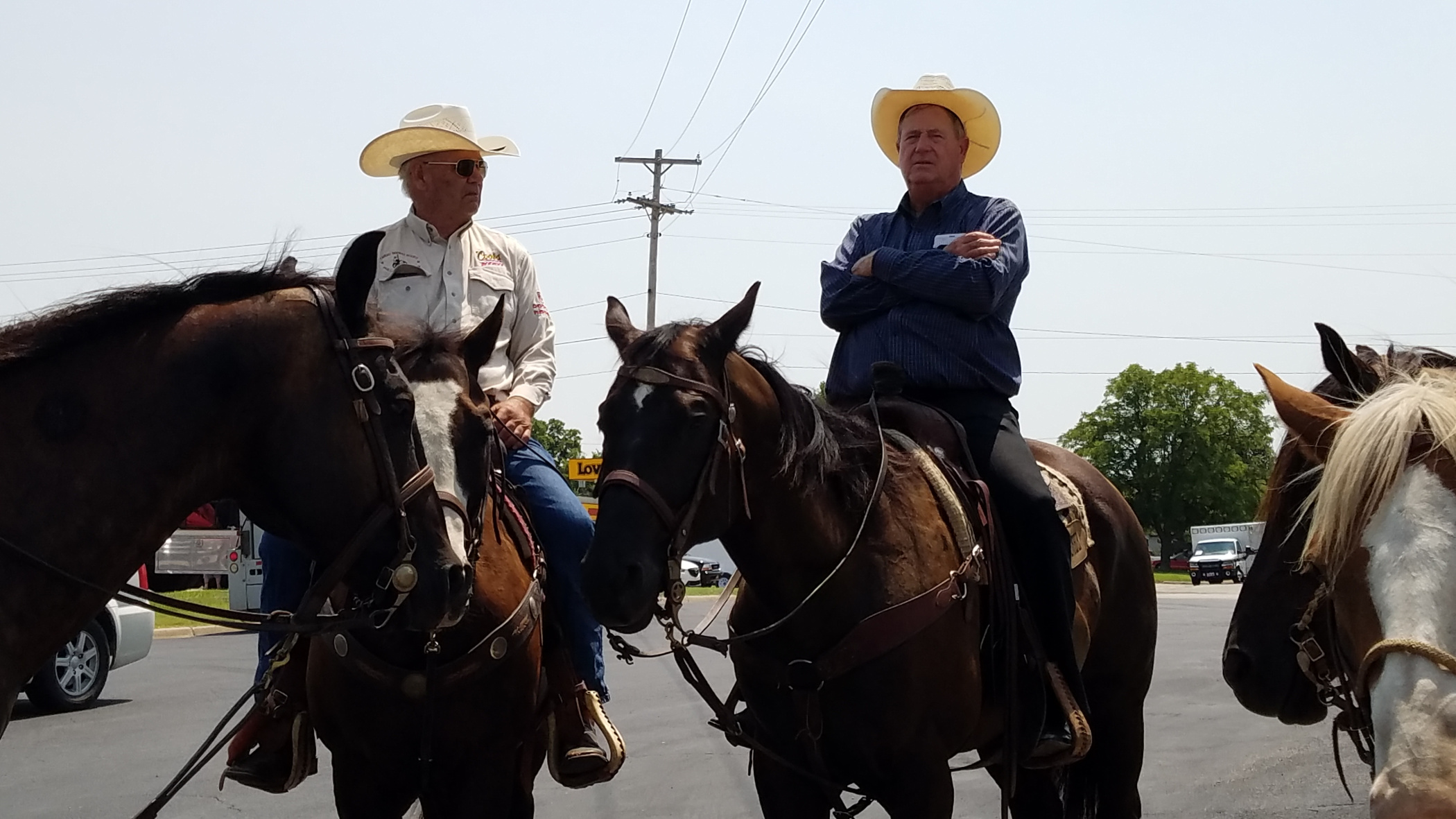
Rod Innes (on the left) is on horseback with stock contractor Bennie Beutler, waiting for the 2018 Phillipsburg rodeo parade to begin. Innes spent more than 35 years on the committee for the Phillipsburg rodeo.

PHILLIPSBURG – It takes dedicated volunteers, working long hours for no pay and little recognition, to keep rodeos going.

And the Phillipsburg rodeo has had some of the best.

One of those, Rod Innes, retired last year after serving on the committee for 38 years.

A Phillipsburg native who now lives in Olathe, Kansas, Innes followed in his dad’s footsteps. Guy “Doc” Innes served on the committee from 1947 into the 1960s, helping with the parking and concession stand.

Rod remembers, as a third grader, selling rodeo programs and being paid a nickel for every program he sold. Born in 1945, he missed only a few rodeos, from 1966 to 1973.

When he and his wife Mary moved back to Phillipsburg in the 70s, he didn’t get involved right away. But when the pump jack at the rodeo arena couldn’t keep up with the demand for water during the shows, Innes volunteered to donate two submersible pumps, if the committee would run a water line between the two wells at the rodeo grounds.

So they took him up on his offer, and Innes began as a rodeo volunteer and became a part of the committee in 1981.

During his tenure, which spanned nearly four decades, he has helped with many remodels, renovations and new facilities around the rodeo grounds. As a contractor, he had the expertise and the equipment as the committee moved the bucking chutes from the north side to the east side; tore down and replaced the wooden grandstands; redid the arena fence; built the south grandstands; added a bathroom facility on the west side; and an office, bathrooms and contestant area on the east side. Nearly all the work was done by committee men; before another electrician came on the committee, Innes did the electrical, plumbing and heating, while other volunteers did the framing, sheet rock and other work.

Innes considers one of his biggest achievements was getting city water to the rodeo grounds. It was a two-mile pipeline from city limits to the rodeo grounds north of town. “One of the best things that happened is when we ran a water line from town out to the rodeo grounds,” he said. It was in the late 1990s, and with the help of a state department of tourism grant and a Morgan Foundation grant, the water line got put in. Prior to city water, the rodeo operated off of two wells with water that was not fit to drink. To provide drinking water, the committee would bring in eight-foot stock tanks with spigots at the bottom, and fill them with water and ice.

He spent twenty-eight years as chairman of the rodeo, and he always strove to make it better. “There’s 89 years of this rodeo,” he said, last year, “and you always want to get bigger and better. We were always thinking about what project we would do next.”

He and Mary have six kids, five who volunteered alongside their parents. The girls: Valerie, Becky, Amy and Beth, were ushers. Son Chris, who lives in Chaska, Minn., helped in the concession stands. “During the rodeo, Shane Culbertson would work with Lloyd (Shane’s dad) on the west concession stands,” Chris said, “and I’d work with Cliff (Van Kooten) on the east side. We were gophers, moving food back and forth, to the side where it was needed.

“We were out at the rodeo grounds every evening in the summer, trimming and painting. It seems like we were always painting. Dad was there, wiring things, fixing things.”

The Phillipsburg rodeo was something Rod truly enjoyed, Chris said. “It’s always been his true passion. I think it was his release from work. He doesn’t have a whole lot of hobbies, and rodeo is his hobby. When he had free time, he was out there, working on something, helping improve it every year.” Innes retired from the committee after last year’s rodeo, and Chris said that was a tough decision for him. “The rodeo was one of the last things he hung onto in Phillipsburg.”

In addition to his time, Innes volunteered his help and equipment: his backhoe, crane and truck, tractor and the mower. Longtime friend Bob Quanz, who was also on the rodeo committee, said his wife, Mary, volunteered alongside her husband. He remembers her working in the concession stand and screwing on light switch covers during a remodel.

Innes has been involved in other civic organizations besides the rodeo. He served on the city council from 1987 to 2017 and served a term as mayor. He’s always been community minded, said Quanz. “He realized the importance of being involved in the community,” Quanz said.

And Innes always had the best interest of the rodeo in mind with whatever he did, Quanz said. “He always wanted to improve it and make sure everything went smoothly.

“He’s been a loyal trooper all the way through, for the community and the rodeo.”

The 90th annual Kansas Biggest Rodeo takes place August 1-3 in Phillipsburg, with performances starting nightly at 8 pm. Tickets start at $12 for kids and $16 for adults. Thurs., August 1 is family night; all kids ages 10 and under are free with the purchase of an adult ticket.

Tickets are on sale at Heritage Insurance in Phillipsburg and at the gate. They can be purchased over the phone by calling Heritage Insurance at 785.543.2448.

For more information, visit the rodeo’s website at www.KansasBiggestRodeo.com.

Copyright Eagle Radio | FCC Public Files | EEO Public File