We have a brand new updated website! Click here to check it out!

FHSU alum joins staff of Midway Extension District

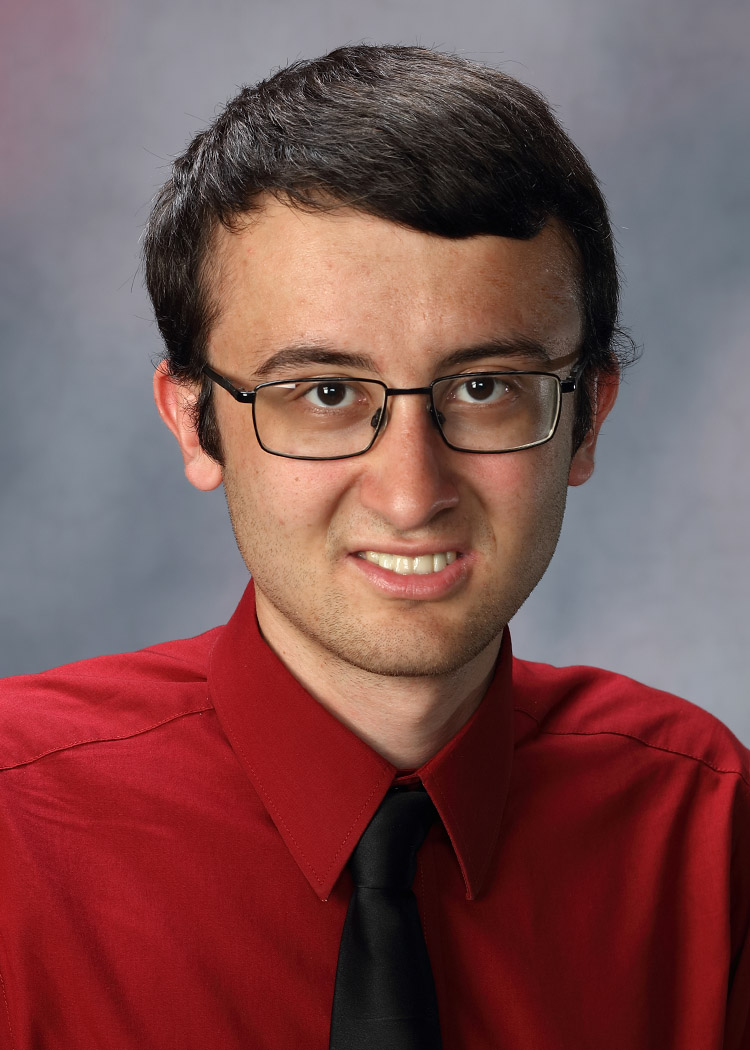
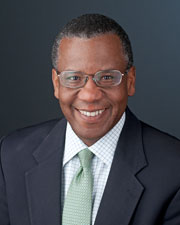
Craig Dinkel

Craig Dinkel will join the Midway District staff as the Crop Production and Horticulture Extension Agent effective June 2, 2019. Dinkel is a graduate of Fort Hays State University with a Bachelor’s degree in Agronomy.

Craig’s past professional experience as a crop consultant will serve him well in his new role. He has experience working with producers in multiple crop production systems including corn, soybeans, wheat, milo, alfalfa and forage sorghum.

Dinkel also brings with him a background in vegetable production thanks to the time he spends assisting his cousins with their produce operation, Svaty’s Produce of Kanopolis.

“I am looking forward to assisting agricultural producers and residents in the Midway District solve issues related to crop-production and horticulture,” Dinkel said.

As a former Kansas 4-H member, Craig is excited about the opportunity to educate and influence 4-H members in a positive way.

“Teaching 4-H members about agricultural production and horticulture is something I am looking forward to, says Dinkel. There are multiple rewarding careers available in both agriculture and horticulture, and exploring those opportunities with our 4-H youth is exciting.”

In his free time, Craig enjoys pheasant hunting, fishing and spending time with his family. Please help us welcome Craig to Kansas State Research and Extension when you see him at Midway District events, or in the communities we serve.

If you have crop production or horticulture based questions Dinkel can be reached at 785-472-4442 in Ellsworth, or 785-483-3157 in Russell. You may also send him an email at [email protected].

— Submitted

Kan. Farm Bureau Insight: Embracing disappointment

By JACKIE MUNDT
Pratt County farmer and rancher

The Fourth of July has always been my favorite holiday. My hometown of Pittsville, Wisconsin, has a population of 800 that easily quadruples for the festivities. We have a quintessential celebration with a parade, fireworks and numerous unique traditions. The event mixes community fun, with the ideals of service, democracy and freedom. Though I now live hundreds of miles away, I always look forward to going home for the festivities.

However, this year that was not in the cards. Last week as I watched combines roll through our wheat fields, my anticipation faded with the recognition that harvest would continue through the Fourth, and we would have to cancel our trip to Wisconsin.

That is the thing about farm life. It is incredibly unpredictable and often disappointing.

No farmer wants to be roused from a warm bed in the middle of a cold night in February, but she does it to care for the newborn baby calves who might not make it without her help. The farmer who invests time and effort to grow corn has no guarantee he will have a crop, but he balances that risk with his need to feed his family. Farm life encourages selflessness and annihilates entitlement.

Life on the farm is filled with frustration and disappointment. Countless nights when dinner gets cold because fieldwork took longer than expected. Trips canceled or attending events alone because an irrigator got stuck or a pump broke down. Waking up in the middle of the night because something on the farm needs attention and just can’t wait until morning.

In these moments of disappointment, I take a breath and try to get perspective. No life is easy or perfect. Why waste time and energy being upset about the things that go wrong. I am blessed in so many ways and this is the trade-off for the life we have dreamed about and are working to build.

Disappointment is not fun, but that is OK because it reminds us to appreciate the good things in life. I have learned to be grateful for the pain of failure, regret in rejection or the sorrow of loss. They keep me grounded, hungry for the next opportunity.

So many people seem petrified of disappointment. Parents work tirelessly to prevent their children from failing. Schools hesitate to recognize achievements of exceptional students because others might feel bad. Technology has created an expectation of instant gratification and easy access to information. We are working so hard to avoid disappointment that we are missing the important lessons that come from being disappointed.

As you fail, get frustrated or face challenges, choose to grow. People who learn from disappointment have empathy, gratitude, wisdom and humility. It makes us better, stronger and more resilient.

Life is not fair. We will suffer disappointment and heartache but those can become some of the most impactful moments.

When you find yourself faced with moments of disappointment, take a breath, get perspective and embrace it.

“Insight” is a weekly column published by Kansas Farm Bureau, the state’s largest farm organization whose mission is to strengthen agriculture and the lives of Kansans through advocacy, education and service.

Jury finds defendants guilty in KCK meth lab fire

KANSAS CITY, Kan. – A federal court jury today returned guilty verdicts against two defendants who were arrested after their meth lab caught fire, U.S. Attorney Stephen McAllister said in a news release Tuesday.

The jury verdict were as follows:

Orlando Cortez-Nieto, 42, Kansas City, Kan.: Guilty on count one (conspiracy to manufacture methamphetamine), count two (manufacturing methamphetamine within 1,000 feet of Klamm Park playground), count three (possession with intention to distribute methamphetamine within 1,000 feet of Klamm Park playground) and count four (maintaining a residence in furtherance of drug trafficking.

Jesus Cervantes-Aguiler, 22, Kansas City, Kan.: Guilty on count one (conspiracy to manufacture methamphetamine), count two (manufacturing methamphetamine within 1,000 feet of Klamm Park playground, count three (possession with intention to distribute methamphetamine within 1,000 feet of Klamm Park playground and count four (maintaining a residence in furtherance of drug trafficking.

During trial, prosecutors presented evidence that on Dec. 1, 2017, firefighters responded to a house fire at 2739 Cleveland in Kansas City, Kan. They discovered a methamphetamine conversion lab inside the house. Prosecutors introduced evidence tying the defendants to the drug lab, including a blue spiral notebook in which cash transactions were recorded, as well as business surveillance video showing a defending buying items found in the meth lab.

Sentencing is set for Oct. 29. The counts on which the defendants were convicted carry the following penalties:

• Counts one, two and three (conspiracy, manufacturing and possession with intent to distribute): Not less than 10 years in federal prison and a fine up to $20 million.
• Count four: Maintaining a residence in furtherance of drug trafficking: Not less than a year and not more than 40 years and a fine up to $1 million.

McAllister commended the Drug Enforcement Administration, Assistant U.S. Attorney Kim Flannigan and Assistant U.S. Attorney Trent Krug for their work on the case.

COLUMN: Cattle feeding at night and its life-giving effects

Patrick Kepka

EDITOR’S NOTE: This essay on a topic in agriculture was researched and written by a student as part of a project in a senior animal science class at Fort Hays State University.

By PATRICK KEPKA
Dorrance junior
Do you like to help cows at bedtime? Late nights and early mornings are just an accepted part of life for farmers and ranchers. Of many things that can be done to help the betterment of the cattle and the farmer’s lifestyle, adjusting the cattle’s feed towards the evening or at night may do just that, especially in the months leading up to the calving period.

Cow-calf operations nowadays can get quite extensive. Two areas that reflect the success of a farm or ranch are optimization and efficiency. They often go hand in hand as better optimization often creates better efficiency and vice versa. Feeding cows at night will act upon these components while improving opportunities for a full night’s rest because calving episodes are more likely to occur during the daylight hours due to the time of feeding adjustments.

Operations have shifted from numerous small ranches to a more efficient outlook with larger being better in most cases. With the number of beef cattle dropping since the late 1970s, the efficiency aspect continues to grow in importance. Not to shock anyone, but farmers and ranchers are always looking for ways to improve financially, such as with their feeding programs, breeding programs, and labor management as well as the environment, price cycles, and community programs.

For example, these last three items deal mostly with external sources like unpredictability of weather events and also the cattle prices. Community programs can help build personal connections down the line like in 4-H and FFA that can positively affect one’s operation.

Feeding cattle at night opens up opportunities to improve efficiency via reduction in cow and calf mortality due to improved supervision, as shown by recent research. Cows being fed at night in the months leading up to the calving season showed a great increase in calves being born during the day rather than at night. This is called the Konefal Calving Method, after the first researcher to report this effect in the 1970s. A study done in Iowa of over 1,300 fed cows once daily near dusk and started multiple weeks before the calving season began. They found that 85 percent of the cows calved between 6 a.m. and 6 p.m. when fed near dusk compared to 49 percent of the cattle calving during the day when fed in the morning.

Another study by John Jaeger, of the Agricultural Research Center-Hays of Kansas State University, and co-workers involved two experiments, morning fed and evening fed cattle groups. Morning fed cattle were held at the University of Idaho and evening fed were held at the Agricultural Research Center.

The day for calving was broken down into six segments of four hours each. The morning-fed cattle were nearly evenly spread out among all six segments, but the evening-fed cattle had far more calve during the day rather than night. Breaking down into percentages, 52 percent of morning-fed calved between 6 a.m. and 6 p.m. compared to 85.4 percent for evening fed. Several other studies have been done showing similar results throughout the years.

Jaeger’s study also looked at calving time heritability between a dam and her daughter He found that “heifers appear to model their pattern of parturition to that of their dam.” One can use this to further select for cattle that will calve during the day outside of the feeding time adjustment.

The exact cause of the apparent increase in day-time calving from evening feeding is not known as of now. A hormonal effect may be involved, said Rick Rasby with University of Nebraska-Lincoln. Studies have shown feeding at night may cause intraruminal pressures, which need to be low for calving, to rise at night. Day-time calving will likely increase survival rates of calves as it might reduce deaths by dystocia, or difficult births, since ranchers or farmers can be around for assistance. In addition, for early spring calvers, calving in the heat of the day and not in the cold of night helps survival.

Feeding at night is by no means a perfect system. Some negative aspects go along with the positives. Feeding all the cattle in the evening may not be possible, so feeding earlier in the day must be done. First-calf heifers would be the first priority for evening feeding if this were the case.

In addition, stress on equipment and land can be much more impactful during the evening hours than morning hours, especially if the winter was wet. Frozen ground will not cause as much of issues as the slush that occurs if the temperature rises to above freezing during the day.

In the larger picture, whether to institute evening or morning feedings depends how one weighs the risks or rewards of each. There is a pretty good correlation of evening or night time feedings to cows calving during the daylight hours along with the benefits involved from it. Becoming more informed on the topic at hand is the first thing to do as one goes forward towards making a change in the operation.

Patrick Kepka, a 2016 Thomas More-Prep Marian High School graduate, is a junior majoring in general agriculture at Fort Hays State University. He is the son of Michael and Linda Kepka, Dorrance.

Big 12’s preseason best: Ehlinger, Murray, Hurts top awards

IRVING, Texas (AP) — Texas junior quarterback Sam Ehlinger has been tabbed the Big 12 preseason offensive player of the year, with Oklahoma junior linebacker Kenneth Murray taking the defensive honor.

Jalen Hurts, the former Alabama quarterback who is at Oklahoma as a graduate transfer, was picked as the league’s newcomer of the year in voting by media representatives who cover the league.

The awards were announced Tuesday in advance of the league’s football media days next week at AT&T Stadium, the NFL home of the Dallas Cowboys where the Big 12 championship game is played.

Ehlinger is the Big 12’s top returning passer after throwing for 235 yards a game with 25 touchdowns and five interceptions in 14 games last season. Murray had 155 tackles (11.1 per game) for the Sooners, with 4 ½ sacks and 12 ½ tackles for loss.

Hurts had 5,626 yards and 48 touchdowns passing and 1,976 yards and 23 touchdowns rushing the past three seasons at Alabama.

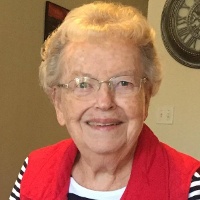
Marilyn J. Wagner

Marilyn J. Wagner, 86, died Sunday, July 7, 2019 in Dodge City, following a short illness.

She was born November 13, 1932 on the family farm near Offerle, KS. She was the daughter of Cecil and Mabel (Frolich) Offerle, Sr. She graduated from Offerle High School and received her Bachelors Degree from Fort Hays State University. She was a Music Teacher and Librarian for the Bucklin School District for over 38 years, retiring in 1993.

She was a longtime member of the Redeemer Lutheran Church in Bucklin and a member of Holy Cross Lutheran Church in Dodge City, where she was a Sunday School Superintendent, member of Mary Martha Guild and Ruth Guild, and served on the Holy Cross Board of Education. She was the longtime church organist at Bucklin and Dodge City until her health recently prevented her from playing. She was also a member of the National Education Association, Retired Teachers Association, Sew Sassy Sewers quilting group, and a Board Member of the Community Garden. She was an avid gardener, enjoyed sewing and quilting, doing ceramics with friends, KU Basketball, and loved reading. Her granddaughters were the light of her life.

On August 16, 1959 she married Henry “Bob” Robert Wagner at Kinsley. He preceded her in death on March 13, 2016.

Survivors include: her son, Kent Wagner and wife Casey, Holcomb, Kansas; her daughter, Elaine McDaniel and husband Jeff, Dodge City; 2 sisters, Maurine Jenkins, Greensburg and Dolores Moss and husband Tom, Steele, North Dakota; 5 granddaughters, Shelby Waldman and husband Jerod, Whitney Doan and husband Taylor, Courtney McDaniel, Morgan Wagner and Chelsea Wagner and significant other, Andrew Jost; and two great-grandchildren, Charlotte Waldman, and Baby Doan due in December.

She was also preceded in death by her parents and her brother, Cecil Offerle, Jr.

Funeral services will be at 10:00 am Thursday, July 11, 2019 at Holy Cross Lutheran Church, Dodge City, with Rev. Randall Jahnke officiating. Burial will follow at Evergreen Cemetery, Offerle. Visitation will be Wednesday from 10:00 am to 8:00 pm with the family present from 5:00 pm to 7:00 pm at Ziegler Funeral Chapel, Dodge City.

The family suggests memorials to the Holy Cross Lutheran Church Organ Fund or the American Cancer Society via The Cancer Center of Kansas both in care of Ziegler Funeral Chapel, 1901 N. 14th Ave., Dodge City, Kansas 67801.

Gov. appoints executive director to Office of Native American Affairs

OFFICE OF GOV.

TOPEKA – Gov. Laura Kelly today announced the appointment of Chris Howell as executive director of the Office of Native American Affairs and Governor’s Tribal Liaison.

The Native American Affairs office serves as the liaison for the governor to ensure that Native American concerns and needs are addressed in state policymaking.

“Chris will step into this important role with a breadth of relevant and meaningful experience in both the public and private sector,” Kelly said. “I appreciate his willingness to serve in such an important capacity, and help work toward positive state-tribal relations.”

Howell, of Lawrence, most recently served as Director of Tribal Relations for Burlington Northern-Santa Fe Railway, and was involved in tribal outreach and communications with more than 86 tribal nations located along the BNSF railway system. Howell has served multiple state administrations, including as Interim Executive Director and Chief Operating Officer of the Kansas Arts Commission. He graduated with a B.A. in business from Emporia State University.

Howell is a citizen of the Pawnee Nation of Oklahoma.

Governor appoints facilitator to Kansas Criminal Justice Reform Commission

Reggie Robinson (Photo courtesy University of Kansas)

OFFICE OF GOV.

TOPEKA – Today Governor Laura Kelly announced Reggie Robinson as the facilitator for the Kansas Criminal Justice Reform Commission.

“Reggie has a distinct and esteemed background that will contribute greatly to this position,” Kelly said. “Kansas needs comprehensive criminal justice reform, and Reggie will be integral to this effort.”

Robinson, a Lawrence resident, currently serves as Vice Chancellor for Public Affairs at the University of Kansas. Previously, Robinson served as the director of the School of Public Affairs and Administration from July 2014 – August 2017. He was a professor of law and Director for the Center of Law and Government at Washburn University. Robinson was a White House Fellow and Special Assistant to Attorney General Janet Reno in 1993. He served as Deputy Associate Attorney General of the U.S. from 1996 – 1997, and Acting Director for Department of Justice’s Office for Victims of Crime from 1997 – 1998.

Robinson received his undergraduate and graduate law degrees from the University of Kansas. He also served in the U.S. Army as an active duty field artillery officer.

The Kansas Criminal Justice Reform Commission was created as part of HB 2290, which passed during the 2019 legislative session. The governor appoints one criminal defense attorney or public defender, one member representative of the faith-based community, and one facilitator to provide administrative assistance to develop a project plan and assist the Commission in its duties. This facilitator is not a member of the Commission.

UPDATE: Lawsuit alleges deputy forced out after reporting sex assault

LEAVENWORTH (AP) — A former Kansas sheriff’s deputy alleges in a lawsuit that she was forced out of her job after reporting that a fellow deputy had sexually assaulted her.

The suit, filed Monday in federal court, says the Leavenworth County Sheriff’s Office fostered a culture of sexual harassment throughout the plaintiff’s employment. The Kansas City Star reports it also says that after a two-month suspension, her abuser returned to work with no further disciplinary measures.

The sheriff’s office declined to comment on the suit because the office has not been officially served with the documents. The Star generally doesn’t name victims of sexual assault without their permission. Lauren Allen, the woman’s attorney, said it took her client “a lot of strength and courage for her to come forward but she looks forward to her day in court.”

According to the suit, the plaintiff and her alleged abuser became friends while working together. She alleges that he went to her house in January 2018 to discuss the nature of their relationship and she insisted that they were nothing more than friends. The suit says he then cornered her, forced her to kiss him and performed oral sex on her. The suit says the woman felt that her only option while being cornered was “to reciprocate.”

The next day, the suit says, the male deputy cornered the woman at work and attempted to kiss her again. After reporting what happened in March, a meeting that was held that led to a criminal investigation. The male deputy was placed on a different shift after returning from work after a two-month suspension. But the suit said the woman still saw him often, causing her anxiety and panic attacks.

She was told in May that prosecutors had declined to press charges and that he could not be fired due to “employment laws.”

The suit said that the sheriff agreed to transfer the woman, but the transfer was rescinded two weeks later and replaced with an offer of a civilian position with a pay cut. According to the suit, the woman rejected the offer and in July was “constructively discharged,” a term that refers to an employee resigning as a result of a hostile work environment.

Mollie Hill, general counsel for The Leavenworth County Sherriff’s office, said the deputy accused in the assault is still employed as a detention officer.

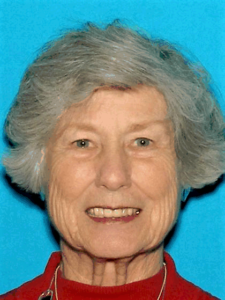
Kansas man on horseback finds missing 87-year-old woman

STERLING (AP) — A man on horseback has found a missing 87-year-old Kansas woman with Alzheimer’s.

KWCH-TV reports that 76-year-old Garry Battey was out riding when he found Vonita Renae Colle safe Tuesday about a quarter mile from her home in Sterling. Colle had been reported missing Monday, leading to a search. Battey says the Lord told him where to go.

Colle was taken to a hospital for evaluation, and a statewide Silver Alert for her was canceled.

Hays man charged with having sex with underage girl

By JONATHAN ZWEYGARDT
Hays Post

A 21-year-old Hays man faces the possibility of nearly five years in prison after being charged with having sex with an underage girl.

Michael Allen Epke was arrested last month and charged with aggravated indecent liberties with a child in Ellis County District Court on June 24.

According to Ellis County Attorney Tom Drees, Epke is accused of having sex with a 15-year-old from January to June 2019.

Drees said because Epke has no prior criminal history, he faces 59 months in prison if convicted of aggravated indecent liberties.

The filing of criminal charges are merely allegations of criminal wrongdoing, Drees said. The defendant maintains a presumption of innocence unless and until they are proven guilty in a court of law.

President approves disaster assistance for Missouri residents

By BRENT MARTIN
St. Joseph Post

ST. JOSEPH, Mo. — A pending request from Missouri for federal disaster assistance to come to the aid of families and individuals who suffered loss from this year’s floods and other disasters has been approved by President Donald Trump.

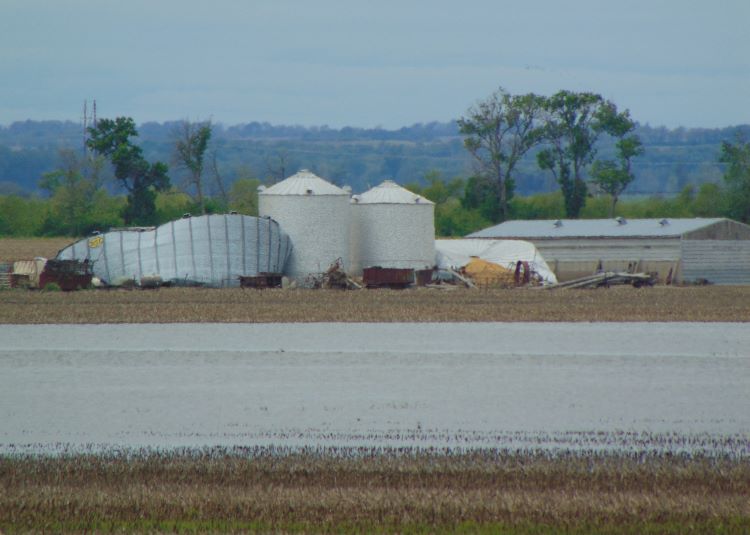
The office of Gov. Mike Parson reports the president approved the state request for individual assistance to offset losses to residences and businesses in 20 counties. The assistance covers natural disasters – floods, tornadoes, and severe storms – that began April 29th. Earlier, the president approved a disaster assistance package to offset recovery costs borne by local governments.

The federal Individual Assistance program will be made available to eligible residents in Andrew, Atchison, Boone, Buchanan, Carroll, Chariton, Cole, Greene, Holt, Jackson, Jasper, Lafayette, Lincoln, Livingston, Miller, Osage, Pike, Platte, Pulaski, and St. Charles Counties. Residents in these counties can now register for Federal Emergency Management Agency (FEMA) assistance with temporary housing, housing repairs, and the replacement of household items.

“This is important news for Missouri families and communities that have been hit so hard by the continuing flooding, tornadoes, and severe storms this year,” Gov. Parson said in a written statement released by his office. “While Missourians have been working hard to rebuild and pull together to support one another – as we always do – the President’s action means important federal assistance will be available to help Missouri families recover in these 20 counties. I urge them to register for FEMA assistance now. I appreciate President Trump making federal assistance available.”

Missouri made its request June 24th. The state’s Preliminary Damage Assessments examined 1,650 primary homes, of which 953 had been destroyed or sustained major damage. The assessments also showed that 125 of 251 businesses that were examined had been destroyed or sustained major damage. The assessments were conducted jointly by the State Emergency Management Agency (SEMA), FEMA, the U.S. Small Business Administration (SBA) and local officials.

The governor’s office says Individuals and families who sustained damage or losses due to the flooding and severe storms from April 29 and after in one of the Missouri counties included in the Individual Assistance disaster declaration can register for disaster assistance by going to www.DisasterAssistance.gov or by calling FEMA’s toll-free registration number, 1-800-621-FEMA (3362), from 7 a.m.-10 p.m., seven days a week. If you use a TTY: 1-800-462-7585. The faster people register with FEMA, the faster they may be able to receive assistance.

FEMA disaster assistance to eligible individuals generally falls into these categories:

·        Housing Assistance may be available for up to 18 months for displaced homeowners or renters whose primary residences received major damage or were destroyed. Funding also can be provided for housing repairs and replacement of damaged items to make homes habitable.

·        Other Needs Assistance may be available for other disaster-related expenses, including essential household items, moving and storage, vehicles, medical and dental, child care, funeral and burial, and some clean-up items not covered by insurance and other assistance programs.

·        Low-Interest Disaster Loans are available after a disaster for homeowners and renters from the U.S. Small Business Administration to cover uninsured property losses. Loans may be available for repair or replacement of homes, automobiles, clothing, or other damaged personal property. Loans are also available to businesses for property loss and economic injury.

·        Other Disaster Assistance Programs include crisis counseling, disaster-related unemployment assistance, disaster case management, legal advice and assistance, including income tax, housing issues, consumer protection, Social Security, and veterans’ benefits.

Those who suffered losses from natural disaster should continue to document the losses, including take photographs and keeping receipts for repairs. SEMA is working with FEMA to identify locations where FEMA will operate Disaster Recovery Centers to assist flooding survivors with answers to their questions and help with registering for assistance. The deadline for most Individual Assistance programs is 60 days after the disaster has been declared by the president.

This is the second disaster declaration for Missouri. On May 20, President Trump approved Gov. Parson’s request for a major disaster declaration to help local governments and nonprofit agencies in Andrew, Atchison, Buchanan, Carroll, Chariton, Holt, Mississippi, New Madrid, Pemiscot, Perry, Platte, Ray, and Ste. Genevieve counties. The FEMA Public Assistance disaster declaration will allow those counties to receive FEMA assistance for the repair and rebuilding of damaged roads, bridges, and other infrastructure and eligible emergency response costs due to flooding and severe storms that occurred from March 11 to April 16.

Damage assessments continue throughout the state after Missouri suffered through flooding and severe storms, including the May 22nd tornado that ripped through Jefferson City. Tornadoes also did damage to Eldon and Carl Junction.
Copyright Eagle Radio | FCC Public Files | EEO Public File