Author: Hays Post

Herman Joseph, Bricker
Herman Joseph, Bricker, 79, of Cushing, Oklahoma, and former Russell, Kansas, resident died on Sunday, November 3, 2019, at the Drumright Nursing Home in Drumright, Oklahoma.
Services are pending at this time for 10 A.M. on Friday, November 08, 2019, at the Pohlman-Varner-Peeler Mortuary in Russell, Kansas.
Pohlman-Varner-Peeler Mortuary of Russell, Kansas, is in charge of the funeral service arrangements.
A complete obituary is pending.
Kansas City to vote on removing King’s name from street
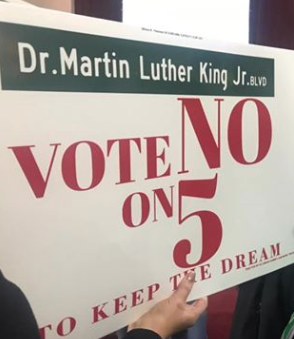
KANSAS CITY (AP) — Emotions that simmered for nearly a year over the renaming of an historic major thoroughfare in Kansas City, Missouri, for the Rev. Martin Luther King Jr. led to a tense scene at a black church as get-out-the vote efforts wound down ahead of residents going to the polls.

About 100 supporters of keeping the King name for the 10-mile boulevard were at a rally to court voters Sunday when opponents walked into the Paseo Baptist Church and stood along its two aisles. Those against the King name stood silently and did not respond to calls for them to sit down. Several speakers and people in the crowd told them they were being disrespectful.
On Tuesday, the debate will end, as voters decide if Kansas City’s reputation as one of the largest cities in the U.S. without a street named for the iconic civil rights leader will cease. The boulevard had been named The Paseo, and a group named Save the Paseo collected 2,857 signatures in April — far more than the 1,700 needed — to have the name change put to a public vote. Many of the opponents who stepped inside the small church along the boulevard Sunday were wearing Save the Paseo T-shirts at the voter rally.
Many supporters of the Martin Luther King name have suggested the opponents are racist, saying Save the Paseo is a mostly white group and that many of its members don’t live on the street, which runs north to south through a largely black area of the city. They say removing the name would send a negative image of Kansas City to the rest of the world, and could hurt business and tourism.
Supporters of the Paseo name bristle at the allegations of racism, saying they have respect for King and want the city to find a way to honor him. They are opposed to the name change because they say the City Council did not follow city charter procedures when deciding on the name change and didn’t notify most residents on the street about the proposal. They also say The Paseo was an historic name for the city’s first boulevard, which was completed in 1899. The north end of the boulevard is listed on the National Register of Historic Places.
The City Council voted in January to rename the boulevard for King, responding to a yearslong effort from the city’s black leaders and pressure from the local chapter of the Southern Christian Leadership Conference, a civil rights organization that King helped start.
U.S. Rep. Emanuel Cleaver, a minister and former Kansas City mayor who has pushed the city to rename a street for King for years, was at Sunday’s rally. He said the protesters were welcome, but he asked them to consider the damage that would be done if Kansas City removed King’s name.

“I am standing here simply begging you to sit down. This is not appropriate in a church of Jesus Christ,” Cleaver told the group.
Tim Smith, who organized the protest, said it was designed to force the black Christian leaders who had mischaracterized the Save the Paseo group as racist to “say it to our faces.”
“If tonight, someone wants to characterize what we did as hostile, violent, or uncivil, it’s a mischaracterization of what happened,” Smith said. “We didn’t say anything, we didn’t do anything, we just stood.”
The Rev. Vernon Howard, president of the Kansas City chapter of the SCLU, told The Associated Press that the King street sign is a powerful symbol for everyone but particularly for black children.
“I think that only if you are a black child growing up in the inner city lacking the kind of resources, lacking the kinds of images and models for mentoring, modeling, vocation and career, can you actually understand what that name on that sign can mean to a child in this community,” Howard said.
If the sign were taken down, “the reverse will be true,” he said.
“What people will wonder in their minds and hearts is why and how something so good, uplifting and edifying, how can something like that be taken away?” he said.
But Diane Euston, a leader of the Save the Paseo group, said The Paseo “doesn’t just mean something to one community in Kansas City.”
“It means something to everyone in Kansas City,” she said. “It holds kind of a special place in so many people’s hearts and memories. It’s not just historical on paper, it’s historical in people’s memory. It’s very important to Kansas City.”
Preventing identity theft is topic of meeting

“How to Prevent Identity Theft” will be the topic of the Hays After 5 Christian Women’s meeting from 7 to 8:30 p.m. Monday, Nov. 11. The event will take place at the Rose Garden Banquet Hall, 2250 E. Eighth.
Speaking will be Kristen Schmidt with the Hays office of the Northwest Kansas Area Agency on Aging.
“This is a topic that all women need to be educated about, so we invite women of all ages to attend,” said Linda North, program chair.
Also on the program will be inspirational speaker Marti Ford of Topeka. Ford said for several years she lived in fear and tried to control life. After several tragic events, including divorce, she said she began to see that some of her problems were “self-inflicted.”
Ford will share how she took steps to be an “overcomer” in her presentation titled “Moving From a Life of Fear to Trust and Peace.”
Cost of the dinner program is $12.50. Reservations are due by Thursday to (785) 202-1036 or to [email protected]. Hays After 5 is affiliated with Stonecroft Ministry of Overland Park.
Cover photo courtesy https://www.canstockphoto.com
Police identify 36-year-old woman who died in gas leak at Kan. home
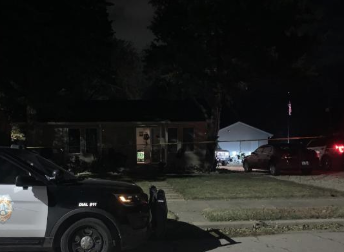
SHAWNEE COUNTY — Law enforcement authorities are investigating a gas leak that left one dead and have identified the victim.

Just after 8p.m, Friday the Topeka Fire Department was dispatched to possible gas leak at a residence in the 900 block of SW Warren in Topeka, according to Lt. Shane Hilton.
Topeka Police were requested to assist with forcing entry into the home. Once inside, first responders found a woman later identified as 36-year-old Brandi Prchal. She was pronounced deceased by medical personnel.
A second person was taken to the hospital in serious condition.
Due to suspicious circumstances witnessed by the responding officers, the residence was secured and Crime Scene Officers and Detectives were investigating the scene, according to Hilton.
Authorities have not released the cause of Prchal’s death or additional details.
HAWVER: Revenue report will set the stage for Kan. policy decisions


The Kansas Statehouse is going to shake Thursday afternoon, when a group of economic/tax/business experts deliver the Consensus Revenue Estimate (CRE) for the state for the upcoming fiscal year.
That obscure document will become the legislative basis for the budget for the remainder of this four-month-old fiscal year, and the number on which the upcoming legislative budget machinations will be based.
And…while the state is looking a little better in terms of revenues—that’s the taxes you have paid—there remains all that talk about a recession that would reduce state receipts.
While the CRE talks about the state of the Kansas economy and makes observations and predictions about the state’s health, the real key will be the prediction of the movement up or down and by how much of the State General Fund (SGF).
It is the SGF which is the fuel for almost everything Gov. Laura Kelly will propose in her upcoming—second—budget as governor, and almost everything the Legislature will do in this upcoming session, after which House and Senate members will stand for re-election.
Will there be enough revenue flowing into the SGF to make good on its spending approved last session for the remaining months of this fiscal year? Will there be enough revenue flowing into the SGF for meeting the state’s expenses, to pay the bills that it agreed to last year?
And…will there be enough money to expand programs that are beneficial to the state and its people, and which people?
Nope, the CRE isn’t likely to become the topic of discussion in many bars across the state, but it is going to be a major factor when the upcoming session convenes in January.
If revenues remain stable…well, that’s good news because it probably means that the state can meet its obligations—and remember, those obligations include a boost in spending on K-12 schools over the next four years which lawmakers approved last session and which the Kansas Supreme Court is going to enforce if necessary.
But for nearly everything else ranging from spending on highways to raises for state employees to ever-increasing spending on social service programs and just keeping the lights on, that CRE is the key to how Kansans live.
Will there be spare money for some sort of tax cuts that we all like? Enough that the revenue stream from, say, sales tax on food can be reduced through a tax reduction, and keep everything else running? Enough that the state can expand Medicaid to maybe 130,000 Kansans without health-care insurance, at an estimated cost of maybe $40 million?
Those are all the downstream calculations that are going to be made based on that CRE memo we’ll get later this week.
Putting together that CRE has been going on for several weeks. It’s this week that the Division of Budget, Legislative Research, the Department of Revenue and three economists from state universities will assemble their final best-guess of the money that is going to be available to finance state government for the rest of this fiscal year and next.
Remember, this is the election year legislative session, and while one can expect a little reach by lawmakers who want something catchy to campaign on, bullet points for their palm cards, such actions will cost the state money, or reduce income to the state.
And remember, also, that we are heading into an election year in which the governor’s name isn’t going to be on the ballot, and she’ll be looking into the future when she can stand for re-election and would like to have some nice moves to use in that 2022 election year.
Happy Thursday?
Syndicated by Hawver News Company LLC of Topeka; Martin Hawver is publisher of Hawver’s Capitol Report—to learn more about this nonpartisan statewide political news service, visit the website at www.hawvernews.com
Enter for chance to win FHSU Rally Towel!

Enter for chance to win FHSU Rally Towel!
SPONSORED: California Dried Fruits & Nuts sale on the way


California Dried Fruits & Nuts will be on sale Nov. 8 and 9 at Whiskey Creek Banquet Room, 3203 Vine, Hays. Selling hours are 9 a.m. to 7 p.m.
Exploring Outdoors Kansas: Mud on the boots


This time of year, when the eight-letter word “football” fills many people’s thoughts, our thoughts as hunters and trappers should dwell on another eight-letter word, “scouting.” Here in the farm country of the Midwest, game movement patterns often change from year to year and even from season to season because of annual crop rotation, weather extremes and habitat changes, among other things. Although many good hunting and trapping hotspots produce game and fur year after year, many do not because of these factors.
Annual crop rotations play a huge part in the daily lives of wildlife. Where we used to hunt deer in southern Meade County, the terrain is rather bleak and the main crop by far is wheat. There’s always some hay around for deer to eat, but the tender green wheat is their mainstay. Any changes in wheat field locations from year to year mean certain changes in deer patterns and often in their home ranges. Here around McPherson County, annual crop changes don’t have such a drastic effect because there’s always an edible field crop of some sort near a deer’s chosen home range. Crop changes here effect wildlife movement most of all. For instance, tall crops like corn and silage offer excellent cover for deer and coyotes as they travel. Movement or harvest of those crops probably won’t change where these animals hunt, feed and bed, but it will often change the way they travel to get there.
Weather extremes, namely droughts and floods change wildlife patterns dramatically. Floods have a very temporary effect as they dictate where wildlife can and cannot travel, feed, hunt and bed during those times of high water. When the waters recede, life soon goes on again as usual. Drought on the other hand can have a long-lasting effect on wildlife patterns as they are often forced to relocate nearer to the few sources of water.
Habitat changes probably have the most effect on wildlife patterns. Removing overgrown tree and fence rows, bulldozing old orchards, tearing down and cleaning up old buildings in overgrown woodlots and even new construction such as building a new home on a previously empty and overgrown lot all destroy travel ways and hunting areas of local wildlife.
So, what to do? It’s called “mud on the boots!” Physically getting out into the areas you plan to hunt and trap before season is the only way to compensate for man and natures changes. Trail cameras are a good way to do that’ especially for deer. Hanging it near a trail will soon show you if the trail is used, by what and how often. Another good way is scouring the area for tracks. Be it deer, raccoons or coyotes every creature has four feet and wherever you find tracks you can bet the animal belonging to those four paws was mighty close! Last week I drove into and walked some new property I have permission to trap. I was becoming disappointed at the few coyote tracks I saw…until I crossed over a brushy overgrown lane into another field and suddenly found more coyote tracks than I’d ever hoped to see. I had walked that field this summer and found nothing, proving my point about seasonal wildlife patterns.
Even in this age of digital trail cameras and GPS technology the best and most reliable scouting tool available to the hunter and trapper is still the farmer and land owner. If you have permission to harvest game on their land, they are usually more than happy to talk with you about where and when they see that game, especially deer and coyotes, and no one knows that better than the farmers.
Just like we have to find new ways to travel around construction projects, or choose a new place to shop when our favorite grocery store is closed, so wildlife must adapt to the ever-changing world in which they live. So, to remain successful harvesters of that wildlife, we must occasionally get “some mud on our boots” and adapt our harvesting strategies to their changes…Continue to Explore Kansas Outdoors.
Steve Gilliland, Inman, can be contacted by email at [email protected].
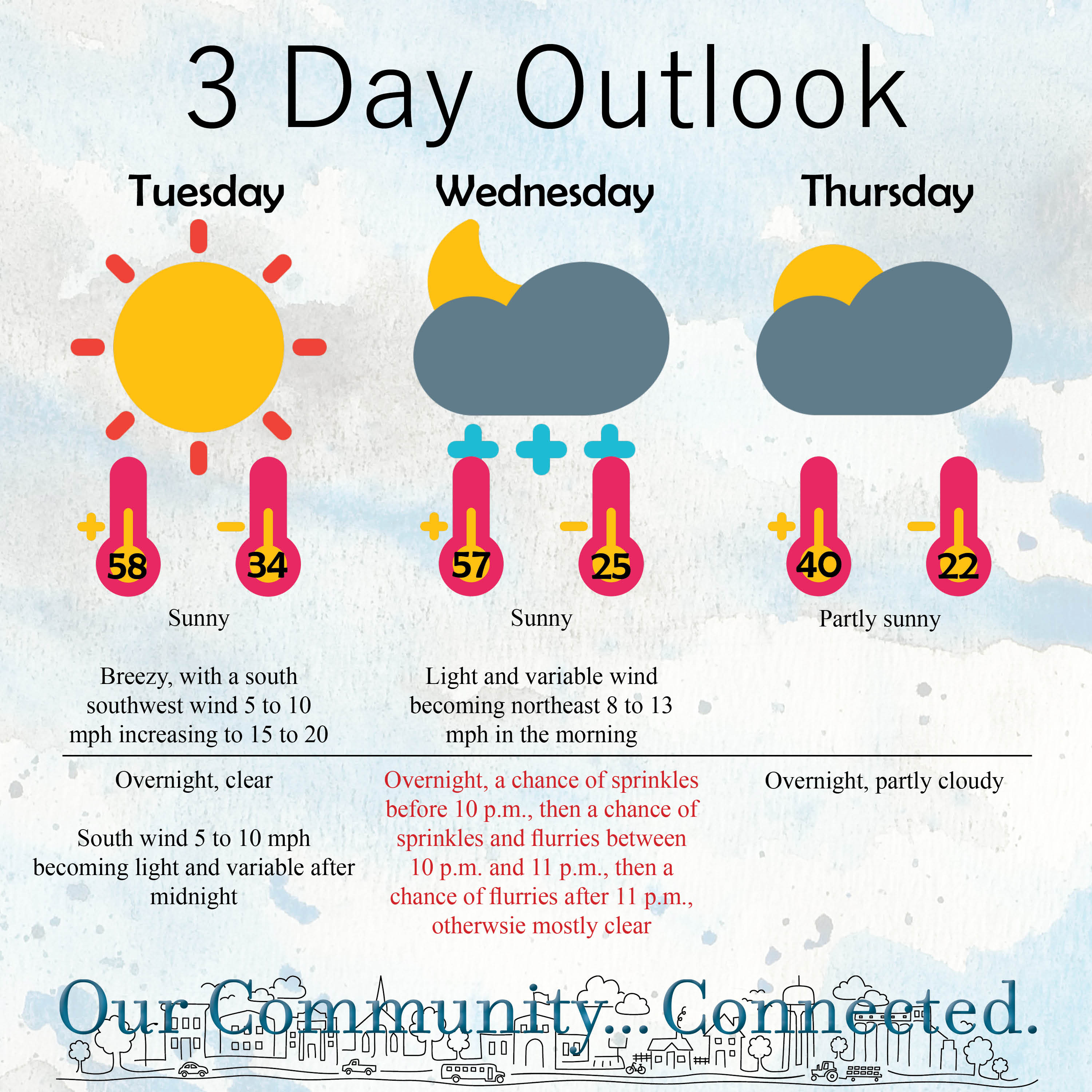
Three-day weather outlook


Grow Hays accepting applications for board positions

 Grow Hays is accepting candidate applications for board of director positions that will open in 2020. There will be three open positions the board will fill.
Prospective candidates must be willing to serve a three-year term. The Grow Hays Board meets a minimum of once a month, on the fourth Wednesday of the month at 3:30 p.m. Board members are occasionally asked to serve on additional committees, which meet as required.
Grow Hays is a nonprofit organization aimed at advancing the economic health and vitality of Ellis County. Long known for its efforts to promote a robust economy through business creation, retention, expansion, and recruitment, Grow Hays continues to develop and maintain strong relationships with local, state, and federal organizations in an effort to bring resources and support to businesses located in the community.
If you have any questions regarding the expectations if they are elected to the board, or the nature of the work required of Grow Hays Board member, call Doug Williams or Ernee Sly at (785) 628-3102.
Candidate applications are available at www.GrowHays.com or at BriefSpace, 219 West 10th. Deadline to apply is noon Nov. 15.

Bridge replacement over Cedar Creek planned in Smith County

KDOT
The Kansas Department of Transportation this week expects to begin a bridge replacement project along K-9 in Smith County.
Crews will be replacing the bridge over Cedar Creek located approximately one mile east of Cedar. Work this winter will consist of constructing a temporary bridge and shoofly detour in preparation for the bridge replacement work to take place next spring. The project is expected to be completed by November 2020, weather permitting.
L&M Contractors is the primary contractor with a total project cost of approximately $2.5 million. For more information, contact Phillipsburg area construction engineer Jim Riener at 785-543-2163 or [email protected].
Police complete another successful sex trafficking sting in Wichita



SEDGWICK COUNTY—Law enforcement authorities are investigating 16 more suspects on sex related charges after weekend arrests.
On Friday evening, police from the Wichita Police Vice Section, the Patrol South and Patrol West Community Response Teams and the Broadway Corridor Team worked together during a sex trafficking sting along the Broadway Corridor, according to officer Charley Davidson.
Police arrested 16 men including Melvin Teufel, Xong Vo, Terry Powers, Koby Konecne, Jamie De La Torre, Dagoberto Aguilar-Ramos, Michael Briggs, Shawn Craven, Christian Dunn, Vondell Kelly, Koby Konecne, Gerano Marin-Hernandez, Juan Martinez, Nabil Nikoula, Mark Rodriguez, Mario Sanchez and Raylon Snovelle on sex related charges. They also arrested one other man for an outstanding warrant, according to Davidson.
This the 18th sex trafficking sting in Wichita this year resulting in 154 arrests including 27 women, according to Davidson.
Police reminded that those who come to the Broadway Corridor for this activity will be arrested.