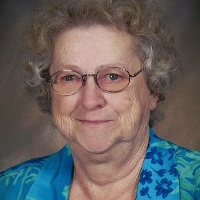
 Timothy J. “Tim” Treon, born August 1, 1942, died Saturday, June 22, 2019.
Baalmann Mortuary, 109 N. 2nd St., Atwood, Kansas, is in charge of arrangements.
Timothy J. “Tim” Treon, born August 1, 1942, died Saturday, June 22, 2019.
Baalmann Mortuary, 109 N. 2nd St., Atwood, Kansas, is in charge of arrangements.
FINNEY COUNTY — One person died in an accident just after 7:30p.m. Sunday in Finney County.
The Kansas Highway Patrol reported a 2015 Polaris RZR driven by Brian Lee Cox, 21, Cimarron, was westbound in a riverbed in the 5200 E Mansfield Road.
He overcorrected to the right and the ATV rolled. The driver was not wearing safety harness and was ejected as it overturned.
EMS transported to St. Catherine’s Hospital where he died. A passenger in the ATV Kenny Adrian Wall Penner, 21, Ingalls, was not injured.

HAYS – Even an hour-long weather delay couldn’t stop the Hays Larks offense as they scored in all but one inning Sunday night in a 14-2 win over the Valley Center Mud Daubers at Larks Park.
Frank Leo postgame interview
Valley Center scored the game’s first run on a sacrifice fly in the top of the first inning as Larks starter Ryan Ruder struggled in the inning. He allowed a run on a hit and a pair of walks in the inning but after allowing the first four hitter he faced to reach base Ruder retired 11 straight on his way to his third win of the season.
The Larks scored two runs in the bottom of the first on a Justin Lee RBI double and a Brook Brannon sacrifice fly to give Hays the 2-1 lead.
In the second inning the Larks sent 11 to the plate and scored seven runs. Alex Strachen, Matt Cavanagh and Hernan Yanez each singled home a pair of runs in the inning and Justin Lee added a sacrifice fly as the Larks built a 9-1 lead through two innings.
In the fourth inning Yanez singled in two more runs and Drake Angeron single home a run giving Hays a 12-1 lead.
Strachen drove in his third run of the game with a sacrifice fly in the fifth and Angeron drove in his second run of the game on a fielder’s choice in the sixth.
Valley Center added a solo homerun in the seventh as Hays earned the 14-2 win in seven innings.
Yanez finished three-for-three with four RBI’s and Strachen finished one-for-three with three RBI’s.
Ruder allowed just the one run on one hit in four innings as he improved to 3-0.
The Larks are now 16-4.
The two teams will game three of the four-game series Monday at Larks Park.
MEADE COUNTY – A woman arrested on a highway in southwest Kansas two months ago remains jailed in Meade County. She was indicted Thursday on drug trafficking charges, according to U.S. Attorney Stephen McAllister.

Dora Elizabeth Arteaga, 42, Houston, Texas, was charged with one count of possession with intent to distribute cocaine. A Kansas Highway Patrol trooper stopped Arteaga April 14, near Plains, Kansas.
The indictment alleges officers found approximately 4.4 pounds of cocaine in a bag behind the driver’s seat.
If convicted, Arteaga will face a penalty of no less than five years and no more than 40 years in federal prison and a fine up to $5 million.
McPherson – The Hays Eagles Senior American Legion used a pair of big innings to pick up a 12-2 win over the Enid Oklahoma Plainsmen Saturday at the Hooper Showcase in McPherson.
The Eagles got the scoring started with eight runs in the second and added four more in the third inning.
In the eight run second Justice Dotts got the scoring started with a bases loaded walk. William Sennett followed that with a two-run single and then Dotts stole home on a double-steal to give Hays a 4-0 lead.
Two batters later Trey Riggs cleared the bases with a double to put Hays up 7-0 and then Colby Dreiling drove in a run on a fielder’s choice to put Hays up 8-0.
In the four-run third inning the Eagles scored single runs on a wild pitch and a sacrifice fly to go up 10-1.
Brock Lumus then capped off the inning with a two-run homerun giving Hays the 12-1 lead.
Enid did get a run back in the fourth but Hays was able to earn the 12-2 run-rule win in four innings.
Tate Garcia allowed one run on two hits in three innings of work and earned the victory.
Riggs drove in four runs and Sennett and Lumus each had two RBI’s.
The Eagles were scoreless in the second inning of their game with the Topeka Scrappers when severe weather moved in forcing the remainder of the tournament to be cancelled.
With the win the Eagles improve to 15-5 on the summer they are scheduled to play a doubleheader in Great Bend Tuesday.
KANSAS CITY (AP) — Some U.S. Department of Agriculture researchers are reluctant to move across the country to the Kansas City area when two research agencies move there.

The USDA announced plans earlier this month to move the Economic Research Service and National Institute of Food and Agriculture closer to farmers and agribusinesses they serve, and many employees have objected to the move from the Washington D.C. area.
USDA researcher Andrew Crane-Droesch tells the Kansas City Star the move is out of the question.
“It’s a mixture of outrage and resignation,” Crane-Droesch said of morale at his office. “Nobody wants to move — nothing against Kansas City.”
He said he doesn’t want to live far from his aging parents on the East Coast, and his wife has better career options in the Washington area. And the couple is in the middle of adopting.
When officials announced the move to employees of both agencies, employees turned their backs on the Agriculture Secretary.
Critics say the research agencies have lost veteran employees and been unable to fill vacancies since the USDA announced last year it was considering moving their headquarters. Opponents also argued that moving them will make it harder for federal policymakers to get objective research that might raise questions about President Donald Trump’s policies.
USDA officials say the move will save about $20 million a year on rent and other costs, which will provide more money for research.
Losing some employees is expected in this kind of move, said Dan Levine, who advises companies on relocations at Oxford Economics. He said that is why it is more common for companies to open a new office instead of closing one location and moving everyone to a new location.
“Clearly when you move people from D.C. to Kansas City, the first thing you have to worry about is retention,” Levine said. “I would expect a high amount of turnover on a move like that. And that might be something that they can for whatever reason tolerate.”
Kansas City area economic development officials are excited about the prospect of nearly 550 new jobs in the area that will pay between $80,000 and $100,000 a year.
Kansas City Area Development Council CEO Tim Cowden said his group is committed to helping federal employees and their families make the move to Kansas City.
“We understand and empathize with the families and the employees,” Cowden said. “It’s a huge move, it’s a huge transition.”
HUTCHINSON, Kan. (AP) — This spring’s heavy rain and flooding will cause significant economic losses at many of the state’s 28 parks, both from damage and from closures and refunds to disappointed campers, state parks officials said.

Brad Loveless, secretary of the Kansas Department of Wildlife, Parks and Tourism, said the losses will be clearer in a month or two when the cost of repairs and renovations are better known. The agency relies chiefly on entrance permits, campsite and cabin rental fees, and marina concessions to fund state parks.
Already, the agency’s park fee fund is down about $100,000 for April and May compared with a year ago because of a loss in entrance fees and campsite fees. Income from cabin rentals is down by $30,000 for those two months compared with a year ago.
Those figures don’t include all the refunds the department has been processing, “which is significant in June,” according to agency spokesman Ron Kaufman. Other losses occurred in marina concessions and from moving the Country Stampede’s move from Tuttle Creek State Park to Topeka’s Heartland Motorsports Park.
So far, the agency hasn’t asked the state for special help, with regular staff and seasonal workers managing the cleanup.
“We will need state assistance for repairing damages and for cash flow if revenues drop significantly,” Kaufman said.
Loveless said the damage is being documented and he is hopeful the state will receive help from the Federal Emergency Management Agency.
Kaufman noted that lakes in western Kansas, which were down because of drought, rose because of the rains but didn’t flood and are in “great shape.”
Parks also benefit from Kansas Lottery dollars and can obtain federal grants for projects. But the parks don’t receive money from the state general fund and revenue from the sale of hunting, fishing and fur harvesting licenses and permits cannot be spent for state park operations or maintenance and repairs.
Last year, the Park Fee Fund and Cabin Fund generated more than $10.5 million during the fiscal year, with nearly 6.9 million people visiting Kansas parks.
The high water caused several state parks to cancel campsite reservations for Memorial Day weekend, which is one of the top three periods for most parks. The Fourth of July is another peak time and some parks will have certain campsites unavailable then, too.
Cleanup and restoration will take months.
The many projects at the parks include hauling away debris, re-installing water heaters and electrical components, repairing or rebuilding boat ramps and docks, repairing some cabin flooring and cutting and removing fallen trees. Some roads in the parks also will need repair.
“Hundreds of acres of grass” will have to be replanted, and “mountains of debris removed,” Kaufman said.
Kaufman said the agency has a small, in-house engineering staff and engineering consultants to help design and oversee major repairs, and contractors will be used as necessary.
___
LAWRENCE, Kan. (AP) — A man on trial over an October 2017 shooting in downtown Lawrence that killed three people and wounded two others has testified he wasn’t “thinking at all” when he fired his gun.

Testimony ended Friday in the Douglas County District Court trial of 22-year-old Anthony Roberts Jr. of Topeka. The charges against him include two counts of first-degree felony murder.
Roberts contends he acted in self-defense after being confronted by a hostile group as bars prepared to close in a popular downtown area. Prosecutors contend Roberts and friends came to Lawrence to “settle a score.”
The shooting killed 22-year-old Leah Brown of Shawnee; 20-year-old Colwin Lynn Henderson of Topeka; and 24-year-old Tre’Mel Dupree Dean-Rayton of Topeka.
The jury is set to hear closing arguments Monday.
TOPEKA, Kan. (AP) — The Kansas Supreme Court has refused to shorten the time a man will spend in prison over a November 2014 murder in McPherson County that authorities say he planned.

The court ruled unanimously Friday against Samuel Darrah of McPherson. He pleaded no contest to charges including first-degree murder and attempted aggravated kidnapping in the stabbing of James Croft.
Authorities said Darrah plotted Croft’s murder because he had given Croft $3,200 to buy drugs and Croft did not supply them. A friend of Darrah’s stabbed Croft.
The trial-court judge sentenced Darrah to 25 years to life for murder and to eight-plus years for kidnapping and ordered the sentences served one after the other. Darrah said he should serve them at the same time.
The Supreme Court called the judge’s action reasonable.

KU NEWS SERVICE
LAWRENCE — For decades, the federal government has used housing vouchers as part of a strategy to help low-income Americans obtain affordable housing as a way out of poverty. Part of that strategy was to help individuals and families settle closer to employment opportunities, but new research shows that proximity to jobs may not be as crucial as previously thought.
Kirk McClure, professor of urban planning in the University of Kansas School of Public Affairs & Administration, has co-written a study examining a national dataset of households receiving support from the Housing Choice Voucher Program from the U.S. Department of Housing and Urban Development. The analysis showed that recipients tended not to locate in neighborhoods that are closer to areas with high job availability compared to their previous neighborhoods and that when they do move to such areas, it does not result in higher earned income.
“We have assumed for a long time that if a household locates in a neighborhood with a lot of jobs, or at least not as much competition for jobs, that’s good,” McClure said. “Congress has not wanted this program to be a form of welfare but a way to move out of poverty and into gainful employment.”
 McClure co-wrote the study with Michael Lens of the University of California Los Angeles and Brent Mast of the U.S. Department of Housing and Urban Development, Office of Policy Development and Research. It was published in the journal Cityscape. The authors set out to determine if very low-income renter households using the program, known as HCV households, move closer jobs, and if they do, whether the moves are associated with higher income. McClure and co-authors analyzed data from HUD, which included about 2 million households. Of those, approximately half were included in the study, as they were adults in the workforce, and the other half were not in the workforce due to age or disability. The data showed no association between proximity to jobs and HCV households or an increase in earnings for those who relocated closer to jobs.
“The data says people who move don’t necessarily have higher employment or earnings,” McClure said. “That suggests we may have been using this program in not the absolute best way for 25 years, and it says to me of the linkage between place of residence and place of employment is not as important as we thought.”
Other factors are almost certainly at play, the authors point out. Available transportation for HCV households was not accounted for in the study, and HCV households with vehicle ownership are more likely able to commute farther distances to jobs and services without the necessity to move. Access to public transportation also plays a role, and if a recipient moves closer to jobs, but public transit is lacking, that can be reflected in an inability to reliably get to work, get kids to school and access other basic services.
Proximity to good schools and other neighborhood characteristics play a role as well. The authors point out that many recipients likely look at those characteristics before job proximity when deciding where to move. Families show a tendency to move to neighborhoods in good school districts that are more suburban by nature and not as close to high job-density areas. Landlord resistance is another common obstacle in HCV household relocation. Landlords are under no obligation to rent to voucher recipients and can legally choose not to rent their property to voucher recipients.
McClure said the results make several points clear. First, researchers and policymakers must rethink the “geography of opportunity.” That is the driving idea behind such programs that seek to help low-income families move to new neighborhoods. Moving away from high crime areas is one factor, but what makes a desirable neighborhood is less clear. If proximity to jobs is not as important as once thought, factors such as access to transportation must be more closely studied.
“We need to rethink what it means to be a high opportunity neighborhood,” McClure said.
Second, annual report cards that are provided to the more than 2,700 housing authorities across the country that take part in HCV programs need rethinking as well. HUD has long graded housing authorities on the quality of the neighborhoods where HCV households locate. Proximity to jobs is likely overvalued in those rankings, again in respect to other factors such as access to transportation. In addition, landlord outreach needs to be strengthened. As landlords are not under an obligation to rent to voucher recipients, housing authorities should be able to offer incentives to landlords such as guaranteeing rent and guaranteeing occupation of set numbers of available units, among others, McClure said.
While policy has long focused on the proximity to jobs for housing choice vouchers, McClure and co-authors argue that the absence of data to support a benefit does not mean the programs are not working. Instead, policy should take into account other factors.
“Ultimately, we think that the rational policy response to these findings should be to keep the importance of job proximity in perspective. Evidence of the importance of job proximity for HCV households is simply not sufficient to warrant that it be as high a priority as are safe neighborhoods and access to high-quality schools,” the authors wrote. “HCV households are a diverse group, however, and for households in the workforce and without access to reliable transportation, proximity to jobs is worth paying attention to without allowing it to override concerns that evidence suggests may be more important.”
 MCDONALD COUNTY, Mo. — A Kansas man died in an accident just after 6:30p.m. Friday at the Elk River below the low head dam at Noel, Missouri.
An unidentified woman swimming was swept underwater by the dam, according to the Missouri State Highway Patrol.
Jacob T. Farley, 26, Wichita, entered the water downstream in an attempt to rescue her.
A fire crew from Noel arrived on the scene and used a throw rope to rescue the woman. Farley drowned. The McDonald County Coroner pronounced him dead at the scene.
A GoFundMe account has been started to raise money for his family. Farley leaves behind a 3-year-old son.
 Janice LaRue Coker, 88, died June 22, 2019, at Woodhaven Care Center, Ellinwood. She was born April 16, 1931, in rural Rice County, Kansas, the daughter of Samuel Franklin and Lucy Mathilda (Allinger) Stackhouse. Janice graduated from Bushton High School in 1949.
On September 4, 1949, she married Kenneth Victor Coker in Bushton. He preceded her in death on September 19, 1972.
A longtime Hoisington resident, Janice was a homemaker, a seamstress for Suburban Cleaners, and the custodian for the First United Methodist Church for 12 years.
She was a member of First United Methodist Church and the United Methodist Women. She also volunteered at Friendship Meals. Janice loved cooking and canning everything she grew in her garden. She was an accomplished seamstress, she made clothing and quilts for all of her grandchildren, and also taught them how to sew, crochet, and embroider. She loved spending time with her family, especially the holidays where she would cook a big meal for them.
She is survived by five children; Richard Coker (Deanna) of Hutchinson, Keith Victor Coker of Hoisington, Cheryl Coker of Hutchinson, Rita Lillard (David) of Houston, Texas, and Nancy Shives (Ron) of Hoisington; a sister, Margaret Williams of Welch, Oklahoma; 14 grandchildren, LaMonte Lillard (Crystal), Virginia Lillard (Lewis Nunez), Frank Coker (Debra), Kenny Coker, Carrie Achilles (Martin), Delbert Flanders, Sherry Smith (Garrett), Kayla Curtis (Danny), Landon Coker, Mary Coker, Janice “LaRue” Coker, Candi Coker, Golden Coker, and Darrell Shives (Amber); 34 great grandchilden and 6 great great grandchildren.
She was preceded in death by her parents, a son, Gerald Ray Coker, brother, Norman Stackhouse, and a brother-in-law, Jack Williams.
Friends may call 1 to 8 p.m. Monday, and 9 a.m. to 8 p.m. Tuesday, with family to receive friends from 6 to 8 p.m.. Tuesday at the funeral home. Funeral service will be 10 a.m., Wednesday, June 26, 2019, at Nicholson-Ricke Funeral Home Chapel, with Rev. Seong Lee presiding. Burial will follow in Clafin Cemetery, Claflin, Kansas.
Memorials may be made to the American Diabetes Association or the American Heart Association in care of Nicholson-Ricke Funeral Home, PO Box 146, Hoisington, KS 67544.
By NOMIN UJIYEDIIN
“A Clockwork Orange.” “Invisible Man.” “Twelve Years a Slave.”

Issues of Bloomberg Businessweek, Us Weekly, Elle.
“Excel 2016 for Dummies.” “Tarot Fundamentals.” “Electrical Theory.”
Over the past 15 years, the Kansas Department of Corrections banned those titles, and about 7,000 others, from its prisons across the state.
The department says it censors books and magazines that could threaten security. But others argue that the size of the list and the broad topics covered under censorship guidelines limit inmates’ education, make their time in prison that much less bearable and further cut them off from an outside world to which they’ll eventually return.
Interim corrections secretary Chuck Simmons said the department prioritizes safety over giving inmates an unlimited selection of books and magazines.
“We censor based on the impact, or potential impact, on the security and operations of the correctional facility,” he said. “There are other publications that the inmate has access to that can accomplish the same purpose in their education or rehabilitation goals.”
For example, books and magazines about tattoos are forbidden because tattooing isn’t allowed in prisons. The prisons also ban books containing descriptions of drugs and violence.
Books about electronics and information technology are considered possible security risks. “The Turner Diaries” — inspiration for the 1995 Oklahoma City bombing — and Adolf Hitler’s “Mein Kampf” are on the list.
Censorship Process
The evaluation of books and magazines begins in each prison’s mailroom, Simmons said. First, staff skim through every publication sent to inmates. Materials flagged for possible censorship then go to the mailroom supervisor at the prison in Lansing. There, a final decision is made on whether to ban a publication across the system.
“None of our staff have time to read the full content of all of the publications that come through the correctional facilities,” Simmons said. “It is a significant number.”
Inmates have the chance to appeal censorship decisions within 15 days. In the past 15 years, 1,622 appeals have been filed. Only 141 were successful. If a book or magazine is ultimately banned, an inmate must pay to have it sent back or it will be destroyed.
Simmons said the list of banned items accounts for a small percentage of the titles sent to inmates over the past 15 years. A department spokeswoman said she couldn’t provide an estimate of the total number of books and magazines received in mail rooms. But she said the state’s eight adult prisons house 100,000 books altogether.
The department said it plans to develop a training program to teach Lansing staff about censorship standards. And from now on, officials will take another look at censorship decisions about some topics, including art books, mainstream magazines, information technology and vocational skills like plumbing and welding.
Information Access
The full list of banned books surfaced when Books To Prisoners, a Seattle-based nonprofit group, tweeted the results of an open records request filed with the Kansas Department of Corrections.
Michelle Dillon, a volunteer with the organization, wrote the tweet. She works for the Human Rights Defense Center, the nonprofit that filed the records request and publishes the monthly magazine Prison Legal News. She said she was shocked by the length of the list and many of the titles on it.
“Ultimately, it comes down to control of the population, which I think is especially reflected in the breathtaking array of books that Kansas has made a decision to ban,” she said in a phone interview. “Most of them, I think that the general population would agree are very nonsensical.”
The list includes biographies of musicians such as Kurt Cobain and Tupac, memoirs by raunchy comedians Richard Pryor and Lenny Bruce and novels by bestselling authors like Nora Roberts and Dean Koontz.
Also banned are issues of comics like “Deadpool” and “The Walking Dead,” Japanese manga, and books and magazines about LGBTQ topics.
Many publications by and about people in prison also make it on the list: Prison Legal News, the Incarcerated Worker newsletter, “A Queer Prisoners Anthology,” and “Are Prisons Obsolete?” by communist and civil rights activist Angela Davis.

See the full list of banned publications in Kansas prisons here.
Dillon said limiting access to those books can severely impact inmates’ ability to learn and keep in touch with current events.
“We take for granted that we have the internet and we can look up all of these kinds of information,” she said. “But information access in prisons is extremely constrained.”
She said prison libraries are an option, but they might not offer what inmates actually want to read or learn.
“Although we love prison libraries, they don’t fulfill all of the needs that prisoners have for accessing information,” Dillon said. “They’re closed during certain hours of the day. They might be understaffed, underfunded.”
Ultimately, she says banning reading materials could go against one goal of prisons: to rehabilitate the people inside.
“Do we want to just lock people away inside of bare concrete walls for years and decades on end?” she said. “If you eliminate books, the wide range of information and ideas and engagement with the world that books represent, what are you doing for prisoners?”
N.K. Jemisin, a science fiction and fantasy author whose works are banned in Kansas prisons, agrees.
“They need to be able to read things that are actually enriching to their experience, helping them process whatever it was that they did,” she said in a phone interview. “We’ve got a problem where people go into prison and they come out worse. Maybe reading some books would help.”
Jemisin said she didn’t know why three of her books — a fantasy trilogy starring gods and demons — were censored.
“There’s nothing based in the real world happening there,” she said. “I don’t even think most of my stuff is set on Earth.”
A Connection to the Outside
Reading gave Hannah Hudson a virtual escape from her 30-day stint in the Johnson County jail. She spent much of the time reading from a cart of books. She read titles by James Patterson and Danielle Steel — authors who appear on the list of books banned in Kansas.
“Reading books honestly helps pass the time in prison,” she said. “It gets you out of your head a little bit.”
Hudson still has friends in prison in Kansas. Earlier this year, she tried to send them books so they knew she was thinking of them. But only one made it through: a Bible.

She tried sending a few others: Patterson’s “The Black Book,” novels by bestselling author David Baldacci and a subscription to Prison Legal News. But her friends received notices that the books were contraband and would be destroyed.
“James Patterson’s like gold in jail. That’s the one everybody wants to read,” Hudson said. “To see it be banned is unfortunate and shocking.”
Hudson faces federal charges for distribution of methamphetamines — the maximum sentence is life in prison. For her, reading is a way to connect to the outside world that she might be leaving behind.
“I will be incarcerated potentially for a long time,” she said.
“There’s not much you can get in jail: a letter or a postcard, a picture, a book,” she said. “To deny people the opportunity, not only to read, but just to get something from home, I think is unfortunate.”
Nomin Ujiyediin for the Kansas News Service. You can send her an email at nomin at kcur dot org, or reach her on @NominUJ