Bernard L. Waldschmidt, 85, formerly of Salina, passed away Friday, June 14, 2019. Mr. Waldschmidt was born Aug. 1, 1933, in Hays, to John G. and Hermenia (Younger) Waldschmidt. He served in the U.S. Army from 1953 to 1955. He worked for the City of Salina retiring in June of 1995. He married Sylvia J. Leiker, Oct. 27, 1962, at Sacred Heart Cathedral in Salina.
He is survived by: daughters, Julie Kippes (Rick) of Lindsborg, Patti Slansky of Chanute, and Susan Gaughan of Kansas City, Mo.; sisters, Bernita Powell, and Janeth Burch; brother, John Waldschmidt; and grandchildren, Emily and Joshua Slansky, and Taylor and Jordan Gaughan.
He was preceded in death by: his parents; wife, Sylvia, in July of 2007; sister, Leveda Peters; and brother, Don Waldschmidt.
Visitation will be 4-8 p.m. Wednesday, June 19, with Rosary-Vigil service at 7 p.m. at Ryan Mortuary, 137 N. Eighth, Salina.
Mass of Christian Burial will be at 11 a.m. Thursday, June 20, at St. Mary’s Catholic Church, Salina. Burial will follow in Mt . Calvary Catholic Cemetery.
Memorials may be made to St. Mary’s Catholic Church.
SHAWNEE COUNTY — Law enforcement authorities are now investigating the suspicious death of a Kansas man and have identified the victim.
Crime scene tape in the yard of the home photo by Grant Stephens courtesy WIBW TV
Just before 10a.m. Monday, police were dispatched to a residence in the 700 block of SW Wayne in Topeka in reference to the discovery of the body of a man in the house, according to Lt. Andrew Beightel.
Officers located the body identified as 36-year-old John K. Waller and he was pronounced dead by medical personnel.
There were several suspicious circumstances witnessed by the responding officers so, the residence was secured and crime scene officers and detectives investigated the scene.
Through evidence found at the crime scene and information from the coroner’s office, police are investigating this crime as a homicide
WICHITA, Kan. (AP) — Wichita State’s new center for student-athletes is one step closer to reality.
Breaking ground on the new Student-Athlete Success Center photo courtesy Wichita State Athletics
The school held a groundbreaking ceremony Tuesday for its $13.8 million Student-Athlete Success Center close to where it will be constructed near Koch Arena.
The 36,000-square-foot, two-level center will include a 2,500-square-foot study hall, tutoring rooms and a large computer center.
The university’s track and field program will also have a dedicated space in the facility. The team is housed in Cessna Stadium, which athletes say has mice in the showers and rundown conditions in locker rooms and team rooms.
Currently, all student-athletes at Wichita State share the same academic center and weightlifting room and the areas are often overwhelmed by demand.
The new center is expected to be completed by July 2020.
William A. Smith, age 56, passed away Wednesday, June 12, 2019 in Goodland, Kansas.
Bill was a good person and a great friend; he always did his best to help everyone he knew, despite his disabilities from cerebral palsy. He loved building military replica model tanks, vehicles, and planes from the WWII era. He also enjoyed video games, reading sci-fi books and classics like Huckleberry Finn, White Fang and Treasure Island, fishing and visiting spending time with his friends.
He is survived by his sister, Anissa Perkins of Bend, Oregon; his aunt, Leslie Jean Robinson Peterson of Portland, Oregon; and his uncle, Ed Queen of Bend, Oregon.
He is preceded in death by his parents and grandparents.
Memorials may be mailed to Bateman Funeral Home, P.O. Box 278, Goodland, KS 67735. Online condolences and information www.batemanfuneral.com
Clayton D. Williamson, 84, died June 17, 2019, at Almost Home, Great Bend, Kansas. He was born April 24, 1935, in Hoisington, Kansas, the son of Ivan Gilbert and Edith Blanche (Hanson) Williamson.
Clayton graduated from Hoisington High School in 1953. He then served in the United States Army during the Korean War.
On March 11, 1960, he married Teddy I. Fennell in Hugo, Oklahoma.
Clayton was a welder in the oil field, owning his own welding service, Willie’s Welding Service and his own sprinkler and fencing company. He later worked for Epox Poly Fittings for 17 years. He was a designer and engineer for GeoScope Pro, LLC. Later, he was a driver for both Manweiler and Dove Chevrolet, delivering cars all over the country.
He was a member of the First United Methodist Church, where he was a trustee and the treasurer for 17 years. Clayton was an ordained minister, and had the great pleasure of officiating for three of his grandchildren’s weddings. He was the co-founder for the Kansas Association of Inventors, helping to write laws, and a co-founder for the United Inventors Association. Clayton also served as mayor of Hoisington for 15 years.
He is survived by his wife of 59 years, Teddy I. Williamson of the home; children, Rita Secrest (Dane) of Checotah, Oklahoma, Jettie Zoller (Jeff) of Hoisington, Laura Barnard (Brad) of Hoisington, Karla Weeks of Reno, Nevada; sister, Joy Unruh of Kearney, Misouri; 9 grandchildren, Daneil Secrest, Brance Barnard, Ryan Zoller, Breanna Weeks, Matthew Secrest, Blaine Barnard, Brooke Mann, Jonathan Weeks, and Bailey Streit; 10 great grandchildren, Alyssa Secrest, Maddie & Jaylin Kolas, Braelyn Johnson, Chase Secrest, Branson Barnard, Kenley Secrest, Huntley Streit, Shaylin Barnard and Renley Streit.
He was preceded in death by his parents, sister, Ilomay Darner and brother, John Gilbert Williamson.
Friends may sign the book, 9 a.m. to 5 p.m. Wednesday, and 9 a.m. to 8 p.m. Thursday, with family to receive friends from 6 to 8 p.m. Thursday at the funeral home. There will be no viewing as cremation has taken place.
Memorial service will be at 10:30 a.m., Friday, June 21, 2019, at the First United Methodist Church in Hoisington, with Rev. Seong Lee presiding.
In lieu of flowers memorials may be made to Almost Home, Kans for Kids or GPS Kids Club, in care of Nicholson-Ricke Funeral Home, PO Box 146, Hoisington, KS 67544.
MANHATTAN — Law enforcement authorities are investigating for attempted murder after an altercation in Manhattan.
Just after 6:30 a.m., Tuesday, police responded to a residence in southwest Manhattan, for a report of a past domestic altercation, according to Captain Josh Kyle.
A 38-year-old woman at the home told police that she was physically assaulted by a domestic partner.
After conducting an investigation, police arrested 39-year-old Shawn Henderson of Manhattan, on requested charges of Attempted 2nd Degree Murder (Intentional), according to the Riley County Police Department arrest report. He remains in custody on a bond of $250,000.
The woman was transported to a local hospital for treatment, according to Kyle.
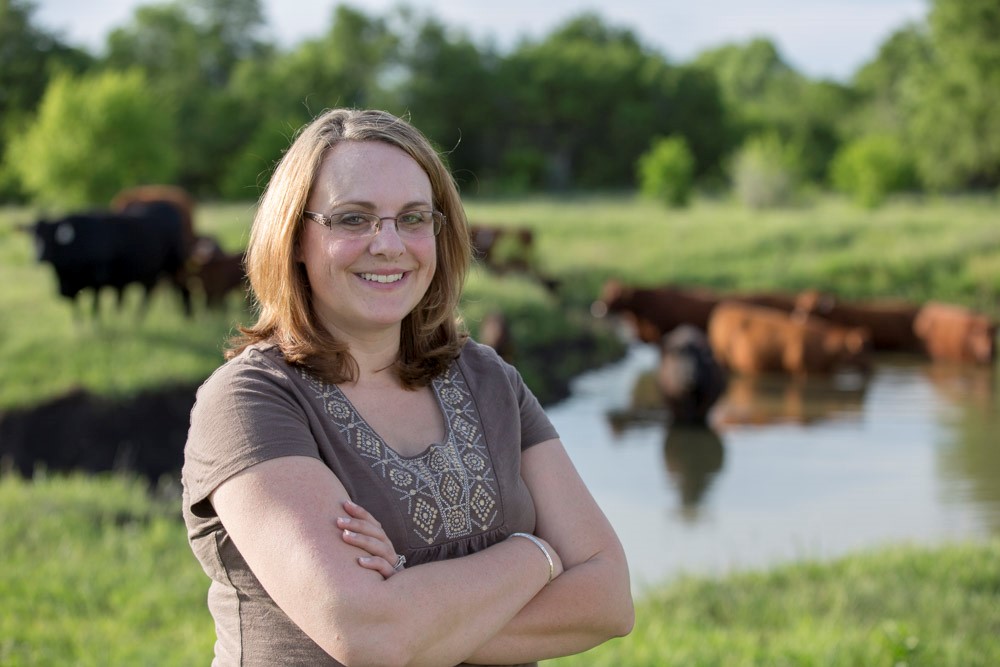
By KIM BALDWIN McPherson County farmer and rancher
It’s beginning to look a lot like Christmas in my kitchen these days. Yes, I know it’s June. No, carols aren’t being sung, and we’re not decorating a tree. We’re beginning to bake massive batches of cookies and other goodies that will sustain our wheat crew once it’s time to harvest the grain. You see, Christmas and wheat harvest are really the only two times during the year when I do mass baking projects.
A major grocery run leads to dozens of eggs being stored in my refrigerator. Bags of chocolate chips fill my pantry. Flour ends up on the floor. Cooling racks cover my counters. Ziplock bags and my deep freeze are filled to the brim. And I set watch on my kitchen — monitoring my children and others who may dare to enter my territory to see what’s being created all in an attempt to sneak a few goodies out the door.
I take this time of year very seriously. I call in reinforcements, and we knock out the task at hand. I like to get ahead by baking in advance to avoid getting behind once harvest begins. After all, there will be plenty of meals to prepare daily once harvest starts. For me, it’s a matter of planning and organization, and not feeling overwhelmed.
Besides, I want to spread goodwill and good cheer to our harvest crew. They work hard every day during harvest trying to get the wheat out of the fields while the conditions are right. It’s hot. It’s dirty. It’s tiring. The least I can do is keep their bellies full of sweet treats.
There’s been a lot of talk around town, down the dirt roads and in fields lately. The main topic of conversation is all about when harvest will begin. I generally chuckle when this talk begins — although I am also guilty of participating. While we might like to believe we have our bullet-proof systems for prognosticating the start of wheat harvest, the fact remains we’re all just making predictions. To be honest, your guess is as good as mine.
Yes, we can make educated guesses based on the weather. We can narrow it down to single-digit days. But let’s be honest, just like Mother Nature can dupe the best meteorologist, so too can a farmer miss the mark. There are just too many factors that play into when wheat harvest will begin. The wheat might look ripe, but the ground might be too wet. Other farm tasks like planting soybeans and sorghum demand our attention. Mechanical breakdowns might stop a crew before it can even get started harvesting. Mother Nature might throw a pop-up rain shower that nobody was expecting, delaying the kick-off for another day.
Although we can’t pinpoint the exact day when we will fire up the combines and begin that rush to get the grain out of the fields, we know that wheat harvest is getting closer and closer every day. And just like when my kids mark down a calendar daily in anticipation of Santa making his visit, I too am mentally marking down the days. Anxiously awaiting the start of harvest. Until that day arrives, I’ll enjoy a few homemade cookies I’ve set aside from the mass baking operation in anticipation of the start of our wheat harvest.
“Insight” is a weekly column published by Kansas Farm Bureau, the state’s largest farm organization whose mission is to strengthen agriculture and the lives of Kansans through advocacy, education and service.
TOPEKA, Kan. (AP) — Kansas’ tax collections have beaten expectations nearly every month for the past two years and the state expects to end June with close to $1 billion in cash reserves, but the budget problems that followed a former governor’s notorious tax-cutting experiment aren’t necessarily a thing of the past.
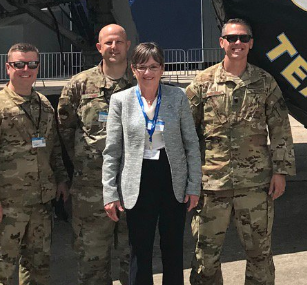
Governor Laura Kelly at the Paris Air Show on Monday- photo courtesy office of Kan. Governor
The steep income tax cuts that former Republican Gov. Sam Brownback championed to try to stimulate the Kansas economy contributed to persistent and severe budget shortfalls that caused some GOP legislators to rebel and gave the state’s new Democratic governor, Laura Kelly, a potent issue to successfully campaign on last year.
Seeking to keep the budget stable since taking office in January, Kelly twice thwarted efforts by the Republican-controlled Legislature this year to reduce taxes. However, problems have arisen on the spending side of the state’s ledger: The budget that lawmakers eventually approved this year was relatively generous, leaving it unclear how far into the future the new spending can be sustained.
Projections from the Legislature’s nonpartisan research staff show that spending will outpace revenue under the budget covering the fiscal year that begins in July. The researchers predict that the same will be true in following years, making future budget shortfalls inevitable unless lawmakers raise taxes or pull back on spending. The most optimistic scenario has at least a small shortfall developing in 2023.
“The trend is certainly negative,” said state Senate Majority Leader Jim Denning, a Kansas City-area Republican. “Gov. Kelly will have one more year of easy budgeting, but her third year as governor, we will find out just out how deep her leadership skills are.”
The budget outlook didn’t stop Denning and other top Republican lawmakers from pushing for tax cuts this year. They argued that it’s unfair for some businesses and individuals to automatically pay more in state income taxes because of the changes to the federal tax code at the end of 2017. But even as the extra burden hit taxpayers this spring, the prospects of future budget problems undercut their efforts.
Kelly and other Democrats invoked Brownback’s tax experiment, in which the state slashed income taxes in 2012 and 2013. Big budget shortfalls prompted lawmakers to raise the state’s sales tax, divert funds from highway projects, reduce contributions to public pensions and tighten spending on social services, all while facing multiple court orders to boost spending on public schools.
Voters came to view the experiment as a failure, and bipartisan supermajorities repealed most of the tax cuts in 2017 over Brownback’s veto.
The history helped Kelly politically when she vetoed Republican leaders’ more modest tax bills, keeping a few GOP moderates in her fold to prevent her actions from being overridden.
However, the researchers’ projections are dampening state officials’ relief over Friday’s Kansas Supreme Court rulingthat state public school spending will be sufficient under a new education funding law. They could also hurt Kelly’s push to win passage next year of a plan to expand Medicaidcoverage for up to 150,000 more adults and efforts to increase spending on prisons, higher education and social services, which all received significant increases this year.
The most optimistic projection assumes that unanticipated tax collections this year will continue into the future even as spending outpaces revenue by at least $200 million every year, leaving the state with a $153 million shortfall for 2023. Under a more pessimistic revenue scenario, the state would see a shortfall of nearly $100 million in 2022.
Kelly has chastised GOP leaders for pursuing tax relief and rejecting her plans to give the state more budget breathing room by revising payments to the state’s public pension system.
She said during a recent interview that spending increases this year were warranted to repair a state government harmed by Brownback’s tax experiment, adding, “There is still a lot of work to do.”
“We might not have the amount of revenue that we need to pay our bills in 2023,” Kelly said. “I wanted to have the cash on hand to ride us through that storm if that storm comes our way.”
Top Republican lawmakers defended their push for tax relief this year, saying they wanted to move quickly enough so that the state wouldn’t start collecting its “windfall” this spring.
“Tax policy is one of things you look at as you look at trying to figure out how to make your economy grow and thrive,” said Senate budget committee Chairwoman Carolyn McGinn, a Wichita-area Republican.
The state’s tax collections have exceeded expectations in 23 of the 24 months since Brownback’s tax cuts were reversed. Tax collections were $158 million ahead of expectations through May and, for the budget year that ends this month, are on pace to grow by nearly 6.4 percent. Cash reserves, meanwhile, are projected to hit $978 million by the end of the month.
The Department of Revenue doubts that the tax collection surplus will be ongoing. State officials and economists also believe that the national economy will slow down in 2020 or 2021, said Steve Stotts, the department’s taxation director.
“A recession is on the horizon sometime,” said House Appropriations Committee Chairman Troy Waymaster, a Republican from western Kansas. “We don’t know how bad it could be.”
Stacy Campbell is Agriculture & Natural Resources Extension Agent for the Cottonwood Extension District.There have been calls again this year concerning chinch bugs coming out of wheat fields and moving into adjacent milo, and sorghum/sudan hay fields.
The overwintered adults emerge in early spring and fly into small grains where they mate and produce the first generation. Most problems in milo or feed occur when large groups of immature, wingless nymphs migrate from maturing wheat fields and invade adjacent sorghum or sorghum/sudan hay fields where they attempt to complete development. They typically do not infest the entire field but can damage or take out several rows of milo next to the wheat.
Problems with this insect were historically confined to eastern and central Kansas, with damage beginning in May or June, but in recent years, chinch bugs have become more of a problem further west in the state.
Second generation chinch bugs have been infesting emerging panicles and causing direct damage to grain over a much wider geographic area in the state. Control of second-generation chinch bugs on large plants is difficult to achieve with contact insecticides because of their habit of hiding behind leaf sheaths, and no systemic materials are labelled for this use.
The risk of first generation damage is greater where sorghum is planted next to thin stands of wheat. Seedling sorghum is most vulnerable, and 7 to 10 bugs per plant will cause stunting, poor root development, stand reduction and even the death of some plants. Larger plants can tolerate more bugs, but severe infestations can cause stunting, lodging, and yield loss. Since corn is planted earlier and is larger and more resilient at the time of nymphal migration, damage can be minimal and usually confined to border rows. Late-season damage is typically spotty, but heading sorghum can be infested behind the panicle sheath which can cause incomplete exertion of the head.
Chinch bugs puncture vascular tissues to extract plant juices and secrete digestive enzymes that cause the breakdown of surrounding plant tissues. Feeding punctures also can allow pathogens to enter the plant. Consequently, damaged plants present a variety of symptoms including stunting, yellowing, wilting, and necrotic lesions.
The effect nymphal feeding has on plants depends to a large degree on the health and nutritional status of the plants. Growth stage and water balance are critical because small or drought-stressed plants have less ability to tolerate or recover from chinch bug feeding damage.
Using seed treatments: clothianidin (Poncho), imidacloprid (numberous products) and thiamethoxam (Cruiser) at planting can potentially decrease chinch bug damage and may protect plants for up to 3 weeks, unless the migration is heavy. Growers can use follow-up sprays on border rows if protection wears off before the end of chinch bug migration.
Before spraying the border rows of an affected field, a key consideration is to determine the growth stage that most of the chinch bugs are in. Because the nymphs are the ones feeding on the plants causing the damage, the adults do not feed and will soon fly away to lay their eggs. So if the majority of chinch bugs are in the adult stage, the damage has already been done. Adults are small, black bugs about 1/8 inch long with white wings folded over the back. Immatures or nymphs, are tiny bright red after hatching or larger red-and-black, wingless bugs, then darken as they approach maturity. A white band on the upper side of the first abdominal segment is visible until wing buds grow to cover it.
Most often the damage is noticed only after several rows of sorghum or feed have been severely stunted or killed. An insecticide spray can be used over the affected rows and approximately an additional 100 feet beyond. Also, spraying about 100 feet into the wheat stubble is advisable if chinch bugs are still coming out of the wheat field. High gallonage, 20 to 40 gallons of water per acre ensures good plant coverage and enhances the movement of material into protected plant parts such as leaf sheaths. There are several insecticides labeled for the control of chinch bugs listed in the K-State Research & Extension publication “Sorghum Insect Management 2017 which can be found on our web site at www.ellis.ksu.edu
If you have any questions or need further information contact me at the Cottonwood District Extension Office in Hays at 785-628-9430.
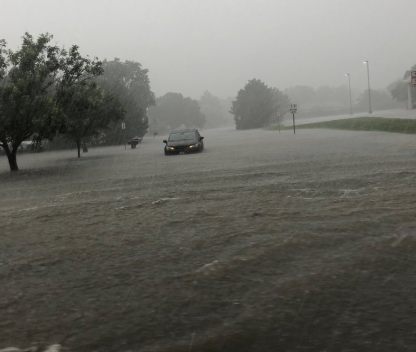
Tuesday’s spring storm produced damaging winds, large hail and flooding rains as the storm moved across Kansas.
Street flooding Tuesday evening in Wichita photo courtesy National Weather Service
In addition to severe weather watches and warnings, The National Weather Service reported a brief tornado in Edwards County. There has been no report of damage, according to the sheriff’s department.
Wind gusts of 70 miles per hour, large hail and some flooding are responsible for damage in areas of south-central and northeast Kansas. Six to nine inches of rain was reported in portions of Elk County, according to the National Weather Service.
SALINE COUNTY —Law enforcement authorities are investigating two South Carolina men on drug charges after an Interstate 70 traffic stop.
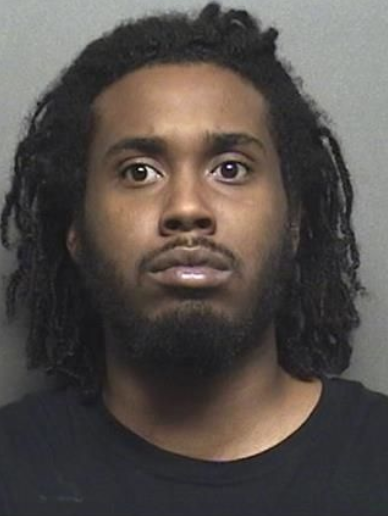
Stephens photo Saline Co.Davis photo Saline Co.
Just after 1a.m. Tuesday, a Saline County deputy stopped a Buick for speeding and other traffic violations near the Ohio exit on Interstate 70, according to Saline County Undersheriff Brent Melander.
While talking with the driver, the deputy saw drug paraphernalia in the car and eventually uncovered 34 ounces of marijuana, 32 grams of marijuana wax, and a 9 mm handgun.
The deputy arrested Malik Stephens, 22, of West Columbia, S.C., and Stephen Davis, 39, of Columbia, S.C., on requested charges of felony possession of marijuana with intent to sell and felony possession of drug paraphernalia.

 Bernard L. Waldschmidt, 85, formerly of Salina, passed away Friday, June 14, 2019. Mr. Waldschmidt was born Aug. 1, 1933, in Hays, to John G. and Hermenia (Younger) Waldschmidt. He served in the U.S. Army from 1953 to 1955. He worked for the City of Salina retiring in June of 1995. He married Sylvia J. Leiker, Oct. 27, 1962, at Sacred Heart Cathedral in Salina.