LAKE OF THE OZARKS — Five people were injured in an accident just before 2:30p.m. Saturday at Lake of the Ozarks.
The Missouri State Highway Patrol reported a 1993 Chris Craft had just been filled with fuel at the Millstone Marina dock.
The driver Robert C. Baber, 71, Kansas City, started the engine creating an explosion due to lack of ventilation and a mechanical failure. The explosion ejected passenger Patrick Baber, 39, Kansas City from the boat.
Life Flight transported passenger Carl Harris, 42, Kansas City, to University Hospital.
Camden County Ambulance transported Robert and Patrick Baber to Lake Regional Hospital.
Lake West Ambulance transported Kathryn G. Harris, 6, and Cynthina O. Sterling, 48, both of Kansas City to Lake Regional Hospital. The child was the only occupant wearing a life jacket, according to the MSHP.
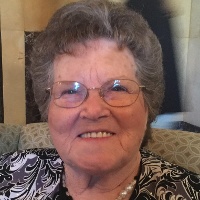
Basil Jantz, 91, passed away June 14, 2019 at Salina Regional Health Center, in Salina, Kansas. She was born November 13, 1927, in Poynor, Missouri to H.C. (Cordrey) and Maudie (Anglin) Spires.
A Salina resident since 2000 coming from Hoisington, Basil was a member of the Hoisington Bible Church and resided at McCall Manor, Salina.
Survivors include: sons: Lloyd Pinon (JoLana) Topeka, KS, Steve Griffin (Kayla) Salina, KS; daughters: Becky Townsley (Gary) of Minneapolis, MN, Jo Plinsky (Don) of Wichita, KS, Bonny Wohlcke (Chip) of Arvada, CO, Belva Prins (Dave) of Waseca, MN; siblings, Shirley Juby, Clayton Spires, and William “Bill” Spires; 16 grandchildren; 32 great-grandchildren, and 3 great-great grandchildren.
Basil was preceded in death by her husbands, Lloyd E. Pinon, Jess Griffin and Vernon Jantz. Also preceded in death by her siblings Brice Spires, Nadine Beeman, Melba Maggard, Berniece Whitaker, Twilla Brack, and LaVerne Spires.
Family will receive friends 6-8 p.m. on Monday, June 17, 2019 at Nicholson-Ricke Funeral Home, Hoisington. Celebration of Basil’s life services will be 10 a.m., Tuesday, June 18, 2019, at Hoisington Bible Church, with Pastor Gary Clark officiating. Interment will follow at the Hoisington Cemetery.
Memorials are suggested to the Hoisington Bible Church or the McCall Manor of Salina, Ks, in care of Nicholson-Ricke Funeral Home, PO Box 146, Hoisington, KS 67544.
Thatch control for cool-season lawn grasses such as bluegrass and tall fescue is usually done in the fall but now is the time we should perform this operation for warm-season turfgrasses such as bermudagrass and zoysiagrass. Because these operations thin the lawn, they should be performed when the lawn is in the best position to recover. For warm-season grasses that time is June through July. Buffalograss, our other common warm-season grass, normally does not need to be dethatched.
When thatch is less than one-half inch thick, there is little cause for concern; on the contrary, it may provide some protection to the crown (growing point) of the turfgrass. However, when thatch exceeds one-half inch in thickness, the lawn may start to deteriorate. Thatch is best kept in check by power-raking and/or core-aerating. If thatch is more than 3/4 inch thick, the lawn should be power-raked. Set the blades just deep enough to pull out the thatch. The lawn can be severely damaged by power-raking too deeply. In some cases, it may be easier to use a sod cutter to remove the existing sod and start over with seed, sprigs or plugs.
If thatch is between one-half and a 3/4- inch, thick, core-aeration is a better choice. The soil-moisture level is important to do a good job of core-aerating. It should be neither too wet nor too dry, and the soil should crumble fairly easily when worked between your fingers. Go over the lawn enough times so that the aeration holes are about 2 inches apart.
Excessive thatch accumulation can be prevented by not over-fertilizing with nitrogen. Frequent, light watering also encourages thatch. Water only when needed, and attempt to wet the entire root zone of the turf with each irrigation.
Finally, where thatch is excessive, control should be viewed as a long-term, integrated process (i.e., to include proper mowing, watering, and fertilizing) rather than a one-shot cure. One power-raking or core-aeration will seldom solve the problem.
Alicia Boor is an Agriculture and Natural Resources agent in the Cottonwood District (which includes Barton and Ellis counties) for K-State Research and Extension. You can contact her by e-mail at [email protected] or calling 620-793-1910.
Want to present a piece at the Floriculture exhibit during the 2019 Ellis County Fair? Here are some tips from the Cottonwood District Master Gardeners on how to enter.
TOPEKA —Whether your vacation takes you near or far, AAA Kansas offers travelers peace of mind with tips to keep your home safe while you’re away.
Home burglaries increase in the summer months, according to the Insurance Information Institute, since burglars see vacations as an opportunity to target empty homes. July and August have the highest rates of residential burglaries.
“Vacations require preparation and planning,” said Gary Tomes, Insurance Sales Manager for AAA Kansas. “Before you head out for vacation, take a few moments to safeguard your home and keep your possessions safe. Don’t risk leaving your home unprotected.”
Ways to protect your home and belongings while you’re away:
Make it time-consuming to break into your home. Research suggests that if burglars think it will take more than four or five minutes to break into a home, they will move on. Check outside doors and frames to ensure they are strong and made of metal or thick hardwood. Use dead-bolts on windows and doors, which can slow burglars down or deter them entirely.
Invest in an effective burglar alarm that, when triggered, alerts the police and other emergency services. Check with your insurance agent about possible alarm system discounts.
Disconnect computers and other electronic devices from the internet to prevent hackers from gaining access to your information. Make sure personal information on your computer is difficult to access and backed up on the cloud or other off-site location.
Keep valuables locked up and out of sight. Expensive jewelry, electronic devices and other high value items should be hidden from plain view and placed in lock boxes.
Make your home look inhabited. Use timers to turn lights on and off, temporarily stop newspaper deliveries, and arrange to have your mail picked up or held by the post office. An unkempt lawn is also an indicator to burglars that you are away. Hire a lawn service to maintain your yard if you will be gone for an extended period of time.
Ask a dependable neighbor, friend or family member to keep an eye on your home while you’re away.
Avoid discussing your vacation plans in public places such as at the grocery store or at your local café. Although vacations are exciting, try not to post about them on social media; someone may see your posts and target your home while you’re away.
Create a home inventory. In the event that you do need to file a claim, preparing a home inventory of your possessions beforehand will make the process easier.
Check your insurance policy to ensure that you have the coverage you need in case you experience theft or damage to your property.
To find out more about homeowners or renters insurance and what types of coverage you need to be properly protected, contact your local AAA Kansas insurance agent, call 866-AAA-4YOU or visit www.aaa.com/insurance.
AAA provides automotive, travel, and insurance services to 59 million members nationwide and nearly 347,000 members in Kansas. AAA advocates for the safety and mobility of its members and has been committed to outstanding road service for more than 100 years. AAA is a non-stock, non-profit corporation working on behalf of motorists, who can now map a route, find local gas prices, discover discounts, book a hotel, and track their roadside assistance service with the AAA Mobile app (AAA.com/mobile) for iPhone, iPad and Android. For more information, visit www.AAA.com.
I bet I hear it once a week, “It’s hell to grow old!” Of course, growing old is something we all will do, unless we die first. Alas, the future can look quite sad and depressing, especially if you think about the flab, falls, pain, blues, anxiety, thin bones, loss of libido, weakness, and memory loss that can come with aging.
But wait! Listen to the exciting news. Just out, there is a powerful potion that can prevent the aging process. That’s right … guaranteed to slow aging.
Researchers have observed how shortly after starting this terrific tonic: flab turns to muscle; falls are reduced; chronic pain and fibromyalgia seem magically lessened; depression and anxiety disappears; bones are actually strengthen; sexual function is enhanced and recharged; people experience new strength, energy, and power; and most important memory is clearly improved. What’s more, this special medication has also been shown to reduce diabetes, heart attack, stroke, and breast or colon cancer.
That’s not all. If you take advantage of this fabulous offer today, it will improve your appearance within weeks. Sounds too good to be true. It is scientifically proven, beyond a shadow of a doubt. And no other treatment plan comes even close. Nothing!
You would expect the price for this magnificent medication that brings about all these benefits to be more than the sum of one third of your income, or at least many thousands if not millions of dollars. But no! This medicine is equally available to the rich and poor alike, requiring only an extra effort on your part.
You could expect to work lots of extra hours each day to achieve these wonderful benefits. But no! You don’t have to work an extra two hours at the beginning or end of your workday, you don’t have to work even one extra hour.
Starting today we have a special opportunity. For spending only a half hour every day walking twelve blocks, yes that’s right, just twelve blocks, or whatever distance you can make in 30 minutes, you will receive most of the benefits I mentioned earlier. That’s right, only a half hour!
But wait, this offer only lasts for a short time. The longer you delay, the less you will get. If you start today, the benefits begin sooner and last longer.
That’s right…guaranteed to slow aging. Exercise is the bargain of a lifetime.
For free and easy access to the entire Prairie Doc® library, visit www.prairiedoc.org and follow The Prairie Doc® on Facebook, featuring On Call with the Prairie Doc® a medical Q&A show streaming live most Thursdays at 7 p.m. central.
The Kansas Supreme Court held that the cap on noneconomic damages violates the state constitution’s right to a trial by jury. BIGSTOCK
A Kansas law that caps jury awards for noneconomic damages — things like pain and suffering — violates the right to a trial by jury, the Kansas Supreme Court ruled on Friday.
“This is huge,” said attorney Thomas M. Warner Jr., who represented Diana K. Hilburn, the plaintiff in the case. “We’ve had these caps on the books since 1986 in Kansas. Basically, the politicians decided that they would be in a better position to determine the amount of damages for noneconomic damages than juries. And so this decision allows juries to make that decision again.”
Kansas is one of many states that have limited noneconomic damages, particularly in medical malpractice cases, out of concern that runaway jury awards cause skyrocketing insurance premiums and hurts the economy.
The cap has been revised upward over the years and now stands at $325,000. It was scheduled to increase to $350,000 in 2022.
Hilburn was injured in 2010 when the car she was riding in was rear-ended by a semi-trailer truck. Hilburn sued the truck’s owner, Enerpipe Ltd., for negligence. A jury awarded her $335,000, including $301,509.14 for noneconomic losses.
Because Kansas at the time capped noneconomic damages at $250,000, the total award was reduced to $283,490.86. Hilburn appealed and the Kansas Court of Appeals rejected her argument that the cap was unconstitutional.
In reversing that decision, the Kansas Supreme Court held that the cap violates the Kansas Constitution’s Bill of Rights, which states that the “right of trial by jury shall be inviolate.”
The court rejected its own reasoning in a 2012 medical malpractice case that the right to a jury trial could be modified if certain conditions were met.
The Kansas Court of Appeals found those conditions were met in Hilburn’s case, but the Supreme Court said it should never have applied that test to a fundamental constitutional right.
“ … we simply cannot square a right specially designated by the people as ‘inviolate’ with the practical effect of the damages cap: substituting juries’ factual determinations of actual damages with an across-the-board legislative determination of the maximum conceivable amount of actual damages,” Justice Carol Beier wrote for the court.
Justice Marla Luckert dissented, saying she would have followed the 2012 malpractice case and upheld the cap.
The case drew widespread interest. The Kansas Chamber of Commerce and Industry and the Kansas Association of Defense Counsel filed friend-of-the-court briefs urging the court to uphold the damage cap. The Kansas Trial Lawyers Association filed a friend-of-the-court brief urging it to find the cap unconstitutional.
“This is a game-changer,” said David Morantz, who wrote the trial lawyers’ brief. “It’s a very big ruling.”
“This has been an issue that has troubled and really hurt personal injury victims for years,” he said. “It’s been an issue of the Legislature trying to substitute its judgment for that of Kansas juries and preventing Kansas juries from deciding the full measure of personal injury victims’ damages.”
Judges will still retain the ability to rein in runaway jury verdicts, under a legal doctrine known as remittitur.
“But today’s opinion does a good job of putting these issues and questions back in juries’ hands and keeping the legislature out of it,” Morantz said.
Dan Margolies is a senior reporter and editor in conjunction with the Kansas News Service. You can reach him on Twitter @DanMargolies.
By Kirsti Kenneth and Pierce McManus Freedom Forum Institute
The 2020 presidential election is still more than 500 days away. But with more than two dozen notable candidates already in the running, campaign season is in full swing and each day brings a new wave of information about the crowd of contenders. However, not everything you hear, see or read should influence what you do in the voting booth. Alongside the policy statements and campaign promises, today’s political landscape is littered with disinformation and deceptive content intended to spread falsehoods and mislead the public. Think you’re equipped to sort out the fact-backed claims from the public relations stunts and propaganda? Well, you might just want to think again.
We all know that political campaigns utilize methods intended to persuade and provoke the public. The time-tested strategies of tightly scripted stump speeches and staged photo ops designed to stir our emotions and garner our support date back to the dawn of modern campaigning. Most of us know to think twice about the slick promises and heart-tugging moments campaigns trot out to win votes, but today’s candidates and other political players are experimenting with new methods to influence the online electorate.
Last month, right-wing internet provocateurs Jacob Wohl and Jack Burkman published a fabricated sexual assault allegation against Democratic candidate Pete Buttigieg on the blogging platform Medium. The accusation appeared under the name of a man who soon disavowed the claim. There’s also been an increase in apparent “local news” sites that are actually created by party activists. They run articles promoting certain candidates over others without disclosing the authors’ political connections to certain political action committees. And false quotes by President Donald Trump and Democratic presidential candidates continue to circulate on social media.
Many of these tactics cross the line to become propaganda: emotionally manipulative claims and disinformation designed to hijack voters’ thoughts and actions. And as you can see, it’s not just Russian bots that are to blame. Government and big business are scrambling to find solutions. Twitter is rolling out a new tool for reporting Tweets that are “misleading about voting.” The FBI and Department of Homeland Security have made permanent their task forces focusing on defending against foreign interference in elections, including propaganda and influence campaigns on social media.
But we continue to believe the most direct path to outsmarting propaganda’s manipulative messages lies in educating and empowering the public to spot problematic content and stop its destructive spread. As we voters begin to navigate a seemingly never-ending maze of campaign media and related online information, there are red flags we can all look for to sort politics from propaganda.
Propaganda simplifies the situation. Does the content cite only convenient or helpful facts while glossing over counter-arguments? Red flag. Propaganda exaggerates. Does the content present its candidate as perfect or nearly so? Red flag. Propaganda also uses our emotions against us, exploiting our weaknesses and deepest desires. Does the content you’re looking at make you feel afraid, and then conveniently promise a cure for that fear? Another red flag.
Most corrosively, propaganda seeks to divide us, setting up an “us” versus “them” scenario that broadens divisions between different people, groups and ideas.
Last month, a video of House Speaker Nancy Pelosi, a Democrat, slurring her words garnered millions of views and shares online. The video, which was later proven to be a manipulated fake, was the perfect propaganda for a polarized age. It was shared by conservative politicians and party loyalists in effort to raise speculation about Pelosi’s fitness for leadership and to rally their base. Perhaps those who shared it were unaware at the time that the video was fraudulent. Perhaps they didn’t care. Or perhaps they expected their social networks of choice to police the content distributed via those platforms. (YouTube did eventually take the video down; copies are still available via Twitter and Facebook.) But as the presidential election fans the flames of disinformation, fakery and deception, pleading ignorance or waiting for algorithmic salvation isn’t going to cut it. If you think the country is divided now, imagine how fractured we may be in a year’s time if we don’t become a more media-literate electorate, primed to weed out destructive propaganda.
To paraphrase Thomas Jefferson, an informed citizenry is vital for a free society to thrive. As we prepare for the 2020 presidential election, let’s all do our part to ensure that the information we consume and share is factually accurate. And then let’s put that knowledge into action at the voting booth.
Contributing to this column were Katharine Kosin, NewseumED museum educator and Barbara McCormack, vice president of education at the Freedom Forum Institute. Pierce McManus, NewseumED’s digital communications and outreach director, and Kirsti Kenneth, NewseumED’s curriculum developer, can be reached for media inquiries at [email protected].
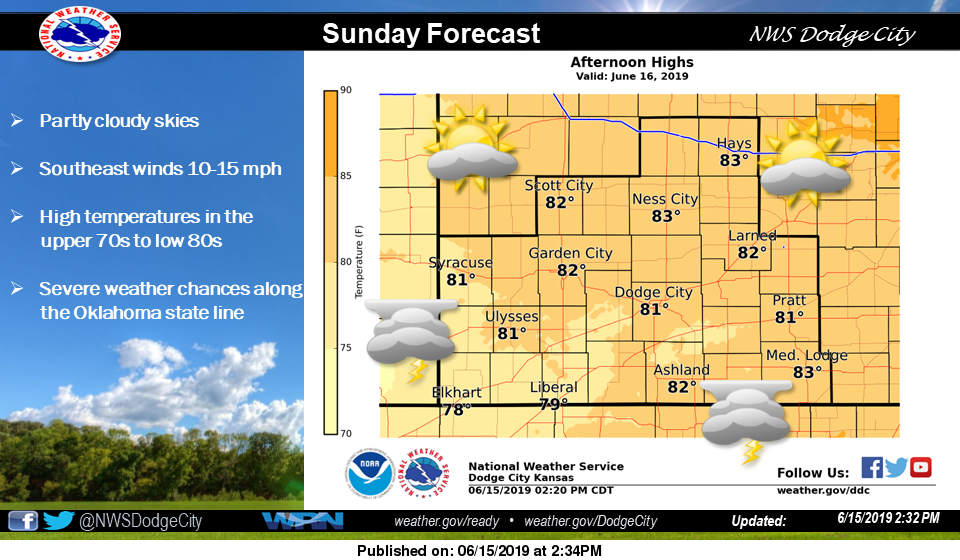
Mostly sunny, with a high near 84. North wind 6 to 9 mph becoming east in the afternoon.
Tonight
Partly cloudy, with a low around 60. East wind 5 to 10 mph.
Monday
Mostly sunny, with a high near 83. Southeast wind 6 to 9 mph.
Monday Night
Showers and thunderstorms likely, mainly after 1am. Increasing clouds, with a low around 62. Southeast wind 5 to 10 mph becoming light after midnight. Chance of precipitation is 70%. New rainfall amounts between a quarter and half of an inch possible.
Tuesday
Showers and thunderstorms likely, mainly before 1pm. Mostly cloudy, with a high near 80. South wind 5 to 7 mph becoming north in the afternoon. Chance of precipitation is 70%. New rainfall amounts between a quarter and half of an inch possible.
Tuesday Night
A 40 percent chance of showers and thunderstorms, mainly before 1am. Mostly cloudy, with a low around 59.
RENO COUNTY — One person was injured in an accident just after 10:30p.m. Saturday in Reno County.
The Kansas Highway Patrol reported a 2018 Toyota Rav4 driven by Wade A. Phillips, 46, Lewis, was eastbound in the right lane of U.S. 50 just east of Whiteside Road.
The Toyota struck a pedestrian identified as Christopher Marshall, 25, Hutchinson, who ran across the highway.
EMS transported Marshall to Hutchinson Regional Medical Center. Phillips was properly restrained at the time of the accident and not injured, according to the KHP.
LAWRENCE — Expansion of the Affordable Care Act in 2014 improved access to insurance and represented gains in health care for adults with disabilities. But while those gains were documented, what wasn’t known was what challenges still existed in accessing care for that population. A new study from the University of Kansas documents the challenges adults with disabilities still face in accessing health care and offers recommendations to improve care and accessibility.
Researchers in KU’s Institute for Health & Disability Policy Studies conducted interviews with 22 adults with a variety of disabilities and health insurance types about barriers they faced in accessing health care after the expansion of ACA coverage. They found challenges exist in five major areas:
Information and understanding of coverage
Out-of-pocket expenses
Prescription medications
Provider networks
Transportation
“We want to make it clear this is not an indictment of the Affordable Care Act. The ACA has expanded coverage for many, but that said, we want to look at what barriers still exist and what can still be improved,” said Jean Hall, institute director and one of the article’s authors.
Co-written by Noelle Kurth and Sarah Smith of KU and Gilbert Gimm of George Mason University, the study is forthcoming in the Disability and Health Journal.
The individuals interviewed provided a sample of American adults from across the U.S. with different types of disabilities and coverage provided by Medicaid, private insurers, the ACA marketplace and other sources.
Nearly all reported trouble accessing information and understanding their coverage. A longstanding problem, the Affordable Care Act didn’t change that for many respondents. Some reported confusion when switching from Medicare or Medicaid to private insurance about which doctors were in their networks or what services were covered. Information could be hard to find, and it was often incorrect. Studies have previously found more than half of private insurers have incorrect or out-of-date information regarding providers on their websites.
Other individuals reported being referred to see specialists, even if they were not part of their plan’s network. That was part of the also longstanding problem of out-of-pocket expenses. Problems existed even when specialists or other services were covered.
“People with disabilities have to see specialists more often, which adds up in out-of-pocket expenses,” Hall said. “That’s an extra burden for people who tend to be in lower-income brackets to begin with.”
In terms of medications, numerous respondents reported not having all of their medications covered, having co-occurring conditions that require different prescribed medications or being prescribed medicines that contraindicate each other. The result of some being covered and not others, or confusion on which were needed, often led to people being forced to choose which medicine to go without or having to pay for needed prescriptions on their own. Appeals processes do exist, but they can take a long time to resolve, which is compounded by going without a medication, Hall said.
Transportation was one of the most frequently reported issues. Numerous respondents reported having to travel long distances to see their doctor. One respondent in Alaska was forced to travel out of the state to find an in-network provider. Others had to take time from work to travel several hours, and others were unable to drive because of their disability, requiring a second person to come with them, all of which added to the time required and financial strain resulting from travel.
“There was one woman who reported she not only had to travel to her doctor but had to pay for parking each time she had an appointment. That may not seem like much, but it adds up and made it hard for her to be able to afford the travel,” Hall said. “And if you need another person to travel with you, either to drive or to provide assistance, that adds to the difficulty.”
The authors make several recommendations for policy to address the issues individuals with disabilities face. While Medicaid is required to cover transportation for people with disabilities for non-emergency visits, several problems still exist. Encouraging insurers to provide travel vouchers could help address the problem, the researchers argue. Requiring insurers to have up-to-date information and either penalizing those who don’t or providing incentives for those who do could help address confusion in coverage, while moving to coverage of medications known to be cost-effective and lowering co-pays and out-of-pocket costs to ensure they are available when needed would help as well, they write.
All of the barriers not only had negative effects on the individuals’ health, access or finances, they also influenced whether they were able to continue working. Being unable to work, earn income and keep insurance can all negatively affect health and well-being as well.
“We need to be cognizant of the fact that having health insurance doesn’t necessarily mean you have access to health care and work to ensure that access is available,” Hall said.
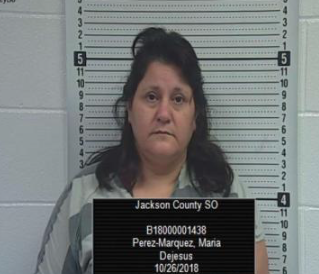
HOLTON, Kan. (AP) — A Nebraska woman has been sentenced to more than four years in prison for a November 2017 head-on crash in northeastern Kansas that killed four members of a Sabetha family who were returning home from a state championship football game.
49-year-old Maria Perez Marquez, of Omaha, Nebraska, was sentenced Friday to four years and one month in prison. She pleaded no contest to aggravated battery and three misdemeanor counts of vehicular homicide for the crash that killed 42-year-old Carmen Ukele, her 11-year-old daughter, Marlee Ukele, and her brother-in-law, 62-year-old Stephen Ukele. Carmen Ukele’s husband, 60-year-old Lee Ukele, initially survived the crash but died last month of his injuries.
Investigators say the family was returning home from watching the Sabetha High School football team win the state championship when Perez Marquez crashed into their minivan while trying to pass another vehicle. At the time, two of Lee Ukele’s sons played on the team.
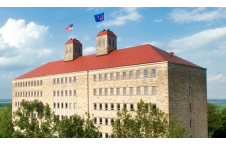
LAWRENCE, Kan. (AP) — The percentage of Kansas high school graduates who attend state universities has fallen in recent years, and the schools are considering how to stop that decline and make up lost revenue.
In 2010, 55% of Kansas high school graduates enrolled at a state higher education institution, but by 2017 — the most recent year for which data is available — that figure had dropped to 50.3%, according to a May report by the Kansas Board of Regents.
“It’s certainly a concern,” Dennis Mullin, chair of the Regents, told The Lawrence Journal-World . “We better figure out ways to bring people into higher education.”
A healthy economy could be behind the fall. Economic growth leads to more jobs available for people with only a high school diploma, according to Elaine Frisbie, the Regents’ vice president for finance and administration.
Mullin suggested the cost of attending university also acts as a deterrent.
“The stronger economy has really taken away people who were in higher education,” he said. “They say, ‘Hey, I spend $25,000 on education or I can get a job for $45,000 a year.’ And they couldn’t do that a couple years ago.”
Shifting demographics could also play a part. The Hispanic population has grown significantly in southwestern Kansas, but Mullin said higher education is not always popular in that community due to cost, a need to support the family, and the desire to maintain a traditional family unit in one place.
The University of Kansas has taken steps to balance the loss of revenue from homegrown students by targeting out-of-state enrollment. Those students pay higher tuition and their numbers help keep the university enrollment level steady.
“KU took the strategic tack to make the university known nationally, recruit academically successful students and help them succeed to graduation once they are here,” university spokeswoman Erinn Barcomb-Peterson said.
Regents took it a step further, suggesting the higher tuition paid by out-of-state students could allow schools to decrease costs for students from Kansas pursuing higher education in their home state, thus boosting homegrown enrollment.
“We have to reach out beyond our borders,” Mullin said. “We’re going to have to draw people into the state in hopes that they are going to stay. … They are helping subsidize Kansas students.”













 Today
Today