We have a brand new updated website! Click here to check it out!

KRUG: Food recalls are in the news

Donna Krug

A couple of food recalls caught my attention in a newsletter I received this week from K-State Research and Extension. One deals with frozen blackberries while the other recall is for all purpose flour sold at Aldi stores. Read on for more details.

Frozen blackberries have been linked to possible Hepatitis A contamination. Hepatitis A is a contagious liver disease that results from exposure to the Hepatitis A virus, including from food. It can range from a mild illness lasting a few weeks to a serious illness lasting several months. Illness generally occurs within 15 to 50 days of exposure and includes fatigue, abdominal pain, jaundice, abnormal liver tests, dark urine and pale stool. Hepatitis A vaccination can prevent illness if given within two weeks of exposure to a contaminated food. In rare cases, particularly consumers who have a pre-existing severe illness or are immune compromised, Hepatitis A infection can progress to liver failure.

Persons who may have consumed affected product should consult with their health care professional or local health department to determine if a vaccination is appropriate, and consumers with symptoms of Hepatitis A should contact their health care professional. You can learn more about this recall at the following website. https://bit.ly/2F1J9bB

The second recall I want to call your attention to has been issued by ALDI grocery stores. They have recalled all purpose flour due to a multistate outbreak of E.coli 026 infections. As of May 24, 2019, 17 people have been infected across eight states. No deaths have been reported.

Investigation results have shown that of those interviewed, they reported eating, licking, or tasting raw dough or batter. DNA fingerprinting identified the flour as the source of the infection.

Symptoms of E.coli infection can appear in one to three days. But the time it takes to confirm that a person is a part of an outbreak can take two to three weeks. Lear more at the following website. www.cdc.gov/ecoli/2019/flour-05-19/index.html

I checked out both web sites and printed off the recall information. The states affected with the flour recall were primarily from Ohio and the east coast. However, the blackberry recall is from certain lots sold through Kroger stores.

If you have any questions about these recalls don’t hesitate to give me a call.

Donna Krug is the District Director and Family & Consumer Science Agent for the Cottonwood Extension District – Great Bend office. You may reach her at: (620)793-1910 or [email protected]

First Five: New Assange charges raise two First Amendment alarms

Gene Policinski

Two First Amendment alarms are sounding in the wake of new federal charges against WikiLeaks founder Julian Assange, but only one is being heard by most of us — for now.

Initially, federal prosecutors charged Assange with just one crime: conspiring in 2010 with former Army Private Chelsea Manning to hack a government computer password, which allowed Manning access to a trove of classified information that she turned over to WikiLeaks.

For weeks, free press advocates worried that the Department of Justice would go beyond prosecuting Assange for computer hacking and expand the charges into journalists’ territory —publishing classified information.

These fears were not unfounded. On May 23, the unsealing of an 18-count indictment under the 1917 Espionage Act, accusing Assange of working directly with Manning to obtain secret government documents, set off Alarm #1 for most journalists. The new charges implicate the work of journalists, which often involves talking with sources and at times possessing and publishing secret documents.

In trying to thread a legal needle, Justice Department lawyers said the Assange indictment avoids a collision with the First Amendment because he is not a journalist, as they define the profession.

And therein is Alarm #2: the government defining who is and who is not a journalist. This was the very activity that the nation’s founders — who had first-hand experience with the abuses inherent in a system where the crown licensed printers and publishers — ruled out in 1791 by creating unequivocal First Amendment protection for a free press.

How did we get to these alarming places?

The broadly written Espionage Act criminalizes the taking, possession and distribution of government secrets by any unauthorized person for any reason. But federal officials through the years have acknowledged that the role of a free press historically has meant at times providing the public with information that government officials of the moment wanted to keep secret. For that reason, journalists in the U.S., particularly those reporting on national security issues, have operated for decades with the tacit acceptance that they would not be prosecuted for receiving illegally obtained information from a third party as long as there was no involvement by the journalists themselves in the actual taking of the information property.

So it mainly has been policy, not law, protecting journalists receiving stolen information related to national security. The law explicitly protects publishing that information since the 1971 Pentagon Papers decision in which a splintered U.S. Supreme Court said “prior restraint” by government to stop publication of secret materials was unconstitutional. Seen generally as a free press win, often left unsaid is that the justices left open the issue of what penalties the government could impose on journalists after publication of classified materials.

That’s why the Assange indictment, if it stands, could dramatically change the delicate balancing act that has existed until now, in which the government sought to protect its secrets by prosecuting leakers, but did not go after reporters and news outlets that produced news reports based on leaked materials.

In announcing the indictment, the Associated Press reported, justice officials said Assange was “not charged simply because he is a publisher,” but rather because he actively encouraged Manning to steal hundreds of thousands of secret documents related to U.S. military and diplomatic actions in Iraq, Afghanistan and elsewhere, cracking a password that gave Manning access to the materials and “publishing a narrow set of classified documents in which Assange also allegedly published the unredacted names of innocent people who risked their safety and freedom to provide information to the United States and its allies.”

In a telephone conference call with reporters, Assistant U.S. Attorney General John Demers said the indictment does not destroy the Department of Justice’s informal agreement not to pursue journalists for publishing leaked information, saying the department “… takes seriously the role of journalists in our democracy … Julian Assange is no journalist.”

Demers then ventured into the definition zone — triggering Alarm #2 — that the nation’s founders thought to exclude: “No responsible actor, journalist or otherwise, would purposely publish the name of individuals he or she knew to be confidential human sources in war zones, exposing them to the gravest of dangers.”

While the journalists I know would agree with that assessment, and Demers may well be sincere in his words, the important element is that such a statement must be journalism’s self-definition, not one provided by a government official or established by ordinance, edict or, in a backhanded fashion, through an indictment.

The nation’s founders knew all too well that what the government can grant, it can take away. The danger in allowing the Justice Department to expand its Assange indictment into “publishing” is that can hand current and future administrations a cover under which they may pursue, in instances of leaked secrets, those reporters they disfavor.

There is real debate among First Amendment advocates whether to recognize Assange and WikiLeaks as a non-traditional journalist/journalism or as a political activist and subversive enterprise hiding behind a false shield. The government does need to protect many secrets.

Congress could avoid touching off future alarms by writing into the 102-year old Espionage Act more specific language that reflects what it was really meant to target: Those who steal and reveal U.S. government secrets with the purpose of harming the nation and exposing its citizens to danger.

Surely such a revision could make a safe space for those whose goal is to help, not hurt, the public by relaying classified information that properly holds government accountable — and that aids and abets not crime, but self-governance.

Want a few examples? The Pentagon Papers’ history lesson, which showed how government hid its decades-long engagement in Vietnam. The revelations about the massive surveillance system that grew up in the early 2000s without Americans being aware their phone calls (and later, their email traffic) was being stored and parsed by a huge government program. The reports revealing that newly designed vehicles to protect soldiers from landmines in Iraq and Afghanistan were slow in reaching the front lines, even as dozens or more died needlessly. The list is much longer if you care to look.

In the process of revisiting that law and those stories, let’s also keep in mind the core First Amendment principle that we know journalism when we see, read or hear it, not when a government official tells us.

Gene Policinski is president and chief operating officer of the Freedom Forum Institute. He can be reached at [email protected], or follow him on Twitter at @genefac.

FHSU earns seven national top-10 rankings in May

FHSU University Relations

Degree programs offered by Fort Hays State University through its FHSU Virtual College received seven top-10 national recognitions along with several other rankings in May for being among the best and most affordable programs offered by U.S. colleges and universities.

OnlineMasters.com gave the Virtual College 14 national rankings in 2019 for various degree programs. The Virtual College was just one of a few schools that earned multiple “best” rankings for 2019 awards.

OnlineMasters bases its rankings on academic quality (graduation rate, retention rate, enrollment rate and number of graduates); the number of online programs offered; faculty credentials; graduation reputation (polling and surveying current students and alumni); quality of instructor accessibility and responsiveness; student services and technology; and affordability.

“Because we believe education is the first step to achieving big dreams, we’ve created proprietary research and data-analysis methods to find the premier online masters programs,” according to Online Master’s website.

OnlineMasters.com
No. 1, Best Online Masters in Web Development Programs
OnlineMasters.com gave FHSU’s online Web development program the best value award for affordability, course selection and flexibility for distance learners.

“FHSU’s program is fully accredited and uses the latest in Web development technologies to deliver exceptional online education to students looking to enter the field of application development, Web design and database development,” says OnlineMasters.com.

To view this ranking, visit https://bit.ly/2t6VSU2.

No. 4, The Best Online MBA in Healthcare Management Programs
Healthcare management has been one of the most popular specializations for MBA students in the last several years. “This is a thriving field and positions are expected to grow by 17 percent within the next six years,” says OnlineMasters.com.

“If you are devoted to healthcare and want to advance your career into management, an MBA may be a perfect fit.”

To view this ranking, visit https://bit.ly/2WFkoNi.

No. 5, The Best Online Master’s in Art and Art History Programs
Within this ranking, FHSU’s online master’s in art and art history received the best individualized education award from OnlineMasters.com.

“FHSU believes in working closely with students to give them the most support and the best experience possible in the master’s in art and art history program,” says OnlineMasters.com. “Students collaborate with advising faculty not only to modify their degree but also to get insight and help on research projects and more.”

To view this ranking, visit https://bit.ly/2ZfquR1.

No. 6, The Best Online MBA in Finance Degree Programs
In addition to the No. 6 overall ranking in this category, FHSU’s online Master of Business Administration in finance earned the most value award for its affordability, flexibility and small class size.

“The Master of Business Administration program at FHSU offers a competitive, flexible core curriculum that supports the most important pillars and best practices of business,” according the FHSU’s website. “Our best practice is working on transforming you into the business leader you aspire to become.”

To view this ranking, visit https://bit.ly/2KzY0xs.

No. 6, The Best Online Master’s in Digital Marketing Programs
Rated “best for transfer students” for its credit transfer program, OnlineMasters ranked this program No. 6 overall.

“Qualified students can transfer up to nine credit hours into this 34-credit digital marketing program, helping them to focus more on the necessary courses for early graduation,” says OnlineMasters.com.

To view this ranking, visit https://bit.ly/2swxNWc.

No. 8, The Best Online MBA in Information Systems Management Programs
OnlineMasters.com gave FHSU’s online MBA in information systems management programs the “most unique” award for addressing topics rarely covered, such as the law of cyberspace.

“FHSU students receive a comprehensive overview of information systems design and development, increasing their knowledge to advance their careers in the field,” says OnlineMasters.

To view this ranking, visit https://bit.ly/2R1Vils.

No. 11, The Best Online Master’s in Higher Education Programs
The “best experiential learning” award was received by FHSU’s online MBA in higher education programs.

“Students discover learning experiences through real-world application and use those skills to succeed as administrators, recruiters, directors and more in their careers,” says OnlineMasters.

To view this ranking, visit https://bit.ly/2qmbuBo.

No. 13, The Best Online Master’s in Criminal Justice Programs
Students in FHSU’s online MBA in criminal justice programs benefit from a flexible online format that allows them to earn their masters’ in criminal justice degrees while meeting their career and family obligations. In addition to the overall ranking, FHSU criminal justice programs were given the “most flexible” award.

“We challenge students to learn the theory behind criminal justice practices that must adapt to rapidly accelerating change – at the local, state, national and global level,” says FHSU’s website. “The Department of Criminal Justice at FHSU will prepare you for a rewarding career in law enforcement, corrections or the legal system.”

To view this ranking, visit https://bit.ly/2I6rYas.

No. 14, The Best Online Master’s in Sports Management Programs
“Students who graduate from the master’s in sports management degree program at FHSU advance their careers and become leaders as corporate partnership managers for sports organizations,” according to OnlineMasters.

OnlineMasters gave these programs the “best for corporate partnerships managers” award because students will learn critical skills to oversee relations and develop agreements with corporate partners.

To view this ranking, visit https://bit.ly/2ATCjmR.

No. 15, The Best Online MBA in Human Resources Programs
The “best in management training” award was given to FHSU’s MBA in human resources management program for its numerous courses in management theory and practice, giving students all the required skills to succeed as managers.

“Students who want to excel in human resources management should consider FHSU’s MBA in HR management program,” says OnlineMasters.

To view this ranking, visit https://bit.ly/2SIVhGe.

No. 20, The Best Online Master’s in Online Teaching Programs
“Fort Hays State University’s faculty delivers a quality education to its distance learners and caters to their personal development needs,” says OnlineMasters.

Earning the “best faculty” award from OnlineMasters, the site says, “many of the faculty members are Google for Education Certified Trainers and assist their students on the path to a brighter career in online teaching.”

To view this ranking, visit https://bit.ly/2UEJneu.

No. 22, Most Affordable Online Master’s Programs
“With more than 20 combined online and hybrid graduate degree programs available, FHSU provides a quality education at affordable tuition rates for distance learners,” says OnlineMasters.

“From an MBA in international business to a master’s in school psychology, graduate students receive low costs per credit to further their education for career advancement.”

To view this ranking, visit https://bit.ly/2Ww7TU5.

No. 24, The Best Online MBA in International Business Programs
Students in FHSU’s online MBA in international business programs not only benefit from a focused curriculum, but they also benefit from exceptional career services, according to OnlineMasters. FHSU’s programs also won the ranking’s “best career support” award.

“Whether it’s receiving resume assistance, interview practice or help finding information on employers, the faculty members assist students every step of the way on the road to career advancement.”

To view this ranking, visit https://bit.ly/2Nf9V3b.

No. 24, The Best Online Master’s in Education Programs
FHSU’s online Master’s in Education Programs received this top ranking based on affordability.

“Students who want to save costs but still want to earn a highly respected master’s degree in education should consider FHSU,” says OnlineMasters.

To view this ranking, visit https://bit.ly/2SDDcqn.

OnlineSchoolsReport.com
No. 6, 35 Best Online Bachelor’s Degrees in Criminal Justice        
OnlineSchoolsReport.com bases its rankings on program quality, earnings potential, student satisfaction, online presence, affordability, acceptance and retention.

“Our criminal justice program is multidisciplinary; faculty merge knowledge and experience from sociology, political science, psychology and law with experiential learning in the field,” says FHSU’s website.

“Graduates from our program stand out in the fields of criminal justice research, law enforcement, courts, corrections and private enterprise.”

To view this ranking, visit https://bit.ly/2MeRte6.

BestColleges.com
No. 13, The Best Online Bachelor’s in General Studies Programs
BestColleges.com ranked FHSU’s online bachelor’s in general studies programs for their flexible scheduling and customizable curriculum.

“The College of Arts, Humanities, and Social Sciences at FHSU offers a Bachelor of General Students through a diverse, supportive liberal arts program,” says FHSU’s website. “It is a degree-completion option for students who have well-defined career objectives and do not require a course-specific or career-specific degree.”

To view this ranking, visit https://bit.ly/2IgrNbR.

OnlineColleges.com
No. 16, 20 Best Online Colleges for Adults Going back to School in 2019-2020
OnlineColleges.com bases its rankings on accreditation, affordability, online growth, accessibility, online resources, multiple campuses and student satisfaction.

“An institution dedicated to innovation,” FHSU has developed its Virtual College to support dozens of degree programs and over 100 specializations,” says OnlineColleges.

To view this ranking, visit https://bit.ly/2Qvb5ZC.

TheBestSchools.org
Leader of Online Education
TheBestSchools.org recognized FHSU’s Virtual College as a Leader of Online Education in the areas of business and management, computers and technology, education and teaching and liberal arts and humanities for having several ranking online programs.

Criteria include academic excellence, strength of faculty scholarship, reputation, available financial aid, the range of degree programs available, and the strength of online instruction methodology.

To view this ranking, visit https://bit.ly/2XaBJd2.

About the FHSU Virtual College
Education at distance from Fort Hays State began in 1911 when faculty voted to offer courses free by mail so that one-room school teachers across western Kansas could afford to gain the continuing education required to teach. The distance education department created then evolved continuously with changing technology and culture until, in 1997, the Department of Continuing Education and Instructional Technology became the FHSU Virtual College.
New exhibit opens Friday at DCC

RUSSELL – Opening Friday, June 21, 5-7 p.m., is the Deines Cultural Center’s summer art exhibition. “Layers” features six artists from or currently living in Russell, Kansas. The show includes acrylic, oil, and mixed media paintings by Bill Farmer, David Friday, and Shannon Trevethan, bronze sculpture by Matt Lyczak, and multimedia sculpture by Dustin Poche’.

“Layers” will be on display in the Deines Galleries from June 21 through August 16, 2019.

The Deines is open to the public Tuesday – Friday 12-5 p.m. and 1-5 p.m. on Saturdays and Sundays. It is always free to visit the galleries, and everyone is welcome.

The Deines is located at 820 North Main Street in Russell. Call 785-483-3742 for further information.

Sunny, mild Monday

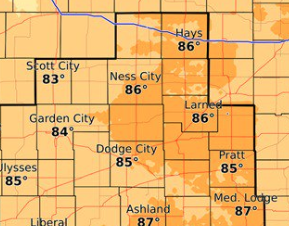
Monday Mostly sunny, with a high near 84. Light and variable wind becoming east southeast 5 to 8 mph in the morning.

Monday Night Showers and thunderstorms likely, mainly after 1am. Increasing clouds, with a low around 61. Southeast wind around 6 mph becoming calm after midnight. Chance of precipitation is 60%. New rainfall amounts between a tenth and quarter of an inch, except higher amounts possible in thunderstorms.

TuesdayShowers and thunderstorms likely, mainly before 1pm. Mostly cloudy, with a high near 79. Calm wind becoming southeast 5 to 7 mph in the morning. Chance of precipitation is 60%. New rainfall amounts between a quarter and half of an inch possible.

Tuesday NightA 50 percent chance of showers and thunderstorms, mainly before 1am. Mostly cloudy, with a low around 59. South southwest wind around 5 mph becoming calm in the evening.

WednesdayA 20 percent chance of showers and thunderstorms after 1pm. Mostly cloudy, with a high near 79.

Wednesday NightPartly cloudy, with a low around 59.

Social media celebration as Kansan wins the U.S. Open golf title

Photo courtesy University of Kansas Athletics
PEBBLE BEACH, Calif. (AP) — Gary Woodland of Topeka captured the U.S. Open, overcoming the back-nine pressure at Pebble Beach to hold off two-time defending champion Brooks Koepka for a three-shot victory. 

The social media world exploded celebrating Woodland’s win. From the President of the United States and Kansas Governor and many others sent their congratulations.

Woodland all but sealed his first major title when he chipped off a tight lie on the green on the 17th hole to tap-in range at a pin tucked in the back left. His par there preserved the two-shot lead.

Then, he made it a three-shot edge when he knocked in a 30-foot birdie putt on 18. It pushed him to 13-under 271 — beating by one shot the score Tiger Woods posted during his 15-shot victory at Pebble in the 2000 U.S. Open.

Woodland shot 2-under 69 to become the fifth player to break 70 in all four rounds of the U.S. Open.

The fourth was Koepka, who wrapped up his round of 68 a few minutes earlier. He’s the first to accomplish that feat and not win.

Koepka failed in his quest to become the first player since Willie Anderson in 1905 to win three straight U.S. Opens. But this second-place finish adds to a runner-up at the Masters and his title at the PGA last month.

Xander Schauffele, Jon Rahm, Chez Reavie and Justin Rose finished in a four-way tie for third and 7 under.

___
PEBBLE BEACH, Calif. (AP) — In front of Gary Woodland was a 263-yard shot to the scariest green on any par 5 at Pebble Beach, especially with a U.S. Open on the line. Behind him by one shot on the leaderboard was Brooks Koepka, the most dangerous figure in major championship golf these days.

The safe shot was to lay up on the 14th and take his chances with a wedge

“The idea was to play for the win,” Woodland said.

With an extra boost of confidence from his caddie — Brennan Little, who was on the bag for Mike Weir in his Masters victory — Woodland delivered the shot of his life with a 3-wood that narrowly cleared a bunker, settled on the edge of the green and set up a birdie that gave him the cushion he needed.

The rest was pure theater — a 90-foot pitch off the 17th green he nearly holed, a 30-foot birdie putt on the final hole for a 2-under 69 and a three-shot victory that denied Koepka’s bold bid to match a century-old record with a third straight U.S. Open.

Woodland’s pitch across the 17th green over a hump that checked and trickled to tap-in range effectively clinched it, taking its place with other big moments on the 17th green in the U.S. Open such as Jack Nicklaus and his 1-iron off the pin and Tom Watson’s chip-in birdie. It even got the attention of Nicklaus.

“Took a lot of guts,” Nicklaus said on Twitter.

Woodland had that it abundance, along with a message from an inspirational friend.

“You got this.”

Until Sunday, when he cradled the silver trophy at Pebble Beach, Woodland got more attention from one hole in a pro-am at the Phoenix Open. He was gracious and encouraging to Amy Bockerstette, a 20-year-old with Down Syndrome and sheer optimism. Woodland invited her to hit a shot on the par-3 16th (into a bunker). He wanted to blast it out of the sand but she said, “I got this.” She hit it out to 8 feet and made the putt. The PGA Tour-produced video has more than 20 million views.

“I told myself that a million times today,” Woodland said. “I’ve got this.”

Koepka didn’t make it easy, keeping the pressure on Woodland until the very end.

Both represent the modern athlete in golf. Both are unflappable.

Needing three putts to win, Woodland finished in style. He raised both arms in the air to salute the crowd, turned toward the Pacific and slammed down his fist.

“I never let myself get ahead,” Woodland said. “Once that went in, it all came out of me. It’s special to finish it off here at Pebble Beach.”

Koepka had to settle for a footnote in history. He closed with a 68, making him the first player with all four rounds in the 60s at a U.S. Open without winning.

“It was awesome to come this close to going three in a row. It’s incredible,” Koepka said. “I didn’t really think about it until I was done on 18 and realized how close I actually was to not making history, but tying it, I guess you could say. Just wasn’t meant to be this week.”

Distance was no problem for Woodland on the 14th hole. It was the potential outcome.

“Left is not good, right is out-of-bounds, long is not ideal and the bunker speaks for itself,” Woodland said. “So to execute that shot under the pressure, under the situation, that shot gave me the confidence. I felt better after hitting that shot on the golf course today than I had in a long, long time.”

He believes it allowed him to hit one just as good on the 17th.

Woodland dropped the 5-iron from his hands when it sailed well to the right of the green with the pin 90 feet away over a hump.

Up ahead on the par-5 18th, Koepka drilled a 3-iron just over the back of the green, leaving him a 50-foot chip for eagle to tie, with a birdie likely to do the trick considering what Woodland faced on the 17th. Koepka chipped to 10 feet and narrowly missed the birdie putt.

Woodland, unable to hit putter and get anywhere near the hole, opted to pitch it with a 64-degree wedge. He clipped it perfectly just over the hump, and it checked about 12 feet from the hole and trickled by the pin to secure par, and effectively the U.S. Open.

“I was just trying to get it over that hump,” Woodland said. “I thought it had a chance to go in, but it’s not one I want over.”

Woodland played conservatively down the 18th and made one last birdie that only mattered in the record book. He was aware that Tiger Woods had a 12-under 272 during his historic rout at Pebble Beach in 2000, and he topped him.

That birdie put him at 13-under 271 and earned him $2.25 million, the richest payoff in golf.

The difference was Woods won by 15 shots and was the only player under par. With a marine layer blocking the sunshine, and no significant wind at Pebble Beach all week, 31 players finished under par.

Koepka started four shots behind in his bid to join Willie Anderson as the only players to go back-to-back-to-back in the toughest test in golf. He made up ground quickly with four birdies in five holes.

“I felt like, ‘We’ve got a ball game now,'” Koepka said.

He failed to get up-and-down from a bunker for birdie on the par-5 sixth, and missed a 6-foot birdie putt on the par-3 seventh. Still, he stayed within range, just like he wanted, knowing that anything could happen on the back nine of a U.S. Open.

Something wonderful happened to Woodland.

“Gary played a hell of a round today,” Koepka said. “Props to him to hang in there. To go out in style like that is pretty cool.”

Of the four other players who had a shot at three straight U.S. Opens, no one came closer than Koepka. He now has a victory in the PGA Championship and runner-up finishes in the Masters and U.S. Open.

Justin Rose was the only one who caught Woodland all day, with a birdie on the opening hole. Rose bogeyed from the bunker on No. 2 as Woodland birdied, and he never caught up. Rose fell out of the race with three bogeys in a four-hole stretch on the back nine. He shot 74 and shared third with Xander Schauffele (67), Jon Rahm (68) and Chez Reavie (71).

Woods birdied six of his last 12 holes and was never a factor. He tied for 21st, 11 shots behind.

Gail Ellen Keller

Gail Ellen Keller, age 60, passed away June 14, 2019, at her home. Gail was born July 18, 1958 in Kansas City, Mo., the daughter of George M. and Carolyn Mae (Crouch) Huber.

Gail, a resident of Great Bend since 2001, coming from Kansas City, Mo., devoted her life to caring for others, being employed by Cherry Village as a CNA and CMA, and later working privately as an in home care giver. She held a special place in her heart for animals, especially her two cats.

Survivors include her mother, Carolyn Mae Huber; and two brothers, Thomas C. Keller and wife Diane of Liberty, Mo., and James K. Keller and companion Robin F. Murphy of Liberty, Mo. She was preceded in death by her father, George M. Huber.

Services are pending with Bryant Funeral Home, Great Bend, Kan.

Kan. man must pay 15 victims restitution as part of child porn sentence

KANSAS CITY, KAN. – A Kansas man who pleaded guilty to possessing child pornography was sentenced Thursday to 70 months in federal prison, according to U.S. Attorney Stephen McAllister.

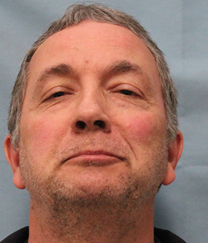
Joel Haines photo Kan. offender registry

In addition, the defendant was ordered to pay $5,000 to the Justice for Victims of Trafficking Act Fund and $3,000 to each of 15 victims who requested restitution.

Joel Haines, 61, Paola, Kan., pleaded guilty to one count of possessing child pornography. At sentencing, the prosecutor said investigators found 1,433 digital child pornography images on Haines’ computer. The images included children under the age of two being sexually abused as well as images of girls ages 6 to 12.

Rural Kan. symphony event cancelled after storms damage tents

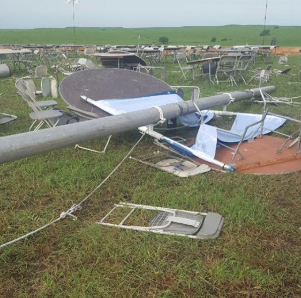
WICHITA, Kan. (AP) — Organizers have cancelled this year’s annual Symphony in the Flint Hills performance because storms did extensive damage to the tents and other equipment for the event.

Storm damage photo courtesy Symphony in the Flint Hills

The group that planned the performance doesn’t plan to offer refunds for the tickets that sold for between $50 and $95. Past events attracted roughly 7,000 people to rural Kansas.

Organizers initially delayed Saturday’s planned performance from Saturday to Sunday, but later decided that the damage from a Friday-night storm was too extensive. Sunday’s forecast also called for the possibility of more severe weather.

The event would have featured a performance by the Kansas City Symphony. The ticket sales raise money to help educate people about tallgrass prairie and preserve it.

Report: Number of Mexican immigrants in the US illegally declines

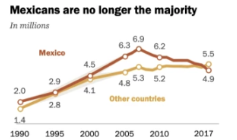
WASHINGTON (AP) — The number of Mexican immigrants in the U.S. illegally has declined so sharply over the past decade that for the first time, they no longer make up the majority of that category, according to an estimate by the Pew Research Center Wednesday.But the number of Central Americans in the country illegally is increasing — from 1.5 million in 2007 to 1.9 million in 2017, the study found.The numbers reflect the conundrum the U.S. is facing at the southern border: The number of Central American migrants crossing the U.S.-Mexico border is rising dramatically, and they are not easily returned over the border — unlike in previous years when the majority of the border crossers were single men from Mexico.

Curbing immigration is President Donald Trump’s signature political issue, but his hard-line and chaotic border policies have failed to stem the tide, and in fact, the numbers have increased since he took office.

There were about 4.9 million Mexicans in the U.S. illegally in 2017, down 2 million from 2007. The decrease was the major driver in bringing down the overall population of immigrants in the country illegally. In 2017 it was about 10.5 million — the lowest since 2004. The research group found the peak was in 2007 at about 12.2 million. Previously, Mexican nationals made up most of that population. Now, it’s a combination, with Central America having the second-largest, and Asia following with 1.4 million.

Pew based the estimates on government data and used a so-called “residual” method to determine the estimate. The method is similar to those used by Homeland Security’s Office of Immigration Statistics and other groups that track immigration, like the Migration Policy Institute and Center for Migration Studies.

The method uses U.S. census counts and government surveys to calculate the number of immigrations living in the U.S. in a particular year, followed by immigrant admissions and other official counts. The number of lawful immigrants is subtracted to get the estimate of immigrants here illegally. The estimate includes some 320,000 people with Temporary Protected Status, and about 700,000 beneficiaries of the Deferred Action for Childhood Arrivals, two programs ended by Trump that are on hold dude to court challenges.

Their research found that longterm residents outnumber more recent arrivals. There are also fewer people working who are not legally allowed to be in the country. Five states had increases in the number of people there illegally: Louisiana, Maryland, Massachusetts, North Dakota and South Dakota.

Kansas man sentenced to 18 years for man’s shooting death

Foster -photo Shawnee Co.

TOPEKA, Kan. (AP) — A Kansas man has been sentenced to nearly 18 years in prison for the July shooting death of another man.

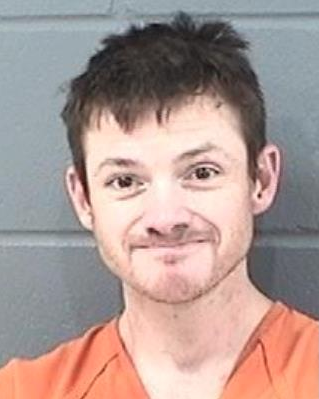
Tony Lee Foster, 33, Topeka, was sentenced Friday. A Shawnee County jury found him guilty in March of second-degree murder and a weapons count in the July 9 fatal shooting of 36-year-old David Payne, of Topeka.

Officers responding to report of a shooting at a home in the northern part of the city found Payne with a gunshot wound to his torso. He was rushed to a hospital, where he later died.

New Exec. Dir. at American Legion Boys State of Kansas Leadership Academy

Shane Wilson
ALBSKLA

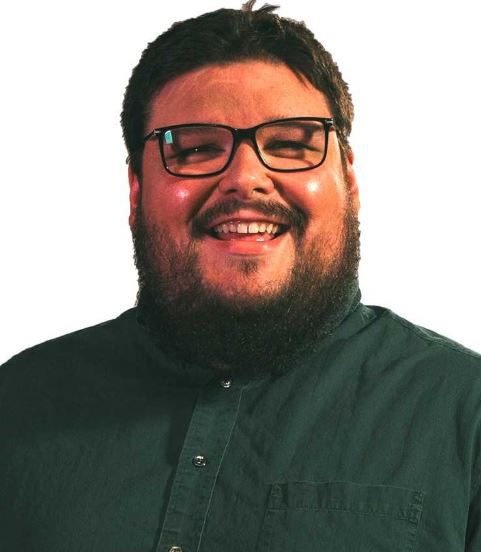
MANHATTAN – The American Legion Department of Kansas’ Boys State Committee has appointed Shane Wilson to serve as the executive director of the American Legion Boys State of Kansas Leadership Academy.

Wilson’s three-year term began on June 8 at the close of the 2019 ALBSKLA session. He takes over for Jake Ellis who served in the role for the past four years.

Wilson, a resident of Lawrence, Kan., was a Kansas Boys State delegate in 2006 from Abilene High School before graduating there in 2007. He has served KBS in a variety of volunteer positions since 2007, most recently as its dean of counselors for the last two years. Wilson previously served Kansas Boys State as a general advisor in 2017, as a coordinator from 2014-16 and in various counselor roles from 2007-13.

Wilson is employed as a product support specialist for PROSOCO Inc., in Lawrence. He earned a Bachelor of Science degree in economics from Emporia State University in 2014. Wilson is pursuing Master of Arts in educational leadership from Saint Mary’s University (Minn.). He is a member of the
Shawnee Tribe of Indians based in Miami, Okla.

As executive director for the American Legion Boys State of Kansas Leadership Academy, Wilson is responsible for the direction and oversight of all objectives for the program. Along with implementation of strategic planning and visioning, Wilson is accountable for the long-term health and longevity of the
ALBSKLA and its resources.

The ALBSKLA provides a relevant, interactive, problem-solving experience in leadership and teamwork that develops self-identity, promotes mutual respect and instills civic responsibility. Boys State is a “learning by doing” political exercise that simulates elections, political parties and government at the state, county and local levels, providing opportunities to lead under pressure, showcasing character and working effectively within a team. It’s also an opportunity to gain pride and respect for government and the price paid by members of the military to preserve democracy.

Approximately 410 young men from across the State of Kansas, all of whom will enter their senior year of high school this fall, participated in the 2019 session of the American Legion Boys State of Kansas Leadership Academy. The event, which concluded its 82nd year, was held June 3-8 at Kansas State University in Manhattan for the 28th consecutive year. The 2020 session will begin on Sunday, May 31.

Drug task force locates Kansas meth lab, makes arrest

GEARY COUNTY —Law enforcement authorities are investigating a suspect after finding a meth lab in Geary County.

Pierson photo Geary Co.

Early Saturday morning the Junction City – Geary County Drug Operations Group conducted a search warrant in the 300 block of North Washington Street for a methamphetamine manufacturing investigation. A clandestine methamphetamine lab was located and processed, according to a media release.

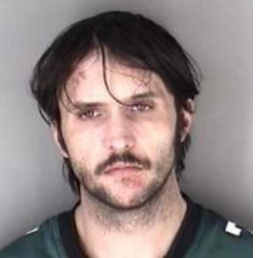
Authorities reported that Avery Louis Pierson, 35, Junction City, was arrested on suspicion of manufacturing methamphetamine, possession of methamphetamine, felony possession of drug paraphernalia, possession of marijuana and felony interference with law enforcement.

The search warrant was served with the assistance of the Junction City Police Department, Geary County Sheriff’s office, Grandview Plaza Police Department the Riley County Police Department Emergency Response Unit, Hazardous Material Response Team and the Junction City Fire Department.

The Drug Operations Group is a joint task force composed of members of the Junction City Police Department, Geary County Sheriff’s Department and the Grandview Plaza Police Department.

Copyright Eagle Radio | FCC Public Files | EEO Public File