We have a brand new updated website! Click here to check it out!

First Five: Lessons from Brooklyn

Kristen Farrington is executive director of the Religious Freedom Center of the Freedom Forum Institute.

By KRISTEN FARRINGTON
Freedom Forum Institute

E Pluribus Unum. Out of many, one.

In 1782, this Latin phase was adopted by our leaders as part of the Great Seal of the United States. It is not the official motto of our country, but many have adopted it as our motto. Over time, out of many states, one nation has come to represent for many Americans, out of many peoples, one America.

I wonder if E Pluribus Unum reflected the feeling of the people at that moment in time? Or was it aspirational — acknowledging the legal reality and yet knowing that the disparate people who lived in the United States had a long way to go before they’d see themselves as one nation.

As we reflect on the challenges that have faced our nation over the last few centuries — several wars, the Great Depression, social movements calling for the end of institutional racism, sexism, homophobia and domestic and international terrorism — I have no doubt that ordinary citizens like me, of every generation, have wondered — is this even possible?  Did our foremothers and forefathers set us up for failure? Are we as human beings capable of learning to live together despite our deepest differences?

When I spend time with adults, I feel much more pessimistic about the possibility. When I spend time with children and youth, I see that in many ways they have already figured it out. As adults, many of us don’t go out of our way to engage with people who are different from ourselves, but children don’t seem to have the same barriers.

Last week I was on a bus headed to Los Angeles International Airport to catch my flight back to Washington, D.C. The bus was full. Looking at the sea of faces, I was struck by how this group represented the rich diversity of America. Next to me sat Brooklyn, a 2½-year-old who insisted she was 3. In the 15 minutes that I talked with her and watched her engage with the people on the bus, she helped transform the bus from a group of strangers staring at their phones to a community of people laughing and engaging in conversation. With a big smile, Brooklyn talked with everyone, asked us questions, introduced her 8-year-old brother and stuffed Minion to us and told us all about her friends at pre-school. She giggled and smiled, talked and asked questions and waved goodbye to each person as they got off the bus — a perfect example of kindness and hospitality.

As executive director of the Religious Freedom Center, I do a great deal of traveling, speaking and educating about religious freedom and religious literacy, helping equip community leaders so they can protect the rights of people of all religious traditions and none. This is First Amendment work, but it is also integral is to the larger diversity, equity and inclusion (DEI) work that is happening in universities, schools, businesses and communities across the country.

Often when I talk about religious diversity and inclusion, religious freedom and religious literacy with adults, either I receive “Yes this is an issue, but we don’t have the time to deal with it,” or “We haven’t had any complaints — we don’t have those issues in our community.” These answers often come from people who haven’t had to think about these issues or are benefiting from systems of privilege that don’t force them to address the issues. When it comes to basic human and constitutional rights, pretending these issues don’t exist is probably not the best policy. The better way, although the harder way, is to dig in.

The first step is recognizing that diversity already exists in our schools, businesses and communities. I’m astonished when people tell me that their communities aren’t diverse — there is so much they aren’t seeing. Diversity encompasses many things — race, ethnicity, language, military status, marital status, economic status, religion, sexual orientation, gender identity, gender expression, age, learning differences, physical and mental ability, just to name a few.

The second step is to start asking the questions that Trudy Arriaga, Ed.D., asks in her book “Opening Doors” — “In what ways is the door slammed shut to certain groups? In what ways do we exclude and marginalize? In what ways do we send the message that our community, our school or business is not inclusive — not for everyone? In what ways do we ignore the systemic ways that prevent equal access?”

To have equity for people of all religions and none, we must guarantee fair treatment, access, opportunity and advancement for all — not just for the people who look like us, think like us, and believe the same things we do. Dr. Arriaga reminds us that we need to take a hard look at our institutions and systems that create barriers and deny access. Once we put new equitable structures and systems in place, we still need to create environments where everyone feels welcomed, respected and fully valued.

We are making progress as more school districts, businesses and universities are putting an emphasis on DEI training and initiatives, but we still have a long way to go. The recent shooting at Chabad of Poway synagogue in San Diego County is another reminder of how we can’t ignore the growing anti-religious sentiment in this country. According to FBI hate crime statistics, hate crimes motivated by biases based on religion continue to rise. The increase in attacks on Jewish, Muslim and African-American communities over the last few years has raised alarm across America as communities continue to be devastated by shootings, arson and vandalism.

“Once we identify the barriers and start eliminating systems that systematically prevent people from access and opportunities, we can build new inclusive models and create an environment where all people feel welcomed, respected and valued” (University of Houston Center for Diversity and Inclusion). This is the long view — the work of years, decades and generations.

On days when fellow Americans tell me they don’t want to talk with anyone who doesn’t share their beliefs or roll their eyes and say things are just fine the way they are, I wonder whether or not E Pluribus Unum is even a remote possibility.

I was feeling that way when I left Los Angeles, but then met Brooklyn, who taught me a valuable lesson. She reminded me that there is an easy place to start this difficult work. She treated each person on the bus with kindness and in that very simple act made us feel valued, respected and welcomed. The nation’s founders placed the words E Pluribus Unum on the nation’s Great Seal. Brooklyn and others in future generations challenge us today to make them more than that.

Kristen Farrington is executive director of the Religious Freedom Center of the Freedom Forum Institute. Contact her via email at [email protected].

Exploring Outdoors Kansas: Photo shoot

Steve Gilliland
The evening was far too hot and humid for the middle of April as I quietly walked across the alfalfa toward a tree line thick with fallen cottonwoods and old rotting hay bales. I followed the tree line until it ended abruptly, then tiptoed through a sea of Poison Ivy to the back door of our pop-up hunting blind. Once inside, I settled into a camp chair and unzipped windows on 3 sides. Approaching storms blew a nice breeze through the blind. In front of me was a narrow strip of alfalfa, hemmed in on the far side by wheat, and framed on 2 more sides by the river as it meandered through the countryside.

My quarries tonight were wild turkeys which I had seen here with some regularity, and I was prepared to shoot as many as possible. The flock I’d been seeing was perhaps a dozen birds, and I was pretty sure I could get them all with 2 shots at most! Three Blue Herons rose from the timber along the river, but were gone before I could shoot. A lone Red Tail Hawk perched high above the river was also giving me a nice shot if I hurried!

Now before you overload the switchboard at Operation Game Thief to turn me in to the authorities, allow me to explain. That night my weapon of choice hung by a strap around my neck; its barrel was a lense, and the trigger a small silver button. You guessed it! I was “shooting” photos with a camera

In the Kansas Hunter Education Manual, the chapter on Hunter Responsibility lists four stages of a sport hunter. This topic discusses how the standards by which a hunter defines success evolve and change as the hunter develops and matures. Stage 3 is called the “Trophy Stage,” and stage 4 is the “Method Stage.” During these 2 stages in a hunter’s life, he or she matures to the point where a trophy can just as easily be a photograph rather than a mount on the wall.

One frigid April morning years ago, I shared a blind with a young man and his guide during the youth turkey hunt. That was before cell phones had such fantastic cameras, so I had a digital camera around my wrist, hoping to record some of the hunt in pictures. Among the group of birds that came to our decoys were several hens, and among them was a white-speckled hen. My camera wouldn’t work in the icy morning air, so I didn’t get a photo of her, and now I’m relegated to remembering her only in my mind, (which is quickly fading.) I was more disgusted over the camera malfunction than if I had missed a shot at a long bearded tom!

I started deer hunting when I was just a kid, and I wish I had pictures of every awesome and unusual event I’ve seen in the woods since. Once as I sat quietly on a log, a mother fox and several cubs ran by me so closely I could have reached out and grabbed one. While fishing one evening at McPherson State fishing lake I watched a beaver swim clear across the lake with a huge leafy branch in its mouth. Another time during the early January antlerless-only deer season, a buck with a monstrous rack hanging full of long grass and weeds stood just yards away from me. He looked like a hanging garden on four legs.

I could go on, but my point is that all these things are in my mind’s eye only, and someday will probably be forgotten. If they were documented as photos, at least I could pass them on for others to enjoy as well. High dollar trail cameras are available that transmit photos directly to a computer, so why not a pair of glasses that does the same with images and action see through their lenses?

Not many years ago, if someone had suggested I could be as happy with a picture as with a mounted trophy on my wall, I would have bristled at the thought. Now, however, I feel like that transition will someday be an easy one… Continue to Explore Kansas Outdoors.

Steve Gilliland, Inman, can be contacted by email at [email protected].

Chiefs Legends youth football camp set for June 5

KANSAS CITY, Mo. – The Kansas City Chiefs Legends Community Youth Football Camp presented by Window World is set for June 5 at Arrowhead Stadium from 8:30 a.m. to 4 p.m. Pro Football Hall of Famer Will Shields, Chiefs alumni and Kansas City Ambassadors will lead the camp throughout the day. Registration is now open at www.chiefs.com/fans/youthfootballcamp.
Children ages 8-14 will have the opportunity to become a part of Chiefs Kingdom and participate in an educational, energizing, and action-packed day on the field at Arrowhead Stadium. Campers will spend the day learning non-tackle fundamentals from Kansas City Chiefs alumni and Kansas City Ambassadors presented by Empower Retirement, as well as key life skills that will help them grow as athletes on and off the field.

The first 50 sign-ups are eligible for early-bird pricing at $100. After early-bird registration closes, registration will cost $125 for all sign-ups through Tuesday, May 28. Late registration sign-ups following Tuesday, May 28th are $150. Included in the cost of registration is a water bottle, drawstring backpack, T-shirt and VIP access to Arrowhead Stadium. A nutritional lunch will be provided for all campers. More information on registration and the camp can be found at www.chiefs.com/fans/youthfootballcamp.

With registration to the camp, children will have the option to opt-in to Chiefs Kingdom Kids. Chiefs Kingdom Kids is free for any child ages 6-12, and members will get year-round information about all the youth-related activities the Chiefs provide. Members will get a Chiefs Kingdom Kids youth football, an annual birthday card, invites to exclusive events, a chance to enter a preseason ticket giveaway and more. Information on Chiefs Kingdom Kids and a link to sign up for the program can be found at www.chiefs.com/kids.

All net proceeds from the camp benefit the Kansas City Ambassadors Charitable Foundation, a 501(c)(3) nonprofit organization, to be distributed to non-profits throughout the Kansas City Metro.

In the event of inclement weather, activities on the field at Arrowhead will be moved to the indoor practice facility at The University of Kansas Health System Training Complex located ¼ mile from the stadium (One Arrowhead Drive Kansas City, MO 64129).

Widespread severe weather rolls across Kansas

Sunday’s widespread severe weather saw flooding rains, large hail, high winds and 15 reports of tornadoes across Kansas.

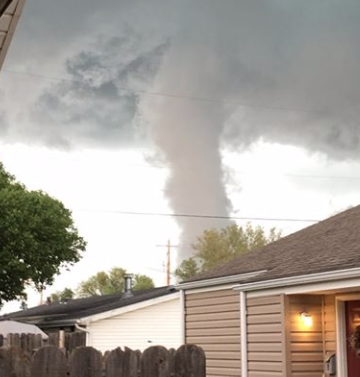
Tornado near Great Bend on Sunday photo courtesy Lorraine Aldrich-Ames Smith

The National Weather Service issued the first tornado warnings Sunday afternoon in Meade and Ford County. Barton, Rice, Reno and Sumner counties all were impacted by tornadoes and high winds.

Baseball and golf ball size hail also did significant damage in a number of areas. South Central Kansas also reported massive amounts of hail from Sunday evening’s storm.

Flooding rains have prompted emergency management officials to close some rural roads in portions of central Kansas.

Tornado in Barton County Sunday evening photo courtesy Allie Broadrick

There are no reports of injury from the severe weather. The National Weather Service will release additional details Monday on the strength of the tornadoes and or straight line winds.

Update: Kan. boy hospitalized after video game dispute, police make arrest

SEDGWICK COUNTY — Law enforcement authorities are investigating a violent disagreement between juveniles that sent one to a hospital and have made an arrest

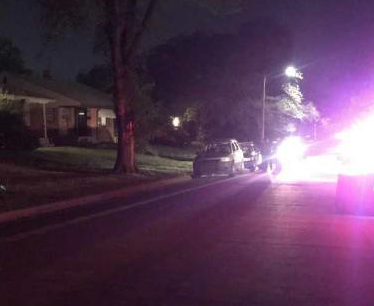
Police at the scene of Saturday night investigation -photo courtesy KWCH

Just after 10:30 p.m. Saturday, police were dispatched to a stabbing call in the 2200 block of South Glendale in Wichita, according to officer Kevin Wheeler.

At the scene, police located a nine year old boy who received a cut to his back.  He was transported to a local hospital where he was remains hospitalized with a non-life threatening injury, according to Wheeler.

Investigators learned that three boys, ages 13, 12, and 9 were in the basement of the 12-year-old’s home in playing video games when an argument started among the boys.

During the disturbance, the 12 year old retrieved a knife and threw it at the nine year old outside of the residence, which caused the minor injury. There were no injuries to the other boys.  The 13 and 9-year-old boys are brothers.

Officers contacted the boys’ parents, conducting interviews and on Sunday arrested the 12-year-old for aggravated battery and aggravated assault, according to Wheeler

The case will be presented to the Sedgwick County District Attorney’s Office.

—————

SEDGWICK COUNTY — Law enforcement authorities are investigating a disagreement between children that sent one to a hospital.

Just after 10:30 p.m. Saturday, police were dispatched to a stabbing call in the 2200 block of South Glendale in Wichita, according to officer Kevin Wheeler.

At the scene, police located a nine year old boy who received a cut to his back.  He was transported to a local hospital where he was remains hospitalized with a non-life threatening injury, according to Wheeler.

Investigators learned that three boys, ages 13, 12, and 9 were in the basement of the 12-year-old’s home in playing video games when an argument started among the boys.

During the disturbance, the 12 year old retrieved a knife and threw it at the nine year old outside of the residence, which caused the minor injury. There were no injuries to the other boys.  The 13 and 9-year-old boys are brothers.

Officers have contacted the boys’ parents and were still conducting interviews Sunday.


Partly cloudy, mild Monday with a chance for thunderstorms

Monday A 30 percent chance of showers and thunderstorms, mainly after 1pm. Mostly cloudy, with a high near 65. Northeast wind 9 to 11 mph.

Monday Night Showers and thunderstorms likely. Cloudy, with a low around 50. Northeast wind around 11 mph. Chance of precipitation is 70%. New rainfall amounts between a quarter and half of an inch possible.

Tuesday Showers and thunderstorms likely, mainly before 1pm. Cloudy, with a high near 61. East northeast wind 11 to 13 mph. Chance of precipitation is 60%. New rainfall amounts between a tenth and quarter of an inch, except higher amounts possible in thunderstorms.

Tuesday NightShowers and possibly a thunderstorm before 1am, then showers and thunderstorms likely after 1am. Low around 52. East wind 9 to 11 mph. Chance of precipitation is 80%. New rainfall amounts between a half and three quarters of an inch possible.

WednesdayShowers and thunderstorms likely, mainly after 1pm. Cloudy, with a high near 63. Chance of precipitation is 70%. New rainfall amounts between a quarter and half of an inch possible.

Wednesday NightA 50 percent chance of showers and thunderstorms before 1am. Cloudy, with a low around 42. Breezy.

ThursdayMostly cloudy, with a high near 58.

Kansas man accused of killing Italian clothing store owner

VITERBO, Italy (AP) — Italian police have arrested a 22-year-old American and accused him of killing a 74-year-old Italian owner of a clothing store in Viterbo, a city near Rome.

Pang as seen on security cameras image courtesy KBC-TV

Police arrested Michael Aaron Pang on Saturday and allege the killed the Italian storekeeper by striking him with a stool. The body of Norveo Fedeli was found inside his store Friday, Lt. Col. Guglielmo Trombetta said.

Trombetta said Pang, who was born in South Korea, is a graphic designer from the Kansas City area who arrived in Italy about two months ago. Trombetta said it was unclear why Pang was in Italy. He said the suspect has not spoken yet with detectives.

Pang’s lawyer, Remigio Sicilia, said he came to Italy on a tourist’s visa and had a desire to learn Italian and work in Italy. He said Pang is from Overland Park, Kansas, a suburb of Kansas City. He said Pang appeared to have no criminal past.

“He’s 22, but he is like a child,” the lawyer said. “He’s a well-behaved boy from a good American family.”

Trombetta said Pang ordered designer clothes worth about 600 euros ($670) from Fedeli’s store. He said Pang had gone to the store twice before Friday to purchase the clothes, but his credit card was rejected.

Police allege Pang and Fedeli scuffled before Pang killed the storekeeper. Police say Pang changed his clothes and took the man’s wallet before fleeing the store with one of his shoes covered in a bag because it was stained in blood.

Police say they found Fedeli’s stolen wallet and other evidence linking Pang to the killing at a room he rented in Capodimonte, a lake town near Viterbo.

Pang, who faces murder and robbery charges, is expected to appear in court Monday, Trombetta said.

Woman arrested at KC bus station admits transporting fentanyl

KANSAS CITY– A woman carrying more than five pounds of fentanyl in her suitcase as she traveled through Kansas City pleaded guilty in federal court Thursday, according to the United State’s Attorney.

Sanchez -photo Clay Co.

Evelyn C. Sanchez, 33, pleaded guilty before U.S. Chief District Judge Beth Phillips to possessing fentanyl with the intent to distribute.

According to court documents, Sanchez was traveling from Los Angeles, Calif., en route to New York, N.Y. Her bus stopped briefly at a Kansas City bus station on Aug. 21, 2018. After Kansas City police detectives interviewed Sanchez at the bus station, they became suspicious that she was not being truthful about her trip and purpose for going to New York. A police service canine alerted to a grey, hard-sided suitcase under one of the seats near where Sanchez had been seated on the bus, and she eventually acknowledged that that suitcase belonged to her.

When detectives searched Sanchez’s suitcase, they found two bundles wrapped in several layers of plastic, which contained a total of 5.3 pounds of fentanyl. When officers searched Sanchez’s purse, they discovered a false bottom to the purse that contained five separate baggies of cocaine that weighed a total of 5.64 grams.

Under federal statutes, Sanchez is subject to a mandatory minimum sentence of 10 years in federal prison without parole, up to a sentence of life in federal prison without parole. The maximum statutory sentence is prescribed by Congress and is provided here for informational purposes, as the sentencing of the defendant will be determined by the court based on the advisory sentencing guidelines and other statutory factors. A sentencing hearing will be scheduled after the completion of a presentence investigation by the United States Probation Office.

Kansas man hospitalized, suspect jailed after shooting

SHAWNEE COUNTY — Law enforcement authorities are investigating an aggravated battery and have a suspect under arrest.

McClain -photo Shawnee Co.

Just after 12:30 a.m, Saturday, police were dispatched to the area of SE 10th and Liberty in Topeka on a report of a man who had been shot according to Lt. Manuel Munoz.

Upon arrival, police determined the incident had taken place at 730 SE Liberty and found a male victim in the home suffering from a non-life threating gunshot to the arm.

The victim was transported to a local hospital for treatment. Officers took several people into custody at the scene and transported them to the Law Enforcement Center for further questioning.

They also transported Wilbert McClain, 61 to Shawnee County Department of Corrections for Aggravated Battery, Aggravated Assault, Aggravated Robbery and Felony Obstruction, according to Munoz.

Kansas, other states work to avoid vast undercount in 2020 census

LOS ANGELES (AP) — In a squat office building not far from downtown, Esperanza Guevara is getting ready to look for people who might not want to be found. And her job could get a lot harder.

The immigrant-rights activist is leading a drive to reach tens of thousands of people who entered the United States illegally and persuade them to participate in the 2020 census, the government’s once-a-decade count of the population.

The Trump administration’s plan to use the census to inquire about each person’s citizenship has sent a chill through immigrant communities. Guevara and others fear the question could discourage participation and, by some estimates, leave millions of people uncounted across the country.

Such concerns are concentrated in Democratic-led states with large immigrant populations. An inaccurate count could have real-world consequences, since billions in federal dollars and seats in Congress are allocated according to population.

In immigrant communities often wary of government, a question about citizenship status will make people “less likely to fill out the census form or even answer the door when someone comes knocking,” said Guevara, who works for the Coalition for Humane Immigrant Rights of Los Angeles.

Those concerns have been heightened by Trump’s slashing rhetoric toward immigrants and by fears that census information could be used to find and deport people.

“Their first thought is, ‘Is this information going to be used against me?'” Guevara said, standing near rows of computers that will be staffed by volunteers trying to connect with prospective census participants.

Census Bureau chief Ron Jarmin said the agency is legally barred from sharing its information with law enforcement agencies, adding: “We are committed to ensuring that the data we collect are always protected.”

The U.S. Supreme Court is weighing a legal challenge seeking to strike the citizenship question from the census form. During oral arguments last week, the court’s conservative majority appeared ready to allow the question.

The Trump administration has argued that it has wide discretion in designing the questionnaire and that the citizenship question is clearly constitutional because it has been asked before — most recently, 1950 — and continues to be used on smaller, annual population surveys.

The Public Policy Institute of California has said that failure to accurately tally immigrants and other hard-to-reach groups could lead to an undercount of 1.6 million people, or roughly 4 percent of the state’s population. That would be enough to cost California one of its 53 House seats.

So California and other states are spending millions to persuade residents, legal and not, to fill out census forms, employing such means as public service messages, mailings, visits to people’s homes and informational gatherings.

“States are doing this because of the number of threats to a fair and accurate count,” said Vanita Gupta, president and CEO of the Leadership Conference on Civil and Human Rights.

Colorado’s House recently endorsed spending $12 million to encourage participation in the census. The governors of Kansas and Nevada have moved to create committees devoted to making sure everyone takes part.

In New Mexico, where the state has launched a multimillion-dollar effort to ensure an accurate tally, Gov. Michelle Lujan Grisham has warned that a 1% undercount could translate into more than $700 million in lost federal revenue over a decade.

Perhaps no state has more at risk than California, where no racial or ethnic group constitutes a majority and Hispanics outnumber whites. More than a quarter of its residents are foreign-born.

Nearly 3 in 4 Californians belong to groups the census has historically undercounted, including Hispanics, blacks, renters, immigrants, children and members of multiple families that share a single home. The state also has an above-average poverty rate, and the poor — especially the homeless — are difficult to count.

With online surveys being widely used next year, people with shaky access to the internet also could disappear from the count.

The state has budgeted about $100 million for education and media campaigns to reach people, a figure likely to jump to $150 million later this year. Most of the money is going to hire field workers and to advertise the importance of participating, a message that will be printed even on lottery tickets.

The Trump administration’s “citizenship question has one purpose: to undercount our diverse communities,” Democratic Gov. Gavin Newsom said. “Our state won’t be intimidated by the White House’s actions, and we aren’t going to back down from fighting for a fair count.”

The Census Bureau’s own plans call for hiring 450,000 to 475,000 temporary workers. Most of them will knock on the doors of people who do not fill out the questionnaires. That number is lower than it was 10 years ago because the bureau is counting on technological changes to make the job more efficient.

With a $400,000 contract from the state, Asian Americans Advancing Justice in Los Angeles is working to reach into immigrant communities where more than a dozen languages are spoken, including Korean, Vietnamese and Chinese. Southern California is home to the largest Asian population in the U.S.

An Le, the group’s statewide census manager, said census research has found that Asians who speak little or no English and were born outside the U.S. are fearful of repercussions from the government if they submit the information. The group is stressing the importance of the census to health and education funding.

Le said more money is needed to produce census materials in a greater range of languages. She worries, too, about the citizenship question.

Even for legal permanent residents, that would serve as “a deterrent and a barrier,” she said.

BEAR DOWN: Fort Hays State’s Jibowu signed by Chicago Bears

FHSU Athletics

CHICAGO – The Chicago Bears officially announced the signing of undrafted free agent and former Fort Hays State football standout Doyin Jibowu. He is one of 22 undrafted free agent signings the Bears announced late on Thursday night (May 2).

Jibowu, a two-time All-America selection by the Don Hansen Football Committee, finished his senior year of 2018 with 57 tackles, including 6 for loss, 2 interceptions, 1 sack, and 11 pass breakups. He wrapped his impressive four-year career at FHSU with 276 tackles, 27.5 tackles for loss, 5.0 sacks, 9 interceptions, and 26 pass breakups. Jibowu was a three-time All-MIAA First Team selection at defensive back and received Academic All-America honors from CoSIDA in his time at FHSU. Jibowu helped FHSU to back-to-back MIAA Championships and NCAA Playoff appearances in 2017 and 2018 and a pair of bowl game appearances in 2015 and 2016.

Fort Hays State has now had a player signed by an NFL team two consecutive years. Last year, Nathan Shepherd was the 72nd pick overall in the NFL Draft, chosen in the third round by the New York Jets. Shepherd played in all 16 games and made five starts in his rookie year with the Jets, recording 15 tackles.

Link to the official announcement by the Bears – Roster Moves: Bears Sign 22 Undrafted Rookies

Mabel Irene Pruter

Mabel Irene Pruter, 98, of Cartwirght, Oklahoma, and former Natoma, Kansas, resident, died on Sunday, May 05, 2019, at the Texoma Medical Center in Denison, Texas.

Services are pending with Pohlman-Varner-Peeler Mortuary of Russell.

Copyright Eagle Radio | FCC Public Files | EEO Public File