SEDGWICK COUNTY —Law enforcement authorities are investigating a fatal shooting that left a man dead and have made an arrest.
Patterson photo Sedgwick Co.
Just after 4 a.m. Friday, police responded to a shooting call at a residence in the 4400 block of east Bayley in Wichita, according to officer Charley Davidson. Upon arrival, officers located shell casings and two handguns.
A short time later, 40-year-old Charles Cunningham of Wichita arrived at an area hospital with a gunshot wound. He was pronounced deceased.
The investigation revealed that Cunningham and his 42-year-old brother went to the home on East Bayley in reference to an ongoing dispute. At the residence, Cunningham physically attacked 26-year-old Dalton Patterson and Patterson fired a shot that struck Cunningham, killing him.
This was not a random incident. The individuals involved knew each other, according to Davidson and investigators have recovered multiple guns and drugs during their investigation.
Georgia Wyatt, age 77, of Hays, Kansas passed away Thursday, October 17, 2019 in Hays. She was born October 28, 1941 in Norton, Kansas to George and Iva Gayle (Powell) Craig. On November 11, 1972 she married Clair Wyatt in Norton.
Georgia had worked at Fort Hays State University in the Custodial Maintenance department. Georgia spent summers on her Grandma Powell’s farm, where her love for animals was born through taking care of them. She enjoyed gambling at Dodge City, and we are sure her attendance alone kept them afloat for several years! She enjoyed volunteering her free time as a senior companion during her free time, which gave her much joy. Georgia was a little spitfire who liked to be mischievous at times, but only if it was in good fun. She was happiest at home, spending time with the love of her life, Clair, and taking care of her cats and dogs. Her unexpected loss has left a tremendous hole in the lives of those who love her.
She is survived by her husband Clair of Hays; children, Lisa Shelton (Larry) of Topeka, Bradley Wyatt of Hays, Dana Wyatt-LeFebvre (Kenny) of Tacoma, WA, Shanon Wyatt (Phillip Pfortmiller) of Phillipsburg, and Gina Lennemann (Dan) of Lafayette, LA; Brothers: Dale Craig (Carol), Richard Craig (Betty) and David Craig (Terese); Grandchildren-16 Great Grandkids-24
She was preceded in death by her parents, George and Iva Gayle Craig, her in-laws Hervey and Leona Wyatt, a son, Clint Wyatt, a granddaughter Chloe Wyatt, and a grandson, Isaac Wyatt.
Memorial services will be 10:30 AM Monday, October 21, 2019 at Brock’s-Keithley Funeral Chapel 2509 Vine Hays, KS 67601 with Memorial Visitation at 10 AM until service time.. Private family inurnment will be in the Norton Cemetery at a later date.
Memorial contributions are suggested to Hays Senior Center, Hays Humane Society or Hays Hospice
Condolences may be left by guest book at www.keithleyfuneralchapels.com or by email at [email protected]
Lee (Joy) McDougal, age 72, former Hays resident passed away on September 5, 2019, in Alpine, California. She was born to Walter and Eleanor (Gottschalk) Joy on January 25, 1947, in Hays, Kansas. She married David McDougal on December 2, 1967 at Hays, Kansas. He preceded her in death on July 12, 2012.
She attended Buckeye School as a child, graduated from Hays High School and attended Fort Hays State University. They made their home in San Diego, CA, and later resided in Alpine, CA. Lee and Dave owned and operated Automotive Fleet Services. They were also avid campers, loved to travel and went on many short road trips in the San Diego area.
Survivors include her son, Dan McDougal, and longtime girlfriend Michelle Harmon, Alpine, CA; a daughter, Jamie McDougal and husband, Dave, Surprise, AZ; four grandchildren, Daniel McDougal II, Hayden VanClay, Gage VanClay, and Ryder VanClay; two brothers, Frank Joy and wife, Carol, Hays, KS; Fred Joy and wife, Pam, Hays, KS; and a sister, Lois LaCoss and husband, Greg, San Marcos, TX.
She was preceded in death by her parents; and her husband; one sister, Judy Rohr.
A Celebration of Life will be held 11:00 A.M. Saturday, October 26, 2019, at the First Presbyterian Church, 2900 Hall Street, Hays, KS. Inurnment will be at Fort Hays Memorial Gardens Cemetery, Hays, Kansas.
The family will receive friends from 10:30 to 11:00 A.M. Saturday, at the church.
In lieu of flowers, the family has requested donations be made to “Free to Breath/Lung Cancer Research Foundation”. The website link is: https://www.lungcancerresearchfoundation.org/support-us/give-in-tribute
Services are entrusted to Cline’s-Keithley Mortuary of Hays, 1919 East 22nd Street, Hays, Kansas 67601.
Condolences can be sent via e-mail to [email protected] or left at guestbook at www.keithleyfuneralchapels.com
KANSAS CITY (AP) — Kansas schools rely too heavily on test scores and ignore input from teachers when weighing whether changes are needed for a student to achieve classroom success, according to a study by researchers at the state’s flagship university.
Kansas began launching the data-heavy Multi-Tiered System of Supports approach in 2007, which has been used to administer plans for student improvement. But the University of Kansas study released earlier this year calls for a balanced system that includes teacher recommendations, test scores and other metrics, KCUR-FM radio reported .
“We are losing teachers’ ability to use far more information about what they know makes for a good education for different types of kids because we’re just reducing the kids down to a number,” said Rebecca Jacobsen, an associate professor of education policy at Michigan State University.
In 2013, the Garden City Public Schools district received training for MTSS. Some teachers didn’t agree with the results from the test, but when they tried to protest, state consultants told them their input wasn’t needed.
“Good teachers are rightly saying those standardized tests are part of the story, but not all of the story,” said Don Stull, one of the study’s authors and a professor emeritus at the university. “And if we don’t try to bring all that we know . then we’re not doing the best we can for those children.”
Shortly after, the state shifted its approach to social and emotional growth. High school graduation rates were also considered alongside test scores.
“The assessment is just a tool to say do we need to look at a certain area,” said Linda Wilkerson, the co-director of MTSS for the Kansas Department of Education. “It isn’t the answer. It’s the question.”
Schools across the country are now recognizing that teachers’ judgments should not be dismissed in favor of test scores. Kansas is trying to find that balance.
“We’re coming back to a kind of middle ground,” Patricia Burch, an associate professor of education at the University of Southern California, said, “where we agree it’s important but it’s not as heavy handed.”
RENO COUNTY— Animals on a highway led to an accident just before 4a.m. Saturday in Reno County.
The sheriff’s department reported there were 8 sheep, 2 donkeys, 2 horses and a cow in the area of Kansas 96 Highway and Mills Road.
While a deputy was attempting to get the animals off the road, they ran south on K96 where a northbound vehicle driven by 55-year-old Treaza Sovine struck a horse.
Sovine complained that her left arm hurt, she had several cuts and was covered with glass, according to the sheriff’s department. EMS treated her at the scene of the crash.
She was wearing a seat belt, according to the sheriff’s department.
KANSAS CITY (AP) — A 39-year-old Kansas City man was sentenced to 91 years in prison for shooting a Missouri State Highway Patrol trooper in the leg during a confrontation at a casino.
Morris photo Clay County
Ronald Morris was sentenced Wednesday for shooting at Harrah’s Casino in North Kansas City. He pleaded guilty to assault on a law enforcement officer, armed criminal action and attempted assault on a law enforcement officer.
Clay County Prosecutor Daniel White said in May 2016, casino security reported a man with a handsaw on the roof of a car. During a confrontation with a highway patrol corporal and another trooper, Morris became combative. At some point, Morris grabbed a pistol and shot the corporal in the leg. When Morris broke away, he was shot by the other trooper.
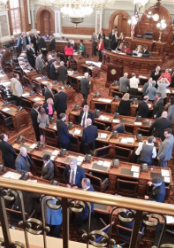
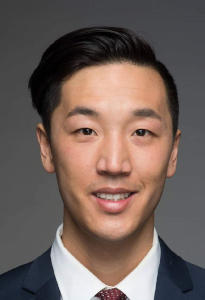
Even though it’s the offseason, Kansas Rep. Rui Xu says being a legislator is a full-time job.
A study says Kansas state lawmakers typically make $21,900 each legislative session.
Over the course of a week, on top of his part-time gig as a freelance marketer, the Democrat spends 20 to 30 hours meeting with constituents in Johnson County, going to events, working on legislation or helping city council candidates run for office.
Xu isn’t paid for that work. Like every other member of the Kansas Legislature, he only draws a salary from the state during the legislative session, from about January to May. This year, his first in office, he got $19,300.
The typical Kansas legislator makes about $21,900 during session, according to a report from the legislature’s audit division. That’s less than what lawmakers make in many other states. Oklahoma and Missouri pay more than $35,000 a year, plus living expenses.
It’s not easy to convince voters that legislators need a pay raise. But some legislators and citizens argue Kansas lawmakers’ pay isn’t enough to compensate for what they do year-round, and it could impact who runs for office and what he or she does after winning a seat.
Kansas Rep. Rui Xu.
CREDIT KANSAS HOUSE OF REPRESENTATIVES
“The makeup of our legislature … does not reflect where Kansas is as a whole,” Xu said. “A House of Representatives should be fairly representative of the population.”
How the pay breaks down
Kansas bases lawmaker pay on a daily rate while the legislature is in session: $88.66 a day, plus a per-diem allowance of $149 to cover food and housing. The state report added those numbers and multiplied them by 92 days, the average length of a session since 2000.
In reality, many lawmakers make more or less than the estimated $21,900. Some lawmakers get reimbursed for mileage, some are taxed on their per diems and some pay into their pensions — which are tied to what legislators would make if they worked for the state year-round. Plus, representatives and senators who lead their party or chair committees are paid thousands of dollars extra.
All of those factors affect the baseline salary. Data from the state employee salary website shows that some representatives made less than $10,000, while some senators made more than $40,000 in fiscal year 2018.
Age, wealth gap
Some legislators and observers say low pay discourages middle- and low-income people from running for office and instead favors wealthier, older people who are retired or have jobs that allow them to take off for several months of the year.
According to the National Conference of State Legislatures, 66% of Kansas legislators were baby boomers in 2016, compared to 29% of the state population. Only 22% of Kansas lawmakers were millennials or Gen X, even though those age groups made up 58% of the state.
In 2015, according to NCSL data, 21% of Kansas lawmakers were business owners, 11% were retired, 10% were attorneys and 7% worked in agriculture. Eighty-nine percent of lawmakers that year were white, compared to 85% of all Kansans.
At 30 years old, Xu is one of the younger lawmakers in Topeka. He and his wife are expecting their first child later this month. He’s said been planning around his extra family responsibilities, but the instability of his salary has made that harder.
“I don’t want to get rich doing this, but I don’t want to have to think about, what’s the next couple of years going to look like?” Xu said. “I don’t know what to budget for next year, I honestly don’t.”
He also doesn’t want to complain too much about a job he loves.
“There’s a lot of people out there,” he said, “who work much harder for less.”
A former Republican state representative believes voters would benefit from a wider variety of candidates to choose from.
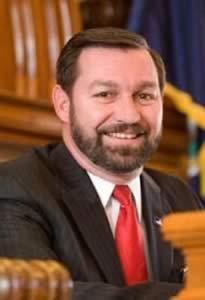
Former Kansas Rep. Virgil Peck.
CREDIT KANSAS HOUSE OF REPRESENTATIVES
“When you get more people, you increase the pool of ability and fresh ideas that are coming into the legislature,” said Virgil Peck, who lives in rural southeast Kansas. “I believe that some legislators would feel a greater responsibility to invest more time.”
In 2014, Peck introduced a bill to increase lawmakers’ pay by about $10,000 a year and reduce the amount that they could put into their pensions. It wasn’t met with much support from his peers.
“Almost nobody was willing to publicly take a stand and say, ‘Yep, increase my pay,’” Peck said.
The bill wasn’t popular with the public, either.
“I had people call me a liar,” Peck said, “when I told them that I only earned $15,000 a year.”
Making a difference
A raise doesn’t necessarily equate to changing the legislature’s economic diversity, according to Duke University political scientist Nicholas Carnes.
In a 2016 study, Carnes and co-author Eric Hansen looked at data about state legislator salaries and the economic class of people in those offices. They found that raising the salary of those politicians didn’t make a significant impact on middle- and lower-income people joining their ranks. Instead, it encouraged more career politicians to run and win.
The biggest obstacle to running, Carnes said, is not the eventual salary, but the cost and time required for a campaign. Wealthier people tend to seek office. Others avoid it because they don’t have the time or money, he said.
“When people run, they make huge personal sacrifices,” Carnes said. “No matter what we pay our legislators, we don’t pay our candidates anything.”
To encourage more economic diversity among political candidates, Carnes suggested that organizations should conduct trainings tailored for working-class people who want to run for office.
“It’s a model that actually has a lot of potential,” he said, “and a lot of groups have used successfully.”
Ultimately, he supports raising legislators’ salaries, but for a different reason: getting paid more would encourage more dedication to the job.
“Research has generally supported the idea that if you pay a politician a higher salary, they’re more likely to behave,” he said. “They show up, they don’t miss votes, they represent their constituents’ interests.”
The national landscape
Increasing pay is a perennial proposal — and an unpopular one — in statehouses, said John Mahoney, a policy specialist at the NCSL.
“It’s always been an issue,” Mahoney said. “I don’t think it’s going to go away anytime soon.”
In 2008, then-Louisiana Gov. Bobby Jindal vetoed a bill that would have doubled the salary of the state’s lawmakers after a public outcry. Last year, New York passed the first raise for its statehouse in 20 years, also drawing criticism.
Other states determine compensation differently than Kansas, Mahoney said. Some, like Maine and Maryland, have compensation commissions that study pay on a regular basis. Others, like Alabama and South Dakota, tie legislative pay to median household income.
“It’s always around,” Mahoney said. “The question is, how do we address it in a healthy way that allows legislators and citizens to have some input?”
Editor’s note: A previous version of this story incorrectly stated the name of the Duke University political scientist. His name is Nicholas Carnes, not John.
Nomin Ujiyediin reports on criminal justice and social welfare for the Kansas News Service. Follow her on Twitter @NominUJ or email nomin (at) kcur (dot) org.
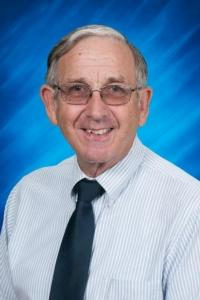
Thomas More Prep-Marian announced this week that Randy Brull has been awarded the John E. Bauman Jr. Chemical Education Midwest Region Award for Excellence in High School Teaching by the American Chemical Society. The award was presented at the 2019 Midwest Regional ACS Meeting Awards Banquet in Wichita on Friday.
A 1962 graduate of St. Francis Seminary, Victoria, Brull’s career in education spans 45 years with teaching stints at Trego Community High School, Marian High School, Hays High School, and Thomas More Prep-Marian. He has been a science educator at TMP-Marian for 36 years and has taught in the areas of physics, chemistry, general science, earth science, biology, and space science. Currently, he teaches advanced placement chemistry and electronics/programming.
“Mr. Randy Brull is about as dedicated an educator that there is. He is truly curious and energetic. His one and driving desire is that his students learn and learn in a lasting and deep way. I’m so proud and happy for Mr. Brull to receive this much deserved recognition,” said TMP-Marian Principal Chad Meitner.
Brull is married to longtime educator Carol (Dinkel) Brull and is father to Christopher of Plainville, Peter of Lawrence, and Jeff of Hays. He enjoys spending time with his grandchildren, gardening, woodworking, music, and helping young people explore the game of chess.
The Department of Teacher Education at Fort Hays State University has developed and opened the Virtual Literacy Center to make the highest quality, cutting edge, scientific-based tutoring services available to the school districts in approximately 25 counties in Northwest Kansas.
Dr. Sarah Miller, assistant professor of teacher education, Dr. Beth Walizer, professor of teacher education, and Hannah Frazer, pre-service teacher/VISTA member, collaborated to develop and pilot the program with USD 407 in Russell.
“In the past, Northwest Kansas has been grossly underserved simply because of logistics and the challenges of physically getting the proper help to the children who need it most,” said Miller. “However, with innovation and technology, the miles between students and tutors has been overcome.”
As literacy professors, both Miller and Walizer have watched young people who struggle with illiteracy encounter roadblocks as they seek to enter post-secondary education, the professional world or the workforce.
“I have seen first–hand the extremely difficult struggles of children who cannot read,” said Walizer.
The Virtual Literacy Center will equip educators with the latest tools and programs to identify specific reading difficulties in children and develop custom–designed interventions and strategies to help each individual child.
All that is required to use the center is the Internet and a reliable computer with a webcam. These resources can easily be provided by a local school or public library.
If any parent, educator, administrator, or other party is interested in more education or has questions, contact Dr. Sarah Miller at 785-628-4204.
Ron Wilson is director of the Huck Boyd National Institute for Rural Development at Kansas State University.
By RON WILSON Huck Boyd National Institute for Rural Development
100 to 1 return. Wow, that sounds like a remarkable return on investment. In this case, it doesn’t refer to a financial investment as much as it describes the process of growing a crop and multiplying the grain. Today we’ll learn about an innovative first-generation farmer who is finding his reward in multiplying his crop of popcorn. Thanks to Marlin Bates of K-State Research and Extension – Douglas County for this story idea.
Robert Ralph, also known as Farmer Bob, is the founder of Princeton Popcorn. Bob grew up in Overland Park when farm ground was still intermingled with the suburbs. “I was three or four years old and I remember petting cows through a barbed wire fence,” Bob said. That experience encouraged a lifelong interest in agriculture. He bought a small herd of cows and kept them with a friend outside of town.
After a few years, Bob bought some farmland of his own near Princeton, Kansas in Franklin County. The acreage had some timber, but no fences. “A friend of mine bulldozed a 30-foot path through the trees so I could build fence,” Bob said. “When I burned the brush pile and spread the ashes, I found that it enriched the soil.”
The concept of growing crops became exciting for him. He looked into the cost of seed and equipment and did a budget analysis. As a beginning farmer, with crop prices so low, he recognized that traditional row crops would not pay. Instead, he thought about alternative crops.
Bob bought a three-pound bag of popcorn off the shelf, fenced off a corner of his acreage, and planted it by hand. “A couple weeks later, I dug down and found a seed with a little root emerging from it,” Bob said. “It was like I found a million dollars. By the time that plant grew to 10 feet tall, I was really hooked.”
When he harvested the popcorn and tried popping it, it was initially too wet. When it dried and he popped it a couple of weeks later, it worked great. “I was elated,” Bob said. He gave away the popcorn for family and friends to try.
Robert Ralph
Since that time, he has expanded his popcorn acreage, purchased improved farm equipment, and experimented with various cooking oils and flavors. He remains fascinated with the concept of multiplying a crop. “You put one seed in the ground and get hundreds back. That’s better than Vegas,” he said with a smile.
Bob bought popcorn seed from Zangger Popcorn Hybrids in Nebraska. “I couldn’t have gotten luckier,” he said. “Josh Zangger came down and gave me lots of great advice.”
“I’ve learned so much, I got to thinking that I should document this,” Bob said. His videos as Farmer Bob on Facebook have generated hundreds of views. Using the community name, he named his company Princeton Popcorn. “It’s a vertically integrated business, from seed to store,” he said.
Farmer Bob is working with Balls Food Stores and others to get his popcorn on the market. In 2020, he anticipates that Princeton Popcorn will be on sale in 90 stores in the Kansas City area. Bob was also contacted by a couple of movie theater owners in Germany. They were looking for top quality popcorn to sell, and they found Farmer Bob. In 2020, Bob will be shipping Princeton Popcorn to their movie theaters in Germany.
It’s remarkable to see popcorn going direct to Germany from a rural community such as Princeton, population 277 people. Now, that’s rural.
Can a first-generation farmer succeed? “This is America,” Bob said. “I would like to encourage kids to open up their minds. You need confidence, determination, and a willingness to fail, but you can try again. This is a land of opportunity.”
100 to 1. That’s not a financial return as much as it expresses the remarkable growth of a crop, from a single seed to thousands. We commend Farmer Bob Ralph for making a difference with innovation, entrepreneurship, and growth – a hundred-fold.