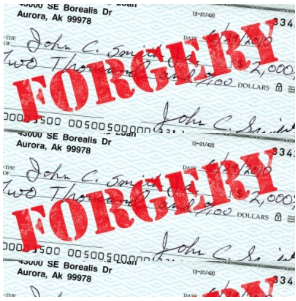
SALINE COUNTY —Numerous locations across the United States have received checks purported to be from Frisbie Construction.
The problem is that Frisbie Construction, 7793 East Kansas Highway 4, didn’t send the checks.
Those who received the checks were told to send a text a number confirming they had received the checks, according toSaline County Sheriff’s Captain Jim Hughes.
The number was not a Salina phone number or a Frisbie Construction phone number.
Persons who texted then received a text back asking which check it was and for what amount, according to Hughes and it was not clear how the check forgers actually made money off the scam.
Frisbie Construction officials told Salina Post that so far, counterfeit Frisbie checks had been received in 19 states and the District of Columbia between Sept. 9 and Monday.
Twenty-eight checks totaling $99,956.40 were actually presented to recipients’ banks, however, Frisbie Construction’s bank, UMB, declined payment on the checks, according to Frisbie Construction officials.
Additionally, Frisbie Construction received 49 phone calls during that period from people wondering why they were receiving the checks.
In fact, the first phone call the company received was the first notification that anything was amiss and allowed Frisbie Construction to notify UMB about the situation before any checks were presented for payment, thus allowing the company to avoid losing any money, the company told Salina Post. The checks associated with those 49 phone calls totaled $176,928.53, Frisbie Construction officials told Salina Post.
The company said that some of the checks looked more professional than others, but all had the same clear signature. Additionally, checks were all different colors, the company noted.
Hughes said that some sort of data breach is suspected, but officials have yet to determine where that breach happened.
FORD COUNTY — Authorities are investigating the cause of an explosion that injured employees at the Cargill plant in Dodge City early Thursday.
The explosion was in a small stand-alone building at the protein facility and two employees are being treated for burns, according to a statement from Cargill.
As a precaution, production at the plant was suspended for the day. Cargill authorities released no additional details.
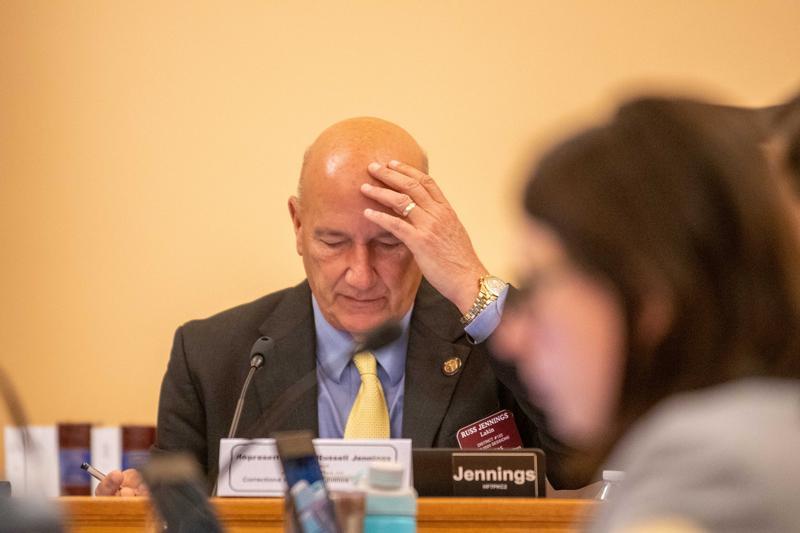
Rep. Russ Jennings, R-Larkin, chair of the Joint Committee on Corrections and Juvenile Justice, said the Kansas child welfare system has long been ‘deeply troubled.’ Evert Nelson / The Topeka-Capital-Journal
By PEGGY LOWE & SHERMAN SMITH Kansas News Service
From cries of heartbreak to a call for the prosecution of men who pay for sex with girls, Kansas lawmakers said the story of Hope Zeferjohn, a teen victim of sex-trafficking who was prosecuted for sex crimes, focuses a harsh light on a state system that is supposed to protect children.
“My heart breaks for these children,” said Sen. Richard Hilderbrand, a Republican from Galena. “Our system has failed at the one thing that it is supposed to do, and that is to protect our children.”
The series outlined how Zeferjohn, then 14, met her boyfriend, Anthony “Angel” Long, a decade older than her, and fell under his control while still living with her family in Topeka. After she was placed into state custody, Long found her in a Salina foster home by calling authorities and pretending to be Zeferjohn’s father, she said. Zeferjohn ran away when she was 15 and Long began prostituting her.
“How can we allow a child predator to trick our system into giving them the location of one of our children?” Hilderbrand said. “What steps have we taken to make sure that this never happens again? These questions have to be answered and have to be fixed.”
Because Zeferjohn recruited other girls for Long’s prostitution ring, she was convicted of aggravated sex trafficking. She is serving a six-year sentence in the Topeka Correctional Facility and must be on the sex-offender registry for life. Zeferjohn is seeking a pardon from Gov. Laura Kelly, and on Wednesday, the Kansas City Star and the Topeka Capital-Journal editorial boards called for Kelly to give Zeferjohn clemency.
Rep. Stephanie Clayton, an Overland Park Democrat, said law enforcement should instead focus on the men paying for sex with a child.
“If we’re going to be spending that money on prison bed space, I don’t know, gosh, how about we start incarcerating the johns?” Clayton said. “Let’s incarcerate the complete and total garbage people that are having sex with 15-year-olds. Because they need to be put away. They’re the problem. They’re terrible people. I have no sympathy for that.”
Last year, Kansas Attorney General Derek Schmidt launched a public awareness campaign to discourage paid sex. His spokesman, CJ Grover, on Wednesday renewed the call to prosecute buyers.
“The driving force behind commercial sexual exploitation, including sex trafficking, is the demand for commercial sex,” Grover said. “Buyers who create that demand must be held accountable for their role in enabling sex trafficking and other forms of commercial sexual exploitation. The attorney general would be supportive of more local prosecutions of buyers.”
An increase in runaways from the state’s foster care system stems from the policies of former Gov. Sam Brownback. After he took office in 2011, the foster care population ballooned from 5,200 to nearly 7,500. Child placement agencies struggled to recruit homes for the additional children, leading to an increase in runaways who didn’t find the care they needed.
Then-Gov. Sam Brownback (center) of Kansas poses with the Zeferjohn family on May 22, 2015, to kick off ‘Family Reunification Month.’ Terry Zeferjohn, Hope’s father, is in the back row, left, and four Zeferjohn children are in the front row. Kansas Department for Children and Families photo
In 2015, Brownback staged a photo op with the Zeferjohn family to tout his administration’s efforts to reunite families. Hope Zeferjohn was missing from the photo because the 16-year-old was already under the control of Long, who is now serving a 35-year prison sentence.
Senate Minority Leader Anthony Hensley, D-Topeka, said the photo op was a typical example of how Brownback’s administration operated.
“They were taking credit for things they really didn’t understand, nor did they really accomplish what they were taking credit for,” Hensley said. “I think that’s a perfect example.”
Also Wednesday, a legislative committee heard about the “deeply troubled” child welfare system in Kansas. Lawmakers were told that reforms made in 2017 moved troubled kids into foster care, where those with severe behaviors are hurting other kids, destroying property and scaring away foster families.
Two state foster care providers said this new influx of children has severely overwhelmed an already taxed system, leaving a chaotic situation where kids are sleeping in offices and providers are wondering if they can ever find them a home.
“We have seen traumatic, tragic events that keep me awake at night,” said Rachel Marsh of Saint Francis Ministries, one of the foster care providers, in testimony before a joint committee on corrections and juvenile justice oversight.
“The child welfare system in Kansas is deeply troubled,” said Rep. Russ Jennings, R-Larkin, chairman of the legislative panel. “But trouble within the child welfare system is not news.”
Problems with foster care in Kansas have existed for years, Jennings said, and the situation hasn’t improved.
Sen. Molly Baumgardner, R-Louisburg, said she is still bothered by the large number of runaways from the foster care system, which came to light two years ago. She also was unhappy that state officials aren’t providing lawmakers with updates on the number of runaways and locations where it is happening.
The problems within the child welfare system happen because state and local agencies aren’t working together, Baumgardner said.
“We have our schools are not working with our foster program, are not working with law enforcement, and so we have silos, and those silos need to be getting together, working together to serve our kids,” she said. This story is part of a partnership between KCUR and The Topeka Capital-Journal, with support from the Corporation for Public Broadcasting in collaboration with APM Reports, the investigative reporting unit of American Public Media.
Peggy Lowe is a reporter at KCUR. She’s on Twitter@peggyllowe.
Sherman Smith is a reporter for the Topeka Capital-Journal. He’s on Twitter at@sherman_news.
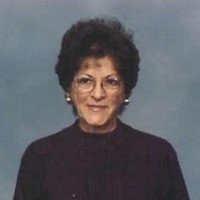
Mary Lou Odle, 74, passed away Sunday, Oct. 13, 2019, at her home. She was born July 15, 1945, in Beloit, the daughter of Paul and Susan (Gasper) Zimmer. She married Terry Odle, June 1, 1981 in Salina.
Mary Lou graduated from Downs High School and earned a Bachelor of Science degree from Fort Hays State University in Home Economics Education and a Master of Science from Kansas State University in Adult Education. Mary Lou taught high school in Plainville and was a Kansas State Research and Extension agent in Russell County before accepting a similar position in 1978 in Salina. She retired in 2012 after 34 years in that position.
Mary Lou was the embodiment of service above self. She served for many years, both before and after retirement, as a counselor for Senior Health Insurance Counseling of Kansas. The quilting arts were one of her special interests and she was active in the Salina Silver Needles Quilt Guild and also served on the Advisory Council of Salina Senior Services. In 2009, she was honored with a Greater Salina Community Foundation Women of Achievement Award. She won the 1999 Communications Award from the Kansas Extension Association of Family and Consumer Sciences for one of her columns in the Salina Journal.
After retiring, Mary Lou enjoyed trips to Stockton where she and Terry had a second home and a farming operation. Mary Lou was a member of Sacred Heart Catholic Parish of Salina where she was active in Altar Society and other church ministries.
In addition to her husband, Terry, she is survived by: her stepson, David Odle (Kim) of Salina; brother, Terry Zimmer (Valerie) of Salina; sisters, Rita Holling (Ron) of Alton, and Joan Drees (Larry) of Ellinwood; brother and sister-in-law, Ted Odle (Jean) of McPherson, and Tammy Goering (Greg) of McPherson; nieces and nephews, Mark Holling (Shannon) of Alton, Mary Ellen Beck (Rob) of Stockton, Kathy Holling of Kensington, Jeff Holling (Beth) of Glen Elder, Michael Drees (Arielle) of Hays, Sarah Liebll of Hutchinson, Angie Mendez (Manny) of Topeka, Trenton Goering (Danielle) of Manhattan, and Taylor Goering of Galva.
She was preceded in death by: her parents; brother, Max; and nephew, Jeremy Zimmer.
Visitation will be 4-8 p.m. Thursday, Oct. 17, at Ryan Mortuary, Salina. Family will greet friends beginning at 6 p.m., with a Vigil Service at 7 p.m.
Mass of Christian Burial will be at 11 a.m. Friday, Oct. 18, at Sacred Heart Cathedral, Salina. Burial will be at a later date in the Stockton Cemetery.
Memorials may be made to: the Saline County 4-H Development Fund, or Sacred Heart Cathedral, in care of Ryan Mortuary.
OSAGE COUNTY—Law enforcement authorities are investigating a suspect for alleged animal cruelty.
Last weekend, the Osage County Sheriff’s office issued a public warning about dogs that were reported loose west of Lyndon, according to Sheriff Laurie Dunn.
She said the Alaskan Tundra Shepherds in question had been moved and authorities did not know where. All the dogs were moved from the property, according to the owner’s attorney.
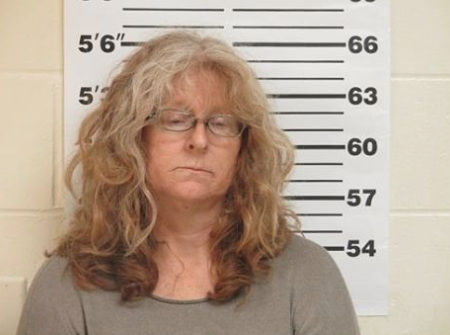
On Wednesday, deputies arrested Christi Lynne Shaffer, 53, of Lyndon, Kansas, who is the owner of the emaciated dogs, according to Dunn. Shaffer remains in custody on 20 counts of cruelty to animals and 3 counts of permitting a dangerous animal to be at large.
The sheriff’s office released no additional details early Thursday.
Born April/22/1936 in Vinita, Oklahoma to Luther Bryant and Esther Miles, Died Oct/12/2019 In Tulsa OK.
She Married Leslie Bearly in 1958, they were married 51 years, until his passing in 2009. Then she Married Chester Thompson in 2011. She Had 2 children: Don Bearly spouse Rebekah of Raytown, Mo and Penny Peabody and spouse Mike Peabody of Dayton, NV and their son Kyle, Jalene’s only grandchild.
She was always proud of her Cherokee Ancestry, she was a member of the First Families of the Cherokee nation through Sequoyah, Maj George Lowery Sr and Chief Richard Fields. She enjoyed many hobbies including sewing and crating costumes for penny’s competitions for modeling, dancing and baton twirling.
She worked as a nurse’s aide at the Larnard State hospital and in Ottawa, KS. She did bead work. She was a cub scouts den mother, she was also a seamstress, did upholstery and Interior Design. She supported her son and daughter in their many activities throughout her life. She passed into heaven being a beloved wife and mother. She is survied by both her children and grandson and Chester Thompson.
Graveside service will be 2:00 p.m. Thursday, October 17, 2019 at Belpre Cemetery, Belpre, Kansas. Arrangements by Beckwith Mortuary, PO Box 477, Larned, Kansas 67550. Personal condolences may be left at www.beckwithmortuary.com.
KANSAS CITY (AP) — Federal prosecutors say police seized 144 pounds of methamphetamine in tires stored at a shed at a Kansas City man’s home.
The man, 38-year-old Jorge Rodriquez-Gonzalez, was charged this week in U.S. District Court with drug trafficking.
Charging documents allege a confidential source bought a minimum of one kilogram of meth from Rodriguez-Gonzalez at least five days a week.
Prosecutors said that on Oct. 10, Rodriguez-Gonzalez was arrested after showing up for a drug buy with his wife and two young children. Police confiscated weapons, vehicles and drugs, including the methamphetamine inside four tires in a shed near Rodriquez-Gonzales’s home.
Court records show Rodriguez-Gonzalez told authorities he lived where the drugs were found but didn’t know how the tires got into his shed.
WASHINGTON (AP) — The Supreme Court is trying to sort out whether states can prosecute immigrants who use fake Social Security numbers to get a job.
The justices heard arguments Wednesday in Kansas’ appeal of a state court ruling that threw out three convictions after concluding the state was seeking to punish immigrants who used fake IDs to obtain jobs.
The Kansas Supreme Court ruled that the federal government has exclusive authority to determine whether an immigrant may work in the United States.
The justices seemed concerned that states shouldn’t be hampered in other identity-theft prosecutions when someone might use a stolen Social Security number to get a driver’s license or arrange for direct deposit of a paycheck.
The case arose from three prosecutions in Johnson County, a largely suburban area outside Kansas City where the district attorney has aggressively pursued immigrants under the Kansas identity theft and false-information statutes.
The convictions under state law could alter immigration status and lead to deportation.
The issue is whether Kansas is blocked from prosecuting those crimes because it is relying on information that is on a required federal work authorization form, the I-9. Kansas, backed by the Trump administration and 12 states, argues it can prosecute because the same information also appears on state work forms.
In 2012, the court ruled that portions of an Arizona law targeting immigrants without proper legal documents could not be enforced because federal law trumps state measures in the area of immigration. The three immigrants in the Kansas case say the high court’s Arizona decision should determine the outcome in their situation.
Kansas’ argument would render the Arizona decision meaningless, Justice Elena Kagan said in an exchange with Kansas Attorney General Derek Schmidt.
Schmidt disagreed. “We aren’t targeting folks because of their status. We are enforcing our identity theft laws,” he said.
Justice Samuel Alito made clear that he thought that Kansas did nothing wrong in prosecuting the three men who all were caught using fake IDs to get hired.
“This is not a situation like Arizona, where a state has criminalized something that is not criminal under federal law. It’s a case where the same conduct is criminal under federal law and, Kansas says, under Kansas law,” Alito said. Alito dissented from the relevant portions of the Arizona decision.
Several justices elicited answers from Paul Hughes, representing the immigrants, that indicated they could issue a narrow ruling in this case in favor of the immigrants without stepping on states’ ability to pursue traditional identity theft cases.
Such an outcome might please Chief Justice John Roberts, who was part of the majority in the Arizona case along with the four liberal justices. Justice Anthony Kennedy, who retired last year, wrote the 2012 opinion.
The court could end up deciding very little, Justice Neil Gorsuch said, because Kansas and other states would be sure to use documents other than work authorization forms in identity theft cases against immigrants.
“So we are deciding how many angels are dancing on the head of this pin? Is that what this case is about?” Gorsuch said.
A decision in Kansas v. Garcia, 17-834, is expected by late June.
THOMAS COUNTY — One person was injured in an accident just after 3 p.m. Wednesday in Thomas County.
The Kansas Highway Patrol reported a 2018 Kia Sportage driven by Sabrina R. Smith, 28, Selden, was northbound on U.S. 83 three miles north of the U.S. 24 Junction. The driver had a medical condition and rear-ended a 2010 Kenworth semi that had slowed to make a turn.
EMS transported Smith to Citizen’s Medical Center. The semi driver Shawn M. Terwilliger, 42, Stratton, Nebraska, was not injured. Both drivers were properly restrained at the time of the accident, according to the KHP.
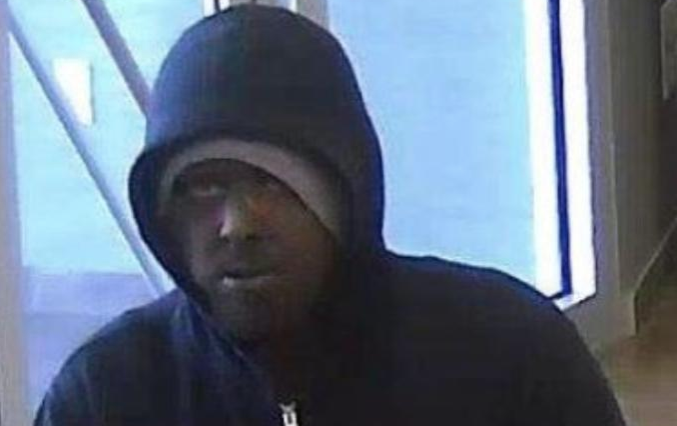
SEDGWICK COUNTY — Law enforcement authorities are investigating a bank robbery and have released security camera images of the suspect.
Security camera image -FBI
Just before 3:30p.m. Wednesday, police responded to the Fidelity Bank in the 2100 block of North Bradley Fair in Wichita, according to a media release.
The suspect walked into the bank, handed the teller a note, threatened a weapon but did not show one.
The suspect ran from the bank with an undisclosed amount of cash. There were no injuries.
The suspect is described as white man in his mid-30s and wearing brown face paint. He wore all black including black gloves. Anyone with information is asked to contact police.
photo of suspect in the Sept. 16 robbery courtesy Wichita Police
On September 16, a woman robbed the bank, according to police. Authorities have no reported an arrest in that case.
Stacy Campbell is Agriculture & Natural Resources Extension Agent for the Cottonwood Extension District.
Field bindweed is a deep-rooted perennial weed that severely reduces crop yields and land value. This noxious weed is estimated to infest just under 2 million acres and is found in every county in Kansas.
Bindweed is notoriously difficult to control, especially with a single herbicide application. During the fall, but prior to a hard killing freeze, can be an excellent time to treat field bindweed — especially in a year when good fall moisture has been received.
This perennial weed is moving carbohydrate deep into its root system during this period, which can assist the movement of herbicide into the root system. The most effective control program includes preventive measures over several years in conjunction with persistent and timely herbicide applications. The use of narrow row spacings and vigorous, competitive crops such as winter wheat or forage sorghum may aid control.
No-till has been very beneficial for managing bindweed by providing routine herbicide treatments through time and not breaking up the root system and dragging root segments around the fields. No-tillage maintains much of the bindweed seed soil bank at a depth too deep to germinate. It is common to see a resurgence of bindweed after tilling fields that have been in long-term no-till.
Dicamba, Tordon, 2,4-D ester, Facet L (also generics) and glyphosate products alone or in various combinations are registered for suppression or control of field bindweed in fallow and/or in certain crops, pastures, and rangeland. Apply each herbicide or herbicide mixture according to directions, warnings, and precautions on the product label(s). Single herbicide applications rarely eliminate established bindweed stands.
Applications of 2,4-D ester and glyphosate products are most effective when spring-applied to vigorously growing field bindweed in mid to full bloom. However, dicamba and Tordon applications are most effective when applied in the fall. Herbicide treatments are least effective when applied when bindweed plants are stressed.
Facet L, at 22 to 32 fl oz/acre, a new quinclorac product that replaced Paramount at 5.3 to 8 oz, or QuinStar quinclorac products, can be applied to bindweed in fallow prior to planting winter wheat or grain sorghum with no waiting restrictions. All other crops have a 10-month pre-plant interval. Quinclorac products can be used post-emergence in sorghum to control field bindweed during the growing season. In past K-State tests, fall applications of Paramount, now replaced by Quinclorac (Facet L, QuinStar) have been very effective as shown below in the table.
Additional noncropland treatments for bindweed control include Krenite S, Plateau, and Journey.
Considerable research has been done on herbicide products and timing for bindweed control. Although the research is not recent, the products used for bindweed control and the timing options for those products haven’t changed much since this work was done. As a result, the research results in the table below remain very useful today.
Fall-applied treatments for control of field bindweed: Randall Currie, Southwest Research-Extension Center 1992-1997.
Stacy Campbell is an Agriculture and Natural Resources agent in the Cottonwood District. You can contact him by e-mail at [email protected] or calling 785-628-9430.
Are you detail oriented and enjoy supporting your fellow coworkers? Would you like to have a vested interest in your company where you will see your efforts benefit the company and the community? If so, we are looking for you at Eagle Communications!
Eagle Communications is 100% employee-owned and we are hiring for a full-time Administrative Assistant. This person would be instrumental in the corporate office’s day to day operations. The position is located in Hays, KS.
Responsibilities:
– Providing support to management and employees.
– Planning and coordinating company meetings and events.
– Supporting community outreach efforts.
– Designing promotional materials and company branding
– Maintaining internal communications through emails, newsletters and social media.
– Scheduling.
– General office upkeep including ordering supplies, mailing and shipping.
– Answering phones and receiving the public.
– Data processing, recordkeeping, and filing.
– Developing and maintaining documents and forms.
Qualifications/Experience:
– Two years related experience preferred.
– Familiar with Microsoft Office programs and Adobe Acrobat.
– Graphic design experience preferred.
– Event planning experience preferred
– Proper phone etiquette.
– Ability to speak and write clearly and accurately.
– Demonstrated proficiency in typing and grammar.
– Multi-tasking capabilities.
– Interpersonal skills and create a positive experience for others.
– Desire to be proactive and creative.
Salary:
Compensation is commensurate with experience, along with a competitive benefits package including health insurance, 401(k), paid vacation, and employee stock ownership plan.
Other information:
Applications will be accepted until the position is filled. The selected candidate will be required to pass a criminal history background check and motor vehicle check. Eagle Communications is an Employee-Owned company and an EEO employer.