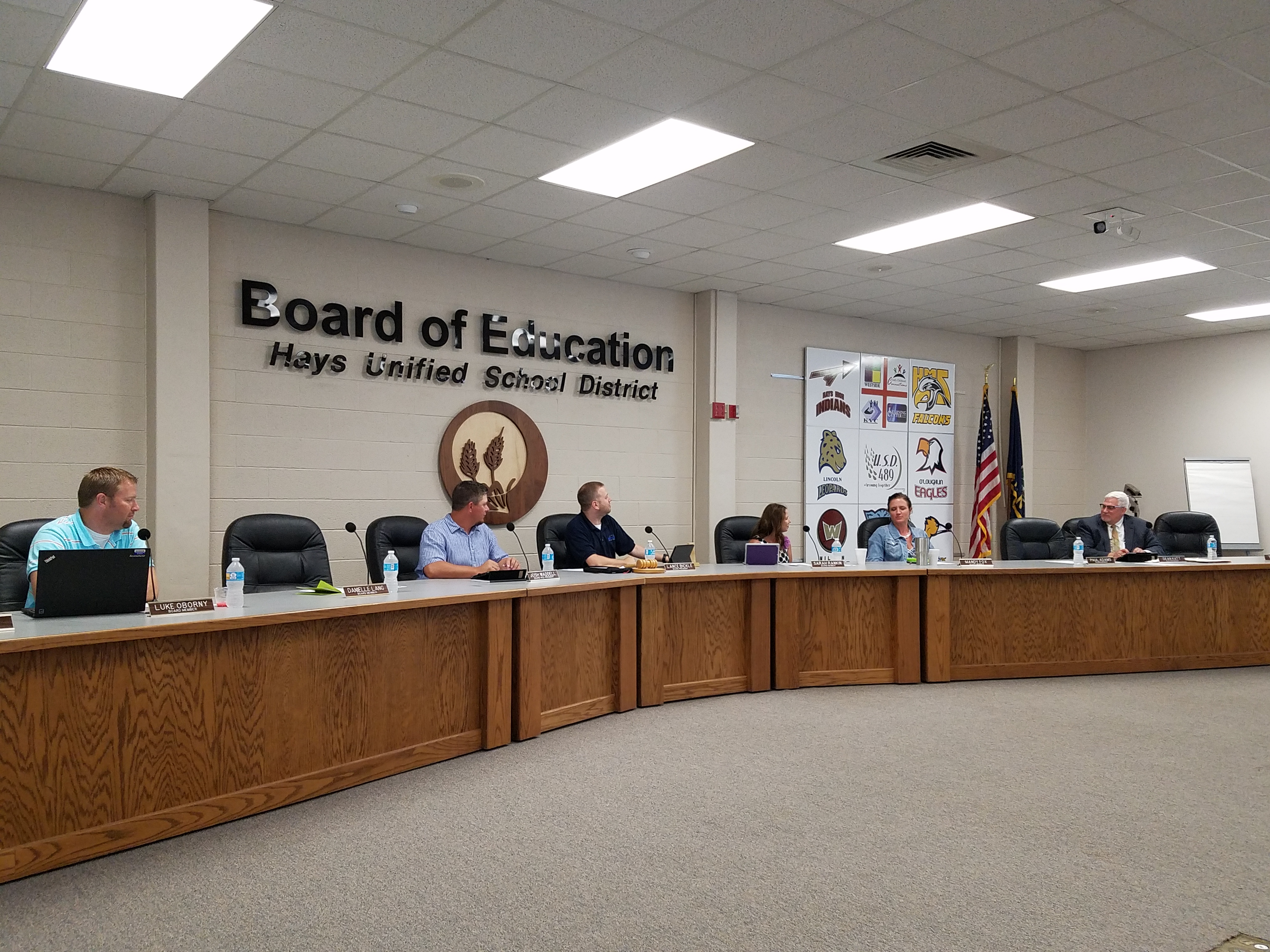
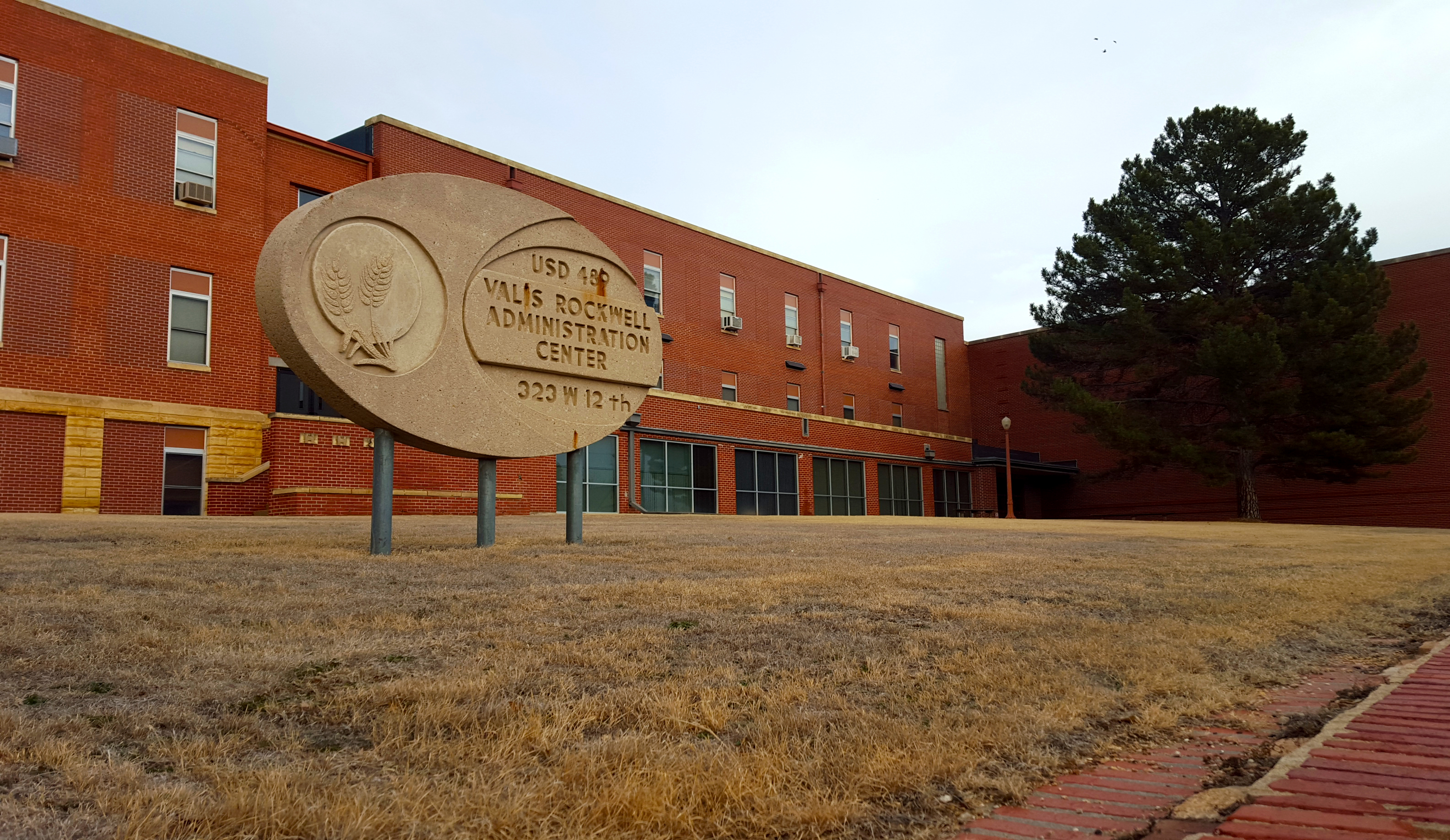
The Hays USD 489 Board of Education will meet tonight Monday, July 18, at 6:30 p.m. in the Toepfer Board Room, 323 W. 12th St. with an agenda that includes a discussion of a bond issue survey, board presidential appointments and a review of organizational charts with John Thissen.
Thissen assumed the superintendent role at the beginning of July. This meeting will be his second as superintendent.
Results from the staff bond issue questionnaire of 124 USD 489 staff members found the majority of respondents would support a bond over $80 million with the stipulation that a new school be constructed.
Only 25 percent responded they would only support a bond under $80 million, with a new building being constructed. Five percent said they would not support the bond at any amount.
The failed bond issue had two questions, totaling $94 million.
The survey also found 83 percent of respondents voted yes for the bond issue. Of the people voting no, an unfavorable economy, a tax increase, too much new construction in the plans, and the amount being too large were cited as reasons for the vote against.
As part of the board’s yearly re-organization, board presidential appointments are on Monday’s agenda. The board will consider appointments for the ESEA Title 1 Representative, Connections Policy Council, Technology Committee and the USD 489 Foundation for Educational Excellence.
The full meeting will be streamed live by USD 489 and can be viewed on Hays Post.
After completing a remodel announced in January, Dillons, 1902 Vine, celebrated the renovation Wednesday with a Hays Area Chamber of Commerce ribbon cutting and the announcement of community donations exceeding $28,000.
The celebration kicked off with remarks from Mike Matney, district manager.
“It’s great that we get to invest in the community of Hays and Hays is invested in us as a company,” he said, noting a lot of hard work went into the location in the last six months.
Through the remodel, the location added a new sushi kiosk, a Starbucks coffee kiosk, a new pharmacy and expanded selections throughout the store.
“It took some work of a lot of people to make it happen,” Matney said. “It’s outstanding to have that support to give our customers exactly what they are wanting.”
“It’s truly a brand new Dillons,” said Don Koerner, store manager in an event announcement. “Many of our guests are raving about how open and fresh the store looks with the renovation. Now, our customers can now find all their favorites, right here in Hays at Dillons. Our customers have been thrilled with the new sushi bar, Starbucks coffee, and gourmet cheeses. Our selections of natural and organic foods have also been expanded, along with garden-fresh produce, and fresh meat and seafood. These departments have been a huge hit with our customers.”
During the celebration, announcements were made for community donations, as well, led by Shelia Lowrie, associate communications and media relations manager.
“We love to celebrate with our neighbors and give back to the community that has been so good to us,” she said. “With our commitment to our communities, it’s one thing that we want to do to continue to say thank you and build a strong community together.”
The largest donation was a $27,500 to the United Way of Ellis County, with $26,400 made up of pledges from Dillon’s staff members.
“This is what makes Ellis County, this is what makes who we are,” said Sherry Dryden, executive director of United Way of Ellis County. “This helps Ellis County … and we can’t do it without the wonderful folks at Dillons.”
Dryden said 15 partner agencies will benefit from the donation.
“For years, our store teams here in Hays have made a commitment to help give back and serve our goal organizations and, through the help of United Way of Ellis County, this store team right here in town, joined by our other store team had made a significant donation,” Lowrie said. “The most impressive (thing) about this donation is it is made possible by all of our associates in this store.”
Other donations announced were a $500 donation to the Community Assistance Program and $500 to First Call for Help, to be used for their annual Backpack for Kids drive.
Volunteers from the store will also assist in putting the packs together, and donations will be collected at the store until July 29.
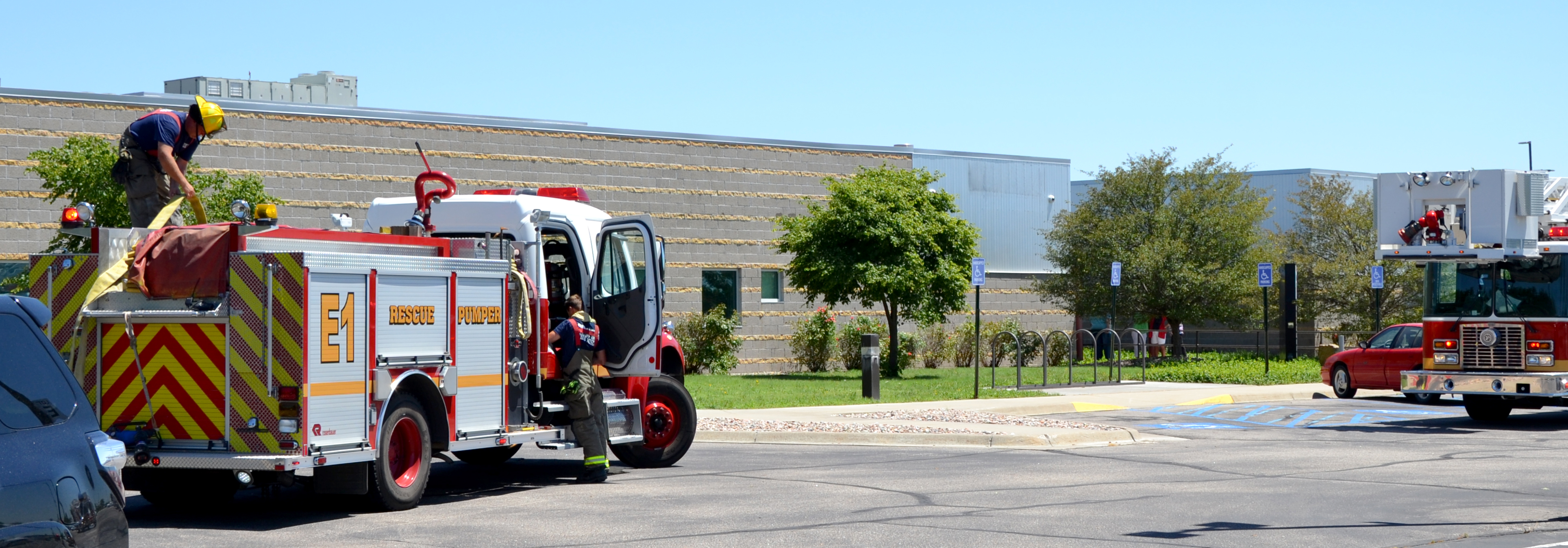
At around 2:20 p.m. Wednesday, Hays Fire and Police Departments responded to a general fire alarm at the Center For Health Improvement, 2500 Canterbury.
The alarm was quickly upgraded to a structure fire call, and the building was evacuated.
After inspecting the facility, a failed pump motor was found to be causing light smoke to accumulate in the facility, according to officers at the scene.
After ventilation was completed the building was cleared for reopening around 3 p.m.
Following a fire sprinkler pipe break at the Best Western Butterfield Inn, 1010 E. 41st on June 29, the hotel will remain closed until mid-October, according to a statement made by the hotel chain this week.
“The safety and well-being of our guests continues to be our top priority, as well as their convenience and comfort,” the statement said. “As soon as the flooding incident occurred, we notified the Hays Fire Department, evacuated hotel guests and refunded expenses associated with their stay. We are actively working on restoring the damages caused to our property, and we look forward to reopening our property in mid-October of 2016.”
The line break caused a large volume of water to flow into the hotel, according to the Hays Fire Department.
“Firefighters immediately began work to stop the loss to the property and control the hazards caused by the uncontrolled flow of water. The fire sprinkler system was shut down and efforts were made to reduce the weight of the water on the upper floor to prevent collapse. Guests were evacuated and electrical power was shut down to reduce the danger. A room by room search was conducted to make sure all persons were safe and no one needed assistance. The damage extended through large areas of the building.”
An inspector with the City of Hays Planning, Inspection and Enforcement Division assisted the HFD with the call.
The HFD further said the cause of the failure was not immediately apparent, noting failures like this one are rare.
As part of a major expansion program, Oklahoma-based Billy Sims BBQ has identified Hays as a future site of the growing chain.
“This year has been a standout year for us, and we intend to make 2016 even better,” said Jeff Jackson, president of Billy Sims BBQ, in a press announcement late last year. “We have worked closely with our current franchisees to help them develop their restaurants, while also actively recruiting top-notch new franchisees to help us grow into 2016 and beyond.”
As the company works to expand, Hays was identified as a potential location late last year, but territory owner David Dunn, said no plans to open a location in Hays have been set.
“It’s a little early and premature probably,” Dunn said, to say that a location would open in Hays. “It’s high on my list, but we haven’t found the spot yet.”
Last year, Billy Sims BBQ opened locations in Chanute and Dodge City and recently opened a location in Newton.
“The plan is to come there and we do own the territory. It’s something we want to do, it’s just a matter of finding the right spot,” Dunn said.
The company is currently working on opening a location in Emporia right now, with an opening day expected around the first of October.
While the opening of a Hays location is not assured, Dunn said since buying the rights to open a location in Hays – after purchasing the location in Dodge City – he has an interest in bringing a location to Hays, if the right opportunity presents itself.
“I really do think Hays is a great market for our product,” Dunn said.
The sticking point right now comes down to finding a location that would fit the needs of the restaurant.
“If somebody called and showed me a spot that I liked, I think you would see us open in probably four months,” Dunn said. “I would jump all over it I really would.”
The chain – now in its 12th year of operation – was founded by Billy Sims and Jackson.
Sims is known as a former University of Oklahoma running back and 1978 Heisman Trophy winner.
The restaurant chain has garnered numerous awards and accolades, including a Franchisee Satisfaction Award Winner for 2015 by Franchise Business Review and a Future 50 fastest-growing small chain restaurant in 2015 by Restaurant Business and Named by USA Today as one of the top athlete-based restaurant chains.
Billy Sims BBQ has an extensive menu of nine types of meat that are smoked daily in-house along with traditional sides like potato salad, smoked baked potatoes, smoked corn, coleslaw and entree size salads.
Restaurant delivery in Hays might never be the same after last week’s launch of Hays 2 Go, bringing new delivery options from local restaurants that do not offer delivery service in-house.
Currently, the service delivers orders from Cancun Mexican Grill, On the Rocks and JD’s Country Style Chicken, with plans to expand to other restaurants soon.
“Our goal is to have at least 10 to 15 restaurants in Hays,” said Kelly DePiesse, co-owner.
They primarily serve sit-down restaurants, but will also deliver from fast food restaurants if an agreement can be reached with the restaurant.
Chain restaurants are little more complicated, DePiesse said, noting there are usually a lot more people in the operation who need to give the service a go-ahead.
“If it’s a chain restaurant, we’ll touch base with their general manager and they’ll have to take it from there and get the OK to operate,” he said.
Typically, the issue with chain restaurants is the way cash flow is dictated by a corporate system.
“That’s why we like local restaurants first. It’s a lot easier to set up because a lot of time you can talk directly to the owner,” DePiesse said. “What’s really attractive about Hays is the college, and there’s not a lot of delivery other than your typical pizza and tacos and such.”
Hays expansion and new developments were also a factor for the service deciding to come to Hays.
How to use the service
For regular delivery, customers using the service will be old hat.
To order, customers can visit the company’s website and place orders from participating restaurants, including modifications specified by the customer.
Customers are first required to create and account with the service, they can then select the restaurant of their choice and complete payment with cash or card through Hays2Go.
Once an order is placed, drivers from Hays2Go receive the order, along with the restaurant of choice. The drivers arrive at the restaurant to pick up the order, check the order for accuracy and deliver to the customer.
The site also provides real-time order tracking, available on the website, through email or text messages.
“They’re not just putting an order in and hoping that their food shows up, they are actually updated live,” DePiesse said.
While a feature of the service that is likely to generate interest is the ability to order from multiple locations on one order, the company warns a delivery fee is charged for each restaurant, and will add 15 to 30 minutes to the delivery time.
DePiesse said the service is particularly attractive during lunch hours where a lunch break limits the time someone could travel to get lunch. With the service, a specified time can be set for the delivery to arrive.
“So at the time they are ready for their lunch break, their food is arriving and they can actually enjoy their lunch break,” he said.
The rub
Currently, the service is only available to customers within – or slightly outside – the Hays city limits.
“I don’t want to get in a situation where a driver would have 10 to 15 minutes drive time to a location, and we would have other orders coming in so those orders are getting backlogged,” DePiesse said.
The quality of food being delivered on a long trip is also a limiting factor as to the delivery radius.
“Once it leaves a restaurant, we want to get it to you as quick as possible because we want to make sure the food is warm and fresh,” he said.
But as the service settles into the Hays area, those limits will be re-examined, DiPiesse said.
And as expected the service adds to the final total of the bill, with a $3.95 delivery charge added to each order. That charge is used to pay drivers and keep the service running.
“We try to keep it at a mid-range where it is worth our drivers’ time and our restaurants’ time and also that it is not too high that a customer would not want to pay,” DePiesse.
Items available for delivery are also limited to items offered at participating restaurants.
Behind the scenes
Hays2Go is part of a larger service that operates in cities across the country under the umbrella My Town 2 Go, but DePiesse said local marketing is developed for each town and the service is run by a local operator.
With the service just launching in Hays, marketing materials are still in the works, he said, but soon drivers for the service will likely sport car magnets that will identify them on the road.
“It’s good for them and good for us,” DePiesse said.
And while a group of drivers has been hired, he said applications are always being accepted.
In a typical delivery operation, drivers wait at the restaurant for delivery orders, doing other work in the restaurant, but drivers for Hays2Go, get paid by the delivery and are not required to be at a specific location in between orders.
“They are basically free to do as they please during the day, they need to be able to respond promptly to the order, get to the restaurant and get it delivered,” DePiesse said.
The drivers will select times they are available to be called for deliveries and then dispatched per order, making the service attractive as a job for people looking to supplement their income, he said.
During a short meeting Monday night, the Hays USD 489 Board of Education completed its yearly reorganization, selecting officers for the year as well as filling supplemental positions.
While Lance Bickle was unanimously voted to remain in the position of board president, Sarah Rankin was unanimously selected to replace Josh Waddell as vice president.
John Thissen
The district’s public information officer, Sarah Wasinger, will continue in that position, as well as the freedom of information officer. Jessica Younker was selected as the Federal Nutrition Services representative, Shanna Dinkel will serve as the Title 1 representative, and Marissa Lambert will serve as the KPERS authorized representative.
The board also approved meeting dates and times for the upcoming school year.
The abbreviated meeting was the first with new Superintendent John Thissen, who gave a quick report on his first two days on the job, noting he had met with various community members in back-to-back meetings.
“It’s been very good getting that time with personnel and others,” he said.
During those meetings, he also said it was nice to get a feeling of “where Hays is and where (others) would like it to be.”
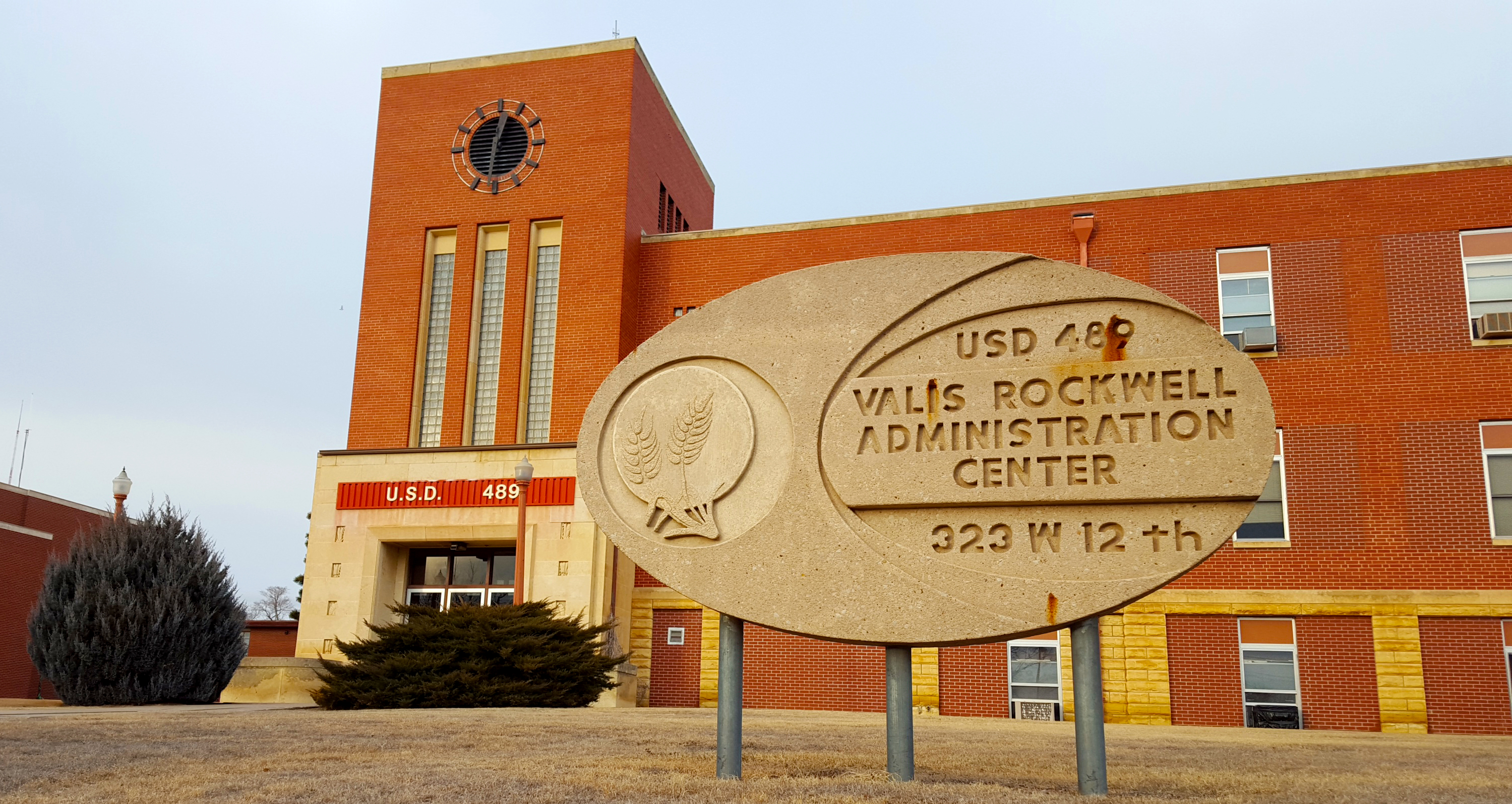
During Tuesday’s Hays USD 489 Board of Education meeting at 6:30 p.m. Tuesday, at the Rockwell Administration Center, 323 W. 12th, position appointments for the 2016-17 school year are set to be decided as part of the yearly reorganization of the board.
The board will select a president, vice-president, clerk, treasurer and board attorney for the year.
Sarah Wasinger, current clerk and keeper of records, also will be considered to continue in those roles for the year along with an appointment as the district’s homeless children coordinator, public information officer and freedom of information officer.
Renae Booth will be considered for treasurer, and Bill Jeter will be considered to continue in his role as board attorney.
The proposed 1,116-hour school calendar also will be considered by the board, along with the board meeting calendar.
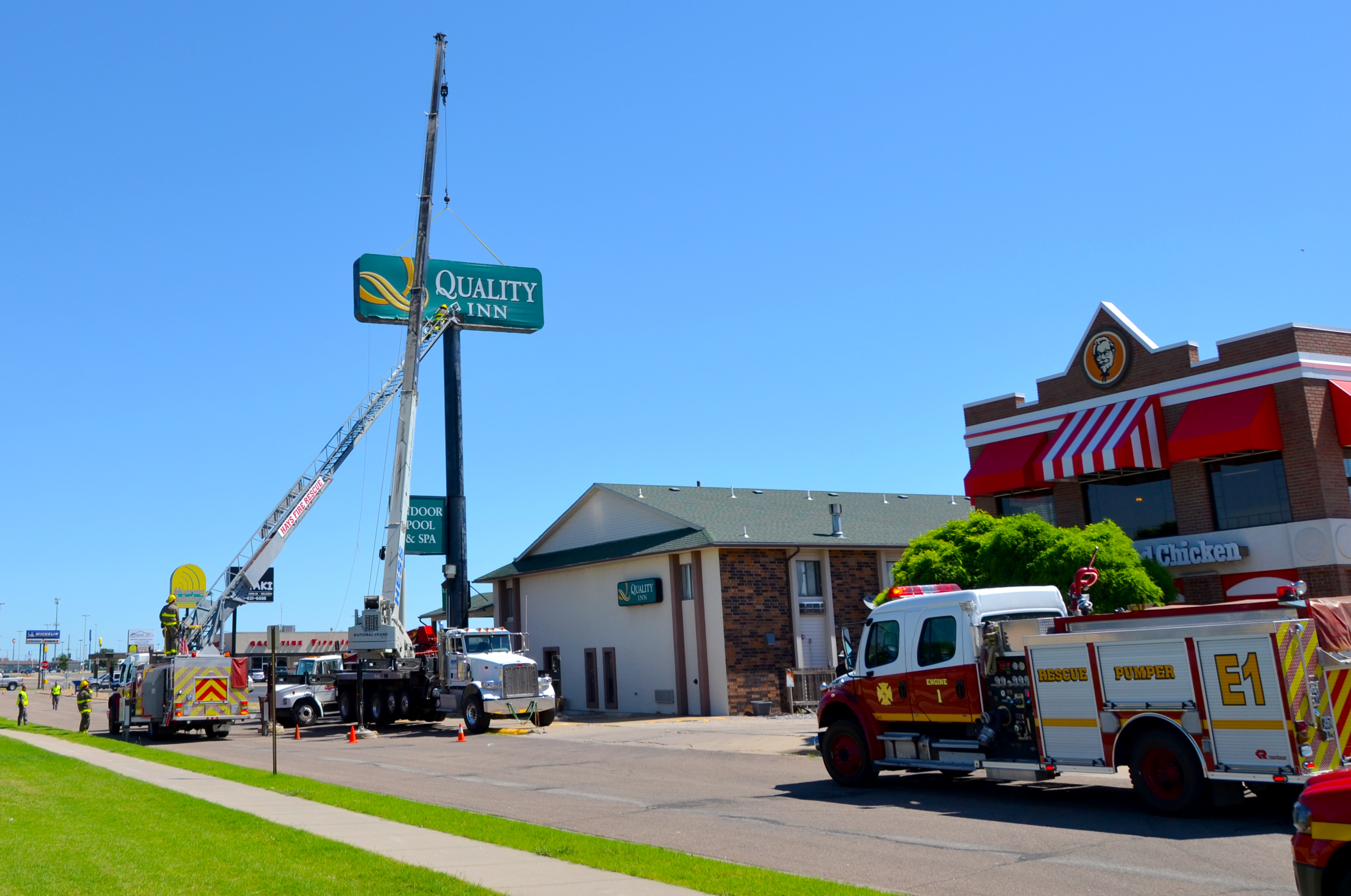
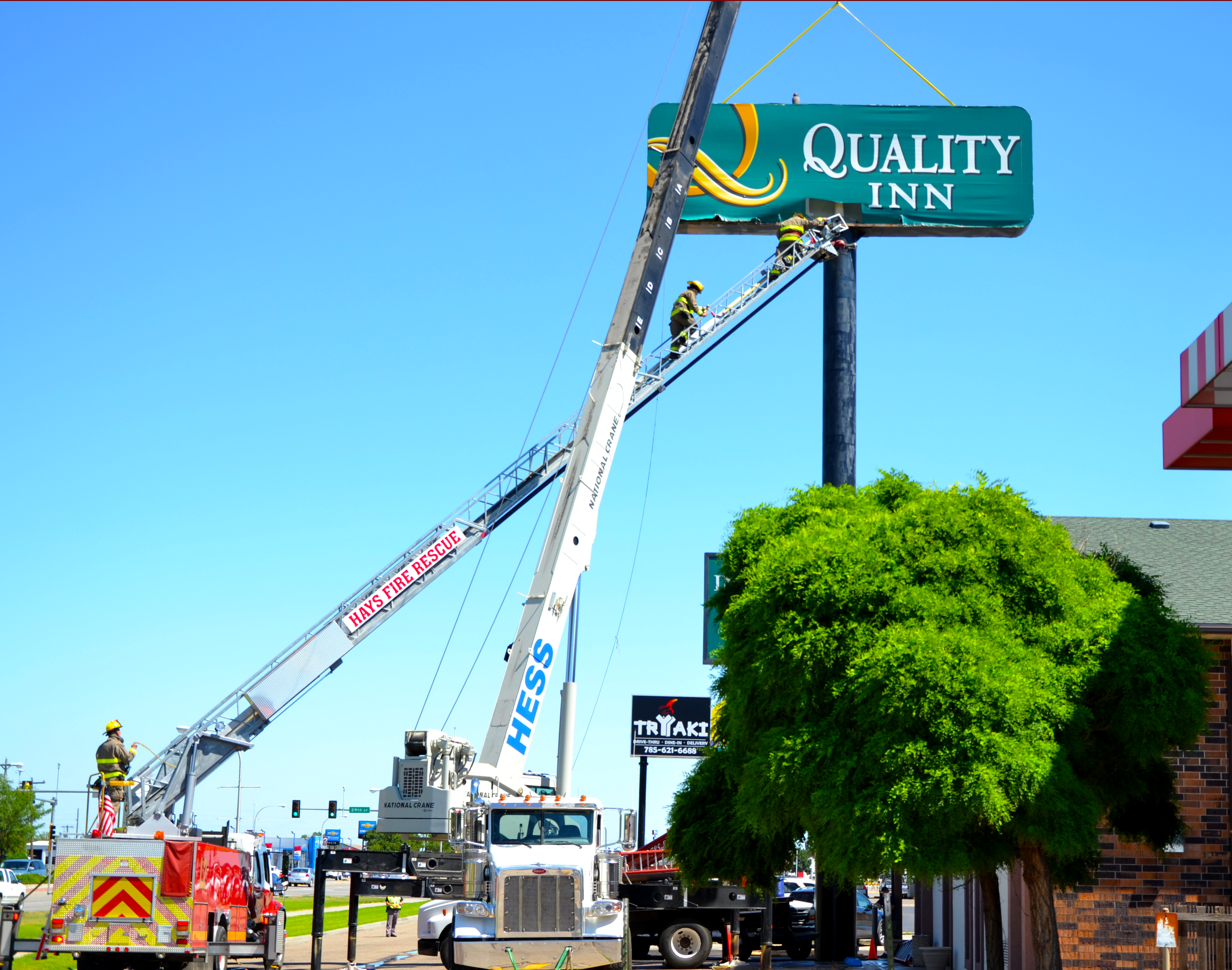
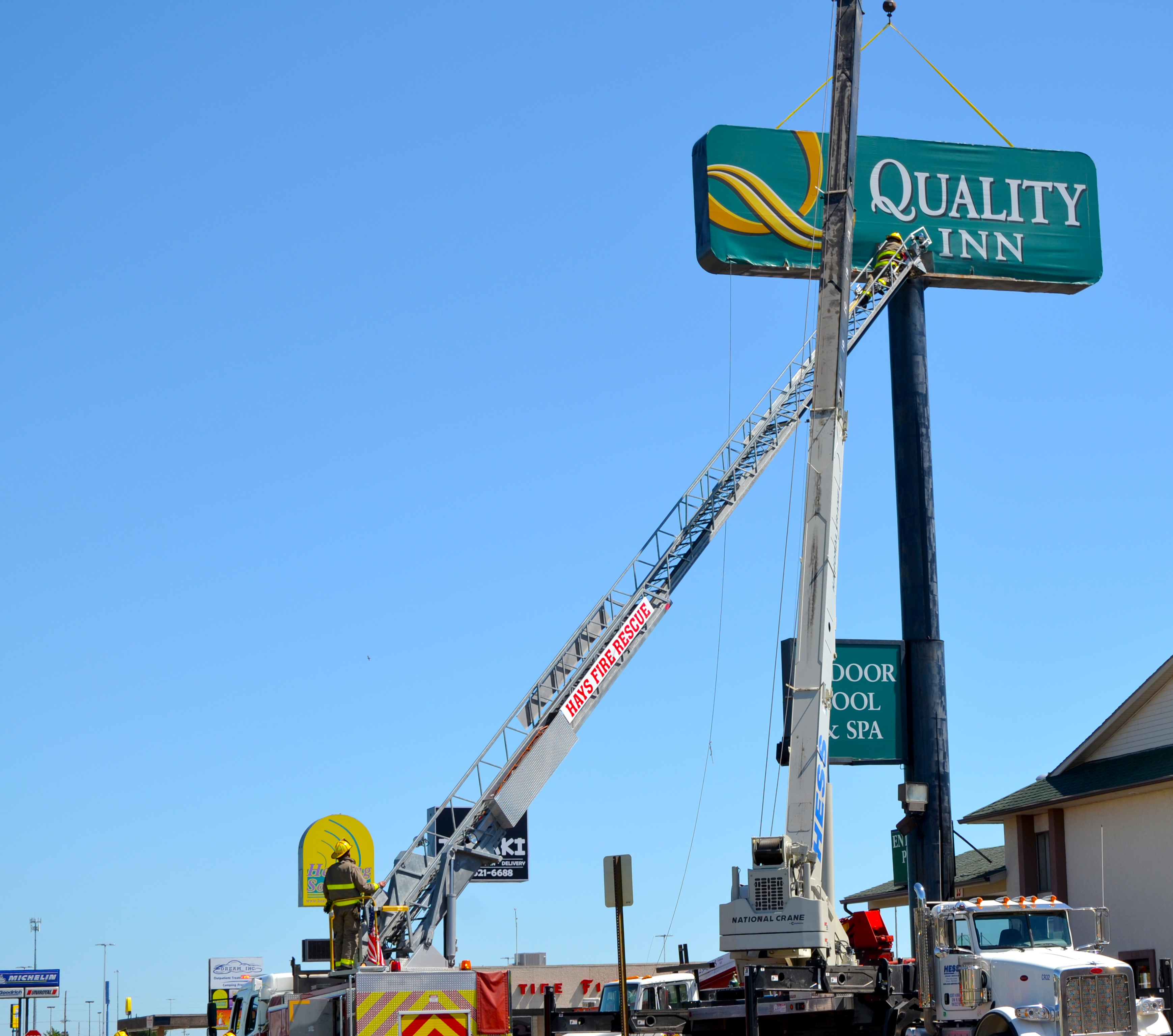
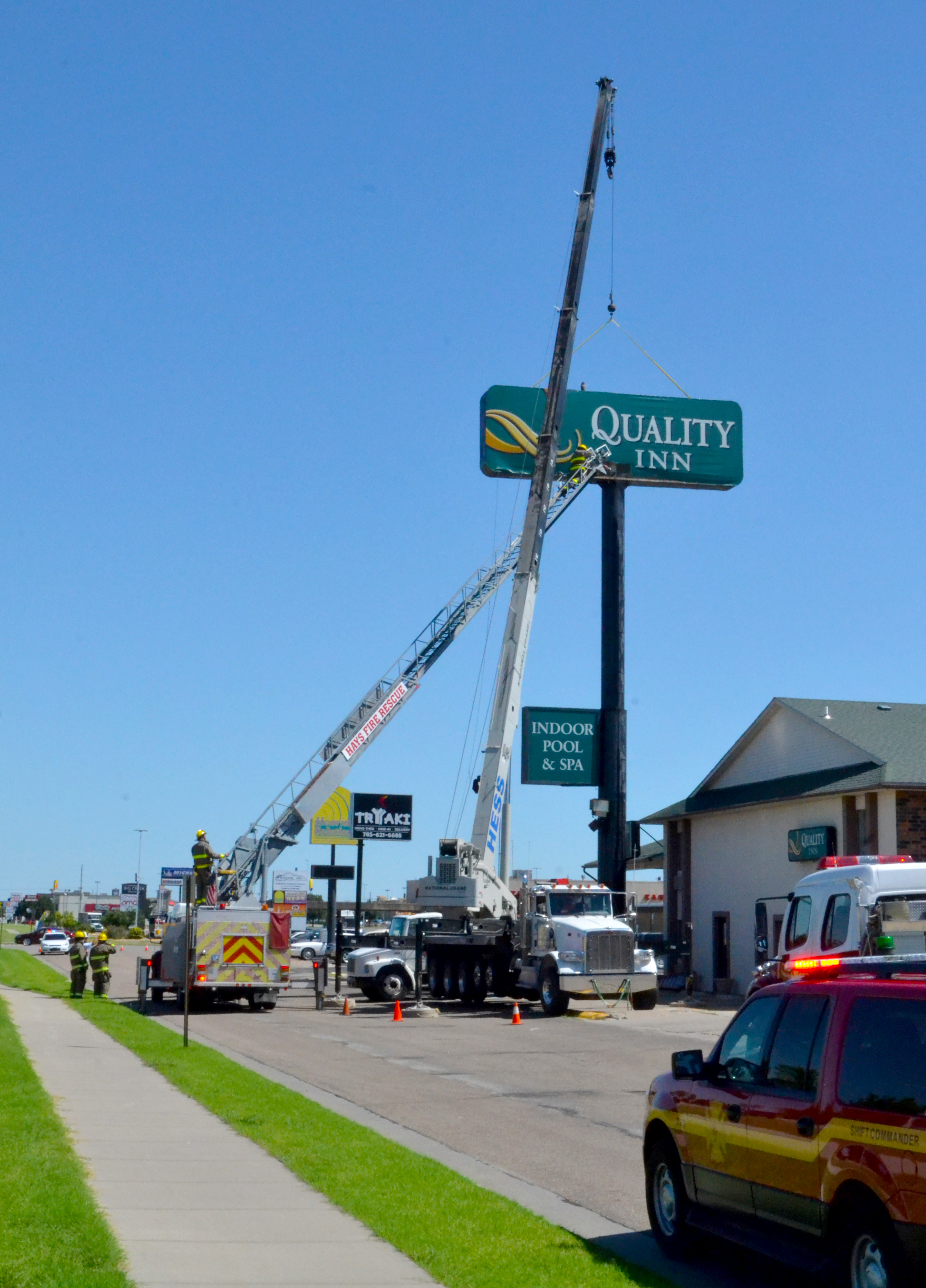
At around 11:10 a.m. Wednesday, the Hays Fire and Police Departments responded to a fire contained within the sign in front of Quality Inn, 2810 Vine, where welders were working on the sign.
“They were up there trying to remove the sign, cutting bolts off they can’t get loose,” said Hays Fire Department Capt. Kirk Klein.
At the top of the pole, he said there was an opening that allowed birds to enter into the pole, bringing with them nesting materials.
“There’s a ring where the two posts join together. There is a nest down there and, as they were cutting, sparks and embers were dropping down that started the nest on fire,” Klein said.
The welders attempted to extinguish the fire with extinguishers and water, but because of the length of the pole were unable to completely extinguish the fire.
Workers then called the HFD and flagged a passing truck to assist.
After setting up the ladder, members of the HFD worked to put out the smoldering fire within the pole.
“We used the ladder pipe to spray down, but since it was so far down, we took a hose up the ladder and hung it down and moved it around. Then we ran a hose up from the bottom,” Klein said.
Klein said water was sprayed after the fire was out in an effort to soak any remaining nesting materials.
The HFD remained at the scene for a little over an hour and, by 12:30 p.m., work had resumed on the sign.
I will admit I wasn’t sure what to expect when the story idea was presented. A western Kansas farmer cutting wheat with an antique combine during harvest isn’t my normal fare. But growing up, I worked with farmers, I’ve driven a combine, and spent days in the 100-degree heat working fields, so I thought, “Why not?” and made the call.
Harvest, as I have known it, is a hectic time, rushing to get wheat cut and delivered, especially as storms are expected to move in, so I wasn’t expecting an immediate answer. Much to my surprise, after a couple of rings a strong, but friendly, voice rang out.
“Hello, this is Roger,” came across the line, slow and deliberate.
After introductions, the man on the line, Roger Kuntz, who lives in Grainfield, explained the premise behind his endeavors.
“Why not find the simplest piece of equipment ever built and enjoy them versus buying into the high-tech world where you see the preposterous gadgetry that you’re maintaining for others?” he said. “Why not make your world fit you?”
And my interest was piqued.
A time was set and a couple of days later myself and videographer Cooper Slough made the hour drive to interview Kuntz and shoot his harvest.
The farm was easy enough to find, just a quarter mile west of the little town of Quinter, with a medium-sized red barn, and a 1949 Chevy truck parked right on the side of the road.
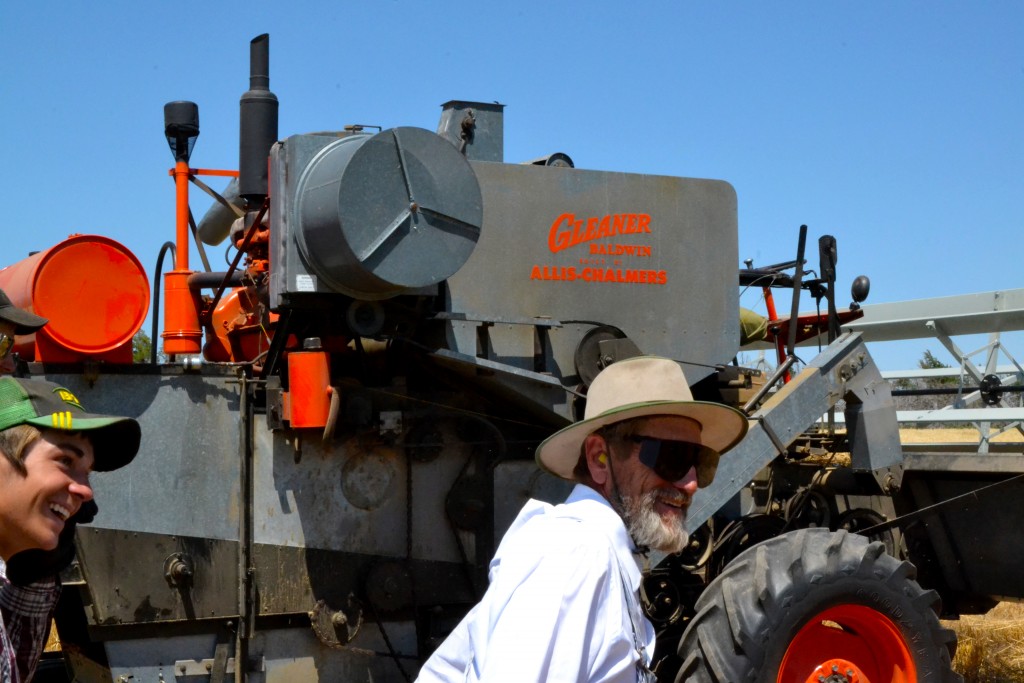
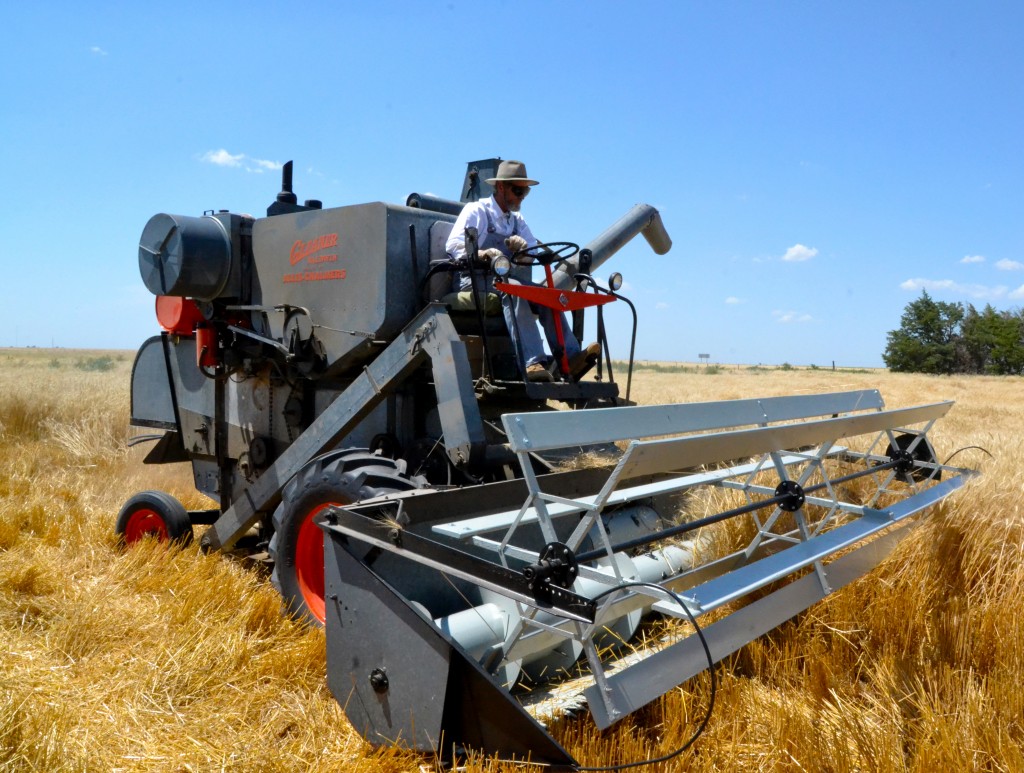
Roger Kuntz preparing to begin cutting with his 1950’s combine “Chitty Chitty Bang Bang”
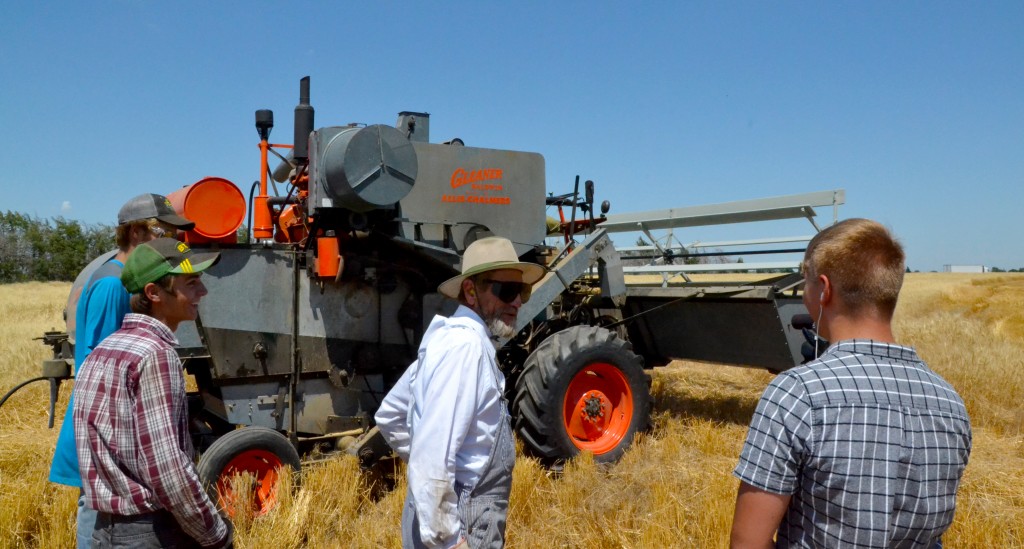
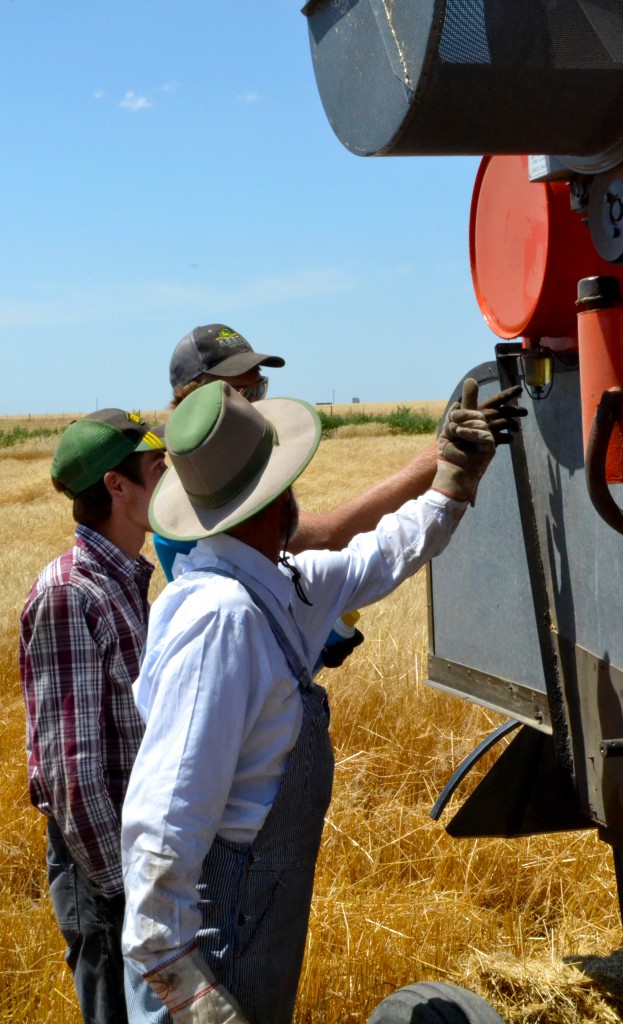
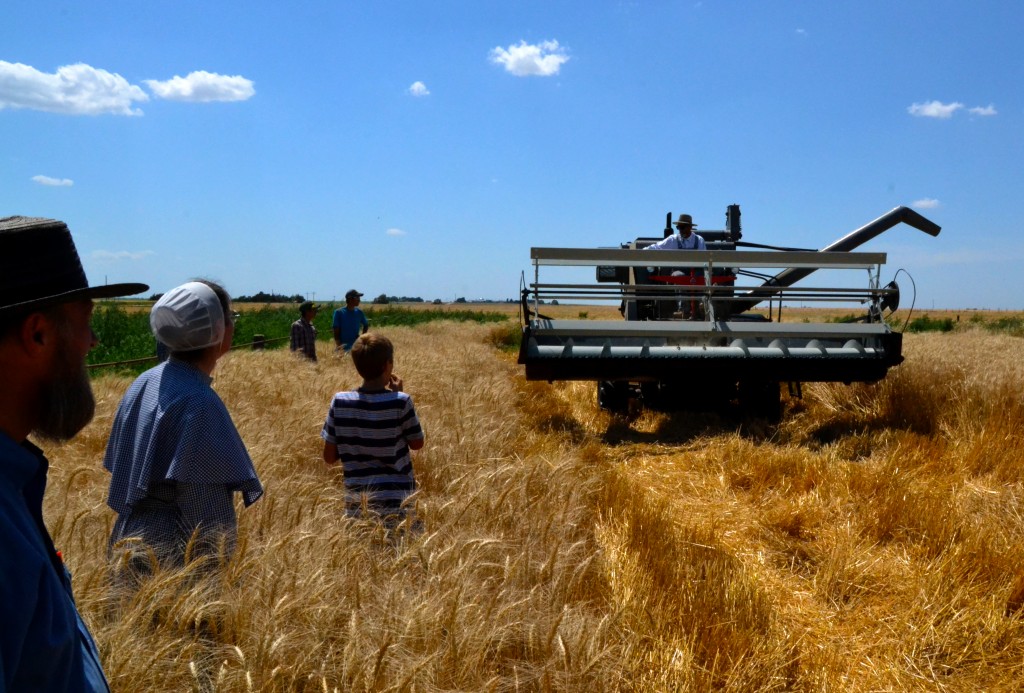
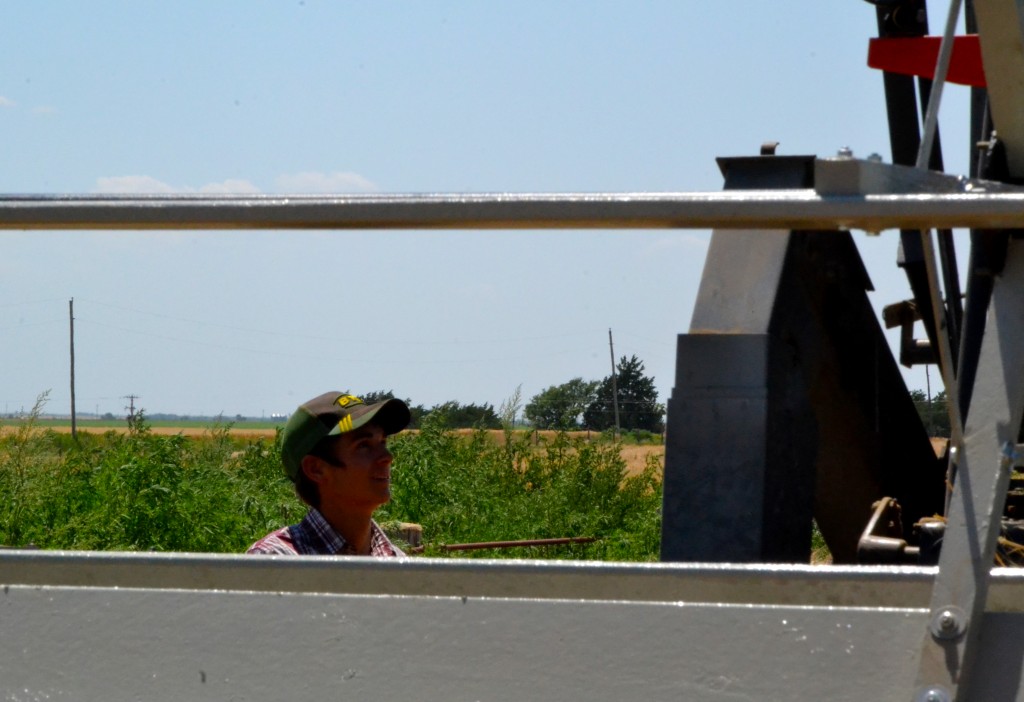
Roger Kuntz reviews repairs made by Cody and Jessie Bogart before wheat cutting begins just west of Quinter.
“Look at that,” my cameraman said as we passed the truck.
“This must be our guy,” I matter-of-factly responded.
Kuntz had told me about that truck on the phone. It had been his fathers and was still used to haul grain, 150 bushels at a time.
We were greeted almost immediately by a middle-aged woman who had the look of a farmer’s wife — Roger’s sister-in-law.
Roger wasn’t going to be immediately available, she said. The combine, the crux of the story, had apparently stopped running just before we arrived, and he was working to get it running.
We made small talk as we waited, talking about the pending storm and record wheat yields being reported in other areas of the state.
As I glanced around, I could see work being done on the combine, immediately wary that the story might require another trip, when I noticed an older man in full overalls and a hat with a full neck flap heading our way.
It was Roger Kuntz.
We talked about his equipment, his career in farming implements and why he runs his small farm in a way not seen in decades.
“The joy of being here today is the fact that we’ve come so far in getting bigger and more complex with the equipment in the 70’s until now. The joy comes from doing a small cottage farm right here at Quinter, Kansas,” he said.
After a lifetime of working with farmers, fixing implements across the world, he knows first-hand the difficulties of modern farming.
“The joy of simplicity outweighs so many other dimensions that pursuing this goal of simplicity and harmony with nature has led me to go organic with the farming. Even though I’ve walked shoulder to shoulder with the people of the ’70s who drove the Big Buds, the Versatile tractors, etc. The organic small cottage farm is a way for me to unwind and to also train apprentices,” Kuntz said.
Two of those high school students, brothers Jessie and Cody Bogart, were working on the combine – affectionately named Chitty Chitty Bang Bang – replacing the fuel pump that was giving them trouble.
Both students have plans to continue the work they are learning with Kuntz after graduation, using the skills they learned — but they aren’t the first and likely won’t be the last to work with Kuntz.
“When possible, we try to help the handicapped and put them on the assembly of these parts in our cottage shop,” Kuntz said. “We also have the foster home teenagers come out when they’re available and help do some training there.”
The sense of community and the personal touch shines through with Kuntz, something he shares with pride.
The number of people Kuntz has met is hard to imagine. For decades he traveled the world, working as a service manager at K-Tech working on Flex-King tillage equipment, now traveling with Jessie helping farmers to precisely dial in their tillage equipment.
Those service trips give Kuntz an opportunity to hear stories and reflect on the lives of the modern farmer.
“That has been a big part of going out on the service trips. I tell Jessie and Cody, ‘Let’s listen to their problems before we respond.’ ” he said. “The stories of what they would do if they could do it over again are very touching.”
Kuntz’s story starts as a young student in the area, thinking beyond the classroom.
Daydreaming in school, Kuntz said, paid off as he worked in research and development and as a service department head, putting him in a position to develop relationships with farmers and the land.
“That work entwined me even further into agriculture and farming.”
But working on high-tech machinery also created a desire to get away and practice farming without the entanglements of modern technology as farms grew larger and became more complex.
“A retreat from that life was just having this small situation here with older antique farm equipment,” he said.
“We enjoy the sweat that comes off our brow, we sleep good at night and the toil and the non-high tech world has fit us very well,” he said in a poetic tone. “We enjoyed our journies, we love the land, we plan to stay here just as long as we can.”
During the hours filming and exploring the farm, we paused, sitting around a small table enjoying cookies and a homemade energy drink. As we gathered for the break, Kuntz, Jessie, Cody and their parents were curious about what we do. We explained the in-and-outs of our own jobs, noting the stark contrast in web-based reporting to their work in the fields.
Then the fun began, the combine – once again operational – roared to life and we began capturing what we needed.
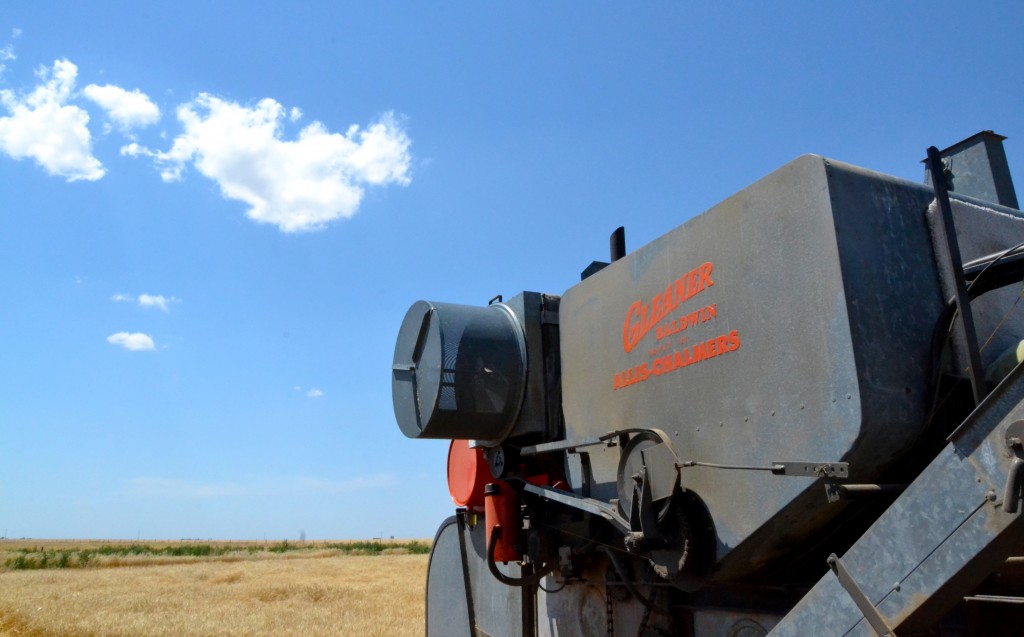
“It’s still functional. It does our job,” Kuntz said of his once-abandoned 1958 Gleaner A combine.
It was given to him, he told us, but he couldn’t just take it. He gave the farmer a donation for the machine that, without Kuntz, would likely have become scenery in a dusty field, collecting rust as an idle reflection of a time that had long since passed.
Despite the earlier hiccup, Chitty Chitty Bang Bang hummed along perfectly, albeit with a little coaxing from Kuntz. He insists singing its namesake song helps it run faster. The louder he sings, Kuntz said, the faster it goes.
As my cameraman rode shotgun, collecting shots of the harvest, he sang as they rolled along.
I wasn’t sure it helped the machine run, but the idea made me smile.
“Our little barn, our little group of machinery, and the way we farm is a real joy as these machines that are much older than the youth operating them go to the field,” he said.
The type of farming Kuntz does, organic and small, a cottage farm he calls it, isn’t without its merits in the modern world. Kuntz said he notices a growing need to pursue tillage even as others embrace new and stronger chemical treatments.
In the ’70s, the Big Buds did their job well but then came chemicals, allowing for no-till farming to be practiced, he said.
“That came in and changed agriculture.”
But weeds are adapting and tilling the ground is making a comeback, he added, giving him more opportunity to continue precision work on modern equipment.
“Tillage that can skip the ground 2 inches deep at 8 mph and really get a good job done, that where we come in,” Kuntz said. “It’s the finesse, the finesse of making a machine work so well that it pulls one or two years easier and performs right and does a good level job clear across.”
The bulk of farmers still practice no-till farming, he said, but some tillage is returning as people try to recalibrate to solve modern farming problems.
Out here, though, those problems seem distant as Kuntz practices farming that would be more familiar to someone in the ’60s than today.
“Out here, where I do not want to spray any and I need complete coverage to prevent weeds from taking over I plant a very old variety, maybe a 60-year-old variety. The varieties of Scout, Eagle, Turkey are the wheat varieties I plant and those were available in the ’60s,” he said. “It blocks the ground, shades the ground, protects the weed growth.”
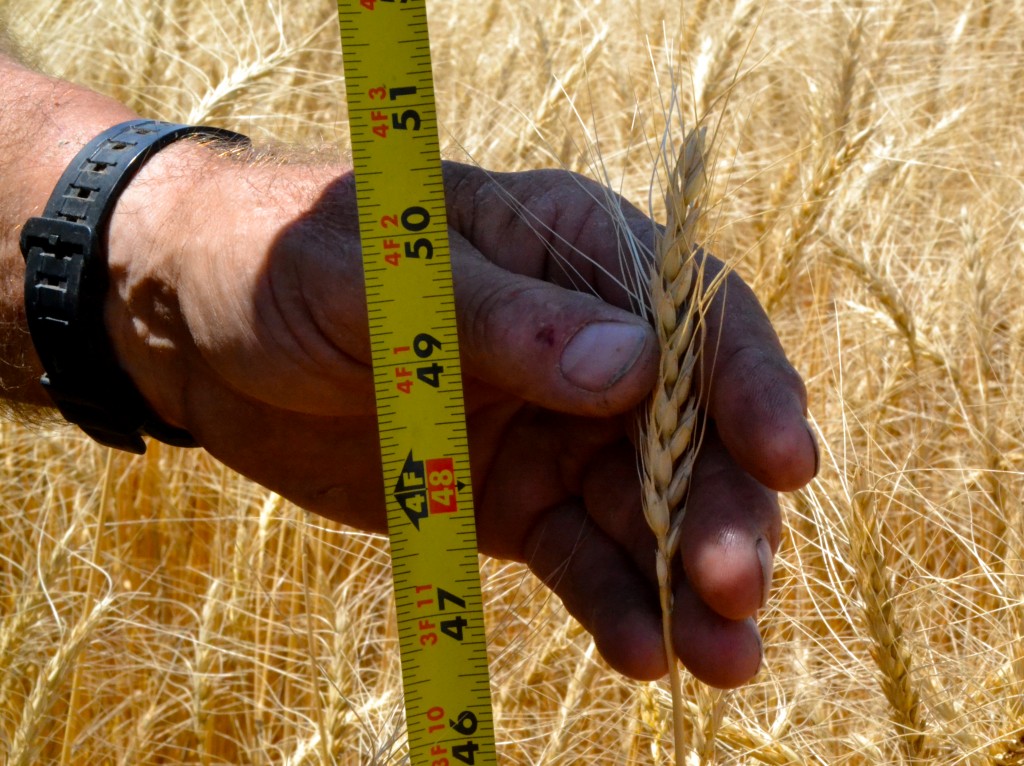
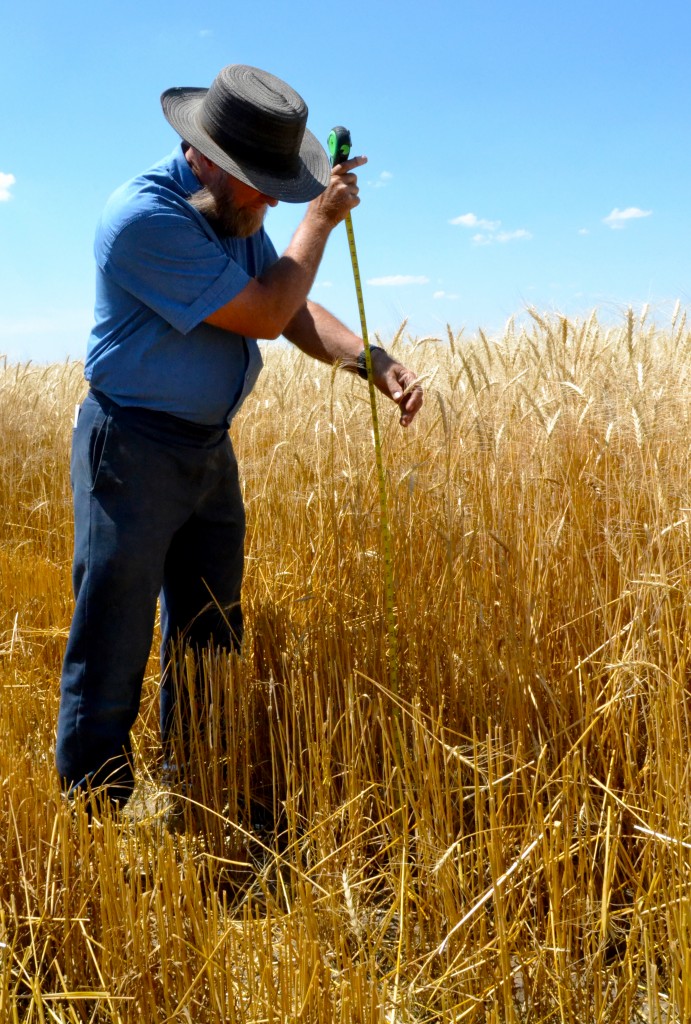
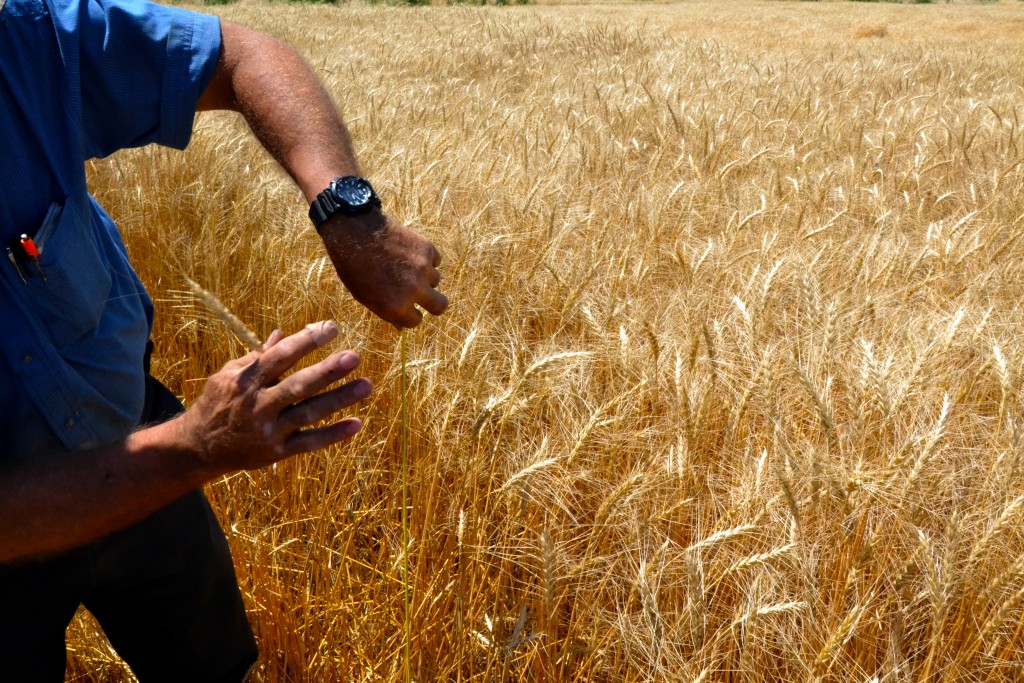
Stepping into the field, it is easy to see why – the wheat is unlike any other I have ever seen and taller than I would have believed. He had told me over the phone it was chest high. He wasn’t exaggerating.
As the day wore on, watching Roger and his young apprentices’ work, it occurred to me this labor of love is likely unsustainable. I couldn’t imagine a situation in which a profit could be made from such antiquated practices.
When I asked about profit, a small smile crept across his face.
Not only is it “a great release, it can be a profitable hobby,” he said. “There will be profit after the little combine and the 930 Case has done its job. There will be a profit in the first year.”
Without a hint of malice toward other farmers, he continued.
“Being a small farmer is profitable. It works well because you can stay so focused, so concentrated on doing a good job with little, that the returns are greater per acre because you’re hovering over it like a hen over its chicks.”
As I later sat down to compile the story, desperately looking for an angle, watching the video piece come together, I found I thought more about what he said, rather than what he was doing. Throughout the day, he had shared bits of wisdom, alluding to a simpler time.
“Go simple, go small, go now,” he told us, a quote he had collected throughout his travels.
As we traveled back to Hays, I was anxious to jump back into my digital world, scrolling through the news of the day, catching up on everything I had missed, later remembering that quote as we talked about the experience we had just had. Both the oddness of it, but also the familiarity and the kindness of strangers that is increasingly infrequent.
Because of that unexpected hospitality, I felt compelled to grant a request he made as we parted ways. He asked to share a quote by Sterling Hayden that is important to him and without hesitation I share it now.
“In the worship of security we fling our lives beneath the wheels of routine – and before we know it our lives are gone. What does a man need – really need? A few pounds of food each day, heat and shelter six feet to lie down in – and some form of working activity that will yield a sense of accomplishment. That’s all – in the material sense. And we know it. But we are brainwashed by our economic system until we end up in a tomb beneath a pyramid of time payments, mortgages, preposterous gadgetry and playthings that divert our attention from the sheer idiocy of the charade. The years thunder by. The dreams of youth grow dim where they lie caked on the shelves of patience. Before we know it, the tomb is sealed. Jessica Mitford writes about the American way of death, but the American way of death isn’t the burial ritual (silly as that is), but the way the average man lives. When you consider the beauty there is in the world, the rapture that can be known, the honest relationships, the excitement and exaltation there is for the taking – the real things to look at and feel and read…Where, then, lies the answer? In choice. Which shall it be: bankruptcy of purse or bankruptcy of life?”
A few days later, I traveled near Roger’s 80-acre farm and saw him riding high on his combine set against a bright blue sky. I smiled and began singing in my head “Chitty Chitty bang bang, Chitty Chitty bang bang, we love you,” imagining he was as well.
CORRECTION: The original version of the story listed Paul Adams as a dissenting vote for allowing Hays Middle School students the option to take district issued tablets home. The dissenting votes were board member Josh Waddell and board President Lance Bickle. Hays Post apologizes for the error.
By JAMES BELL Hays Post
The Hays USD 489 Board of Education took a serious look at technology at Monday night’s meeting, voting to allow Hays Middle School students to take district-issued tablets home, voting down new laptops for K-8 teachers and voting to increase district-wide internet speed.
Before taking action on allowing the tablets to travel, the board discussed the benefit to the students – and the potential cost to the district.
After receiving questions at the board’s work session earlier this month, Scott Summers, director of technology, informed the board that other districts he looked at allowed middle school students to take tablets home, a message carried later in the conversation by Martin Straub, Hays High principal.
“They learn it by touching it in our schools,” Straub, noting he has heard from students in other locations that students from Hays are not as tech-savvy as others.
While the board agreed that technology utilization is important for the students, members were not ready to fully jump into the measure.
“I do think it is moving somewhat fast,” said Josh Waddell, board member, noting he believes more development is needed in the plan before implementation, asking Craig Pallister, Hays Middle School principal, if he was 100 percent sure this is the right measure.
“I am,” Pallister responded.
Pallister also said he felt his staff is almost unanimously supportive.
“They’ve got the iPads. Let’s use it,” Pallister said. “We know kids are growing up on technology.”
Board member Paul Adams also shared concerns pushing ahead with a take-home plan for the devices, noting he would like metrics on usage and specifically what benefit would be achieved through the program.
The cost associated with traveling tablets was also of concern to the board, with the measure creating a $25 technology fee for middle school students, and potential cost increases as the district repairs equipment that could be damaged more frequently.
“I’m just not comfortable yet,” Waddell said, calling the plan “scattered and rushed.”
With Waddell and board President Lance Bickle in the dissent, the board approved the measure 4-2.
Board member Danielle Lang was absent.
A proposal that would have purchased new laptops for K-8 teachers, however, did not fare as well.
While the board acknowledged the need for the laptops – and different utilization of district-issued tablets – the cost was a hurdle the board could not overcome on the heels of a failed bond issue.
“We have so many other things we need to worry about,” Bickle said.
Waddell and Adams agreed.
“We’ve got a deferred maintenance problem we can’t get caught up on,” Waddell said. “I want to maximize what we have in-district.”
Adams said he would like to use up the current devices before replacements are considered.
While current district-issued laptops are beginning to show signs of their 6-year-old age, needing frequent repairs, Summers informed the board there are 300 to 400 laptops in the available pool for 153 staff members.
“I could see another year,” Summers said, but also said it is hard to tell as problems in the laptops run a gamut of problems.
The board voted down the measure 4-2, with board members Sarah Rankin and Luke Oborny in the dissent.
In the last technology-driven measure of the evening, the board also voted to alter its existing contract with Eagle Communications and increase district internet speed from the current 200 Mbps to 400 Mbps.
Other actions taken by the Board:
The board unanimously approved the application of a Head Start Duration Grant as written.
The board unanimously approved the milk bid from Hiland Dairy for the 2016-2017 school year.
The board unanimously approved the move of the district insurance plan to the Kansas School Benefits Group Trust, administered by Greenbush Health, contingent upon benefit negotiations with the HNEA.
The board unanimously approved revisions for the administrative and classified handbooks for the 2016-2017 school year.
The board unanimously approved the purchase of K-5 classroom libraries for instructional use in implementing the Reading Workshop, for the beginning of the 2016- 17 school year.
The board unanimously approved Ideal Refuse Removal as the district’s trash removal vendor for the 2016-2017 school year.
Disclosure: Eagle Communications is the parent company of Hays Post.
Prior to the start of the Hays USD 489 Board of Education meeting Monday, the district will host a farewell to outgoing Superintendent Dean Katt, set to begin at 5:30 p.m. in the Toepfer Board Room, 323 W. 12th.
Katt has served the district in the role of superintendent since September 2013.
“Hays has been very good to me. It’s been the most rewarding job I’ve ever had. It’s the best job I’ve ever had, but also the hardest,” Katt said when announcing the retirement.
He will serve as a human resources officer in the Independence, Mo., school district next year.
In a column penned by Katt last month, he commented on accomplishments made by the district during his tenure.
“I am proud of the accomplishments the district and students have made over the past three years,” he said. “There is something truly special about the students of USD 489.”
“The students continue to perform over the state standards for academic testing. We have seen the HHS journalism team repeat in state titles, DECA competing at the national level, outstanding performances from all of the students that participate in music and visual arts programs, incredible performances from all of the USD 489 athletes, too many National Honor’s Society students to mention individually, FFA placing at the national level, the HHS News Team taking home state accolades, two Hays Middle School students qualifying for the National Social Studies Bee, and a Hays Middle School student winning an international award for the Lion’s Club Peace Poster Contest. This list could go on and on, but these few accomplishments attest to the talent that lives and breathes in Hays.”
Katt will be replaced by John Thissen, who will begin serving as district superintendent on July 1. The Board of Education unanimously voted to approve the hire on May 27.
Thissen currently serves as superintendent at Herington USD 487.
“I am excited and eager to work within the Hays community,” Thissen said. “My experience with Herington’s community revealed how significant a group of people’s combined foresight and effort placed into the betterment of a service organization can create varied tendrils of growth for a town.”
Three technology proposals are set to be voted on at 6:30 p.m. Monday at the Hays USD 489 Board of Education meeting, after hours of discussion at the June 6 work session.
Middle school iPad usage from home, new computers for K-8 teachers and district internet usage are all set for a vote during the meeting, according to the meeting agenda.
At the work session, the Hays Middle School technology committee spoke to the board about the proposal to allow students to take district-issued tablets home, telling the board the goal is to allow students to be able to use the technology to create a more expansive learning experience.
Board Member Josh Waddell, however, questioned how it would create an equitable system if the student does not have access to the internet at home.
“Equitability is definitely a concern I have,” he said.
The group responded by noting hours before and after school would allow students to access the district’s internet and numerous free hotspots throughout Hays would provide service to students who would not be able to complete work at home.
It was also noted many of the applications on the iPads can be utilized while offline.
Online textbooks would be available on the tablets, homework could be completed at home on the tablets and encouragement of project-based learning are all reasons to allow the technology to go home with the students, the group said.
The group also said it would help in the transition to high school.
Hays High students are allowed to take district issued tablets home.
“I was adamantly against this,” said board member Sarah Rankin, but said after watching her daughter use the technology this year, she changed her mind.
“I now see the need,” she said.
In response, Waddell said he was “the exact opposite,” noting that his child had used a tablet at home for school maybe 10 times.
“It seems more of a convenience rather than an educational purpose,” he said adding that if middle schools students are allowed to take the district technology home, elementary school students could be given the same privilege soon – which hes said was a potential detriment to the students’ education.
Outgoing superintendent Dean Katt disagreed.
“I think that’s the direction we need to go,” he said, arguing that people frequently question why students cannot take the technology home in a one-to-one technology district.
During the presentation, the board also questioned if the proposal would shorten the life of the tablets.
Scott Summers, director of technology, responded, telling the board that the biggest lessonb he learned at other districts that allowed middle school students to take tablets home concerned proper usage and transportation, but repairs would be the same as what is currently seen with in school usage.
A $25 technology fee would also help cover the cost of any additional repairs by the district and damage done through negligence would be assessed to the student on a case-by-case basis.
The board is also set to vote on providing new computers to K-8 teachers through the district.
While the teachers have been provided with district-issued tablets, Summers told the board there are several applications in which the teachers need a more robust computing device for activities, such as grade input. The purchase will provide 153 Dell Latitude 3570 Laptops for K-8 teachers at a cost $97,155.
The computers being replaced are around six years old, according to Summers.
Wrapping up the technology items at the meeting, the board will also vote to approve increasing district internet speeds, provided by Eagle Communications.
The proposed addendum would increase district speed from 200Mbps to 400Mbps at a cost of $14,400 for the district for the next fiscal year. The total cost increase of $4,000 per month is being mostly absorbed by an already approved E-rate contract that Summer applied for in preparation for the speed increase.
During April and May, district internet speed was increased at no cost by Eagle, in order to collect usage data.
That analysis found the average peak usage was 290Mbps, with a peak speed of 370Mbps. If approved by the board, the speed increase would be added on to the final year of a three-year contract signed by the district.
 By James Bell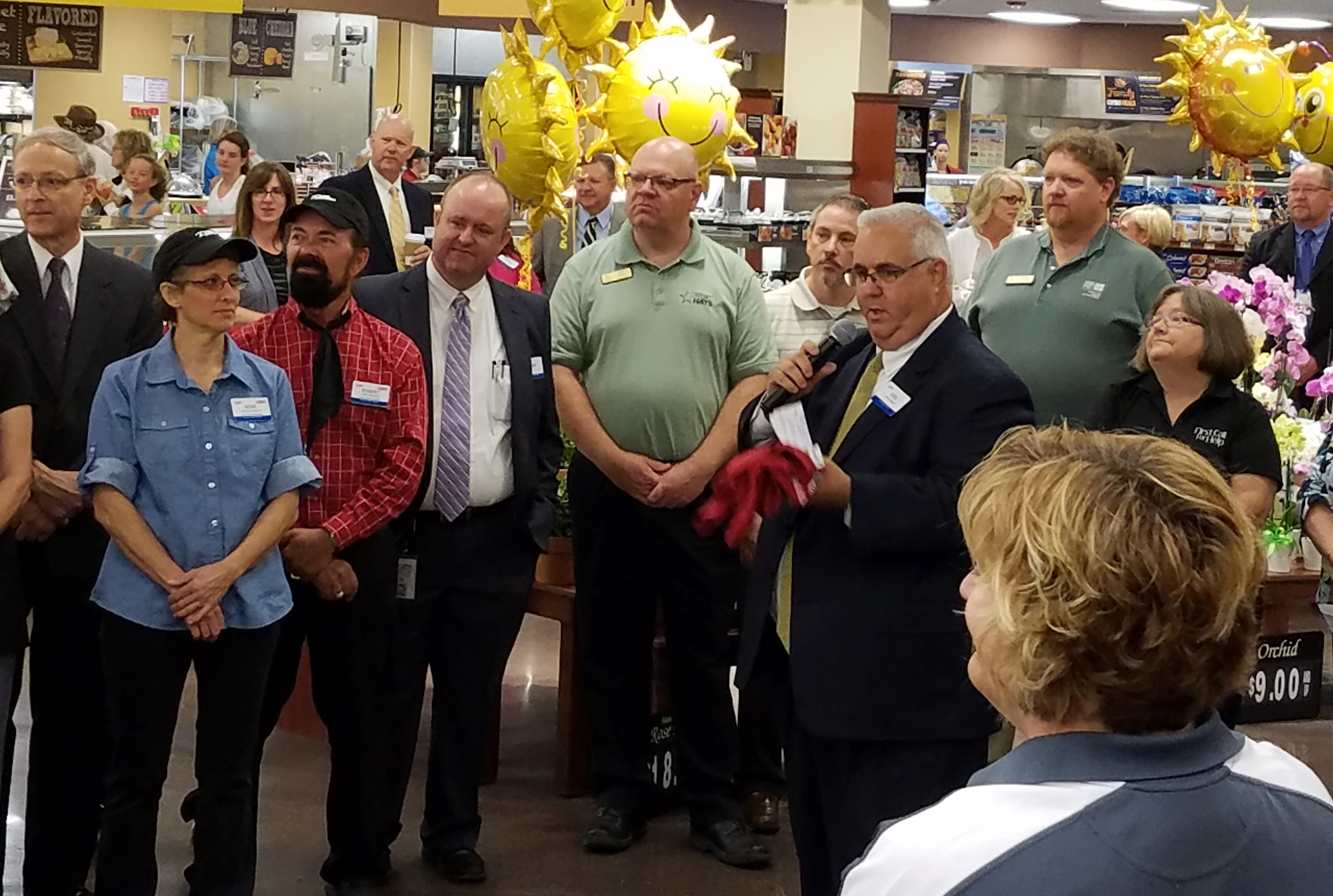

 Following a fire sprinkler pipe break at the Best Western Butterfield Inn, 1010 E. 41st on June 29, the hotel will remain closed until mid-October, according to a statement made by the hotel chain this week.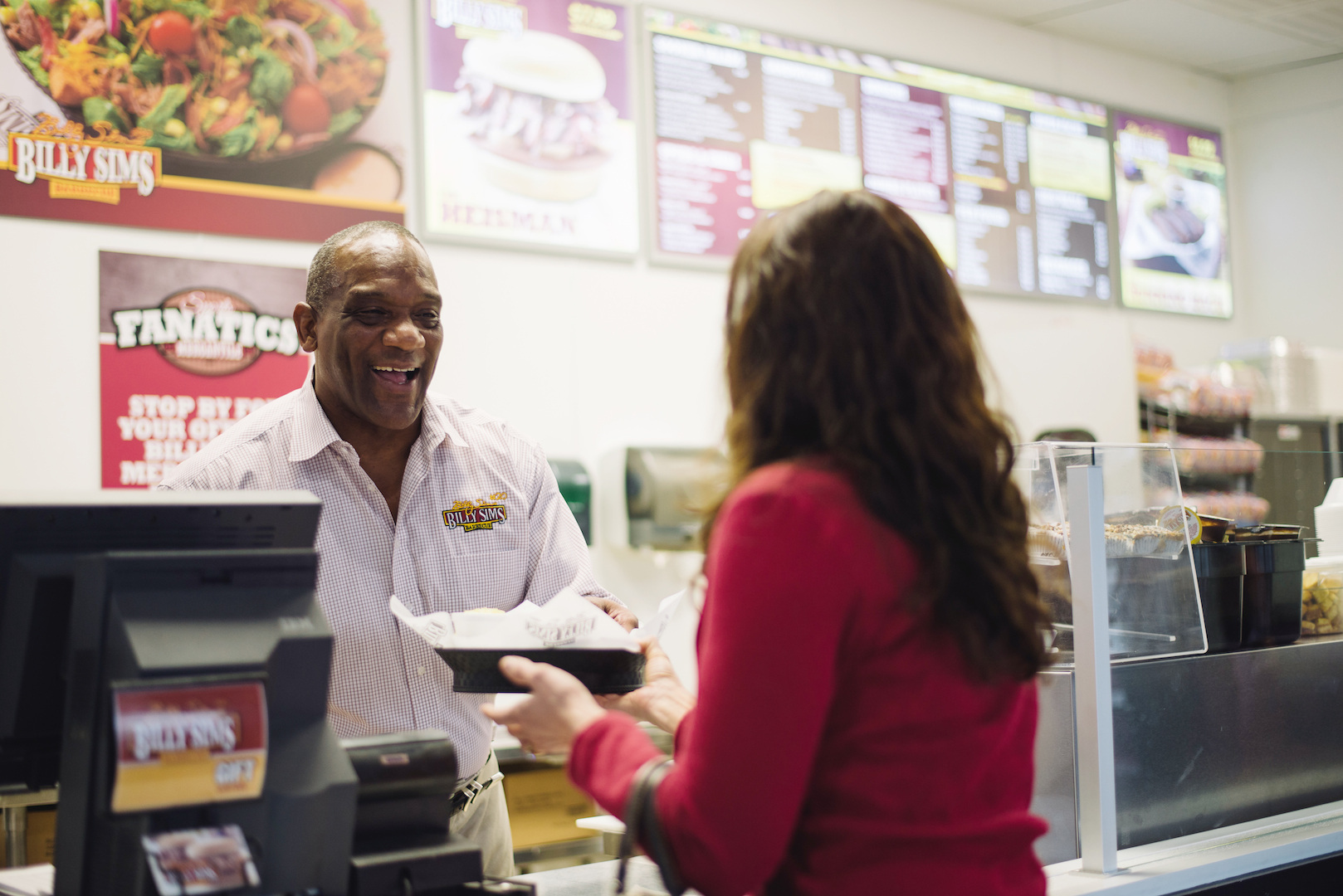


 Restaurant delivery in Hays might never be the same after last week’s launch of Hays 2 Go, bringing new delivery options from local restaurants that do not offer delivery service in-house.