We have a brand new updated website! Click here to check it out!

News From the Oil Patch, Nov. 18

By JOHN P. TRETBAR

Kansas Common crude at CHS in McPherson starts the week at $48 per barrel, after gaining a dollar on Friday.

The Kansas Geological Survey released production numbers for July, 2019, with operators pumping more than 2.9 million barrels statewide. That’s an average of more than 93-thousand barrels per day, slightly more than the average for the first six months of the year. The state agency’s numbers are higher than the July figures released by the U.S. Energy Information Administration, which pegs July production in Kansas at just shy of 2.8 million barrels.

Barton County’s July total was more than 141-thousand barrels, according to KGS. That’s up nearly five thousand barrels from June but down about four thousand barrels from July of last year. Ellis County’s total was over 221,000 barrels, up slightly from a month earlier, but down about 500 barrels compared to a year earlier. Russell County pumped nearly 130-thousand barrels in July, a slight increase over June, but down more than a thousand barrels from last July. Stafford County production dropped about 3,000 barrels from the month before to 89-thousand barrels, but that’s more than a thousand barrels higher than a year ago.

Baker Hughes reports another big dip in its weekly Rotary Rig Count. There are 806 active rigs across the U.S., which is down ten oil rigs and one seeking natural gas. Texas was down five rigs.

The rig counts across Kansas were slightly higher. Independent Oil & Gas Service reports eight active drilling rigs in eastern Kansas, up one, and 22 west of Wichita, also up one. Drilling was underway on a well in Barton County, and operators are preparing to spud wells on one lease in Barton County, one in Russell County and one in Stafford County.

Regulators approved 25 permits for drilling at new locations across Kansas last week, 13 of them east of Wichita and 12 in Western Kansas. So far this year there are 951 new drilling permits.

Independent Oil & Gas Service reports 50 newly-completed wells statewide last week, which brings the year-to-date total to 1,245 completions. There were 12 in eastern Kansas and 38 west of Wichita, including one in Barton County, one in Ellis County, one in Russell County and one in Stafford County.

Energy operators set a new weekly record for U.S. crude-oil production at just shy of 12.8 million barrels per day. That beats the previous record by more than 200,000 barrels per day. The government says U.S. crude oil inventories are about three percent above the five-year seasonal average. The Energy Information Administration reports stockpiles of 449 million barrels for the week ending November 8, an increase of 2.2 million from the week before. EIA said U.S. crude oil imports were down 327,000 barrels to around 5.8 million barrels per day. The four-week average is more than 18% less than the imports reported during the same four-week period a year ago.

Employment watchdogs in Texas say that state’s energy sector continues to lose jobs. Citing a report from the Texas Workforce Commission, The Houston Chronicle says energy companies in Texas are cutting their payrolls amid sluggish growth in the patch. Payroll employment fell by two thousand jobs last month in the state’s mining and logging sector, which includes oil and gas production.

Saudi Arabia on Sunday announced share prices that would value Saudi Aramco at up to $1.7 trillion. That’s well below their original target of two trillion dollars. At that level, the sale of one and a half percent of its 200 billion shares would raise just over $25 billion. The IPO would be the largest ever, and the valuation would make Aramco the world’s most valuable company.

Regulators are investigating what’s being called a “purge,” the seepage of oilfield wastewater through the soil to the surface in northern Oklahoma’s Blaine and Kingfisher counties. The Oklahoma Corporation Commission has shut down a total of eight saltwater disposal wells near the town of Omega and is limiting volumes at nearly a dozen more. The purge has been pushing an average of 120 barrels per day of wastewater to the surface since at least the first of July. A new directive also places pressure and volume limits on disposal wells across a large swath of western Oklahoma.

The provincial government in Alberta, Canada is once again relaxing production rules for oil producers. The industry has been under production limits since December because of low Canadian prices. Last week, the province said producers can drill new conventional oil wells without being subject to the production limits. Existing wells remain under the curtailment rules.
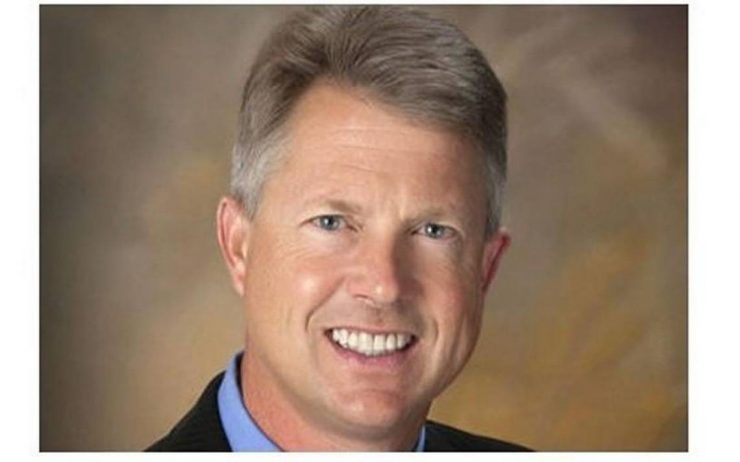
MARSHALL: Doctor’s Note Nov. 18

Dr. Roger Marshall, R-Great Bend, is the First District Kansas Congressman.

Friends,

Last Monday was a day to stop and say “thank you” for the sacrifice our veterans have made for us. Each veteran has served differently, but all put country above self and did their part to protect our freedoms and keep us safe.

Veterans don’t just serve us while in uniform – many return home to continue serving and enriching their communities. Last Monday was the start of MILITARY WEEK in my office, where my staff and I focused on highlighting some of the great veterans living and working in the Big First District of Kansas.

We live in the greatest country in the world, and it is our veterans who made it so. I hope everyone had the opportunity to take a moment to thank and honor those who served and I hope you all had a happy Veterans Day.

Impeachment Updates

Many Kansans have told me it’s tough to keep up with all the news from the impeachment hearings.

To help folks stay informed on impeachment developments, I’m starting a regular update in which I’ll provide simple and concise summaries about the most important hearings, testimonies, and other facts related to the impeachment inquiry.

If you are interested in receiving these updates, Click Here to sign up.

USDA Secretary Sonny Perdue with Rep. Roger Marshall

Touring NIFA and ERS Location

I joined USDA Secretary Sonny Perdue in Kansas City for a tour of the new home of the USDA’s National Institute of Food and Agriculture (NIFA) and Economic Research Service (ERS).
There is no better place in America for the USDA’s new agriculture research headquarters to be located than in the Kansas City region. The relocation of ERS and NIFA will build on the region’s competitive advantage in agriculture and will make hundreds of good-paying jobs available to Kansans, which will in turn grow the Kansas economy.
This relocation is only possible thanks to the efforts of President Trump and Secretary Perdue, who continue to deliver on their promise to prioritize American agriculture and revitalize the heartland.

The Importance of Meaningful Data in Healthcare

My colleague and fellow physician, Rep. Ami Bera, and I wrote an op-ed featured in the The Hill on improving maternal health. Maternal deaths fell in the 20th century, only to rise again in the past two decades. The Preventing Maternal Deaths Act signed into law last December empowered states and local communities to identify how and where our society is failing moms. Building on these efforts, we discuss the potential impact of meaningful data combined with proper health care incentives, from conception through postpartum.

Supporting Veterans

For too long, too many veterans have suffered from homelessness but the Trump Administration has taken the issue head-on and on Tuesday, U.S. Housing and Urban Development (HUD) Secretary Ben Carson announced new veteran homelessness figures showing a continued decline in the number of homeless veterans.

In Kansas, the number of unsheltered veterans has decreased by 33% from 2010 to 2019. This reduction can be attributed to intense planning and targeted interventions, including the close collaboration between HUD and the U.S. Department of Veterans Affairs (VA).

No veteran should return home from war and find themselves without a home. While this is a fantastic start our mission to support our veterans is never done.

If you know a veteran without adequate shelter, contact my office or the National Call Center for Homeless Veterans at 1-877-4AID-VET or Click Here.

USDA Announces Additional Support

U.S. Department of Agriculture Secretary Sonny Perdue last week announced another round of Market Facilitation Payments (MFP) to help farmers and ranchers deal with the continued impacts of ongoing trade disruptions and non-tariff barriers to exports.

President Trump is delivering on his promise to take care of producers while he works to deliver free, fair and reciprocal trade agreements for farmers and ranchers. Producers have until Dec. 6 to sign up for the program.

To learn more about eligibility for MFP, Click Here.

Women-Owned Business Workshop

Small businesses face many challenges, especially when it comes to contracting with the federal government. Wednesday, Kansas Department of Commerce will be partnering with local groups in Salina to host a Women-Owned Business Workshop, focusing on how women-owned businesses can grow by taking advantage of government contracting opportunities. They will hold information sessions on the criteria, process and benefits that come with being a certified Woman Business Enterprise (WBE). They will also highlight how government contracting can assist with growing your business and the federal resources available for small business support.

The event will be held from 9:00 A.M. to 11:00 A.M. Wednesday, November 20th, at the Salina Chamber of Commerce Annex, 120 West Ash St.

If you are interested in attending email [email protected] to register.

Childcare Roundtable

Rep. Katherine Clark (D-MA) and I co-hosted a bipartisan roundtable with industry experts and business-leader organization, ReadyNation, on addressing the childcare crisis in America. This roundtable was a follow up to the working group meeting I led in Manhattan over the summer. During the discussion industry leaders shared their success stories, collaborations, failures, and current limitations for making childcare affordable and accessible to the American workforce.

I am currently looking into some proposals that enable businesses to get tax credits under a cooperative or establish a pilot program for such cooperatives, and I’m also looking at better leveraging funding opportunities that could help provide communities – both urban and rural – investment opportunities for building up an infrastructure that supports working parents.

MISSION Act Forum

As part of our ongoing mission to serve our veterans, my staff and I continue to look for ways to keep our veterans informed of their health care options and opportunities.

My office partnered with Newman Regional Health in Emporia, to host a community forum to share information about health care options available to veterans through the VA’s MISSION Act, which went into effect this summer.
Tyler Mason

Tyler Mason, my office’s military liaison and a veteran himself, spoke about our work to assist veterans who want to utilize the VA MISSION Act to receive their health care from a local provider.

Veterans or providers with questions about the VA MISSION Act can contact Tyler in my Salina office at 785-829-9000.

Dr. Roger Marshall, R-Great Bend, is the First District Kansas Congressman.

CLINKSCALES: Time to act on Medicare D open enrollment

Randy Clinkscales

Medicare open enrollment sounds like a boring topic and many others have written on it. Some of you may be rolling your eyes just thinking about reading another article on Medicare. But, let me tell you about the 45 minutes that ended up saving me thousands of dollars.

Last year I was “forced” into Medicare. It is a long story and I will not go into it. Basically, when I turned 65, I was no longer eligible for the type of healthcare plan that I was on.

As a result, I enrolled in Part A, B and D of Medicare. Part A is the hospital portion, Part B is doctor visits and the like, and Part D is prescription drugs. Each Part has “deductibles.” There are different types of supplemental policies that help cover all or a portion of the deductibles.

When I was “forced” into Medicare B and D (Medicare A is free and you are eligible at age 65), I was advised to pick both a Medicare supplemental policy for my doctor’s visits and a Medicare D policy for my medication.

While I have virtually no medical expenses, I do have one expensive medication that I use. I needed to enroll in Medicare Part B and Part D because if I failed to do so, then I would be assessed a penalty in later years when I tried to enroll.

I also knew that I needed to acquire a supplemental policy because if I do so during that initial enrollment period (about the time I turned 65 or when I leave employer coverage), I am guaranteed coverage. If I do not enroll during that initial enrollment period and try to enroll later when my health has failed, I can be required to pay a higher premium or even denied coverage.

October 15 through December 7 is the only time you can change your Part D (prescription drug) coverage. My office was advising all of our families of those dates and urging them to have their Medicare D evaluated. Someone in my office suggested that I take my own advice and have both my Medicare Supplement B and D policies examined.

My wife and I met with an independent agent. Bottom line, we saved $3,000 a year on our supplemental policy. I then saved an additional $1,400 by changing my Medicare D plan.

This is a great opportunity for you to have your supplemental policy and Part D policy re- evaluated. I urge you to take some time to do it. You can go online to Medicare.gov, but I like dealing with a real person. I am glad that I did.

Please take time to check out your Medicare supplemental and Medicare D coverage. Like me, it could save you a lot of money and make you feel good about that 45 minutes that you spent with the agent.

Randy Clinkscales of Clinkscales Elder Law Practice, PA, Hays, Kansas, is an elder care attorney, practicing in western Kansas. To contact him, please send an email to [email protected]. Disclaimer: The information in the column is for general information purposes and does not constitute legal advice. Each case is different and outcomes depend on the fact of each case and the then applicable law. For specific questions, you should contact a qualified attorney.

Now That’s Rural: Lana McPherson, International Institute of Municipal Clerks

Ron Wilson is director of the Huck Boyd National Institute for Rural Development at Kansas State University.

By RON WILSON
Huck Boyd National Institute for Rural Development

Let’s go to London, England. It’s a meeting of the International Institute of Municipal Clerks, led by the president of this international organization. This year’s international president comes from a small town in Kansas.

Lana McPherson is president of the International Institute of Municipal Clerks and the long-time city clerk of De Soto, Kansas.

Lana grew up at De Soto, attended Johnson County Community College and Rockhurst University. She worked as a paralegal in several law offices and then for a multi-state insurance company.

She also met and married Ian McPherson, a soldier who had served at Fort Riley and then moved to Olathe to be close to family. They made their home in De Soto.

In 1998, the town council was looking for a new city clerk. Lana accepted the position in June. “I reached out to several experienced city clerks in surrounding communities and they took me under their wing,” Lana said.

McPherson

In November of that year, Lana attended a weeklong training program developed by the International Institute of Municipal Clerks, or IIMC. The training institute is conducted annually by the Hugo Wall Center for Public Affairs at Wichita State.

When Lana got into this class with the other city clerks, she immediately noticed two things. First, she had the shortest tenure in office of any of the clerks, and second, she was the oldest clerk in the class. “By the end of the day they were calling me `clerk mom,’” Lana said. “It is a term that I treasure.”

Lana deeply valued the training and the relationships which developed in the process. She has served as De Soto city clerk ever since. She also pursued the advanced certifications that are available through ongoing education from IIMC.
In 2000, she earned her Certified Municipal Clerk designation. In 2007, she achieved the designation of Master Municipal Clerk, a distinction held by only 37 Kansans and fewer than 2,000 people worldwide.

Having seen the benefits of IIMC, she got involved in the organization and was ultimately asked to run for president of the group. “I prayed at lot about it,” Lana said. It is a four-year commitment to go through the chairs of the executive committee. In 2017, she successfully ran for vice president of IIMC which meant that she became president of the international organization in 2019.

“Our primary goal is to actively pursue and promote the continuing education and professional development of municipal clerks through extensive education and certification programs,” Lana said.

“We also need to let communities know the importance of their clerks being certified, because clerks have important statutory duties which they carry out,” Lana said.

“The city clerk’s office is the hub of the city government’s activity,” she said. “We are the glue that holds the city together. We keep the official records of the city, but it goes beyond that to be a liaison between the city council and the staff and the community.”

Lana has found that city clerks around the world have common challenges. “City clerks are like family,” Lana said. IIMC has 14,765 members around the globe. How impressive that this year’s international president is from the rural community of De Soto, population 5,720 people. Now, that’s rural.

“I love my job. I love what I do,” Lana said. “We have a great staff here. My mayor and city administrator and city attorney are so supportive, they’ve made it possible for me to do this.”

She takes her role in serving the citizens very seriously. Lana plays piano and organ at various churches in town. “People will come up and ask about some city project, or hand me their water bill and ask me to drop it off when I go to work the next day,” she said. “It’s my way of giving back to those people who gave me so much support growing up.”

It’s time to leave England, another place where Lana McPherson is making a difference with her commitment to local government. How great to find that a person from small-town Kansas can make a big impact.

WILLIAMS: Succession planning vital to long-term business goals

By DOUG WILLIAMS
Grow Hays

You Gotta Have a Plan!

Williams

There is an old saying that if you don’t know where you are going, any road will take you there.

It is usually used in the context of the need to create objectives in your business or personal life but also applies to business succession planning.

Business retention is a key component of our mission at Grow Hays. We want to help all businesses grow and prosper in any way we can and we are seeing a growing number of instances where business retention and continuity are threatened by the lack of having a succession plan.

Succession planning takes on many forms. Yes, it can certainly involve the sale of the business but also includes planning for unforeseen events. Death, health issues, disability and divorce can all have a significant impact on a business and should be a part of a well thought out succession plan strategy.

Many business owners give little thought to succession planning for a variety of reasons. They are busy operating their business and dealing with all of the day to day issues that involves. They are busy in their personal lives raising families and the challenges that brings and it is also something they really don’t want to think about.

It’s a bit like buying life insurance. You know you probably need it but the prospect of “using” it isn’t very attractive! That being said it is important that every business owner gives thought and consideration to what their succession plan is and that they involve the professionals they use in operating their business to develop it.

Accountants, lawyers, bankers, financial advisors, and any other professionals that have an understanding of their personal and business status are critical resources in the development of a succession plan.

One thing is certain. Every business owner is going to leave their business at some point.

Ideally, it will be through the sale of the business to a new owner that continues to own and operate the business and provide the same quality products and services that the business provides under the existing owner.

Unfortunately, that doesn’t always happen so it is important that every business owner develops a succession plan to make sure as many of the bases are covered as possible. Remember, the lack of a succession plan is a threat to a business owner’s family, employees, customers and the community.

You gotta have a plan!

Doug Williams is executive director of Grow Hays.

INSIGHT KANSAS: Democrats’ playbook wins in Wichita

Michael A. Smith is a Professor of Political Science at Emporia State University.

Wichita’s mayoral election is supposed to be nonpartisan, but that virtually disappeared in this year’s campaign. Mayor-elect Brandon Whipple has served since 2012 as a Democratic member of the statehouse. Before that, he was vice-chair of the Sedgwick County Democratic Party. His winning strategy came straight from the Kansas Democrats’ playbook. Whipple downplayed his party affiliation and played up accountability and good government, while the city’s Republican establishment tried to throw their weight behind incumbent Jeff Longwell. Whipple’s upset looks remarkably similar to the gubernatorial campaigns of Governors Kathleen Sebelius and Laura Kelly, both Democrats who pulled off wins in deep-red Kansas.

Like Sebelius and Kelly, Whipple won his election by emphasizing themes that cross party lines, such as improving transportation and putting the city’s budget online. He also benefitted from the ham-fisted gaffes of his opponents. Controversy surrounding Longwell’s involvement in a last-minute, no-bid contract to upgrade a water treatment plant made the perfect foil for Whipple’s focus on efficient administration. At 37 years old, Whipple’s relative youth also reinforced his time-for-a-change message. Having been involved in political action since college, Whipple knew how to stick to his message. The same cannot be said for his opponents’ supporters, who miscalculated badly.

The Sedgwick County Republican Party tried to help Longwell. Unaccountable dark money funded a harsh attack ad against Whipple, making unfounded allegations about his sex life. Apparently that was not bad enough, so two area Republicans then got into a protracted, heavily publicized, and irresolvable you say-I say squabble about who was responsible for the ad. This mess probably helped Whipple—not to mention his libel lawsuit. Meanwhile, a write-in candidate backed by two former mayors helped to split the vote. Whipple won with 46%, a plurality but not a majority.

What does this mean for Kansas? First, it shows that the Sebelius-Kelly playbook works in this state’s largest city. To make this winning formula, downplay your party affiliation, stress public improvements and efficient administration, and run against an entrenched but divided Republican Party.

It also helps when the Republicans make embarrassing mistakes, such as Kris Kobach’s courtroom antics in 2018 and Wichita Republicans’ finger-pointing this time. Both Kelly and Whipple also faced a third candidate who played the potential spoiler. It is unclear whether wild cards Greg Orman and Lyndy Wells ultimately helped or hurt Kelly and Whipple, but they certainly did keep things interesting.

There is yet another similarity between the mayor and the governor. In this time of angry voters and hyper-partisan voting, governors continue to be one office for which voters will cross party lines. Currently, America’s most popular governors are blue state Republicans: Charlie Baker of Massachusetts, Larry Hogan of Maryland, and Phil Scott of Vermont. Kelly cannot quite match their numbers, but her approval ratings are still well above those of Kansas’ last elected governor, Sam Brownback.

When it comes to state and local chief executives, many voters still value good administration over partisanship. These offices can serve as vestiges of bipartisanship and good government, in a time when these values would seem obsolete anywhere else.

Meanwhile, back in Wichita, Whipple is about to face his next test. Can he govern as well as he campaigned?

Michael A. Smith is a Professor of Political Science at Emporia State University.

BOOR: Watering tips as 2019 winds down

Though this summer was exceptionally wet, recently we have had dry 
weather for much of Kansas.  Watering now is important if soils are dry 
to help alleviate moisture stress.
    

A good, deep watering with moisture reaching at least a foot down 
into the soil is much better than several light sprinklings that just 
wet the top portions of the soil. A deep watering will help ensure that 
the majority of roots have access to water. Regardless of the watering 
method used, soil should be wet at least 12 inches deep. Use a metal 
rod, wooden dowel, electric fence post or something similar to check 
depth. Dry soil is much harder to push through than wet.
    

Although all perennial plants benefit from moist soils before 
winter, it is especially important for newly planted trees and shrubs 
due to limited root systems. Even trees and shrubs planted within the 
last 2 to 3 years are more sensitive to drought than a well-established 
plant. Evergreens are also more at risk because moisture is lost from 
the foliage.
    

Trees or shrubs planted within the last year can be watered 
inexpensively with a 5-gallon bucket.  Drill a small hole (1/8″) in the 
side of the bucket near the bottom. Fill the bucket and let the water 
dribble out slowly next to the tree. Refill the bucket once more, and 
you have applied 10 gallons. Very large transplanted trees and trees 
that were transplanted two to three years ago will require more water.
    

A perforated soaker hose is a good way to water a newly established 
bed or foundation plantings.  However, soaker hoses are notorious for 
non-uniform watering. In other words, you often receive too much water 
from one part of the hose and not enough from another. Hooking both the 
beginning and the end of the soaker hose to a Y-adapter helps equalize 
the pressure and
therefore provide a more uniform watering. The specific parts you need 
are shown in the photo
above and include the soaker hose, Y-adapter and female to female 
connector. It is also helpful if
the Y-adapter has shut off valves so the volume of flow can be 
controlled. Too high a flow rate
can allow water to run off rather than soak in.
    

On larger trees, the soaker hose can circle the trunk at a distance 
within the dripline of the tree but at least ½ the distance to the 
dripline. The dripline of the tree is outermost reach of the
branches. On smaller trees, you may circle the tree several times so 
that only soil which has tree
roots will be watered.
    

If using a soaker hose, note the time watering was started. Check 
frequently to determine the amount of time it takes for water to reach 
12 inches. From then on, you can water “by the clock.”  Use a kitchen 
oven timer so you remember to move the hose or shut off the faucet. If 
you are seeing surface runoff, reduce the flow, or build a berm with at 
least a 4-foot diameter around the base of the tree to allow the water 
to percolate down through the soil, instead of spreading out. 

If you have any questions, or would like more information, you can contact me by calling 620-793-1910, by email at [email protected] or just drop by the office located at 1800 12th street in Great Bend. This is Alicia Boor, one of the Agriculture and Natural Resources agents for the Cottonwood District which includes Barton and Ellis counties. Have a good week!

Kansas Farm Bureau Insight: Adventure trips

Baldwin

By KIM BALDWIN
McPherson County farmer and rancher

I have many childhood memories of taking road trips with my family. Some trips involved a nice Sunday drive taking the back roads and seeing new sites. Other trips involved crossing multiple state lines, overnight stops in small towns and eating picnic lunches at rest areas.

These trips allowed me to see much of the United States — oftentimes many parts of this country far beyond the interstates.

It’s an approach I do with my children today to change the scenery and see new things and places from time to time. We like to call them adventure trips. Some of our adventure trips have taken just an hour while others have required an overnight stop.

These trips have allowed my children and myself to explore nearby counties, visit historical sites and see new places together. It has allowed us the opportunity to explore some great parks, walk through neat museums and experience small communities that we’d otherwise probably not visit.

My husband recently purchased a farm implement located a few hours north of us in Nebraska. We could have had the seller deliver it to us for a fee, or we could go get it and bring it home. We decided to go get it. My daughter and I joined my husband and hit the road on a Saturday morning.

When we got to our destination, I began noticing the signs identifying all of what this town had to offer: ball fields, downtown, park and the “World’s Largest Porch Swing.” This was becoming my kind of trip!

After we got the implement loaded and strapped down for the drive home, we decided to follow the signs to see the world’s largest porch swing for ourselves. It was impressive. My daughter thought it was fun to swing on this enormous contraption. You had plenty of room to decide where you wanted to sit. And once you made your seating selection, you would begin the process of getting the seat to sway back and forth.

After a few minutes of experiencing this swing, my daughter and I went to explore the city playground. She played for at least 30 minutes. From climbing ladders, navigating rock walls and sliding down giant slides, it was a fun little pit stop before heading home. It was a great area that was clearly a source of pride for this particular community.

The experience made an impression on my daughter. When we returned home she told her older brother of the swing, and the playground and even the public restroom that was within the firehouse.

After telling about her experience she asked me when we could take her brother back to the swing. She wanted to take him on an adventure trip. We would have never even known of this fun little town had it not been for pulling off the highway and exploring.

We would have never known the world’s largest porch swing was just a few hours north of our farm, and we would not have created some great memories had we just loaded up that piece of equipment and turned right around and headed home.

So often, I feel, we think the destination is the goal of a journey. But maybe the goal should be something different. Maybe the journey should allow for some exploration and discovery along the way.

There are some hidden gems in rural America, all you have to do is allow yourself some time and some alternative routes to explore and enjoy.

“Insight” is a weekly column published by Kansas Farm Bureau, the state’s largest farm organization whose mission is to strengthen agriculture and the lives of Kansans through advocacy, education and service.

HAWVER: Money count is in, now the fight starts for Kan. lawmakers

Martin Hawver

Well, we gotta wonder, besides getting that prom date you hoped for, what is better than having $510 million more to spend in the upcoming legislative session than you thought you’d have when you left Topeka last summer?

Hmmm…not sure…

The Consensus Revenue Estimating Group, as we predicted last week, boosted the state revenue estimate. And now that the state’s budget experts and three university economists have released their estimate—it is $510 million in increased tax revenues for the remainder of this fiscal year and next—we’ll see how good this gets.

Already, we know that about $65 million of that new, or, rather, predicted new money is already spent even before the Legislature convenes. That’s the estimate of how much more the state is going to have to spend this year and next on social services for the state’s poor to provide the services that they get now. That estimate just came in a day before the revenue estimate. Think welfare, foster care, and health care for the state’s poor. Not flashy, not anything that’s going to be a big campaign issue, but a necessary state expenditure from that $510 million.

So, we’re at about $445 million in new spendable cash for the governor and legislators to scrap over.

The unsexy way to use that money? Rebuild the staffing shortages in state agencies that provide Kansans services. Pump more into K-12 education and produce a more valuable workforce for the state. Keep some balance in the State General Fund in case something unexpected happens.

But will that happen? That’s where the fight starts.

Remember, last year Democrat Gov. Laura Kelly vetoed a massive tax-cut bill the Legislature sent her that would have fit into that $445 million with a little room to stretch. Remember? Of course, we didn’t know how much money would be available when she vetoed the bill. Republican legislative leaders essentially said don’t worry, it’ll work out. Well, it did, but we just didn’t know that last year.

So, this upcoming session?

There are several balls in the air. Kelly wants stable finances while she’s in the driver’s seat. Who wants to be captain of a sinking ship—especially because in just three years, she may want to be re-elected?

For the Legislature? That’s where it gets interesting.

Republicans in both chambers basically want sizable tax cuts to help them get re-elected and have lobbyists buy them drinks and meals for the next two years (House) and four years (Senate). They’ll leave it to Kelly to figure out how to keep the state running in the years leading to her re-election.

Besides the tax cuts/fiscal stabilization scrap, it’s also a chance to load up a tax-cut bill that Kelly might feel she has to veto. Who, even Democrats, wants to vote to sustain a veto of a tax-cut bill in an election year?

Oh, and that GOP tax-cut bill can be made very attractive to Democrats. Think a two percent cut in the sales tax on food. Biggest cut ever considered on a Democrat- and maybe even some Republican-hated tax that the state can, with its new revenue estimate, probably afford.

See the squeeze here? It’s Republicans finding a lever that puts an election-year veto-proof vest on big tax cuts. It might force Democrats to hold their noses and vote for de-coupling of state income tax deductions from the federal standard deduction, worth about $60 million to the more prosperous and likely Republican Kansas income tax filers.

The Consensus Revenue Estimate has handed Republicans a political baseball bat. Had the estimate shown no increase in revenues, or just a small increase, the upcoming legislative session would be dull.

It’s starting to sound like a prom date now, isn’t it…?

Syndicated by Hawver News Company LLC of Topeka; Martin Hawver is publisher of Hawver’s Capitol Report—to learn more about this nonpartisan statewide political news service, visit the website at www.hawvernews.com

Prairie Doc Perspectives: Use it or lose it!

Rick Holm

If you don’t use it, you’ll lose it. I bet I’ve heard and repeated this age-old aphorism a million times. But can it be over-used?

The adage about using it certainly fits when trying to enhance wellness for all sorts of medical systems: working the brain with puzzles and conversation helps ward off memory loss; walking fast enough to cause one to huff and puff, keeps the heart and lungs strong; regular sexual activity helps prevent impotence; filling the gut with a high fiber diet keeps the bowels in shape and makes you a regular sort-a-guy.

But what can you do when it hurts to move those old joints? Should you rest or should you exercise a joint with degenerative osteoarthritis? Experts say this depends on the state of that arthritis. If it is a hot and inflamed joint, it’s better to address it first with expert advice, medication and time and not to force a lot of movement until later when it is cooled down. If, however, it is the cool-yet-stiff type of arthritis, then that’s a different story.

 I always go back to a famous study that involved older people with very bad osteoarthritic knees, the kind that the orthopedic surgeon would call bone-on-bone. Scientists divided these arthritic patients into two groups. The first group continued their sedentary habits and the second group was pushed to regularly walk, stretch, and move on those worn out knees. Which group do you think did better? You guessed it, the members of the exercise group rated themselves to be in less overall pain, were better able to stay mobile and considered themselves happier in general than the sedentary group. One physician friend advised me once that, “Motion is the lotion for keeping those stiff joints moving.”

 The American College of Rheumatology gives us the following recommendations:

  • Though some of the joint changes of osteoarthritis are irreversible and sometimes surgery is required to get a severely arthritic person moving again, most patients will not need joint replacement surgery;
  • Keep in mind that symptoms of osteoarthritis can vary greatly among those affected;
  • Exercise is an important part of what we do to decrease joint pain and increase function.

So, say it again to yourself every morning while looking at the person in that mirror: “Use it or lose it.”

Richard P. Holm, MD is founder of The Prairie Doc® and author of “Life’s Final Season, A Guide for Aging and Dying with Grace” available on Amazon. For free and easy access to the entire Prairie Doc® library, visit www.prairiedoc.org and follow Prairie Doc® on Facebook, featuring On Call with the Prairie Doc® a medical Q&A show streamed most Thursdays at 7 p.m. central. 

News From the Oil Patch, Nov. 11

By JOHN P. TRETBAR

The operator of the Keystone oil pipeline says the facility returned to service Sunday following approval by regulators of the company’s repair and restart plan. T.C. Energy said it would operate the pipeline at reduced pressure as it gradually increases the volume of heavy crude moving through the system. A breach in the pipeline late last month leaked more than 9,000 barrels in North Dakota. The affected section of pipe was excavated and is being tested at a metallurgical laboratory. The company is not commenting on the cause of the spill until the investigation is complete.

Kansas Common Crude at CHS in McPherson starts the week at $47.50. That’s a dollar higher than at the start of the month, but three dollars less than a year ago at this time.

Baker Hughes reported another dramatic drop in its weekly Rotary Rig Count. The company reports 817 active drilling rigs nationwide, a drop of seven oil rigs. The count in New Mexico was down four rigs, while Texas was down three. The counts across Kansas were down slightly. Independent Oil & Gas Service reported seven active rigs in the eastern half of the state, up two, and 21 in Western Kansas, down three. Drilling is underway on one well in Barton County, and operators were about two spud two wells in Barton County and two wells in Ellis County.

Operators received 19 permits for drilling at new locations across Kansas last week.That’s 926 new drilling permits so far this year. There are nine new permits in eastern Kansas and 10 west of Wichita, including one each in Barton and Stafford counties.

Independent Oil and Gas Service reports 28 newly completed wells for the week, 1,195 so far this year. There were four new completions in eastern Kansas, and 24 west of Wichita, including two in Ellis County, two in Russell County, and two in Stafford County.

The U.S. Energy Information Administration says U.S. oil producers very nearly set another production record, pumping 12.584 million barrels per day for the week ending November 1. That’s just 10,000 barrels short of the weekly record set twice last month. EIA reports crude-oil imports were down 620,000 barrels to 6.1 million barrels per day. The four-week average for imports is down more than 17% from the same four-week period a year ago. The government said domestic crude inventories were up nearly eight million barrels last week, or about three percent above the five-year seasonal average.

Saudi Arabia’s state-owned oil giant Aramco released a lengthy preliminary prospectus for its public stock offering. Aramco said it would sell up to one half of one percent of its shares to individual retail investors. It did not indicate how much would be made available to institutional investors. The oil and gas company netted profits of$111 billion last year, more than Apple, Royal Dutch Shell and ExxonMobil combined.

Iran’s president announced the discovery of a new oil field in the country’s south with over 50 billion barrels of crude. That could boost the country’s proven reserves by one third, even as it struggles to sell energy abroad over U.S. sanctions.

Shale-gas pioneer Chesapeake Energy is warning of a deep downturn in its economic status. In filings with the Securities and Exchange Commission,the Oklahoma company said if “depressed prices persist there is substantial doubt about its ability to continue as a going concern.” CNN-Business reports the company is nearly $10 billion in debt, and the current glut in natural gas is holding prices down, making it tougher to pay off those debts. Chesapeake said in the filing it could be forced to default on its revolving credit facility and other loans. The company plans to slash its drilling and completion activity by 30% next year, and cut production and general expenses by about 20%. Executives said they will consider selling assets to raise cash.

New conventional oil and gas discoveries have fallen to their lowest level in 70 years.This year’s discoveries total nearly 8 billion barrels of oil equivalent, compared to 10 billion barrels of oil equivalent discovered in all of last year, according to reporting by the Web site oil price dot com. Russia announced huge discoveries in the Arctic region, but the Web site says getting that oil out of the ground has been a problem. Among other things, warmer temperatures are causing oil and gas infrastructure to sink into the ground in some areas. Sanctions continue to hamper Russian efforts to capitalize on new U.S. technologies. ExxonMobil has announced a string of 14 huge discoveries in the Guyana-Suriname basin, off the west coast of Africa. The company also announced the biggest natural gas discovery in two years off the coast of Cyprus.

Freight train traffic remains about nine percent below year-ago levels, but oil-by-rail showed slight growth last week. The Association of American Railroads reported 12,677 tanker cars moving petroleum and petroleum products in the week ending November 2, an increase of one tenth of one percent over a year earlier. The total so far this year is up nearly 15% over the same total last year. Total freight traffic was down 8.8% for the week. Oil-by-rail in Canada was down 5.4%.

Encana, once Canada’s biggest crude producer, is moving to the U.S. The Canadian Broadcast Corporation calls the move a bitter pill for the Canadian oil patch, which is already reeling from problems ranging from pipelines to politics. Critics, especially those in downtown Calgary, point the finger at the federal government for creating a poor investment climate, with too many regulations and not enough new export pipelines. Last week, a trade group painted a gloomy picture of the industry in the coming year. In its annual forecast, The Petroleum Services Association of Canada predicted 4,500 new wells would be drilled in Canada next year, down 500 wells from the revised forecast for this year.

Now That’s Rural: Steve Radley, NetWork Kansas

Ron Wilson is director of the Huck Boyd National Institute for Rural Development at Kansas State University.

By RON WILSON
Huck Boyd National Institute for Rural Development

What can we grow across Kansas? Wheat? Industrial hemp? Wind turbines? How about jobs and businesses? Today we’ll meet an organization which is devoted to the growth of entrepreneurship and small businesses across our state. It’s today’s Kansas Profile.

Last week we met Steve Radley. As a personal project, he produced a film about rural Kansas. His ideas for that film sprang from his work as president and CEO of this organization known as NetWork Kansas.

In 2004, the Kansas Legislature passed the Kansas Economic Growth Act. That law, among other things, established the Kansas Center for Entrepreneurship which now does business as NetWork Kansas.

Steve Radley and his friend Erik Pederson had previously been in business together in Wichita. They experienced the ups and downs of launching and growing successful businesses.

In 2006, Steve Radley was selected as president and CEO of NetWork Kansas. Erik Pederson joined him as vice president for entrepreneurship. They and their team went to work to foster an entrepreneurial environment in Kansas by cultivating resources to start and grow small businesses. NetWork Kansas describes itself as “a statewide network of non-profit business-building resources that help entrepreneurs and small business owners start up and grow successful businesses.”

NetWork Kansas quickly recognized that resources to assist small business already existed around the state. One of the first steps was to organize a partner network so that entrepreneurs could be connected to those resources more easily and effectively. A NetWork Kansas portal to those resources can be accessed online or through a toll-free number, 877-521-8600.

That resource data base now includes more than 500 partners. To date, the NetWork Kansas partner network has assisted more than 25,000 entrepreneurs and made more than 50,000 referrals.

Steve Radley

NetWork Kansas has multiple loan programs and a venture fund to provide direct financial assistance to small rural businesses. Those programs have provided loans and investments of more than $40 million to Kansas businesses. Such funds have also been used to leverage additional capital amounting to more than $400 million.

There is a saying that all politics is local. Perhaps all entrepreneurship begins locally as well. Under Erik Pederson’s direction, NetWork Kansas launched a program to enhance locally-based support for entrepreneurs in 2007. It was called the Entrepreneurship Community Partnership. Individual communities or counties could apply to be designated as E-Communities which entitled them to funding, training, and other resources.

An E-Community is to establish a local leadership team to oversee a loan fund, engage with resources, and cultivate an entrepreneurial environment. E-Communities can be established in rural areas or in distressed urban areas. To date, the 63 E-Communities have provided more than $19.8 million dollars in matching loans and grants to more than 580 businesses.

Through the years, the E-Communities have been located from border to border and corner to corner in Kansas. They have included numerous county-wide E-Communities and even some individual rural towns as small as Alden, population 148 people. Now, that’s rural.

During 2019, the Center for Entrepreneurship and specifically its co-founder, Don Macke, joined the Network Kansas team. This new division is called e2 Entrepreneurial Ecosystems.

NetWork Kansas has always focused on for-profit businesses in the past. In 2019, the organization branched out, in partnership with the Kansas Health Foundation, to launch the Kansas Community Investment Fund which supported health-related projects of non-profit organizations and local governments.

In order to encourage the next generation of entrepreneurs, NetWork Kansas has supported local community competitions among young aspiring businesspersons with creative ideas. In 2019, the Youth Entrepreneurship Challenge Series engaged 865 students from 48 communities through 40 local competitions. The finals were held at Kansas State. For next year, a projected $75,000 in prizes will be awarded to the top youth entrepreneurs.

For more information about all of these programs, go to www.networkkansas.com.

What can we grow across Kansas? If Steve Radley, Erik Pederson and their team has their way, we will grow successful entrepreneurs, jobs, and small businesses. We commend NetWork Kansas for making a difference by encouraging creative ideas and startup businesses. I encourage them to keep on growing.

FIRST FIVE: Teacher-led prayer — unconstitutional but appropriate?

Benjamin P. Marcus

There is no question that Americans could use a lesson or two on the Constitution and its amendments. The Freedom Forum Institute’s 2019 State of the First Amendment survey found that only 29 percent of respondents could name freedom of religion as one of the five freedoms safeguarded by the First Amendment. To protect religious freedom, we must educate the public about our inalienable rights.

But what should educators and legal literacy advocates do when people know the law but do not care if authority figures violate it? That is the question raised by a recent survey of teenagers, ages 13 to 17, conducted by the Pew Research Center.

On Oct. 3, Pew published the results of a national survey of American teenagers designed to provide insight into religious activities conducted in American public schools. Their findings are a treasure trove for those who care about religion and education, not least because it is the first large-scale, national survey that asks teens themselves about their experiences with religion in schools.

Some findings might not surprise readers. For example, 53 percent of teens report that they often or sometimes see other students wearing clothing or jewelry with religious symbolism such as the hijab, turban, cross, or Star of David. And 39 percent of respondents say they often or sometimes see other students pray before sporting events.

But another finding should shock Americans committed to religious freedom: 29 percent of students simultaneously know that teacher-led prayer is unconstitutional, but still think it is appropriate.

On the one hand, teachers can be proud of the fact that 82 percent of teens in public schools correctly answer the question, “According to rulings by the U.S. Supreme Court, is a public school teacher permitted to … lead class in prayer?” The answer is, of course, no — though the U.S. Department of Education has affirmed that student-led, student-initiated prayers are allowed when conducted alone or in groups before, during or after the school day, as long as they do not disrupt student activities or teacher instruction.

However, 41 percent of teens say that it is “appropriate” for a teacher to lead a class in prayer. Across multiple religious groups (e.g. evangelical Protestant, mainline Protestant, Catholic and unaffiliated), fewer students say teacher-led prayer is constitutional than appropriate. For example, only 18 percent of evangelical and 13 percent of unaffiliated students say incorrectly that teacher-led prayer is constitutional, but 68 percent of evangelical and 25 percent of unaffiliated students say that teacher-led prayer is appropriate.

Memorizing the five freedoms of the First Amendment will not solve this problem. The data shows that an encouraging percentage of American public school students already know that teachers should not lead students in prayer. Perhaps teachers have covered the U.S. Supreme Court’s 1962 decision in Engel v. Vitale in government or U.S. history courses. Or perhaps students learn about the prohibition against teacher-led prayer from the media, parents or religious communities. In any case, lack of knowledge is not the issue.

The problem is more fundamental: students do not seem to understand why it is important to preserve a religious freedom principle as foundational as the non-establishment of religious practice by public schools.

Students may have different reasons for finding teacher-led prayer appropriate but unconstitutional. Some religious students might think that the U.S. Supreme Court wrongly prohibited teacher-led prayer and they might consider it good to defy the court to protect religion. Other students might be more ambivalent. Perhaps they know the rule about teacher-led prayer, but they do not think enforcement — or lack thereof — affects their lives.

The reality could not be more different. Upholding religious freedom protections is in the interest of every student, whether religious or not, in a country that is rapidly becoming a nation of religious minorities. And the careful balance struck by the Establishment and Free Exercise clauses of the First Amendment — which has compelled the court to strike down teacher-led prayer — actually protects religious communities from harmful government interference or cooptation. Plus, religious communities can never be sure that a government body will not write prayers that contradict their sincerely held beliefs.

So how can educators close the gap between students’ knowledge and commitment to religious freedom?

Students should learn why the current constitutional order matters. To do this, legal literacy education will need to move beyond the memorization of constitutional amendments and court cases. Teachers should help students understand why religious freedom protections — like the prohibition against teacher-led prayer — benefit people of all religions and none. And students should learn about the negative social and political consequences of religious freedom violations. Inquiry-driven coursework should offer students opportunities to explore cases, both historical and contemporary, which demonstrate why students should protect the rights safeguarded by the First Amendment. Without the ability to articulate why religious freedom matters, students will not care whether or not people in authority transgress longstanding rules protecting it.

And, in the spirit of the Williamsburg Charter, published on the 200th anniversary of Virginia’s call for a Bill of Rights, students should learn that their rights are best guarded when they accept the responsibility to protect those rights for others, including those with whom they strongly disagree.

Pew has offered a glimpse of students’ attitudes toward religious freedom in schools, but there is so much more to learn. I suspect that the disconnect between students’ knowledge about the law and their commitment to the law and its underlying principles extends far beyond the realm of religious freedom to other rights. Thankfully we do not need more data to start improving the way we teach about the laws that bind us out of many into one.

Benjamin P. Marcus is religious literacy specialist at the Religious Freedom Center of the Freedom Forum Institute. His email address is: [email protected].

Copyright Eagle Radio | FCC Public Files | EEO Public File