We have a brand new updated website! Click here to check it out!

SHROCK: Potterville

John Richard Schrock is a professor at Emporia State University.

“It’s a Wonderful Life” remains the most-watched film of this holiday season. In this 1946 classic, George Bailey jumps up on the counter of his savings and loan company to counter the run on his small bank, triggered by the rich banker, Mr. Potter. Bailey points out that the money is not stored there, but is invested in the modest new houses across the community of Bedford Falls.

But when the deposit money is misplaced, Bailey doubts the value his life and ends up on the bridge over the river, contemplating suicide. That is where the novice angel Clarence intercedes, showing Bailey what the community would be like if he had never existed. Bailey, returns home, the community contributes to cover the lost money, and a bell indicates that Clarence finally earned his wings.

But this year, that plot seems unlikely. Times have turned. And the passage of the new tax bill is just another signal that Mr. Potter’s world will be the theme of future Christmases. Our dark and sooty future is more akin to Potterville, the name given to Bedford Falls when it came under the total influence of the rich Mr. Potter. It is a future where the gap between the one percent fabulously wealthy and the lower working class grows to historical dimensions.

This decline did not begin with last month’s tax restructuring that channels tremendous amounts to the rich corporate elite forever while handing a few coins in tax relief to the lower classes for a few years.
It is the rich corporations that won the battle to kill net neutrality—and the rich who will enjoy higher speed internet.

It is the rich who will send their children to private or charter schools that can hire away the better teachers. And it is the poorer children who will be left with the financially starved public schools with more underqualified and alternative teachers.

It is the rich who can afford the elite universities, while more lower and middle class students become unable to attend good “public” universities without loans. With state schools becoming privatized due to dwindling state support, forcing poorer students to take loans benefits Banker Potter.

The massive tax breaks for the wealthy will generate a tremendous national deficit and almost certainly will generate attempts to cut social security. Before social security, the elderly were by far the largest group of Americans in poverty. “It’s a Wonderful Life” spoke to the heart of a new elderly generation that had just risen out of that poverty. We now enter a dark time when our legislators are likely to return to the “I got mine, you get yours” Depression Era mindset.

“It’s a Wonderful Life” clearly contrasts the consequences of societies that operate for private profit or for public good. The movie may be fiction, but it portrays some stark realities supported by research. Thomas Piketty’s book “Capital in the Twenty-First Century,” a recent award-winning study of several centuries of empirical economic data, clearly shows that rich owners of capital accumulate wealth far more rapidly than the working class.

Frank Capra directed this film after World War II and when the Great Depression was still in mind. It was a time when optimism reigned and everyone knew tomorrow would be better than today, because today was better than yesterday. But for some time now, American parents have seen their children on average get less education and make less money. And while the number of American millionaires has never been greater, the gap between the rich elite and our dwindling middle class and growing lower class has grown.

Will American communities continue to become more politically bitter? Will a new film re-make be titled “It’s a Wonderful Life for the Rich”? Will a new film script see Bailey jump from the bridge? Will Clarence not get his wings? And will the theme for our future be the popular 1920s song “Ain’t We Got Fun” where “…the rich get richer, and the poor get poorer”?

John Richard Schrock is a professor at Emporia State University.

LETTER: Concerns over Ellis Co. Commission action

Two Ellis County commissioners also ignored one of the basics of our democracy “one is innocent until proven guilty.” Commissioner Marcy McClelland has not been convicted of any illegal activity, as Commissioner Barbara Wasinger implies.

As for impeding development in Ellis County, the county currently has 20+ subdivisions and four incorporated areas that have adequate space for expansion. Further expansion is GREED, not need.

RELATED: McClelland passed over as Ellis Co. Commission chair

As for potential tax revenue, if one would do their homework, they would know that to provide the infrastructures for suburban development costs more than the tax revenue from that development generates.

I doubt seriously that 29,000 county taxpayers know a great deal about the development in question or even care, unless they knew a portion of their taxes would subsidize the provision of infrastructures for a private development.

The seven homeowners have a right to be concerned over the development. They have invested hundreds of thousands of dollars in their homes, which by the way, they already pay taxes on.

Subdivisions are great when needed but all of the preliminary work must be done before they are approved. If this site would have had an adequate geologic and hydrologic study completed, there would be less need to question the adequacy of a water supply or the capacity of waste water disposal.

I would also note that this property is some of the best farmground in the county, and ask if we need to reduce our food producing capacity in an ever-growing world.

Dale Wing
Hays

Extension program on ‘Small Steps to Health and Wealth’

Linda Beech
Every New Year, millions of Americans resolve to become healthier (exercise more, lose weight, etc.) and wealthier (increase savings, reduce debt, etc.) Many of us are looking for a way to do BOTH– live healthy lives and also achieve financial security. Almost everyone can do something to improve their health and finances, and both can be improved by small, intentional steps.

Cottonwood Extension District FCS Agents Donna Krug and Linda Beech will team up to offer “Small Steps to Health and Wealth” in Hays and Great Bend this month. The two-part class will explore proven behavioral strategies that can help to improve health and build finances, one step at a time. Join us on these dates and locations:

• Hays- January 16 and 30, 5:30-6:30 pm, Extension meeting room, 601 Main Street.
• Great Bend- January 17 and February 1, 12:00-1:00 pm, Great Bend Recreation Activity Center, 2715 18th Street.

There is no charge for the Small Steps to Health and Wealth class, so register soon by calling the Cottonwood Extension District Hays office- 785-628-9430 or Great Bend office- 620-793-1910.

Did you make resolutions for health or wealth this year? Here are a few tips to help you be more successful as you work toward your health and wealth goals.

Make your resolutions S-M-A-R-T:
SPECIFIC: Make your resolutions very specific. For instance, saying that you’d like to save some money each month is too general. However, saying that you plan to put aside $50 from your paycheck in January, February and March is very specific.

MEASURABLE: Think in terms of numbers can be measured and tracked. Perhaps you’d like to eat healthier and get more exercise. Thinking in numbers, you might decide to eat salad for lunch three days a week and walk for 30 minute a day, five days a week.

ATTAINABLE: You can certainly make challenging resolutions, but don’t make them so difficult that they will be almost impossible to achieve. You can always break your resolution down into smaller goals. For example, it may not be possible to save $500 from one paycheck. Instead, resolve to set aside $10 a week for 50 weeks to reach your $500 savings goal. Likewise, it may not be possible to lose 25 pounds in a month. Instead, make changes in diet and exercise to lose at a more healthy rate of 1-2 pounds a week.

REALISTIC: You might decide you want to run a marathon this spring, but if you haven’t ever been a runner, this resolution may be unrealistic. Instead, plan more realistic steps, such as gradually beginning an exercise program with the goal of running a half-marathon next year.

TIMELY: People often wish for things they’d like to accomplish … someday. The word ‘someday’ is indefinite. Resolutions with no start or end date never get accomplished. Be sure all of your goals have both a deadline, and a starting date.

Join the agents of the Cottonwood Extension District as we take small steps to health and wealth in Hays and Great Bend. No step is too small to get started and you can never be too early or too late.

Linda K. Beech is Cottonwood District Extension Agent for Family and Consumer Sciences.

CLINKSCALES: This is a special person

Randy Clinkscales

I met with a family in another town. They had called my office and needed to see me. They were obviously in great distress. We met in one of our satellite offices.

Dad had dementia. Mom had been trying to keep him home. The children finally intervened, letting Mom know that she could not continue, that she herself was at risk. It is a common scenario.

In our discussions with the children and Mom, I asked them about Dad. They said, “We’ve already told you about his health.” I said, “No, I want to know about him.” For the next 15 minutes they told me about him. He was an inventor. He was an entrepreneur. They all admired him. They were proud of him. They were proud to be his children and his spouse. While they had been crying when they came into the office, or at least sad, they beamed and their smiles got bigger as they told of Dad.

I took care of my grandmother as her grandson (versus as a lawyer). For six years, during that time period, she lived alone in Fort Worth, Texas. All of her other immediate family had passed away including all her siblings, her husband, all three children (including my mother, her daughter). Much of the “caregiving” that was being done was done by strangers – Meals On Wheels, Home Health, Hospice or acquaintances coming by. A lot of them did not know her at all or knew her very little.

Eventually I moved her from Fort Worth to Hays. Our hand was forced to put her into assisted living.

One of the things that became important to me was for the people looking after my grandmother to know who she was. I wanted them to know that she was a mother of three. I wanted them to know that she had an extraordinary life, both good and bad. She was married at 17. A year later, her father was murdered by a stranger and she took in her mother for the remainder of her mother’s lifetime. She had three children, two of which were hemophiliacs and died related to that disease. She nursed my grandfather back to health when he broke his neck in a train accident and was given the diagnosis that he would forever be paralyzed (he wasn’t). When my grandfather had a stroke that completely paralyzed the side of his body, she immediately took him home and nursed him back to health over a year period. She took care of my sister and I while my folks went through a rough patch.
And yet, she was the most optimistic, friendly, gentle woman that I have ever met. I never once heard her criticize any other person. The doors to her home were always open.

When I moved her to Kansas, she went to a new doctor. The new doctor called her “Mrs. Wafer”. He actually asked her about her history and she told him. I filled in a lot of the details. I wanted him to know this was a special person. And he did.

At the assisted living facility, they all knew about my grandmother. One nurse described her as a true “gentlewoman.”

It is really important that when you are overseeing someone’s care, the others who are helping you know about the person you are caring for. They are not just another number; they are not just another patient; they are not just another resident. Your loved one is an important person.

I am going to go back to my story from the beginning. This man was obviously a special person to his family. In my notes of our meeting, I wrote all of that information down. I want the members of my firm who are working with this family to know who he is and what he is about. Obviously he has dementia now and cannot share that information with us, but his family can.

We want the families that we work with to be cared for in the same way that I wanted my grandmother to be cared for.

Sometimes being a caregiver can be overwhelming. Sometimes you need to step back and think about the individual. Think about the lifetime of accomplishments and how much he or she has meant to others during that time. That person is special.

Randy Clinkscales of Clinkscales Elder Law Practice, PA, Hays, Kansas, is an elder care attorney, practicing in western Kansas. To contact him, please send an email to [email protected]. Disclaimer: The information in the column is for general information purposes and does not constitute legal advice. Each case is different and outcomes depend on the fact of each case and the then applicable law. For specific questions, you should contact a qualified attorney.

HAWVER: School funding and other early session priorities for Kan.

Martin Hawver
We’re probably two weeks away from getting a good handle on just what this year’s House and Senate are going to produce for us or do to us…

Yes, lawmakers convene in formal session Monday afternoon, at which time they become locked and loaded and worth paying attention to.

The key this session, of course, is either fixing the public K-12 school funding formula that the Kansas Supreme Court has ruled unconstitutional or convincing the court that it was wrong—and maybe just a little tune up here or there can yield a public education system where every kid has the support necessary to earn a high school degree and continue education or find a good job.

But education funding is going to be fixed, one way or another, with or without tax increases and so far, the legislative leaders are pretty predictable. Everyone wants the best schools possible, and that’s where things start to splinter. Most Democrats generally want more money spent on K-12 education without any specific source for that new money. And most Republicans aren’t sure just what K-12 should cost, but once that is determined by someone in authority, it’s figuring out where to get the necessary money.

It’s virtually everything else that is going to take a couple weeks to learn just how lawmakers lean on issues.

Restrict concealed-carry of guns? Probably not, but there’s a shot at keeping those guns out of hospitals without extensive and expensive security measures at the front door. Those “bump-stock” devices that turn a military-style rifle into a machine gun? Probably not a bunch of opposition from anyone who has ever spent a night (and most of their paycheck) in Las Vegas. But watch opposition rise—not to the bump-stock provisions—but the possibility that while the National Rifle Association is looking the other way that something else gets added to the measure.

Transparency? That’s something that ought to be kicked off pretty quickly, with bills that are designed to, or at least purport to, tell Kansans more about what happens at the Statehouse.

The simple start is, of course, putting the sponsor’s name on each bill as it is introduced, not just the “Senate Tax Committee” or something generic like that. Now, there are bills—say the governor’s annual budget bill—introduced through a committee as a simple matter of getting the issues up for hearings and debates and votes. Nobody’s for it just as it is introduced, but everyone is for having a bill as a start for debates.

Maybe recording the vote by committee members on the bill introduction would tell us something, but if those votes to introduce are recorded, there’s the chance that the budget bill might not be introduced. And where do we go from there? Do lawmakers get more political points from voting to introduce a bill, or from amending-up the bill they voted to introduce to do what they and their constituents want?

Somewhere, there’s a balance. We probably ought to know the vote on getting the bill out of committee and to the House or Senate floor where votes are recorded for us to read on a slow day… But some legislators are wary of leaving too many tracks in the snow and having to explain that they really didn’t want a bill introduced, but figured they needed a piece of bread to put their own amendment jelly on.

Couple weeks and we should have an idea where individual bills are going…and, of course, what they can be amended up to do. It’s just going to take some chatting in committees and in the hallways and while waiting for service at the snack bar to find out.

Syndicated by Hawver News Company LLC of Topeka; Martin Hawver is publisher of Hawver’s Capitol Report—to learn more about this nonpartisan statewide political news service, visit the website at www.hawvernews.com

SCHLAGECK: Grassroots’ participation

John Schlageck writes for the Kansas Farm Bureau.
The 2018 Kansas legislative session convenes this week as legislators will consider many health-related topics. At the same time, they will struggle with other complex issues, including development of a new school finance formula as ordered by the Kansas Supreme Court.

While some would argue the largest influence on our state’s legislature comes from special interest groups, members of the Kansas House and Senate maintain constituents exert the most.

In our nation’s capital, Congressional members will tell you the same thing. That said, this is where an active organization, like a farm, business or commodity group, can make a difference.

However, it’s not enough to be an organization with a large membership. While this has political impact, it can be felt only when the organization can deliver grassroots support that is seen, touched and felt by elected officials.

Having access to elected officials is not enough either. Unless an organization marshals people to act, it is a sleeping giant with little clout. Once an organization’s leaders deliver a grassroots’ message on a consistent basis, the perception the group delivers becomes reality.

One of the best ways a grassroots organization can impact politicians is to identify the strongest leaders. An effective grassroots organization is one that can encourage people to fill a room, write letters, send electronic messages, work on a campaign or seek people outside of the organization who will become allies and support its policies. With a network like this, the group can literally touch thousands of people across the state who will, in turn, notify legislators and members of Congress.

Two kinds of people comprise most grassroots organizations. The first is the “quality” contact. The second is the “quantity” contact.

Quality contacts are individuals who have a special rapport with elected officials. They know the legislator personally. When the legislator comes back to his/her district, the quality contact takes the time to visit with the elected official.

Quality contacts take trips to Topeka and Washington, D.C. to visit with elected officials on their political turf. They meet and develop a working relationship with the representative’s staff.

When issues that affect their organization arise, the staffer or politician will pick up the phone and ask, “What do you think of this issue? What would be a reasonable stance for me to take?”

Once quality leaders are surfaced, they must expand and seek other leaders. That is where quantity comes into play.

Winning is intoxicating. Nothing is more gratifying than to recognize people for their support in influencing and helping enact legislation.

Active participation, even on the losing side, will bring satisfaction and will encourage volunteers to come back again and again.

But winning requires an organization’s time, energy and leadership. It requires power, a willingness to participate and the resolve to do the job.

Any organization with such a structure, power and enterprise can persuade its Legislature and Congress to protect its interests – if it marshals a grassroots campaign built on active, involved members.

John Schlageck is a leading commentator on agriculture and rural Kansas.

LETTER: Former Eagle president portraits need homes

Last summer, the Fraternal Order of Eagles closed its doors after more then 60 years of service to Hays and the area.

We were able to obtain the picture of the F.O.E. Presidents. We have found family members and friends of all the Presidents to give them these pictures. Currently, we have four pictures remaining.

The names and the years they served as President are: Joe L. Staab: 1951-1952; John L. Wilkerson: 1952-1953; K.A. Leiker (Antonino, Ks. Leiker:) 1953-1954 and Isidor F. Schmidt: 1954-1955.

If you are a friend or family member, please call me at 785 650 7844 or email me at [email protected]. Thank you in advance for your help on this project.

Dave Rupp, President of F.O.E.

PBAs burn specific area in organized manner

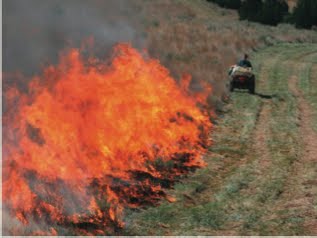
A prescribed burn

ECCD

What is a Prescribed Burn Association?

A Prescribed Burn Association (PBA) brings individuals and equipment together to burn a specific area in an organized manner.  Many PBAs exist in Kansas already with the nearest one located in Russell County.  It was formed in 2008.

A PBA is a 501c3 that falls under the Kansas Prescribed Burn Council; this prevents each PBA across Kansas from having to get their own 501c3.  The PBA can in turn apply for grants; they can obtain equipment from the Kansas Forest Service or equipment from other agencies, like two-way radios.

An important role of a Prescribed Burn Association is that it teaches individuals about fire.  It teaches individuals how to develop a burn plan, where to go for weather information, how to identify hazards during the planning process, how to make a fireguard, how to put down a wet-line, what type of spray rigs are needed and how much water to have on-hand.

Why is it critical to burn pastures? A controlled burn recycles valuable nutrients and works to control eastern red cedar trees and other woody invaders.  Downed trees cut with a clipper, if not burnt up, will normally result in new sprouts within a few years.   Cutting them is only part of the process.  A follow-up burn is needed.

The PBA does not accept any liability for a burn.  The person who is doing the burn must be a member of the PBA and liability falls back on them.   With the added assistance and proper planning the PBA offers however, one reduces the risk substantially.

PBAs have by-laws, elect officers and meet regularly.   The PBA cannot carry out a burn on a non-member.   The strength of the Association is it is always better to burn with many people and plenty of equipment than it is to attempt a burn by one’s self.

Interested parties may contact the Ellis County Conservation District at 2715 Canterbury Drive, Hays KS or 785-628-3081, ext 3.

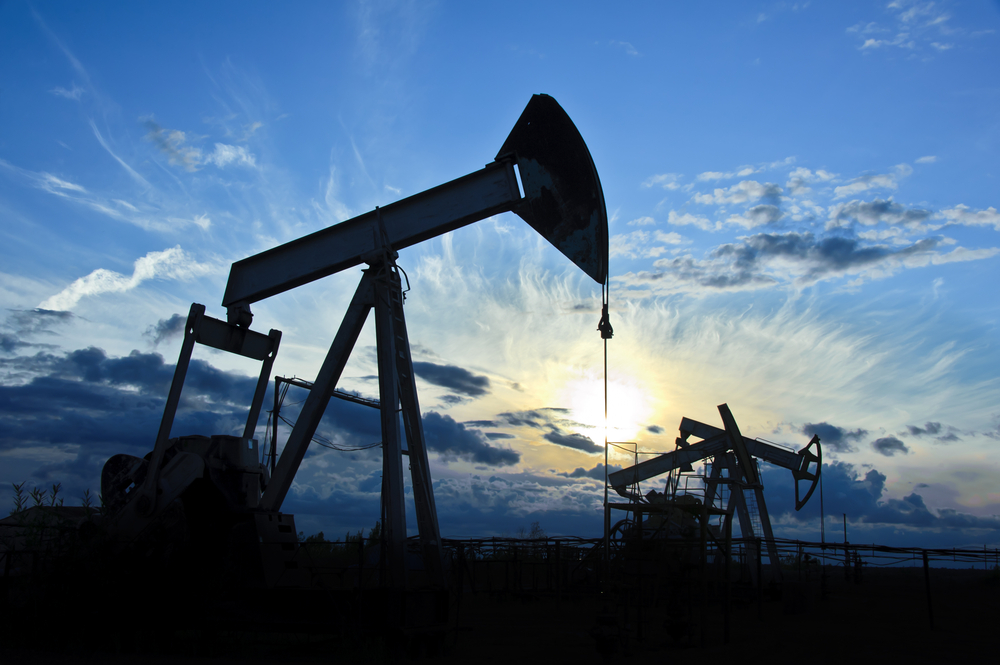
News From the Oil Patch, Jan. 8

By JOHN P. TRETBAR

US oil production reached 9.64 million barrels per day in October, a 46-year record. The highest U.S. production based on monthly government data is above 10 million barrels per day, which dates back to 1970.

The Government data show New Mexico was the number three oil producer in the US in October, more than 16 million barrels, thanks to production in the Permian Basin. Texas led the way with 116 million barrels. North Dakota pumped 36 million. The Energy Information Agency placed Oklahoma fifth on the state production list with more than 15 million barrels. Kansas production came in at number ten with 2.9 million barrels in October.

A research firm says the United States is poised to become the planet’s leading crude producer. Rystad Energy says the US could ramp up crude oil production by 10% in 2018 to about 11 million barrels per day. CNN reported surging shale oil output should allow the United States to dethrone Russia and Saudi Arabia as the planet’s leading crude oil producer. The U.S. hasn’t been the global leader, nor ahead of both Russia and Saudi Arabia, since 1975.

ONEOK recently announced plans for a new 900-mile natural gas liquids pipeline that terminates in our area. The Tulsa-based company says other pipelines from North Dakota are at capacity and production is increasing there. The project is also expected to play a role in reducing natural gas flaring, a recurring problem in the booming North Dakota oil patch. The proposed Elk Creek Pipeline will have the capacity to transport up to 240,000 barrels per day of natural gas liquids from a terminal near Sidney, Mont., to the company’s facilities in Bushton, Kansas.

Opponents of TransCanada’s proposed Keystone pipeline expansion have filed their appeal of a decision by Nebraska regulators to okay an alternate route through the state for the project. Their attorney told Reuters last week that TransCanada’s approval was for a “route not supported by an application.”

Interior Secretary Ryan Zinke announced a proposal to greatly expand offshore drilling in the US. The proposal includes 47 potential lease sales for virtually all acreage on the Outer Continental Shelf, including most of the Atlantic, Pacific, Arctic and Gulf coasts. The government proposes making over 90% of outer-shelf acreage available for exploration, including areas of the Atlantic and Pacific that have not had lease sales since the 1980s.

Oil prices were trading in a narrow range Monday morning, but domestic prices remained at two year highs, approaching $62 per barrel Monday. The market remained in a state of backwardation, with later-term futures contracts cheaper than the near-month contract. By Monday, the spread between the near-month and next-month futures price was about two cents per barrel. On Jan. 4, the spread reached 16 cents, the highest backwardation in more than three years.

Kansas Common at CHS in McPherson starts the week at $51.75 per barrel, after dropping half a dollar on Friday.

The weekly rig counts from Baker Hughes show 924 active rigs, a drop of five oil rigs. (The number of rigs actively drilling for natural gas was unchanged at 182). Independent Oil & Gas Service reported a nearly 20% increase in the statewide rig count last week. There were nine active rigs in eastern Kansas, which is down three, and 28 active rigs west of Wichita, up nine rigs. Operators are moving in completion tools at a pair of leases in Barton County, two sites in Ellis County, one in Russell County and two in Stafford County.

In the first weekly count of the new year, five permits were filed for drilling at new locations across Kansas, three east of Wichita, and two in the western half of the state.

Independent Oil & Gas Service reported 26 new well-completions for the week ending Jan. 4, 12 in eastern Kansas and 14 west of Wichita. There was one completion in Ellis County and there were two in Stafford County.

According to a Shanghai-based news portal, oil-futures trading could start as soon as January 18 on the new Shanghai International Energy Exchange, which will allow Chinese buyers to lock in oil prices and pay in local currency, and allow foreign traders to invest, a first for China’s commodities markets.

A new pipeline link between Russia and China started operations on Jan. 1. According to Chinese news sources, the move doubles the crude shipments between the two countries. Last year for the first time China imported more crude than the US, and Russia has already become China’s biggest supplier. The pipeline extension into China will increase Russia’s exports there by nearly 220 million barrels a year.

Exploring Outdoors Kansas: Hillbilly hunter hacks

Steve Gilliland

One of the buzzwords of late is “hack.” Now hack can mean something very bad, like your computer getting “hacked,” meaning someone has digitally broken into your information and now everyone in the township somehow knows the secret recipe for Aunt Agnes’s famous potato salad and Uncle Oscar’s deer jerky marinade, (even though they were both written on the inside of the kitchen cabinet door.)

“Hack” can also mean a DIY shortcut of some sort, like how to use a roman candle to light the neighbor’s wheat stubble on fire without even leaving your yard. But I digress, so now on to some hunter hacks I found, and some hunter hacks of my own.

More has probably been written about different ways to start a campfire than about any other outdoor subject. First off, no one in the crowd I hang with is gonna’ have need of a campfire except for rare camping trips with the family, then we’ll start our fires with those neat gizmos called matches and lighters. We all have Little Buddy propane heaters in our deer blinds, and none of us have the ambition to climb Mount Everest or do anything where emergency campfires might be needed.

Nevertheless, I found hacks about using corn chips and crayons as fire starters. Sure they work fine, but what self respecting hunter is going to waste good corn chips to start a fire. Eat the chips and light the empty bag, it works just as well. And as far as lighting crayons to start a campfire, once again it works great and they burn for a long time, but no hunter worth their jerky would dream of wasting a perfectly good crayon just to start a fire. They should be kept for things of greater importance like scribbling messages and phone numbers on the wall of your deer blind or for labeling packages of meat in the freezer so you can tell this year’s venison back strap from the muskrat meat kept for next year’s coyote bait.

Another interesting campfire starting hack I found involves dryer lint; it seems dryer lint burns very well and starts very easily. It can be stuffed into empty toilet paper tubes or merely carried in a Ziploc bag and used right from there. Now we’re talkin’, something we all can relate to. I mean who doesn’t save all their dryer lint and empty toilet paper tubes? Instead of emptying them into the recycle container and trash every couple years, make fire starters from them! But in all my trolling of the almighty internet I did not find one reference to the most trustworthy tried-and-true method of starting a campfire ever, even used by our Native American forefathers. From anywhere in Kansas you would have to travel forever to deer hunt where there are no cattle nearby, SO LIGHT A DRY COW TURD.

The next most talked about topic in the outdoors, especially relating to survival, is how to build a shelter. Let me offer a hillbilly hack for building a shelter. All hillbilly outdoorsmen worth their pork rinds will have a serious collection of tarps, and what a better use for a tarp than an emergency shelter. Harbor Freight has them in all sizes and you can occasionally get a small one “free with any purchase,” so there’s absolutely no excuse for not having one to carry with you on all outdoor excursions. A word of caution here; it’s not in your best interest to remove the tarp covering the hole in your trailer house roof. Anyway, there are a variety of ways to deploy your tarp/shelter. If you’re fishing, I’m sure you’ll have dynamite with you, so merely drop a stick into a small hole you dig in the ground, light her up and you’ll soon have a nice cave that you can crawl into and cover with your tarp.

No friend of mine would be caught dead on a hunting or fishing trip without a menagerie of plastic five gallon buckets, and the uses for them as hillbilly hunter hacks are endless. You can buy kits to turn one into a “luggable loo,” and even cut a notch lengthways in a pool noodle and snap it around the top for a soft seat while you heed nature’s call. Spray paint a few more green, drill a small hole at the bottom and put them at the base of each “illegal pharmaceutical” plant you “just happened to find growing” along the river as a way to water those beauties. Five gallon buckets make great hillbilly mouse traps too, for the deer blind or even the living room. On each side of the bucket near the top, drill a hole big enough for a broom handle to slide through and fit loosely enough to spin.

Fill the bucket with water or used motor oil (which I’m sure you will have by the barrel-full,) put a glob of peanut butter in the middle of the broom handle and viola; when a mouse walks the broom handle to get the peanut butter, it will spin and dump the little blighter into the slurry below. If you keep the TV volume low enough you can hear the splash and reward the cat with a live mouse.

I’m certain the list of hillbilly hacks, whether for hunting or not is endless, and I’ve probably just scratched the surface here. Maybe a book is in order, “Hillbilly Hunter Hacks for the Deer Blind, Boat and Living Room.” For all my loyal readers who want one, let me know and I’ll reserve you a signed copy. Continue to Explore Kansas Outdoors!

Steve Gilliland, Inman, can be contacted by email at [email protected].

MADORIN: Lucky hunters

Native Kansan Karen Madorin is a local writer and retired teacher who loves sharing stories about places, people, critters, plants, food, and history of the High Plains.

After every rifle season, lucky hunters celebrate their success stories, recounting details of the hunt to their friends and anyone else who will listen. Over the years, I’ve heard many a tale about one little turn of good fortune that transformed the ordinary hunt into the extraordinary hunt. One story I never heard ought to be told because that hunter is luckier than he or she knows.

Over the years, I’ve heard about three such fortunate individuals, yet, I suspect, they aren’t aware how fate protected them from permanently injuring others or worse. The first tale involved neighbors who lived west of us. The wife came home around dusk the first Wednesday of rifle deer season to discover a high-powered rifle bullet had shattered the family room bay window.

This happened to be the room where her grandchild played and napped when visiting Grandma. The bullet-shattered glass shards exploded through the room so thoroughly the insurance company replaced furniture, carpeting, and window dressings since splinters couldn’t be totally removed. Thinking about what could have happened had any human, let alone a small child, been in that room sickens me.

The second story involved a friend who stored his bass boat in his mother’s barn. Come warm weather, he prepared his boat for the upcoming fishing season when he discovered a problem with the engine. It wouldn’t run because a high-powered rifle slug was lodged in it. After doing a little detective work, he, too, discovered an errant bullet had whistled through the barn wall, through the boat hull, and into the engine. Once again, a lucky hunter avoided injuring a human, though he or she wreaked havoc on my friend’s fishing season.

Historically, bad luck comes in threes. Perhaps good luck does also. The third story involved several pieces of good fortune stitched together. Just a few weeks ago, another neighbor traveled much of December and early January. Upon his return, he invited my husband to his barn to show him a bullet hole that hadn’t been there when our neighbor left in December.

On a mission to discover how a bullet hole exited a locked barn, the two began searching. What they found made them realize another rifle hunter narrowly avoided tragedy. This individual fired a rifle, apparently coming over a nearby hill. We assume he or she aimed at a deer in an alfalfa field and missed. The lead pierced the barn wall, passed through a wooden plank propped against it, struck the corner of a wheat drill that split the still moving projectile, sending both fragments through the front door toward gas tanks in front of the barn. Our friend frequently parks his pickup in that location, so it was fortunate he was traveling when the incident occurred.

This is not an essay against hunting. Hunting is a wonderful way to enjoy nature, learn more about our place in it, and fill the freezer. This is an essay that celebrates some hunters’ good fortune in that they did not kill or injure another human when they failed to follow the most basic tenet of hunter’s safety.

KNOW WHERE YOUR BULLET IS GOING BEFORE YOU PULL THE TRIGGER.
High-powered rifles make it possible to shoot a bullet an average of 3500 feet per second. Those using them have a responsibility know where that bullet will end up if it misses the target.

Somewhere, someone is bemoaning a lost deer. Instead, that hunter needs to celebrate not ending up a statistic in the back of the hunter education manual.

Native Kansan Karen Madorin is a local writer and retired teacher who loves sharing stories about places, people, critters, plants, food, and history of the High Plains.

Extension program on freezer meals from the meat case

It’s easy to feel overwhelmed by the number of choices offered in the grocer’s meat case with all the different cuts, marketing claims, packaging types, weights, and prices.

The Cottonwood Extension District will host “Freezer Meals From the Meat Case” on Monday, January 22, 6:30-8:00 pm at Messiah Lutheran Church, 2000 Main in Hays.

Join this Extension workshop to learn what the meat labels, cuts and claims mean and to feel confident that you are choosing the safest and most economical meat choices for your family. Instructors will be Jamie Rathbun and Erin Petersilie, area Extension FCS agents.

After the presentation, participants will prepare 2 main dish freezer meals featuring different types of meat.  Each meal will serve 4-6 servings and may be cooked in the oven, slow cooker or pressure cooker.

The cost for this workshop is $15 per person and includes a light supper, all training materials, freezer meal ingredients, recipes and instructions.  Thanks to Ellis County Farm Bureau for their co-sponsorship of this workshop.

Please register and pay fee no later than Friday, January 19 at the Cottonwood Extension District- Hays Office, 601 Main in Hays, 785-628-9430.  There is a minimum and maximum enrollment allowed for this class, so early registration is advised;  your registration is considered complete when the fee is paid. Contact Linda Beech, Extension FCS Agent, for questions or more information.

INSIGHT KANSAS: Rural Republicans will select GOP nominee for governor

Welcome to Kansas election year 2018. An early look into the crystal ball of Kansas politics reveals that rural Republican voters will determine their party’s nominee for governor.

Rural votes tend to swing competitive gubernatorial primaries even though nearly half of all registered Republicans live in the five large urban counties—Douglas, Johnson, Sedgwick, Shawnee, and Wyandotte. Urban votes will be splintered among the seven creditable Republicans who have announced their intentions to run for governor. This voting pattern will likely repeat this year given that each of these seven candidates resides in one of the urban counties.

H. Edward Flentje is professor emeritus at Wichita State University.

So, who among these urban candidates will sway rural Republicans in their direction?

Four Republicans—Lt. Governor Jeff Coyler, Secretary of State Kris Kobach, Insurance Commissioner Ken Selzer, and 2006 gubernatorial nominee Jim Barnett—have experience in statewide contests and represent top-tier prospects.

Colyer has spent his professional career as a Johnson County physician but can lay claim to a rural upbringing in western Ellis County. He was elected twice to legislative seats in Johnson County before joining Brownback on the statewide ticket in 2010. In general elections, based largely on Brownback’s rural credentials, rural voters gave the Brownback/Colyer ticket an overwhelming margin in 2010 and a decisive but narrower victory in 2014. However, during his seven years in office Colyer has shown little independent connection with rural residents and will struggle to distinguish himself from the toxic Brownback brand.

Kobach chose Donald Trump, Jr., to headline his first major fundraiser and presumes to be President Trump’s anointed choice for governor. While Kobach hopes to capture Trump’s huge rural vote margin of 2016, his alliance with Trump has risks in rural Kansas. The President’s positions on immigration and trade are raising alarm among agricultural groups and businesses reliant on immigrant labor in beef, pork, and dairy operations. Further, the President’s threat to withdraw from the North American Free Trade Agreement also places agricultural exports with top trading partners, Mexico and Canada, in jeopardy. Kobach leads the field in name recognition but also disapproval and has yet to show how he will maneuver through the chaos of Trump politics.

Barnett won a competitive, seven-candidate gubernatorial primary in 2006 but was defeated by incumbent Governor Sebelius in the general election. His vote margin in that primary was bolstered by strength in rural counties, winning most large rural counties and nearly half of the smaller rural counties. In contrast to his strident conservatism of 2006, as well as the stance of his competitors this year, Barnett has applauded the repeal of Brownback’s tax experiment and become a full-throated advocate of public school funding and Medicaid expansion. His campaign will test whether rural Republican voters, who dumped seven incumbent legislative allies of Brownback in the 2016 primary, will embrace a more centrist agenda.

Selzer prevailed in a competitive, five-candidate primary in his first and only race for state office in 2014. He won soundly in his home county of Johnson over two other Johnson County candidates, narrowly succeeded in Sedgwick County, and picked up wins in a scattering of western Kansas counties. Selzer has largely avoided hot-button issues or extreme positions, focusing his campaign instead on his professional background as a CPA, business experience, and family roots in central Kansas. He trails considerably in name recognition but has the potential to attract rural primary voters.

Three Wichitans—businessmen Mark Hutton and Wink Hartman plus nonprofit executive Ed O’Malley—complete the seven-candidate field. Each will claim a share of the urban vote but faces a tall order in persuading rural Republicans to join them.

My crystal ball shows: Kobach will fade; Colyer and Barnett will be forced to debate the Brownback legacy—Colyer defending, Barnett challenging; and Selzer may be a dark horse in the field.

H. Edward Flentje is professor emeritus at Wichita State University and formerly served with Kansas Governors Bennett and Hayden.

Copyright Eagle Radio | FCC Public Files | EEO Public File