We have a brand new updated website! Click here to check it out!

SELZER: Share with care

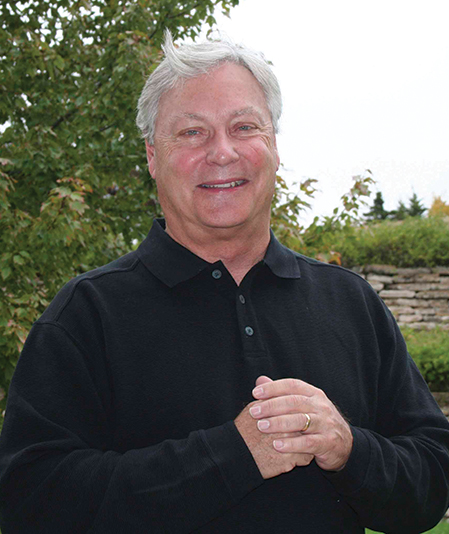
Ken Selzer, Kansas Insurance Commissioner

The sharing economy is rapidly gaining popularity. Within the next eight years projections show that sharing rides, homes and equipment will be a $335 billion global industry.

But before you jump in on peer-to-peer transactions, understand how they work and how to avoid financial pitfalls.

Knowing the insurance considerations involved in sharing economy transactions is especially important as these business and personal ventures move forward. Sorting out the main points now can save you possible frustration later.

The following tips may help consumers and entrepreneurs in their sharing activities.

Don’t be taken for a ride.
Ridesharing companies such as Uber and Lyft connect individual drivers with people who need rides. Passengers and drivers can screen each other, schedule rides and collect payment electronically.

Consider these tips to stay safe on the roads while using a ridesharing service:

  • Before contracting as an Uber or Lyft driver, know if your personal auto insurance policy typically excludes coverage for business use or when drivers are “available for hire.”
  • Several insurers offer products to fill coverage gaps for ride-share drivers. Premiums, type of coverage, limits and availability vary by state. Ask your insurance agent to find out what is and is not covered.
  • Before accepting a shared ride, know the extent that you are protected in the event of an accident. Most ridesharing companies have liability policies to cover any passenger injuries. If you are injured while riding, report a claim with the driver’s insurer and the ride-sharing company’s insurer.

Home is where the “smart” is.
Home-sharing or peer-to-peer rentals offer people the opportunity to rent out rooms or entire homes to guests for extra income. Guests find a property online and pay for the stay like a hotel. The difference is that the property is often a privately-owned apartment, condo or house, and anyone can register as a host or guest.

The following facts will improve your home-sharing smarts:

  • If you regularly rent out rooms for a profit, that venture could be considered a home-based business. Because some homeowners policies won’t cover property damage caused by or injuries to a paying guest, talk to the home-sharing service and your own insurance agent to determine if additional liability coverage or special landlord insurance is needed.
  • If you plan to stay in accommodations secured through a service such as Airbnb or VRBO, confirm that your own homeowners, renters or personal liability insurance policies offer protection for potential damages to the rental property. If not, make adjustments as needed.
  • Home-sharing user agreements change often. Read the fine print every time you book a stay.

Personally speaking….
A smaller segment of the sharing economy involves the lending of personal items for a fee. Lenders and borrows advertise and rent items like power tools, golf clubs or designer dresses online. This also occurs when someone seeks help online from another individual to help with tasks like packing boxes or housecleaning.

Check out the following tips to help protect yourself and your items:

  • When lending goods such as a designer dress or bicycle, get a security deposit to help cover any losses. Capture photos and other information in your own home inventory.
  • You could be liable for renting out items that you know don’t work properly. Your homeowners policy may not cover the transaction because you were paid in exchange for the rented goods.
  • If you hire a stranger to help with home cleaning, moving or other tasks through sites such as TaskRabbit, find out the insurance coverage. The service may offer a guarantee, but often it is secondary to any insurance or policies you may already have in place.

Life can be more connected when working within the sharing economy, but you need to prepare yourself first so you are not surprised later.

Ken Selzer, CPA, is the Kansas Commissioner of Insurance. 

INSIGHT KANSAS: Which way, Kansas?

Kansas has come to a “T” in the road and must decide whether to turn one way or the other. A more apt way to say it: Kansas has come to a “T” in the road, overshot the intersection, gone down in the ditch on the other side, and must struggle up out of the ditch and go one way or the other.

It’s a ditch of serious financial trouble. Kansas simply does not have enough revenue to pay bills. For more than 3 years running, expenses have outpaced tax revenue by hundreds of millions a year. How has Kansas survived financially? By blowing through every dollar held in reserve, borrowing, and moving money from kids’ programs and the highway fund. The state only escaped the last fiscal year by leaving approximately $175 million in bills unpaid, promising to make payment sometime in the future.

Duane Goossen
Duane Goossen

Kansas cannot do that anymore. All those use-up-the-savings, pay-later maneuvers made the state poorer and poorer, garnered yet another credit downgrade, and took us into the ditch. We are left with a stark directional choice: impose more spending cuts, or raise revenue. Deciding how to respond constitutes the most critical job lawmakers will have when they arrive at the 2017 legislative session in January.

Many current lawmakers acknowledge the financial ditch, but say it’s a spending problem. “Clearly we’re here because we haven’t cut expenses enough,” Senate President Wagle said in June.

Certainly there have been cuts—to road projects, universities, hospitals, classrooms—just not “enough.” Yet supporters of the cut-more direction often speak abstractly, rarely specifying what “more” means. In July, Gov. Brownback signaled his willingness to make even deeper budget cuts, but would not name them, saying he wants the Legislature to lead the way.

In theory at least, cuts could go a lot deeper. Cut school funding in half! Withdraw all state support from universities! Put fewer highway patrol officers on the road! Dramatic, service-ending cuts can resolve the financial imbalance, and may be what some lawmakers have intended all along. Easy reductions were implemented long ago. Even a $3 million “efficiency study” commissioned by the Legislature yielded little to alter the current dynamic.

The other route open to Kansas adds revenue back. The 2012 income tax cuts—lowered rates and “business income” exemption—caused a huge swath of receipts to disappear. Income tax collections dropped $700 million the first year and cumulatively the revenue loss now exceeds $2 billion.

Lawmakers did raise sales and cigarette tax rates in 2015 to compensate, but the new revenue only dented the amount needed to make up the income tax revenue loss. So far, lawmakers have not been willing to revisit the income tax cuts that caused the state’s financial problems in the first place.

The business income exemption has elicited the most criticism. It’s unfair. People who receive paychecks, pay taxes. People who receive self-employment income, rental income, LLC income, or farm income, don’t pay. No other state sets up its tax system in such manner, so rescinding the exemption seems an obvious first step to financial health for Kansas, although that alone will not fix everything.

Which way? That’s the question at the heart of this year’s election cycle. A choice between deeper cuts to services or raising revenue has become unavoidable. Primary election voters expressed dissatisfaction with the current state of affairs by voting out many incumbent legislators. General election voters may well choose to fire some more. Election outcomes cannot remove the unpleasant choice ahead, but what happens in November will determine the path that Kansas takes.

Duane Goossen formerly served 12 years as Kansas Budget Director.

Now That’s Rural: Jerry Blackstone

Ron Wilson
Ron Wilson
By RON WILSON
Huck Boyd National Institute for Rural Development

It’s time for the GRAMMY Awards in Los Angeles. And the winner is….Jerry Blackstone, a renowned musician and choir director who comes from rural Kansas.

Jerry Blackstone is a two-time GRAMMY award winner and internationally known conductor. His roots are found in rural Kansas.

Jerry grew up on the family farm in the northern part of Jewell County. His family consisted of farmers, not musicians, although his grandfather played the harmonica and his dad would sing for fun while riding the tractor. Jerry’s mother liked to play piano and sing also. His parents always encouraged and supported his interests.

Jerry grew up going to a one-room country school. His first teacher was a young woman named Miss Lippe. After he completed first grade, Miss Lippe told his parents, “He is a bright little boy and I’m afraid he’s going to get bored. Why don’t you get him piano lessons?” They did so and Jerry loved it. He grew up playing and singing in church.

Jerry’s sisters enjoyed music as well. Sister Marilyn now lives in Iowa and sister Ruth lives at Manhattan.

After four years in the one-room school, Jerry went to the school in town, but it was still quite rural in nature. The town was the nearby rural community of Burr Oak, population 249 people. Now, that’s rural.

By the time Jerry was a sophomore in high school, he knew he wanted to pursue music as a career. He took music lessons at K-State while still a high school student. “Those teachers broadened my perspective and encouraged me, `You can do this,’” Jerry said.

After high school graduation, Jerry went to Wheaton College in Illinois to begin a long and distinguished academic career in music. At Wheaton, he studied piano performance and met his wife. He went on to get a master’s in choral performance at Indiana University. “I had some wonderful music teachers through the years,” Jerry said.

Jerry’s first teaching position was at what is now Huntington University in Indiana. The head of the education department there was named Emmet Lippe. One day Jerry said, “My first teacher was named Miss Lippe.” When he explained, Emmet replied, “That was my sister.” What a remarkable connection through the years.

Jerry went on to get a doctorate in choral conducting at the University of Southern California. He worked at Westmont College in California and Phillips University in Oklahoma.

In 1988, he joined the music faculty at the University of Michigan. He has risen through the ranks to become the university’s director of choral activities and professor and chair of conducting. He is responsible for 11 choirs at the university and still conducts the chamber choir. He was a long-time conductor of the men’s glee club as well as the 180-member university-community choir named Choral Union.

Jerry Blackstone has served as chorusmaster on several internationally-acclaimed music projects. One of those, a recording of William Bolcom’s Songs of Innocence and of Experience, earned him two GRAMMYs for best choral performance and best classical album in 2006. Another project earned him a nomination for best opera recording in 2015.

Dr. Jerry Blackstone is a highly sought-after guest conductor and workshop leader. He has fulfilled that role in 30 states plus New Zealand, Australia, Hong Kong, and Shanghai. He has received a lifetime achievement award from the Michigan chapter of the American Choral Directors Association. Through the years, he has touched the lives of thousands of musicians and their audiences.

“It’s a privilege to work with people to create a community and make music come alive,” Jerry said. “These choirs become more than people on stage, they become a family.”

What is his advice to aspiring musicians? “Play your best, sing your best,” Jerry said. “If you love it, go out and play and sing at church and school. Put yourself in positions to be challenged.”

It’s time to leave Los Angeles, where chorusmaster Jerry Blackstone has earned two GRAMMY awards. We commend him for making a difference by sharing his musical talents and leading others in their musical careers.

Miss Lippe would be proud.

MORAN: Addressing Poverty in Rural America

Sern. Jerry MoranBy U.S. Sen. Jerry Moran, R-Kan.

One of the key tenets of the American Dream is the promise that if you work hard, you can get ahead. This dream doesn’t discriminate – regardless of the circumstances you’re born into, hard work will lead you to success. Generations of Americans have lived, worked and raised families believing in that idea.

Despite honest living and persistence, millions in our country still struggle to get ahead financially. This is especially true in rural communities where the challenges of poverty differ significantly from urban areas. When access to higher education, health care, affordable housing, social and financial services, and job opportunities is limited, the path toward upward mobility is challenging.

As someone who grew up in small-town Kansas, the issue of rural poverty hits close to home. While representing Kansans in Congress, I have made it a priority to highlight this often overlooked struggle and have proposed policy solutions to help drive Americans, both urban and rural, up the economic ladder. For example, I’m working to make certain all Kansans can access high-speed internet and get care from their local Critical Access Hospital, as well as ensure our veterans receive the benefits they’ve earned in a timely fashion.

Many rural, low-income families lack both affordable housing and access to credit: two major factors in determining one’s mobility. And unfortunately, as the cost of compliance with new government rules and regulations grows, community banks and local lenders are increasingly being squeezed out of their local economies. As a member of the Senate Banking Committee, I’ve proposed legislative solutions to relieve this burden, but it is clear solving this issue will require a series of policy and regulatory changes coupled with broader economic growth.

In Kansas, much of that economic growth depends on the health of the agriculture industry – a major pillar of our economy – which determines the financial well-being of nearly 250,000 Kansans. As the chairman of the Senate Agriculture Appropriations Subcommittee, I’m tasked with drafting annual legislation to prioritize funding for the Department of Agriculture and the Food and Drug Administration – agencies whose work impacts growth and mobility in rural America. My bill (S. 2956) includes critical improvements to rural infrastructure such as water and waste systems and upgrades to electric and telephone services. It also strengthens the farm safety net to keep family farms viable in tough economic conditions, which in turn helps keep Main Street businesses that rely on agriculture afloat. These policies improve the economic viability of small town America.

Rural economic interests, while often overlooked, must be represented in all policy debates on Capitol Hill – agricultural or otherwise. With that in mind, I cofounded the bipartisan Senate Economic Mobility Caucus in 2012 to bring together policymakers to examine mobility challenges and develop ways to overcome them. Since the caucus’ inception, we have conceived numerous bipartisan policies, including some that are now law. Most recently, the caucus hosted an event to convene experts from various backgrounds focused specifically on economic mobility through a rural lens. To see such strong interest in the topic was encouraging and I will continue to stress the importance of rural-specific considerations during policy debates.

While each of these steps represents progress, much work remains to enable all Americans to become economically mobile and financially secure. I will continue to do all I can during my time in the United States Senate to help restore the confidence that every man, woman and child has a real opportunity to achieve their own American Dream.

SCHLAGECK: The world is my oyster

John Schlageck writes for the Kansas Farm Bureau.

Self-absorbed. It’s all about me. I am the center of the universe.

All of these words come to mind when today’s endless stream of motorists talk, tweet and Face-book while speeding down the boulevard. This recent phenomenon has become epidemic and it’s spreading.

Harsh words?

Certainly, but there are also harsh consequences in lives lost, maimed and injured permanently in traffic accidents caused by those who place their own need to continually talk or text on the phone before focusing on the task at hand – driving safely and consciously.

In 2014, 3,179 people were killed and an estimated 431,000 more were injured in motor vehicle crashes involving distracted drivers, according to the National Highway Traffic Safety Association. Ten percent of all drivers 15-19 years of age involved in fatal crashes were reported as distracted at the time of the crashes.

At any given moment across America, approximately 660,000 drivers use cell phones or manipulate electronic devices while driving. Those who aren’t calling or texting are distracted while driving by something else in one or both of their mitts. You know a mascara brush, a hamburger, a liter of water or a tablet while they steer with their knees.

Recent research at Virginia Tech revealed an almost 3-fold increase in the odds of crashing or nearly crashing when dialing a hand-held phone while driving. Risk associated with text messaging may be much higher based on a new study of truck drivers. The main finding here was a 23-fold increase in the odds of crashing, nearly crashing or drifting from a travel lane among truckers who texted while driving.

This list continues.

Whatever happened to the conscientious and courteous driver of yesteryear?

How many motorists today continually scan the road and sidewalks in front of them for kids biking or walking down the sidewalk? How about a watchful eye for the elderly couple out for an early morning stroll? Or someone else walking his or her dog?

Such conduct while driving today has become the exception rather than the rule. Did I mention before that driving today is all about me getting where I need to go?

What we need on our streets and highways today are motorists with the intelligence to understand that driving a car, pickup, motorcycle, bus, van, SUV or anything you crawl behind the wheel and drive requires your undivided attention.

With the ever-growing number of people on roads today, driving must be tuned in to the business of driving. This means no phone calls, no meals, no makeup. Just drive.

There’s seldom a phone in my car. When I carry one, I never call or answer it when I’m behind the wheel. I conduct calls when I leave the car after I arrive alive.

I have no desire to talk on the phone while I drive. If I had my druthers, I wouldn’t carry a phone in my vehicle. My car functions the way it was intended without one. Anyway, I prefer to be ever vigilant looking out for all those motorists who are doing everything else in their cars but driving.

Used to be one of the last bastions of individual freedom was cruising in your car with the windows down, the radio playing your favorite song and the wind whistling through your hair. Every so often, you’d raise your index finger to signal, “Hey” to an upcoming motorist who’d reply in kind.

Doesn’t happen much today. More than likely the only finger you’ll see in 2016 is the middle one and it ain’t raised to say hello.

Still I can dream, but not behind the wheel – that’s where I drive.

John Schlageck, a Hoxie native, is a leading commentator on agriculture and rural Kansas.

Exploring Kansas Outdoors: Getting to know Gladys

BullCityBlack500x125 (1)

I stepped out the front door one morning earlier this spring just in time to see a large falcon-shaped bird glide low overhead. It landed in a tree a block away, so I hustled to get my binoculars and our Kansas bird book.

The bird sat contentedly, almost posing for me as if making certain I correctly identified it. It was a Mississippi Kite, and although my bird book doesn’t show or give details to differentiate between males and females, we figured it to be a female in town to nest.

We affectionately named her Gladys, for reasons I’ll explain later.

Steve Gilliland
Steve Gilliland

Mississippi Kites are light gray and slightly smaller than a red tail hawk, and are built trim and sleek, much like a falcon. They derive their name from their unique soaring style called “kiting.”

Picture how a child’s kite rides the wind, gliding and sliding sideways back and forth. That’s how Mississippi Kites soar, sliding and almost rocking back and forth from side to side as they float effortlessly on the summer Kansas thermals. They are summer residents here, arriving in mid-April and leaving again in mid-November.

They are slowly expanding their territory northward and are quite comfortable nesting in our Kansas cities and towns. We have asked around and even tried to follow Gladys to find if and where she’s nesting, with no luck. Nesting females are known to become very aggressive when their chicks are about to leave the nest, often dive-bombing humans and pets that get too close to the nest to suit them. We’ve not heard about any of that around town, so Gladys must just be a frequent visitor.

Mississippi Kites are very social birds and are often seen in large groups. One day this week in downtown McPherson as I waited in the car for my wife to return from an errand, I began seeing Kites soaring above me. One or two at a time they appeared until I lost count at 15.

My wife Joyce grew up on a farm south of Meade, KS, and after we got married I began hearing stories about a man named James Parker who had come to their farm for years to watch and study a Mississippi Kite named Gladys that had nested there forever. A friend still living in Meade did some research and found more details to the story.

According to newspaper clippings it was mid-June 1982 when Dr James Parker from the University of Maine first visited the Friesen farm near Meade. He was indeed there to observe Mississippi Kites, but he brought with him some visitors. Stan and Gladys were Swallow Tailed Kite chicks rescued from a nest in the Florida swamps. Swallow Tailed Kites, although larger with a huge ornate tail, are close cousins to Mississippi Kites and until the early 1900’s were common in the eastern Kansas skies.

They hadn’t been seen in the state for decades and Dr Parker was there to explore the possibility of reintroducing Swallow Tailed Kites into Kansas by transplanting chicks into existing Mississippi Kite nests. Stan and Gladys were put into active nests and Parker stayed around to observe. After two or three weeks Stan grew weak, lost weight and died, but Gladys was accepted by her foster-parents and seemed to thrive. Although the time line is unclear, Parker spent parts of 14 summers in Meade studying the local Mississippi Kite population.

No one seems certain whether any more Swallow Tailed Kites were transplanted into Kansas. They’re not listed in my Kansas bird book so I suspect there are none in the state today. No one knows what happened to Gladys either. It must have been like a child’s story book story though, especially for the Mississippi Kite foster parents that raised her, as the chick they thought was their own grew up to become much bigger than them with a huge ornate tail. Sorry you couldn’t have seen her Stan!…Continue to Explore Kansas Outdoors.

Steve Gilliland, Inman, can be contacted by email at [email protected].

BullCityBlack500x125 (1)

HAWVER: Kan. general election is where real changes happens

martin hawver line artIt’s probably a little early yet for most Kansans who watched the Kansas House and Senate primary elections to prepare for a dramatic change in culture brewing for the upcoming legislative session.

Yes, there were maybe a dozen House and Senate Republican primaries in which very conservative members were bumped in the primaries by more moderate Republicans. And Democrats, politically correctly, pointed out that some of their most persistent foes are now off the legislative payroll. Relatively good news for them, of course.

But the general election is where the real change happens, and when the long division takes place that determines whether there are going to be the massive tax increases needed to finance the level of state operations that most Kansans want…the more money for schools, for highways, for subsistence and health care for the poor and their children and their grandparents.

Look at the numbers now: In the Senate, there are 32 Republicans and 8 Democrats, in the House the numbers are 97 Republicans and 28 Democrats. But that’s just the view from 30,000 feet in the air.

When it comes down to tough votes on bills that are clear moderate-conservative fights, like tax bills for example, consider that the Senate’s 32-8 becomes about 28-12 as moderate Republicans join Democrats on the rollcall.

In the House, the breakout is probably about 68 or 69 conservatives to maybe 57 or 58 depending on the day and the issues. That’s where the general election may just tip the scales most dramatically—and that is where the leadership of the House and Senate become crucial.

In the Senate, it looks like Sen. Susan Wagle, R-Wichita, will retain her powerful post as president, who can juggle and jiggle the presentation and eventually the content of bills that might, for example, raise income taxes. She’s more moderate than Gov. Sam Brownback, of course, and is probably looking at and will be encouraging a progressive tax rate that will cost the rich more…and maybe in a tradeoff, keep tax rates for the poor relatively stable. It’s a tradeoff made behind closed doors in Republican caucuses there.

In the House, where Speaker Ray Merrick, R-Stilwell, has retired and his office is up for grabs, there may be a more moderate leadership, which in turn will allow more progressive tax policy. Maybe…because even the more moderate Republicans who ousted some of the chamber’s most conservative members in the primary election are so far just talking “tax equity” or such, not using the phrase “tax increase” in their campaigns so far.

Now, of course, there is the low-hanging fruit of those 330,000 or so Kansans who aren’t paying any income taxes, the so-called LLC exemption, that Brownback touted, saw wildly inflated by lawmakers four years ago, and by his signing that bill, became the advocate for the tax break.

Wonder whether he’s going to back off that plan which he still believes is a selling point for state economic prosperity? If so, we have an AM radio we’d like to sell you…

Oh, and without some tax increases, there just isn’t going to be significant money for schools, health, highways, just about everything that we look to the state to finance for us. …and let’s not forget that while many Kansans will gladly get rid of those tax exemptions, low rates for the wealthy and such…it gets a little politically icky to do so retroactively. Say, sometime in April of 2017, lawmakers pass a bill to raise tax rates effective back on New Year’s Day.

Just how quickly there is a major change in social and tax policy? Might be best to start the calculations…after the general election.

Syndicated by Hawver News Company LLC of Topeka; Martin Hawver is publisher of Hawver’s Capitol Report—to learn more about this nonpartisan statewide political news service, visit the website at www.hawvernews.com.

MAZUR: Just a fraction of candidates in Kan. general election are women

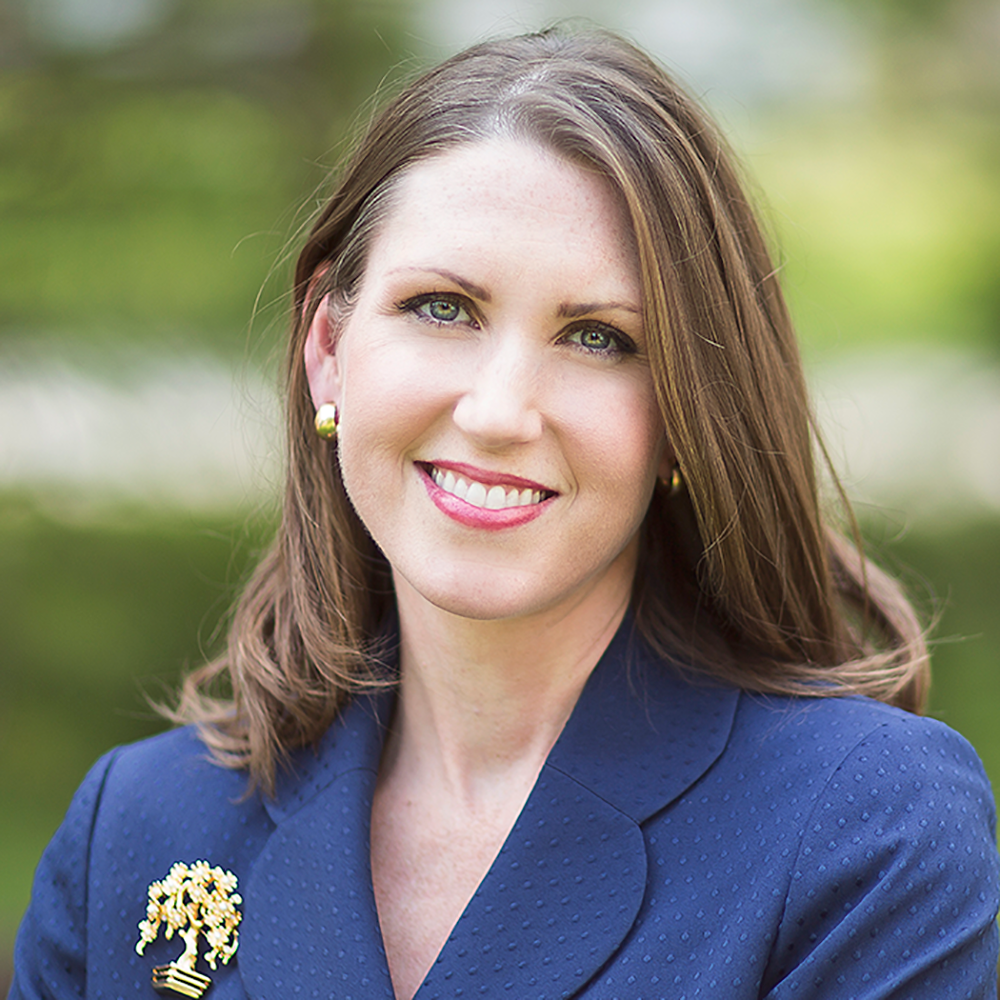
Mindy Mazur
Mindy Mazur

By MINDY MAZUR
Women’s Foundation

Kansas City, MO — Women’s Foundation conducted an analysis on the state of women candidates for state and federal legislative races in Kansas following Tuesday’s primary election in Kansas. Women’s Foundation reviewed the unofficial election results from the Office of Kansas Secretary of State, looking at the primary election winners who will be on the ballot in November. Our findings include the following:

  • In November’s general election, of the Kansas federal and state candidates on the ballot combined, 31% of candidates are women.
  • To break these numbers down further, no women will be on the ballot for the office of U.S. Senate.
    Two of seven candidates (29%) for U.S. Representative seats are women.*
  • Twenty-four (24) of the 78 candidates (31%) running for state senate seats this cycle are women; three of whom are incumbents.
  • Sixty-five (65) of the 202 candidates (32%) who will be on the ballot competing for a state representative seat are women.

female candidates

Women’s Foundation promotes equity and opportunity for women of all ages, using research, philanthropy, and policy solutions to make meaningful change. In 2016, they released the Status of Women in Kansas research study, the findings of which included that women are vastly underrepresented in the Kansas legislature. In 2014, their Civic Engagement research highlighted the gender gap on boards and commissions and helped spur the Women’s Foundation Appointments Project to help remove barriers for women to serve.

More information about the organization can be found at www.Womens-Foundation.org.

A copy of this statement can be found here.

*(One independent candidate for US Representative filing by petition (still to be certified) is a woman.)

Women’s Foundation is a 501(c)(3) organization and does not participate in electoral activity.

LETTER: Questioning grant to downtown organization

opinion letterThe Dane G. Hansen Organization has always been generous to Northwest Kansas. Their grants have helped many worthy institutions and charitable organizations. Grants to our learning institutions to fund new/old campus facilities along with grants to students to help them pay their tuitions. These students grants are needed more than ever as Fort Hays State University and others continue to increase their tuitions… 6.5% this year alone!

The Hansen Org. decided on July 29, 2016 to grant the Downtown Hays Development Corp. $100,000 to build a pavilion/restroom next to train tracks under a decaying 159 ft. grain storage silo in an isolated area on 10th St.. According to DHDC’s director Bloom, “concerts and parties will be held in the open air pavilion all year round and renting of the pavilion will be available to anyone interested”. DHDC and FHSU believe this will increase our community connection with FHSU. I disagree. I can only hope that Union Pacific stands by their earlier 2014 decision that stated the “a pavilion would be unsafe to residents and students”.

Tell FHSU’s hierarchy to advise the Dane G. Hansen Org. that this $100,000 would be better used and safer for all if it was used for student tuition grants. I did, and I personally received a response saying “that I should trust in our local elected political officials”. I do not hold a degree, but after 72 years I think I know better!

John Basso, Hays resident

INSIGHT KANSAS: Primary shows discontent with conservative direction

Wednesday brought news of an historic shift in Kansas politics. Kansans’ discontent with the direction conservative politics and government has taken their state transformed dismissible public opinion polling into indisputable vote tabulations as the polls closed Tuesday. The primary provided many surprising results. Here are the main takeaways.

Dr. Mark Peterson
Dr. Mark Peterson

First, the big headline is the defeat of Representative Tim Huelskamp in the Kansas 1st Congressional district. Dr. Roger Marshall is no great departure from core conservative values and ideology, but he apparently has two traits that the soon-to-be former Congressman Huelskamp lacks. One is the apparent willingness to accept that politics requires the recognition and at least non-hostile acceptance of different points of view. The second trait is an awareness that spending all your time rudely yelling, “NO,” doesn’t make enough friends to get your way.

Second, voter turnout proved to be strong. It is an article of faith in the field of political science — primary elections only bring participation from the most active and committed members of the political parties. The unaffiliated and the unmotivated either cannot or do not participate in the primary process. The Secretary of State predicted a 24% turn out for yesterday’s election – a proportion that has not been equaled in over a decade. Considering just the Republican and Democratic registered voters, over one-third of those eligible cast ballots, and it appears that overall Republican turn out approached 37%. A detailed look at Republican turnout isn’t available yet but it appears that Johnson County was above expectations while Sedgwick appears to be lower as it was in 2012 and 2014.

Third, the Kansas Legislature has had a shake-up with potentially more to follow in the November general election. Since the Republican Party, and the Democratic Party as well, seldom make endorsements in a contested primary, it is a generally accepted fact that the endorsement of particular groups is a key guide voters use in the absence of first-hand knowledge about a candidate. The litmus test for conservative Republicans, particularly the small-government, low tax element, is undoubtedly the Kansas Chamber of Commerce.

While some advance ballots and perhaps those 17,000 “suspense” voters’ ballots remain to be tallied, the current results show that of the Kansas Chamber’s twelve endorsed state Senate candidates in contested primaries, eight were defeated and five of those were incumbents. In addition, an Overland Park Republican senator, who was not endorsed by the Chamber, lost his seat. In the Kansas House, of thirty-one contested primary Kansas Chamber endorsements, eighteen lost and eight of those were incumbents.

This primary season saw lots of groups and organizations exercising their voices. The list is too extensive to present here, but for the first time in a long time organized voices challenged the conservative position on taxation, cuts in the quality of public services, especially to those most in need, and the ongoing failure of the economy to generate lots of jobs and a rebound in public revenue.

Dr. Mark Peterson teaches political science at the college level in Topeka.

Now That’s Rural: Tracy Hett, Trace of Copper

Ron Wilson is director of the Huck Boyd National Institute for Rural Development at Kansas State University.

By RON WILSON
Huck Boyd National Institute for Rural Development

As the wheat in a Kansas field ripens, it turns from green in color to a rich gold, tan, and brown – accented with just a trace of copper. Today in Kansas Profile we’ll meet a Kansas craftsman who creates beautiful works of art representing Kansas symbols such as wheat, using actual copper, brass and steel.

Tracy Hett is owner of Trace of Copper in Marion, Kansas. “My grandfather started this whole thing,” Tracy said. “He was a very creative man.” It seemed he could fix anything on the farm, and in the winter months, he would tinker in his shop.

“He would weld together nuts and bolts and make a figurine or a windmill,” Tracy said. Then people wanted to buy them.

“I was close with my grandpa,” Tracy said. “As a little kid, I wanted to do what he was doing. I learned by watching him as he cut out designs and welded them together.”

One of his favorite designs was a head of wheat. If someone was visiting his shop, Tracy’s grandfather would build a metallic head of wheat, and then give it to them.

Tracy worked in his father’s grain elevator business. In 1985, he started to make these metallic creations of art himself. Like his grandfather, he created these hand-crafted metal sculptures by welding or brazing pieces of brass, copper or steel together and selling them. As a play on his first name, he called the business Trace of Copper.

In 1993, he opened his building along Highway 56 on the north side of Marion, where it is today.  Tracy lives in Marion with his wife and daughter. He builds his products in the back room which is visible from the front through a large glass window. The front room is covered in wood paneling with hundreds of his products on display.

Tracy custom-makes designs. Most of his products have a rural or Kansas theme, using such symbols as wheat, sunflowers, windmills, nails, horseshoes, crosses, and more. “We find new ideas and make changes through the years,” Tracy said. Foreign exchange students like to take home his products that have an outline of the state of Kansas.

Stalks of wheat are hugely popular, complete with leaves on the stem and a head of kernels with long beards on each one. The beards are typically made of gold-colored brazing rod. Tracy has also created a unique series of miniature models of farm equipment.

Perhaps his most impressive creation is a three-dimensional seal of the great state of Kansas. The seal is nearly two feet in diameter, complete with everything including the lettering.

Today, Trace of Copper’s products are sold at his shop, craft shows, Kansas Originals at Wilson, and through the Kansas Kollection stores at the state’s travel information centers to people from all over the country. Tracy’s products have gone as far away as Germany and Australia. It’s an impressive record for someone from the rural community of Marion, population 2,103 people.  Now, that’s rural.

“I have gotten to the point that I can make a head of wheat in less than a minute and a half,” Tracy said. “Through the years, I figure I have made more than 300,000 heads of wheat.” Wow.  That’s quite a wheat crop.

Some of his creations include moving parts. “Like my grandpa, I like to make things that work,” Tracy said. For example, the fan on top of the windmill might really turn or the grain auger will swing out on the combine, or the booms on the ag sprayer will fold in. This adds a touch of realism to the beauty.

Another tradition has continued from Tracy’s grandfather. When a guest comes to visit, Tracy might invite them to watch, build a head of wheat, and then give it to them.

As the wheat in a Kansas field ripens, it turns from green in color to a rich gold, tan, and brown – accented with just a trace of copper. We commend Tracy Hett and Trace of Copper for making a difference with Kansas craftsmanship. We wish this entrepreneur a bountiful harvest of success.

Republicans, Democrats and the stakes for religious freedom

Charles C. Haynes is director of the Religious Freedom Center of the Newseum Institute.

As this strange, unorthodox and downright scary presidential campaign heads into the final stretch, let’s pause to consider what’s at stake for religious freedom in this election.

Like motherhood and apple pie, religious freedom is universally popular with members of both major parties. But you don’t have to read far in the party platforms to discover that Republican and Democratic definitions of religious freedom could not be farther apart in meaning and application.

According to the GOP platform, religious freedom involves, among other things: Defending marriage as the union between one man and one woman; passing laws protecting people of faith who refuse service to same-sex couples; and displaying the Ten Commandments in public places.

In sharp contrast, Democrats take mirror-image positions on all of the above: Same-sex marriage is a constitutional right that does nothing to undermine religious freedom; refusal to serve same-sex couples is discrimination, not religious freedom; and government displays of religious symbols are violations of church-state separation.

Politicians from both parties are fond of invoking Thomas Jefferson and James Madison, the framers most responsible for our constitutional arrangement in religious freedom. But people on both sides are sometimes guilty of cherry picking Jefferson and Madison quotes in support of their own vision of religious freedom.

On the right, liberty of conscience is lifted up, but “no establishment” is often ignored, despite the fact that both Jefferson and Madison saw separating church from state as an essential condition for religious freedom.

On the left, church-state separation is championed, but claims of religious conscience often get short shrift, despite the fact that both Jefferson and Madison argued vigorously for robust protection for the free exercise of religion.

Both parties could use a reminder that the First Amendment contains two principles in service of one freedom. Taken together, “no establishment” and “free exercise” protect liberty of conscience for people of all faiths and none.

However much Democrats and Republicans disagree about the application of these First Amendment principles, members of both parties should be united in opposition to religious discrimination and hatred of any kind in our public square.

Unfortunately, the Republican primary season has been open season on American Muslims, contributing to an unprecedented spike in assaults on Muslims and mosques across the country.

Of course, terrorists committing horrific acts of violence in the name of Islam have fed the anti-Muslim propaganda, giving politicians and religious leaders plenty of ammunition in the campaign to convince Americans that Islam is the enemy.

Anti-Muslim rhetoric has gone mainstream with leading Republican contenders — including nominee Donald Trump — making statements that fuel Islamophobia by conflating Muslims and terrorism.

As a result, 58 percent of Trump supporters but only 24 percent of Hillary Clinton supporters have an unfavorable view of Islam, according to a poll released last month by Reuters/Ipsos.

To their credit, many Republican leaders — including Gov. Mike Pence before his vice presidential nomination — have pushed back against Trump’s proposal to ban all Muslims from entering the U.S. Such ideas are, in the words of Pence, “offensive and unconstitutional.”

In our democracy, Democrats and Republicans contend over competing visions of religious freedom — and that is as it should be. Because of current and anticipated vacancies on the Supreme Court, this election, more than any in decades, will determine which vision the Court upholds. All it takes is five justices to decide how high or low a wall of separation — and how far to extend religious exemptions.

One thing, however, should not be up for a vote: No American should live in fear because of the religious garb they wear, the part of the world they come from, the place where they worship or the color of their skin.

Islamophobia is the great religious freedom test of our time – a test of our commitment to the First Amendment that we cannot afford to fail. Remember that when you vote on Nov. 8.

Charles C. Haynes is vice president of the Newseum Institute and founding director of the Religious Freedom Center. [email protected]

Copyright Eagle Radio | FCC Public Files | EEO Public File