My mother recently passed away and her services were held at the Hays Memorial Chapel. She was interned in the National Cemetery in WaKeeney therefore requiring the funeral procession to move from the middle of the city to I-70.
To expedite this journey required going through Hays during noon day traffic. This trip was made easy due to the Hays Police Department. Their efficiency and professionalism were readily apparent watching them stop traffic in respect for the circumstances.
We are thankful to have such men and women willing to serve.
Additionally, I was in awe of the citizens of Hays and the surrounding area pulling over demonstrating respect for a woman they didn’t know — it was moving. It’s moments like this that I cherish small towns and the citizens that make them a community.
Most, if not all Kansas state parks are located at major lakes and reservoirs, so it’s no surprise that many of them were devastated by the flood waters; Kansas Dept. of Wildlife, Parks and Tourism reports that over one-half of our state parks were seriously affected by the flooding.
By the time you read this column, July 4th will be nearly upon us, a normally very busy time for state parks, but many will still not be open or will only offer limited services. KDWPT says that one-fourth to one-half of the annual state park revenue comes from visitors to state parks and lakes over Memorial Day weekend, which was literally a “washout,” and now the 4th of July holiday will bring in very limited revenue also.
KDWPT relies solely on park entrance fees, campsite & cabin rental fees and marina concessions to fund state parks operation, maintenance and repairs. The sale of hunting, fishing and fur harvesting licenses CANNOT be used for state parks. In 2018 about 6.9 million people visited KS State Parks, and the Park Fee Fund and Cabin Rental Fund together brought more than $10.5 million in revenue. As of June 15, the Park Fee Fund for just the months of April – May was down about $100,000 compared to 2018 due to lost entrance and campsite fees, and the income from cabin rentals was off by $30,000, and that doesn’t include refunds to people who had prepaid. Also lost was revenue from marina concessions and income from the annual Country Stampede held every year at Tuttle Creek that was moved this year because Tuttle Creek State Park was unusable. The Cheney State Park Manager estimated that income there at Cheney alone was down by $50,000 compared to 2018.
Besides tremendous loss of income, our state parks will now face enormous repair expenses to boot, and at some parks employees don’t yet know entirely what they’re dealing with. At some parks, power was turned off, electrical components removed from boxes and water heaters removed from showers because of the depth of the flood water. That meant no power to campsites and no power to pump sewage, etc. At Kanopolis, many trailers had to be moved to higher ground. At other parks, cabins were moved and myriads of picnic tables were chained down. One marina owner said they had no fuel to sell yet, but were thinking about getting T-shirts made to sell that read “I Didn’t Drown in the Flood of 2019.”
Cleanup and restoration will take months at best; electrical components and water heaters will need reinstalled. Mountains of debris will need hauled and trash sorted from it before it can be disposed-of or burned. Sand will need brought in to restore beaches, fallen trees and limbs will need cut-up and moved and hundreds of acres of grass will need cleaned or replanted. Boat ramps and docks will need repositioned and repaired and some structures rebuilt entirely. Cabin damage will need fixed and big rocks and other objects that got moved around by the rushing water will need repositioned. And none of this even addresses the miles of roads that will need repaired or replaced.
Such is life; we often don’t know what we have till it’s gone. One park official also mentioned the lingering smell at his park; he commented “It all smells like the inside of a minnow bucket!” The KDWPT website, www.ksoutdoors.com has a new link in red letters at the top that takes you to a page called “State Park Alerts” that lists the status of all Kansas State Parks at any given time. Check that link for the status of your favorite parks and let’s continue enjoying them as we continue to Explore Kansas Outdoors!
Steve Gilliland, Inman, can be contacted by email at [email protected].
Some think that the scourge of smallpox was present around 12,000 years ago, however, we know for sure it was here 3000 years ago as it was found on the face of an Egyptian Pharaoh mummy. We know that it caused many large and devastating epidemics killing about 35 percent of infected adults and 80 percent of infected children. Even during the 20th century, smallpox still resulted in 300-500 million deaths world-wide.
Pictures of people suffering from this miserable viral illness show skin of face and body breaking out with dime-sized firm white or red blisters. People also commonly developed fevers, vomiting, spread of blisters into mouth and eyes, and too often came to a wretched and miserable death. If one survived, the common facial pox scars could be extremely disfiguring and sometimes affected the cornea of eyes causing blindness.
During the tenth century in China, someone began inoculating the fluid from a smallpox blister onto abraded skin on the arm or leg of a healthy individual, allowing for a single pox to get started in a controlled way. This worked fairly well except that the procedure made them infectious to others for a while and resulted in death to the recipient one percent of the time. Contracting smallpox killed about 35 percent of adults, so reducing the rate to one percent was an improvement. This rather dangerous process of inoculating live smallpox became popular in England during the 16 and 1700s.
Smallpox was given the medical term variola from Latin for spotted pimple. It had been commonly known as the red plague until in Britain during the 1600s it was called smallpox to distinguish it from great-pox or syphilis.
Noting that milk maids rarely got smallpox, in 1796 British rural physician Edward Jenner found that inoculating the fluid of the milder disease cowpox provided for substantial immunity from smallpox without significant risk to the recipient and without the danger of spreading smallpox. Jenner called the cowpox inoculate “vaccine” after vacca, the Latin word for cow.
With a vaccination campaign lead by the World Health Organization, world-wide deaths reduced from two million per year in 1967 to none in 1977. I find it nothing short of a miracle that in those ten years, human smallpox infections were virtually eliminated from this world. It was a miracle wrought by human intelligence, the ingenuity of creative and resourceful minds, and the scientific method.
It was the miracle of vaccination.
For free and easy access to the entire Prairie Doc® library, visit www.prairiedoc.org and follow The Prairie Doc® on Facebook, featuring On Call with the Prairie Doc® a medical Q&A show streamed most Thursdays at 7 p.m. central.
Americans know more about their First Amendment freedoms than in many years previously — but if we’re honest about it, it may well be because we’re now worried about keeping them.
The 2019 State of the First Amendment survey, released today by the Freedom Forum Institute, shows the highest awareness of those basic rights than at any time in the 22-year history of the national sampling.
Ok — we should always know a good deal about those core freedoms of religion, speech, press, assembly and petition. The First Amendment defines those unique qualities of what it means to be an American. But in most years of the survey, we failed miserably on even naming them … often with more than one in three adults unable to even name a single one of those five, 226-year-old freedoms that begin the Bill of Rights.
This year:
71 percent named at least one freedom, up from 60 percent in 2018;
The number of respondents who couldn’t name even one dropped to 21 percent from 40 percent last year;
More of us, across the board, could name specific freedoms than in years past. Comparing 2019 to 2018, speech rose to 64 percent from 56 percent; religion rose to 29 percent from 15 percent and press rose to 22 percent from 15 percent.
Why are those figures up? Calls for more education focused on the First Amendment have been sounded for years. More likely, it’s increasing controversies: Hate speech on the web or at public rallies. Bullying via social media or on the job. Protection for religious preferences that some see as a pretense for permitting bias and prejudice. Attacks on a free press, along with disappearing local news media outlets.
You found it! Click on the Golden Egg for a chance to win FREE Wild West Festival VIP tickets!
Even familiarity with First Amendment freedoms does not guarantee automatic support: 29 percent said those freedoms go too far, compared with 23 percent last year. Still, that’s well below the all-time high of 49 percent who said we have too much freedom, reported in the 2002 survey — about nine months after the 9/11 terrorist attacks in 2001.
Chief among the factors that seem to be driving that “too far” concern: 77 percent see misinformation on the web and the spread of “fake news” as serious threats to democracy.
We do seem to be parsing misinformation concerns apart from the institutions that comprise a free press: Despite repetitive, multi-year claims by some politicians — including, most visibly, President Trump — that news operations present “fake news” and are “enemies of the people,” the 2019 survey found about the same level of support for a free press as last year: 72 percent. The all-time low of 68 percent came in 2017, perhaps an echo of the previous year’s election rhetoric led by then-presidential candidate Trump.
Even when it comes to student press — an oft-neglected or excluded part of the free press — and student speech on social media, majorities favored uncensored posts and comments. Fifty-four percent of adults said student journalists should be free to report on controversial issues without the approval of school authorities; 64 percent said students should be able to express opinions on social media without being punished later by school officials.
Let’s not get too giddy about the increase in awareness, though it’s nice to see. Majorities do favor a free press and freedom of expression, but there still are sizeable numbers that would curtail or control those freedoms in some fashion.
Nevertheless, we can take comfort in this year’s survey findings that do seem to evidence the resiliency of our core freedoms and our attitudes toward them: When our freedoms are under attack, we — the beneficiaries of those freedoms — pay attention and push back.
Gene Policinski is president and chief operating officer of the Freedom Forum Institute. He can be reached at[email protected], or follow him on Twitter at@genefac.
Ron Wilson is director of the Huck Boyd National Institute for Rural Development at Kansas State University.By RON WILSON Huck Boyd National Institute for Rural Development
The woman stands 8 feet tall and 3 feet wide. Wow, that would be quite a basketball player. But this is no basketball player, it is a statue. Specifically, it is a monument to the pioneer women of America. It is one of only 12 such statues which are located across the nation. This one is found in rural Kansas.
This statue is located in Council Grove, county seat of Morris County. Diane Wolfe is the director of the Council Grove/Morris County Chamber of Commerce. I was referred to Diane by Kay Hutchinson, who recently retired after 22 years as executive director of the Greater Morris County Development Corporation.
Kay and Diane are strong advocates for Morris County. “There are more historic sites on a per capita basis in Morris County than Washington, D.C.,” Kay said. As a key community along the Santa Fe Trail, Council Grove is the location of the Custer Elm, Post Office Oak, and 20 or more other historic locations.
In 1911, the National Society of the Daughters of the American Revolution established a national old trails road committee to explore establishment of a national memorial highway. That led to the founding of the National Old Trails Road Association in Kansas City in 1912. This group promoted the creation of a national highway from Cumberland, Maryland to California, part of it along the route of the Santa Fe Trail. The DAR chose to place statues in the 12 states along this route.
The purpose of these statues, according to the DAR website, was to “provide a symbol of the courage and faith of the women whose strength and love aided so greatly in conquering the wilderness and establishing permanent homes.”
Sculptor August Leimbach was commissioned by the DAR to create these twelve identical statues, funded entirely by private contributions. The design was titled Madonna of the Trail.
The sculpture depicts a pioneer woman striding forward in sunbonnet and long skirt. A young boy is clutching her side. She holds a baby with one arm and a rifle barrel with the other. The head of a rattlesnake can be seen in the grass at her feet.
Each sculpture is placed on a 10-foot base. The sculpture and base together weigh five tons.
The sculptures were dedicated in 1928 and 1929. At that time, the president of the National Old Trails Association was none other than the future U.S. president, Harry S Truman.
The statues were located in the 12 states along the route, in communities where there was a DAR chapter to support it. In Council Grove, the statue is located in a pretty park at the intersection of Highways 177 and 56.
Phyllis Metzger at Council Grove is active in the DAR. The Kansas State chapter of DAR pays for upkeep on the statue.
“We are very proud of her,” Phyllis said. “What those women went through to go west in those days was absolutely phenomenal.”
All 12 statues still stand in the same communities, although some have been slightly moved due to road construction. Only one of those statues is placed so that it faces east. That one is in Bethesda, Maryland. The local joke is that the statue was placed facing east because no sensible woman would turn her back on Washington, D.C.
The twelve statues are a lasting memorial to those brave frontier women. “The statue represents how those women were so instrumental in the settling of America,” Diane Wolfe said.
It is exciting to find this statue in the rural community of Council Grove, population 2,051 people. Now, that’s rural.
The woman stands 10 feet tall and 3 feet wide. She is a larger-than-life depiction of the pioneer women who bravely made their way west. We commend Diane Wolfe, Kay Hutchinson, Phyllis Metzger, and all those who are making a difference by honoring this history. I’m glad each of these sentinels still stands, as the Madonna of the Trail.
The pursuit of higher education can be intimidating, not just for students, but for parents as well. It is a massive monetary investment and many can become overwhelmed by the costs. Expenses and fear often keep individuals from pursuing their dreams and education goals. The State Treasurer’s office is in the business of incentivizing parents to begin saving for their child’s educational success. One of our most unique savings incentives is a matching grant program called Kansas Investments Developing Scholars (K.I.D.S) and since my time as State Treasurer I’ve made spreading the word about this amazing program one of my top priorities.
With the growing price of tuition every year, combined with annual expenses, the dream of college is hard to make a reality.
But with the Kansas K.I.D.S. Matching Grant program individuals in specific income brackets can get an extra boost from the state to save for their children’s education. With a minimum investment of $100 a year into a Learning Quest 529 account, qualified individuals can receive a grant from the state of Kansas matching every dollar you place in your account up to $600 per year. Over the course of 18 years of eligibility a single K.I.D.S. account could potentially be funded with up to $10,800 of state grant dollars. It is a 100% return on investment designed to equip and support families to send their children to college with minimum debt.
The matching grants program has 1200 spots available annually with a budget of $720,000 to match investments.
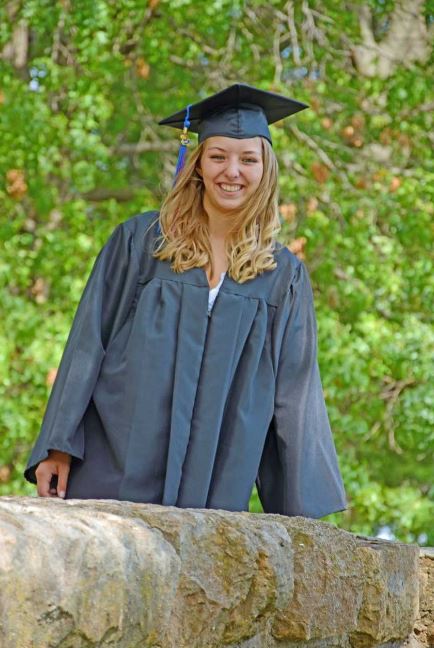
Chelsea Sexton graduated from Kansas University with help from a K.I.D.S. account.
Cindy Sexton and her daughter Chelsea were one of many who took advantage of this amazing opportunity. Chelsea’s father passed away when she was three years old, leaving Cindy to shoulder the burden of providing for their little family and saving for Chelsea’s future. Cindy set aside $25 from each paycheck for 14 years into a Learning Quest 529 account, and also qualified three times for $600/year in grants through the K.I.D.S. Matching Grant Program. Because of this extra help, Cindy was able to send her daughter to college with minimal debt.
“Thanks to the K.I.D.S. Matching Grant Program, our dream came true,” Cindy says. “It was a no-brainer to take advantage of a program that matches money for saving for college” Cindy says, “I’m so thankful we found out about it.”
For Kansas families concerned about the affordability of higher education a K.I.D.S. account is an amazing opportunity to fund your child’s education. Certain lower-income qualifications are required, but it is important to note that more than 40% of households with children are eligible for this program. With no risk and only reward, it does not even cost a penny to open an account.
A K.I.D.S matching grant can change the course of a child’s future and that is why we are so excited and passionate about this program. Because of Cindy’s hard work, she was able to watch her daughter break the cycle in her family and a college education was a huge part of it. Not only did Chelsea’s degree earn her an amazing job, she was able to pay back her student loans almost immediately, which she only had to take out for her last year of school.
You found it! Click on the Golden Egg for a chance to win FREE Wild West Festival VIP tickets!
“It makes me emotional to see her living this fairy tale life that I always wanted for her,” says Cindy. “No one deserves it more … she’s a wonderful daughter and has my whole heart.”
For more information on how to open a Learning Quest 529 account or find out if you are eligible for the K.I.D.S. Matching Grant, please visit www.LearningQuest.com or contact our office at 785-296-3171.
Dr. Roger Marshall, R-Great Bend, is the First District Kansas Congressman.
Friends,
After a long week in Washington, I traveled to the border with a group of other physicians and I am glad that we were able to convince Democratic leadership to stop with their obstructionism and address the crisis late before we left.
Thursday afternoon, I joined over 300 of my colleagues in passing the Senate amended H.R. 3401 to ensure DHS and ICE officials are properly funded to take care of the ongoing immigration crisis. I have been touring border patrol stations and detention facilities so that I can reassess the situation with my own eyes.
Many of you have been calling my office voicing your concerns about what is currently happening at the border, I share these concerns.
It has been 59 days since the President called the situation at the border what it is, an emergency.
Now, with the passage of this legislation we will soon have the much needed resources going down to the border and can continue our work on finding a permanent solution to securing our nation and addressing the humanitarian situation there.
I’ll be heading back from the border and hope to see you at one of my town halls this coming week:
My colleagues and I discussed election security this week in the Science, Space and Technology Committee, and according to our expert panel, “we’ve made enormous progress!” Since the Help America Vote Act became law in 2002, states have received over $2 billion in grants to help with election administration, assistance in increasing accessibility, and replacing outdated voting machines. Kansas has taken advantage of these grants, receiving over $4 million last year to strengthen cybersecurity of polling machines and voter registration systems as well as to ensure that every machine across the state has a paper audit trail. These improvements both in Kansas and across the country will help improve the integrity and accuracy of our elections. I appreciate the Committee discussing ways we can continue to support state and local governments in improving these vital systems.
Secretary Perry Addresses Science Committee
Department of Energy Secretary Rick Perry met with Members of the House Science Committee on Monday evening, ahead of his testimony before the Committee on Tuesday. We discussed some of the unique challenges facing rural America, from energy storage and transmission to efficiency advancements that will benefit our farmers and ranchers back home. It was a great opportunity to highlight how our producers are becoming more efficient, but also to emphasize the fact that “one-size fits all” regulations don’t work for rural communities. I was also able to mention that wind accounts for nearly 30% of energy production across the state, and new solar farms are taking advantage of the nearly 6 peak daylight hours that southwest Kansas receives each day.
I appreciated Secretary Perry taking the time to meet with us this week, and his willingness to thoughtfully engage on these issues. I look forward to continue working with him to ensure that our farmers, ranchers, and communities have the tools and regulatory flexibility they need to succeed.
Congress Competes in America’s Pastime
This week marked the 58th annual Congressional Baseball game where my fellow Republican colleagues and I competed with our friends on the other side of the aisle. With all proceeds going to different charities, this bipartisan tradition allows us to set aside our political differences and gives us a chance to have a little friendly competition. This is my third time playing on the team and even though we didn’t win this year I am proud of the performance of my colleagues from both dugouts. We managed to raise $1.3 million dollars for several charities including: The Washington Literacy Center, The Boys and Girls Clubs of Greater Washington, the Washington Nationals Dream Foundation, and the United States Capitol Police Memorial Fund.
Bipartisan Effort for Transparency in the Drug Industry
Earlier this month, I introduced legislation to equip lawmakers with additional insight on the role of pharmaceutical benefit managers (PBMs) in the healthcare industry. PBMs are third party administrators that were designed to negotiate and manage what medications are covered by a health plan, but there’s been increasing evidence that they have been pocketing these so-called savings for themselves at the expense of everyone else. My legislation would direct the Government Accountability Office to conduct a study on the role PBMs play in the drug supply chain under Obamacare.
I had the opportunity to lead another group of Kansans on a night tour of the Capitol building this week and among the group was the winner of our annual high school art competition, Ethan Beckman, and his family.
Ethan Beckman, Wheatland High School, Grainfield
The theme for the first district this year was “I Like Ike” with participants submitting art centered around our 34th President and legendary Kansan General Dwight D. Eisenhower. Ethan is a student at Wheatland High School in Grainfield, Kansas and his submission, titled “American Hero,” shows Eisenhower as a soldier standing in front of an American flag.
Every year we hold this competition and every year I am impressed by the artistic talent of the students of Kansas. Congratulations to Ethan! I was glad that I got to meet you and your family this week.
Kansas Honor Flight in Town
Last Thursday, I had the privilege of meeting with members of the Kansas Honor Flight. I feel deeply honored to have been given the opportunity to show my gratitude to these heroes who bravely served our country in various theaters. It is always a humbling experience to hear the service men and women share their stories. Thank you all for the sacrifices you have made for our great country. I look forward to the next group coming to Washington soon.
For more information on the Kansas Honor Flights Click Here.
Dr. Roger Marshall, R-Great Bend, is the First District Kansas Congressman.
Michael A. Smith is a Professor of Political Science at Emporia State University.Apparently Senator Jerry Moran is the only Kansas Republican willing to stand up to Saudi Arabia.
Last week, Moran joined six other Senate Republicans in backing a resolution against President Trump’s use of emergency powers, to sell arms to the Saudis. Afterwards, Moran stated his concerns about the Saudi government and their role in Yemen’s civil war. He also stressed that it is the prerogative of Congress, not the President, to make such decisions.
Moran is right on all counts. By contrast, Senator Pat Roberts voted against the resolution, and Secretary of State Mike Pompeo, of Wichita, is currently in Saudi Arabia cultivating deeper ties, apparently as a counterbalance to Iran. This is bad policy.
If Pompeo and Trump are truly outraged by Iran’s opposition to democracy, its poor human rights record, and its support for terrorism, then their stance on Saudi Arabia is indefensible. The Saudi regime’s record is even worse. Both of them ruthlessly hunt down, jail, and murder political dissidents and members of their LGBTQ communities, among others.
However, Iran at least has a vibrant middle class, popular culture, and youth scene that may eventually push for democracy. These are much weaker in Saudi Arabia. Also, Iran’s regime is not quite as oppressive toward women. Regarding terrorism, Iran’s support for groups attacking Israel are well-known, but Saudi Arabia is no better, being closely linked to the extreme, fundamentalist interpretation of Islam known as Wahhabism, which underpins Al Qaeda and spreads terrorism globally.
Saudi government officials have also been identified by the FBI and CIA as sources of funding, training, travel visas, and logistical support for the 9/11 hijackers. Then comes Jamal Khashoggi, the U.S.-based Saudi journalist murdered and dismembered by Saudi operatives last year in Turkey. Khashoggi was killed after publically criticizing Saudi Crown Prince Mohammad Bin Salman. A U.N. special investigation suggests that Salman authorized the killing. With friends like these …
Pompeo and Roberts’ stand on Saudi Arabia is indefensible, from either a human rights or a counterterrorism perspective. Instead, they are practicing the classic strategy of realism, or realpolitik — the amoral approach to foreign policy often associated with former Secretary of State Henry Kissinger. This approach is a bit like board games such as Risk, but for real—countries advance their national interests by playing adversaries against one another to achieve a balance of power, with little or no concern for any ideals such as stopping terrorism or advancing human rights. In this game, only the national interest matters.
Since Saudi Arabia and Iran both have terrible records, Pompeo and Roberts cannot seriously expect us to believe that they oppose Iran due to its abuses. Among Kansas Republicans, only Moran has credibility now.
The stakes are high. In the Iran-Iraq war (1980-1988), Saddam Hussein’s U.S.-backed regime (yes, you read that correctly) initiated the conflict, thinking that post-revolution chaos made Iran an easy target. Instead, a truce was established only after eight years and at least a half million people dead —possibly up to three times that number—in the bloodiest war since World War II. Back then, the U.S. sought to co-opt another country with a poor human rights record, using it as an ally and proxy against Iran. As we now know, it did not end well.
This is no time to repeat the lessons of history. Jerry Moran is now our voice of reason from Kansas. Let us hope he can get through to Pompeo and Roberts while there is still time.
Michael A. Smith is a Professor of Political Science at Emporia State University.
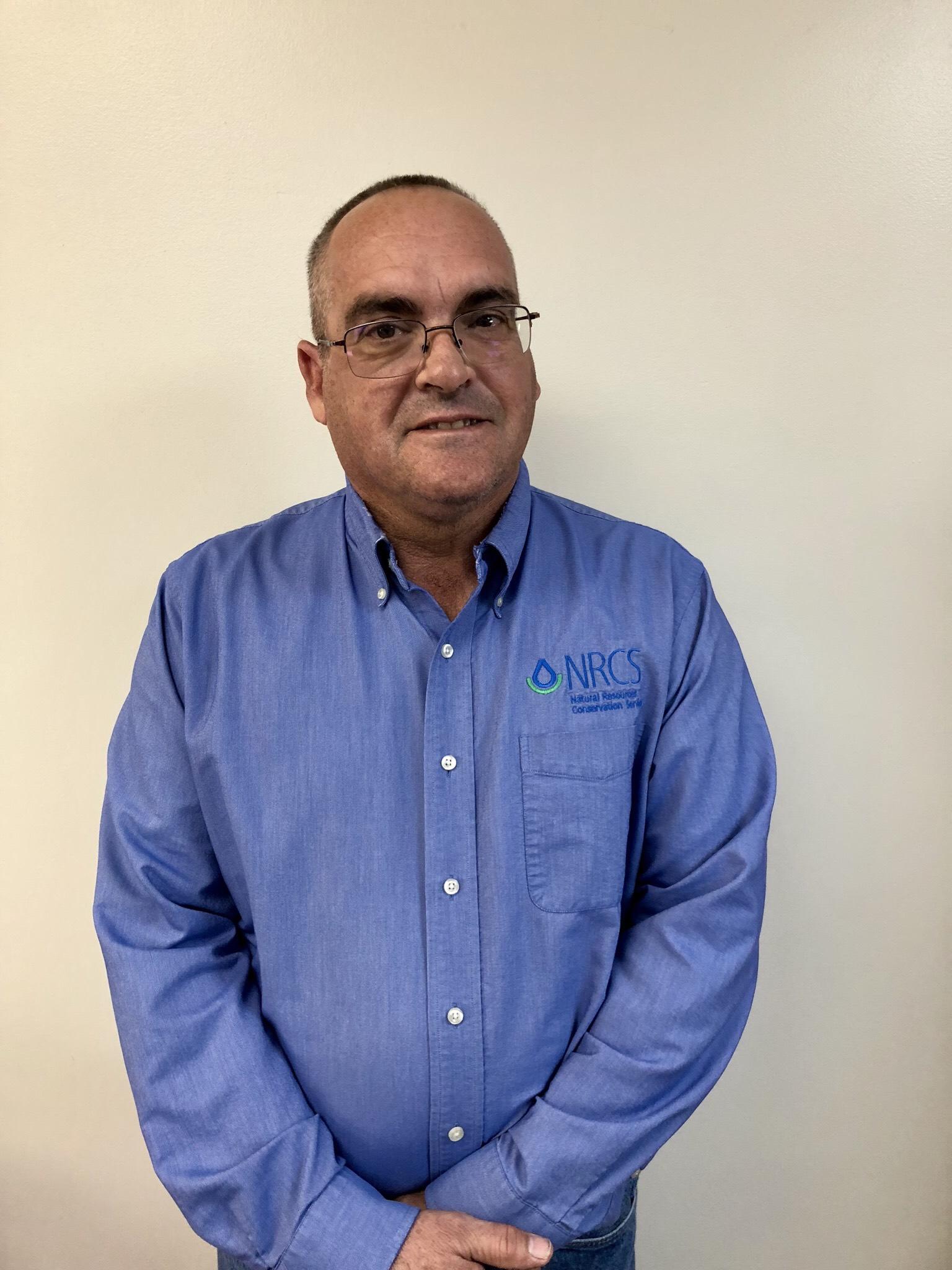
Dale Younker is a Soil Health Specialist with the USDA Natural Resources Conservation Service in Jetmore.
If you haven’t gotten the fall crops planted, you intended to plant because of the extremely wet conditions, and the Risk Management Agency’s (RMA) final plant dates have gone and past, you may be looking at taking a “prevented planting” crop insurance indemnity. When things dry up this may be a good time to plant a cover crop on those acres to ensure your fields’ soil health and long-term productivity. This may also be an opportunity to experiment with cover crops with very little financial risks.
Intense storm events have resulted in excessive soil erosion. Fields have been left with large gullies and areas where the topsoil washed away. A tillage operation may be needed for weed control, and to smooth out the field. A cover crop planted after that tillage pass will help cover the soil surface. This will help prevent additional soil erosion and additional loss of nutrients, carbon and residue.
A properly designed cover crop will have the potential to capture nutrients, fix nitrogen, build organic matter, suppress weeds, control erosion, provide livestock forage and provide other soil health improvement benefits. Typically, a mix with several different plant types and species would be used.
A summer mix should include forage sorghums, sorghum-sudans and/or millets. These species help feed the soil biology, such as mycorrhizal fungi and rhizobia bacteria. These organisms help build soil structure and tilth, which increases water infiltration and soil water holding capacity. They also provide a lot of above ground growth that shade the ground which helps with weed suppression and evaporation loss.
Legumes the mix, if properly inoculated, can fix nitrogen in the soil. The plants would need to be allowed to grow at least to the flowering stage to get the most benefit. There several warm season legume species to pick from that are adapted to Kansas that would reach the proper maturity level if planted in the next couple of weeks.
Brassicas and broadleaves, like radishes and sunflowers, have deep tap roots that can penetrate compacted soils and scavenge nutrients deep in the soil. Some of these species can also be great habitat for beneficial insects and pollinators.
Consider what herbicides you might have previously used on the field. Many pre-emergent herbicides provide long term residual weed control have long plant back restrictions. These herbicides could inhibit the germination and growth of many cover crop species. Always check your herbicide label and if in doubt consult with your supplier or crop advisor.
Before planting a cover crop on prevented planting acres always check with your crop insurance agent. Many of the haying, grazing and harvest restrictions have recently changed for the 2019 crop year.
For more information about this or other soil health practices you can contact me at [email protected] or any local NRCS office.
Dale Younker is a Soil Health Specialist with the USDA Natural Resources Conservation Service in Jetmore.
Randy ClinkscalesJohn has dementia. Unfortunately, it is the aggressive and angry kind of dementia. His family came to my office. The facility where John is located cannot keep him because of his aggressive behavior. The family came to us in part to help place John.
Several years earlier, John and his wife Margaret had prepared healthcare and financial powers of attorneys by another law office. I am assuming that just because of their advanced age, they thought John and Margaret would be better served if their children, Ralph and Rhonda were the agents. As a result, each had independent power to act, without the consent of the other. Though Margaret (the wife) had full capacity, she was not listed as John’s power of attorney
So, here we are. John needs to be placed in a new facility. And guess what? His children, Ralph and Rhonda, cannot agree on where John should be placed. And Margaret, John’s wife, has no say so, according to the legal documents that were prepared.
The healthcare power of attorney is a form that was used by the attorney. It had some optional blanks in it that were not utilized; so it really did not give me any help on what John’s real goals were.
Why does a person even need a healthcare power of attorney? Can’t a person’s children or their spouse act for that person? As a general rule, without a healthcare power of attorney (or a guardianship—another article!), your family has no legal authority to act for you.
So, what should you be doing with a power of attorney?
First, be sure your “agent” (this is the person that you choose to act for you when you cannot) is capable of carrying out your wishes. Is this person strong enough to make healthcare decisions, even if it is not the healthcare decision that they would make for him or herself, but instead will follow your wishes?
Second, modify or draft the healthcare power of attorney (HCPOA) to reflect your wishes. As an example, in my personal HCPOA, I defined what I think is an acceptable quality of life and what is not an acceptable quality of life. If I cannot recapture an acceptable quality of life, then I actually restrict my agent’s authority—the agent has less power to do things. Similarly, if I have dementia, I have some strong rules on what my HCPOA can and cannot do.
Third, visit with your HCPOA agent. Let them know what kind of power you are going to give them, but also let them know your wishes, and how their power can be restricted, under certain circumstances, particularly decisions about the end of life.
Why are we doing all of this? Part of it is to provide legal cover to your agent, but also to cover the healthcare providers involved. It also establishes legal authority in your agent to “say no” to a healthcare provider. Even more important to me is that my agent, through the expressions contained in my HCPOA, does not feel guilty by making hard decisions in following my wishes.
Just a personal example: When I was caring for my grandmother, she was 93 years of age. I made a decision to terminate many of her medications, treatments, and tests. It just seemed like they were creating their own set of problems.
I was the HCPOA agent for my grandmother. So I had the authority. Upon learning of my decision, her doctor wrote me a letter saying I was “artificially accelerating” my grandmother’s death.
My grandmother still had capacity. I read her the letter. She smiled and assured me I was following her wishes, but I was lucky because I had her reinforcement.
We took my grandmother off of her many medications, and then stopped the tests and treatments. And guess what? She got better, and lived another few years.
It does not always end that way. Recently, a friend’s mother in law was very ill. The treatment offered to her would give her a few more days, perhaps even a few months. Her three daughters were going in different directions from each other. By chance, they all ended up in the hospital room at the same time, and Mom had a moment of clarity in which she sat up and said, “I am ready for hospice!” Suddenly everyone was on the same page. Within a day, mom was gone.
Let me return to my story from the beginning. What was important to me was to break the impasse that Ralph and Rhonda had created, and that the deciding vote really needed to be Mom. We got the children and their mom to visit a facility and decided it was acceptable—a good conclusion. We were lucky.
So, pick your agent well; express your wishes; and then communicate them to your agent.
Randy Clinkscales of Clinkscales Elder Law Practice, PA, Hays, Kansas, is an elder care attorney, practicing in western Kansas. To contact him, please send an email to [email protected]. Disclaimer: The information in the column is for general information purposes and does not constitute legal advice. Each case is different and outcomes depend on the fact of each case and the then applicable law. For specific questions, you should contact a qualified attorney.
By EDWARD CROSS Kansas Independent Oil & Gas Association
July is a special month for many Americans. Most of us will eagerly take a break from our busy summer schedules to once again celebrate Independence Day. There will be much fanfare with fireworks, parades, picnics, and other patriotic events celebrating our country’s independence from Great Britain in 1776. But when the festivities have ended, only a few will have reflected upon the true meaning of independence and the role it has played in shaping our nation’s character.
Freedom and independence are cornerstones in the foundation of our country’s heritage. The independent ideology of the American people is a fundamental element of our society and a key to our nation’s prosperity. We must protect that independence at all cost.
One important freedom we must protect is our free enterprise system. American business, and certainly the oil and gas industry, was founded upon the ideology of independence and free-market principles. Those principles allow business to be governed by the laws of supply and demand without government interference and excessive regulation. The dynamic free market has led to innovation and wealth creation, and has established an economic environment where hard work is rewarded.
Today, however, it seems free-market capitalism and independence is often under attack by those who oppose American energy development. Small vocal groups of activists across the nation work to obstruct energy development, reducing our energy options under the false belief that oil and gas production and use are incompatible with environmental progress.
Few doubt that energy has improved lives and enabled human progress. Yet one of the biggest challenges facing the world is the polarized debate over the future of energy. Facts and economics are too often replaced with assertions and emotions. Discussion about fossil fuels and alternative energy sources often degenerate into a battle to delegitimize the other side. This is a recipe for inaction. And it keeps billions of people trapped in energy poverty. Almost 40% of humanity has access to only rudimentary forms of energy and a very low standard of living. The world expects and deserves better.
U.S. carbon emissions are the lowest they have been in nearly seven decades. In addition, data from the U.S. Environmental Protection Agency and Energy Information Administration shows that from 2011 to 2017, methane emissions from oil and natural gas production in the U.S. decreased by 24%. This downward trend is occurring even as U.S. oil and natural gas production grows dramatically. U.S. oil production has doubled since 2008 and is projected to grow another 50% over the next decade. Mischaracterizing oil and gas activity has been and continues to be a common practice and strategy of activist groups across the nation.
Cutting U.S. oil and natural gas production would raise costs significantly for American families and manufacturers, profoundly damage the U.S. economy, diminish our geopolitical influence, and severely weaken our energy security. And that is not a path most Americans want to take.
The fact is the oil and natural gas industry has proven that over the long-term, it is possible to lead in energy production and in environmental stewardship.
We must abandon policies driven by a zero-sum game philosophy for energy that says we must have less oil and natural gas so that we can have more of something else. We should set aside the acrimony and division that has marked too much of past national energy policy discussions and work together as one nation on a positive forward-looking energy future based on the understanding that our nation’s best energy future can only be achieved through a true all-of-the-above energy strategy.
In his 1946 Independence Day speech, John F. Kennedy said, “Eternal vigilance is the price of liberty.” Those words were never so true. Being mindful of the erosion of our independence and free-market system by those who oppose American energy development cannot be over emphasized. We must, now more than ever, remain steadfast in our resolve to protect and preserve the precious independence that has molded our nation’s character.
Sweet corn is one of my favorite summer treats. Unfortunately for many people who grow their own in their gardens, the anticipation of picking the ripe sweet corn turns to anger when you find that raccoons have stolen your bounty before you had a chance to pick it.
I found a short article from Ward Upham, horticulture expert for K-State Research and Extension that tells how you can protect your sweet corn for yourself, instead of the little pests taking it from you. It seems the official sweet corn inspector should be the raccoon as they seem to harvest the sweet corn the day before it is to be picked. The only effective control measure I have had success with is fencing; either electric or kennel fencing.
First are some suggestions for electric fencing. Other designs may very well work but this is what has worked in my garden.
• Two or more wires must be used. Place the first about 5 inches above the ground and the second 4 inches above the first (or 9 inches above ground). Raccoons must not be able to crawl under, go between or go over the wires without being shocked.
• Fence posts used for electric fences work well for this application (go figure), as do the insulators used to support the electric wire.
• It is much easier to use the woven electric wire with strands of wire embedded than to use a solid metal wire. The woven wire is easier to bend around corners and to roll up when done for the year.
• Though both the plug-in and battery operated fencers work, the battery operated types allow more versatility in where corn is grown. One set of batteries is usually sufficient for the season. In my case, I pull the battery out of an old tractor that is not used often. It will also last the season if fully charged at the beginning. My fencer is probably on for a total of a month.
• Start the charger before the corn is close to being ripe. Once raccoons get a taste of the corn, they are more difficult to discourage.
• Control weeds near the wire. Weeds can intercept the voltage if they touch a wire and allow raccoons entry beyond the weed.
• Check the wire occasionally to make sure you have current. This can be done easily (but unpleasantly) by touching the wire. There are also tools that will measure the voltage available for sale. They are worth the money.
As mentioned earlier, kennel fencing can also be used. Make sure that the panels are tied together well enough that raccoons can’t squeeze through corners. A covering over the top may be needed if the raccoons figure out how to climb the panels. Welded garden fence can work well for this.
Alicia Boor is an Agriculture and Natural Resources agent in the Cottonwood District (which includes Barton and Ellis counties) for K-State Research and Extension. You can contact her by e-mail at [email protected] or calling 620-793-1910
There’s something about humans–we always use past events and people to give context to current experiences. Every political scandal, no matter how large or small, is compared to Watergate. Every so often the terminology changes as there become fewer people who lived through an event. When I grew up, the Great Depression was the economic event by which all others were judged. I suspect my grandchildren will come to view the Great Recession in a similar manner. Every basketball star is still judged by the standard of Michael Jordan.
While these provide a reference for people on a national scale, this past month two others have been on the top of my mind. First is the Flood of 1993, which happened before I was old enough to truly understand the devastation it wreaked on the Midwest and in Manhattan where I now live.
In July of that year, rain pounded the watershed of Tuttle Creek Lake, filling the basin to the point that the Corps of Engineers opened the emergency gates on the spillway. The release of some 60,000 cubic feet per second flooded entire neighborhoods.
The “bomb cyclone” that caused so much pain along the Missouri River this spring also contributed to the Corps holding water in Tuttle, which dumps into the Kansas then Missouri and finally the Mississippi. Then May hit and round after round of storms filled the lake to just inches from having to open the gates for a second time. Tensions rose along with the water and by Memorial Day some had evacuated their homes. Thankfully sunshine and controlled releases averted another disaster, but every rain still puts people on edge.
The other event I’ve heard repeated mentions of recently is the 1980s farm crisis. It came up at the Agricultural Relations Council’s annual meeting in Kansas City last week as part of a session on “hot topics” in ag. The ’80s farm crisis featured record production, trade problems, soaring prices for inputs and other factors present today. Panelists said a repeat of the 1980s is unlikely.
The University of Missouri’s Scott Brown noted that while some factors may be similar, farms are structured differently today, and bigger operators have more options when they get in trouble.
Kansas State University professor and agricultural economist Mykel Taylor admitted that two years ago she believed farmers were on the verge of a similar event, but she’s changed her mind. “It’s complicated, but not the same,” Taylor said. “We have our own special drama going on.”
Taylor said debt is increasing and lenders are seeing demand for loan restructuring, but government payments, like the Market Facilitation Program, helped inject cash into farmers’ hands to service their debt. “Those are floating us,” she said. Land prices also have fared better than expected with demand from investors and recreational buyers, giving owners breathing room. And interest rates have stayed low.
Taylor and Missouri Director of Agriculture Chris Chinn both said agriculture will see blue skies again, though neither offered a date. Chinn believes genetic engineering will limit the disease risk not only for crops, but livestock as well. Taylor said big data will help farmers and ranchers make better decisions.
I do know one thing that does not change throughout the ages.
No matter what problem or crisis arises, farmers and ranchers will continue finding ways to stay in the game. It’s what they were made to do.
“Insight” is a weekly column published by Kansas Farm Bureau, the state’s largest farm organization whose mission is to strengthen agriculture and the lives of Kansans through advocacy, education and service.

 My mother recently passed away and her services were held at the Hays Memorial Chapel. She was interned in the National Cemetery in WaKeeney therefore requiring the funeral procession to move from the middle of the city to I-70.