We have a brand new updated website! Click here to check it out!

Trump boasts about wealth drive up his popularity

Bob Lord, a veteran tax lawyer and former congressional candidate, practices and blogs in Phoenix. He is also an Institute for Policy Studies associate fellow.
Bob Lord, a veteran tax lawyer and former congressional candidate, practices and blogs in Phoenix.

Donald Trump alienated millions of voters with his ugly attacks on Mexican immigrants and John McCain’s war record. But he rocketed to the top of GOP presidential polls anyway.

Is Trump’s racism driving this surge? Maybe. But I’d argue it’s something else: his relentless, self-aggrandizing celebration of his own wealth.

Recently, Trump estimated his net worth at over $10 billion. The Bloomberg Billionaires Index pegs this fortune way lower, at $2.9 billion, while other estimates clock in at only $1.5 billion. In any case, Trump is “really rich” — as he bragged when he launched his presidential bid.

I’d put Trump’s obsession with money at the root of all the ugly traits he personifies. His base desire to accumulate — and to publicly display — obscene wealth divides his world into what he sees as worthy winners and unworthy losers.

According to Trump’s guiding philosophy, winners like him deserve everything they have. Only losers, as he sees John McCain, get captured. Americans are winners. Mexicans and Chinese are losers — who, Trump says, must be kept away with border walls and stiff tariffs to make them “behave.”

Trump’s over-the-top boasting reflects a long-trending change in how those at the very top see their own wealth. It also echoes an evolution in how the rest of us view people whose fortunes, as the playwright Edward Moore put it, run “beyond the dreams of avarice.”

When Forbes first published its list of the 400 wealthiest Americans in 1982, many of the rich people who made the list were embarrassed at having their extreme wealth exposed. Heirs to the Dow Jones publishing empire reportedly hung up on the Forbes reporter who called them. Ken Davis, heir to a Texas oil fortune, actually sued — albeit unsuccessfully — alleging an invasion of privacy.

Attitudes have changed. While many super-wealthy Americans still suppress the urge to flaunt their wealth, very few of them feel the need to keep it a secret. Many take great pride in their immense fortunes.

And many of us admire them for it.

I’ve seen this change firsthand. In innumerable conversations, my friends and acquaintances who mix with the very wealthy have approvingly relayed stories of huge parties, yachts, private jets, car collections, and glittering mansions. The tone, typically, is one of respect and admiration.

The transformation doesn’t end with the mega-rich. With displays of extreme wealth all around them, those with more modest wealth — even some in the top 1 percent — now consider themselves middle-class.

It’s a matter of perception. In the 1970s, when the ultra-wealthy concealed their wealth and lived more modestly, a person who drove a BMW, dined out often, and took European vacations could consider himself rich.

No longer. With the wealth of the Forbes 400 tracked daily online and countless stories about Donald Trump and other wealth-flaunting celebs in the news, even a physician who takes home $500,000 a year might not feel rich.

The more the modestly rich see themselves as simply middle-class, the more they succumb to their base instinct to chase wealth far beyond their rational needs. That breeds resentment at paying taxes to fund programs for the less fortunate.

And those anti-immigrant remarks? Yes, they appeal to a dark strain of nativism. But doesn’t nativism stem from a base desire not to share with those less fortunate?

Trump may eventually say something so outrageous that he’s forced off the national stage. But unless we as a people re-learn that extreme wealth is better off shared than showed, there will be more Donald Trumps.

OtherWords.org columnist Bob Lord is a veteran tax lawyer who practices and blogs in Phoenix. He’s an associate fellow of the Institute for Policy Studies.

Now That’s Rural: Wayne Kruse, Orchestra on the Oregon Trail

By RON WILSON
Huck Boyd National Institute for Rural Development

What happens when music meets a meadow? That sounds like an unusual combination. Today we’ll learn about an initiative which brings together high quality symphonic music, genuine western history, and pristine natural beauty in rural Kansas.

Ron Wilson is director of the Huck Boyd National Institute for Rural Development at Kansas State University.

Wayne Kruse is chair of the steering committee for a brand new event to be conducted in 2015.  Wayne is on the board of the Marshall County Arts Cooperative which is leading this initiative.

Wayne is a Marshall County native, having been born and raised in Marysville. He went to KU and lived in Lawrence before coming back to Marysville where he now works for KNDY radio.  He also volunteers with the Marshall County Arts Cooperative, called MCAC for short.

In 2012, the MCAC was the presenting organization for a concert by the Topeka Symphony Orchestra in Marysville. The symphony played an entire concert of music by Mozart. To the surprise and delight of symphony director John Strickler, the symphony played to a full house and an appreciative audience.

“There was a great crowd and great publicity for the event,” Wayne said. “I think John Strickler felt that it was very well-organized.” This demonstrated that the Marshall County Arts Cooperative could conduct a major event.

After the concert, a dinner was held with symphony director Strickler at the home of local newspaper publishers Howard and Sharon Kessinger. Strickler commented that he would like to have an outdoor concert somewhere in Kansas, and the seed was planted.

The MCAC took on the idea of an outdoor symphony performance as a long-term goal. The organization considered possible venues in the county, including the Alcove Spring Historic Park along the Oregon-California Trail. When new MCAC board member John Schwartz joined the board, they learned that he was also a trustee of the park at Alcove Spring. With his help, a connection was made.

Meanwhile, John Strickler retired as director of the Topeka Symphony, but his successor Kyle Wylie Pickett was also enthusiastic about the idea of an outdoor concert. In April 2015, the MCAC announced plans for this event: Orchestra on the Oregon Trail, to be held on Sunday, Sept. 6, 2015 at historic Alcove Spring.

Imagine an 80-piece orchestra performing musical themes from Western movies, sounds from the pioneer days and songs that highlight the American spirit. Now imagine that concert taking place in a natural meadow near a historic spring along the actual Oregon-California Trail. That is what will happen at 6 p.m. on Sept. 6.

In fact, there will be a full afternoon of activities preceding and following the concert, including four live bands, wagon rides, nature walks, cowboy poetry, historical reenactors, Johnny Appleseed, and more.

This sounds like the successful Symphony in the Flint Hills, but this event will take place along the Oregon-California Trail. Alcove Spring was an important stop for travelers along the trail.  Wagon swales can still be seen in the 246-acre park, showing the paths pioneers traveled to and from ferry crossings as they headed west. This historic site was the stopping place for many wagon trains, including the legendary Donner-Reed party.

The concert will take place in a truly rural, undeveloped location. Concert-goers are advised to bring their own lawn chairs or bag chairs, although a limited number of lawn chairs will be available for rental. Alcove Spring is in a beautiful setting, located along the Blue River south of Marysville, north of Blue Rapids, and northeast of the rural community of Waterville, population 664 people. Now, that’s rural.

More than 1,000 tickets have already been sold, 75 percent of which have been by purchasers outside Marshall County. In fact, tickets have been purchased from as far away as Arizona, Michigan, and Connecticut.

For more information or to buy tickets, go to www.ooot.org.

What happens when music meets a meadow? Find out at Alcove Spring on Sept. 6, 2015. We salute Wayne Kruse and all those involved with the Marshall County Arts Cooperative for making a difference by bringing together high quality music, history, and nature. When music meets a meadow, it can be magical.

Olympic fiasco: Awarding Beijing rewards persecution

Charles C. Haynes is director of the Religious Freedom Center of the Newseum Institute.

Last week, the International Olympic Committee awarded Beijing the 2022 Winter Games, demonstrating yet again that selection of a host city has everything to do with politics, money and power — and nothing whatsoever to do with human rights.

While Chinese government officials were celebrating the “Olympic spirit” in Beijing, it was religious persecution as usual in the rest of the country.

The same week of the Olympic announcement, Chinese Christians in Zhejiang — a province in eastern China — were frantically organizing a movement to push back against a government campaign to remove exterior crosses from their churches or, in some case, tear down the church itself.

Social media carried images of courageous Chinese Christians making crosses to wear and place on their homes as a non-violent protest against government repression. Last year alone, at least 400 churches were demolished or had crosses forcibly removed, according to the 2015 Annual Report of the U.S. Commission on International Religious Freedom (www.uscirf.gov).

This week Chinese police detained seven church members in Zhejiang who have been resisting cross removal. They were charged with embezzlement and a variety of other apparently trumped up charges, including “instigating others to disrupt the social order.”

Christians, of course, are not the only targets of government persecution in China. Uighur Muslims, Tibetan Buddhists, Falun Gong practitioners and others face harassment, arrest, torture, and imprisonment by a government determined to control and repress people of faith.

Apologists for the Olympic selection process made hopeful noises in 2001 when Beijing was chosen as the site for the 2008 Summer Games. Holding the Olympics in China, the argument went, will put the spotlight on human rights concerns and encourage the government to grant more religious freedom.

Instead, winning the Olympic bid in 2008 apparently inspired China’s totalitarian regime to move in the opposite direction by cracking down on religious groups with increasing brutality.

Tibetan Buddhist Goshul Lobsang, to cite just one of many examples, was imprisoned for helping to organize a peaceful protest in 2008. Last year, Lobsang died shortly after his release from prison where, according to the USCIRF report, he suffered “extreme malnourishment and brutal torture, such as regular injections and stabbings.”

As a reward for this abysmal human rights record, Beijing is now set to become the first city in modern Olympic history to host both the summer and winter Games.

To be fair, the IOC had limited choices in the contest for the 2022 games. Four democratic countries, including frontrunner Norway, withdrew from the competition — leaving the IOC to choose between China and Kazakhstan, another authoritarian regime that routinely violates religious freedom and other human rights.

The Olympics been become so costly, disruptive and unpopular that soon only totalitarian governments prepared to spend billions and repress dissent will be able to host the games.

One solution floating around the Internet would be to designate a permanent home for the Olympics — Greece being the obvious choice. But the allure of national self-aggrandizement, billion dollar media deals, and fancy VIP receptions is probably too great to permit transformation of the current Olympic culture.

Dressing up totalitarianism in Olympic colors comes at a cost. Russia, it should be remembered, spent more than 50 billion dollars on the Sochi Winter Games in 2014 — a propaganda extravaganza that fooled no one outside Russia.

But the greater cost is to the Olympic spirit — and, indeed, the human spirit.

I enjoy the Winter Olympic Games as much as the next person. But unless China begins to take religious freedom seriously, I won’t be watching in 2022.

Charles C. Haynes is vice president of the Washington-based Newseum Institute and executive director of the Religious Freedom Center. [email protected]

Letter to the Post: Russell chamber offers clarification on ad sales

Screen Shot 2015-08-05 at 10.36.53 AM

It was brought to my attention late yesterday that many businesses have been visited by Mr. Jason Miller. For those of you who have not yet been visited by him, he is an advertising consultant with Direct Advertising Consultants out of Washington, MO. He is selling advertising for a magnetic white board, he is not a scam.

Although he is not a scam he does mention that he is working with the Chamber on this project, and that is not correct. Jason has only visited with me to inquire about a few of our local businesses. The Chamber does not receive any benefit to what he is doing. I was informed by him that I might receive a few of the magnets, but only what was left over, which may not be very many.

I apologize for any confusion this may have created. Again, please be aware that Jason is not working with the Chamber. Purchase advertising at your own discretion. If you have any questions regarding the matter please contact me.

Thank you,

Amber Zvolanek
Russell Area Chamber of Commerce

Happy Birthday, Singapore

John Richard Schrock is a professor at Emporia State University.

“U.S.A! U.S.A! We’re Number One!”

Well, maybe not. Aside from spending on military, the United States is somewhere down the list on nearly every other criterion. From personal income to longevity to health care to international test scores, various northern European and Asian countries outpace us. But if you average the rankings, Singapore might very well be the country that can most accurately claim: “We’re Number One!”

On August 9, Singapore celebrates its 50th anniversary as an independent nation.

I taught in the British colony of Hong Kong (now a part of China) from 1975 to 1978 and my attention was drawn to Singapore by teacher colleagues who had served at the Singapore American School. Singapore was an unusual democracy led by an intellectual. It has prospered to become the envy of every Asian country.

The British established Singapore as a trading colony in 1819. The intellectual Lee Kuan Yew led colleagues to break away and make Singapore independent in 1963. Singapore joined the Malaysian Federation in 1963 but was pushed out on August 9, 1965 for fear that Singapore would control Malaysia.

So began Singapore, a small city-state of 5,670,000. But it is the world’s busiest port. Lacking natural resources, Singapore became prosperous by becoming the most well-educated country in the world.
According to the C.I.A. country profile: “Singapore has a highly developed and successful free-market economy. It enjoys a remarkably open and corruption-free environment, stable prices, and a per capita GDP higher than that of most developed countries. Unemployment is very low. The economy depends heavily on exports, particularly of consumer electronics, information technology products, medical and optical devices, pharmaceuticals, and on its vibrant transportation, business, and financial services sectors.” That per capita Gross Domestic Product last year was US$82,800.

Life expectancy at birth is 82 for men and 87.5 for women. But along with a dramatically higher level of education comes a dramatically lower fertility rate of 0.81 children born per woman, way below replacement. As a result, Singapore provides large tax breaks for having children. And media campaigns suggest a child needs a sister or brother.

Health care takes up 4.6% of GDP which provides one physician for every 500 citizens. Singapore, similar to many Asian cities, is built with skyscraper apartments. Their cell phones are the most advanced in the world. And they discarded paper money and coins over a decade ago, using cell phones and transponder debit cards we are yet to see. The idea to allow only full cars to use the speed lane came from—you guessed it—Singapore. And Singapore is multi-lingual. To teach at their universities, you must speak English and one other language from among Chinese, Malay or Tamil.

In the last decade, many American schools have adopted “Singapore math” in an attempt to gain some magical curricular advantage.  Their real advantage is their respect for education and teachers.

Singapore is easily the most successful “Mini-dragon” and was featured in an American television series of that name.

The “father of Singapore” was Prime Minister Lee Kuan Yew who served for the first three decades and was a strong advisor behind the scenes until his recent death. Today, his oldest son Lee Hsien Loong is Prime Minister.

But the Lee’s are no dictators. Singapore is a parliamentary republic based on English common law.  Everyone votes at age 21—it is universal and compulsory. Six-year terms allow for long-range planning. There are three major political parties; this serves to focus on issues rather than cause knee-jerk gridlock.

Westerners usually know of Singapore’s strict laws and zero-tolerance for petty crime. But Singapore’s streets are safe at night. It makes us realize how so much of our “freedom” is only possible because we have so much space and so few people.

But on this 50th birthday, you will not hear Singaporeans shout: “Singapore! We’re Number One!”

They leave that empty bravado to us.

MOVIE REVIEW: Jokes fail to land in ‘Vacation’

James Gerstner reviews movies for Hays Post.

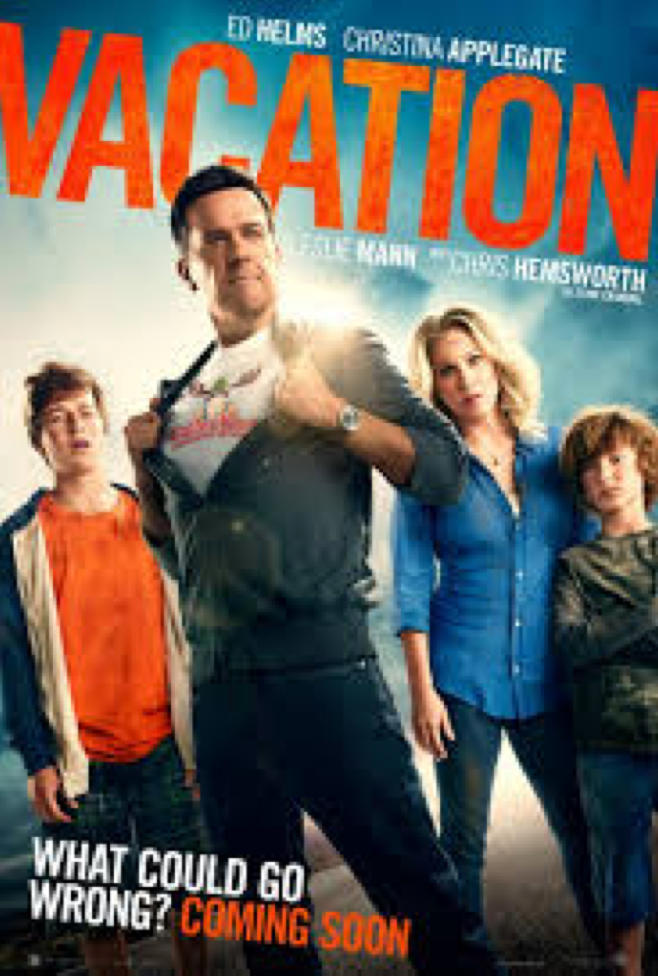
The worst things about vacations are the delays. Waiting for the plane to take off, waiting for the bus, waiting to check into the hotel. No one likes to hurry up and wait. The 2015 movie “Vacation” which is a continuation/spin-off of the Chevy Chase “Vacation” series that includes such gems as “Vacation,” “Christmas Vacation,” and my personal favorite “Vegas Vacation,” is very much a “hurry up and wait” comedy. The film rushes into a joke and the punchline never arrives and it dives for the gross-out scene and forgets to pack the laughs.

The whole idea of another “Vacation” movie is predicated on the concept of nostalgia. A lot of people really enjoy the original Chevy Chase movies, yours truly included, but that doesn’t mean we need another one or that another one even fits in this generation of comedy movies. The “Vacation” films of the ’80s and ’90s had an anarchy to them that was tempered by a heavy dose of heart and family.

Screen Shot 2015-08-04 at 12.52.12 PM

It was entertaining to see Clark Griswold lose himself in crazy antics in Vegas, which, in turn, made his ultimate redemption more satisfying. That type of filmmaking requires a steady hand, some original ideas and the gumption to make stupid funny work. Unfortunately for the 2015 “Vacation,” it has neither the comedic oomph to land the jokes set up by crazy antics or the heart to make the audience care about them.

Put simply, exceedingly few jokes in “Vacation” were actually funny. It was easy to see what the filmmakers were trying to accomplish, but everything felt out of sync. Imagine trying to dance a waltz to techno music and you’ll get the idea. The rhythm was off and just didn’t fit. There are a couple of mildly amusing moments, but when this comes on TBS in a few years, I will have no qualms about clicking right on by.

On the other hand, if I come across “Vegas Vacation,” I can promise that I will still be entertained by “I put a dollar in, I won a car. I put a dollar in, I won a car.”

2 of 6 stars

Where’s all the GOP outrage over attacks on Democrats’ war records?

Donald Kaul
Donald Kaul

At long last, Republican presidential hopefuls crept out of their foxholes, where they’d been cowering and maintaining radio silence, to attack Donald Trump.

With one or two exceptions, the field went AWOL as Trump trashed immigrants, calling them drug runners and rapists. But as soon as Trump said “I like people who weren’t captured,” suggesting that Senator John McCain was less than a hero, they pounced.

Senator Lindsey Graham fumed that Trump’s had “crossed a line.” Former Florida Governor Jeb Bush condemned his “slanderous attacks.” Former Texas Governor Rick Perry called on Trump to exit the race altogether.

How noble of them.

Of course, it helped having some truth on their side. As a Navy pilot, McCain was shot down and wounded during a bombing mission in the Vietnam War. The future Arizona senator spent five and a half years in a Hanoi prison, two of them in solitary confinement.

He was tortured and beaten and his injuries were allowed to go untended. Yet when his captors offered him release after discovering that his father commanded the entire Vietnam theater of the war, he refused. He was bound by military code to wait until everyone captured before him had been released.

That should settle the argument. Whatever you think of the Vietnam War, McCain showed tremendous integrity. Trump is an idiot.

But I wonder where these Republicans and their ilk were in 2004, when John Kerry was the Democratic Party’s presidential nominee. He was another hero whose patriotism was assailed. The only difference: He was a Democrat and his assailants Republicans.

The GOP built a well-financed machine to tell lies about Kerry’s war record. His opponent, President George W. Bush, raised not a hand in protest at this slander.

As a matter of fact there was only one prominent Republican who spoke out in protest of the scummy Republican campaign: John McCain.

What’s happened to Republicans? They used to be such nice people. Sure, they favored the moneyed interests and disliked unions and taxes, but they supported good causes too — like public schools.

Some Republicans were environmentalists and internationalists. And, never forget, it was under a Republican president, Dwight Eisenhower, that we undertook the greatest public works project in our history — the interstate highway system.

And it was another Republican, Teddy Roosevelt, who inaugurated our national parks system.

That kind of Republican either doesn’t exist anymore or is sheltered in a witness protection program.

Your current brand of Republicans wouldn’t pave a road unless it ran in front of their houses. Even then they’d pay for it by cutting Social Security payments.

They’re against opening up relations with Cuba, negotiating with Iran, cutting the military budget to bring it more in line with our needs, and raising the minimum wage. They don’t believe in climate change because to do so would mean going against the oil interests that generously fund their electoral campaigns.

Look at the gang that’s running for the Republican nomination: The worst of them seem deranged and the best appear fearful that they’ll do something to raise the ire of the party’s tea party wing. Like criticize Donald Trump when he slanders immigrants.

It’s not like the Democrats are white knights. They have more than their share of hypocrisy and cowardice. But the Republicans are talking it to a whole new level.

Even Ronald Reagan must be spinning in his grave.

OtherWords.org columnist Donald Kaul lives in Ann Arbor, Mich.

MOVIE REVIEW: ‘Mission Impossible: Rogue Nation’ is a stunt

James Gerstner reviews movies for Hays Post.

There’s a difference between having a movie that contains big action set-pieces and big action set-pieces that have a film built around them. The former is how you get something like “The Dark Knight” or “Avatar” and the latter is how you get “Mission Impossible: Rogue Nation.”

These types of reviews for good films that are not great films are sometimes hard. There’s a great many things to like about “Rogue Nation,” but my opinion is not as favorable as the general consensus which makes this review sound more negative than it really is.

MV5BMTQ1NDI2MzU2MF5BMl5BanBnXkFtZTgwNTExNTU5NDE@._V1_SX640_SY720_

“Rogue Nation” is a fine action movie with some absolutely incredible set-pieces, but it’s not an absolutely incredible movie. It has a very passable story that motivates its characters well, and has some intense action moments, but the resulting mixture is expendable fuel, not the self-generating kind that makes masterpieces. For example, oil is a good and profitable fuel, but wouldn’t we all prefer the self-sustaining Arc Reactor that powers Iron Man’s suit? I know I would.

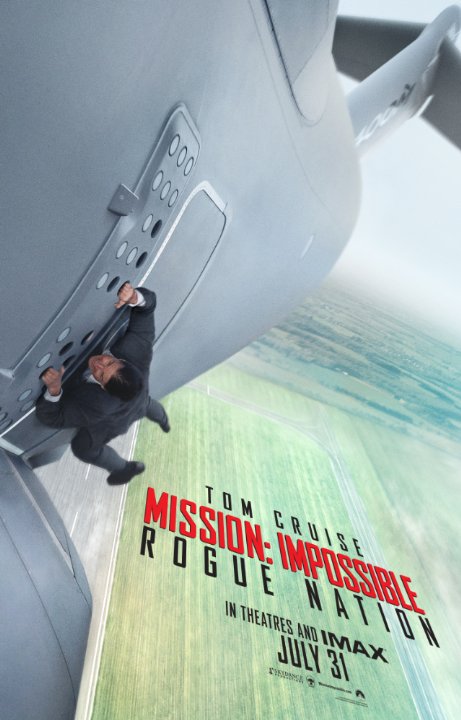
“Rogue Nation” relies on its stunts, to a fault. Even the pre-movie advertisements for “Rogue Nation” were not standard trailers. Some of the advertisements were behind-the-scenes looks at the movie’s signature stunt – Tom Cruise dangling outside an airplane as it takes off. As an action-movie aficionado, I love that stunt and love that Tom Cruise really did it. As a critic, it leads credence to my stance that this movie was about its stunts and action and not about making a movie with stunts and action.

The latest “Mission Impossible” movie is a strong entry in a strong franchise and is miles better than the lunacy of “Furious 7,” but, to this reviewer, it cannot touch “Mission Impossible 3”, the best of the series, or other Tom Cruise action flicks such as the still-delightful “Edge of Tomorrow.” “Rogue Nation” didn’t go rogue on its franchise, it supports its own weight with no added elevation.

4 of 6 stars

Liberal mourns: When life and sports collide

By EARL WATT
Leader & Times

If there was a fan favorite at Brent Gould Field this year, it would have been Kaiser Carlile.

Late in the games it was commonplace for Bee Jay PA announcer Guy Rice to say, “Look at Kaiser hustling down there. Let’s give him a hand.”

Earl Watt
Earl Watt

And the crowd would respond favorably every time.

Kaiser was very familiar with the game, his team and his job.

He was efficient, and I can’t remember a time when he had to be asked to go get a bat. It was almost instinctual for the little guy.

The dreams of a 9-year-old are to hang around with players like the Bee Jays, and Kaiser was truly living that dream.

Over the years there have been batboys and batgirls in the Bee Jay dugout, and perhaps a relationship was formed here or there, but this one was truly unique.

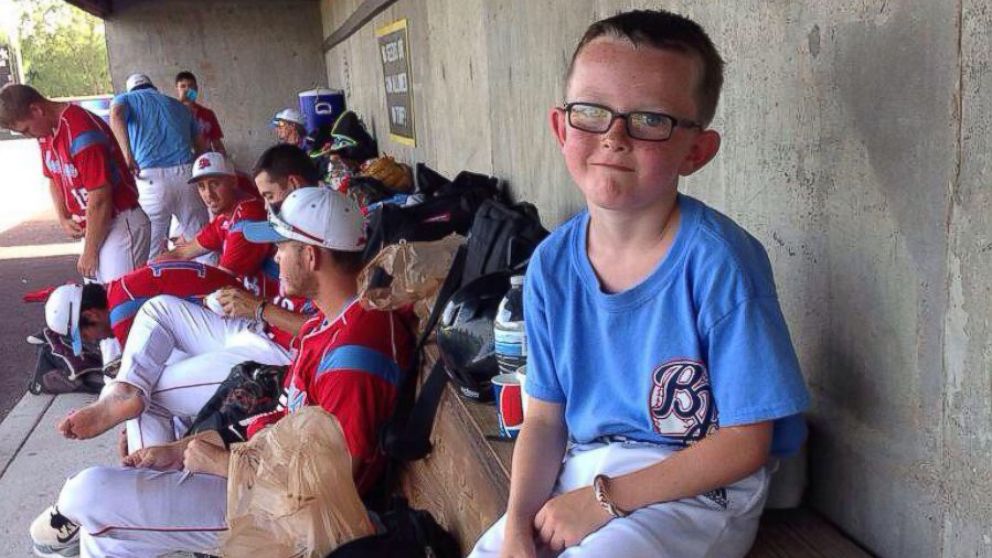
9-year old Liberal bat boy Kaiser Carlile in the Bee Jays dugout at Larks Park in mid July. (Courtesy Liberal Bee Jays)

Kaiser was like the entire team’s little brother, and he was more than a kid assigned to the dugout for the night.

Kaiser, like the rest of the Bee Jays, had made it to the NBC World Series, and he was busy Saturday doing what he had done all summer long.

There was no lack of familiarity on anyone’s part. This was simply a case of being in the wrong place at the wrong time.

When Kaiser was accidentally hit, Lawrence Dumont Stadium went silent for about 30 minutes.

I was standing down the first base line taking pictures of the game, and I was the only adult around a group of Wichita kids that were about the same age as Kaiser.

When I showed them a picture of Kaiser that I had taken earlier in the day, one of them said, “I know that kid. I played with him before the game.”

That’s what baseball is supposed to be. Kids come out, play with their buddies, dream of one day making that game-winning play and being inspired by what they see on the field.

But there are always risks — foul balls in the stands, bats that slide out of a batter’s grasp, and even the players, umpires and batboys are at risk.

We can either accept the risks and live the dream, or we can shy away and never experience the thrill that comes with being at the ballpark.

We can drive a car and accept the risks that come with it, or we can sit at home and go nowhere.

Kaiser’s loss hurts so much because Kaiser chose to live. He chose to participate in life rather than be a bystander.

We respect and appreciate Kaiser because of his willingness to live, to be a part of the game, and to serve his team.

Kaiser touched the lives of his community as well as baseball players from coast to coast that came to Liberal this summer to chase their dream.

They, like Kaiser, chose to live, to be a part of the game.

At this time, what is shown on the scoreboard pales in comparison to the loss Kaiser’s family has suffered, and the emotions for the Bee Jays and all the teams participating in the NBC World Series have been affected by the tragedy.

How do I write a story about a game when a little boy has paid the ultimate price just running down bats?

How do games continue?

We continue because we have to. We still have to make the choice to be a part of the game and to live, just like Kaiser.

What is much smaller is whether we win or lose. What is enormous is having the same courage to take the risk, to be inspired by a 9-year-old boy who won the hearts of a community long before a tragic accident in a game.

Kaiser showed us how to live.

Earl Watt is publisher of the Leader & Times in Liberal. Reprinted with permission.

HAWVER: Kan. Legislature now at the end of the rope

martin hawver line art

OK, it’s now time to get serious about the wide range of issues that unfolded last week: The $67 million in budget shifts and swaps and the first, though not representative, receipts from higher taxes approved by the Legislature last session.

For all the hoopla about the budget cuts announced last week by Budget Director Shawn Sullivan—that $50 million cut that was a key to getting the Legislature out of Topeka—it was actually a pretty workmanlike effort. Lots of shuffling of money around, taking back funds that weren’t spent last fiscal year, that sort of thing.

Most notable, and probably important, for all the cutting and shifting of money, nothing got worse.

Now, that $17.6 million that the state swiped from increased federal funding for a program that provides health insurance for children of low-income families wasn’t pretty, but nothing got worse. And, yes, Kansas has the federal government to thank for that additional money that most would have preferred be spent to increase insurance coverage for those kids. No doubt there. But nothing got worse.

That “nothing got worse” may be a key phrase for the state’s leaders and members of the House and Senate seeking reelection next year.

That’s likely where Kansas is now. The shifting and shuffling of money to help balance the state budget actually did very little damage to existing programs and services. Sure, highway (construction) fans don’t like that $8 million was pulled from the Kansas Department of Transportation; it was money that KDOT didn’t spend last fiscal year and which flowed into the new, month-old current fiscal year.

And, chances are good that the shifts and shuffles did less damage to individual agencies than an across-the-board cut of a nominal one or two percent would have caused.

But, the important news from the Statehouse last week is that Kansas now is at the end of the rope. Virtually anything else done to bulk up the budget is going to have an effect on Kansans. It might come as furloughs or layoffs, it might mean digging into existing programs and services, and we’ll notice.

So, that’s where Kansas is now: Out of options for cutting spending. That makes the upcoming election-year session politically important.

There’s plenty of time for lamenting those 2012 income tax cuts on businesses, but practically, besides foreclosing new programs and more spending, the first three years of that reduction in revenue could be covered by ending balances.

We just spent down that extra money.

Now, that extra money is gone and the issues change: What does all this “shrink government” language that shows up on campaign flyers and in gubernatorial speeches actually look like?

The easy part is over. The real decisions are now going to be whether the state needs more money to do what Kansans are used to seeing done: Taking care of the poor, educating the kids, maintaining roads and law and order, and so on. Or, whether lawmakers and the governor can convince Kansans that the state is doing too much for them and their children and neighbors—that smaller government works best.

That’s what the next session—during which legislators are going to be trying to curry favor from their constituents, or special interest groups—is going to come down to. Don’t look for more tax increases in an election year. And, there’s not enough money to do favors for much of anyone. Reduce the sales tax on food? Virtually no chance. Spend more money on K-12 education? We’re locked into a two-year funding program that is unlikely to be held unconstitutional until after the next elections.

We’re about to see what the end of the rope looks like…

Syndicated by Hawver News Co. of Topeka; Martin Hawver is publisher of Hawver’s Capitol Report. To learn more about this nonpartisan statewide political news service, visit www.hawvernews.com.

State of the First Amendment — as others see it

Gene Policinski is senior vice president of the First Amendment Center

There’s no doubt that a huge number of Americans are unable to name the five freedoms protected by the First Amendment — national survey results each year since 1997 sadly leave little doubt about that circumstance.

On a more positive note, when reminded of the core freedoms of religion, speech, press, assembly and petition, our fellow citizens line up behind them in large numbers.

But when it comes to how those freedoms apply in everyday life? Well, it’s not that there’s less support. Rather, less agreement.

About a month ago, the Newseum Institute’s First Amendment Center published the results of its annual State of the First Amendment survey and the findings of a follow-up survey that focused on issues around display of the Confederate battle flag. The former was taken before a U.S. Supreme Court decision that allows Texas officials to ban display of the flag on state license plates, and before the killings in Charleston, S.C., by an apparent racist who had posed for a photo displaying the flag. The latter survey was taken after both had occurred.

In sum, the two survey results showed a shift in how the public viewed the Texas auto tag ban — swinging from opposed to support. And the second survey found that while a majority of white and Hispanic respondents did not attach the same racist meaning to the flag as did black respondents, all three groups favored taking down the battle flag from public monuments and government buildings, and approved of private companies removing flag-related items from store offerings.

Some interesting reactions to the reporting of those results have come this way via email, and it is worth sharing a few.

In one email, noted as a “Letter to the Editor,” in which the writer complained that the reporting, citing this column, “seems to be saying that as long as a majority believes then the First Amendment does not apply.” Well, that’s hardly the case. Freedom of speech means that you and I and others get to say what we will regardless of majority opinion — including, if we wish, public and vigorous display of the Confederate battle flag.

What the First Amendment does not mean is legal insulation for some from decisions by elected officials on how public funds are expended, or from a reversal of earlier decisions. The First Amendment protects our right to speak, but doesn’t silence others who are just as free to disagree, criticize, and oppose.

This email writer also claimed desecration of cemeteries, violence, and even murder of pro-Confederate flag areas and supporters — saying the purported perpetrators “know how this First Amendment thing works these days.” Even if such things have occurred, no one has repealed laws against such criminal actions, before or after decisions to remove “that flag” from public display. Illegal acts were never protected by the First Amendment.

Another writer, who says she lives “Up North,” wrote that she’s now getting her concealed gun permit to join “the overwhelming silent majority that is pretty close to rising up to all this politically correct garbage.” Unable to get a proper flag, she said she settled for “a Confederate towel and it’s pinned to my clothesline.” After a few ugly slams at “welfare cheats, illegals, foreigners and fake causes,” blacks, President Obama and “bedwetting” liberals and Republicans she does not like, she says the nation is “turning to Communism and socialism!”

Whew — a lot of negative territory in relatively few words. But that’s free speech — even hateful remarks are protected. And one theory about the First Amendment is that by permitting such thoughts to be voiced publicly, without fear of government action, we’re less likely to rely on our Second Amendment right to express ourselves — in most cases.

Another writer — who began by advising me to “get a life and grow up dude” — followed that greeting by addressing his note to “just another history/revisionist liberal who only ‘feels good’ when trying to suppress others.”

On a more serious note, he suggested I have “little understanding of what this country’s founders believed in when writing our Constitution.” And a cartoon attached to the email noted, “We can remove flags and symbols all day … but it’s the hate in people’s hearts that needs to be removed.”

And what of the Founders’ intentions in protecting our freedom of expression? The First Amendment and the rest of the Bill of Rights were written as restraint on government, not to provide government endorsement of any point of view, faith, or political party — even after such support, if we are to be honest, was tacitly or directly given for years, or even decades.

Our core freedoms were put in place to counter what those in the Founders’ generation called “the tyranny of the majority” — not just superior numbers on this issue or that, but an entrenched majority that could control public policy over time — effectively denying a minority from ever being an effective force.

Removal of the Confederate flag from some publicly funded displays or private shelves does not signify a lessening of free speech. Rather, it demonstrates the power of unrestrained speech to reach even those who do not necessarily agree with the “why” but do approve of the “what” — even if it took 150 years to do it.

But let’s give the emailbag writers their due on an underlying fear they express — the prohibition of private displays of the flag or other symbols some dislike. In a thoughtful dissent on the Texas flag decision, Justice Samuel Alito decried the Supreme Court’s decision on Texas’s auto tag that will preclude free speech on what he properly called personal “little mobile billboards” that no one should mistake for a government-sponsored message.

And let’s all stand guard against legal erosion that would somehow limit the expression of those half-dozen folks I saw over the weekend on southeastern Tennessee roads, flying large battle flags from the rear of pickup trucks. Such overt displays may offend some, or even many, but those in opposition are free to buy their own trucks and flags and take the same highways.

No government subsidy, support or limits, and no Supreme Court justice in sight. That is how real free speech works. Really.

Gene Policinski is chief operating officer of the Newseum Institute and senior vice president of the Institute’s First Amendment Center. [email protected]

SCHLAGECK: Wear it well

John Schlageck writes for the Kansas Farm Bureau.

Throughout the years, I’ve heard fellas talk about who ought to wear a cowboy hat and who shouldn’t. These conversations are littered with the necessary skills a cowboy must acquire to wear a western hat. Some even suggest issuing a license to wear such apparel.

Most livestock men and women tend to dislike things artificial – you know, things that really aren’t what they seem to be. They prefer the real deal, something genuine or steeped in the ranch or western tradition that came before them. They have a strong desire to keep things the way they are and pass them on to the next generation when they’re ready and able.

For starters any self-respecting cowpoke needs to know how to ride, rope and handle cattle. This skill set includes moving, doctoring, cutting and branding – you know if you can’t do most of these necessary cattle chores, maybe you shouldn’t wear the hat.

So who really should?

Anyone who wears a western hat must have spent time in the saddle. That’s a given.

So would a rancher who’s never set foot in a stirrup and only pitched hay be allowed to sport a cowboy hat?

Not really.

Anyone who’s worked cattle with only chutes sure ought to be out of this discussion. Give ‘em a permit for operating equipment instead. And of course they’d have to wear a gray or blue striped shirt for being a mechanic when the chutes fell apart.

Sheep herders and auctioneers would be in a real fix. Especially, if the sheep people claimed the derby before the auctioneer called, “sold.”

Of course all those race car fans, heck let them wear ball caps. And if they want something different – wear ‘em with the bill facing forward.

All the rodeo fans and western cinema screen dreamers, not to mention museum-quality aficionados – no cowboy hats for them.

What about the old guys who run more cattle than a whole pack of coyotes’ fleas?

You know the ones with their short-brimmed Stetsons – they’d sure be sent packin.’

Oil barons, bums and anyone who wants to express some fashion statement about who they’d like to be, rather than who they really are, couldn’t wear a cowboy hat either.

Would these true-blue cowboys license only a Mexican sombrero or would they accept a flat-crowned, flat brimmed cover with a little old snap in front tied on with a string?

Sure, go on and license who you think should wear a western hat. It’s all about tradition and remember there ain’t no room for tolerance and those less than proficient or true as judged by a few.

As for me, I’ll be content to watch my old buddies sporting their headwear of choice – ole Dennis wearing his Nevada. Tim with his red bandana wrapped around his head. Bob in his 50-year-old Cattleman synched tight against the wind. Bryan whose hat looks like a mule sat on it since it was new and Sam in that farming seed corn cap; all intent on the task at hand.

Not one of these hats was ever judged by the crease. None pretty or traditionally wrapped – except in the one their dad’s taught them, “Get the job done.”

John Schlageck, a Hoxie native, is a leading commentator on agriculture and rural Kansas.

EXPLORING KAN. OUTDOORS: Bull frogs and me, 2015

Steve Gilliland
Steve Gilliland

Bull frog season opened July 1 in Kansas and that stirs up lots of fond memories.

It seems bull frogs and frog hunting were a part of my summer for many years. When I was in grade school, there was a big drainage ditch across the road from the neighbor kids’ house.

The three of them had a BB gun and there was never a shortage of frogs in the ditch. When we weren’t shooting at frogs in the ditch, we were behind the barn shooting their big boar hog in the butt (and elsewhere.) Anyway, each time we finally managed to kill a frog, we’d cut the thing open with our pocket knives and retrieve the BB’s.(how’s that for recycling?)

After we moved away from there, lots of my friends were city kids so my outdoor adventures consisted of me shooting blackbirds out of trees along the creek with mom’s old fold-up .410, catching crawdads under the bridge using forked sticks as spears and learning how to trap muskrats.

We moved one more time before I graduated from high school, and there all my buddies were country kids once again that trapped and hunted rabbits, deer and bull frogs. There was a farm a few miles away with two ponds, one on each side of the road, and they both teemed with bull frogs.

Back then, the hot humid summer nights didn’t bother me at all, and that was the best frog hunting weather. By then, we were all in high school and one of us always had some beater of a car, so we’d don warn-out jeans and old sneakers (which was our usual attire anyway,) fill the trunk with flashlights, feed sacks and frog spears and head for the ponds after dark. I can only figure the farmer only let our motley crew on his property hoping we’d all drown in the pond and never bother him again.

Anyway, we would split up to cover both ponds at once, slowly wading around the edge knee-deep in the water until a frog was spotted ahead. Putting the flashlight beam in its eyes dazzled the frog until we could spear it and add it to the feed sack hanging around our waist.

I remember vividly returning home after one particular frog hunt at those ponds. The night was hot and steamy and the four of us went to work butchering frogs in our driveway under the security light by the barn, using an empty hay wagon for a table. Sacks were emptied and squirming bull frogs went everywhere. I also vividly remember mom hollering out her upstairs bedroom window for us to be quiet; I don’t know what her problem was, it was only 2 in the morning!

Frog meat is white and sweet, and half the fun of frog hunting is watching the legs twitch and quiver as they fry in the oil. One night one of the guy’s girl friend was there as we fried up a mess of legs. The experience was all new to her, so while she was out of the room, we propped up a big pair of the legs on the edge of the skillet as if they had climbed out. As I recall that was the last time she ever hung-out with us.

Just a few years ago, I took my dad, who was then nearly 80 frog hunting. We went just out of town to some of the McPherson Valley Wetland ponds. It was a slow night for harvesting frogs, but we got enough to have a “small mess” to fry. The legs still twitched and quivered as they fried, and they still tasted just as sweet as I remembered them. Thankfully, some things never change! Continue to Explore Kansas Outdoors.

Steve Gilliland, Inman, can be contacted by email at [email protected].

Copyright Eagle Radio | FCC Public Files | EEO Public File