We have a brand new updated website! Click here to check it out!

FHSU business majors benefit from generosity of former Ness Co. couple

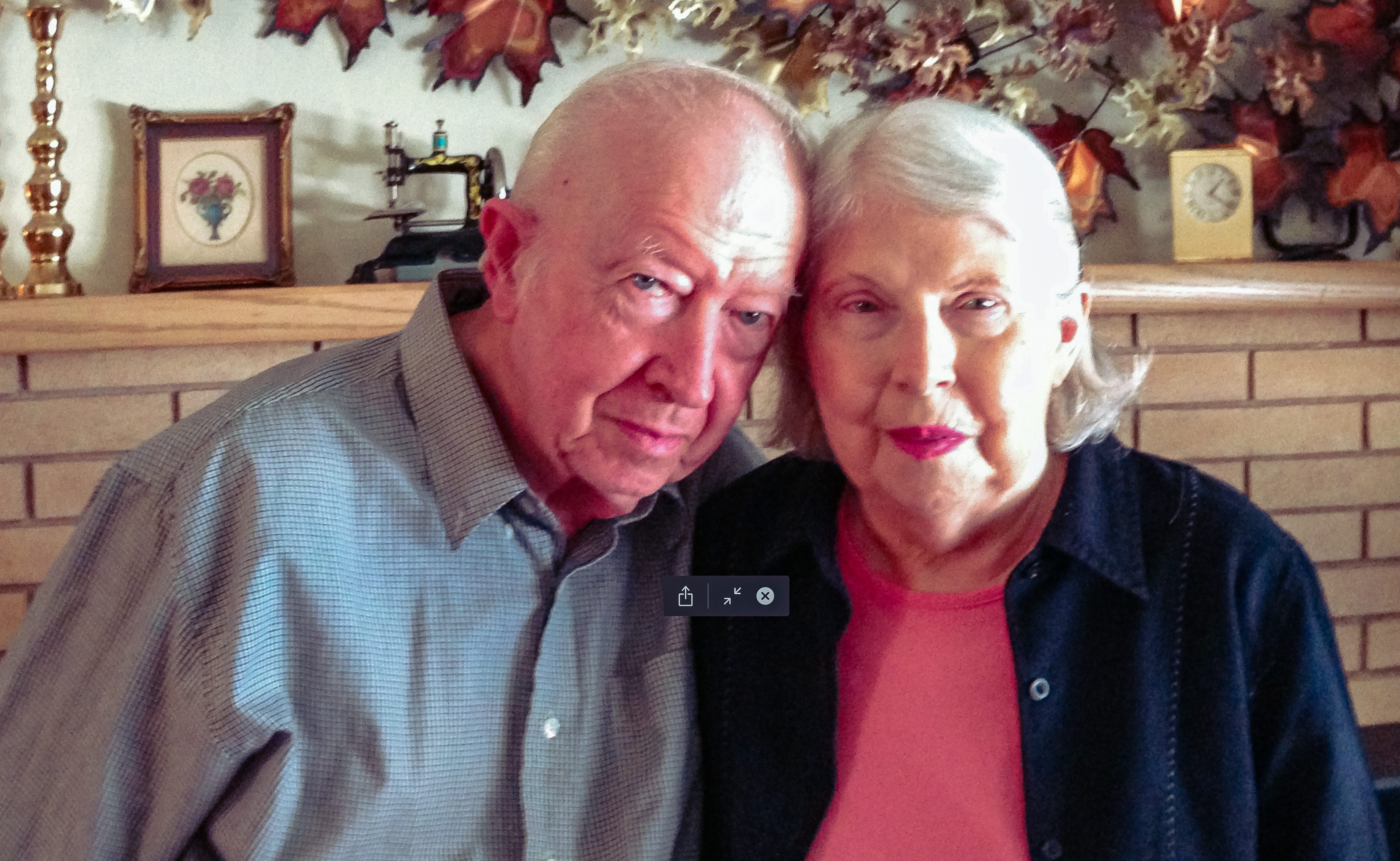
Gerald and Mary Ann Yeager

By DIANE GASPER-O’BRIEN
FHSU University Relations and Marketing

Gerald and Mary Ann Yeager thought a lot of the education they received at Fort Hays State University.

Having no children of their own, the Yeagers felt that FHSU was part of their family, and they were donors to the FHSU Foundation for more than 20 years. Last year, they left a generous donation from their estate to several members of their family, including Fort Hays State.

Fort Hays State received a $1.2 million endowed gift from the Yeagers, who both graduated with business degrees from FHSU. Their gift is to be used for scholarships for business majors.

The Gerald E. and Mary Ann Yeager Business Scholarship fund is endowed, meaning it will go on in perpetuity, supporting Fort Hays State students for generations to come.

“They did very well in life, and they wanted to share it with various places. Fort Hays State was one of them,” said Judy Boor, Mary Ann Yeager’s younger sister.

Both graduates of Bazine High School in Ness County in the 1950s, the Yeagers continued their education at then Fort Hays Kansas State College.

After graduation from FHSU, Gerald enjoyed a long, successful career with Equitable Real Estate in Denver and San Francisco, retiring as vice president after 29 years with the company. Mary Ann taught business classes at Fort Hays State while her husband completed his bachelor’s degree, then worked as a budgetary analyst for Standard Oil of California (now known as Chevron) for many years.

“I think it’s absolutely wonderful that they gave this to the business college,” said Leona Gallion from Hays, a good friend of the Yeager couple during their college days.

Gallion kept in touch with the Yeagers through the years before their death. Mary Ann Yeager died in 2015, and her husband died in 2016. Gallion said she wasn’t surprised when she learned of their generous gift to FHSU.

“They were lovely, very giving people,” Gallion said. “There isn’t any doubt they hoped to help business majors like themselves.”

Dr. Mark Bannister, dean of the W.R. and Yvonne Robbins College of Business and Entrepreneurship, agreed.

“They were Ness County folks who were very dedicated to rural Kansas,” Bannister said. “They grew up in western Kansas and wanted to support students from there. Gerald shared stories of how hard he and Mary Ann worked in order to afford to attend college. He recounted that as a teenager, he unloaded 100-pound sacks of potatoes at the local grocery story when he hardly weighed that much himself. Their work ethic and Fort Hays State education would contribute to their success as professionals.”

The Yeagers were long-time donors to the FHSU Foundation before establishing an endowed gift. Scholarships from the newly endowed fund totaling nearly $20,000 were committed to students for the first time this academic year.

“This Yeager gift is a fantastic contribution,” Bannister said. “The scholarships from this fund will benefit students for many years to come. Scholarships like this help students work fewer hours and focus on school. I think the Yeagers wanted to support students who are a lot like they were and hoped that this scholarship help will enable today’s students to succeed in professional business careers much as the Yeagers did.”

The scholarships have already helped students, such as Zach Rundle, a junior from Hays.

“Giving that big of scholarship puts a lot of trust in the student to be serious about school,” said Rundle, who received one of seven $2,500 awards. There were two smaller scholarships given as well.

“I’m almost a senior,” Rundle continued, “and I can see debt accumulating. It’s nice to get a break from that toward the end of my college career.”

A year ago, Rundle – an informatics major with a minor in management – was working nearly full time while going to school.

“It was taking its toll,” he admitted. “So it’s nice to have some breathing room to be able to focus more on my school work. I really want to prove to my donors that I want to improve and be a good investment.”

Emily Prine, a sophomore business education major from Hays, agreed.

“I’m really involved on campus and have a job,” she said. “It’s nice to know I don’t have to find all the money for tuition and books.”

Landon Erway, a finance major from Larned, was checking out opportunities to play baseball after high school while working on a business degree in finance. He was trying to decide which college to attend, then last spring received an email from FHSU that he had received a Yeager Business Scholarship. That clinched the deal for Erway.

“At first, I thought it was a scam,” Erway said. “Once I found out it was real, I was very excited.”

The scholarship is renewable, provided a student maintains a 2.5 GPA.

“I want to get my MBA, too,” Erway said, “so this will definitely help a lot.”

Dwight Filbert, a nephew of the Yeager couple and one of the executors of their estate, was pleased to hear the recipients of the inaugural Yeager scholarships were appreciative of the assistance they will get in gaining an education.

“(The Yeagers) were very grateful for the education they received at Fort Hays State,” Filbert said. “They were wise investors and frugal with their money. They had a big estate. They knew where they wanted it to go, and Fort Hays State was definitely one of their interests.”

Gifts to Fort Hays State University are 100 percent tax deductible. To learn more about the Fort Hays State University Foundation and how you can support FHSU, visit https://foundation.fhsu.edu or contact their offices at 785-628-5620 or [email protected].

Waddell critical of architectural firm’s role in bond

By CRISTINA JANNEY
Hays Post

The Hays USD 489 Board of Education dove into the issue of the failed bond issue at its meeting Monday night for the first time since the election.
Sixty percent of voters voted against the 30-year $78.5 million bond on Nov. 7. The bond would have built two new elementary schools, added an auditorium at the high school and paid for renovations at Roosevelt Elementary, O’Loughlin Elementary, the middle school and the high school.

This is the second bond to fail. A $94-million bond failed in June 2016.

Board member Josh Waddell was critical of the school district’s architectural firm, DLR.

Waddell said he thought DLR needed to listen.

“I don’t think it is rocket science on why this did not pass,” he said. “DLR pushed the threshold per $150,000 home valuation higher than any data supported that this community would go. And they pushed it out to a time frame that is very unpalatable to almost everybody in the community.”

Superintendent John Thissen said it was not DLR who came up with the plan, but the Vision Teams that were made up of community members, parents, teachers and administrators.

Waddell said, “There is a difference between leading a team down a path versus a team coming to that conclusion on their own. I would ask which team member cited 30 years was the best option to go.”

He added 30-year bonds had been used nowhere else in the state.

“I think the first step is finding a realistic value and then working from a value to see what can be accomplished. Rather than trying to look at the snatch-and-grab approach of if we go just another $1.50 or go $2 more. I don’t fault the Vision Team at all. Their job was to assist with needs and different voices from the community of what all the community would like to see.

“I think it was DLR’s responsibility to create something that would be viable. When we look at the results of the election, a $90-million plus bond was closer in the voting polls than this one. There has to be a huge disconnect. There has to be a lot of that fall on the guidance from DLR.”

Waddell will be leaving the board at the end of the year, but emphasized the importance any third attempt at a bond pass.

“The third time needs to be the charm here,” he said. “At the same time, you are draining community resources. You have people working very hard. Energy is great. You saw it in the second. You go into a third. You are going to see a lot of the same people who are pouring their guts into this, and we need to capitalize before we don’t have volunteers.”

Board president Lance Bickle said he thought the board needed to be more involved in the bond process.

“I think after the first bond failed, we took it from the community the board was spearheading everything,” he said, “so I think we almost took more of a hands-off approach the second go-round, and I think we need to find that happy medium. I don’t think we weren’t involved, but I definitely think we need to be more involved.”

Waddell also wanted to broach the sales tax issue with the city again. He said the school district could propose a tax with a shorter duration. He said the city and school district need to work on their relationship.

“There still seems to be some animosity between the city versus the school district,” he said “I am not saying that is necessarily true. I just feel it or have a perception there. I don’t know how that needs to get fixed, but it needs to get fixed. We need to be walking together into the future rather than taking separate paths.”

Board member Paul Adams said the district should look at projects like the auditorium. He wondered if that was a necessity and if that could be addressed with private funds. Adams said he also thought the district might need to narrow its focus.

“Maybe we say … we are going to pick that school and that is the only one we are going to fix because that is all we think the community is going to support,” he said. “That is going to leave us with haves and have nots, but that is the reality of what we can and can’t do. … If we don’t move forward with doing something, then we are failing everybody.”

Thissen said the district might be forced to attempt a series of smaller bonds.

Bickle said people need to be able to see three things: the plan, the dollar amount and the time frame. He said the last bond showed the public the dollar amount but did not show the plan and the time frame well.

Board member Greg Schwartz said it is time the board stepped up and did work on the bond.

Schwartz, who was appointed to the board after the board approved the bond issue, admitted he did not vote for the bond. He said he thought it was too much money and a 30-year bond was too long.

He said he thought the district needs a 30-year plan for facilities that would be revised on an annual basis.

Board member Luke Oborny said if the district was going to go for smaller bonds, he liked the idea of laying out a long-term plan for facilities.

“I think our mindset at this point is to not leave any building behind. Let’s address the needs for every building, and we haven’t done anything for so long, so let’s do everything at once. And that makes a really big price tag. That makes it really hard,” he said.

Thissen said when you look at a 15-year bond, you can’t just look at it from the financial perspective, you have to look at it from the educational perspective.

“You are looking at a generation,” Thissen said.

The board took no action and will discuss the bond again at its next work session in January.

News From the Oil Patch, Dec. 11: Ellis Co. tops Kansas production

BY JOHN P. TRETBAR

The Kansas Geological Survey reported new oil production numbers for the state Tuesday. Operators produced 3.08 million barrels in August. The total for the first eight months of the year is 24.151 million barrels of crude from 50,901 active wells.

Ellis County led the state with 230,000 barrels of new production for a total through August of 1.77 million barrels. Barton County reported 150,000 barrels in August for total production of 1.14 million barrels through August. Russell County 135,000 barrels for the month, with the running total reaching 1.07 million. And in Stafford County, producers added 90,000 barrels for a total through August of just over 700,000 barrels.

Here are the ten top oil-producing counties in Kansas through August (KGS):
Ellis 1.77 million barrels
Haskell 1.61 million barrels
Barton 1.14 million barrels
Finney 1.08 million barrels
Rooks 1.077 million barrels
Russell 1.072 million barrels
Ness 1.004 million barrels
Harper 706 thousand barrels
Stafford 700 thousand barrels
Barber 649 thousand barrels

Independent Oil & Gas Service reported 11 active drilling rigs in eastern Kansas last week, down two from the week before, and 25 west of Wichita, which is up three. Drilling was underway at one lease in Ellis County. Operators report drilling ahead at sites in Ellis and Russell County. They’re moving in completion tools at three sites in Barton County, two in Ellis County, one in Russell County and two in Stafford County. Baker Hughes reported 931 active drilling rigs coast-to-coast, an increase of two oil rigs. Canada reported 219 active rigs, down three.

Kansas operators filed 35 permits for drilling at new locations across the state last week, 1,359 so far this year. There are 18 new drilling permits east of Wichita, 17 in western Kansas, including one new permit in Barton County.

Independent Oil & Gas Service reports 33 new well completions for the week, 1,243 so far this year. There were 22 wells completed in eastern Kansas and eleven west of Wichita, including two in Stafford County.

The Trump administration imposed two-year delay in implementation of an Obama-era rule intended to curb methane emissions from drilling on public lands. The Interior Department’s Bureau of Land Management is taking action to delay the rule, according to a filing in the Federal Register. The rules have been the subject of court fights and a failed vote in the Senate to repeal them.

The government’s lease offering of 900 tracts in the National Petroleum Reserve in Alaska drew bids on just seven of those tracts. The bids Wednesday totaled $1.16 million. All of the bids were submitted jointly by subsidiaries of ConocoPhillips and Anadarko.

US Commodity Futures Trading Commissioner Bart Chilton and his team on Monday announced the creation of the first digital currency based on a physical asset. OilCoin will tokenize barrels of oil held in reserve with each token representing the value of one barrel. A public token sale is scheduled early next year. Commissioner Chilton says OilCoin is a regulated digital currency based upon “something real that folks can touch and feel,” which could provide a safe haven from the volatility associated with cryptocurrency.

The vice-chairman of China’s securities regulator says they’re near “the starting point for the comprehensive opening of China’s futures markets to the world,” beginning with the imminent launch of crude oil futures. According to Reuters, he did not elaborate on when the Chinese crude futures would start trading.

Chevron announced it would cut its total capital and exploratory budget for a fourth consecutive year in 2018. But the supermajor is significantly boosting spending on U.S. shale, especially in the Permian Basin of Texas. The company will drop 3.3 billion for Permian production and another one billion for other shale investments, compared to $2.5 billion this year.

Government finances in New Mexico have turned around, after two years of drastic cuts, to the point that lawmakers can now expect revenues to exceed spending by $199 million, or about 3.3%. The rebounding oil patch in New Mexico gets credit for much of that. In a report to legislators, officials said income from oil and natural gas was adjusted upward by $140 million for the current and coming fiscal years. Income tax projections were also higher.

A North Dakota trucking firm learned the hard way that it can be fined by both the health department and oil and gas regulators for dumping oilfield wastewater. The company, Black Hills Trucking lost its bid to reject nearly a million dollars in civil penalties assessed by that state’s Oil and Gas Division. Black Hills argued before the state Supreme Court that jurisdiction in the case belongs solely to the Health Department, because the dumping incidents occurred on a road and not on a well pad. The Health Department has already issued a civil penalty. The high court ruling Thursday affirms the Oil and Gas Division’s additional $950,000 fine plus costs.

North Dakota health officials have concluded that a proposed oil refinery close to the Theodore Roosevelt National Park should comply with federal and state air pollution rules. The company still needs a state water permit as well. Operators were able to skirt the normal site-selection process because at up to 49,500 barrels, the proposal falls just below the state threshold requiring the Public Service Commission to approve the site. Meridian Energy Group says it will be the “cleanest refinery on the planet,” but activists complain it’s too close, just three miles from the national park.

Federal geologists agree to reevaluate the amount of recoverable crude oil in North Dakota. U.S. Senator John Hoeven and industry officials requested the new assessment by the U.S. Geological Survey, saying it would likely attract investment by showing stronger production potential. They want the USGS to take into account 17 other formations in western North Dakota that could be exploited using technology developed for the Bakken and the Three Forks.

Thirteen oil companies failed to meet North Dakota’s natural gas flaring goals in September. The Bismarck Tribune reports operators in September burned off more than 300 million cubic feet of natural gas daily — a level not seen since the summer of 2015. But Mineral Resources Director Lynn Helms says the state’s gas capture targets are working “extremely well.” He says they’ve brought the percentage of gas flared down from the peak of 36 percent in September 2011. Flaring is expected to be down to 12 percent next year and down to nine percent by 2020.

Cart paths set for repair at Fort Hays Municipal Golf Course

By CRISTINA JANNEY
Hays Post

The Hays City Commission heard a report Thursday night on a bid to replace concrete on the Fort Hays Municipal Golf Course cart paths.

Jeff Boyle, parks director, is proposing concrete replacement for the back-nine cart paths. The current paths were installed in 1998.

Morgan Brothers Construction of La Crosse has submitted the low bid of $100,000. The repairs are being paid for through trail fees from all members and nonmembers who use their own carts on the paths.

Mayor Shaun Musil asked why staff was not doing the project.

“It is a continual process that we had so many projects going on that we can’t get enough people focused and concentrated on that job long enough to get it done, to be truthful about it,” Boyle said. “We have a lot of golfers who are concerned at this point that they are spending this money every year for cart path trail fees and not enough is getting done. That is why we are asking for this money.”

The work is anticipated to start in January and be completed by May 15.

Specific holes might have to be temporarily closed during construction, but Boyle said the complete back nine will not have to be closed while the work is being done. Players will be allowed to drive the fairway during the work.

Two smaller areas along hole 17 and the path back to the cart shed will still need to be repaired and will be done as the funds become available.

🎥 Ellis County invests in future of 911

By CRISTINA JANNEY
Hays Post

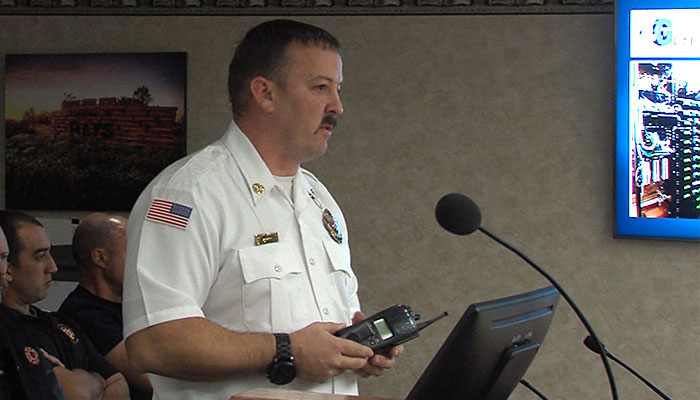
The Ellis County fire chief and emergency manager met with the Hays City Commission on Thursday night to discuss improvements to the 911 communications system.

The city has an agreement with Ellis County by which the city provides the dispatchers and Ellis County provides the consoles and 911 radio trunking equipment. Within the last five years, Ellis County has made a significant investment in upgrading not only the radio trunking equipment, but also the consoles and communication equipment.

The 911 system can now take information through voice call or text. The information for a 911 call shows up on a series of screens for the dispatcher, said Darin Myers, Ellis County fire chief and emergency manager. The system uses GPS to identify an area where the call is coming from. It will ping the phone several times during the call to narrow the location.

The county recently upgraded to an NG-911 system. Instead of having a standard phone line that comes into the dispatch center, they are all connected via fiber.

Emergency personnel are paged from two towers in the county via a data line. One tower is at 230th and Feedlot, and the other is southwest of Hays on Spring Hill.

The new equipment being used in the 911 center is more compact, but the county has retained the old equipment with the idea it might install it as a backup system in case the new system would ever go down, Myers said.

The Hays Fire Department is supposed to have a certain amount of dispatch circuits because of the numbers of calls it receives. The department has to have layers of redundancy to make sure the system is working. Before this year’s upgrade, it only had one. Now it has the required two.

Another upgrade was the addition of 4G-LTE backup so if the fiber line goes down, the dispatch center can still receive phone calls.

There is also now a backup generator and equipment at the north tower to help the equipment there last longer.

Further upgrades allowed the county more flexibility with the type of radios that are purchased.

“If we would not have upgraded that when we bought these radios, it would have limited us to what type of radios we would have to buy, which would have increased the price for each radio,” Myers said. “That cost would be distributed to everyone in Ellis County that uses it, including the city of Hays for the fire and PD and Ellis and Victoria PD. … It gives us more ability to buy a cheaper radio now to save money in the future.”

The county also upgraded its recorder. It records all its phone calls and radio channels.

The city has re-formed a joint city/county emergency communications group, which is developing a strategic plan for communications. In addition to identifying the importance of the continuance of the new group, the group identified funding, enhanced data and mobile data terminals as goals.

The upgrades that were completed last year cost more than $800,000. Radios that were approved for purchase Monday night would have cost $760,000 without the discount the county received. Myers said funds for future infrastructure improvements need to be identified.

Enhanced data uses GPS to help locate calls. The county is buying radios with the GPS functions, but money has not been identified for the infrastructure on the dispatch side. That upgrade would likely take another couple of years, Myers said.

Mobile data terminals reduce radio traffic because it uses GPS to automatically track emergency personnel. When personnel arrive on scene, the computer shows dispatch they are there and they don’t have to call in. It also automatically changes your radio channel so you are on the right tactical channel among many other features.

🎥 HFD: Celebrate Christmas safely to prevent fires

(NFPA)

By GARY BROWN
Hays Fire Dept. Chief

The Christmas holiday is a great time for families and friends. Unfortunately, there is also an increased risk of fire.

Christmas decorations are festive and beautiful. They may also be combustible. Christmas candles may also cause fires. Christmas tree fires are not common but when they do occur they are likely to be serious.

Here are some suggestions for a fire-safe Christmas holiday:

  • Check smoke and carbon monoxide alarms to be sure they’re working properly. Avoid the temptation to take the batteries out of the alarms to power Christmas toys.
  • Choose Christmas decorations that are flame-resistant or flame-retardant.
  • Keep candles away from decorations or other combustibles. Blow out candles before leaving the house or going to bed. Keep children and pets away from lit candles.
  • Use Christmas lights that are in good condition. Replace lights with worn or broken cords or loose bulb connections. Do not overload electric circuits.

    (NFPA)
  • Avoid blocking doors with Christmas trees or other decorations.
  • Make sure natural trees are fresh when selected. The needles should not fall off easily. Cut off two inches from the base of the trunk before placing the tree in the stand to allow water to be drawn up into the tree. Be sure to add water to the tree stand daily.
  • Keep natural Christmas trees and combustible decorations away from fireplaces and space heaters. Use fireplace screens.
  • Pay attention to cooking and keep combustibles away from hot stovetops.
  • Provide large, deep ashtrays for smokers or ask smokers to smoke outside.
  • Dispose of smoking materials and fireplace ashes in metal containers and away from the house.
  • Smoke and carbon monoxide detectors make great Christmas gifts!
  • Call 911 promptly if a fire or another emergency occurs.


Wichita developer announces Hays conference center project

(Click to enlarge)
By CRISTINA JANNEY
Hays Post

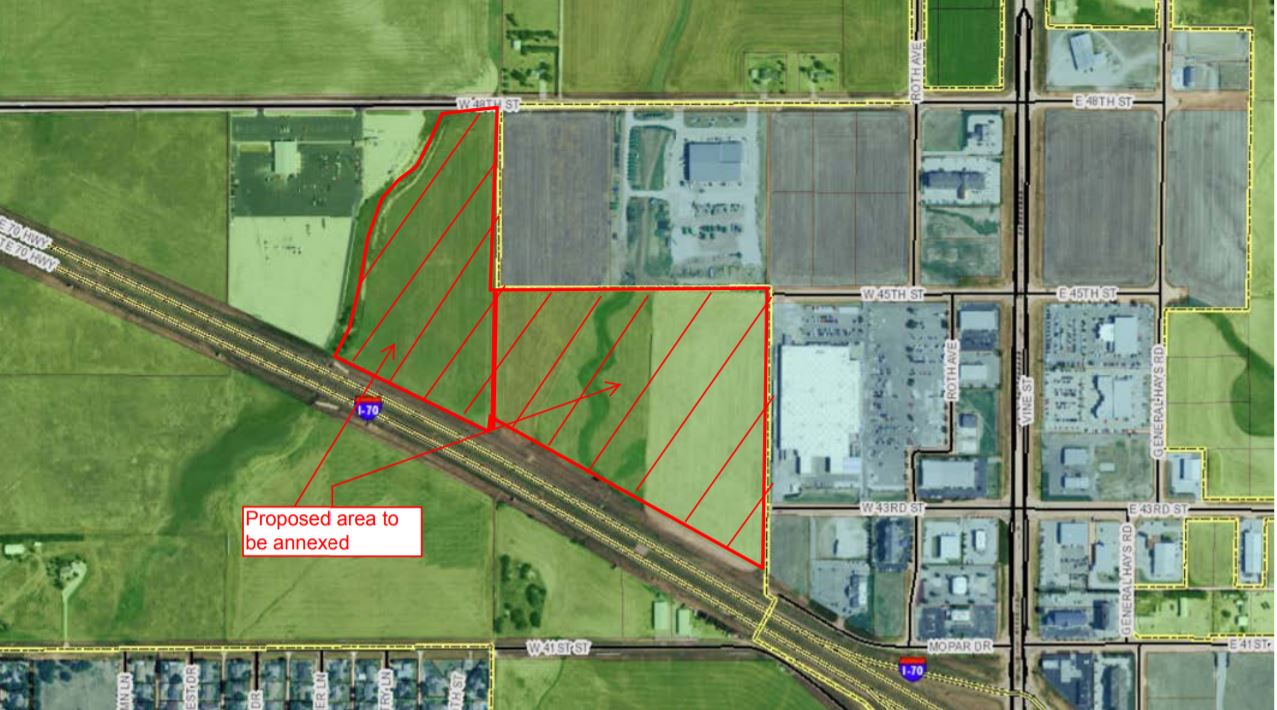
A Wichita developer announced today the intent to build a new 500-seat, 8,400-square-foot conference center and hotel west of the Hays Walmart.

The Hilton Garden Inn will have 100 beds and contain a small restaurant and bar. It would employ the equivalent of about 35 full-time employees.

Ground could be broken as soon as April on the new $12 million to $14 million facility with the center opening in 12 to 14 months, developer Raju Sheth said.

The project will be located in the Ottley Addition, which is being considered for annexation by the city. City staff recommended the annexation to the city commission during a work session Thursday night, saying it was contiguous with the current city limits, was a likely location for future development and was readily accessible to the extension of city services.

The Hays Area Planning Commission is scheduled to have a public hearing on rezoning the land from Agricultural to C-2 Commercial on Dec. 18. The property is surrounded by existing Commercial (C-2) zoning, Walmart, Carrico Implement and Mid Kansas Auto Auction. Ottley is the owner of Mid Kansas Auto Auction.

(Click to enlarge)

The preliminary plat of the Ottley Addition was approved Nov. 20.

The city commissioners had no questions on the project Thursday night.

Sheth said Hays is in need of conference space, and the developers would like to get the project off the ground sooner rather than later.

“It makes the most sense in Hays,” he said. “There is no space for big weddings or small conventions to fit other than the university.”

Sheth said he thought the new space would be complimentary to Fort Hays State University and might be used by the school to bring in future events. The center will include the latest in video and audio equipment.

In addition to the hotel and conference center, the development will have space for a new stand-alone restaurant and strip mall.

Developers have included plans for additional parking as well as work on 43rd Street.

Aaron White, executive director of the Ellis County Coalition for Economic Development, said the Coalition and the Hays Convention and Visitors Bureau have been trying to get a convention center in Hays since at least 2011. White has been working with this developer since this summer.

“We are very excited to see this project go forward,” he said. “A product with a full-service hotel and conference center has great potential, and we are glad to see it happening.”

Multiple conferences over the years have expressed interest in staging in Hays, but there was not space for them, White said. One of these has included the Kansas Department of Commerce Rural Opportunities Conference, which draws about 200 to 250 attendees.

The economic impact of a facility such as this does not just come from the taxes generated by the center but by the secondary spending by people who use the center on things such as gas, restaurants and shopping while they are here.

Research indicates Hays has room for another hotel, White said. If a community has 30 or more days per year in which all the hotel rooms are full, market research indicates there is room for more hotel rooms. Hays is averaging about 50 days full per year.

Even though the rooms at the now demolished former Ramada Inn were sub-standard, their removal left a 200-bed void in the city’s hotel stock, White said. The new Hilton Garden and another hotel going in next to JT Travel Plaza is merely replacing the rooms that were lost, White said.

(Click to enlarge)

Related story: New $9.64 million hotel project approved by city

Historic downtown Hays bar Brass Rail for sale

By CRISTINA JANNEY
Hays Post

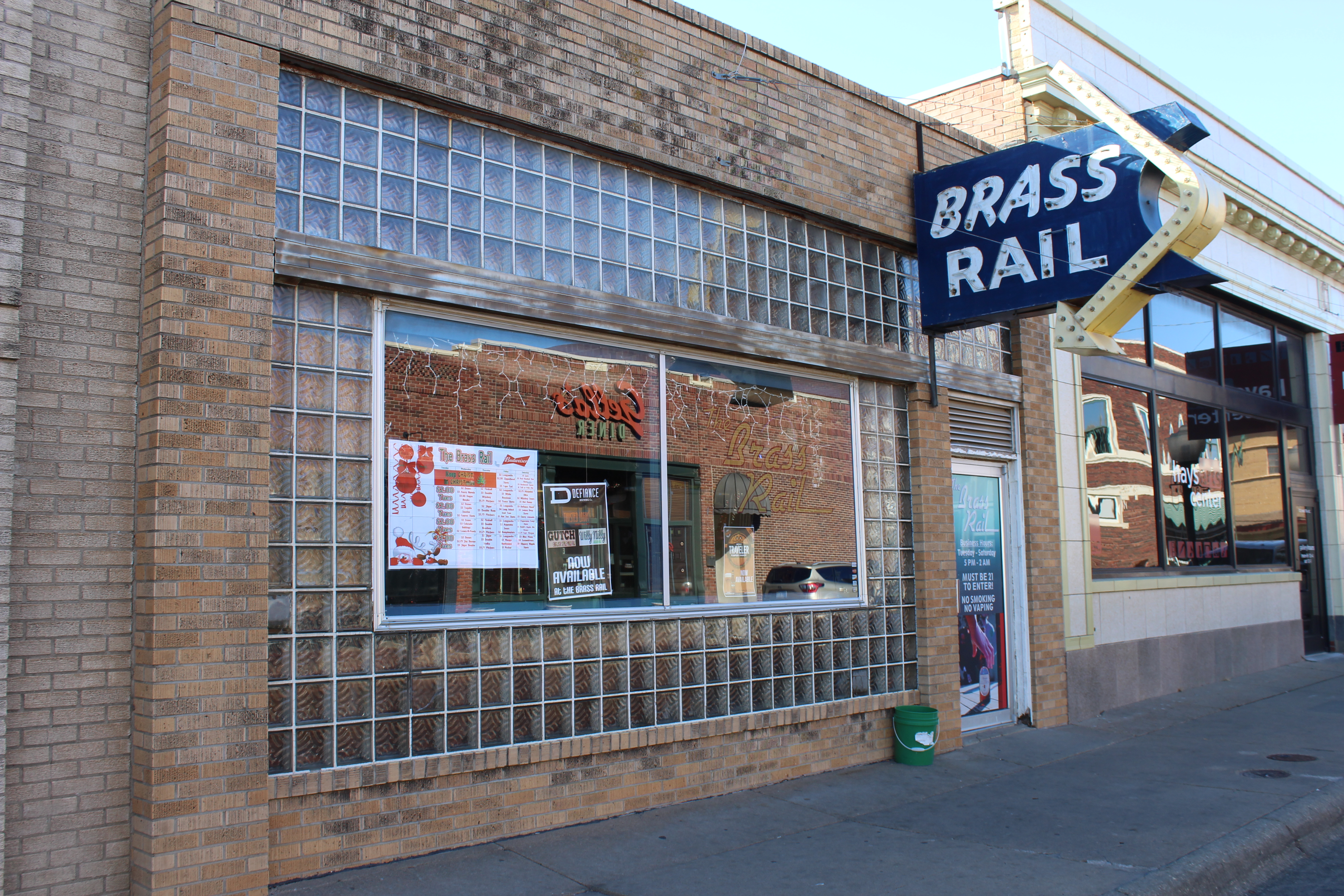
The historic Hays bar the Brass Rail is for sale.

The bar, 114 E. 11th, has operated in downtown Hays since 1943, according to current owner Eric Schuette.

Schuette, who also owns the Sip ‘N’ Spin, wanted to dispel rumors either bar was in financial trouble.

“Basically I am getting older, and the wear and tear of running two bars is getting to me,” said Schuette, 45. “I just want to lighten my load as I get older.”

The Brass Rail remains open and will remain open until such time as a new owner can be found. Schuette said he is under no pressure to sell.

He said he has mixed feelings about the future of the Brass Rail. He said he would like to see the historic bar remain a bar, but he is not opposed to considering a deal from someone who would like to buy the space for another purpose. He said he has soft spot for the historic business, but a new use would mean that the bar would not compete with the Sip ‘N’ Spin, which he intends to continue to run.

“My accountant keeps reminding me that nostalgia doesn’t pay the bills,” he said.

Schuette has been a part of Sip ‘N’ Spin for 22 years and owned the bar for 17 years. He has owned the Brass Rail for 11 years.

He said buying and running the Brass Rail was like owning a piece of Hays history. Schuette has tried to restore the bar to what it was like in previous years.

People often come in and say they met they met their husband or wife at the bar. One of Schuette’s friend’s grandparents and parents met at the local bar.

“It’s got a lot of history for one place,” he said.

Schuette was visiting Kansas City once and mentioned to some strangers that he operated two bars in Hays, Kansas. When he mentioned the Brass Rail, the men, who were from Missouri, smiled and told a story about visiting the bar in 1964.

“People remember that,” he said. “That is what I have always liked about it and that is why I continue to enjoy it over there too. It is a bit of history for Hays.

The 3,750-square-foot bar is listed for sale at $550,000. For more information, contact Tim Cossaart at RE/MAX Hays.

Share your memories of the Brass Rail in the comments.

Western Kansas bird hunters enjoy abundance of pheasant, quail

By C.D. DESALVO
Hays Post

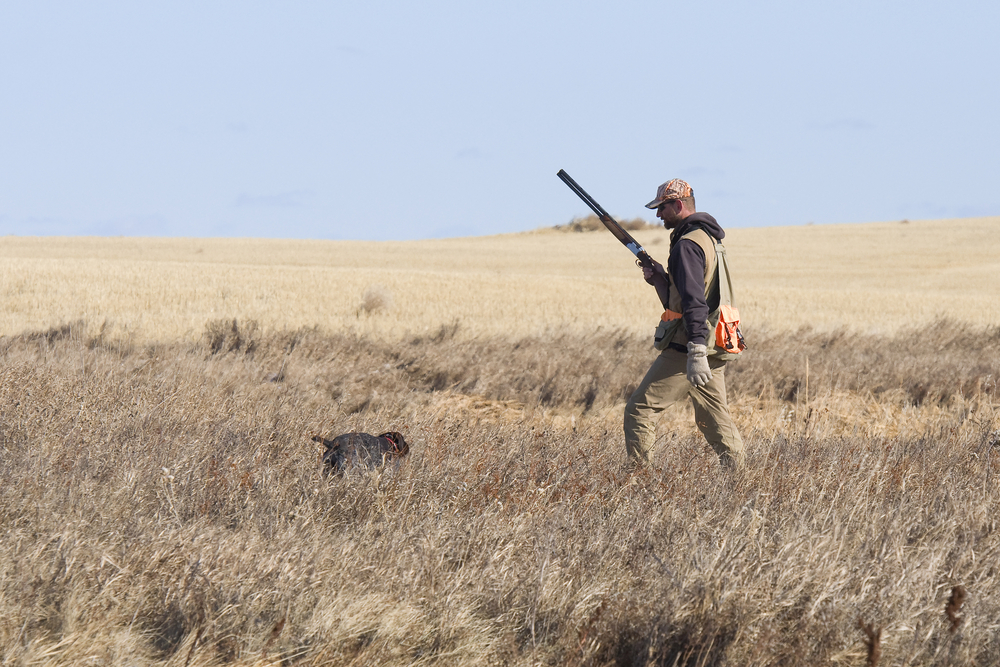
Every year from the second week of November through the last day of January, bird hunters from all over make their way to rural Kansas to take part in hunting pheasant and quail. According to the Kansas Department of Wildlife, Parks & Tourism, more than 80,000 hunters (about 40,000 of them non-residents) will hunt pheasants this year in Kansas with some of them being part of the 62,000 who will hunt quail.

According to the KDWPT, pre-season reports predicted good hunting in many areas of the state due to rain patterns creating ideal nesting conditions and cover from predators like chicken hawks, coyotes and bobcats. Local hunters in the area have noticed the dramatic increase.

“There are a lot more pheasants and the quail have multiplied by what seems like 100 percent. They are everywhere,” said Dean Gottschalk, an avid bird hunter from Ellis. “I think the rainfall we had helped a bunch. They can hide anywhere.”

The heavy precipitation in the spring and regular rainfall throughout the summer created a lush landscape for the quail to take cover during nesting. The predicted abundance of birds created a “gold rush” scenario for bird hunting in Kansas. Gottschalk said he has noticed a lot more people out there than in previous years.

“I usually have a big group that comes in from Kansas City and actually, the last two or three years, we have not done much hunting because there was not an abundance and we were trying to let them repopulate,” Gottschalk said. “It is nice driving out in the country and seeing wildlife in abundance instead of hardly seeing any at all.”

As you continue to enjoy pheasant and quail season, keep in mind that the bag and possessions limits are generous in Kansas, the KDPWT reminded — four rooster pheasants per day and 16 in possession and eight quail per day and 32 in possession.

For more information, visit the KDWPT website.


Teacher honored for work with child with autism; student recognized for domestic violence prevention

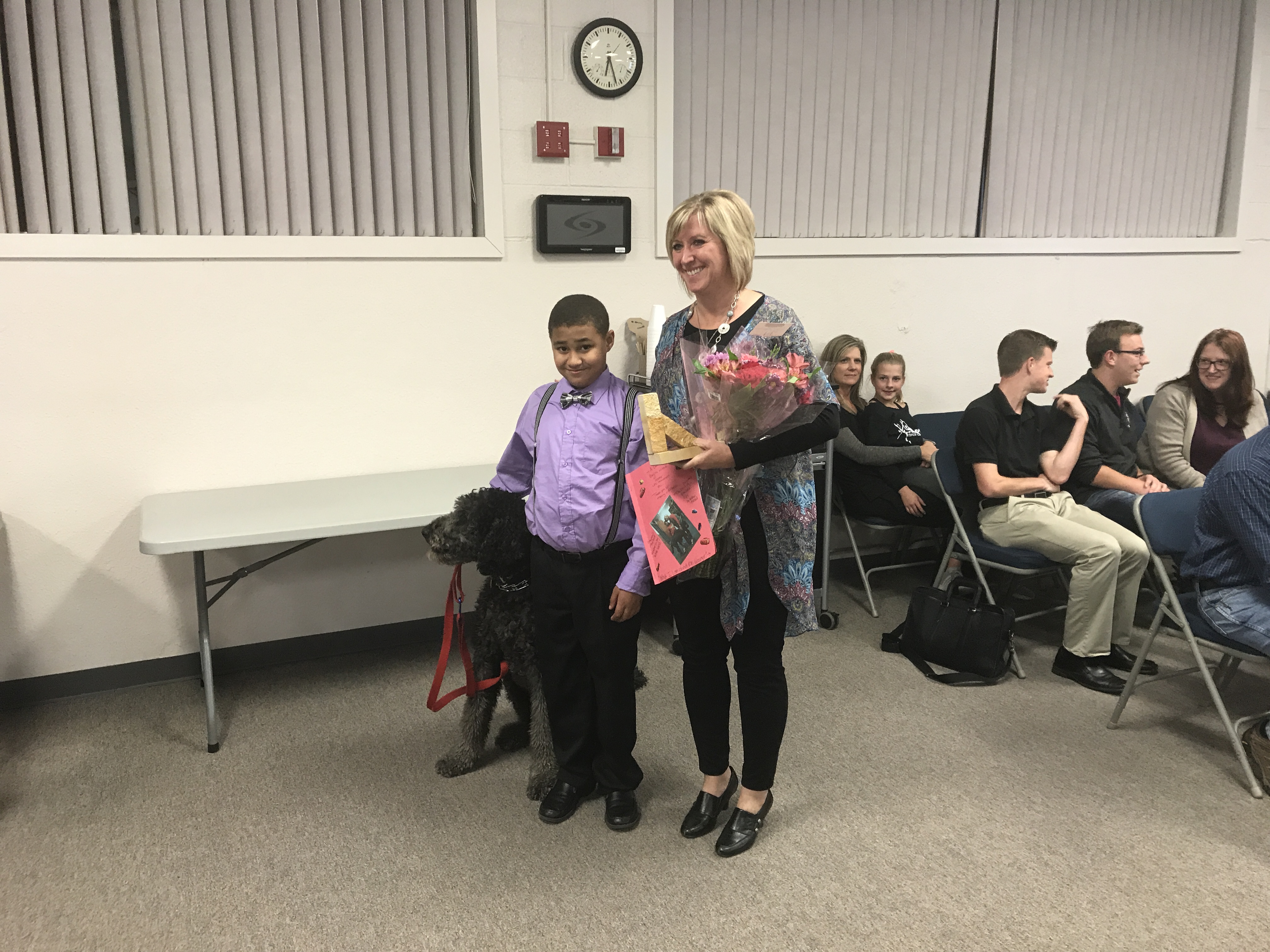
O’Loughlin Elementary School teacher Amy Wasinger with her former student Andrew Molstad and his service dog, Pickles.

By CRISTINA JANNEY
Hays Post

Hays USD 489 honored teacher Amy Wasinger with November’s Best of the Best award for her work with a student and his service dog.

Wasinger, a second- and third-grade teacher at O’Loughlin Elementary School, was nominated by parent Roberta Molstad for Wasinger’s help integrating her son Andrew’s service dog, Pickles, into her classroom and the school. Andrew has autism.

“It meant so much,” Molstad said. “You have to love animals, and you have to love children. We are so fortunate that she was willing to take that on.”

Wasinger also took time out of her own schedule to form a relationship with Andrew. During the summer, she met with him at the library, played trains with him and blocks and took him for ice cream, so his first days of school went better. She met him at the school in the summer to show him where his desk would be and where Pickles’ bed would be to reduce his anxiety.

“She always went above and beyond to help Andrew be included,” Molstad said. “She always went out of her way to make him feel loved. Andrew developed leaps and bounds with her. He looked forward to going to school every single day to see Mrs. Wasinger.”

Andrew built a car track at home for her, and Wasinger stopped by the Molstads’ home to look at the car track.

Andrew and Wasinger have matching puzzle piece autism shoes, and Andrew really likes her to wear the matching shoes.

“Amy was always positive about Andrew even when it was a bad day,” Molstad said. “She always found the positive in it. She took time to ask him what was bothering him. We were so blessed to have a wonderful, caring teacher who took on Andrew’s challenges and turned them into positive experiences. I honestly can’t say enough about Mrs. Wasinger. Thank you for all you do.”

Even though Wasinger is not Andrew’s teacher this year, she still helps out. They still exchange hugs. When Andrew is having a rough day and doesn’t want to go to school, Wasinger will meet Andrew at the van at drop off to encourage him.

In the nomination for Wasinger, Andrew also included a note, saying “I love you,” to his favorite teacher.

Hays High School sophomore Kenna Pfannenstiel was nominated by Sue Ann Tebo, Hays High School family consumer science teacher, and Sue Rouse, HHS staff member, for the student Best of the Best Award.

Sue Ann Tebo and Best of the Best award winner HHS sophomore Kenna Pfannenstiel.

Pfannenstiel was a student in Tebo’s freshman life management class. She invited a guest from Jana’s Campaign to talk to the students about relationships. Jana’s Campaign set up bystander intervention training for the students, in which Pfannenstiel participated.

“Immediately after the training, Kenna came up to me and said, ‘Mrs. Tebo, I love this stuff. I want to get more involved. What can I do to help?’ ” Tebo said.

This year, the high school had two full days of training, and Pfannenstiel was fully involved. Jana’s Campaign coordinated eight trainings for all the HHS freshman, and Pfannenstiel volunteered for all eight of the trainings.

Pfannenstiel also helped raise money from community members and businesses so all the students who took the training could get free Jana’s Campaign bracelets and T-shirts.

“Kenna definitely has a strong desire to be the change that our society definitely needs today,” Tebo said.

Tebo described the training.

“Our bystander training helps individuals recognize inappropriate behaviors, and it teaches them how to step up, step in, if it is a safe situation, and try to intervene in the behavior and the situation. Keeping their safety in mind, students can direct or divert or delegate to defuse the unwanted situations,” she said.

Tebo praised Pfannenstiel’s work with Jana’s Campaign.

“Kenna was definitely an integral part of the domestic violence training,” Tebo said. “Her positive guidance and her eagerness to learn and help, not only helping with me, but all of my students as well along with her leadership abilities — it is just absolutely outstanding. Thank you so much, Kenna. She is awesome.”


Kuhn’s Diamond Jewelers prepares to make the move to Tebo Village

Brad Hendrichs, Kuhn’s jeweler, works on a ring at the store’s downtown location.
By CRISTINA JANNEY
Hays Post

Within the next few months, Kuhn’s Diamond Jewelers will move from its downtown Hays location to Tebo Village north of Interstate 70.

Sari Reynolds, owner with her husband Randy, were looking at remodeling their store at 1009 Main when the Tebo Investment Group approached the family with a business opportunity, she said.

“For me, the bulk of the reason is that area is where the people are headed. It is more convenient. I just believe it will be a lot more traffic,” she said.

Reynolds’ family has been in the jewelry business for 87 years and in their present location since 1987. She said she has loved being downtown and will very much miss “The Bricks,” but this move was the right thing to do for the business at this time.

The business is still taking bids on the remodeling for its new location, so it should be sometime in March before the business moves.

Kuhn’s Diamond Jewelers will move from its downtown Hays location to Tebo Village north of Interstate 70 sometime in March.

The business will be moving from a 2,500-square-foot space downtown to a 2,000-square-foot space at Tebo Village. However, the new location — just east of Smallcakes at 4320 Vine St., Ste. 30 — will allow Kuhn’s to have more showcase area because of its configuration.

The business hopes to expand into new lines, which they will be exploring at an upcoming jewelry show in mid-January.

As the store works on the moving process, Kuhn’s has marked down its current inventory in hopes of starting with new items at the new store.

Although the business will be moving, it will keep its emphasis on providing quality diamonds and settings as well as jewelry design and repair.

“Diamonds will always be our feature, our expertise. That is what we do. Going along with that is going to be the custom design,” Reynolds said.

Sari Reynolds, owner, right, works on a ticket with an employee at the Kuhn’s downtown location.

Brad Hendrich of Kuhn’s is a Gemological Institute of America graduate. All the jewelry repairs are done by Hendrich or Randy Reynolds on site usually in about two to three days.

“We feel we have that guest service here and that knowledge behind us,” said Trey Wentling, store manager and Reynolds’ son-in-law.

He said in-person service will always be something the store will have over internet retailers.

“We have jewelry for everyone — everywhere from the $20 bracelets to the highest-quality diamond engagement rings,” Wentling said. “We try to provide services for everyone and merchandise for everyone.”

Reynolds said the family and its employees will still be visiting downtown, but as customers instead of business owners and employees.

Kuhn’s is hoping to offer new lines at its new location at Tebo Village and has marked down its present stock.

“We want to thank our customers and thank the people of our area, and we hope that they follow us and come see us at our new location,” Reynolds said. “We still provide the same great service and product, and we look forward to seeing them out north of I-70.”

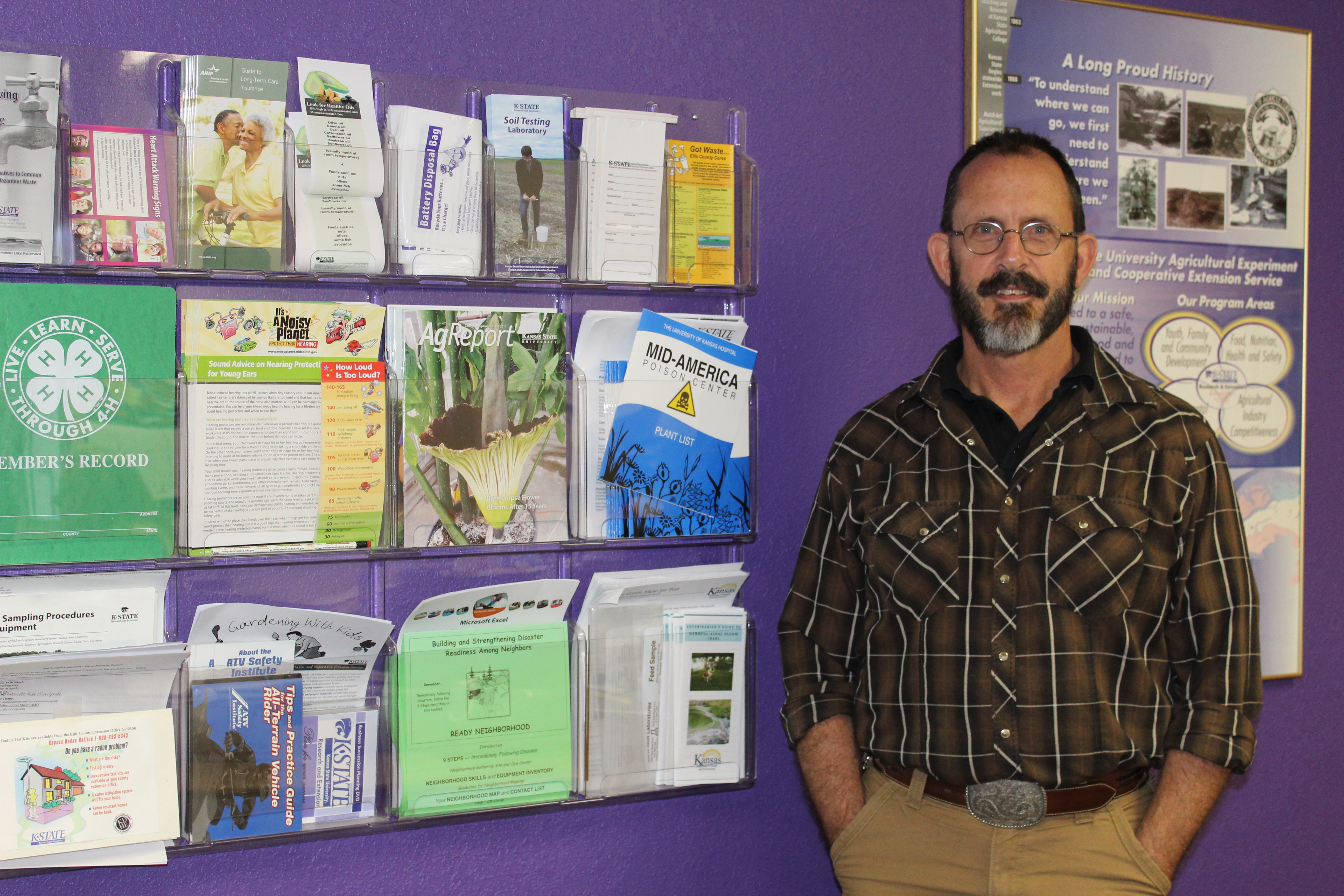
World-traveled horticulturalist joins staff at Extension

By CRISTINA JANNEY
Hays Post

Rip Winkel has applied his horticulture knowledge all over the world, working on banana plantations in Guatemala and with cacao farmers in Ecuador.

But most recently, he has planted himself in Hays as the horticulture agent for the Cottonwood District, which includes Ellis and Barton counties.

Winkel, 58, moved to Hays to be closer to family in Denver, where he grew up.

Winkel started working in farming and landscaping when he was in junior high. He spent vacations working on a relative’s farm outside of Newton. Though he had a passion for music and art, he decided applying his creativity in horticulture would be more practical.

He received his bachelor’s degree in fruit and vegetable production at Texas A&M with an emphasis in tropical and subtropical fruits and vegetables. He later received an master’s degree in agriculture development from Colorado State University.

After Winkel graduated from Texas A&M, Del Monte hired him to work on banana plantations on the eastern side of Guatemala. That operation later shifted toward cantaloupe production. Winkel was eventually transferred back to the U.S. where he helped manage 6,000 acres of cantaloupe in Arizona and California. During the spring, summer and fall, the cantaloupes came from the U.S., and during the winter, the melons came from Guatemala and Costa Rica.

“At times, it was extremely difficult, but I have great memories of being down there and roaming through the banana plantation or the people — good people,” he said.

The drain of 100-hour weeks working for Del Monte ultimately became too much, so Winkel decided to leave to create his own company, Agriscapes, a landscaping and irrigation company. One of the highlights of this time was a project he did for the Gage Hotel in Marathon, Texas. It was a walk-though park in the Texas desert.

“They call it the Oasis in the Desert out there, because it is very, very dry, desolate country,” he said. “And then you have this blop of green and flowers everywhere and trees. That was a fun project.”

He moved back to Colorado to get his master’s degree and was able to sign up for Peace Corps Master’s International Program. Participants study normal courses stateside, then are sent overseas for a two-year Peace Corps assignment. Upon return, those experiences become the foundation of a thesis or dissertation.

He was assigned to a small village in the coastal region of Ecuador where he worked with locals on cacao, sugar cane and pineapple production. Most people are most familiar with cacao as an ingredient in chocolate.

Winkel was on the cusp of leaving for a job working on a farm in South Africa, when his father fell ill, and he opted to stay in Colorado to help his mother.

But this did not stop Winkel’s wanderlust. During the winter when there wasn’t much to do in ag production and landscaping in Denver, he worked as a volunteer for an organization called Farmers to Farmers based out of Washington, D.C., that teams with Partners of the Americas, which was founded by John Kennedy.

His first assignment was to spend two weeks in Nicaragua working with people there on a blight that hit their main food source, a root called taro. Elephant ear is in the same family. The purple root tastes similar to potatoes.

“They were having a problem because disease was wiping out all production,” he said. “So I went down there and worked with this community on coming up with methods and ways or alternative crops they could be planting not only to eat off of, but also to sell to the local market or the national market up in Managua.”

After finishing his short stint in Nicaragua, Winkel was sent for a longer 10-week mission to eastern Ecuador on the edge of the Amazon basin to a town called Puyo. He worked with local villages on cacao production as well as youth on composting. Two to three times per week, he would get up early, catch the bus and head into the jungle to a community of Kichwa Indians.

He visited one of the group’s 10 cacao farms, talked about soil and natural insecticides and then he would go out with the tribe members and work on pruning the cacao trees.

“We would try to push the jungle pack, because the jungle was always trying to take over, which lessens the yield you get in mazorca. Mazorca is the big pod you get that contains the cacao seeds,” he said.

The seeds are fermented, dried and that is what becomes cocoa.

He visited the Ecuador again last winter and was trying help the group get to a point where it could make its own chocolate to sell to tourists. Tourists visit the area for the natives’ festivals and ritualistic face painting using a clear liquid that stains the skin black.

Winkel decided to take the job in Hays rather than returning to Ecuador this winter. He said it was a more structured job with roots, but was a combination of all the things he was used to doing.

“This job offers me the ability to deal with almost all the issues I have experience with. … I have worked in nurseries and been a production manager. It deals with landscape and landscape design. It deals with fruit and vegetable production, and I have fingers in everything that I have done. I have experience, and I have learned to love in my life — the work,” he said. “The other thing is I am dealing with people. That is also what I like is dealing with people.”

Winkel was already familiar with Hays through trips to Kansas to visit relatives, but his latest impressions have been very welcoming.

“My first impression is that everyone seems to be extremely nice,” he said.

Winkel has a number of projects he would like to work on, including bringing the jujube fruit trees to the area. The tree is tolerant of alkaline soil and drought. It is a small tree that is beautiful for landscaping, and it produces fruit that tastes like apples, which was used to make the original jujube candy.

He wants to promote the concept of edible landscapes. Within the flowering areas, you could plant things, such as jujube, elderberry, black choke berry and Swiss chard.

“You do a landscape with this stuff and at the same time you are harvesting your landscape. It looks beautiful, and you are eating it,” he said. “It is almost like hitting two birds with one stone. You plant it and let it go, because it is already under a watering system.”

Winkel keeps in mind the water shortages here in Hays, and suggests reducing grass to 60 to 40 percent of the yard area and replacing it with other more drought tolerant ground cover like juniper or using drip lines.

“What can we do to beautify something with what we have or within the limits of what we should be doing, which means restricting water, yet your yard will stay beautiful and attractive instead of this wall-to-wall dead buffalo grass,” he said.

He also supports the use of wildflowers along the highway, as it would reduce maintenance and benefit pollinators.

“I am looking at becoming a regular part of this community of serving it, and more than that, being part of it and looking forward to getting to know people,” he said.

STEM camp at Lincoln Elementary merges tech with music

By CRISTINA JANNEY
Hays Post

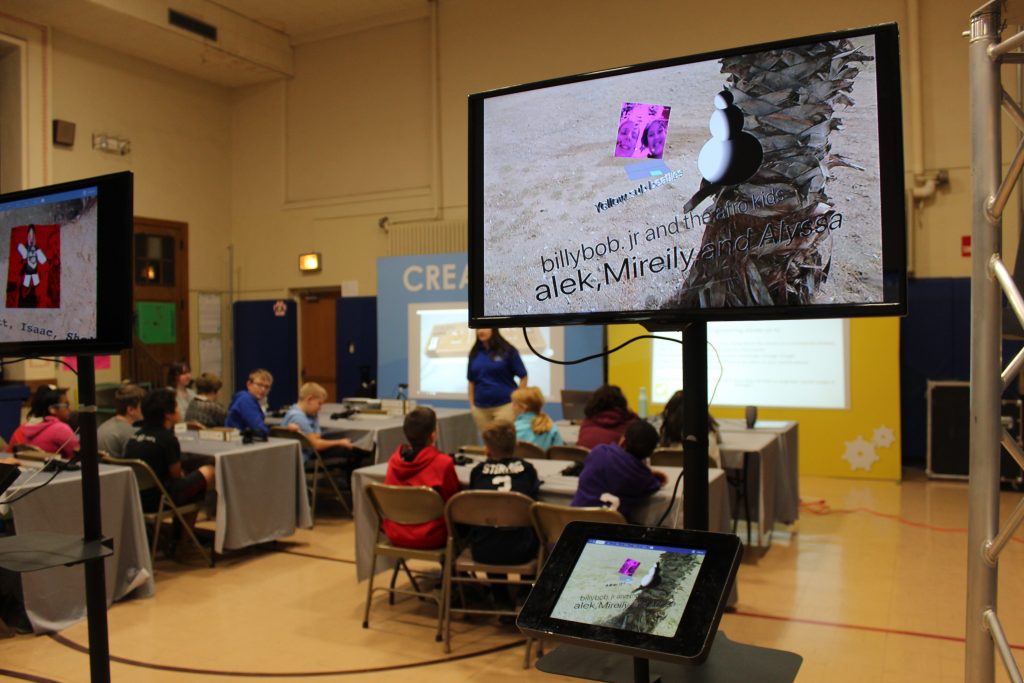
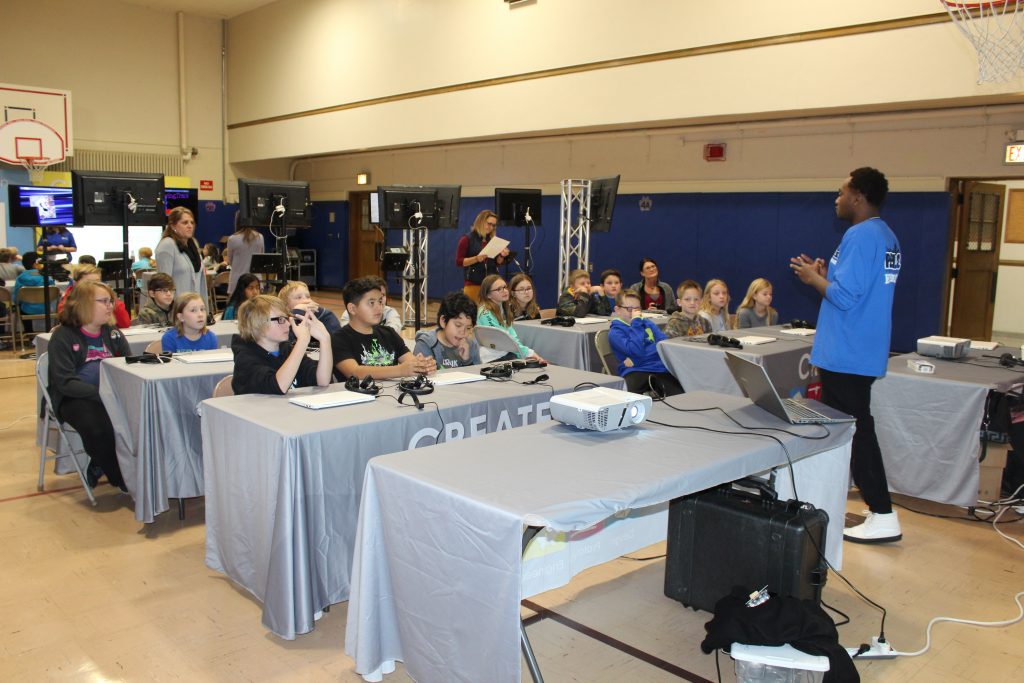
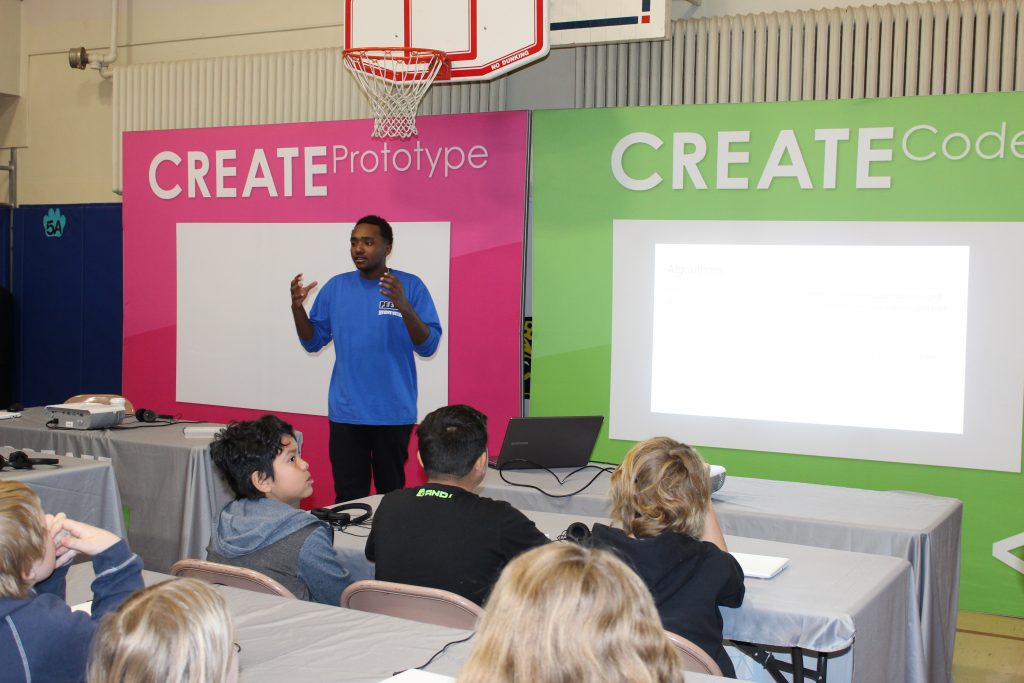
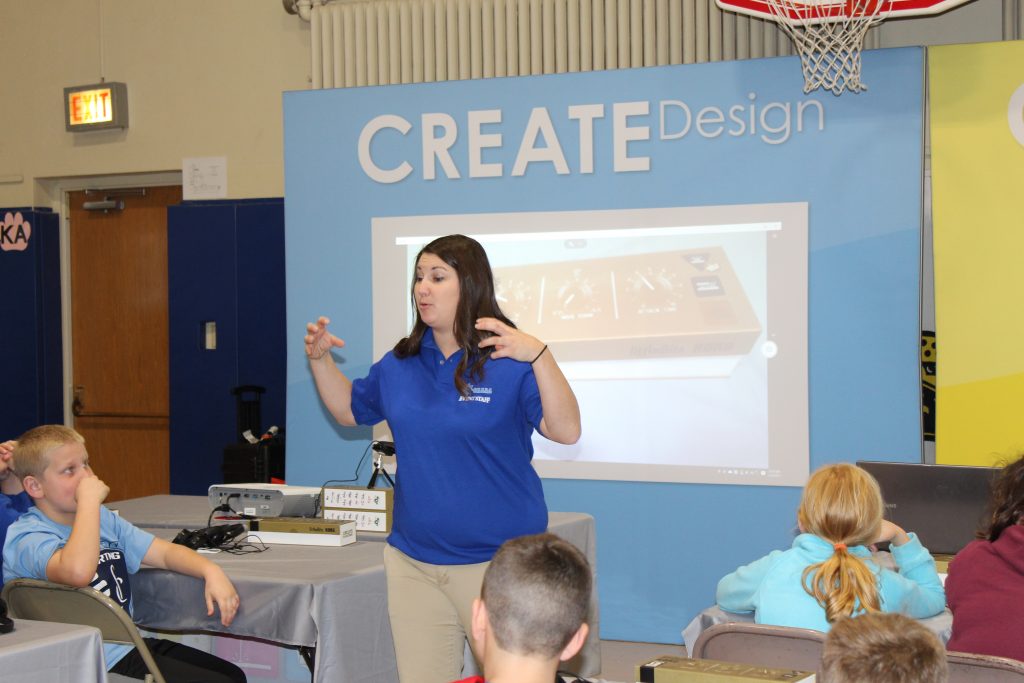
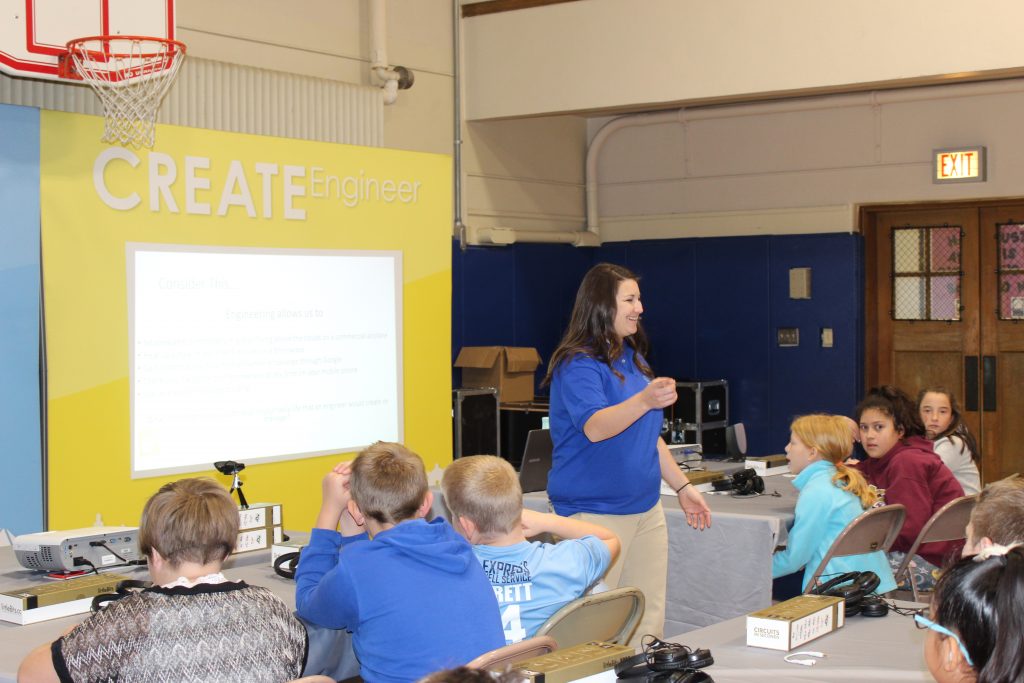
The PEERS Foundation was at Lincoln Elementary School on Monday working with 33 fifth graders in a CREATE Music STEM Camp during which students explored science, technology, engineering and math.

The Peers Foundation is a nonprofit that travels the United States exposing children to STEM education and encouraging children to consider STEM careers.

“We want them to see that these areas of STEM are not just abstract, in a book, sitting in a classroom,” Mark McDonald, STEM camp lead educator, said. “Not only are they fun and interesting, they are relevant in every aspect of their life. It doesn’t matter what they are interested in or what their career goal is, it can be related back to science, technology, engineering and math.”

McDonald referred to the oil and ag industry in Ellis County.

“We didn’t come up with 30-foot heads on combines without someone involved in engineering and creating it,” he said. “It is everywhere, and we want them to see that it is everywhere and it can be a good time. They are the future. They are the ones that are going to come up with the next thing.”

The children were split into two groups Monday morning. One group learned about coding, while the other learned about electrical engineering. The coding group used a program called Scratch to program a computer drum set and keyboard.

“It gets them using code, seeing how code works — if then functions and the whole process of variables,” McDonald said.

The engineering group used a set called littleBits to create simple synthesizers.

The students were also taken through design and prototypes. The program exposes the students to several types of prototypes, including digital, paper and functional prototypes made with 3-D printers.

Then McDonald tasked the students to work together to create their own apps to make music.

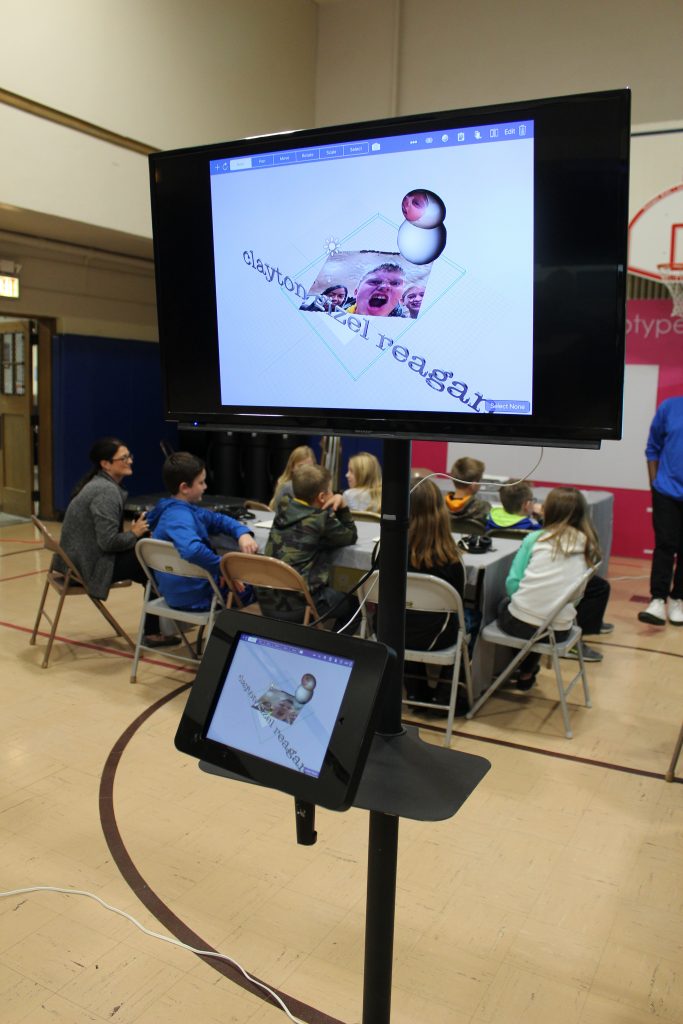
The students also work with beginning CAD design in a program called Verto Studio. The younger students learn how to make snowmen. However, they learn vertices can be more important when working in more detail in CAD to create buildings, video games or landscape design. PEERS works with students through high school and does much more advanced work with Verto Studio, depending on the students’ skill levels.

“The stuff they are doing are like tools in their pouch because the next best thing could be in their mind right now. I really want them to be creative and be hands-on and to ask questions and to explore what we have here for them and use it,” McDonald said.

The CREATE camp brings the arts and technology together.

“STEM is evolving into STEAM where the arts are involved,” McDonald said. “We as a group feel that it is extremely important. The creativity aspect of science technology, engineering and math is huge.”

Copyright Eagle Radio | FCC Public Files | EEO Public File