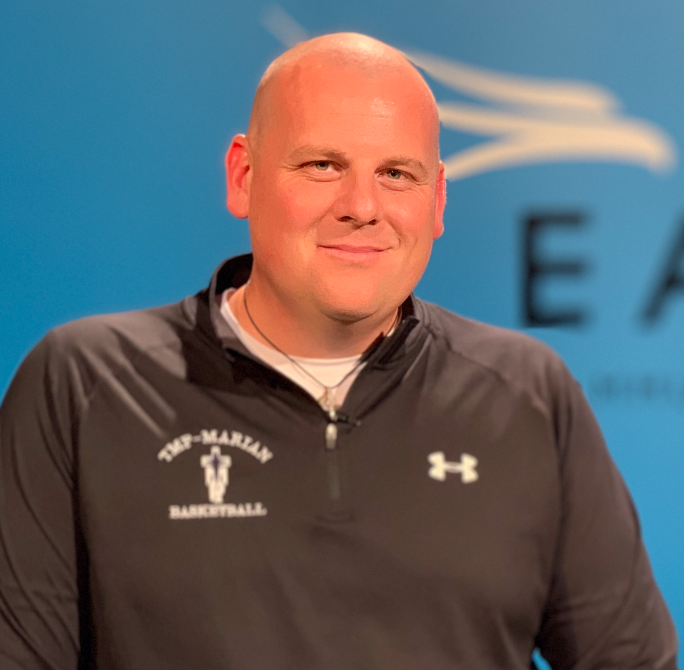
Eagle’s Mike Koerner interviews TMP’s Bill Meagher
Category: Local
Ellis County EMS fitness room the beneficiary of donations, volunteer efforts
 By JONATHAN ZWEYGARDT
Hays Post
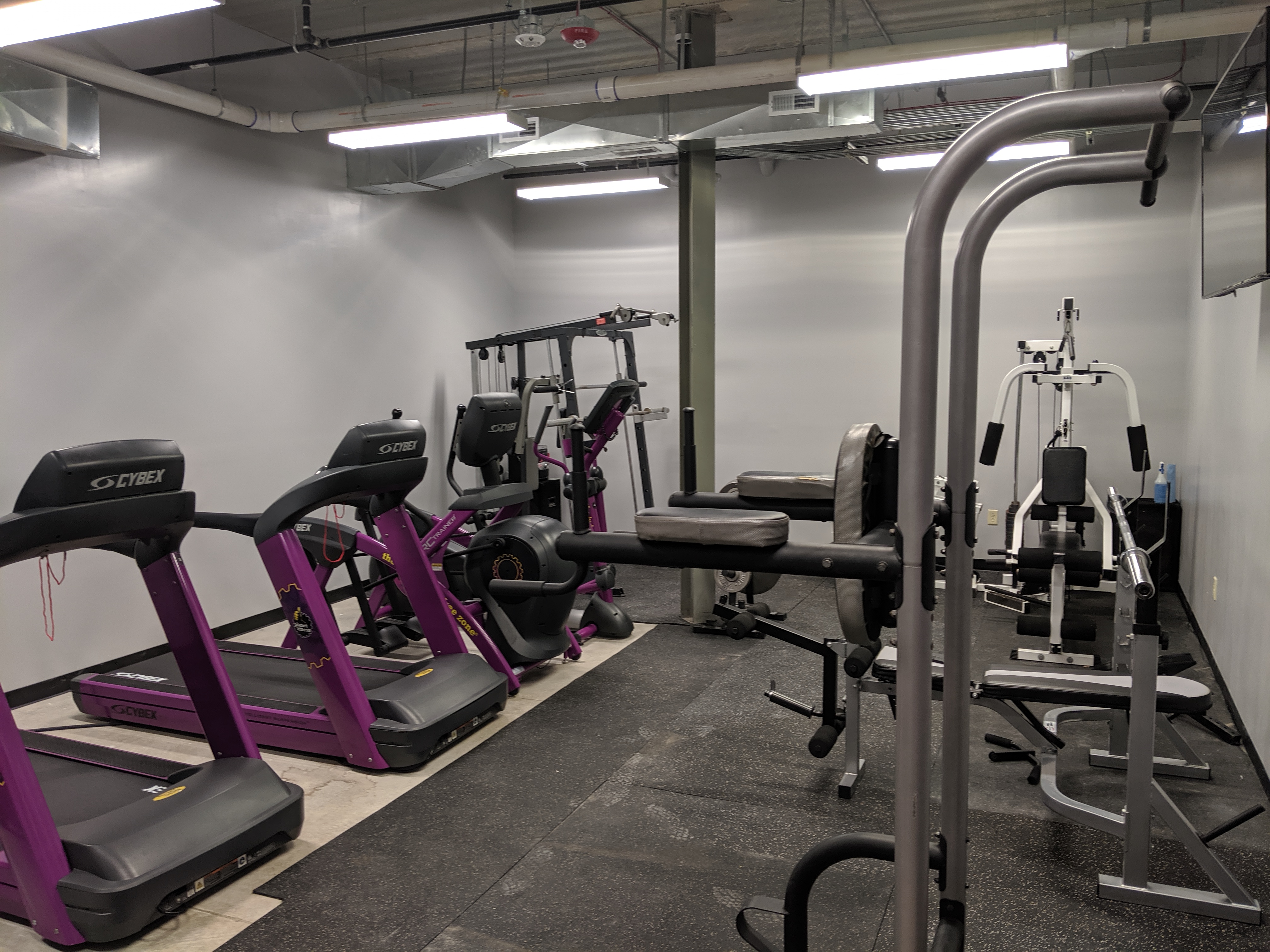
As the department focuses more on health and safety, Ellis County emergency personnel now have their own fitness room at the Emergency Services building.
A fitness room in the basement of the EMS building was in the original plans but, in an effort to reduce the cost of the project, it was scrapped. However, thanks to several donations, grants and volunteer work, the fitness room opened on June 27.
“When this building was originally designed, it had a fitness room,” Director of Fire and Emergency Management Darin Myers said. “Due to costs at the time when we first built it and opened, that room was cut out.”
He said officers within the Ellis County Fire Department began discussing ways to help the volunteers improve their health and one of the first ideas was to provide physicals for the firefighters. They also wanted a way to provide them a place to work out.
Myers said they then started to look at ways they could construct the room themselves.
After talking with firefighters who work out at Munsch Fitness, Jacob Proffitt was the first to donate equipment to the project. They also received equipment donations from the owner of a Planet Fitness franchise in North Carolina, Myers said.
Midwest Energy provided a $1,000 grant and the department received a $500 grant from State Farm agent Matt Lyon. The Ellis County Commission also approved $29,424 of sales tax funds to help pay for construction. Those funds were left over from the original building project.
After a contractor finished out the room, the firefighters primed and painted the room in an effort to save money on the project. Then, when the equipment came in, more than a dozen firefighters and their friends helped unload the equipment and take it down to the room on a Sunday.
Myers said they handed out more than 70 keycards to firefighters and members of the Emergency Medical Services and Ellis County Sheriff’s Departments also have access. He said since it opened on June 27, he has seen someone using the equipment every day.
“That’s another benefit of getting on our fire department,” said Myers. “I know some of the firefighters are paying upwards of $50 per month (for gym memberships.)”

Company 6 Fire Captain Chris Cline said it is a great benefit for the firefighters.
“It’s amazing. It’s a huge bonus for the department and for the members,” Cline said. “Firefighting is one of the most physical jobs you can possibly do, so anything that can help me gain an advantage out in the field is a plus.”
According to Myers, over the last 10 years the majority of firefighters who have died in the line of duty were volunteers and of all deaths among firefighters the majority of them are cardiac related.
“The statics show that cardiac-related deaths … are the leading cause of way firefighters die in the United States,” Myer said. “So the strength equipment is not as important as some of the others — running on a treadmill or using a bike, elliptical or trainer.”
Ellis County Health Administrator Kerry McCue said EMS employees had previously brought in their own equipment to work out because they understood the value of preventing injuries by staying in shape.
McCue said, “Back injuries are career-enders for EMS personnel, and this is a way to protect staff.”
Now that the construction of the fitness room is complete, the new fire department policy on physicals will begin soon.
Myers said in the beginning there was some skepticism from the firefighters because of the unknowns surrounding the policy but, now that they have settled on what Myers calls and “enhanced” DOT physical, he believes the program has a lot of support.
There is a pulmonary or lung capacity test, a drug test, blood work and a physical assessment or capacity test.
“It’s a big adaptive challenge for our fire department,” said Myers.
He said the physicals, which are based on national standards, are also an effort to change the culture of the department.
“Being aware of the importance of being physically fit for your own safety but also for the firefighters (whose) lives are on the line right next to you,” Myers said.
Myers added that his No. 1 objective is to protect the firefighters, but this also helps to protect the public.
“If we can’t do our job, then we need to be finding ways to do it better – and this is one way to do it,” Myers said. “We owe it to the community, and the community expects us to provide that service for them.”
They will begin implementing the new physical policy in January with half of the department and the rest of the department the year after that in an effort to save the county money.
“It’s kind of a proud moment that they’re taking that initiative to increase their health,” Myers said. “Part of these whole physicals are not just being physically fit but the preventative measures.”
Ellis County Fair will have special contests in 2019
By BERNY UNRUH
Cottonwood Extension District Agent
The thrill of victory! Doesn’t everyone love a good competition? There is a new contest at the Ellis County Fair this year. The King Arthur Flour contest has some great prizes in both the youth and the adult division. The rules and guidelines for this contest and all the other opportunities can be found at www.elliscountyfair.com Look under Events and then under “4-H Events” to find the Open Class portion of the fair book.
All fair entries must be pre-entered in advance at www.fairentry.com by Monday, July 8th. This will allow entry forms to be printed and ready for you when you arrive to enter your exhibits. Search for Ellis County Fair, set up your account using your email address and a password. You will receive email confirmation that your entry has been received.
For the King Arthur Flour baking competition, the exhibitor must bring the opened bag of King Arthur Flour or submit a UPC label from the bag when the entry is made at the fair. The contestants will bake a cake of their choosing, place it in a disposable plate or covered cardboard (covered with a plastic bag and wire tie) and bring it to the fair. Don’t forget to bring the recipe on entry day. Open class foods entries must be brought to the Fairgrounds exhibit hall between 8 and 9 am on Tuesday, July 16th.
If baking a cake is not your thing, consider the special class challenge started by Mark Purvis and Terry Mannell. The theme for this year is “Favorite Family Recipe”. The judging for this class takes place at the conclusion of the formal food entry judging.
So now is the time to plan your fair exhibits and get them entered online by July 8th to make the most of the Ellis County Fair experience. There really is something for everyone at the Ellis County Fair.
Berny Unruh is the Family and Community Wellness Agent for the Cottonwood Extension District. She can be reached at 785-628-9430 or at [email protected]
Portion of 230th Avenue will be closed during improvement project

The Ellis County Public Works Department is announcing that a small bridge/culvert replacement project will begin Monday, July 15.
The 1600 and 1700 block of 230th Avenue, between 55th and Feedlot Road, will be closed to through traffic beginning at 7:30 a.m. Monday, July 15, and will reopen at 5 p.m. Thursday, weather permitting.
The project will widen the area by the current culvert and increase safety for the traveling public.
Motorists traveling in the affected closure area should use alternate routes of travel until the project is completed. It is recommended to use U.S. 183 to avoid the affected area. This is one of the first steps for the improvement of 230th from Interstate 70 north to Feedlot Road, along with milling the surface of Feedlot Road from 230th to U.S. 183. Further improvements will be made to Feedlot in late summer to early fall.
For more information, call (785) 628-9455.
Hays Lions receive grant to provide workshop for hearing-, visually-impaired veterans

SUBMITTED
Many senior adults in rural Kansas, age 55 and older, are unaware of the services and resources available to them through the Veterans Administration and private sector that help address challenges they experience because of combined low vision and hearing loss. For some, the losses in these two major senses are hard to describe and perhaps even harder to acknowledge. The magnitude and complexity of the everyday challenges can seem overwhelming.
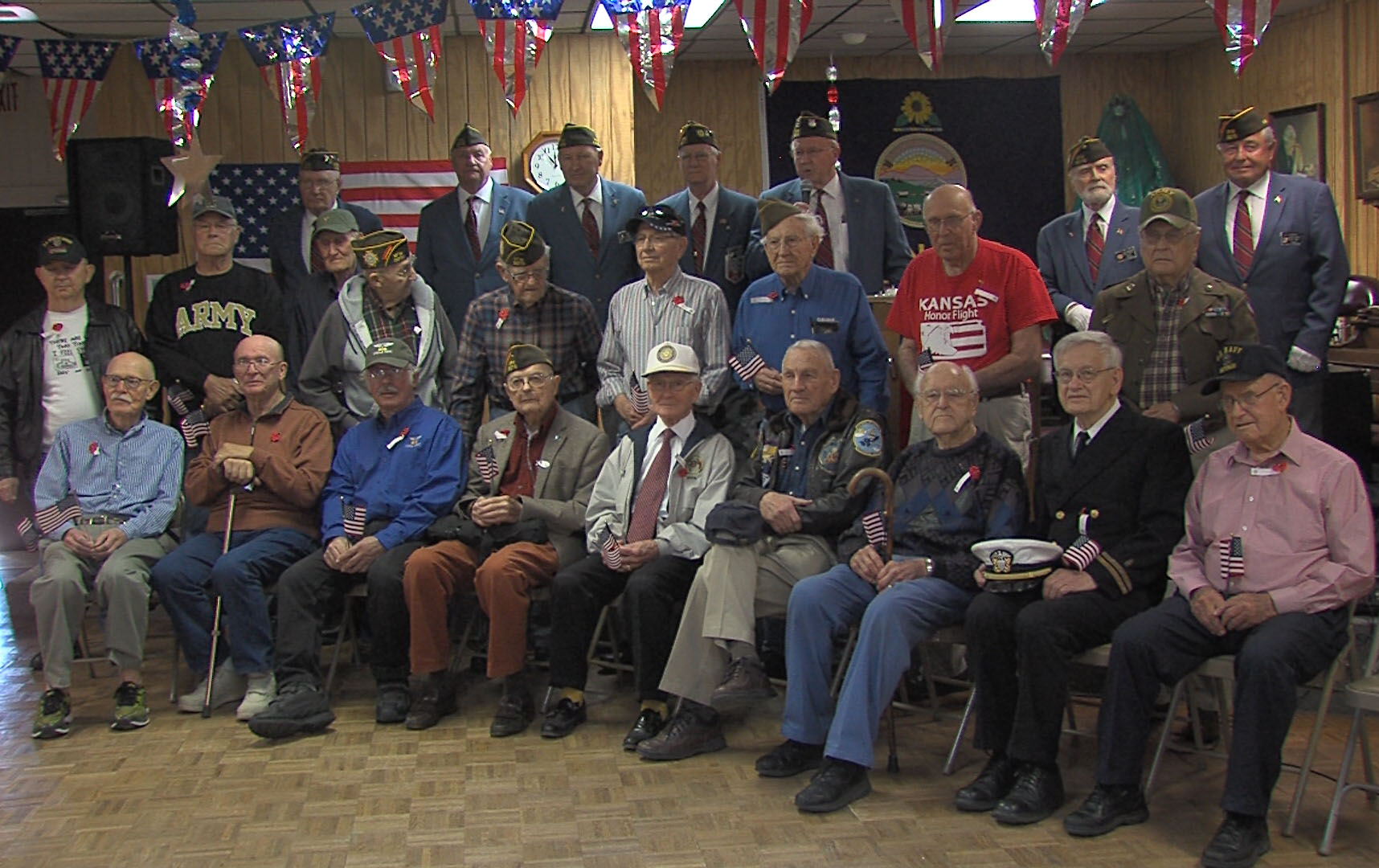
The Hays Lions Club has received a grant from the Heartland Community Foundation to conduct a workshop September 18, 2019, at the Sternberg Museum of Natural History, Hays, for hearing and visually impaired veterans. The workshop is in cooperation with the Robert J. Dole VA Medical Center, Wichita.
This one-day workshop is based on a peer support model and is designed to provide information about low vision and hearing loss, which will in turn reduce the fear, isolation, helplessness and loneliness by many seniors who did not expect their “Golden Years” to be like this. The workshop is an event where each participant can count on acceptance and accommodation for his or her hearing and vision loss.
 Participants obtain information and an introduction in the following areas: coping with hearing and vision loss, enhancing independent living and communication skills, experiencing new technology, community integration and developing community sources, and sharing life experiences.
Participants will also be screened to determine their level of hearing and vision impairment to advise them as to available resources though the Veterans Administration and other agencies.
Bob Hamilton, Visually Impaired Service Coordinator with the Robert J. Dole VA Medical Center, is working with the Helen Keller Foundation which will be providing presenters and assistance.
Fort Hays State University Leadership Studies professor Seth Kastle, an Army veteran, is committing some of his leadership class to help with the project.
As part of the workshop, we will be performing vision and hearing screenings utilizing the Kansas Lions Club Mobile screening unit.
The number of rural senior citizens is growing throughout Hays and northwest Kansas and the number challenged with this dual cognitive disability is growing as well.
Western Kansans have always placed emphasis on independent living, and when independence is lost, it many times results in isolation and loneliness for the individual.
Awareness of specialty aides, opportunities to enhance communication with others with like challenges can help improve one’s independence.
U.S. Census data identifies 1,597 veterans living in Ellis County in in 2017, of which only 8 have been identified with dual low vision and hearing loss who are currently receiving services through the Robert J. Dole VA Medical Center in Wichita, the closest facility providing these services.
There are a significant number of dual impaired veterans also living in Rooks and Trego counties that have needs.
The workshop will expand awareness of rehabilitation and specialty devices specifically for those with dual sensory impairments. Provide attendees opportunities to discuss the challenges of living with dual sensory impairments and ways to enhance daily living. It will provide education for the senior veterans families and communities where they live to understand and provide additional resources to those who are challenged.
Many senior Kansans hold strong religious beliefs and are active in their faith-based communities. The Hays Ministerial Alliance, with guidance from the Robert J. Dole VA Medical Center Chaplaincy Department, will be supportive of the project.
The following are involved in the workshop:
- Hays Lions Club
- FHSU Leadership Studies Department
- FHSU Communication Sciences and Disorders Dept., Dr. Karmen Porter
- Hays Ministerial Alliance
- Northwest Kansas Area Agency on Aging
- Blinded Veterans Association
- Independent Living Center of Northwestern Kansas
- Robert J. Dole VA
- Hays VA Community Based Outpatient Clinic
- Helen Keller National Institute
- Hays Senior Center
- Kendall Krug, OD Diplomate, American Board of Optometry
- Bob Hamilton, Visually Impaired Service Coordinator, Robert J. Dole VA Medical Center
For more information contact Hay Lions Club Jim Huenergarde at 785-650-7338.
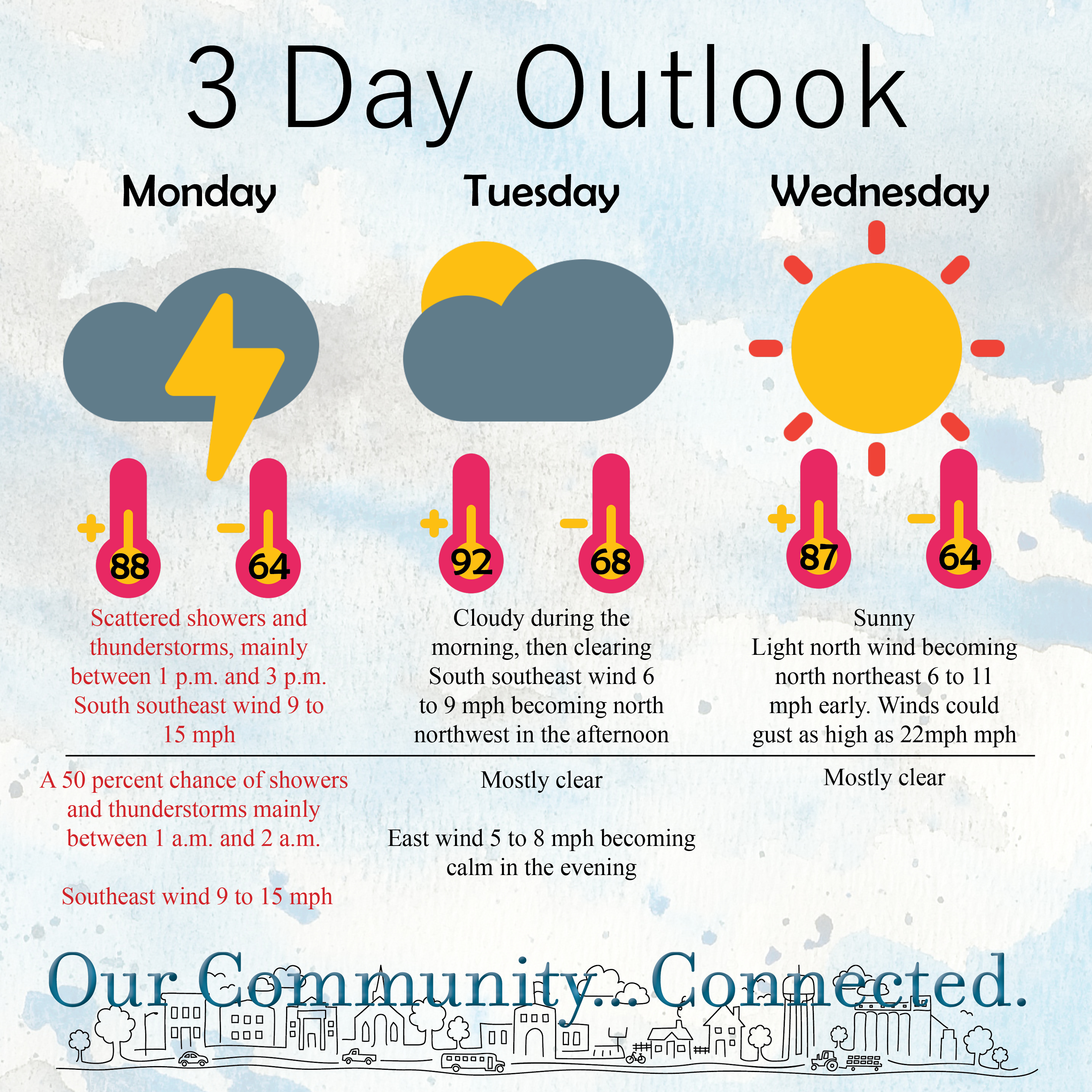
Three-day weather outlook


Prairie Doc Perspectives: Skin cancer questions

Q: What are some types of skin cancer?
A: The three major types are basal cell, squamous cell and malignant melanoma. In general, one in five, or 20 percent of people in the U.S. have had or will have some type of skin cancer. In Australia where the sun is intense, two out of three skin cancers are basal cell, one in four are squamous cell, and one in twelve are malignant melanoma.
Q: Should I go to a dermatologist for screening?
A: The dermatologist is the most experienced with skin cancer, but primary care providers can help, too. Realize, however, that the first person to discover skin cancer should be you, along with a partner to look over places you cannot see. Self-screening is especially important for those at high risk for skin cancer.
Q: Who is at high risk for skin cancer?
A: At highest risk would be anyone who has had a bad sunburn or excessive lifetime sun exposure, especially when young, and those with light complexion, freckles, blue eyes, blond or red hair. At higher risk for malignant melanoma are those with many moles, with a prior personal history of skin cancer, and with a family history of malignant melanoma.

Q: Does sunscreen help prevent skin cancer?
A: This is widely presumed to be true but not yet scientifically proven. In fact, some speculate that people who use sunscreen may feel emboldened to expose themselves to more hours of damaging sunlight. Also, using sunscreen to shield skin from sunlight may possibly result in vitamin D deficiency. All that said, it is my opinion there is enough evidence to use sunscreen all year long and, if you live in the northern climates, take 2000 IU of vitamin D daily.
Q: How do I know when to go to the doctor?
A: The ABCDE mnemonic helps in knowing when a skin lesion might be dangerous. A: asymmetry or irregularly shaped; B: border fuzzy not sharp; C: more than one color in it; D: diameter wider than pencil width; and E: lesion evolving or changing. It is common to mistake a benign and safe look-a-like seborrheic keratosis for a possible malignant melanoma. Seborrheic keratosis is light brown to black, raised, and waxy. If one can partially peel or scratch off waxy material with a fingernail, then it is likely a benign keratosis. Malignant melanomas can be either flat or nodular…but never waxy.
No question, if ever you are in doubt, see your doctor.
For free and easy access to the entire Prairie Doc® library, visit www.prairiedoc.org and follow The Prairie Doc® on Facebook, featuring On Call with the Prairie Doc® a medical Q&A show streamed most Thursdays at 7 p.m. central.
Now That’s Rural: Patterson Health Center

By RON WILSON
Huck Boyd National Institute for Rural Development
One plus one equals ten. Well, it’s obvious that I flunked new math. But today we’ll learn about one community which got together with another to co-create an exceptional new model of health care delivery in rural America.
Martha Hadsall is chair of the board of directors of the Patterson Health Center, a new health care facility in Harper County. Martha, a longtime teacher in Harper, was also involved with the local hospital.
Anthony, population 2,269, and Harper, population 1,473, are Harper County’s two largest communities, located 9 miles apart. Both had small, financially struggling hospitals. In 2012, a community health needs assessment identified integration between the two hospitals as the top concern. However, the two towns were longtime rivals.
In 2015, a proposal came from Neal Patterson, a native of Anthony who had grown up on a nearby family farm. According to the stories, when working in the fields, his father told Neal and his brothers to “do one more round after sundown.” Neal Patterson carried that work ethic and a brilliant mind into a career in medical information technology. He co-founded the highly successful Cerner Corporation in Kansas City.
Patterson was aware that the hospitals back in his home county were struggling with future plans. “He told us that if we were to do research on a merger that could create a new model of health care delivery, he would be our biggest benefactor,” Martha said.
Extensive research followed. Studies found that a new facility was the most financially sustainable option. The board committed to not increase property taxes for the new facility, and to not require a reduction in staff employment.
Following a successful petition drive, the two hospital districts merged and developed plans for a new joint facility. In 2017, the Patterson Family Foundation made a $35 million commitment to the new facility. Sadly, Neal Patterson passed away from cancer, but the commitment remained.
The boards selected the new site on 60 acres next to the shared high school, approximately halfway between Harper and Anthony. “We want to build connections,” Martha said. The next step was to design a state-of-the-art medical facility called the Patterson Health Center.
“It is intentionally called a health center, not a hospital,” Martha said. “We’re about health, not sickness.” It’s based on an integrated care model.
In addition to state-of-the-art equipment, the inpatient, outpatient, and emergency services are structured to maintain privacy, meet modern needs, utilize technology, and encourage collaboration among physicians and specialists. The facility will also include a rehabilitation area, hydrotherapy pool, tornado shelters, helipad, outdoor patios, and a café open to the public. Pat Patton was hired as CEO.
“Our theme is `Together for a healthy future,’ and the architects created `Two communities under one roof,’” Martha said. Together, the two hospital districts are able to eliminate duplication and achieve benefits. For example, the two existing hospitals each had what is called a 16 slice CT scanner, which required each one to have a $40,000 maintenance policy. The Patterson Health Center will have one new 64 slice CT scanner which operates in a matter of microseconds.
Inside the entrance, there is a beautiful wooden display of a map of the health center’s service area from Wellington to Medicine Lodge. Anthony and Harper are shown in the center, with Patterson Health Center in between. Outlying rural communities are shown as well, such as Milan, population 82, Danville, population 38, and Freeport, population 5 people. Now, that’s rural.
At the staff entrance, there is a huge and beautiful rendering of a pretty prairie sunset. “It’s a reminder to the staff of what Neal Patterson’s father said, to `make one more round after sundown,’” Martha said.
The Patterson Health Center is to be dedicated on July 19, 2019. See www.hhd5.com for more information.
One plus one equals ten. No, it’s not new math. It’s an example of two communities coming together to create something great. We commend Martha Hadsall, Pat Patton, and all those who are making a difference by creating this new model of rural health care. I hope it becomes a perfect 10.
Suspects sought in July 2 robbery at WaKeeney motel

WAKEENEY —Police are seeking information about robbery suspects in an incident last week at a local motel.
The incident occurred at about 1:50 p.m. July 2, at Kansas Kountry Inn, 223 S. First.
A reward is being offered for information that leads to the arrest/conviction of those involved. Click below for more information from the WaKeeney Police Department.
Schmidt announces upcoming open meeting, open records training

 TOPEKA – Free training sessions on Kansas open government laws will be offered later this month across Kansas, Attorney General Derek Schmidt and the Kansas Sunshine Coalition for Open Government announced today.
“Open access to the functions of government is important to self-government,” Schmidt said. “As our office investigates complaints of violations of open government laws, most often we find the violations were inadvertent and can be avoided through better education. I encourage public officials, candidates for public office, staff, members of the media and the public to participate in these training sessions to learn more about how these laws work.”
The schedule for the sessions is as follows:
| Wednesday, July 17 | 9 a.m. – Noon | WSU Marcus Welcome Center Mike Oatman Dr., Wichita, KS 67208 |
| Friday, July 19 | 1 – 4 p.m. | Colby Community College Robert Burnett Memorial Student Union Rooms 108 and 109 1255 S. Range Ave., Colby, KS 67701 |
| Wednesday, July 24 | 1:30 – 5 p.m. | Kansas City Kansas Public Library Main Branch, 2nd Floor Auditorium 625 Minnesota Ave., Kansas City, KS 66101 |
| Thursday, July 25 | 10 a.m. – 2 p.m. | Independence Public Library 220 E. Maple St., Independence, KS 67301 |
| Friday, July 26 | 9 a.m. – Noon | Memorial Hall, 2nd Floor Auditorium 120 S.W. 10th Ave., Topeka, KS 66612 |
These seminars are free, and open to the public. Space at each location is limited, and registration is on a first-come, first-served basis. Participants can register on the Kansas Attorney General’s website, www.ag.ks.gov/open-gov, or by calling (785) 296-2215 or (888) 428-8436.
The training about the Kansas Open Records Act and the Kansas Open Meetings Act will be conducted by attorneys in Schmidt’s office who have experience in open government laws and who are charged by law with training and enforcement of them. Panelists will include Kansas Sunshine Coalition members, local government officials and media representatives.
Coalition created to promote and protect native limestone


LUCAS — It was formed around 100 million years ago during the Late Cretaceous era and has been used in fencing, architecture, grave markers, art, and just about anything you can imagine in central Kansas. Now a group of people passionate about native Kansas limestone has joined together to create a coalition promoting the area.
The Kansas Post Rock Limestone Coalition was recently organized with a mission of “promoting, preserving, and protecting the history, art, and architecture of the Kansas Post Rock Limestone region through education and tourism.”
The group is comprised of businesses, economic development organizations, chambers of commerce, tourism organizations, art centers, preservationists, and private citizens interested in the native stone. Their geographic area covers 18 Kansas counties stretching from the northern border of the state (Jewell, Republic and Washington counties) flowing southwest down to the Dodge City area (Ford, Hodgeman, Pawnee and Edwards counties).
The Grassroots Arts Center in Lucas received a grant from the Russell Area Community Foundation earlier this year to establish the organization. Still in an infancy stage, the Kansas Post Rock Limestone Coalition has great plans to tell others about the region’s limestone heritage.
“For 25 years, the people living in the ‘Land of the Post Rock’ have talked about forming a unique tourism region in Central Kansas centered around the Kansas Limestone,” said Rosslyn Schultz, Director of the Grassroots Arts Center. “It’s so exciting to be finally planning various activities in the region like ‘Limestone Adventure Trails’ to share our one-of-a-kind architecture, heritage, geology, archeology and customs of this region.”
The Coalition’s new Board Chair agrees with Schultz.
“The Post Rock limestone is unique to this part of Kansas. Many of these century-old buildings have fallen into disrepair and hundreds of miles of Post Rock fences have been removed. It is our goal to raise awareness of this part of our heritage and to preserve what remains for future generations before it is lost forever,” Bradley Penka, chairman of the coalition, said.
The organization is in the process of filing for federal non-profit status and will be hosting various events throughout the year, along with educational programs to promote the area. They are working with the Kansas Historical Society on cataloging various buildings constructed of the native stone.
The area covers these Kansas counties: Barton, Cloud, Edwards, Ellis, Ellsworth, Ford, Hodgeman, Jewell, Lincoln, Mitchell, Ness, Osborne, Ottawa, Pawnee, Republic, Rush, Russell and Washington. This area is where the Greenhorn Limestone formation can be found and is where early Kansas pioneers used the native stone for multiple uses, including fence posts and building construction.
The newly-elected board members are:
Bradley Penka, LaCrosse
Andy Stanton, Hays
Jeannie Stramel, Lucas
Terry Bailey, Beloit
Christina Hayes, Great Bend
Tami McGreevey, Ellsworth
Lisa Goodheart, Mankato
Kris Heinze, Lincoln
Stacey Jackson, Osborne
Charma Craven, Luray
Terry Rowe, Stockton
Rosslyn Schultz, Lucas
The group has established a website located at www.kansaspostrocklimestone.org and is active on Facebook at www.facebook.com/kansaspostrocklimestonecoalition and Instagram at instagram.com/kansaspostrock.
— Submitted
FIRST FIVE: Is fear making us better news consumers?


The majority of Americans consider fake news and misinformation to be serious threats to democracy — and that fear may actually be making us better and savvier news consumers.
Last week, the First Amendment Center of the Freedom Forum Institute released the results of the 2019 State of the First Amendment survey. We’ve been conducting this survey since 1997, taking stock of what Americans know and how they feel about their expressive freedoms — and each year we brace ourselves for bad news.
So, it was a bit of a shock for us to look at the data and find that this year’s results are, relatively speaking, actually pretty good.
Knowledge of the five First Amendment freedoms — speech, religion, press, assembly and petition — is at an all-time high. This year, 71 percent of Americans were able to name at least one of the five freedoms, up from 60 percent in 2018. More people could name specific freedoms than in years past.
Comparing 2019 to 2018, those naming free speech rose to 64 percent from 56 percent; those naming freedom of religion rose to 29 percent from 15 percent and respondents naming freedom of the press rose to 22 percent from 15 percent.
My colleague Gene Policinski wrote a piece cautioning against too much giddiness in the wake of these findings, because the rise in awareness is most likely due to the fact people are increasingly worried about losing these freedoms.
Fair point. But still, it’s nice to see that our anxiety is making us slightly sharper.
Nowhere was this more evident than in the responses to the questions we asked about how Americans feel about the news and those who provide it. Seventy-seven percent of our survey respondents agreed that misinformation on the internet and the spread of fake news were serious threats to democracy. One might expect that fear to translate into a rising distrust in the press at large. But that wasn’t the case. Instead, our data showed that more Americans think the news media reports the news accurately and without bias than they did in 2017, the last time we asked that question (48 percent vs. 43 percent).
Furthermore, a majority of Americans agree that it is important for our democracy that the news media act as a watchdog on government — 72 percent, up from an all-time low of 68 percent in 2017. These might not seem like drastic improvements, but they are significant ones. They indicate that the specter of fake news hasn’t eroded all trust in all media — instead, it seems that Americans are putting greater trust in media outlets that do real reporting.
They’re also becoming more media literate. Americans are taking more steps to verify and review the news they read online, by:
-
- Talking with others (80 percent, up from 73 percent in 2016);
- Looking at other news stories (78 percent, up from 72 percent in 2016);
- Reading comments about the story (71 percent, up from 58 percent in 2016);
- Looking for a rating from a fact-checking website (46 percent, up from about 42 percent in 2016).
None of these tactics is foolproof, but the uptick in each of them suggests Americans are no longer taking everything they see on the internet at face value — and that’s a good thing for our democracy.
Lata Nott is executive director of the First Amendment Center of the Freedom Forum Institute. Contact her via email at [email protected], or follow her on Twitter at @LataNott.
Oakley man hospitalized after tractor rolls in Thomas Co.
THOMAS COUNTY — A man was hospitalized Friday after his tractor overturned in rural Thomas County at approximately 1:30 p.m. Friday.
The Kansas Highway Patrol reported the tractor was traveling on County Road E hauling a hay bale in the front scoop. The bale came loose and was run over by the tractor, which rolled once and came to rest in a ditch.
The driver, Larene Elzey, 65, Oakley, was transported to Logan County Hospital for treatment of a suspected serious injury.