The Kansas Court of Appeals has ordered that Viseth Ear, Emporia, be tried in the shooting of his brother, reversing a lower court’s decision ruling that he was protected from prosecution by the state’s self-defense law.
TOPEKA, Kan. (AP) — The state’s self-defense law is in legal limbo while the Kansas Supreme Court prepares to consider the issue.
The Topeka Capital Journal reports that twice earlier this month, the Kansas Court of Appeals overturned district court rulings that invoked the stand-your-ground law.
Because of the rulings, one man could now stand trial for attempted voluntary manslaughter and another for first-degree murder. Previously, the men had been shielded from prosecution.
The rulings come as the Supreme Court prepares to hear arguments in a separate stand-your-ground case, possibly as early as mid-December.
The key question is: How should district courts determine whether someone is acting in self-defense or in defense of others? So far the Kansas Supreme Court has given little direction to district courts on the issue.
MANHATTAN, Kan. (AP) — The committee searching for Kansas State University’s next president has selected 15 candidates to interview for the position.
The Manhattan Mercury reports that 81 people applied for the position. Regent Dennis Mullin, who heads the Kansas Board of Regents’ committee, says the number of applicants and the number of qualified candidates were higher than expected.
Mullin says he hopes the committee can select someone in early November or by Thanksgiving Day at the latest.
Former president Kirk Shulz announced in March that he was leaving the university to become the president of Washington State University. An interim president has been serving since late May.
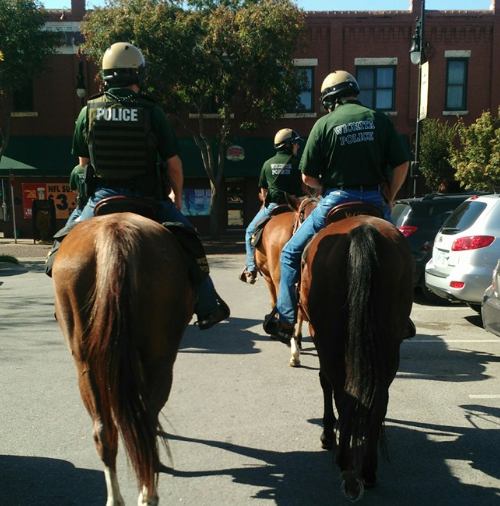
Wichita Police Department Mounted unit in Old Towne- photo Wichita Police
WICHITA, Kan. (AP) — Authorities are seeking a Wichita woman who is accused of nearly hitting a group of mounted police officers.
The Wichita Eagle reports that a collision was narrowly avoided early Sunday when the woman exited a parking lot in the city’s Old Town district at a high rate of speed.
Wichita police Sgt. Wendell Nicholson says the mounted officers tried to stop the woman’s Jeep at a stoplight but the woman sped past officers. Nicholson says one of the officers was forced to back his mounted horse so he would not be struck by the vehicle speeding past them.
Police are seeking the woman on suspicion of aggravated assault of a law officer.
Editor’s note: Reporters from the Topeka Capital-Journal and KHI News Service collaborated for a six-month exploration of how the state’s legal system deals with people with mental illness. This is the first in a four-part series.
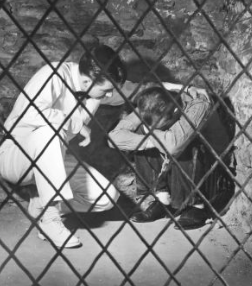
Photo by Derek Pinkston Complaints of underfunded and overcrowded facilities date back to the establishment of the first state asylums in Kansas. Kansas policymakers “grudgingly” appropriated $500 in 1866 to build the state’s first asylum in Osawatomie.
America has a long history of criminalizing mental illness.
Well into the 20th century, courts, not clinicians, committed people with mental disorders to state hospitals, where too often they were warehoused and received little if any meaningful treatment.
A report written in 1948 for the Kansas Board of Health titled “A Study of Neglect” concluded that “a seriously mentally ill person (in Kansas) is almost a criminal before the law.”
The report — written by Harry Levinson, a psychologist of national stature who began his career at the Menninger Clinic, and two colleagues — also noted that more than one-third of the approximately 46,000 Kansans who had entered state mental health hospitals between 1866 and 1946 had died in them.
The Levinson report and another issued about the same time by a special commission formed by former Kansas Gov. Frank Carlson that included Dr. Karl Menninger prompted the first of several sweeping reforms of the state hospitals and the mental health system in Kansas.
Today, the system is inarguably better as a result. But as this series of stories, “Mental Health on Lockdown,” to be published over the next several days illustrates, many Kansans with mental illness continue to find themselves ensnared in a criminal justice system that is largely ill-equipped to provide them with the treatment that they need.
Photo by Derek Pinkston The Osawatomie State Hospital campus includes gravestones marked with numbers. A report written in 1948 for the Kansas Board of Health noted that one-third of the approximately 46,000 Kansans who had entered state mental health hospitals between 1866 and 1946 had died in them.
Financial and human cost
The criminalization of mental illness is a both a national and state issue.
In Governing magazine, Jane Wiseman, director of a nonprofit government and management consulting firm, recently asserted that “America’s jails are the central address for the mentally ill.”
She and co-author Stephen Goldsmith, a former Indiana district attorney and deputy mayor of New York who now teaches at the Harvard Kennedy School of Government, provided evidence to back up their assertion.
“There are 10 times more people with mental illness in the criminal justice system than are being treated in psychiatric hospitals,” Wiseman and Goldsmith wrote. “As a society, we pay an extremely high financial and human cost for criminalizing behavior better addressed by diversion into mental health treatment. Incarceration costs for those with mental illness run from 60 percent to 20 times higher than those for other inmates.”
Kansas taxpayers are helping to foot that bill. Medical and mental health care spending made up $53 million of the $194 million Kansas Department of Corrections fiscal year 2015 budget.
An estimated 37 percent of inmates in the state prison system have a mental disorder, up more than 120 percent since 2006, according to Viola Riggin, director of health care services for KDOC.
The number of inmates diagnosed with severe and persistent mental illness also is going up, Riggin said, noting that the treatment they receive has improved greatly since inmates brought a series of lawsuits against the state in the 1970s seeking better mental health care.
“There was a tendency to simply lock them down,” said Bill Rich, a professor at the Washburn University School of Law who represented inmates in some of those lawsuits.
Today, county jails in Kansas also have become de facto mental health treatment centers. About 20 percent of the inmates serving time on any given day in the Johnson County jail have some kind of mental illness, according to Sheriff Frank Denning.
“I have been running the largest mental health hospital in the state of Kansas,” he said in an interview about mental health courts for this series.
Sheriffs in several smaller counties say they don’t have the resources to emulate Denning. They’re struggling to handle the increasing numbers of people with mental illness in their jails.
In addition to county jails, many hospital emergency rooms have become repositories for Kansans with severe mental illness waiting for an open bed at Osawatomie State Hospital, which was forced to restrict admissions in 2014 due to staff problems and to reduce its capacity in 2015 to make renovations ordered by federal inspectors.
At the same time, millions of dollars in state budget cuts over successive years have hindered the ability of community mental health centers to respond to the growing crisis.
History of neglect
Photo by Kansas State Historical Society By the early 1950s, Kansas had gone from last in per capita spending on treatment for mental illness to near the top of state rankings. Throughout 1960s and 1970s, with the reputation of the Menninger Clinic growing, Kansas was seen as a national leader in mental health.
Complaints of underfunded and overcrowded facilities date back to the establishment of the first state asylums in Kansas. The 1948 report for the state board of health briefly recounted the history, noting that Kansas policymakers “grudgingly” appropriated $500 in 1866 to build the state’s first asylum in Osawatomie. But from the day it opened, the six-room facility lacked the space to care for the growing number of “broken” Kansans in need of help, according to the report.
“Slowly the state stirred to meet its responsibilities — always slowly, always too late,” the report said of the construction a second asylum in Topeka in 1879 and a third in Larned in 1913.
Eventually, the report said, “the state belatedly agreed its institutions should not be asylums, but hospitals, and that a determined effort should be made to cure the mounting number of patients.”
But that commitment was short-lived, according to the report, which described the failure of state leaders to sustain it in colorful and unequivocal language.
“There was ever a reluctance on the part of consecutive, uniformly dispassionate legislatures to grant funds to meet even the most urgent needs,” it said. “At times the hospitals were allowed to become political footballs, staffed by incompetents, mired in the filth of political corruption and rocked by scandals. There was no money to pay decent help, to build adequate buildings. There was only money enough to give them meager sustenance so that they could continue to be burdens to the state, useless to themselves, and a continuing sorrow for their troubled families.”
Then, as now, many in need of mental health treatment “languished in jails” while awaiting admission to overburdened state hospitals, according to the report.
Stung by the reports and a flood of critical newspaper stories, Kansas lawmakers in 1949 heeded Carlson’s call to nearly double what the state was spending on its state hospitals for people with mental illness.
“The condition of our state hospitals with respect to equipment, medical care, humane custody, sanitation and personnel requires immediate positive action,” Carlson said as justification for his $15 million request, which would be about $150 million today when accounting for inflation.
“The original scope of our mental hospitals was limited almost entirely to the custodial care and confinement of the insane,” he said in his annual budget message to lawmakers. “But recent advances in the field of psychiatry and modern methods of treatment for the mentally ill give new hope to those afflicted. Their return to useful active life in the state and community is desirable from every standpoint.”
Carlson’s reform initiative resulted in rapid improvements thanks largely to a partnership between the state and the Menninger Clinic, then in Topeka, which expanded its psychiatric training program and assigned students to work rotations in the state hospitals to gain clinical experience.
Dr. Roy Menninger, a former president and chief executive of the Menninger Foundation, said the initiative helped create a “model for psychiatric training that was gradually assimilated by medical schools all over the country.”
By the early 1950s, Kansas had gone from last in per capita spending on treatment for mental illness to near the top of state rankings. Throughout 1960s and 1970s, with the reputation of the Menninger Clinic growing, Kansas was seen as a national leader in mental health.
But starting with the lawsuits filed in the 1970s over the quality of mental health care in state prisons and continuing through the 1980s, much of that progress was lost. A sweeping reform bill that the Kansas Legislature passed in 1990 aimed to reverse that slide by emphasizing treatment in a growing network of community mental health centers over that provided in state hospitals.
However, that commitment also wasn’t sustained.
David Johnson was named chief executive of the Bert Nash Community Mental Health Center in Lawrence in 2001. By that time, he said, “it had already been years since the state grants had been increased.”
With the reform bill, lawmakers intended to use the money saved from closing state hospitals to instead boost community mental health centers. But that funding increase wasn’t sustained.
Repeating history
The reforms of the early 1990s accelerated the trend toward deinstitutionalization. Since then, the closure of Topeka State Hospital and the shuttering of psychiatric units at several private hospitals have eliminated approximately 5,000 mental health beds.
People in the mental health field acknowledged that many of those acute-care beds were no longer needed. But Roy Menninger and others said some of that lost capacity was needed to backstop community treatment centers that weren’t prepared to care for patients with severe mental illness displaced by the changes.
“The system wasn’t ready for that, especially the seriously ill patients. So they were not adequately treated from the very beginning,” Menninger said.
A series of funding cuts in recent years exacerbated by another $30 million reduction this year have further hindered the ability of community mental health centers to provide adequate care to severely ill patients.
“Over the last several years it’s seemed to me that we have had a slow dismantling of the mental health system across Kansas,” said Tim DeWeese, executive director of the Johnson County Mental Health Center.
It also seems that way to Lenexa Police Capt. Wade Borchers. His officers are encountering more people with mental illness engaging in antisocial if not criminal behavior.
“The ones that get left holding the bag, really, are law enforcement,” Borchers said. “And we are not getting people (with mental illness) the help like we did 10 to 15 years ago. That’s just a bottom-line fact.”
Police and sheriff’s departments in higher-populated, urban Kansas counties are attempting to proactively deal with the issue by putting their officers through an intensive training program where they learn how to defuse encounters rather than allow them to escalate into situations that result in arrests and jail time. But many smaller departments can’t take advantage of training because they don’t have enough staff to cover for officers who must take up to a week off to participate.
Awareness of the problem is growing among state and local officials. Tim Keck, interim secretary of the Kansas Department for Aging and Disability Services, is working to regain federal certification for Osawatomie State Hospital and restore approximately $1 million in monthly Medicare payments.
Also, in a year in which many state budgets were cut, Kansas lawmakers approved salary increases for state hospital workers in an attempt to help KDADS solve chronic staffing problems at the institutions.
Still, advocates and mental health providers caution that a piecemeal approach won’t solve the problems, which are longstanding and systemic. They say nothing short of a comprehensive and adequately funded set of reforms, such as those spelled out in a 2015 report from a special committee to the KDADS secretary, will do the job.
Jim McLean is executive editor of KHI News Service in Topeka, a partner in the Heartland Health Monitor team.
SALINE COUNTY – Law enforcement authorities in Saline County including the State Fire Marshal are investigating suspects in connection with an alleged arson fire.
Travis Novak, 23, and Justin Beetch, 24, both of Salina are in custody in connection with the August 4, fire that destroyed thousands of dollars in farm equipment and over 700 bales of alfalfa hay, according to Saline County Undersherrif Roger Soldan.
August fire in Saline County- photo Saline Co. Sheriff
Authorities say the two ignited a fire that consumed a shed in the 10500 Block of South Gypsum Valley Road that held the hay and farm equipment.
HARPER COUNTY – A pair of earthquakes shook portions of Kansas early Monday morning.
Just after 8:25 a.m., a 3.5 magnitude quake hit approximately 11 miles northeast of Anthony, Kansas, according to the U.S. Geological Survey.
A few minutes later at 8:50 a.m., a 2.5 magnitude quake was reported near the same area approximately 10 miles northeast of Anthony.
A staff member at the police department in Anthony reported they felt the quake. No damage or injuries reported early Monday, according to the Harper County Sheriff’s Department.
You must provide the following forms of unexpired photo ID (unless you are 65 or older, in which case the ID can be expired) when you vote:
• Drivers license or non-drivers ID card issued by Kansas or another state
• U.S. passport
• Concealed carry of handgun license issued by Kansas or another state
• Employee badge or ID document issued by a government office
• U.S. military ID
• Student ID card issued by an accredited Kansas postsecondary educational institution
• Public assistance ID card issued by a government office
• An ID card issued by an Indian tribe
• State Voter ID
The VoteKansas App is available for download to your iPhone or Android device. The app allows you to find your voting location, get directions to your voting location, and see what races and candidates will be on your ballot.
LAWRENCE, Kan. (AP) — A proposal that would require all state universities to add a notation on a student’s transcript if the student is expelled for sexual violence has been dropped.
The Lawrence Journal-World members of a Kansas Board of Regents’ Governance Committee discussed the issue last month. Minutes from the meeting show that the committee decided not to pursue the policy. That meant the proposal never reached the full Board of Regents for a vote.
The minutes say that “currently no one is specifically interested in an across the board policy and believe that non-academic misconduct should be handled on a case-by-case basis.”
Students at several state schools initiated the transcript discussion. Last year, a council made up of leaders of the six state universities agreed they wanted a statewide requirement.
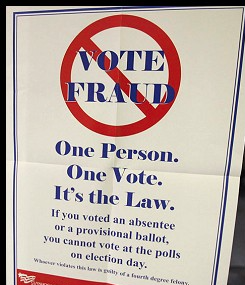
TOPEKA, Kan. (AP) — The top federal prosecutor in Kansas says a member of his staff will be on call to handle complaints about potential election fraud or violations of voters’ rights on Election Day.
Acting U.S. Attorney Tom Beall said Monday that Assistant U.S. Attorney Leon Patton will be available by phone at 913-551-6730 on Nov. 8.
Beall said in a statement that his office will act “promptly and aggressively” on complaints. He said he does not expect any problems during voting.
Beall also noted that the FBI’s Kansas City office will have agents available to handle allegations of abuse with a toll-free hotline. It is 855-527-2847.
Beall also said questions about state or local issues can be directed to the Kansas secretary of state’s office at 800-262-8683.
Gavin Wright, Curtis Allen and Patrick Stein were y are charged with domestic terrorism
WICHITA -One of three suspects accused in a domestic terror plot in southwest Kansas will be in federal court on Monday.
Curtis Allen, Patrick Stein and Gavin Wright are charged with conspiring to use a weapon of mass destruction. They were arrested in what the government calls a foiled plot to attack an apartment complex home to Somali Muslims in Garden City on Nov. 9. Allen is expected to be in court on Monday.
On Friday Gavin Wright waived a detention hearing and pleaded not guilty in what prosecutors say was a conspiracy by a militia group to detonate truck bombs at the apartment complex.
Wright’s decision means the 51-year-old from Liberal, remains in federal custody pending trial. Defense attorney Kari Schmidt told the court she and Wright have concerns about his safety if he’s released.
Patrick Stein also appeared in court on Friday.
U.S. Magistrate Judge Gwynne Birzer ruled that Stein would remain in jail while he awaits trial. Birzer said Stein poses a “grave danger.”
Stein pleaded not guilty to conspiring to use a weapon of mass destruction.
Defense attorney Ed Robinson says his client was led by the government’s paid informant and an FBI undercover agent.
Attendees applaud as Kansas State Treasurer Ron Estes accepts the ABLE Champion award on Thursday, October 20, 2016, at an event hosted by the National Down Syndrome Society (NDSS) in Kansas City. The award was presented by Jawanda Mast, NDSS Manager of Grassroots Advocacy. (L-R) Tavrick Lawless; Rachel Mast; Jawanda Mast, NDSS Manager of Grassroots Advocacy; Kansas State Treasurer Ron Estes; Sara Hart Weir, President of the National Down Syndrome Society.
OFFICE OF STATE TREASURER
TOPEKA–Kansas State Treasurer Ron Estes was honored on Thursday, October 20th, at an event held by the National Down Syndrome Society. Estes and other state leaders including Congressman Kevin Yoder (R-Kan) and Kansas State Representative Erin Davis were in attendance to celebrate Down Syndrome Awareness Month and champion the Kansas Achieving a Better Life Experience (ABLE) Act.
The ABLE Act is hailed as the most significant legislation for the disability community since the Americans with Disabilities Act (ADA).
In the 2015 legislative session the Kansas Legislature passed HB 2216 in support of the Kansas Achieving a Better Life Experience (ABLE) Savings Program, an initiative that will provide individuals living with disabilities a new way to save for their future. The bill was introduced by Kansas State Treasurer Ron Estes and Representative Erin Davis (R-Olathe). More than 100 disability rights groups including the National Down Syndrome Society (NDSS) and Autism Speaks supported the ABLE Act.
“The Kansas ABLE Savings Program will ease the financial burden parents face when trying to provide critical services needed to support their children living with disabilities by allowing tax-free savings for current and future disability-related expenses, which in return will help secure their child’s future without jeopardizing the child’s eligibility for important benefits,” said Kansas State Treasurer Ron Estes.
The Kansas ABLE Savings Program will launch before the end of 2016 and will be administered by the State Treasurer’s Office. The program allows disabled individuals and their families to save for future education, housing, transportation, health and wellness costs, and additional related expenses in a tax-free savings account comparable to a Roth IRA. Under the Kansas ABLE Savings Program, children and adults whose disability occurred before age 26 and who meet Social Security disability standards or have a disability certification will be eligible to have a Kansas ABLE account. Family and friends will be able to contribute up to $14,000 per beneficiary each year.
For more information about the Kansas ABLE Savings Program individuals may contact Tom Treacy, Director of ABLE Savings Program, at (785) 296-3171 or via email at [email protected]. Individuals may also visit the Kansas State Treasurer’s Office Kansas ABLE Savings Program webpage at https://bit.ly/KansasABLE.
TOPEKA, Kan. (AP) — A state education consultant says Kansas could benefit from addressing the impact of childhood trauma on students’ ability to learn.
Kent Reed, school counseling program consultant for the Kansas Department of Education, told the State Board of Education last week that stress from adverse childhood events can lead to lower test scores, language difficulties, behavioral issues and a greater likelihood of failing a grade.
The Topeka Capital-Journal reports he said work groups have formed to study childhood trauma issues and they’ll make recommendations.
Board member Janet Waugh said one-third of children in the state’s juvenile justice system have some form of mental illness. She said training and treatment of adverse childhood events issues is needed, but it will “cost a lot of money.”
SALINE COUNTY – A Kansas man was injured in an accident just before 4p.m. on Sunday in Saline County.
The Kansas Highway Patrol reported a 2006 Harley Davidson driven by Shawn A. Davis, 24, Ellsworth, was eastbound on the ramp from Interstate 70 to Interstate 135.
The motorcycle was going too fast for conditions. It left the roadway and the rider sustained injuries.
Davis was transported to the hospital in Salina.
He was not wearing a helmet, according to the KHP.










 TOPEKA, Kan. (AP) — The top federal prosecutor in Kansas says a member of his staff will be on call to handle complaints about potential election fraud or violations of voters’ rights on Election Day.