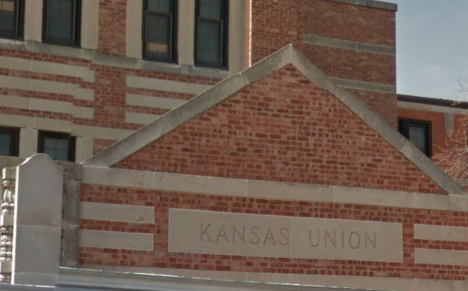
LAWRENCE, Kan. (AP) — The University of Kansas Memorial Union is proposing a $45 million renovation, and asking for a fee increase.
Kansas students will vote this spring on whether to add the 30-year $50 per semester student fee to pay for the union renovations. Union leaders say the work is needed to upgrade aging mechanical systems and improve the union’s studying, dining and community spaces.
Lisa Kring, director of building and event services for the Memorial Union, said the building has nearly 2 million visitors a year.
The Lawrence Journal-World reports the Student Senate recommends most annual student fees on its own, but decided to put the union matter to a campus-wide referendum.
Student Body President Stephonn Alcorn says neither he nor the Student Senate has an official position on the proposal.
Huge Chemical plume over Aitchison Kansas on Friday-courtesy Corie Dunn
ATCHISON, Kan. (AP) — One person remains hospitalized a few days after a chemical spill sent a noxious chemical cloud over a northeast Kansas town.
The spill occurred Friday morning after two chemicals were inadvertently combined at the MGP Ingredients plant in Atchison. The chemical release created a chemical cloud over sections of Atchison and sparked evacuations.
Officials said dozens of people sought medical treatment Friday, largely for respiratory problems. Most had been treated and released by later Friday.
A spokeswoman for Atchison Hospital said Sunday that one person remains hospitalized in stable condition.
The Kansas City Star reports that the company said in a statement Saturday that MGP is working with regulatory agencies to “fully understand the cause and mitigate the chance of a similar incident occurring in the future.”
KANSAS CITY –A man – charged in state court for his role in the murder of a 3-year-old boy killed in a drive-by shooting – was sentenced in federal court Friday for illegally possessing a firearm, according to Tammy Dickinson, United States Attorney for the Western District of Missouri.
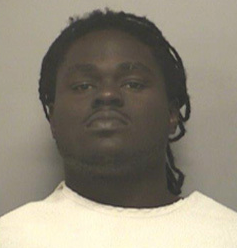
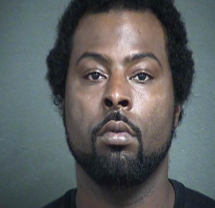
Sulif I. Wilkins, 26, of Kansas City, was sentenced by U.S. District Judge Howard F. Sachs to 10 years in federal prison without parole, the maximum statutory penalty for the offense.
On June 28, 2016, Wilkins pleaded guilty to being a felon in possession of a firearm. By pleading guilty, Wilkins admitted that he was in possession of a Taurus .40-caliber handgun on June 17, 2015.
According to court documents, Wilkins was identified during an investigation into the death of a 3-year-old boy who was murdered in his bed in a drive-by shooting on May 31, 2015. (Wilkins is charged in state court with murder, unlawful use of a weapon and armed criminal action related to that crime.) Kansas City police officers went to an apartment complex to execute a pick-up order on Wilkins on June 17, 2015. At the apartment complex, Wilkins was seen walking to a blue Chevrolet Cavalier. As officers approached him, Wilkins pulled the gun from his waistband, threw it in the car, and ran towards the apartments. Wilkins was taken into custody and the Taurus handgun was recovered.
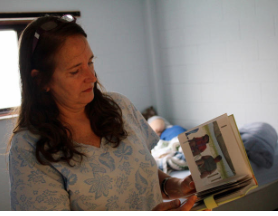
Judy Talbot says a “medication washout” could help improve the condition of her daughter, who has autism and post-traumatic stress disorder. Talbot’s daughter is receiving nursing care at the Kansas Neurological Institute but has been unable to get the kind of specialized attention needed to adjust her medication regimen. CREDIT FILE PHOTO
By ANDY MARSO
Judy Talbot is trying to get her daughter out of a state facility for Kansans with intellectual and developmental disabilities. Zack Zbeeb is trying to get his son into one.
But both ultimately have the same goal: to do a “medication washout” to determine whether the prescription drugs their autistic kids take are helping to control their recent dangerous psychotic episodes or actually causing them.
Zbeeb, from Wichita, wants his 15-year-old son to be weaned off his medications at a place like Parsons State Hospital and Training Center.
“We felt this was an appropriate place for my son to be in a 100 percent structured setting,” Zbeeb says.
Talbot got her 32-year-old daughter into a state facility, the Kansas Neurological Institute, in August after her daughter spent a week strapped to a bed in a hospital emergency room.
She thought KNI might be able to do a medication washout. Instead her daughter has received mainly nursing care, not the kind of specialized attention needed to adjust her medication regimen.
“She’s been there all this time and hasn’t seen a psychiatrist,” Talbot says.
Talbot and Zbeeb’s children both fall into a care gap for Kansans with a combination of developmental disability and mental health issues.
Providers on both sides say they’re ill-equipped to care for people with that combination of ailments, especially given cuts to Medicaid, which is one of the main sources of health insurance for people with developmental disabilities and mental illness.
Advocates for Kansans with developmental disabilities say they’re often excluded from mental health treatment facilities based on assumptions that they won’t be able to participate in counseling.
Zbeeb and Talbot both say the default treatment has been to medicate their children with various antipsychotic drugs, and both believe the drugs may be doing more harm than good at this point.
Eric Atwood, a psychiatrist at the Family Service and Guidance Center in Topeka, says that’s possible. Medications often are added during times of acute psychosis, he says, so as people begin taking multiple drugs “you end up with a complicated regime and it’s very difficult to know what’s doing what.”
A 2011 study found that people taking more than one antipsychotic medication were less likely to have a bad reaction to a medication washout than they were to the addition of another antipsychotic.
A medication washout might be the right call in some cases, Atwood says. But it’s not a decision that should be taken lightly.
“The question is, is it appropriate to clear the slate and see how one functions without any medication,” Atwood says. “That is always a very individualized decision between the patient and/or their caregivers and the treatment team.”
A new approach
Zbeeb says his family and his son’s caregivers have agreed that he should try a medication washout and that Parsons is the right place to wean his son off the medications and try a new approach. But Parsons, KNI and the state’s two mental health hospitals in Osawatomie and Larned are considered providers of last resort.
Amerigroup, the company that administers his son’s Medicaid coverage under KanCare, has told him his son must first try a psychiatric residential treatment facility, or PRTF, before the state facilities. There are about a dozen PRTFs across the state that provide inpatient rehabilitation for children and adolescents with mental health problems.
Zbeeb says he called one such facility, Prairie View in Newton, and was told his son could not be admitted because his IQ was too low. Employees there also said they would not do a medication washout.
He thinks he can get his son admitted at a different facility, Lakemary Center in Paola, but it has a waiting list and he fears Lakemary will not keep his son long enough to wean him off his medications.
“When you want to take off these medications, you cannot do it in a short period of time,” Zbeeb says, adding that it could take five to seven months.
Atwood says Lakemary is unique as a PRTF that specializes in treatment for children with developmental disabilities coupled with psychiatric illness.
He was not surprised to hear Zbeeb’s son might have to wait months to get in.
“We’ve had waiting lists for virtually all of the PRTFs,” Atwood says.
Looking for answers
Because of age restrictions, Lakemary and the other PRTFs are not a fit for Talbot’s daughter.
At KNI she has around-the-clock support and the care of a team that includes nurses, psychologists and behavioral technicians — but no psychiatrist, which is the medical specialty with the most expertise in antipsychotic medications.
KNI and Parsons serve Kansans with intellectual and developmental disabilities. Osawatomie State Hospital and Larned State Hospital serve Kansans with severe and persistent mental health problems.
Talbot says KNI employees have been unwilling to try to “reset” her daughter’s medications. She says her daughter would see a psychiatrist from outside the facility soon and Talbot would explore making a medication washout part of her plan to transition back to her home.
“I just don’t want to be thrown out there and have the same thing (happen),” Talbot says, referring to her daughter’s extended emergency room stay in August.
Eric Harkness, president of the Kansas chapter of the National Alliance on Mental Illness, is a former psychiatric pharmacist who has taken antipsychotic medications himself.
Harkness says any change in antipsychotic medication should be done in close consultation with a physician or an advanced practice registered nurse.
“It is my understanding that if an antipsychotic medication is improperly discontinued or stopped, a psychotic rebound is highly likely,” he says.
A medication washout should be done by slowly eliminating only one medication at a time, he says, while taking note of dosage, what time of day it was taken and any changes in mood or behavior.
While a medication washout can be done at home, an inpatient facility is a better setting, Harkness says.
Access to such facilities in Kansas is limited, especially for adults with intellectual or developmental disabilities. A new 72-bed hospital in Olathe, Cottonwood Springs, opened last year.
But that’s the exception. Kyle Kessler, executive director of the Association of Community Mental Health Centers of Kansas, says there has been an “incredible reduction of inpatient community beds” in recent years as hospitals close psychiatric units in favor of more profitable services like oncology.
Talbot says she plans to work with her daughter’s KanCare company, Sunflower Health Plan, to find a medication solution for her daughter. Sunflower Health Plan partners with a subcontractor, Lifeshare, which specializes in caring for people with developmental disabilities.
Lifeshare uses a program called Pathways designed to help people with disabilities live independently, in part by managing their emotional and behavioral health.
Andy Marso is a reporter for KHI News Service in Topeka, a partner in the Heartland Health Monitor team. You can reach him on Twitter @andymarso
TOPEKA–According to research done for the Kansas Department of Wildlife, Parks and Tourism (KDWPT), travel and tourism in the Sunflower State continued a six-year growth trend with solid gains during calendar year 2015. Visitation moved upward to 35.4 million, a gain of 900,000 over 2014 and equivalent to everyone from Texas, Nebraska and Missouri visiting Kansas once a year.
Traveler spending increased to $6.5 billion in 2015, about what all Americans spent on food for July 4th and $261 million more than 2014. Lodging expenditures, food and beverage sales and retail spending showed the strongest growths. The figures are based on a report by Tourism Economics, a company that specializes in analyzing and reporting on economic impacts of tourism.
“The variety of attractions and experiences in our state increasingly have become destinations for non-residents and visitors from many foreign countries,” said Linda Craghead, KDWPT Assistant Secretary for Parks and Tourism. “Not only that, Kansans themselves are awakening to our amazing opportunities to travel and enjoy the many things the great Sunflower State has to offer. The benefits to our economy are enormous. If our tourism industry were a single business, it would rank #402 on the Fortune 500 list.”
When indirect and induced impacts are included, Kansas travelers in 2015 generated $10.4 billion in total business sales. The growth of travel spending has averaged 5.5% per year since 2009, a total increase of $1.8 billion. Kansas travelers directly and indirectly sustained 94,126 jobs in 2015, with a combined income of $2.9 billion.
The benefits of tourism extend to state and local governments, as well. Tourism-supported direct and indirect tax revenues in 2015 surpassed $1 billion and included $588 million in state and local governmental revenues. Of the $272 million in state revenues, $186 million accrued from sales tax collections. Local governments received $316 million in tax receipts from travel-generated activity. If the state and local tax revenues from visitor activity were absent, each Kansas household would need to pay $525 to replace those revenues.
LAWRENCE, Kan. (AP) — A 27-year-old Kansas man faces charges after his 9-month-old stepdaughter was abandoned in Lawrence.
The Kansas City Star reports that Marquis Young is charged in Douglas County with attempted first-degree murder and child abuse. He is also accused of violating his probation.
Police said Young was the stepfather of a 9-month-old girl found abandoned the morning of July 7 in an apartment complex trash receptacle in Lawrence.
The baby spent almost two weeks in the hospital before she was released into state custody.
Young is being held on a $100,000 bond. His next court appearance is Oct. 27.
NEW YORK (AP) — AT&T is buying Time Warner, owner of the Warner Bros. movie studio as well as HBO and CNN, for $85.4 billion in a deal that could shake up the media landscape.
The merger combines a telecom giant that owns a leading cellphone business, DirecTV and internet service with the company behind some of the world’s most popular entertainment. It’s the latest tie-up between the owners of digital distribution networks — think cable and phone companies — and entertainment and news providers, one aimed at shoring up businesses upended by the internet.
The deal would make Time Warner the target of the two largest media-company acquisitions on record, according to Dealogic. The highest was AOL’s disastrous $94 billion acquisition of Time Warner at the end of the dot-com boom.
EMPORIA, Kan. (AP) — A former Emporia driving school instructor faces charges accusing him of sexually abusing a teenager.
The Emporia Gazette reports that Robert L. Jones of Emporia was charged this week in Lyon County court with aggravated sexual battery of a 16-year-old. The criminal complaint says the alleged crime occurred in August.
Jones has been fired from his position as director of an Emporia driving school, which was has also been shut down.
Jones’ next court appearance is scheduled for Nov. 14.
A phone number for a lawyer listed for Jones rang unanswered Saturday.
SEDGWICK COUNTY – Law enforcement authorities in Sedgwick County a case of animal cruelty.
On October 15, Animal Control Officers were dispatched to the area of 9th and Grove in Wichita to pick up a black pit bull that was running at large, according to a social media report.
The dog had open wounds to the back of his neck and was taken to an emergency vet for treatment.
The dog also had several missing teeth and exhibited signs of abuse and mistreatment.
The dog was handed over to a local animal rescue organization, then underwent surgery at a local veterinarian’s office at the organization’s expense.
Investigators believe this dog was used as a “bait dog” for entertainment and gambling.
If you have information about this crime, call Crime Stoppers at 267-2111. You also can submit a tip online at www.WichitaCrimeStoppers.com or from your mobile phone by texting TIP217 then your message to 274637 (crimes).
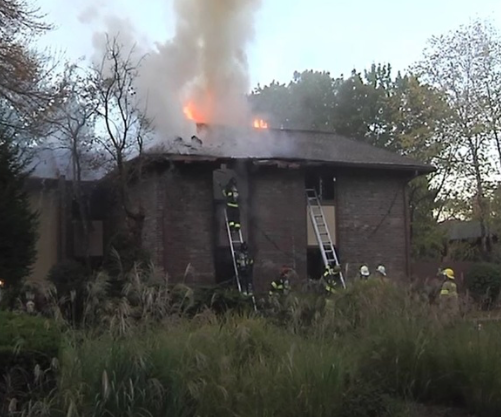
OVERLAND PARK, Kan. (AP) — Firefighters have rescued seven people, including four children, from a burning apartment building in suburban Kansas City.
The fire at an Overland Park apartment building started early Saturday. The fire department says that when the first crews arrived, residents told them there were residents trapped in the building
The fire department says three adults and four children were rescued from second-story balconies. No injuries were reported.
KANSAS CITY– A Kansas City man was charged in federal court for enticing an 18-year-old woman across state lines for prostitution, according to acting U.S. Attorney Tom Beall.
Derrick D. Horne, 26, was charged with one count of enticing a person to cross state lines to engage in prostitution. A criminal complaint alleged the case grew out of an undercover operation by the Kansas City, Kan., Police Department and the FBI to target individuals who promote prostitution and to recover victims of human trafficking.
On Oct. 15, 2016, an undercover officer responded to an adult website advertisement and arranged to meet a sex worker and to pay for sex, starting at $150 for half an hour. When Horne dropped the sex worker off to meet the officer at a recreational vehicle parked behind a hotel at 1805 N. 110th Street in Kansas City, Kan., both he and the woman were arrested.
Investigators learned Horne had recruited the woman to be a prostitute, saying she could be his “lil business woman/escort” and she would “get money for doing nothing (the) majority of the time.” The first time Horne set up an appointment for the woman, the client paid $170. Horne got $80 and the woman got $90.
If convicted, he faces up to 20 years in federal prison and a fine up to $250,000. The Kansas City, Kansas Police Department, Kansas City, Missouri Police Department, Wyandotte County Sheriff’s Department, Overland Park, Kansas Police Department, and the FBI investigated.
This year’s presidential race may be one for the history books. But it’s not the contest Kansas voters wanted.
When Republicans caucused in March they overwhelmingly preferred Texas Sen. Ted Cruz over eventual nominee Donald Trump.
Kansas Democrats gave Vermont Sen. Bernie Sanders one of his biggest primary victories – a 68 percent to 32 percent drubbing of Hillary Clinton.
Hannah Figgs-Hoard was among a group of Sanders supporters at a Topeka caucus site that literally overwhelmed Clinton’s smaller contingent.
“It was a little wild. There was like chanting going on,” Figgs-Hoard said. “They had to move the Hillary supporters into another part of the building because there was still people coming in for Bernie.”
Wistfully, she said, “It was an incredible experience. I loved it. But, you know.”
When Clinton became the first woman in U.S. history to win the nomination of a major party, Figgs-Hoard, like many Kansas voters, had a decision to make. Would she support Clinton, one of the minor party candidates or not vote like some of die-hard Sanders supporters she knows.
With the help of some women she describes as “mentors,” Figgs-Hoard decided to back Clinton. And though she said she’s aware of Clinton’s flaws, she’s now excited about her choice.
“I know a lot of people are like, ‘Well, she’s the lesser of two evils’ kind of a mindset. And I don’t feel that way,” Figgs-Hoard said. “I think she’s going to be an amazing president.”
Republican Nicholas Reinecker, from Inman, relied on a different kind of guidance when confronted with a similar choice. He prayed about it.
Stopping by the Republican booth at the Kansas State Fair, he said he had supported Cruz for the nomination but is now backing Trump.
“I tell people I’m a Christian, a husband, a father and then a registered Republican. So, I’m supporting Donald Trump and Mike Pence.” Reinecker said.
Asked what he liked about Trump, Reinecker struggled to respond with something specific.
“Well, I’d have to meet him to really get an understanding of something beyond the media flair and the entertainment factor. But I’m going with him,” Reinecker said.
Political scientists have a name for that – they call it “motivated reasoning.” It’s how voters rationalize their support of one candidate over another or transition to someone who wasn’t their first choice.
Beth Vonahme teaches political science at the University of Missouri-Kansas City, where she also does research into the psychology of voters. She says voters motivated to stick with their party typically don’t deliberate over such decisions.
“It’s something that often happens very automatic,” Vonahme said. “You know, I’m a Republican. He’s the nominee so ‘how can I sort of make my peace with this situation?’ And the easiest way to do that is to reprioritize the issues that are important to me.”
For evangelical voters like Reinicker, Vonahme says, reprioritizing could mean overlooking Trump’s previous support for abortion rights based on his more recent promise to appoint a conservative justice to the U.S. Supreme Court.
She said the power of partisanship is also why Democrats dismiss concerns about Clinton’s emails and why many Republicans are willing to pass off Trump’s confession of aggressive sexual behavior as locker room talk.
“Individuals will dismiss scandalous information if it’s inconsistent with their preferences,” she said. “And I think you see that on both sides this time around.”
That propensity was on full display recently when Kansas 3rd District Republican Chair Vicki Sciolaro, once a Cruz supporter, found herself on CNN digging into the Bible to find a defense of Trump.
“Here’s the thing, he’s not running to be the pope,” Sciolaro said. “Look at the culture of our country. Everybody knew he had strip clubs. But still the millions of people chose him to be the nominee. I mean this is the kind of person that needs to lead our country. God can use anybody. He used the harlot.”
It takes a lot, but scandal and political missteps can eventually sap a voter’s motivation for sticking with a candidate. On the national level, polls suggest Trump is losing support, particularly among women.
Here in Kansas, Gov. Sam Brownback is also losing support. He’s not on the ballot, but in a sense his policies are. And the combination of a weaker-than-usual presidential candidate at the top of the ticket and Brownback’s rock-bottom approval ratings could spell trouble for Kansas Republicans in down-ballot races, particularly legislative incumbents tied to the governor’s policies on schools, taxes and highways.
That’s what Sherry Moser, of Hutchinson, was hearing from some Republicans when she volunteered at the Democratic Party booth on the last day of the state fair.
“Maybe they’re not with us at the federal level, but they’re with us at the state level,” Moser said. “Brownback has a very low rating with most people.”
Jim McLean is executive editor of KHI News Service in Topeka, a partner in the Heartland Health Monitor team.