SALINE COUNTY – Law enforcement authorities in Saline County are investigating a suspect for identity theft.
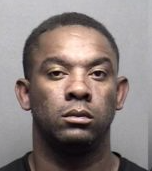
On Tuesday, Gary Ingram, Jr., 33, was arrested for allegedly using his father’s identity to make purchases from Sears in the Salina Central Mall, according to police.
He was completing a credit card application, using the information of Gary Ingram, 64, Johnstone, Rhode Island, when police found him.
Ingram Jr. was arrested on request charges of ID theft, forgery, criminal use of a financial card, and felony theft.
FREDONIA, Kan. (AP) — A southeast Kansas district is seeking to join a program that waives state laws and regulations for participating schools.
The Topeka Capital-Journal reports Fredonia district officials told the Kansas State Board of Education on Tuesday why they want to join the Coalition of Innovative School Districts. The program is meant to remove school performance barriers, but critics have raised accountability concerns.
The approximately 700-student Fredonia district has a five-part plan that includes creating an academy focused on science, technology, engineering, math and arts education. Superintendent Brian Smith says it’s “put a lot of time and effort into meeting with public, meeting with businesses to establish a common vision.”
The state board could vote on Fredonia’s application as soon as next month. Six districts are currently part of the coalition.
CBC developed this Medical Office building in Iola
DERBY, Kan. (AP) — A Kansas City-based real estate company says it will build a $40 million hospital in Derby.
The CBC Real Estate says in a news release that the hospital, to be called Rock Regional Hospital, is expected to open in 2018.
The company says the 65,000-square-foot hospital will include 12 inpatient beds, 12 surgical beds and six intensive care unit beds. It also will have three operating rooms, two procedure rooms, three catheterization lab rooms and three emergency rooms.
An adjacent 40,000-square-foot building will house medical offices.
Candor Healthcare, a Texas-based hospital management company, will oversee the hospital.
The Wichita Eagle reports health care offerings in Derby have been expanding. Wesley Healthcare plans to open its Derby ER in November and another walk-in clinic opened last week.
SALINA, Kan. (AP) — Lead testing that was started after elevated levels of the substance were detected among some children in central Kansas’ Saline County has uncovered just one additional case so far.
The Salina Journal reports that about 65 percent of the 342 blood samples recently sent to the Kansas Department of Health and Environment have been tested for lead. Saline County Health Department director Jason Tiller told Saline County commissioners Tuesday that only one sample has showed an elevated level.
The health department provided free blood tests for lead when the KDHE launched an investigation because of an unusually high number of children in Saline County showing elevated lead levels since the beginning of 2015.
The KDHE is continuing its investigation to try to determine what has caused those elevated levels.
MARION COUNTY –A bald eagle treated for injuries in Marion County has died.
On Tuesday, a concerned citizen called county Game Warden Cody Morris about the bird that looked injured, according to a social media report.
It was spotted along a creek just North of Marion.
Warden Morris recovered the bird and transported it to the rehabilitation center at Milford Reservoir but it did not survive, according to Pat Silovsky with the Milford Nature Center.
“The bird was having a lot of seizures and that is usually an indication of lead poisoning. We will know for sure when test results are back by the end of the week,” she said.
There is lead all over from broken fishing lines, from firearms and large predatory birds are susceptible to this problem, according to Silovsky.
What appears at first blush to be little more than a contract dispute between a state agency and a University of Kansas research center is actually much more than that.
The state’s failure to renew a contract with the KU Center for Mental Health Research and Innovation is another assault on the state’s mental health system, according to the directors of several community mental health centers.
The CMHC directors say the loss of training and quality assurance services that the KU center provided will make it harder for them to provide evidence-based treatment and track the difference they’re making in the lives of Kansans with mental illnesses.
“You have to have services that are evidence-based,” says Tim DeWeese, executive director of the Johnson County Mental Health Center. “The people at the KU center, through their expertise, have helped community mental health centers provide good-quality services that are evidence-based.”
DeWeese says he was “shocked and disappointed” when he heard that the Kansas Department for Aging and Disability Services was not going to continue a collaboration with the KU center that dated to the late 1980s.
“This is one more policy decision that unfortunately will have a negative impact on community mental health in Kansas,” he says. “Without the KU center, I’m not sure how the state plans to ensure that we continue to maintain the quality of our services.”
The $2.4 million contract proposed by the KU center would have been funded entirely by Medicaid dollars provided by the federal government to match a commitment by the university to dedicate faculty and staff time of roughly equal value. The state’s role was to act as a fiscal agent for the federal money and to administer the contract.
Randy Callstrom, CEO of the Wyandot Center for Community Behavioral Healthcare Inc. in Kansas City, Kan., says his center also would be challenged to maintain the quality of some services without the KU program.
“We don’t know how we’re going to deal with it,” Callstrom says, noting that CMHCs using evidence-based treatments can qualify for higher reimbursements. “Our staff is quite anxious about it.”
Take it or leave it
Contract negotiations between KDADS and the KU center broke down when center officials reluctantly concluded that they couldn’t accept what amounted to a take-it-or-leave-it offer from the state.
The final offer came from Brad Ridley, head of the KDADS budget and financial services division, in an email to Rick Goscha, director of the KU research center, sent at 12:01 p.m. Thursday, June 30, the day before the contract deadline and the start of the state’s 2017 budget year. It gave Goscha two hours and 29 minutes to review a set of final terms that would have required the center to scrap the KU-approved work plan it had submitted in March and agree to provide a limited set of services to be negotiated later at a reduced hourly rate.
“Their last-minute offer was not a viable option,” Goscha says. “They wanted us to agree to a contract with no work plan in place and no direction on work that they wanted to do or not do.”
In addition, he says, the offer included a reduction in funding that would have required him to lay off half of the center’s staff.
“When I asked them, ‘Well, who should I keep and who should stay based on what (work) criteria?’ they had no answer for that,” Goscha says.
In the weeks leading up to the deadline, he sent a series of increasingly desperate emails to KDADS officials seeking a resolution to the contract dispute.
“The work of this contract is built on trust,” Goscha wrote on June 23, noting that in 2013 Republican Gov. Sam Brownback had trusted him enough to put him in charge of a task force formed to develop recommendations for improving the state’s mental health system.
“Our contract is almost entirely structured to carry out multiple recommendations contained within the final report of that task force,” he wrote. “I don’t know how much more we can be aligned with the priorities of this administration.”
Goscha wrote that while he was willing to discuss transitioning to an hourly rate structure in a future contract, such a significant change couldn’t be accomplished only days ahead of the deadline to have a fiscal year 2017 agreement in place.
The loss of the KDADS contract forced Goscha to lay off 12 of the center’s 15 staff and all six students working on the project. He says he also soon must return a separate “supported living” grant to KDADS and close the center.
‘Good faith’ offers
Angela de Rocha, a media spokesperson for KDADS, says the agency made “three good faith offers” to the KU center in the days leading up to the contract deadline.
The first two were made during a meeting on Wednesday, June 29. Each would have required the KU center to fund itself while negotiations continued on the agency’s proposal to restructure the contract. That shouldn’t have been a stumbling block, de Rocha says, given that Goscha had more than $1 million in unspent funds from a 2016 contract that totaled $3.8 million.
However, Goscha maintains that he didn’t have the “cost-share match” needed to continue the project past June 30.
“If I had the cost-share match I would have done that in a heartbeat,” Goscha says. “I didn’t want to let all my staff go. But I had been telling them (KDADS) since January that we couldn’t accept a no-cost time extension.”
Goscha says tens of millions of dollars in cuts sustained by the university because of the state’s ongoing revenue and budget problems also complicated the negotiations. He says a hiring freeze instituted by the university prevented him from replacing a key researcher after she left for a job in another state.
The agency’s desire to restructure the contract also was problematic.
From the state’s perspective, changes were needed to ensure that federal Medicaid money was being spent appropriately, de Rocha says.
“We had some issues with some of the elements of the way the contract was being administered,” de Rocha says. “The way the contract worked before is we gave them money and they just did things. We wanted to devise a work plan based on the agency’s needs.”
Pressed for details, de Rocha said in an email, “Suffice to say KDADS funds were being used to pay for some things that were not directly related to KDADS tasks/projects.”
The concerns had nothing to do with the center’s work, de Rocha says, adding that the breakdown in negotiations was “a very disappointing experience for us.”
“We had hoped to continue to work with them,” she says.
Goscha says it didn’t feel that way on his side of the negotiating table. When the third and final offer was made, he said agency officials “had to know” he didn’t have the authority to approve something that university officials hadn’t had a chance to review.
“And there is no way the university would have approved a contract that basically said ‘to be determined,’” he says.
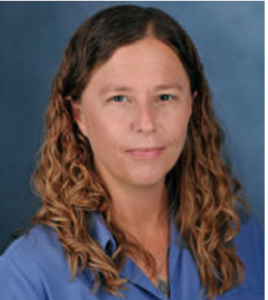
Ally Mabry, a social worker, is director of evidence-based practice at the KU center. In her nine years at KU, Mabry says she has worked with front-line providers at many of the state’s 26 community mental health centers. CREDIT KU CENTER FOR MENTAL HEALTH RESEARCH AND INNOVATION
Real-life consequences
The KU center is internationally known for its work developing, implementing and tracking the effectiveness of the “strengths model” of treating people with severe mental illness.
The model is designed to help therapists and counselors focus on helping people accomplish self-determined goals. When treatment teams use the model properly, it can transform lives, says Ally Mabry, a social worker and director of evidence-based practices at the KU center.
“We’re going to help you get a handle on your illness and we’re also going to focus on what you want to do with your life,” Mabry says. “Do you want to work? Do you want to go back to school? Whatever it is, we’re going to be highly goal-focused with you. We’re going to look at what you have, not what you don’t have. And we’re going to build on success with you.”
Data compiled by the center to document results show that community mental health centers using the strengths model correctly are achieving better outcomes. Fewer of their patients require hospitalization and more of them live independently, pursue post-secondary education and maintain jobs.
In the nine years she has been at the KU center, Mabry says she has worked with front-line providers at many of the state’s 26 community mental health centers. A lot of that work has been aimed at refining the model and ensuring that treatment teams at the CMHCs are using it correctly by grading them with a tougher new “fidelity scale,” Mabry says.
“This scale does not allow a center to just do this practice at a minimal or moderate level,” she says. “To meet fidelity, you really have to perform at an extremely high level. We’re seeing so much change, it’s really an exciting time.”
Or, at least it was. The prospect of seeing three decades of work with community mental health centers come to an end is “heartbreaking,” Mabry says.
The thought left both Mabry and Goscha fighting back tears.
“You can’t even imagine what this feels like,” says Goscha, who managed a treatment program for homeless people in Wichita before joining the KU center in 1999.
“All of my focus has been on improving the lives of people with serious mental illness in Kansas,” he says. “So, the thought that the state would make a decision that basically says that is no longer valued is absolutely crushing.”
It is valued, said KDADS Secretary Tim Keck in a letter sent last week to CMHC directors.
“It has never been the agency’s intention to discontinue using EBP (evidence-based practices)” Keck wrote. “Our program staff is working to identify the essential tasks that are required to be carried out to provide the most effective services to mental health consumers as a part of Medicaid and the most effective way to accomplish those tasks in the future. KDADS looks forward to continuing to work with our CMHC partners on this important part of our work.”
Jim McLean is executive editor of KHI News Service in Topeka, a partner in the Heartland Health Monitor team.
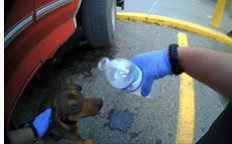
ARKANSAS CITY, Kan. (AP) — Police have rescued a dog that was found hanging by its leash from the handle of a parked truck in southern Kansas.
Arkansas City police Sgt. Jason Legleiter and Officer Wade Hammond were at a Wal-Mart for a shoplifting case Friday when a store employee saw that the dog had essentially hung itself. The dog was motionless and appeared to be dead.
Legleiter used his patrol duty knife to cut the dog down, while Hammond helped the dog breathe by removing the constricting collar and applying intermittent pressure to the dog’s side. The dog gradually showed signs of life and eventually was able to stand.
Tuesday night protest march in Wichita -photo courtesy KSN
WICHITA, Kan. (AP) — Hundreds of people have gathered in Wichita for a peaceful protest against recent fatal police shootings.
TV station KWCH reports (https://bit.ly/29CEcpc ) a group of about 400 people demonstrated Tuesday evening. The crowd met at a park and walked toward Interstate 135, where state troopers prevented them from accessing the highway.
The group moved on and continued marching for about three hours, ending at a park around 10 p.m. Among their chants was, “Black lives matter. All lives matter.”
No injuries were reported.
The protest comes after the recent fatal police shootings of Alton Sterling in Baton Rouge, Louisiana, and Philando Castile in Falcon Heights, Minnesota.
TOPEKA, Kan. (AP) — The former longtime leader of Hutchinson Community College is challenging one of the top Republican leaders of the Kansas Senate in the upcoming primary election.
Ed Berger, president of Hutchinson Community College for 23 years, is running against Senate Majority Leader Terry Bruce of Hutchinson in a primary race in Reno and Kingman counties.
Berger, who retired from the college in 2014, told The Wichita Eagle that income tax cuts approved by the Legislature in 2012 have led to mismanagement of the state’s budget. He says he’s open to both looking for cost savings and finding ways to increase revenue.
Bruce was a strong supporter of the tax cuts and says they have forced lawmakers to focus on spending and cut some government pork.
WICHITA, Kan. (AP) — A new government report is forecasting a much bigger U.S. winter wheat crop than had been expected just a month ago.
The National Agricultural Statistics Service reported Tuesday that it now expects the nation’s wheat production to come in at 1.63 billion bushels.
That number is up 8 percent from their estimate just last month, and up 19 percent from last year’s crop. It comes amid record yields averaging 53.9 bushels an acre, making up for fewer harvested wheat acres.
The updated report comes as the nation’s biggest producer, Kansas, wraps up its own wheat harvest. Kansas farmers have cut more than 91 percent of their crop.
In Kansas, the wheat crop is forecast at 453.6 million bushels with average yields of 56 bushels per acre from 8.1 million acres.
KANSAS CITY, Mo. (AP) — The family of a Missouri man fatally beaten in 2013 outside of Arrowhead Stadium, home of the Kansas City Chiefs, is suing the NFL franchise.
The Kansas City Star reports the wrongful-death lawsuit was filed Monday in Jackson County on behalf of Kyle Van Winkle’s widow and his son, who was just weeks old when Van Winkle died.
Seeking unspecified damages, the lawsuit blames a lack of adequate security in the parking lot at the time Van Winkle was beaten during an altercation.
The law firm behind the lawsuit says the lawsuit’s goal is to make Arrowhead safer for fans. The Chiefs have declined to comment.
Joshua Bradley of Independence has pleaded guilty to involuntary manslaughter in Van Winkle’s death and is serving five years of probation.
WASHINGTON (AP) — A study of an experimental treatment for leukemia that was halted last week following two patient deaths has been allowed to resume after a modification.
The Food and Drug Administration suspended Juno Therapeutics’ trial after the company reported that two patients died from swelling of the brain. Juno said the problem stemmed not from its treatment, but from a chemotherapy drug used as a pre-treatment step. The FDA will allow the trial to resume without that chemotherapy drug.
Juno’s treatment is a promising, but still unproven, approach that reengineers patients’ immune systems to attack cancer. White blood cells are removed from the patient and altered so they can target cancer cells when returned to the body.
Juno shares were up 27 percent in trading after the market closed Tuesday.
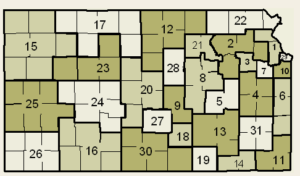
Kansas Map of Judicial Districts- image Kansas Judicial Center
TOPEKA, Kan. (AP) — Gov. Sam Brownback says he has the right to wait longer than 90 days to fill a vacant district magistrate position.
A written response filed Monday in the Kansas Supreme Court on Brownback’s behalf says the “precise timing of the appointment is left to the Governor’s constitutionally-provided executive power.”
Three 26th District judges filed a petition last month after Brownback announced he would wait until after the August primaries to consider filling the vacancy. The opening was created when Judge Tommy Webb of Haskell County announced his retirement in February.
The petition seeks to force Brownback to fill the position, saying Kansas law requires five magistrate judges to serve the six-county district. Brownback contends in the court filing that granting the request would “violate the separation of powers.”










 WASHINGTON (AP) — A study of an experimental treatment for leukemia that was halted last week following two patient deaths has been allowed to resume after a modification.